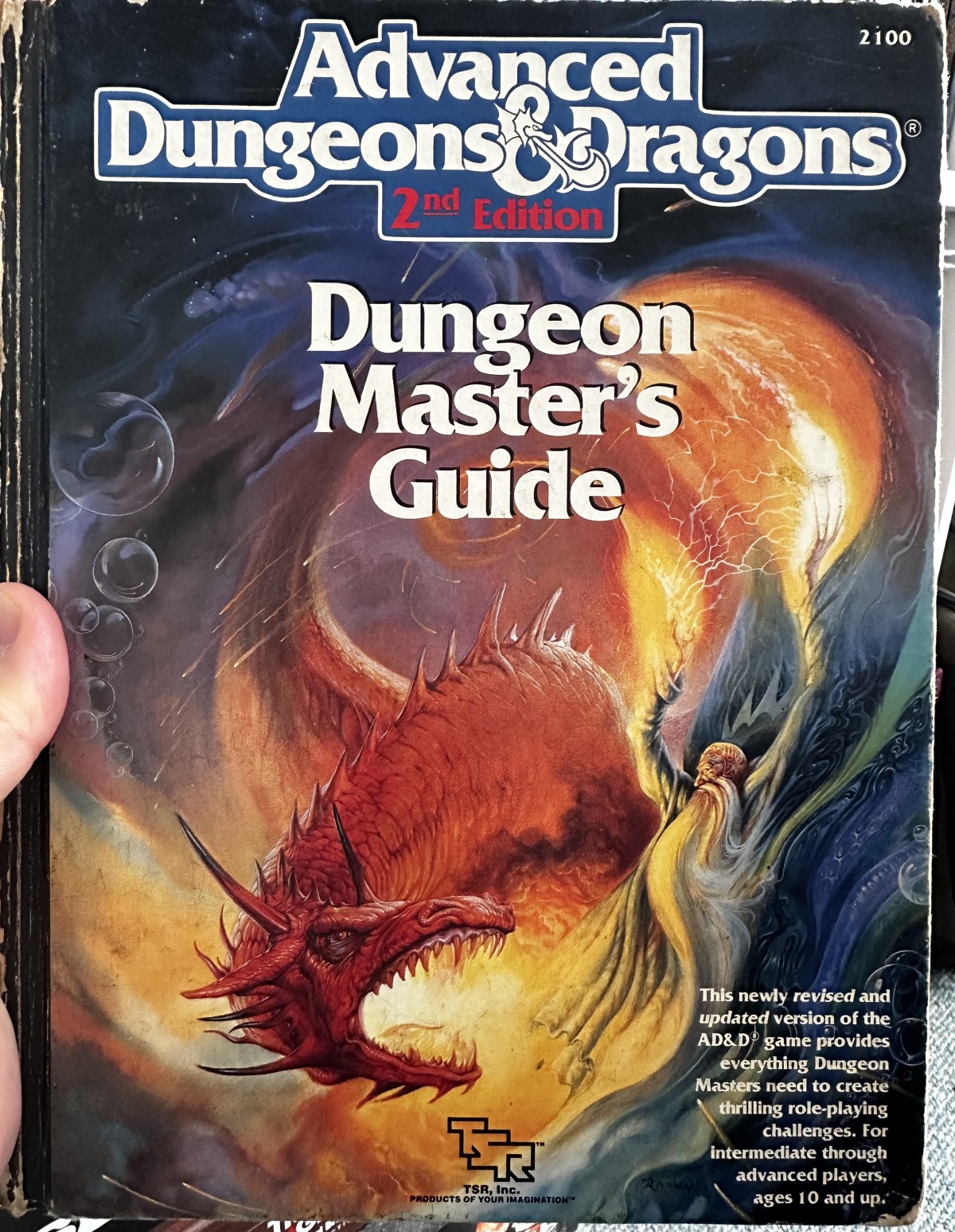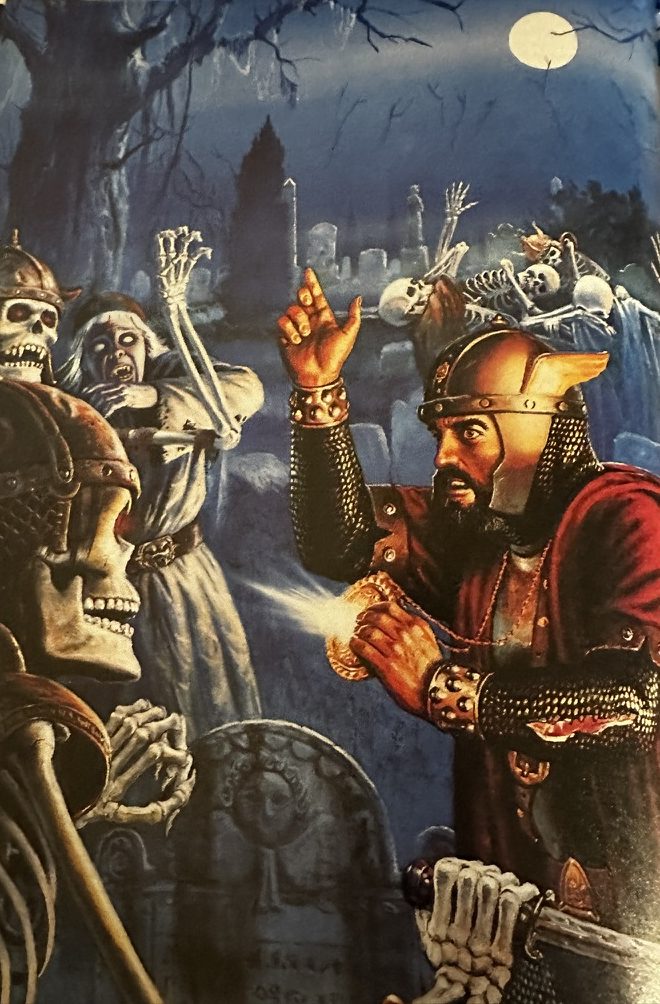
The Editioning, AD&D 2nd Edition, Part 1

The Editioning Format

Just in case you’re new here, the Editioning is a challenge that my fellow members of our little, local TTRPG community, Tables and Tales and I have taken upon ourselves (ok, fine, I came up with it and pretty much forced everyone else to take part.) It involves playing an adventure/short campaign in every major edition of Dungeons & Dragons from the original 1974 version to D&D 5.5E, which came out fifty years later, in 2024. We hope to complete this task within about 24 months. So far, we have completed one adventure in OD&D and are close to the end of another in Basic or B/X D&D.

I’ve been titling these posts with the numbers of the weeks of the challenge, but, honestly, even keeping track of which week we’re on is becoming a challenge in itself. So, I’m just going to number them from now on. As such, this post will be Part 1 of the Advanced Dungeons & Dragons 2nd Edition series. Hope that makes sense, dear reader!

Welcome to Sigil

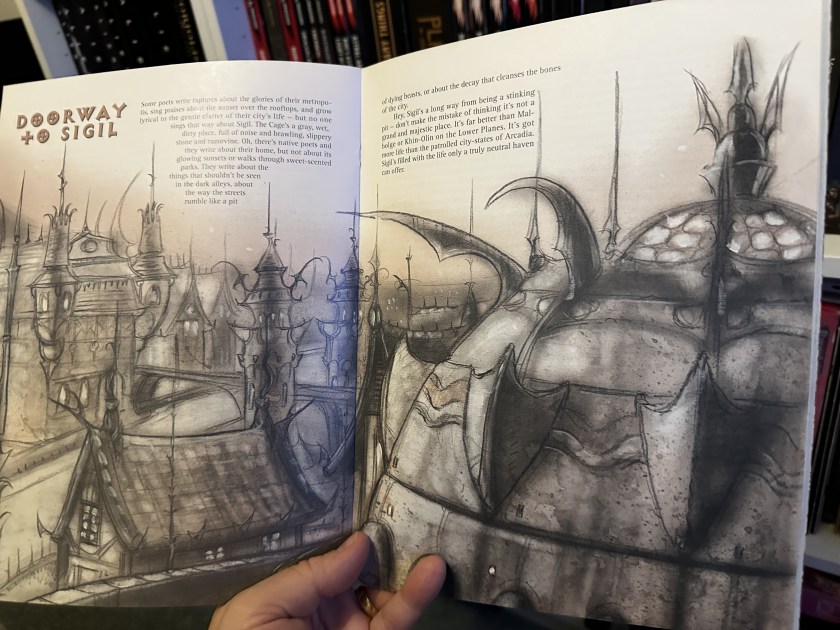
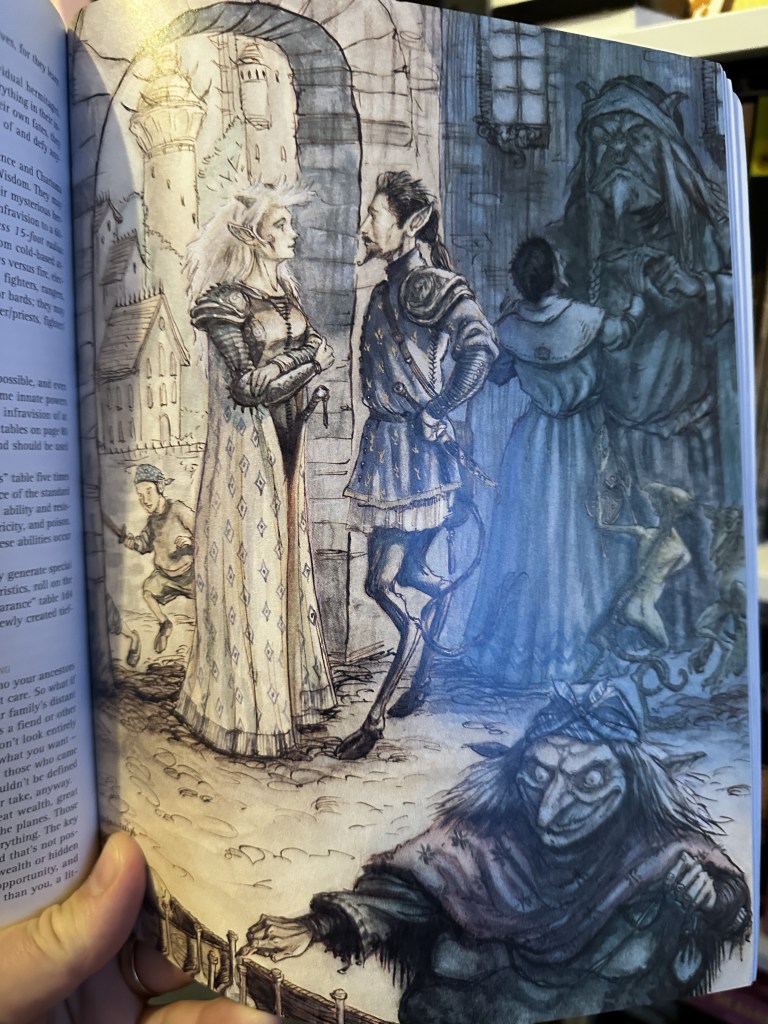
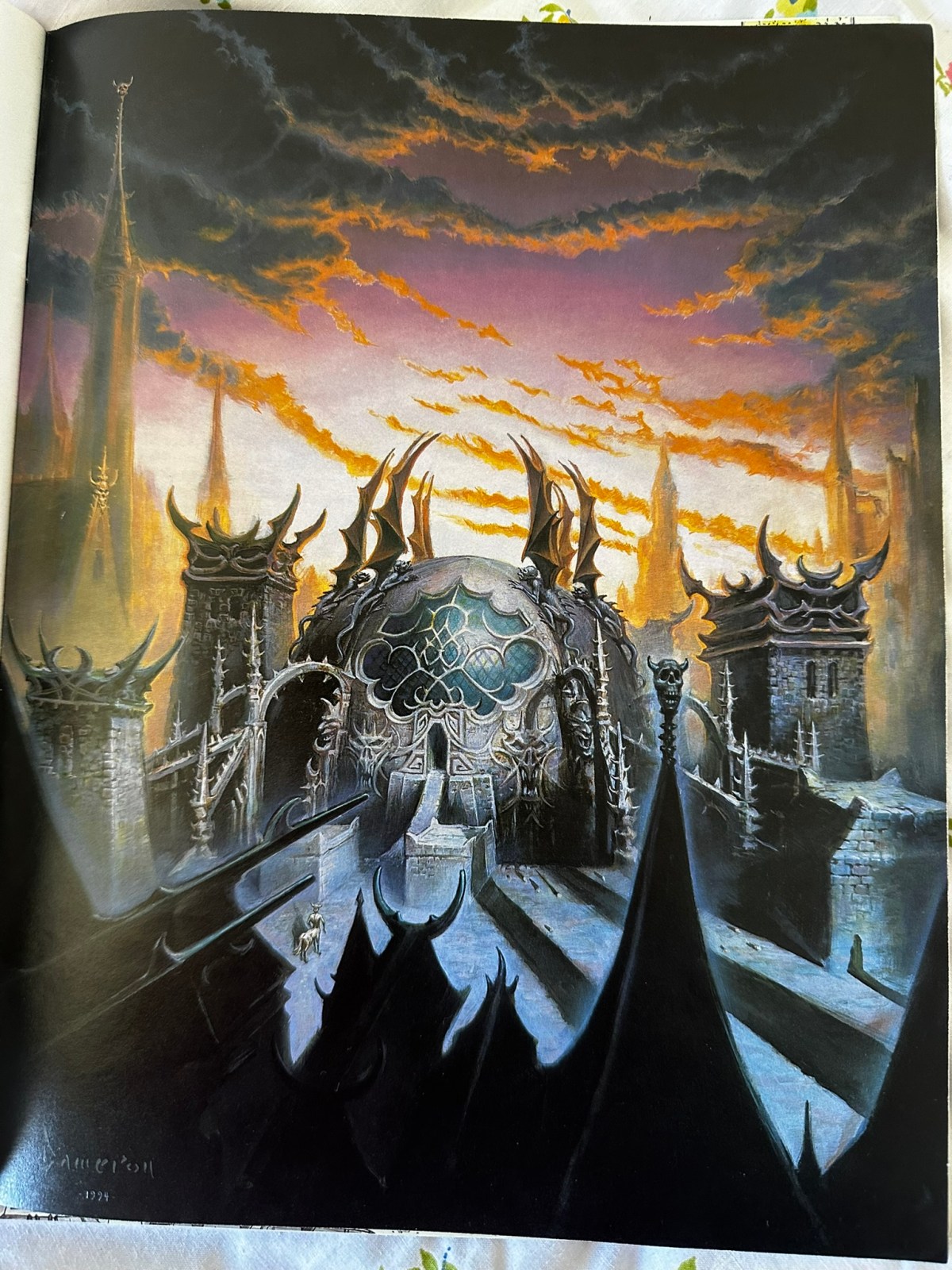
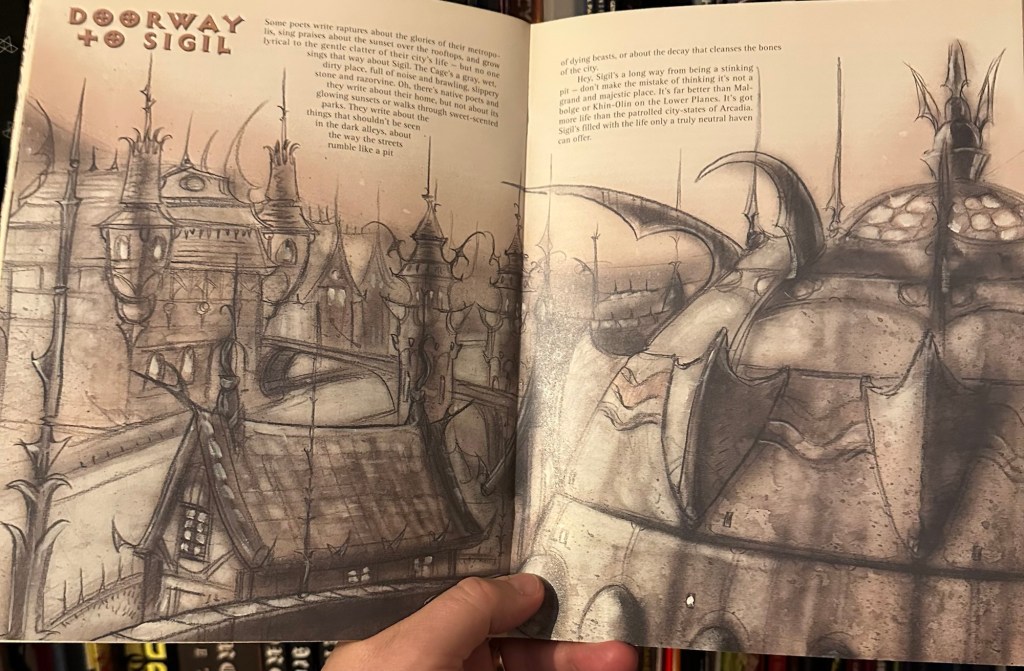
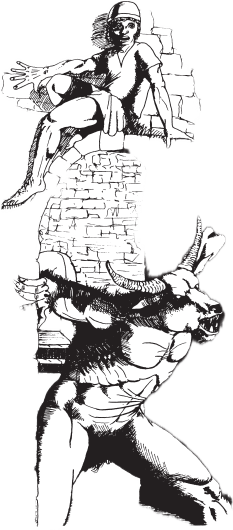
An illustration of the rooftops of Sigil from the book, Sigil and Beyond from the Planescape Boxed Set. It is entitled Doorway to Sigil.
The enigmatic rooftops of Sigil by Tony Di Terlizzi

What? Are you Clueless, berk? Cutter like you should find out the dark of things in the Cage. Could make a little jink if you manage to sway the high-up men and stay out of the Mazes. Want the advice of an old basher like me? Go chat up a factol, maybe one o’ them Mercykillers or even the Hardheads. They’re always looking for cutters who’ll do some business and keep their bone-boxes shut. You don’t fancy them? Go talk to the Bleakers, maybe. Just watch out for the barmies in the Hive if you go that way. I heard a bunch of them have been put in the dead book of late. Just stay peery on the streets and alleys of the City of Doors, cutter, and if you see death coming for you, just give ‘em the laugh and don’t end up swinging from the old leafless tree, alright?

That’s an example of the type of writing that exists throughout the entire Planescape line of books. OK, it’s not all written like that, but in many parts the voice of a local guide like this is used to inject some really effective flavour. They introduced this sort of patter and unique dialect to set Planescape apart from the more traditional fantasy fare like Forgotten Realms and Dragonlance. I Remember the first time I read it as wide-eyed teenaged ingenue. I was immediately drawn in. None of the other settings had ever appealed to me so thoroughly through the voice of the books themselves. This despite the fact that I had spent a couple of years playing the more unique settings of Dark Sun and Ravenloft.

Why? Well, the speech pattern was curiously familiar to anyone with a passing interest in cockney slang, victorian working class dialects and Blackadder. That was me, honestly. So it caught my attention.

Now, admittedly, the portions of the books written in this patter are confined mainly to the introductions and the odd in-character paragraph, but it’s enough to liven up what is normally a very dull business (AD&D modules.)

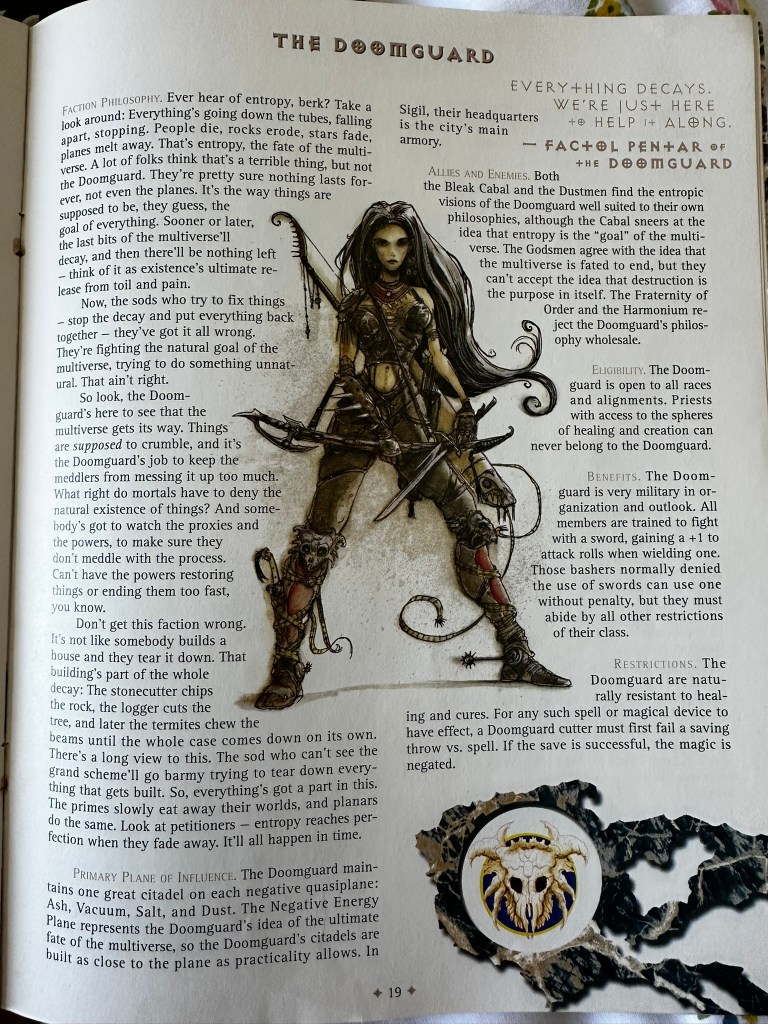
But, of course, there is so much more to recommend the setting. The factions of Sigil, where philosophical standpoints come to life in their members. Their Cold War or kriegstanz that bubbles under the surface of the city. The Lady of Pain, enigmatic ruler and all-powerful protector of the City of Doors, who sends her greatest trespassers to the Mazes for eternal torment. And beyond Sigil, why, there is only the infinite vastness of the outer planes, the inner planes and every place in between! Every one of them filled to bursting with bizarre landscapes, gods, angels, demons, devils, elementals of every flavour and don’t forget the fairies and other planar beings beyond count or description.

In fact, it can be a little overwhelming. I remember that’s how it felt when trying to write my own adventures for it back in the ‘90s. There were too many options, many of them very lethal and many of them utterly beyond my own meagre abilities to incorporate into my simple AD&D games.

That’s one of the reasons I decided to run a pre-written adventure for this portion of the Editioning.

The Eternal Boundary

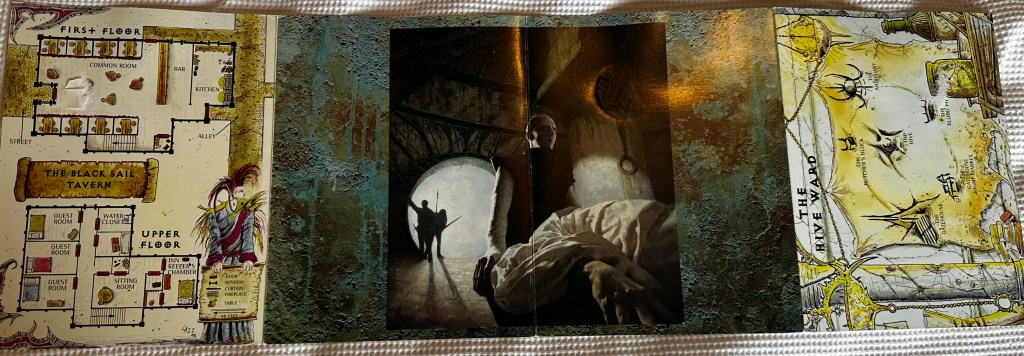
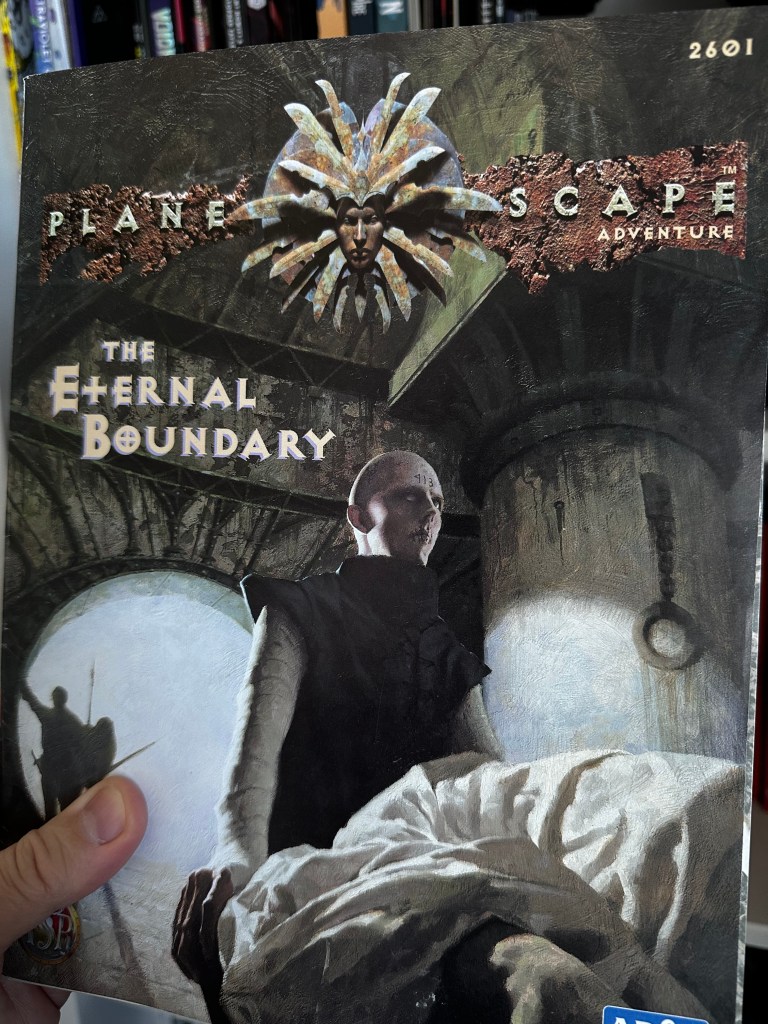
The cover of Planescape adventure, the Eternal Boundary. A pale, bald dustman pushes a gurney with a sheet-covered corpse in the foreground. The silhouettes of adventurers peek through an archway in the background.
The Eternal Boundary

This adventure was one of the first produced for the Planescape setting. It’s written by L. Richard Baker III whose other credits include the Planescape Monstrous Compendium 2 and Valley of Dust and Fire for Dark Sun.

I don’t want to provide any spoilers at this point so I’ll only give you the basics that PCs will learn not long after starting to play.

In the Hive Ward of Sigil, barmies and bubbers are disappearing and turning up dead in much larger numbers than usual. The PCs are sent to find one of them, a barmy called Eliath, who knows the dark of a very special portal key. Various factions are at play in the Hive and there is something sinister going on there. The PCs must uncover it is they are going to complete their mission. It will lead them all over the Hive Ward and far, far beyond.

I chose this adventure for a couple of reasons. Firstly, I thought it was a great introduction to the City of Sigil, its Factions, the kinds of strange goings-on they might encounter there and a large cast of NPCs with a fun variety of faction-alignments, personalities and motivations. And second, it was the right length for what I had in mind. I actually think this one might end up being shorter than my recently concluded OD&D game. Of course, I have been silly enough to think such thoughts before, and I’ve been frequently proven wrong so we’ll see how that works out.

Character Creation

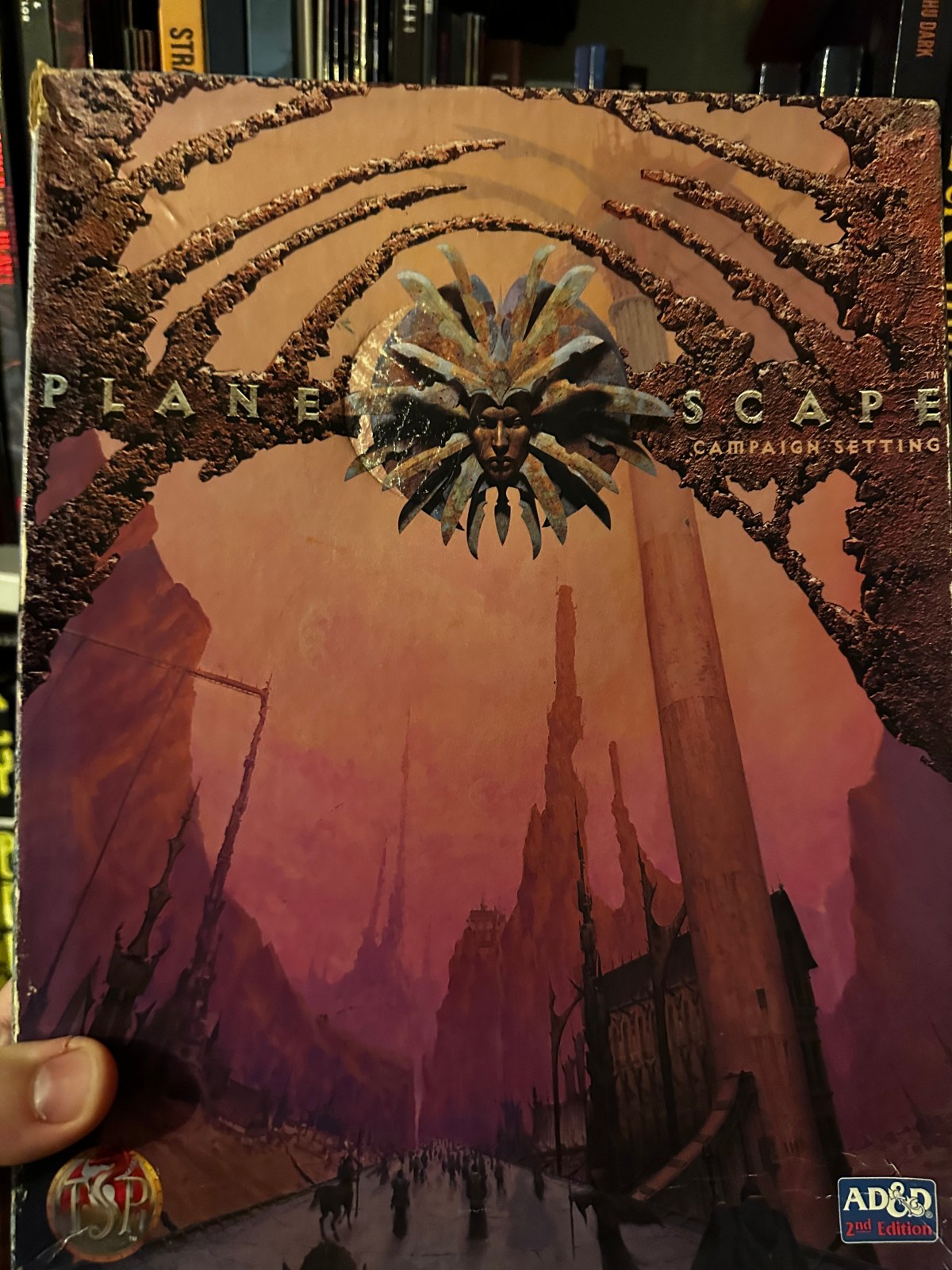
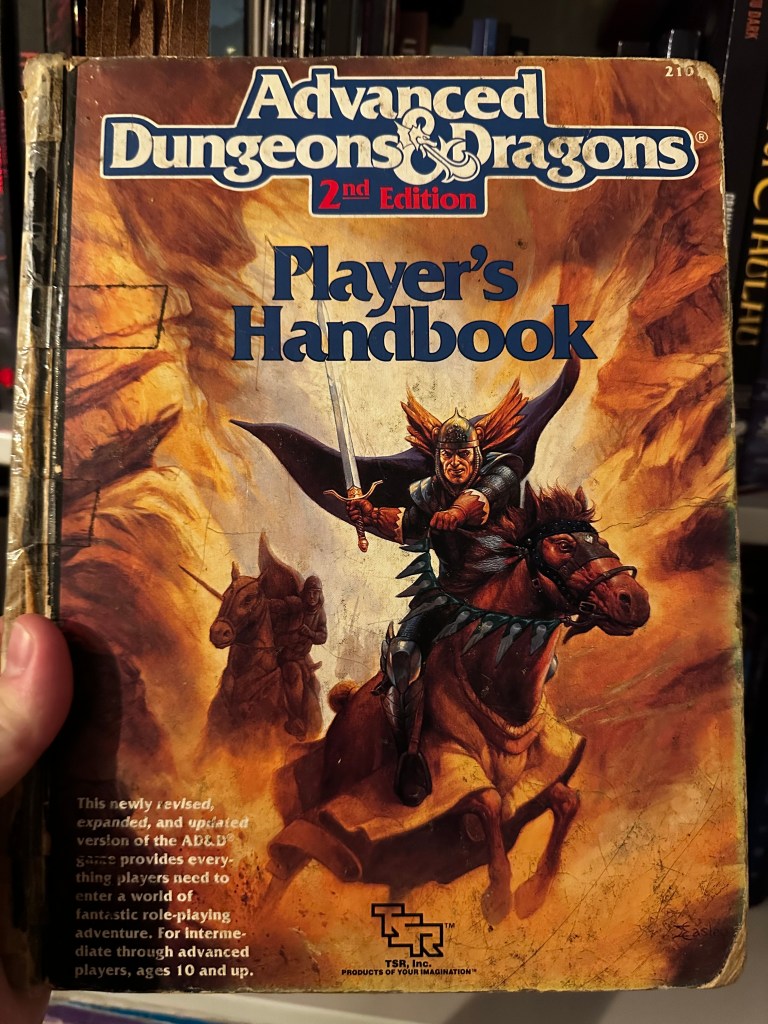
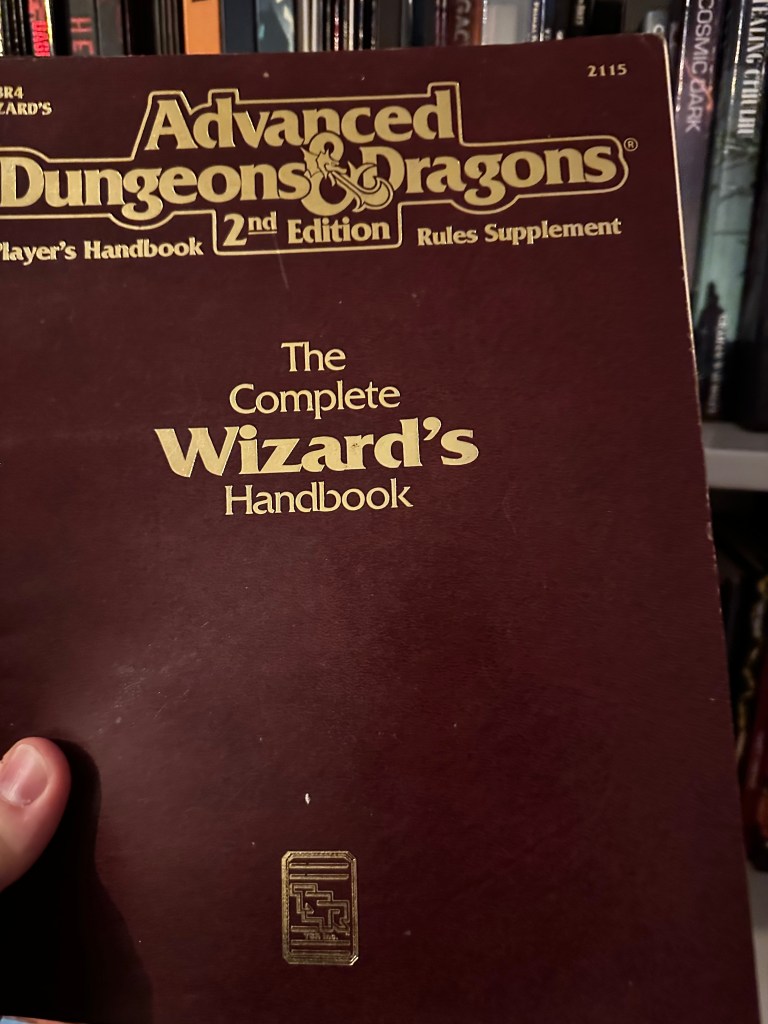
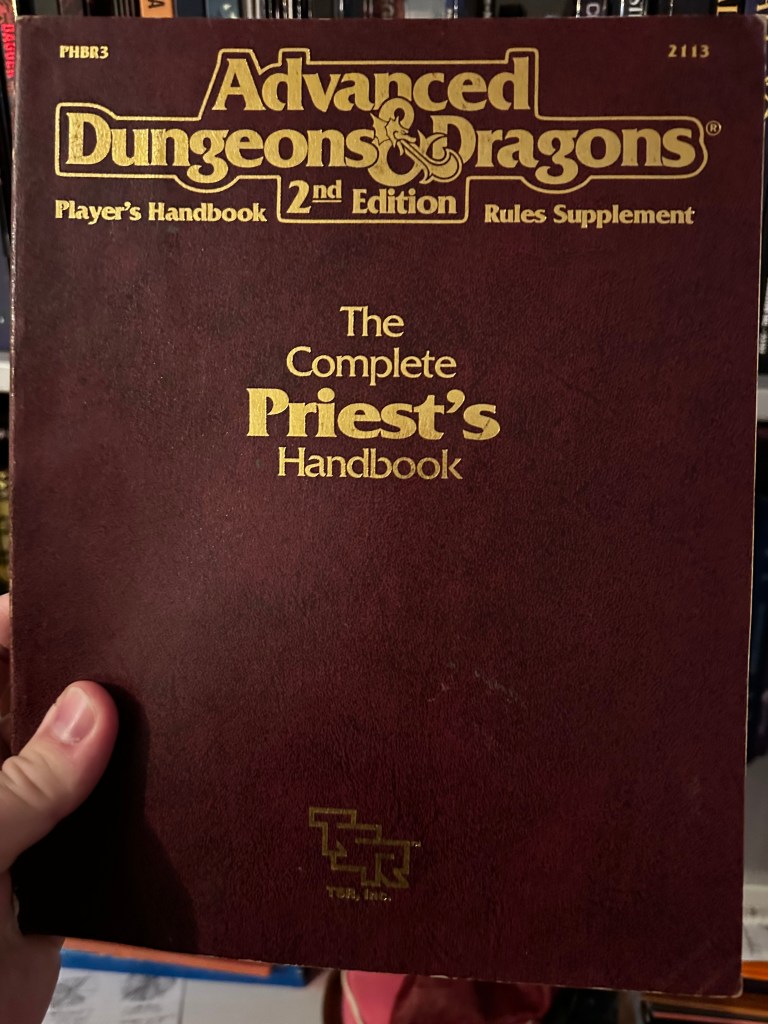
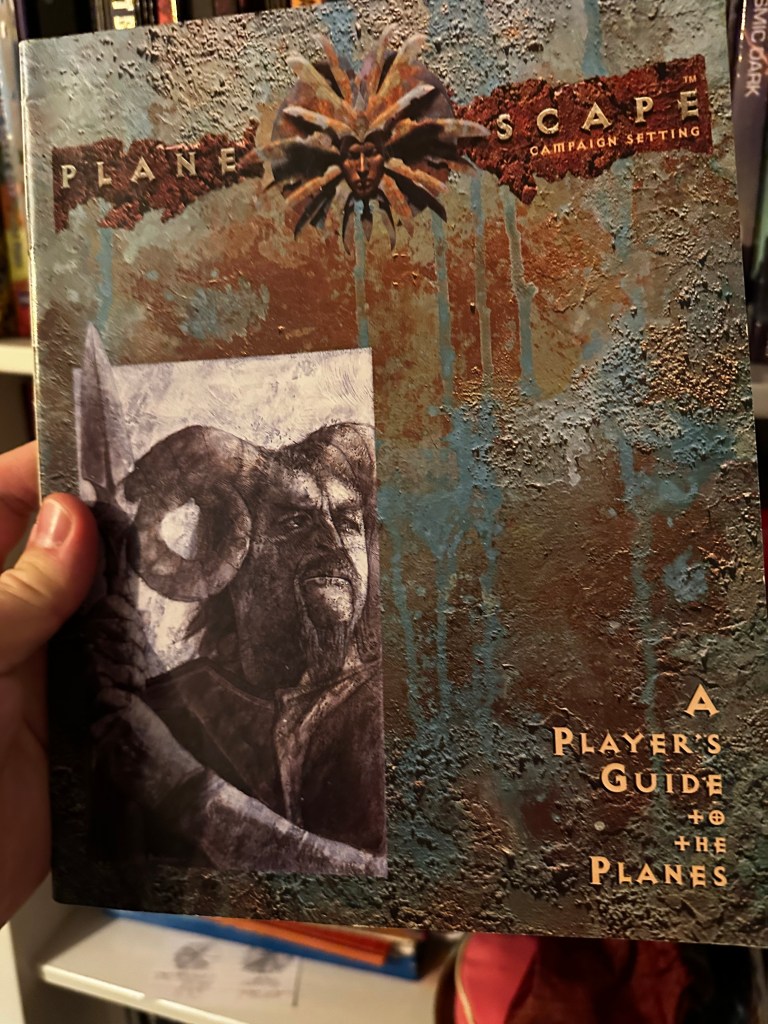
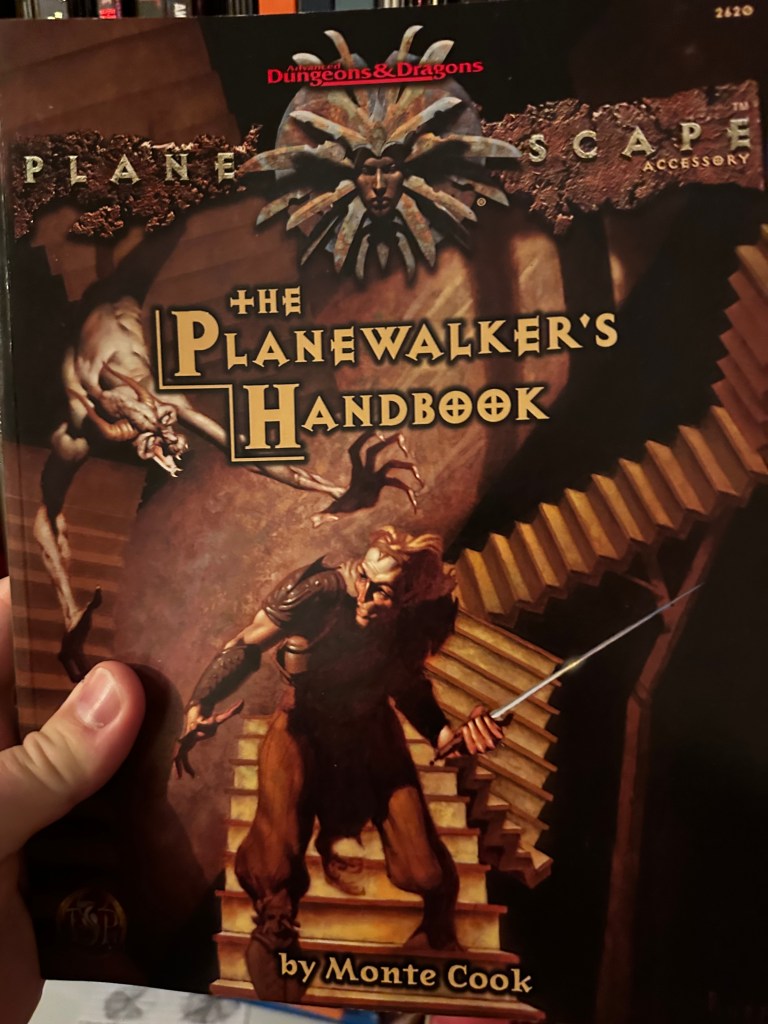
Our Session 0 was an epic crusade deep into the depths of not only the Player’s Handbook but also the Complete Wizard’s Handbook, the Complete Thief’s Handbook, the Complete Priest’s Handbook, Legends and Lore, the Player’s Guide to the Planes, and the Planewalker’s Handbook.

It took over four hours and resulted in a great deal of cursing, misunderstandings, frustrations, arguments, concessions, delight, confusion, amusement, nostalgia, and, finally, I think, satisfaction. The AD&D 2nd edition character creation process could be straight-forward enough. If one sticks to the most simple form of ability score generation (just roll 2d6 for each ability and keep it no matter what,) thus forcing the player’s to choose the classes most suited to their ability scores, forgoes the use of non-weapon proficiencies in favour of the far less complicated secondary skill system, restricts the PCs to options only taken from the Player’s Handbook and sets their game in the most vanilla of fantasy worlds, you could probably create a full party of PCs in an hour or so. But that’s not what I wanted. I wanted my players to have the full AD&D 2nd Edition experience that I remembered with such fondness. I wanted them to be unsure of their choice of class or race until they had a clear vision of a character. I wanted them passing around all those sourcebooks, to get, at least a look at all the various options. I wanted them to not know really anything about their characters until they all came together miraculously in the last half an hour. And that’s exactly how it happened. The character creation system, when you factor in all the optional books, has so many possibilities, dependencies, restrictions, bonuses, minuses, and choice that you simply cannot get a full picture of the character until they are most of the way finished. This differs to such a great extent from modern role-playing games that are not Pathfinder, that I think it’s quite difficult to explain without experiencing it. For a taster, please do check out my AD&D 2nd Edition Character Creation series where I make a Dark Sun halfling Cleric. It takes three full posts and around 6000 words and is, by far, the longest character creation I have ever done on this humble blog.

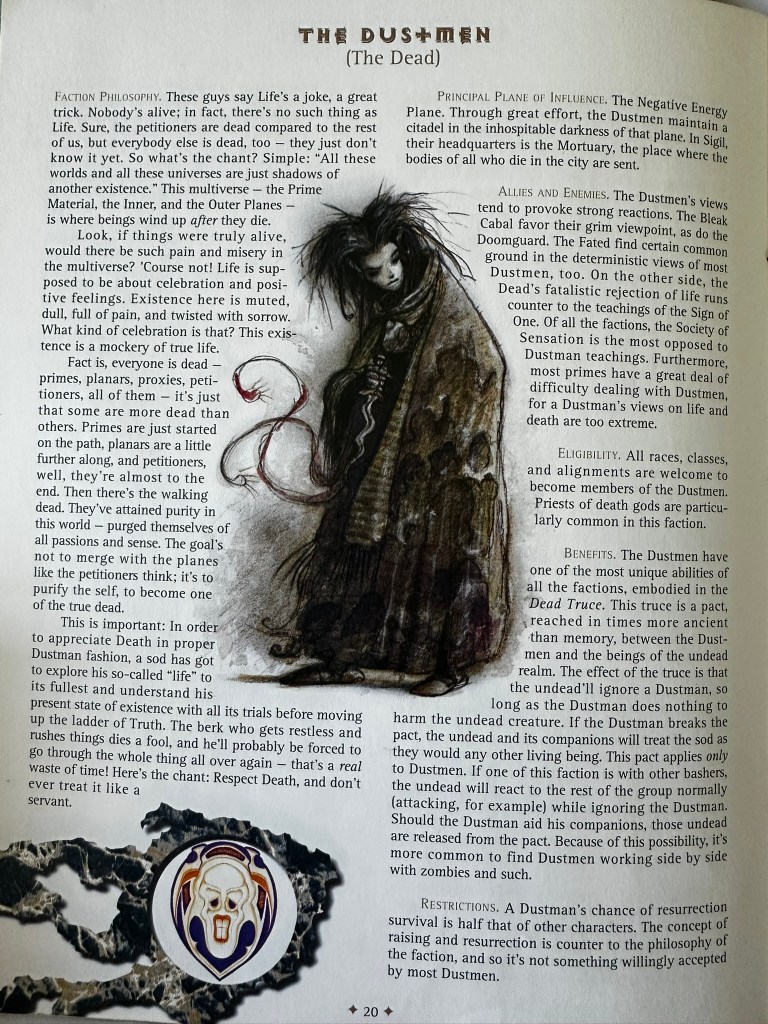
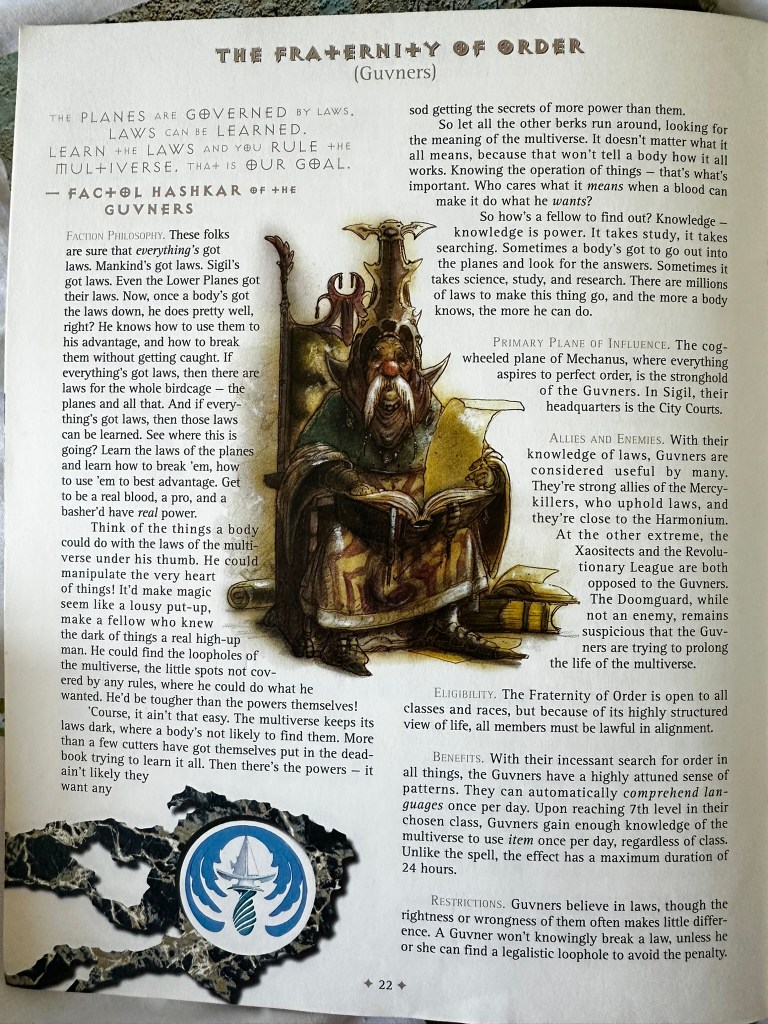
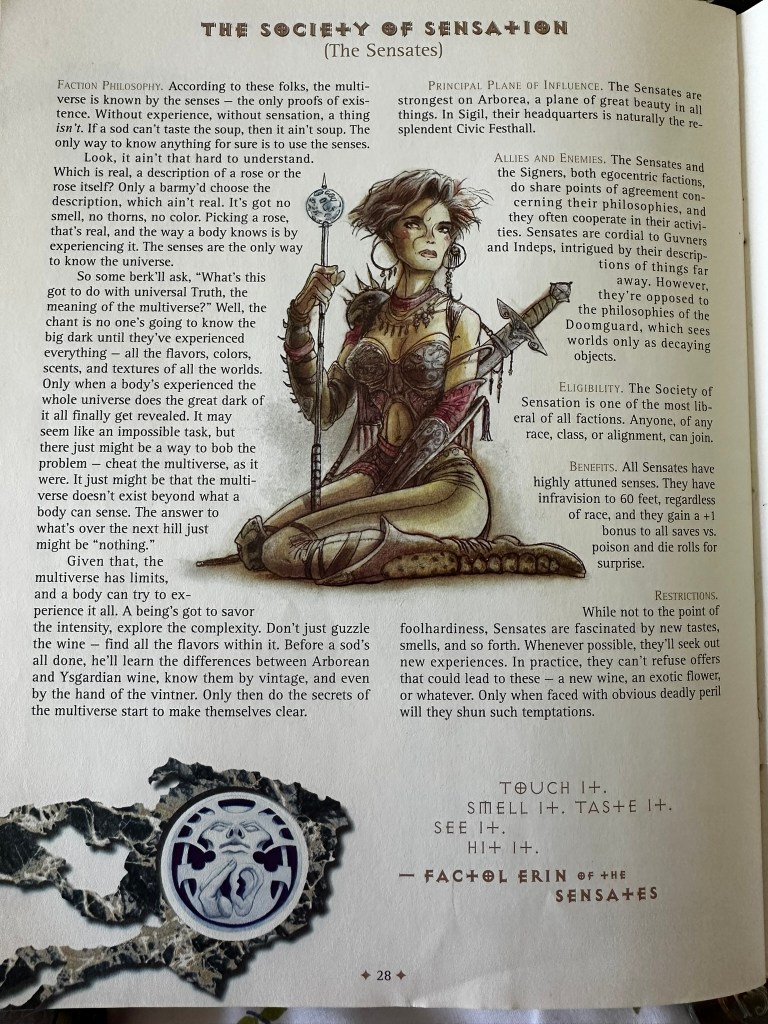
We ended up with an all-star cast. Our Paladin, Glaermond, completely illiterate but stout of heart and sinew, is the party’s lawful good defender. Aurora, our chaotic good Bariaur magic user, took the Witch kit from the Complete Wizard’s Handbook, and, as a member of the Dustmen faction, has decided to focus on necromancy. Trance, the Tiefling Thief is a member of the Society of Sensation and is driven to experience new things whenever possible. And, finally, Devansh Rao is our Aasimar cleric of Varuna, the guardian of cosmic order and lord of the sky. The players are currently discussing the wisdom of using Devansh’s little church to Varuna as their base of operations and gathering a tithe to fund their adventures in the name of the Great Lord of Order on our discord channel.

This is, potentially, the perfect combination of classes and factions for this adventure so I am very excited to get it started. And that will happen this very Sunday, dear reader. So watch this space if you’re interested to find out where this band go as the delve into the Hive.

The Editioning, Week Eleven, OD&D

The First Ending

Last night we finished up the first of our games within the Editioning, our challenge to play all the major editions of D&D from Original Dungeons & Dragons (1974) to Dungeons & Dragon 5.5 (2024) over about 24 months or so.

I thoroughly enjoyed creating, running and playing this game as referee. I think the ending worked well, and I have gotten generally good feedback from the players.

Playing this very first iteration of the venerable old man of roleplaying games has taught me a few lessons about RPGs in general, D&D in particular and gave me many insights into the OSR.

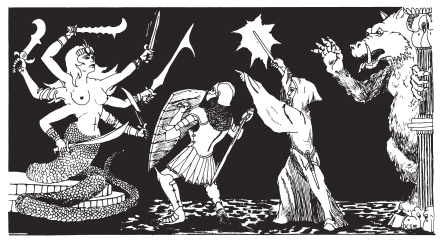
Illustration from OD&D supplement III, Eldritch Wizardy. A fighter with a aword and shield and a magic user with a glowing wand face-off against a serpentine demoness with six arms and many weapons as a monster attacks from the rear.
Watch Out!

First though, let’s do a quick recap of the final session.

Malfunction

Last we left off, the PCs had discovered the holo-log belonging to the captain of the alien space-ship they had just teleported to. The captain appeared as the hologram of a crystal humanoid and spoke to them. The log described the dire straits the ship found itself in, crash-landed, engines damaged so badly all they produced was the crystalline by-product of their fuel. They had taken the decision to hand responsibility for their escape or rescue to the main computer while the crew went into stasis. Of course, they had already discovered that the computer had re-interpreted its orders to ‘crystal-form’ the surrounding planet to suit the physiology of its makers as, perhaps, escape and rescue were deemed impossible. I didn’t write much in the way of plot for this adventure. In fact, this about sums it up! You can read more about my methods in this respect in my previous post.

Armed with this knowledge about the computer, the adventurers were more determined than ever to find and destroy it. So, they girded their collective loins and prepared to move on through the ship. The next door was jammed so they spent some time using tools to wedge it open. While they did this, another information Assistant appeared to them. They asked it to open the door for them, which it did, but, more importantly, it showed them a map of the whole ship and its current surroundings. In practical terms, this allowed me to reveal the full map to the players on Roll20. This was a blessing as the partial-reveal functionality in Roll20 does not work very well in my experience. It has a rectangular reveal and a polygonal reveal option but, quite often, I find the polygonal one simply doesn’t work. Revealing a curved area with the rectangular tool is frustrating and time-consuming.

The Information Assistant was able to help them further by describing the adjoining chambers, the engine room and the computer and stasis chamber. It told them they could enter that final chamber by “simply passing through the wall.” They didn’t push the assistant on this point. Instead, I guess they decided they would pass through that wall when they got to it.

Having emptied and passed through the partially submerged chamber next to the bridge, they descended to the engine room. Here they discovered a number of crystalline golems running the engines to produce the fuel by-product which they were using to crystalform the surrounding countryside. The golems in this room were not fooled by the bio-hazard suits as the other ones had been so they attacked the entire party. Here they lost another dwarf hireling, leaving then with just one of the humans who’d accompanied them from the start of the adventure and one Dwarf, the leader, Gilda. While the melee progressed around them, Abbiss, the halfling thief and Ilaina, the elven magic user, tried to find a way through the wall, as they heard the approach of yet more golems from the other side of the engine room. Eventually, their listen and Intelligence checks paid off when Ilaina realised there was a connection between the frequency of the sound they could hear emanating from the wall and the ccredential crystals they recovered from the lockers on level 2. They downed the last of the golems held hands and pushed through the wall, crystals first.

On the other side they discovered a circular chamber. The wall was dotted at regular intervals with stasis pods. Each one contained a grey and brittle crystalline being, clearly long dead. In the centre of the room, the computer loomed. It was a 12ft tall, 10ft diameter, iPod-white, capsule-shaped machine with four long tentacles protruding from its carapace. It ‘spoke’ them in a loud and high-pitched form of crystalline speech they could not understand and then it attacked.

Tadhg, the cleric started off strong, throwing a lit oil skin at it. The fire licked at the outer shell and seemed to ignite some wires emerging from a gap in the casing at the top of the computer, but otherwise did no damage. As Siward the fighting man and the hirelings went in to attack the outer casing, Abbiss decided to climb up and examine the cracked area. Meanwhile, Ilaina used her last flying crystal to get up there as well.

The computer was able to use some spells during the fight. I gave it Charm Person, Phantasmal Forces and Confusion but only got to use the first two. It used Charm person on their remaining dwarf, Gilda, to get her to attack the ground based PCs. Ever the gallant, Siward refused to fight back, instead focusing on defeating the computer in the hope that that would end the effect. Siward was also the subject of the Phantasmal Forces. Spells in this game are interesting because they are so imprecisely described that, in some cases, even their effects are not obvious. Look at this description of the Slow Spell, for instance:

Slow Spell: A broad-area spell which affects up to 24 creatures in a maximum area of 6” × 12”. Duration: 3 turns. Range: 24”.

That’s great Gary, but what does it do?
This one stood out to me because I was going to give this to the computer as well before I read it.

Also, our cleric, Tadhg, had reason to use his last spell slot to heal Abbiss at one point. That was interesting for a few reasons. The first reason was that, after Abbiss widened the crack in the computer’s casing even further, Ilaina stuck a few fingers in there and let the innards have the full blast of a fifth level fireball. Unable to contain the full power of that, the casing belched flames out of the crack on top. Luckily, I decided to give them a Save vs Spell to avoid half the damage but this still hit Abbiss for 12 points. (This is another point about spells. Fireball has no Save mentioned in its description, so I had to home-rule that.) Our thief, already hurt from the precious fight and a couple of whacks from the tentacles, needed some healing. Now, in later versions of D&D, Cure Light Wounds, or any Cure Woulds spell, in fact, required the caster to touch the subject. Not so in OD&D:

Cure Light Wounds: During the course of one full turn this spell will remove hits from a wounded character (including elves, dwarves, etc.). A die is rolled, one pip added, and the resultant total subtracted from the hit points the character has taken. Thus from 2–7 hit points of damage can be removed.

Leaving to one side the mercurial and perverse wording of this description, you will note the complete omission of any sort of range. So, I ruled that Tadhg could, effectively use it to heal anyone on the face of the planet. Lucky too, as Abbiss was still on top of the computer and he was on the floor.

The combat continued, both sides hit and missed, but in the final round, all actions were resolved simultaneously so, even as the tentacles reached out to reduce our halfling once more to just one HP, and the Gilda the dwarf pressed the attack against Siward, our heroes hit it till it cracked open, finally reducing the crystal inside to a dull, grey ruin. They discovered treasure in some shiny lockers there in the computer room, and then they used the teleportation pads in the dungeon to take them back to the village.

After that, we did what I always like to do to wrap up a campaign, I asked them for epilogues for each of their character s. I asked one what they would be doing a week from the end of the adventure, one what they would be up to a month later, then a year and finally a decade. I loved what they came up with but I won’t go into it here. I recommend this as a nice way to wrap things up as it puts the final words in the mouths of the players and allows them free rein.

Conclusion

So, I ran this game while being very conscious of the history behind it. It’s hard to overstate the impact this game has had. It is, arguably, the origin of our hobby, the starting point for the world-beating phenomenon that is D&D today and, as well as that, its the kind of wonky, imprecise, strange love-child of a war-game and nerdy obsession with fantasy and myth.

DD&D never tried to be all things to all people, even though it did include a couple of different options for your combat rules, ie, the combat table in Men & Magic, the first booklet, or the detailed and labyrinthine war-game rules from Chainmail. It gave options but it never pretended to have all the answers. It is the very epitome of the OSR pillar, rulings, not rules. Sure, it has “rules,” but these are clearly only there as guidelines. Just look at those spell descriptions above. Look at the complete lack of mechanics for ability tests. In the end, I imported the roll-under mechanic from Basic D&D to allow for things like Intelligence and Dexterity checks. I resisted doing this sort of thing in the first few sessions. Instead I wanted to try to resolve situations using only the mechanics in the books. But, I quickly realised that, even at the time, OD&D was a work in progress. So many sourcebooks were released to clarify, overwrite, or even ridicule the rules from the first three booklets that it is impossible to ignore the fact that, even those people using the books to play in 1974, were not sticking to rules as written. They were house-ruling it, they were hacking the system and they were adding their own tweaks and options constantly. So that’s the way I began to treat it too. And it only got better as I did that.

One of the things I wanted to reveal in the Editioning was exactly how the game has changed over the decades and how it changed from one edition to the next. I suspect I will find that, over time, the rules became more exacting and less flexible. Of course, that is yet to be seen as we play through the editions. So come back for more insights into D&D and its evolution, dear reader. The Editioning is still in its infancy so there’s plenty more to come.

The Editioning, Weeks Nine and Ten, OD&D

Welcome back, dear reader, to the Woes of Sorrowfield, my homebrew adventure for OD&D. You check out the rest of my posts on this game here. We are playing this as part of the challenge I made up in February, the Editioning, which involves playing every major edition of D&D from OD&D right up to D&D 5.5E as I understand we’re calling it now. This was supposed to take place all in the space of twelve months, but at this pace, we’ll maybe get half way through the nine editions by February next year.

Revelations

So, returning Woes of Sorrowfield readers will be aware that I am creating this adventure myself. I started by taking advice from Gary and Dave. They have a lot of good, if basic advice for the beginning referee in terms of dungeon design, populating your dungeon with monsters, traps and treasure, running wilderness adventures etc. Essentially, I followed that advice until I didn’t. There was a point at which, the stuff they presented in the original white books fell short of my own decades of experience.

One thing that I’ve been quietly proud of is providing revelation and information through simple and, hopefully, not overly expository means throughout the game.

For example, the PCs discovered that a lake and river flowing through the Barrenwood had been polluted with some sort of magically glowing crystal that was turning the whole forest to crystal. Later, once they entered the dungeon, they found living beings, trapped in there, also being turned to crystal in a lab setting. Further down, they found a Flight Practice chamber which allowed them to literally fly around in the air. And finally, on a crashed space ship at the bottom of the dungeon, far beneath the earth and sea they discovered an illusory representation of another world that where flying crystalline aliens could be seen spreading the crystal pollution from high above in the atmosphere “crystal-forming” the surface for their own comfort. There’s more to the plot, but already, without any exposition or need for long diary entries or anything like that, I slowly revealed the nature of the threat they faced.

One thing that I am sure helped me do this was not over preparing before starting the adventure. I had a vague outline of the plot, the threat and the enemy before we started playing, but I never wrote down any specifics. I was creating new dungeon levels almost week-to-week. Doing it this way allowed me lots of room to improvise and also to play off things the players had said or directions they were planning to take.

As things all came together in the last session, and the entirety of the plot was revealed, I felt it was finally ok to include a small snippet of exposition, a captains log they discovered on the bridge of the alien vessel, which revealed that even the aliens on the ship had not wanted to necessarily crystal-form the PCs’ world. Instead, they were hoping for a rescue after their crash. In the recording, the captain indicated in a few short sentences, that the crew had gone into stasis and left the main computer in charge. It was the computer that decided to start the crystal-forming process, in the interests of maintaining the lives of its makers while they waited for rescue.

Back up

I skipped to the end a bit there, so here’s a recapitulation of the events of the two sessions that led us there since my last OD&D post.

The adventurers continued their experiments in the Flight Practice chamber. Abbiss tried again to fly but continued to prove completely inept. Still, she and the others made it up onto the shelf 10 feet above the main floor after defeating another two crystallised gargoyles. They managed to hit all three buttons on that level simultaneously and received a reward: a rain of gems! But not without the loss of two of their dwarven hirelings. During the fight, Abbiss had her left hand crystallised by one of the gargoyles. Also Siward suffered a crystallised pinkie from an attack.

Next, Ilaina decided to give this flight business a try, and, sure enough, she proved to be a natural at it. She was able to fly up to the hanging platforms in area 3. The first one spiked her and she had a toe crystallised. The other platform simply dropped to the floor far below when she threw a knife onto it.

Abbiss took a close look at the water fifty feet below in the southern section of the level. She realised she could see a gap down there that must provide access to the next level down. They all began to make plans for the descent. While Siward abseiled down and onto the fallen platform which he had thrown onto the surface of the violet coloured waves, Ilaina was able to fly down under her own power. Tadhg, Bryn and the Dwarves all followed Abbiss down the rope and Siward kept the floating platform steady as they ferried themselves across the narrow span of water one after another. Eventually, they all made it.

On the other side of the glass wall holding in the water on the next level, it looked like an aquarium. As they were searching the hall they found themselves in, another Information Assistant appeared and addressed the party members dressed in bio-hazard suits and holding credentials crystals. It informed them that this was the Teleportation Chamber Level and that it could guide them around it and in the use of the teleportation facilities if they wanted. It led them through a door and into and armoury where Abbis picked up a +1 Crystal Dagger and Siward and the dwarves also acquired some shiny new weapons. Little did they know that using the weapons would provoke a Save vs Stone or have a random body part turn to crystal. From the armoury, the Information Assistant passed through another door into a room with an elevator door with and up arrow on it and a number of crystal golems with sword-like arms phasing out of the floor. They moved to intercept the party members with no bio-hazard suits.

The fight started off badly enough for both sides. The golems won initiative but failed to hit anything. Siward hid behind the cover of the control console in the room, along with the hirelings and they generally also failed to hit. Using the advantage of the bio-hazard suit making her essentially invulnerable to the golems, however, Abbiss got a back stab in on another of them. Meanwhile, Ilaina, using her noggin, attempted to deactivate the golems through the use of the console. She succeeded only in turning out the lights, but at least she cast infravision on Siward. Moving into round two, Tadhg, with the same impulse, asked the Information Assistant for help in calling off the golems, which it promptly did.

They followed the IA into the Teleportation chamber. It was able to reveal there the three platforms. One could transport them anywhere on the surface but could only be used once, the second one could transport them to the ship below and the third one was being used by the computer to transport the fuel by-product from the ship’s engines high into the atmosphere from where it rained down like a crystalline bombardment on the surrounding countryside. Ilaina sent the IA into a buffering loop by having it refer to the makers who, it revealed, were all in stasis on the ship. The paradox that it was talking to what it thought were “makers” gave it a bad headache.

They also explored an adjoining room that was filled with crystalline barrels full of the fuel by-product, the crystal corruption that was transforming their lands.

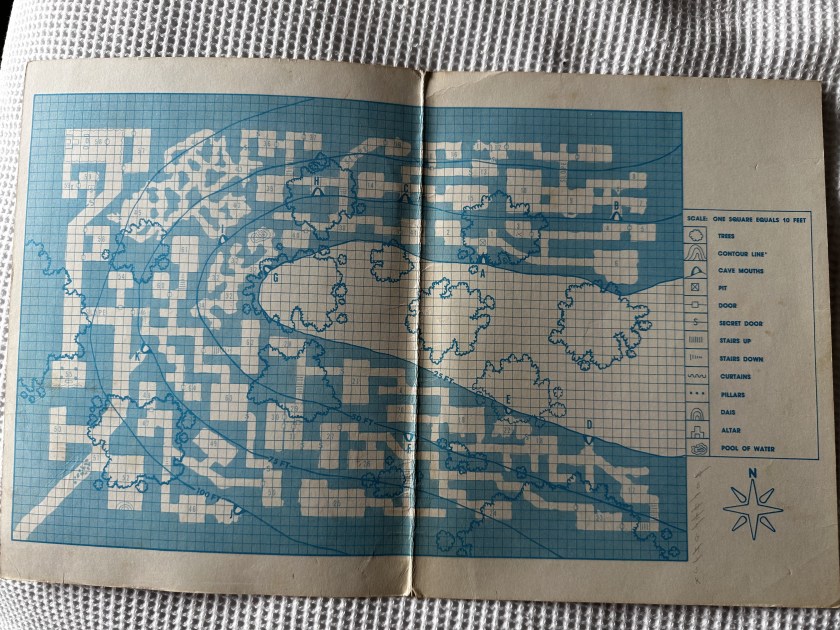
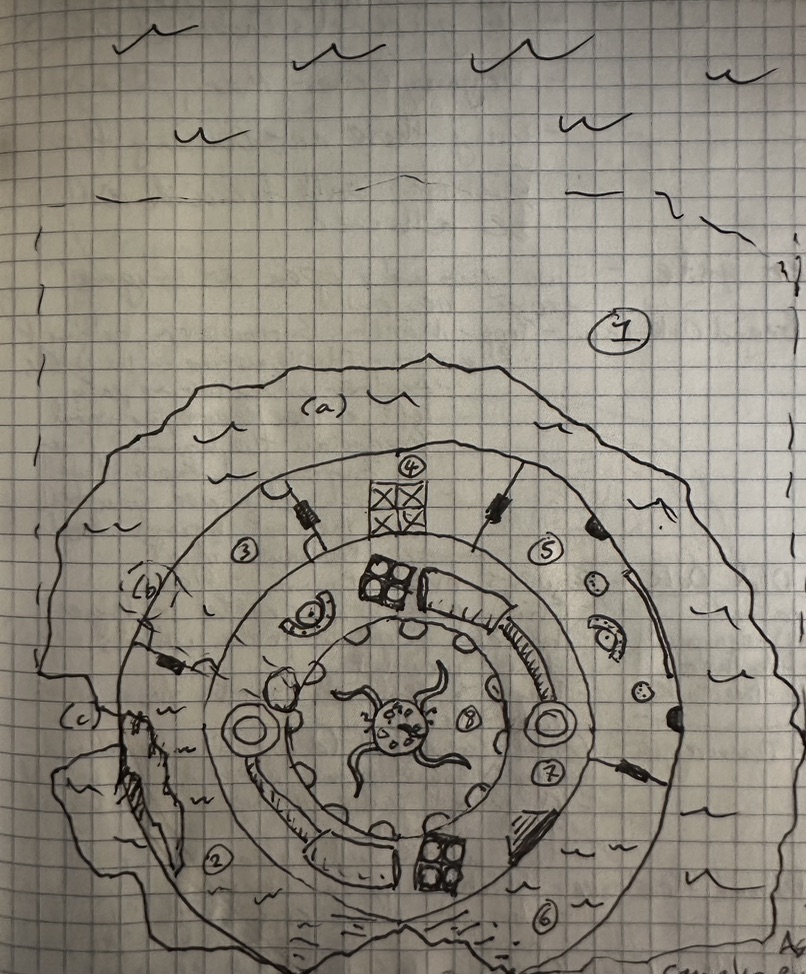
My map of the alien ship crashed into a sea cave - the final level in my dungeon. It looks like a flying saucer with a crumpled hull at the bottom of the map.
Crashed ship map

It took them very little time to decide to teleport down to the ship to deal with the computer. From the teleportation room on the ship, they first went and explored the holo-deck room where they saw the vision of the alien world I described above. And then, after a random encounter with some star shaped crystal drones, they checked out the bridge where they found the holo-log of the captain.

Conclusion

Not just yet. Actually, the conclusion of the Woes of Sorrowfield is definitely coming next week. Looking forward to it! I have a big finale encounter planned. I hope all these PCs survive it. I’ve gotten really rather attached to them.
The cover of Planescape adventure, the Eternal Boundary. A pale, bald dustman pushes a gurney with a sheet-covered corpse in the foreground. The silhouettes of adventurers peek through an archway in the background.
The Eternal Boundary

In other Editioning news, our AD&D 2nd Edition journey starts this evening! We’re going to be playing the Eternal Boundary, a starting adventure for the original Planescape setting. I’ve already warned the players that making AD&D PCs is not like Basic or OD&D. I expect us to take the whole session just to roll them up, choose races, classes, kits, proficiencies, spells, equipment, factions (Planescape-specific but very important) etc. Its been so long since I’ve played this game… Can’t wait!

The Editioning, Weeks Seven and Eight, Basic D&D

The Basic Box

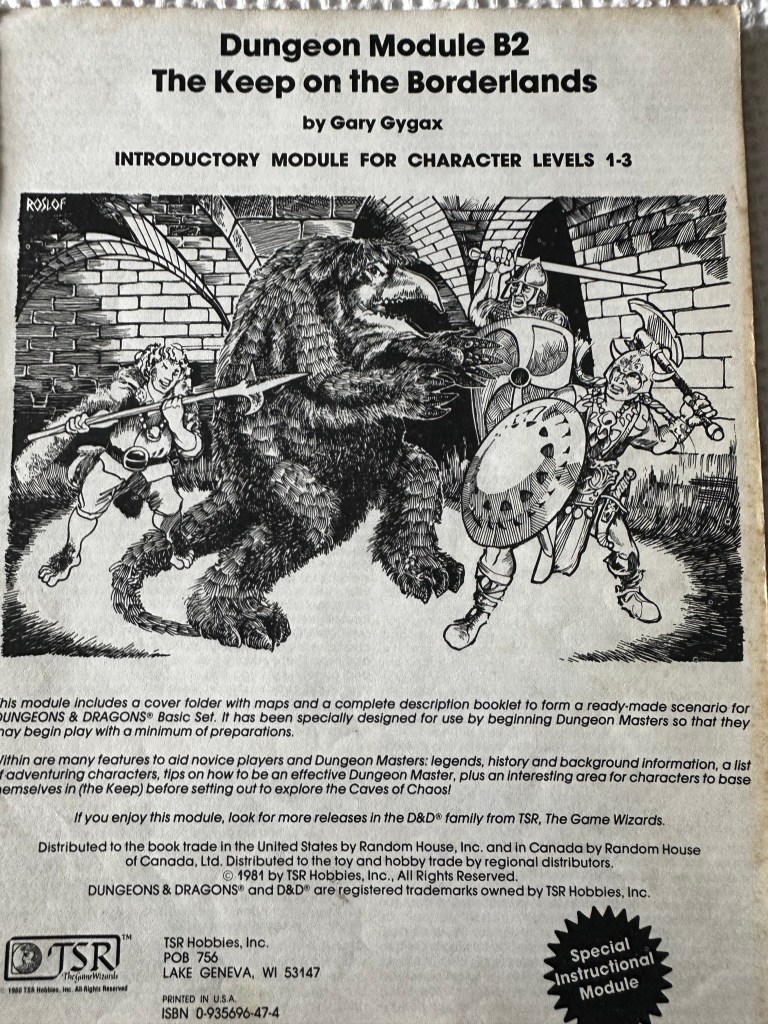
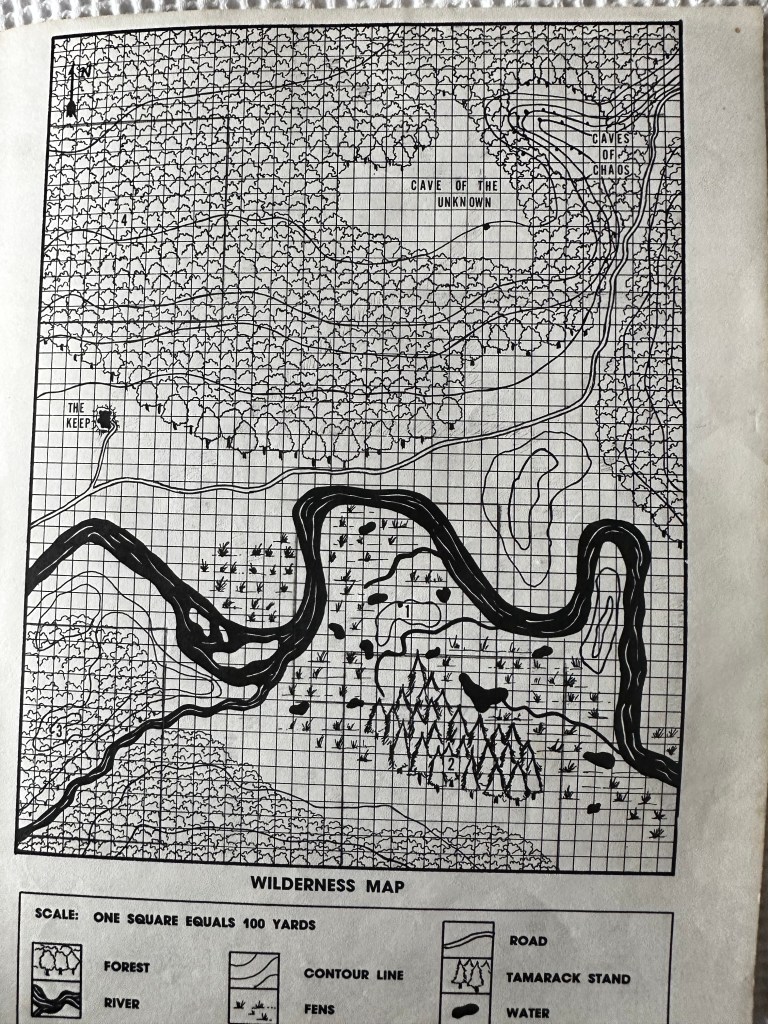
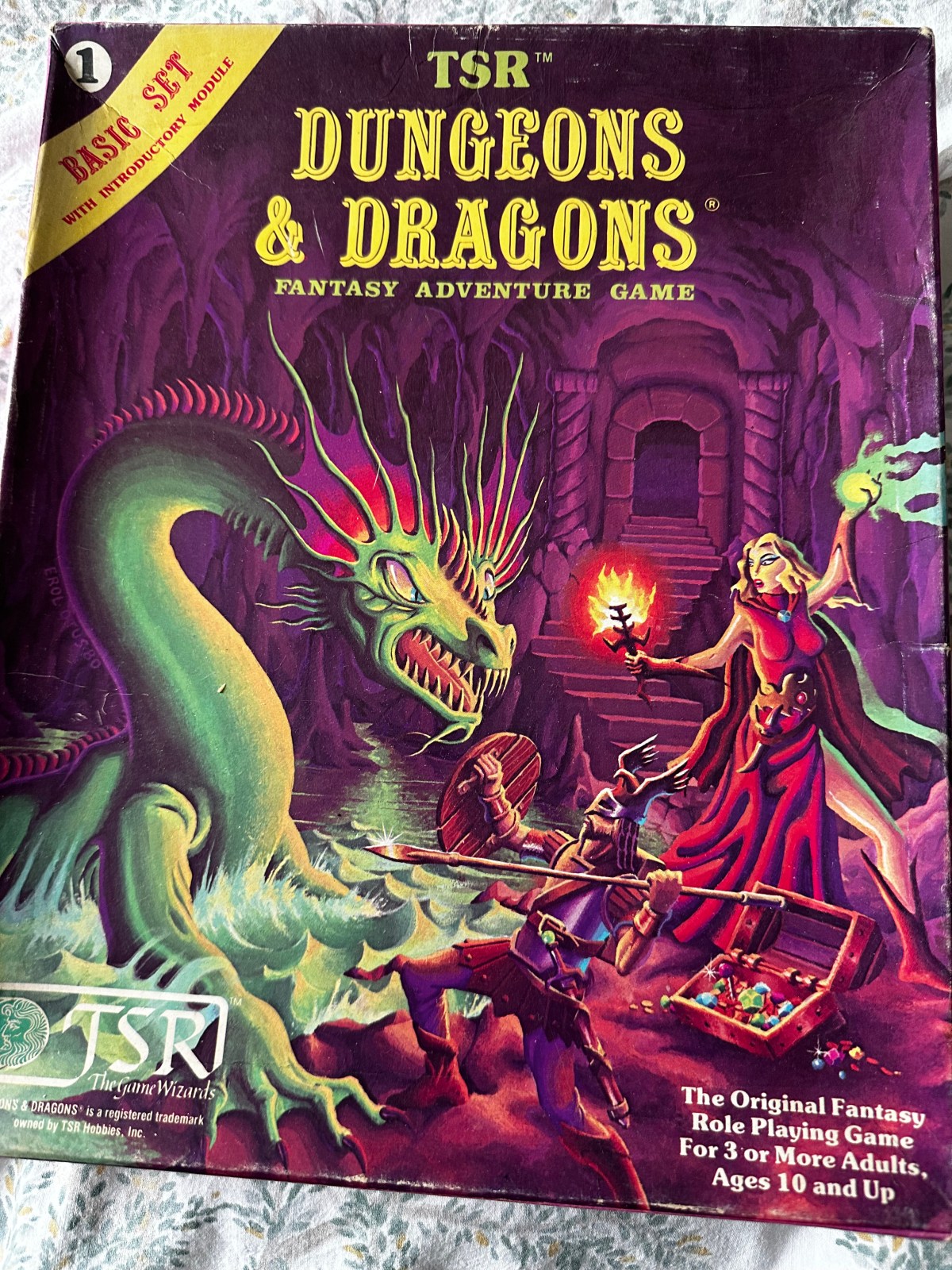
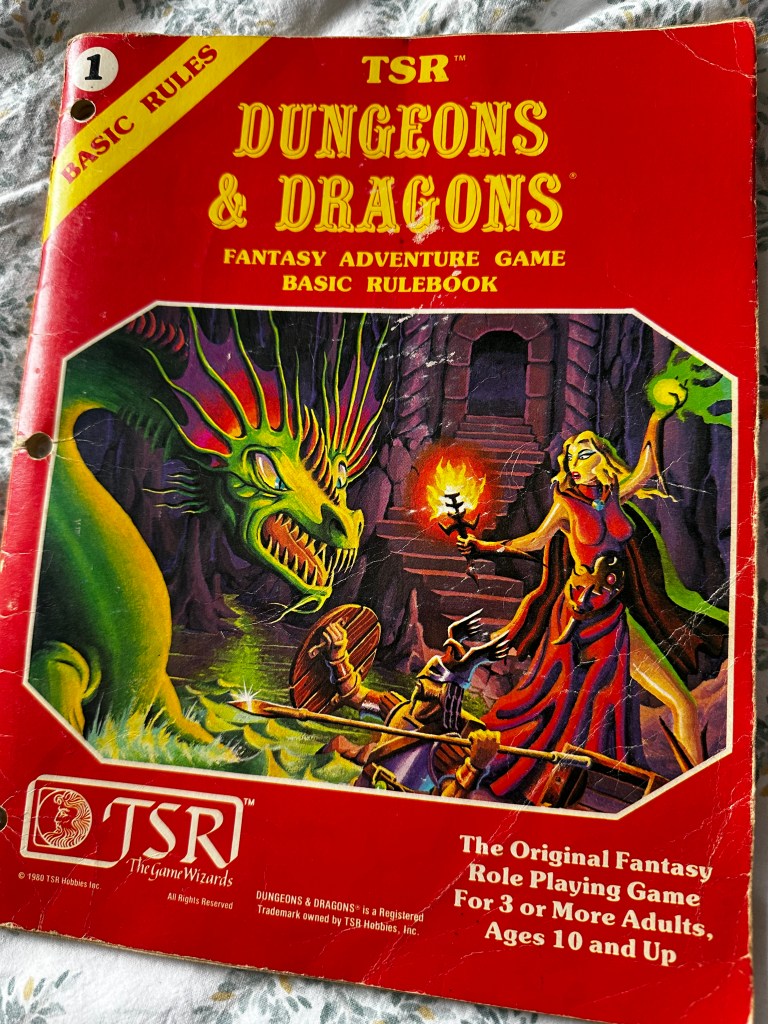
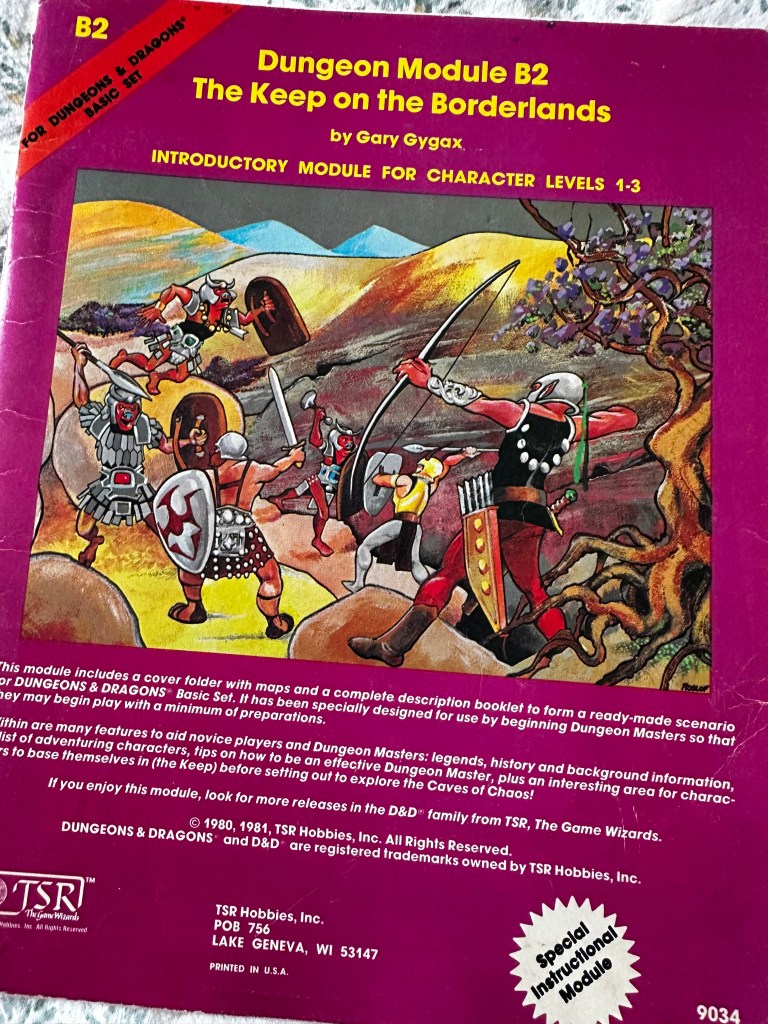
The Shop on the Borderlands has me in its thrall, dear reader. Every Friday, about lunchtime I receive their newsletter, News from the Borderlands, and my wallet doth quake with fear. There is, invariably, a long list of classic D&D titles newly received as stock. They tend to get them in job-lots, so one week, there might be a preponderance of AD&D 1st edition Greyhawk books, and the next there’ll be a dragon’s hoard of DCC adventures. In fact, it has been invaluable in building my collection of D&D books for the Editioning. The vast majority of books that I didn’t already own, came from the Shop on the Borderlands. It’s great. It has an amazing selection of used and new RPG books, from the original OD&D books going for thousands of pounds, to the latest 5E titles, not to mention all the other RPGs they stock. I would highly recommend checking them out, particularly if you’re in the UK. Check out one of my newest purchases in the gallery below. It’s the 11th printing of the Moldvay Basic D&D set. It’s missing the dice and the rulebook has seen better days, but, since I didn’t buy it as a collector’s item or an investment, that doesn’t bother me. I have been using it at the table while we continue our adventures in the module included in this very set, The Keep on the Borderlands!

Hard on the Hirelings

One moment, things are going your way. You and your mates have gone out on adventure, sowed seeds of war between rival clans of humanoids living in the Caves of Chaos, gained the respect of the local authorities and have even made a coins along the way. And then, dear reader, the random encounter table just fucks you. We have learned this the hard way, over and over in this adventure. We’ve been unlucky with our encounter rolls most of the time. On our very first encounter, my first PC, Edmund, went down to the very first arrow that was loosed in an ambush of Ospreys. Later, after braving and surviving the storied Caves of Chaos, our resident halfling PC, Lotharia was brutally disembowelled by a griffon while returning to the keep with a spell book delivery. In our most recent random encounter disaster, we lost half of our eight hirelings in an encounter with a troll on the road back from the Caves. We defeated it narrowly and followed its trail back to its stinking, filthy lair, where we took care of some larval trolls too, but not without first losing another of our hirelings.

These were heavy losses, all of them, although, I’ll be honest and say we had a respectfully understated celebration of the fact that we didn’t have to split the xp between all eleven of us…

Anyway, the point is to expect the unexpected in old school play. Also, that the more hirelings you have the more targets there are that aren’t PCs, so that’s been helpful.

Murder and Intrigue

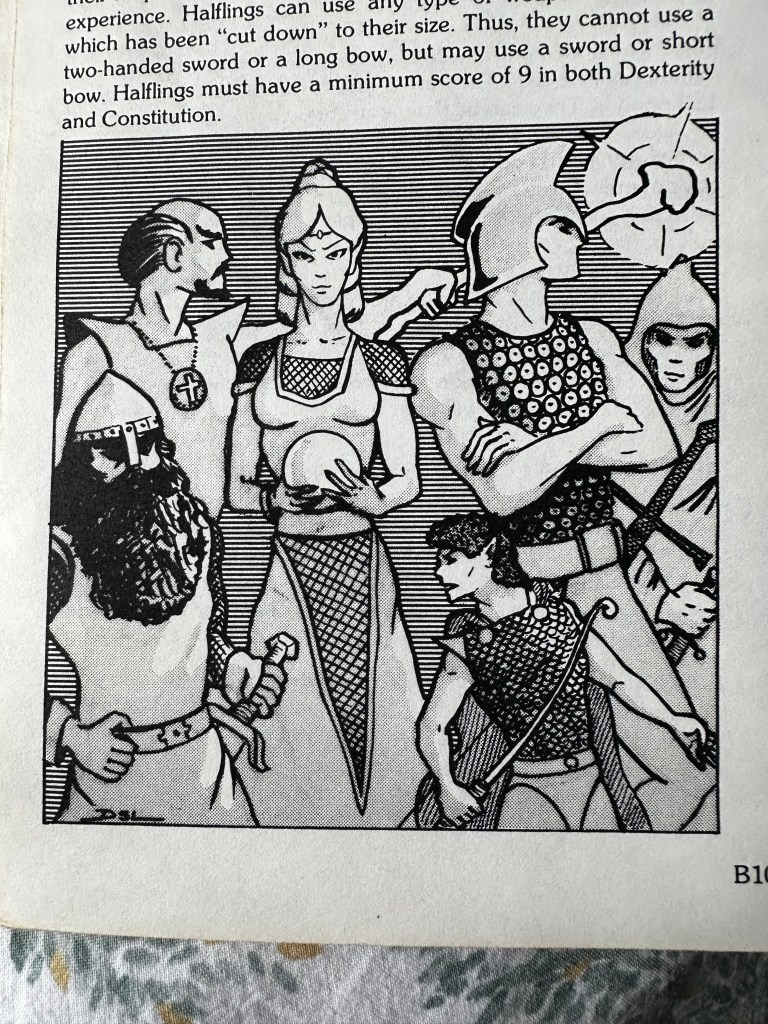
Adventurers! A black and white illustration from the rule book depicting a variety of adventurers
Adventurers!

Events are moving along without us, or, perhaps because of some of our choices. As I noted in my last Basic D&D post, we’ve taken the side of the castellan of the Keep and taken the ears of a number of Ospreys, the rebel band who want to overthrow him. Perhaps, if we had decided to support the rebels instead, the most recent shocking events might have been prevented (though probably at a very high cost in lives.)

In the last Basic D&D post I mentioned we had been attacked by a band of mercs sent to kill my character, Thaddeus Nightbane. After killing them, we proceeded on to the caves of the Shakkelwart Clan of orcs. We spotted and safely set off a trap in the mouth of the cave. This attracted the attention of the guards, who we convinced to allow us to talk to their leader, Baralgus Dorden (no idea if that’s spelled right.) We convinced her to welcome us in and we feasted with them before delivering the arms sent by the Thyrenian Guild. This was a fun scene where we learned a lot and, hopefully, planted some seeds of doubt in Baralgus’ mind regarding her allies, the Barrowdelve clan and the gnolls as well. We gained a RESPECTED reputation with the Shakkelwarts in the process.

By the way, I mentioned in a previous post that there was a reputation mechanic built into this module, but that’s not true. Instead, this is actually DM Isaac’s genius addition to it. He was inspired by the Root RPG, and it has enriched our experience of the game. We are actually going out of our way to ingratiate ourselves with particular factions to improve our standing with them, instead of thinking of them all as fair game.

Following this, we returned to visit our other besties in the Caves of Chaos, the goblins led by Sharktroll. We delivered another cache of weapons and armour to them (in fact, this is just stuff we’d picked up from looted enemies, some of whom belonged to this very goblin clan!) We’re hoping for all out war between the orcs and the goblins, and we might get it if we keep pushing this way. The goblins also released some prisoners that our Thyrenian Guild contact, Richard “Dick” Kirkdon, has asked us to retrieve for him.

With that, we set off back to the Keep again. And that’s when we ran into the aforementioned troll. I have to give props to Isaac here once again. Trolls are common enough in D&D and related media, that we generally feel we know them, we might fear them a little given their regenerative abilities and all, but, the knowledge of them makes them a little less scary. Isaac turned this on its head with his sensory descriptions of its look, its smell, its otherness. Scared the pants off us. And then it started killing hirelings. Anyway, that was bad, as I mentioned before, but we did get some treasure out of it.

Back at the Keep, we went first to the Temple of the Holy Sun, where the entire populace had gathered for the funeral of Father Burgoyne. The mourners were giving Tom’s Elf character, Eandril, the dirty eye. We soon discovered that this was because the priest had been murdered by the Castellan’s elven advisor. So, of course, we went to talk to our good buddy, the castellan. After enduring some more anti-elfism from he guards, we were granted an audience. He explained that Cywyn Morningflower, he advisor had been accused by Father Burgoyne of being a member of the reviled Serpent Cult that had once made its home in the Caves of Chaos. In response, the elf had drawn his sword and run the priest through. The castellan had little choice but to imprison his advisor since the murder had happened in his hall and in his presence!

We told him we’d crack this case wide open so he let us talk to Cywyn (genuinely have no idea about this spelling either btw.) Turns out, the elf was just sick and tired of Burgoyne and his constant racism and this was the final straw. He really did murder him in anger. But one other thing came up. The priest had claimed that he had evidence that proved Cywyn’s cultishness and that it was in his chambers beneath the altar in the church.

Next stop, church! I distracted the gathered acolytes while the Anastasia and Eandril investigated the hidden chambers below. They discovered no evidence against Cywyn, but they did find a snake staff and some magical armour and maces, which raised questions more about the church than the elf.

Conclusion

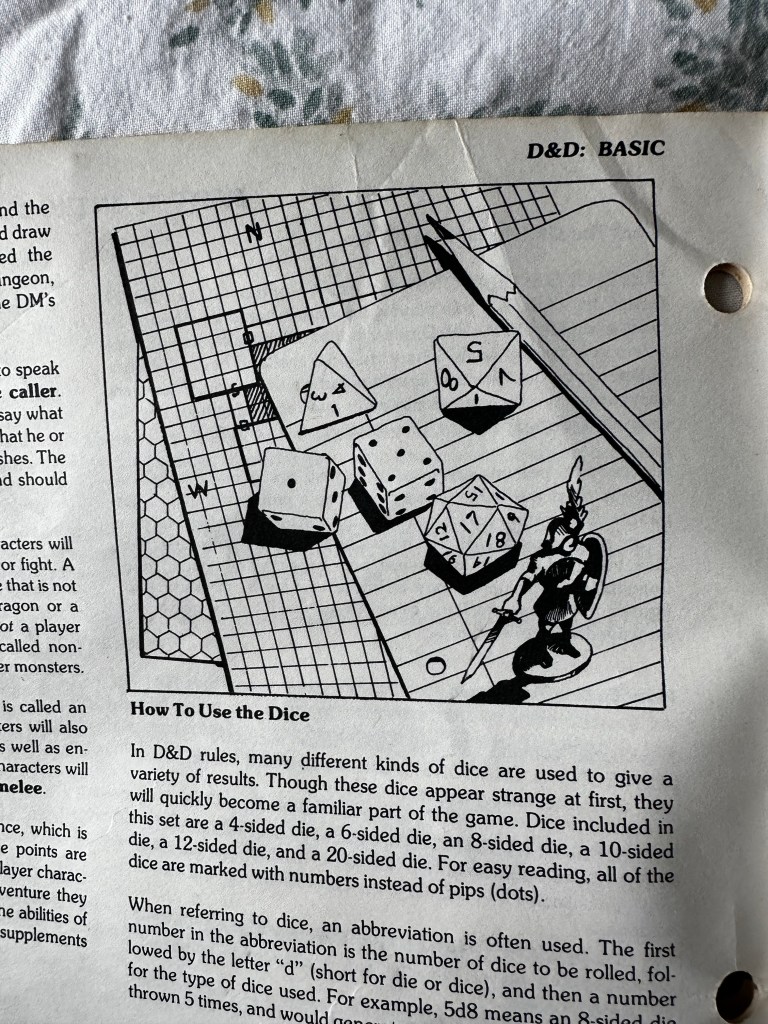
How to use the dice. Black and white illustration depicting some polyhedral dice, a mini, a pencil and some paper
How to Use the Dice

I think there might only be a couple more sessions of our adventures on the Borderlands. I’ll miss it when it’s over. I have grown fond of our little band and and the relationships we’ve built in this place.

I probably won’t miss the random encounter tables quite so much, but even they have introduced elements of true peril and danger to get the blood really pumping.

Back with more soon.

The Editioning Weeks Five and Six, OD&D

The Woes of Sorrowfield, Sessions Four and Five

The rain won’t stop and the woes keep coming.

As you may have read in my last post on our Editioning, Basic D&D game, my approach to the Editioning is evolving. Originally, I had only wanted one adventure of about six sessions per edition. This seemed reasonable at the time. But, as the weeks go on, I can see that it was never realistic. The Keep on the Borderlands feels like it’s only just now, seven sessions in, getting into full swing in that game, and Isaac, our DM, asked us all about the future of it. We all agreed that we’d like to continue until we got to a natural end point. This is a huge feather in Isaac’s cap. He has been running a fun and fascinating adventure for us, and, despite the character deaths, we all are enjoying it enough to want to continue.

OD&D is in a similar but slightly different spot right now. We have an enthusiastic bunch of players and the adventure is still going into session six. But there is an end on the horizon, at least from my point of view. Since I am making this adventure from scratch, using guidelines from the Original D&D books, I have more control, and have had from the start. The hexcrawl through the Barrenwood took a bit longer than I expected, three full sessions but I don’t regret that at all. I think it was a lot of fun and set the scene for the dungeon nicely. I’m expecting three to four more sessions of this game. And you never know, there might be more in the future sometime, if the players are interested.

So, the general philosophy behind the Editioning is to play the adventure for each edition for as long as we’re all enjoying it, and hopefully to the end to the adventure, rather than enforcing a strict six session limit. I think the challenge has to take a back seat to the players and their fulfilment, after all. This change in approach might mean the challenge takes longer than expected, but that’s ok too! Long may it last, I say!

Dungeon Time

Breandan the Hermit set them on their way, helpfully providing directions through the forest that allowed them to avoid any further random encounters. The party soon found themselves on the coast, not far from the edge of some sea-cliffs, getting whipped by gale force winds and soaked by torrents of rain. The ground beneath their feet was a sucking bog of muck, but they were still able to identify an ancient road that brought them, inexorably to the ruined wizard’s tower they had heard so much about recently.

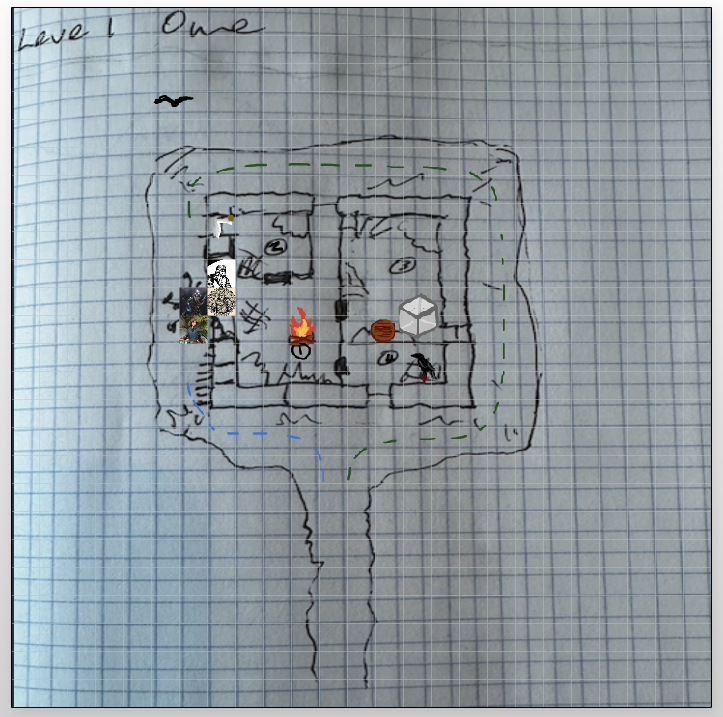
Level one of the dungeon, the ruined wizard's tower.
Wizard’s Tower Ruins with player doodles

The is level one of the dungeon. It is specifically supposed to disguise the nature of the levels below. The ruined look was designed by the builders of the dungeon to make outsiders think nothing of the place. I even made it so there was no entrance on the ground floor. This is a common trait in Irish round tower design (although, my tower is anything but round.) The idea was to make it easier to store and protect your valuables but making the entrance inaccessible without a ladder or something. Since my ruined tower was just a roofless, ground floor, overcoming this obstacle was trivial for the PCs; they just climbed.

Inside they found a group of dwarves, mercenaries from the south who sought refuge from the elements in the ruins, as they found themselves rebuffed every time they tried to enter the forest. They, too, had heard the call for aid from East Barrens village, it seems. The adventuring party, now two hirelings down, decided to take the four dwarves on as retainers and then set about searching. They had a couple of advantages here, information they had gleaned from rumours and previous encounters. First, they spotted a raven settle into the tower ruins as they searched the perimeter, and they had stories about talking ravens who they should not cross, from he people in the village. Second, they had found Ferris’ diary. Ferris was one of the previous adventuring party to attempt to enter the dungeon. It told them they would need a special handle to enter the dungeon below.

The first thing they did was to try and find the raven in one of the tower’s ruined rooms. When they did, the rumours about talking birds proved true. In classic style, it asked them a riddle and promised them rewards if they could deliver. I had no particular origin story for this raven, and it’s not connected exactly to the plot, I just like the trope and wanted an excuse to have them answer a riddle. It felt very old school. They got it right and were rewarded with a variety of magic items from the raven’s apparently invisible hoard. With that, they left the corvid alone and proceeded to search the level, eventually discovering both the handle and the trap door that opened it. I had popped a Grey Ooze on top of the trapdoor as an encounter, because it was transparent and they could try to grab the trap door through it. They didn’t quite fall for that though. In fact, they defeated fairly quickly, despite it taking no damage from blunt weapon attacks. With that, they opened up the trapdoor and descended the smooth, cement shaft with the inbuilt ladder to the floor below.

Dungeon Level Two

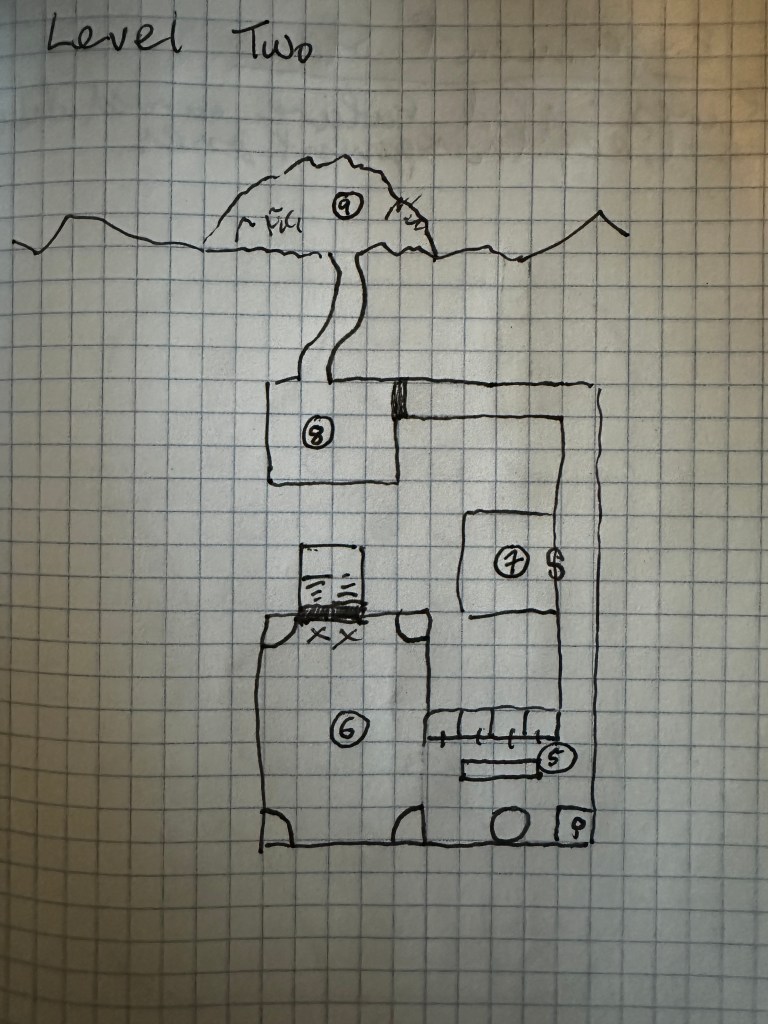
Dungeon Level Two, a five room underground level
Dungeon Level Two

I enjoyed the reaction to my design of the room they landed it. I described it as being all constructed of a singular light grey material, like cement, with a low bench of the same material, a row of lockers along one wall and small, tight chamber constructed of glass with a spigot in it. It took a few beats, but then Isaac asked, “is this a locker room?”

Perfect.

Anyway, they sent the cleric down first since they had heard about a horde of undead down there. Sure enough, after a low humming noise from the adjoining room, they heard the clacking and chattering of skeletons.

I have already written about my idea for this floor in my first OD&D post. Essentially, these undead are projections. As they were defeated more would be spawned in that room, but they would get more and more powerful to kill or frighten off potential explorers.

The order was:

  • Wave 1: Skeletons – I rolled up 19 of these, but with a cleric on the party they made short work of them
  • Wave 2: Zombies – I only rolled up four of these, but their appearance out of then air in room 6 alerted the players as to what was happening
  • Wave 3: Ghouls to up the ante with their paralysing touch
  • Wave 4: Wights – these bastards always scared the shit out of me as a kid playing this game. It was devastating if they managed to suck a level of experience out of your character. I mean, you worked so hard for that!
  • Wave 5: Wraiths – similar to the above but even tougher

Room 6, where the undead spawned, contained four crystal orbs that hummed and glowed when a new wave spawned. So the PCs figured out immediately that they needed to disable them to stop the undead. That’s what my players did, but there were other options.

In the secret room 7, there was a series of control consoles. They managed to find it by noticing the strange vent in the wall and removing it. On each console was a series of indentations, and in each indentation, a gem was placed. These were valuable cut gems, but they were also used to control things on that level. They controlled everything from the lights to the hard-light undead projectors. With a little experimentation, they could have used these controls to disable the undead waves.

The room also contained a holographic projection of a crystalline the humanoid. This was a simple prerecorded message, which, if they could have understood the language, would be telling them how to use the consoles and their purposes. But the Magic User had already used up her Read Languages scroll, so they’re just going to have to figure it out for themselves.

A couple of other things in room 5, I put some bio-hazard suits in the lockers which will act as magic armour of sort, giving bonuses to saves, and I also left a futuristic looking wand of Detect Magic. I did this because the Magic user always wants to use that spell but not really at the expense of a precious spell slot. It also gave them valuable information about the undead (they emanated illusion magic, not necromantic) and other parts of the dungeon.

In room 6, They noticed difference in the surface on the floor in front of the iPod-future, translucent white double doors. The Fighting Man in the party used his ten foot pole to poke that surface and set off the trap beneath, a lethal spray of tint crystal shards exploded upwards, making his ten-foot pole into a nine-foot pole. He did manage to poke the doors which opened to reveal a stairwell leading down.

Conclusion

They are not quite done on this level. When we left them, they were still mucking about with the controls in the secret room. And they had detected an evil presence to the north west (room 8.)

Even after they make it to the next level, where things become even more sci-fi, they have a ways to go.

I’m still really enjoying the creative endeavour of building and populating this dungeon. I went into it only with the map, the outline of the plot and the general themes. I have been adding details as we go along so I can respond to things the players say or do. Maybe this is not quite in the spirit of the Original D&D, but I find it works very well, so I’ll stick with it.

The Editioning Week Four, OD&D

The Woes of Sorrowfield, Session Three

The hex-crawl continues through the Barrenwood. The PCs have been doing their best in difficult circumstances. Sorrowfield is a miserable place right now. There have been some sort of magical ballistics going off over town and country, undead and chimerae stalk the land and the bloody rain hasn’t stopped in weeks. Perhaps it was the constant and growing danger around them that prompted the adventurers to finally question the motives of the pixies they’d been following for a few hours through the forest.

The pixies, you see, had been trying to get them to the lake in the northwest part of the woods. Once they reached it, however, they could see a soft, violet glow from the waters. It matched the glow from the crystals they had discovered throughout the forest so far. The pixies hovered above the lake and asked them to dive in, claiming the source of the corruption was submerged beneath the unsettled waters. The PCs thought better of it despite the pixies’ mocking and cajoling. They wanted to circumnavigate the lake to see what sort of traps the mischievous little fae had in store for them, but that proved difficult. To the east, the river emerged from the lake’s waters, and there were no convenient trees to chop down to act as a bridge this time. To the northwest, they found a vast patch of crystalline briars. Since the briars covered the entire hex, they eventually decided to go one hex further around to the west, avoiding it entirely. This forced them into a a hex that was particularly confusing, with lots of entangling plants that tried to trip them. I asked them to roll a d6 to see if they got lost. They avoided rolling a 1 so they were able to press on in their desired direction.

All of the above; the pixies, the briars, the hex of confusion, all came from encounter table rolls. You can see that table on my last OD&D post here. They have all come together to make some interesting challenges and have forced the PCs to explore further than they might otherwise have. I’m fairly satisfied with most entries on the table. I feel like there’s a good mix of combat and non-combat encounters that require a good variety of solutions, skills and ingenuity to deal with. But there were two entries I really hoped they would roll up. Lucky me, those were their next two rolls!

The very next hex they entered, they rolled an 8, so they came across the Hermit’s Shack. They knew from rumours gathered in town, that there was a Hermit out in the woods somewhere, so it wasn’t a big surprise. They approached politely and Breandan welcomed them in, offering them tea and “biscuits.” I had a great time playing this guy. After a couple of sessions of mainly exploration and combat, it was refreshing to have some solid role-play. He was eccentric but friendly enough. He explained that he had run into the other group of adventurers who had been sent from the town of East Barrens. They had come across his shack on the way back from the ruined wizard’s tower on the coast to the west. They explained to him that they had been rebuffed in their attempts to delve into the dungeon beneath the ruins. Wave after wave of undead appeared as if by magic on the first level below. There was no way through… These adventurers had moved on after a restful visit, turning back towards the town.

Breandan also had a quest for the adventurers. He wanted them to hunt down and slay the carnivorous crystal elk that had been terrorising him of late. He wanted to travel up along the river to the north to see if he could escape this crystalline corruption, but every time he attempted the journey, the elk chased him back home. He promised the PCs a valuable reward if they would do this for them. They readily agreed and, after resting up in his cabin for a few hours, they set off to do just that.

Now, I considered just having the elk itself as the encounter in the next hex, but I decided, in the end, to stick to my own rules. I got them to roll on the encounter table again. This time they rolled a 6. The halfling heard them before she saw them, a shambling, groaning group of partly crystallised undead amongst the trees ahead. She tried moving silently through the woods to flank them and get a better look, but she failed badly, and got slammed to the floor by a zombie instead. This encounter was really over before it began, even though the zombies won the initiative roll. They couldn’t hit any of the other PCs, and then Tadhg, the cleric, now on Village Priest level (level 3) stepped in. A Village Priest can ably and automatically turn zombies, just have to roll 2d6 to figure out how many are affected. Well, Tadhg turned all four of them. But as he did so, the party got a good look at the zombies, two humans, a dwarf and a halfling, the exact make-up of the other band of adventurers. Now, this encounter on the table also involved the reward of an adventuring diary, which the PCs would have gotten if they had a chance to loot them. Since they sent them running instead, I decided to bring the elk into play. As the dwarven zombie was scarpering, the monstrous crystal antlers of the carnivorous elk emerged from between the trees, skewering him and sending him flying through the air. And suddenly, they were back in combat.

I like the “per-side” round by round initiative roll of OD&D. I like that it utilises a simple d6. I even like that, if both sides rolls are equal, then everything happens simultaneously. All of this adds a bit more randomness to the proceedings and keeps it interesting. Especially in this system where each combat round equals a full minute, you can imagine the ebb and flow of combat evolving constantly, with the momentum swinging one way for a time, and reversing quickly and unexpectedly when the enemy spots a weakness or exploits their opponents’ mistakes.

This was the strongest monster they had faced yet but I was only reminded of the primacy of action economy in D&D. It applies as much in this version as it does in 5E. One combatant against six is not an equal fight, no matter how many hit dice that one enemy has, unless they’ve also got six attacks per round. So, of course, they made relatively short work of it, and somehow, managed to avoid any further damage as well. What these two fights combined really showed, though, was the full range of combat abilities in the group. We had turning undead and healing magic, we had magic missiles and invisibility, and, as well as that we had backstabs and the Fighting Man even got in a mighty blow or two.

After they had dealt with the elk, they investigated the body of the dwarven zombie. Finding a diary on it, they were able to confirm that the corpse used to be Ferris, the son of the town’s blacksmith and stonemason. The PCs had been asked to keep an eye out for him by his mother so finding him like this was a poignant moment. His diary described his journey to the old wizard’s tower, the hidden entrance to the underground dungeon and the desperate fight with the hordes of undead in the basement. They had been forced to retreat, as Breandan had said earlier.

With that, they took the head of the elk and the body of Ferris back to Brendan’s place. They asked if he would return the body to his parents in town but he refused, conceding instead that they could bury him there on his land. They did so and held an impromptu funeral for the boy. It was a touching scene. That done, they received their reward from the hermit and rested up again that night before setting out for the wizard’s tower the next morning.

I just want to share with you the hex map as it looks now. The players, totally unbidden, have been filling it in with the things they’ve encountered on their way through the Barrenwood on the Roll20 map. I love this!

The hex map of Barrenwood. Now with added colour!
The players have been drawing on my map and I love it!

Conclusion

We had a couple more level ups following that session so some of the band are now level 4! I will be honest, I had not totally foreseen the speed they would be levelling at. Still, it was my decision to make levelling as easy as possible. For instance, I am allowing level-ups at the ends of each session, rather than the ends of adventures and I am handing out plenty of gold and treasure (1GP + 1XP in this edition), as well as bonus xp for completing quests and clever solutions to problems. So, I’m actually quite happy with the situation.

What it does mean though, is that I will have to upgrade some of the encounters I had planned for the dungeon itself. Since I don’t have the whole thing prepared yet and I’m not writing up entire stat blocks for encountered monsters anyway, it’s really no more work in prep than I was going to have anyway. I plucked that elk out of the Monsters & Treasure book’s list of monster stats at the last minute. It was a just a re-skinned unicorn. I love being able to do this quickly and easily when I don’t feel beholden to the 1000 entries in various monster books to choose from. I would often find myself in decision paralysis when presented with all the monsters available in official products for 5E, unable to find the exact right one for a given encounter, despite the sheer number of them. I don’t have that problem here at all since all the monsters are just a collection of hit dice and ACs with maybe a special feature to set them apart. It’s very easy to imagine that line of stats as representing any monster at all, or to customise them as you see fit.

Anyway, that’s it for the report on Session Three. It might be a few weeks before there’s another one, what with various IRL happenings. But I’ll be back next week, probably with a post on my current UVG exploits utilising the Troika adventure, The Hand of God. See you then, dear reader.

The Editioning Weeks Three and Four, Basic D&D

Keepin’ on Keepin’ on

We’re two more sessions into the classic Basic D&D adventure, the Keep on the Borderlands. And we’re getting into the meat of it now, I think. We’ve got multiple factions, both in the Keep itself and in the Caves of Chaos. We’ve got spying and betrayal. We’ve got court intrigue! But most of all, we’ve had laughs and fun with this.

Donkey Konging

There are some spoilers for the Keep on the Borderlands below. If you think you might want to be a player in that adventure, you might want to choose a different post to read.

We launched straight into a fight at the start of session three. We managed to trick and ambush a dozen strong goblin patrol, trapping them in a pincer movement. The fight didn’t last too long, actually. We took out their leader and the rest pretty much dropped their weapons and happily consented to be tied up and gagged so they couldn’t follow us as we went to pillage their home. We did bring one of them with us as a kind of guide. Gaw was a congenial sort of goblin, and very eager to help. He told us about their leader, Sharktroll. Now, Sharktroll, is, it turns out, neither shark nor troll, despite the name. She’s a goblin and the other goblins seem pretty scared of her. Armed with this knowledge, we proceeded along the tunnel to the west, keeping a sharp eye and ear out as we went.

At the start of the campaign, Isaac presented us with a list of traditional roles for players that he cribbed from the Retired Adventurer blog. Tom took the Quartermaster and Timekeeper roles. I got the Rules Coordinator and Mapper ones. Normally, in our groups, the GM just gives out the map and trusts in the ability of the players to compartmentalise the knowledge they have, with the understanding that the characters don’t have it. It works well, saves time and avoids frustration. But we thought it would be an interesting experiment to do it the old fashioned way. So far, it’s going ok. Isaac has been good about providing accurate measurements for rooms and corridors, and I’m using graph paper to maintain consistency. At times, it has been hard to picture some of the rooms correctly in my head, but in those instances, Isaac has kindly showed us that part of the dungeon map from the adventure. Keeps me busy.

A map drawn with pen on graph paper. It shows a wide canyon and a caves sytem where the goblins live.
A photo of the crude map I have drawn so far of the goblin caves in the Caves of Chaos

So, we went exploring the goblin caves, found a sack full of gold which we robbed, and a barrel full of javelins, which Thaddeus Nightbane, my thief, peed in. Of course, we almost immediately found cause to use those miturated upon javelins as another goblin patrol approached the guard room where we found that stuff. We were able to get ourselves set up to launch a surprise attack on them, chucking spears and, even more fun than that, rolling barrels of water down the narrow tunnel! Donkey Konged the hell out of those gobbos. Killed ‘em all in one fell swoop. It felt like a really great old school moment; setting up a ridiculous plan with very little time and only the few items to hand. Surprising that it worked out so well, though, to be honest.

Snakey

We pushed on, thinking to find this Sharktroll character and maybe do her in. But, instead, we found a large room full of goblins: men, women and children. We didn’t alert them to our presence, luckily, but this “family room” as we called it, gave us pause. We all cooled on the idea of clearing out these goblins, now that the ramifications of doing that were staring at us with big green, baby eyes. It was at this point, in the tunnel outside that room, that we turned to Jabeck, the so-called Priest of the Sun who had asked us to accompany him to rid the caves of the monsters. We delicately questioned his real motives here. And with the lightest of verbal jabs, he revealed his true colours, as an adherent of the Cult of the Great Serpent! He and his acolytes attacked and we were forced to kill them. The acolytes went down without much hassle, but Jabeck weathered round after round of attacks. He was wearing magic plate mail, so his AC was ridiculously low. He did us some damage too, but, eventually, we brought him down and took his stuff, and his head.

I had known there was a treacherous priest somewhere in this adventure, as it happens. I think I read it in the Wikipedia article I linked above, in fact. But I didn’t know which priest. It could just as well have been the racist one back in the keep, who had asked us to keep an eye on Jabeck. So, it was fun to discover this in this way, while delving this dungeon.

Of course, the noise of battle attracted the attention of the goblin civilians. We spotted them in the entrance and then all our torches went out (thanks to Tom’s timekeeping for that incredibly dramatic event!) some of them ran to get Sharktroll, who returned with her bodyguards and wives. Through our goblin-speaking dwarven hireling, Gimleth, we conducted some negotiations. I remembered that the rumour I had received about this place was that the Great Serpent cult had been wiped out by the goblins, orcs and gnolls so they could take over the caves. Deploying this bit of knowledge, we convinced her that Jabeck was the one who was to blame for any deaths amongst her people, that we might have caused. Unlikely as it may sound, she bought it. She seemed far more pre-occupied by the enmity between the goblins and the orcs and gnolls who occupied the other side of the canyon. On top of this, someone was stealing from their stores. Loot, food, everything was going missing, and they wanted us to help discover the culprits.

Our elf, Eandril, Tom’s character, used his secret door seeking abilities in the store room and immediately discovered a hidden entrance to the lair of the hobgoblins, Sharktroll’s erstwhile allies. So, we convinced her that it must have been the hobgoblins who were creeping in and stealing their hard earned booty, right from under their noses. We got her good and riled up and sent her off into the hobgoblin tunnels with a warband and a whole lot of righteous indignation.

We did not accompany them. Instead, we left them to it and scarpered off back home. Isaac rolled up the results of the goblin assault and was able to determine that they were successful in defeating the hobgoblins roundly. Huzzah! This seemed pretty good to us, as it reduced the number of Caves of Chaos factions we had to deal with by one.

Factioning

Back at the Keep, we returned to the racist priest with Jabeck’s head. In fact, I threw open the church doors while Lotharia the halfling, atop Eandril’s shoulders, hoisted aloft the head, declaring for all to hear that we had killed the priest! This didn’t go down very well with the other members of the clergy there gathered, and for a second, we were about to get into another fight. But then Father Burgoyne intervened, calming the situation when we told him what happened and showed him Jabeck’s forked tongue. Burgoyne congratulated us on a job well done and then went off to report these happenings to the castellan. We blagged our way into an invite to talk to his castellanship. We told him what we had found out about the goblins, how we had gotten them to defeat the hobgoblins and what had happened with Jabeck. In turn, he rewarded us handsomely. He gave us the use of Jabeck’s quarters, exempted us from the 10% gold tax at the gate of the keep and trusted us with an all important mission to capture one of the rebellious Ospreys alive!

On top of this, Isaac informed us that we were now RESPECTED with the Castellan. Not only that, but had also gained important reputation boosts with the church so that we were ESTEEMED in their eyes. We had even, somehow, gained respect amongst Sharktroll’s goblins! This reputation game was not something I knew was part of the adventure but it’s very welcome actually. Oddly, it struck me, at first, as a very video-gamey element. It reminded me of the reputation trackers you get in games like World of Warcraft. Indeed, the reps in the Keep on the Borderlands work very similarly as they unlock new quests and options within the confines of the adventure, as you can see by the offering of the quest to discover the thief in the goblin lair and the unlocking of the quest to help the castellan with the Ospreys. It adds a richness to the adventure and makes it, perhaps, quite re-playable. I imagine that, if we had gone to meet the Ospreys representative on our first night in the Keep, things might have turned out very differently indeed. Or if we had decided to explore the hobgoblin caves before the goblin ones, maybe the goblins would be the faction that got wiped out first instead. The possibilities are fascinating. I’m beginning to see why this module is so well loved.

Conclusion

We’re all getting very invested in this adventure. We’ve had a little while with our respective characters and they are very much developing their own personalities. Equally, there is an inter-character dynamic appearing too. The NPCs are compelling, especially as portrayed by Isaac, and the plot is doing enough to keep me interested in getting involved in it. What I had thought would be a relatively standard dungeon crawl is turning into something with far more bite and complexity, or it is the way we’re playing it, anyway.

As for the D&D Basic rules; I feel as though we have all more-or-less adjusted to things like THAC0, descending AC, etc, and, where the rules fall short, Isaac has been very pro-active in rulings. In several instances, he decided that the best way to resolve an action was just to make an ability check, i.e. a d20 roll under the PC’s defined ability score, such as a Strength check to lift those barrels of water to go Donkey Kong on those goblins. This has served to move things along nicely in instances which could have been bogged down in rule-checking.

I think we will be having a bit of an Editioning break over the next couple of weeks. I have another report on my last session. Of OD&D to come next week though, so please do come back for that, dear reader!

The Editioning: Week Three, OD&D

OD&D, The Woes of Sorrowfield, Session Two

Let me start by saying, if you’re one of my players, turn back now! Do not read! Danger! Danger!

The PCs gathered some hirelings. The town of East Barrens was not replete with adventuring types or even warriors, so I ruled that the only idiots available for hire were what OD&D refers to as “normal men.” This is a term from CHAINMAIL, I think, and means they are not fighters of any kind. Basically, they’re what later editions might call 0-level NPCs. Four of them showed up for duty. They did not all survive the session…

Hirelings are an interesting part of old D&D. You don’t really hear of a lot of 5e adventuring parties taking on a bunch of mercenaries as backup. But I remember playing AD&D particularly back in the olden days, the party would always want an extra NPC or two. They were often necessary to ensure survival. Playing OSR games like the Black Hack and Black Sword Hack, we have always employed hirelings for a variety of reasons in recent years too. Even in UVG, you probably won’t get very far without a crew of NPCs to keep your caravan running smoothly. UVG’s pretty old school in that respect. In the old games, they were pretty much just damage soaks, meat shields and extra carrying capacity. Even today, as a GM, I find I only role-play them when the players remember they exist as characters, which is not very often. In our Basic D&D game, the adventure we’re playing, Keep on the Borderlands, is designed for 6 to 9 players or something nuts like that, so we went all out of hirelings. Especially after my character got murdered by bandits in the first combat of the game. In oD&D and Basic, I think it’s easier to handle a larger number of characters, especially in combat. You don’t have to remember all those actions and complicated initiative order that you have in 5e and other more modern systems. Mostly, each character gets one actions/attack and they can move and that’s it. You roll initiative per side each round so you don’t have to keep the order in mind for a whole combat. This keeps it smooth. At least, that was our experience last week in both games.

The adventurers set off into the Barrenwood. They had to pass through it to find the source of the magical attacks the forest and the town had been coming under for weeks. It had not stopped raining and the road was a mucky morass. They trudged along the overgrown path into the dark, rotting woods and, before long encountered some trouble. A swarm of crystal infected arachnids had built a supernaturally strong web across the path in the dark, at just the height to trap unwary travellers. That’s what it did to our Fighting Man, Siward, who was leading the way. Abiss, the Halfling Thief set about cutting him free with her magical bronze sword while the others tried to scare off the spiders. Tadhg, the Cleric, made clever use of his lamp oil and torch, by blowing the oil out of his mouth at the flame to create a DIY breath weapon, incinerating a large part of the swarm and the webs as well, freeing Siward! They found some treasure on the ground below the webs, gold and some more magic items, a magic mace and a Staff of Striking.

I am running the Wilderness expedition as a hex-crawl. Here’s a picture of the hex map I drew in my “Pocket Dimension” from the Melsonian Arts Council. I bought a pack of ten of these a couple of years ago and I’m finally getting some use out of them.

A hex map in a hex-flower shape. It has letters from A to G along the top and numbers from 01 to 13 along the left hand side. There is a town in G-04 with a river flowing south and through it. a road goes from the town southeast and off the map. Another branches off into the forest that takes up the rest of the hex map. In the forest there is a lake B-05 and river winding south through the trees.
Barrenwood hexmap

Anyway, you can see the town in the north-east of the map and most of the rest of it is forest by design. I want the entire Wilderness portion of the adventure to take place in the Barrenwood. The area is not very large. I haven’t defined the exact size, but I’m thinking about an hour of travel per hex, with time added for encounters and rough terrain. Essentially, I ask the players to roll 2d6 on this encounter table each time they enter a new hex.

2Undead animals – crystalline growths – They won’t attack unless attacked. They make terrible noises while attempting to go on as if they were alive. Stats as Skeletons.
3Trapped merchant – stuck in a tree with strange crystalline chimeric creatures below. Stats as Zombies. Succesful attacks provoke a save vs Stone. Offers them 1000 GP to save him.
4Swarm of glowing crystalline spiders – trap! Treasure dropped amongst the webs – Staff of Striking, Mace +1, 560 GP, 300 SP, 500 CP. The spiders can do no damage but PCs will need to make saves vs Stone.
5Undead trees – crystalline branches. brittle and weak to fire – try to grab PCs. Treasure inside them – Total of 400 GP.
6Crystalline undead – one has a journal explaining how to find the entrance to the dungeon
7Pixies – frightened and angry – try to trick the pcs into swimming in the lake, diving for treasure
8Hermit’s shack – Breandan only drinks rain-water he collects himself in casks. Wagers the adventurers that they can’t kill the carnivorous crystal elk that he says has been stalking him. He will offer them an old silver amulet with a ruby in it (3000 GP.) Can also tell them the best way to reach the coast so they don’t have to roll on the encounter table anymore. Says he encountered another adventuring party returning from the tower ruins a while ago. Apparently they were frightened off by a horde of undead on the first subterranean level.
9Nothing but more sodden trees and undergrowth trying to trip them. Roll 1d6. On a 1, become lost. Roll 1d6 to determine the direction they go in.
10Crystalline briar patch. It takes up the whole hex. Will require ingenuity to traverse, or they can go around. If they brave the crystal thorns they will need to make one Save vs Stone per turn for six turns. They will find treasure, however. Roll on Type A table each turn.
11Roll on Wilderness Encounters tables in the Underworld and Wilderness Adventures page 18
12The rain stops and the sun comes out. Crystalline shards glisten upon every bough and underfoot. A lost Acolyte finds them. Grainne Bell, CL 1, AC5, HP3, THAC0 19, Turn Undead, Crystalline ear
Barrenwood Encounter Table.
I can’t figure out how to format this so it doesn’t look like crap on the blog. Sorry!

So far, this method has worked well and has been telling a story, which is what I wanted. I have struggled to stick exactly to the letter of the old OD&D books, mostly because so much is left to the referee in play. But there is also another point. The Underworld and Wilderness Adventures random encounter mechanic just didn’t work for me and the game I’m creating with the players at the table. There is a lot in the that book about castles in the wilderness, and a set number of hexes you can travel in a day and how far away you can be from a monster and still be surprised. There are no castles in the Barrenwood. It wouldn’t make sense in the context. Surprise will occur if no-one Hears Noise from the trees because it’s a forest and not open territory. And surely hexes can be any size one chooses? For all these reasons, I decided to go with my own hex-map + encounter table combo. It’s simple and effective.

The PCs escaped the spider webs with their loot and no casualties, although one of the NPCs got bit by a spider and failed her Save vs Stone so her index finger turned into crystal. She managed to keep it together enough to continue, though. They moved on into the next hex towards the river and they encountered a pair of mischievous pixies who flew around them laughing and invisible. The Magic user, Ilaina, used her own Ring of Invisibility and I ruled that she was able to to see the diminutive fairies in that state, because I thought it was a cool idea. She was able to identify what they were up against and get a good look at them (they had thought, perhaps, that these were talking crows that they’d heard tell of in the town.) This seemed to anger the pixies but they nonetheless agreed to show them the source of the magical bursts which had polluted the waters and damaged the town.

The mischievous pixies left the PCs on one side of the raging river that passed through the forest while they flew on and laughed at them from the opposite bank. Siward and one of the hirelings, Edmund, used their axes to chop down one of the more gargantuan stress on their side and I asked for an attack roll from Siward to hit the other side with it. I did this, mainly because there is not really a mechanic to test abilities and there are no skills at all, unless you mean thief skills. I briefly considered adopting the roll-under mechanic used in Basic D&D, but felt that I would rather use the mechanics as presented for this, as much as possible. I really am just picking and choosing which rules to employ here. So, with their makeshift bridge in place, the party clambered across to a an area relatively devoid of trees. Since they had entered a new hex, I asked for another encounter table roll. Sticking close to the riverside, Abbis was able to hear a rustling and cracking coming their way through the trees, giving the adventurers a heads-up to the emergence a moment later of a half-dozen undead trees! My idea for these monsters was basically, zombie treants, brittle and rotting and falling apart. I gave them the stats of a regular zombie from the Men & Monsters book, but made them extra susceptible to fire damage, not that that came up in the fight. It was a tough combat! Our thief was lucky that she had levelled up the previous session or she would have died when she got brained by a rotting tree limb and two of the NPCs, Edmund, who I had named for my dead Basic D&D PC, and Brianna of the crystal finger, went down. The party were victorious but it had been a costly battle. Luckily, the bole of one of the undead trees was filled with treasure!

That’s where we wrapped up the session. Everyone levelled up at the end of it, what with all the treasure I’d been throwing at them.

Conclusion

This week, more than the previous one, I have become aware exactly how difficult it is to stick to the idea of playing this game as it would have been in 1976. It’s really impossible. My gaming brain has been influenced for good or for ill by so many story-games, the OSR and even later editions of D&D that its essentially impossible not to feel their effects on what we’re doing.
But, then again, I’m sure there were as many ways of playing this game at the time, as there were groups playing it. You would have had you hard-core war-gamers that used it as fantasy set-dressing, your power gamers and min-maxers who wanted to do nothing but gain XP and influence, castles and followers and power and there were probably still others who played it as a fantasy romp with real role-playing elements and deep character backstories. So, I’m quitting my hand-wringing over it. As far as this Editioning challenge goes, it has to be secondary to the enjoyment of the players, including me. Otherwise, what’s the point?

The Editioning: Week One: OD&D

Highs and Lows

Oh boy, what a D&D week we had. The Editioning has well and truly begun! OK, technically, it began last week with OD&D character creation as I mentioned in the last post. As a note, you can find all the Editioning related posts here. Depending on when you read this post, there might be three others or, like, a dozen. I have no idea how long this experiment is going to go on for, tbh.

Anyway, We’ve had three sessions already! Isaac guided Tom and I through character creation and the first steps on our adventure in B/X D&D on Tuesday and Wednesday. And then I kicked off our OD&D adventure online with four members of Tables & Tales, which included the aforementioned Tom and Isaac.

Across the two games and the three sessions we have had victories and losses, death, and new life, fun and horror.

First up is my OD&D game, so let’s get into what it was like.

OD&D: The Woes of Sorrowfield

The first session of play for this game happened on Friday the 13th. In general, it was anything but unlucky for the PCs, who consist of Ilaina, the Elven Magic User, Abbis, the Halfling Thief, and the two humans, Tadhg, the Cleric of Brigantia and Siward, the lawful Fighting Man.

As I mentioned in a previous post, I’m not running a published adventure for OD&D. I had expected to run a classic adventure of the era for each edition, but the options were few and underwhelming. So, I decided to take the advice of the game and draw some maps. I started with a basic map of the dungeon and went from there. Although, I haven’t finished the dungeon yet. I realised I needed to be old school about the design: Town, Wilderness, Dungeon, in that order. You need a town for the PCs to resupply, hire hirelings, gather quests and hear rumours. The Wilderness is there to build them up before the dungeon and to add a little to the world, flavour, backstory, connections. And then the culmination should be the dungeon.

So, I went back and drew a map of the town, which the players had decided would be called East Barrens. You can see the map below.

The Town of East Barrens sits atop a defensible hill and is circular from above. Roads spread out in a star pattern from a grand oak in the centre. The Temple to Brigantia towers above the town in the north

We started the session with them arriving at the lower gate, in the south there, the only way through the town’s palisade. It was pissing rain and the guards were asking them for proof of a special invitation from the Bishop.

I told them, luckily, they had just such an invite from Bishop Cerys Williams of the town’s Temple to Brigantia. She had send messengers far and wide across the land of Sorrowfield to garner aid from adventuring types. And they had answered the call.

I instituted a flashback here. I asked the players how they thought their characters knew each other, making it a little easier on them by giving them the nearby city of Bailey as the venue for their meeting. Tadhg, a member of the same sect as Bishop Williams, suggested that the message was sent to him personally, since he had spent time in the town as a young priest, years before. But, knowing he would need more help, he went to the nearest tavern where adventurers gathered, and announced his intention to lend his aid to the town and that he was recruiting. Thus, did the other members of the party gather to him. Of course, they met in a tavern…

Flash forward again to East Barrens. In the town they made immediately for the Temple and the Bishop’s palace. Bishop Williams greeted them and asked them to investigate a series of terrifying bursts of magic that have come from the west, beyond the Barrenwood. Three of these bursts have been launched as though from some enormous catapult over the last three weeks. Two landed in the forest, but the third struck the town’s sturdy stone wall, reducing a section of it to melted, crystaline debris. At the promise of gold, the party agreed to help and then went to explore the town, including the damage to the wall.

Cleverly, Ilaina, the Magic User, decided to use her one spell, Detect Magic, on the wall and its rubble.

This is the text for the spell from the book, Men & Magic:

Detect Magic: A spell to determine if there has been some enchantment laid on a person, place or thing. It has a limited range and short duration. It is useful, for example, to discover if some item is magical, a door has been “held” or “wizard locked,” etc.

I found this, in D&D terms, almost refreshingly vague. This allowed me to describe what she discovered in broad but useful terms, i.e., it was powerful, transformative magic that she hadn’t seen before. And it was dangerous. I was gratified that the PCs were invested in investigation of the phenomena involved from the off! So much so, that, when the opportunity to cast Detect Magic arose again later that same session, and in the same day, I allowed her to do it, with the understanding that, if it were in a dungeon or wilderness setting, I wouldn’t allow it. It’s rough being a 1st level Magic User in these older D&Ds. What is obvious, also, is that far more of the available 1st level spells in OD&D are utility spells, rather than offensive of defensive, compared to later editions. This makes the Magic User much less useful in combat encounters in the early days. This, we discovered later in the session.

Ilaina warned the stone masons working to repair the wall that the debris could be dangerous to handle and they began to take precautions, with thanks.

As they made their rounds in the town, they discovered a couple of things. Another team of adventurers had set out a week ago to find the source of the magical blasts, but had not yet returned. This was of particular concern as that group was made up of locals, and the townsfolk were eager to get them home.

Before they could settle into the inn for the night the Bishop approached them again on the rain-soaked streets, with a request to investigate the cemetery by the temple. Reports had come to her of strange noises emanating from there and she was worried about grave-robbers. They readily agreed to check it out. When they got there, they opened the large gate and utilised an iron spike to wedge it open, leaving their vector of egress open, just in case. I admired the use of the iron spike by the players. It was old school as all get out. Then they entered to investigate. They heard the scraping and clacking of the skeletons before they saw them. But it was too late to do anything except roll initiative once they did…

Initiative in OD&D was nicked from Chainmail Miniature Wargaming rules. In fact, the whole combat system was, but thankfully Gary and Dave were kind enough to present an “alternative combat system” for those who didn’t have the patience for all that, in the Men & Magic book. I present it below:

The Alternative Combat System from Men & Magic:
Armor
Class Description
20-Sided Die Score to Hit by Level*
Level 1–3 4–6 7–9 10–12 13–15 16&+
2 Plate Armor & Shield 17 15 12 10 8 5
3 Plate Armor 16 14 11 9 7 4
4 Chain Mail & Shield 15 13 10 8 6 3
5 Chain Mail 14 12 9 7 5 2
6 Leather & Shield 13 11 8 6 4 1
7 Leather Armor 12 10 7 5 3 1
8 Shield Only 11 9 6 4 2 1
9 No Armor or Shield 10 8 5 3 1 1
*Fighting-Men: Magic-Users advance in steps based
on five levels/group (1–5, 6–10, etc.), and Clerics in steps
based on four levels/group (1–4, 5–8, etc.). Normal men
equal 1st-level fighters.
All attacks which score hits do 1–6 points damage unless otherwise noted.
Ronan McNamee (Order #51119631)
20
ATTACK MATRIX II.: MONSTERS ATTACKING
TARGET:
Armor
Class Description
20-Sided Die Score to Hit by Monster’s Dice #
Dice Up
to 1 1 + 1 2–3 3–4 4–6 6–8 9–10 11&+
2 All as in Table 17 16 15 13 12 11 9 7
3 1. above... 16 15 14 12 11 10 8 6
4 15 14 13 11 10 9 7 5
5 14 13 12 10 9 8 6 4
6 13 12 11 9 8 7 5 3
7 12 11 10 8 7 6 4 2
8 11 10 9 7 6 5 3 1
9 10 9 8 6 5 4 2 0
All base scores to hit will be modified by magic armor and weaponry. Missile
hits will be scored by using the above tables at long range and decreasing Armor
Class by 1 at medium and 2 at short range.
The Alternative Combat System from Men & Magic

That’s it. If you have any questions about it, ask your referee (they weren’t using the term Dungeon Master at this stage of the hobby.) If they don’t know, shrug. Make something up.

So, back to initiative. Each side rolls a D6 and compares results. If the rolls are equal, everything happens at once. Otherwise, the side with the higher roll gets to go first. If that’s the players, they can make some decisions about who acts before whom and what actions they’re going to take.

Technically, this is how a combat round should progress:

Chainmail Turn Sequence 1: TURN SEQUENCE THE MOVE/COUNTER MOVE SYSTEM 1. Both opponent's roll a die; the side with the higher score has the choice of electing to move first (Move) or last (Counter-move). 2. The side that has first move moves its figures and makes any split-moves and missile fire, taking any pass-through fire possible at the same time. 3. The side that has last move now moves its figures and makes any split-moves and missile fire, taking any pass-through fire possible at the same time. 4. Artillery fire is taken. 5. Missile fire is taken. 6. Melees are resolved. 7. Steps 1 through 6 are repeated throughout the remainder of the game. Note:Missile fire from split-moving troops is considered to take effect immediately during the movement portion of the turn, and the same is true of passthrough fire. All other fire, both artillery and missile, is considered to simultaneously take effect just prior to melee resolution.
The Move/Counter Move System from Chainmail

Or, alternatively, like this:

Chainmail Turn Sequence 2: THE SIMULTANEOUS MOVEMENT SYSTEM 1 . Both sides write orders for each of their units (groups of figures of like type), including direction of movement and facing. 2. Both sides move their units according to their written orders, making onehalf of the move, checking for unordered melee contact due to opponent movement, and conducting split-moves and missile fire and taking any pass-through fire; then the balance of movement is completed as ordered. 3. Artillery fire is taken. 4. Missile fire is taken. 5. Melees are resolved. Note: Exact orders for each unit (group of figures of like type) must be given. Cavalry may be given the order to "Charge if Charged" (CIC), either in their own behalf or in support of any nearby friendly unit. Such CIC movement begins at the one-half move and is only half of a normal charge, i.e., a unit of medium horse CIC to support a unit of archers would move up to 12" during the second half of the turn.
The Simultaneous Movement System from Chainmail

As you might have guessed, dear reader, these are screenshots from the Chainmail rules I mentioned earlier. That’s what OD&D rules were based on, after all.

In practice, there was really no need for all that. The combat was short. These were half hit-die skeletons (I’m using the optional rules for monster hit dice from the Greyhawk supplement for OD&D, which allows you to use d8s for hit dice. Previously, they were d6s with various bonuses.) Besides, there was a cleric who could turn them on the roll of a 7 on 2d6, which he did. Here’s the rules for turning undead:

The Turn Undead Table from Men & Magic: Clerics versus Undead Monsters: Monster Type Acolyte Adept Village Priest Vicar Curate Bishop Lama Patriarch Skeleton 7 T T D D D D D Zombie 9 7 T T D D D D Ghoul 11 9 7 T T D D D Wight N 11 9 7 T T D D Wraith N N 11 9 7 T T D Mummy N N N 11 9 7 T T Spectre N N N N 11 9 7 T Vampire N N N N N 11 9 7 Numbers are the score to match or exceed in order to turn away, rolled with two six-sided dice. T = Monster turned away, up to two dice in number. D = Dispelled/dissolved, up to two dice in number. N = No Effect.
The Turn Undead Table for Clerics. this is all the rules for that ability.

Yep, it’s just a table again. You’ll notice there is nothing about distance or duration of the turning so we kept that vague. Basically they were turned for as long as it took the PCs to do another action each and make for the gates.

Before that, though, the thief succeeded in a Hide in Shadows roll to go for a backstab. In OD&D, low level thieves’ chances to do anything with their skills are practically non-existent, so the success felt immense, as did the 8(!) damage from the backstab, utterly destroying one skelly! In OD&D, backstabbing gives the thief a +1 to hit and doubles the damage. Huge for a first level character. I would imagine it is much less satisfying at higher levels, as I don’t believe there is any way to increase those bonuses as they level up.

From Greyhawk. The tables for thief abilites and how they improve across levels. Also included is that table showing how demihumans benefit: Thief Open Locks*/ Remove Traps* Pickpocket* or Move Silently*/ Hide in Shadows* Hear Noise Apprentice 15%/10% 20%/10% 1–2 Footpad 20%/15% 25%/15% 1–2 Robber** 25%/20% 30%/20% 1–3 Burglar 35%/30% 35%/25% 1–3 Cutpurse 40%/35% 45%/35% 1–3 Sharper 45%/40% 55%/45% 1–3 Pilferer 55%/50% 60%/50% 1–4 Master Pilferer 65%/60% 65%/55% 1–4 Thief*** 75%/70% 75%/65% 1–4 Master Thief 85%/80% 85%/75% 1–4 Master Thief, 11th Level 95%/90% 95%/85% 1–5 Master Thief, 12th Level 100%/95% 100%/90% 1–5 Master Thief, 13th Level 100%/100% 100%/95% 1–6 Master Thief, 14th Level 100%/100% 100%/100% 1–6 Bonuses to Dwarves, Elves, and Halflings as Thieves: Type Open Locks Remove Traps Pick- Pocket Move Silently Hide in Shadows Hear Noise Dwarf 5% 15% - 5% 5% - Elf - - 5% 10% 15% - Halfling 10% 5% 5% 10% 10% + 1
The thief abilities.

Our Magic User helped by providing light, in the form of a lantern they borrowed from the front gates. I gave the PCs a +1 to hit for this.

Meanwhile the Fighting Man guarded the Magic User. But once the skeletons had been turned, the fight was effectively over. This is when I gave them the opportunity to use Detect Magic again. This time it was on the fountain, which was overflowing into the disturbed graves. The water was filled with the same magical crystal shards as they had seen at the damaged wall, leading them to believe the magic was what raised these skeletons. So they asked me if they could destroy the fountain, make it stop working. The thief failed a Detect Traps roll, which I allowed as a way to understand the workings of the fountain. The Fighting Man, however, was able to destroy it. Now, if this was a later edition, that would have been a Bend Bars/Lift Gates roll for the fighter, but since no such ability existed in OD&D, I was forced to go with the next best thing… Open Doors. As this is a feat of strength described under the Strength stat in the Greyhawk supplement, it seemed like the best thing to use, honestly. It’s a D6 roll, and Siward needed a 1 or a 2 to succeed. He rolled a 2! He used a rope to bring down he fountain and bent the pipe inside until it stopped flowing.

The Strength table from Greyhawk: Strength Hit Probability Damage Weight Allowed* Open Doors 3–4 –2 –1 –100 1 5–6 –1 NORMAL –50 1 7–9 NORMAL NORMAL NORMAL 1–2 10–12 NORMAL NORMAL +50 1–2 13–15 +1 NORMAL +100 1–2 16 +1 +1 +150 1–3 17 +2 +2 +300 1–4 18** +2 +3 +500 1–5 *this is an addition or subtraction to/from the normal carried without encumbrance **fighters with a strength score of 18 are entitled to make an additional roll with percentile dice in order to determine if their exceptional strength is highly extraordinary, consulting the table below: Dice Score Hit Probability Damage Weight Allowed Open Door*** 01–50 +2 +3 +500 1–5 51–75 +3 +3 +600 1–5 76–90 +3 +4 +700 1–6 (1) 91–99 +3 +5 +900 1–6 (1–2) 00 +4 +6 +1,200 1–6 (1–3) ***the numbers in parentheses represent the chance of a fighter with that particular score of opening wizard locked or magically held portals.
The Strength Table from Greyhawk. You’ll notice this table includes the percentile addition for fighters with 18 strength. They abandoned this for B/X D&D and then brought it back for AD&D.

Then they looted the opened graves and went back to the cemetery gate. They used some more iron spikes to keep it shut and called on the Bishop to go and destroy the undead with her far more powerful turn undead abilities. She rewarded them and then they went for a few well deserved pints in the inn where they informed a grateful populace that the water from the fountain and probably the wells in the town, which all came from the same underground river, was probably polluted. They immediately started gathering the plentiful rainwater and filled our heroes with drinks and rumours.

Now, I provided the PCs with plentiful loot from those opened graves. Thousands of silver and gold pieces, gems and magical items. It might seem like a lot, considering it was their first encounter, but gold = XP in this game. At one XP per gold piece, two of their number were able to level up at the end of the session. The thief and the cleric have to attain much lower numbers of XP to level up than the fighting man and the magic user. Since I knew I wanted this game to only last about six sessions and it would be a single adventure, I wanted to make sure they got the chance to level up. So I suspended the usual rule that they can’t gain levels until the end of an adventure, instead allowing it at the end of sessions. I may even allow it whenever they rest to account for the disparity in levelling rates.

Conclusion

I’ll have to come back for another post on the B/X D&D game, dear reader. I didn’t expect this one to go so long! But, please come back for it. We’re playing the absolute classic, The Keep on the Borderlands!

The cover of B2, The Keep on the Borderlands. A purple cover with the name of the module and a colour illustraiton in the middle: a piched battle on the road between adventurers and monsters.
By Scanned by DM2ortiz, Fair use, https://en.wikipedia.org/w/index.php?curid=505624

As for the first session of OD&D; we had a brilliant time. As a note, we were playing online using Zoom and Roll20. Unsurprisingly, Roll20 does not have an OD&D character sheet option, so the player’s just used their own hard copies. We really just used the VTT for the maps. And, although I had a map of the cemetery drawn, we didn’t even place tokens on it. It ended up all theatre of the mind, which was just fine by me. There is no doubt that the game presents some challenges and relies on the referee to make a lot of rulings or to use the rules in unexpected ways, but that was actually part of its charm, I found.

Looking forward to the next session in two weeks.

The Editioning: How to OD&D

The Editioning Begins

The first session for our Tables & Tales OD&D game is set for next Friday. I think it’s just going to be a session 0 to introduce the game to the players and have them create characters. Part of the reason for this is the way I’m approaching it. It’s going to take a little longer to complete my preparations than I thought it might. Today, I’m taking you on the start of that prep journey with me. Click this link to check out all the posts on the Editioning, our challenge to play all the major editions of D&D in the next twelve months or so.

Step 1: the Map

I have made an important decision, dear reader. I’m not going to run a published adventure for OD&D in the Editioning. For one thing, there are precious few of them. For another, they are not very attractive. I considered running the adventure contained in the Blackmoor supplement, the Temple of the Frog. But then I listened to this review of it on the Between two Cairns podcast and I decided against it (yes, I know they were reviewing the 1986 version made for the D&D Expert Set, but I’m assuming a sufficient similarity that will allow me to make assumptions about the older version.)

Instead, I thought to myself, I thought, “you should just do what the OD&D core books assume you’re going to do, create your own dungeon, your own wilderness, your own NPCs and monsters and treasures. That’s the real OD&D experience, you idiot!” I then apologised to myself for calling me an idiot and got out some graph paper and a pencil, because Gary and Dave told me to start with a map.

Dungeons & Dragons, Book III, The Underworld & Wilderness Adventures by Gary Gaygax and Dave Arneson starts with a section entitled, “The Underworld.” Here’s the first page of that:

Sample side elevation of a dungeon from the Underworld section of OD&D volume III

OK, I don’t have a lot of time, and am only willing to expend a moderate amount of effort but I have a decent imagination. So, hopefully that’ll see me through. One advantage I have here is that I know I only want this game to last about six sessions, so I doubt I need to make anything very large.

Since I’m starting with this map, I’m hoping it will inspire me to come up with a theme for the adventure/dungeon. Let’s see.

If you are one of my players, TURN BACK NOW! SPOILERS AHEAD!

Levelling

My dungeon - six levels including the ruined tower on the surface and the sea cave at the bottom with the flyig saucer crashed in it.
My dungeon – six levels including the ruined tower on the surface and the sea cave at the bottom with the flyig saucer crashed in it.

I’ve started by planning out six and a half levels of dungeon. My pen did provide some inspiration immediately by drawing the whole side elevation with a cliffside on the left. I hadn’t meant to do this, but a slight mistake led to it and then, it just felt right. I placed the ruined lower floor of a tower on the surface, near the cliff’s edge and drew a shaft dropping from the floor down to a subterranean level. That level also has an entrance on a ledge poking out from the cliffside.

At the book’s urging, I decided to mix up the methods by which an adventurer might move between each of the levels. The bare shaft between levels one and two gives way to a simple stairway between two and three. From three to four and from three to five there are lifts and you can only safely traverse the gap between levels four and five if you can fly. From level five, you can get to level six by the use of a rocky slide or a teleportation pad. You might also get to level six by descending from the ledge at level 2 above, although you would need a lot of rope and a swimming proficiency badge. I like this! It seems fun and means the players won’t always know what to be on the look out for when they decide it’s time to descend.

For the craic, level six is a submarine cavern, inside which is a crashed flying saucer. Well, looks like a theme is definitely coming together, although, it hasn’t fully crystallised yet.

Level One

The ruins of the tower currently play host to a group of Dwarven mercenaries in need of shelter. There are four rooms, including the Dwarves’ camp. One room contains nothing of interest but a handle to the trapdoor that leads down to Level Two. Another has a riddling raven who keeps its hoard of shinies here. If they answer a riddle, they’ll get a prize but if they attack the bird, they’re getting cursed. The last room has the trapdoor to the next level and a Gray Ooze resting on top of it.

I’m having immense fun with this so far. I’m doing it all by hand; drawing the maps in a notebook and writing out descriptions on the opposite pages. I normally do session prep on my computer and I haven’t built a dungeon from scratch in maybe eight or nine years. It’s a real breath of fresh air!

Level Two

My thinking behind this level is that it is there to dissuade potential dungeon delvers. It will present wave after wave of undead, who will regularly appear, as if from nowhere, in the room adjacent to the one the adventurers emerge into from the level above, trying to force them back. The undead are not real. Rather, they are like characters generated by the holodeck in Star Trek. If the PCs explore other ares of the level, they will probably find the hidden control room which will allow them to turn off the hardlight illusion generator. Then they’ll be able to get through to the stairway leading to the next level down.
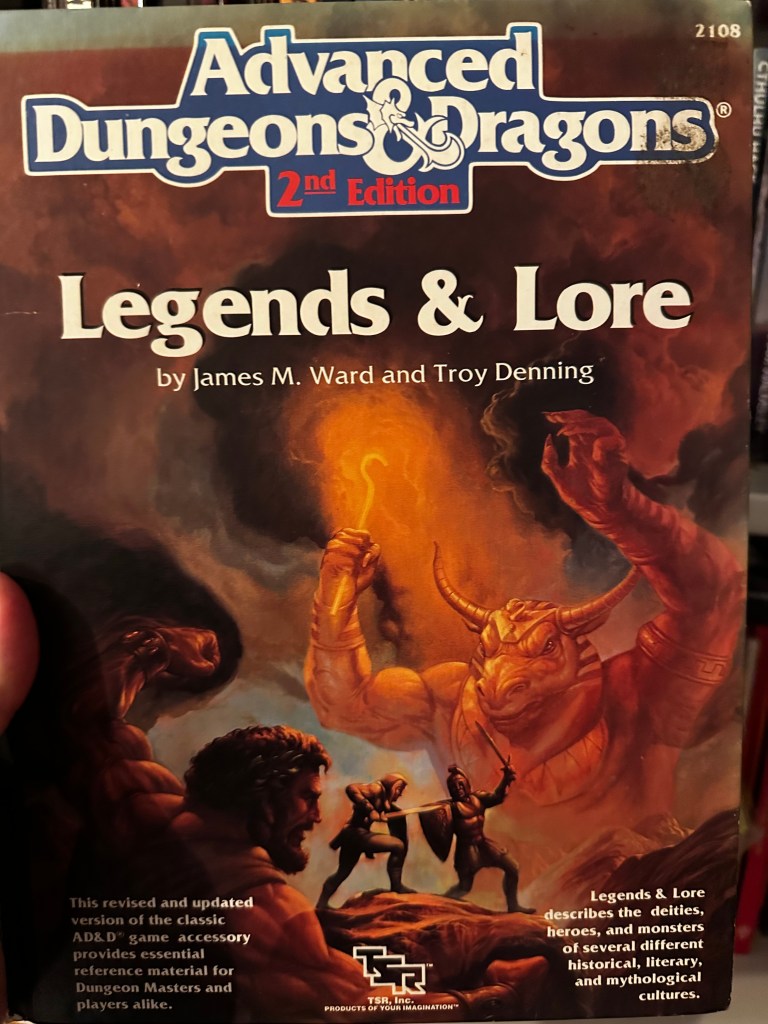
I am quite excited about this idea, especially as there is an alternative to fighting the undead or figuring out the illusion generator. They can escape to the ledge on the cliffside from this level, although the only option is to descend into the sea from there…

Levelled Out

A crude line drawing of a dragon with a bird flying at its face
Dragon

That’s as far as I have gotten so far. I need to knuckle down and expand on what I’ve done so far. So I’m going to leave this post here for now. I’ll keep you posted on my progress in a few days.