
Dear Reader, I was away on holidays in the scorched and parched East of England again last week. I enjoyed the break but it has left me with no enough time to write up a new post for this week. I have one in the works but it is far from ready, I’m afraid. Instead, I thought I would share with you again a post from this time last year. Here is my advice for running Heart: The City Beneath as a one-shot. Hope you enjoy it!
Category: One-shots
Stay Frosty, Forneus Research Base Review
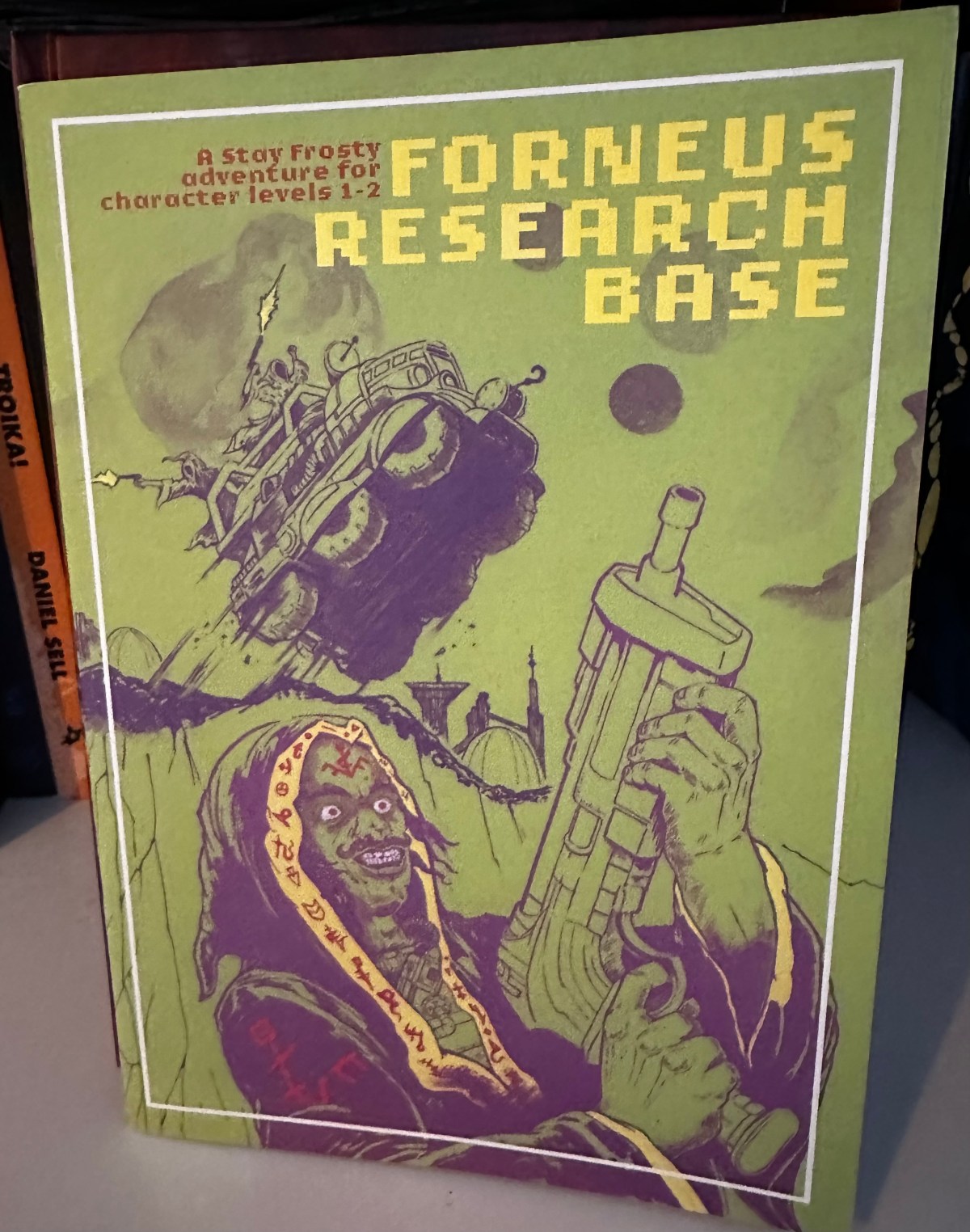
Zero Prep
It’s the dream, wouldn’t you say, dear reader? Pick up and play. Many claim it, few deliver. One thing I’ll say about this Stay Frosty adventure, and, to be fair, any Stay Frosty adventure I’ve read (which isn’t many,) is that you can pick it up and play it with pretty much no preparation. I mean, that goes for Stay Frosty to a certain extent too. I discovered that when I reviewed the game itself last October.
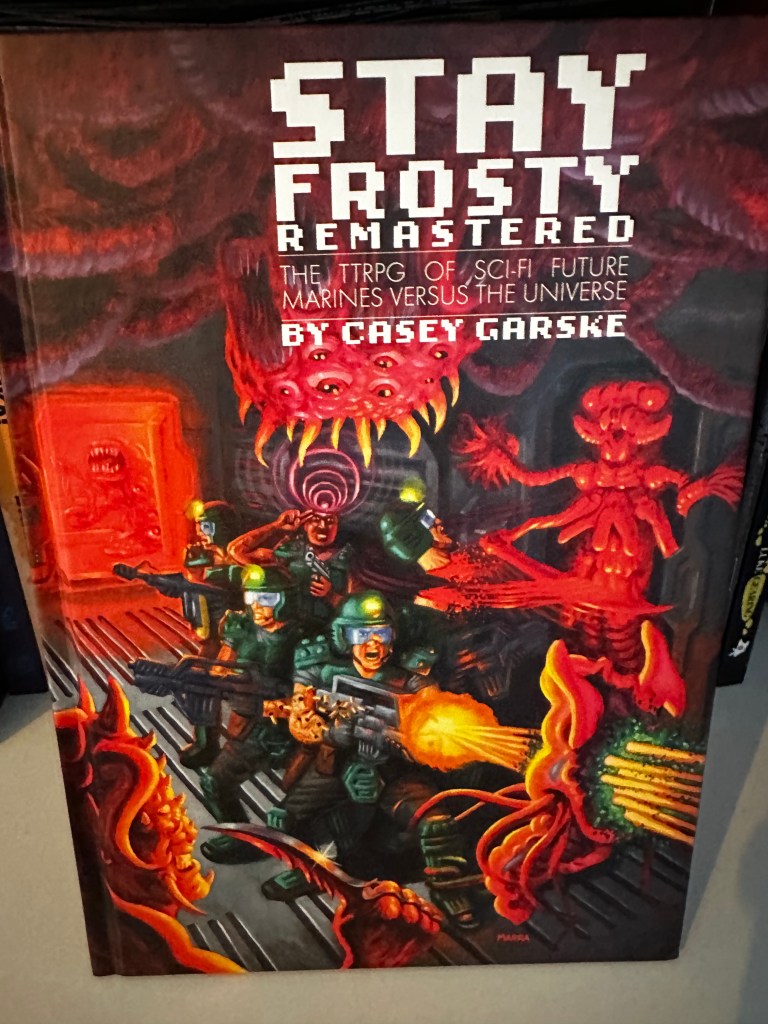
But, of course, zero prep is not all you might want from an adventure. In fact, for some GMs, prep is as much fun as play. So what else has Andrew Walter’s Forneus Research Base got going for it?
Well, Tom, Isaac and I played it over the space of three sessions recently. In fact, we just finished it the other night. I have thoughts.
Action
There’s no fucking around with Stay Frosty, no long opening scene to allow for introductions of our characters, just a short summary for the PCs, of what they’re doing out there in space and an immediate crash landing at the eponymous Research Base. Oh, the crash landing was caused by black ooze exploding from the controls of their shuttle btw.
As I stated, there is a short read-aloud piece of text at the start. It explains that the PCs are private marines, employed by the United Universal Corporation to check in on its research colonies. As they are doing this, they are forced to crash land.
As I said, Stay Frosty is not really interested in your PCs feelings, unless they involve terror or going apeshit. At no point is anyone encouraged to take a moment to express their concern for their fellow marines or, for that matter, the colonists they were supposedly there to protect. This is a DOOM simulator. The PCs are there to shoot shotguns and blow up demons. And Forneus Research Base is all action from the get-go.
As soon as they emerged from the wreckage, the PCs realised they were not going to be able to take off again without significant work on the shuttle, so they decided to make their way to the base. Meanwhile, I’m rolling the Danger Die every time they move from one location to another, take a look around or stop to think, as intended by the rules. The Danger Die works a bit like a random encounter table. You roll a d6 and the result will give you one of the following:
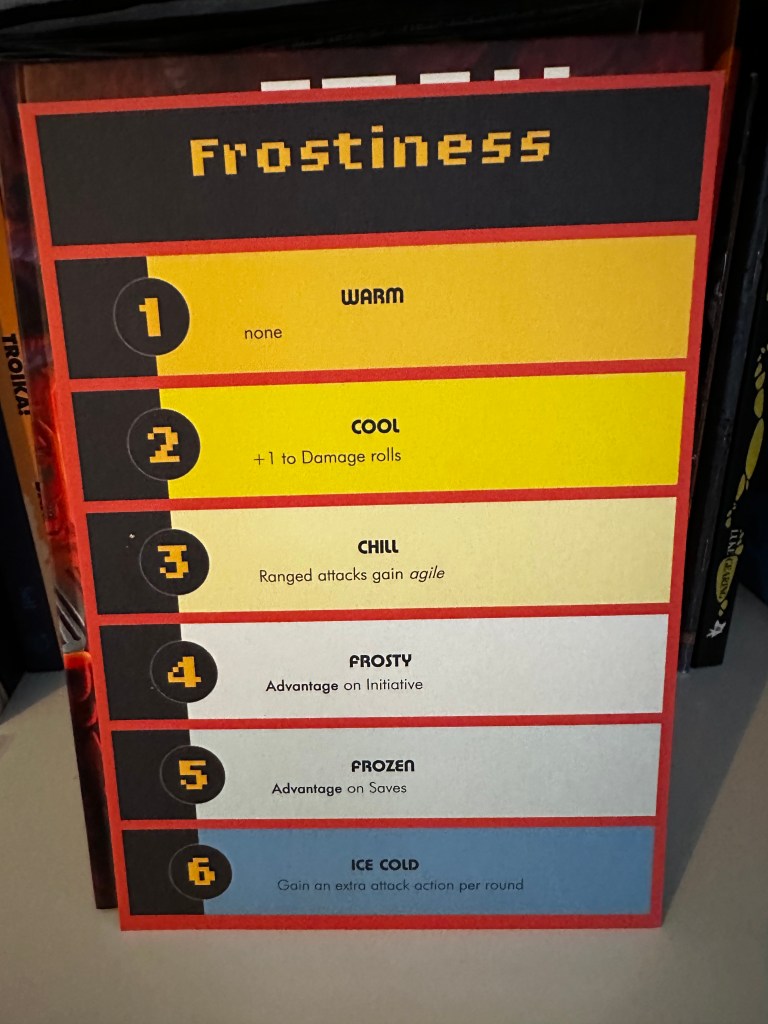
- Encounter and Stress – i.e. roll on the relevant encounter table. Forneus has one table for the moon’s surface and one for inside the base. Stress is added to the PCs to build Tension. Tension also equals Frostiness. They higher the Frostiness level the better as it gives PCs bonuses like advantage on initiative and even extra attacks. But Tension can also explode. See below for more on that.
- In dangerous areas, Encounter, otherwise, Environment – Forneus has its own Environment table also. But this didn’t come up too often, to be honest.
- Environment – as above
- Stress – see point 1
- Entropy – for some reason, I rolled this one a lot and it had no effect. It’s only relevant if the PCs are using a thing constantly that has its own Supply die. For instance, if they are using Combat Drugs or Fuel when they’re driving a vehicle. The idea is that when Entropy is rolled, the Supply Die for that thing goes down to the next lowest die size. But whenever this was rolled, they had nothing to decrease.
- TENSION EXPLODES! – Only rolled this once. The idea here is that when this comes up, the PCs make a Willpower Save. If they succeed, they get to reduce their Tension by one. If they fail though, they take Tension x level damage and reduce their Tension to 1. Then they roll on the Going Apeshit table if their HP are reduced to 0 by the damage. The effects of this can be anything from getting Advantage on damage rolls but constantly rolling your Ammo Die (like a Supply Die for your weapons,) to Last Stand: going down mano-a-mano with your enemies. I actually adjudicated this mechanic incorrectly at the table. I didn’t allow them the Willpower Save, I just rolled the Tension damage and gave it to every PC. Also, this damage is not supposed to be applied to attribute scores when all HP are gone, as normal damage is. Only one PC had to roll on the Going Apeshit table. She ran for her goddamn life and they had to manacle her to the ATV to stop her.
(I only just realised I was calling this the Doom Die the whole way through our game. Oops.)
The Danger Die is the mechanic that really keeps things interesting in Stay Frosty. Many of the locations in the Forneus Research Base, for instance, have no pre-written encounters or much of interest at all, so the random encounters, environmental hazards and ratcheting Tension from the Danger Die are doing a lot of the work. This works fairly successfully but I found I was rolling up Encounters a lot, since a third of the possible Danger Die results give you one most of the time, and after a certain event in Forneus, you actually get Encounters on a roll of 1 to 3. So the marines were drifting from one Encounter to another with only cursory exploration in between.
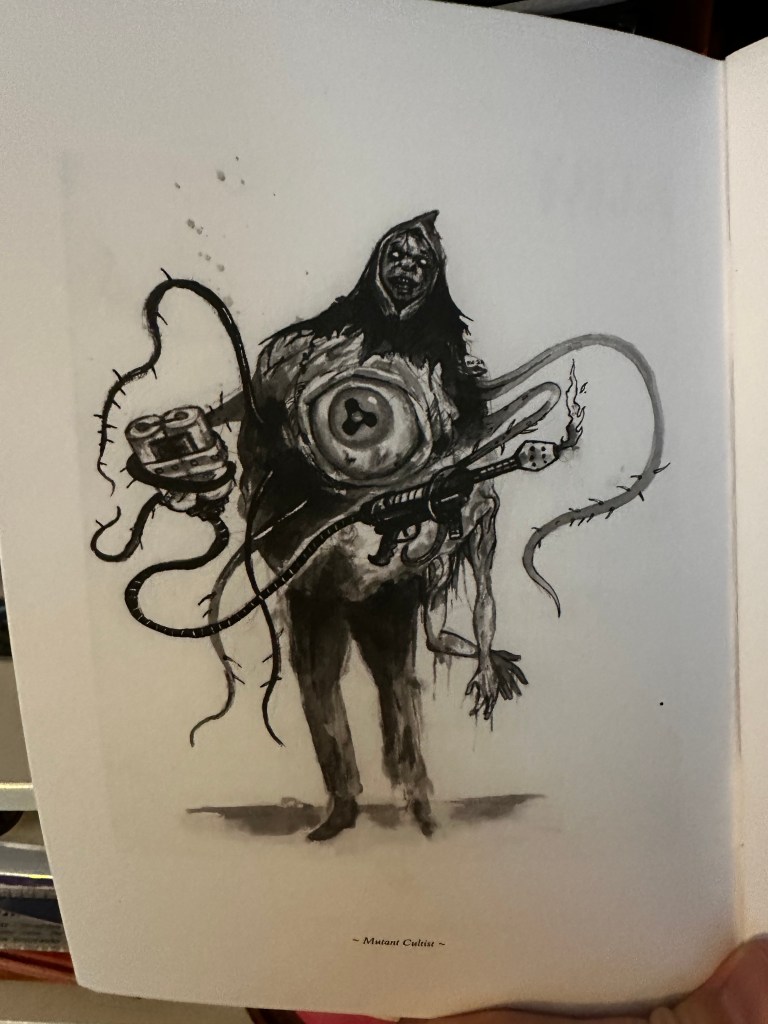
At least the variety of enemies is suitably gristly, demonic and fun. You have the obvious demons, like the Black Leathery Imps, that used poison to make their enemies fire on each other. Then you have the basic cultists who just have guns, the mutated cultists who have been transformed to allow them to fly with their fiendish lord Xithrabla through the cosmos, sucking from his hellish teats and the Centiservitor who is a cultist combined with a centipede with a plasma cannon in its chest. On top of that you have the real horrors like the Cadaverous Persecutor, a giant cyborg corpse with a rocket launcher, and the Fledgeling Pest (The Final Boss,) a sickening, enormous baby’s head with a partially exposed brain and a vicious bite.
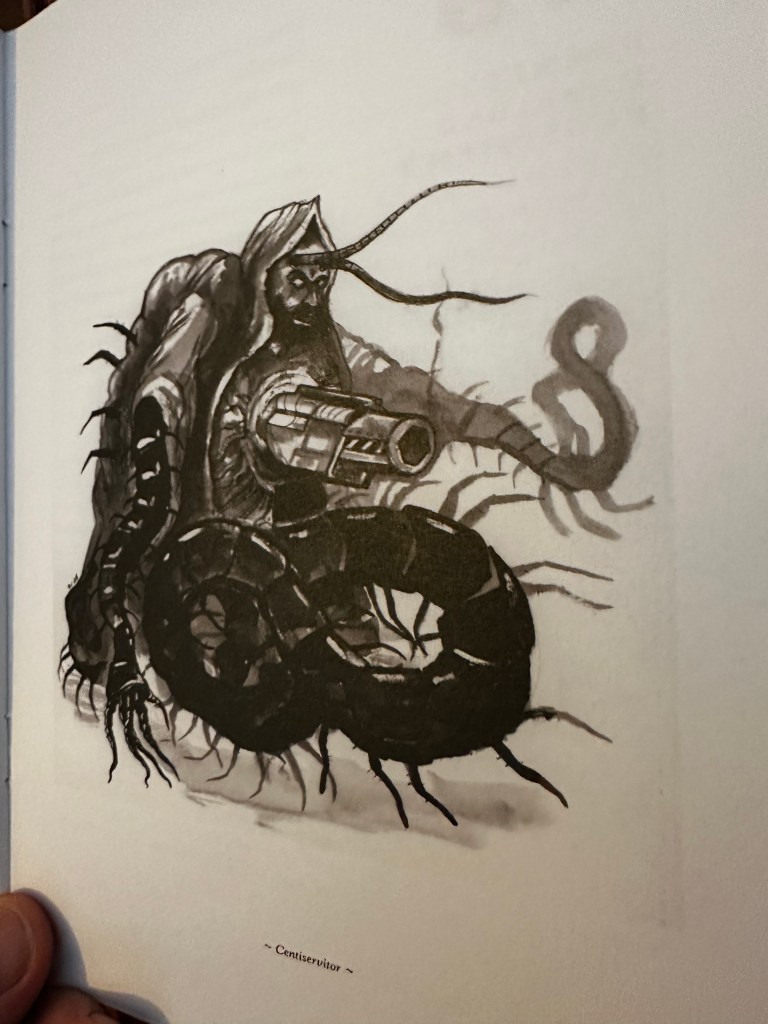
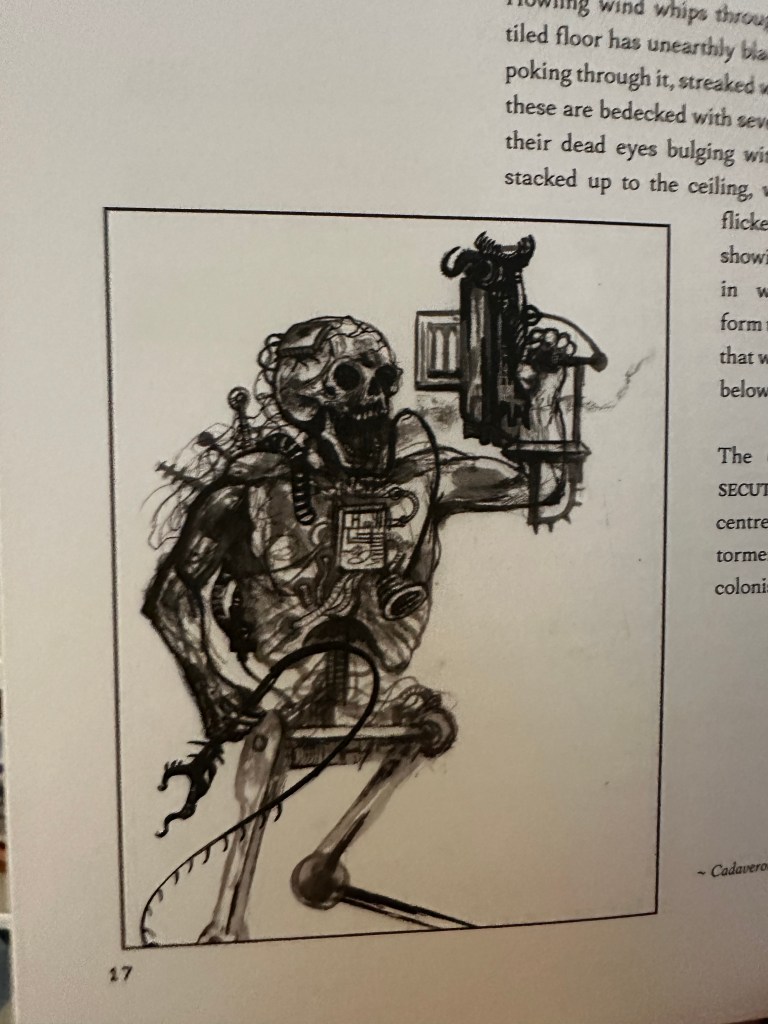
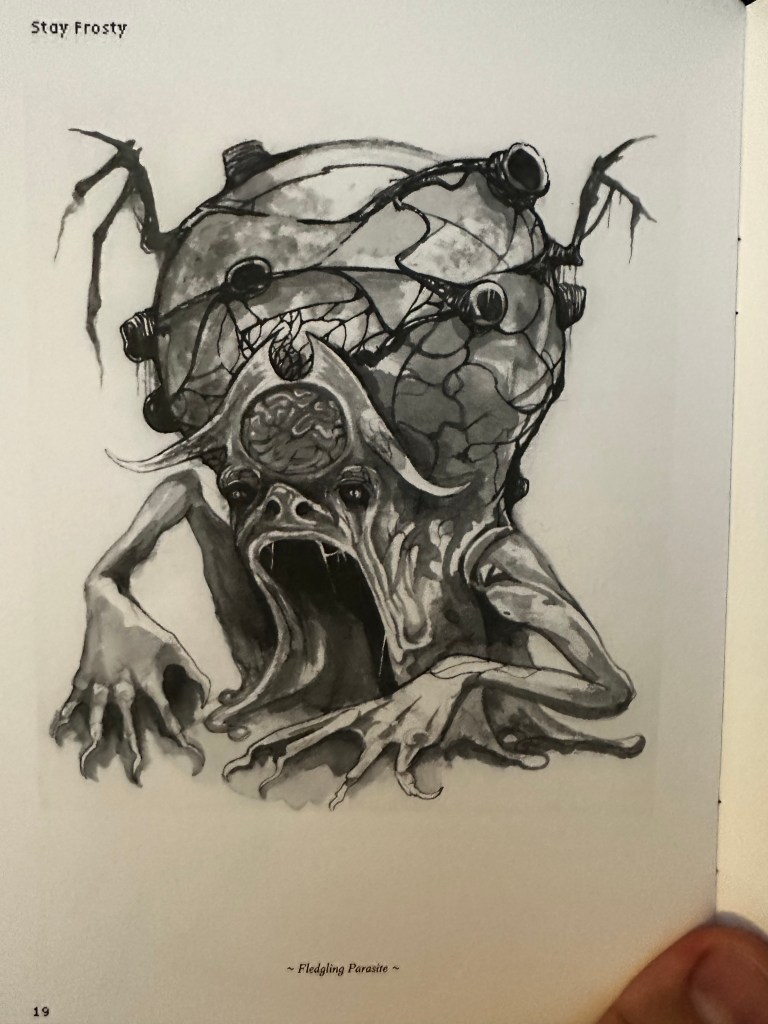
We found the lower level encounters were essentially just target practice. Since we only had two players, I gave them each three marines and decided to treat it a bit like a funnel. I think this was too many for this adventure. Four would have been a bit more balanced. The main reason I think this is because of the initiative roll in Stay Frosty. Whoever makes a successful Dexterity check gets to go before the enemy in this game. This generally meant that a significant portion of the six characters got to act before the demons and cultists. There were enough weapons between the marines that could do blast damage (flamers, grenades etc.) that they could wipe out the opposition before they ever got a shot off. It felt too easy at times. But, it also seemed to accurately emulate the feeling of playing a video game like Doom. At one point they were crossing a bridge over a chasm and being swarmed by imps and cultists. There were 26 opponents and the party defeated them in two rounds, just mowing them down in waves of gunfire and explosions. In only the second encounter, they came up against a group of six foaming cultists, one of whom was holding a grenade in each hand and standing near a leaky fuel tank. One well-placed shot from the grenade launcher took out the whole bunch with a mushroom cloud left in their wake. These moments felt hilarious, exhilarating and hilarious.
But when it comes to the more challenging opponents like the Centiservitor, the Cadaverous Persecutor and the Fledgeling Pest, I can’t stress how important it is to use the Powerful Opponents mechanic in Stay Frosty. That rule states that when there is a disparity on either side of a fight, the side with fewer Hit Dice, should subtract the difference between their HD and their Opponents’s HD from their attack rolls. For example, when my PCs were facing the Fledgeling Pest at the end of the adventure, the 1 HD/Level 1 marines had to subtract 3 from every one of their attacks against it because it had 4 HD. This meant that they were not able to overwhelm it by sheer numbers in the first round or two. Many shots that might have hit, did not, because of this nicely scaling rule. However, when they were up against the Centiservitor, I forgot to apply the Powerful Opponents rule and they slaughtered it before it ever got a chance to fire off its cool weapon.
My main complaint when it comes to the action in this adventure is that the Fledgeling Pest, labelled as the Final Boss, is quite avoidable. It is described as being attached to a wall by its very flesh in one of the Hangars, which have been converted to perform devilish rituals. But there is no reason for them to go to the Hangars in the adventure. I made one up, of course, to try and get them there. One of the NPCs they met told them there could be a working shuttle in one of them. This did lead them to the Hangars, but as soon as they got there, Tension Exploded and one of their number went running off across the moon’s surface so they hopped in the ATVs they had just found and booked it after her. After that, they decided to egg it as well. Since they had the ATVs, they were better able to make it back to their own shuttle. I had to think on my feet here or they were going to miss out on the best couple of encounters of the whole adventure. So, first, I had the Demon Arms (also restricted to the hangars) appear out of a hellish portal in the ground ahead of one of the ATVs, grabbing the driver and causing he vehicle to flip over. The mouth in the hand of one of the arms devoured one of the party but they won out. Then they moved on again and just as they were about to reach their shuttle the giant demonic archway (also found in the hangars) appeared in the air before them, with the Fledgeling Pest emerging out of it to attack them along with a few of its cultists. This was a genuinely tough fight and resulted in the death of a couple more party members. I might have just let them make it to the shuttle, I suppose, but I didn’t want to deprive the players of the Final Boss.
Non-action
Of course, it wasn’t all action. There was some exploration. This is done in a point-crawl style as you can see by the map here.
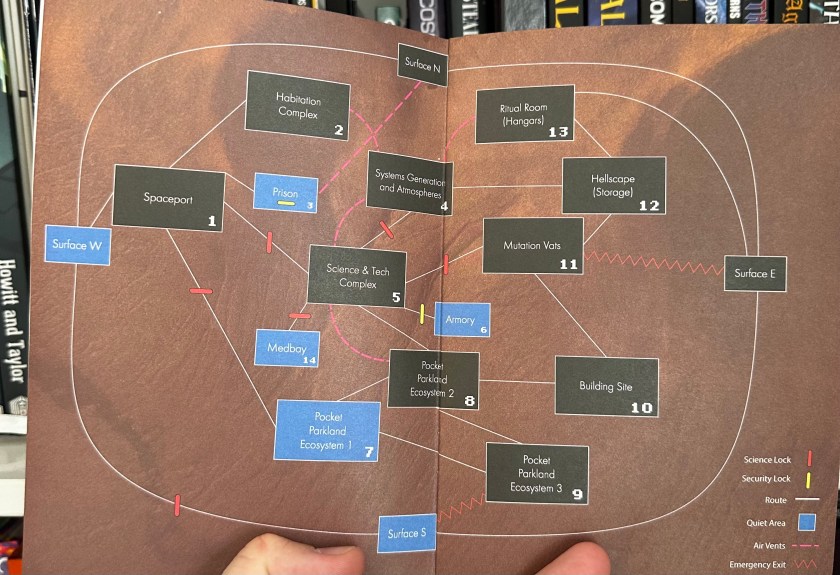
The descriptions of the locations in the adventure are pretty bare-bones. At times, I found I wanted a bit more. For instance, the Systems, Generator & Atmosphere area is supposed to be enormous and encapsulates everything from winding, labyrinthine machine rooms to massive bridges spanning deep chasms. To be honest, these feel like they should be separate, individual locations. Another point about this area in particular is that we’re told that the communications can be turned back on and full computer bank access can be gained here, but not what that might achieve. I had no idea what the computer banks might tell them and I had no idea who they might communicate with off-world. That’s a lot to leave in the lap of a GM, especially when the rest of this adventure is pretty much zero-prep, as I mentioned before.
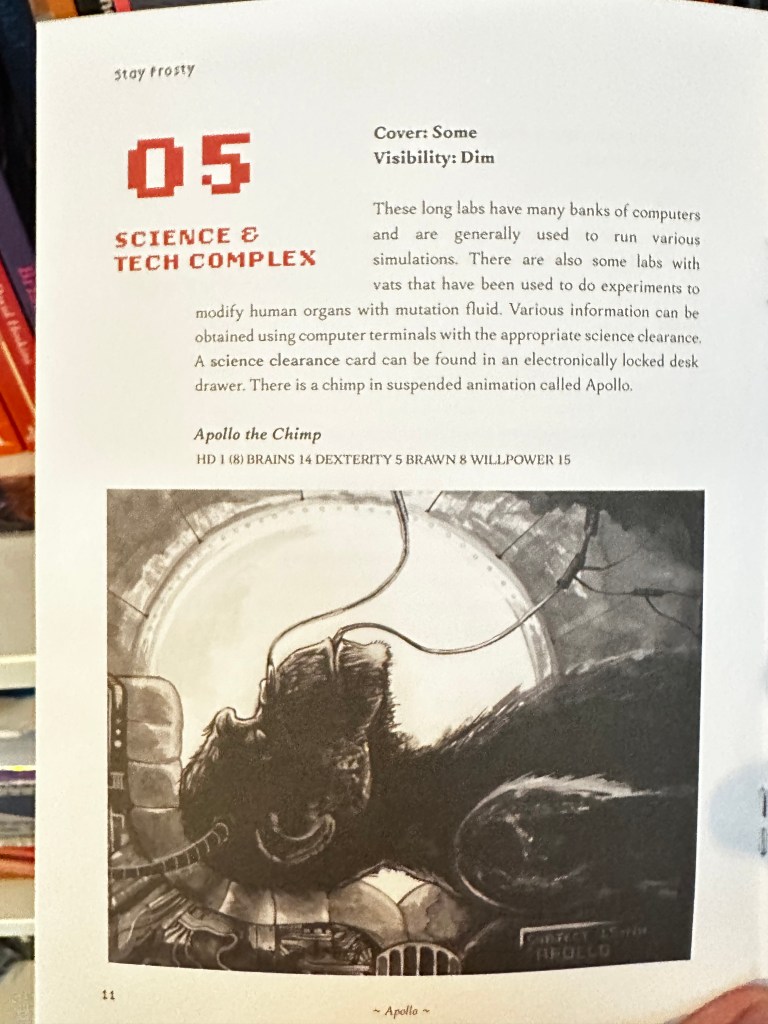
Actually, it is really hard for the PCs to get much information about what has happened here. Even the few living, rational NPCs they meet had no way of knowing what happened on the base, since one was a prisoner and had been kept out of the loop the whole time, one was in a coma and one was a talking chimp, named Apollo, who was in stasis the whole time. It would have been more interesting if at least one of these guys had the full story for the marines. I should have improvised that, in hindsight. Of course, the PCs did recruit both Apollo, the chimp, and Jamal, the prisoner, gave them guns and got them shooting, so that was fun.
Conclusion
I ran this, as I mentioned above, for two players with three PCs each. I think this was a mistake. I mean, once they had recruited the NPCs, they had a squad of eight and they were just mulching the hostiles at every turn, until the very end. Four PCs would have been about right to make it a challenge. Also, I thought I might be able to run it as a one-shot, but that was highly unrealistic. It took three sessions in all, and they did not explore any more than about half the locations.
If I had to do it over again, I might have seeded some of the locations or NPCs with a bit more information on the background of the adventure, but I would still keep preparation time to near zero.
All in all, it was fun, exploding demon sort of romp as an adventure and a system that we all enjoyed, although I expected Tension to Explode more often.
DCC Day 2026
Collections
It’s been a long time since I collected anything. I used to collect comics, although it wasn’t a conscious choice to build a collection. I just bought 2000AD every week and didn’t throw it out as that seemed rude. Those comics went the way of all things for one reason or another, and any comics I bought after that were digital. I even gave up on that when Amazon bought Comixology and ruined it as a service. I used to have a small collection of DVDs and Blurays. Still have a lot of them in the attic, actually. But with the advent of streaming services, I don’t purchase too many of those anymore.
RPGs, though… When I got back into playing them around 2014/2015, I was only playing 4E because I had the books. Then I decided to see what this whole 5E thing was about. That quickly ballooned out of all sense. Frustration with that brought me to discover indie RPGs starting with Spire and then everything that Rowan, Rook and Decard ever produced. That’s when things started to really get out of hand. Now I seem to never have quite enough shelf space. Every time I buy a new set of book shelves, I fill them immediately and then a new kickstarter fulfilment or three arrives.
DCC has been a major contributor to my collection woes. I have backed a number of Goodman Games crowd-funders in the last couple of years, including the recently arrived Dungeon Denizens II, Terror from the Underdeep (a 5E set, but still Goodman Games) and Caverns of Thracia. Also, there are just so many adventures, taken on their own, mere booklets, a few pages. But its hard to buy just one…
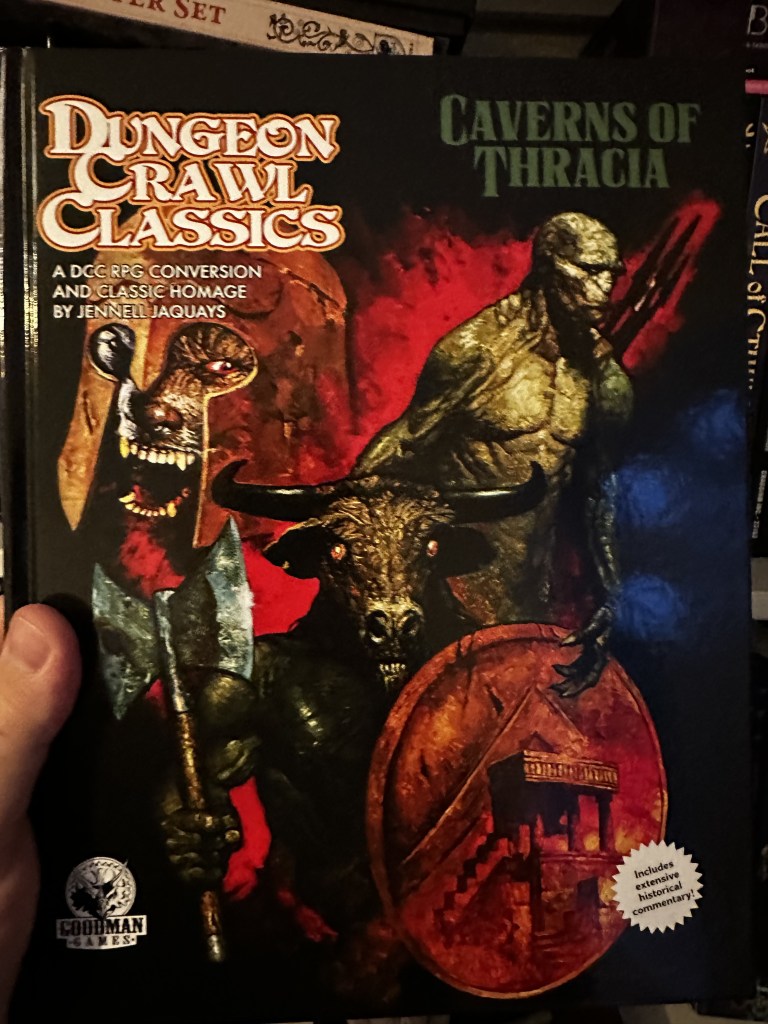
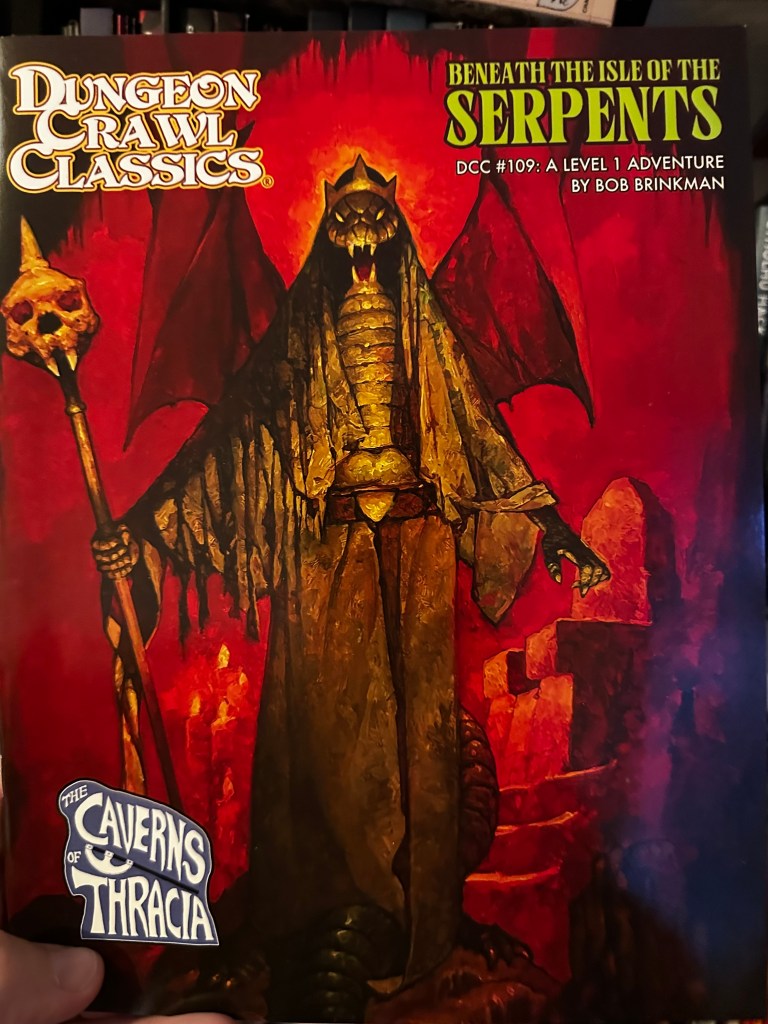
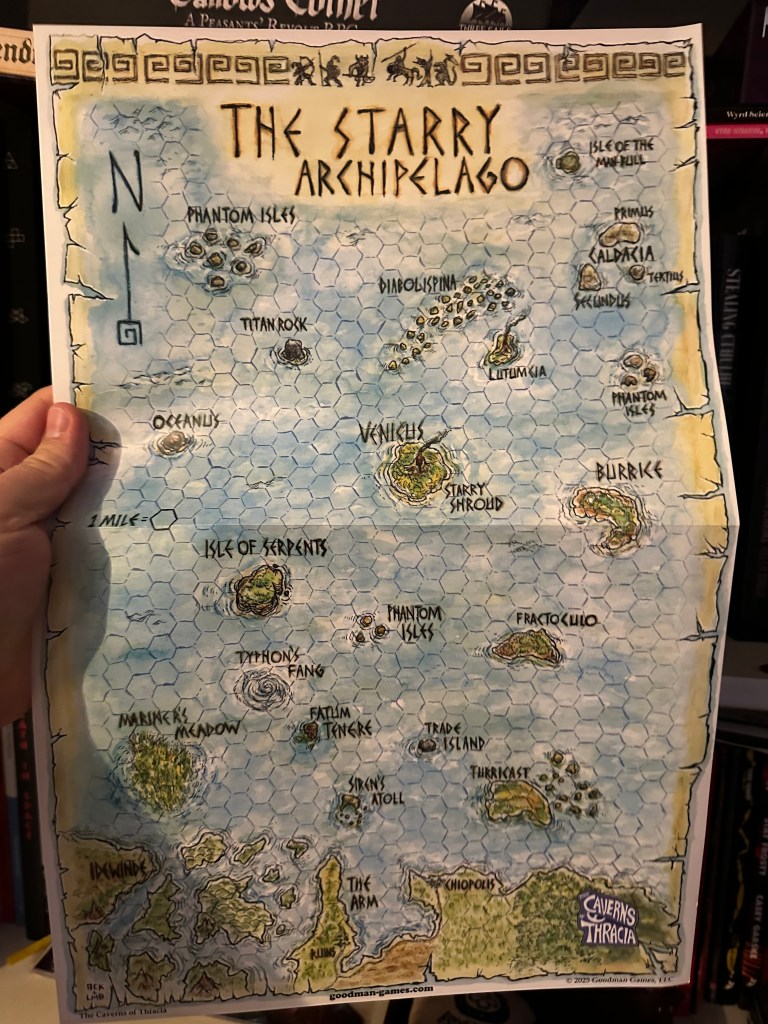
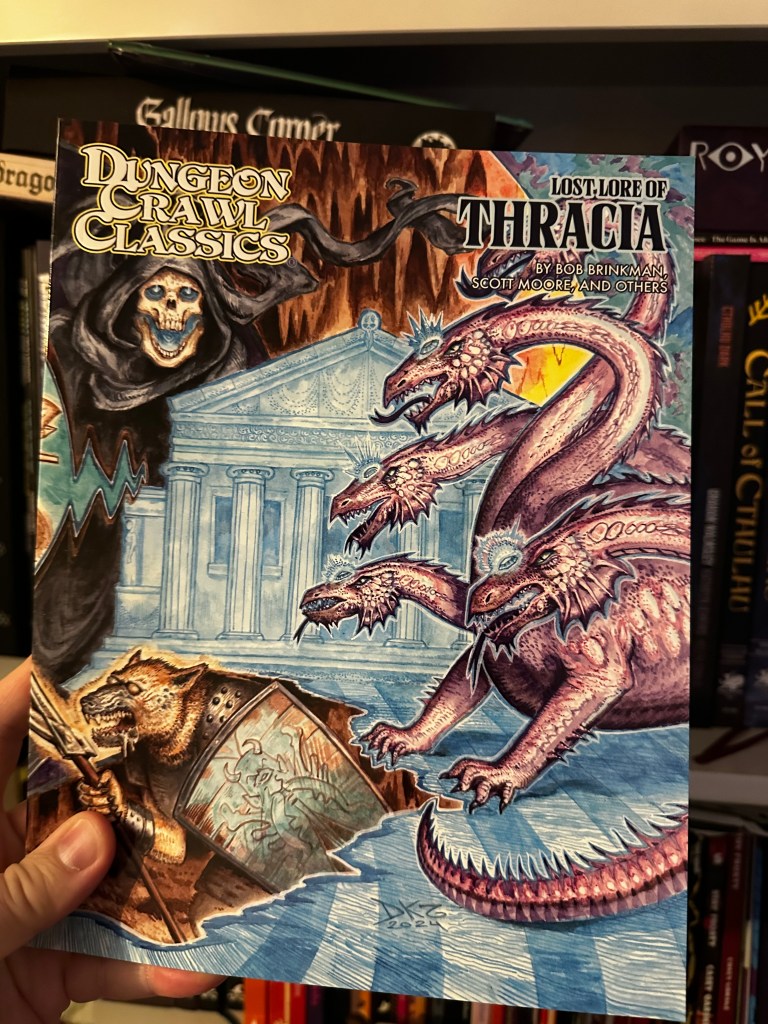
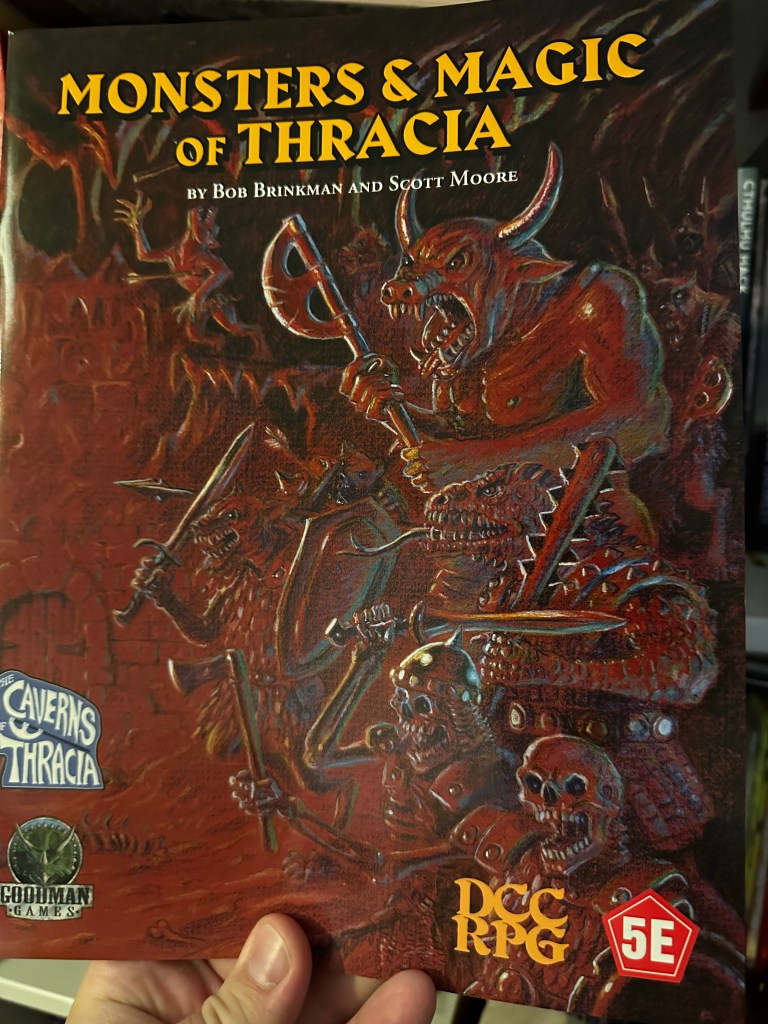
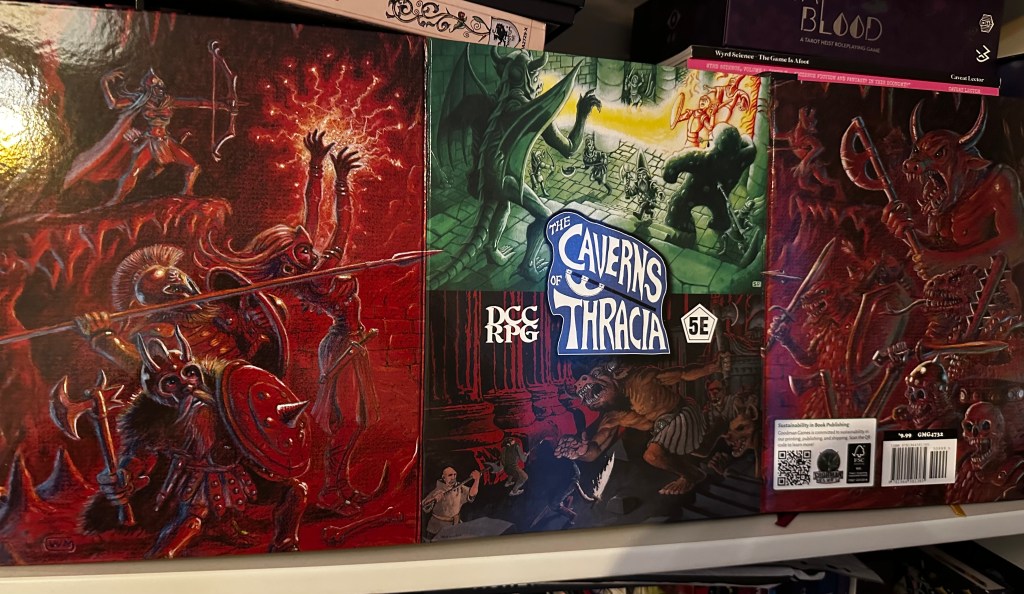
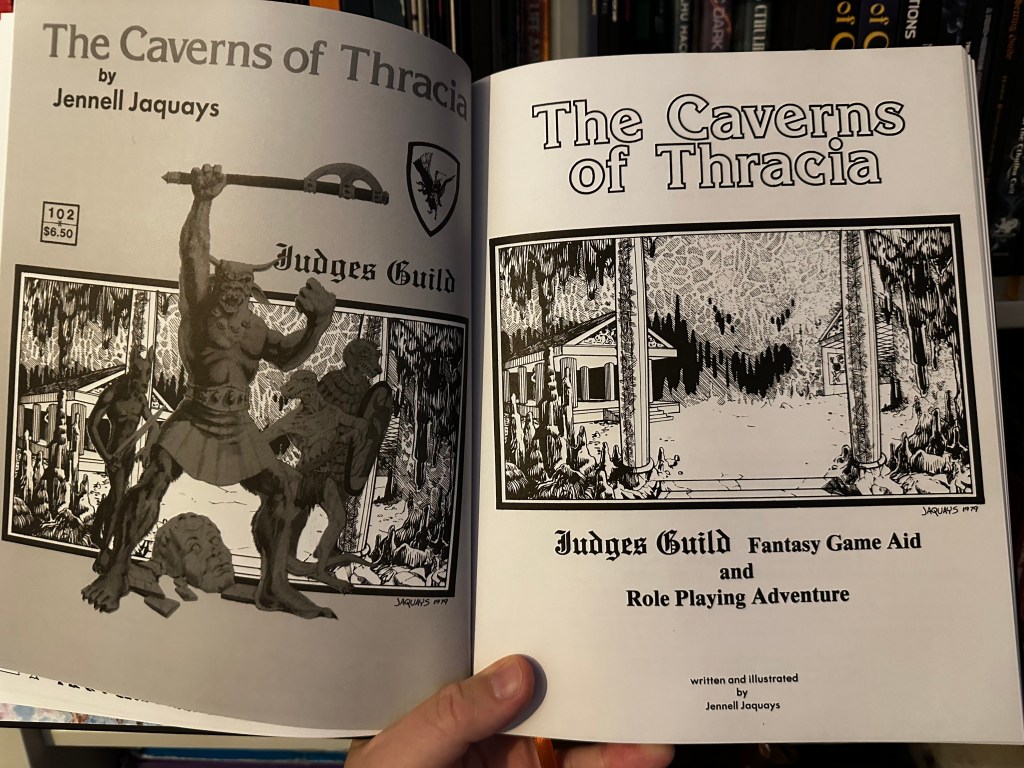
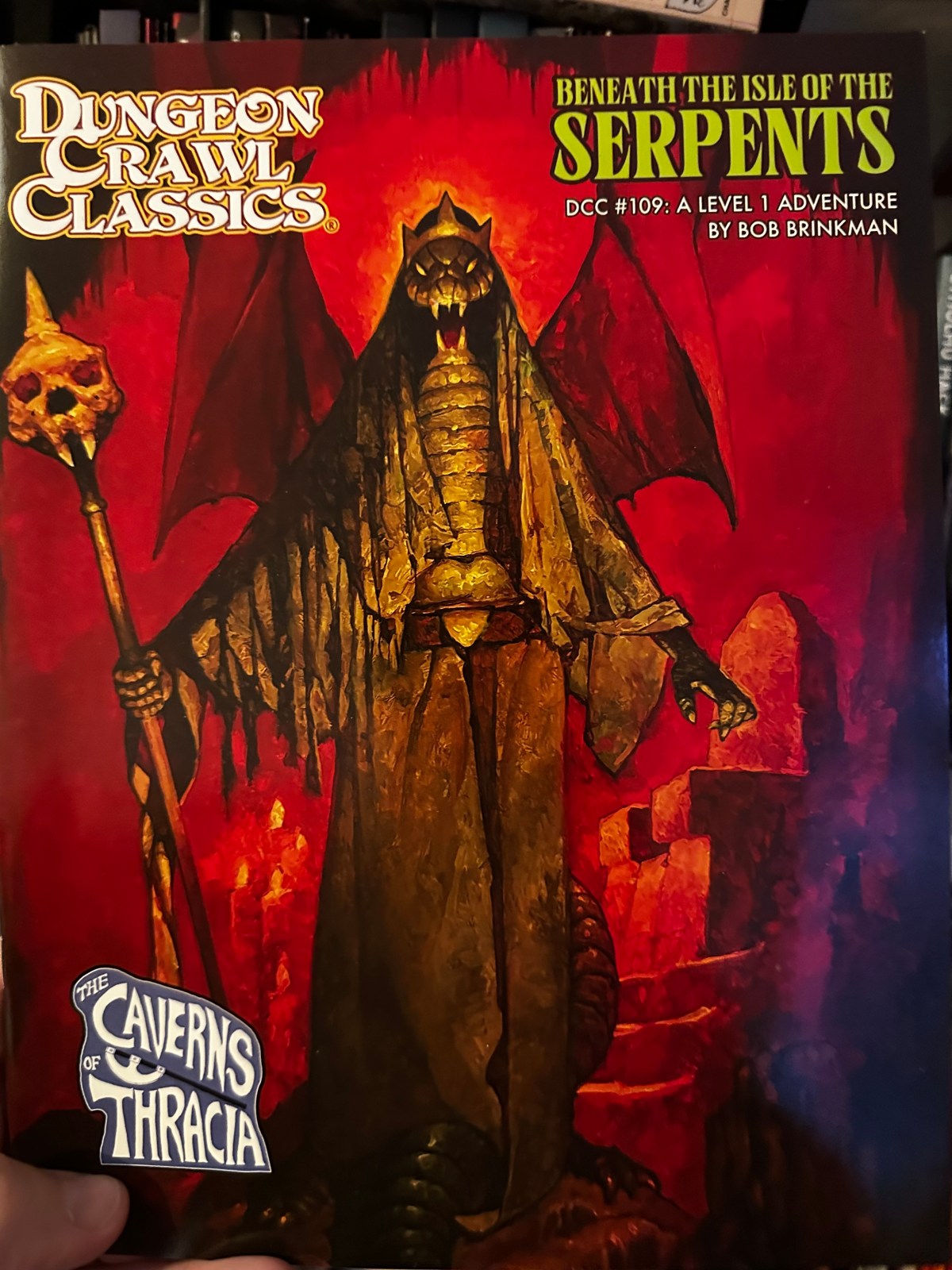
Anyway, back to the Caverns of Thracia. The kickstarter was to produce a book that included both the original Judges’ Guild mega-dungeon adventure by Jennell Jaquays and the newly realised version for DCC (or 5E.) It came with a bunch of add-ons like fold-out maps, a handout booklet, a GM screen and a few side adventures that were set in the same general area as the main one. So, I have been thinking recently, especially as I retread old ground in the Editioning, that I should be using some of these books! I thoroughly enjoy DCC but I have only ever run two funnel adventures and a 1st level one. So, I decided to take one of those side adventures from my Caverns of Thracia haul and run it for DCC Day 2026, which just passed on July 18th.
Beneath the Isle of the Serpents
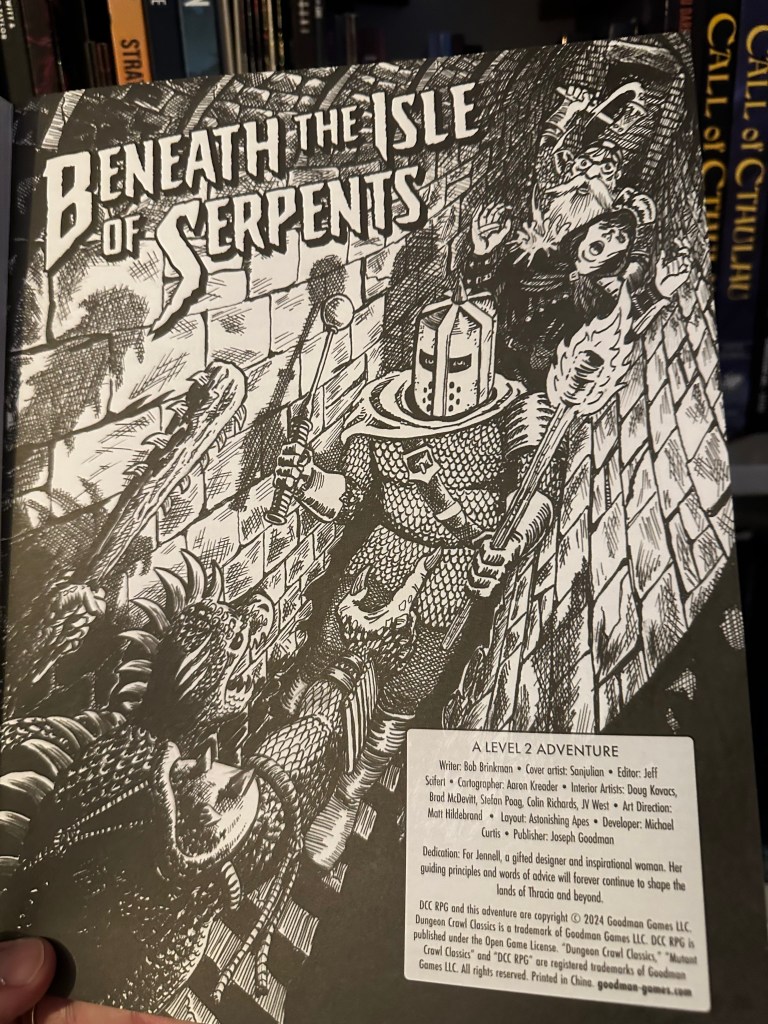
I settled on DCC # 109 Beneath the Isle of the Serpents by Bob Brinkman as a suitably evocative scenario that would showcase a pretty cool dungeon and could easily be finished in two sessions. I have already learned that, no matter how short a DCC adventure is, you are not likely to finish it in one session without severely editing it or via TPK. Turns out I had more lessons to learn.
We started the adventure in montage. My players, just two for this DCC Day, had a couple of PCs each. One of these was a Wizard, and one of the adventure hooks is that the Wizard’s patron calls in one of the many favours owed them. Hilda’s patron Ydd’grrl, demanded that she and her friends deal with the burgeoning evil beneath the Isle of the Serpents on the Starry Archipelago. So they trekked across the continent, traveling largely by map. They got to a fishing village on the mainland closest to the Isle of the Serpents and then a fisherman, named Kamay, offered to take them where they wanted to go. No-one else would…
Kamay dropped them off at the black sand beach on the south of the island. Here they faced the terror that was a Giant Devil Crab. They largely had the measure of this thing, but when it hit, it hit hard. After a couple of rounds where they battered away at its devilish shell, one of its claw attacks impaled Hilda, killing her instantly. Kinda, I mean, we fucked up here. It has been about ten months since we last played with these characters so we forgot how they worked. It looked like our Hilda had 15 HP, but we all thought that must be some mistake for a level 1 Wizard, right? Wrong, it was only after the session, when Hilda’s player, Tom, was trying to figure out where the 15 came from that they realised it was one of the benefits she got from her familiar! So, when I ruled that she couldn’t have had so many HP, and must have been killed by the 8 devil claw damage, I killed her without due process or any real legal basis. Some Judge! Anyway, once we knew what had happened, we ret-conned the death. Instead, she awoke amidst the devastation of the devil crab, stripped of all her belongings by her fellows, and badly injured. “Fuck this,” she thought, and went back to the boat.
While she was “dead/unconscious” however, I asked Tom to roll up a new PC using purplesorceror.com as I was worried about the ability of the party to survive the dungeon when there were just three of them. Tom rolled up Glagrill, a Dwarf who they’d all forgotten was asleep in the hold of Kamay’s fishing boat the whole time.
The Island
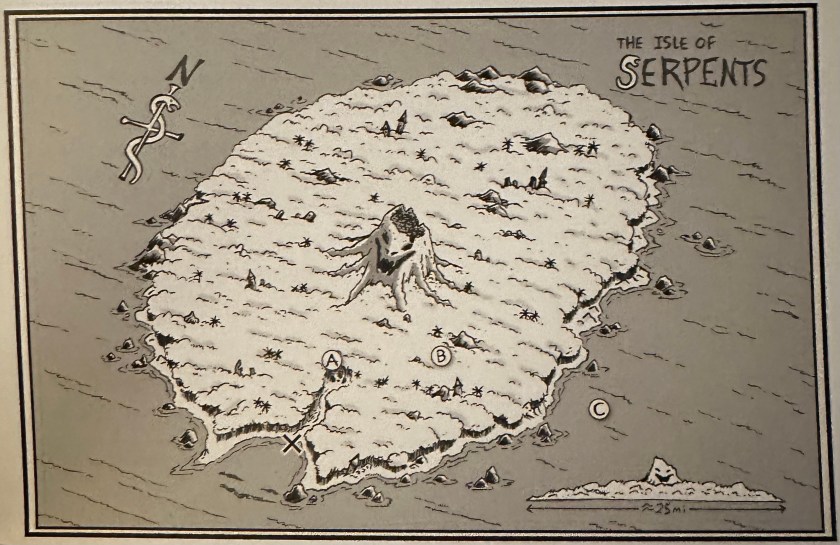
The adventure provides a really great random encounter table for those parties that decide to explore the island’s surface. Now, there’s a perfectly good, relatively recently forged path through the jungle that leads directly to the main dungeon entrance. If they take that path, they get to move full speed and forgo having to roll for any random encounters at all! so those PCs who avoid that are probably just paranoid. No good reason to do that, surely!
Now, I will say that while the encounter table is great, if a bit over the top for what is probably going to be a very minor aspect of the adventure, the text tells the Judge to roll for a random encounter every two hexes traveled by the party, but the island map ain’t got no hexes so you would need to kind of guess how far two hexes might be, I suppose.
The Dungeon
Anyway, my clever party took the safe option and went straight down the path and straight down the ancient, root-choked chimney to the buried temple to some chaos God. Here they discovered some indecipherable wall art, a room filled with rust-midges and a grate in the floor, below which those blessed with infravision could see barely living bodies of humans hanging by manacles from the sloping ceiling of what looked like a sluice. And that was the end of session 1.
Session 2 saw them descend the winding staircase out of that first chamber. They found it ill-suited to them, too narrow, with steps too long and too low, as though built for a very different type of body. Before long, they encountered an opening in the wall on one side. Our Dwarf, Glagrill, checked it over but made some noise in the process. So, when he made his way into the chamber beyond, he found two Serpent Men and one Cobra Sub-commander on their way to attack. Unfortunately, the narrowness of the doorway meant only one PC could stand in the front. The Sub-commander attempted to hypnotize the PC right behind the Dwarf, but Glagrill did his best to defend, and Helfgott, our Cleric, cast darkness to prevent any more hypnosis attacks. Three against four, this turned into a war of attrition, which is bad news for a band of 1st level characters. Eventually, the darkness failed and Magnolia, our Halfling, was hypnotized by the Cobra Sub-commander. She had no choice but to attack Helfgott. She critted and did an extra 2d6 damage on top of her normal weapon damage. Helfgott only had 3 HP. He was one of the longer lived PCs. Isaac had had him since Sailors on the Starless Sea. It was a tough way to go but the others looted his corpse and moved on after they killed the two guards. The Sub-commander had locked himself in his room in the back of these guard quarters. On their way through they found a pair of lucky dice, some coin and a barrel of human hands, feet and other bits.
Eventually, they decided to open the door and deal with their opponent. This time, Melmoth, Isaac’s Elf character was the one to suffer the hypnosis of the Cobra Sub-commander. He was forced to turn on his new associate, Glagrill. He critted… Glagrill, so new to the world, was sent out of it again in but a moment. The two remaining adventurers, taking no chances, fire-bombed the trapped Cobra Sub-commander to death and found a bunch of treasure in the ruin of his chamber.
Not even half way through this adventure and technically, three PCs down. This was the dice telling a story. I was rolling so well, I felt bad about it. Tom and Isaac had never rolled worse, except when they were under the Cobra Sub-commander’s sway and they critted. There was shock, sorrow and outrage on display at the table. Everyone was questioning their choices. We laughed and cried. This is why I play these games to be honest. Not to kill characters but to experience the extremes of those moments.
Conclusion
Eventually they trudged back towards the beach, thinking to retreat. Meanwhile, Kamay the fisherman started lifting the anchor. Hilda asked where he thought he was going. He told her his business was done here. She sent him into a deep and magical sleep and made for shore where she reunited with her former companions. They decided one more try was in order.
DCC Day 2026 may be done, but the expedition Beneath the Isle of the Serpents is far from over, dear reader. Join me again soon, when I will complete my review of this deadly module.
Jailbreak – A Spire One-shot
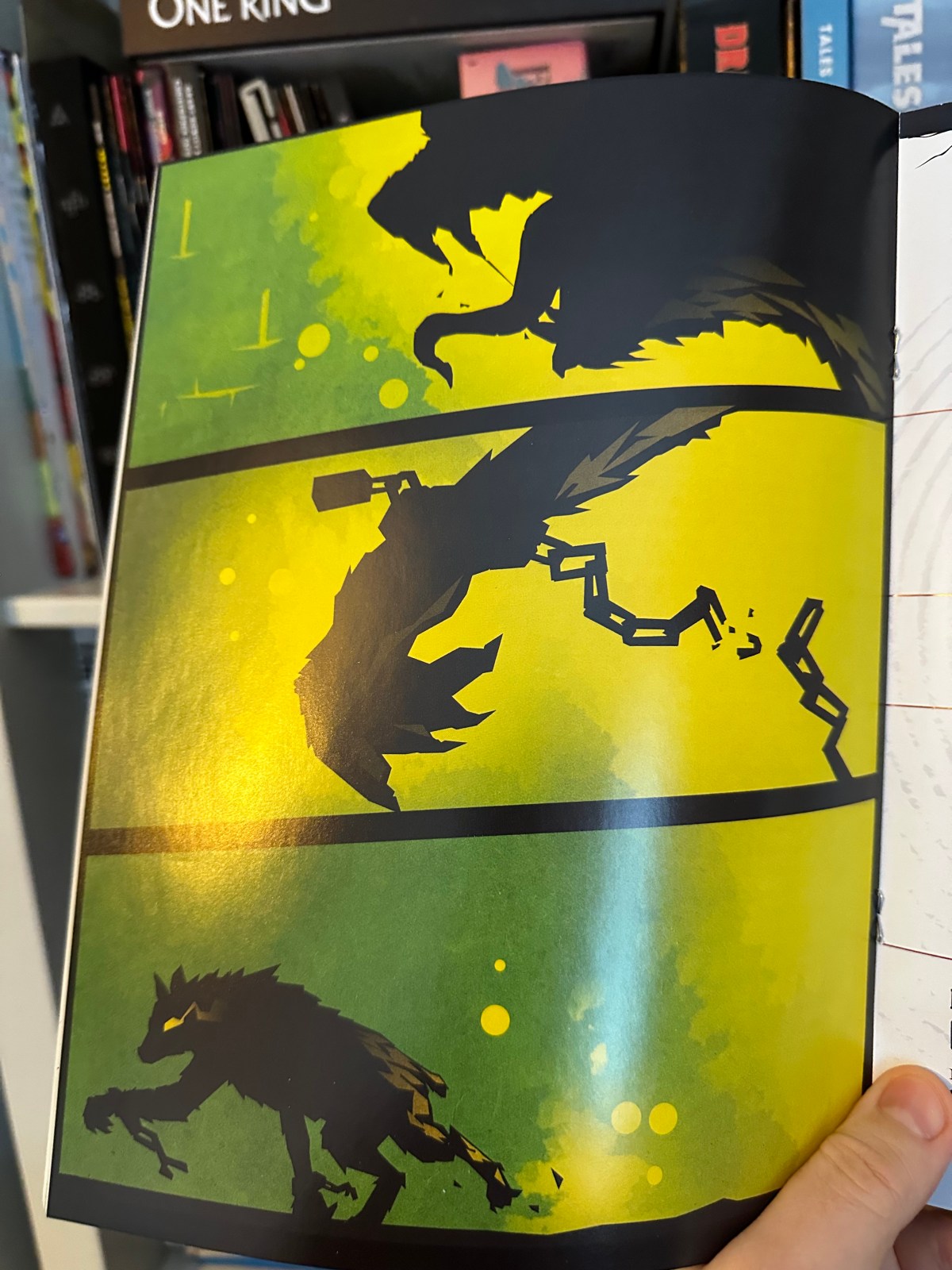
Break Time
Our Blades in the Dark campaign is going well. We’ve only had three sessions but the players are moving the plot forward all on their own and are developing their characters in unusual and gratifying ways. But, for reasons, we’ve had to move our recent sessions to the weekend. So that has left us with a Wednesday gap. I grew bored of wasting my Wednesday evenings on housework, dog-walking and reading so I cooked up a plan to go back to Spire. But, since the change to our Blades schedule is only temporary, I wanted to make this a short one. To be certain we could wrap up our game, I decided to make it a one-shot. A city-break, if you will.
Shadow Operations
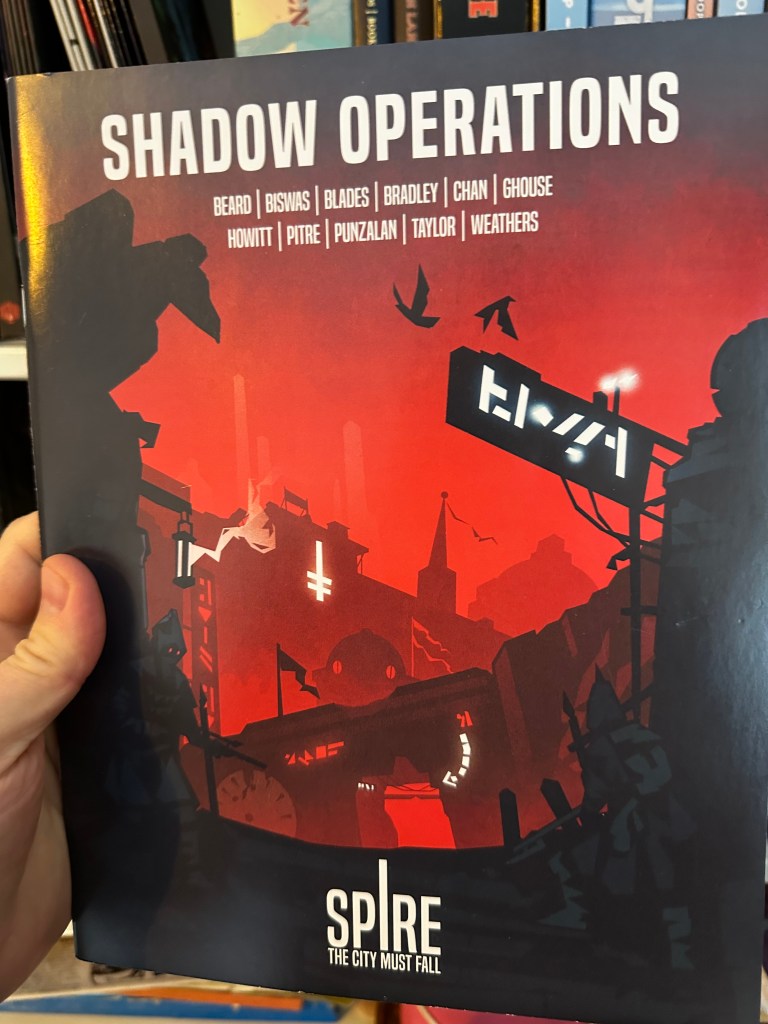
A few years ago, Rowan Rook and Decard published a book called Shadow Operations. It’s a collection of eleven scenarios meant to be played in a single sitting, and it’s great.
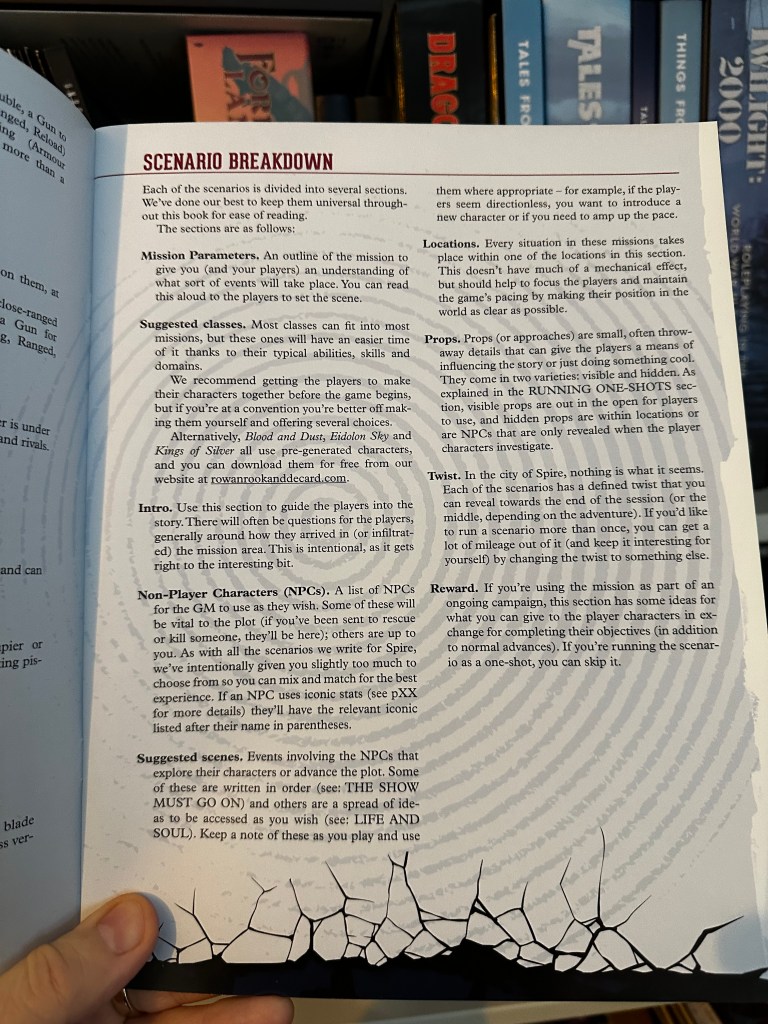
It does a couple of things cleverly and well. The first thing is that it presents a template for a Spire one-shot and then has every scenario in the book stick to it. Not only does this make the reading and digestion of the scenarios easy for the GM, it also provides them with the basis for creating their own one-shots. You can see this Scenario Breakdown in the image below.
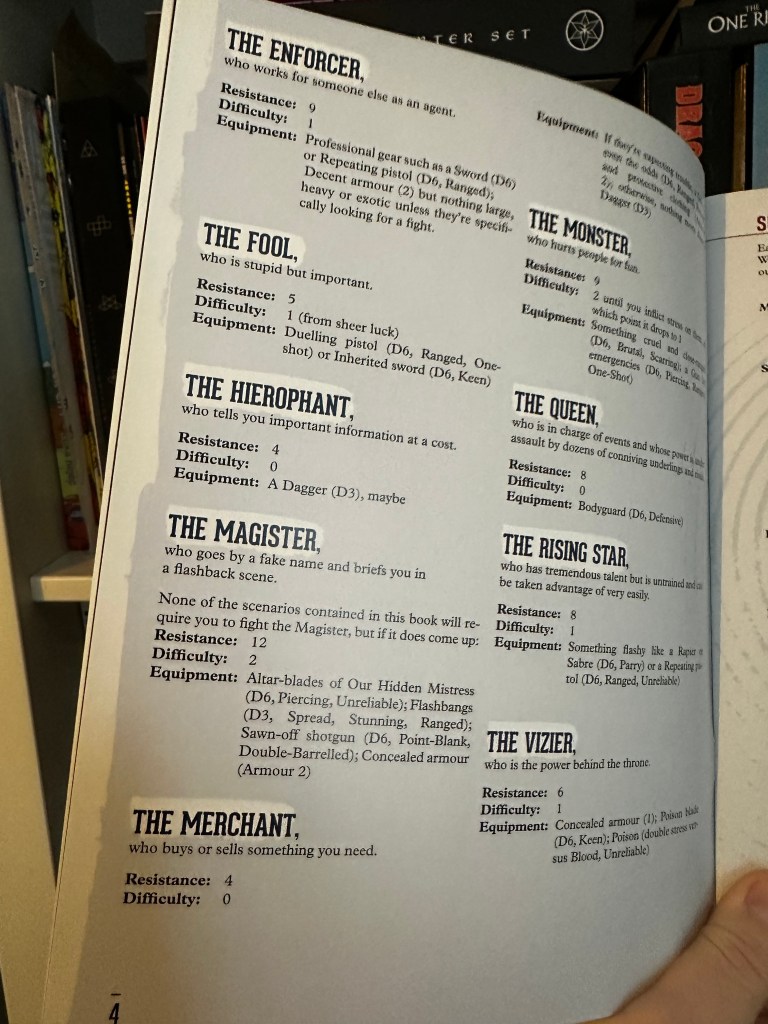
The other thing I really like about this book is the Iconic NPCs it provides. These are a list of statted out archetypes. They have titles such as “the Enforcer,” “the Queen,” and “the Vizier.” Then, throughout the book, each of the major NPCs presented in the scenarios fit into one of these archetypes. You don’t need stats for each NPC that way, you just use those iconic cookie cutters and refer to the handy reference page in the front if you need some stats for them. For a game like Spire, where there really isn’t anything like a bestiary or monster manual, and the enemies are just different types of people, this is a game changer. You can see the Iconic NPC stats in the image below.
Other than these introductory sections, there is a page of advice on Running One-shots in the back. This is pretty bare-bones, to be honest. It does tell you its best to “be up-front with your players.” Which is a great advice. You won’t have time for hidden agendas, secrets and mysteries that require deep investigations to reveal. Just lay it all out for them or you will leave them frustrated and the scenario unfinished. I couldn’t agree with this more. But the main piece of advice is to use index cards to write down the various locations, NPCs, PCs and props on. Once you have done that, you can group them appropriately, kind of like a game of Cluedo (or Clue for my dear readers from across the Pond.) There is nothing wrong with this advice. As much as I could, I went with it, insofar as I could playing on Roll20. But, as it turned out, we never really used my virtual index cards. The players had no real problem remembering where their characters or any other NPCs were at any given time or where any particular location was in relation to any other. So, I can’t help but feel that this advice only scrapes the surface of what the prospective one-shot GM needs to know. So much better is the advice in Heart. In Heart we are told to pay particular attention to pacing, to start fast and keep the pace up as much as possible. A one-shot is a sprint, not a marathon. Provide necessary information in flashback or in summary and get the PCs started right in the middle of the action. Give them an achievable goal. I wrote a whole blogpost on this a while ago. You can check it out here. One thing I’ll say, however, is that much of the need for this advice is obviated by the structure of the scenarios in the book and the directions within each one on how, where and when to start, and what the PCs’ aim is.
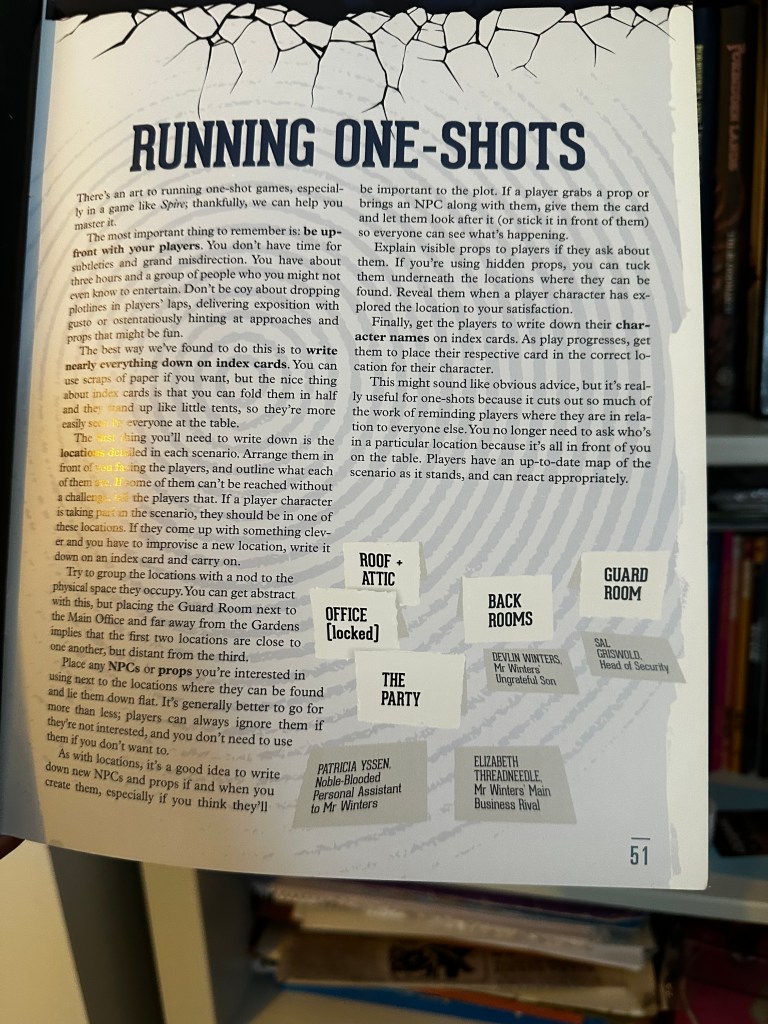
Speaking of the individual scenarios, I found it quite tough to choose the one I wanted to run, especially as I only left myself about three days to decide on it and prepare it.
Here are a few that I considered:
- Life and Soul – Go kill Mr Winters, one of Spire’s most prominent gangsters, at his own birthday party
- The Last Train – Get aboard the Last Train travelling the Vermissian and steal it or the tech that powers it
- These Feral Saints – Find and recruit a newly reincarnated Hallow (drow saint) in Pilgrim’s Walk before some other cult does
But the one I went with was Jailbreak, a mission to infiltrate the Hive, Spire’s most notorious and terrifying prison, and, once there, ensure the aelfir can’t execute their prize prisoner, the Gnoll Warlord, Brakesh Gold-Tongue.
Jailbreak
There will be SPOILERS ahead, so, if you care about that sort of thing, look away now.
If you’re still here, welcome to the Hive. I’m going to discuss, briefly, my experience with Jailbreak as a scenario, playing Spire as a one-shot and whether or not I would recommend it.
I had four players for this one-shot and exactly three hours to complete it in. I like having time-constraints like this in some ways, as it gives me a very clear idea of how long I can spend in the various sections of the session. I was able to wrap it up within the time, although it was tight. We played online for convenience and because there was a gale-force wind and torrential rain that evening. We used Roll20, as I alluded to above. We found the Spire character sheets on that platform to be quite user-friendly and easy to navigate once you got used to them. It helps that Spire is a relatively rules-light game, certainly. There is a button you use to make rolls when necessary, which is handy as it combines your dice pool automatically. However, I will say that in instances where you have to apply a Difficulty to a roll you are forced to roll each d10 individually, because you can only see the highest die roll if you use the button. If an opponent has a Difficulty of 2, it means you have to take away your top two die rolls from the dice pool and go with the third highest. It’s a small thing but it did come a up a couple of times during play.
Suggested Classes
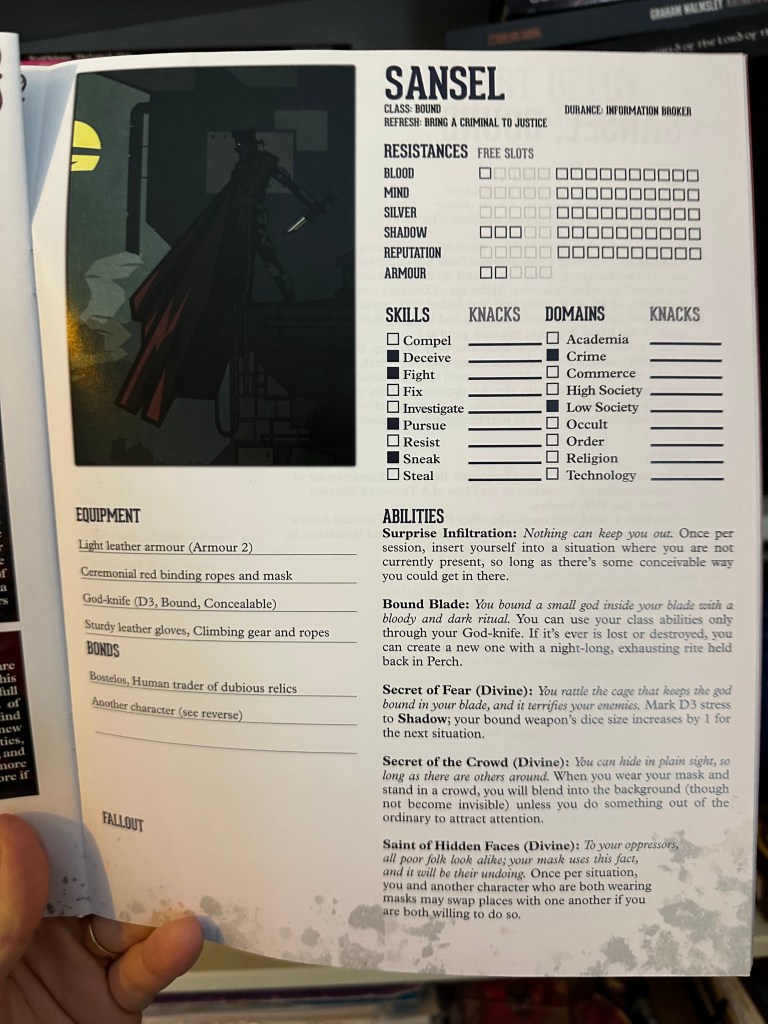
Another piece of advice that I feel should be central to running a one-shot of Spire, much like my advice for a Heart one-shot, is to make sure you have pregenerated PCs. When time is of the essence, you can’t be spending an hour creating a set of custom characters. One of the most useful parts of the scenario structure provided is the Suggested Classes. For Jailbreak, these were Bound, Carrion Priest, Lajhan, Midwife and Shadow Agent. So I stole and tweaked a number of pregens from other Spire products such as the Quickstart and the campaign frame, Eidolon Sky. The only one I had to create from scratch was the Shadow Agent as I couldn’t find one already made in any of the Spire books I own. The most time-consuming element of this was just copying and pasting a bunch of stuff into the Roll20 character sheets. But there is no doubt about how much time it saved on the night. I could have done a better job with some of the characters to be honest, but when they are only in the spotlight for such a short period of time, a long and complicated backstory can be a hindrance, actually.
Finally we get down to the scenario itself. As I mentioned above, the central goal is to infiltrate the Hive and get Brackesh Gold-Tongue out. But, the Intro actually asks you to start the PCs already inside the prison. You then just ask them how they managed it! I loved this as it got them started right in the action and removed all the time-consuming planning that such an undertaking would usually require. My players went straight in the front door in disguise, in a meat cart or as a sort of chaplain for the drow guards and prisoners.
Intro
You are then asked to describe the Hive. Now, there is minimal description of the prison in the main Spire book. It introduces it as a jail built into the living walls of Spire itself. It has rows of hexagonal cells which can be dropped individually from the wall in the event of an escape attempt. The unfortunate inmate would fall inside their cell all the way through the central abyss of the city, possibly all the way down to the Heart beneath. This is a terrifying prospect but, as I said, the description of the building, its inmates and staff etc, is brief. I was happy I had a copy of Sin. That book contains a much more evocative section on the Hive that was written, as it so happens, by Basheer Ghouse, the author of Jailbreak. It provides juicy tidbits like the way there are lots of walkways spanning the chasm below the prison, but they don’t have any handholds. Gulp. It also provides some great examples of the types of poor mutated experiments of creatures that are resident in the Menagerie. The Menagerie a part of the Hive where the aelfir send their old pets, experiments and art projects when they’re done with them. One of the main NPCs in Jailbreak is Dawn-Upon-Ice, a hobbling former aelfir who now acts as an information broker of sorts and can produce all sorts of nasty poisons in her guts for a price.
NPCs
Speaking of NPCs, Jailbreak has five, which is an easily manageable number. I will say, we didn’t interact with all of them, we skipped Qadiv Love-Fool, a sort of gnoll collaborator, purely due to the fact that the PCs did not pursue the information they gained about him. Brakesh Gold-Tongue, himself and Dew-In-Shattered-Mountains, the aelfir poet-interrogator, were my favourite to play. Neither lasted long against the PCs.
Suggested Scenes
After the NPCs section, there’s the suggested scenes. With the sort of structure you’ve got in these scenarios, this is really useful. Essentially, all you’re given to work with is a starting situation. The PCs are expected to push everything on from there. The suggested scenes allow the GM to pepper their descriptions of the infiltrators’ journey through the prison with interesting moments and opportunities to introduce the major NPCs. Here’s an example of one that I found particularly useful:
Smiling Kas spots the characters as she escorts Dew about the Deep Cells. She asks precisely no questions and accepts any excuse or alibi, no matter how ridiculous. If the characters have not threatened her and seem new to the Hive, she warns them not to stay in the Deep Cells too long.
I made liberal use of these suggested scenes.
Locations and Props
The next section describes the major Locations. I gave each one of these a little box drawn on the map on Roll20, thinking I would move the players’ tokens around from one to the next as their PCs moved. But, in practice, I didn’t really use them at all. Each of the Locations, which included the Menagerie, the Offices, the Guard Quarters, Watch Posts and The Deep Cells contain a brief description of the place, where it is in relation to at least one other place and the sorts of people and props that might be there. They are all short and to the point. Very easy to use on the fly. This section is supported by the prop section, which comes next. Props include unnamed NPCs like patrolling guards and menagerie experiments, by the way.
Twist
Each scenario has a Twist. Jailbreak’s twist is that Brakesh is a real asshole and has been going around the Hive murdering people, guards and prisoners alike. He was betrayed by his own side and left for dead before he was captured because he was kind of a psycho. He won’t leave with the PCs unless they either help him to kill each of the other named NPCs or offer him a shot at Snow-On-Stone, the aelfir commander who captured him. My players only encountered him about ten minutes before the end of the session. This worked out fine because their attempts to convince him to come with them failed so miserably that he attacked them and they were forced to kill him before escaping through an exploded front door to the prison. This worked out fine for them, as it happened. The Ministry wanted things to get messy to gain the attention of the papers and they were happy as long as the aelfir no longer had Brakesh as a source of information and didn’t get the opportunity to execute him publicly.
Conclusion
I love the way Shadow Operations is presented and it has a great variety of one-shot scenarios with an eclectic variety of settings and characters. Each of the scenarios is presented in only four pages, including one full page illustration. They are tight and easy to use because of the format. I do think it could do with some better advice on running a one-shot but, as I said above, if you follow the scenario structure, you’ll be alright.
Jailbreak was fun. It had a great setting. I loved describing a scene where the guards dropped one of the cells out of the wall and the PCs watched it plummet and the moment when they discovered one of Brakesh’s murder victims stuffed under the stairs was good too. But I found we had not enough time for the characters to shine as much as I would like. Maybe this is just one-shots in general, or maybe it’s how I handled it, but I would have liked a bit more room for the PCs’ characters to breathe.
I will definitely be going back to mine that rich seam of Shadow Operations in the future. It was so easy to pick up Jailbreak and run it with minimal prep. I would recommend it!
Pirate Borg: The Repentant Review
To be clear, the ship is the whole adventure. You could easily work it into an ongoing campaign, I think. It could be a random encounter or the goal of a mission. But, for me, it worked perfectly as a one-shot. It gives you everything you need in those eleven pages.

Talk Like a Pirate Delay
I was really excited about this year’s Second Annual Tables and Tales Talk Like a Pirate Day Pirate Borg One Shot on September 19th but I was, unfortunately, overcome by some malady that day. We postponed it only to have a massive storm roll in off the Atlantic, forcing us to delay the departure of this vessel yet again. Finally, last Sunday the players’ pirates were ready to board the Repentant come hell or high water…
OK, I say they boarded it but it would be more correct to say they were taken aboard. I started them off in the expanded brig, area 1 on the map of the ship. They awoke, captured, stinking and hurting and minus all their stuff. Nevertheless, with a few improvised weapons they found lying around the cabin and the assistance of a skeleton thrall raised by the skeletal sorcerer, they managed to overpower their demon guard. This was the first of many obstacles to their defeat of the Ashen Priest commanding the ship and taking the Repentant for themselves.
The Scenario
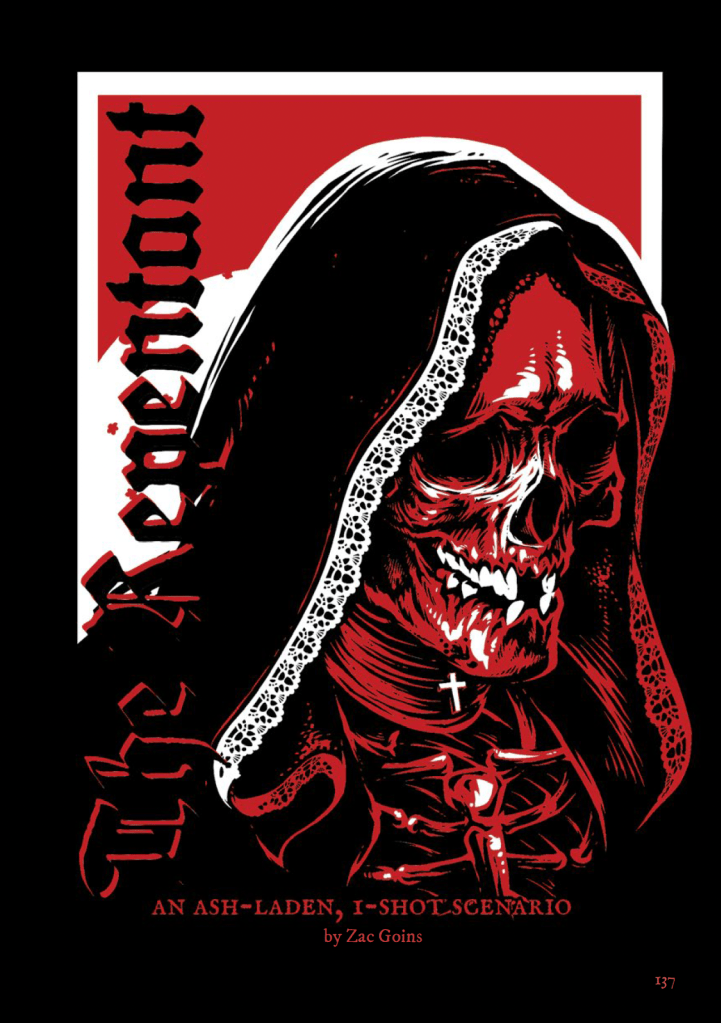
The Repentant is an 11 page one-shot scenario for Pirate Borg by Zac Goins. It is published in the forthcoming sourcebook for that game, Cabin Fever, via KNOWN CONSPIRATORS, Limithron’s subtable for third-party creators. Cabin Fever is a treasure chest of extras for Pirate Borg including new PC classes, GM tools, a Bestiary, no fewer than six adventures as well as solo rules. I am one of the backers of the Kickstarter project so I got access to the PDF through that. I’m hoping to receive the physical rewards for that soon.
This scenario is presented in a typical Borg-ish style, with maps, and illustrations taking the lead in establishing the atmosphere. It’s almost all in grey and black, emphasising the theme of ASH. The layout is also typical with lots of tables, stat-blocks, keyed area descriptions etc being worked into the spaces between and around the artwork. I occasionally had to take a few extra seconds to find what I was looking for due to this but it was never a major disruption. In general it looks great and ewers relatively easy to use.
The Premise
The Repentant is a charnel ship, an unkempt brigantine with tattered sails and a crew of demons and cultists, commanded by a cadre of Ashen Clergy. Their goal is spelled out clearly in the three step plan on the second page. In summary, the plan is to summon demons, form an unholy pact with the Dark One, raid some settlements to take captives, kill ‘em, raise them as undead and then grind them up to make Brimstone ASH. This is a type of cursed and arcane narcotic on which the crew plan to make lots and lots of pieces of eight.
To be clear, the ship is the whole adventure. You could easily work it into an ongoing campaign, I think. It could be a random encounter or the goal of a mission. But, for me, it worked perfectly as a one-shot. It gives you everything you need in those eleven pages.
The Reality

There is a fun variety of enemies for such a short scenario. You have seven different types of possible demon (one for each deadly sin, with commensurate sinful powers,) the emaciated crew, the Ashen Vicars and the Ashen Priest who has a variety of fun powers. And if you deal with all those, there is a hold full of Brimstone Zombies, who have the power to promise your soul to the Dark One with a bite.
Although not every encounter ended in combat, almost all did. It felt inevitable in general. I started the players off where I did, in the brig because of the restrictions of a one-shot session. I wanted them in the thick of it from the start and escape gave them a powerful motivation to attack the terrifying demon, even without real weapons. Also, I figured the brig is area 1 on the map for a reason. The scenario does not explicitly indicate where or how you should start it as a one-shot, but if you take the hint, here, you’re probably not going to go wrong. It definitely got them into the action immediately. Without the timely and repeated use of Devil’s Luck and mystical powers in the first two encounters, at least one of the party would have gone down. The only thing is that it led to two mostly combat encounters in quick succession. Starting with them boarding over the rails or some other way might have engendered a totally different kind of adventure.
The map was fine. I was a little put off that three of the four decks had one side of the map cut off but it was of no practical disadvantage in play.
Tables, tables, tables. The tables are great, from the effects of the Brimstone ASH (different to the regular ASH introduced in Pirate Borg) to the “What did I just step in?” Table which I underused criminally.
My players only used the Brimstone ASH on their enemies, which was a shame. I think it’s because when they rolled on the table for those uses, they got 1s and 2s, which are very very bad. After I told them what else was on the table, they regretted not trying it!
6 The Devil’s inside ye. Immune to fire. All weapons’ dice size increases.
The Finale
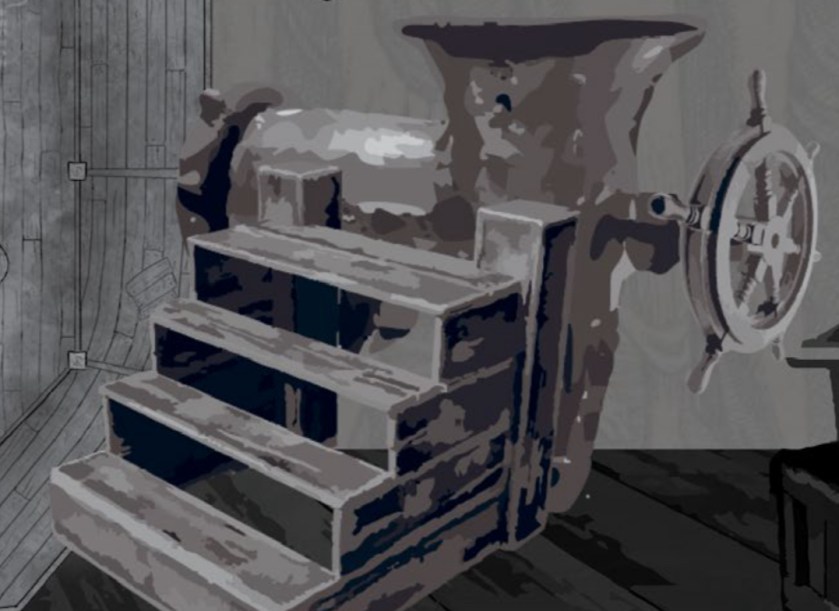
I saved the Ashen Priest, the scenario’s main villain, for the end. He might have been found in either the captain’s quarters or the hold, according to the keyed locations, but, honestly, you could locate him anywhere to suit your own game. The PCs had done away with almost everyone else aboard when they descended into the cargo hold found him there, feeding zombies into the ASH Grinder. There were a lot of undead down there with him but the PCs made such short work of him that it hardly mattered. Then they got to take the ship as plunder, not to mention the undead and the grinder so they could enact the plan themselves!
Conclusion
This was one of the most well-crafted one-shot scenarios I’ve run. We played it in about three and a half hours, though, if things had gone badly, it might have been over after less than an hour! I did give them a couple of NPCs for back-up and in case anyone lost their first PC (there were two deaths.) This might have given them a slight advantage, if I’m honest, but everyone had a good time. Looking forward to trying out some more scenarios from Cabin Fever and the rest of the slew of new books from Limithron!
DCC – Hole in the Sky Review
There’s a pumpkin-headed but polite creature stalking the prison who will, every once in a while, grab one of the PCs and pop them in his gob
In Summary
There are SPOILERS below! You have been warned.
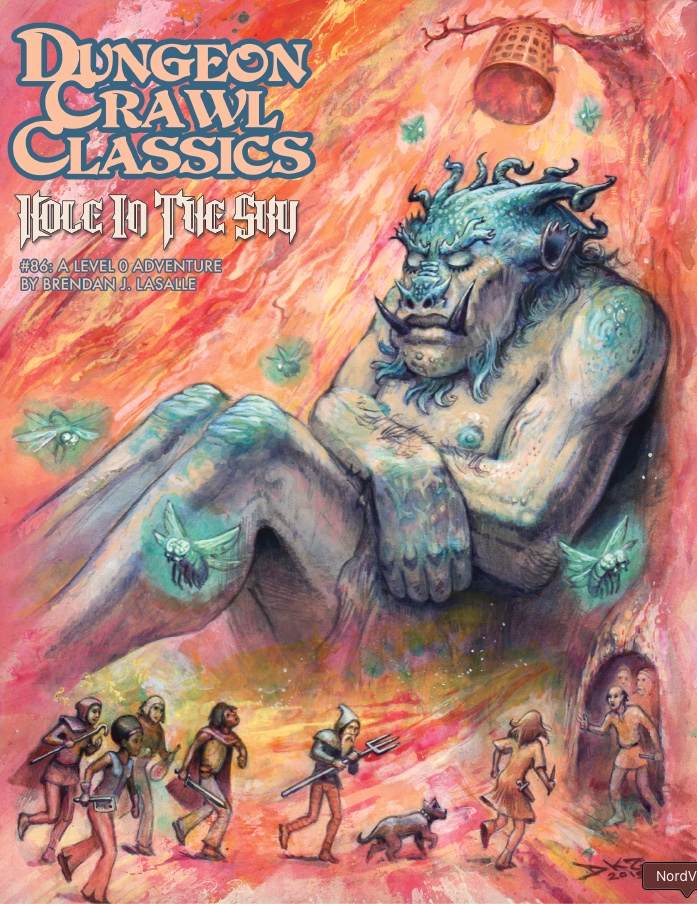
Sometimes you feel like things aren’t as they should be. It feels like you’re living in the wrong timeline, or like you were born under the wrong stars. That’s the extraordinarily loose hook for Hole in the Sky, the 0-Level Funnel adventure for Dungeon Crawl Classics by Brendan LaSalle. I say it’s a hook, but it’s not as if the large band of peasants you gather for this adventure really get a choice in whether or not to go to the starting location. All of that is taken care of in flashback and by dint of read-aloud text. Which is great. Don’t get me wrong. All the players came to play this scenario so, I think that makes sense.
Here’s the setup, the PCs, peasants, normal Joes, ordinary slobs all, start dreaming that they have had their true place in the universe stolen from them. They should have ben heroes! The dreams coalesce into a drive to dander, cross-country until they reach the edge of a cliff, days and days later, convinced that their destinies will be restored as a result. In this place, they encounter the Lady in Blue (there is more than meets the eye to the Lady but I’m not going to go into that here. It seems to be the kind of thing that might become important in a longer campaign that could feature her as a patron or maybe even an antagonist), a giant of a woman, floating in the air with five heads gripped in her two hands. The heads speak for her. She tells the peasants that, if they would just go and free her ally, imprisoned by her enemies long ago, they will be rewarded with a spin of the Wheel of Destiny. And this would set their destinies to rights.
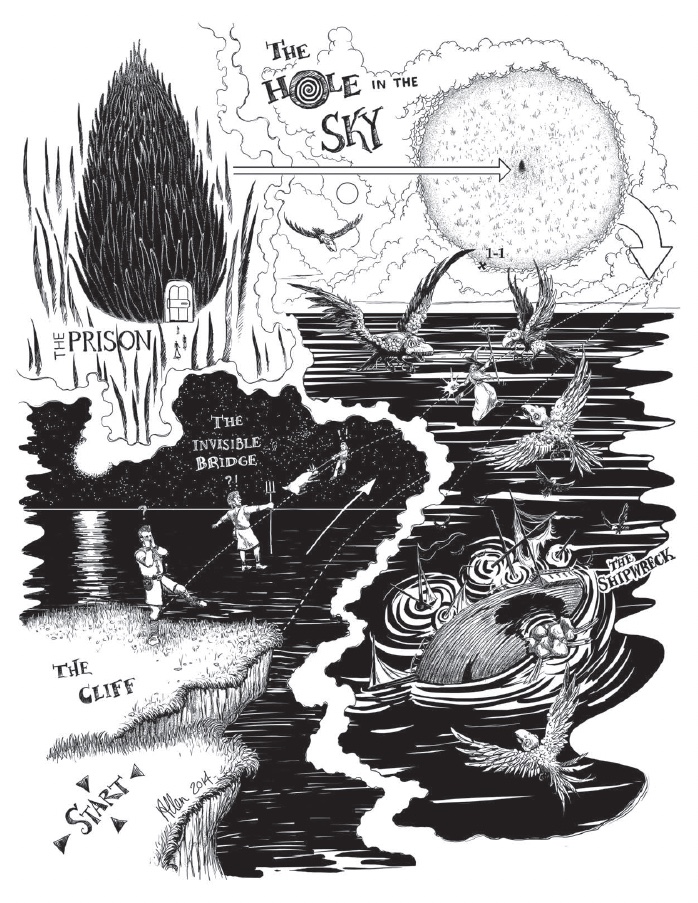
Actually, after she feeds them a meal, she does give them an out, so what I said above is not entirely true. If any of the PCs wish to abandon the quest at this stage, they can, but they will meet an unfortunate end before too long. Anyway, there is a period of waiting here that is strange to me. The scenario indicates that the PCs could use the time to visit the nearby village of Mherkin to stock up on gear and provisions. This is not even the last period of waiting baked into the scenario. Anyway, after hours of waiting for the right time, the PCs can step gingerly onto the invisible bridge that will take them from the cliff to the Hole in the Sky, the entrance to Lady’s ally’s prison.
For days they walk, sticking together to avoid the edges. The PCs are buffeted and soaked by a terrible storm as they cross the bridge far above the waves of the sea. They will lose some of their number in the storm, no doubt. They will lose even more as they are attacked by Sea Shrikes. Only after three days of traveling will they reach the end of the bridge, worn out, freezing and much reduced. Here is the second period of waiting. They must wait a further two entire days, slowly starving and shivering, until the Hole in the Sky aligns perfectly with the bridge. Why? Good question.
Once it appears, however, they are able to leap through and into the Prison Vale, a strange and unique extra-dimensional pocket universe designed for one purpose and one purpose only, the imprisonment of the Lady’s ally, Drezzta. The place seems to be made for giants, even the blades of grass stand tall as trees. There are a variety of potential random encounters in the Vale, 1 in 6 chance per hour for four hours if they go straight to the prison proper. Some of these look very fun and quite thematic.
Nice they make it to the prison they discover a cyclopean gate and find their way in. Inside they will discover a few things in quick succession:
- There’s a massive titan, sleeping on the job, but clearly here as a warden for this prison
- There’s a cage hanging from a branch maybe 200 feet up
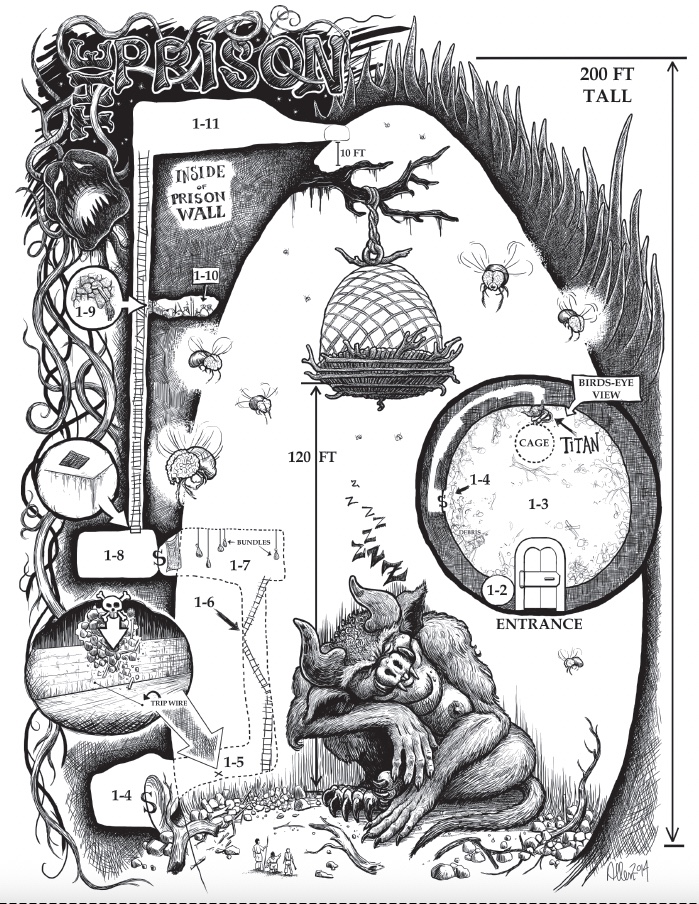
- There’s a pumpkin-headed but polite creature stalking the prison who will, every once in a while, grab one of the PCs and pop them in his gob, where they will slowly burn to death in his jack o’ lantern flames, before gently encouraging the rest of them to leave
Of course, they are not going to leave empty handed. The continue on, finding a way up inside the walls themselves. On the way they encounter lethal traps, dangerous lunatics, mutants and lots of ladders. They will get a little more of the story from some of the other weirdoes who live here and they will probably find a cache of treasure, which includes a magic spear to destroy the sleeping titan.
It should end up with them reaching the top level of the prison, dizzyingly high up. They should risk life and limb to free the poor, emaciated form of Drezzta trapped in the hanging cage. One of them will need to sacrifice either a little blood or a lot more to open the door, but that will lead to her flying free, destroying the pumpkin guy and fleeing as the very dimension crumbles around the escaping PCs.
Those who make it back through the Hole in the Sky find themselves once more on the cliffside. The survivors are each given a chance to spin the wheel. Some may find themselves thrown back into the mundane lives they left, others might find themselves destroyed, killed in favour of one of the poor wretches who died during the course of the adventure. Still others might find themselves utterly changed in almost every conceivable way… Potentially a great reward for a 0-level character who is about to progress to the dizzy heights of Level 1!
Our Experience

I played this funnel over two sessions of about three hours each. We played online using Roll 20 and Zoom with a group of six players, all members of our ever-expanding RPG community, Tables and Tales. With six players, of course, we had 24 0-level PCs leaping through that hole in the sky! This seemed like it might be too much. I was afraid that each player’s turn might take an age, but, in actuality, the numbers started to get whittled down quite quickly.
Like I stated above, in the half of the adventure that takes place before they enter the Hole in the Sky, there are two pretty lengthy period of waiting baked in, first on the cliffside and again at the end of the bridge. I didn’t give the players the option of visiting the village of Mherkin, despite its funny name, because the last thing I wanted to do was spoil the momentum before it even got started by introducing a shopping scene! Also, the PCs should have what they need, more-or-less, so I didn’t think it was necessary. That second period of waiting, for two entire days before they could enter the Hole is fairly inexplicable though. It exposed the PCs to the freezing temperatures and the possibility of getting sick but it felt a bit like ti took the wind out of our sails just as things were about to really kick off. I think, if I ran it again, I might remove that wait entirely.
As for the invisible bridge, I loved this as a conceit and the players did too, even if it led to a lot of deaths right off the bat. The storm was brutal to one particular player who was reduced to a single PC in one terrible gust. The Sea Shrikes’ attack was less lethal than expected but that was a matter of luck, I think. What we felt, as a group, after playing this part was that the imagery, the situation and the danger of it were all quite palpable, not to mention unique.
Moving on to the Prison dimension itself, with the giant blades of grass and the enormous gate, some of the players mentioned that it made them feel like they were in Honey I Shrunk the Kids. I think that is the vibe the place is going for so that was cool. The random encounters in the wilds of the dimension looked good but we didn’t interact with them. They simply never rolled a 1 on the encounter die. But I particularly enjoyed the Chaos Pig, a burrowing porcine nightmare, and the Woven Women, camouflaged guardian plant creatures.
On to the Prison itself:
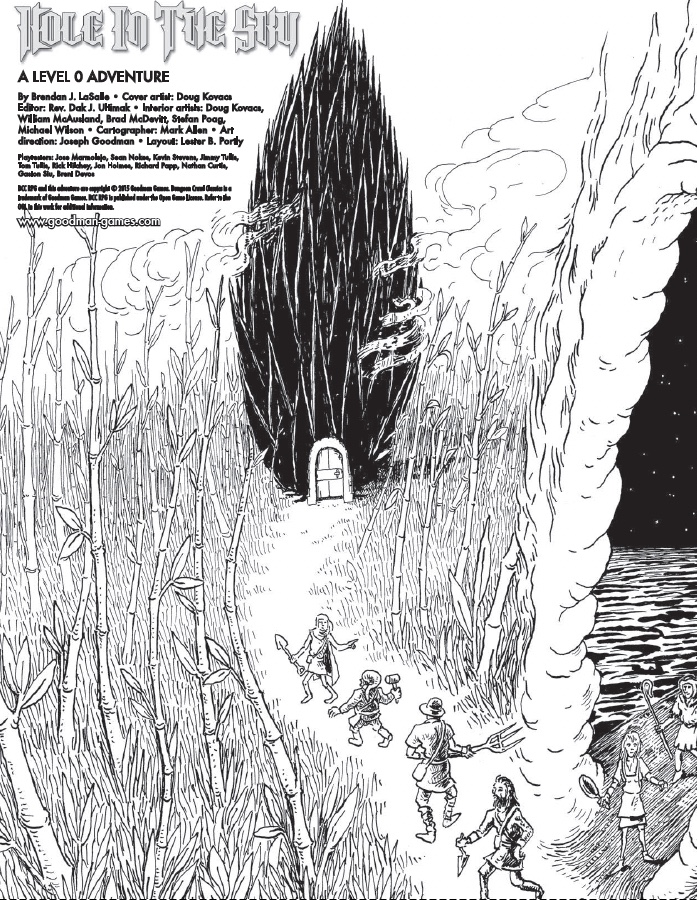
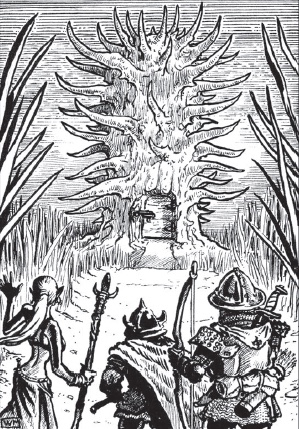
a three hundred foot monolith covered in fifty-foot long thorns. It looks not so much constructed as grown, like some kind of massive seed pod.
This is pretty metal and I enjoy the fact that the adventure contains no fewer than two different artists’ depictions of it. Both so different and yet both awesome in their own way.
Luckily, there is no waking that titan who has been ensorcelled to want to exist in his dream realm. It would take something fairly cataclysmic to wake him up. And it does, of course, near the end of the adventure. After freeing Drezzta, the surviving peasants hoped into the cage and cut the rope holding it up. It fell on the titan’s head and rolled off him down to the floor where they were able to escape. They managed to kill him before they went though, as there is a magic titan killing spear to be found in the treasure cache, conveniently enough.

The pumpkin-headed lunatic is fun. I can’t quite make out the reason why it’s a jack o’ lantern creature, to be honest. It doesn’t seem particularly thematic to me or anything. But he it is a pest. The judge is encouraged to chuck him at the PCs whenever they least expect it to take just one of them and kill them in the most awful way, just put the shits up them. It works. Every time that guy turned up there wrecked groans. It was a guaranteed death every time.
There are abandoned ones who live in the walls. They were former servants of the Lady in Blue who had been sent under the same pretences as out heroes but failed or refused to carry out her orders. They longer they spent there the madder they got and the more mutated. There is one dwarf who the pCs might try to talk to but they are not likely to get much from the others. It’s not a big talking scenario this one. My PCs ended up murdering most of these wretches and burning the living quarters of the abandoned ones, sending the survivors fleeing as a result.
This is the only proper fight in the second half of the adventure and it’s not great. It’s just 12 pretty boring, emaciated enemies against a similar number of peasants. Now, the players made it memorable in several ways, but it does feel like an encounter that could have started off more interesting. At least most hits were an instant kill.
Their final reward, the Wheel of Destiny was a fun addition, although it’s a little redundant if playing as a one-shot. Each survivor gets to make a Luck roll. As soon as I told my table that, they erupted in groans and curses aimed at me. I had been encouraging them to spend their Luck liberally towards the end after all… Anyway, I’d imagine, if you were planning to play the characters in further adventures it would have been more engaging.
Conclusion
This is very engaging adventure with a great, bonkers concept. Its executed so well too. The art and maps are fantastic, as an always with DCC products. I am never that crazy about their layout or presentation of information but I’m willing to overlook that given the quality of the experience.
It’s definitely worth trying out if you are looking for a 0-level funnel that has lots of hooks built in for further adventures but it worked very well as a one-shot also.
Talk Like a Pirate
It’s almost time again for the second annual Tables and Tales Talk Like a Pirate Day Pirate Borg One-Shot or the TTTLPDPBOS as I like to call it.

TTTLPDPBOS
It’s almost time again for the second annual Tables and Tales Talk Like a Pirate Day Pirate Borg One-Shot or the TTTLPDPBOS as I like to call it. Friday September 19th is the big day, of course!

We had a great time last year playing a pared down version of one of the adventures in the Pirate Borg core book. I did a Pirate Borg character creation post beforehand and I gave a run-down of the one-shot in this post later.
New Options
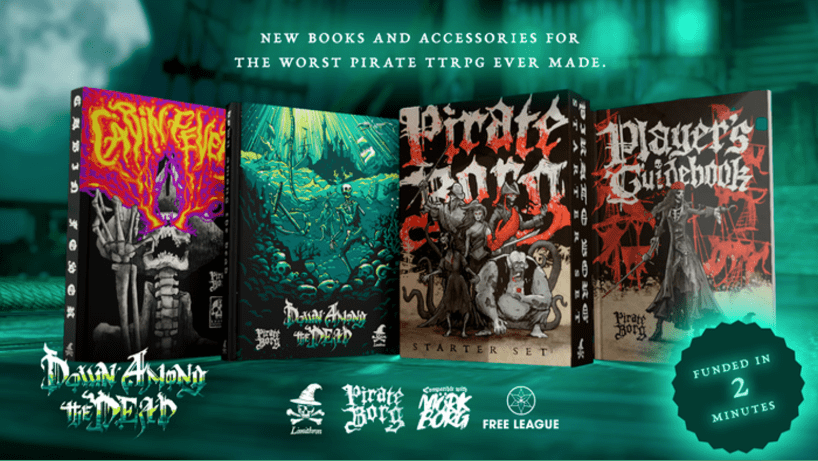
Last year all I had was the core Pirate Borg book, which I’d picked up from my friendly local game store, Replay. Since then Limithron had a Kickstarter campaign to launch a starter set, Down Among the Dead, a proper expansion with new player options, monsters and adventures and Cabin Fever, a book of third-party creator classes, options, rules and scenarios, all great new products for their flagship game. They recently released the beta PDFs for these items to the backers and I’m so glad they did because I am going to get so much use out of them for this year’s one-shot. Check out the whole kit and caboodle here. You can still pre-order it if you feel so-inclined. I would encourage you, of course, to go and support these small indie creators trying to produce quality products during an incredibly volatile and unfriendly trading climate. On that Kickstarter page, you can also read a little about the challenges they are facing in production and shipping, if you need any more reason to support them.
Trapped in the Tropics

The Starter Set includes a bunch of maps, character creation guides, dice, tokens, reference cards, a Player’s Guidebook, and a starting adventure, Trapped in the Tropics. I really wish I had all of those little physical extras to play with at the table but they are not going to be here in time for the I’ve been looking at the TTTLPDPBOS, so I’ll have to wait. I have been reading through Trapped in the Tropics. It’s designed as a teaching adventure with great tips for both beginner GM and players. It lays out the structure of the adventure in a very easy to understand format, includes notes on tone, style and inspiration and includes advice on how to use it at the table in both multi-session and one-shot forms.
As an adventure, it’s set very much in the OSR mould. It provides potential hooks, interesting locations, important NPCs, encounter tables and enemies, without a strict plot or step by step list of occurrences. I’d love to play it as a longer form game. It looks like the sort of relatively free-form OSR module that players could really sink their teeth into and make their own. However, the one-shot option is not as interesting to me. I like parts of it, but I’m struggling to come up with anything from it that might make for a memorable finale.
Cabin Fever
Then we’ve got Cabin Fever, a standalone book of content from third-party creators that was kickstarted along with the Starter Set. This is a treasure chest of a book, brimming over with little gems like new player classes (e.g. the Angler, the Barnacle, the Sulphur,) a bone construct dice drop boss generator, some truly Forlorn Encounters (e.g. Stowaway Imp, Baroness Malaria, Parasitic Beard,) and most importantly for my purposes, a selection of excellent Pirate Borg adventures. My appetite was whetted as I realised that one of these was specifically designed as a one-shot. It’s largely a location-based, exploration adventure in the mould of Pirate Borg, with a central ship, a large number of undead and a crew full of scum. And, importantly, the adventure includes elements that I feel could make for a really great finale to our TTTLPDPBOS. It’s ideal, really. So, I’ll be breaking out the tiny fake spyglasses, eyepatches, and plastic doubloons to help us get in the spirit for “the Repentant” by Zac Goins on September 19th.
What about you, dear reader? How will you be celebrating Talk Like a Pirate Day this year?
One Shot to the Heart
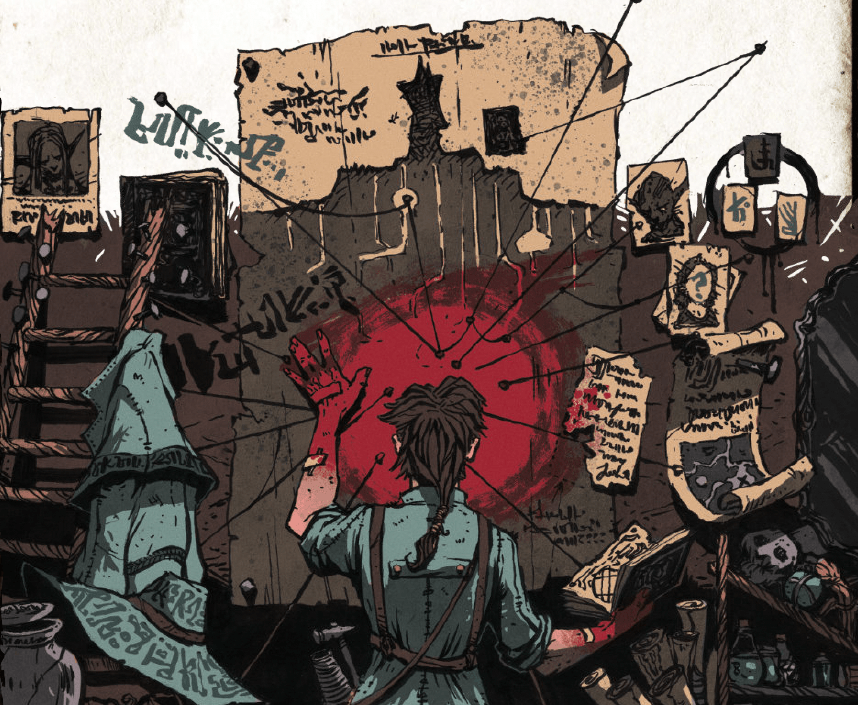
Fallout is one of the most fun things about Heart. Players are sick little freaks who love getting lumbered with terrible burdens. Give them what they want, I say!
A Challenge
I have generally looked at Heart, The City Beneath as a campaign-play game. It’s made for it. It has a structure to the gameplay that rewards multi-session arcs. Your character’s beats beg you to spend time to seek out the opportunities to achieve them. And that Zenith ability; everyone perversely desires that big finale, their moment in the spotlight for one last time, that explosion of ‘themness’ right at the end so they can say they really went out in style.
So, when you are asked to run a Heart one-shot, what do you do? How can you replicate the uniquely satisfying journey that belongs to the delvers in a campaign, in just one session? The short answer, of course, is, you can’t. But, can you create a satisfactory one-shot with a slightly different feel? Yes, of course you can.
You will not be too surprised, dear reader, at this point, to discover that that was the exact situation I found myself in last week. I had a special request come from one of our founding Tables and Tales members to run a Heart one-shot, so I had to give it a go.
Heart Exam
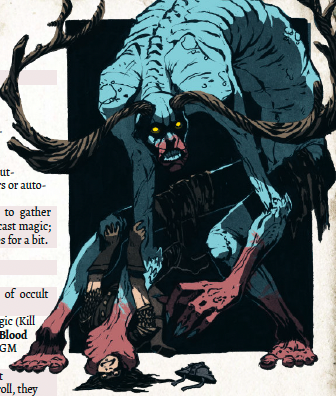
Grant Howitt and Chris Taylor know what they’re talking about when it comes to designing and running games, particularly their own games, I figured, so I started with them. Heart has a lot of useful tips for GMs in it. There’s advice for the novice and the veteran alike on how to run RPGs/story games/Heart. They also include separate sections for campaigns and one-shots. It’s worth noting that much of the general advice for running Heart is just as important in a one-shot context as in a campaign. The one-shot bit itself is minimal but useful.
Running Heart as a one-shot is straightforward enough. The only changes you’ll have to make are around pacing and how you inflict stress and fallout.
Pace-maker

The advice around pacing is as true for a Heart one-shot as it is for any game, you have to start fast and keep it moving. No long-winded expositions, no character-development heart-to-hearts that take thirty minutes, no hanging about. Start in media res or as close to it as possible. Provide the necessary information in summary or in flashback and get to the action. Also, you have to give them something they can do in one session, a goal, a destination, a creature to kill or a thing to retrieve. All this sounds easy enough, but it can be tricky. It has taken me quite a while to develop my one-shot technique to a point where I feel like I am almost guaranteed to get it done in one shot. You start to figure out where you need to kill your darlings to make up the time. Working that sort of thing out on the fly is a skill I have made gratuitous use of recently.
In this one-shot, I had the PCs escaping Redcap Grove as a sort of mini-delve on the way to the entrance of the actual delve which would take them to Hang Station. They had a simple job to deliver some psychoactive fungus to a Vermissian Sage in the station. But, woah, were they rolling badly… and also being little nut-jobs. The Cleaver, predictably, decided to hunt the Druids who were hunting them and it turned into a stress and fallout ridden combat. This was fun, and horrific and hilarious. Almost everyone in the combat hulked out at some point, the Witch into her True Form, the Deep Apiarist into her Awarm Form, the Cleaver into his Chimeric Form and the one remaining Druid into their Cave-dweller Form. The players understood the one-shot assignment and did not hold back. There’s no point in saving your cool power till the end… it’s all end. Anyway, because this took a little longer than expected, I ended up combining this mini-delve with the longer inter-landmark delve that I had prepared between Redcap and Hang. I essentially just combined the remaining resistance of the mini-delve and the delve-proper on the fly. This worked well, even though it meant I had to cut out an encounter with the Butcher…
Stress and Fallout

Mssrs Howitt and Taylor also mention stress and fallout in the extract above. You can’t be afraid to hit them hard. Fallout is one of the most fun things about Heart. Players are sick little freaks who love getting lumbered with terrible burdens. Give them what they want, I say! Fallout is one of the key ways to push PCs to act in certain ways and that pushes the game forward so it’s win-win, innit?
I took this quite literally. I made sure that the busted old crate they were transporting their dodgy mushrooms in was leaking the kind of spores that some sado-masochist might pay a large amount of coin for. Every time they rolled against the resistance of the delve or when they made any dangerous movements or just when nothing else was going on, I got them to roll Endure+Wild to resist the effects of the fungus. If they failed, they got Mind stress and if they got Fallout from that, they got one of the following:
FALLOUT: Traitor Brain, MINOR Mind – You relive a moment of regret ad nauseum. Always at the worst possible time. All actions increase in Difficulty by one step (ongoing.)
FALLOUT: What Did You Do? MAJOR Mind – You witness the effects of your worst mistake on those it affected. It is a gut-punch to the mind. When you mark Mind stress, roll two dice and take the highest (ongoing.)
This had exactly the effect I wanted. And if you engineer it right, you can use this sort of technique to bring about some really cool moments.
Pregens


Speaking of engineering things… making pregenerated characters for this game was the best decision I made. I had to combine it with a few tweaks to the rules, but, if I were to recommend doing one thing for your Heart one-shot, it would have to be creating and assigning pregens yourself as the GM.
I created three pregenerated characters, one Gnoll Cleaver with the Heartsong Calling, one Aelfir Deep Apiarist with the Enlightenment Calling and a Human Witch with the Penitent Calling. I gave them their starting abilities, picked their equipment, I even picked their names and answered some of the questions presented in the Calling and Ancestry sections that rounded them out as characters. I even chose their names and starting beats! I left a couple of answers up to the players, namely the ones to the questions about how their characters were associated with one another. Having them answer those gave them a sense of belonging and of fellowship with their adjacent weirdos.
Anyway, the character creation took the bulk of my prep-time, easily, but it was very much worth it. Here’s my thinking: I wanted to make sure we did this thing in one session so didn’t want anyone dithering over the details, and I didn’t want to have to explain all about every aspect of a Heart character before we even got started playing. I wanted to be able to have an inkling of the beats they would reach for to make it easier on myself to improvise them in the moment during play, I wanted to be able to plant connections to the PCs lives here and their and I wanted to be able to use the Heart itself, to make it feel like the Heart was reaching into their souls and coming out with their greatest desires. The Fallout that I wrote above? I wrote that with the idea in mind that the Penitent Witch might need that to confront her greatest regret, why? So I could introduce the last ace up a Heart GM’s sleeve, the Zenith Beats and Abilities.
The Zenith
They had been hitting both minor and major beats throughout the session and taking new abilities as appropriate. I allowed them to hit as many as they wanted. I had given them four each in their pregen character sheets. But that wasn’t enough for me.
Just as they were exiting the delve and entering Hang Station with their psychedelic cargo, I asked the players to refer to the book and take a look at their Zenith Beats and Abilities. I only pulled this out near the end so they wouldn’t know it was coming. Luckily each Calling only has two Zenith Beats available and each Class only has two or three abilities. So it wasn’t too much to look up in the moment, and, as soon as I told them this, I knew I had them (or two thirds of them anyway.)
I made it clear that I would be lenient in judging whether or not they met the conditions of the Beats because I know how good it is when a Heart PC hits their Zenith. So we made it happen. By the end of the session, each of them had brought about their own personal apocalypse and it was a thing of red, wet beauty. The Cleaver destroyed and replaced the Beast in the bottom of Hang Station, transforming the landmark into a swampy forest in the process, the Deep Apiarist summoned the Heart itself into the space just long enough to squash her into a red, wet stain and the Witch brought the Deep Apiarist back from the dead, sort of, as a clone made from the Heart itself, a clone that will always return no matter how many times it dies…
We wrapped the whole thing up neatly in about three hours. If I hadn’t cut the Butcher encounter and combined those two delves early on, it might have gone another half hour. Either way, a nice, diminutive package, I think you’ll agree.
Troika! Whalgravaak’s Warehouse Review
Here’s the story: hundreds of years ago, the city’s premier logistics wizard, Whalgravaak, abandoned his warehouse, having shredded the Manual of Operations for his Sphere Pool (a mechanism used to import and export goods across the cosmos) so that his rivals could never figure it out.

One-shot fun-shot to campaign of terror
You know what it’s like, dear reader: you want to introduce some noobs to RPGs or just to your group of players, you want to make a good impression but you don’t want to scare them off by plunging them into a multi-session campaign with a complicated, crunchy system. So you pick up a location-based adventure, thinking you can just use a small portion of it, just what you need, just enough for one session, one single shot. But, after that session, the curiosity gets the better of you all. That was a weird, but enjoyable experience, you tell each-other. I bet we could have fun exploring the rest of that odd locale, you tell the players, why not have some more sessions and see how it goes? So you do that. And then the bloodbath begins.
Whalgravaak’s Warehouse
SPOLIERS BELOW! If you are interested in being a player in Whalgravaak’s Warehouse, turn back now!

Whalgravaak’s Warehouse is a Location based adventure by Andrew Walter for Troika! The design is by Shuyi Zhang. It came out in 2023 and was the first of the Melsonian Arts Council’s 1:5, an ongoing series of location-based adventures for Troika! There are a couple more available now and another out very soon. You can find them all here. My somewhat rotating group of Tables and Tales members just had our last session in Whalgravaak’s Warehouse on Monday night, after spending a total of eight sessions there.
Here’s the story: hundreds of years ago, the city’s premier logistics wizard, Whalgravaak, abandoned his warehouse, having shredded the Manual of Operations for his Sphere Pool (a mechanism used to import and export goods across the cosmos) so that his rivals could never figure it out.
Since then, the strange nature of the warehouse, staffed by giants and stocked with oddities, has only grown stranger, and more dangerous. It houses a handful of physics defying, Tardis-like chambers, not least of which is the terrifying Deep Storage, a swirling mass containing several pocket dimensions and a wraith-like being who wants nothing more than to consume intruders. At least one cult has taken up residence, and they are often mutated into horrific Chaotic Spawnlets by the effects of the radiation still spilling from the Sphere Pool. The warehouse is sandwiched by a vast desert of dust occupying the roof, which is peopled by the descendants of Whalgravaak’s former employees and, underneath, the tunnels of a pack of unpredictable Worm-headed Hounds.
But entrance has been forbidden by the Autarch for centuries and, even if you were foolhardy enough to ignore a diktat like that, you would still need to be brave enough to face the unknown dangers within.
The Hook and the Party
The book suggests a few potential hooks for your PCs. Since my game started off as a one-shot, with brand new characters and no existing campaign to work it into, I went for one that seemed like the object might be achieved in one session. They, along with many other groups of mercenaries were contracted to return with the head of a Cacogen, known only as the Opportunist, to their patron, an Exultant of the Autarch’s court. But we dealt with that in flashback as they all sat in the weed-choked yard of the warehouse, dotted now with small encampments of adventurers and brigands all gathering their courage to gain entry. The PCs’ band consisted of a Monkey Monger (and monkeys), a Gremlin Catcher (and dog), a Wizard Hunter and a Landsknecht. They were, to put it bluntly, a motley crew.
That first session was all fun and games. Every encounter, except for the last one with the Cacogen, was resolved peacefully. This happened mainly due to the rolls I made on the Mien table for each encounter. The worm-headed Hounds they encountered wanted to play with the Monkey Mongers monkeys, they did not want to eat them. The Flat Serviceman was happy to follow the party around and clean up after them. The Segmented Crippler in the Pigeonholery, didn’t want to wake up, so they skipped that one entirely. This is a pretty standard mechanic in Troika but I think it gave the players a false sense of security. The session ended with this motley crew finding and defeating the Opportunist quite handily. And, at that point, we thought that would be it.
But a few months later we decided to continue with their explorations of the warehouse. Obviously, their original motivation to explore was gone. They had achieved their objective, but the players were all good sports. They decided between them that the motivation was purely one of curiosity and greed. They had spotted, through a bubble like window in one of the rooms they had traversed, a vast and terrifying pool of chaos and wonder in a room far too big to exist within the confines of the building. This was enough for them. Essentially, they went in search of adventure. Although, through the sessions that followed, I did introduce the idea that they might want to find that cult I mentioned earlier and that they should seek out the incredibly valuable Tome of the Sable Fields that was reported to be stored in the warehouse, somewhere. This gave them a little direction when I thought they might need it, but, honestly, I think my players just wanted to see what new wonder/horror the dungeon had in store in the next room.
The Dungeoncrawl
It was only from this point that I started to really treat this adventure like the dungeoncrawl it is very much meant to be. The book does a good job of introducing the concepts of tracking resources like lantern oil and provisions as the party explores. It also explains the concept of exploration turns and their effect on the game, i.e. the distance you can travel in that time, the amount of lantern oil you use per turn, and the likelihood of running into an encounter. I followed all these rules to the letter and they made for some interesting moments in the game. But, to be frank, the weirdness of the setting is the real draw here, not fiddling with rations and light levels. Also, few of the characters lived long enough for starvation or oil-skins to become a problem.
It also has rules for dealing with the spatially distorted, impossibly large areas within the warehouse. It suggests that the players should make Luck or Skill checks to avoid getting lost in these areas, but, in all honesty, I didn’t really require that sort of thing.
Mapping is also a part of the dungeon crawl format and this adventure does want the party to attempt to map the space for themselves. The thing is, when some rooms appear to be a kilometre wide and the next one is spatially normal, that map becomes effectively impossible for them to draw accurately after a relatively short period of time. Eventually, I gave up and just shared the one from the book with the players, trusting their ability to separate player knowledge and character knowledge. My advice, if you are doing this, try get your hands on the PDF version, since the one in the physical book stretches across two pages and the crease obscures part of it.
In fact, the adventure has four maps:
- the warehouse floorpan, using 10ft squares to denote distance
- a hex crawl for the desert on the roof, replete with points of interest
- a map of the Worm-headed Hound tunnels beneath the warehouse, superimposed over the warehouse plan
- a largely vibes-based map of Deep Storage
These are all great but usefulness will vary. In our game, the party spent several sessions trapped in Deep Storage but took one look at the desert and noped right out of there. This seems like a good point to note how good all the artwork is in this. There are plenty of colour and black and white illustrations but they leave me wanting even more!
Warehouse Workers and other Beasties
A warehouse is a dangerous place to work, especially when the correct safety protocols are not observed. It doesn’t help at all when you are trespassers and several of the residents are large enough to crush you with a single blow.

The giants are the main NPCs of the adventure and Whalgravaak’s only remaining employees. Each one is fabulously interesting, diverse and well-drawn. They have their own motivations and desires. I was gratified that the party managed to encounter all of them during the eight sessions we played. In fact, one player had two different characters killed by two different giants. I will point out that it is entirely possible to avoid violence when dealing with the giants, it’s just that, sometimes, the Monkey Monger on the team has monkeys who decide to fuck with them and one thing leads to another.
The wraith-like Gulf Man Roamer from the swirling vortex of Deep Storage is a potentially lethal foe who has a chance to show up each time the party moves through that already dangerous room. If it captures you in its bag, it’s going to spirit you away to eat you in its extra-dimensional lair.
No warehouse is complete without forklifts. Whalgravaak’s forklifts are humanoid constructs with the face of the wizard himself. They treat intruders like stock, and will attempt to whack them and pack them. They hit very very hard.

There are also a bunch of random encounters, including the Worm-headed Hounds I mentioned before, desert nomads from the roof, and Bandits/Burglars/Bastards. These only turn up on the roll of a 1 on a 1d6 for each turn the party travels. It didn’t occur very often in my game. The Roof and the tunnels have their own random encounter tables as well, but I never used them as the party never spent any appreciable time there.
This is just a selection of the possible encounters you can have in this setting. I haven’t even mentioned the tiny army guys, the sentient crane parts, the Onion God or the Mulled Dead.
The Rooms
I have hinted at rooms that defy physics and rooms with pocket dimensions, and those are usually the big-ticket locations that contain some of the greatest set-pieces in the adventure. Deep Storage alone evoked some of the most inventive use of skills and spells and a great degree of fear and tension from the PCs. It killed one of them (two if you count the Rhinoman eaten by the Gulf Man Roamer.) The Roof could act as an entire short hex-crawl campaign and the Sphere Pool has some truly memorable and dangerous elements to it.
However, many of the other rooms have weird and wonderful contents as well. Some of them, the party will glance at and move on, while others will capture their imaginations and encourage them to interact. I never really knew which reaction I was going to get from them, actually. The room full of melting rope? They had to spend an hour trying to figure out how to set it on fire, the eternal battle between tiny armies playing out across a battlefield seemingly larger than the whole warehouse? Just popped their heads in and left with some captured little men.
Some of the rooms were relatively mundane warehouse style rooms with shelves and containers. The book has tables in the back to help you identify the state those rooms are in and the contents of the containers, which is useful.
One of my over-riding impressions by the end of our game, was that in some ways, the great variety of bonkers content in the rooms served to detract from any unifying theme. There were some elements that went together, such as the warehouse’s disdain for traditional dimensions. If my PCs had explored the Roof or even encountered any of the nomads who dwelt there, they might have found a distinction between those descendants of the ancient striking workers and the giants who continued to obsessively do their jobs even long after their employer had passed on. But, none of that is to say that the rooms weren’t endlessly fun and inventive.
A Note on Lethality
I recently wrote a post sharing some of the obituaries of the characters who met their ends in Whalgravaak’s Warehouse. You can check it out here. There are only three of them in that post. A few months previous to that, I wrote this post, which contained the obituaries of two more. The mathematicians amongst you will have summed those already. That’s five. In the final session, we lost another one. That makes six. That was three character deaths each for two particularly unfortunate/reckless players. Warehouse work is dangerous. Only one of the original party survived to the end. You have been warned.
Conclusions
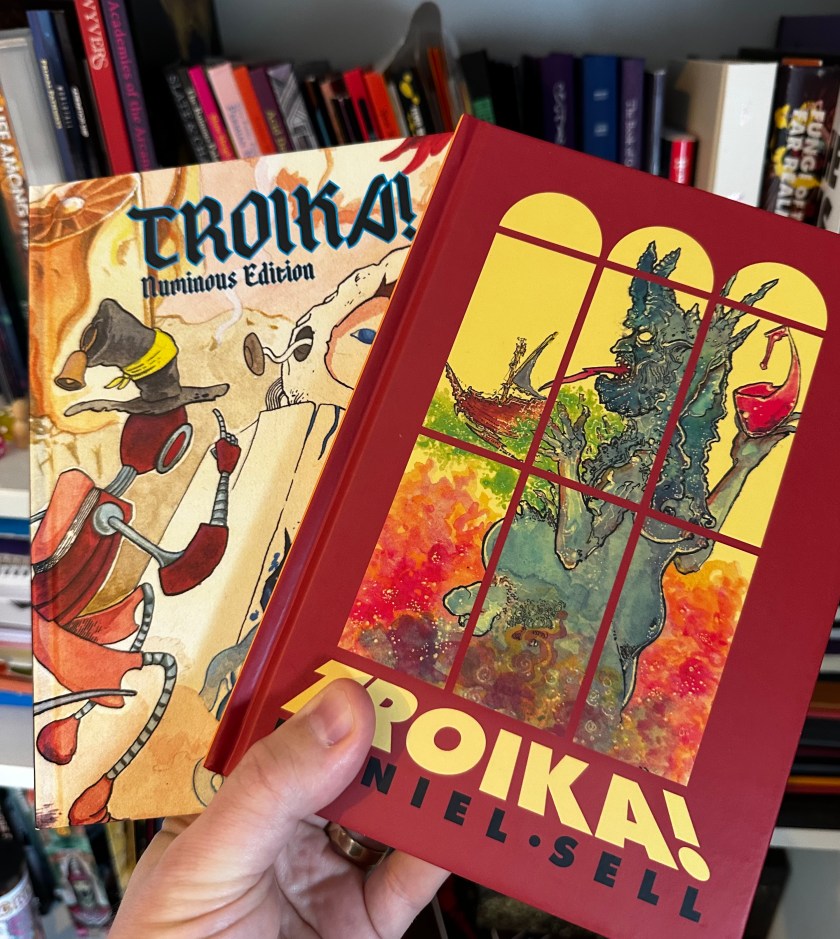
There is so much to recommend in this adventure. It is endlessly entertaining, challenging and bonkers. It has such a variety of locations and such a diversity of encounters that you would need to work hard to get bored in Whalgravaak’s Warehouse. I think it works so well to show off Troika! as a system, too. The problems it asks the PCs to solve and the encounters they have to deal with utilise things like the Luck check really well and encourage players to invent their own unique Advanced Skills. But if they get into fights, especially with the incredibly random nature of Troika! initiative, there is a very high chance they are going to come out of it dead. There are a few opportunities for insta-kills throughout the warehouse too. I can’t overstate exactly how lethal this adventure is. Luckily, my players leaned into that, even when they were creating new characters to join in the same fight the original one died in (they got very quick at creating characters.)
I think it’s also flexible enough for many GMs to easily take it or part of it and fit it easily into their own ongoing Troika! campaign. As I said at the start, our game started as a one-shot and it could have ended there. But we were able to easily adapt it into a short campaign of its own.
Dear reader, let me know if you have played Whalgravaak’s Warehouse or if you would like to! I’d love to know your views on it.
Alien RPG’s Hope’s Last Day: A Review

If you’re interested, go check out my post previewing this game here.
A Bad Call?
Burke, Carter J “confessed” to Ripley that he had made a bad call in sending them to a colony on the moon, LV-426. But did he mean it? No. He was a scumbag of the highest order. He was just fucking someone else over for a percentage. I sent my players to LV-426 too. I wasn’t looking to fuck them over for a percentage, but, at the very least, I expected most of their characters to get impregnated by facehuggers, ripped to shreds by drones or melted by acid blood. Did any of that happen? Did I make a bad call in choosing the Cinematic Alien RPG scenario, Hope’s Last Day, from the core book, rather than the one from the Starter Set? Well, dear reader, why not come with me on a trip through our one-shot and my thoughts on it, and you’ll find out.
Shake and Bake

These two scenarios couldn’t really be much more different. The one from the Starter Set, Chariot of the Gods, is set on a ship out in space, you know, where no-one can hear you scream? It’s also very much a full scenario with an entire three act structure. They say it would take three sessions to play but I have my doubts about that estimate, having played Hope’s Last Day.
Speaking of which, Hope’s Last Day is a scenario that’s set totally on the moon where Ripley and the Nostromo’s crew found the Alien eggs in the first movie and the setting for the action of the second. This scenario was not even a full Cinematic experience. It is billed as a taster, since it really only encompasses what would be the third act in a normal Cinematic scenario. The book confidently asserts that it could easily be played in under two hours.
Frankly, duration was the deciding factor for me. I only had one night to get through a whole scenario. I don’t have a lot of wiggle-room in my schedule due to the fact that I have at least seven other ongoing games at any given time, so it really had to get wrapped up in one shot. So, I shook it and baked it.
Shaking
Shaking, essentially, meant reading through the scenario a couple of times. It’s very short, so this was not a problem. I also took notes on the various major beats and summarised the contents of the various blocks and rooms into bullet points. Most of the scenario consists of these location descriptions so this was key for me. Also, they are all presented in what I consider to be unwieldy blocks of text in the book, and I prefer referring to bullet points at the table. This work helped me to keep things flowing a little more smoothly on the night. I also screenshot handed the pregenerated characters out to the players I thought they would suit best a couple of days before. This part was fun, and the players were left to wonder how I decided who should play which character. Each character had an agenda that was generally meant to be kept secret from the others. Now these were fun. Stuff like, being willing to sacrifice themselves for the others, wanting to acquire an alien and escape with it or just to keep the company’s actions a secret at all costs. You know, normal stuff. Anyway, I examined these agendas and assigned the characters purely out of a desire to see each player pursue that secret agenda. Other than this fairly sparse preparation, I got a couple of copies of the map of Hadley’s Hope printed and a few character sheets. I familiarised myself with the relevant rules as much as I could and that was it for the shaking.
Baking
At the table, we baked. And, I will say most of the time this one-shot spent in the oven, there were no issues at all. Was I ready to nuke the site from orbit by the end? Not quite, thankfully. I’m mixing my metaphors quite egregiously at this point so I’ll abandon them both and just tell you what happened.
I started exactly as the scenario suggests you start, with the four PCs inside the West airlock of Hadley’s Hope. They had just returned from a day or more outside the settlement and were not aware the Aliens had already decimated the population. I let them investigate a bit, try and get an intercom working, and generally futz around. The scenario calls for an Alien attack whenever the PCs dawdle but I didn’t want to lose anybody so early on. I think this was a mistake on my part. Their first encounter with an Alien occurred a little later after they had made their way to another block of the station and messed around looking at eggs and facehuggers and whatnot. This gave one character the opportunity to collect an egg and another to sacrifice himself to keep the others safe and made them all start running to find the way out. This was more like it. Things really started moving then. The one who sacrificed himself turned out to be an artificial person as Bishop would have us call them. So, the alien just left him, innards outed, on the floor and unable to move, but not dead. Luckily there was an extra pregen for that player to take over so we continued on.
Later they encountered a couple of facehuggers after finding a few weapons. They made short work of them and moved on again. They spent much of the last part of the session effectively split into two parties running from two different drones towards the only way off the planet, a shuttle. And you know what? They all made it! Except the android, who, I can only assume was caught in the conflagration when the nuclear reactor in the processing plant went up as Ripley and the others escaped. Also, they didn’t all make it, because the pilot turned out to be the company plant and she spaced everyone else as soon as they left the atmosphere. I guess that made her the winner?
Game Over, Man
So, what was the verdict? It’s a mixed bag, to be honest.
I think our main complaint was that this was mislabeled as an under-two-hour scenario. I mean, ok, it was our first time playing the Alien RPG so we did have to spend a little extra time referring to the rules and figuring out what all the stats meant, but that does not account for the fact that this thing took us almost four hours. Even then, I had to abandon some integral rules to allow us to make it to the end in that time. I don’t honestly know how anyone gets five people around a table, people who want to role-play, who want to fuck around and find out, people for whom the joy is in the playing, not in the finishing, and have them get through this scenario in anything less than four and a half hours if you stick to all the rules of the game.
As for the rules. The main negative was the initiative system. Alien, like other Free League games, uses an initiative card system. We generally found it a little difficult to keep track of things using this and found it slowed the action down significantly. One of the main issues was that the PCs kept getting into initiative, running away from fights, getting out of initiative, getting caught again and getting into initiative again! So we were shuffling and picking those cards a lot. In fact, as time ran out on our session, I just left the cards to one side and did it narrative style. I got each player in turn to tell me what they were doing and told them how the Aliens or the environment reacted or acted against them. This really sped things up and drew the evening to a very exciting close, in fact. Would I use the initiative system as-is if I played again? I think I would give it a go as long as I had more time to play with but I would be ready to give up on it in a second if it started to get in the way again.
One more issue for me was the system used to figure out how the Aliens attack. Every time it’s their turn, the Game Mother has to roll on a table to determine which of their special attacks they use. This started off as a fun activity, but quickly got frustrating. It felt like each time the Alien had one of the PCs in their grasp, I would roll up an attack that allowed them the chance to escape. Now, if this happens a couple of times, it adds a nice dramatic element to the chase. But this is literally how they all managed to get away in the end. If I had been just choosing the attacks for the Aliens, there would not have been so many occupied seats on the shuttle when it took off. I feel like there is a better way to adjudicate the moves they make. Admittedly, you would not want every attack to be lethal, either, but it felt as though far too many of them were underpowered.

One element that worked well but felt like it was under-utilised or tacked on was the Stunt mechanic. Each skill had a stunt table that told you how you could spend your excess successes (each 6 you get when you roll your dice pool is a success and you gnerally only need one to succeed at your task,) but the players almost exclusively went for one of two options, at least in combat situations: they added extra damage or they pinned the enemy down to prevent them from taking as many actions on their next turn. This was fine but it feels like this needs more work. Perhaps the new edition will deal with this.

You know, there were plenty of mechanics we liked in the game too. The main mechanic in the Alien RPG, the thing you would lean on to sell the system, is Panic. Like other Year Zero Engine games, you roll a dice pool consisting of a number of dice equal to your score in a given skill plus the number of dice equal to your score in the related ability. So, if you have a 1 in Mobility and a 2 in Agility, you roll 3 dice. But, as you play, your character gains Stress for all sorts of awful reasons. For every point of Stress you gain, you get to add another die to every dice pool. This gives you a greater chance of success but also gives you a chance that you’ll have to roll on the Panic Table. This happens if you roll a facehugger (a 1) on the official Alien RPG Stress Dice. There are other ways of panicking. Usually, if one of your companions does something unhinged or crazy or if you see an Alien for the first time. That kind of thing. By the end of the session, everyone had so much Stress that they were rolling obscene numbers of dice and there were Panic rolls happening almost constantly. One Panic roll would often lead to another from someone else because of the result they would get. Also, because, each time you roll on the Panic table, you have to add your Stress Score to the roll and the shit at the bottom of the table is way worse than the shit at the top, the results got very bad as time went on. For example, this is what you get for rolling a 7 gets you:
NERVOUS TWITCH. Your STRESS LEVEL, and the STRESS LEVEL of all friendly PCs in SHORT range of you, increases by one.
This is what you get if you roll a 15+:
CATATONIC. You collapse to the floor and can’t talk or move, staring blankly into oblivion.
This did happen to one character but they were already at the shuttle at that stage and someone was able to drag them inside.
The feedback I got in stars and wishes from the session indicated that the players also loved the agendas they were given with their PCs. This was a worry for me before we started. I mean, not only did they not get to create their own characters, I didn’t even give them the choice of which one to pick. Obviously, this was because I didn’t want to reveal the secret agendas to everyone before play started. And I’m so glad I did it this way! Everyone had pretty much figured out who was the android in under an hour, but no-one, and I mean even me, because I forgot what the pilot’s agenda was, expected to be spaced by one of their own when they were on the verge of escape. Incredible scenes. This element of the game is specific to the short Cinematic Play scenarios. And, indeed, normally, in a full scenario, your PC’s agenda changes as you move through the three acts. I can’t account for how well this works, obviously, but it sounds great.
As for the scenario itself, there is not a lot to it. This is definitely a good thing. If you play it, you’re not going to get to most of the compound. A lot of those areas I summarised into bullet points remained completely unexplored. Once the drones were after them, the PCs soon discovered a sense of urgency and a definite goal, i.e. escaping on the shuttle. There was a bit more to it than that, but not much. Like I said, this was fine, especially as the PCs’ agendas took the place of a set plot most of the time anyway.
It was also cool that the scenario was so closely related to Aliens, the movie. I watched it the night before running the session, and that definitely helped me to picture the place and to describe it at the table. I’d recommend doing that if you do intend to run Hope’s Last Day. I’d also recommend leaving yourself at least four hours to do it justice.

So, was it a bad call? No, but if I went into it again, knowing what I know now, I would have made a few alterations to my expectations.
What about you, dear reader? Have you played this scenario or this RPG? Are you looking forward to the Alien Evolved Edition? Get in the comments?
 The Dice Pool