The Editioning, D&D 3E Character Creation

The Wizards Loom

Time marched ever on, TSR faded and went into the West. Wizards of the Coast loomed over Dungeons & Dragons as its new masters. It was a new millennium and it was time for a change.

The 3rd Edition of D&D brought with it many changes. Some were better received than others and the player base, it was fair to say, were divided over this new iteration.

It continued the 2nd edition obsessions with having a rule for every eventuality and providing endless optionality in character creation and development. But that list of saving throws was replaced by an even longer list of skills.

THAC0 was gone and Armour Class was finally ascending with the institution of the d20 system, which would define many mainstream RPGs for years.

We got Feats for the first time and the concept of a PC’s Spell Save value. You can see the embryo of 5E in this edition with mechanics like these and the Skills in particular.

It’s still very complicated compared to the Basic D&D or OD&D but it feels more refined than AD&D.

I have little practical experience with this edition or its later 3.5 version, but I do remember optionality in character creation being quite attractive. Now, looking at the character creation section of the 3E Player’s handbook, which runs for almost 90 pages, I’m a little intimidated. But, I’m here to drink beer and create a character for D&D 3E, and I’m all out of beer (that’s not true. I’m not sure I could attempt this without beer.)

This book is from the illustrious pens of Monte Cook, Jonathan Tweet and Skip Williams. Monte Cook has, of course, had an outsized influence on the direction of the hobby over the last 25 years so it’ll be interesting to see what he has produced here.

Character Creation Basics
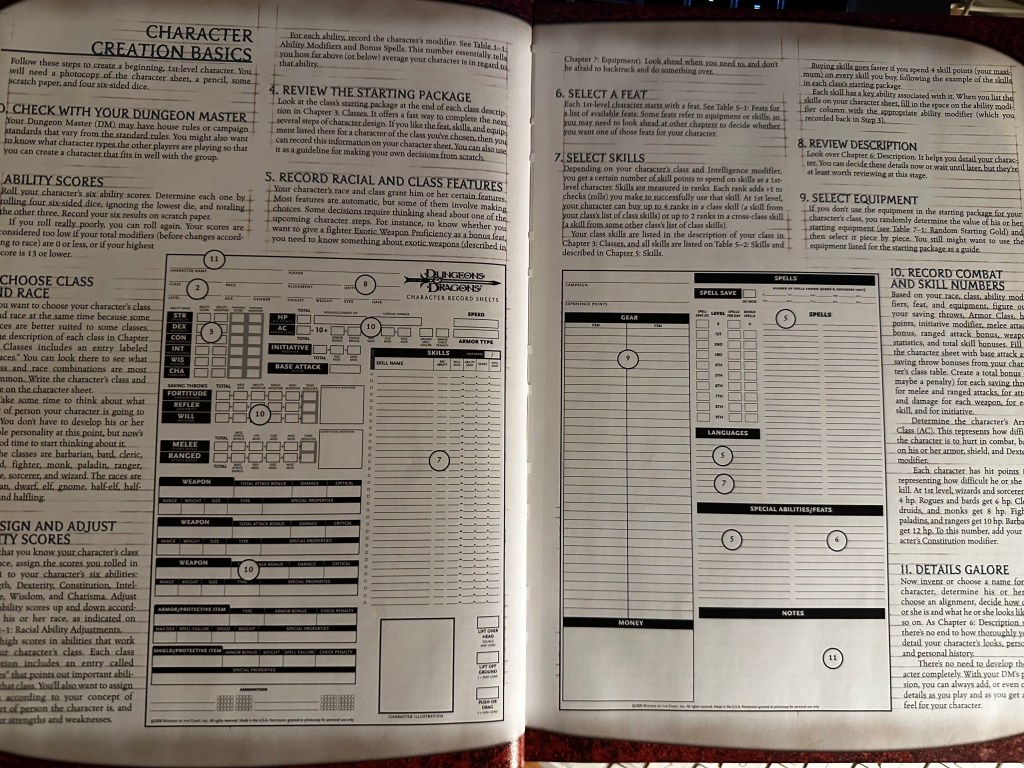
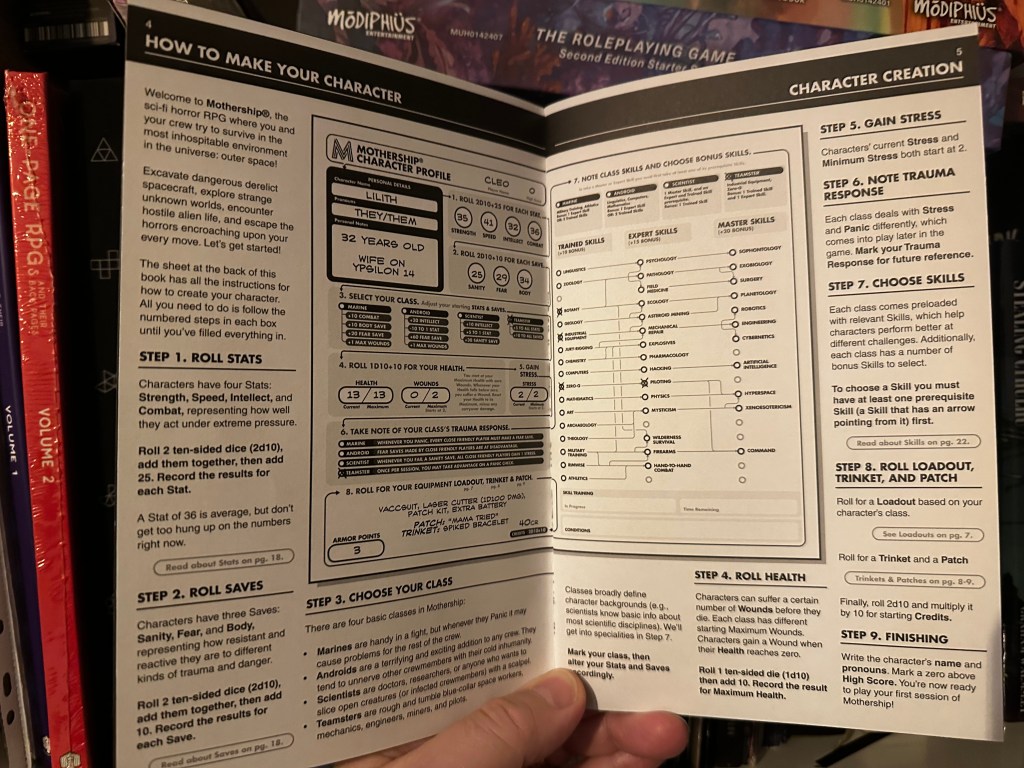
I quite like the way the couple of pages here is laid out around a character sheet, with each section numbered. It breaks it down and makes it feel a bit more manageable. Honestly, it reminds me a similar spread in the Mothership Player Survival Guide, which actually only involves two fewer steps than this. I actually like that it suggests, as a Step 0, to check with your DM before starting, in case there are any special limitations or house rules for your character.

After that, the steps are:

  1. Ability Scores (4d6 and drop the lowest six times, then assign as you like, probably in concert with your choice of race and class)
  2. Choose Class and Race (this might seem like it should be two separate steps but, from our experience in AD&D 2nd Edition, it just isn’t. The two are indivisible as race features and ability score modifications have such an effect on your choice of class, and vice versa. The ability scores you roll have a much lesser effect on the choices as they are, by default rolled and then assigned. In fact, the only problem I have with this step is that it should be combined with Step 1 because all three choices impact each other)
  3. Assign and Adjust Ability Scores (fact is, you already did this in that last step. If you didn’t, I don’t know how you made any decisions, tbh. This is another step that should be folded in with the previous two)
  4. Review the Starting Package (sounds like you’re having a look at an automobile brochure but it’s really just giving you a Quickstart option for your PC that details ideal starting Feats Skills and Equipment. You chan choose to take these if you want to speed up this whole process)
  5. Record Racial and Class Features (The writer concedes here that you will probably have to flick back and forth through the book to make choices regarding some of these features. This step includes Spells, btw, so prepare for this to take a while if you’re a spell-caster)
  6. Select a Feat (Same here. You might need to look at particular equipment of skill descriptions to make an informed choice here.)
  7. Select Skills (You get Skill Points from your class and your Inelligence modifier, and you have Class Skills and non-Class Skills so its a little similar to AD&D’s non-weapon proficiencies in that way, but the list of skills is more similar to 5E)
  8. Review Description (This step does not want you to do anything but homework. Just read Chapter 6: Description. Make some of those choices now if you want, but that’s what Step 11 is for, really)
  9. Select Equipment (honestly, since we are including this in character creation, it’s more like 113 pages rather than 89. You randomly determine the amount of gold you have to spend on equipment for your Level 1 PC)
  10. Record Combat and Skill Numbers (this will probably take a while. Just take a look at the character sheet!)
  11. Details Galore (describe your character using Alignment, height, weight, age, background etc.)

Ability Scores

We’ve got the standard D&D abilities, Strength, Dexterity, Constitution, Intelligence, Wisdom and Charisma.

Here are my rolls:

  • 5, 3, 1, 1 = 9 (what a start…)
  • 5, 3, 3, 2 = 11 (a little better)
  • 6, 5, 1, 1 = 12 (really just creeping up here)
  • 6, 6, 5, 5 = 17 (now we’re talking)
  • 6, 4, 4, 3 = 14 (not bad)
  • 6, 4, 2, 2 = 12 (could have ended worse)

Now, I can choose to assign these to the six abilities as I see fit. Meaning, of course, that I would have to make choices normally. But, as is my won’t, I am going to keep things random. I’ll roll for both race and class and then choose how to match my scores to my abilities.

Choose Class and Race

This edition has the following races to pick from:

  1. Humans
  2. Dwarves
  3. Elves
  4. Gnomes
  5. Half-Elves
  6. Half-Orcs
  7. Halflings

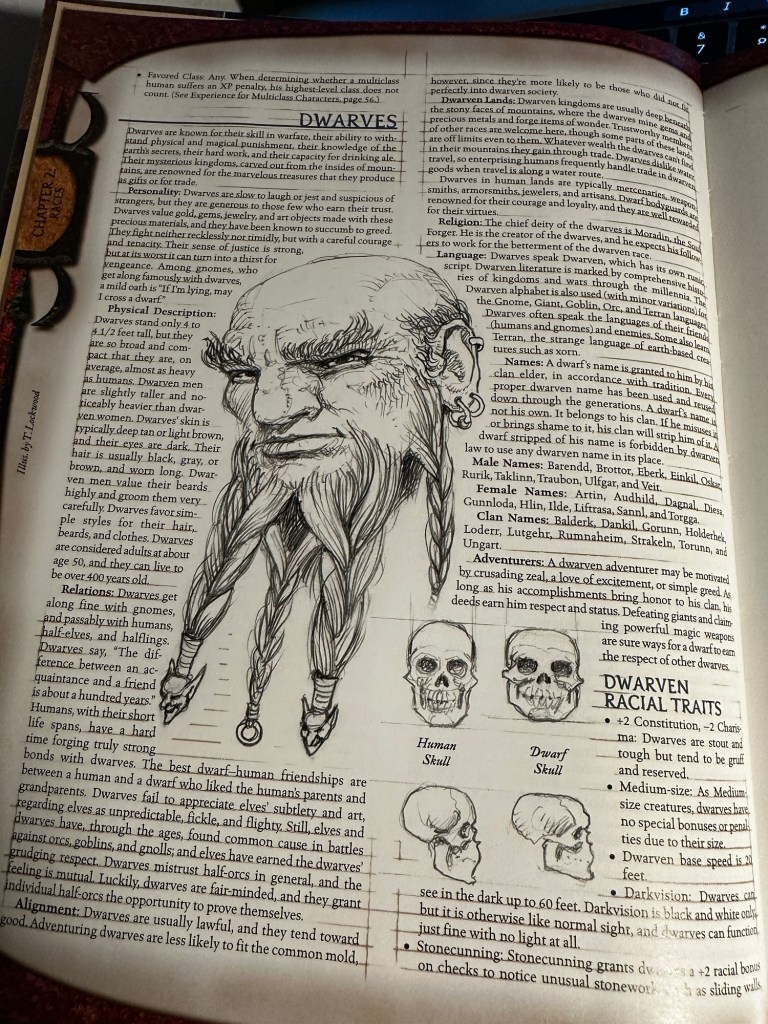
I’m going to have to break out my D7 from one of my Zocchi Dice sets. And I rolled a 2! I’m a Dwarf! I like playing Dwarves. I was obsessed with them ever since reading the Hobbit.
img_0746

Dwarves in 3rd Ed get the following traits:

  • +2 Constitution, -2 Charisma
  • Medium Size
  • Base speed of 20 feet
  • Darkvision – its black and white but it reaches 60ft in total darkness
  • Stonecutting – +2 bonus to notice unusual stonework (sliding walls, stonework traps, new construction etc.) It also allows them to use the Search skill to find stonework traps like a rogue might
  • +2 on saves v poison, spells and spell-like effects
  • +1 on attack rolls against goblinoids
  • +4 dodge against giants. This does not represent their size, which we have established is medium, but their training
  • +2 to Appraise rare and exotic items
  • +2 to Craft checks related to stone or metal
  • Automatic languages – Common, Dwarven. Bonus languages – Giant, Gnome, Orc, Terran and Undercommon
  • Their favoured class is Fighter. This means that a multi class dwarf’s fighter class does not count when determining whether or not they suffer an XP penalty for multiclassing

This is already a huge number of features, but at least the book presents them in bullet points unlike older editions.

Now for the Classes. The Player’s Handbook presents the following:

  1. Barbarian
  2. Bard
  3. Cleric
  4. Druid
  5. Fighter
  6. Monk
  7. Paladin
  8. Ranger
  9. Rogue
  10. Sorcerer
  11. Wizard

Another fantastically uneven number. Not even a set of Zocchi dice comes with a d11 so I will roll a d12 and re-roll on a 12. I rolled a 4, so that’s a Druid!

The description of the class explains that “Dwarves, halflings and half-orcs are rarely druids.” But that’s not going to stop me. I’m not here to min-max this character.

This is not the first edition to include druids, OD&D, 1st and 2nd Edition had them as well. But in those, they were much more like a flavour of nature-cleric than a class of their own.

Here are some of the things I will need to keep in mind while I make this character now that I know the class:

  • Alignment – I will have to be at least part Neutral to represent nature’s indifference
  • Religion – some druids revere Obad-Hai, god of nature or Ehlonna, goddess of woodlands
  • Background – there is a larger druidic society but most druids are loners with a charge of their own wild refuge
  • Abilities – Wisdom is a Druid’s most important stat, what would have been called their prime requisite in previous editions. It determines how many spells they can cast and how powerful they can be. They need a Wisdom score of at least 10 + spell level. The spell save DC is 10 + spell level + Wis modifier. A good Dex is important as they only get to wear light or medium armour
  • Hit die – D8
  • Class Skills – Animal Empathy (Cha, Druid exclusive) Concentration (Con,) Craft (Int,) Diplomacy (Cha,) Handle Animal (Cha,) Heal (Wis,) Intuit Direction (Wis,) Knowledge (nature) (Int,) Profession (WIs,) Scry (Int, exclusive skill,) Spellcraft (Int,) Wilderness Lore (Wis)
  • Skill points at Level 1 – 4 + Int modifier x4
  • Skill points at each additional level – 4 + Int modifier
  • Class Features
    • Weapon Proficiencies – club, dagger, dart, long spear, quarterstaff, scimitar, sickle, short spear, sling
    • Armour – padded, leather or hide only. A druid can also use a shield as long as it’s wooden. If they wear any other type of armour, they can’t use any of their magical powers or spells while they wear it and for 24 hours after!
    • Spells – Druids can prepare and cast any spell from the druid spell-list. They don’t have to learn them like wizards. See the table below. They can’t cast spells of an alignment opposed to their own. I honestly didn’t remember spells being identified with alignments in this game.
    • Bonus languages – They get to know the secret druidic language and can substitute out one of their bonus languages for Sylvan
    • Nature Sense – Can tell you all about plants and animals. Also can identify poisoned or impure water
    • Animal Companion – a druid gets to start with an animal companion or two! At first level the total HD of creatures you’ve befriended using the animal friendship spell cannot exceed 2. You can also cast the spell on other animals during play
    • There are a bunch of features that druids get at higher levels, including Wild-shape, the ability to polymorph into animals. But I’m not going into them here since I’m making a 1st level character
    • At level 1, a druid will get a 0 for base attack bonus
    • Druid Saves at level 1 – Fort: +2, Ref: 0, Will: +2

Assign and Adjust Ability Scores

OK, it’s time to assign those ability scores, taking my Dwarven modifiers into account.

  • Str – 9 (-1 to melee attacks and damage, Climb, Jump and Swim checks as well as general Strength checks)
  • Dex – 14 (+2 to ranged attacks, AC, Reflex saves and a whole bunch of skill checks)
  • Con – 14 (one of the 12s with a +2 from my Dwarven ancestry) (+2 to each hit die rolled, Fortitude saves, and Concentration checks)
  • Int – 11 (A lot of my skills are Int based) (0 extra languages, 0 extra skill points/level)
  • Wis – 17 (had to be) (+3 to Will saves and a bunch of skill checks. More importantly, it’ll mean an extra 1st level spell)
  • Cha – 10 (the second 12 with Dwarven -2) (Another 0 modifier, which sucks since so many of my skills work on Cha)

Record Race and Class Features

I think this step is here rather than amalgamated with your choice of race and class above, is because you don’t know how many spells you might be able to choose or learn until your ability scores are settled…

The fact I’m coming to terms with here is that this series of steps is not particularly distinct or clear. You have to jump back and forth constantly. I actually think it’s worth asking why you are supposed to roll your Ability scores before selecting your race and class. Since you can assign them any way you want, they have no bearing on those choices. It would actually make more sense to choose the class and race first, then roll up your abilities with your race modifiers in mind and a much better idea of how you want to assign them.

Anyway, I’ve gone through the race and class features above. I only really need to choose spells
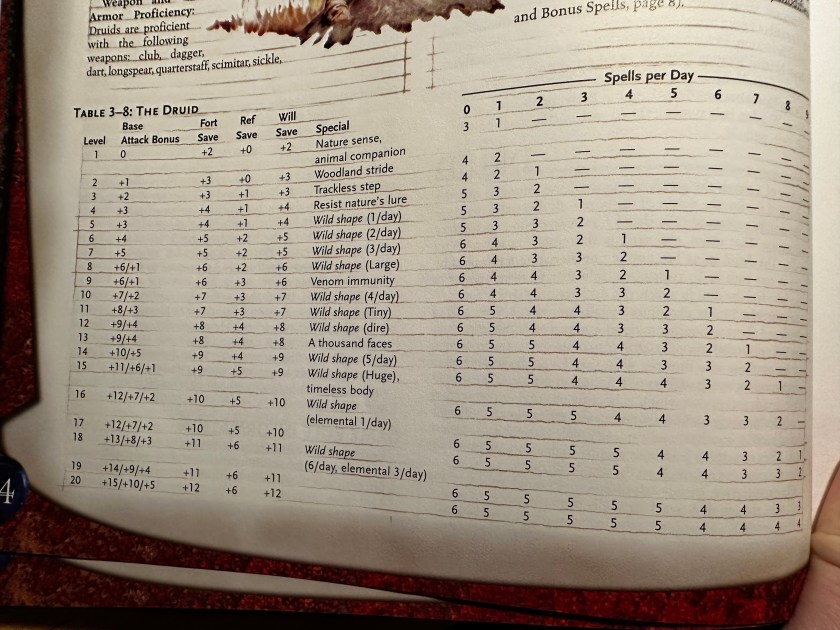
So, with my Wis sore of 17, I will get 3 0-level spells and 2 1st level spells.

I had forgotten there were 0-level spells or cantrips in this edition. I guess this is another first!

As I stated above, a druid can choose from all available spells but does have to prepare them at the start of each day. Here are my day 1 choices:
0 – Cure Minor Wounds (Cures 1 Point of Damage,) Guidance (+1 on one roll, throw or check,) Resistance (Subject gains +1 on saving throws)
1 – Animal Friendship (gains permanent animal companions)

I am going to pick a couple of badgers since a level 1 druid can have up to 2 HD worth of creatures as friends and badgers only have 1 HD each. They are tiny, can burrow and have the ability to fly into a rage in combat! I shall name them Eddie and Brock.

Select a Feat
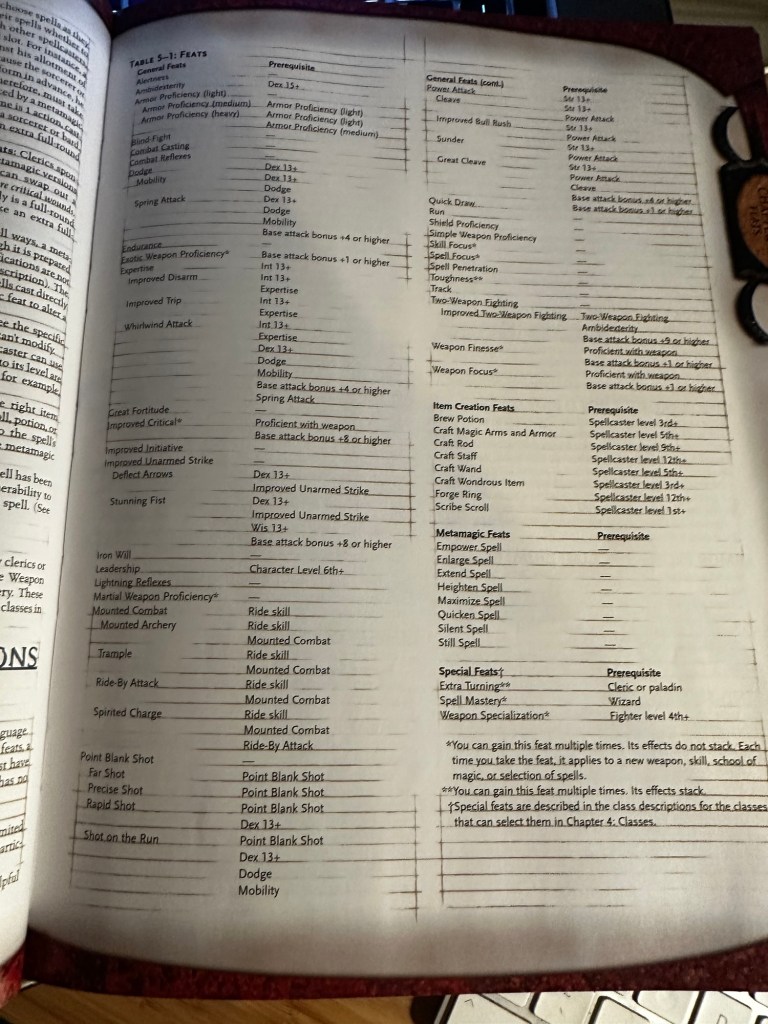
img_0750

Feats are also new in this edition. They add yet another way to personalize your PC. I only get one at level 1, so I guess I should choose carefully. But even then, I do think it’s interesting that they made feats optional by 5e. Was this single choice adding just a little too much cognitive load to players? Or is it just because 5e characters already have enough going on?

Back to 3e. There’s a decent number of feats to choose from as you can see from the photo.

Here’s my choice:

Toughness – Gives me +3 HP and I can take this feat multiple times, which is nice.

Select Skills

I have 4 + Int Modifier x 4 skill points to spend at level 1. Since I have no Int modifier, this means 16 Skill Points. I have to spend all of them. Here’s how spending them works.
You can spend a point on buying a new Skill or on increasing the rank of one you already have. One aspect of the point-buy system I find confusing and strange is that you can spend one point to gain a rank in a Class Skill. But you can also spend a point to get half a rank in what they call a Cross-Class Skill, even though that half a point will do you no good. So why not just make is it so that you can only buy a single Cross-Class skill rank with two points instead?
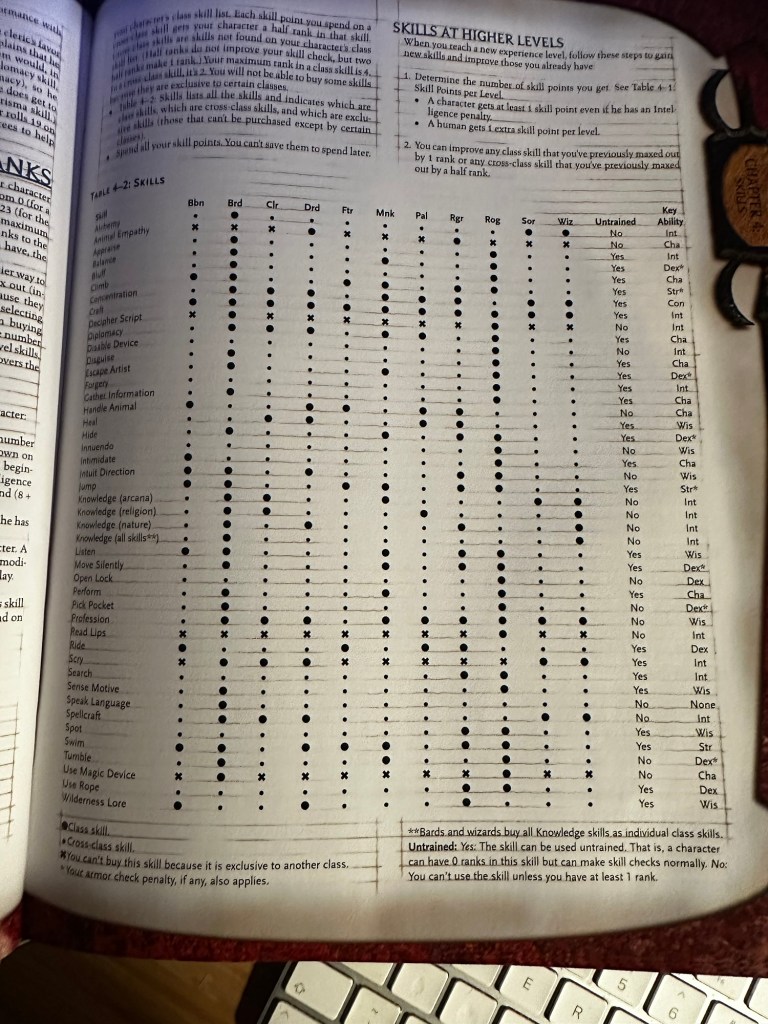
img_0851

Anyway, as I mentioned above, there is a pretty long list of skills presented here in a table that is going me a headache.

Animal Empathy (Cha, exclusive skill,) – 2 ranks

Concentration (Con) – 2 ranks

Heal (Wis) – 2 ranks

Profession (Wis) – miner – 2 ranks

Knowledge (nature) (Int) – 2 ranks

Scry (Int, exclusive skill,) – 2 ranks

Spellcraft (Int) – 2 ranks

Wilderness Lore (Wis) – 2 ranks

I’m not specialising much but I think that’s appropriate for a low level character. They often grow in a particular direction after starting off as a generalist.

Review Description

If I’m reviewing it, I’m going to add the details now too.

This is an overly long section that goes into a lot of unnecessary detail on alignments, religion, gender, height, weight and eye colour…

I’m going to skip through it quickly as I have already tired of this process and this blog post has taken me almost a full week to get through:

  • Alignment – Chaotic Neutral (this book gives a title to each alignment, which is bonkers. I hate D&D alignments at the best of times but this is making me dislike them even more. Anyway, Chaotic Neutral is known as the “Free Spirit.”)
  • Religion – Obad-Hai, god of nature
  • Name – Oskar Holderhek (got this from the dwarf names presented in Chapter 2)
  • Gender/pronouns – he/him
  • Age – there is a random starting age table here that has different possibilities based on your class… anyway, I rolled 7d6(!) and added to the starting age of 40 giving Oskar a starting age of 70. There is also a table of aging effects for middle, old, venerable and maximum ages that can give you minuses to Str, Con and Dex and bonuses to Int, Wis and Cha, which is bizarre, frankly.
  • Height and Weight – another random table split along race and sex lines this time – Dwarf men start at 3’ 9” and add 2d4 inches. I rolled a 5 making Oskar 4’ 3”. Weightwise – the table is incredibly confusing but I think I’m supposed to roll 2d6 and multiply the 2d4 roll in order to add the result to the base weight for dwarf men… I got an 11 so that’s 55 + 130lbs making Oskar 185lbs. This absurd level of detail is bringing me to breaking point.
  • Looks – He is a grimy little dwarf with a short cropped beard, thick brows and a hunchback. He’s constantly covered in dirt and wears leathers to protect himself as he digs tunnels.
  • Personality – this dwarf is obsessed only with the fauna who occupy the underground along with him. He does not care for surface dwellers at all and will only emerge into the light under duress. He is stubborn, direct and frequently insulting.
  • Background – Oskar escaped an underground work-gang that the dwarves authorities put him on to punish him for various infractions including insulting his thane’s son, keeping moles in the city and building a pit-trap to drop the guard down when they came to arrest him for the first two offences. When he escaped he found an ancient dwarf in a forgotten corner of the Underdark. Helga taught him how to be a druid and protect the mushroom grove of the myconids from their enemies. When they were attacked by surface dwellers, he vowed to find the perpetrators and kill them.
  • This section also encourages you to customise your character but I think I have given him enough defining characteristics already.

Equipment

A druid starts with 2d4 x 10 gold – I rolled a 3, so that is a very poor, 30 GP. But, to save time, I have decided to go with the equipment from the Druid starting package described in the Class section:

Armour: Hide +3 AC, wooden shield +2 AC, speed 20ft, 35lbs, armour check penalty -5
Weapons: Scimitar (1d6, crit 18-20/x2, 4 lbs, Medium size, Slashing)
Club (oaken cudgel): 1d6, crit x2, 10ft., 3lbs, Medium size, bludgeoning
Sling (1d4, crit x2, 50ft., 0lbs, Small, Bludgeoning)
Gear: Backpack with waterski, one day’s trail rations, bedroll, sack, flint and steel, pouch with ten sling bullets, Holly and mistletoe, Three torches

Record Combat and Skill Numbers

I just can’t. This process has already taken sooooo long, and I don’t have the time or patience to continue. I have, at least, shown the workings of the character, you can see Oskar’s ability score bonuses and skill ranks above anyway, so I don’t think it’s necessary.

Conclusion

My main conclusion is that character creation in 3rd Edition takes too long. There are several steps which could be removed entirely, to be honest, and there are other steps that could be re-arranged to make the entire thing more efficient. There is far too much detail. It feels like D&D over-adjusted far too much to mechanising everything by this point and completely forgot the days when spells were there to be interpreted and you didn’t need to know a PCs exact weight in pounds before beginning play.

Nonetheless, I will be proceeding with a 3rd Edition game as part of the Editioning as planned. I’m thinking about taking one of the old Goodman Games modules. There are loads of them and they look a bit more fun than the official ones I have been able to lay my hands on.

Meanwhile, in other Editioning news, we will be starting the classic 1st Edition module, Ravenloft, next week, thanks to DM Isaac. Can’t wait for that!
Write Your Own Star Trek Adventure

Star Base 343

In between missions, the crew of the USS Challenger had time for some R&R on Star Base 343. This particular star base is mentioned only once in a TNG episode as a spot where Picard hinted Riker should take some rest after he had to disintegrate his not-girlfriend. So, I figured it must have something to recommend it for shore leave. It was also where our PCs transported the survivors of the Cressida disaster aboard the Challenger after their city plummeted into the heart of a gas giant, so it stood to reason there would be medical facilities there. Finally, I knew that it was a place where starships could seek repairs. So, when the party arrived on station for a bit of a break, I asked the players to paint the scene for me; how can we tell this star base is a centre for ship maintenance? What shows us that Star Base 343 is renowned for its medical care? What about the station lets us see that this is a good place for rest and relaxation?

And the players did not disappoint. Especially on that last question, I got plenty of detail. All of their answers allowed me to build a living, believable community and place and inspired me to write a short, station-based side-mission.

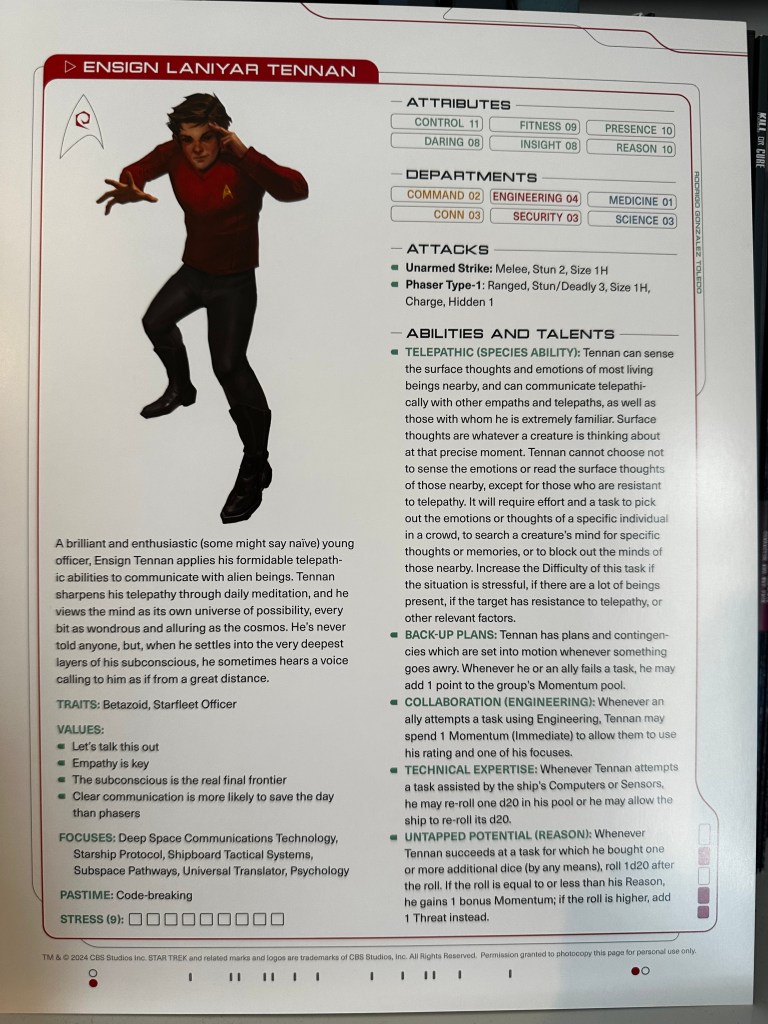
Laniyar Tennan, Betazoid technichian character sheet

Newly minted Lieutenant Junior Grade, Tennan, our Betazoid, felt the need to reflect on the events of the last mission at a sort of temple of his people that stood alongside other places of worship and meditation on the station’s central concourse. I imagined a place where the Betazoids that frequented it went naked as was their practice, and consulted elders for advice. Laniyar discovered a great shift in his outlook that urged him to change one of his own Values, in fact. After that, he got dressed up in his best shirt and went to the bar that he had also described when asked to paint the scene.

Burk ven Jaxa Tellerite engineer character sheet

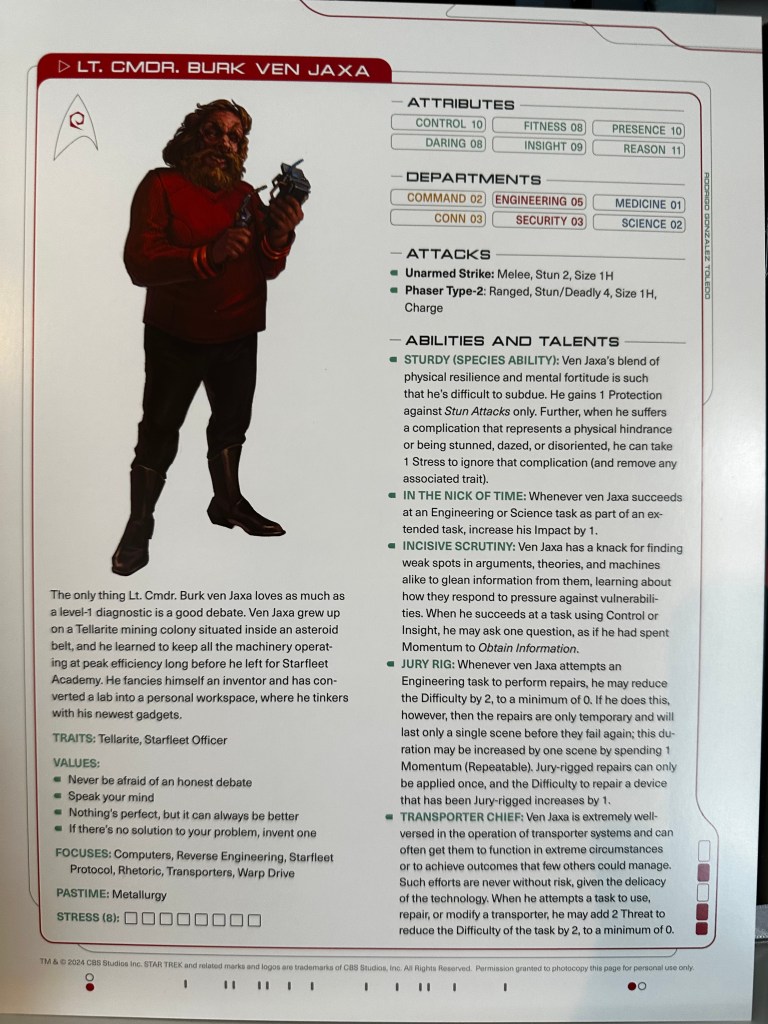
Lieutenant Commander Burk ven Java, our Tellarite engineer, wanted to indulge his longing for a good debate as well as his pastime of metallurgy, by finding someone working on their ship at the docking ring and telling them what they were doing wrong. The Orion freighter captain, Bashorat was incensed, frustrated and, finally, exhausted by Commander ven Jaxa’s arguments. He allowed him to make the necessary modifications to his ship and declared them life-changing! Bashorat took Burk by the arm and dragged him to the bar, insisting on buying him a drink.

Rashid Kemal, human pilot character sheet

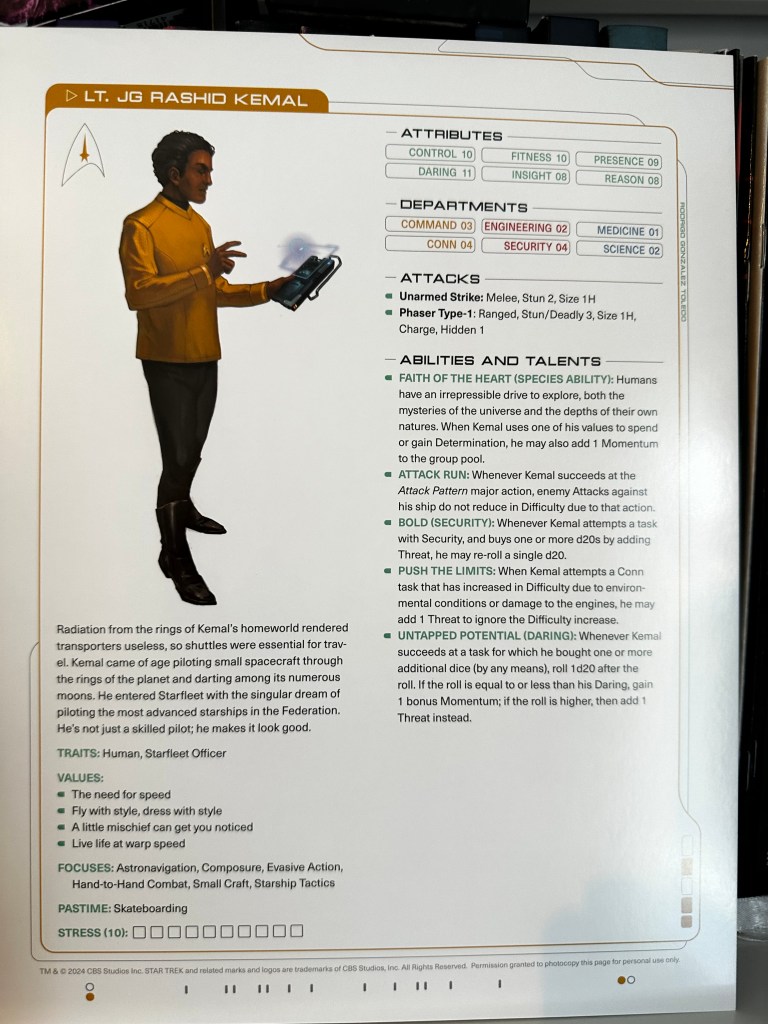
Lieutenant Kemal, the pilot, had a personal connection on the station, an old roommate from the academy, a medical track colleague, who had been assigned to one of the star base’s many hospitals. Groznik was a Denobulan who had been taught the wonders of skate-boarding by Kemal at Star Fleet Academy. After a few drinks and some time to catch up he decided it was time to do some show-boating on the rails of the promenade. He replicated a couple of skate-boards and got his ass handed to him by Kemal in a contest of tricks. Kemal watched Groznik come acropper off a rail and they scarpered before station security picked them up for dangerous horse-play. They retreated to the bar, of course, and that’s where they ran into the others.

Bashorat took them all to meet his sister who had arrived on the Challenger as well. Administrator Damaad, who had tried to bribe the star fleet officers to let her use the transporter to beam up her clients’ valuables as Cressida fell, was not best pleased to see them, since they had refused her deal in order to help save the natives of Kizomic VI instead. But she soon came around enough to make them another offer…

Twenty Minute Trek

Here is exactly what I wrote for the short mission I wanted them to breeze through in a single session along with a few notes I took as the session progressed. Is it weird to block quote myself?

R&R on Starbase 343
What do they want to do here?
Passtimes
Consorting

Pike’s Place – the bar

They will run into Administrator Damaad again. She says she bears them no ill will but this is not true. She will ask them to help her recoup some of her losses. If they were to accompany her to complete a deal with a federation contact, it would lend her a sort of credibility that would be invaluable. She says she would owe them a favour. This could involve her contacts among the Klingons.

The deal is a for a shipment of medical supplies which she won in a game of chance. She says she needs this to repay several of her clients from Cressida. If she doesn’t, they may get the Orion Syndicate involved to collect from her in some other way. She is desperate for that not to happen.

But there is a complication: the supplies are aboard a ship that’s docked at the Starbase. It’s an old freighter named the Utah. She claims she won them in a game of chance but that the captain (Captain Ken Sato) of the ship since disappeared. This is true but sounds false.

She would like the PCs to help her get the supplies off the Utah and to the rendezvous that evening.

If they take her up on her offer and go to the Utah, they will find a mystery. None of the cargo is on board, but neither are the crew.

In fact, in order to avoid having to pay up, Captain Sato, desperate, tried to use the transporter’s pattern buffer to hide both the cargo and the crew. But patterns are beginning to break down and, in an attempt to rectify this, the ship’s main computer occasionally re-incorporates the crew in random parts of the ship for a few seconds to refresh their patterns. To the PCs, they will hear momentary noises, thumps and bumps from around corners or the deck above or below, cut off comms and screams of terror or frustration.

They will also discover that the Utah is having problems with both warp and impulse engines. It’s in no fit state to leave the station any time soon.

Ship traits: Engine Faults, Haunted, freighter, Unlocked, stabilise transporters

Captain Sato traits: Freighter captain, desperate, human

That’s it. It took far less time to write that up than it’s taken me to write this blogpost. Here’s how I approached it:

  1. Involve an NPC they already knew – the first part of their time on Star Base 343 all took place in one session. So, I was able to connect Bashorat (who had been improvised) to Damaad when I realised they were both Orion. This bit was not planned but it felt like it was.
  2. Think Star Trek episode – I wanted this to be a stand-alone Star Trek episode, like most of those from the franchise. I wanted it to involve a hapless, maybe unlikeable NPC or one who required help of some sort. I was thinking of characters like Mudd from Mudd’s Women or Vash, from the TNG episode, Captain’s Holiday.
  3. Mystery – I wanted to create a mystery for them to solve with the skills and advantages they had as characters and with the universe knowledge the players had.

Conclusion

This turned out really well. I was ready to just wrap up their downtime and continue with the campaign from the starter set if they didn’t bite. Their previous encounter with Administrator Damaad was less than friendly, so there was every chance they’d tell her to bugger off. But curiosity got the better of them. Well, mostly. Tennan, as the junior officer and the one most affected by the risks they took in the previous adventure added a necessary level of trepidation and desire to run everything past the Captain. The other two heard him out but just kept pushing forward until they were aboard the Utah, investigating the ship itself.

I like to think I brought some OSR sensibilities to this scenario as well. I created the problems but not the solutions. I also improvised a bunch during the session as the players came up with new and varied avenues of investigation. I had to imagine a crew for the Utah, rather than just the captain, and they were pissed off at him, let me tell you. I also had to round out Sato’s motivations and his reasons for taking such drastic measures. I had to figure out a lot on the fly, but since I had kept the framework loose and the details flexible, it worked pretty well.

Also, it turned out quite spooky! I was hoping for a haunted ship feel and that’s what it felt like on the night. I’m very proud of my descriptions of the quickly cut-off comms and the unexplained bumps in the dark and flashes of light on the ship, actually.

We’re taking a short break from Star Trek to facilitate the Tables & Tales Third Annual Talk Like a Pirate Day One Shot (probably a 3 shot this year) but I’m eager to get back into the stars!

The Editioning, AD&D 2nd Edition, Part 5

Surprise!

Welcome back, dear reader, to the Editioning, our challenge to play an adventure in every major edition of D&D over a period of about two years. We’ve already completed OD&D and Basic D&D adventures. Had a great time with them. They were both quite rules-light, even if some of the mechanics were not exactly instinctive. And, even if you didn’t know any given rule and you couldn’t find it in the book, the DM could easily make a ruling in the moment. AD&D 2nd Edition is another beast.

Now, I will preface the following complaints with the fact that I am really trying to play each edition as close to rules-as-written as possible. One of the things I wanted to get out of the Editioning was to be able to learn all those rules and another was to be able to compare them to each other. There are, of course, a lot of similarities across each of the editions. They’re all still D&D, after all. But some things change in every edition for some reason. Surprise is one of these things, initiative is another. Today, I want to discuss Surprise in AD&D 2E… because I have a bone to pick.

You know, it’s not even the rule itself that I have a problem with. The rule is pretty simple, actually. Each side, if there’s a chance they could be surprised in the situation, rolls 1d10. If they roll a 1, 2 or 3, they are surprised. There are a bunch of modifiers that can be applied to this roll, including a PC’s reaction adjustment, which comes from their Dexterity. But that’s it. Easy, right? Easy to find? WRONG!

Where would you expect that rule to exist, dear reader? Well, let me tell you where I thought it would be. I thought it would be in the Combat chapter of the Player’s Handbook. But to narrow things down, I checked that book’s index. S, s, s… there it was! Surprise, pages 89, 112 and 113. OK, I thought, now I’ll find out how to determine Surprise in AD&D 2E. WRONG! Page 89 provided me a definition of the term, “surprise.”

Surprise can happen any time characters meet another group unexpectedly(monsters, evil knights, peasants etc.). Surprise us simply what happens when one side–a person or party–is taken unawares, unable to react until they gather their wits. Their opponents, if unsurprised, are allowed a bonus round of action while the surprised characters recover. It’s entirely possible for both sides in a given situation to be surprised!

This is only the first of three paragraphs telling me about the concept of Surprise. At no point does it actually explain the rule to me, however.

I cannot quite express to you, dear reader, how much unnecessary text is contained in the PHB. I don’t think the majority of people reading this book require a definition of surprise, especially when it is not immediately followed by the rules for it.

Medieval Cheers
Medieval Cheers

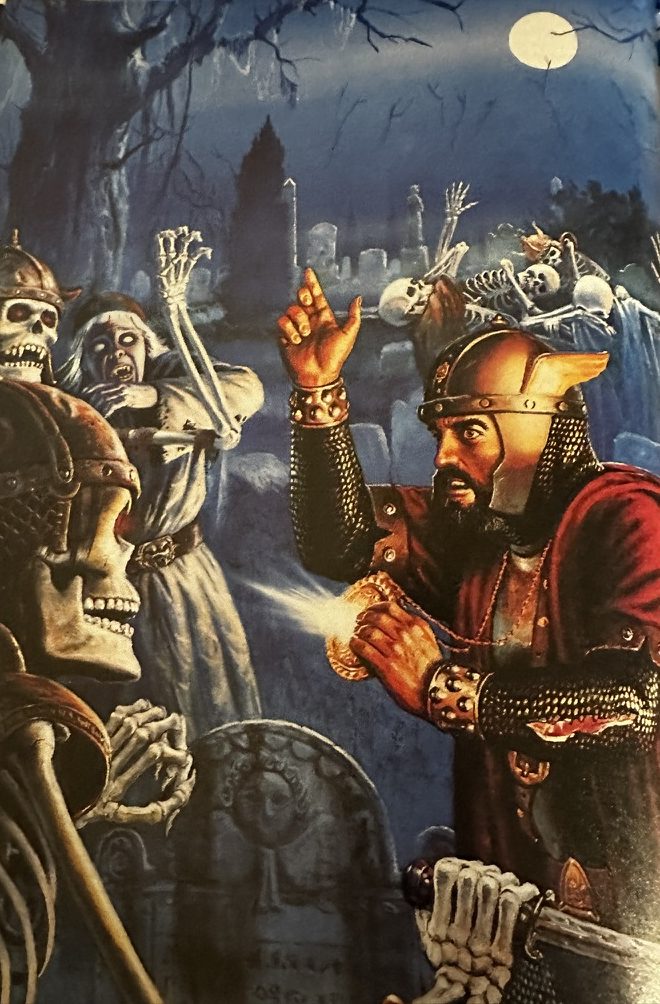
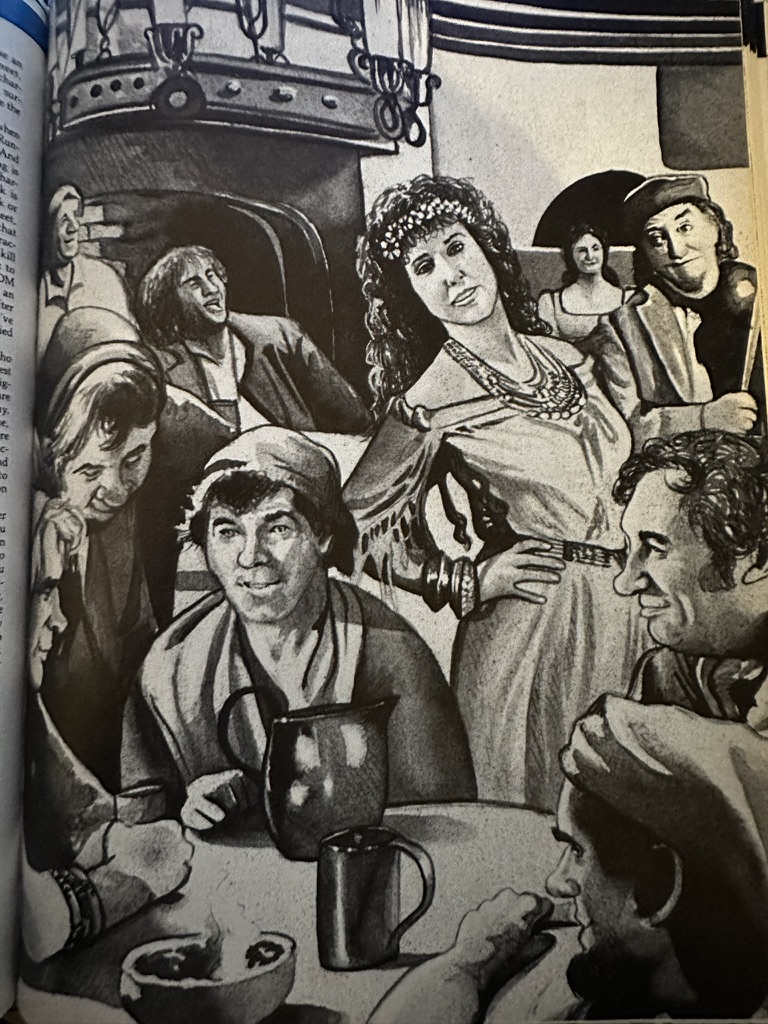
On to page 112 and 113 then. The index gets this slightly wrong. It should read 111 and 112. 113 is a full page illustration. One of my favourites in the book actually, medieval Cheers! Anyway, we are now in Chapter 11: Encounters. The Surprise Roll is finally described here in some five paragraphs. Here’s an example of some of the absolute sawdust they used to fill out this book.

Naturally, surprise does not happen all the time. There are many easy and intelligent ways it can be prevented. The most obvious is if the player characters can see those they are about to encounter well before getting close. For example, the characters may see the dust of a group of horsemen coming their way, or notice the lanterns of a group of peasants coming through the woods, or hear the grunting barks of a gnoll war party closing through the trees. In these cases there is no way the characters are going to be surprised by the encounter.

And it’s not just a matter of ignoring this bumph. The rules are cleverly hidden away within paragraphs like this!

Anyway, this section has finally described the rule for me, and even told me what the effects of surprise are for both sides! The surpriser gets a free round of attacks but not spells and the surprisee is caught flat-footed so loses their Dex bonus to AC.

But here’s the kicker:

The surprise roll can also be modified by Dexterity, race, class, cleverness, and situation.

I’m sure the designers of this fine game thought to do something as convenient as to provide the potential modifiers to a rule on the same page as the rule itself. WRONG!

The DM has the listing of modifiers that apply to given situations.

“I do?” I thought.

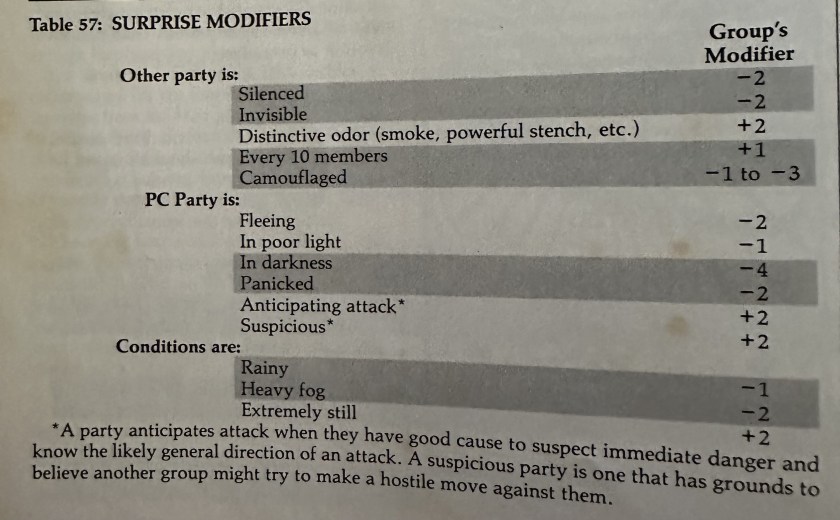
At this point, I was close to despair, dear reader. I had a little cry and a big swig of my beer and dove back in. But this time, I used my noggin. I googled it and found the answers I needed here on the Murphy’s Victim blog. By which I mean I discovered that the table of modifiers I needed was on page 102 of the Dungeon Master’s Guide, in the Encounters chapter of that book. So, at least it’s consistent.

The Surprise Modifiers table from the DMG

Anyway, there I discovered that the PCs, being in poor light, would have a -1 modifier to their surprise roll. None of the other modifiers applied in their situation.

Dear reader, they rolled a 6, meaning they were not surprised. Nonetheless, they still lost a full round of attacks because they had just been rousted from their makeshift beds and were still a little bit eepy.

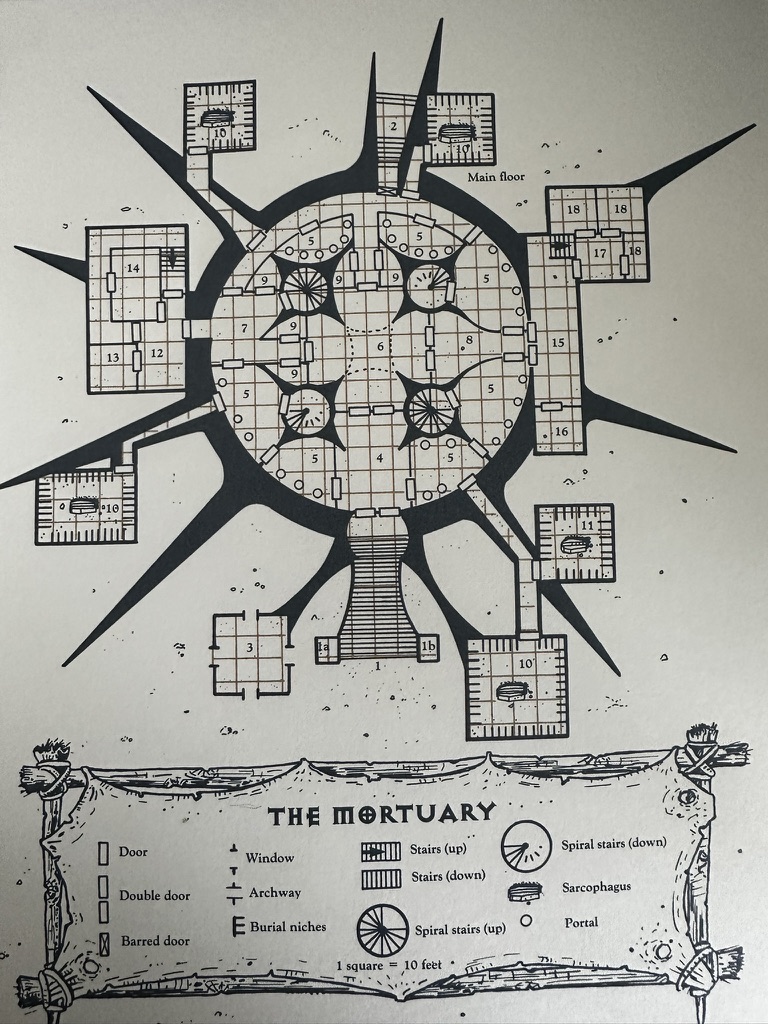
I went exploring this rabbit-hole because of a single line in the description of the encounter Sunday’s session started with. This is from the Shadows Abroad in Sigil section on Chapter II The Mortuary:

If the PCs have no watch and are awakened in the middle of the night, the Shadowknave and his men have a +4 bonus on their chance of surprise.

This is an awkwardly phrased sentence, but, essentially, what it means is that, should the Shadowknave and his mates roll to be the ones who are surprised, they would get a +4 bonus on that roll. This would, most certainly, make it more harder for them to be surprised. But, why in the Nine Hells would they ever have the potential to be surprised in a situation where they are breaking down the door to the home of four sleeping individuals who they know for a fact are inside and sleeping? But, since I didn’t understand the surprise rules when I first read that sentence I had to look them up to understand what they meant.

Dear reader, I did not make a surprise roll for the Shadowknave and his lads. That would have been absurd.

This is a pretty good point to segue into what happened last session.

To the Mortuary

It was a hard fought battle in the little run-down church to Varuna that they call home. The PCs were caught off guard (if not precisely surprised) and lost a full round while the mercenaries burst into the church. The enemy spell-caster immediately used his Sleep spell, downing Glaermond the Paladin again straight away. I ruled that our tiefling, Trance, as a half-lower-planar creature, was allowed a saving throw. She managed to save and, somehow, avoided getting hit by the three mercs attacking her and immediately kicked the Paladin to wake him up. The three attackers on Devansh Rao, our Cleric, were not so unlucky (he’s got a Dex of 4, so no surprise.) They knocked him out and then went to focus on the Necromancer who lived in the basement. Aurora managed to use her wand to move the earth from the walls and floor to block off the entrance to her underground lair, while her goat familiar and Spectral Hand continued the attack. Back upstairs, the spell-caster Scared and Slowed everyone in the church, his own men included, and Trance cast a sphere of Darkness that encompassed the entire interior. The Paladin, who had the Blind Fighting proficiency, managed to get a couple of licks in. Trance climbed up into the rafters and then through the front window dropping down silently behind the hooded spell-caster to successfully back-stab him. When he turned to face her, she saw that it was the same half-elf they had seen leaving a “dead” body on the floor of an alley in the Hive the previous day. At this point, the half-elf issued the order to retreat. The mercs grabbed Devansh and his stuff and scarpered. Glaermond managed to take out one of them as they ran off but they soon lost them in the maze of Sigil’s streets.

Devansh woke hours later in a vault otherwise occupied by a foursome of skeletons and a sarcophagus. He had a look around, experimented with the skeletons and examined the sarcophagus. He discovered the skeletons only reacted when he made for the door and then found that there was a cache of useful and incriminating items inside the sarcophagus. Long story short, Toranna the Grey, of the Dustmen faction was involved with someone called Marvent and had something to do with the disappearances of the barmies from the Hive. He also got his stuff back and immediately turned the skeletons with his holy symbol. Unfortunately he was still locked in the vault.

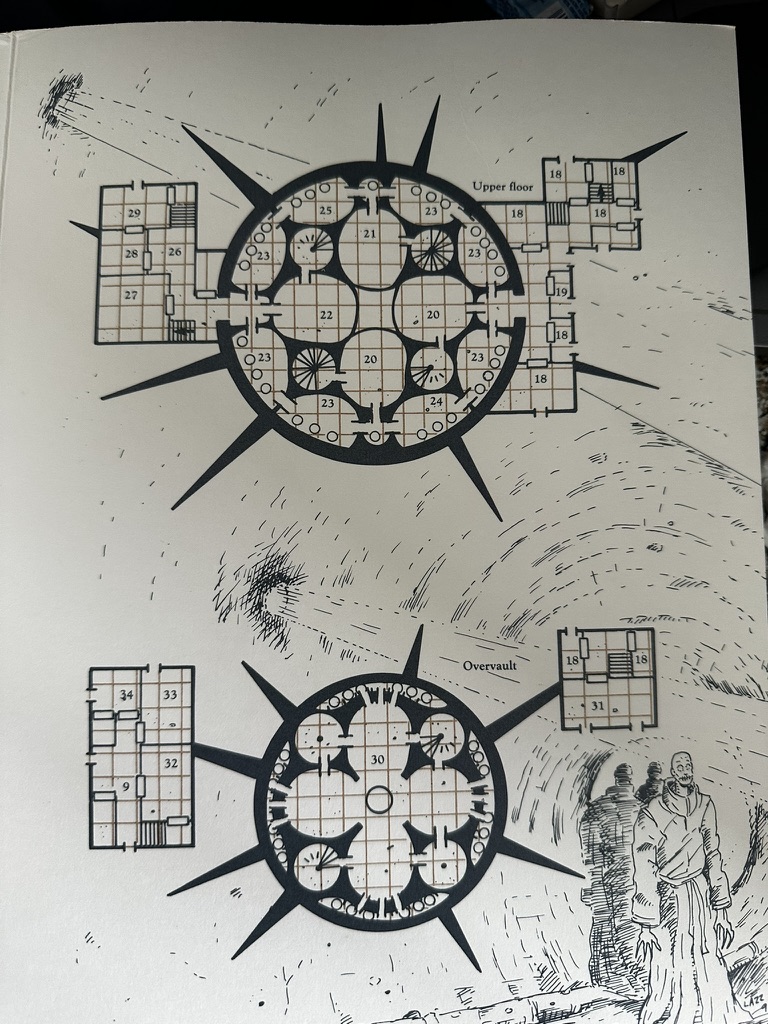
Meanwhile, the others returned to Bendon Mawl, their patron, to explain what happened and to pick some useful items, Oil of Elemental Resistance (fire) and a Potion of Invisibility. Interestingly, these matched the sorts of useful items that Devansh found in the sarcophagus. Then they formulated a cunning plan involving a coffin delivery that allowed them all to enter the Mortuary by the back door. Once there, they soon heard Devansh calling for help and freed him from his vault. Once they were all together and disguised in Dustmen robes, they ascended all the way to the Overvalault where the portal to the Elemental Plane of Fire was. All the evidence they had gathered so far suggested that there was some connection between Toranna, this portal, the disappearances of the barmies and the return of Eliath and the Dancing Man to Sigil. Toranna was there, feeding another barmy into the portal. The party watched as they planned what to do next…

Conclusion

I was glad I didn’t have to look up that surprise rule at the table. I did all that before the start of the session. But just imagine if you did have to? I would simply not have bothered. I would have made a ruling as soon as I got stymied in the PHB Combat section.

I don’t really remember how I dealt with these situations when I was originally playing AD&D back in the ’90s. I do think I had a better grasp on the rules back then, but I also remember having a fair amount of frustration with the game too.

Despite all of this, I think we’re all having a good time with the adventure still and even with the system, in many ways.

I’ll be back with more Editioning in a couple of weeks, dear reader. In the meantime, don’t be Surprised if I am back with some other post next week.

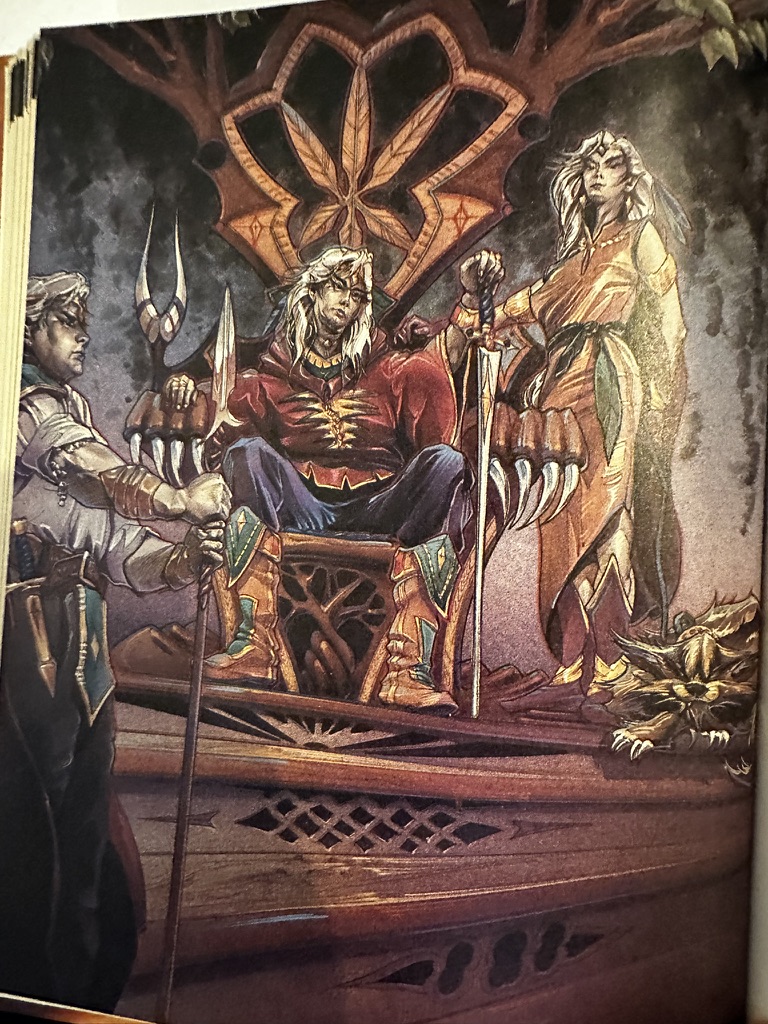
An elven king on his throne with a guard on one side and an elven woman on the other
Elven King

Star Trek Adventures Advancement

Character Growth

There are more ways to deal with character advancement in RPGs than I could even attempt to name, never mind describe. A number of them depend on XP, whether it’s in large numbers, like D&D, or in relatively small numbers like Dungeon World or Blades in the Dark. Maybe you use those numbers in a direct, 1:1 ratio to improve abilities or add new powers. Then again, maybe you just add them up until you hit a new level.
Maybe your favourite system eschews XP in favour of improvement rolls, like in Troika, Mörk Borg, or Call of Cthulhu, where your fate might be to not improve at all, or even get worse, despite everything you’ve done. That one can seem cruel sometimes, but, then again, rolling dice is fun, right?
Well, the advancement mechanic in Star Trek Adventures 2E is not like any of the above, and that’s what I’m here to discuss today.

The Character Arc

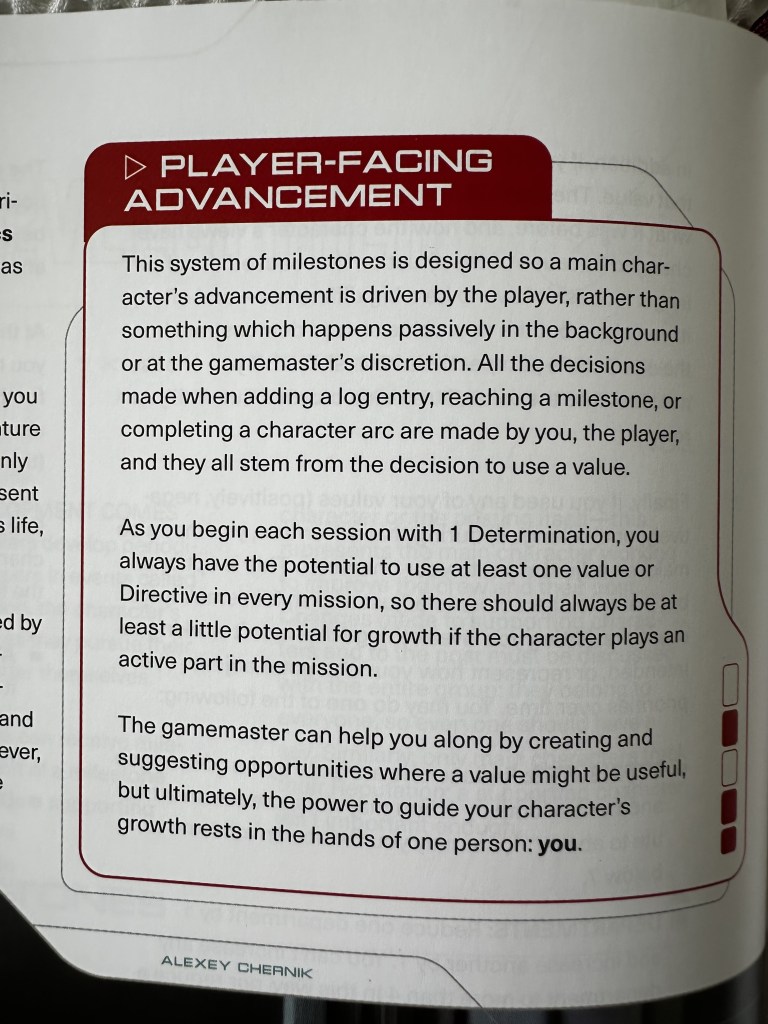
Player-Facing
Advancement:
This system of milestones is designed so a main character’s
advancement is driven by the player, rather than
something which happens passively in the background
or at the gamemaster’s discretion. All the decisions
made when adding a log entry, reaching a milestone, or
completing a character arc are made by you, the player,
and they all stem from the decision to use a value.
As you begin each session with 1 Determination, you
always have the potential to use at least one value or
Directive in every mission, so there should always be at
least a little potential for growth if the character plays an
active part in the mission.
The gamemaster can help you along by creating and
suggesting opportunities where a value might be useful,
but ultimately, the power to guide your character’s
growth rests in the hands of one person: you.
Player-Facing
Advancement

We’ve all heard of a character arc in a TV show or movie. We want to see growth and change in our favourite heroes or, for that matter, in our antagonists too. That change we want to see? Is it a matter of them growing tougher, or more powerful? Do we want to see them gain new skills or contacts? I mean, maybe sometimes, but growing in power does not produce a character arc. Not alone at least. Is it more important that Peter Parker gained the proportional speed and strength of a spider, or that he learned that with great power comes great responsibility? Because without internalising that lesson, suddenly, Spiderman is a villain, or, at best like one of those “super heroes” from “the Boys.” Of course that wasn’t the end of Peter’s character arc, though you could argue that it was the end of one of his character arcs.

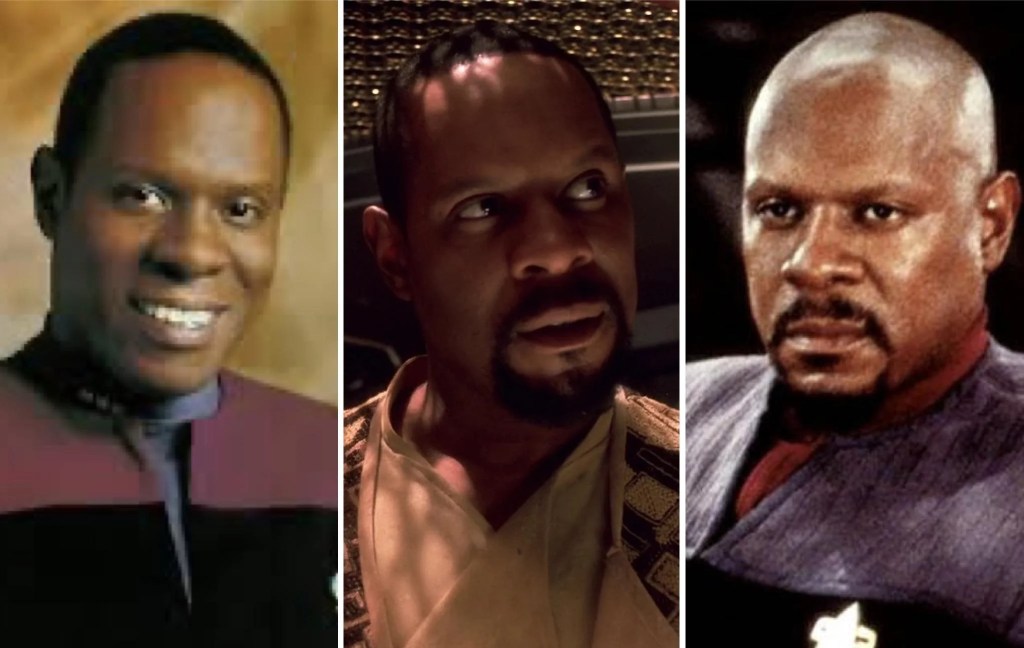
Commander to Captain, Benjamin Sisko

How about an example from Star Trek, since that’s what we’re talking about. Ben Sisko, Commander of Deep Space 9 arrived on the station, not expecting to be there for more than a few months. He was scarred and bitter from his experience with the Borg when he lost his wife. His only joy in life was his son, Jake. The Bajorans name him the Emissary, a religious figure of great significance. He is uncomfortable with that. Through the course of the show’s seven seasons, he heals the scars caused by the Borg and the loss of his wife, which leads him to accept his new life fully, and eventually, a new love. He becomes devoted to Deep Space 9, its crew and everything it represents and goes to any lengths to defend it. He embraces his position as Emissary and even prioritises it above all other concerns on several occasions. Through all of this, he is promoted, left in charge of the defence of the Alpha Quadrant against the Dominion, gets a cool new ship and enjoys political influence across two quadrants. But the recognisable gains in temporal power are all reflections of his emotional and personal breakthroughs.

This is what Start Trek Adventures is trying to do, and I think I might love it? I am reserving judgement until my PCs get to the point where they can actually achieve a full character arc themselves.

Milestones

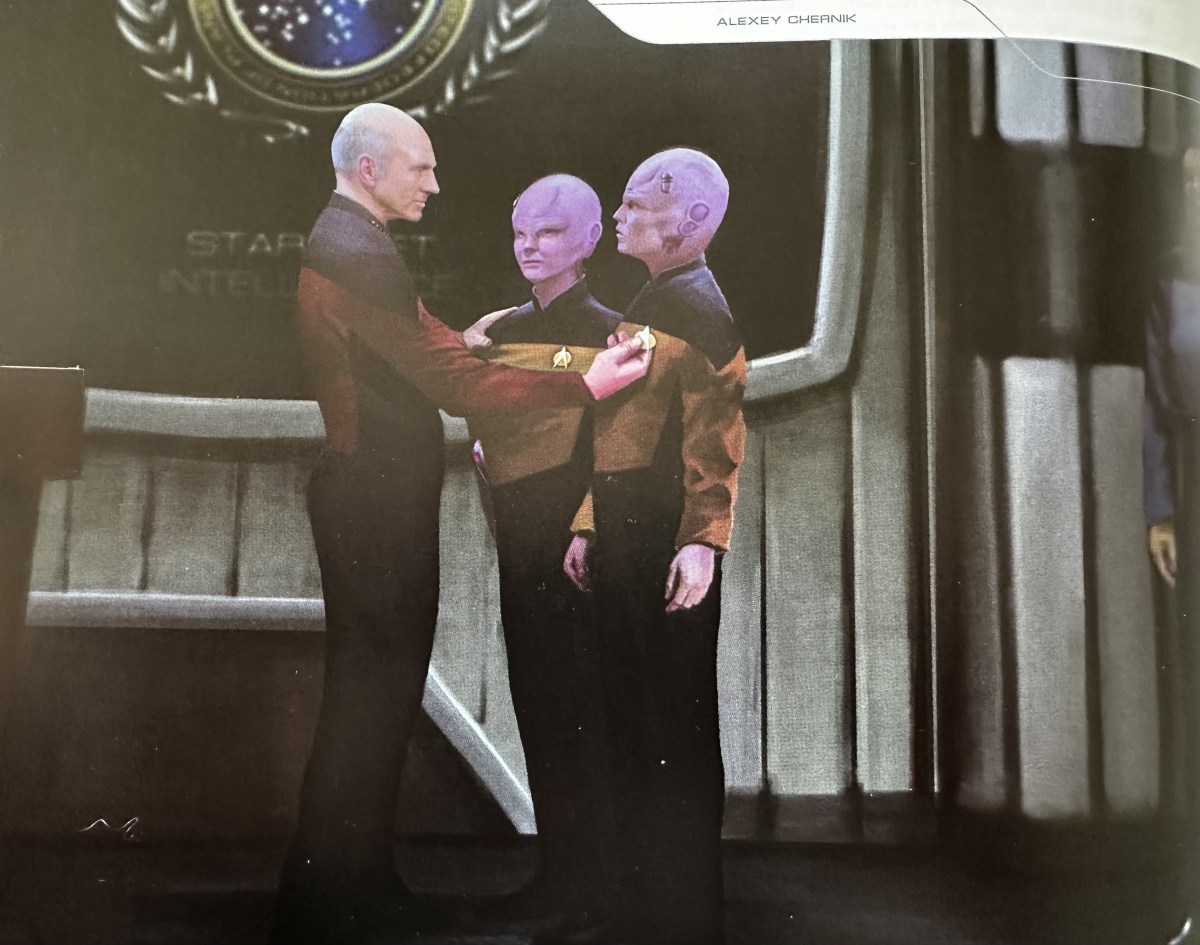
A variety of TOS era Star Fleet officers on the surface of a planet.

This is not an unknown term in the area of levelling up characters, but in the context of this game, Milestones are handled somewhat differently than in D&D 5E. In D&D, Milestone Levelling is simply an alternative to doling out XP. The DM decides at which points of their adventures the adventuring party deserve to level up. It rarely has anything to do with what the players want, although, if timed correctly, it has the potential to be narratively pleasing.

In Star Trek Adventures, each PC makes a note about each adventure in their own personal log. They can write as much or as little about it as they like, but, at the very least, they should note the name of the adventure. I think it could be helpful to also write down the major events of the adventure and the Values they used during them, as that will be relevant to the advancement process.

All PCs have Values. They are important to this process. You can take a look at my character creation post for a bit more on Values, but I can also save you a little time by quoting myself here:

Values – a few brief sentences that describe what your character believes, treasures, and thinks. They should guide roleplaying more than any other aspect of the character

A PC uses their Values to either spend or gain Determination, one of the several currencies you use in this game to improve your chances of succeeding at tasks. After a PC either Challenges or Complies with a Value, they gain Determination. If they chose to Challenge it, they get the opportunity to change their Value to something new, reflecting the lesson they learned in the situation.

If you used a Value during an adventure, you can take the chance at the end to make an adjustment to your PC:

  • Improve an Attribute by 1 point to a maximum of 11 and at the expense of a point from a different Attribute, which cannot be reduced below 7
  • Improve a Department by 1 point to a max of 4 and at the expense of a point from a different Department, which cannot be reduced below 1
  • Replace an existing Focus with a new one
  • Gain an existing Talent with a new one
  • Change a Supporting Character in a similar way

Later, you need to reach a point in another adventure when you want to use one of your Values, and when you do that, link it to a previous adventure when you used that same Value. You have to show how the current situation is influenced by that first one. If you can, you gain a point of Determination. You can only use each log entry once like this, so you mark it to show it has been used. Then, at the end of the latest adventure, you write down in your log that you gained a Milestone and the log entry you used to get it. When you do that, you can make an improvement to your character!

You can do one of the following:

  • Improve an Attribute by 1 point to a maximum of 11
  • Improve a Department by 1 point to a max of 4
  • Gain a new Focus
  • Gain a new Talent
  • Improve a Supporting Character in a similar way
  • Improve one of the Ship’s Systems at the expense of another System
  • Improve one of the Ship’s Departments at the expense of another one
  • Swap a Ship’s Talent

Now, finally, if you can link the use of that Value to the Milestone you achieved previously? Paydirt. You have yourself a Character Arc. And if you can do that, you can improve even more:

  • Improve an Attribute by 1 point to a maximum of 12
  • Improve a Department by 1 point to a max of 5
  • Gain a new Value
  • Improve one of the Ship’s Systems
  • Improve one of the Ship’s Departments
  • Add a new Ship’s Talent

Every time to you complete a character arc, the next one must involve an additional Milestone, so, that means, another adventure too. I like that this represents the concept of becoming stuck in your ways.

I think this system is a little cumbersome, if I’m honest. At least on paper, it involves a lot of admin from the players in linking their Values and Milestones, not to mention remembering all of this in play. But I love the idea of this guided change in characters’ personalities and Values bringing about significant mechanical changes. This is what I was trying to convey in the summary of Sisko’s arcs above.

Repututation

This is an entirely separate advancement track for your Star Trek Adventures character. It can lead to promotion or demotion, awards or reprimands and it adds another layer to how you might play when you know your PC’s reputation might be on the line.

Your Main Character in Star Trek Adventures starts off with a Reputation score of 3. This represents the score of a reliable Star Fleet officer. Someone their superiors can count on. But you are barely distinguished from the rest of the crew. Of course, reputations change. They can be made or broken by your own actions and how they’re perceived.

To determine how your Reputation might be affected by your actions and words during the course of an adventure you have to make a roll. The Reputation Roll is much like any other task roll except that the target number is your current Reputation score + 7, and the size of your dice pool and the Difficulty of the task are determined by how you answered a series of questions about the adventure you just finished. These questions can be tailored for the specific adventure but the Core Book provides a set of standard ones:

POSITIVE INFLUENCES
Answering yes to the following questions are considered positive influences:

  • Was your mission successful?
  • Did you positively use one or more of the mission’s Directives? Did you obey the orders given to you by your superiors? Did you prevent combat from occurring, or avoid escalating hostilities? Did you establish common ground or peaceful cooperation with those who were newly encountered or who were previously hostile to you?
  • Did you directly contribute to saving the lives of innocent people or your fellow crew?
  • Did you take all reasonable action to render aid to those in urgent need or distress?

NEGATIVE INFLUENCES
Answering yes to the following questions is considered negative influence on the character’s Reputation:

  • Was your mission a failure?
  • Did you challenge one of the mission’s Directives?
  • Were you disobedient to your superiors?
  • Were personnel under your command killed during the mission?
  • Did you employ force to any ends other than the defense of self, ship, crew, or innocent life?
  • Did you employ lethal force during the mission?
  • Did you take any unnecessary risks during the mission?
  • Did you cause, or allow through inaction, innocent lives to be lost during the mission?
  • Did you lie, cheat, threaten, or coerce others to achieve objectives during the mission?
  • Did you permit a colleague or subordinate to act unethically or illegally during the performance of their duties?

The number of Positive Influence questions you can truthfully answer “yes” to, is the number of d20s you roll for the Reputation Roll. The number of Negative Influence questions you truthfully answer “yes” is your Difficulty for the Reputation Roll.

After our first adventure we ran through all of these questions. Most of the answers were straight-forward but some elicited lively debates on what might be considered “unethical” or what is meant by “coercion.” In the end, the players enjoyed a pretty high number of successes as they had Difficulty ratings of no more than 1 or 2 but were rolling 6 or 7 dice! For each success above the Difficulty, they gained a point of Acclaim. It is possible to roll lower than the Difficulty. In this case, you get Reprimand points instead.

You can use Acclaim for the following:

  • Awards – claim Awards like the “Christopher Pike Medal of Valor” or the “Star Cross.” Each Award comes with a beneficial mechanical effect
  • Commend Another – add dice to a colleague’s Reputation Roll
  • Elevation – boost a non-commissioned officer to officer status
  • Gain Favour – Ask an NPC for a favour
  • Increase Reputation – Spend Acclaim equal to the new Reputation to get an increase
  • Promotion – Go up one rank unless the commanding officer refuses
  • Status – gain a new trait for your PC that reflects the experiences they have lived through

On the other hand, Reprimands can lead to detention, being stripped of an award, demotion or even Court Martial! So, best to try and avoid those unless you want a bit of drama.

Conclusion

I think the Reputation system is a fun way to facilitate a very different type of advancement for a Star Trek Adventures character. The Milestone system linked to Values is very personality focused and linked to the PC’s own personal narrative, but Reputation is more like career development and the benefits from that are too. It is, perhaps a little over-designed, in my opinion. Do we really need to have both Reputation Points and Acclaim Points? Couldn’t we find a way to achieve the same ends with one or the other?

But, as I said at the top of this blog post, I think I need to reserve full judgement until we have had a few more Star Trek Adventures. In the meantime, dear reader, live long and prosper!