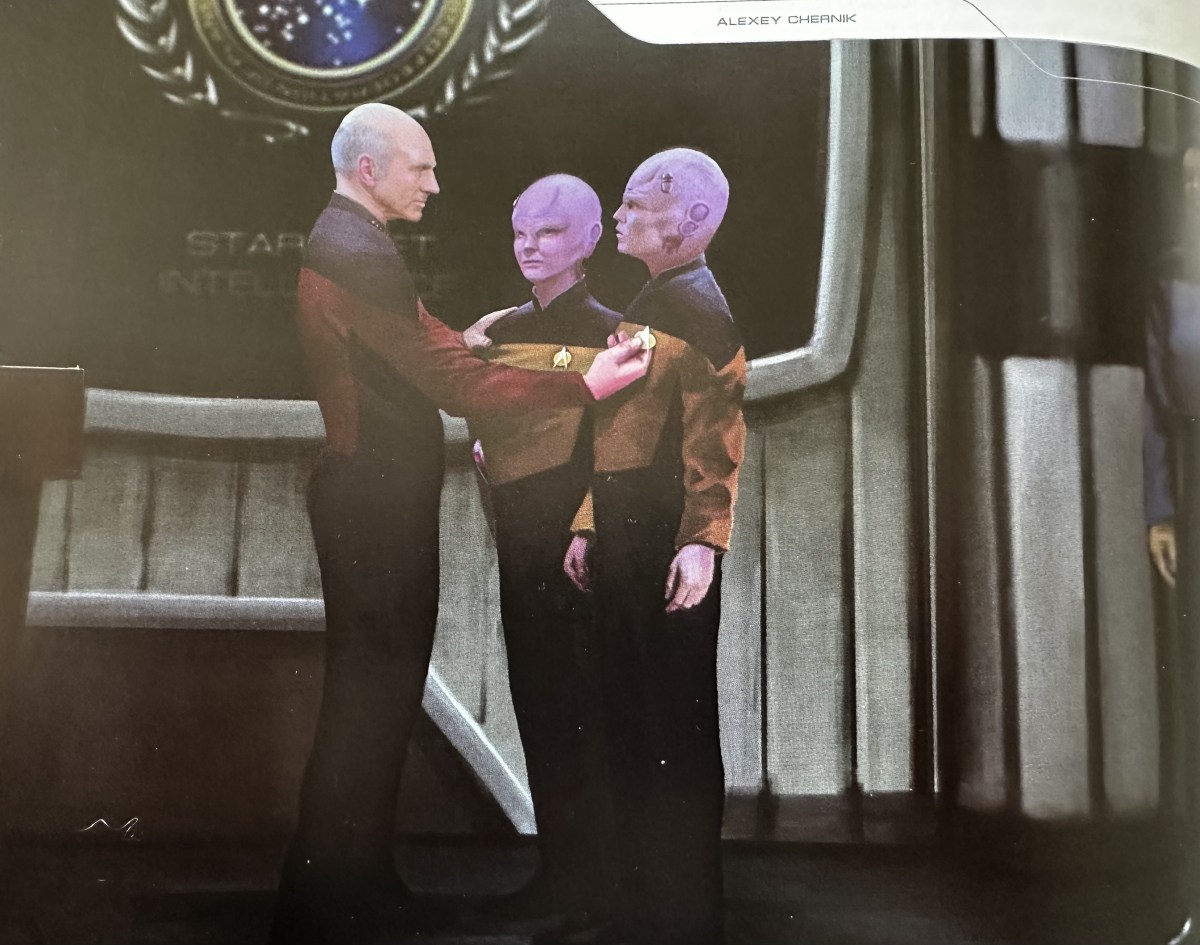
Character Growth
There are more ways to deal with character advancement in RPGs than I could even attempt to name, never mind describe. A number of them depend on XP, whether it’s in large numbers, like D&D, or in relatively small numbers like Dungeon World or Blades in the Dark. Maybe you use those numbers in a direct, 1:1 ratio to improve abilities or add new powers. Then again, maybe you just add them up until you hit a new level.
Maybe your favourite system eschews XP in favour of improvement rolls, like in Troika, Mörk Borg, or Call of Cthulhu, where your fate might be to not improve at all, or even get worse, despite everything you’ve done. That one can seem cruel sometimes, but, then again, rolling dice is fun, right?
Well, the advancement mechanic in Star Trek Adventures 2E is not like any of the above, and that’s what I’m here to discuss today.
The Character Arc
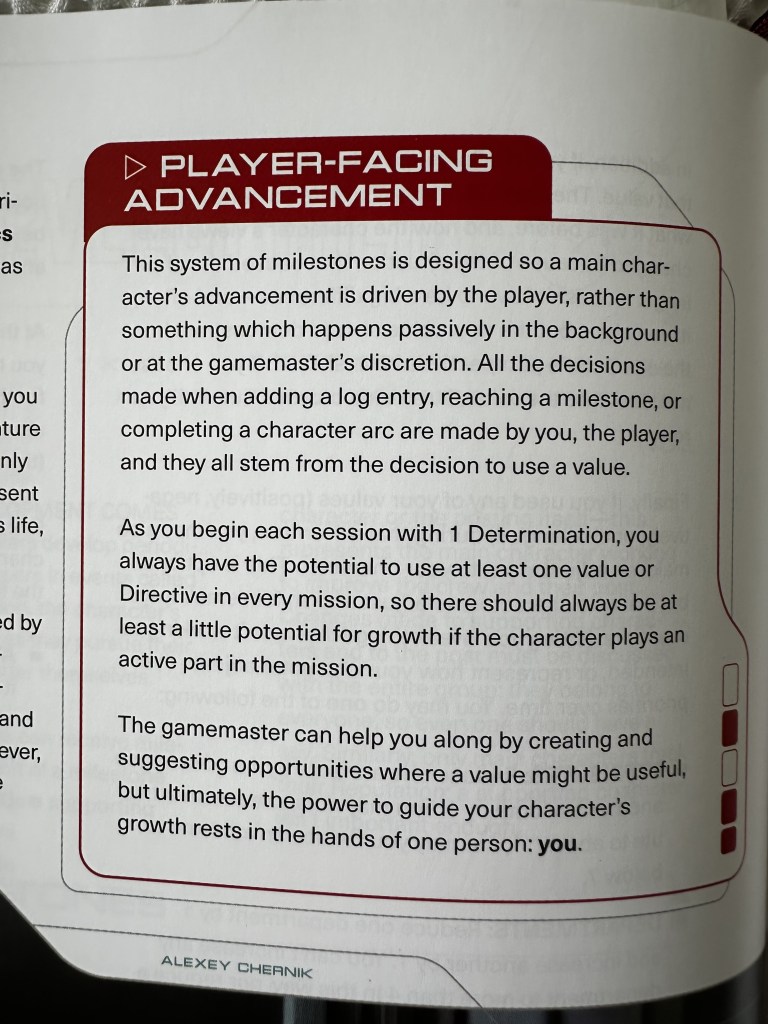
Advancement
We’ve all heard of a character arc in a TV show or movie. We want to see growth and change in our favourite heroes or, for that matter, in our antagonists too. That change we want to see? Is it a matter of them growing tougher, or more powerful? Do we want to see them gain new skills or contacts? I mean, maybe sometimes, but growing in power does not produce a character arc. Not alone at least. Is it more important that Peter Parker gained the proportional speed and strength of a spider, or that he learned that with great power comes great responsibility? Because without internalising that lesson, suddenly, Spiderman is a villain, or, at best like one of those “super heroes” from “the Boys.” Of course that wasn’t the end of Peter’s character arc, though you could argue that it was the end of one of his character arcs.
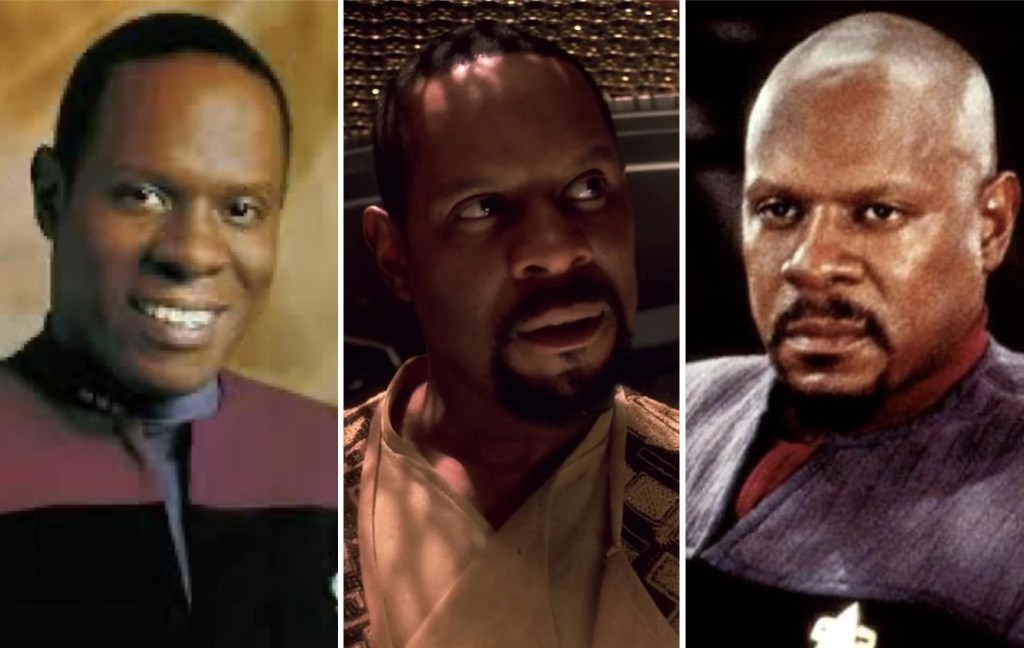
How about an example from Star Trek, since that’s what we’re talking about. Ben Sisko, Commander of Deep Space 9 arrived on the station, not expecting to be there for more than a few months. He was scarred and bitter from his experience with the Borg when he lost his wife. His only joy in life was his son, Jake. The Bajorans name him the Emissary, a religious figure of great significance. He is uncomfortable with that. Through the course of the show’s seven seasons, he heals the scars caused by the Borg and the loss of his wife, which leads him to accept his new life fully, and eventually, a new love. He becomes devoted to Deep Space 9, its crew and everything it represents and goes to any lengths to defend it. He embraces his position as Emissary and even prioritises it above all other concerns on several occasions. Through all of this, he is promoted, left in charge of the defence of the Alpha Quadrant against the Dominion, gets a cool new ship and enjoys political influence across two quadrants. But the recognisable gains in temporal power are all reflections of his emotional and personal breakthroughs.
This is what Start Trek Adventures is trying to do, and I think I might love it? I am reserving judgement until my PCs get to the point where they can actually achieve a full character arc themselves.
Milestones
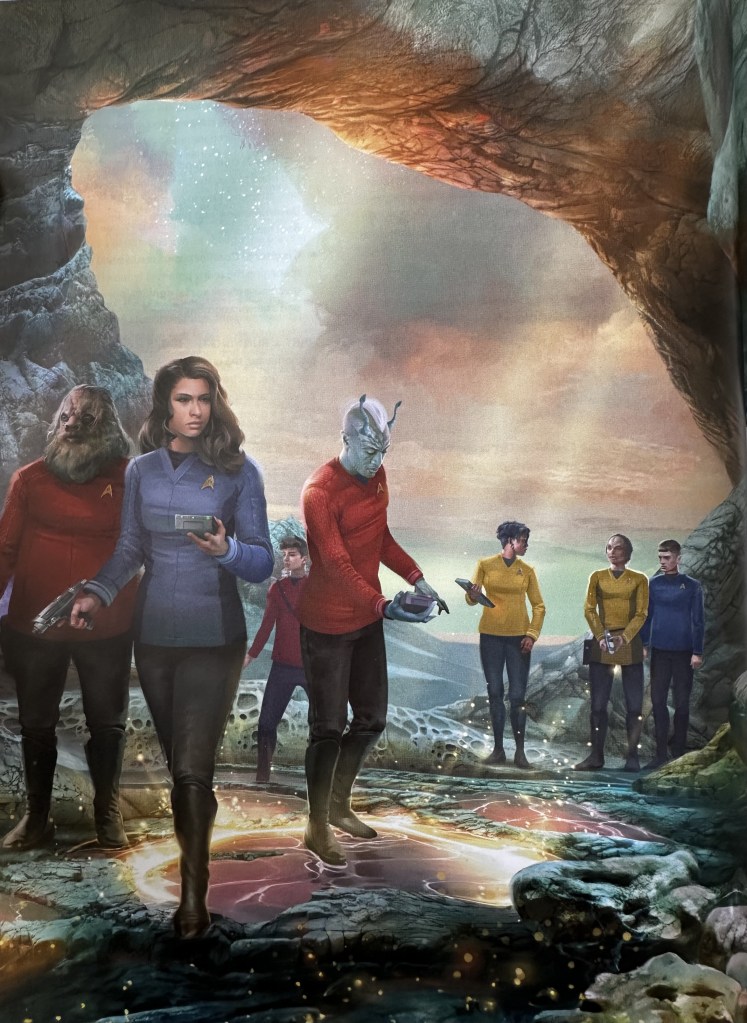
This is not an unknown term in the area of levelling up characters, but in the context of this game, Milestones are handled somewhat differently than in D&D 5E. In D&D, Milestone Levelling is simply an alternative to doling out XP. The DM decides at which points of their adventures the adventuring party deserve to level up. It rarely has anything to do with what the players want, although, if timed correctly, it has the potential to be narratively pleasing.
In Star Trek Adventures, each PC makes a note about each adventure in their own personal log. They can write as much or as little about it as they like, but, at the very least, they should note the name of the adventure. I think it could be helpful to also write down the major events of the adventure and the Values they used during them, as that will be relevant to the advancement process.
All PCs have Values. They are important to this process. You can take a look at my character creation post for a bit more on Values, but I can also save you a little time by quoting myself here:
Values – a few brief sentences that describe what your character believes, treasures, and thinks. They should guide roleplaying more than any other aspect of the character
A PC uses their Values to either spend or gain Determination, one of the several currencies you use in this game to improve your chances of succeeding at tasks. After a PC either Challenges or Complies with a Value, they gain Determination. If they chose to Challenge it, they get the opportunity to change their Value to something new, reflecting the lesson they learned in the situation.
If you used a Value during an adventure, you can take the chance at the end to make an adjustment to your PC:
- Improve an Attribute by 1 point to a maximum of 11 and at the expense of a point from a different Attribute, which cannot be reduced below 7
- Improve a Department by 1 point to a max of 4 and at the expense of a point from a different Department, which cannot be reduced below 1
- Replace an existing Focus with a new one
- Gain an existing Talent with a new one
- Change a Supporting Character in a similar way
Later, you need to reach a point in another adventure when you want to use one of your Values, and when you do that, link it to a previous adventure when you used that same Value. You have to show how the current situation is influenced by that first one. If you can, you gain a point of Determination. You can only use each log entry once like this, so you mark it to show it has been used. Then, at the end of the latest adventure, you write down in your log that you gained a Milestone and the log entry you used to get it. When you do that, you can make an improvement to your character!
You can do one of the following:
- Improve an Attribute by 1 point to a maximum of 11
- Improve a Department by 1 point to a max of 4
- Gain a new Focus
- Gain a new Talent
- Improve a Supporting Character in a similar way
- Improve one of the Ship’s Systems at the expense of another System
- Improve one of the Ship’s Departments at the expense of another one
- Swap a Ship’s Talent
Now, finally, if you can link the use of that Value to the Milestone you achieved previously? Paydirt. You have yourself a Character Arc. And if you can do that, you can improve even more:
- Improve an Attribute by 1 point to a maximum of 12
- Improve a Department by 1 point to a max of 5
- Gain a new Value
- Improve one of the Ship’s Systems
- Improve one of the Ship’s Departments
- Add a new Ship’s Talent
Every time to you complete a character arc, the next one must involve an additional Milestone, so, that means, another adventure too. I like that this represents the concept of becoming stuck in your ways.
I think this system is a little cumbersome, if I’m honest. At least on paper, it involves a lot of admin from the players in linking their Values and Milestones, not to mention remembering all of this in play. But I love the idea of this guided change in characters’ personalities and Values bringing about significant mechanical changes. This is what I was trying to convey in the summary of Sisko’s arcs above.
Repututation
This is an entirely separate advancement track for your Star Trek Adventures character. It can lead to promotion or demotion, awards or reprimands and it adds another layer to how you might play when you know your PC’s reputation might be on the line.
Your Main Character in Star Trek Adventures starts off with a Reputation score of 3. This represents the score of a reliable Star Fleet officer. Someone their superiors can count on. But you are barely distinguished from the rest of the crew. Of course, reputations change. They can be made or broken by your own actions and how they’re perceived.
To determine how your Reputation might be affected by your actions and words during the course of an adventure you have to make a roll. The Reputation Roll is much like any other task roll except that the target number is your current Reputation score + 7, and the size of your dice pool and the Difficulty of the task are determined by how you answered a series of questions about the adventure you just finished. These questions can be tailored for the specific adventure but the Core Book provides a set of standard ones:
POSITIVE INFLUENCES
Answering yes to the following questions are considered positive influences:
- Was your mission successful?
- Did you positively use one or more of the mission’s Directives? Did you obey the orders given to you by your superiors? Did you prevent combat from occurring, or avoid escalating hostilities? Did you establish common ground or peaceful cooperation with those who were newly encountered or who were previously hostile to you?
- Did you directly contribute to saving the lives of innocent people or your fellow crew?
- Did you take all reasonable action to render aid to those in urgent need or distress?
NEGATIVE INFLUENCES
Answering yes to the following questions is considered negative influence on the character’s Reputation:
- Was your mission a failure?
- Did you challenge one of the mission’s Directives?
- Were you disobedient to your superiors?
- Were personnel under your command killed during the mission?
- Did you employ force to any ends other than the defense of self, ship, crew, or innocent life?
- Did you employ lethal force during the mission?
- Did you take any unnecessary risks during the mission?
- Did you cause, or allow through inaction, innocent lives to be lost during the mission?
- Did you lie, cheat, threaten, or coerce others to achieve objectives during the mission?
- Did you permit a colleague or subordinate to act unethically or illegally during the performance of their duties?
The number of Positive Influence questions you can truthfully answer “yes” to, is the number of d20s you roll for the Reputation Roll. The number of Negative Influence questions you truthfully answer “yes” is your Difficulty for the Reputation Roll.
After our first adventure we ran through all of these questions. Most of the answers were straight-forward but some elicited lively debates on what might be considered “unethical” or what is meant by “coercion.” In the end, the players enjoyed a pretty high number of successes as they had Difficulty ratings of no more than 1 or 2 but were rolling 6 or 7 dice! For each success above the Difficulty, they gained a point of Acclaim. It is possible to roll lower than the Difficulty. In this case, you get Reprimand points instead.
You can use Acclaim for the following:
- Awards – claim Awards like the “Christopher Pike Medal of Valor” or the “Star Cross.” Each Award comes with a beneficial mechanical effect
- Commend Another – add dice to a colleague’s Reputation Roll
- Elevation – boost a non-commissioned officer to officer status
- Gain Favour – Ask an NPC for a favour
- Increase Reputation – Spend Acclaim equal to the new Reputation to get an increase
- Promotion – Go up one rank unless the commanding officer refuses
- Status – gain a new trait for your PC that reflects the experiences they have lived through
On the other hand, Reprimands can lead to detention, being stripped of an award, demotion or even Court Martial! So, best to try and avoid those unless you want a bit of drama.
Conclusion
I think the Reputation system is a fun way to facilitate a very different type of advancement for a Star Trek Adventures character. The Milestone system linked to Values is very personality focused and linked to the PC’s own personal narrative, but Reputation is more like career development and the benefits from that are too. It is, perhaps a little over-designed, in my opinion. Do we really need to have both Reputation Points and Acclaim Points? Couldn’t we find a way to achieve the same ends with one or the other?
But, as I said at the top of this blog post, I think I need to reserve full judgement until we have had a few more Star Trek Adventures. In the meantime, dear reader, live long and prosper!
Discover more from The Dice Pool
Subscribe to get the latest posts sent to your email.


Hmm. Very interesting in theory. But yes, it does sound like it would require players with a lot of engagement – the sort who takes notes on their own initiative and read lore supplements for fun. More casual ones would probably struggle with it.
LikeLiked by 1 person
Yep. I agree with that. I do think that the game itself promotes this sort of behaviour in players. There’s not much time for them to zone out waiting for their turns, every action feels important and has the potential for great effect on their situation. They are generally forced to think creatively, and its actions that spring from that sort of thinking that stick in the memory. At least, I hope that’s how it will work as we trek on.
LikeLiked by 1 person