The Editioning, AD&D 2nd Edition, Part 2

Character-work

We’re back in Sigil, dear reader, and it feels like coming home. Long has it been since my players had their characters sneak around its darkened byways and razorvine-choked alleys, avoiding the Hardheads. Years have passed since they were introduced to the Cage’s many factions, wards, points of interest, cranium rats, and, of course, deranged NPCs.

Back then, I took a peculiar pleasure in populating the City of Doors with the sorts of unusual cutters that one might expect from such a cosmopolitan, diverse crossroads. There was the BDSM dwarf who served them up cocktails and information in a leathery sort of club, the down-on-their-luck founding members of the Mundane, a faction who took great pride in their rejection of magic despite its ubiquity, and the gnome mage who filled the street outside his bookshop with lava to prove a point.

The first of those was all me. Pulled him out of thin air when the party said they went into the nearest pub to ask for info. The other two were inspired by one of my player’s characters and by a character presented in the excellent AD&D 2E Planescape sourcebook, Uncaged: Faces of Sigil.

With our latest foray into the city, I have continued on form. I am still taking inspiration, of course, but have particularly enjoyed making the people and places my own.

The first was Trunfeld Three-teeth, (a delightful tongue-twister, particularly for those of particularly Hibernian dialect.) Trunfeld is a “vile-tempered creature of disgusting personal habits,” according his description in the adventure, The Eternal Boundary. He is also a peculiarly intelligent ogre, and he runs the notorious den of scum and villainy known as the Butcher’s Block. The adventure gave me, I think, just enough to build a voice and personality for this character and, let me tell you, I really went for it. Trunfeld stank to high-heaven of sweat, picked his nose and wiped it on the paladin’s breastplate, breathed his hot, rotten breath on them and offered them some unidentifiable stew. Our cleric, Devansh Rao, used a spell to purify their drinks when they were served, and this was entirely apropos. Trunfeld was hanging out with an honest-to-gods demon when the PCs walked in, and they were lucky not to provoke its ire when they made the mistake of interrupting their conversation. I bellowed at them from the depths of my chest for Trunfeld’s voice. It felt good. He cursed them in his cockney rumble and eyed the priest and the paladin suspiciously. Luckily, the presence of the holy-joes was tempered sufficiently by their companions, the necromantic witch and the thieving tiefling, who were regulars in the ogre’s bar. So they managed to strike up a bargain. As he promised to keep an ear to the ground for them, I am relishing the prospect of getting to play this rancid brute again.

The second was Mourner Tom, another NPC given a brief description in the adventure. He is the leader of a band of Collectors. These poor unfortunates scrape an execrable living on the streets of the Cage by locating, looting and transporting corpses they find to the Mortuary. They have a deal with the Dustmen (the faction that runs the Mortuary, also known as the Dead.) He is described only as a down-on-his-luck thief, but the text does provide a few quotes of his. These are what led me to voice him almost exactly as Danny, the drug-dealer from Withnail and I. So if you know that character and his many famously quotable lines, you’ll understand why quotes like this drew me to him:

It’s like they fall asleep and don’t wake up. Very peaceful, that
We might’ve seen ‘I’m but our memory’s none too good.

Hopefully you get the idea. If not, here’s a link to a helpful YouTube clip of Danny:

I didn’t lean quite as heavily on the speech impediment, but I think you get the idea.

Of course, its not just speech-patterns and accents that make an NPC, Mourner Tom was also dressed in a battered top-hat and tatty tails, all stolen from corpses he’d found on the job. And he had his motivations. Unsurprisingly, his was jink, gold, money. He was another helpful one, explaining, after he’d been paid, that the barmy the PCs were looking for was one they’d picked up recently and brought to the Mortuary, since he was dead.

We have a lot more NPCs to meet. There is a good chance that the PCs are going to be interacting with a few more factions and other non-affiliated weirdos over the coming weeks so I’m looking forward to coming up with more unlikely voices and mannerisms.

To the Adventure!

Honestly, it took us a while to get really started with the first session. Some characters were not quite finished. This was largely due to the arcane (pun intended) categorisation of priestly spell spheres and the added complication of choosing an appropriate faction. But, I also wanted to establish some background and motivation for the PCs.

It’s a rather unlikely story, so I think it’s worth telling here. Our paladin, Galermond, having recently completed his training, was asked to leave his temple and, being a little on the innocent and simple side (read “thick-as-plank”) decided he wanted something to spend his small reservoir of coin on. He encountered Devansh Rao, the cleric of Varuna and they went about finding a ruined old temple to that god in the Lower Ward of the city. Small, dirty and crumbling though it was, they decided to devote their efforts to restoring it, as not another temple to Varuna existed in the city anymore. Glaermond was happy to have discovered such a noble endeavour to pursue, but neither he nor Devansh knew anything about money, and they would need that… Enter Trance, the tiefling accountant (thief.) She told them she could help them manage their gold and brought in Aurora, the bariaur witch, who would be happy to occupy the basement and use it to conduct her necromantic experiments (not that she told them that!) And so, out odd party was born!

To begin the adventure proper, I had a typical cockney urchin approach Trance with a message from one of her fellow faction members and ask her to bring friends to the headquarters of the Society of Sensation, the Civic Festhall. There, they met Bendon Mawl, a tiefling with some influence in the faction, who told them they wanted to find a barmy in the Hive who is said to have the key to a very important portal in Sigil. This barmy’s name was Eliath and it seemed like he might have been a wizard. They were offered a cut of the profits gained from this portal. Since the PCs had a church to restore, and they were all out of donations, they jumped at the chance.
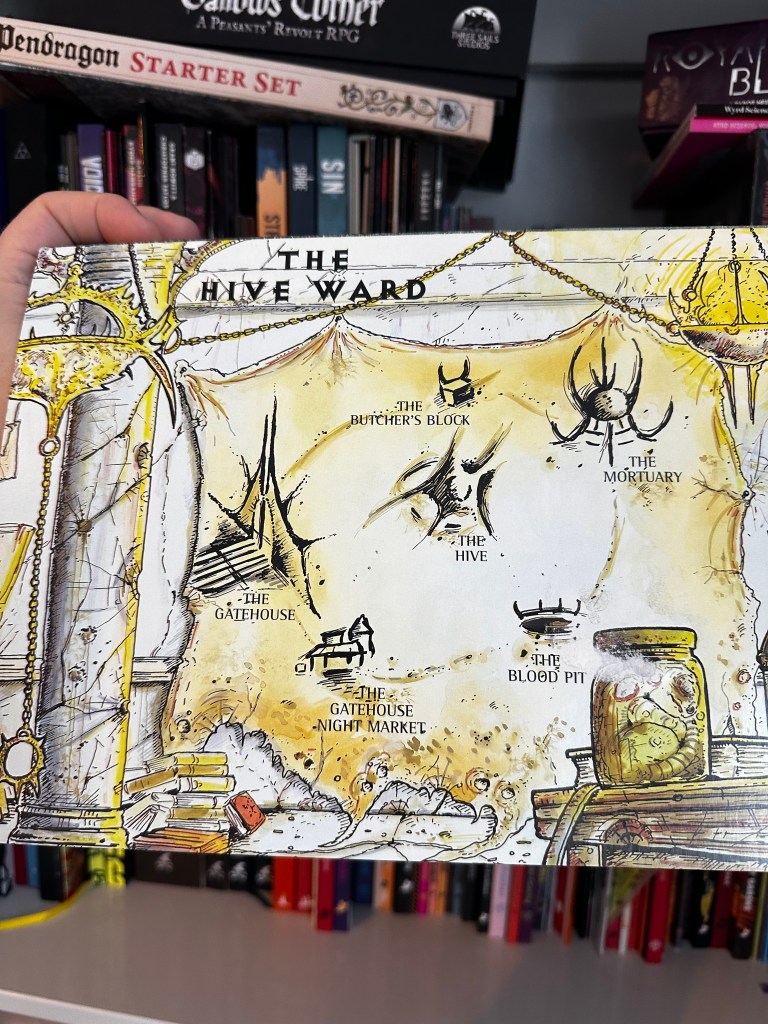
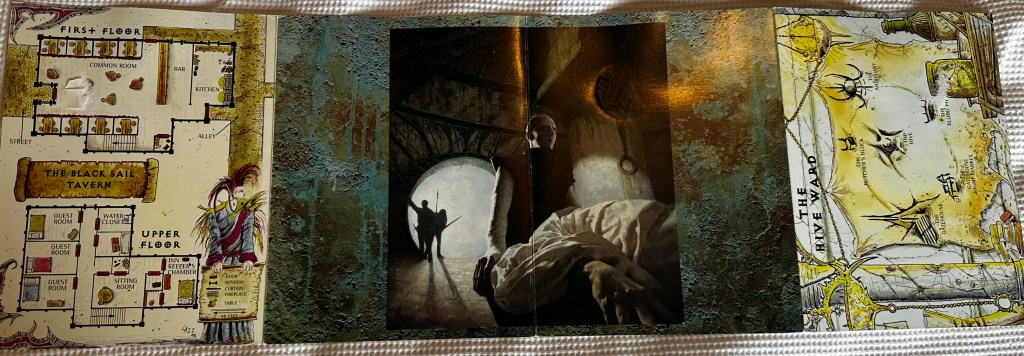
The Point Crawl Map of the Hive Ward. Locations include the Butcher's Block, the Mortuary and the Blood Pit.
The Hive Map

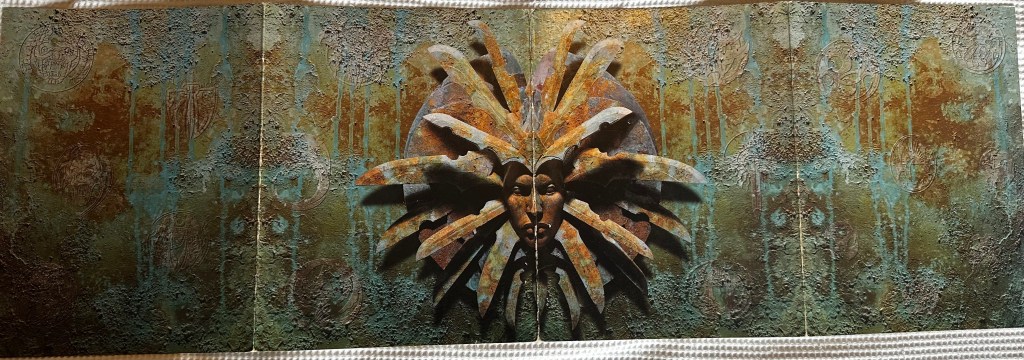
They went immediately to the Hive. The adventure provides a point-crawl-style map of the ward on the inside of the DM screen that came with the adventure.

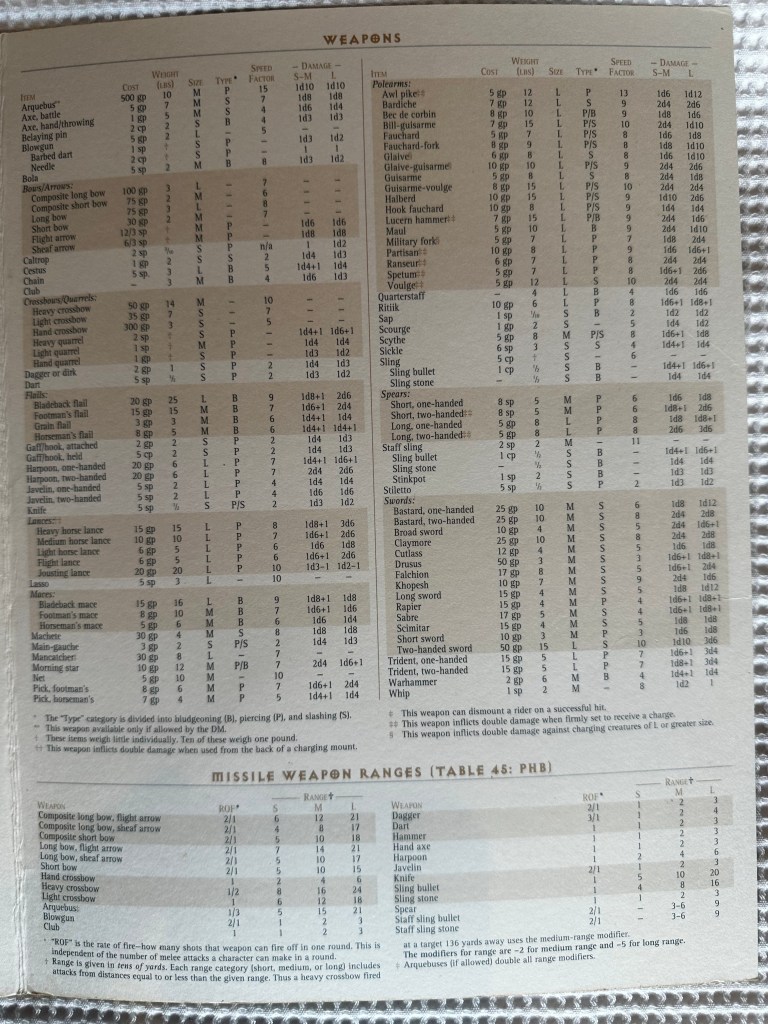
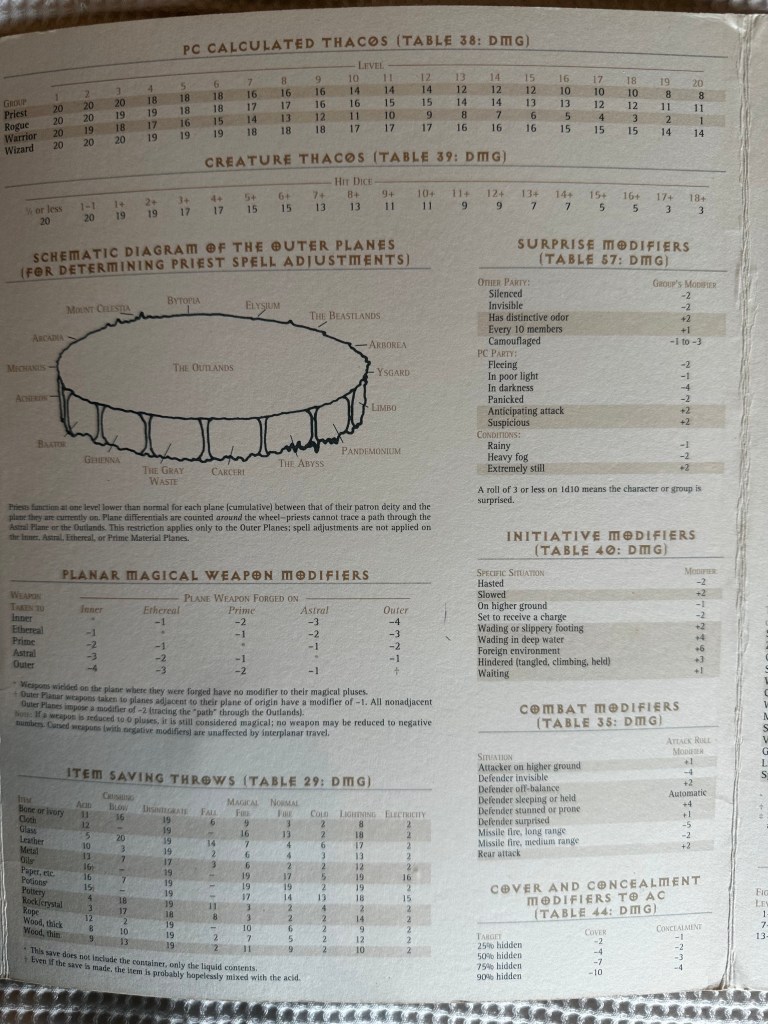
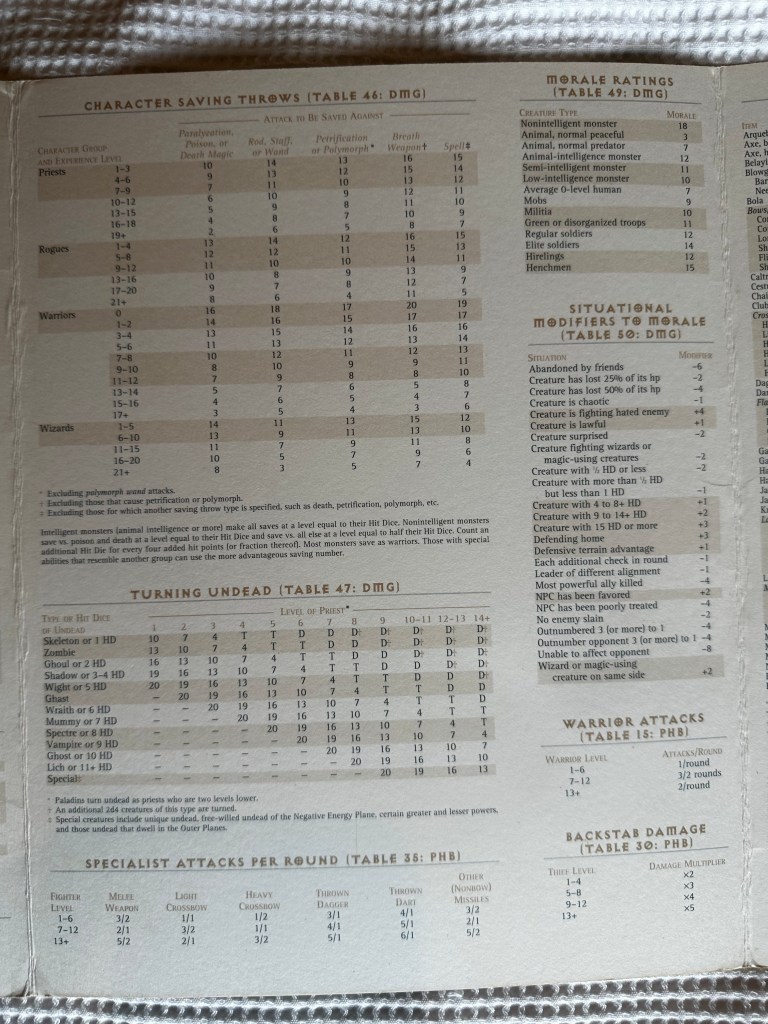
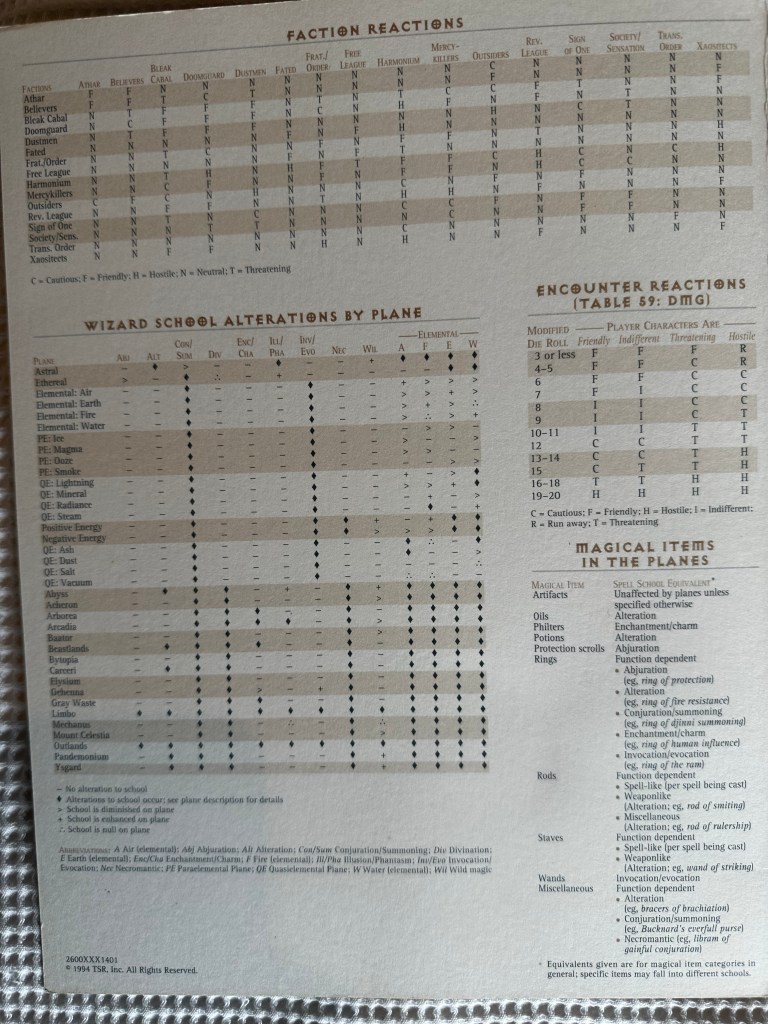
I have to say, this is an old-school design element that is sorely missed from newer modules. It was not at all unusual to get an adventure specific DM screen in the pack with the adventure back in the old days. Wizards of the Coast now want you to pay another £15 or more for the privilege. I have really been appreciating this DM screens actually. Not only does it have several key maps, but it also has all the stat blocks for the major NPCs and encounters in the adventure! Invaluable, tbh. My only dilemma is whether to use the adventure-specific screen or the utter treasure that is the one from he Planescape boxed set. Its got all the Planescape tables you might need, like how the various factions might react to one-another and how spells are effected on various planes, and on top of that, it also has stuff like ThAC0 tables and saving throws.

Back to the Adventure! Their first port of call was the afore-mentioned Butcher’s Block where they interacted with Trunfeld Three-teeth, to my utter delight. He was able to tell them that barmies (lunatics) and bubbers (drunks) have been turning up dead more than usual and said he would keep an ear out for news of Eliath.

Then they decided to split up. Why? Well, Aurora the witch is a member of the Dustmen, so it seemed like a good idea for her to go and see if their barmy had turned up at the headquarters of that faction, the Mortuary…

Meanwhile, the others wandered the streets in hopes of finding a clue. Before long, they did. They turned onto an alley and found a disturbing scene, a ragged collection of men, gathered over the dead body of some poor berk on the ground, talking about how they should loot and transport him. Before it could come to blows, they discover that this was a crew of Collectors led by Mourner Tom. As I mentioned above, I had a great time playing him and he was able to tell them that they had collected someone matching Eliath’s description recently. Should be in the Mortuary.

Speaking of which, Aurora, perhaps a little nervous traversing Sigil’s most infamous ward on her own, had an encounter of her own. She was faced with a gangly, dancing man bounding down the street towards her, shouting and mumbling and singing the names of the Princes of the Ba’atezu fiends. She noted the names he was chanting but was about to go about her own business when she heard a shriek from the alleyway he had entered. Investigating, she discovered his fresh corpse lying on the cobbles, not a mark on him…

Conclusion

My conclusion so far is that I am having a ball with Planescape,
As I expected. It is one of my all time favourite D&D settings and it gives me free-rein to invent the most deranged little cockneys I can think of.

But we have only barely interacted with the mechanics so far, no more than a spell cast and a non-weapon proficiency attempted, so I am very interested to see how smoothly that goes.

Stay tuned, dear reader!
The Editioning, AD&D 2nd Edition, Part 1

The Editioning Format

Just in case you’re new here, the Editioning is a challenge that my fellow members of our little, local TTRPG community, Tables and Tales and I have taken upon ourselves (ok, fine, I came up with it and pretty much forced everyone else to take part.) It involves playing an adventure/short campaign in every major edition of Dungeons & Dragons from the original 1974 version to D&D 5.5E, which came out fifty years later, in 2024. We hope to complete this task within about 24 months. So far, we have completed one adventure in OD&D and are close to the end of another in Basic or B/X D&D.

I’ve been titling these posts with the numbers of the weeks of the challenge, but, honestly, even keeping track of which week we’re on is becoming a challenge in itself. So, I’m just going to number them from now on. As such, this post will be Part 1 of the Advanced Dungeons & Dragons 2nd Edition series. Hope that makes sense, dear reader!

Welcome to Sigil

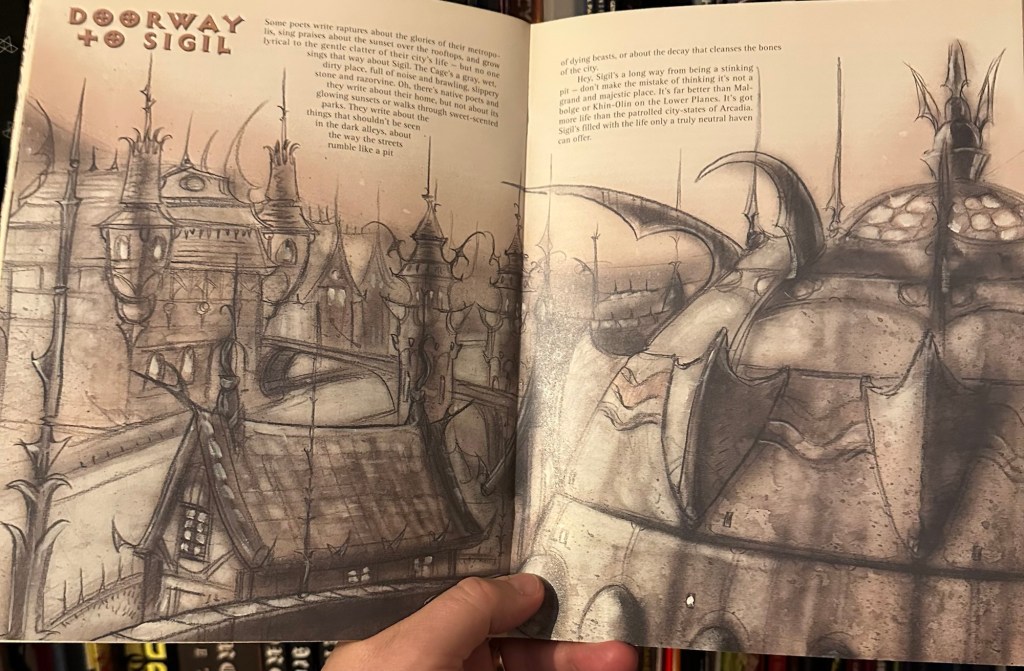
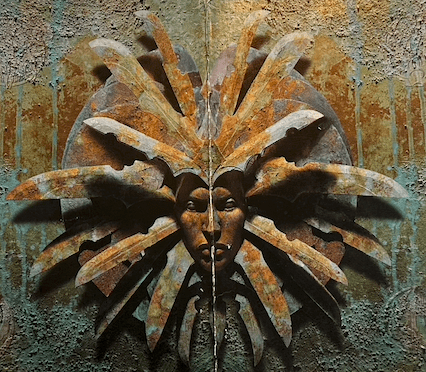
An illustration of the rooftops of Sigil from the book, Sigil and Beyond from the Planescape Boxed Set. It is entitled Doorway to Sigil.
The enigmatic rooftops of Sigil by Tony Di Terlizzi

What? Are you Clueless, berk? Cutter like you should find out the dark of things in the Cage. Could make a little jink if you manage to sway the high-up men and stay out of the Mazes. Want the advice of an old basher like me? Go chat up a factol, maybe one o’ them Mercykillers or even the Hardheads. They’re always looking for cutters who’ll do some business and keep their bone-boxes shut. You don’t fancy them? Go talk to the Bleakers, maybe. Just watch out for the barmies in the Hive if you go that way. I heard a bunch of them have been put in the dead book of late. Just stay peery on the streets and alleys of the City of Doors, cutter, and if you see death coming for you, just give ‘em the laugh and don’t end up swinging from the old leafless tree, alright?

That’s an example of the type of writing that exists throughout the entire Planescape line of books. OK, it’s not all written like that, but in many parts the voice of a local guide like this is used to inject some really effective flavour. They introduced this sort of patter and unique dialect to set Planescape apart from the more traditional fantasy fare like Forgotten Realms and Dragonlance. I Remember the first time I read it as wide-eyed teenaged ingenue. I was immediately drawn in. None of the other settings had ever appealed to me so thoroughly through the voice of the books themselves. This despite the fact that I had spent a couple of years playing the more unique settings of Dark Sun and Ravenloft.

Why? Well, the speech pattern was curiously familiar to anyone with a passing interest in cockney slang, victorian working class dialects and Blackadder. That was me, honestly. So it caught my attention.

Now, admittedly, the portions of the books written in this patter are confined mainly to the introductions and the odd in-character paragraph, but it’s enough to liven up what is normally a very dull business (AD&D modules.)

But, of course, there is so much more to recommend the setting. The factions of Sigil, where philosophical standpoints come to life in their members. Their Cold War or kriegstanz that bubbles under the surface of the city. The Lady of Pain, enigmatic ruler and all-powerful protector of the City of Doors, who sends her greatest trespassers to the Mazes for eternal torment. And beyond Sigil, why, there is only the infinite vastness of the outer planes, the inner planes and every place in between! Every one of them filled to bursting with bizarre landscapes, gods, angels, demons, devils, elementals of every flavour and don’t forget the fairies and other planar beings beyond count or description.

In fact, it can be a little overwhelming. I remember that’s how it felt when trying to write my own adventures for it back in the ‘90s. There were too many options, many of them very lethal and many of them utterly beyond my own meagre abilities to incorporate into my simple AD&D games.

That’s one of the reasons I decided to run a pre-written adventure for this portion of the Editioning.

The Eternal Boundary

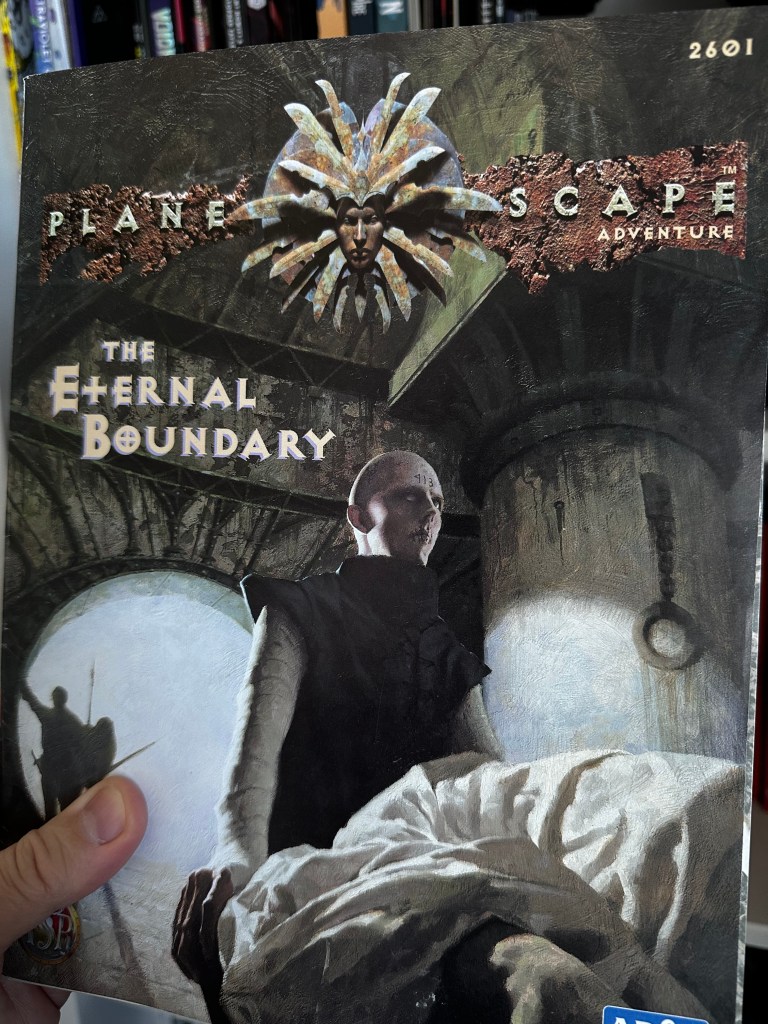
The cover of Planescape adventure, the Eternal Boundary. A pale, bald dustman pushes a gurney with a sheet-covered corpse in the foreground. The silhouettes of adventurers peek through an archway in the background.
The Eternal Boundary

This adventure was one of the first produced for the Planescape setting. It’s written by L. Richard Baker III whose other credits include the Planescape Monstrous Compendium 2 and Valley of Dust and Fire for Dark Sun.

I don’t want to provide any spoilers at this point so I’ll only give you the basics that PCs will learn not long after starting to play.

In the Hive Ward of Sigil, barmies and bubbers are disappearing and turning up dead in much larger numbers than usual. The PCs are sent to find one of them, a barmy called Eliath, who knows the dark of a very special portal key. Various factions are at play in the Hive and there is something sinister going on there. The PCs must uncover it is they are going to complete their mission. It will lead them all over the Hive Ward and far, far beyond.

I chose this adventure for a couple of reasons. Firstly, I thought it was a great introduction to the City of Sigil, its Factions, the kinds of strange goings-on they might encounter there and a large cast of NPCs with a fun variety of faction-alignments, personalities and motivations. And second, it was the right length for what I had in mind. I actually think this one might end up being shorter than my recently concluded OD&D game. Of course, I have been silly enough to think such thoughts before, and I’ve been frequently proven wrong so we’ll see how that works out.

Character Creation

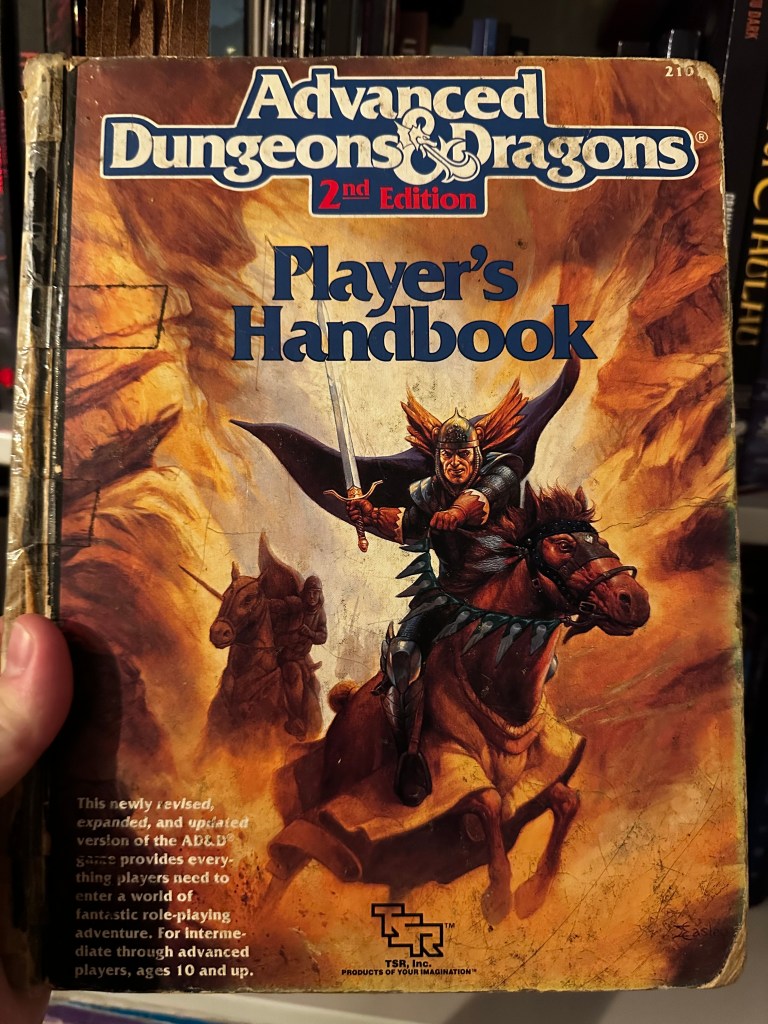
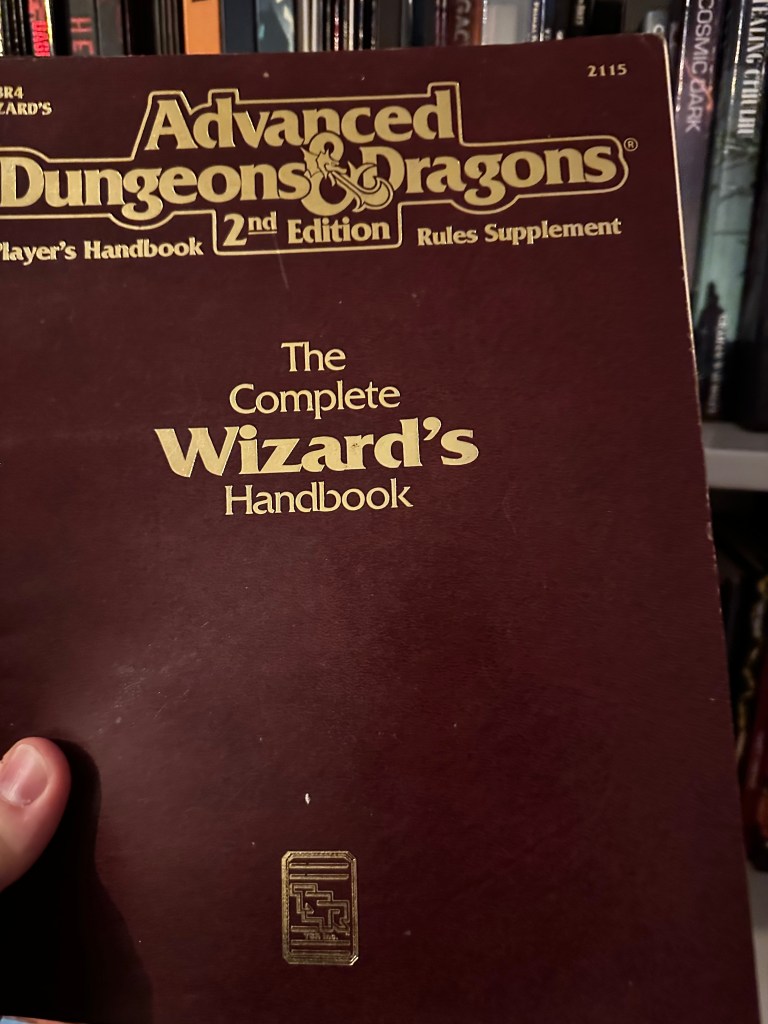
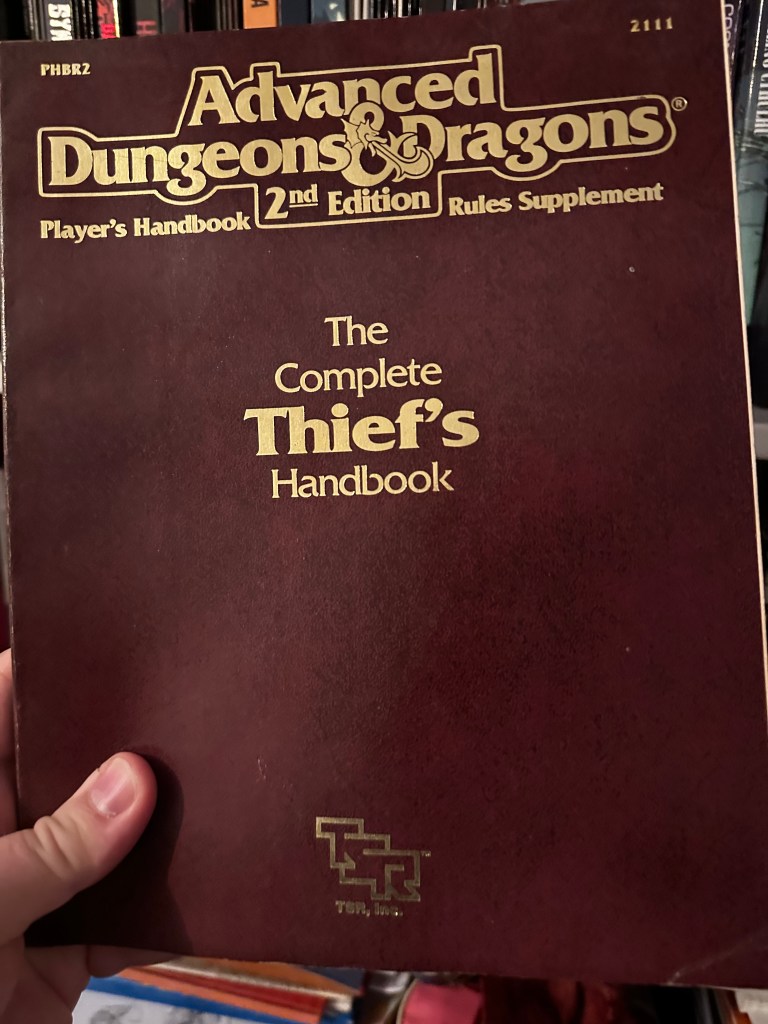
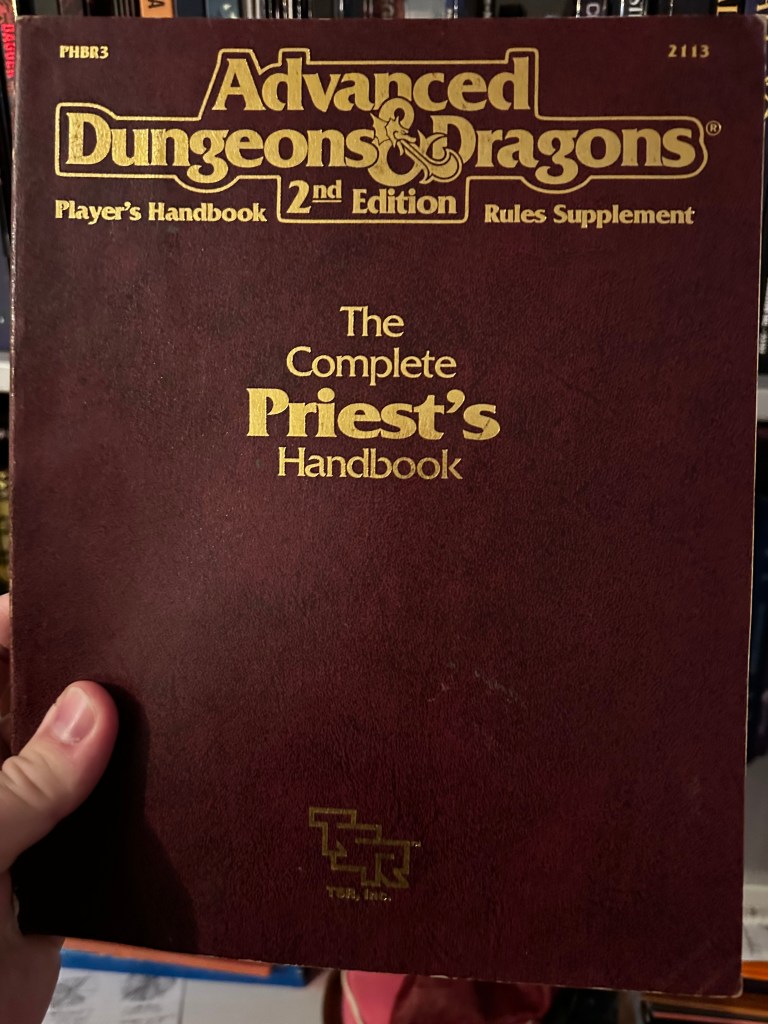
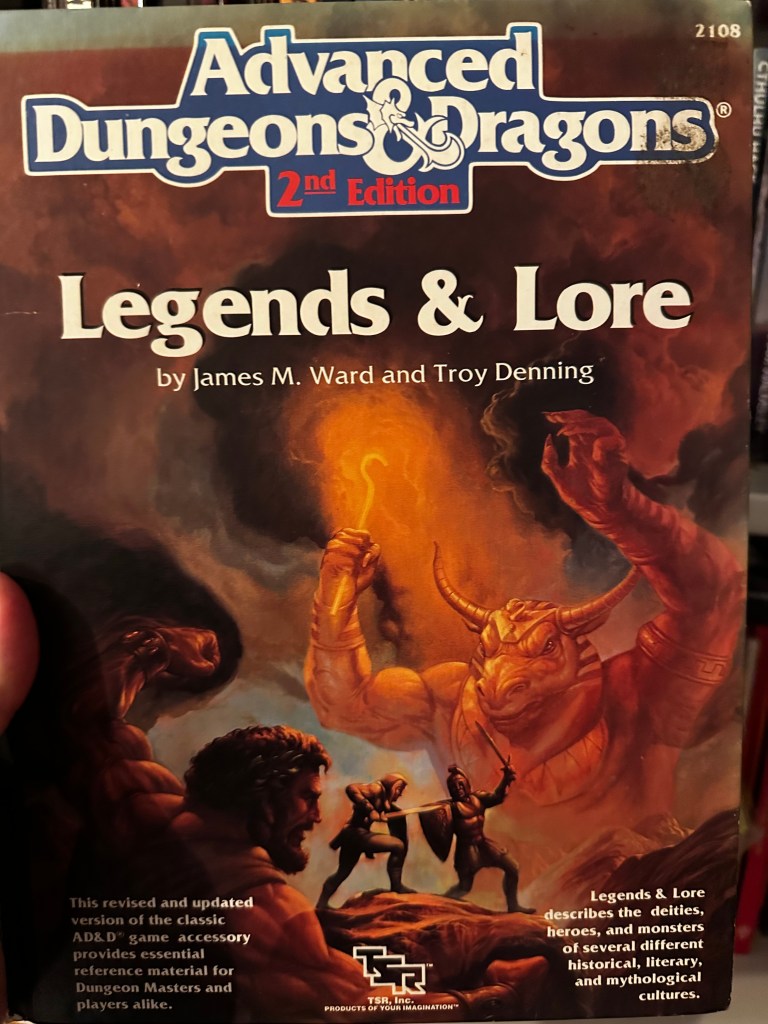
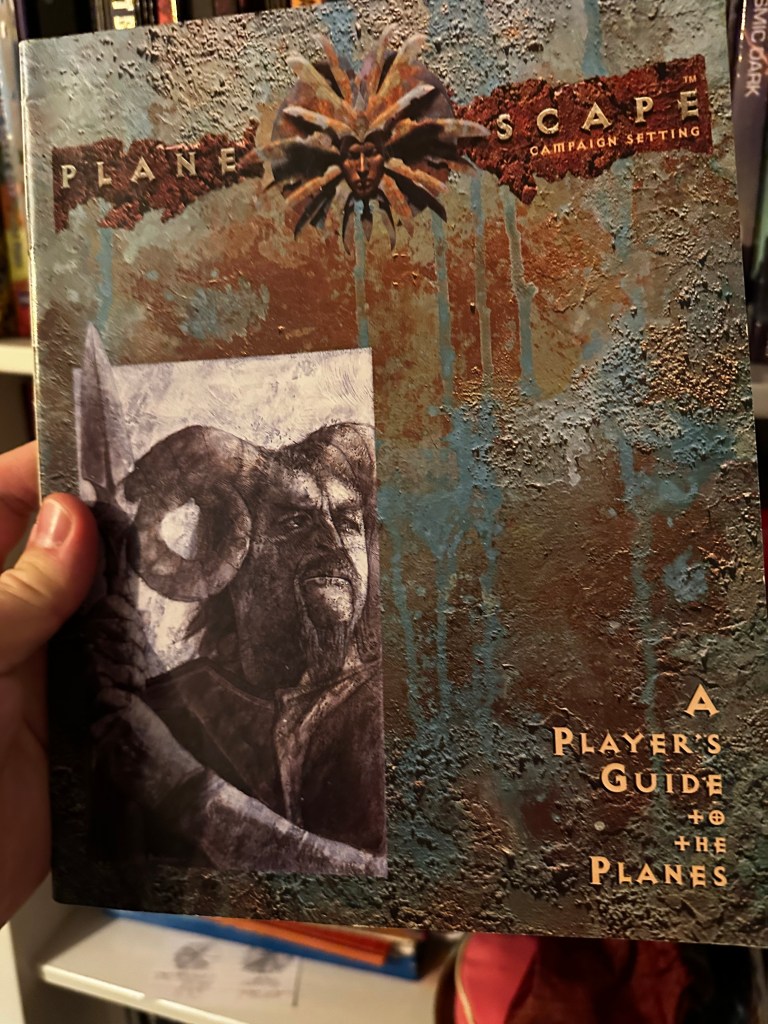
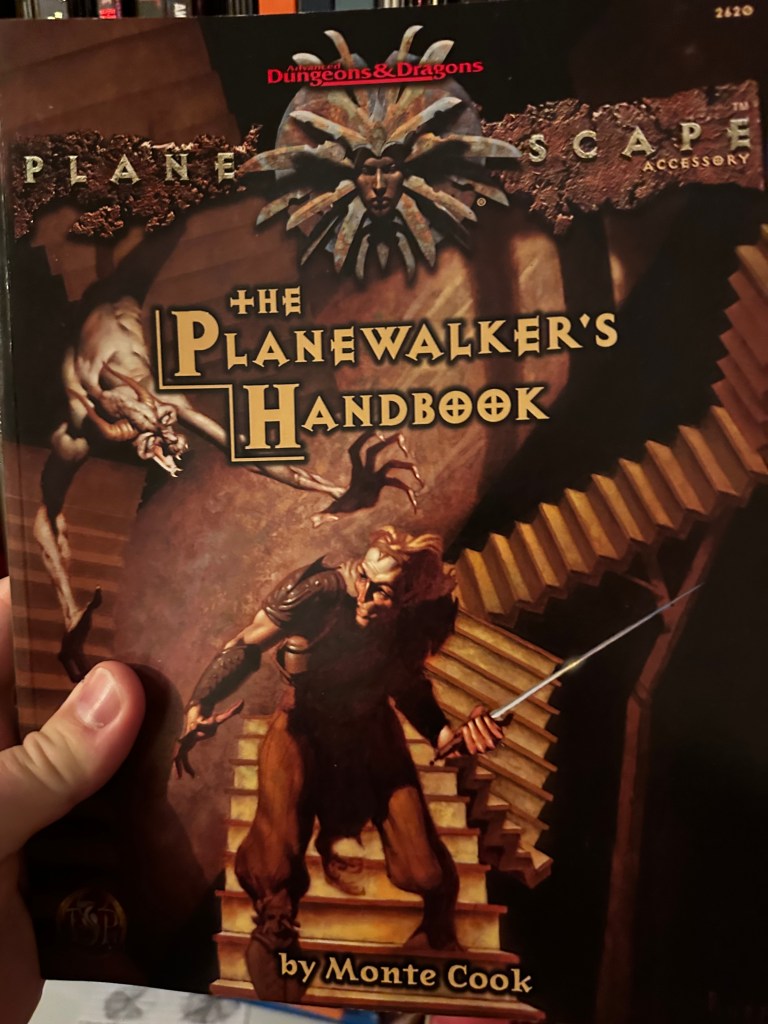
Our Session 0 was an epic crusade deep into the depths of not only the Player’s Handbook but also the Complete Wizard’s Handbook, the Complete Thief’s Handbook, the Complete Priest’s Handbook, Legends and Lore, the Player’s Guide to the Planes, and the Planewalker’s Handbook.

It took over four hours and resulted in a great deal of cursing, misunderstandings, frustrations, arguments, concessions, delight, confusion, amusement, nostalgia, and, finally, I think, satisfaction. The AD&D 2nd edition character creation process could be straight-forward enough. If one sticks to the most simple form of ability score generation (just roll 2d6 for each ability and keep it no matter what,) thus forcing the player’s to choose the classes most suited to their ability scores, forgoes the use of non-weapon proficiencies in favour of the far less complicated secondary skill system, restricts the PCs to options only taken from the Player’s Handbook and sets their game in the most vanilla of fantasy worlds, you could probably create a full party of PCs in an hour or so. But that’s not what I wanted. I wanted my players to have the full AD&D 2nd Edition experience that I remembered with such fondness. I wanted them to be unsure of their choice of class or race until they had a clear vision of a character. I wanted them passing around all those sourcebooks, to get, at least a look at all the various options. I wanted them to not know really anything about their characters until they all came together miraculously in the last half an hour. And that’s exactly how it happened. The character creation system, when you factor in all the optional books, has so many possibilities, dependencies, restrictions, bonuses, minuses, and choice that you simply cannot get a full picture of the character until they are most of the way finished. This differs to such a great extent from modern role-playing games that are not Pathfinder, that I think it’s quite difficult to explain without experiencing it. For a taster, please do check out my AD&D 2nd Edition Character Creation series where I make a Dark Sun halfling Cleric. It takes three full posts and around 6000 words and is, by far, the longest character creation I have ever done on this humble blog.

We ended up with an all-star cast. Our Paladin, Glaermond, completely illiterate but stout of heart and sinew, is the party’s lawful good defender. Aurora, our chaotic good Bariaur magic user, took the Witch kit from the Complete Wizard’s Handbook, and, as a member of the Dustmen faction, has decided to focus on necromancy. Trance, the Tiefling Thief is a member of the Society of Sensation and is driven to experience new things whenever possible. And, finally, Devansh Rao is our Aasimar cleric of Varuna, the guardian of cosmic order and lord of the sky. The players are currently discussing the wisdom of using Devansh’s little church to Varuna as their base of operations and gathering a tithe to fund their adventures in the name of the Great Lord of Order on our discord channel.

This is, potentially, the perfect combination of classes and factions for this adventure so I am very excited to get it started. And that will happen this very Sunday, dear reader. So watch this space if you’re interested to find out where this band go as the delve into the Hive.

The Editioning, Week Eleven, OD&D

The First Ending

Last night we finished up the first of our games within the Editioning, our challenge to play all the major editions of D&D from Original Dungeons & Dragons (1974) to Dungeons & Dragon 5.5 (2024) over about 24 months or so.

I thoroughly enjoyed creating, running and playing this game as referee. I think the ending worked well, and I have gotten generally good feedback from the players.

Playing this very first iteration of the venerable old man of roleplaying games has taught me a few lessons about RPGs in general, D&D in particular and gave me many insights into the OSR.

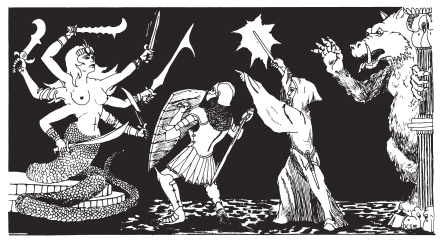
Illustration from OD&D supplement III, Eldritch Wizardy. A fighter with a aword and shield and a magic user with a glowing wand face-off against a serpentine demoness with six arms and many weapons as a monster attacks from the rear.
Watch Out!

First though, let’s do a quick recap of the final session.

Malfunction

Last we left off, the PCs had discovered the holo-log belonging to the captain of the alien space-ship they had just teleported to. The captain appeared as the hologram of a crystal humanoid and spoke to them. The log described the dire straits the ship found itself in, crash-landed, engines damaged so badly all they produced was the crystalline by-product of their fuel. They had taken the decision to hand responsibility for their escape or rescue to the main computer while the crew went into stasis. Of course, they had already discovered that the computer had re-interpreted its orders to ‘crystal-form’ the surrounding planet to suit the physiology of its makers as, perhaps, escape and rescue were deemed impossible. I didn’t write much in the way of plot for this adventure. In fact, this about sums it up! You can read more about my methods in this respect in my previous post.

Armed with this knowledge about the computer, the adventurers were more determined than ever to find and destroy it. So, they girded their collective loins and prepared to move on through the ship. The next door was jammed so they spent some time using tools to wedge it open. While they did this, another information Assistant appeared to them. They asked it to open the door for them, which it did, but, more importantly, it showed them a map of the whole ship and its current surroundings. In practical terms, this allowed me to reveal the full map to the players on Roll20. This was a blessing as the partial-reveal functionality in Roll20 does not work very well in my experience. It has a rectangular reveal and a polygonal reveal option but, quite often, I find the polygonal one simply doesn’t work. Revealing a curved area with the rectangular tool is frustrating and time-consuming.

The Information Assistant was able to help them further by describing the adjoining chambers, the engine room and the computer and stasis chamber. It told them they could enter that final chamber by “simply passing through the wall.” They didn’t push the assistant on this point. Instead, I guess they decided they would pass through that wall when they got to it.

Having emptied and passed through the partially submerged chamber next to the bridge, they descended to the engine room. Here they discovered a number of crystalline golems running the engines to produce the fuel by-product which they were using to crystalform the surrounding countryside. The golems in this room were not fooled by the bio-hazard suits as the other ones had been so they attacked the entire party. Here they lost another dwarf hireling, leaving then with just one of the humans who’d accompanied them from the start of the adventure and one Dwarf, the leader, Gilda. While the melee progressed around them, Abbiss, the halfling thief and Ilaina, the elven magic user, tried to find a way through the wall, as they heard the approach of yet more golems from the other side of the engine room. Eventually, their listen and Intelligence checks paid off when Ilaina realised there was a connection between the frequency of the sound they could hear emanating from the wall and the ccredential crystals they recovered from the lockers on level 2. They downed the last of the golems held hands and pushed through the wall, crystals first.

On the other side they discovered a circular chamber. The wall was dotted at regular intervals with stasis pods. Each one contained a grey and brittle crystalline being, clearly long dead. In the centre of the room, the computer loomed. It was a 12ft tall, 10ft diameter, iPod-white, capsule-shaped machine with four long tentacles protruding from its carapace. It ‘spoke’ them in a loud and high-pitched form of crystalline speech they could not understand and then it attacked.

Tadhg, the cleric started off strong, throwing a lit oil skin at it. The fire licked at the outer shell and seemed to ignite some wires emerging from a gap in the casing at the top of the computer, but otherwise did no damage. As Siward the fighting man and the hirelings went in to attack the outer casing, Abbiss decided to climb up and examine the cracked area. Meanwhile, Ilaina used her last flying crystal to get up there as well.

The computer was able to use some spells during the fight. I gave it Charm Person, Phantasmal Forces and Confusion but only got to use the first two. It used Charm person on their remaining dwarf, Gilda, to get her to attack the ground based PCs. Ever the gallant, Siward refused to fight back, instead focusing on defeating the computer in the hope that that would end the effect. Siward was also the subject of the Phantasmal Forces. Spells in this game are interesting because they are so imprecisely described that, in some cases, even their effects are not obvious. Look at this description of the Slow Spell, for instance:

Slow Spell: A broad-area spell which affects up to 24 creatures in a maximum area of 6” × 12”. Duration: 3 turns. Range: 24”.

That’s great Gary, but what does it do?
This one stood out to me because I was going to give this to the computer as well before I read it.

Also, our cleric, Tadhg, had reason to use his last spell slot to heal Abbiss at one point. That was interesting for a few reasons. The first reason was that, after Abbiss widened the crack in the computer’s casing even further, Ilaina stuck a few fingers in there and let the innards have the full blast of a fifth level fireball. Unable to contain the full power of that, the casing belched flames out of the crack on top. Luckily, I decided to give them a Save vs Spell to avoid half the damage but this still hit Abbiss for 12 points. (This is another point about spells. Fireball has no Save mentioned in its description, so I had to home-rule that.) Our thief, already hurt from the precious fight and a couple of whacks from the tentacles, needed some healing. Now, in later versions of D&D, Cure Light Wounds, or any Cure Woulds spell, in fact, required the caster to touch the subject. Not so in OD&D:

Cure Light Wounds: During the course of one full turn this spell will remove hits from a wounded character (including elves, dwarves, etc.). A die is rolled, one pip added, and the resultant total subtracted from the hit points the character has taken. Thus from 2–7 hit points of damage can be removed.

Leaving to one side the mercurial and perverse wording of this description, you will note the complete omission of any sort of range. So, I ruled that Tadhg could, effectively use it to heal anyone on the face of the planet. Lucky too, as Abbiss was still on top of the computer and he was on the floor.

The combat continued, both sides hit and missed, but in the final round, all actions were resolved simultaneously so, even as the tentacles reached out to reduce our halfling once more to just one HP, and the Gilda the dwarf pressed the attack against Siward, our heroes hit it till it cracked open, finally reducing the crystal inside to a dull, grey ruin. They discovered treasure in some shiny lockers there in the computer room, and then they used the teleportation pads in the dungeon to take them back to the village.

After that, we did what I always like to do to wrap up a campaign, I asked them for epilogues for each of their character s. I asked one what they would be doing a week from the end of the adventure, one what they would be up to a month later, then a year and finally a decade. I loved what they came up with but I won’t go into it here. I recommend this as a nice way to wrap things up as it puts the final words in the mouths of the players and allows them free rein.

Conclusion

So, I ran this game while being very conscious of the history behind it. It’s hard to overstate the impact this game has had. It is, arguably, the origin of our hobby, the starting point for the world-beating phenomenon that is D&D today and, as well as that, its the kind of wonky, imprecise, strange love-child of a war-game and nerdy obsession with fantasy and myth.

DD&D never tried to be all things to all people, even though it did include a couple of different options for your combat rules, ie, the combat table in Men & Magic, the first booklet, or the detailed and labyrinthine war-game rules from Chainmail. It gave options but it never pretended to have all the answers. It is the very epitome of the OSR pillar, rulings, not rules. Sure, it has “rules,” but these are clearly only there as guidelines. Just look at those spell descriptions above. Look at the complete lack of mechanics for ability tests. In the end, I imported the roll-under mechanic from Basic D&D to allow for things like Intelligence and Dexterity checks. I resisted doing this sort of thing in the first few sessions. Instead I wanted to try to resolve situations using only the mechanics in the books. But, I quickly realised that, even at the time, OD&D was a work in progress. So many sourcebooks were released to clarify, overwrite, or even ridicule the rules from the first three booklets that it is impossible to ignore the fact that, even those people using the books to play in 1974, were not sticking to rules as written. They were house-ruling it, they were hacking the system and they were adding their own tweaks and options constantly. So that’s the way I began to treat it too. And it only got better as I did that.

One of the things I wanted to reveal in the Editioning was exactly how the game has changed over the decades and how it changed from one edition to the next. I suspect I will find that, over time, the rules became more exacting and less flexible. Of course, that is yet to be seen as we play through the editions. So come back for more insights into D&D and its evolution, dear reader. The Editioning is still in its infancy so there’s plenty more to come.

The Editioning, Weeks Nine and Ten, OD&D

Welcome back, dear reader, to the Woes of Sorrowfield, my homebrew adventure for OD&D. You check out the rest of my posts on this game here. We are playing this as part of the challenge I made up in February, the Editioning, which involves playing every major edition of D&D from OD&D right up to D&D 5.5E as I understand we’re calling it now. This was supposed to take place all in the space of twelve months, but at this pace, we’ll maybe get half way through the nine editions by February next year.

Revelations

So, returning Woes of Sorrowfield readers will be aware that I am creating this adventure myself. I started by taking advice from Gary and Dave. They have a lot of good, if basic advice for the beginning referee in terms of dungeon design, populating your dungeon with monsters, traps and treasure, running wilderness adventures etc. Essentially, I followed that advice until I didn’t. There was a point at which, the stuff they presented in the original white books fell short of my own decades of experience.

One thing that I’ve been quietly proud of is providing revelation and information through simple and, hopefully, not overly expository means throughout the game.

For example, the PCs discovered that a lake and river flowing through the Barrenwood had been polluted with some sort of magically glowing crystal that was turning the whole forest to crystal. Later, once they entered the dungeon, they found living beings, trapped in there, also being turned to crystal in a lab setting. Further down, they found a Flight Practice chamber which allowed them to literally fly around in the air. And finally, on a crashed space ship at the bottom of the dungeon, far beneath the earth and sea they discovered an illusory representation of another world that where flying crystalline aliens could be seen spreading the crystal pollution from high above in the atmosphere “crystal-forming” the surface for their own comfort. There’s more to the plot, but already, without any exposition or need for long diary entries or anything like that, I slowly revealed the nature of the threat they faced.

One thing that I am sure helped me do this was not over preparing before starting the adventure. I had a vague outline of the plot, the threat and the enemy before we started playing, but I never wrote down any specifics. I was creating new dungeon levels almost week-to-week. Doing it this way allowed me lots of room to improvise and also to play off things the players had said or directions they were planning to take.

As things all came together in the last session, and the entirety of the plot was revealed, I felt it was finally ok to include a small snippet of exposition, a captains log they discovered on the bridge of the alien vessel, which revealed that even the aliens on the ship had not wanted to necessarily crystal-form the PCs’ world. Instead, they were hoping for a rescue after their crash. In the recording, the captain indicated in a few short sentences, that the crew had gone into stasis and left the main computer in charge. It was the computer that decided to start the crystal-forming process, in the interests of maintaining the lives of its makers while they waited for rescue.

Back up

I skipped to the end a bit there, so here’s a recapitulation of the events of the two sessions that led us there since my last OD&D post.

The adventurers continued their experiments in the Flight Practice chamber. Abbiss tried again to fly but continued to prove completely inept. Still, she and the others made it up onto the shelf 10 feet above the main floor after defeating another two crystallised gargoyles. They managed to hit all three buttons on that level simultaneously and received a reward: a rain of gems! But not without the loss of two of their dwarven hirelings. During the fight, Abbiss had her left hand crystallised by one of the gargoyles. Also Siward suffered a crystallised pinkie from an attack.

Next, Ilaina decided to give this flight business a try, and, sure enough, she proved to be a natural at it. She was able to fly up to the hanging platforms in area 3. The first one spiked her and she had a toe crystallised. The other platform simply dropped to the floor far below when she threw a knife onto it.

Abbiss took a close look at the water fifty feet below in the southern section of the level. She realised she could see a gap down there that must provide access to the next level down. They all began to make plans for the descent. While Siward abseiled down and onto the fallen platform which he had thrown onto the surface of the violet coloured waves, Ilaina was able to fly down under her own power. Tadhg, Bryn and the Dwarves all followed Abbiss down the rope and Siward kept the floating platform steady as they ferried themselves across the narrow span of water one after another. Eventually, they all made it.

On the other side of the glass wall holding in the water on the next level, it looked like an aquarium. As they were searching the hall they found themselves in, another Information Assistant appeared and addressed the party members dressed in bio-hazard suits and holding credentials crystals. It informed them that this was the Teleportation Chamber Level and that it could guide them around it and in the use of the teleportation facilities if they wanted. It led them through a door and into and armoury where Abbis picked up a +1 Crystal Dagger and Siward and the dwarves also acquired some shiny new weapons. Little did they know that using the weapons would provoke a Save vs Stone or have a random body part turn to crystal. From the armoury, the Information Assistant passed through another door into a room with an elevator door with and up arrow on it and a number of crystal golems with sword-like arms phasing out of the floor. They moved to intercept the party members with no bio-hazard suits.

The fight started off badly enough for both sides. The golems won initiative but failed to hit anything. Siward hid behind the cover of the control console in the room, along with the hirelings and they generally also failed to hit. Using the advantage of the bio-hazard suit making her essentially invulnerable to the golems, however, Abbiss got a back stab in on another of them. Meanwhile, Ilaina, using her noggin, attempted to deactivate the golems through the use of the console. She succeeded only in turning out the lights, but at least she cast infravision on Siward. Moving into round two, Tadhg, with the same impulse, asked the Information Assistant for help in calling off the golems, which it promptly did.

They followed the IA into the Teleportation chamber. It was able to reveal there the three platforms. One could transport them anywhere on the surface but could only be used once, the second one could transport them to the ship below and the third one was being used by the computer to transport the fuel by-product from the ship’s engines high into the atmosphere from where it rained down like a crystalline bombardment on the surrounding countryside. Ilaina sent the IA into a buffering loop by having it refer to the makers who, it revealed, were all in stasis on the ship. The paradox that it was talking to what it thought were “makers” gave it a bad headache.

They also explored an adjoining room that was filled with crystalline barrels full of the fuel by-product, the crystal corruption that was transforming their lands.

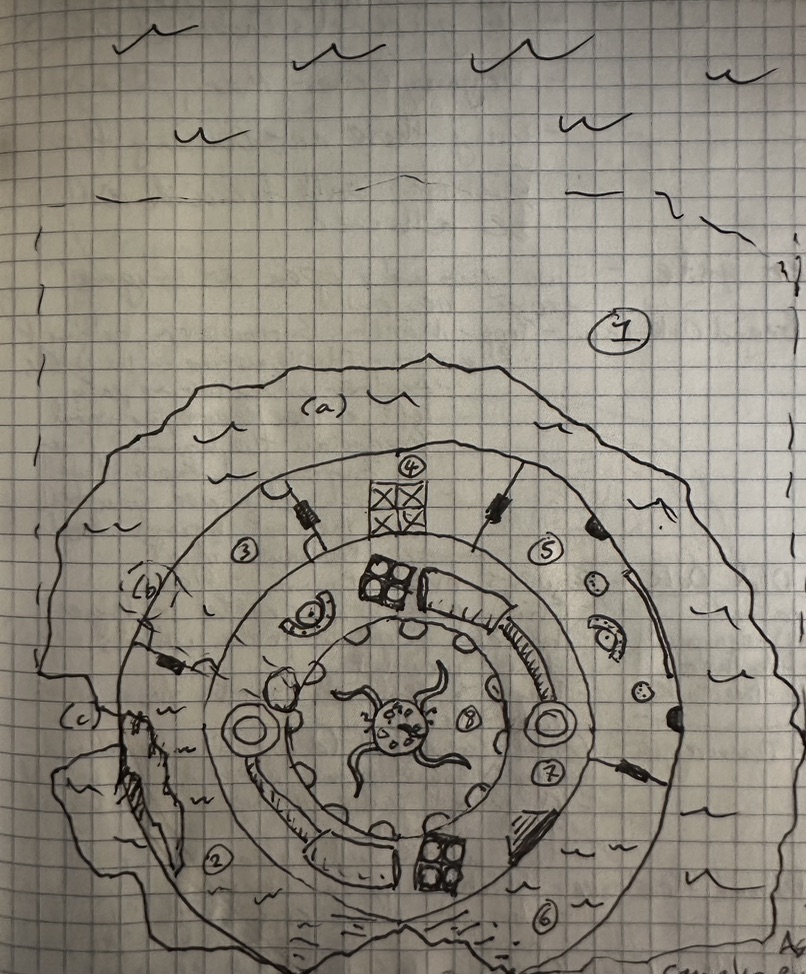
My map of the alien ship crashed into a sea cave - the final level in my dungeon. It looks like a flying saucer with a crumpled hull at the bottom of the map.
Crashed ship map

It took them very little time to decide to teleport down to the ship to deal with the computer. From the teleportation room on the ship, they first went and explored the holo-deck room where they saw the vision of the alien world I described above. And then, after a random encounter with some star shaped crystal drones, they checked out the bridge where they found the holo-log of the captain.

Conclusion

Not just yet. Actually, the conclusion of the Woes of Sorrowfield is definitely coming next week. Looking forward to it! I have a big finale encounter planned. I hope all these PCs survive it. I’ve gotten really rather attached to them.

The cover of Planescape adventure, the Eternal Boundary. A pale, bald dustman pushes a gurney with a sheet-covered corpse in the foreground. The silhouettes of adventurers peek through an archway in the background.
The Eternal Boundary

In other Editioning news, our AD&D 2nd Edition journey starts this evening! We’re going to be playing the Eternal Boundary, a starting adventure for the original Planescape setting. I’ve already warned the players that making AD&D PCs is not like Basic or OD&D. I expect us to take the whole session just to roll them up, choose races, classes, kits, proficiencies, spells, equipment, factions (Planescape-specific but very important) etc. Its been so long since I’ve played this game… Can’t wait!

The Editioning, Weeks Seven and Eight, Basic D&D

The Basic Box

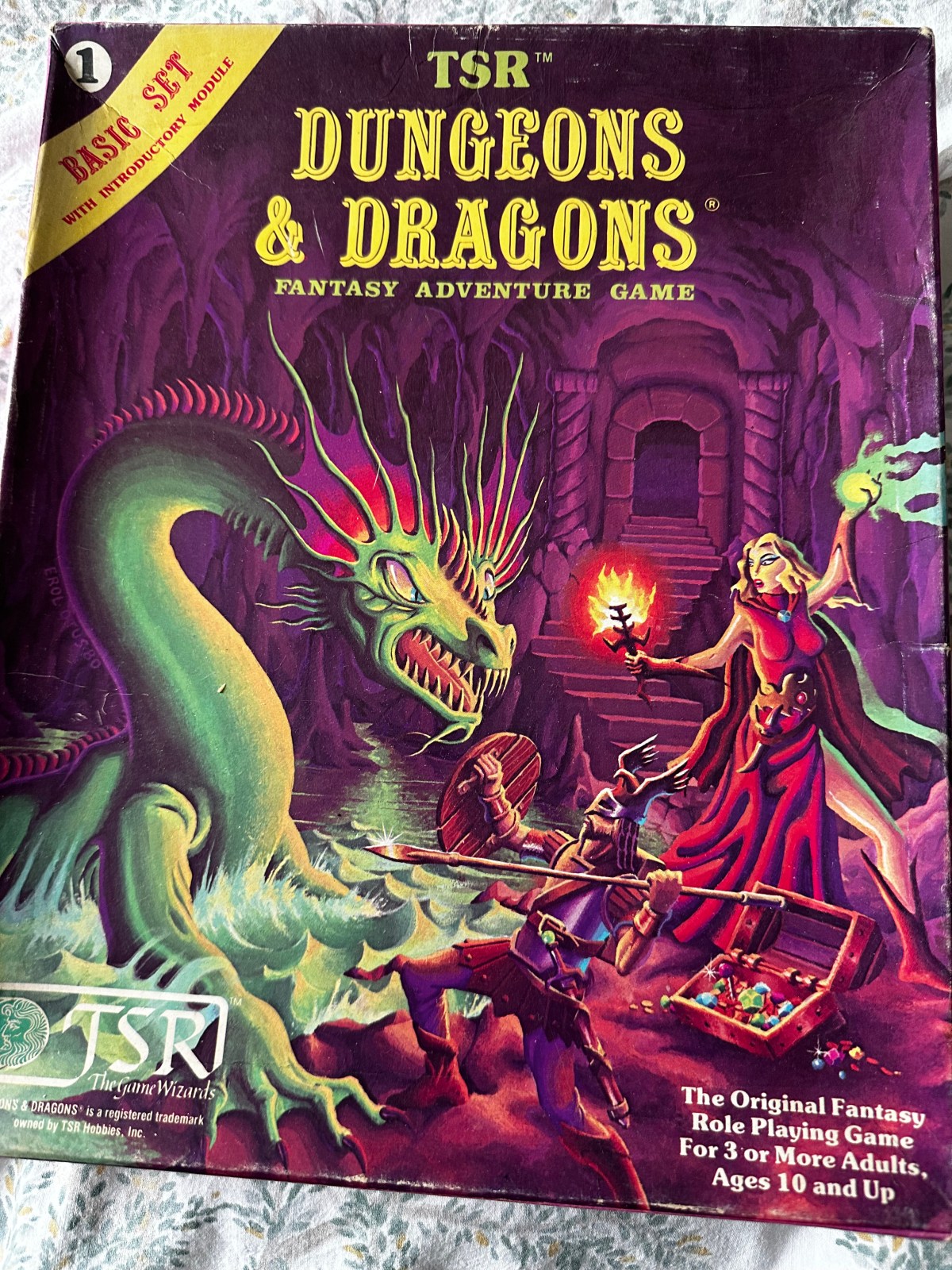
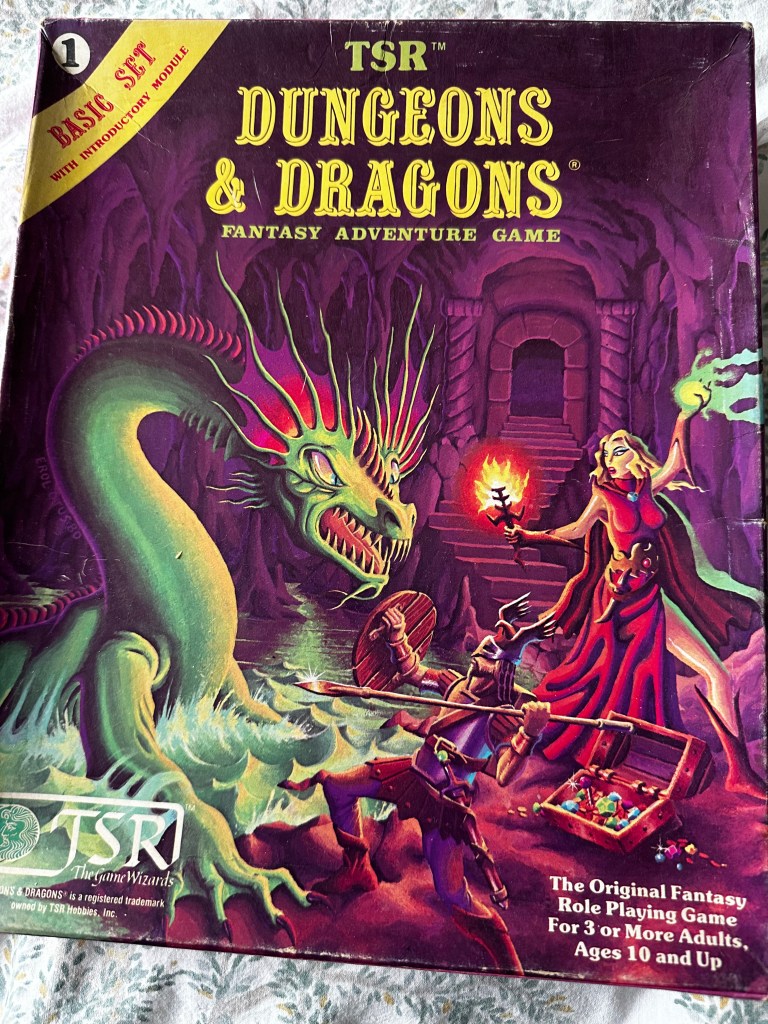
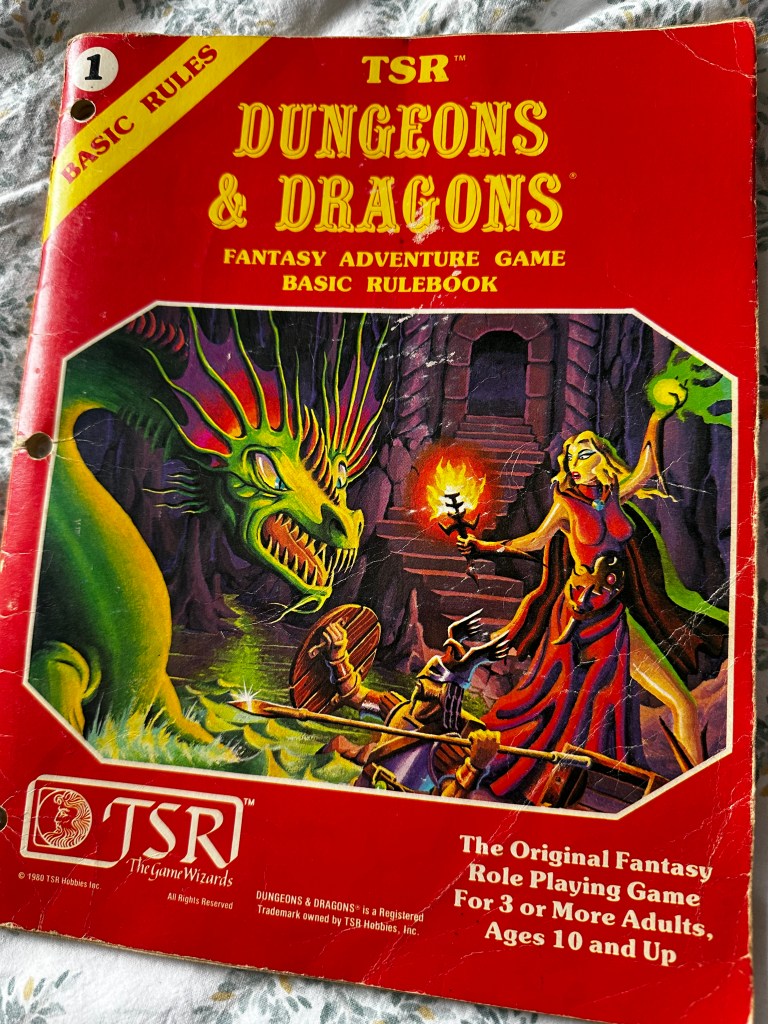
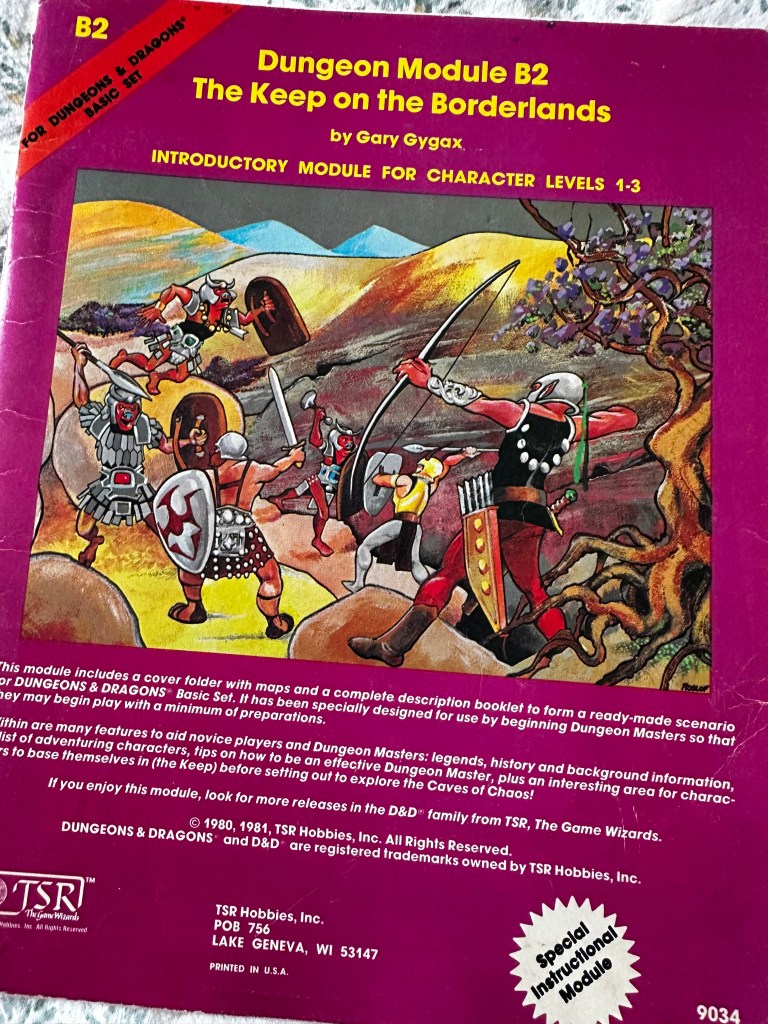
The Shop on the Borderlands has me in its thrall, dear reader. Every Friday, about lunchtime I receive their newsletter, News from the Borderlands, and my wallet doth quake with fear. There is, invariably, a long list of classic D&D titles newly received as stock. They tend to get them in job-lots, so one week, there might be a preponderance of AD&D 1st edition Greyhawk books, and the next there’ll be a dragon’s hoard of DCC adventures. In fact, it has been invaluable in building my collection of D&D books for the Editioning. The vast majority of books that I didn’t already own, came from the Shop on the Borderlands. It’s great. It has an amazing selection of used and new RPG books, from the original OD&D books going for thousands of pounds, to the latest 5E titles, not to mention all the other RPGs they stock. I would highly recommend checking them out, particularly if you’re in the UK. Check out one of my newest purchases in the gallery below. It’s the 11th printing of the Moldvay Basic D&D set. It’s missing the dice and the rulebook has seen better days, but, since I didn’t buy it as a collector’s item or an investment, that doesn’t bother me. I have been using it at the table while we continue our adventures in the module included in this very set, The Keep on the Borderlands!

Hard on the Hirelings

One moment, things are going your way. You and your mates have gone out on adventure, sowed seeds of war between rival clans of humanoids living in the Caves of Chaos, gained the respect of the local authorities and have even made a coins along the way. And then, dear reader, the random encounter table just fucks you. We have learned this the hard way, over and over in this adventure. We’ve been unlucky with our encounter rolls most of the time. On our very first encounter, my first PC, Edmund, went down to the very first arrow that was loosed in an ambush of Ospreys. Later, after braving and surviving the storied Caves of Chaos, our resident halfling PC, Lotharia was brutally disembowelled by a griffon while returning to the keep with a spell book delivery. In our most recent random encounter disaster, we lost half of our eight hirelings in an encounter with a troll on the road back from the Caves. We defeated it narrowly and followed its trail back to its stinking, filthy lair, where we took care of some larval trolls too, but not without first losing another of our hirelings.

These were heavy losses, all of them, although, I’ll be honest and say we had a respectfully understated celebration of the fact that we didn’t have to split the xp between all eleven of us…

Anyway, the point is to expect the unexpected in old school play. Also, that the more hirelings you have the more targets there are that aren’t PCs, so that’s been helpful.

Murder and Intrigue

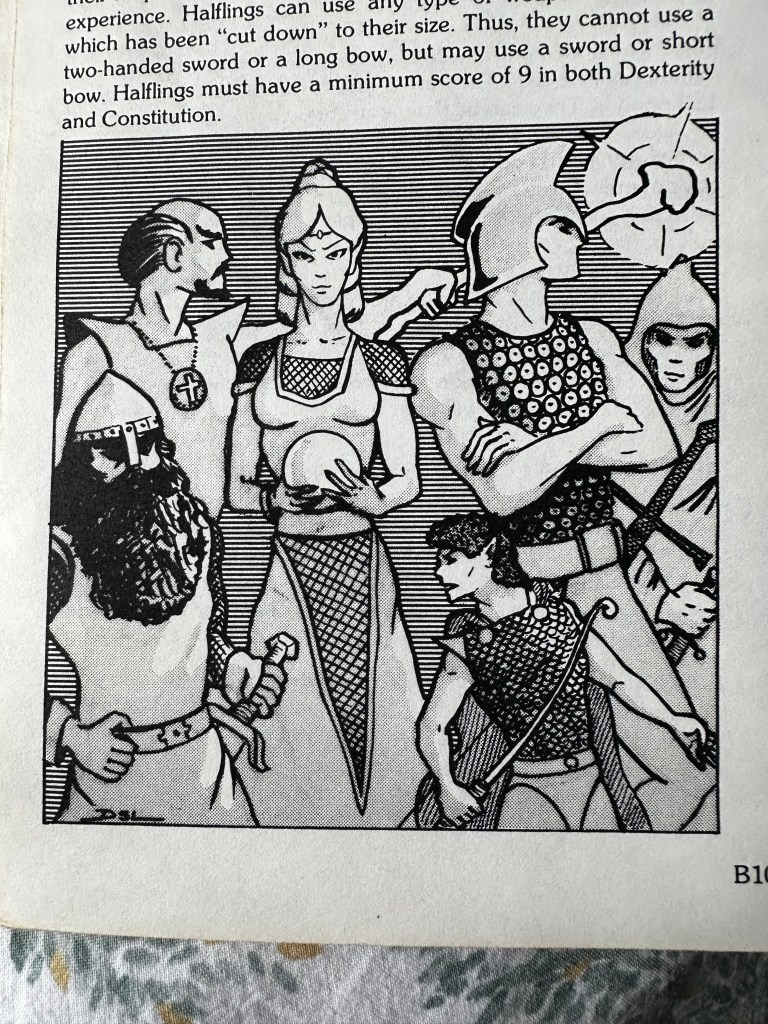
Adventurers! A black and white illustration from the rule book depicting a variety of adventurers
Adventurers!

Events are moving along without us, or, perhaps because of some of our choices. As I noted in my last Basic D&D post, we’ve taken the side of the castellan of the Keep and taken the ears of a number of Ospreys, the rebel band who want to overthrow him. Perhaps, if we had decided to support the rebels instead, the most recent shocking events might have been prevented (though probably at a very high cost in lives.)

In the last Basic D&D post I mentioned we had been attacked by a band of mercs sent to kill my character, Thaddeus Nightbane. After killing them, we proceeded on to the caves of the Shakkelwart Clan of orcs. We spotted and safely set off a trap in the mouth of the cave. This attracted the attention of the guards, who we convinced to allow us to talk to their leader, Baralgus Dorden (no idea if that’s spelled right.) We convinced her to welcome us in and we feasted with them before delivering the arms sent by the Thyrenian Guild. This was a fun scene where we learned a lot and, hopefully, planted some seeds of doubt in Baralgus’ mind regarding her allies, the Barrowdelve clan and the gnolls as well. We gained a RESPECTED reputation with the Shakkelwarts in the process.

By the way, I mentioned in a previous post that there was a reputation mechanic built into this module, but that’s not true. Instead, this is actually DM Isaac’s genius addition to it. He was inspired by the Root RPG, and it has enriched our experience of the game. We are actually going out of our way to ingratiate ourselves with particular factions to improve our standing with them, instead of thinking of them all as fair game.

Following this, we returned to visit our other besties in the Caves of Chaos, the goblins led by Sharktroll. We delivered another cache of weapons and armour to them (in fact, this is just stuff we’d picked up from looted enemies, some of whom belonged to this very goblin clan!) We’re hoping for all out war between the orcs and the goblins, and we might get it if we keep pushing this way. The goblins also released some prisoners that our Thyrenian Guild contact, Richard “Dick” Kirkdon, has asked us to retrieve for him.

With that, we set off back to the Keep again. And that’s when we ran into the aforementioned troll. I have to give props to Isaac here once again. Trolls are common enough in D&D and related media, that we generally feel we know them, we might fear them a little given their regenerative abilities and all, but, the knowledge of them makes them a little less scary. Isaac turned this on its head with his sensory descriptions of its look, its smell, its otherness. Scared the pants off us. And then it started killing hirelings. Anyway, that was bad, as I mentioned before, but we did get some treasure out of it.

Back at the Keep, we went first to the Temple of the Holy Sun, where the entire populace had gathered for the funeral of Father Burgoyne. The mourners were giving Tom’s Elf character, Eandril, the dirty eye. We soon discovered that this was because the priest had been murdered by the Castellan’s elven advisor. So, of course, we went to talk to our good buddy, the castellan. After enduring some more anti-elfism from he guards, we were granted an audience. He explained that Cywyn Morningflower, he advisor had been accused by Father Burgoyne of being a member of the reviled Serpent Cult that had once made its home in the Caves of Chaos. In response, the elf had drawn his sword and run the priest through. The castellan had little choice but to imprison his advisor since the murder had happened in his hall and in his presence!

We told him we’d crack this case wide open so he let us talk to Cywyn (genuinely have no idea about this spelling either btw.) Turns out, the elf was just sick and tired of Burgoyne and his constant racism and this was the final straw. He really did murder him in anger. But one other thing came up. The priest had claimed that he had evidence that proved Cywyn’s cultishness and that it was in his chambers beneath the altar in the church.

Next stop, church! I distracted the gathered acolytes while the Anastasia and Eandril investigated the hidden chambers below. They discovered no evidence against Cywyn, but they did find a snake staff and some magical armour and maces, which raised questions more about the church than the elf.

Conclusion

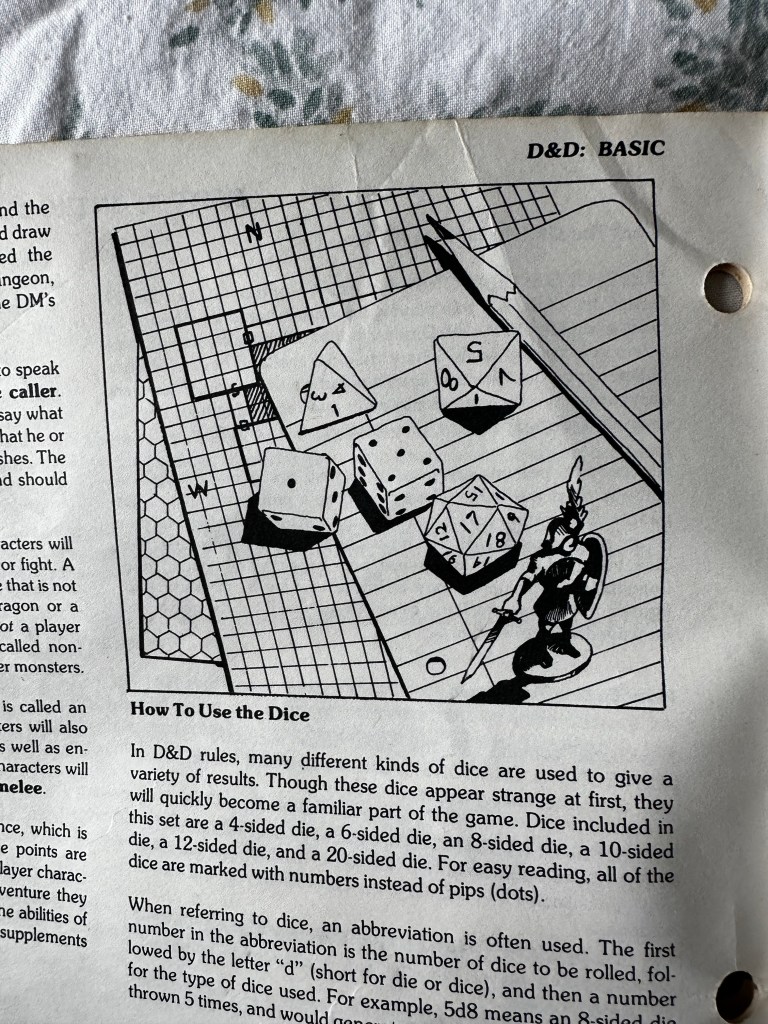
How to use the dice. Black and white illustration depicting some polyhedral dice, a mini, a pencil and some paper
How to Use the Dice

I think there might only be a couple more sessions of our adventures on the Borderlands. I’ll miss it when it’s over. I have grown fond of our little band and and the relationships we’ve built in this place.

I probably won’t miss the random encounter tables quite so much, but even they have introduced elements of true peril and danger to get the blood really pumping.

Back with more soon.

Prepped Prep Posts

I have had a very busy few days, dear reader. Family stuff, work stuff, travel, have all conspired to prevent me from posting anything new this week. Sorry about that, but sometimes, these things are unavoidable.

Instead, I thought I would share a brace of posts from last year. I wrote them as part of Prismatic Wasteland’s Blog Bandwagons and I like what I wrote so I thought I would take this opportunity to present them to you here again:

Please enjoy them again or for the first time.

See you next week!