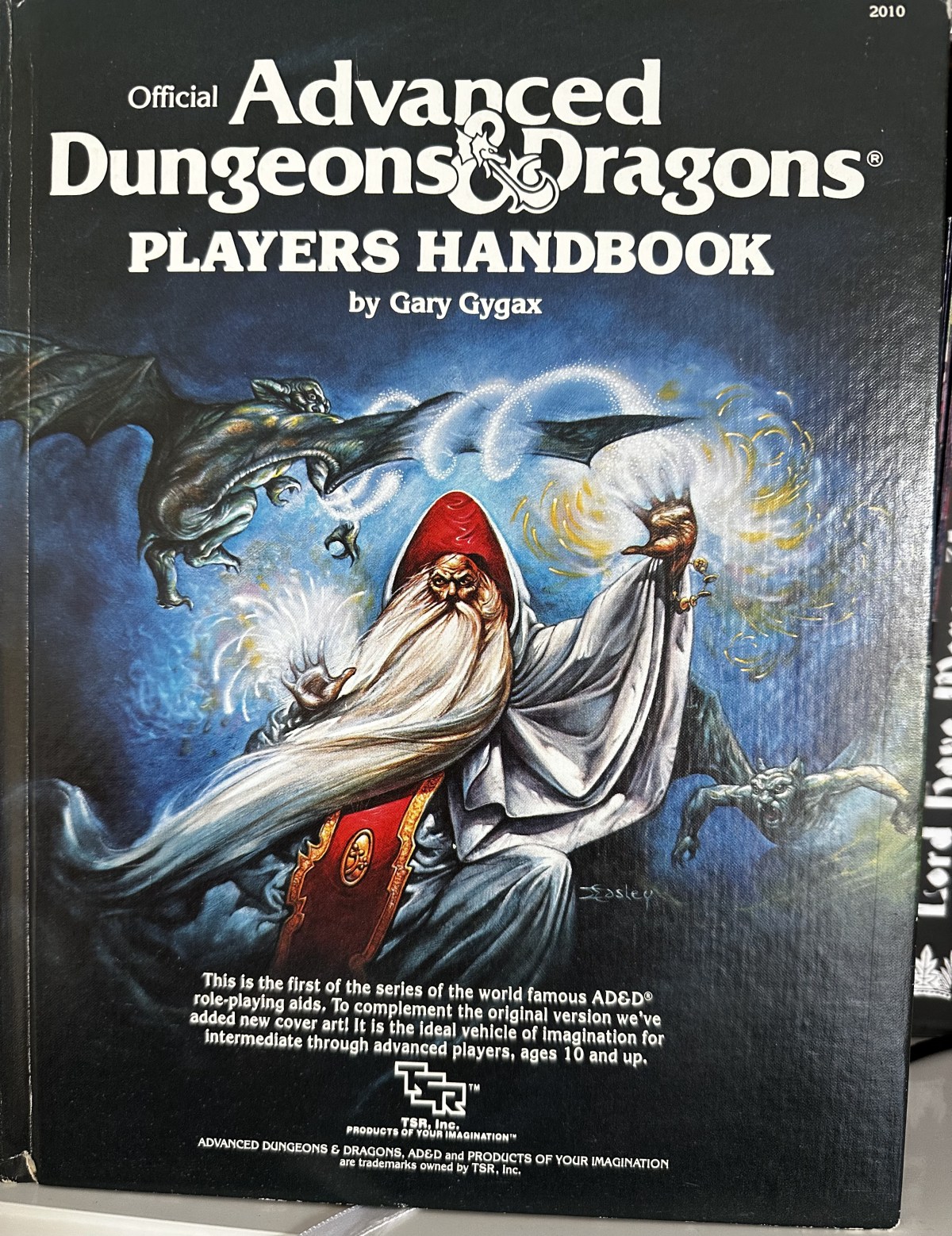
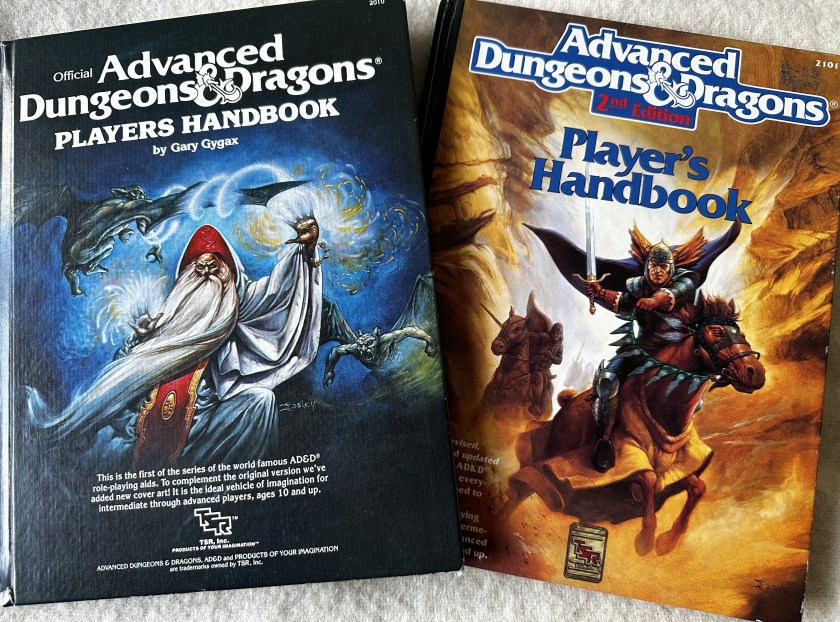
The Editioning Weeks Three and Four, Basic D&D

Keeping’ on Keepin’ on

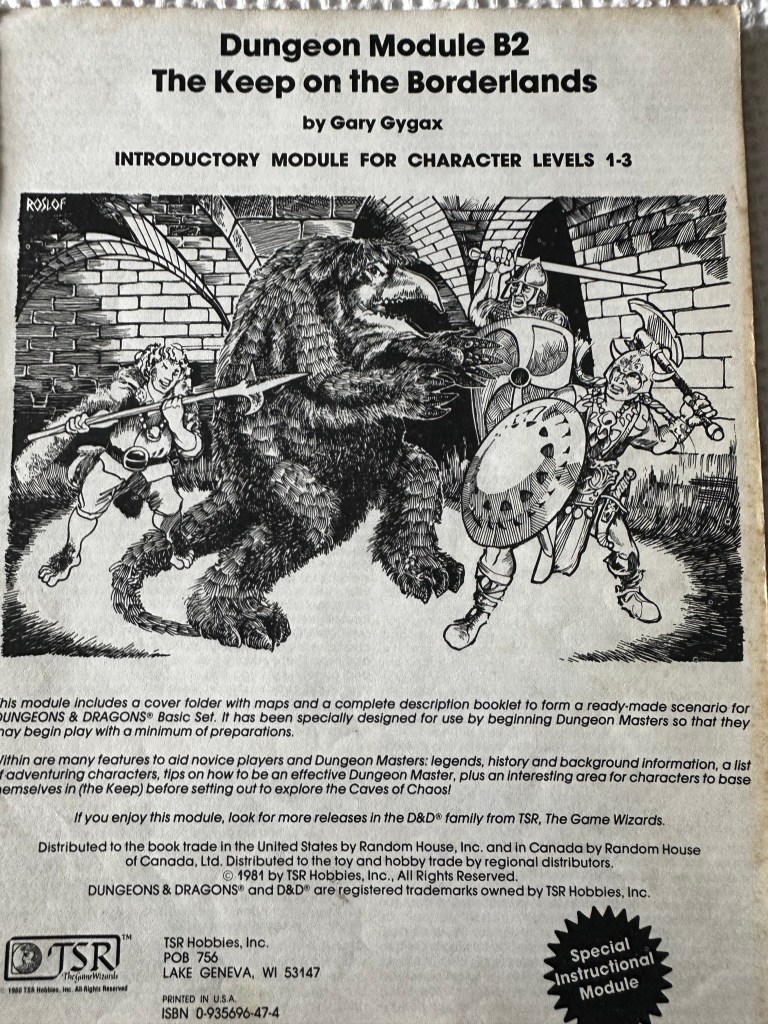
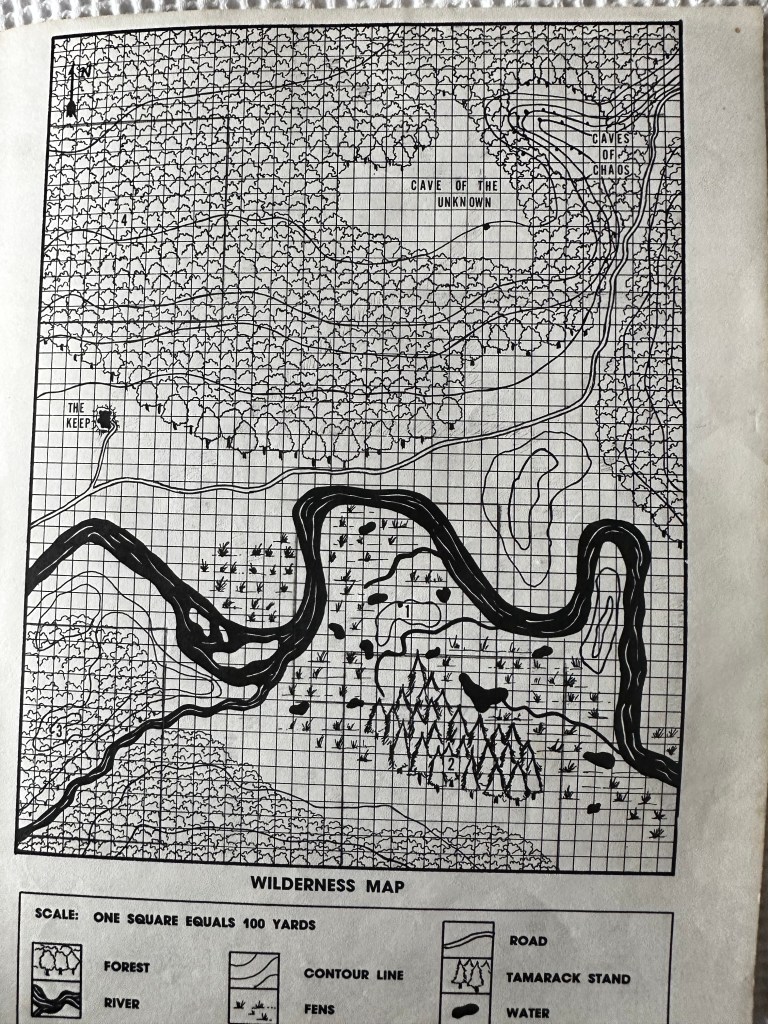
We’re two more sessions into the classic Basic D&D adventure, the Keep on the Borderlands. And we’re getting into the meat of it now, I think. We’ve got multiple factions, both in the Keep itself and in the Caves of Chaos. We’ve got spying and betrayal. We’ve got court intrigue! But most of all, we’ve had laughs and fun with this.

Donkey Konging

There are some spoilers for the Keep on the Borderlands below. If you think you might want to be a player in that adventure, you might want to choose a different post to read.

We launched straight into a fight at the start of session three. We managed to trick and ambush a dozen strong goblin patrol, trapping them in a pincer movement. The fight didn’t last too long, actually. We took out their leader and the rest pretty much dropped their weapons and happily consented to be tied up and gagged so they couldn’t follow us as we went to pillage their home. We did bring one of them with us as a kind of guide. Gaw was a congenial sort of goblin, and very eager to help. He told us about their leader, Sharktroll. Now, Sharktroll, is, it turns out, neither shark nor troll, despite the name. She’s a goblin and the other goblins seem pretty scared of her. Armed with this knowledge, we proceeded along the tunnel to the west, keeping a sharp eye and ear out as we went.

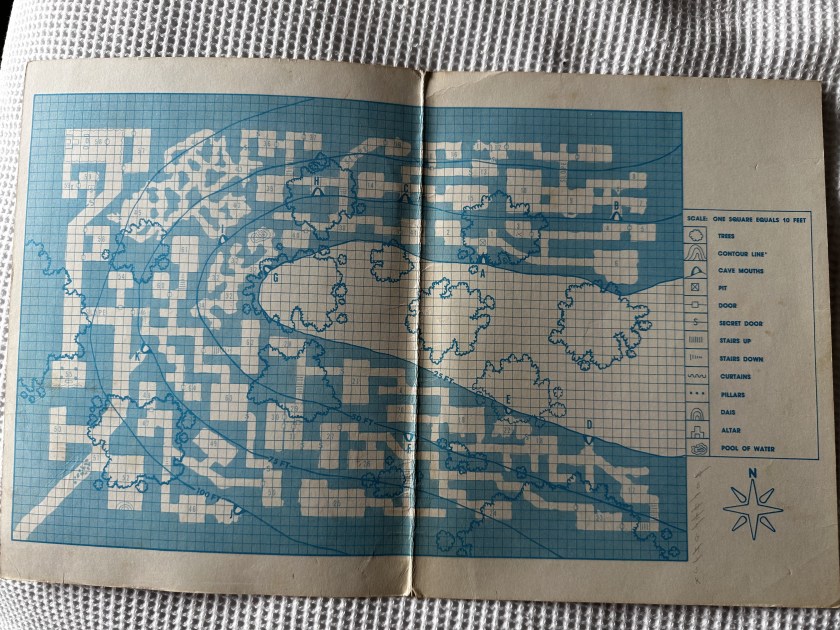
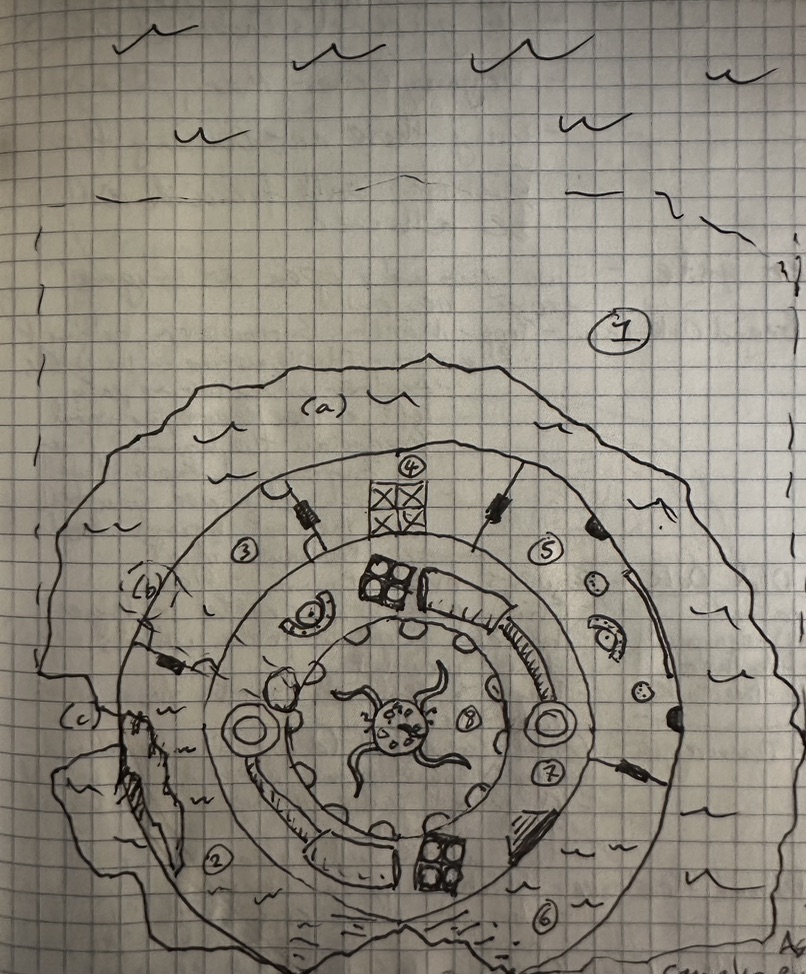
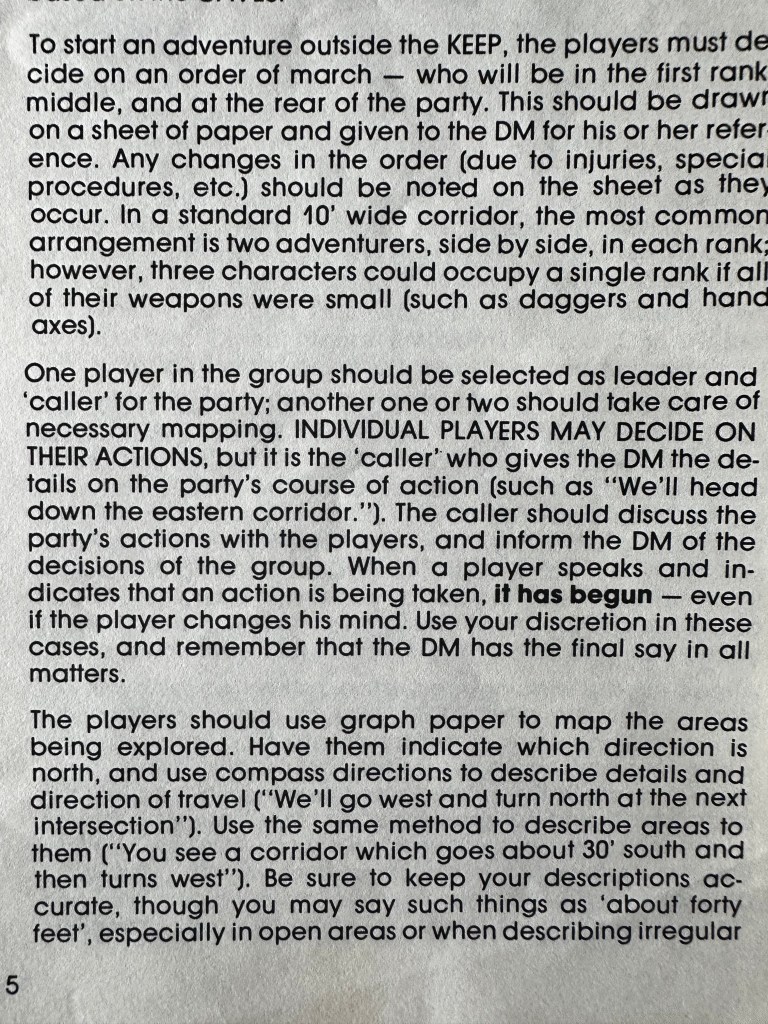
At the start of the campaign, Isaac presented us with a list of traditional roles for players that he cribbed from the Retired Adventurer blog. Tom took the Quartermaster and Timekeeper roles. I got the Rules Coordinator and Mapper ones. Normally, in our groups, the GM just gives out the map and trusts in the ability of the players to compartmentalise the knowledge they have, with the understanding that the characters don’t have it. It works well, saves time and avoids frustration. But we thought it would be an interesting experiment to do it the old fashioned way. So far, it’s going ok. Isaac has been good about providing accurate measurements for rooms and corridors, and I’m using graph paper to maintain consistency. At times, it has been hard to picture some of the rooms correctly in my head, but in those instances, Isaac has kindly showed us that part of the dungeon map from the adventure. Keeps me busy.

A map drawn with pen on graph paper. It shows a wide canyon and a caves sytem where the goblins live.
A photo of the crude map I have drawn so far of the goblin caves in the Caves of Chaos

So, we went exploring the goblin caves, found a sack full of gold which we robbed, and a barrel full of javelins, which Thaddeus Nightbane, my thief, peed in. Of course, we almost immediately found cause to use those miturated upon javelins as another goblin patrol approached the guard room where we found that stuff. We were able to get ourselves set up to launch a surprise attack on them, chucking spears and, even more fun than that, rolling barrels of water down the narrow tunnel! Donkey Konged the hell out of those gobbos. Killed ‘em all in one fell swoop. It felt like a really great old school moment; setting up a ridiculous plan with very little time and only the few items to hand. Surprising that it worked out so well, though, to be honest.

Snakey

We pushed on, thinking to find this Sharktroll character and maybe do her in. But, instead, we found a large room full of goblins: men, women and children. We didn’t alert them to our presence, luckily, but this “family room” as we called it, gave us pause. We all cooled on the idea of clearing out these goblins, now that the ramifications of doing that were staring at us with big green, baby eyes. It was at this point, in the tunnel outside that room, that we turned to Jabeck, the so-called Priest of the Sun who had asked us to accompany him to rid the caves of the monsters. We delicately questioned his real motives here. And with the lightest of verbal jabs, he revealed his true colours, as an adherent of the Cult of the Great Serpent! He and his acolytes attacked and we were forced to kill them. The acolytes went down without much hassle, but Jabeck weathered round after round of attacks. He was wearing magic plate mail, so his AC was ridiculously low. He did us some damage too, but, eventually, we brought him down and took his stuff, and his head.

I had known there was a treacherous priest somewhere in this adventure, as it happens. I think I read it in the Wikipedia article I linked above, in fact. But I didn’t know which priest. It could just as well have been the racist one back in the keep, who had asked us to keep an eye on Jabeck. So, it was fun to discover this in this way, while delving this dungeon.

Of course, the noise of battle attracted the attention of the goblin civilians. We spotted them in the entrance and then all our torches went out (thanks to Tom’s timekeeping for that incredibly dramatic event!) some of them ran to get Sharktroll, who returned with her bodyguards and wives. Through our goblin-speaking dwarven hireling, Gimleth, we conducted some negotiations. I remembered that the rumour I had received about this place was that the Great Serpent cult had been wiped out by the goblins, orcs and gnolls so they could take over the caves. Deploying this bit of knowledge, we convinced her that Jabeck was the one who was to blame for any deaths amongst her people, that we might have caused. Unlikely as it may sound, she bought it. She seemed far more pre-occupied by the enmity between the goblins and the orcs and gnolls who occupied the other side of the canyon. On top of this, someone was stealing from their stores. Loot, food, everything was going missing, and they wanted us to help discover the culprits.

Our elf, Eandril, Tom’s character, used his secret door seeking abilities in the store room and immediately discovered a hidden entrance to the lair of the hobgoblins, Sharktroll’s erstwhile allies. So, we convinced her that it must have been the hobgoblins who were creeping in and stealing their hard earned booty, right from under their noses. We got her good and riled up and sent her off into the hobgoblin tunnels with a warband and a whole lot of righteous indignation.

We did not accompany them. Instead, we left them to it and scarpered off back home. Isaac rolled up the results of the goblin assault and was able to determine that they were successful in defeating the hobgoblins roundly. Huzzah! This seemed pretty good to us, as it reduced the number of Caves of Chaos factions we had to deal with by one.

Factioning

Back at the Keep, we returned to the racist priest with Jabeck’s head. In fact, I threw open the church doors while Lotharia the halfling, atop Eandril’s shoulders, hoisted aloft the head, declaring for all to hear that we had killed the priest! This didn’t go down very well with the other members of the clergy there gathered, and for a second, we were about to get into another fight. But then Father Burgoyne intervened, calming the situation when we told him what happened and showed him Jabeck’s forked tongue. Burgoyne congratulated us on a job well done and then went off to report these happenings to the castellan. We blagged our way into an invite to talk to his castellanship. We told him what we had found out about the goblins, how we had gotten them to defeat the hobgoblins and what had happened with Jabeck. In turn, he rewarded us handsomely. He gave us the use of Jabeck’s quarters, exempted us from the 10% gold tax at the gate of the keep and trusted us with an all important mission to capture one of the rebellious Ospreys alive!

On top of this, Isaac informed us that we were now RESPECTED with the Castellan. Not only that, but had also gained important reputation boosts with the church so that we were ESTEEMED in their eyes. We had even, somehow, gained respect amongst Sharktroll’s goblins! This reputation game was not something I knew was part of the adventure but it’s very welcome actually. Oddly, it struck me, at first, as a very video-gamey element. It reminded me of the reputation trackers you get in games like World of Warcraft. Indeed, the reps in the Keep on the Borderlands work very similarly as they unlock new quests and options within the confines of the adventure, as you can see by the offering of the quest to discover the thief in the goblin lair and the unlocking of the quest to help the castellan with the Ospreys. It adds a richness to the adventure and makes it, perhaps, quite re-playable. I imagine that, if we had gone to meet the Ospreys representative on our first night in the Keep, things might have turned out very differently indeed. Or if we had decided to explore the hobgoblin caves before the goblin ones, maybe the goblins would be the faction that got wiped out first instead. The possibilities are fascinating. I’m beginning to see why this module is so well loved.

Conclusion

We’re all getting very invested in this adventure. We’ve had a little while with our respective characters and they are very much developing their own personalities. Equally, there is an inter-character dynamic appearing too. The NPCs are compelling, especially as portrayed by Isaac, and the plot is doing enough to keep me interested in getting involved in it. What I had thought would be a relatively standard dungeon crawl is turning into something with far more bite and complexity, or it is the way we’re playing it, anyway.

As for the D&D Basic rules; I feel as though we have all more-or-less adjusted to things like THAC0, descending AC, etc, and, where the rules fall short, Isaac has been very pro-active in rulings. In several instances, he decided that the best way to resolve an action was just to make an ability check, i.e. a d20 roll under the PC’s defined ability score, such as a Strength check to lift those barrels of water to go Donkey Kong on those goblins. This has served to move things along nicely in instances which could have been bogged down in rule-checking.

I think we will be having a bit of an Editioning break over the next couple of weeks. I have another report on my last session. Of OD&D to come next week though, so please do come back for that, dear reader!

The Editioning: Week Three, OD&D

OD&D, The Woes of Sorrowfield, Session Two

Let me start by saying, if you’re one of my players, turn back now! Do not read! Danger! Danger!

The PCs gathered some hirelings. The town of East Barrens was not replete with adventuring types or even warriors, so I ruled that the only idiots available for hire were what OD&D refers to as “normal men.” This is a term from CHAINMAIL, I think, and means they are not fighters of any kind. Basically, they’re what later editions might call 0-level NPCs. Four of them showed up for duty. They did not all survive the session…

Hirelings are an interesting part of old D&D. You don’t really hear of a lot of 5e adventuring parties taking on a bunch of mercenaries as backup. But I remember playing AD&D particularly back in the olden days, the party would always want an extra NPC or two. They were often necessary to ensure survival. Playing OSR games like the Black Hack and Black Sword Hack, we have always employed hirelings for a variety of reasons in recent years too. Even in UVG, you probably won’t get very far without a crew of NPCs to keep your caravan running smoothly. UVG’s pretty old school in that respect. In the old games, they were pretty much just damage soaks, meat shields and extra carrying capacity. Even today, as a GM, I find I only role-play them when the players remember they exist as characters, which is not very often. In our Basic D&D game, the adventure we’re playing, Keep on the Borderlands, is designed for 6 to 9 players or something nuts like that, so we went all out of hirelings. Especially after my character got murdered by bandits in the first combat of the game. In oD&D and Basic, I think it’s easier to handle a larger number of characters, especially in combat. You don’t have to remember all those actions and complicated initiative order that you have in 5e and other more modern systems. Mostly, each character gets one actions/attack and they can move and that’s it. You roll initiative per side each round so you don’t have to keep the order in mind for a whole combat. This keeps it smooth. At least, that was our experience last week in both games.

The adventurers set off into the Barrenwood. They had to pass through it to find the source of the magical attacks the forest and the town had been coming under for weeks. It had not stopped raining and the road was a mucky morass. They trudged along the overgrown path into the dark, rotting woods and, before long encountered some trouble. A swarm of crystal infected arachnids had built a supernaturally strong web across the path in the dark, at just the height to trap unwary travellers. That’s what it did to our Fighting Man, Siward, who was leading the way. Abiss, the Halfling Thief set about cutting him free with her magical bronze sword while the others tried to scare off the spiders. Tadhg, the Cleric, made clever use of his lamp oil and torch, by blowing the oil out of his mouth at the flame to create a DIY breath weapon, incinerating a large part of the swarm and the webs as well, freeing Siward! They found some treasure on the ground below the webs, gold and some more magic items, a magic mace and a Staff of Striking.

I am running the Wilderness expedition as a hex-crawl. Here’s a picture of the hex map I drew in my “Pocket Dimension” from the Melsonian Arts Council. I bought a pack of ten of these a couple of years ago and I’m finally getting some use out of them.

A hex map in a hex-flower shape. It has letters from A to G along the top and numbers from 01 to 13 along the left hand side. There is a town in G-04 with a river flowing south and through it. a road goes from the town southeast and off the map. Another branches off into the forest that takes up the rest of the hex map. In the forest there is a lake B-05 and river winding south through the trees.
Barrenwood hexmap

Anyway, you can see the town in the north-east of the map and most of the rest of it is forest by design. I want the entire Wilderness portion of the adventure to take place in the Barrenwood. The area is not very large. I haven’t defined the exact size, but I’m thinking about an hour of travel per hex, with time added for encounters and rough terrain. Essentially, I ask the players to roll 2d6 on this encounter table each time they enter a new hex.

2Undead animals – crystalline growths – They won’t attack unless attacked. They make terrible noises while attempting to go on as if they were alive. Stats as Skeletons.
3Trapped merchant – stuck in a tree with strange crystalline chimeric creatures below. Stats as Zombies. Succesful attacks provoke a save vs Stone. Offers them 1000 GP to save him.
4Swarm of glowing crystalline spiders – trap! Treasure dropped amongst the webs – Staff of Striking, Mace +1, 560 GP, 300 SP, 500 CP. The spiders can do no damage but PCs will need to make saves vs Stone.
5Undead trees – crystalline branches. brittle and weak to fire – try to grab PCs. Treasure inside them – Total of 400 GP.
6Crystalline undead – one has a journal explaining how to find the entrance to the dungeon
7Pixies – frightened and angry – try to trick the pcs into swimming in the lake, diving for treasure
8Hermit’s shack – Breandan only drinks rain-water he collects himself in casks. Wagers the adventurers that they can’t kill the carnivorous crystal elk that he says has been stalking him. He will offer them an old silver amulet with a ruby in it (3000 GP.) Can also tell them the best way to reach the coast so they don’t have to roll on the encounter table anymore. Says he encountered another adventuring party returning from the tower ruins a while ago. Apparently they were frightened off by a horde of undead on the first subterranean level.
9Nothing but more sodden trees and undergrowth trying to trip them. Roll 1d6. On a 1, become lost. Roll 1d6 to determine the direction they go in.
10Crystalline briar patch. It takes up the whole hex. Will require ingenuity to traverse, or they can go around. If they brave the crystal thorns they will need to make one Save vs Stone per turn for six turns. They will find treasure, however. Roll on Type A table each turn.
11Roll on Wilderness Encounters tables in the Underworld and Wilderness Adventures page 18
12The rain stops and the sun comes out. Crystalline shards glisten upon every bough and underfoot. A lost Acolyte finds them. Grainne Bell, CL 1, AC5, HP3, THAC0 19, Turn Undead, Crystalline ear
Barrenwood Encounter Table.
I can’t figure out how to format this so it doesn’t look like crap on the blog. Sorry!

So far, this method has worked well and has been telling a story, which is what I wanted. I have struggled to stick exactly to the letter of the old OD&D books, mostly because so much is left to the referee in play. But there is also another point. The Underworld and Wilderness Adventures random encounter mechanic just didn’t work for me and the game I’m creating with the players at the table. There is a lot in the that book about castles in the wilderness, and a set number of hexes you can travel in a day and how far away you can be from a monster and still be surprised. There are no castles in the Barrenwood. It wouldn’t make sense in the context. Surprise will occur if no-one Hears Noise from the trees because it’s a forest and not open territory. And surely hexes can be any size one chooses? For all these reasons, I decided to go with my own hex-map + encounter table combo. It’s simple and effective.

The PCs escaped the spider webs with their loot and no casualties, although one of the NPCs got bit by a spider and failed her Save vs Stone so her index finger turned into crystal. She managed to keep it together enough to continue, though. They moved on into the next hex towards the river and they encountered a pair of mischievous pixies who flew around them laughing and invisible. The Magic user, Ilaina, used her own Ring of Invisibility and I ruled that she was able to to see the diminutive fairies in that state, because I thought it was a cool idea. She was able to identify what they were up against and get a good look at them (they had thought, perhaps, that these were talking crows that they’d heard tell of in the town.) This seemed to anger the pixies but they nonetheless agreed to show them the source of the magical bursts which had polluted the waters and damaged the town.

The mischievous pixies left the PCs on one side of the raging river that passed through the forest while they flew on and laughed at them from the opposite bank. Siward and one of the hirelings, Edmund, used their axes to chop down one of the more gargantuan stress on their side and I asked for an attack roll from Siward to hit the other side with it. I did this, mainly because there is not really a mechanic to test abilities and there are no skills at all, unless you mean thief skills. I briefly considered adopting the roll-under mechanic used in Basic D&D, but felt that I would rather use the mechanics as presented for this, as much as possible. I really am just picking and choosing which rules to employ here. So, with their makeshift bridge in place, the party clambered across to a an area relatively devoid of trees. Since they had entered a new hex, I asked for another encounter table roll. Sticking close to the riverside, Abbis was able to hear a rustling and cracking coming their way through the trees, giving the adventurers a heads-up to the emergence a moment later of a half-dozen undead trees! My idea for these monsters was basically, zombie treants, brittle and rotting and falling apart. I gave them the stats of a regular zombie from the Men & Monsters book, but made them extra susceptible to fire damage, not that that came up in the fight. It was a tough combat! Our thief was lucky that she had levelled up the previous session or she would have died when she got brained by a rotting tree limb and two of the NPCs, Edmund, who I had named for my dead Basic D&D PC, and Brianna of the crystal finger, went down. The party were victorious but it had been a costly battle. Luckily, the bole of one of the undead trees was filled with treasure!

That’s where we wrapped up the session. Everyone levelled up at the end of it, what with all the treasure I’d been throwing at them.

Conclusion

This week, more than the previous one, I have become aware exactly how difficult it is to stick to the idea of playing this game as it would have been in 1976. It’s really impossible. My gaming brain has been influenced for good or for ill by so many story-games, the OSR and even later editions of D&D that its essentially impossible not to feel their effects on what we’re doing.
But, then again, I’m sure there were as many ways of playing this game at the time, as there were groups playing it. You would have had you hard-core war-gamers that used it as fantasy set-dressing, your power gamers and min-maxers who wanted to do nothing but gain XP and influence, castles and followers and power and there were probably still others who played it as a fantasy romp with real role-playing elements and deep character backstories. So, I’m quitting my hand-wringing over it. As far as this Editioning challenge goes, it has to be secondary to the enjoyment of the players, including me. Otherwise, what’s the point?

The Editioning: How to OD&D

The Editioning Begins

The first session for our Tables & Tales OD&D game is set for next Friday. I think it’s just going to be a session 0 to introduce the game to the players and have them create characters. Part of the reason for this is the way I’m approaching it. It’s going to take a little longer to complete my preparations than I thought it might. Today, I’m taking you on the start of that prep journey with me. Click this link to check out all the posts on the Editioning, our challenge to play all the major editions of D&D in the next twelve months or so.

Step 1: the Map

I have made an important decision, dear reader. I’m not going to run a published adventure for OD&D in the Editioning. For one thing, there are precious few of them. For another, they are not very attractive. I considered running the adventure contained in the Blackmoor supplement, the Temple of the Frog. But then I listened to this review of it on the Between two Cairns podcast and I decided against it (yes, I know they were reviewing the 1986 version made for the D&D Expert Set, but I’m assuming a sufficient similarity that will allow me to make assumptions about the older version.)

Instead, I thought to myself, I thought, “you should just do what the OD&D core books assume you’re going to do, create your own dungeon, your own wilderness, your own NPCs and monsters and treasures. That’s the real OD&D experience, you idiot!” I then apologised to myself for calling me an idiot and got out some graph paper and a pencil, because Gary and Dave told me to start with a map.

Dungeons & Dragons, Book III, The Underworld & Wilderness Adventures by Gary Gaygax and Dave Arneson starts with a section entitled, “The Underworld.” Here’s the first page of that:

Sample side elevation of a dungeon from the Underworld section of OD&D volume III

OK, I don’t have a lot of time, and am only willing to expend a moderate amount of effort but I have a decent imagination. So, hopefully that’ll see me through. One advantage I have here is that I know I only want this game to last about six sessions, so I doubt I need to make anything very large.

Since I’m starting with this map, I’m hoping it will inspire me to come up with a theme for the adventure/dungeon. Let’s see.

If you are one of my players, TURN BACK NOW! SPOILERS AHEAD!

Levelling

My dungeon - six levels including the ruined tower on the surface and the sea cave at the bottom with the flyig saucer crashed in it.
My dungeon – six levels including the ruined tower on the surface and the sea cave at the bottom with the flyig saucer crashed in it.

I’ve started by planning out six and a half levels of dungeon. My pen did provide some inspiration immediately by drawing the whole side elevation with a cliffside on the left. I hadn’t meant to do this, but a slight mistake led to it and then, it just felt right. I placed the ruined lower floor of a tower on the surface, near the cliff’s edge and drew a shaft dropping from the floor down to a subterranean level. That level also has an entrance on a ledge poking out from the cliffside.

At the book’s urging, I decided to mix up the methods by which an adventurer might move between each of the levels. The bare shaft between levels one and two gives way to a simple stairway between two and three. From three to four and from three to five there are lifts and you can only safely traverse the gap between levels four and five if you can fly. From level five, you can get to level six by the use of a rocky slide or a teleportation pad. You might also get to level six by descending from the ledge at level 2 above, although you would need a lot of rope and a swimming proficiency badge. I like this! It seems fun and means the players won’t always know what to be on the look out for when they decide it’s time to descend.

For the craic, level six is a submarine cavern, inside which is a crashed flying saucer. Well, looks like a theme is definitely coming together, although, it hasn’t fully crystallised yet.

Level One

The ruins of the tower currently play host to a group of Dwarven mercenaries in need of shelter. There are four rooms, including the Dwarves’ camp. One room contains nothing of interest but a handle to the trapdoor that leads down to Level Two. Another has a riddling raven who keeps its hoard of shinies here. If they answer a riddle, they’ll get a prize but if they attack the bird, they’re getting cursed. The last room has the trapdoor to the next level and a Gray Ooze resting on top of it.

I’m having immense fun with this so far. I’m doing it all by hand; drawing the maps in a notebook and writing out descriptions on the opposite pages. I normally do session prep on my computer and I haven’t built a dungeon from scratch in maybe eight or nine years. It’s a real breath of fresh air!

Level Two

My thinking behind this level is that it is there to dissuade potential dungeon delvers. It will present wave after wave of undead, who will regularly appear, as if from nowhere, in the room adjacent to the one the adventurers emerge into from the level above, trying to force them back. The undead are not real. Rather, they are like characters generated by the holodeck in Star Trek. If the PCs explore other ares of the level, they will probably find the hidden control room which will allow them to turn off the hardlight illusion generator. Then they’ll be able to get through to the stairway leading to the next level down.

I am quite excited about this idea, especially as there is an alternative to fighting the undead or figuring out the illusion generator. They can escape to the ledge on the cliffside from this level, although the only option is to descend into the sea from there…

Levelled Out

A crude line drawing of a dragon with a bird flying at its face
Dragon

That’s as far as I have gotten so far. I need to knuckle down and expand on what I’ve done so far. So I’m going to leave this post here for now. I’ll keep you posted on my progress in a few days.

The Editioning: From OD&D to 5E 2024

Bloggies Inspiration

I have read a lot of TTRPG blogs in the last few weeks, dear reader. I imagine the chances are good that you have too, if you’ve been following the Bloggies awards over on Explorer’s Design. There have been so many wonderful reads, I really did find it hard to choose between many of them. What a I liked most of all were the posts that expressed their enthusiasm for the hobby in one way or another. You can feel it shine from a d66 table of carefully curated results as much as you can from the effusive prose of some bloggers. And there were blogs about every aspect of this weird pastime from story-telling to initiative methods and everything in between. So often, what I found is that writers went back to the source material for inspiration, those historical tomes that defined the RPG scene and continue to play an outsized part in it, whether we like it or not. Most of these we were OSR bloggers with a keen interest in the original D&D from 1974. But you would occasionally see other editions get a shout out. On top of this, I get a newsletter from the Shop on the Borderlands that tempts me weekly with a lot of old dragon game shit I don’t need… Unless, what if I did need it?

The Editioning

Now, I have some to lots of experience with most of the editions of the game, and I already have a bookshelf full of D&D, mostly AD&D 2nd Ed and 5E, but also several 4E books, a smattering of 3rd Ed and a couple of 1st Edition tomes. So, I figured, if I undertook a challenge to play a full adventure in every edition of D&D during the next twelve months, I wouldn’t need to supplement my collection too much to make it possible.

So, that’s where we are now. The Editioning is coming to pass. The plan is to play every edition of the D&D game, in order (although there may be some overlap) in our gaming community, Tables and Tales, between now and February next year. Isaac has agreed to take up DM duties for several editions. I will run OD&D, AD&D 2nd Ed, 3rd Edition and 3.5 and Isaac has said he would like to run B/X D&D, Ad&D 1st Edition and 4E. Someone else in the community might run 5E 2014 and 2024, but if not, I’ll probably do those too.

Pre-loved

The covers of the AD&D 1st Edition Dungoen Master's Guide and the D&D 3.5 E DMG.
Just arrived!

I’m trying to source second-hand copies of the main rule books of each edition where possible. It seems more like a real history project when you have relics, primary sources, legendary tomes. It’s part of the adventure. I like to think about others using the books to play their own campaigns twenty, thirty, forty years ago. It puts me in touch with my own teenaged self and allows me to tap into the enthusiasm I had for the game back in the day. Also, its just cool to have them.

I’ve been surprised to find that you can get most of them for prices that I don’t consider extortionate, either on Shop on the Borderland or Ebay. I started shopping for them last week and a couple of DMGs showed up on Friday, AD&D 1st Edition and D&D 3.5E. They’re in good condition considering how much I paid for them. But before we get to those editions, we need to take a look at OD&D and D&D Basic/Expert.

The Educationing

This undertaking has taken me to school. I had to figure out which editions were really distinct enough to deserve to be a part of it. I started by looking up the full list of editions here. I found this useful table:

A table nicked from the Wikipedia entry for Editions of Dungeons and Dragons. it shows all the versions from OD&D to 5E 2024.
From Wikipedia

You can see that it clearly shows the parallel evolution of Dungeons & Dragons and Advanced Dungeons & Dragons. I remember, as a young DM being quite dismissive of the non-Advanced version of the game. I had cut my teeth on the Basic Set but felt as though I had graduated past it to AD&D after a year or two. Never-the-less, I did play it in the nineties. A friend DMed it for us using the Rules Cyclopedia and the Hollow World campaign setting. Looking back at it now, I wish I had had more of an interest in it. Above any other version of the game, except, perhaps OD&D, it seems to have had the greatest influence on the modern OSR. Hindsight is 20/20 I suppose.

I have seen the terms B/X and BECMI and Blueholme and The Red Box and whatnot, for a long time. But this was the first time I bothered my arse to figure out the differences between them. This despite having actually played the using the Basic Set myself. I did not know that the confusing “abbreviation,” B/X referred to the first two boxed sets of the D&D rules, Basic and Expert, which allowed play from level 1 to level 14. I also had not known that the initialism, BECMI, referred to the full set of five rule-books, Basic, Expert (why is Expert shortened to ‘X’ in B/X but ‘E’ in BECMI? Make it make sense!) Companion, Master and Immortal. BECMI supported advancement all the way from 1st level to 36th!

Anyway, I made the executive decision to collapse all these versions into one, and just refer to it as B/X, since the main difference seems to be the extension of level caps with each successive book and we will not be playing long enough for that to be an issue. Nonetheless I have ordered both the Basic Set rule book and the Rules Cyclopedia, just to make sure we have all our bases covered.

Whither Adventure?

The cover of the Making of the Original Dungeons and Dragons. It has a red cover with a big gold ampersand on it.
The cover of the Making of the Original Dungeons and Dragons.

There are still a few decisions to make. And there is a lot of work to do to prepare.

I have a relatively easy task to begin with, and that’s the reading of the OD&D books. I picked up the PDFs of these from Drivethru for a song. I do have them in a a slightly unwieldy printed form in “The Making of the Original Dungeons & Dragons” book that a friend kindly gifted me at Christmas, so I am happy not to need to empty my bank account to purchase a vintage copy of those books. I’ve quickly realised that I would also need the Greyhawk supplement since, otherwise, I would need to use the Chainmail medieval miniature war-game to run combat, and that was a bridge too far for me. The Greyhawk supplement included the first iteration of the D&D combat system that we might recognise today.

On top of that, we have to decide on what adventure modules to run for each edition. I would like to use vintage adventures that were made for the particular edition that we’ll be playing. For B/X, AD&D etc. there are tonnes of options, which means we’ll have to narrow them down somehow. But for OD&D, we have a very different problem. Adventure design appears to have been mainly the domain of the DM. The main books give you rules and tables, monsters, treasures etc, but mainly they encourage the DM to create their own stuff. Which is great! But it leaves me with the question, is that what I should do? Since that’s the intention? Or, should I use the one adventure I could find in any of the OD&D supplements, Blackmoor? The adventure is “The Temple of the Frog,” and I haven’t finished reading it yet. But it does strike me as the sort of scenario that could be quite lethal unless the PCs turn up with an army of hirelings. If that’s what’s intended, maybe that’s just what we should go for.

Conclusion

I don’t yet know which way I’ll go with that decision, dear reader. I would welcome feedback from anyone with more experience of OD&D or the Temple of the Frog than me.
In general, this challenge has got me quite excited about playing D&D for the first time in quite a while. I wrote a few posts about maybe getting back into playing AD&D back in 2024, specifically I wanted to play Dark Sun. The experience of even making a character put me off it. But I now think that, with other players involved, it could be not only of historical interest, but it could be really fun! I know some of our players in Tables & Tales really like a bit of crunch, while others love the OSR principles of rulings above rules that OD&D might bring.
One thing you can be assured of, dear reader, is that I’ll be taking you with me along the way. I hope to have some interesting things to write about reading, prepping and playing these games, so stick around!