The Woes of Sorrowfield, Sessions Four and Five
The rain won’t stop and the woes keep coming.
As you may have read in my last post on our Editioning, Basic D&D game, my approach to the Editioning is evolving. Originally, I had only wanted one adventure of about six sessions per edition. This seemed reasonable at the time. But, as the weeks go on, I can see that it was never realistic. The Keep on the Borderlands feels like it’s only just now, seven sessions in, getting into full swing in that game, and Isaac, our DM, asked us all about the future of it. We all agreed that we’d like to continue until we got to a natural end point. This is a huge feather in Isaac’s cap. He has been running a fun and fascinating adventure for us, and, despite the character deaths, we all are enjoying it enough to want to continue.
OD&D is in a similar but slightly different spot right now. We have an enthusiastic bunch of players and the adventure is still going into session six. But there is an end on the horizon, at least from my point of view. Since I am making this adventure from scratch, using guidelines from the Original D&D books, I have more control, and have had from the start. The hexcrawl through the Barrenwood took a bit longer than I expected, three full sessions but I don’t regret that at all. I think it was a lot of fun and set the scene for the dungeon nicely. I’m expecting three to four more sessions of this game. And you never know, there might be more in the future sometime, if the players are interested.
So, the general philosophy behind the Editioning is to play the adventure for each edition for as long as we’re all enjoying it, and hopefully to the end to the adventure, rather than enforcing a strict six session limit. I think the challenge has to take a back seat to the players and their fulfilment, after all. This change in approach might mean the challenge takes longer than expected, but that’s ok too! Long may it last, I say!
Dungeon Time
Breandan the Hermit set them on their way, helpfully providing directions through the forest that allowed them to avoid any further random encounters. The party soon found themselves on the coast, not far from the edge of some sea-cliffs, getting whipped by gale force winds and soaked by torrents of rain. The ground beneath their feet was a sucking bog of muck, but they were still able to identify an ancient road that brought them, inexorably to the ruined wizard’s tower they had heard so much about recently.
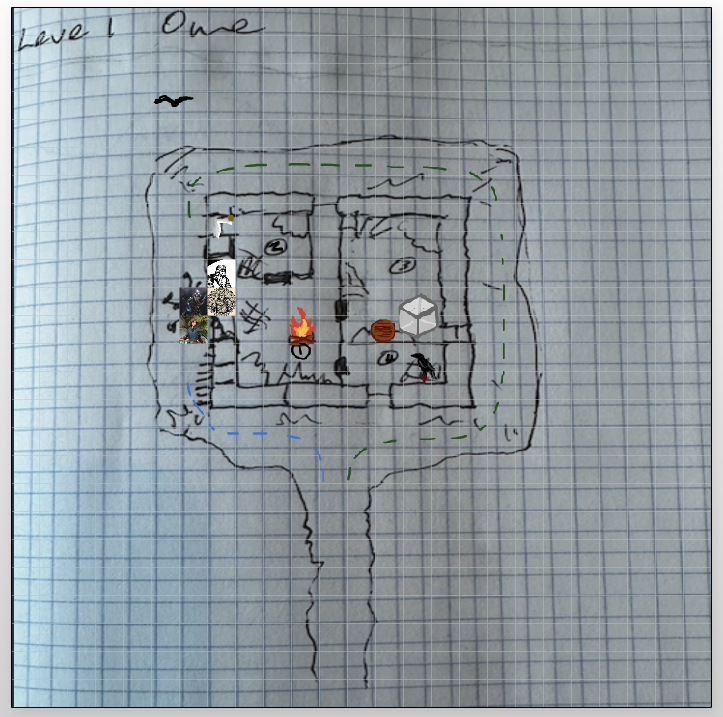
The is level one of the dungeon. It is specifically supposed to disguise the nature of the levels below. The ruined look was designed by the builders of the dungeon to make outsiders think nothing of the place. I even made it so there was no entrance on the ground floor. This is a common trait in Irish round tower design (although, my tower is anything but round.) The idea was to make it easier to store and protect your valuables but making the entrance inaccessible without a ladder or something. Since my ruined tower was just a roofless, ground floor, overcoming this obstacle was trivial for the PCs; they just climbed.
Inside they found a group of dwarves, mercenaries from the south who sought refuge from the elements in the ruins, as they found themselves rebuffed every time they tried to enter the forest. They, too, had heard the call for aid from East Barrens village, it seems. The adventuring party, now two hirelings down, decided to take the four dwarves on as retainers and then set about searching. They had a couple of advantages here, information they had gleaned from rumours and previous encounters. First, they spotted a raven settle into the tower ruins as they searched the perimeter, and they had stories about talking ravens who they should not cross, from he people in the village. Second, they had found Ferris’ diary. Ferris was one of the previous adventuring party to attempt to enter the dungeon. It told them they would need a special handle to enter the dungeon below.
The first thing they did was to try and find the raven in one of the tower’s ruined rooms. When they did, the rumours about talking birds proved true. In classic style, it asked them a riddle and promised them rewards if they could deliver. I had no particular origin story for this raven, and it’s not connected exactly to the plot, I just like the trope and wanted an excuse to have them answer a riddle. It felt very old school. They got it right and were rewarded with a variety of magic items from the raven’s apparently invisible hoard. With that, they left the corvid alone and proceeded to search the level, eventually discovering both the handle and the trap door that opened it. I had popped a Grey Ooze on top of the trapdoor as an encounter, because it was transparent and they could try to grab the trap door through it. They didn’t quite fall for that though. In fact, they defeated fairly quickly, despite it taking no damage from blunt weapon attacks. With that, they opened up the trapdoor and descended the smooth, cement shaft with the inbuilt ladder to the floor below.
Dungeon Level Two
I enjoyed the reaction to my design of the room they landed it. I described it as being all constructed of a singular light grey material, like cement, with a low bench of the same material, a row of lockers along one wall and small, tight chamber constructed of glass with a spigot in it. It took a few beats, but then Isaac asked, “is this a locker room?”
Perfect.
Anyway, they sent the cleric down first since they had heard about a horde of undead down there. Sure enough, after a low humming noise from the adjoining room, they heard the clacking and chattering of skeletons.
I have already written about my idea for this floor in my first OD&D post. Essentially, these undead are projections. As they were defeated more would be spawned in that room, but they would get more and more powerful to kill or frighten off potential explorers.
The order was:
- Wave 1: Skeletons – I rolled up 19 of these, but with a cleric on the party they made short work of them
- Wave 2: Zombies – I only rolled up four of these, but their appearance out of then air in room 6 alerted the players as to what was happening
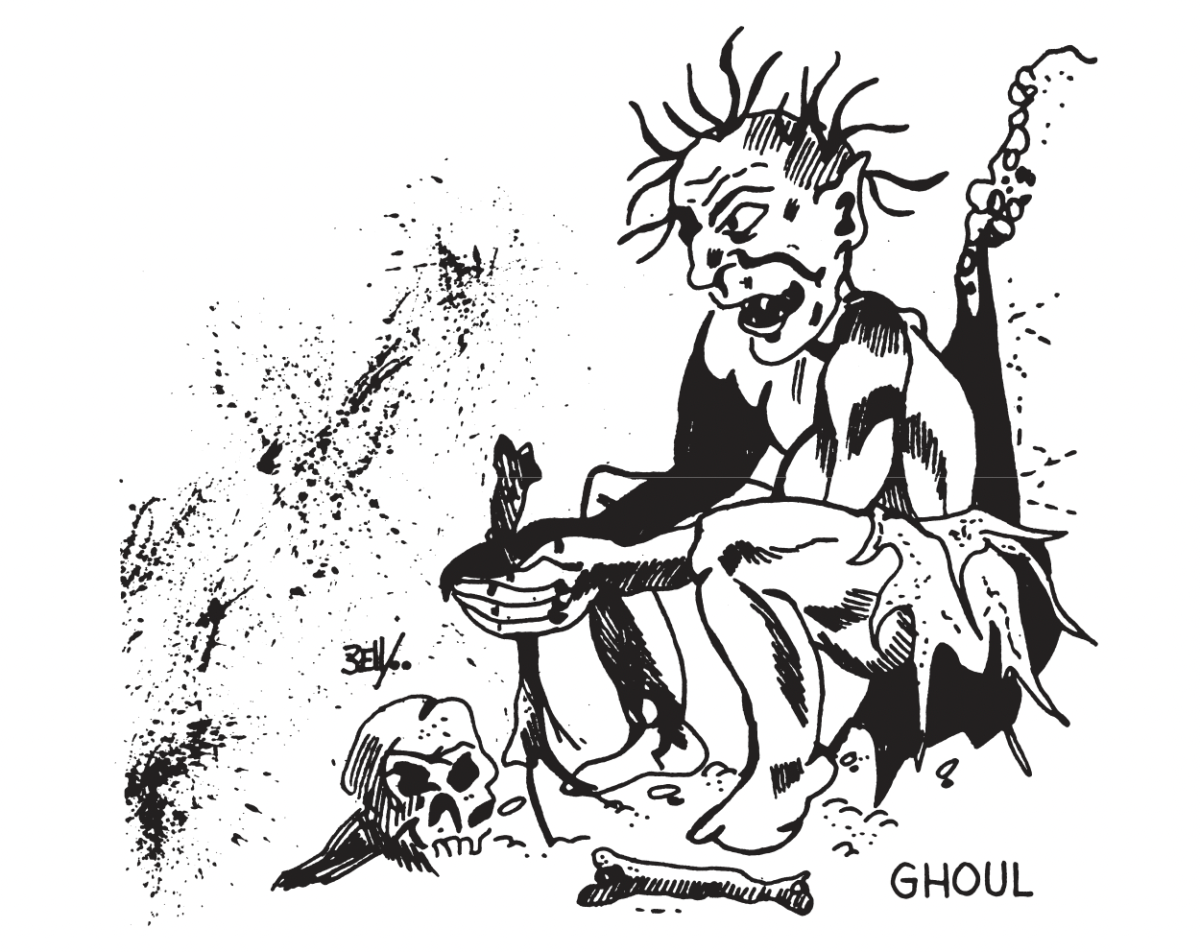
- Wave 3: Ghouls to up the ante with their paralysing touch
- Wave 4: Wights – these bastards always scared the shit out of me as a kid playing this game. It was devastating if they managed to suck a level of experience out of your character. I mean, you worked so hard for that!
- Wave 5: Wraiths – similar to the above but even tougher
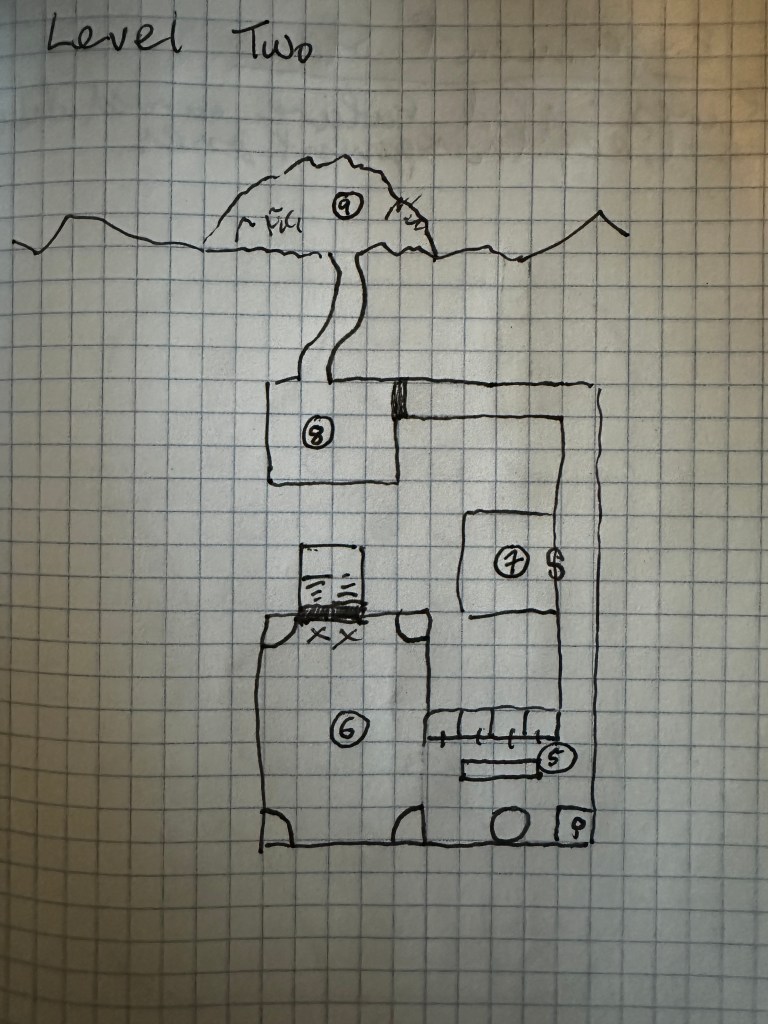
Room 6, where the undead spawned, contained four crystal orbs that hummed and glowed when a new wave spawned. So the PCs figured out immediately that they needed to disable them to stop the undead. That’s what my players did, but there were other options.
In the secret room 7, there was a series of control consoles. They managed to find it by noticing the strange vent in the wall and removing it. On each console was a series of indentations, and in each indentation, a gem was placed. These were valuable cut gems, but they were also used to control things on that level. They controlled everything from the lights to the hard-light undead projectors. With a little experimentation, they could have used these controls to disable the undead waves.
The room also contained a holographic projection of a crystalline the humanoid. This was a simple prerecorded message, which, if they could have understood the language, would be telling them how to use the consoles and their purposes. But the Magic User had already used up her Read Languages scroll, so they’re just going to have to figure it out for themselves.
A couple of other things in room 5, I put some bio-hazard suits in the lockers which will act as magic armour of sort, giving bonuses to saves, and I also left a futuristic looking wand of Detect Magic. I did this because the Magic user always wants to use that spell but not really at the expense of a precious spell slot. It also gave them valuable information about the undead (they emanated illusion magic, not necromantic) and other parts of the dungeon.
In room 6, They noticed difference in the surface on the floor in front of the iPod-future, translucent white double doors. The Fighting Man in the party used his ten foot pole to poke that surface and set off the trap beneath, a lethal spray of tint crystal shards exploded upwards, making his ten-foot pole into a nine-foot pole. He did manage to poke the doors which opened to reveal a stairwell leading down.
Conclusion
They are not quite done on this level. When we left them, they were still mucking about with the controls in the secret room. And they had detected an evil presence to the north west (room 8.)
Even after they make it to the next level, where things become even more sci-fi, they have a ways to go.
I’m still really enjoying the creative endeavour of building and populating this dungeon. I went into it only with the map, the outline of the plot and the general themes. I have been adding details as we go along so I can respond to things the players say or do. Maybe this is not quite in the spirit of the Original D&D, but I find it works very well, so I’ll stick with it.
Discover more from The Dice Pool
Subscribe to get the latest posts sent to your email.


