UVG x Troika

Vibes

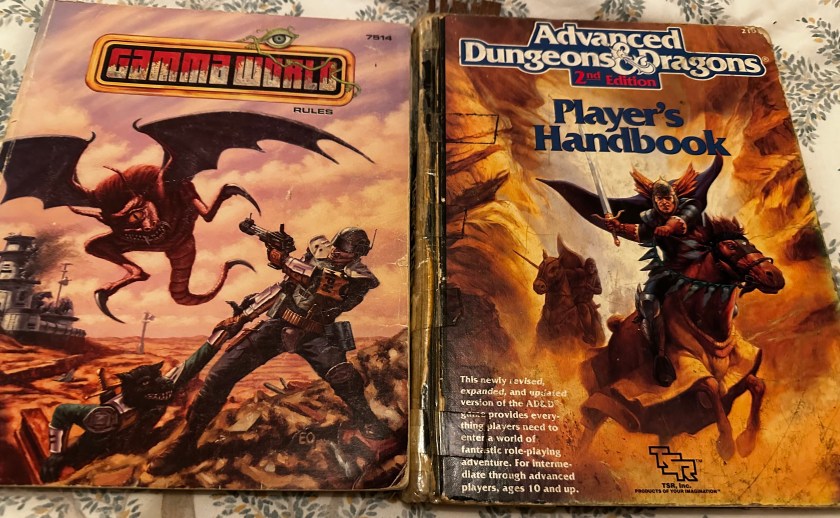
It’s easy to categorise RPGs by genre. Traveller is sci fi, D&D is fantasy, Cyberpunk Red is, well, cyberpunk, Call of Cthulhu is horror. There’s no real question about that. But, when you want to do an RPG medley, you’ve got to consider rulesets and vibes. D&D and Gamma World are basically the same ruleset, which makes it handy to mash ‘em up. But more importantly, their vibes are vibing on the same frequency. This has a lot to do with the art style in the books and the ways in which the games themselves are presented as well as the settings. I’m sure I’m not the only one to take their Gamma World players through a portal to a D&D fantasy world where they could blast dragons with their enormous radiation guns. It just made sense because of the vibes.
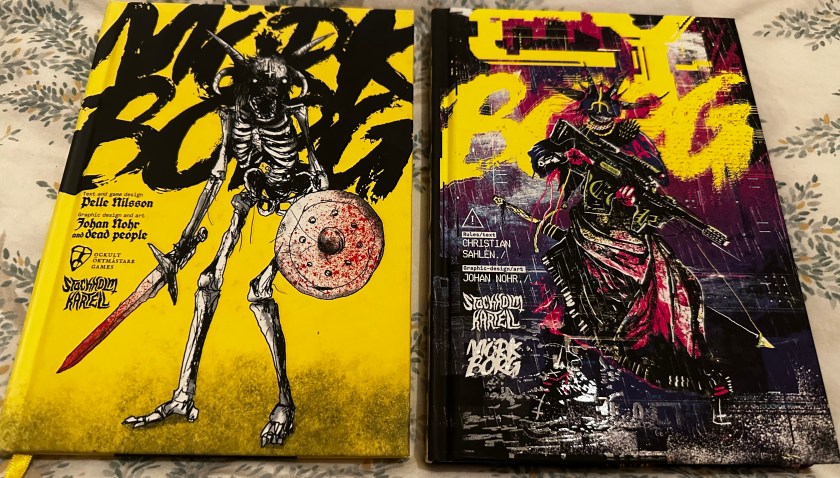
We finished a Mörk Borg campaign earlier this year. Got all the way to the end of the world, believe it or not. Cleverly, our GM, Isaac, ended that world and then woke us up from the the virtual reality game our Cy-Borg characters had all been immersed in. Someday, we’ll return to this game that’s also a new game. Now the vibes of these to are so obviously similar because they were both made by the Stockholm Kartell and designed by Johan Nohr. The art style is brash and neon and loud for both so you feel like they vibe together naturally.

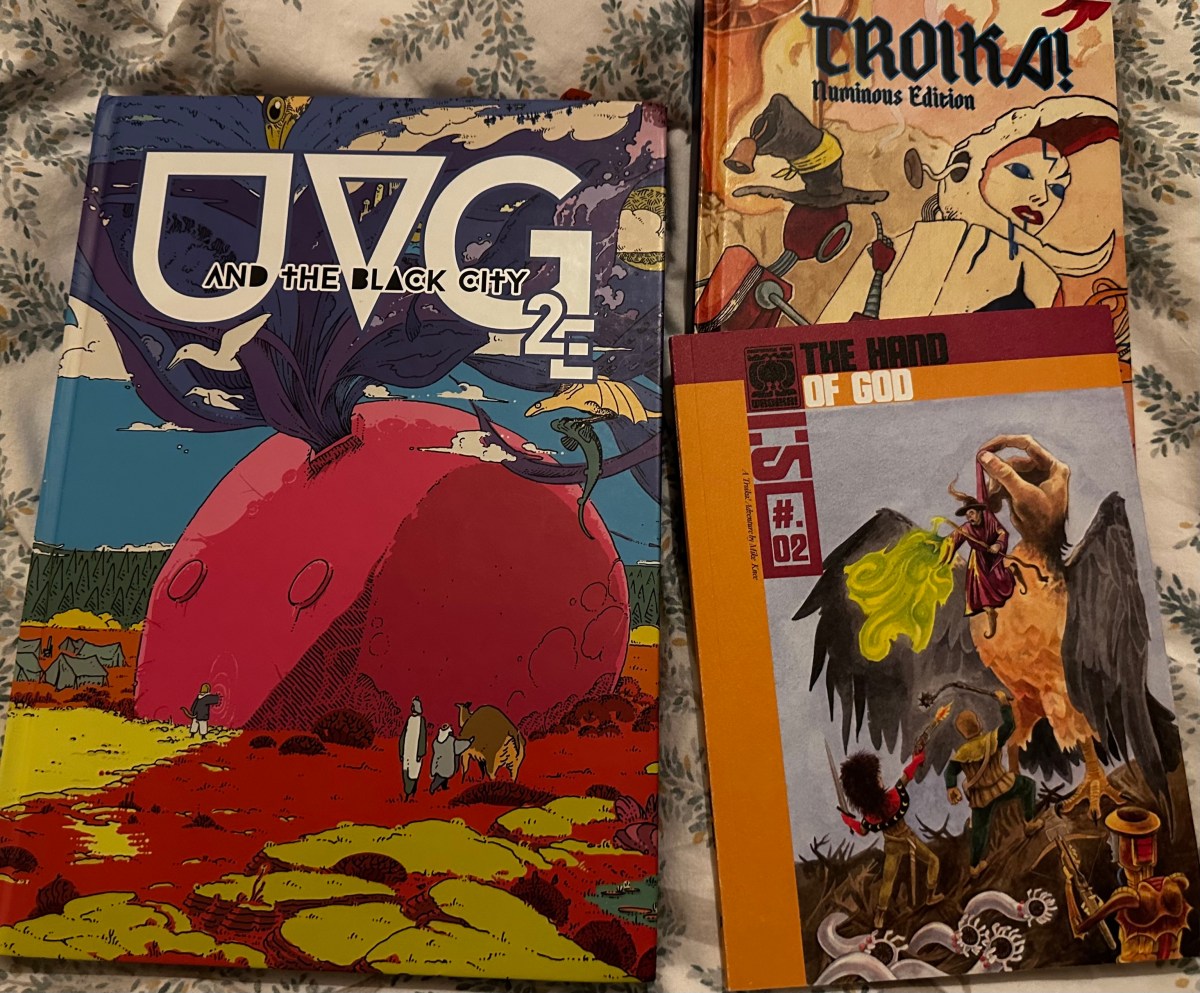
Today I want to discuss a couple of games that you might not automatically mention in the same breath, Ultraviolet Grasslands, Luka Rejec’s psychedelic, prog-rock fuelled old school trading simulator, and Troika, Daniel Sell’s Science Fantasy Moorcock/Wolfe mashup using the rules for Fighting Fantasy and the surreal art stylings of Shuyi Zhang and Andrew Walter among others. OK, you might mention them in the same breath, actually. They both tickle a very particular armpit, in between the arm of sci-fi and the torso of fantasy, and, to me, their vibes intersect perfectly. So much so that I decided to employ a Troika adventure in UVG.

The Adventure So Far

The PCs have been on the road for more than six weeks. From the Violet City on the shores of the Circle Sea they have traveled west through the Ultraviolet Grasslands. They’ve encountered Lime Nomads, giant mushroom-tending armadillos, cyborg-like bio-tech lifeforms called vomes, and even a furniture trader named Jonky Bonko so far. And at every point along the way they have gathered resources and items to trade, hopefully for a profit. This has been their over-riding motivation thus far in the campaign. The players are utterly invested in the success of their joint business venture, which they have named Isosceles Inc. Watching their Cash numbers go up has definitely been exciting for them, especially when they make a really good market research roll, or haggle their way into a selling price three times higher than their buying price. But I have been wanting a bit more old-school in it too. To that end, I’ve been seeding something in the otherwise completely randomly generated adventures. It originated in a random encounter, but I kept it running through a couple of other random encounters.

They rescued the daughter of a Lime Nomad clan chief and returned her to her mother. The mother, grateful and impressed, entrusted them with a message in the form of an item known as a portable illusion. She asked them to take it to her sponsor, a Porcelain Prince called Black Pot 5-Body at the Porcelain Citadel. Almost immediately, they rolled up another random encounter with a Porcelain Prince out on the road. A Porcelain Prince is an intelligence that’s distributed across a number of humanoid bodies that wear matching porcelain masks. The PCs, wary and out-numbered mentioned that they were on the way to see Black Pot 5-Body in the Porcelain Citadel in the hope that it would encourage this Prince to treat them favourably. On the contrary, the mention of Black Pot seemed to cause something of a stir. The Prince promptly sent a messenger off in the direction of the city. The PCs promptly killed the messenger in the grasslands and buried him in a shallow grave.

Later, at the Low Road and the High trading post, they heard a rumour that an ultra-conservative Porcelain Prince, Meissen 13-Unity had dedicated themself to restoring the Citadel to the unity of thought not exemplified since the end of the Properly Recorded Period. Not only that but that Sunfire 3-body, who they had met on the road, was an adherent of theirs. At this stage, the PCs were not able to put things together. But once they pushed on towards the Citadel they ran into a random encounter, the caravan of another Porcelain Prince, this time, an ally of Black Pot 5-body. This time, the Prince sold them a pass to get them into the Upper Citadel, where they could do business and find the Prince they were looking for.
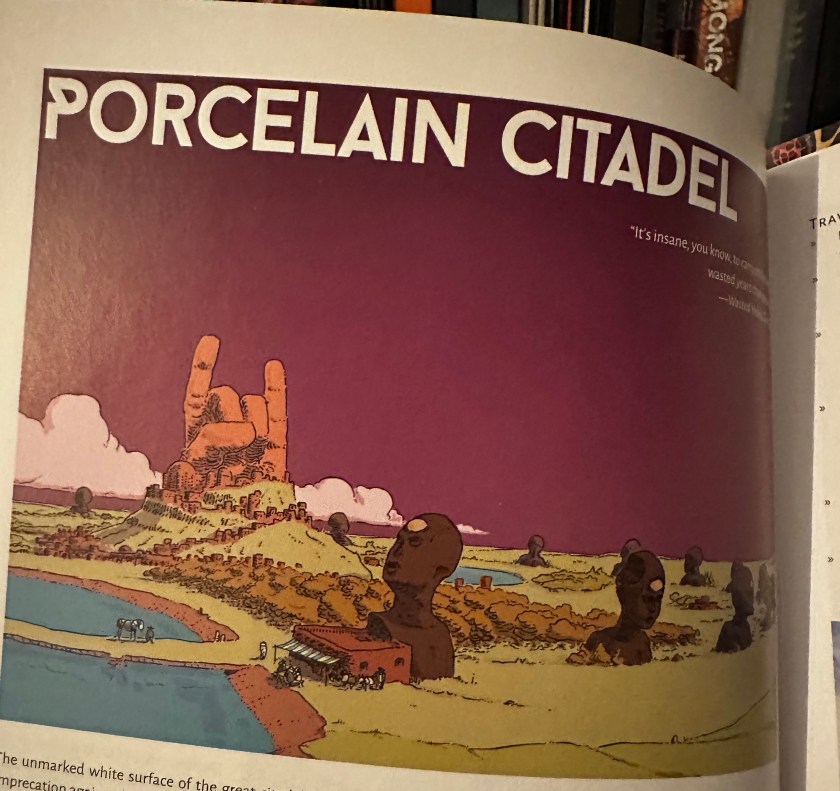
Finally, they reached the Porcelain Citadel, the great hand-shaped edifice towering over the grasslands doing devil’s horns. They had been eager to do some carousing here. The PCs had a taste of it in the Violet City at the start of the campaign and gained a lot of XP from it so they saw it as a short-cut. This time, one of their number got completely fucked up on drugs and managed to lose most of their Cash as a consequence of a particularly poor Carousing roll. So they needed to make some money quick. The next day they went to visit Black Pot 5-Body in their workshop. There they presented the eccentric Prince with the Portable Illusion. They activated it and they all witnessed a Porcelain Prince being abducted from a camp by an enormous winged creature with a hand where its head should have been. They were dumped in an enormous nest at the top of a massive index finger stretched up into the sky, as high as a mountaintop. From there the view within the illusion changed and they saw the Prince negotiating with a wizard in a black tower atop another digit of this huge hand. He exchanged a copy of a book for the wizard to help him escape back to the Grasslands. And then the illusion ended. Black Pot was very excited. This was their chance! They had finally found the evidence they had needed for so long. The original book that would prove that the laughable philosophy of their political rival, Meissen 13-Unity was based on nothing more than a work of fiction designed to satirise the exact sort of overtly conservative views they thought were espoused by it.

That’s a lot of backstory. Suffice it to say, Black Pot employed the PCs to get abducted from their dreams by the bird-with-a-hand-for-its-head so they could be taken to the mountainous hand and retrieve that book. They went into the grasslands and did just that. They woke up in the nest, just like in the Illusion. After avoiding the gaze of THOG, the bird-thing, they killed some worms escaped the nest and found themselves on the tip of that cyclopean index finger looking out on a wide green land and a cerulean blue sky. They knew immediately that they weren’t in Kansas anymore.

I loved this moment. At this point, the players did not know they had just transitioned from UVG-proper to the Troika adventure, The Hand of God, so they had no reason to suspect anything. Also, there have been hints of portals and other worlds dotted around the plains in our campaign so far, so they had no reason to think this was anything but more UVG weirdness. I kept up the pretence as long as I could. But, eventually I shared one of the illustrations from the adventure in our chat and Isaac was quickly able to identify the distinctive style of Andre Walter, so well known for his Troika work. He asked me if this was a Troika adventure and I answered honestly as is the law.

But that was ok! It helped me in fact. The players understood that I would have a little work to do to translate from one ruleset to the other when I had to spring things on them so they have been quite forgiving.

Conversion
For the first session in the Hand of God, I didn’t even do any preparation of encounters in UVG terms. I winged it completely and that was fine. It would absolutely have been better if I had prepped, but it was ok. The nice thing about both rulesets is that they are light. A UVG creature’s strength is based largely on levels/hit dice, in a very D&D-esque way. So I was able to use the following table to work things out approximately while my players waited patiently.
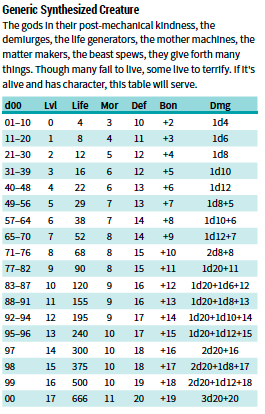
But the fact was, the only combat encounter they had was with a couple of weak and lowly Prayer Worms. In Troika terms, they had low Skill and medium Stamina and their only special was screaming when they died so it was was easy to look at that table and decide to make them level 0.

I rolled up another random encounter as two of the three PCs made their way down through the index finger’s stony interior. There, on the stair, they found a poor undead whose body had been crushed by a fallen boulder. She told them she would reward them if they would bring her to the undead village of Jigigji over on the Little Finger. So they re-reanimated her decimated body and brought her along with them. Meanwhile, the third member of Isosceles glided across the span to the next finger on his handy glider. He landed on the opposite side of the bridge long before the other two made it there. At this point I knew they would be running into a lot of potentially tricky encounters that I thought I should prepare better. So we left that till the next session. In between, I converted all the stats for all the potential encounters, whether random or planned. The conversion did not always fit neatly into the rows of the table above. Sometimes I would add more hit dice if they had more Stamina than Skill, and I would always look at the potential damage on the Troika damage tables to decide the dice and bonuses to give them in the UVG context. None of this was particularly taxing, although I’m sure some GMs would do the conversion differently to me, if they wanted something more or less balanced.
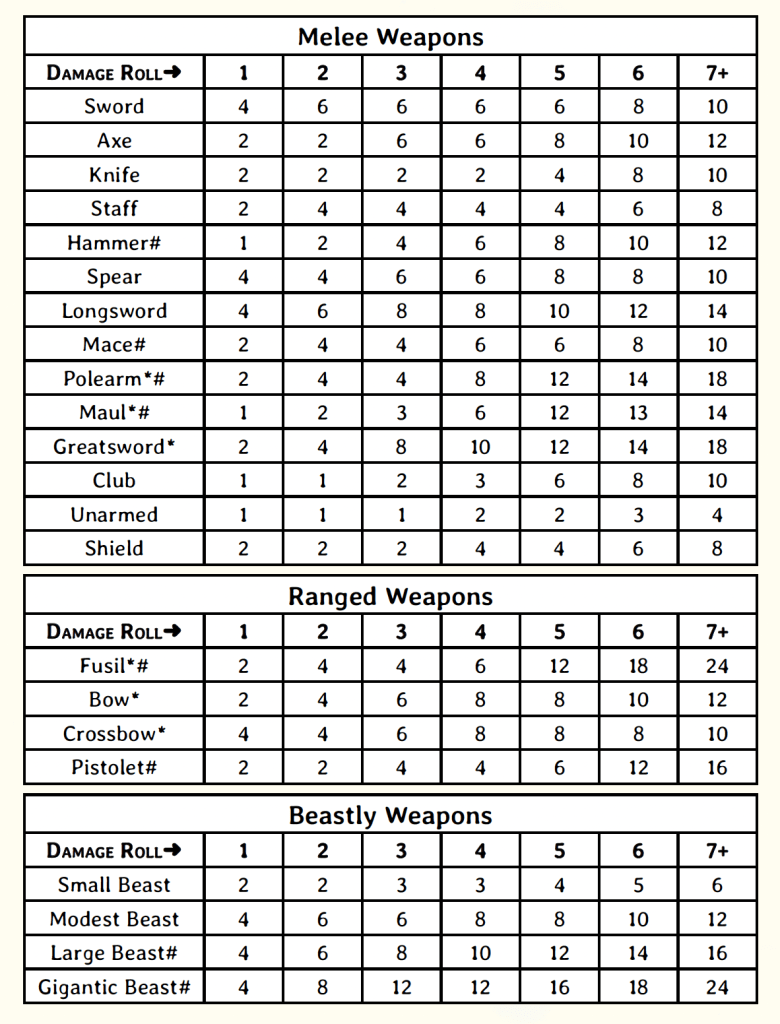
The next session they dealt with a bridge troll and his gremlin minions, but realised they were in for a tough time on this adventure quite quickly. Once they got across the bridge, they soon reached the black tower of the wizard as shown to them by the Portable Illusion. In the adventure, this is known as Rezkin’s Folly. All they would have to do is get into this powerful wizard’s abode, avoiding the fireballs being flung by the magical orb security system and all the weird shit inside, and they would get the chance to maybe retrieve that book!
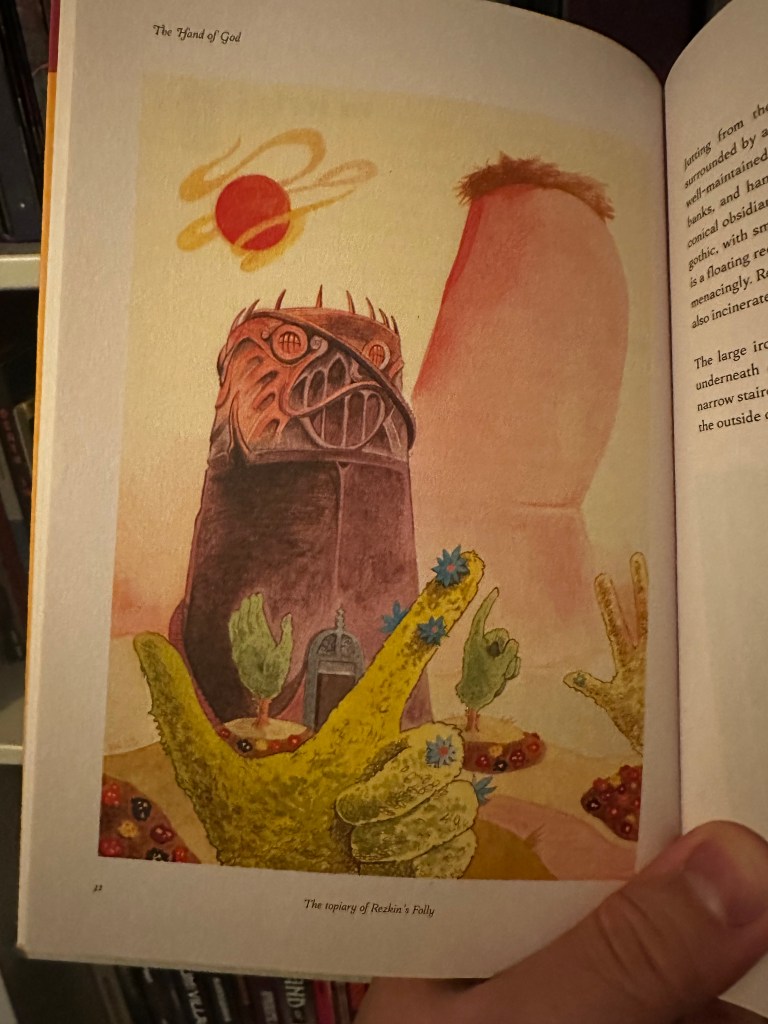
The Folly is presented as a mini dungeon within the context of the overall adventure. It has fourteen rooms and its spread over a mere eight pages. It is very easy to read and absorb and most of it is usable in any system, with only the creature stats requiring conversion.

There are some Wizard spells referenced in the adventure that are taken directly from the Troika core book. I had to spend a bit of time looking up UVG spells that worked as alternatives to their Troika counterparts. None of these were really done on a one-to-one basis. Troika spells are generally fairly D&Dish, but UVG spells might really do anything, conceivably. I used both the UVG core-book and the forthcoming Wastelands Guidebook to help with this.

Conclusion

Well, we haven’t concluded this adventure by any means. Isosceles Inc have only made it into the tower’s lowest floor. They have encountered a gossamer assassin creature and survived, but still have to make it to the treasure room and out again. They also need to bring their undead companion back to Jgigji and then escape this potential dreamworld to get back to the Grasslands!

So far, I am loving how well the Troika adventure vibes with UVG. There are some anachronisms, like trolls and gremlins, which seem a little too generic-fantasy for the weirdness of UVG, but, on the other hand (if you’ll excuse the pun) they’re on a ginormous hand and they were sent there by a weirdo who lives in a giant hand. This was obviously the thing that linked UVG and the Hand of God in my head. Somehow, this dreamworld leaked into the “real world” of UVG and led the Porcelain Princes to build their Citadel. And, perhaps, the item that same their citadel from repression is contained in it.

Anyway, this adventure will continue soon, hopefully. Our gaming has been dominated by the Editioning recently, but, hopefully, we’ll get some more UVG x Troika in soon!
The Dice Pool at Two Hundred (posts)

Milestone Levelling vs XP

There’s a strong argument for XP levelling in D&D type games. The pursuit of XP can be used to promote certain behaviours from the PCs, leading them towards the bigger, badder monsters and the shinier, more valuable treasures. I have been using XP levelling in our OD&D game to preserve an element of authenticity, and in UVG to stay true to the rules. But I have been more than generous with the provision of experience points in both. The GM has the privilege and responsibility of controlling the XP tap to speed up or slow down the progression of the PCs as seems appropriate, but it is an imprecise instrument. For instance, in OD&D a Magic user requires more than twice the number of XP to level up than a Thief does, and PCs with high prime requisite scores are getting 5 or 10 percent bonus XP as well. So no-one is really levelling at the same rate, even if you ostensibly give them all the same amount of hit points.

So, when I first encountered milestone levelling in D&D 5E, I saw it as a way to unburden myself and our group of the calculations XP levelling lumbered us with and to reward PCs with levels at narratively appropriate points in the campaign. I never really planned when I would give them a new level, I would just tell them to level up at the end of a particularly significant session. This method, or lack thereof, had the added bonus of it being a nice surprise for the players. They were still able to plan ahead for what new feats, spells, etc. they were going to take when they levelled up, they just were never sure when it would happen, unlike with XP levelling.

Anyway, I have been thinking about my progress with the dice pool dot com in a these terms recently. Obviously because I’ve known this 200th post was coming for some time. I’ve certainly hit a few big milestones, like when someone first subscribed to the blog, or when the blog was first linked on the Indie RPG Newsletter, or when John Harper reposted my bleet (skeet?) about my Blades in the Dark posts on Bluesky. All of these milestones built my confidence, motivated me to continue and improve and got more eyes on the site. It felt like levelling up each time. Every unlooked for goal that I reached made me want to write more and se what might come next.

In the time since my 100th post my views and visitor numbers have grown enormously. This has been true since the start of the blog in fact. My guilty obsession is checking the Jetpack app to see what the daily/weekly/monthly numbers are at. I often do it a few times a day. This feels like the accumulation of XP. Each view is another point towards the next level. You can even measure the effects of the milestones I mentioned above in this way. John Harper and Thomas Manuel granted the site a lot more XP than it got most days. It was like completing a quest I didn’t even know I was on.

If I’m honest, I have to admit that the everyday XP grind feels more like where the real progress is made. The milestones certainly come up, but if I were to rely on them, I would level up pretty infrequently. Also, I like the ability to measure the progress through numbers, as you will have noted from my New Years post. Not that the numbers really influence me to write on any particular topics. I have and always will write what I want, whether its Triangle Agency Character Creation or half-assed flash fiction. Maybe I’m obsessed with the numbers because I’m just old school, maybe I crave XP.

Anyway, here are some links to a few of the last two hundred posts that I’m most proud of:

Conclusion

It’s a short one today, dear reader. I just wanted to acknowledge the milestone, as it were, and reflect on how the blog has built and changed over the last two hundred posts. Thanks for reading!

I’ll be back soon with the promised discussion of the Hand of God x UVG.

The Editioning Week Four, OD&D

The Woes of Sorrowfield, Session Three

The hex-crawl continues through the Barrenwood. The PCs have been doing their best in difficult circumstances. Sorrowfield is a miserable place right now. There have been some sort of magical ballistics going off over town and country, undead and chimerae stalk the land and the bloody rain hasn’t stopped in weeks. Perhaps it was the constant and growing danger around them that prompted the adventurers to finally question the motives of the pixies they’d been following for a few hours through the forest.

The pixies, you see, had been trying to get them to the lake in the northwest part of the woods. Once they reached it, however, they could see a soft, violet glow from the waters. It matched the glow from the crystals they had discovered throughout the forest so far. The pixies hovered above the lake and asked them to dive in, claiming the source of the corruption was submerged beneath the unsettled waters. The PCs thought better of it despite the pixies’ mocking and cajoling. They wanted to circumnavigate the lake to see what sort of traps the mischievous little fae had in store for them, but that proved difficult. To the east, the river emerged from the lake’s waters, and there were no convenient trees to chop down to act as a bridge this time. To the northwest, they found a vast patch of crystalline briars. Since the briars covered the entire hex, they eventually decided to go one hex further around to the west, avoiding it entirely. This forced them into a a hex that was particularly confusing, with lots of entangling plants that tried to trip them. I asked them to roll a d6 to see if they got lost. They avoided rolling a 1 so they were able to press on in their desired direction.

All of the above; the pixies, the briars, the hex of confusion, all came from encounter table rolls. You can see that table on my last OD&D post here. They have all come together to make some interesting challenges and have forced the PCs to explore further than they might otherwise have. I’m fairly satisfied with most entries on the table. I feel like there’s a good mix of combat and non-combat encounters that require a good variety of solutions, skills and ingenuity to deal with. But there were two entries I really hoped they would roll up. Lucky me, those were their next two rolls!

The very next hex they entered, they rolled an 8, so they came across the Hermit’s Shack. They knew from rumours gathered in town, that there was a Hermit out in the woods somewhere, so it wasn’t a big surprise. They approached politely and Breandan welcomed them in, offering them tea and “biscuits.” I had a great time playing this guy. After a couple of sessions of mainly exploration and combat, it was refreshing to have some solid role-play. He was eccentric but friendly enough. He explained that he had run into the other group of adventurers who had been sent from the town of East Barrens. They had come across his shack on the way back from the ruined wizard’s tower on the coast to the west. They explained to him that they had been rebuffed in their attempts to delve into the dungeon beneath the ruins. Wave after wave of undead appeared as if by magic on the first level below. There was no way through… These adventurers had moved on after a restful visit, turning back towards the town.

Breandan also had a quest for the adventurers. He wanted them to hunt down and slay the carnivorous crystal elk that had been terrorising him of late. He wanted to travel up along the river to the north to see if he could escape this crystalline corruption, but every time he attempted the journey, the elk chased him back home. He promised the PCs a valuable reward if they would do this for them. They readily agreed and, after resting up in his cabin for a few hours, they set off to do just that.

Now, I considered just having the elk itself as the encounter in the next hex, but I decided, in the end, to stick to my own rules. I got them to roll on the encounter table again. This time they rolled a 6. The halfling heard them before she saw them, a shambling, groaning group of partly crystallised undead amongst the trees ahead. She tried moving silently through the woods to flank them and get a better look, but she failed badly, and got slammed to the floor by a zombie instead. This encounter was really over before it began, even though the zombies won the initiative roll. They couldn’t hit any of the other PCs, and then Tadhg, the cleric, now on Village Priest level (level 3) stepped in. A Village Priest can ably and automatically turn zombies, just have to roll 2d6 to figure out how many are affected. Well, Tadhg turned all four of them. But as he did so, the party got a good look at the zombies, two humans, a dwarf and a halfling, the exact make-up of the other band of adventurers. Now, this encounter on the table also involved the reward of an adventuring diary, which the PCs would have gotten if they had a chance to loot them. Since they sent them running instead, I decided to bring the elk into play. As the dwarven zombie was scarpering, the monstrous crystal antlers of the carnivorous elk emerged from between the trees, skewering him and sending him flying through the air. And suddenly, they were back in combat.

I like the “per-side” round by round initiative roll of OD&D. I like that it utilises a simple d6. I even like that, if both sides rolls are equal, then everything happens simultaneously. All of this adds a bit more randomness to the proceedings and keeps it interesting. Especially in this system where each combat round equals a full minute, you can imagine the ebb and flow of combat evolving constantly, with the momentum swinging one way for a time, and reversing quickly and unexpectedly when the enemy spots a weakness or exploits their opponents’ mistakes.

This was the strongest monster they had faced yet but I was only reminded of the primacy of action economy in D&D. It applies as much in this version as it does in 5E. One combatant against six is not an equal fight, no matter how many hit dice that one enemy has, unless they’ve also got six attacks per round. So, of course, they made relatively short work of it, and somehow, managed to avoid any further damage as well. What these two fights combined really showed, though, was the full range of combat abilities in the group. We had turning undead and healing magic, we had magic missiles and invisibility, and, as well as that we had backstabs and the Fighting Man even got in a mighty blow or two.

After they had dealt with the elk, they investigated the body of the dwarven zombie. Finding a diary on it, they were able to confirm that the corpse used to be Ferris, the son of the town’s blacksmith and stonemason. The PCs had been asked to keep an eye out for him by his mother so finding him like this was a poignant moment. His diary described his journey to the old wizard’s tower, the hidden entrance to the underground dungeon and the desperate fight with the hordes of undead in the basement. They had been forced to retreat, as Breandan had said earlier.

With that, they took the head of the elk and the body of Ferris back to Brendan’s place. They asked if he would return the body to his parents in town but he refused, conceding instead that they could bury him there on his land. They did so and held an impromptu funeral for the boy. It was a touching scene. That done, they received their reward from the hermit and rested up again that night before setting out for the wizard’s tower the next morning.

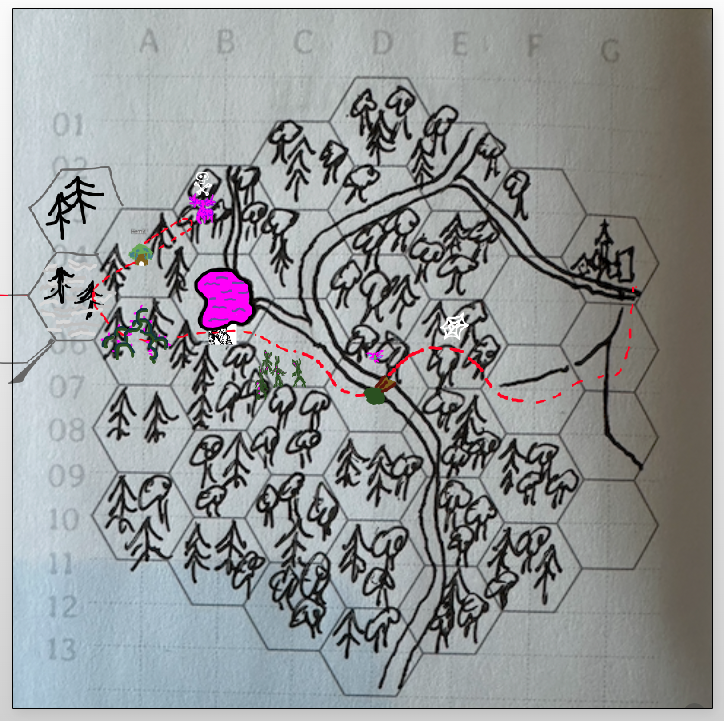
I just want to share with you the hex map as it looks now. The players, totally unbidden, have been filling it in with the things they’ve encountered on their way through the Barrenwood on the Roll20 map. I love this!

The hex map of Barrenwood. Now with added colour!
The players have been drawing on my map and I love it!

Conclusion

We had a couple more level ups following that session so some of the band are now level 4! I will be honest, I had not totally foreseen the speed they would be levelling at. Still, it was my decision to make levelling as easy as possible. For instance, I am allowing level-ups at the ends of each session, rather than the ends of adventures and I am handing out plenty of gold and treasure (1GP + 1XP in this edition), as well as bonus xp for completing quests and clever solutions to problems. So, I’m actually quite happy with the situation.

What it does mean though, is that I will have to upgrade some of the encounters I had planned for the dungeon itself. Since I don’t have the whole thing prepared yet and I’m not writing up entire stat blocks for encountered monsters anyway, it’s really no more work in prep than I was going to have anyway. I plucked that elk out of the Monsters & Treasure book’s list of monster stats at the last minute. It was a just a re-skinned unicorn. I love being able to do this quickly and easily when I don’t feel beholden to the 1000 entries in various monster books to choose from. I would often find myself in decision paralysis when presented with all the monsters available in official products for 5E, unable to find the exact right one for a given encounter, despite the sheer number of them. I don’t have that problem here at all since all the monsters are just a collection of hit dice and ACs with maybe a special feature to set them apart. It’s very easy to imagine that line of stats as representing any monster at all, or to customise them as you see fit.

Anyway, that’s it for the report on Session Three. It might be a few weeks before there’s another one, what with various IRL happenings. But I’ll be back next week, probably with a post on my current UVG exploits utilising the Troika adventure, The Hand of God. See you then, dear reader.

The Editioning Weeks Three and Four, Basic D&D

Keepin’ on Keepin’ on

We’re two more sessions into the classic Basic D&D adventure, the Keep on the Borderlands. And we’re getting into the meat of it now, I think. We’ve got multiple factions, both in the Keep itself and in the Caves of Chaos. We’ve got spying and betrayal. We’ve got court intrigue! But most of all, we’ve had laughs and fun with this.

Donkey Konging

There are some spoilers for the Keep on the Borderlands below. If you think you might want to be a player in that adventure, you might want to choose a different post to read.

We launched straight into a fight at the start of session three. We managed to trick and ambush a dozen strong goblin patrol, trapping them in a pincer movement. The fight didn’t last too long, actually. We took out their leader and the rest pretty much dropped their weapons and happily consented to be tied up and gagged so they couldn’t follow us as we went to pillage their home. We did bring one of them with us as a kind of guide. Gaw was a congenial sort of goblin, and very eager to help. He told us about their leader, Sharktroll. Now, Sharktroll, is, it turns out, neither shark nor troll, despite the name. She’s a goblin and the other goblins seem pretty scared of her. Armed with this knowledge, we proceeded along the tunnel to the west, keeping a sharp eye and ear out as we went.

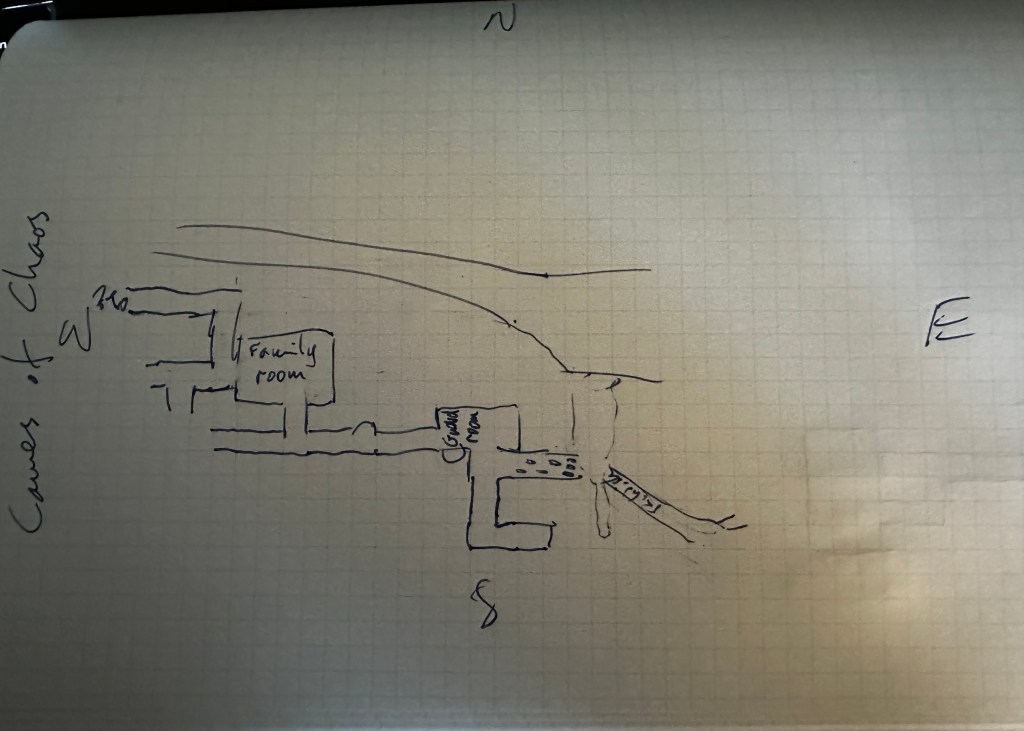
At the start of the campaign, Isaac presented us with a list of traditional roles for players that he cribbed from the Retired Adventurer blog. Tom took the Quartermaster and Timekeeper roles. I got the Rules Coordinator and Mapper ones. Normally, in our groups, the GM just gives out the map and trusts in the ability of the players to compartmentalise the knowledge they have, with the understanding that the characters don’t have it. It works well, saves time and avoids frustration. But we thought it would be an interesting experiment to do it the old fashioned way. So far, it’s going ok. Isaac has been good about providing accurate measurements for rooms and corridors, and I’m using graph paper to maintain consistency. At times, it has been hard to picture some of the rooms correctly in my head, but in those instances, Isaac has kindly showed us that part of the dungeon map from the adventure. Keeps me busy.

A map drawn with pen on graph paper. It shows a wide canyon and a caves sytem where the goblins live.
A photo of the crude map I have drawn so far of the goblin caves in the Caves of Chaos

So, we went exploring the goblin caves, found a sack full of gold which we robbed, and a barrel full of javelins, which Thaddeus Nightbane, my thief, peed in. Of course, we almost immediately found cause to use those miturated upon javelins as another goblin patrol approached the guard room where we found that stuff. We were able to get ourselves set up to launch a surprise attack on them, chucking spears and, even more fun than that, rolling barrels of water down the narrow tunnel! Donkey Konged the hell out of those gobbos. Killed ‘em all in one fell swoop. It felt like a really great old school moment; setting up a ridiculous plan with very little time and only the few items to hand. Surprising that it worked out so well, though, to be honest.

Snakey

We pushed on, thinking to find this Sharktroll character and maybe do her in. But, instead, we found a large room full of goblins: men, women and children. We didn’t alert them to our presence, luckily, but this “family room” as we called it, gave us pause. We all cooled on the idea of clearing out these goblins, now that the ramifications of doing that were staring at us with big green, baby eyes. It was at this point, in the tunnel outside that room, that we turned to Jabeck, the so-called Priest of the Sun who had asked us to accompany him to rid the caves of the monsters. We delicately questioned his real motives here. And with the lightest of verbal jabs, he revealed his true colours, as an adherent of the Cult of the Great Serpent! He and his acolytes attacked and we were forced to kill them. The acolytes went down without much hassle, but Jabeck weathered round after round of attacks. He was wearing magic plate mail, so his AC was ridiculously low. He did us some damage too, but, eventually, we brought him down and took his stuff, and his head.

I had known there was a treacherous priest somewhere in this adventure, as it happens. I think I read it in the Wikipedia article I linked above, in fact. But I didn’t know which priest. It could just as well have been the racist one back in the keep, who had asked us to keep an eye on Jabeck. So, it was fun to discover this in this way, while delving this dungeon.

Of course, the noise of battle attracted the attention of the goblin civilians. We spotted them in the entrance and then all our torches went out (thanks to Tom’s timekeeping for that incredibly dramatic event!) some of them ran to get Sharktroll, who returned with her bodyguards and wives. Through our goblin-speaking dwarven hireling, Gimleth, we conducted some negotiations. I remembered that the rumour I had received about this place was that the Great Serpent cult had been wiped out by the goblins, orcs and gnolls so they could take over the caves. Deploying this bit of knowledge, we convinced her that Jabeck was the one who was to blame for any deaths amongst her people, that we might have caused. Unlikely as it may sound, she bought it. She seemed far more pre-occupied by the enmity between the goblins and the orcs and gnolls who occupied the other side of the canyon. On top of this, someone was stealing from their stores. Loot, food, everything was going missing, and they wanted us to help discover the culprits.

Our elf, Eandril, Tom’s character, used his secret door seeking abilities in the store room and immediately discovered a hidden entrance to the lair of the hobgoblins, Sharktroll’s erstwhile allies. So, we convinced her that it must have been the hobgoblins who were creeping in and stealing their hard earned booty, right from under their noses. We got her good and riled up and sent her off into the hobgoblin tunnels with a warband and a whole lot of righteous indignation.

We did not accompany them. Instead, we left them to it and scarpered off back home. Isaac rolled up the results of the goblin assault and was able to determine that they were successful in defeating the hobgoblins roundly. Huzzah! This seemed pretty good to us, as it reduced the number of Caves of Chaos factions we had to deal with by one.

Factioning

Back at the Keep, we returned to the racist priest with Jabeck’s head. In fact, I threw open the church doors while Lotharia the halfling, atop Eandril’s shoulders, hoisted aloft the head, declaring for all to hear that we had killed the priest! This didn’t go down very well with the other members of the clergy there gathered, and for a second, we were about to get into another fight. But then Father Burgoyne intervened, calming the situation when we told him what happened and showed him Jabeck’s forked tongue. Burgoyne congratulated us on a job well done and then went off to report these happenings to the castellan. We blagged our way into an invite to talk to his castellanship. We told him what we had found out about the goblins, how we had gotten them to defeat the hobgoblins and what had happened with Jabeck. In turn, he rewarded us handsomely. He gave us the use of Jabeck’s quarters, exempted us from the 10% gold tax at the gate of the keep and trusted us with an all important mission to capture one of the rebellious Ospreys alive!

On top of this, Isaac informed us that we were now RESPECTED with the Castellan. Not only that, but had also gained important reputation boosts with the church so that we were ESTEEMED in their eyes. We had even, somehow, gained respect amongst Sharktroll’s goblins! This reputation game was not something I knew was part of the adventure but it’s very welcome actually. Oddly, it struck me, at first, as a very video-gamey element. It reminded me of the reputation trackers you get in games like World of Warcraft. Indeed, the reps in the Keep on the Borderlands work very similarly as they unlock new quests and options within the confines of the adventure, as you can see by the offering of the quest to discover the thief in the goblin lair and the unlocking of the quest to help the castellan with the Ospreys. It adds a richness to the adventure and makes it, perhaps, quite re-playable. I imagine that, if we had gone to meet the Ospreys representative on our first night in the Keep, things might have turned out very differently indeed. Or if we had decided to explore the hobgoblin caves before the goblin ones, maybe the goblins would be the faction that got wiped out first instead. The possibilities are fascinating. I’m beginning to see why this module is so well loved.

Conclusion

We’re all getting very invested in this adventure. We’ve had a little while with our respective characters and they are very much developing their own personalities. Equally, there is an inter-character dynamic appearing too. The NPCs are compelling, especially as portrayed by Isaac, and the plot is doing enough to keep me interested in getting involved in it. What I had thought would be a relatively standard dungeon crawl is turning into something with far more bite and complexity, or it is the way we’re playing it, anyway.

As for the D&D Basic rules; I feel as though we have all more-or-less adjusted to things like THAC0, descending AC, etc, and, where the rules fall short, Isaac has been very pro-active in rulings. In several instances, he decided that the best way to resolve an action was just to make an ability check, i.e. a d20 roll under the PC’s defined ability score, such as a Strength check to lift those barrels of water to go Donkey Kong on those goblins. This has served to move things along nicely in instances which could have been bogged down in rule-checking.

I think we will be having a bit of an Editioning break over the next couple of weeks. I have another report on my last session. Of OD&D to come next week though, so please do come back for that, dear reader!