Character Creation – Advanced Dungeons & Dragons 2nd Edition, Dark Sun, Part 2

What has come before

Well, yesterday I started by creating a brand new character to be played in Dark Sun, the AD&D 2nd Edition setting. Here’s what we’ve hot so far:

  • Name: Rezina
  • Pronouns: she/her
  • Race: Halfling
  • Ability Scores:
    • Strength: 11
    • Dexterity: 18
    • Constitution: 18
    • Intelligence: 17
    • Wisdom: 18
    • Charisma: 9
  • 3ft 3in tall
  • 59lbs in weight
  • 41 years of age

What have we learned? Race is problem in these older books. The ways they refer to characters as “half-breeds” or inherently unintelligent or bred to be sterile are incredibly distasteful. It is all couched in very racist and unsympathetic language and I am glad that that sort of writing is a thing of the past.
Also, Dark Sun characters come out powerful, with the new way of rolling up your ability scores and some really useful racial traits.

Stay classy

It’s time to look at classes in Dark Sun. There are many changes to the classes compared to the AD&D 2nd Ed Player’s Handbook. There are also a few new ones here. Dark Sun introduced the Defiler, the Gladiator, the Preserver, the Psionicist and the Templar to the game. Technically, Psionics were introduced in the Complete Psionics Handbook, though. I mentioned yesterday that Halflings can choose from the following classes: Cleric, Druid, Fighter, Gladiator, Illusionist, Psionicist, Ranger and Thief. But I will take a look at each of the new ones and the major changes to the existing classes too.

The Dark Sun Rules Book splits the classes into their categories of Warrior, Wizard, Priest and Rogue with Psionicist sort of tacked onto the end.

A photo of the AD&D 2nd Edition Battlesystem Skirmishes Miniatures Rules from TSR.

TSR really wanted you to use their Battle System mass-combat rules with Dark Sun. If I remember correctly, parts of the opening few official adventures contained full-scale battles where it expected you to have armies of miniatures fielded against each other. I don’t remember ever using them, despite having the book. Anyway, as a result of that, one of the main things that Fighters got in Dark Sun was a whole bunch of automatic followers. These people would just flock to you as a successful Fighter as you gained levels. They can also teach weapon proficiencies from 3rd level, operate heavy war machines from 4th level, supervise the construction of defences from 6th level, command large number of troops from 7th level and construct heavy war machines from 9th level. All of these very Battle System related abilities are in addition to the stuff they get in the PHB. Fighters have an ability requirement of 9 STR so Rezina could, technically take this class. Hit Dice: D10.

The Gladiator is a new class. They are the slave warriors of the Sorcerer Kings. The arena is a big part of life in the City States of the Tablelands. It is the main form of entertainment and a system of control for the masses. It’s also big industry as the slave trade is key to the economy of the region. Gladiators get a few nice benefits. They gain proficiency in all weapons and can specialise in multiple weapons too. Not only that, but they are expert in unarmed combat and get to optimise their armour, reducing their AC by 1 for every five levels. From 9th level, Gladiators also gain followers like the Fighter. They have some harsh ability score requirements though, STR 13, DEX 12 and CON 15. The Strength requirement disqualifies Rezina, I’m afraid. Hit Dice: D10.

Rangers are mostly unchanged from how they are described in the PHB. They have to decide on an elemental plane of worship at 8th level and can only cast cleric spells from that sphere and they gain followers of animal and humanoid type from 10th level. Required STR 13 means I can’t choose to be a Ranger. Hit Dice: D10.

Onto the Wizards! Rezina can choose only Illusionist from this list but we’ll have a look at them anyway as they are so important to the overall lore of the world. Wizards work quite differently on Athas. The default magic user is the Defiler. These guys drain the life from the world around them to power their magic and, as a result of their disdain for the environment, they gain levels much faster than their Preserver counterparts. Preservers balance their consumption of magical energy to minimise or chancel the damage they do. Of course, this course makes them level up much slower. Finally, there is the Illusionist, a specialist wizard class who are treated exactly as they are in the PHB except that they have to choose to be either a preserver or defiler. Regular Preservers and Defilers only have an ability score requirement of INT 9, but if you want to be an Illusionist, you also need to have DEX 16. So, this is, in fact, an option for Rezina.

Priests are split into Clerics, Druids and Templars.
The Clerics are worshipers of a particular elemental plane, rather than of a deity or pantheon. Athas does not have its own gods and is considered separated somehow from the influence of the Outer Planes. It is very hard to get to and from Athas, in fact, through planar magic, portals or even spelljamming vessels. So, Clerics, although they may be flavoured differently depending on their backgrounds, gain power from the Inner Planes, the elements, instead. Their weapon restrictions are based on the elemental plane they worship, they can ignore the presence of the element they worship from level 5, they can gate material form their chosen plane at level 7. You need a WIS 9 to be a Cleric so that is an option.

Druids are out for Rezina due to their ability score requirements, WIS 12 and CHA 15. She’s just ain’t got that rizz. Druids have to choose an area known as their Guarded Lands and from 12th level on, they have to spend half their time there. They gain their powers from the spirits there. Usually, their spells are restricted to one or two spheres related to their guarded lands. They can speak with animals and plants as they gain levels, and get a whole bunch of powers from their lands.

Clerics and Druids are really only a thing outside the City States themselves. Inside, the priests who matter are the Templars, the priests of the Sorcerer-kings. They’re not good guys. In fact, a Templar PC has to be either Neutral or Evil. They enforce the edicts and laws of the Sorcerer-kings and are not above a little corruption. They have access to vast libraries that allow them to use spells from all spheres, though they progress slower than Clerics at lower levels. Unlike the other priests, Templars get their spells directly from their Sorcerer-king. They can raise and ally with undead but cannot turn them, they have the power of life and death over slaves (this is a class benefit…) they can legally enter the house of a free man and accuse them of disloyalty from 4th level and pass judgement on them from 7th level. They can start throwing their weight around with nobles from 10th level. They can can requisition soldiers from 3rd level, gain access to all areas of palaces from 5th level and draw on the city treasury for official investigations. From 17th level, they can pardon any condemned person, though, which is nice. Rarely do you see a class in RPGs that is as focused on civic matters and accusing people of shit to get their way. It’s a weird one and I don’t think anyone in my games ever chose to play one. Anyway, Rezina can’t be one because she is a Halfling.

Onto the Rogues.

Bards are out for Rezina as she is a Halfling. But they are pretty cool in Dark Sun. They are renowned, not only as entertainers, but also, assassins, blackmailers and thieves. They have all the benefits of the original Bard from the PHB but they also have a mastery of Poisons. One big difference is that they don’t get access to spells at all.

Thieves work basically the same as they do in the PHB but they also can find a patron from 10th level. These guys can give them jobs or protect them from others. With the only pre-requisite being DEX 9, Rezina could choose this class.

A photo of the front cover of the Advanced Dungeons & Dragons 2nd Edition of the Complete Psionics Handbook from TSR.

Finally, the Psionicist. Every character in Dark Sun rolls on a table to get a Wild Talent, an innate psionic ability that may or may not be particularly useful so the class is open to all races. But Psionicists have a whole raft of abilities that come with the class. Luckily I have a copy the Complete Psionics Handbook (TSR 1991.) Psionics were based on the idea that the powers were split into separate disciplines within which you get major powers called sciences and minor ones called devotions. Your character gets a pool of Psionic Strength Points, based on a relatively complicated equation involving WIS score and CON and INT modifiers. You spend these to use powers. They also learn Defense Modes which are used in psionic battles. They gain followers from 9th level. The ability requirements are CON 11, INT 12 and WIS 15 so Rezina could choose this class.

There are a few other points to consider before making the choice here. Halflings can choose to multiclass and Dark Sun characters start at 3rd level by default. I won’t multiclass, just to keep this a bit simpler.

Another characteristic of Dark Sun is that you are supposed to have a character tree, ie, a selection of 4 characters to choose from in between adventures or so there is backup in case one character dies in this very lethal setting. I won’t be doing this as I have spent so long making just a single character already!

Time to choose
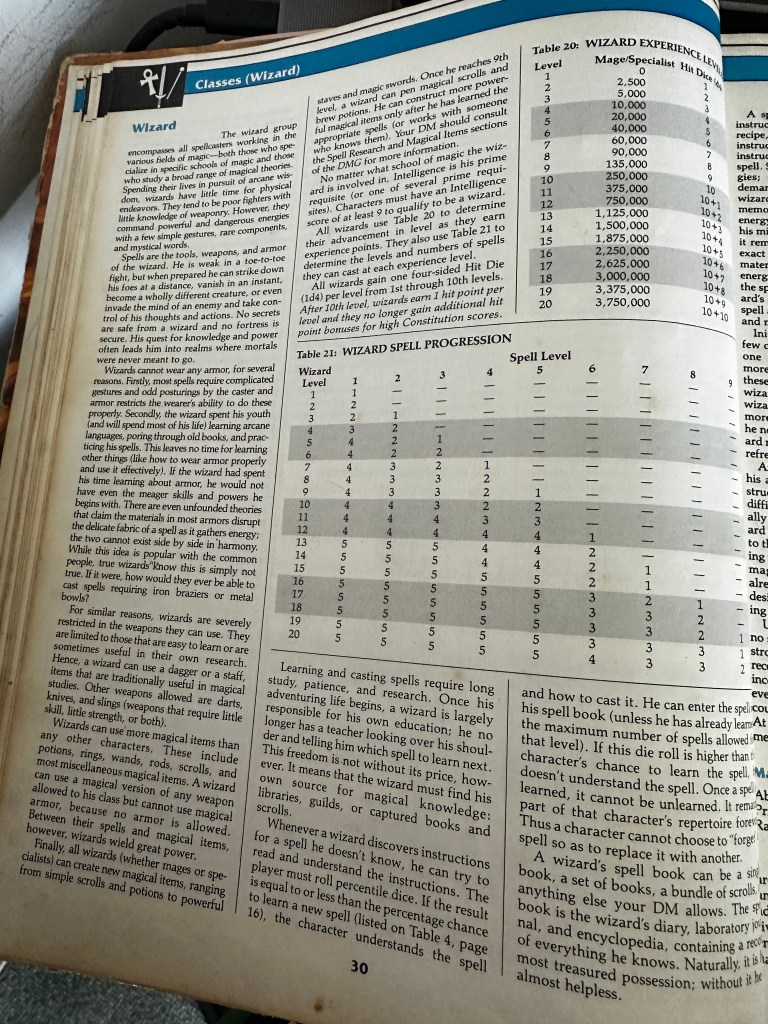
A photo of page 30 of the AD&D 2nd Edition Player’s Handbook. It contains the description of the Wizard class, including Wizard level progression and Spell Progression tables.
A photo of the Illusionist section from the AD&D 2nd Edition Player’s Handbook.

My options are Fighter, Illusionist, Cleric, Thief and Psionicist. Should I roll for it? Yep. On a d5 (thanks again DCC) I rolled a 2. Illusionist!

Illusionists get a +1 on saves vs illusion spells and others get a -1 against their spells. They also get to memorise an extra illusion spell at each level. Researching new illusion spells is easier but conversely, researching the spells of other schools is harder. Of course, it also means that they can’t learn spells from Schools directly opposed by illusion, ie, necromancy, invocation/evocation and abjuration.

Ok, I am going to have to wrap this up here. This character creation process in Ad&d is pretty time intensive, especially when I go through every potential class candidate and critique them I will have to finish this off tomorrow. See you then!

Character Creation – Advanced Dungeons & Dragons 2nd Edition, Dark Sun

Showing some character

So the character creation posts have had some good feedback. People mainly seem to like it when it goes disastrously wrong for some reason. Schadenfreude maybe? Anyway, I thought I would continue the series with another one. This time, I thought I would go back to the game I think of when I think of my teenage years, AD&D 2nd Edition (TSR 1989), and, more specifically, the Dark Sun setting (TSR 1991). I have never been a player in a Dark Sun game, I was always the DM, so this will be interesting. Also, Dark Sun characters need to be pretty hardy to survive the scorching wastes of the magic-blasted world of Athas. So, if I roll bad, you sadists out there should get a kick out of it.

Step 1 – Ability scores

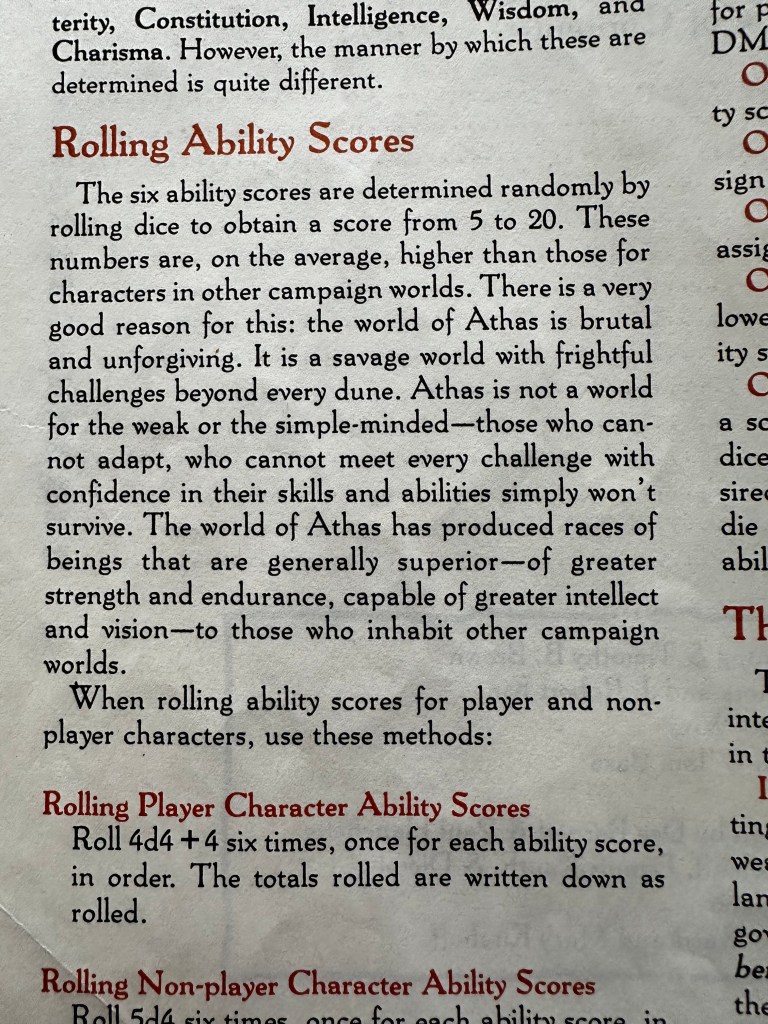
A photo of the “Rolling Ability Scores” section of the AD&D 2nd Edition Dark Sun Rules Book.

We see an immediate departure from AD&D norms with rolling your ability scores in Dark Sun. Because the setting is so brutal, your PCs get higher than average scores to reflect the hardness of life there. So, instead of the usual 3d6 for each score, you roll 4d4+4 for a minimum of 8 (even though the book claims the minimum is 5, which is numerically impossible) and a maximum of 20, unmodified. There are a bunch of optional methods for rolling included in the Dark Sun Rules Book but I am going to stick with the basic one. So, here we go:

  • Strength: 13
  • Dexterity: 16
  • Constitution: 19 (Suck it Canon Fodder)
  • Intelligence: 17
  • Wisdom: 16
  • Charisma: 10 (Oh well, they can’t all be winners)

First thoughts; obviously this method produces some high results. Also, I was very lucky. Also, these rolls mean that this character could choose almost any race or class.
Second thoughts; now that it comes to it, this is one of the reasons my players really liked this setting. They got to create some very powerful characters, even without cheating on their rolls (which was, I must be honest, the norm at the time)!

Step 2 – Player character race

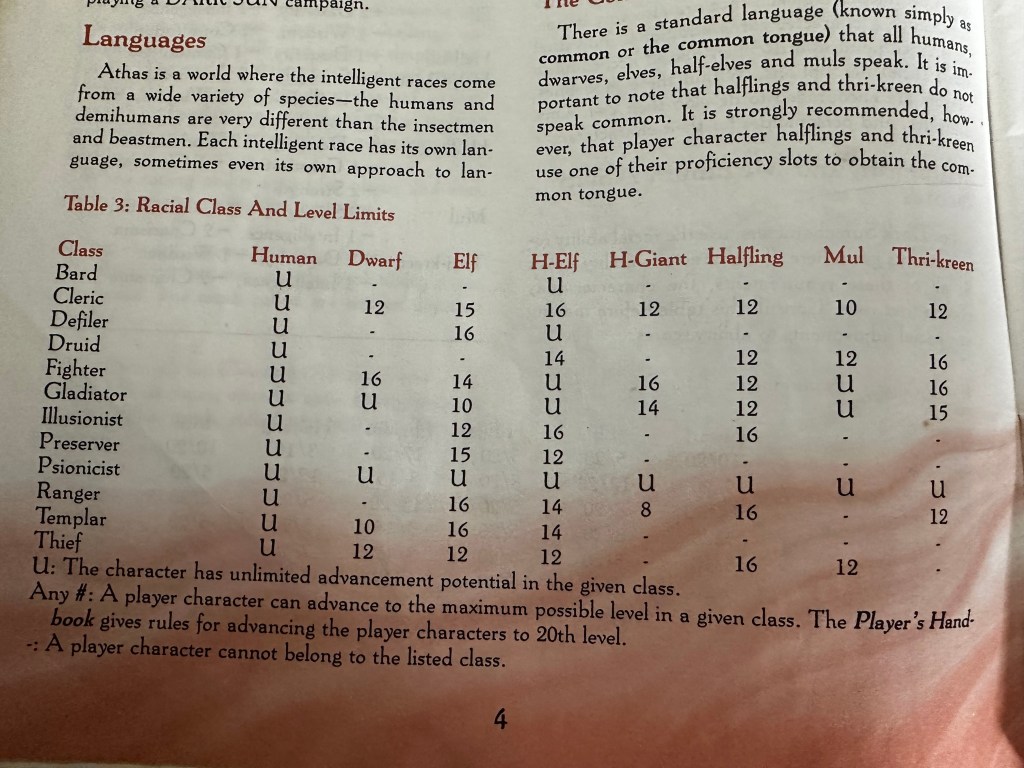
A photo of Table 3: Racial Class and Level Limits from the AD&D 2nd Dark Sun Rules Book.

There are Racial Ability Requirements in this setting as there are in the base game, but some of them are very tough to achieve. The only one I think is ruled out is the Half-giant. If you want to be one of those big lads, you need to have a minimum strength score of 17. So here are the races I get to choose from:

  • Dwarf
  • Elf
  • Half-elf
  • Halfling
  • Human
  • Mul
  • Thri-kreen

Pretty much none of the races in Dark Sun bear any resemblance to the standard D&D ones, with the possible exception of bland old humans. There are also a few new ones here.

Dwarves are all hairless and obsessed with a focus that gives them bonuses to saves and proficiencies when performing them in pursuit of that goal. They can choose to be Clerics, Fighters, Gladiators, Psioicists, Templars or Thieves. Although all of these have level caps below 20 except for Gladiator and Psionicists. Some of them are really low. A Dwarf can only get to level 10 as a Templar for instance! But they can multi-class. They get a +2 to CON, +1 to STR, -1 to DEX and -2 to CHA.

Elves are tall and lanky and weather-worn with an incredible stamina needed for running long distances across the Athasian deserts. They are very insular and tribal. They get bonuses with long swords and longbows made by their own tribes and to surprise rolls in the wilds. They can choose to be any class except Bard or Druid. They get +2 to DEX, +1 To INT, -1 to WIS and -2 to CON.

Half-elves have to deal with terrible intolerance from both elves and humans and have to do without basic connections or friends (this shit is in the text, ugh.) Anyway, it makes them very much self-reliant loners. They get a free Survival proficiency at 3rd level and can make a pet friend at 5th level! All classes are open to them and they get to multi-class if they want. They get a +1 bonus to DEX and a -1 to CON.

Half-giants are a thing in this setting. And, although I can’t choose them, here is a little bit about them. They are up to 12 feet tall and weigh up to 1600 lbs! They have no culture of their own as a very young and dull-witted race. Once again, the text is pretty bad about this kind of thing. It really underlines for me the need for the push-back this sort of thing rightly received in more recent times. Anyway, they getting bonuses to STR and CON and minuses to INT, WIS and CHA. They can only choose from 5 classes.

A photo of the Halflings section of the AD&D 2nd Edition Dark Sun Rules Book including an illustration by Brom depicting two tattooed halflings with long, wild hair emerging from a cave.

Halflings are small humanoids from the jungles at the fringes of civilisation in the Tablelands of Athas. Their culture is concerned mainly with appreciating their local natural world and complex interactions of a social sort between their various villages and clans. They are not really into war and wealth. They get bonuses to use slings and thrown weapons, to surprise opponents and to save against magic and poisons. They get a -2 to STR, -1 to CON, -1 to CHA, +2 to DEX and +2 to WIS. They can choose any class except Bard, Defiler, Preserver and Templar. They can choose to multi-class.
As a side note, I had a memory of Halflings all being cannibals in this setting but it is not mentioned in the character creation section so it might have just come up in certain adventures or something. Not sure.

Humans are much like humans in other settings except they generally have some weird little traits, like mutations. This is a post-apocalyptic setting after all. So players are given latitude to come up with some little physical idiosyncrasy that is purely for flavour. They can choose any class and can be dual-class, but cannot multi-class.

Muls are yet another “half-race.” Its genuinely so distasteful, this whole business. Anyway, here we are, they are half human, half dwarf. They are the product of slave-owners “ordering their births” for gladiatorial or labourers. They are born sterile. FFS. My stomach truly turns at this description of this race. It’s just so cruel. They also “live out their lives in servitude, driven by hatred and spite.” Give them a break! They are tall and well built. They get a +2 to STR and +1 to CON, but a -1 to INT and a -2 to CHA. They can work longer and harder than others as well. They have to choose, at the time of creation if they are considered human or Demi-human. If considered human they can have unlimited advancement in any class and become dual-classed. If the player chooses demi-human, they can, instead become multi-classed and can only choose from Cleric, Druid, Fighter, Gladiator, Psionicist and Thief. This really puts a great big question mark over the entire idea of class restrictions on Demi-human races, if you ask me. This suggests that the reason a demi-human can’t choose any class or get all the way to 20th level in it, is not because of a physiological, racial impediment, it’s only because human society says they can’t… I mean, what?

Finally, Thri-kreen. They’re big mantis guys who have a base AC of 5 but never wear armour. They don’t need to sleep but they can’t use most magical items as they are generally designed for use by human shaped people. Their hunting packs control much of the Tablelands. They have a well-known taste for elves (maybe I was mixing up the Thri-kreen and the Halflings.) They get natural bite and claw attacks and a powerful leap. They get venomous saliva at 5th level as well as a bonus proficiency with the Chatkcha, a thrown weapon. They can also dodge missiles at 7th level. They get a +1 to WIS and +2 to DEX, but -1 to INT and -2 to CHA. They can choose to be Clerics, Druids, Fighters, Gladiators, Psionicists or Rangers and they can multi-class too.

This post is already much longer than I had intended. I started going through the races and couldn’t stop commenting on them. It was like watching a car-crash in slow motion.

Anyway, I think I will have to continue this character creation process in another post tomorrow. But, before I go, I think I will have to complete the choice. Obviously, as always, the race you select will have a direct effect on the choice of class due to the ability score modifiers. But, since we have a tradition of randomness in the character creation posts, I think I will stick with it and roll for it. There are seven races available to me and, luckily, I do have a d7 to hand thanks to DCC. Here goes:

I rolled a 6 on a d7, dear reader, but I just can’t accept it because that would have been a Mul and that makes me too sad. So I re-rolled and got a 4, Halfling!

So, that leaves me with ability scores as follow:

  • Strength: 11
    • Hit probability: Normal, Dmg Adjustment: None, Weight allow.: 40lbs, Max press: 115lbs, Open Doors: 6, Bend Bars/Lift Gates: 2%
  • Dexterity: 18
    • Reaction Adj.: +2, Missile Attack Adj.: +2, Def Adj.: -4
  • Constitution: 18
    • HP Adj.: +2 (+4 for Warriors. This means Fighters, Rangers and Gladiators in Dark Sun), System Shock: 99%, Resurrection Survival: 100%, Poison Save: 0, Regeneration: Nil
  • Intelligence: 17
    • # of Lang: 6, Spell Level: 8th, Chance to learn spell: 75%, Max. # of Spells/Lvl: 14, Spell Immunity: –
  • Wisdom: 18
    • Magical Def Adj.: +4, Bonus Spells: 4th, Chance of Spell Failure: 0%, Spell Immunity: –
  • Charisma: 9
    • Max # of Henchmen: 4, Loyalty Base: 0, Reaction Adj.: 0

The final task for today is to flesh out this Halfling a bit. I am giving her the pronouns she/her and calling her Rezina.

A page from the AD&D 2nd Edition Dark Sun Rules Book showing the Height, Weight, Age and Aging Effects tables for PC races.

She is 3ft 3in tall, 59lbs in weight, and 41 years of age.

Back tomorrow with the choice of class and probably everything else. See you then!

Player vs GM

Not what you think

I have an easier time writing about the games I am GMing or the ones I am going to GM in the future, compared to those I play in. I think the reasons for this are pretty obvious, right? I have an a behind-the-scenes view of the games I GM, I have read widely on the games, maybe I have home-brewed the world, I probably have a better handle on the rules than most others at the table. As well as that, I set up the game, I send out the invites, I normally host the game, so, it makes sense.

As for the ones I play in, I am still invested in them, or at least in my character, I have usually made some effort with a backstory and personality and I want them to experience cool stuff in the game world with a bunch of other weirdos. There are probably a couple of my characters that I could spend an entire post discussing (and probably will, now that I think about it) but not before they are even made.

Anyway, that’s why I am taking the last few games from my Games I want to Play this Year list and pop them all into this one post.

Old School Essentials – campaign I think

My friend, Isaac of Black Sword Hack fame has been working his way steadily through all the OSE books he could get his hands on. He’s almost ready to kick off that campaign! Very exciting! It will be my fist time playing this system and having been a part of Isaac’s Black Sword Hack game for the last couple of years, I know how he likes to construct a grubby, fun, weird campaign world for us to muck around in.

I am not all that familiar with the ruleset of OSE, but from what I understand, it took the rules from Basic D&D and some of those from AD&D and took out all the stuff that people tended to ignore. I know it does have a race-as-class idea that is similar to the way DCC does it but, overall, it gives me much more old school D&D vibes than DCC does.

I might just go and roll up a few little guys using the OSE rules to get an idea of how it works and get in the mood for it.

Heart: The City Beneath – Open Hearth campaign

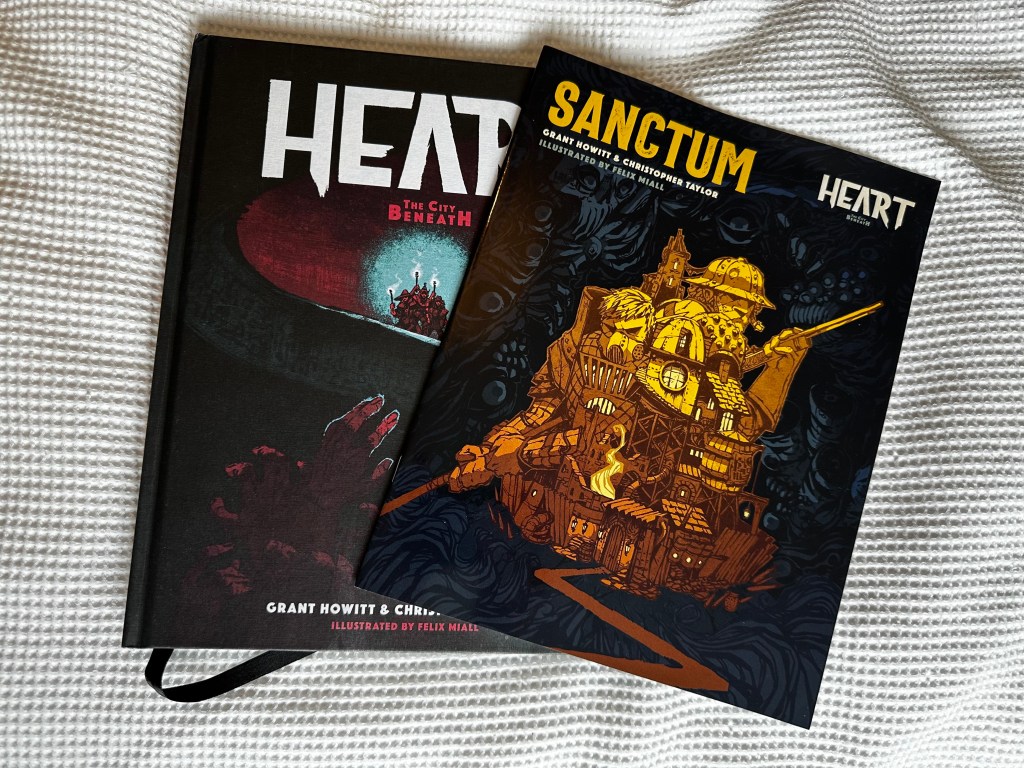
This game technically already started; I am achieving my goals, dear reader! We have only had a session 0 in which I created my aelfir Incarnadine, Forgotten-Frost-Remembered. He is called to the Heart in search of adventure (also he had to flee the City Above due to his crass and embarrassing obsession with money, not to mention his astronomical levels of debt.) He and his fellow delvers are on a mission to help a haven that we created together using the rules from Sanctum, a sourcebook for Heart that is meant for this very purpose. The haven has no name as it was deleted by a Deadwalker some time earlier. The aim is to build it up while pursuing more selfish goals before we all blow up in a conclusion of zenith ability fuelled glory.

All credit to our GM, Mike, for having the presence of mind and session 0 nous to figure out our group’s haven-based goal and get us to create it together in under an hour.

Can’t wait to start getting weird in the Heart.

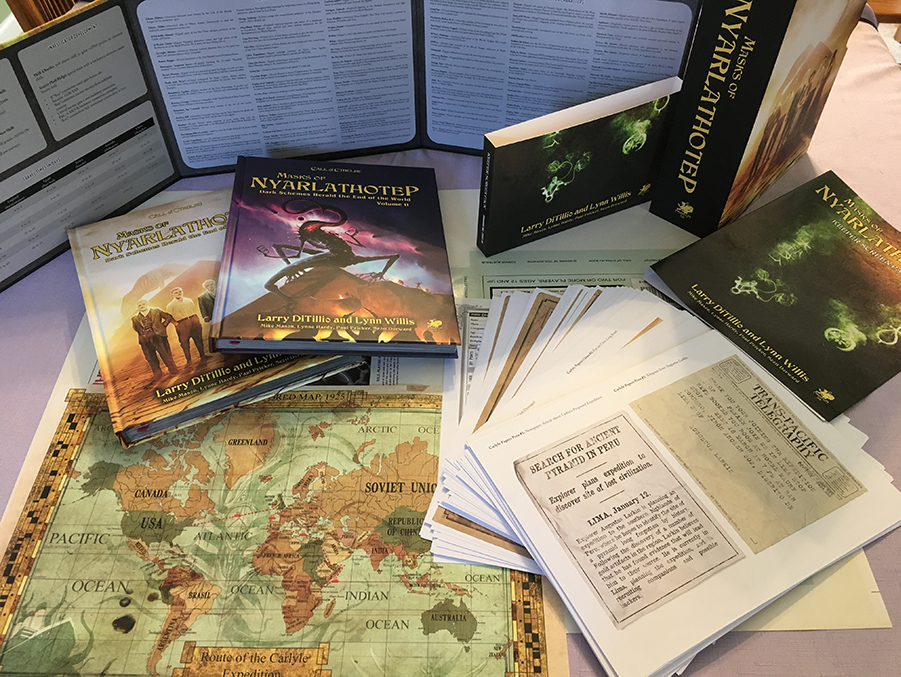
Call of Cthulhu – Masks of Nyarlathotep – campaign

This one is probably a long-shot. This is actually an ongoing campaign but has been on semi-permanent hiatus since, I want to say 2022? Not sure. Anyway, this is another of Isaac’s campaigns. It was one of those things, playing with adults can mean that sometimes, real life stuff takes precedence and there’s not much you can do about it. Since then we got into other games and other campaigns and Masks has been on the back burner for a long time. Every time we get to chatting about Call of Cthulhu, we end up saying we would love to get this classic campaign started up again.

Last we left our intrepid investigators (I was playing a gangland boss from London named Grant Mitchell) they had faced down other worldly terrors in the basement of an occult shop and proved the innocence of a man falsely accused of murder. They also uncovered some evidence and information that drew them to various other places around the world in their pursuit of answers to the question of who was responsible for the murder of their good friend, Jackson Elias. Anyway, they had concluded their snooping in New York and were on a slow boat to London. It has been a very slow boat at this stage…

Magus, Pike and Drum – Playtest

It’s Isaac again! This time with an early playtest for a game that he is very much still developing. I don’t want to go into any detail here but I think I can say at least that it is a semi-historical setting and it will be using the Resistance system, created for Spire. Can’t wait to try it out. What I have read of the character classes and abilities so far makes it sound very fun and interesting to play.

OK, that about wraps it up for today. See you tomorrow with more from the Dice Pool.

AD&D 2nd Edition

Masochism?

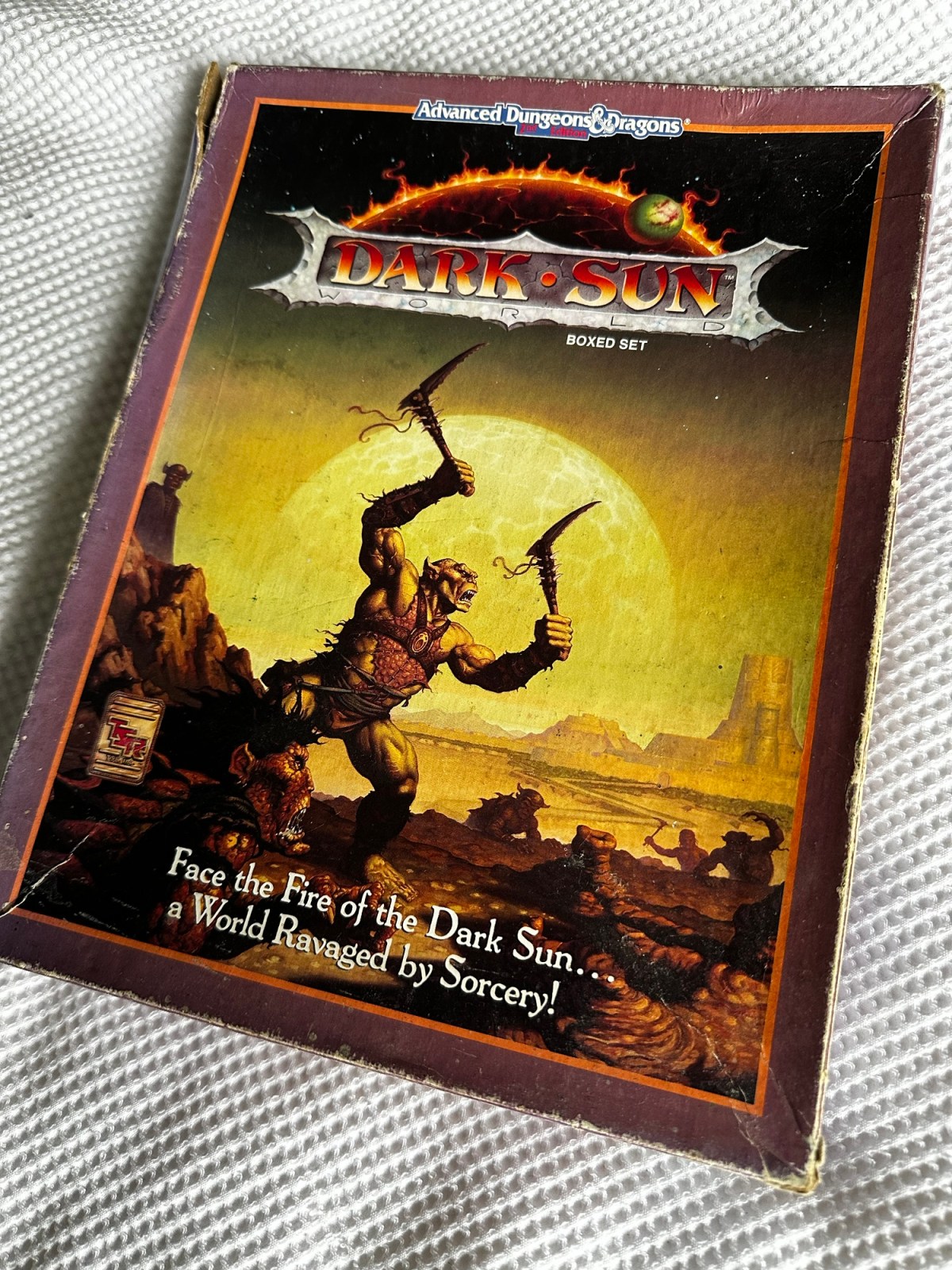
I have a hankering, beloved reader. I crave a little old school. Not revived or anything. No renaissance here. I’m talking, the original (at least for me.) I have been thinking about running an honest to goodness AD&D 2E campaign. That’s the system I cut my teeth on as a DM and I have a lot of the old books lying about on shelves, rarely picked up for any reason other than curiosity. I have a trio of my favourite settings from the old days, Planescape, Ravenloft and Dark Sun. But, is having them a good enough reason to want to run them? The rule set in 2E still involved THAC0, for crying out loud. Only certain races and certain alignments could play certain classes. Every rule seems over the top and over-worked when you look at them. So why? Why would I want to run it?

Nostalgia?

I ran the most successful campaign of my teenaged years in Dark Sun. I loved the setting. It was gritty and made life very difficult for your player characters. They had to start at 3rd level because a first level character wasn’t going to survive in the deserts of Athas too long. You were encouraged to create a “stable” of 5 characters and switch between them to level them all up, just because it was quite lethal. Most mages actively destroyed the land by casting spells and the Halflings were cannibals. It was fucking hardcore and we loved it. So, when I think about running AD&D again, I think I’m channeling the feelings from that time.

But I will admit there is also a sort of morbid curiosity to try it out. More as a historical research project than anything else. How would it compare to more modern systems like 5E or the Year Zero engine or even actual OSR systems?
And I think at least one of my players shares this sense of curiosity about this game and the legacy it spawned. He didn’t get to experience it so maybe it’s just his curiosity too. I mean, people really did love it, right? So, why?

Dark Sun

There is also another point, though. It might even be the main reason I want to do it. Dark Sun itself. WOTC have indicated in the past that they are never likely to revive Dark Sun as a setting for D&D. It just has too many slightly problematic elements. There is a lot about slavery in it. There’s a very strong theme of climate disaster and despotism and evil capitalists. I think it is generally safe to say that Wizards is not interested in picking up any political hot potatoes these days. They will keep it light and breezy whenever possible. So Dark Sun is never likely to come back. Now, I know that enterprising individuals have made some impressive 5E conversions of the setting and I have explored that option. But they don’t give me what the original did. I think Dark Sun benefits from the cruel and crunchy 2E system as much as it does from the grittiness of its world building. And I think that is the main reason I want to run it again.

Anyone out there running any old versions of D&D? If so, why?