The Editioning, AD&D 1st Edition, Part 2

So Charming

He turned up at our door. The lord of the realm, Count Strahd von Zarovich, just appeared at our door on our first night in Barovia. We were expecting maybe wolves? Nope. The great vampyr himself paid us a visit in person. I’ll be honest, we were at something of a loss for how to deal with this. There was a silence around the table (video call.) And then, Warder Jon Blackhall, my paladin, gallant protector, answered the door. He’s not that smart, but also, he believes in good manners. Actually, his lack of smarts drastically compounded the situation moments later. The Count cast Charm Person on him, and just like that, they were best buds.

Charm Person in AD&D 1st Edition is a potentially ruinous spell. There are a few of these low level spells that really punch above their weight. Hold Person is another one. They feel powerful in a satisfying way, whether they are used on you or by you. Strahd cast Charm person on Jon and he was ready to invite the master vampire inside. I had fun roleplaying this and the whole scene was great because the other players had to work hard to convince Jon he was being manipulated. They eventually succeeded and the door was closed. But that didn’t change the fact that he could still under the Count’s sway for at least another week! Lucky old Jon, he’d be allowed another saving throw at that point. This sounds punitive when you look at it through a modern D&D lens. We weren’t even in combat and an element of my PC’s independence was hijacked. And there was nothing we could do.
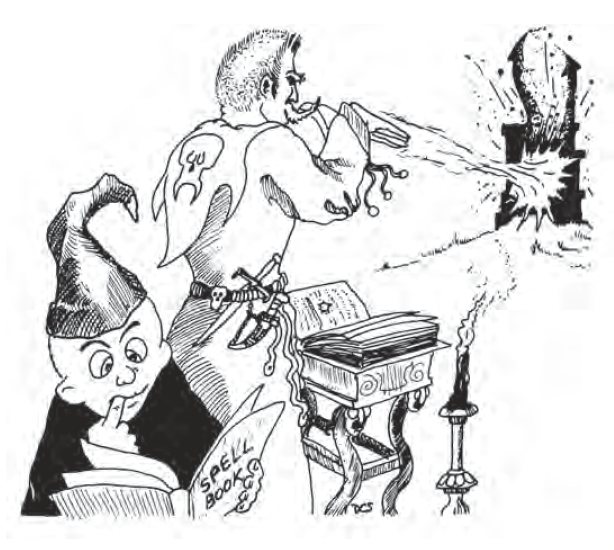
My other PC, Merryn, the elven Magic User had attempted to learn Dispel Magic during character creation, which would have been enough to remove the charm, but she had failed, and, according to the rules of AD&D 1st Edition, she simply cannot ever learn it now(! This, too, feels rough, at the time.) But, what I found, at the table, was a fantastic prompt for role-play. I think, when player’s complain about their characters’ losing agency, it is often because the game does not go the way they had planned in their head that it should go. But, just like a GM starting a game with an exact idea of what will happen in it, this approach will lead only to frustration and dissatisfaction. This way of thinking presupposes that everyone else at the table is not only ok with your ideas for how your character’s story will go, but also that they are willing to sacrifice their own fun to make that happen for you. Instead, if you go into it with a few major personality traits and ideas for how the PC might act in a given situation, and then roll with the punches, you are far more likely to have a freewheeling good time. For me, Jon getting charmed felt like a pivotal moment for him. Either he would remain charmed for the rest of the game, potentially, and act in Strahd’s best interests when he otherwise wouldn’t, or he would get the spell lifted and this whole adventure would suddenly become much more personal. Read on, dear reader, to discover which way that went!

Night in Barovia

If you haven’t read the first part of our adventure, dear reader, and you want to catch up, please go here. If you think you might want to be a player in Ravenloft, someday, turn back now! There will be SPOILERS!

My paladin, Warder Jon, upon hearing of the missing village girl, Gertrude, felt it important that they make an effort to find her. He thought perhaps she might have run off into the forest, and having found the messenger killed by wolves in the woods, he was worried for her life. I wish I hadn’t pushed this now, actually. I do think this is how Jon would react to hearing about the missing girl, but Isaac had already told us there was nothing more to find around her house. No clues, no tracks. I think it is fairly obvious that we’re supposed to think she might be found in the castle. All roads lead there, after all. Anyway, we wasted a bit of the session doing that.

Afterwards, we still had some daylight so we bought some supplies and returned the Burgomaster’s house to help repair it. We boarded up windows, reinforced doors, patched up holes in the walls, that sort of thing. And then we waited. Merryn went looking for spell books, and found none. Endrei went up to the top floor and looked out over the cemetery with Ireena, the Burgomaster’s daughter who had been bitten by Strahd. Together they witnessed the mass exodus of the ghostly adventurers who had met their end in the castle. They rose, silvery and ethereal, from their graves and progressed up the hill to the castle. Ireena said they did that every night.

And then Strahd came a-knocking. I outlined the upshot of that above. We sent him packing but not before Jon got enchanted. He went to bed thinking the vampire was his best friend. And so, when an aspect of the Count appeared at his boarded up window in the dark of the night, he welcomed it. He was in the shape of a bat, and I’m not sure if this was just a dream or if it was real. Either way, Strahd asked a reasonable favour of Jon. He wanted to know if one of our number possessed a sword that had been broken in two at some stage. Jon thought this might refer to the fighter, Caldan, whose sword had seemed to pull him through the gates into Barovia the previous day. He promised he would get the sword for his new undead mate.
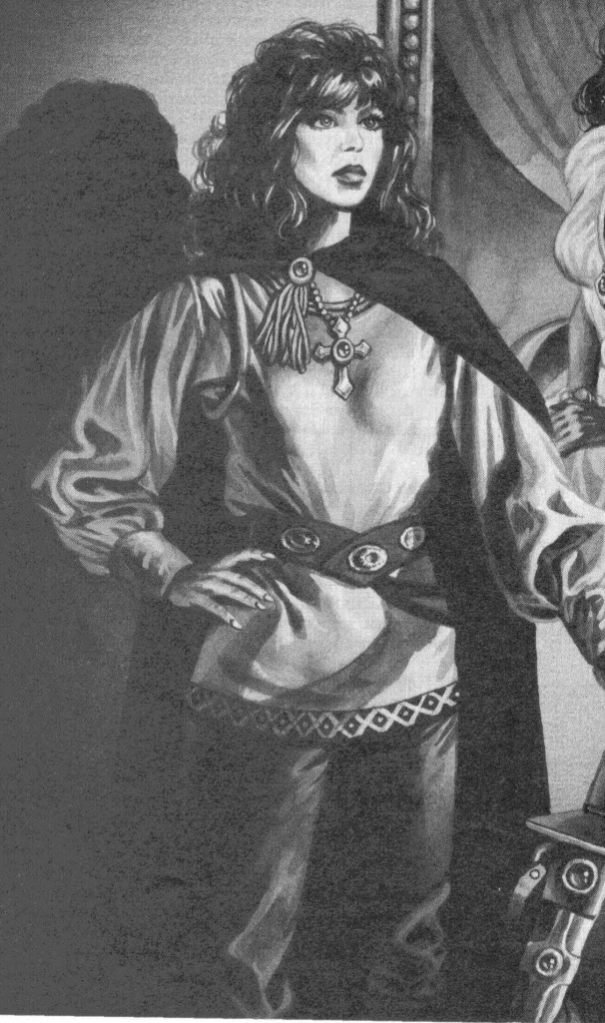
Ireena - a dark, curly haired, white woman in a cloak, golding a sword.
Ireena

The following day, we visited Madame Eva, accompanied by both Ireena and her brother, Ismark. She was to be found at a camp with the rest of her people, along the river. Merryn was very excited to witness what she insisted on referring to as “human magic.” Eva drew the cards for those of the party who entered her tent. For this, Isaac was able to use the Tarokka deck that I had recently procured. It is the official one made for the recent 5.5E version of Ravenloft, but one Tarokka deck is as good as the next, I assume. Anyway, since we were playing online, Isaac drew all the cards himself, and then read out the readings from the adventure. These gave us a lot of clues! I believe they also have a concrete effect on events within the adventure itself, although I’m not sure exactly how since I haven’t read it yet. We discovered something of the location of a “protector of good,” discovered that knowing the history of the place would help us, that the object of our search could be found where a prince is buried, that there is a weapon of light in the hands of darkness, and that all of this would be cast in a dark shadow.

Once the reading was done, the group asked Eva to remove the magic laid upon Warder Jon. She did so in exchange from a promise that we would bring her the two parts of the sword that was broken! We didn’t reveal to her that part of that might be in Caldan’s possession but we did promise we would bring it to her. So, she dispelled the Charm Person and Jon was freed! Of course, he swore an oath to kill the Strahd for the ignominy of ensorcelling him.
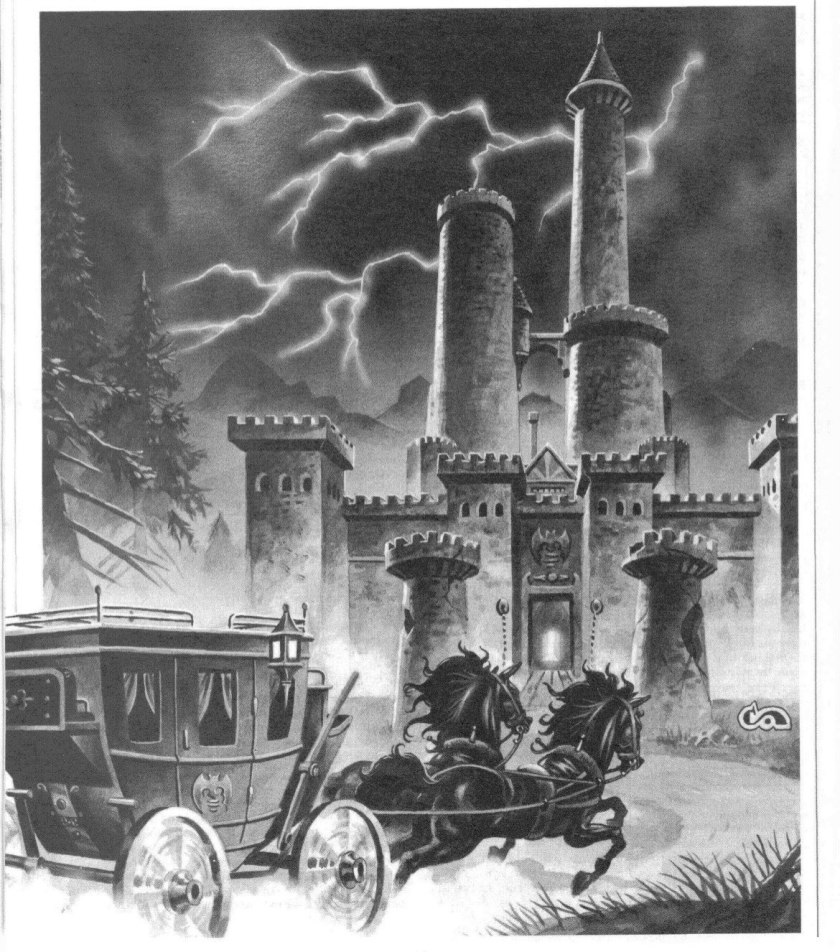
Castle Ravenloft with a cariage approaching through a storm.
Castle Ravenloft

From the camp, we made out way back along the road and took the other fork in the crossroads. Up we climbed until we discovered an unmanned black carriage and set of ebon horses, all beautifully appointed and apparently waiting for us to climb board. Only three of us took the ride, including Merryn and our resident gnome assassin, Celfi. The rest refused on principle and, instead, got soaked to the skin as the weather worsened. Eventually we all reached the castle, and it was introduced with some very evocative read-aloud text from the adventure, which, I think, assumed that the whole party would take the carriage.

The front door of the keep stood open, braziers flickered in the hall and it seemed warm and welcoming. We rejected it despite Celfi’s insistence that going in the front door would be the last thing the Count would expect! Instead we investigated the northern side of the courtyard where we found a gate. We easily opened that and found ourselves in another open yard. This one played host to the coach house which was, eerily, filled with the carriage which had just transported some of us there, despite the fact we had just left it on the road out front moments before. Also in this yard, surrounded by high walls was a gate into a neglected garden right at the back of the keep. Our assassin picked the lock for us and we investigated. The garden itself was a sorry affair but right at the back was another gate leading out to the overlook. This promontory jutted out from the pillar of rock the castle was built upon, and allowed an unparalleled vista of the count’s domain. From here, we were also able to line of windows below us, set into the rock face, glowing slightly with a feint light.

We returned to the yard once again to try the back door. This was the only door into the keep other than the front door, so we thought we should enter this way. Inside, we discovered a small, cold chamber. There was a pair of armoured skeletons slumped on either side of a stairway leading down from the room. Upon investigation it became obvious that they were not undead, merely decorative. The room also had a table and on that table rested an ancient book. It was half filled with names, all illegible. Some of us signed the tome, Merryn signed the pseudonym she said she used for her novels, Theodore Woolyfoot. Another member of the team signed it, Count Strahd von Zarovich! Anyway, it then occurred to us that this book could contain the names of all those adventurers who are forced to return to the castle at nigh as ghosts. If that were the case, perhaps destroying it would free them! We took it out to the overlook where there were a pair of bare stone structures sheltered from he wind and the rain. Just as we were about to set it alight, we heard a voice from the shadows behind us, welcoming us to his castle. The Count had come to greet us. Jon prepared to fulfil his oath! Time to roll for initiative!

Conclusion
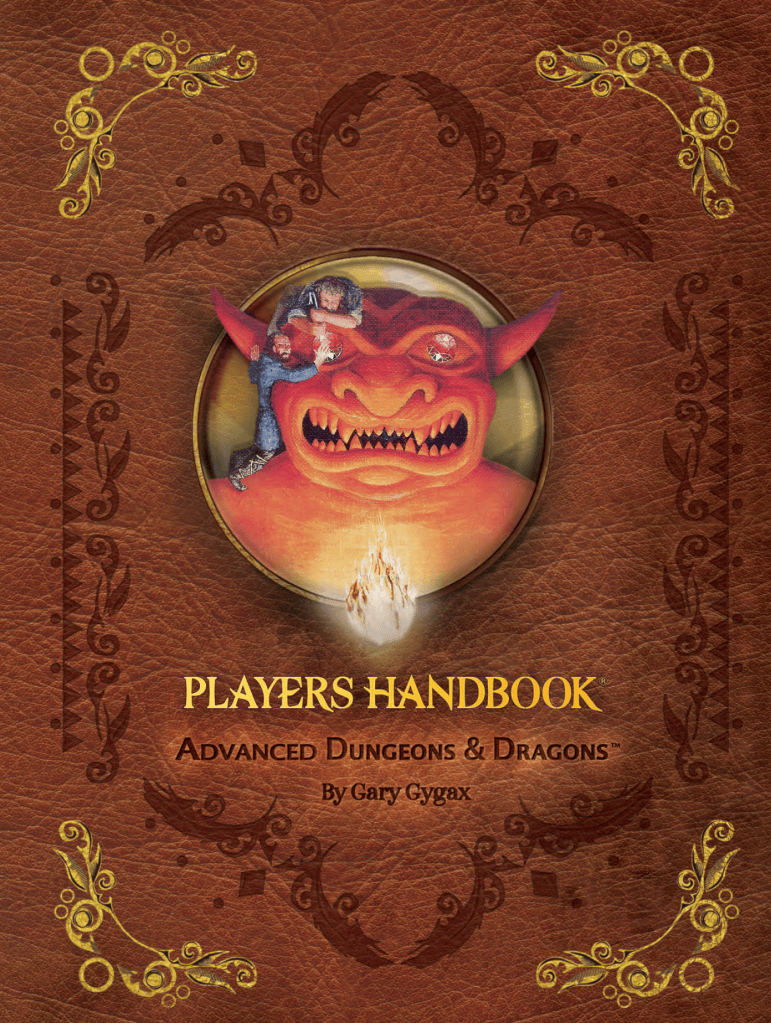
The cover of the 2012 reprint of the AD&D Player's Handbook - faux-leather cover, with an inset illustration of the head of the famous demon statue from the cover of the D&D Basic set.
AD&D PHB 2012

What I have described above were the events of two sessions. Both were a little short, about two hours each. So, after three sessions, we have not had to interact with the mechanics of the game too much. I get the impression that’s about to change. I recently read the Player’s Handbook cover to cover so I’m pretty well prepared for it, I think, though I am still a little unsure how to factor ⁣segments into a combat round. Thankfully, I’m not the DM so Isaac will have to figure that part out!

I’m very excited to finally be in the castle and exploring. And encountering the antagonist himself, not once, but twice in the course of the adventure so far has been very cool. It makes me feel like he is a real personality and not just a bag of XP and treasure. How will the fight go? Badly, I expect. Let’s find out next time!
The Editioning, AD&D 1st Edition, Part 1

1E or 2E?

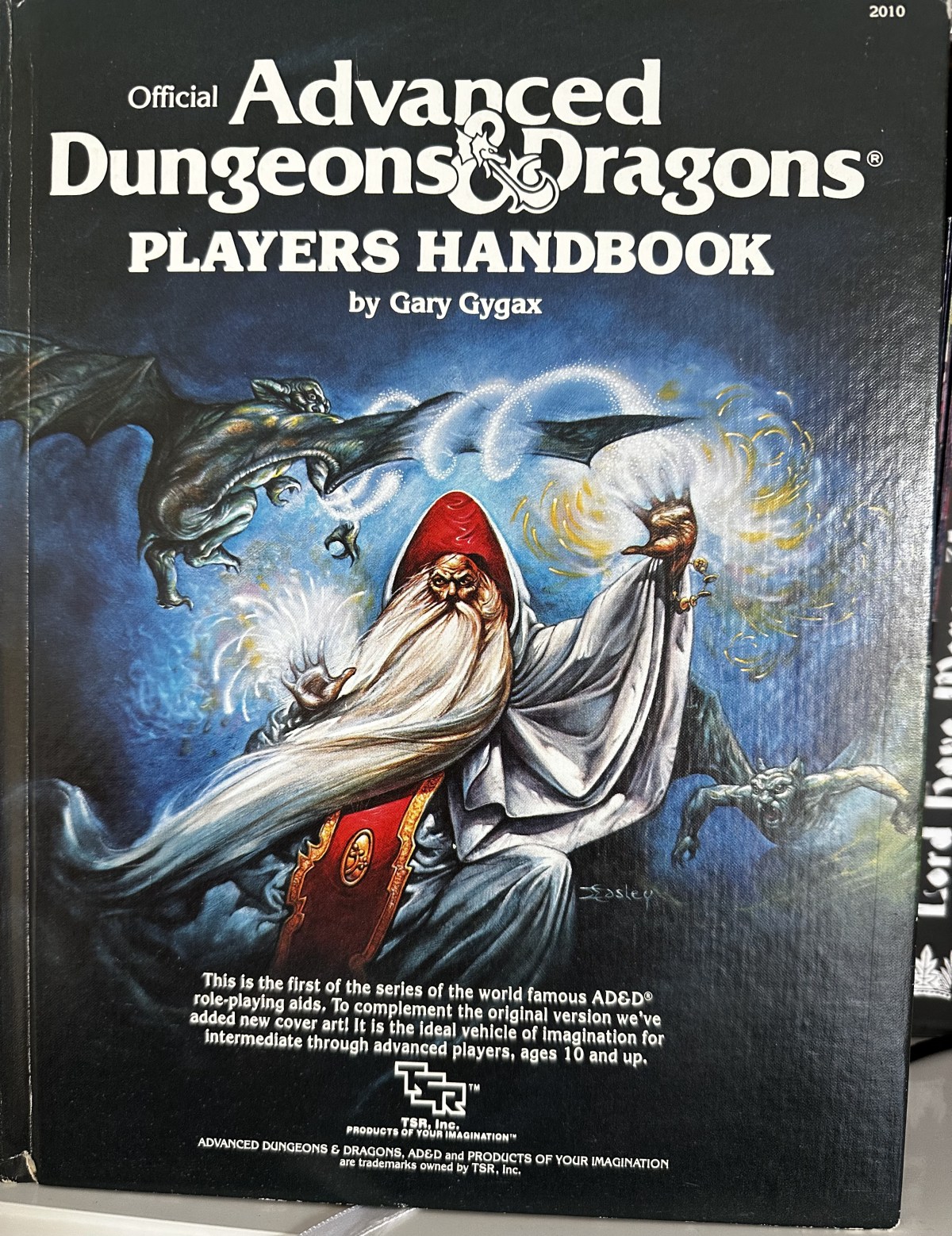
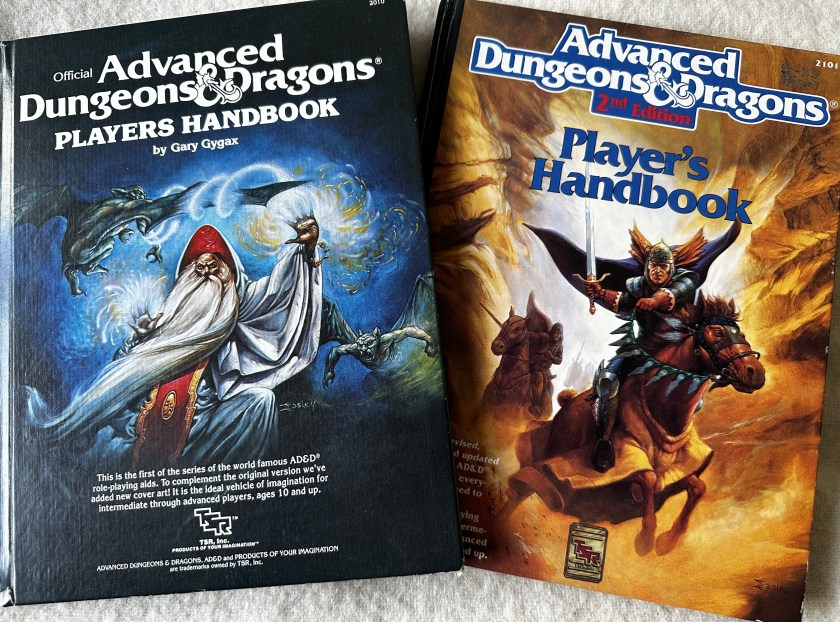
The covers of both 1st and 2nd Edition Player's handbooks, side by side.
1E v 2E

I don’t have a lot of experience with AD&D 1st Edition. By the time I felt ready to move on to an “advanced” version of the game, 2nd Edition was available and TSR was releasing a truck-load of source-books, settings, splat-books, adventures and accessories for it. It was natural to move from Basic directly to that. So, I couldn’t really say what the big differences are between the two versions.

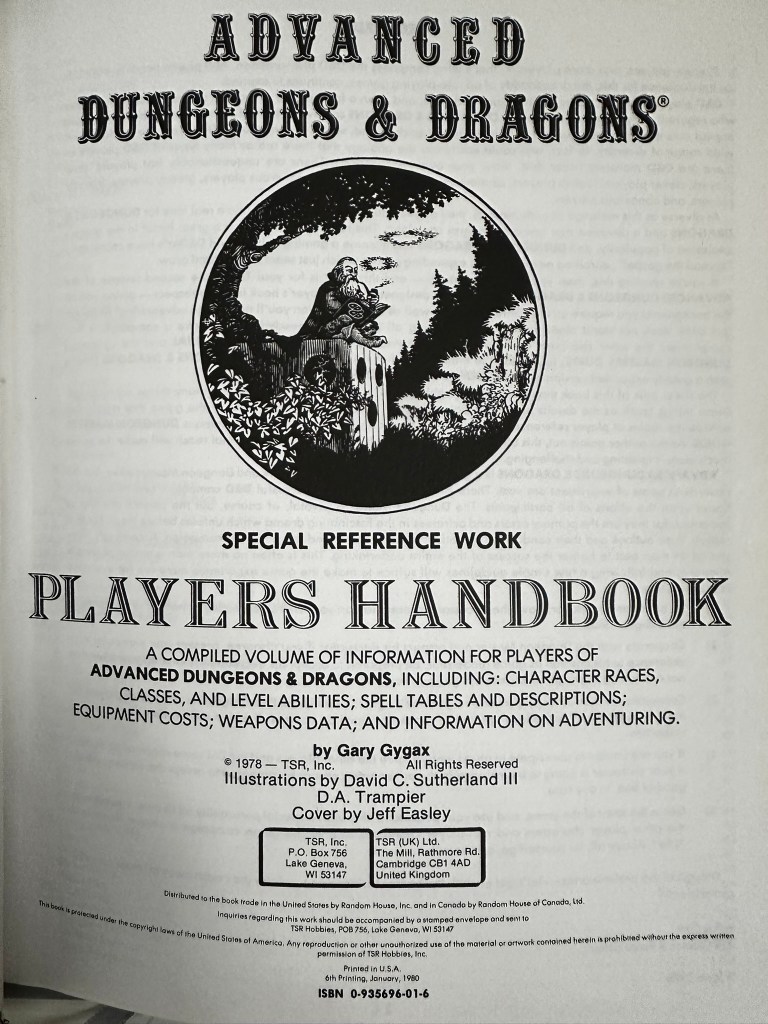
PHB page 4 - illustration with a wizard blowing smoke rings and the credits for the book. All writing credits are Gary Gygax.
Smoke Rings

The creator is different, of course. Gary Gygax wrote 1E. And, I mean, he’s Mr D&D, right? That’s got to count for something. Here’s what he has to say about that in the preface to the 1978 Player’s handbook for AD&D 1st Edition:

…the game’s major appeal is to those persons with unusually active imagination and superior, active intellect — a very demanding audience indeed. Furthermore, a great majority of readers master their own dungeons and are necessarily creative — the most critical audience of all! Authoring these works means that, in a way, I have set myself up as final arbiter of fantasy role playing in the minds of the majority of D&D adventurers. Well, so be it, I rationalized. Who better than the individual responsible for it all as creator of the “Fantasy Supplement” in CHAINMAIL, the progenitor of D&D; and as the first proponent of fantasy gaming and a principal in TSR, the company one thinks of when fantasy games are mentioned, the credit and blame rests ultimately here. Some last authority must be established for a very good reason.

I’ll let you make of that what you will, dear reader. But, one thing’s for certain, Gary was sure there was only one man for the job!

From his writing early on in the PHB, Gary seems to have intended this as almost an add-on to the earlier B/X D&D. Here’s another excerpt from the preface:

I am convinced that it does for the old D&D + supplements what GREYHAWK did for D&D when it first appeared, and then some.

Here, he’s referencing the Greyhawk supplement for OD&D, which greatly changed and added to the rules, the classes and the gameplay of that game. And then, in the introduction he states how easy it should be to port your existing D&D character over to AD&D:

You will find it easy to integrate your existing character or characters into the new system, and at the same time the game will be both familiar and different.

I mean, its obvious that the games are built on the same foundations, and that it should be relatively simple to update a PC to work in any version of it, but I don’t think I had realised before that it had been one of Gygax’s intentions going into this project.

To compare, this is an excerpt from David “Zeb” Cook’s foreword to the 1989 AD&D 2nd Edition Player’s Handbook:

It’s not accurate to say this is a book that I alone have written. First off, there are a lot of other names listed in the credits. They, especially the developers, contributed time and talents that I don’t have. Improving the organization and readability was one of the reasons we started this project in the first place. These are tasks that can’t be done without talented developers and editors who play and care about the game. If you discover that it’s easier to find rules during your gaming sessions and that everything seems to make more sense, thank them.

He goes on to state how much the input from players shaped the entire edition here, too. You can see a different approach from the outset I suppose. But is the result all that different?

As to 2nd Edition’s compatability with previously published D&D materials:

Overall, it is best to approach the AD&D game as if it is a completely new game and be pleasantly surprised when you find overlapping concepts.

It’s pretty clear that, in the post-Gygax era, TSR’s attitude to AD&D as a game had shifted. Of course, both D&D and AD&D were being sold concurrently and marketed separately as two distinct games. The D&D Rules Cyclopedia was just around the corner at the time 2nd Ed came out. Indeed, I remember playing a Hollow World campaign run by a friend, using the Rules Cyclopedia, while I ran Dark Sun in AD&D 2E, around the same time. There were good business reasons to see them as separate entities.

I would have to agree that the two games are related but not interchangeable, though, whether we are talking about 1st or 2nd Edition. Your characters generally feel more powerful at low level in AD&D, the options on your character sheet are more numerous, the rules are more likely to dictate the outcome of situations than the DM.

I have to say, the actual character creation process for 1st Edition was time-consuming and involved a great-deal of page-flipping. We created two PCs each for our AD&D 1st Edition adventure. I went for a Magic User and a Paladin for maximum variety. If we had not only recently been through the AD&D 2nd Edition character creation process, I’m sure it would have taken even longer, actually. The two are more similar than different. In fact, this is so much the case that I began to wonder if the two systems are really different enough to even require an entry each in the Editioning. Still, in the end, it’s the playing that matters. I’m excited for it either way.

This surface level analysis has not led me to an answer to the question in the subheading. But then, we have only just started our playthrough of our AD&D 1st Edition adventure, Ravenloft!

Ravenloft

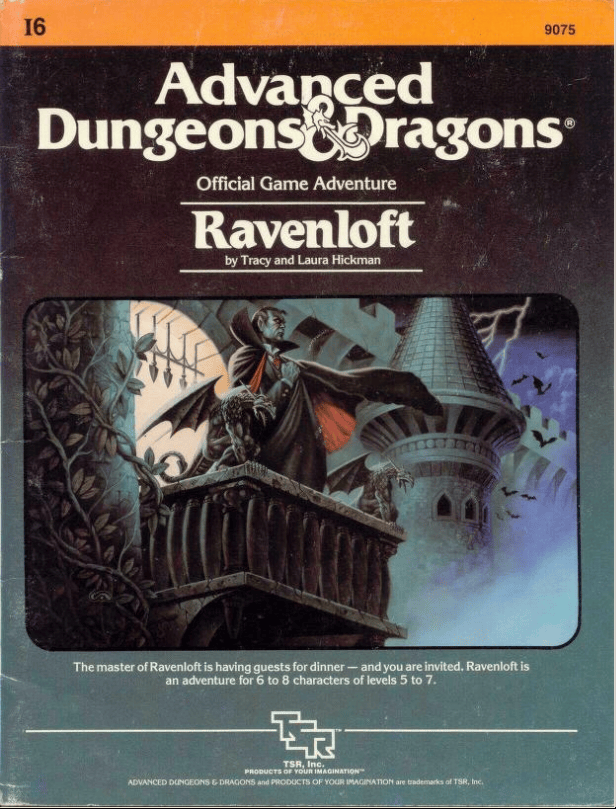
Friend of the blog, Isaac is taking the baton for this leg of the Editioning. He had actually been planning to run Expedition to the Barrier Peaks, but after the way my adventure for OD&D worked out (crashed, underground spaceship, lots of constructs and weird tech,) he felt it might be a bit too similar in theme. Anyway, given the season we were starting in, he decided to switch to the classic gothic horror adventure for 1st Edition, Ravenloft. He even got a copy of the original printed module for it. The adventure is by Laura and Tracy Hickman and was first released in 1983.

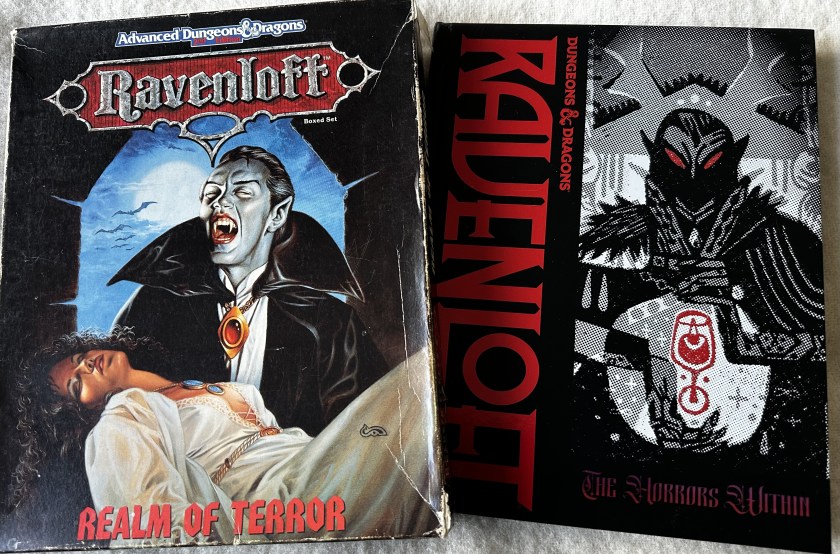
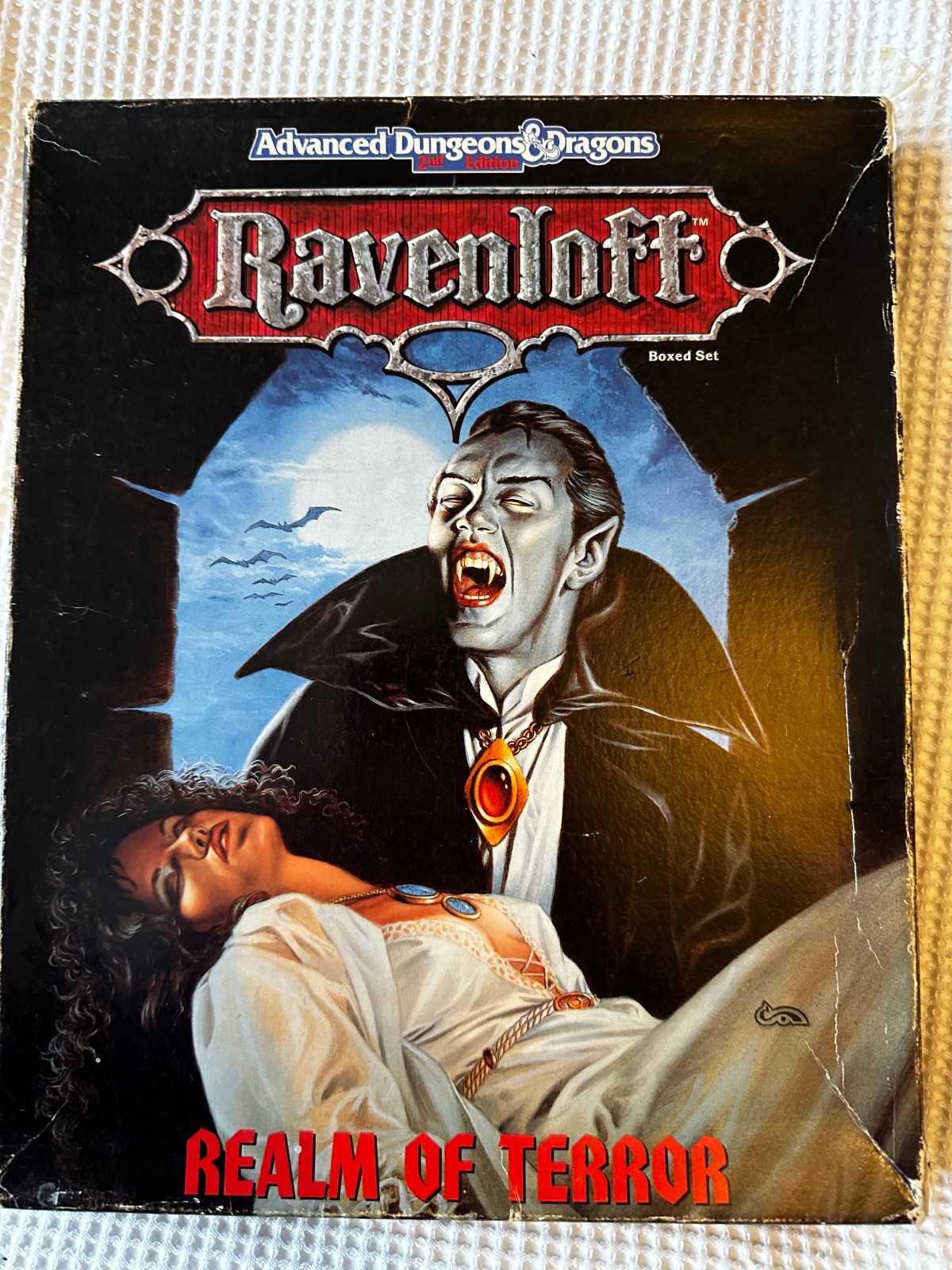
Ravenloft, Realm of Terror boxed set cover and Ravenloft, the Horror Within cover
2E Ravenloft and 5.5E Ravenloft

This module has spawned more rereleases, reimaginings, re-hashes and reproductions than maybe any other in the history of the game. Personally, I’m more familiar with the 2nd Edition Ravenloft setting, where Barovia joined a plethora of other strange and moody countries to make up the Demi-plane of Dread. These days, I would imagine that most players are more aware of the incredibly popular 5E module, the Curse of Strahd, or even the 5.5E setting, Ravenloft, the Horrors Within.

Anyway, it was with a great deal of excitement that I joined this game as a player, having never experienced it before.

Including yours truly, there are four players, with two PCs each, all starting at 5th level. Isaac felt that, as the adventure is designed for 6 to 8 players of levels 5 to 7, we would not get by with just one PC each. We’ve got:

  • Dowi playing Din and Dar, twin half-orc fighters, one neutral good, one neutral evil
  • Tom playing two humans, Caldan the fighter and Endrei the cleric, more siblings!
  • Jude playing Celfi, the chaotic evil gnome assassin and Nicholas Duskwater, the neutral good half-elf ranger
  • Me playing Warder Jon Blackhall, the lawful good human paladin and Merryn the true neutral elven magic-user

It’s a doughty crew with so many fighter types but we are fairly stacked when it comes to anti-undead powers and spell-casters. So, I’m confident we’ll come out of this with most of our blood if we’re not too stupid…

Our characters were all that remained of the Company of the Summer Sun, a mercenary band that had recently endured the worst defeat in its history. This ragtag band assumed that they were the only survivors, of course. Although, some of you clever readers with particularly good memories will recall that this was our origin story in Isaac’s previous Editioning game, of Basic D&D. So, Edmund of the Sun and Eandril Summerstream had trudged off to find employment and adventure at the Keep on the Borderlands, knowing nothing of these other survivors who ended up on the road, somewhere near the Svalich Woods. A small, but satisfying nod for those of us who took part in that game.

Welcome to Barovia

The Cover of Ravenloft. illustration by Clyde Caldwell shows the Vampire Lord, Strahd van Zarovich staring moodily from a darkened balcony.
Ravenloft

From this point on, there will be some SPOILERS for Ravenloft so turn back if you think you might play in it sometime.

Our adventure began in a tavern. While enjoying a drink and planning our next move we were approached by a recently arrived traveller, with a message for us and a drink for everyone in the bar. He took off immediately, leaving us to follow the message’s directions all on our own. It begged us to make haste to the aid of the Burgomaster of Barovia, some day’s travel through the Svalich Woods. The love of his life, Ireena had been afflicted and he needed help to deal with it. Merryn, my magic-user, concocted a story on the spot about how she knew the Burgomaster well, having spent a wonderful time in Barovia with him and his family. Just before we began the session I decided I needed at least one major personality trait for each of my characters. Merryn’s was being an inveterate liar, which is tempered only sometimes in the presence of Warder Jon, the Paladin of Forseti, who never lies. Of course we set off the very next morning.

Following the road, we came upon a great gate, with beheaded statues either side of it, which opened eerily before us, welcoming us in. One of our three fighters, Caldan, felt as though his sword was pulling him through the gates and into Barovia. We entered…

Not far down the road towards the town of Barovia, we discovered a corpse. The man looked to be a messenger, who had been torn apart by wolves. Searching him, we found another letter. This one, also seemingly from Kolyan Indirovich, Burgomaster of Barovia and dated before the first message, had very different contents. His daughter, Ireena had been bitten by a Vampyr who had controlled and cursed their land for 400 years. The letter implored the reader to give them up for dead and never to enter Barovia.

Too late did this warning come for our Company of the Summer Sun. We proceeded into the gathering dark, on to the town, taking the poor messenger’s corpse with us. Here we found most of the shops and homes closed up and shuttered. Jon and Endrei took the corpse to the church, where they discovered Father Dunovich in a bad way. He looked in desperate need of sleep and his church looked to have been ravaged by some creatures with great claws. He told us that we were trapped now in Barovia, thanks to the evil powers of Strahd von Zarovich, who resided there, in Castle Ravenloft, a thousand feet above on the mountainside. The town was being attacked every night by creatures, he said. His was the only power able to hold them at bay, which explained his exhaustion and the state of the building. He also told us how the Burgomaster found Ireena near the Pillar Stone of Ravenloft, years before and adopted her.

In town, Caldan and Merryn went shopping and then went for a drink. Here I got to really go to town on Merryn’s lies. They were elaborate and completely unnecessary, about how she held an interest in a vineyard back home and how she couldn’t wait to see some “human magic” in operation. They tried to get some chat from a group of Vistani but got nowhere. They seemed like a bad lot who acted like they owned the place. Even buying them drinks did no good. They did tell us we could visit Madame Eva at her camp along the river if we wanted our fortunes told. In the Blood ofn the Vine tavern, we also encountered Ismark, the burgomaster’s son, who invited us to the big house.

Finally, all the other members of our troupe went to investigate the weeping they had heard from one of the boarded up houses on the Main Street. They found a woman crying endlessly in grief. Celfi, assuming she was some sort of evil spirit, wanted to stab her in the back but Dar tossed a book into her room to get her attention, spoiling the chance for a backstab. The woman was inconsolable, but eventually, the PCs found out that she had imprisoned her daughter, Gertrude in the house, “for her own good.” But she had escaped and now the mother feared the worst.

Later, we all reconvened at the Burgomaster’s house. It, too, was covered in battle-scars: claw-marks, broken windows and burns from the nightly attacks. Warder Jon demanded entry, introducing himself as a paladin who never lied. This prompted Ireena to open the door to the party. Jon used his ability to sense evil on her, but detected nothing. Here we discovered the the Burgomaster was but recently deceased of natural causes and that the nightly wolf attacks had continued until the Burgomaster’s death. We were also told that the ghosts of other adventurers who threatened Strahd rose from the unmarked graves at the church every night. We decided to stay at the house that night to see what happened and then to go on to see Madame Eva the next morning.

Conclusion

So far, so excellent. I have not been a player in an AD&D adventure in well over 30 years. It felt good to be back! And for such an iconic adventure? Genuinely exciting. It’s so timely too, as the nights close in, the winds begin to howl and the cold begins to claw at the door…

I’ll be continuing my analysis of AD&D 1st Edition and comparing it to the other versions in the Editioning over the next few weeks as our Ravenloft experience continues, dear reader. Do join me.

Ravenloft

Something’s gotta give

I thought I would play Ravenloft around Halloween this year. My friend returned all my Ravenloft books and boxed sets to me back in the spring after about 25 years, and since then I have been thinking it would be cool to run something in the Domain of Dread as a Halloween one-shot. But, in the meantime, I have played a lot of different games, mostly one-shots, mostly a lot easier to play in that format than any version of D&D. So I did consider starting a campaign or a multi-session adventure, but, to be honest, I didn’t have it in me to do all the reading and conversion that was necessary. I may be playing more RPGs than I ever have before in my life but that has an unlooked for side-effect: I have less time to prepare for games! This is a dilemma that has been exacerbated by my blog schedule and I have been thinking that I might have to make a change there too. I am switching to posting once every three days for the foreseeable future.

The Demiplane of Dread

So, I am not talking about the original Ravenloft adventure from AD&D 1st Edition or the Curse of Strahd released for 5E, but the setting released by TSR for AD&D 2nd Edition in 1990. It is by Bruce Nesmith and Andria Hayday. I think I have mentioned in another post that my friends and I played most of our AD&D in the Dark Sun setting but I would imagine Ravenloft comes a close second. I just loved having them create regular old characters in my home-brewed standard fantasy world and then dumping them, unceremoniously and with no warning through the mists into the forests of Barovia or the mountains of Forlorn and hitting them with monsters that drained levels and abilities and where there was no escape from he darkness and the terror. Although, I confess, the games were probably not very terrifying. I did my best, but I have always found horror a difficult genre to emulate around the table, especially with a system like D&D. The authors did their best to assist the Ravenloft DM with sections in the main book about the “Techniques of Terror,” where they discuss “Assaults on the Mind,” “Assaults on the Body,” “A Villain in Control,” and that sort of thing. But, the fact was, we were a gang of teenaged boys who mostly just wanted to hit things until they died so those were usually the kinds of adventures we got.

Looking at it from a more mature standpoint now, I would love to try to run it with a real sense of gothic horror. I think I am better equipped now to attempt it. Although I still think it would be a challenge and I might refrain from running it in a D&D-like system. Why? Well, the products for Ravenloft, while not all gold, are still some of the highest quality items I think TSR produced. Just look at all these handouts! Each one of them has something useful on the back of a beautifully illustrated card.

5E products are usually produced to a high standard, but they don’t have the variety and versatility that the 2nd Edition boxed sets did. They also don’t have the quality or usefulness of content. These boxes and sourcebooks are stuffed with useable materials; details on lands, villains, monsters, new spells, effects, encounter tables, maps, maps, maps. 5E setting guides of late, excepting maybe Planescape are very short on this sort of detail.

Adventures in Ravenloft

I usually wrote my own adventures back in the day. Or at least I would pick and choose liberally from the pre-written modules and combine them with my own scribblings to make them fit into an overarching campaign. Or that’s what I told myself I was doing. I have a funny feeling that, mostly, I was just trying o murder the PCs. This is another aspect of my style that has, thankfully, changed, since the good old days.

I do have a few Ravenloft adventures that might be fun to convert or even to just run in the original 2nd Edition ruleset.

Feast of Goblyns is a very flexible module that is designed to be run for characters of levels 4 to 7. It is presented in a format that allows many different paths to be taken through it, with the PCs potentially ignoring some major and minor plots depending on how they decide to play it. This one was designed to be the adventure that draws PCs into the Demiplane, which is always fun. I think I remember playing parts of this module but my memory is not good enough to recall which parts. At 96 pages, though, it would require a bit of commitment to play through the whole thing.

From the Shadows is written for rather high level characters, levels 9 to 12. It is based around the plots of Azalin the lich, lord of the domain of Darkon and his eternal conflict with Strahd Von Zarovich, famed ruler of Barovia and OG Ravenloft BBEG. A great deal of it takes place in Castle Avernus, the lich’s home, and that is pretty cool. I definitely played this but I don’t think the characters survived the whole way through.

Finally, I have the Book of Crypts, which is similar to the Book of Lairs but has 8 full adventures in it! This seems the most suitable for a shorter game or campaign and I might just take a look at running something from here before the spooky season is fully through.

Dear reader, have you ever played this version of Ravenloft? Do you yearn for the mists? Or would you rather play a game actually made for horror?