Ultraviolet Grasslands Character Creation

Ultraviolet Grasslands

I have been reading Luka Rejec’s polychromatic point crawl, Ultraviolet Grasslands and the Black City 2E for a while now. It’s a remarkably attractive and inspirational piece of work. Luka is responsible for the artwork, writing and design. He really brought his vision to life in this book and he has continued to support it for the last six or seven years since the first edition came out. Most recently, in the form of a massive crowd funder for no fewer than two books to expand the world, Our Golden Age and the Vastlands Guidebook, which I wrote about last year, here. But, there have also been a number of other supplements in the meantime. I picked up a bunch of them on a recent Bundle of Holding deal. The files included the invaluable UVG Guidebook. This details the Synthetic Dream Machine rules devised by Luka. Most useful for my purposes here, is the guide to character creation for UVG 2E. So, I’m going to use it to create my own character, and my own caravan too!

Here’s a little bit about the setting, taken from the UVG Guidebook:

The UVG is a point-crawl setting inspired by psychedelic heavy metal, the Dying Earth genre, and Oregon Trail games. It is a world colored by new wave science fiction and inspired by artists from Moebius to Miyazaki.

The characters, referred to as “heroes,” begin, generally, in the Violet City. This place is ruled by Cat Lords with little human hands and big human servants/pets. It is also the last outpost of human dominion on the shores of the Circle Sea. Beyond the city, to the East, stretch the irradiated, largely uninhabited, weird, vome-infested Ultraviolet Grasslands. The PCs are headed out there, probably at the head of their own caravan, hopefully with some goods to trade at the next stop, which might be the Porcelain Citadel or the Last Serai or some other magical-sounding destination along the Low Road and the High, which, if you follow it long enough, will take you all the way to the eternal sunset and the Black City.

New Campaign, New Character Creation Post

This is all in preparation for starting a new campaign of UVG on Sunday. It’ll be a small caravan of just three PCs and it’ll be a tight, friendly group, but I always find the experience of creating a character myself helps me to guide them through the process so, here we go!

My Hero

So, in the finest tradition of, well, my other character creation posts, I’m going to roll this one up as randomly as possible. Anticipating my requirements in this respect, Mr Rejec has helpfully furnished me with many a table in this book. So, without further ado:

Ability Scores – SEACAT

That stands for Strength, Endurance, Agility, Charisma, Aura and Thought. I have a few options for this process but I am going to take the most random, the d100 roll.

  • Strength – I rolled an 18 on the d100. This translates to an entirely unremarkable 0. I guess I should be grateful there are no negative attributes in this system
  • Endurance – 96! This translates to an excellent and amazing 4!
  • Agility – 62. This gives me a talented 2
  • Charisma – interestingly, this is not like D&D Charisma, more like the Ancient Greek meaning, which encompasses fortune. Anyway, I rolled a 49, giving my character a promising 1 in this ability
  • Aura – This can help your character “to use powers beyond mortal ken longer than usual.” I got a 19, giving my second 0.
  • Thought – “the mental dynamic ability. It captures how a character absorbs, processes, and manipulates information.” I rolled a 47. This makes my score another 1.

So, at this point my ability scores are:

  • Strength – 0
  • Endurance – 4
  • Agility – 2
  • Charisma – 1
  • Aura – 0
  • Thought – 1

Background Trait

I like the method of determining your capacity for learning traits. You get an inventory for this, just like for physical objects. You can’t overload your trait inventory without suffering from encumbrance, anymore than you can physically carry too much without the same issue arising.
I get 7 + Thought inventory slots for traits. So that’s 8 slots then. It won’t come into it at this stage, of course. As a level 1 character, my hero will only have three traits.

A starting trait gives you a +3 bonus to actions that can utilise it. Although you can upgrade it from Skilled, which is the starting point for all traits, to Expert, which provides a +6 and Master, which bumps you up to a +9.

Now to the fun part. Rolling a d50 to determine my Background. (So, in the UVG Guidebook, this table is actually a d40 one. But there is another version of it in the core UVG 2E book, so I’m using that for this bit, as well as to answer the following two questions below.) For this unusual die roll, I’m going to roll another d100 and divide by 2.

I rolled a 65, so half that and round down, I get a 32:

  • “Tumult Fisher Wizard” (?) This acts as my first trait and, I guess determines my Path (see below)

Why are they on the Road?

What is my Tumult Fishing WIzard’s motivation for heading off into the dangers of the Ultraviolet Grasslands? Well, the same table is going to tell me that. I rolled a 29, making it 14 this time:

  • “Pursued by Loving Enemies.” This sparks a lot of potential background stories for my wizard.

What Do They Bear?

You always start off with one strange item. It might be valuable or it might be important or it might be sentimental. I guess we’ll find out. I rolled a 6, so that’s 3 on the table:

  • “Green brick with the light and warmth of a candle.” Some sort of Oldtech item maybe?

Path Trait

So, in the UVG Guidebook, you do things a bit differently than you do if you’re just using the core book to make your character. If you use the Guidebook you will be led, carefully and systematically through the process, starting with ability scores, moving onto background traits and then to path traits. In these rules, your characters path can one of three broad categories, Wizard, Traveller and Fighter. They are not classes; they’re only used to determine one of your starting traits. After that, you are free to choose traits from any path you like as you level up.

The whole character creation section of the core book is quite compact, and, in fact, the entirety of the rules are squeezed onto a single page. The core book is, first and foremost, a setting book. It can easily be adapted for use with almost any OSR or D20 system and, indeed, with just a little work, could work very well with a PBTA or other ruleset too. So, I think the decision to pare down the rules, particularly for character creation, makes sense, especially when the Synthetic Dream Machine rules were already available in other publications.

Anyway, what I’m getting at here is that the core book does not refer to Paths at all. Instead, it seems to fold them into many of the backgrounds on its d50 “Who is this Hero?” table. A good example is my “Tumult Fisher Wizard” result from the d50 table earlier. It includes something that could be a background trait, i.e. Tumult Fisher as well as one of the paths, wizard.

So, by default, my first Path trait will be from the Wizard path list in the UVG Guidebook. There is a list of six options so I’ll roll a d6 for it.

  • That’s a 3. “Exuberant. Each of your life points is worth double when paying for powers.” It’s worth noting at this point, that Life is analogous to hit points and you spend Life to cast spells, so this is quite handy.

Generate a Third Trait

So, you then get to choose one more trait. There is a random trait table. Depending on the result of the roll, you could get another background trait, a wizard trait, a traveller trait or a fighter trait. So, here we go, it’s 5! Which means a Traveller Path trait. Another d6 roll on that table, and that’s a 6!

  • “Swift, Spend one life or one hero die to get one more action this round.” That is an amazing trait for any hero!

Equip your Character

Similar to trait inventory slots, I get 7 + Strength inventory slots for items. With my 0 strength, that’s going to make it a 7…

You start at level one having two items and some cash (denoted with a €, pronounced cash, not euro.) One of your two items is a kit useful to one of your background traits. In this case, I guess it might contain fishing rod, net, lures, wizarding items, that sort of thing. But, as the guidebook states, “You don’t need to choose in advance exactly what is in your character’s kit — the items are in a quantum superposition until you define them as you play.” This should include a civilian weapon that deals no more than 1d6 damage.

The other thing you get is the Strange item I rolled up earlier, “Green brick with the light and warmth of a candle.”

I also automatically start off with €100 in cash. This sounds like a lot but a week of carousing will cost the average character 1d6 x €100!

It’s also worth mentioning Burdens at this stage. It is possible to take items or traits as burdens rather than have them in your regular inventory, perhaps because those inventories or full or for some other narrative reason. Each Burden you carry (you can have up to 20) gives you a -1 to all checks though.

Last Few Attributes

Level: 1
Life: 8 (all level 1 characters start with 8 Life.)
Hero Dice: 1d6 (these come and go quite often in play. You can use them to adjust a die roll or recover Life. You also get one per session and every couple of hours of play!)
Save: 13 (all level 1 characters get a Save of 13. You have to roll over your Save score in dire situations. You can add an ability bonus from Endurance or Aura to help you out. Interestingly, you can’t use Agility to save. Instead, it is considered an action roll.)
Melee Attack: d20 + ability (strength) + skill (if applicable.) I’ve got a 0 here.
Ranged Attack: d20 + ability (agility) + skill (if applicable.) My agility gives me a +2 to ranged attacks
Oldtech Attack: d20 + ability (thought) + skill (if applicable.) My Thought score gives me a +1 for Oldtech attacks
Fantascience Attack: d20 + ability (charisma) + skill (if applicable.) Another +1 here.
Damage: I imagine my fishing wizard has a little fishing knife. That’s 1d4 damage.
Defense: Here’s the formula, 7 + ability (agility) + bonus (if skill applies) + armour. No armour yet, so it’s going to be a 9 for now.

Name Your Character

The Guidebook has a table of names. The table lists them under particular cultures of the Vastlands, so, in all likelihood, the name you choose will also decide the culture you’re from. It’s a 12 point list so I’m going to roll a d12 on it. That’s a 10.
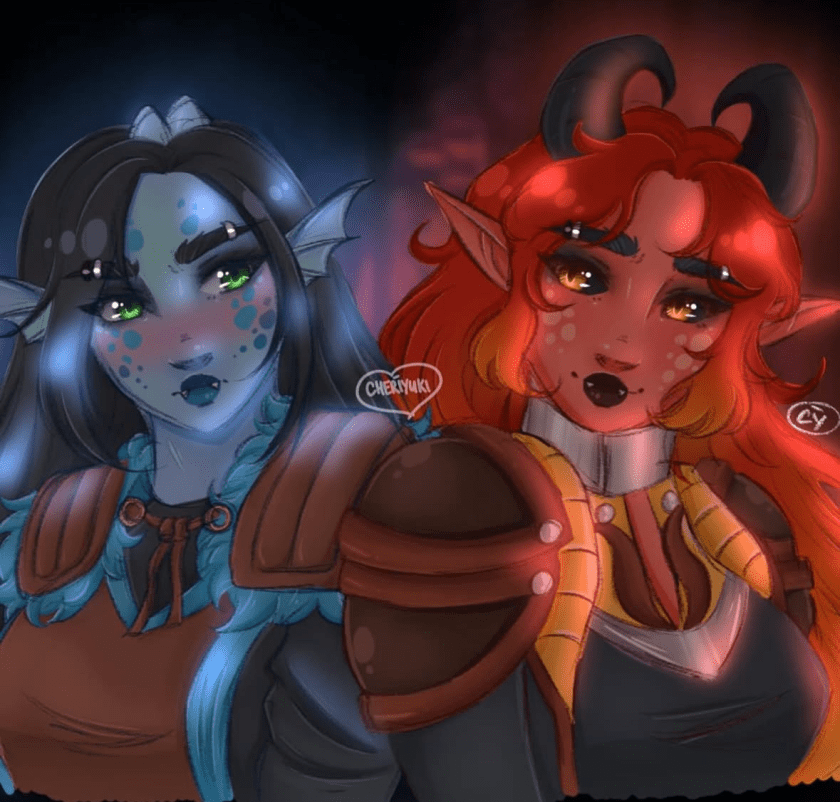
  • D.W.A.R.F. Names: There are 8 listed. Let’s roll a d8. That’s a 2 – Del ‘Machinist. Very practical, I’m sure. Lets also give them the pronouns they/them.
    Here’s the Dwarf glossary entry from the UVG 2E core book:

Dwarf: Backronym from ‘De Werker Aristocratiscee Revolutie Fraternitie,’ Dwarfs are a distinct culture-class of selectively biomanced people. They have effectively fought the traditional aristoi of the Red and Orange lands to a standstill and now form a major industrialist society of the Rainbowlands. A famously bureaucratic and collectivist faction, they are the only one staunchly opposing the bureaucratic and individualist Emerald City Cogflower Corporation (actually a coin church).

Looks like my fisher wizard is a communist. Love it.

Conclusion

So, that’s my D.W.A.R.F. Tumult Fisher Wizard, Del ‘Machinist. They have great endurance and very average strength. Despite having rather low Aura, they have a wizard trait which allows them to double the effectiveness of the Life points they spend on their spells and another trait from the Traveller path that allows them to spend a Hero die or Life point to get a second action in a round. And he comes with a green brick that has the light and heat of a candle. I have a pretty good idea of them in my head.

I will say that, if I were to do it all over again, I would have just stuck to the UVG Guidebook to shepherd me through the character creation process. Switching to the UVG core book for that one table roll complicated things unnecessarily. My advice would be to do the same, if you are determined to use the Synthetic Dream Machine rules for your game of UVG. Otherwise, use a different system and utilise the tables in the core book for flavour.

I think the next post will be Caravan creation so tune back in then, dear reader!

Cosmic Dark: Assignment Report

Understanding the Assignment

What is the end goal of a game of weird space horror like Graham Walmsley’s Cosmic Dark? The answer seems obvious, I suppose. If you go to see a horror movie, you want to come out feeling like you got your money’s worth in spilled popcorn, whimpers, screams and nonodontgointhereyouidiots. So you should expect something similar from a game like this, right? Well, yes, of course. In fact, the rather ingenious conceit of a game like this, is that, knowing the style of play you’re looking for, as a player, you can go into it understanding what you can do to help push the themes, the jumps, the horror of it. There’s some strange, violet rock that appears to be moving? The character might be a geologist and know that it’s their job to go examine the rock, but the player knows they’re in a space horror game, which is why they should go and examine it. And this is pretty much how our one-shot of Cosmic Dark went last weekend.

But there’s more, of course, because let’s not forget the ‘Cosmic’ bit, the ‘weird’ bit. Because, although the body horror really hit hard at times, the dreamy (nightmarey maybe,) psychological horror felt all-encompassing. There is a section in the scenario that is aptly called “Dreaming and Waking.” Unpretentiously, it refers to the bizarre dreams the Employees experience during their first night on the assignment. It gave me more or less free rein to describe immersive dreams for the characters that related back to the answers they gave in psych evaluation questions earlier in the game. Of course, this served only to highlight the dreamlike atmosphere of everything on the assignment up to that point, in my opinion. Time was behaving differently, the rocks were undulating and growing, seemingly safe spaces were revealed to be anything but… The players and the characters were on edge, really from the start. And, thanks to the mechanics, they got closer and closer to that edge as the session went on.

Character Creation

We played the first Cosmic Dark Assignment, Extraction. Check out my preview blog post here, where I explain the way the players create their Employees as part of that scenario.

At the table, this went down a treat. Forcing players to choose their Employees’ specialisms only at the point where they are being asked to acknowledge over comms on the shuttle to the Assignment is clever and the players got a kick out of it.

But the real star of the show is the series of flashbacks they go through to get a picture of their characters. The flashback method creates memories, not just characters. The requirement for each PC to identify another as a rival or a figure of admiration or some other influence, and to include them in the flashback scenes, creates a shared history and a character dynamic that you simply can’t conjure from dry discussions over a character sheet. If you have played any PBTA games, dear reader, you might be aware that they usually include a section for bonds with other PCs. You and the other PC have to come up with some reason why you are blood-brothers or why you’re worried about the other’s survival or why you had a vision about them. But you do not act it out. You don’t, at least in my experience, role-play a scene together to elucidate the reason for the bond. That’s exactly what you do in Cosmic Dark. In fact, each player has a scene of their own and may choose any of the other characters to share it with. These scenes are supposed to be short, just a minute or two, but long enough for them to find their characters’ voices, outlooks, relationships. And the Director (GM) provides prompts to kick-start these scenes. The players are given a line of dialogue for one of them to say to begin. I was skeptical about how well this could work at a table of regular players. Up until now, I have only seen it done at a table of professional actors on Ain’t Slayed Nobody. But I needn’t have worried. Every one of my players took that single line of dialogue like the baton it was, and ran with it, inventing hurdles, falling and picking themselves up again. And the table I had? Four players with a wonderful mix of experience levels, some who have played a variety of RPGs for years, one with just a few months of play under their belts with Tables and Tales and even one for whom it was their very first role playing experience!

The aspect of character creation (it’s one of the parts that is ongoing throughout the game from what I understand) that I had a little difficulty in running and incorporating as intended is the psychological assessment. There is a moment, that also occurs in flashback, the night before the Assignment, when they are lying in their sleeping pods on the Extracsa transport vessel, the Exchange, and they are asked questions like “what scares you most about being alone?” Or “what is the most terrifying way to die?” You are supposed to. Push the PCs to answer truthfully, indicating that Extracsa will know if they are lying. This part was ok, actually. I was able to get some revealing and actionable answers from them. It was the re-incorporation of the answers into the later dream sequence that I struggled with. The idea is that you should take note of the PCs’ fears and worries so that you can create a tailored nightmare for them during the Dreaming and Waking section I mentioned above. I think this is something I would get better at in time and with practice. The main issue I had was just referring to my own notes and making sure I got the right nightmare for the right Employees in a way that made it feel like it flowed naturally.

The Assignment itself

I don’t want to go into too much detail here. Honestly, I could not do it justice. Go and listen to the Ain’t Slayed Nobody actual play instead!

But here’s what I will say. I presented an outline of the type of game Cosmic Dark was when I advertised it on our Discord. But I think there was still some misapprehension by the time we started playing. The main feedback I got in this respect was that they expected something more along the lines of physical threats. I believe this is, perhaps, the overriding influence of the Alien franchise. I did refer to Alien in the touchstones I mentioned when announcing the game, so that could explain it. There is nothing like an alien monster in this first Assignment. In fact, as they played through the scenario and uncovered one egregious corporate scheme and strategic lie after another, I think it became obvious that Extracsa are the real baddies here. And, it’s not like there aren’t ways for the Employees to die in the course of the Assignment (we had one death, caused mainly by the Team Leader hitting 6 Changed as he escaped. He flipped the rover he was driving.) And they felt as though they were in danger, clearly. As their Changed scores each hit 4 or 5 (out of 6) they all decided to run away! They witnessed what was in the future for them on this asteroid, a slow and horrific melding with the rock of the place, and they noped out of there before they even reached the finalé! Anyway, if I had any advice for prospective Directors, it would be to make sure you properly set expectations.
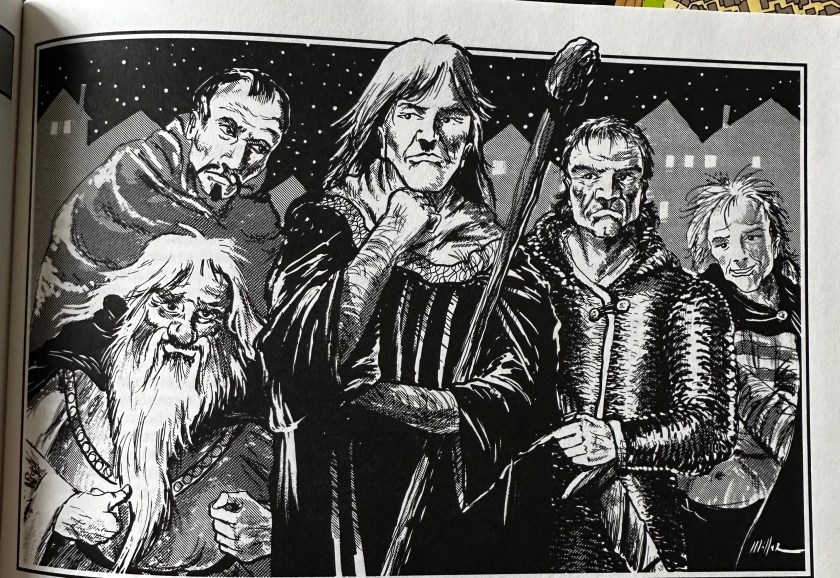
How about the scenario itself? So, I only had the text of the Extraction Assignment to work with. Now, this was fine. The rules are contained within it and the character creation occurs during the course of play, as I explained above. However, in the finished book, there will be useful extras to refer to. For instance, if and when an Employee rolls a 5, they are supposed to get a little bonus in the form of records, data from the Extracsa company servers that serve to shine a light on the mystery or, at least, show them how Extracsa is fucking them over. On the roll of a 6, they are supposed to experience an anomaly of some sort. Anomalies are supposed to alert them to the weirdness of the place or the situation or have a direct psychological effect that might prompt a Changed roll. Now, there are a few examples of appropriate records and anomalies in the scenario but the rest will be contained in cheat sheets that will appear in the final Cosmic Dark book. To fill this gap, I listened to the ASN actual play again and made a note of the records and anomalies Graham used in that.

The other thing I picked up in particular from Graham was the style of GMing he does in that AP. He keeps it light and breezy mainly, gently encouraging players to take unnecessary risks, reminding them about the Changed die, reassuring them that that little prick from that piece of weird violet rock is probably nothing to worry about… until the point where he informs them all they need to do to reduce their Changed score is remove that pesky limb… Listen and learn, dear reader! It worked a treat at the table!

As for the rules, I had one regret here. The rules are very light and easy to pick up, but, this opening Assignment is designed to introduce the rules in a specific order to ease the players into them. And it does a great job of that. The Changed die is the first thing that comes up, then investigation rolls and other types of actions. But I forgot to introduce the re-roll mechanic when I should have, thereby allowing the Employees a chance both to do better on certain checks and to increase their Changed score earlier on.

Conclusion

All in all, I highly recommend this game. I want to play more of it. I wanted to play more almost immediately. But I think my experience will be greatly improved by getting my hands on the full book. So, let’s make sure I can, shall we? Go and sign up for an alert on the Cosmic Dark Kickstarter!
Homebrew Heart Landmarks 2

Guess the inspiration

I don’t think it will be difficult to see where I drew inspiration from this week. It’s a story I have mixed feelings about but still, it introduced the world to one of the most enduring and influential fictional universes ever. Just remember, desire is the mind-killer.

The Heart Worm

Name: The Heart Worm
Domains: Warren, Wild
Tier: 2 and 3
Default Stress: d6
Haunts: The Waters of Life (Blood D8)
Bernie Gallac, Terrible Warrior-Bard (Mind D6)
The Prophet, AKA Moonlight-Falling-On-Glaciers (Fortune D6)
The Herb, Mischung (Echo D8)

Description:
Travellers in the deeper levels of the Heart, where all is flesh and warm and wet, sometimes pass from an artery into a wide open tunnel, resembling a damp cave with masses of tooth-like protrusions projecting from ceiling, walls and floor at the entrance. Many need no more excuse than that to run from the place, but many others know better. They have heard of the Heart Worm, and they know of the life-giving properties of its vital juices. Usually, these are the type of fool-hardy adventurers who have nothing to lose and who find the prospect of burrowing through the flesh of the Heart only to be deposited in another, unknown location, “exciting.” For that is what the Heart Worm does. A giant, parasitic entity that feeds off the multidimensional matter and energy of the Heart itself while digging through it and leaving cyclopean tunnels in its wake, the Worm picks up passengers and ejects them wherever it wants, seemingly randomly.

The Heart Worm has swallowed a few people and never let them go, however, perhaps due to the understanding that its passengers need support and services during their sojourn.

Bernie Gallac, a drow former soldier of the Allied Defence Forces, has been trapped for so long, he has forgotten the world outside. He spends his days composing sarcastic little ditties to comically roast the visitors who come his way. He has been surviving on the Herb, Mischung, which grows in abundance around the depths of the great worm’s mouth. It, along with his long imprisonment, has made him strange, one-dimensional, lacking anything but the desire to do what he does in the service of the Heart Worm and its passengers. His eyes and the eyes of all the inhabitants of the Heart Worm, are crimson from consuming the wine-dark Herb.

A passenger can gather and consume the Herb too. It must be cooked down until it is in the form of a red paste in order for it to be edible. It will slowly change the colour of their eyes to a deep red, but it will also make them feel more at home in the Heart as they become one with it (see Special Rules.)

The Prophet, Moonlight-Falling-On-Glaciers, is an aelfir noble scion, trapped these many years in the gullet of the Heart Worm. They desperately wish to exit and spread the news about the Worm to all the inhabitants of the Cities Above and Below. But, for whatever reason, the Worm has not allowed it. Perhaps it is not their time yet? Perhaps they do not wish to be worshipped like a god, maybe they do not want their presence truly confirmed. The Heart Worm does not confide in anyone its plans or reasons. The mask the Prophet wears resembles the face of the worm but for the two crimson eyes visible through the slits in it. They will speak to passengers in a voice to deep and resonant to be understood, to increase their fortune.
The flesh of the Heart, eaten by the Worm, travels down the peristalsis of the great gullet almost constantly. Those who exist inside, stick to the walls of the giant being. Some have tried to take parts of the Heart meat to sustain themselves. These unfortunates are invariably ejected by the Heart Worm at its first opportunity, in the most dangerous of regions. Passengers who wish to benefit from the Worm’s diet must travel further down its throat until they discover the crimson lake of the Waters of Life, the digestive juices caused by the enormous creature’s Heart-burn. If they can endure its acidic nature, a passenger who immerses themselves in the lake will have their old skin stripped away, only for it to be replaced with a new, deeply red skin. It will heal them of physical ailments. (See Special Rules.)

Eventually, the Heart Worm will find the perfect spot to deposit its passengers. When that time comes, they will be physically ejected by irresistible waves of muscular force, which leads to them being spat out at their destination. This could be anywhere in Tier 2 or 3 of the Heart.

Special Rules:
Eating the Herb, Mischung has its dangers. It has the effect of bringing you closer to the Heart but this can also have the effect of making you like the Heart. When you consume the Herb, you must make an Endure/Wild or Warren roll or gain D6 Echo Stress. If this leads to fallout:
Fallout: Heart’s Desire (Minor Echo.) The next time anyone voices a desire in your presence, you must do everything in your power to fulfil it for them.

Bathing in the Waters of Life can also be very dangerous. Roll Endure/Warren or Wild or take d8 Blood stress. If this leads to fallout:
Fallout: Worm body (Major Blood) Your body begins to transform. Your new red skin sloughs off to reveal a ridged, wormlike one and you develop a taste for the Flesh of the Heart. If this is upgraded to critical, you fully change into a worm and disappear off into the Heart.

Resources:
The Herb Mischung (D8, Echo)
The Waters of Life (D8, Blood)

Sailors on the Starless Sea Part 1

The Peasants are Revolting

Here’s my fictionalisation of our first session of the classic DCC 0-level funnel, Sailors on the Starless Sea. Six of us, members of Tables and Tales gathered last Sunday evening to play through the first half of the adventure. We had an absolute blast, both with the adventure and the DCC rules.

I may have taken a few liberties and used some artistic license here and there but the major beats are all as they occurred. Spoiler warning if you have not played or read Sailors on the Starless Sea and you want to be a player in a game of it, stop reading now!

The Keep of Chaos

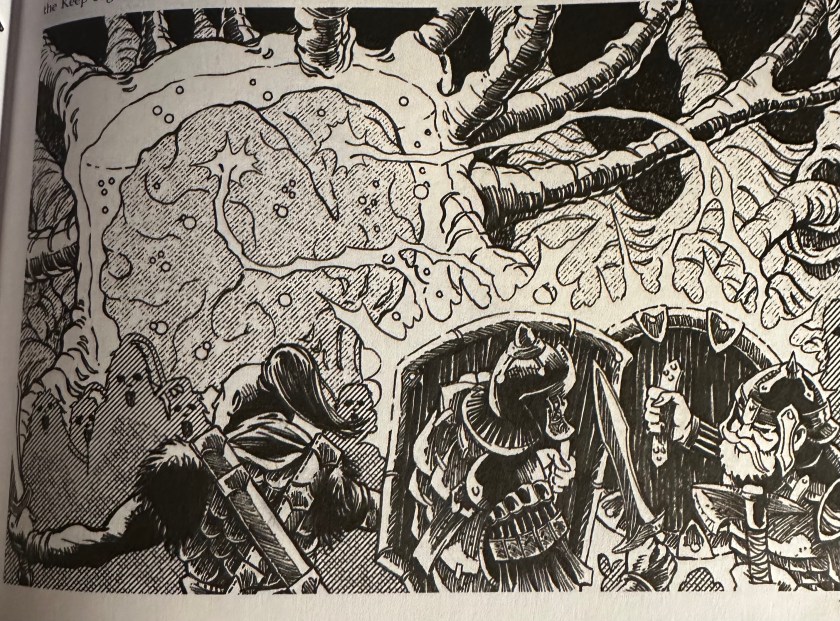
The villagers gathered before the rusting gate of the ancient keep, as a blasphemous banner snapped above the crumbling, ebon walls. Behind the shivering mob, Betsy released a single, unenthusiastic moo as she shuffled in her protective circle. They had made surprisingly short work of the vine choked corpses on the causeway below. The burgeoning corpses of their fellows had shocked some into sobriety while only awakening a greed and opportunism in others that they had previously, perhaps, just imagined they possessed.

Only the half-raised portcullis stood between the no-longer inebriated gang and the rescue of their abducted friends and family. Edgar Hayward Blackburn Hathaway IV, assuming a leadership position, urged his fellows on into the black keep, while the gnoll-reared urchin, Bear scampered in and out, as though possessed by a great desire to poop. Stopping for nothing, most of them marched through, all but the three dwarves doubling over or crawling beneath the spiked portcullis. A few waited on the outside, curious perhaps to see how this entrance worked out for the majority. These were, perhaps, the clever few… just as the final row crossed the threshold, someone above released the portcullis to fall the rest of the way, pinning two of their number beneath. The renowned and beloved corn farmer, Maize, died instantly, skewered by one of the rusty spikes. The survivors would, for ever after, recall his broad, smiling face and his impaled body whenever they munched on a sweet, buttery cob. His little goat ran, unfettered and bleating into the be-brambled courtyard, as the remaining villagers heaved the portcullis up to release the cheesemaker, Gorgonzola, who had somehow survived the portcullis trap. Meanwhile, a bell rang out from above the gatehouse, pealing briefly, but alarmingly. The final few peasants, who had waited out front, joined the mob as they began to explore their hateful new surroundings.

Several of them circumnavigated the overgrown clearing contained within the castle’s broken and burnt walls. But two explored the well. The well seemed to call to Dáinn, his curiosity growing to almost physical strength, pulled him to it. Meanwhile, his companion pulled on the well’s sturdy chain to see what might be lurking below. Dáinn could not resist a peek over the edge, and, before he knew had pitched, headlong, into the darkness below! His companion scrambled to catch him, but it was too late… Luckily, Dáinn came to his senses as he plummeted and managed to grab the chain before he hit the undulating ooze at the bottom. The others pulled him up, but he was not exactly himself anymore… he now sported the flapping ears of a pinkish pachyderm.

Meanwhile, other villagers discovered part of the old wall in the back had utterly collapsed. They decided to leave it alone, nothing a potential for further collapse and possibly fatal accidents.

Nearby, an ancient capstone of some sort, runed and glowing slightly, was discovered. It had been concealed, deliberately or otherwise by thorny vines and scrubby grasses for years. Uncovered, the group’s scribe was able to take a look at it, but, unable to decipher the meaning of the rune, they decided it was best left as it was.

As this occurred, Mu, the monosyllabic Dwarven mushroom farmer, investigated the forbidding portal of the nearby chapel. The terrifying visages of hundreds of demons, screaming and howling had been hammered into its heavy bronze doors, which had been barred from the outside. Mu, heedless of possible dangers, tossed aside the ancient wooden bar and swung wide the doors. Inside, resting impossibly on a floor carpeted in crackling, glowing embers, a half-dozen skeletons still roasted, slowly, in their blackened chain hauberks. A charred chest, padlocked and tempting stood to one side of an elaborately carved fountain. The hellish amphibian likeness of a stone frog belched forth an endless spring of tarry ooze from a mouth seemingly filled with precious gems. Gwydion, the elven artisan, fascinated by the construction of the fountain approached, heedless of the embers. The ooze reacted, raising its undulating bulk up and over the lip of the fountain. It landed on the fiery floor and burst all into devilish flames as it flung a pseudopod, greasy and burning, in the direction of the elf! But Edgar Hayward Blackborne Hathaway IV, always on hand to defend his companions, leapt into the chapel and attempted to fling a dart at the fiery monstrosity. His aim failed him, the strength of his arm directing his attack, instead, to his own unarmored wrist as it escaped his grasp in the worst possible way. His blood gushed, hissing and dancing over the hot embers as he collapsed, lifeless into the sizzling coals. A moment later, despite several fine hits from the other gathered villagers, the ooze’s pseudopod finally connected with his elven target, immolating him. As Gwydion fell, the others fell upon the tar ooze, dousing it and destroying it. Weary now of all the senseless killing, the peasants armed and armoured themselves in what they could recover from the dead ones in the chapel and discovered a curious item of some chaotic deity, a blackened censer and several bales of unwholesome incense that had been locked in the chest. They stowed them for later use and proceeded with their explorations.

A sinkhole dominated the northeastern corner of the courtyard, spewing forth vapours that formed terrible shapes of writhing beasts and men in the air above it. Perhaps this was the way forward? Attaching a rope to the chain retrieved from he well, Darik the hunter braved the uneven and dangerous ground about the edge of the steaming pit to get a better look, his fellows holding on to keep him safe from falling to his death. The ground, indeed, collapsed below him and he dropped seventy feet into the poisonous spume, seemingly still nowhere near the bottom. His investigations revealed nothing of the bottom nor the source of the vapours. He climbed back out and the villagers continued on to the tower in the south east corner, the only area left to investigate…

Sir Chopsalot, the woodcutter, finding the door to the tower guarded by hideous gargoyles and locked tight against their attempts to enter, hoisted his axe and got to work. He worked up a sweat and brought down the portal. McTavish, the blacksmith, his blood up, charged into the tower and was a confronted with a sight and stench of charnel destruction unlike the worst tanner’s pit. The discarded hides and skins of beasts and humans covered the sticky, malodourous floor. Mites and flies buzzed about, biting and swarming over everything. High on the walls of the tower, hanging by their tied wrists from spikes, some of the abducted wriggled and thrashed when they saw him enter, eager for freedom. But he did not have time to act, From the steps above his head, an enormous brute of a beastman, cursed with the head and sharpened horns of a great bull, jumped onto McTavish’s back, crushing him into the ground with his dreadful battle-axe. Then he turned to the villagers arrayed outside and snorted while his beastmen approached from behind. The remaining peasants quickly formed a plan to distract the beastmen while Mira ran to the chapel to fill a steel helmet with scorching embers. Combined with the oil from a flask they had brought, this could cause a conflagration in the tower, destroying the arrayed abominations. As she ran to gather the coals, Sir Chopsalot, the woodcutter, found himself in the way of the charging, bovine beastman champion and was impaled on his great horns. Another monster, with the hideous head of a beagle, speared Gorgonzola, the cheesemaker, finishing the job the portcullis had earlier begun. Mira returned just in time to prevent the rest of the beastmen from emerging into the blood-soaked courtyard. She flung the embers into the awful tower where they set alight the lantern oil. The villagers took some satisfaction in watching the demons burn.

Victorious, the survivors doused the flames and rescued several of their neighbours from their captivity. They searched through the detritus in the tower and were able to discover a map to another keep along with a letter of employment, stitched into the hem of some poor unfortunate adventurer’s cloak. But, before long, they knew it was time to proceed once more. This time, the only way on was down a set of ancient, worn stone steps, down into the darkness below the keep…

Homebrew Heart Landmarks

UVG Locations

I have been reading Ultraviolet Grasslands recently (expect a post or three about this once I get done reading it.) I have been enjoying its format a lot. It tends to go into the big-ticket locations in the setting in some detail, maps, random encounters and occurrences, places of importance, how to get to and from the location. It’s usually built with enough randomness that your “Last Serai,” for instance, will be very different to the next party’s.

But there are a few locales described towards the end of each of these sections that branch out from the one central location, providing you with adventure spots in the surrounding area. Descriptions of these in UVG really depend on the type of area they are in. If it’s a heavily populated spot, you are likely to get a bunch of NPCs for the players to deal with, but in more remote places, it will probably mention more environmental hazards, enemies and traps. Importantly, it never goes into much detail on anything. The details, as with everything in the book, are left up to those gathered around the table. You just get a mention of a particular type of creature (and maybe a level and tag in parentheses beside it,) a monetary value for the treasure or resources you might find there, or a distance (in number of days’ travel) from the main location.

These really reminded me of something: Heart Landmarks. Not necessarily because of the format of the descriptions or the writing style or anything like that. It was mainly just due to the looseness of it. Heart Landmarks also provide you with a few sparks to light your imagination. They might tell you the type of haunts you have there and vaguely hint at a couple of NPCs, but it’s up to you to bring them to life at the table. I am aware this is not that unusual in modern RPGs but I have been reading and playing a lot of trad games recently, so the similarity really struck me here, in comparison.

Anyway, it got me thinking about something I started quite a while ago, before I even started my first Heart campaign. I have a file on my computer just called Heart Landmark Ideas. It had one entry in it, and even that was incomplete. So I thought I would make this a little series of blog posts.

DIY Heart Landmarks

What is a Landmark? In Heart, the City Beneath, the characters are delvers, idiotic adventurers who are compelled for one reason or another, to plunge into the red, wet heaven that is the Heart, the esoteric core of all weirdness. Nothing remains concrete or stationary in this underground “city” for very long, but, as long as a place has a sufficient number of sentients there to believe in it, to desire its safety, that will anchor it. These become Landmarks. Some of them are havens where delvers can rest and recuperate, some are terrifyingly dangerous lairs of nightmares and dark magic.

What does the Heart book tell us about making our own landmarks? Make sure your landmark includes one or more of the following:

  • SANCTUARY: Haunts are places within a landmark where PCs can relive themselves of stress or fallout and can often involve a major NPC to interact with.
  • MATERIALS: Resources can be procured here.
  • ADVANCEMENT: Not every chapter beat is achievable on a delve. Sometimes, landmarks are the perfect places to hit your beats.
  • EMPLOYMENT: NPCs, mysteries, required items etc. You get the idea.
  • DANGER: Not every landmark is restful and commercial. Sometimes you need to endure them to achieve your goals…
  • WONDER: Reveal something of the Heart of just dazzle the players with your imagination!

Other than that, the format of each Landmark entry is pretty much set:

  • NAME: ‘Nuff said
  • DOMAINS: These are broad areas of interest or influence: Cursed, Desolate, Haven, Occult, Religion, Technology, Warren, Wild
  • TIER: The Heart is split into tiers designated 0,1,2,3 and Fracture. 3 is much stranger than 0. Fracture is a movable feast of rumness.
  • HAUNTS: Places to rest and heal or people who will facilitate that. What kind of stress/fallout can be cured? Also, this should include the max dice size of healing.
  • DESCRIPTION OF LANDMARK: Part history, part current state of affairs. Maybe some hooks to bring the PCs there.
  • SPECIAL RULES: This could involve particular dangers or custom-fallouts.
  • DEFAULT STRESS: What is the normal amount of stress to inflict for action failures? Indicated by a die size.
  • RESOURCES: What type and die size of resources are available here.
  • POTENTIAL PLOTS: Fuel for your PCs’ adventures.

Landmark Number 1 – Blister

Name: Blister
Domains: Haven, Religion
Tier: 1
Default Stress: d4
Haunts:

  • The Blistered Basilica, a polyp on the inside of the blister. The devoted gather inside to worship (d8 Echo)
  • Rose’s, a restaurant with a good reputation and a worryingly good chowder (d8 Blood)
  • The Blister Pack, a general market that specialises in building and delving equipment (d6 Supplies)

Description: An enormous, fleshy blister on the inside of an enormous, fleshy chamber. Blister is pierced near the base by a hole that allows delvers to enter. From this hole there is a ramshackle wooden ramp that leads to a series of old platforms requiring constant repair. It has some residents, known as platformers, who are more or less permanent and mostly have no sense of smell.

At the base of the blister is a fetid lake of stinking pus. A whole ecosystem of pus creatures live in the lake. They generally leave the platformers alone.

The platformers worship the blister as though it were a god and as long as they do, they say the denizens of the pus will leave them be. But outsiders and heretics should not stay long, they say.

Special Rules: If you spend a bit of time in the Blistered Basilica in order to remove Echo fallout, make an Endure/Religion check. Consequences of failure as below:
Fallout: Pus Magnet (Minor Mind) You have come to understand the Platformers’ devotion to the Blister and you feel a kinship with the pus-beings. They are there for your protection and you are there for theirs. You feel an urge to descend to the lake, befriend one of them and take them with you on your travels (Ongoing.)

Getting too close to the pus lake will require an Endure/Haven or Religion check. On failure/mixed result:
Fallout: Blistering Barnacles (Major Blood) You’ve been infected by the pus. You are covered in hard, black blisters which hurt and stink. They make all social checks one difficulty rating higher (Standard becomes Risky, Risky becomes Dangerous etc.) (Ongoing.)

Resources:

  • Gathering Blister pus (d4 Religion) can be dangerous. See Special Rules.

Potential Plots:

  • Deacon Delicia of the Blistered Basilica has startling news for any PCs that visit. The Blister has revealed an existential danger to her. A stalactite-like calcium deposit has formed above Blister and a group of heretical pus-haters are preparing to climb up there and knock the spiky peril from its perch. This would spell the end for Blister, the Pus Lake and the Platformers. She is offering the church’s most prized possession as a reward to anyone who can stop the heretics. It is a wooden spike known only as the Splinter (Kill d8 Piercing, Debilitating)

Dungeon Crawl Classics Character Creation

Learning to Crawl

It’s been quite a while since I’ve done one of these posts. I think my Dragon Age Character Creation post was the last one. And it was very useful to me in figuring out how that game worked before I started a campaign of it (which is ongoing. The PCs have all just become Grey Wardens without dying during the Joining!) Well, I’ve got a short game of Dungeon Crawl Classics coming up this weekend so I thought this would be a good opportunity to create a character using the DCC rules to help familiarise myself with them.

I’ll be running the iconic DCC #67 Sailors on the Starless Sea for a group of four or five players. To be honest, I don’t expect any of the PCs who survive this 0-level funnel (this is a module where the players play three or four 0-level peasants who delve into a dungeon. Whichever of their PCs survive get to advance to 1st level in their chosen class, normally) to go on to choose a class or progress to 1st level as its more of a one-shot deal. But, you never know! If it proves to be popular or any of them get particularly attached to one of their characters, maybe I’ll brew up a campaign for them. I certainly have enough DCC resources and modules to run campaigns for the next ten years straight!
Anyway, the point is, I think I’ll still get something out of creating an actual character using these rules. So here we go!

Funnelling

For the purposes of this post, I am going to roll up four 0-level characters and then roll 1d20 for each of them. The character that rolls the highest will progress to 1st level while the rest are assumed to have died a gristly and unfortunate death in some stinking hole beneath a castle or in the gullet of some demon lord.
To roll up the 0-level characters, I’m going to use the fabulously useful purple sorcerer, which will do it automatically for me. This is what I expect my players to use when generating their own PCs.

But first, a note on what’s being generated:

  1. Ability Scores – These are Strength, Agility, Stamina, Personality, Intelligence and Luck. All DCC ability scores are generated by rolling 3d6. There are no alternate methods of generating them, no point-buy, no 4d6 and drop the lowest… it’s brutal.
  2. 0-level Occupation – there is a d100 table that covers a page and a half of the book to determine this. Your Occupation also determines your starting Trained Weapon and which Trade Goods you begin with. It will also indicate the type of skills you are trained in.
  3. Money and Purchased Equipment – a 0-level character starts with 5d12 copper pieces. On top of the weapon they start with, they can use these to purchase other stuff
  4. 1d4 hit points, modified by Stamina
  5. A +0 modifier to attack rolls and saving throws
  6. A Lucky Sign – DCC characters begin with a Lucky Sign, which you roll for on a table. This can give the character a +1 to a particular type of roll forever!

One thing that’s not generated is alignment. For D&D type games, I don’t normally bother with alignment. But I think it is so integral to so many of the mechanics of DCC, that I can’t avoid it. The available alignments are Chaotic, Neutral and Lawful. I am going to roll for this on 1d3. I rolled a 2, so this character, whoever they turn out to be is going to be Neutral in alignment.
So, without further ado:

I rolled up one Dwarven blacksmith, a Minstrel, a Herbalist and a Butcher. I’ll quickly go through the high points and low points of each:

  • Dwarven blacksmith – I’ll name them Grund. Grund has a Personality score of 13! That’s his highest. However, his Strength, which would be one of the main abilities of the Dwarf class, is just an 8. Even more alarming is that they have the approximate intelligence of a fence-post, with a score of just 3. Since their Luck modifier is 0 they don’t get any Lucky Sign bonus
  • Minstrel – I’ll name them Flor. Flor’s ability scores are generally very high, strength 12, stamina 14, personality 14 and Luck 15. Only Agility lets them down with a score of 7. They start with 5 HP! Also, Flor as the Lucky Sign, Raised by Wolves, which gives them a +1 to Unarmed Attacks.
  • Herbalist – I’ll name them Bud. Bud’s ability scores are incredibly average. Only Luck gives any kind of bonus (+1) and only Agility gives a minus (-1.) They do have the Four Leafed Clover Lucky Sign, which provides a +1 to Find secret doors. Only starting with 1 hit point, though…
  • Butcher – I’ll name them Cutter. Cutter is weak, (strength 7) clumsy, (agility 8) and unpleasant to be around, (personality 5) but is pretty smart, (intelligence 15) so they’re probably pretty annoying. Luck provides a 0 modifier so no Lucky Sign bonus here.

OK, I’m not going to lie, I’m holding out for Flor to survive the funnel but it’s entirely random so there’s really no telling…

“Funnel” Rolls

So, it all comes down to a single d20 roll for each PC. In case of a tie, I’ll just re-roll both.

  1. Grund the Dwarven blacksmith – 17 (oh no)
  2. Flor the Minstrel – 4 (wah!)
  3. Bud the Herbalist – 18 (a reprieve!)
  4. Cutter the butcher – 6

So, Bud, alone, bleeding and traumatised, crawls out of the crumbling remains of the ancient temple having, with the help of the heroic and now deceased Grund, Flor and Cutter, defeated the ancient evil beneath it. Grabs some treasure on the way out too!

Choosing a Class

So, since Bud is a human (all 0-level characters are assumed to be human unless it’s clearly stated in their title, i.e. Dwarven blacksmith) they can choose from any of the classes except Elf, Dwarf and Halfling, for obvious reasons. Yes, this is another one of those old school games in which “Demi-human” races are treated as classes, kind of like in Old School Essentials. You can check out my disastrous OSE character creation post here.

Anyway, that leaves the following classes to choose from:

  • Cleric
  • Thief
  • Warrior
  • Wizard

Now, Bud’s ability scores are as follows:

  • Str: 9 (0)
  • Agi: 8 (-1)
  • Sta: 12 (0)
  • Per: 11 (0)
  • Int: 9 (0)
  • Luck: 13 (+1)

Normally you would go with the class that matches your highest ability score, right? Well, I could do that, but Bud’s highest is 13 for Luck, which is useful for all classes. Next is Stamina, on 12, but, once again, no one class relies on that. You could argue for Warrior there, but with a Strength score of 9, I don’t think it makes sense. So, instead, I think I will go for Cleric, since they use Personality to cast their spells and that’s Bud’s next highest Ability score, at 11. They don’t get a bonus from it, but it’s as good a reason as any to choose a class, I think. Oh, also, the Herbalist already started with a Holy Symbol, so it seems fitting.

From the DCC book:

An adventuring cleric is a militant servant of a god,
often part of a larger order the faithful, they wield the
weapons of their faith: physical, spiritual, and magical.
Physically, they are a skilled fighter when using their
god’s chosen weapons. Spiritually, they are a vessel for
the expression of their god’s ideals, able to channel holy
powers that harm their god’s enemies. Magically, they
are able to call upon their god to perform amazing feats.

Hit Points

Each class rolls a different die for hit points, just like in D&D and OSE. If you’re a Cleric, you roll 1d8 per level.

Bud rolls a 6 on their 1d8 and adds it to their 1 hit point from level 0 to make 9.

  • HP: 9

Choosing a God

If you choose to be a Cleric, you have to choose to worship a God of similar alignment to you. In Bud’s case, that Neutral. I am going to consult the Gods of Eternal Struggle table and choose one of the Neutral deities from that.
I have recreated the Neutral gods section of the table below:

AlignmentGodsWeaponsUnholy Creatures
NeutralAmun Tor, god of mysteries and riddles. Ildavir, goddess of nature. Pelagia, goddess of the sea. Cthulhu, priest of the Old OnesDagger, mace, sling, staff, sword (any)Mundane animals, un-dead, demons, devils, monsters (e.g., basilisk or medusa), lycanthropes, perversions of nature (e.g., otyughs and slimes)

With their background in herbalism, I feel as though Bud would lean towards the worship of Ildavir, goddess of nature. As you can see from the table above, they get a semi-decent selection of weapons they can use. It is also interesting to note at this point that Clerics can wear any armour and it won’t affect their spell-checks. Finally, you can see they are able to turn an array of interesting creatures, not just undead.

Magic

In DCC, when you want to cast a spell, you have to roll a spell-check. This is an obvious departure from D&D. Another difference is that they don’t get spell slots. However, there is a downside here. If you fail in your spell-check roll, you risk the ire of your deity. In the normal state of affairs, if you are trying to cast a spell and you roll a nat 1 on your spell-check, the spell auto-fails and you get to roll on the Disapproval Table. This can lead to consequences ranging from this:

The cleric must atone for their sins. They must do nothing but utter chants and intonations for the next 10 minutes, starting as soon as they are able (i.e., if they are in combat, they can wait until the danger is over).

To this

The cleric’s ability to lay on hands is restricted. The ability works only once per day per creature healed – no single character can be healed more than once per day. After 24 hours, the ability’s use reverts to normal.

Worse still, your chance of auto-failing goes up by one, meaning auto-failure and a Disapproval Table roll on a 1 or a 2. It gets worse; for every spell-check failure in the same day after this, that auto-failure range increases by another 1, with no real upper limit.

You can also piss off your deity by “sinning,” e.g. acting in a way that contradicts the god’s teachings or benefits one of their enemies.

Now, there is a way to offset these consequences: sacrifice. Yep, all you have to do is destroy or give away 50gp worth of wealth in your god’s name to reduce the failure range by 1 point. They might also accept a great quest of undertaking of faith instead.

Spells

Anyway, back to the spells! Bud starts knowing four Level 1 Cleric Spells, according to Table 1-5: Cleric. So, let’s choose them!

  1. Blessing – this can be used to bestow all sorts of boons on the cleric themself, an ally or even an object. Since every spell in the game comes with its own table to determine the exact results, I’m not going to get into it here. Suffice it to state that you can get anything from a +1 to attack rolls for a round, right up to getting a permanent +1 for the whole party to any actions to do with a sacred endeavour they have undertaken.
  2. Holy Sanctuary – this creates a place of safety for the Cleric and their allies. It might simply make it harder for enemies to hit them in that space, or it might allow the Cleric to create a permanent place of sanctuary, such as a temple, where powerful enemies cannot attack the faithful at all.
  3. Second Sight – the Cleric gains divine insights into the results of their own actions. It might be a +4 bonus to a single action roll or it might be able to divine the outcomes of great events for a month and also receive a +1 bonus to all actions taken during that period!
  4. Word of Command – Use a single word to command a creature to do something. The effects range from just that to it targeting all desired creatures they can see, who must obey it for a number of days.

All Cleric spell checks are made like this: 1d20 + Personality modifier + caster level

Turn Unholy

You saw above the range of creatures that Bud can turn with a Turn Unholy roll. This roll works the same as a spell check, so 1d20 + Personality Modifier + caster level. However, when Turning, the cleric can also add their Luck modifier. In Bud’s case, this is good because they have a +1 in that.

Failing a check can incur the Disapproval of their deity just like failing to cast a spell.

On a success, there is a fairly complicated set of potential outcomes depending on your turn check roll and the Hit Dice of the creatures you’re trying to turn.

Lay on Hands

Bud is a healer as well, of course. In fact, the Lay on Hands power is the only real way they have to heal anyone. But! They can use that to heal them of hit point damage, disease, poison, broken limbs etc. They can use it to deal with pretty much any condition.

Of course, just like with Turn Unholy, you have to make a spell check to use this power, 1d20 + Personality modifier + caster level.

The dice you use to heal someone depends on their class/type of hit dice they use. So, for a Warrior, who uses a d12 for their HD, healing is also rolled on a d12, which I think is neat. Although you can never roll more dice to heal than your target has in HD already.

Alignment is a factor in healing. If you try to heal someone of different or even opposing alignment to your character, you are going to probably do less healing than if you were healing someone of a similar alignment. As a Neutral Cleric, Bud is probably in the best position in this respect, as both Chaotic and Lawful creatures are considered adjacent to him on the alignment table, which I have reproduced below:

Spell checkSameAdjacentOpposed
1-11FailureFailureFailure
12-132 dice1 die1 die
14-193 dice2 dice1 die
20-214 dice3 dice2 dice
22+5 dice4 dice3 dice

Divine Aid

You can just ask your god for anything really. But it must be a truly extraordinary act to get them to intervene on your behalf so directly, when they are already giving you spells and other powers. So, to achieve this, you make a spell check as normal, and, even if you succeed, you are lumped with a cumulative +10 penalty to future Disapproval range… the Judge (DM) gets to decide the exact DC and effect of the request depending on what the intention was, what the god might want and how big the intervention needs to be. This seems like it could be used in some really clutch moments though.

There are a couple of notes right at the end of the Cleric class description. One relates to Luck and how their Luck modifier can be added to Turn Unholy rolls. The other indicates that their Action Dice can be used to attack or cast spells.

Equipment

The Equipment Chapter starts with a table that indicates how much gold your character stats with if you decide not to opt for the 0-level funnel method of character creation. If a Cleric starts at level 1, they get 4d20 gp. So let’s roll that:

  • 20 (yep, out of a possible 60 gp)

At least I can add the 48cp I rolled up on their level-0 character sheet. Well, let’s make the best of it. I am going to buy a decent weapon, since Bud started with nothing but a club, and hopefully some armour.

I think I am going to go for a modest

  • mace (1d6 dmg)

and back it up with a

  • sling (1d4 dmg)

That’s a total of 7gp. I had also better get some

  • sling stones

for another 1gp.

Finally, the only armour poor Bud can afford is

  • padded armour (+1 AC)
    That makes Bud’s AC 10 because of the -1 Agility modifier.

That costs 5gp. So, Bud has 7gp and 48cp left.

So, let’s grab a

  • Backpack for 2gp
  • Flint and steel for 15cp
  • 10 torches for 10cp
  • 5 days of rations for 25cp
  • a waterskin for 5sp
  • 50’ rope for 25cp
  • A grappling hook for 1gp

For a total cost of 3gp, 5sp and 75cp.
Which leaves Bud with 3gp 2sp and 3cp.

So, that’s pretty much it for Bud the Witness (that’s their title as per the Cleric Table) I like Bud. They’re a survivor and a true devotee of Ildavir, goddess of nature, but they will never forget their humble beginnings as a herbalist, nor their old companions, Grund, Flor and Cutter.

Thanks to Soxzilla2 on reddit for the form fillable character sheet! You can find that here.

Cosmic Dark

Ain’t Slayed Nobody

I have been a fan of the Ain’t Slayed Nobody podcast for as long as it’s been around. They launched back in 2020, right at the outset of the pandemic, which was a creative miracle in and of itself. The podcast, which started out as a Call of Cthulhu actual play, is the brainchild of Cuppycup. He started out running a few of his friends through a Down Darker Trails campaign. That’s the Old West setting for Call of Cthulhu. Apparently, not only was this the first time he had acted as Keeper, it was his first time playing any RPG! Go and listen to those early episodes now and I think you would be hard pushed to detect that level of inexperience. It was a fun listen too! The production quality has been consistently high from the beginning but the players and the laughs really make it.

Since then, ASN has had a rotating cast of players and characters in a range of short campaigns and one-shots. They have branched out with regards to systems too. They had a classic short run of Blade Runner, where cuppycup ran Electric Dreams, the case file from the Blade Runner Starter Set. Listening to this made me want to run it myself. This one had a great cast too: Ross Bryant, Nic Rosenberg and Danny Scott played the blade runners. Since then, both Ross and Nic have become regulars in the cast. I highly recommend this series, especially if you’re interested in running Blade Runner, the RPG.

Two blade runners posing like neon noir heroes in front of a stylised Wallace Corp ziggurat beneath the title of the Blade Runner Role Playing Game.
A photo of the front of my copy of the Blade Runner Start Set box.

Another regular, Scott Dorward, is a renowned podcaster and game designer in his own right. His long-running show, The Good Friends of Jackson Elias is well worth a listen. When he first ran a game for Ain’t Slayed Nobody, it was his own Cthulhu Dark scenario, Fairyland. This was really the first time I had been exposed to Cthulhu Dark as a system. The impossible lightness of the rules and the effortless creepiness that Scott brought to it drew me in. I eventually did get to run Cthulhu Dark myself last halloween, though it was a different scenario.

Darker Still

Recently, Ain’t Slayed have piqued my interest yet again. This time, it’s with another game from Cthulhu Dark creator, Graham Walmsley, Cosmic Dark. Graham is the Director for this campaign too, in fact.

Cosmic Dark is a game of weird space horror that is Graham’s commentary on the times we live in, according to him. The PCs all work for an interstellar corporation called Extracsa. I feel like the name does a lot of the heavy lifting in conveying the type of company we’re talking about here. Each assignment is completed in an episode or two, which is very satisfying, but the characters do continue through the series, except when things go really wrong for them.

What have I liked about it so far?

The heavily anti-capitalist horror aspect is compelling to me at this point of my life and of human history. The themes and events of the game, despite taking place in some unknown future in space and on alien worlds, feel all too real, far too possible.

I love the character creation method. You don’t start this game by writing up a character sheet, you don’t even come up with a name or occupation like you might in Cthulhu Dark. No, you dive straight in:

This is the Extracsa transport ship. You are descending to the surface of C-151.
Medical officer, please acknowledge.

The first scenario asks the Director to read this to the players and then tells them to wait for one of them to respond. That player is then the Medical Officer. This continues until all players have chosen an Employee Specialism. You then continue with a quick overview of the very light rules before delving into a series of flashbacks from the PCs’ childhoods using prompts to sketch the sort of characters that you need for this game. It’s an ingenious method and extremely fun to listen to people improvise on the spot. And it doesn’t stop there. Character creation continues throughout the character’s Extracsa career, usually in the shape of flashbacks to their lives before their current job.

The scenarios themselves are weird and scary and psychologically affecting. They deal with things like the reliablity (or otherwise) of your own memory, machines treating humans like infestations, and, honestly, just good old-fashioned space madness in the best traditions of things like Solaris.

By The cover art can or could be obtained from MoviePosterDB or Goodtimes Enterprises, Fair use, https://en.wikipedia.org/w/index.php?curid=5075880

So, I joined Graham’s Patreon. Doing that got me access to the early versions of the rules for the game and the scenarios that have been written so far. I’m hoping to get a group together to play it in a couple of weeks.

Listening to this series gets me excited to play Cosmic Dark. As a lover of weird space fiction, it is exactly up my alley. And it is very different to the other games I am running at that moment, so it will make a nice change.

One last thing, Graham will be launching Cosmic Dark on Kickstarter soon! If you want to support the project you should follow it here!

April Fools

My dirtiest trick

I’m not really a big fan of “tricks.” The word gives me the feeling of something rather mean. And, as a GM, I would rather not be mean to the PCs. Challenging, sure, occasionally lethal when called for, absolutely. But not mean. The closest I have come in recent years was when I had the corpse of a recently deceased player-character possessed by a demon in order to wreak havoc at their own funeral.

The Death

Merideth, played by Isaac was the sort of tiefling barbarian that every D&D party needs: utterly heedless of danger, first into the fray every time, usually naked with naught but a bevy of rotting heads dangling from her belt. She was one of an intrepid crew of adventurers who had recently turned up on the shores of the great orcish nation of Tír na nOrc. They were convinced by a patron to assault the hideout of one of the capital’s under-city gangs. There, Merideth was murdered, predictably enough, as she charged headlong into the guards in the entrance hall. Slightly less predictably, it was a stray crossbow bolt from one of her own companions that really did for her in the end.

Merideth’s companions continued on regardless and explored the rest of the gang headquarters, as well as the maze of traps below it. There they uncovered a secret pact between the gang, An Fiacla Dubh, and the Demon Lord of the Hunt, Baphomet. This would soon bring the eternal Blood War of the Lower Planes to the streets of the city. While they were at it, they released a dybbuk that had been imprisoned in the burnt and blackened body of a prisoner chained in the maze. It escaped, but that would not be the last they would see of it.

The Funeral

The dungeon over and done with, the next session we agreed that it would be a nice gesture if the PCs, along with a collection of major NPCs from the city of Ráth an Croí gathered at a private dock to bear tearful witness to the funeral of Merideth. A Priest of, Kaigun, God of the Sea, was employed to complete the ceremony. The barbarian was laid out on a raft and pushed off after everyone had said their words of tribute and farewell. Then, viking style they shot flaming arrows at her to send her off in fire and glory to the after life.

But, just before any arrows managed to hit, the dybbuk emerged from the waters of the dock, shadowy and incorporeal. It seized the body of the tiefling and propelled her at her former comrades. Isaac, represented in this scene in his new, bardish guise, was forced to fight off his former character as were her former companions. As moments of surprise and shock go, I have rarely been prouder to present this one to the PCs. It was only improved by the nature of the dybbuk. The demon, (the 5e version can be found in Mordenkainen’s Tome of Foes) which appears as a translucent, flying jellyfish in its natural form almost always appears, instead, in possession of a corpse. One of its features is that it can plunder the mind of the dead one for details of its life, memories and bonds to mess with their loved-ones. I used this to good effect, particularly on her long-time adventuring pal, Antoinette, and the poor PC who accidentally killed her, the Outlaw, Josie Wales (yes, really.) Another of its features is that it gets to use the abilities of the body it possesses, meaning they had to face the formidable might of the undead/possessed barbarian as well as a plethora of other enemies who showed up for the fun.

Luckily, they other PCs all survived and they got to kill Merideth all over again. Ah, good times!

What about you, dear reader? What was the dirtiest trick you ever perpetrated in the context of an RPG… or otherwise?

Dwarven Strongholds

The Complete Player’s Handbook Series

Character options in D&D 5e have always felt pretty thin on the ground to me. Official ones at least. Of course there are hundreds of subclasses, species/races, backgrounds etc. out there from third party creators but it has always seemed as though WotC have deliberately limited the number of official options they put out. I sometimes wonder if I only feel that way because 5e is not my first edition of the game. Because, in comparison 2e, the various classes and species are woefully underserved in my opinion.

In the late 80s and early 90s TSR released a set of books designed to complement the basic character options presented in the 1989 Player’s Handbook for 2nd Edition Ad&d. there was one for each of the classes. These generally focused on fleshing out the possibilities for the classes with “kits” background options, class-based campaigns, new abilities and features, class-based organisations like thieve’s guilds. There were also several supplements that dealt with AD&D races. The elves got one, the gnomes and the halflings got lumped together in their own book and they even had one called The Complete Book of Humanoids, which featured a plethora of “monstrous” races as PC options.

Back in those days, my table got a lot of use out of most of these books. The character kits from the class books became standard choices in many cases and the extra racial options were very popular for rounding out PCs.
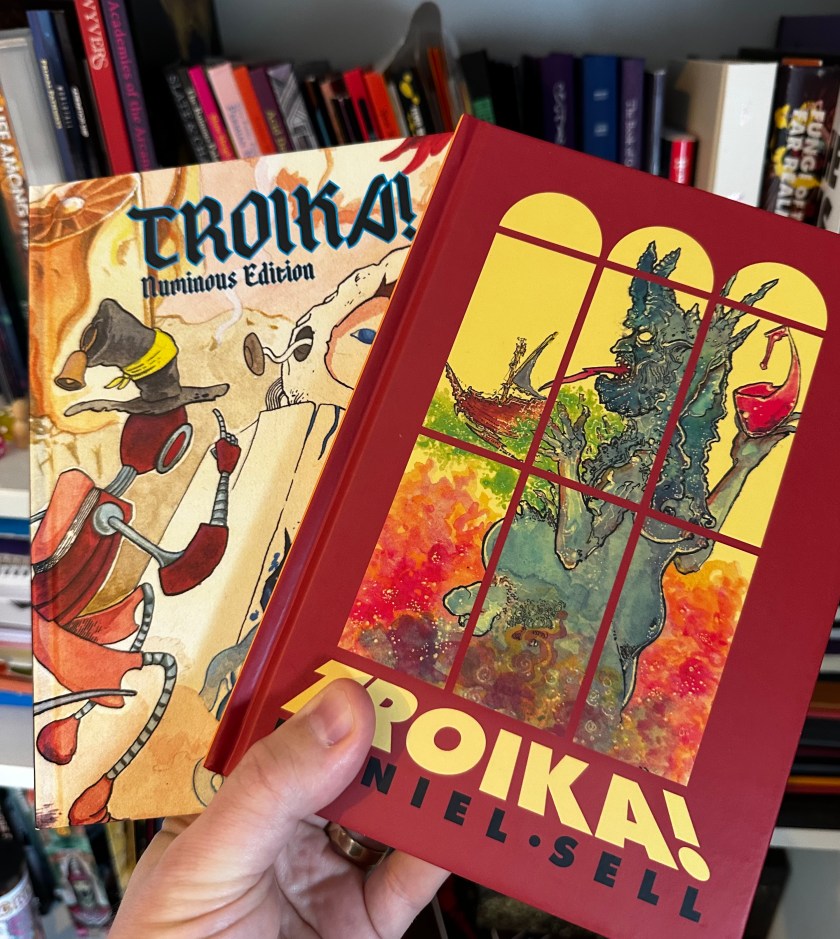
But my favourite, by a pretty long way, was the Complete Book of Dwarves. I had been a fully paid up member of team-dwarf since I read the Hobbit as a kid. I loved their aesthetic, their toughness, their curmudgeonliness, and, of course, their beards. I had a few dwarven characters over the years across multiple games and systems but I don’t think I ever got to have one in AD&D as I was almost always the DM. So, instead, I used the Complete Book of Dwarves to make up Dwarven societies, kingdoms, mythologies, NPCs and Strongholds. The book contains chapters on the mythical origins of the dwarves, dwarven subraces, “Your Life as a Dwarf,” Character Creation, Proficiencies, Dwarf Kits, Role Playing and Personalities, Mining, Equipment and Designing Dwarf Campaigns. I remember getting fully immersed in dwarven world-building in a way that my players probably did not entirely appreciate. But, if I’m honest, that was for me anyway, not for them.

Stronghold Creation

So the Complete Book of Dwarves has a whole chapter devoted to generating your own Dwarven Strongholds and I have a distinct memory of being wrapped up, sick, in a duvet on the couch rolling up stronghold after stronghold. I must have recorded them somewhere but those records have been lost to the mists of time along with Cold War and white dog poop.

Now, I haven’t had a copy of the book in years. I’m not really sure what happened to the one I had, but there is a good chance it was borrowed by one of my good friends a mere thirty years ago and they haven’t gotten around to returning it yet. Understandable. Anyway, it was my birthday on Tuesday and my friends Tom and Isaac gifted me a copy of it! I had recently been going on about my particular love for this book and they’d actually listened to me!! True, true friends.

So I thought we could create a stronghold together now that I’ve got it. Strap in!
According to the opening section of the chapter:

Strongholds are the homes and workplaces of the dwarves. They can range from simple family residences to huge subterranean cities. The stronghold design sequence allows you to design a stronghold, either by making a series of choices, or by random die rolling. You may also combine the two methods.

Dear reader, if you have been here for any of my character creation posts, I think you will know which way we are going. Random all the way!

Here’s the Dwarf Stronghold Design Sheet:

You can see that we are going to start with the name. Now this actually requires us to turn back to Chapter 4 first and locate the Dwarf Name Generator.

  • We then roll 1d4 to determine the number of syllables in the stronghold’s name – that’s a 2.
  • That means we roll 1d20 twice on the Dwarf Name Generator Prefixes table – that’s a 7, Dal- and a 16, Nor-
  • We go ahead and combine those in the most pleasing sounding configuration, I think that would have to be “Nordal” for me
  • Then we flip back to Chapter Ten and roll 1d20 once more on the Stronghold Suffix Table – 15, -lode
  • Put em all together! Nordallode! It definitely has the sound of a place name made up for D&D but we are going with it

Next! Subraces Present. Ugh. Yep. This is the bit where it becomes a little problematic. Obviously, the whole subrace business in D&D is slightly odd. If you applied it to humans you would be talking about different ethnicities, but D&D doesn’t do that with humans, does it (I mean thank fuck, right?) (I’m deliberately skirting around the variant human unearthed arcana options because I think it’s best to do that.) Anyway, the Subraces Present section wants us to make sure we know which is the main subrace (i.e. the most numerous,) the dominant subrace, and which other subraces exist there. This section also includes a table that tells you how many of the dominant subrace are in your stronghold, while pointing out that this only refers to the number of male dwarves. The number of females is, for some reason, half this number and the number of wee dwarflings is half that again. Look, I don’t know. How they came to such decisions is beyond me and clearly did not even strike my tweenaged mind as something noteworthy at the time.

OK, so, I’m going to roll on the Subrace Table to figure out which is the Main Subrace in Nordallode. The same table determines their numbers. Once again, the table has different potential populations of subrace for each (Deep Dwarves can have 3d100+50, whereas Gully Dwarves can only have 1d100+50.) As for numbers of males to females, I see no reason to abide by the nutty, unexplained logic in this section. I’m not even going to split them up.

  • Ok, Subrace Table, roll 1 – 32 – Gully Dwarves.
  • Number – 1d100+50 = 108

Now to find out which is the dominant subrace and how many other dwarves subraces live in the stronghold. Let’s roll on the Dominant Subraces Table.

  • 61, Hill Dwarves
  • This means there are 1d4 Other Subraces in the stronghold according to this table. I rolled a 2.

I’m beginning to get confused and frustrated by this whole subrace business. The first table got me to roll to determine which was the main subrace and how many of them were in the stronghold. Now, I’m told to roll on a different table to find out which is the dominant subrace (is this not the main subrace?) and then roll to find out how many other sub races are in the stronghold? But, so far, I have rolled two different types of dwarf for main and dominant…

If I continue on to the next page, it tells me to reduce the number of the dominant subrace by a percentage depending on how many other subraces are present. But, I have not actually rolled the number of the dominant subrace yet.

Forget it. I am scrapping the Hill Dwarves. Long stand Nordallode, home of the Gully Dwarves!

I will keep everything else the same. Now, with 2 other sub races sharing their home with them, the Gully Dwarves must reduce their numbers by 25%. That brings them down to a mere 81.

I’m now going to find out how many and what type of other subraces are present.

  • I roll 1d100 on the Gully Dwarves Subraces Table and get 74 – Mountain Dwarves. I roll 2d10 to determine their numbers and get 14.
  • I roll again for the second minor subrace and get 52 – Hill Dwarves. There are 3d12 of these beardoes – 20
  • New population of Nordallode – 115

From the book:

Hill and mountain dwarves may be found at any depth and living with any other subrace. They are clannish and keep to themselves. They are likely to be the employers of other sub races. While these others will likely be in the stronghold on a fixed term contract, it is not unusual for a stronghold to have enclaves of other dwarves who have been there for generations.

Time to figure out the stronghold’s overall alignment. This does not determine the alignment of every member, just the general outlook.

  • 2d6 – Obviously this table has each of the sub races along the top as some of them are more likely to be evil than others (aaaagh.) Nordallode turns out to be Chaotic Neutral.

Let’s move swiftly on from all that nonsense.

Let’s figure out the Type of Stronghold we are building:

  • Another d100 roll and I get a 14, which means it is a Secondary Stronghold and gets to increase its population by 100%
  • New population of Nordallode – 230
  • Secondary Strongholds are second only to Major Strongholds and can be independent or allied with a Major one. I think we will call Nordallode an independent stronghold!

How old is our stronghold? Good question!

  • For Secondary Strongholds we roll 2d6 to find out how many generations of age Nordallode is – That’s 8. Pretty old… except, there is a Racial Modifier. Gully Dwarves subtract 2 from that number. So its 6 generations (no fucking idea.)

And how old can the dwarves of Nordallode live to be? No roll here:

  • Gully Dwarves – 250 years (this is the lowest possible life expectancy and its determined entirely by subrace…)

What type of government does our stronghold have?

  • It’s back to the d100 rolls – 89 – Oligarchy! Why, of course! How fitting! (Wah!) Oh wait, there are more modifiers here. Gully Dwarves add 10 (for whatever reason) and we have to add another 10 for being of Chaotic alignment! That makes it 109. It’s Anarchy baby!

Time to roll on the Attitude Table to find out what our problem is.

  • It’s a d20 roll this time. That’s a 112 – Isolationist. Lock those gates!
  • This means that 75 – 100% of the population is in the frikking militia.

What are our major resources in Nordallode? Well, the book shies away from telling you exactly what you’re rich in, instead, just giving you an idea of its monetary value.

  • It’s 1d20 on the Stronghold Resources Table and I got a natural 20! WOOHOO! Things are looking up for my poor little Gullies. That means it’s Rich!
  • There is an optional part of this table – the starting gold modifier, that applies to PCs who come from this stronghold. So, if your character did come from Nordallode, they would start with an extra 1d10x10gp. Pretty sweet. But wait! Another racial modifier means that you take away 10 from the original d20 roll because Nordallode is a Gully Dwarf stronghold… Born to lose. So, this actually means that my downtrodden dwarves start at Average Resources and so get no starting gold modifier at all. FFS. There is a +1 to the roll for being a Secondary Stronghold, but that doesn’t improve it from Average anyway.

OK, time to find out what Nordallode’s Relationship with Other PC Races is. We need to roll 1d20 four times on the table of that name. I am going to factor in the modifiers at the start this time. I get a +1 for being Chaotic Neutral and, for being Isolationist, I must treat any roll of 4 or less as a 9:

  • Elves – 12 – Threatening
  • Gnomes – 13 – Cautious
  • Halflings – Nat 20, becomes 21 – AT WAR!
  • Humans – 12 – Cautious
  • Nordallode, not friendly to outsiders.
  • Properly, this should only be rolled for the races that live nearby but since this is entirely experimental, I rolled for all of them

OK, we have figured out who we hate above ground, time to go to war or peace with someone underground too. Love the War/Peace Table:

  • Its another d20 roll – That’s a 1 which actually means Nordallode is at peace!
  • The next table allows us to see how long that unlikely situation has persisted
  • Peace Table – 1d10 – 7 – 2d6 generations! – That’s 4 generations of peace! Just not with those fucking Halflings obvs.
  • There is a War table as well but I think we have just determined that we don’t need to roll on that.

Nordallode has to defend itself from the depredations of those vicious, hairy-toed bastards. How do we do that?
With our Military Forces!

  • Gully Dwarves have an Unsteady Morale (7)
  • Apparently the first reaction of Gully Dwarves to danger or conflict is to run away, whether they are members of the militia or not…
  • Their weapons are… “any they can scavenge,” which is not great for a militia but may make sense in a stronghold where anarchy reigns
  • With 230 dwarves in the stronghold, I’ll assume that 200 are in the armed forces. That means that, of their Leaders, there are 50 Thieves (level 2-6), 40 Warriors (level 2-4), 20 Warriors (level 2-6), 4 Warriors (level 8), 2 Warriors (level 10) and 2 Priests (level 1-10)
  • Special Forces – It says 10 to 20% of the militia have some of the specialised Class Kits from the book. I’m not going to get into that right now though as it would require the sort of dive into more general AD%D rules that I’m not prepared for. But, numbers wise, that’s at least 20.
  • War Machine Table! – We get 4 rolls on this because of the size of the militia and we get a +1 to our rolls because of our cool Isolationist attitude. It’s a d10 table – that makes 11 for the first roll giving Nordallode 3 War Machines, 8 for the second roll for another 1 War Machine and finally a 6 for 1 more. That’s 5 War Machines, total. Noice.
  • You can have Animals to defend your stronghold. The specific animal depends on your subrace, unsurprisingly. Let’s a have a cadre of Giant Beetles for the Gully Dwarves of Nordallode. That’ll scare the bejeezus out of those pipe-smoking tyrants!
  • let’s figure out our Total Strength
  • That’s Number of Leaders in the Military (118) + Special Forces (20) + Number of Dwarves in the stronghold (230) = 458. I am not sure what this number means. It seems incredibly abstract.

Conclusion

Every time I revisit one of these old AD&D 2E books, the realities of the western world, the industry, our polluted minds and questionable thought-processes of the writers of game materials largely marketed to children, smack me around the face again.
When I first read this, I didn’t see anything wrong with it. In fact, I specifically remember deriding the mere idea of playing a Gully Dwarf when I was 12 years old. But I am giving that me a pass. He was a child. So, it’s harder to hand out the get-out-of-jail-free card to the creators of the books. They, perhaps unthinkingly, used their creations to perpetuate racist ideas. And I know they are fantasy races but there’s no excuse. Those subraces, as I wrote above, are the same as human ethnicities. According to the writers of this material, only some of them are fit to be the employers of the others, some of them consort with beetles and are cowardly and some are inherently evil… Need I say more?

I had a lot less fun with this process than I remembered having when I was a kid but there are still elements that spark the imagination. I like to imagine the Gully Dwarf heroes! Those few high level Thieves, Warriors and Priests, perhaps riding out on their War Beetles. It makes me wonder about the generations that came before, the founders of Nordallode, and what their lofty goals were. Would they be disappointed in their descendents or proud?

What’s your opinion on these old, race obsessed books, dear reader? Do you just shake it off or do you embrace the stereotyping and run with it?

Dagger in the Heart

On Rails?

I recently finished reading through the new campaign book for Heart, the City Beneath. Dagger in the Heart from Rowan Rook and Decard was written by Gareth Ryder-Hanrahan and illustrated by Sar Cousins and came after a very successful crowdfunding effort last year. I backed it because I back everything from RRD but also because I was curious about how they were going to go about constructing a campaign for a game like Heart. In my experience, A campaign for Heart is something best dealt with one session at a time. Looseness and improvisational ability are qualities you will benefit from when GMing this game. The character beats that drive the events and the plot and the characters forward might have one PC searching for someone to kick off a tall building while another might be looking to get into a situation that’ll garner them some major Echo Fallout. So, maintaining any sort of direction can be a challenge. This is one of the game’s great strengths, of course. It makes it feel quite organic at the table and allows your players to feel as though they are the focus of the evolving story.

So, how to you translate that style of play into a coherent campaign? Well, you get Gareth Ryder-Hanrahan to write it for you, obviously. What he has done with Dagger in the Heart is provide the GM with a trio of inspired villains that I can imagine the PCs will love to hate and built the campaign around their plots and goals. In the introduction, he also gives you a guide on how to use these villains, depending on the length of campaign you want to run and some other factors. You don’t need to use them all, and, indeed, you are encouraged not to. Importantly, the campaign will work no matter which ones you use. They mostly act as foils to the PCs plans and actions and you are given suggestions, throughout the book, on how to use them in each area and during each major event. In Dagger in the Heart, the villains have their own beats they’re working towards, which helps in keeping track of what they are doing most of the time.

After the intro, you get seven chapters, each of which focuses on the areas of the Heart (or, indeed, the City Above) that are important at different points in the campaign. A chapter features an overview section which briefly explains what is contained in it and what the PCs are expected to be doing while they interact with the places, people and events contained in it. After that, you have a Staging section, which gives you options on how to get the PCs to move the overall plot forward while they do the usual Heart stuff of delving and hitting their Beats. This might include descriptions of major NPCs or stat blocks for enemies. After this, you get your Landmark and Delve descriptions. There are so many Landmarks in this book. I am pretty sure there are more Landmarks in this than in the Heart core book. But the delvers are not required to visit all of them. Instead there are just a lot of options. Indeed, because of the very loose nature of the campaign, the Landmarks can occur in any order, within any given Tier of the Heart, at least. In fact, they can mostly move quite freely between Tiers as well. So, despite the plot focusing so heavily on the occult and defunct underground train system known as the Vermissian, Dagger in the Heart is anything but Railroady. What it does, is provide you and your players with a plethora of options for how the story of the campaign could play out at your table and, indeed, how it might end, taking into account what your delvers might do.

After reading it, I was energised and inspired. I wanted to get some players around the table and send them back into the Heart as soon as possible. It will have to wait a little while, though, while other games come to an end. In the meantime, I get to read it again and prepare something really special.

Heart GM Screen

I also got the new Heart GM Screen from the Backerkit. It’s exactly what you would expect from RRD. Very high quality and totally over the top. There are no useful tables or common rules on the screen itself. Instead it comes with a booklet that you can rip the particular pages out of or, I suppose, photocopy and attach to the screen as you like. That way you can switch out the items you most need, when you most need them. It’s a nice idea and I think it will be useful.