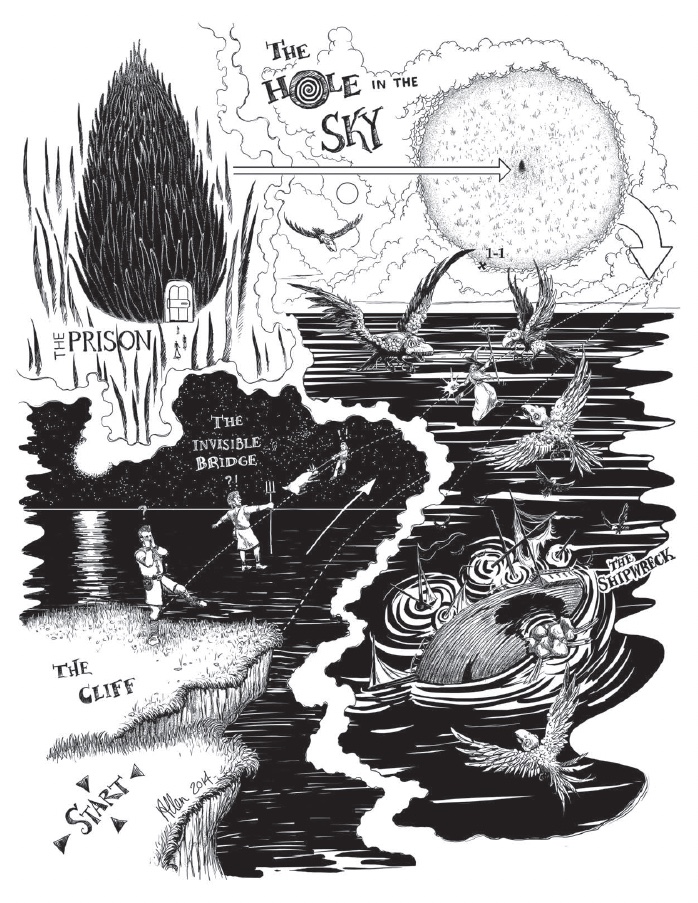
Even the concept of the post-apocalypse that is so impossibly verdant that sentient life has had to scrabble for a foothold amongst all the greenery is unique and bold.
Traveling
Dear reader, I’m off on my travels again. This time, I’m in the east of England where the weather is beautiful and the swimming pool is indoors. Anyway, I’m using this razor-thin rationalisation to excuse reposting this post from about this time last year. It’s about giving PCs something they care about that you can fuck with, and Wildsea, which is one of the games I’m considering running in the near future. It’s also a game very much about journeying so it seemed appropriate.
Here’s the story: hundreds of years ago, the city’s premier logistics wizard, Whalgravaak, abandoned his warehouse, having shredded the Manual of Operations for his Sphere Pool (a mechanism used to import and export goods across the cosmos) so that his rivals could never figure it out.
One-shot fun-shot to campaign of terror
You know what it’s like, dear reader: you want to introduce some noobs to RPGs or just to your group of players, you want to make a good impression but you don’t want to scare them off by plunging them into a multi-session campaign with a complicated, crunchy system. So you pick up a location-based adventure, thinking you can just use a small portion of it, just what you need, just enough for one session, one single shot. But, after that session, the curiosity gets the better of you all. That was a weird, but enjoyable experience, you tell each-other. I bet we could have fun exploring the rest of that odd locale, you tell the players, why not have some more sessions and see how it goes? So you do that. And then the bloodbath begins.
Whalgravaak’s Warehouse
SPOLIERS BELOW! If you are interested in being a player in Whalgravaak’s Warehouse, turn back now!
The 1:5 adventures that I own, Whalgravaak’s Warehouse, The Hand of God and Eye of the Aeons. All from Melsonian Arts Council
Whalgravaak’s Warehouse is a Location based adventure by Andrew Walter for Troika! The design is by Shuyi Zhang. It came out in 2023 and was the first of the Melsonian Arts Council’s 1:5, an ongoing series of location-based adventures for Troika! There are a couple more available now and another out very soon. You can find them all here. My somewhat rotating group of Tables and Tales members just had our last session in Whalgravaak’s Warehouse on Monday night, after spending a total of eight sessions there.
Here’s the story: hundreds of years ago, the city’s premier logistics wizard, Whalgravaak, abandoned his warehouse, having shredded the Manual of Operations for his Sphere Pool (a mechanism used to import and export goods across the cosmos) so that his rivals could never figure it out.
Since then, the strange nature of the warehouse, staffed by giants and stocked with oddities, has only grown stranger, and more dangerous. It houses a handful of physics defying, Tardis-like chambers, not least of which is the terrifying Deep Storage, a swirling mass containing several pocket dimensions and a wraith-like being who wants nothing more than to consume intruders. At least one cult has taken up residence, and they are often mutated into horrific Chaotic Spawnlets by the effects of the radiation still spilling from the Sphere Pool. The warehouse is sandwiched by a vast desert of dust occupying the roof, which is peopled by the descendants of Whalgravaak’s former employees and, underneath, the tunnels of a pack of unpredictable Worm-headed Hounds.
But entrance has been forbidden by the Autarch for centuries and, even if you were foolhardy enough to ignore a diktat like that, you would still need to be brave enough to face the unknown dangers within.
The Hook and the Party
The book suggests a few potential hooks for your PCs. Since my game started off as a one-shot, with brand new characters and no existing campaign to work it into, I went for one that seemed like the object might be achieved in one session. They, along with many other groups of mercenaries were contracted to return with the head of a Cacogen, known only as the Opportunist, to their patron, an Exultant of the Autarch’s court. But we dealt with that in flashback as they all sat in the weed-choked yard of the warehouse, dotted now with small encampments of adventurers and brigands all gathering their courage to gain entry. The PCs’ band consisted of a Monkey Monger (and monkeys), a Gremlin Catcher (and dog), a Wizard Hunter and a Landsknecht. They were, to put it bluntly, a motley crew.
That first session was all fun and games. Every encounter, except for the last one with the Cacogen, was resolved peacefully. This happened mainly due to the rolls I made on the Mien table for each encounter. The worm-headed Hounds they encountered wanted to play with the Monkey Mongers monkeys, they did not want to eat them. The Flat Serviceman was happy to follow the party around and clean up after them. The Segmented Crippler in the Pigeonholery, didn’t want to wake up, so they skipped that one entirely. This is a pretty standard mechanic in Troika but I think it gave the players a false sense of security. The session ended with this motley crew finding and defeating the Opportunist quite handily. And, at that point, we thought that would be it.
But a few months later we decided to continue with their explorations of the warehouse. Obviously, their original motivation to explore was gone. They had achieved their objective, but the players were all good sports. They decided between them that the motivation was purely one of curiosity and greed. They had spotted, through a bubble like window in one of the rooms they had traversed, a vast and terrifying pool of chaos and wonder in a room far too big to exist within the confines of the building. This was enough for them. Essentially, they went in search of adventure. Although, through the sessions that followed, I did introduce the idea that they might want to find that cult I mentioned earlier and that they should seek out the incredibly valuable Tome of the Sable Fields that was reported to be stored in the warehouse, somewhere. This gave them a little direction when I thought they might need it, but, honestly, I think my players just wanted to see what new wonder/horror the dungeon had in store in the next room.
The Dungeoncrawl
It was only from this point that I started to really treat this adventure like the dungeoncrawl it is very much meant to be. The book does a good job of introducing the concepts of tracking resources like lantern oil and provisions as the party explores. It also explains the concept of exploration turns and their effect on the game, i.e. the distance you can travel in that time, the amount of lantern oil you use per turn, and the likelihood of running into an encounter. I followed all these rules to the letter and they made for some interesting moments in the game. But, to be frank, the weirdness of the setting is the real draw here, not fiddling with rations and light levels. Also, few of the characters lived long enough for starvation or oil-skins to become a problem.
It also has rules for dealing with the spatially distorted, impossibly large areas within the warehouse. It suggests that the players should make Luck or Skill checks to avoid getting lost in these areas, but, in all honesty, I didn’t really require that sort of thing.
Mapping is also a part of the dungeon crawl format and this adventure does want the party to attempt to map the space for themselves. The thing is, when some rooms appear to be a kilometre wide and the next one is spatially normal, that map becomes effectively impossible for them to draw accurately after a relatively short period of time. Eventually, I gave up and just shared the one from the book with the players, trusting their ability to separate player knowledge and character knowledge. My advice, if you are doing this, try get your hands on the PDF version, since the one in the physical book stretches across two pages and the crease obscures part of it.
In fact, the adventure has four maps:
the warehouse floorpan, using 10ft squares to denote distance
a hex crawl for the desert on the roof, replete with points of interest
a map of the Worm-headed Hound tunnels beneath the warehouse, superimposed over the warehouse plan
a largely vibes-based map of Deep Storage
These are all great but usefulness will vary. In our game, the party spent several sessions trapped in Deep Storage but took one look at the desert and noped right out of there. This seems like a good point to note how good all the artwork is in this. There are plenty of colour and black and white illustrations but they leave me wanting even more!
Warehouse Workers and other Beasties
A warehouse is a dangerous place to work, especially when the correct safety protocols are not observed. It doesn’t help at all when you are trespassers and several of the residents are large enough to crush you with a single blow.
The giants are not what you might expect.
The giants are the main NPCs of the adventure and Whalgravaak’s only remaining employees. Each one is fabulously interesting, diverse and well-drawn. They have their own motivations and desires. I was gratified that the party managed to encounter all of them during the eight sessions we played. In fact, one player had two different characters killed by two different giants. I will point out that it is entirely possible to avoid violence when dealing with the giants, it’s just that, sometimes, the Monkey Monger on the team has monkeys who decide to fuck with them and one thing leads to another.
The wraith-like Gulf Man Roamer from the swirling vortex of Deep Storage is a potentially lethal foe who has a chance to show up each time the party moves through that already dangerous room. If it captures you in its bag, it’s going to spirit you away to eat you in its extra-dimensional lair.
No warehouse is complete without forklifts. Whalgravaak’s forklifts are humanoid constructs with the face of the wizard himself. They treat intruders like stock, and will attempt to whack them and pack them. They hit very very hard.
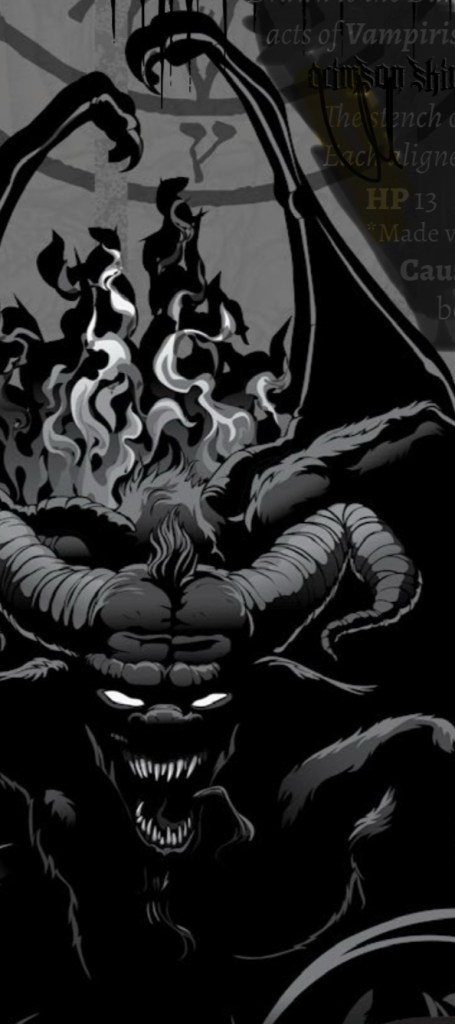
When you read the words, Worm-headed Hound, is this what you imagined?
There are also a bunch of random encounters, including the Worm-headed Hounds I mentioned before, desert nomads from the roof, and Bandits/Burglars/Bastards. These only turn up on the roll of a 1 on a 1d6 for each turn the party travels. It didn’t occur very often in my game. The Roof and the tunnels have their own random encounter tables as well, but I never used them as the party never spent any appreciable time there.
This is just a selection of the possible encounters you can have in this setting. I haven’t even mentioned the tiny army guys, the sentient crane parts, the Onion God or the Mulled Dead.
The Rooms
I have hinted at rooms that defy physics and rooms with pocket dimensions, and those are usually the big-ticket locations that contain some of the greatest set-pieces in the adventure. Deep Storage alone evoked some of the most inventive use of skills and spells and a great degree of fear and tension from the PCs. It killed one of them (two if you count the Rhinoman eaten by the Gulf Man Roamer.) The Roof could act as an entire short hex-crawl campaign and the Sphere Pool has some truly memorable and dangerous elements to it.
However, many of the other rooms have weird and wonderful contents as well. Some of them, the party will glance at and move on, while others will capture their imaginations and encourage them to interact. I never really knew which reaction I was going to get from them, actually. The room full of melting rope? They had to spend an hour trying to figure out how to set it on fire, the eternal battle between tiny armies playing out across a battlefield seemingly larger than the whole warehouse? Just popped their heads in and left with some captured little men.
Some of the rooms were relatively mundane warehouse style rooms with shelves and containers. The book has tables in the back to help you identify the state those rooms are in and the contents of the containers, which is useful.
One of my over-riding impressions by the end of our game, was that in some ways, the great variety of bonkers content in the rooms served to detract from any unifying theme. There were some elements that went together, such as the warehouse’s disdain for traditional dimensions. If my PCs had explored the Roof or even encountered any of the nomads who dwelt there, they might have found a distinction between those descendants of the ancient striking workers and the giants who continued to obsessively do their jobs even long after their employer had passed on. But, none of that is to say that the rooms weren’t endlessly fun and inventive.
A Note on Lethality
I recently wrote a post sharing some of the obituaries of the characters who met their ends in Whalgravaak’s Warehouse. You can check it out here. There are only three of them in that post. A few months previous to that, I wrote this post, which contained the obituaries of two more. The mathematicians amongst you will have summed those already. That’s five. In the final session, we lost another one. That makes six. That was three character deaths each for two particularly unfortunate/reckless players. Warehouse work is dangerous. Only one of the original party survived to the end. You have been warned.
Conclusions
Numinous or otherwise, its the same game.
There is so much to recommend in this adventure. It is endlessly entertaining, challenging and bonkers. It has such a variety of locations and such a diversity of encounters that you would need to work hard to get bored in Whalgravaak’s Warehouse. I think it works so well to show off Troika! as a system, too. The problems it asks the PCs to solve and the encounters they have to deal with utilise things like the Luck check really well and encourage players to invent their own unique Advanced Skills. But if they get into fights, especially with the incredibly random nature of Troika! initiative, there is a very high chance they are going to come out of it dead. There are a few opportunities for insta-kills throughout the warehouse too. I can’t overstate exactly how lethal this adventure is. Luckily, my players leaned into that, even when they were creating new characters to join in the same fight the original one died in (they got very quick at creating characters.)
I think it’s also flexible enough for many GMs to easily take it or part of it and fit it easily into their own ongoing Troika! campaign. As I said at the start, our game started as a one-shot and it could have ended there. But we were able to easily adapt it into a short campaign of its own.
Dear reader, let me know if you have played Whalgravaak’s Warehouse or if you would like to! I’d love to know your views on it.
At one stage, the Elf cast a Magic Missile and it caused a rain of frogs on the entire party and all their enemies, almost killing several on both sides!
DCC Day
I kind of knew it was DCC Day on the 19th of July. It had been advertised to me enough times on Instagram after all. But that was not why I had scheduled a DCC one-shot on the 20th of July. That just happened to be the best day for most of my players. As serendipity would have it, the module I planned to run was the Grinding Keep, an adventure designed by Marc Bruner, which appeared in the Adventure Pack for DCC Day 2024 along with the XCC RPG adventure, Tucson Death Storm!
Hook
I had introduced the hook for this adventure in our recent run of Sailors on the Starless Sea. The PCs discovered a map to a keep and a note hidden in the lining of a cloak in amongst the charnel remains of many butchered humanoids in that adventure’s tower. The note was from the patron of the poor unfortunate who lost their cloak and it indicated that their patron would pay 1000 gp for the safe return to them of a magical lantern. As budding adventurers, most of whom barely had two groats to rub together, this seemed to be motivation enough.
Each player had only one surviving character from the 0-level funnel and one of them was not able to make it to this latest game so I supplemented the four characters who advanced from 0-level to level 1 with a couple of pre-gens kindly provided for the Grinding Keep by Goodman Games themselves.
Big Party
So the party was made up of six level 1 PCs, a Warrior, a Wizard, a Cleric, a Dwarf, an Elf and a Halfling. Two of the players played two PCs each and two of them played one PC each. All of their abilities proved useful. I would say a varied party is very beneficial for this module. On the other hand, if I had to do it again, I probably would have left the players with one PC each even though the adventure calls for 4 to 6 level 1 PCs. They all survived easily enough, although there were a couple of close calls.
Starting the Adventure
SPOILERS! – If you are a player who might want to play this module, stop reading now!
To begin, I plonked them right at the door to the keep as the text suggests. The module wants you to do this. It is designed to be a one-shot by the gods, and it will be! No faffing around in town, shopping or gathering rumours. Just get them in there as quick as you can. I did have to utilise the handy, and essentially invulnerable Leaf Elemental that waits on the grounds of the estate for anyone foolish enough to hold up the proceedings of your one-shot by searching for herbs amongst the overgrown gardens which seem to be under the influence of all four seasons at once. The seasons are a recurring theme and I was gratified to note that the players realised this almost immediately.
Anyway, once they had been chased inside the keep, they were confronted by something that could only have been a magical effect that transformed the interior from a ruin to an immaculately decorated and lit hall. They were greeted by the white robed Host and eventually waited on at dinner by his veiled servants. All of this set up was important. It presented clues to the nature of the keep to the PCs and let their imaginations run with them. Enough strangenesses occur during dinner and upon their investigation of the ground floor of the keep that they should be suspicious. Indeed, before they had even left the dining room, one of my players joked, “the house is a mimic!” He didn’t know how spot on he was…
Of course, the keep is, in fact, an other planar entity who comes to the world to feed, in disguise. The PCs had seen windows and chimneys on the outside but could find no sign of them on the inside. The couldn’t get through any doors that the Host didn’t want them to enter, etc, etc. Clearly, there is enough evidence to allow your players to uncover the truth before things ever really get interesting.
One regret I have is how much time I allowed them to devote to this whole section before Event One occurs. They spent a lot of time searching, theorising, investigating, and it ate into the more adventuresome elements in the latter stages of the module. My advice would be to get them into the Guest Quarters and asleep as quickly as possible. The adventure does not provide much in the way of motivation for the characters to do this, however, so be prepared to improvise.
Event One
Event One is triggered when they wake up after a nights’ sleep in the keep. I was lucky enough that the players wanted to rest and one of them was rendered magically asleep, but without that, it would have been a struggle to get them to wait until the next morning. I probably would have triggered Event One early, if that had been a problem.
What “Event One” means is that the keep is waking up. It will soon be ready to consume a fresh meal of adventurers.
Mechanically, what it means is that every time they open a door, they will be confronted with an intersection of corridors that lead to two randomly determined rooms in the keep. These could be rooms they already visited in the first part of the adventure, or ones that would have been otherwise inaccessible up until this point.
The first room my players visited was the dining room again. This was satisfying as it gave them a chance to kill the Host and his servants from earlier (although, technically they just put the Host to sleep and dragged him around with them for the rest of the adventure.) After that, they encountered one of the three rooms that contained the organs of the keep. They had discovered the journal of a former prisoner/meal in their quarters that gave them hints as to how to deal with each of the organs; eyes, heart and lungs, and that proved useful in the encounter they had with the heart. It is significant that they identified several magic items that act as keys for the doors to these special rooms. But their first instinct was to destroy them if they could. Luckily they forgot about that plan and just kept ‘splorin’ instead. Eventually they managed to overcome the challenge in the heart room and at that point of our session, I realised I was running out of time to get my one-shot done in one shot so I focused things up a bit.
Event Two
The way it was supposed to work was this: every time they left a room, I would start marking that room off as no longer accessible on the random room table, until there was only one possible room left; the one that contained the Alien Intelligence itself. I didn’t have the time for all that. We were approaching the four hour mark at that point and people had work in the morning. So I just told them that, after they destroyed the fiery orb that acted as the keep’s heart, the entire place shook and when they re-opened the door to leave that place, the corridor beyond led to the last room. The players, unknowing, proceeded to their fate. Their fate, as it happened, was to murder the Alien Intelligence of the Grinding Keep, all its Animated Corpses and the Giant Animalcule Swarm that accompanied them. Destroying the heart had pretty much halved the creature’s HP so it wasn’t too difficult. In the end, they fled through the windows in the back of the room, utilising the Feather Fall spell (which two characters had, by coincidence) to safely land in the river at the bottom of the canyon beyond.
Conclusions
Perhaps you can see now why I think I should have made things a little harder for them by reducing their numbers. On the other hand, I am glad they all survived. They had all created and played such interesting and fun characters, even in the context of a game that is not RP-heavy, to say the least.
I was a little disappointed to reach the end of the adventure with so much cool content unexplored. They didn’t find the trap/treasure room where the magic lantern was stored, they didn’t find any of the other organ rooms, which all had really fun mechanics. On the other hand, I felt the adventure was designed to be flexible enough for a Judge to shortcut it exactly the way I did to get them to the end a little quicker, which seemed like good design to me.
This was only the second time any of us had played DCC and the first time with characters of anything other than 0-level. This was a different game to that first experience. PCs used magic and Mighty Deeds at every available opportunity and they got to roll on the crazy magic random tables a lot. At one stage, the Elf cast a Magic Missile and it caused a rain of frogs on the entire party and all their enemies, almost killing several on both sides! This is why we loved DCC. It’s the wonderful and potentially lethal randomness of it and the endless inventiveness of the adventures.
I would recommend the Grinding Keep as a one-shot DCC adventure, as long as you are willing to either cut out bits or extend it to two sessions.
If you had to choose one, dear reader, which one would it be? If you are one of my potential players, which one would you like to play?
Anniversary Posts
More anniversary guest posts coming soon. In the meantime, have some musings.
Old School Rut?
I’m not sure how it happened but, recently, all I have been playing is OSR, trad and adjacent games. With the exception of Dungeon World, which is about as close to D&D as you can get while also flying the PBTA banner, its been wall-to-wall, dragon games, Borgs and Troikas. And this week? It’s Dragon Age, DCC and maybe some Black Sword Hack or UVG (which is pretty trad in its ruleset to be quite honest.) Am I in a rut or have I just naturally gravitated towards these games? Maybe I have found my niche and I’m occupying it. I don’t think that’s it. I think it has more to do with the ease with which I can roll out one of these games, if I’m the GM, at least. It’s also pretty easy to fall into one of them as a player when you’re familiar with the overall concepts, rulesets and themes. And, don’t get me wrong, it’s not that I’m not enjoying them. But it is time for a change, I think.
Options
So, I have a few options of non-OSR, non-D&D, non-trad games to try out in the near future. My current game of Troika! will be coming to an end next week and Dragon Age probably only has a couple of sessions left in it, for a while. So, some calendar spots are opening up! I’d like to fill them with something completely different.
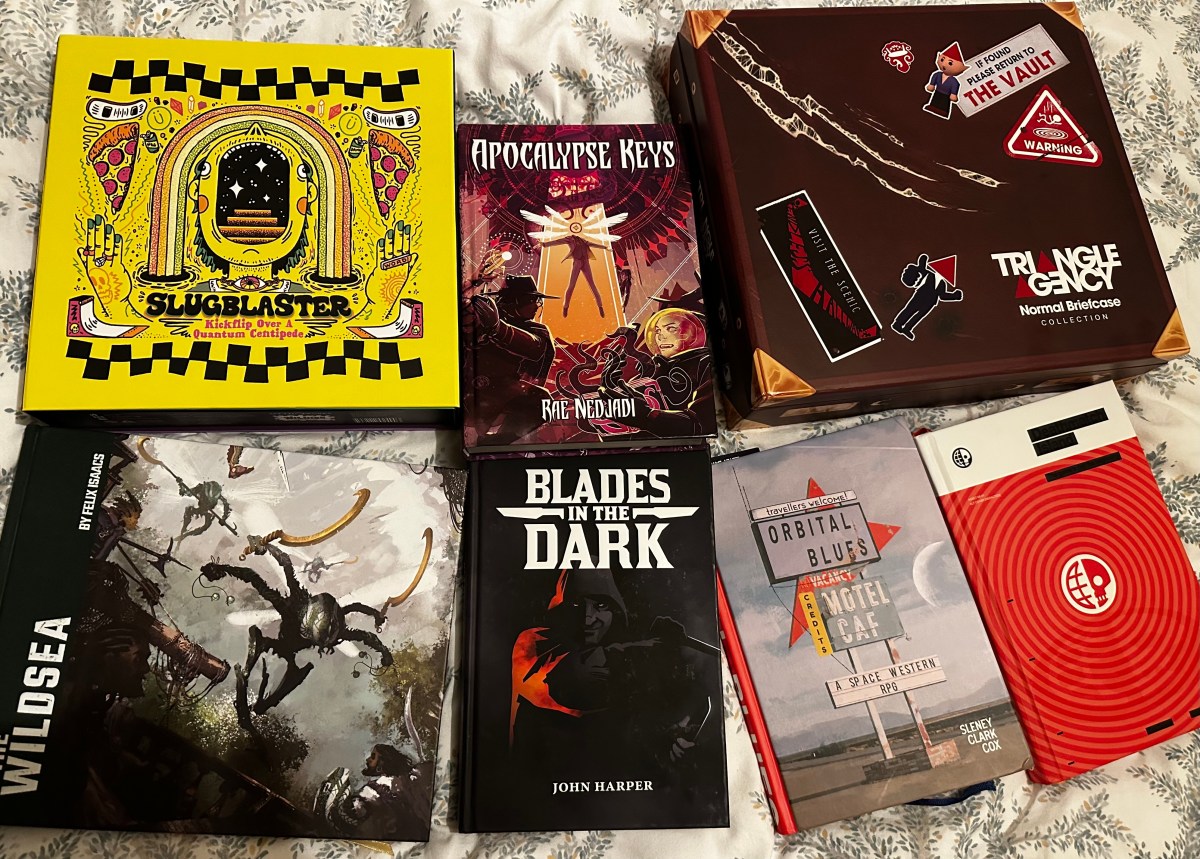
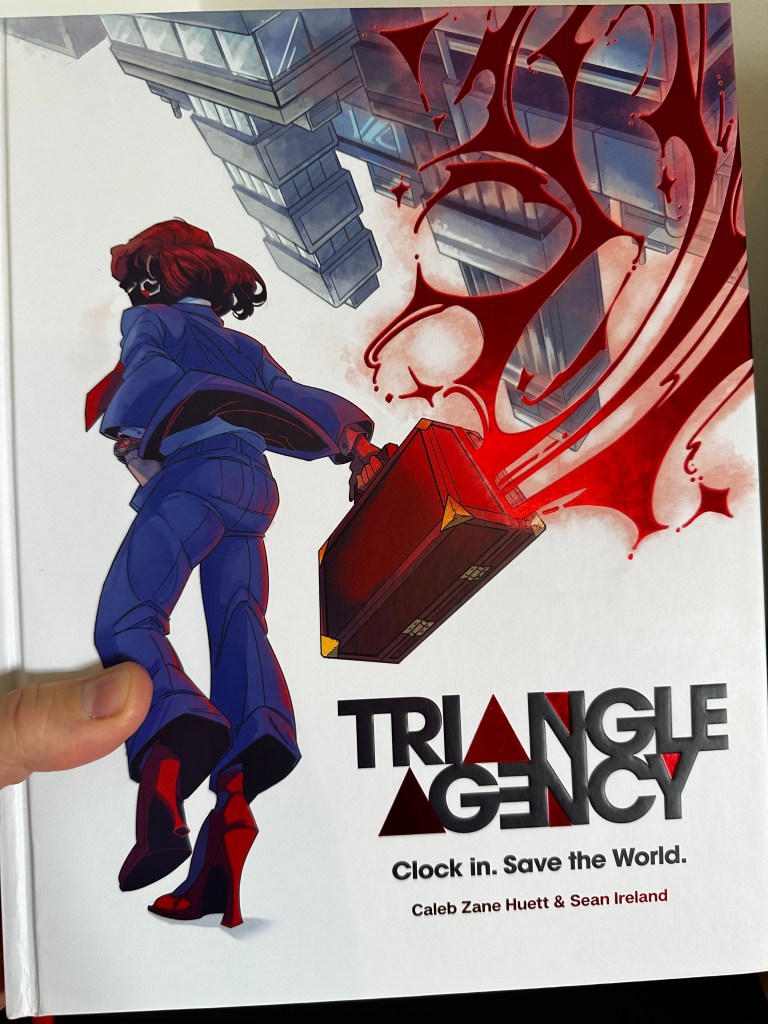
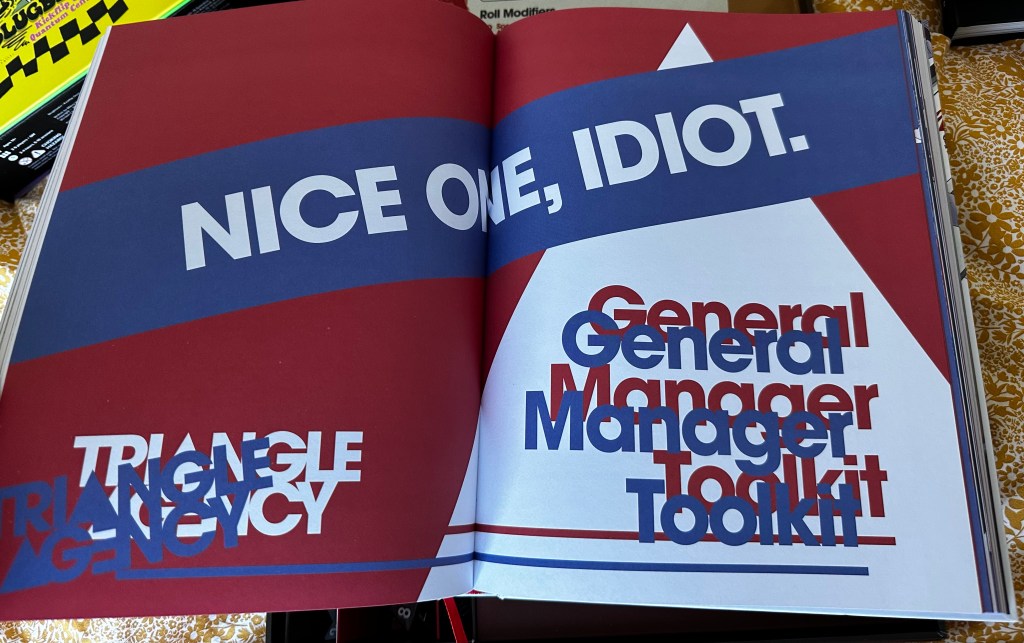
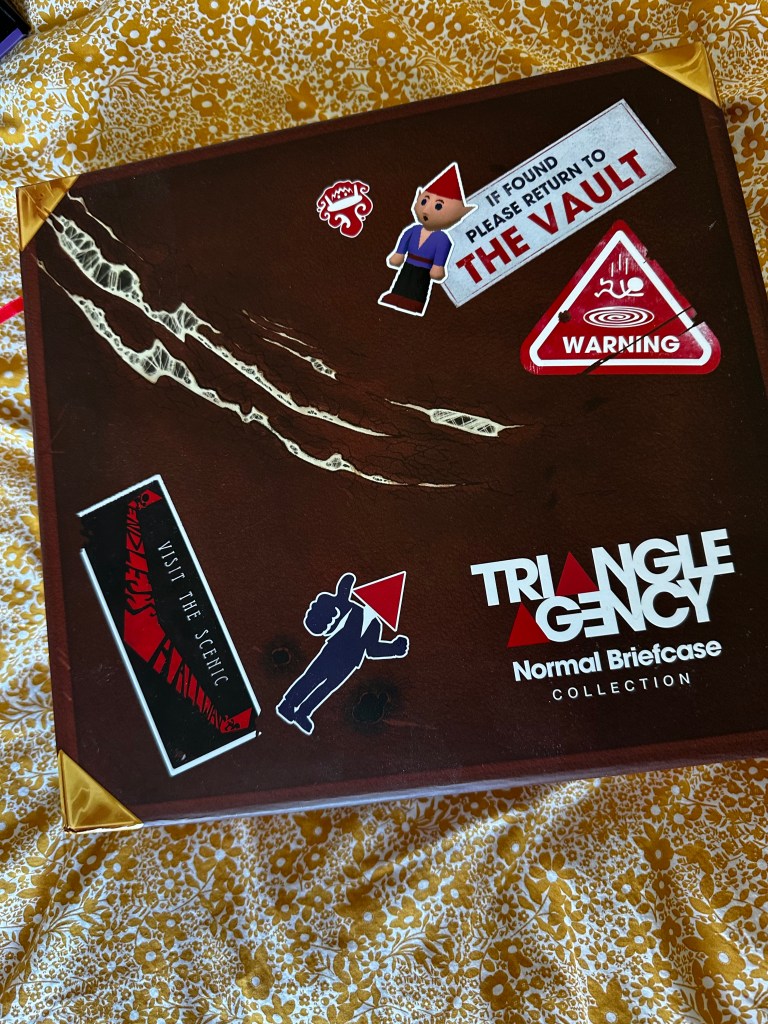
The Triangle Agency Normal Briefcase EditionInside The Triangle Agency Normal Briefcase EditionNice One Idiot
Triangle Agency – I’m reading this at the moment. I have to say, so far, I’m loving the way the game is presented, the really original ideas, the surprisingly bare-bones ruleset and the way it treats the GM (General Manager) as as much of a player as the Agents. It has gotten me excited to play it and I am trying to get potential players excited about it too. The downside is that I feel like I still have a lot to read before I can think about getting it to the table.
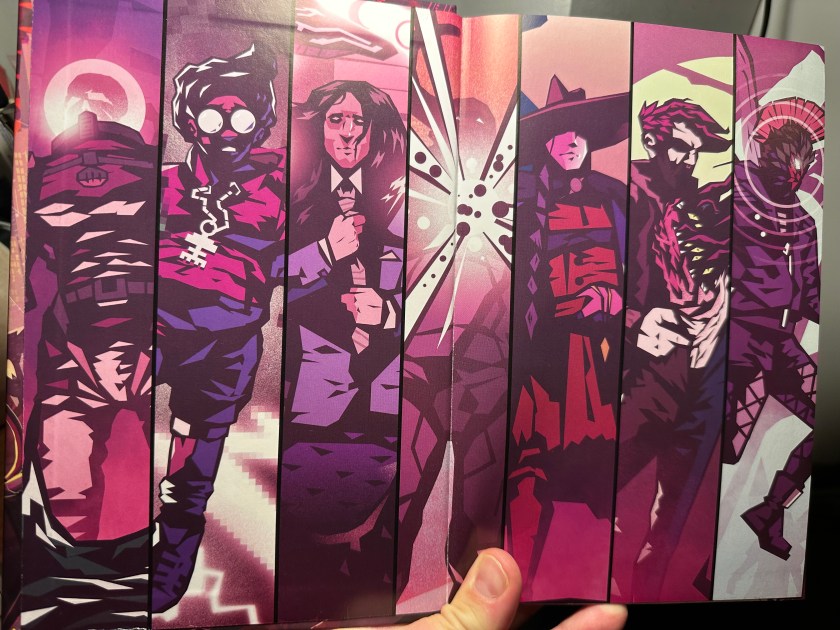
Slugblaster GOTY EditionInside the Slugblaster GOTY EditionPanic Energy DrinkName Your CrewSlugblaster Two Page Spread
Slugblaster – I got this great boxed set for Christmas and have yet to crack the spine of the rulebook in anger. But I have been listening to the excellent My First Dungeon actual play of the game over the last several weeks. It has made me want to try it out despite having little to no understanding of skate culture. I know at least one player who would be very interested in playing so I’m sure I could get a few more. Once again, the difficulty is that I have not even skimmed the rules yet. This is somewhat ameliorated by the fact that I’ve been learning how to play while listening to the podcast.
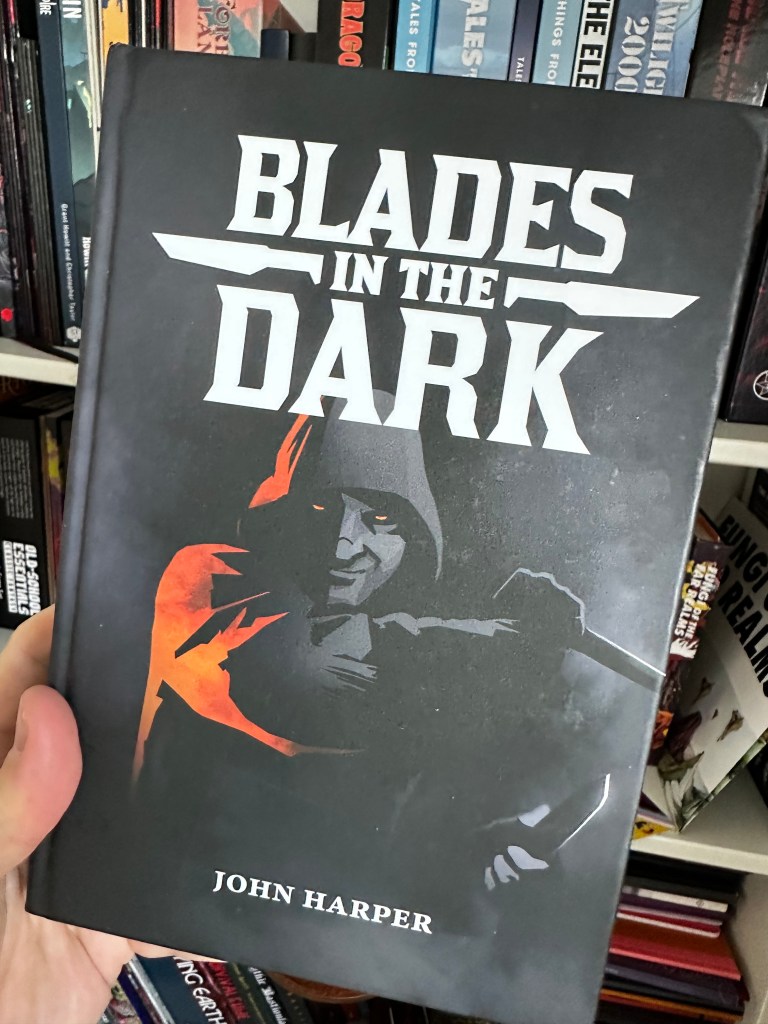
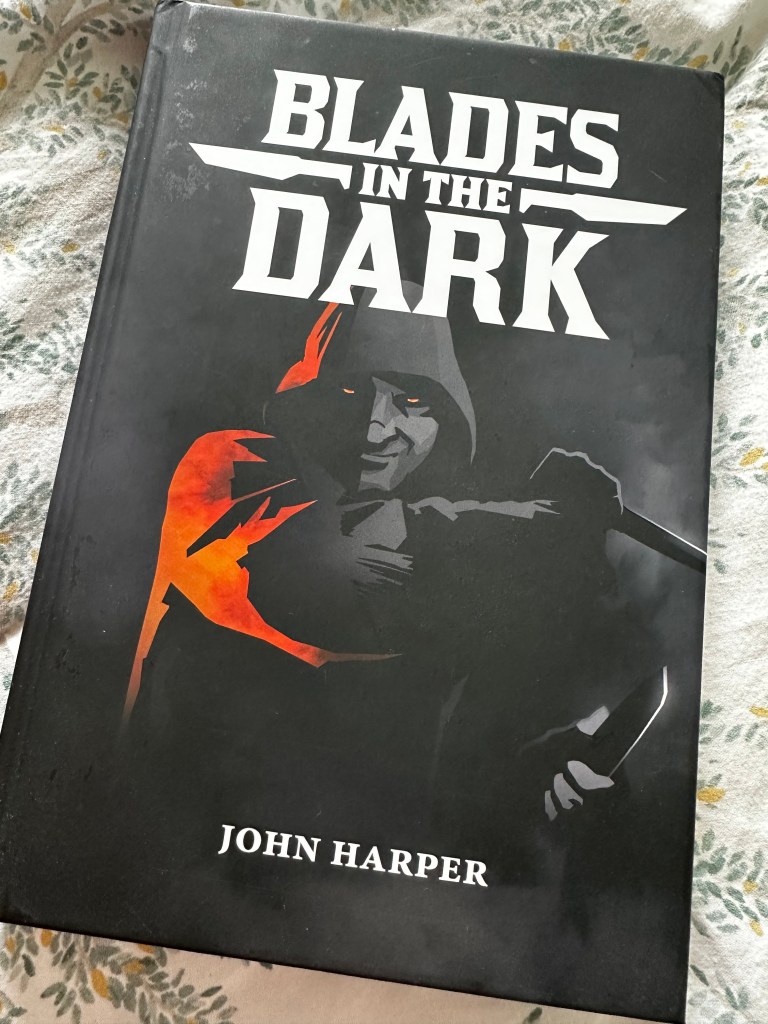
Blades in the Dark Front CoverThe Devil’s in the DetailsSilkshore
Blades in the Dark – Although I was a player in a campaign of Blades last year, I still haven’t run it as the GM. I think I would enjoy doing it and it is such a classic, it would be a shame not to put a game of it together. And it is the basis for games like Slugblaster and The Wildsea, which also feature on this list. I have been nicking enough rules from it for my D&D game, also, that I feel confident I would mesh quite well with the ruleset. At least I have read this one cover to cover and played it before, so that’s a big tick in the “pro” column for Blades.
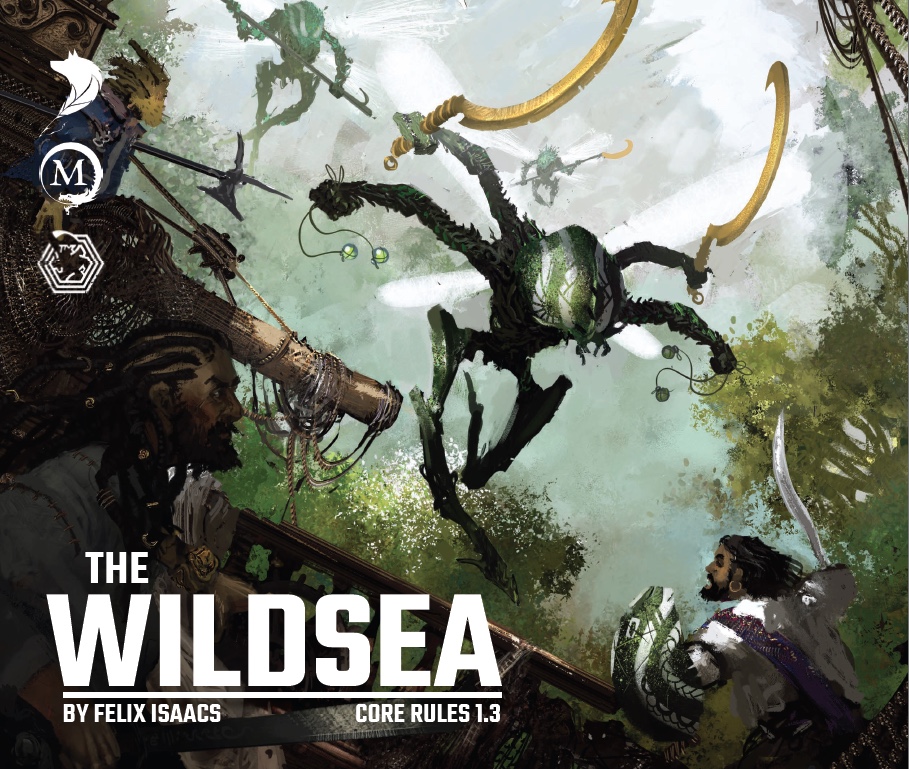
The Wildsea Front CoverThe FoxloftThe Threat of Death
The Wildsea – I wrote about this already last year and still haven’t managed to run it! Essentially, this game imagines a world where the entire surface has been covered in a vast forest and your players are sailors across the canopy, using boats with giant chainsaws attached to sail. Take a look at the last post about it if you want more info. I have rad a lot of this and could probably run it ok, but I am afraid of doing another game where my players are sailors as I am already doing that with Spelljammer and kind of, with UVG.
Deathmatch Island Front CoverTrust BuildingCompetitor Registration Forms
Deathmatch Island – I also wrote about wanting to play this around this time last year. I having been feeling the urge to scratch the Lost, Severance type itch over the last few months. I watched both of those shows in the last half a year and they have stuck with me a lot. I think Deathmatch Island would be perfect for that. Also, I have read it completely and would be very excited to try out its mechanics. Here’s my post about it from last year.
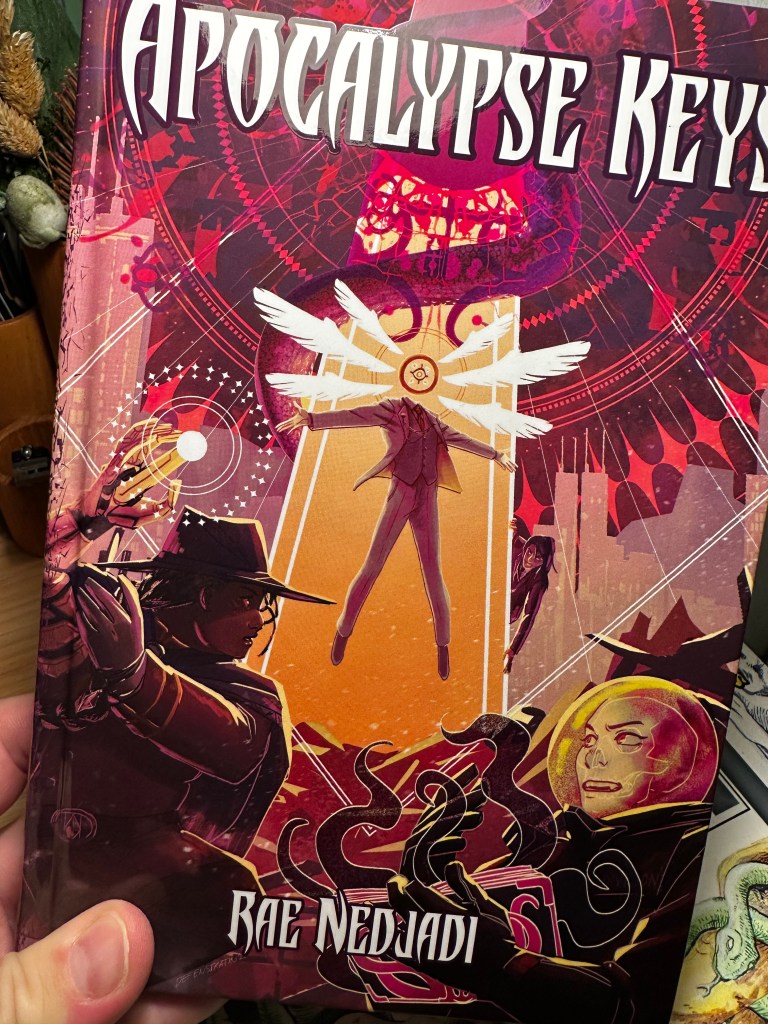
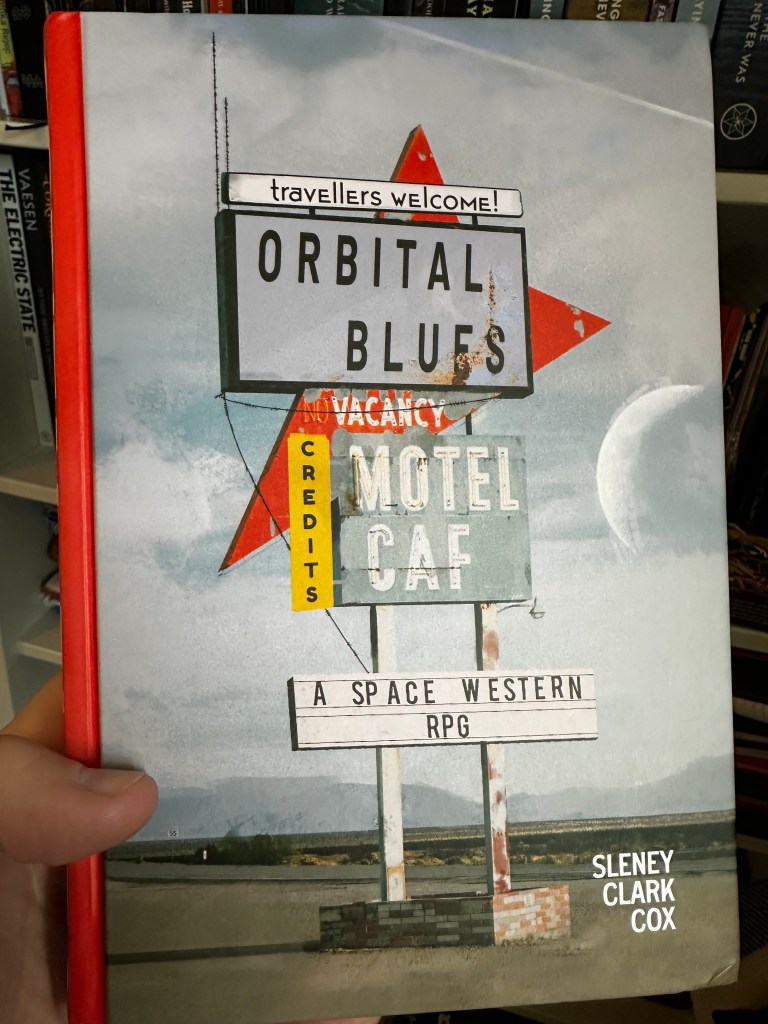
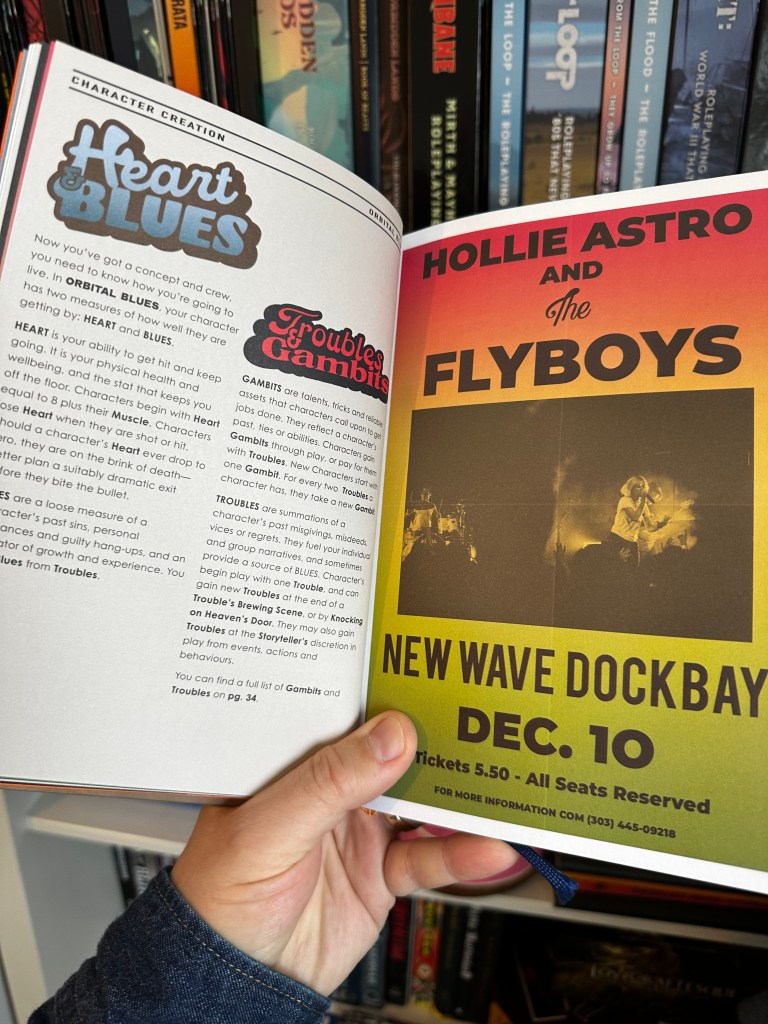
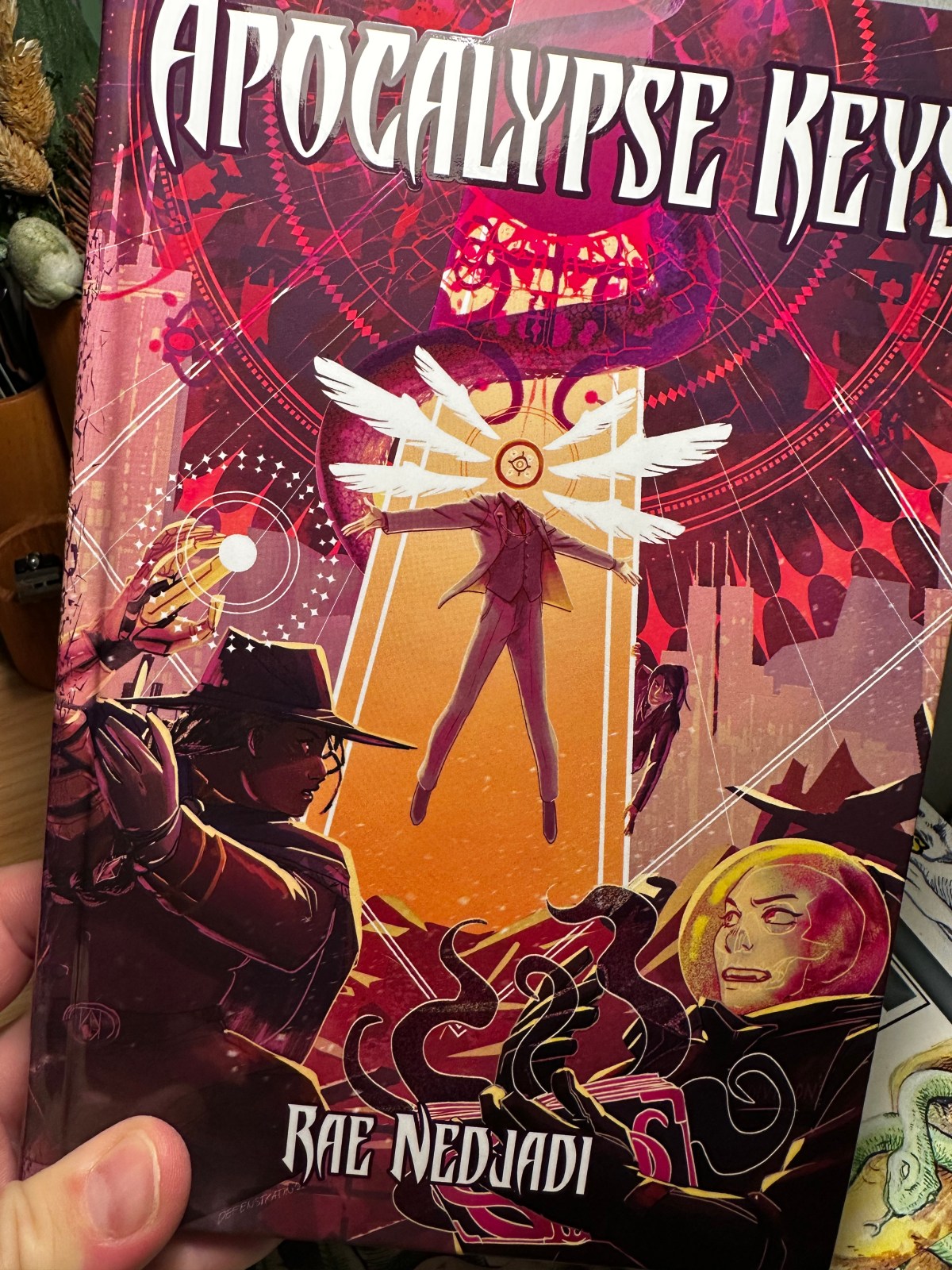
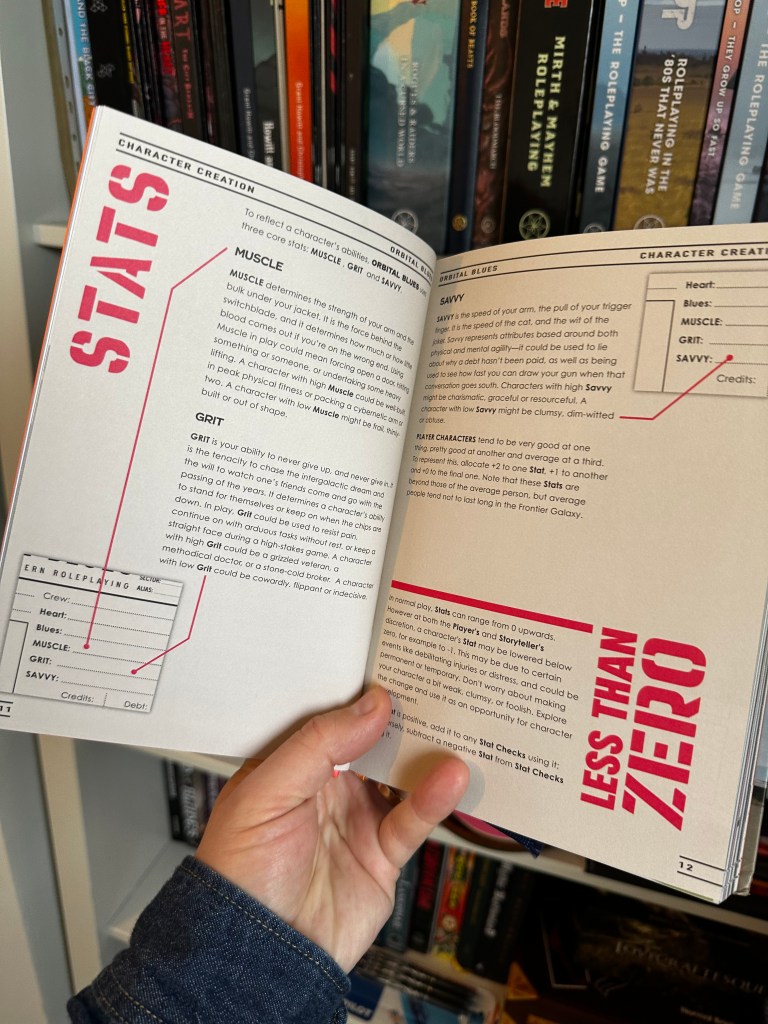
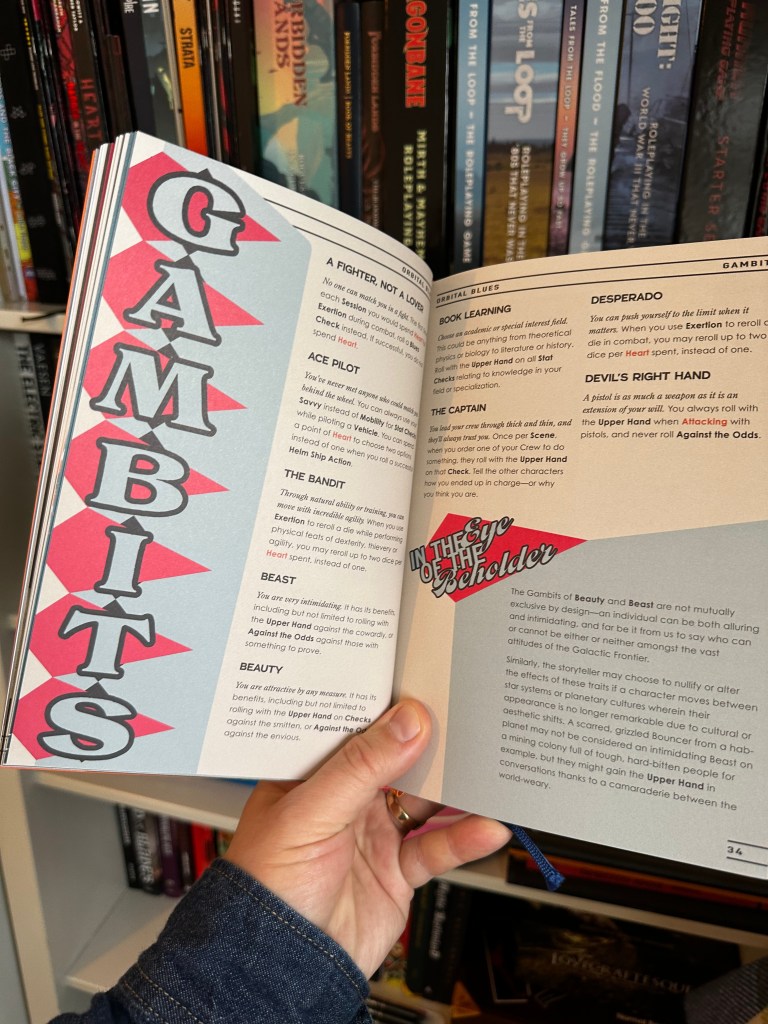
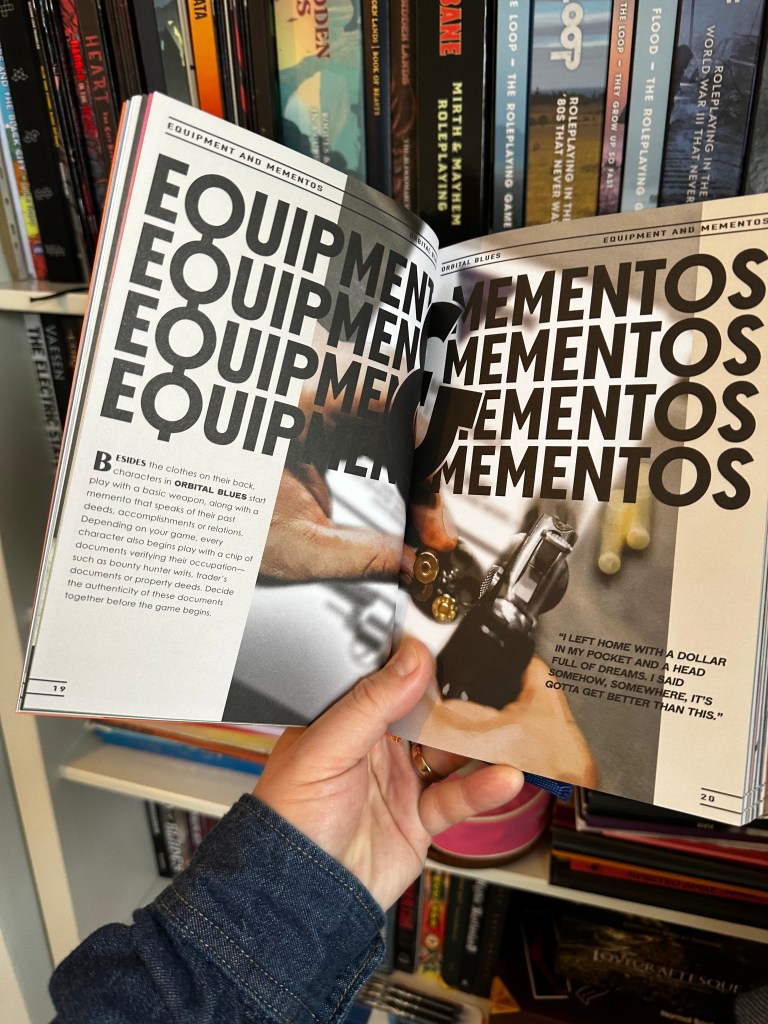
Apocalypse Keys Front CoverThe ShadeThe Basic MovesOrbital Blues Front CoverThe Crew ShipRogues GalleryEasy care Galactic Wear
There are a couple of outsiders as well, Orbital Blues and Apocalypse Keys, both of which I purchased on something of a whim (and a sale.) I’m curious about them but have barely opened either. I know Apocalypse Keys is a PBTA game and that it is beautifully illustrated, but that’s about it. And I know Orbital Blues is a game of sad space cowboys ála Cowboy Bebop and Firefly so that is a big tick in its favour as far as I am concerned.
If you had to choose one, dear reader, which one would it be? If you are one of my potential players, which one would you like to play?
This works even better through the medium of TTRPGs than TV to be honest, because your imagination simply works around them, never focusing on their details.
Star Trek
I’ve been watching a lot of Star Trek the Next Generation lately. I hadn’t seen it in many years, although I watched the whole thing as it came out in the eighties and nineties. I have obviously been watching it with different eyes this time around. I have noticed things in it that I don’t think I could have seen before. I wonder, for instance, about Mr Data. Would he have been such a sympathetic character today, as an AI in humanoid form? I think about how many of the episodes had no action, how many were just talking heads and techno-babble and whether Sci-fi TV shows today could get away with that. I ponder the special effects and make-up and marvel at how well they stand up 35 years later. But I have also been looking at these episodes with TTRPGs in mind. Now, of course, Star Trek has been made into a number of role playing games. I have never played any of them and this post isn’t about them. This post is about the crew of the Enterprise. Not Picard and Riker and Troi and Worf, but the ones who you see occasionally pass the bridge crew on one of the ship’s many lushly carpeted corridors, the ones having their own conversations in the background in Ten Forward, even the ones who so consistently took the con after Wesley Crusher left. They would get names sometimes and every so often, they’d even get lines! There are a couple of those that are recurring characters, such as Ensign McKnight and Robin Lefler. The most iconic of these, Chief O’Brien, went on to enjoy a major role in two Star Trek shows. But when he first appeared on the Enterprise, he was an unnamed bridge officer. Total NPC. He only became someone when the show creators decided he had to be someone.
The Quantum NPC
So this is what I have started doing for crews in my Spelljammer campaign. I think it would work in any game where you have a lot of NPCs that hang around in close proximity to the PCs all the time. So it works particularly well for ship crews.
In the main campaign, the party lost their original crew in the best possible circumstances. The crew, a bunch of spirits who had lost their memories and were not initially aware they were dead at all, finally fulfilled their goals and were able to shuffle off to whichever outer plane would have them. So, the PCs were forced to hire a whole new crew to take care of rigging and swabbing and whatnot. Now, I did not want to spend an entire session where they press-ganged or interviewed eight or nine NPCs that I would then have to name, outline and give voices to. That kind of thing can be fun but I don’t want to spend two full hours at it. Instead I told them that they picked up eight new competent crew members and that we would come up with their characters as and when they were needed.
So this is how that works, you imagine the scene where the PCs are on deck, in the foreground talking about something like how to defeat the weird root creatures that have invaded the ship from some eldritch, otherworldly space. In the background, just like in Star Trek, you have a few crewmembers, maybe they are even in uniform, but they are ill-defined and unremarkable. This works even better through the medium of TTRPGs than TV to be honest, because your imagination simply works around them, never focusing on their details. But then! They need one of the NPCs to be good at something, a specialist, an expert. Or maybe they just need a buddy, someone to talk to, or someone to listen. That’s when the players get to stretch those imagination muscles!
Pulling the NPC Out of Their Quantum State
The NPC existed in theory but not in practice. They were always there as a number, but not as a person, not as a character. Until the players make them up. The GM asks a player who this NPC is, what their name is, their ancestry, their job, what their personality is like. The players generally end up working together to do this but I usually start by asking the player who decided they wanted one of the quantum NPCs to become real for some reason. I ask that particular player the type of character they want in this situation with the understanding that, once they have been defined, they will forever be part of the crew, taking up one of those eight spots. It’s just like Blades in the Dark items. You know how many slots you have to fill when your PC is out on a Score but you don’t define the items until you need them in the narrative. Once you have said you have “A Blade or Two,” though, those blades are filling one of those slots. Same-same but different.
In this manner we got these three NPCs:
Deckhand Dewey – kobold, he/him, spry and wiry and can fit in little places.
Cook – Barry Keoghan (this is the consequence of allowing the players to name NPCs) – orc, he/him, big guy with big arms, beer belly, loves food and loves cooking. His chef hat does not fit very well. Apron always slightly dirty. Has a space rat companion.
Mr Cannon – Halfling he/him – weapon-master.
As you can see some of them got more detailed description than others. Barry Keoghan was described thoroughly partly because of who I asked to describe him and partly because of the moment I asked for his description, i.e. a quiet moment aboard ship where they had some time to talk about provisions and joke about silly Disney movie references. Meanwhile, Mr Cannon was created in the literal heat of battle. But that was ok, because the idea was always to flesh these NPCs out as time went on. We did, for instance, in subsequent sessions, discover that Mr Cannon had a wife waiting for him at home and that Barry Keoghan had some sort of tragic love-affair in his past.
I think, in future I will bring Between the Skies to bear on the Quantum NPCs as they are being birthed by the players, giving them desires, bonuses, hindrances, quirks and all the rest. Time allowing, of course.
The Quantum NPC method has the added advantage of endearing the newly created NPCs to the players from the off. They are, after all, fully their own creations. From the players’ point of view, I believe it was also quite devastating when both Mr Cannon and Deckhand Dewey got breath weaponed into oblivion by a lunar dragon along with the rest of the NPC crew (apart for Barry Keoghan who was in the galley at the time of the attack.) Unforgettable.
Dad-quest
Dad-quest is getting under way tomorrow night. Our resident Giff Fighter-Paladin, Azimuth is rounding up a crew of misfits (the other players with their new characters that I discussed here) and a few more Quantum NPCs and spelljamming out to the Amos Expanse to find his Dad. Can’t wait to see what new crew-members the players come up with this time!
…Whalgravaak’s Warehouse is, by a long way, the most murderous I have ever run. Death truly waits around every turn. It’s really just as well Troika! characters are so easy and quick to create.
Bring out your dead!
In the last several months, since I published Death and Troika! the Tables and Tales RPG community has suffered the losses of many more PCs. Good and bad, greedy and selfless, sci-fi and fantasy. Most of these mortalities have been described or at least touched upon in the two DCC posts here and here. Sailors on the Starless Sea proved to be one of the most lethal modules I have ever run. But it’s a 0-level funnel so of course it was always going to have a high body count. If I am counting correctly, it took eighteen of the 23 PCs that sailed it. But, for a non-funnel adventure, Whalgravaak’s Warehouse is, by a long way, the most murderous I have ever run. Death truly waits around every turn. It’s really just as well Troika! characters are so easy and quick to create.
Nicksen aka Sticky Nicky
Nothing in the world is Rhinoman-sized.
The character who replaced Tim the Gremlin Catcher lasted just three sessions. Here is his obituary:
The heroes continue to meet their ends in Whalgravaak’s Warehouse. Nicksen, known by his friends and casual acquaintances as Sticky Nicky, came to his end in the swirling maelstrom of Deep Storage. We had little enough time to get to know this intimidating Rhinoman but we did discover that he had been sent to the warehouse by one of Troika’s underworld bosses to track down a band of underlings. Instead he had been captured and almost exsanguinated by Paude, the vampiric red giant. When our other warehouse workers discovered and freed him, he joined them in their explorations and told them of a treasure they could seek out. Sticky Nicky used his formidable strength to help them break into the energy maelstrom of Deep Storage where they met a Gulf Man Roamer, a wraith-like creature. In his efforts to fight off the swirling menace, Sticky Nicky found himself trapped in a sack and whisked away to be eaten alive in the depths of the void by his captor. A moment of silence, please, for Sticky Nicky.
Socrates Honeysuckle
His Excellency, the Prime Minister of Owls.
Borrowick Grimpkin, Wizard Hunter, was replaced quickly by a most august personage who also lasted only three sessions. Here is his obituary:
All Socrates Honeysuckle, Prime Minister of the Owls, had ever wanted was to regain control of the Owl Nation from the Usurper Queen. Shamefully, however, politics is all about who has the biggest pockets these days, and Socrates had been thrown out of Owl Parliament on his ear, with barely a Silver to his rather ostentatious name. He was forced, as a consequence, to assume the unseemly roles of adventurer and treasure seeker in the hopes of striking it lucky with one big score. The Prime Minister had heard of the potential riches stored in the Warehouse of Whalgravaak, the city’s most notorious and dead wizard, so he flew there, heedless of the unknown dangers within. Inside he happened upon his soon to be fellows, Ba’Naana , Puddle and Sticky Nicky (RIP.) Together they succeeded in exploring the strange reaches of the Warehouse. Socrates Honeysuckle had a way with words that succeeded in getting the party out of trouble on several occasions but, in the end, his silver tongue proved useless when he was sucked into the void outside time and space at the bottom of the vortex known as Deep Storage. Despite being the only member of the crew with the ability to fly, his luck ran out and his slight, owlish frame disappeared forever into oblivion. Doff your caps, dear friends, for Socrates Honeysuckle, Prime Minister of Owls.
MHIEE
There’s something off about this dwarf.
Sticky Nicky’s replacement was a poor lost soul. He survived only two sessions (being generous.) Here is his obituary:
Very little is know about MHIEE. To all intents and purposes, he seems to have popped into existence, whole cloth, in an infinite wardrobe dimension, where he, almost literally, ran into Ba’Naana, Socrates Honeysuckle and Puddle the narcoleptic Sorcerer of the Academy of Doors. They had been exploring the pocket dimensions of Deep Storage and experimenting with the wardrobe’s automatic garment dispensing properties. To their eyes, MHIEE was nothing more than a regular, if somewhat forgetful Dwarf. And he was happy to allow them to labour under that misapprehension throughout their short acquaintance. The fact was, though, that MHIEE was a Derivative Dwarf, carved from the ancient rock by a Dwarven mason. On completion, he was deemed imperfect, flawed, poorly made. So he was abandoned. Only a Dwarf could have seen the flaws, however. To all others, he was the very epitome of Dwarfishness. MHIEE and his new companions had adventures together and while Socrates Honeysuckle’s luck gave up on him in the vortex of Deep Storage, MHIEE’s positively carried him to the exit. Soon afterwards, they encountered the giant, Arbuthnot, warehouse employee and stickler for maintenance. He attacked them when Ba’Naana’s monkeys attempted to steal his master key. But he was soon tricked into falling through the unstable floor above the sunken lair of the Mother of the Worm-Headed Hounds that lived in the tunnels below the warehouse. MHIEE fought bravely, whacking the giant, over and over, but finally, all it took was a single mighty blow to connect. Arbuthnot crushed MHIEE with his enormous fist. Our thoughts and prayers are with his surviving companions, Ba’Naana and Ishmael D’Undifoy.
Warehouse closure
We are nearing the end of the PCs’ time in Whalgravaak’s Warehouse. I have warned them that the next session will be the last. I have also warned them that, like the last session, which claimed the lives of both Socrates Honeysuckle and MHIEE, I reckon there is the potential for at least two more PC deaths. Can Ba’Naana continue to be the only original player character to survive, or will he too succumb to the deadliness of the Warehouse?
I’m off to Cork for the weekend so I won’t have time to come up with anything new today. Instead I thought I would share a couple of posts from last year. I wrote these at a time when I was first experimenting with some homespun rules and borrowed mechanics for our D&D 5E campaign.
This first post is preparatory to introducing a Blades in the Dark style engagement roll to our Spelljammer game.
I’m considering an option that harks back to Dark Sun. In 2nd Edition Dark Sun, a player started, not with just one PC, but a whole stable of them, called a character tree.
Mid-season finale
The crew of the Cadabra were going home. After weeks of adventure across Scatterspace and all over the Rock of Bral, they have arrived back at First Home, the asteroid/inn/shipyard that was their first stop after leaving their world behind in the first place. They could justifiably expect a warm welcome since they freed the shipyard from a Neogi infestation last time. But they weren’t expecting to be confronted with a crew of kobolds from their home island to be there. Kobolds who probably thought the PCs had murdered their queen. They also weren’t expecting to find Becky Fullpockets’ personal spelljamming vessel there. They had been struggling against the machinations of the technomagical billionaire ever since they fled their planet. It looked like they were stuck between a rock and a hard place, with no escape!
No better place to end part of a season than on a cliffhanger. And that’s what we did right there. We have been on a break from our Spelljammer campaign for a couple of months now. It’s given me a break from 5E and allowed us to play some other great games in the meantime. But now, it’s time to come back, sort of.
Spin Off
A few months (IRL months, that is) before the crew of the Cadabra reached First Home for the second time, they said goodbye to one of their number. Giff Fighter-Paladin, Azimuth, who had to be rescued from two ship-wrecks in quick succession might have been labelled a Jonah by many crews, but the Cadabra was different. They welcomed him on board with open arms and he adventured with them for a while. But, eventually, he was always going to go back to look for the father who went missing from the first of those two ship-wrecks. Now, while his erstwhile comrades are heading back to their homeworld, Azimuth is armed with a little knowledge about the stretch of Wildspace Papa might be found in and a ship stolen from Becky Fullpockets. He’s preparing an expedition of his own to go find his real dad… Not that gnome who pretended to be his dad during that short period where he’d lost his memory (long story, dear reader.)
The rest of the players are coming back too, but they’ll be playing new characters for this spin-off. Azimuth needs a crew for his ship, after all. We are getting together tomorrow night for a session-0 type thing. I think everyone is looking forward to trying some different classes/backgrounds/species compared to the ones they have been playing for over two years in the main campaign. Although, Azimuth’s player, David, doesn’t get a new character, he does get to pursue his PC’s main drive and its a great welcome back to the group for him.
As for me; I’m looking forward to yet another shake-up in this game. I’m planning to use the progress-based travel rules that I mentioned in my Prep Part 2 post last week. And, as well as that, I have something very special up my sleeve for the meat of the adventure, which I can’t reveal here and now (my players read this blog sometimes.) I’m definitely going to write about it after the fact, though.
Change of Cast?
The introduction of new PCs into the campaign, even though its a spin-off, raises the question of what happens once Azimuth joins back up with the main crew again. I’m considering an option that harks back to Dark Sun. In 2nd Edition Dark Sun, a player started, not with just one PC, but a whole stable of them, called a character tree. I believe you were supposed to begin with four characters. This was to help counter the lethality of the setting, giving a player back-ups in the inevitable event of a PC death. This made a lot of sense, especially considering the amount of time it took to create characters. Go check out my Dark Sun character Creation series to witness exactly how long that took.
So, my thinking is that, once this spin-off is done, if they want, the players will be able to swap PCs in or out as they like. This should have the double benefit of providing the players with a bit of variety and allowing them to almost fully crew their ship with their own characters, rather than just NPCs. I’m currently thinking through how I’ll handle character advancement if I do allow this. In Dark Sun, if I remember correctly, the PC only gained experience when they were actually played. No vicarious levelling. I think this makes a lot of sense, but it might be more difficult to adjudicate with milestone levelling.
What do you think of these ideas, dear reader? Have you ever run a spin-off campaign like this? Would you be happy for your players to switch between active PCs like I’ve described?
I am an unapologetic shill for Huffa’s Between the Skies. It’s one of my most used and most valuable RPG books. I use it constantly in lots of contexts. But I love using it to prepare for sessions.
Still Prepping
This post is part of a blog bandwagon started on the Roll to Doubt blog.
Click on the link above to take in the blogpost that’s piloting this bandwagon. Wagon-jumpers abound. You can find a very nice read on the same topic and a handy list of related blogposts on the Among Cats and Books blog.
And here’s a link to the first post on this topic on the dice pool dot com.
Between the Sessions
I am an unapologetic shill for Huffa’s Between the Skies. It’s one of my most used and most valuable RPG books. I use it constantly in lots of contexts. But I love using it to prepare for sessions. Its approach to random encounters in particular is one I highly recommend. The encounters are built, not just to make your session interesting, but to introduce potential allies and enemies, recurring characters, locations, objects. In short, they help you to truly build your campaign without relying on GM-written plots that the players may or may not want to interact with.
The methods and tables introduced in the book make for interesting, impactful characters and occurrences. And they have depth, too, enough to hook your players and keep them hooked. You know that old story that your players would die for the unnamed goblin you just made up on the spot but won’t give a shit about the NPC you spent two weeks crafting an elaborate back story for? I feel like the techniques in Between the Skies are almost designed to prevent that. Why? Well, firstly because, if used as your main way to drive the game forward, you are not going to be spending so long lovingly hand-crafting those NPCs, you are just going to roll them up on the tables provided and not worry about whether or not the PCs run into them, because whatever they run into will be interesting and fun enough to capture their imaginations. So, all the NPCs are more like the loveable nameless goblin and you don’t feel the need to make sure the PCs interact with any of them in particular. This has the effect of allowing the players to dictate the direction of the game to a large extent. This is a good thing!
Let’s Interact with the Mechanics
So, Huffa’s advice when it comes to travel is that, unless it is going to be interesting or important, skip it. I can get behind this approach. Recently, I have tended towards the idea of the journey being the game, but sometimes, when you know the next scene you need to play is across the city and its a relatively safe place, just skip to it, or montage it if there is something interesting to see along the way or if its a good opportunity for conversation between characters.
If and when you want to play the travel, though, Between the Skies presents you with two options, progress-based travel and route-based travel.
Route-based travel
Using this method, you use a map, just a basic one that includes routes and locations along them. You roll once on the Encounter die between locations and resolve that before arriving at the next place. Simple. The book includes several ways to generate route maps and destinations but I won’t concern myself with that here.
Your route map should have options, different ways of getting from A to B with more locations in between your starting point and the final destination depending on how long you want the journey to last.
This gives me the impression of beating the resistance of a delve in Heart. Before the journey starts, determine the journey length. There is a helpful table that indicates the amount of Progress points required to reach the destination depending on how long the journey is. You record progress through the resolution of Encounter Die rolls.
The Encounter die works as follows:
Encounter
Something Approaches
Environmental hazard
Complication
Hint as to what is nearby
Progress/breakthrough/boon
So you only get progress points on a 6.
What I did
As with everything in Between the Skies, you can take it or leave it. I have used a combination of the two methods, where I decided that a spelljammer ship journey from the Rock of Bral to the First Home asteroid would take three days and I would have them roll on an encounter table once per day. So this is the table I used:
Wildspace encounter table d6
1-2 No encounter 3 Environmental/Ship Hazard 4 Ship Problem 5-6 Encounter
When you only have three days and so, three possible rolls on the table, I felt it was better to increase the chances of actual encounters/problems/hazards occurring. If it was a more exploratory journey, I would use the progress-based method as described in the book.
Now, using the tables in this book, of which there are many, you should be able to create a fascinating encounter on the fly, but, if you can, I think its nice to prepare a few beforehand, at least one of each kind. So let’s do that here.
I thought it would be a good idea to roll up some options on the spark tables in the book and add them to a d4 table for each encounter type (environmental/ship hazard, ship problem and ship travel encounter.)
Environmental/Ship Hazard
We’ll start with the hazards. For each hazard you want to prepare, you roll 1d6 to determine the hazard type and then d66 to generate a hazard keyword on the Environmental Hazards during ship travel table in Between the Skies.
I shared this table in the last post so lets use the results I rolled up on that.
3 Ship Hazards
Roll 1d4
Hazard 1 – Storm, Flood
Hazard 2 – Disorientation, Sphere
Hazard 3 – Obstruction, Cold
Hazard 4 – Trap, Haunting
I then go ahead and prepare a few details of the hazards. Here’s the first one as an example.
Hazard 1
A solar storm rolls in from the direction of the sun.
The gusts of solar winds batter the ship
The deck is flooded in light and other solar radiation
All those on deck risk blindness
There is also a chance of taking radiant damage
All on deck must make a Dexterity save, DC 15 to avoid blindness
If they are afflicted with blindness it lasts 1d4-1 days. If you roll a 1, Roll 2d12-1 for the number of hours it lasts
Even if they saved against blindness they must make a Constitution save, DC 15, against radiant damage. If they fail they take 4d6 radiant damage. If they succeed they take none.
This goes for the ship too, if the damage roll beats the damage threshold
You can see that I took the hazard type fairly literally but moved it into a wildspace context. A solar storm seemed obvious but also pretty cool. The keyword, “flood,” took me a little while to work out but I thought flooding the deck with light seemed both like a cool, spacey event and something that could present a real problem for the PCs.
Obviously, you can prepare the details for each entry in the table. They don’t have to involve a lot of work but putting a little extra preparation in at this stage can remove the need for it at the table.
Ship Problem
Similar to the hazards, you simply roll up a problem type and a problem keyword on the Ship Problems tables in Between the Skies. I did this four times and created the d4 table below.
4 Ship Problems
Roll 1d4
Problem 1 – Armament, Separation
Problem 2 – Quarters, Shrinkage
Problem 3 – Cargo, Disappearance
Problem 4 – Bridge (spelljammer helm), Error
Here’s the detail on one of these entries:
Problem 2
One of the crew has stowed something large and awkward in the crew quarters. It is limiting the amount of space available to sling hammocks and the rest of the NPC crew is unhappy about it. This crew member refuses to be parted from their huge steamer chest as it contains something of extreme personal significance. The PCs will need to resolve the interpersonal issue.
You can see that the details here are left deliberately vague. You Ould ask the players to decide which member of the crew is the problem, what’s in the chest that’s so important and, most importantly, how the resolve the issue.
Encounters
And finally we have encounters. There are a lot of different encounter tables in the book. You can choose the one that best describes the surroundings of the PCs at the time. There are two space encounter tables, one for known space and one for wildspace. They are d66 tables. Once you have done rolled on them, you can get some more inspiration by rolling on the encounter keyword, detail and related entities tables. Once you have rolled on the Encounter distance and awareness tables in Between the Skies to determine how far away the encounter is and how much attention they are paying to the PCs you can roll on the d4 table below.
You’ll note that the results on the table below are not all similar. For instance, encounter 2 doesn’t have a related entity. In general, such entities, as generated by the tables in Between the Skies, are sentient NPCs so I didn’t think it necessary for the parasite I rolled up. But mostly each of them includes an encounter keyword, a related entity, and two encounter details.
5-6 Encounters
Isolationists – Confusion, Related Entity – Unknown NPC, Glittering, Prayers
Ship Parasite – Loss, Scales, Experiments
Ruins, Ancient – Mourning, Related Entity – Petty God, Knots, Miscommunications
Stowaway – Battle, Related Entity – Creature, Eggs, Blindspots
Stowaway
Size, substance and form table: Very small biota, piecemeal. Weakness: True name Needs: Brains Characteristics and details: Pacifist, stalks Behaviour: Social: Family: 5 appearing Demeanor and current behaviour: Protective, healing Attacks: Blast – teleporting
For the final example, I’m using the creature generation tables in the Entities chapter of Between the Skies. You can see all the details and keywords that I rolled up above.
Along with the keywords, battle, eggs and blindspots, that came from the original encounter detail rolls, these will make for a fascinating encounter with some sort of very small fungal entity that has escaped a battle to find refuge aboard the PCs’ ship. The mushroom creature has a desperate need for brains to help heal its young but will not take them by force. Perhaps they only consume the brains of dead beings. Perhaps they have a blindspot that means they cannot sense constructs. And maybe, also, they have crawled into the ship’s stores to try to feed on the eggs, mistaking them for heads containing brains. I like the idea of them lashing out with a teleporting blast to deposit attackers some way off the deck of the ship, leaving them to perish in wildspace. If the PCs can figure out the creatures’ true names, they’ll be able to get them off the ship, but how?
Conclusion
I think you can see the fun you can have preparing encounters and encounter tables using Between the Skies. Once again, dear reader, I can only urge you to go and purchase it. It’s so useful and you won’t regret it!
“The Discourse (TM)” has been focusing on running published adventures/modules/campaigns as opposed to custom/homebrew/sandbox games for the last little while. First Quinns reviewed Impossible Landscapes, an epic and almost legendary campaign for the modern Cthulhu-ish game, Delta Green. This is the first time Quinns has reviewed a campaign/published adventure on his RPG review channel, Quinns’ Quest, so it was unusual enough to spark a significant amount of discussion all on its own. And then Thomas Manuel of the Indie RPG Newsletter and Rascal reviewed the same campaign. I believe this was purely coincidental, especially as Impossible Landscapes came out about five years ago now. Both are great reviews in their own right and are based on full play-throughs of the campaign so you know they’re of real value. You should check them both out.
I have opinions on the conversation, of course. I have shared a lot of them in other posts from the last year or so, actually. If you want the summary, though, I had a lot of bad experiences running D&D scenarios in the past, especially from the AD&D 2nd edition era. I found they were difficult or impossible to just pick up and run. In fact, they required maybe more preparation time than adventures and campaigns I wrote myself. The one published 5E campaign that I ran, Storm King’s Thunder suffered from the same issues, actually. This made me feel like it was a “me” thing. But, it turns out, a lot of GMs feel the same way, according to Bluesky, at least.
However, I have had my mind changed somewhat by running pre-written adventures for some other games, particularly Free League’s Blade Runner, Dungeon Crawl Classics and, to a lesser extent, the Dragon Age RPG from Green Ronin.
This is a link to my first post on Electric Dreams, the introductory Case File for Blade Runner:
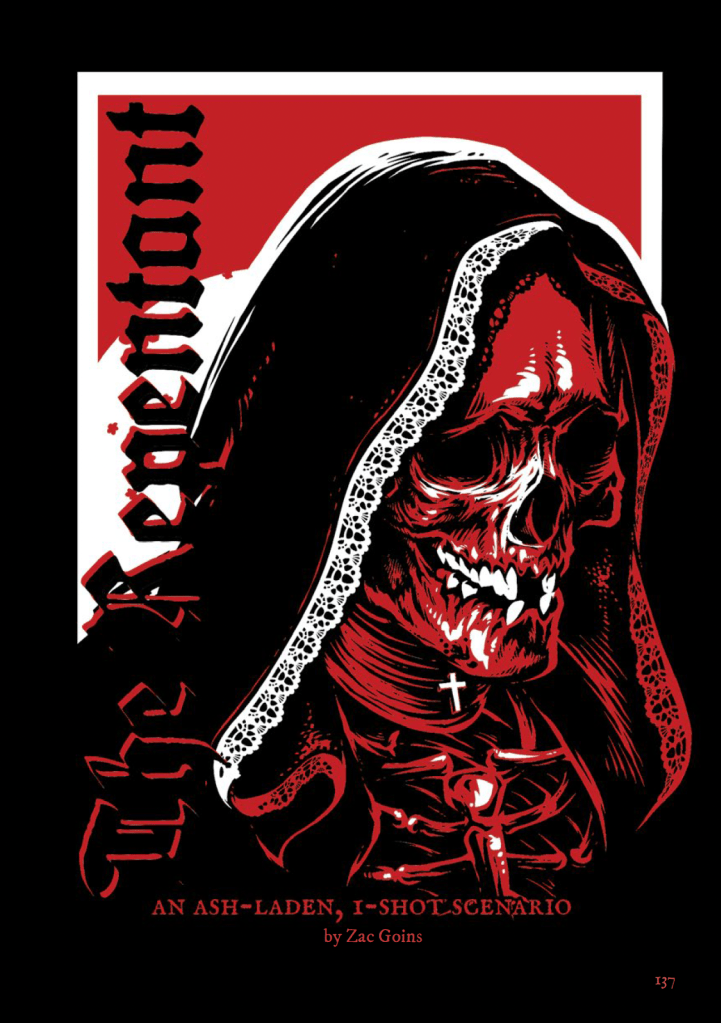
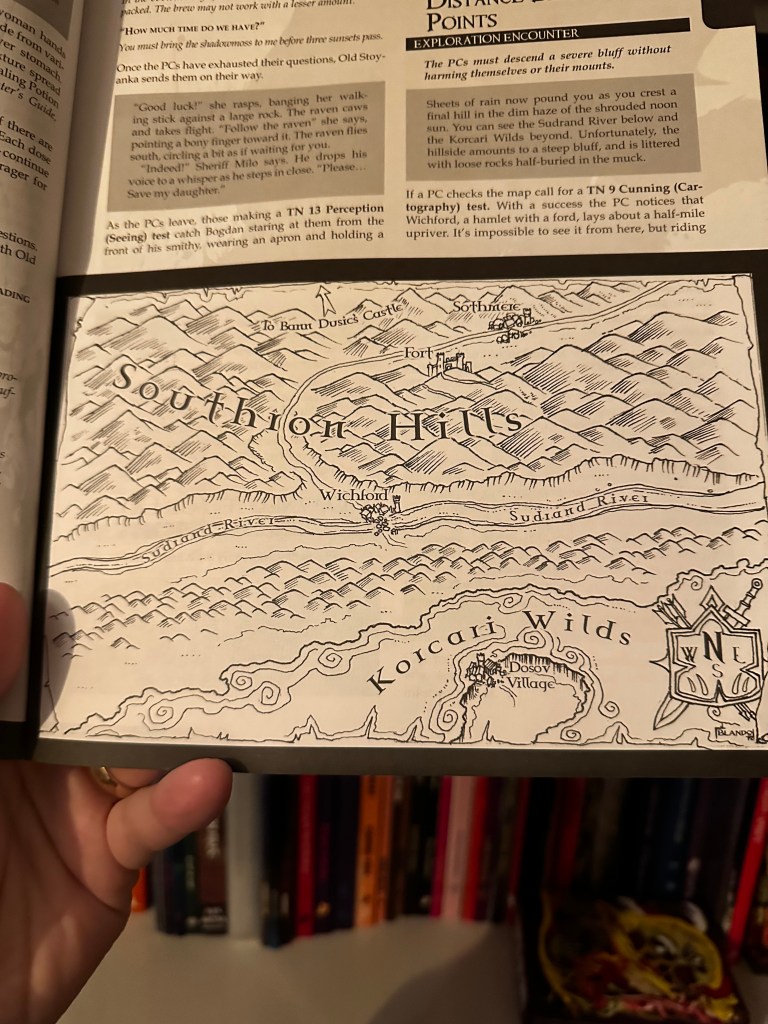
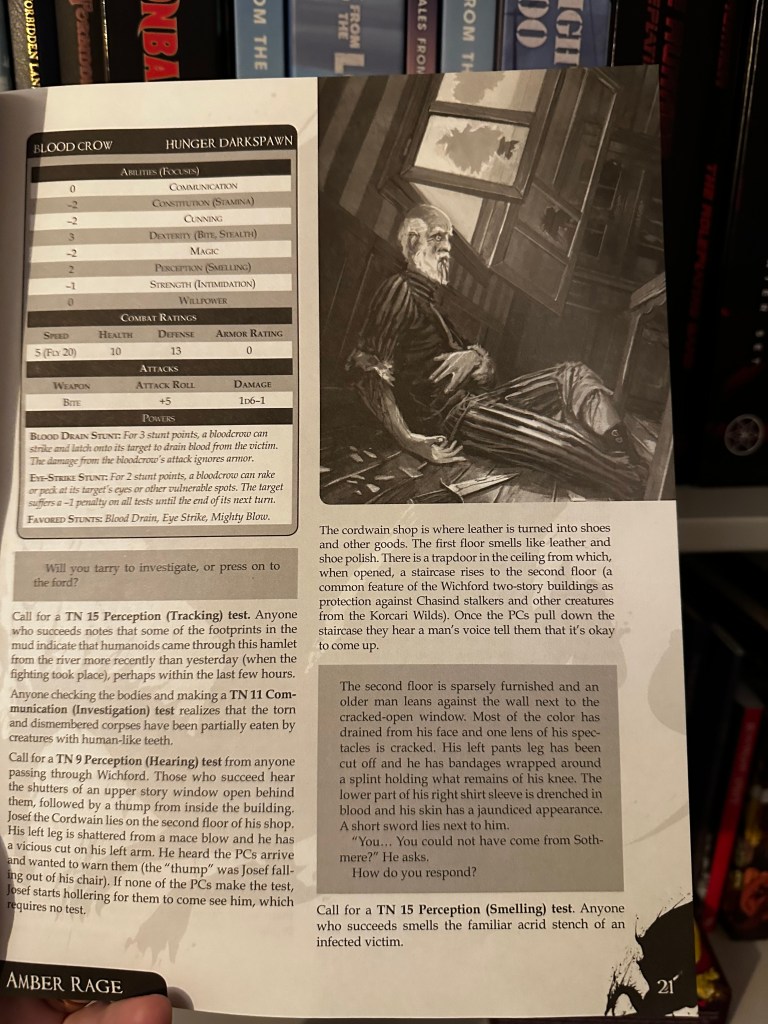
I will say that, despite my generally favourable outlook on most of these modules, I still find I have to to do a lot of prep for them. The main fear I have is messing things up so bad that I essentially spoil the rest of the adventure. Although, I should really have more faith in my abilities as a GM at this stage. I feel like I can probably improv my way out of any hole, to be honest. But it does not change the fact that I spend hours rewriting long paragraphs presented in module texts into digestible bite-sized bullet-points. I am running another Dragon Age scenario right now. Amber Rage is from Blood in Ferelden, an anthology of scenarios for the game that came out in 2010. It suffers from verboseness and unnecessary detail and makes for a lot of work from the GM. I’m enjoying the contents of the scenario but its presentation is horrendously dated and needs a sprinkle of OSR magic to tighten it up, in my opinion.
I realise that none of the modules I have mentioned here are anywhere close to having the size and epic scope of something like Impossible Landscapes, but it doesn’t change the fact that they have largely changed my mind about running anything pre-published. The one I have my eye on right now is Dagger in the Heart for Heart: The City Beneath. Actually, I have a post about that right here too: