Case Closed

The suspects

I finished up two investigative scenarios in the last week or so. The experiences could not have been more different. I was the GM for one and a player in the other. They were in very different genres and systems too. I am going to have a go at dissecting them and trying to compare them, nonetheless.

D&D 5E – An Unexpected Wedding Invitation

I wrote a little about this short campaign here. At the time I wrote that, I didn’t even know it was a murder mystery, to be honest. It is a published, third-party 5E scenario so I could have looked it up, but I avoided reading anything about it online. Our wonderful DM was also the consummate host and was always wonderfully welcoming. She was a great DM too. We met in person over the space of eight sessions, more-or-less every two weeks. Our DM, who has run this scenario more than once previously, informed us afterwards that we took far longer to get through the scenario than other groups. Personally, I think that’s probably because of a couple of very important factors. Firstly, we had a fairly large group, five players and the DM. But, I think the second factor is what really pushed it so far beyond the normal length for the scenario. We were all chewing the scenery at every available opportunity. This group of players does not shy away from the first person, expansive, full-chested role-playing and it honestly does my withered heart good to see it every time we get together. We all had reasons for going ham as well. There was the promise of romance and, failing that, friendship. The possibility for court intrigue and drama was there as well. But, certain sections of the table were there to get their kisses in (in the infamous words of Lou Wilson.) The mystery was almost secondary to those folks.

As for the mystery itself; I won’t go into details. No spoilers except to say that there is a murder and we were not aware of that aspect going in. I don’t know if the DM advice is to keep that from the players until it happens but that was the case for us. Anyway, that was quite exciting actually. To discover there was an actual crime to figure out gave us all a shot in the arm! Up until then we had been essentially casing the wedding for curses and harassing the guests with weird, cryptic questions about the nature of one family’s bad luck. So, when we had a specific thing to investigate, it filled us with the sort of motivation that, I feel, the scenario failed to provide up to that point.

As for the investigation itself, it’s all about the NPCs in this adventure. That seems appropriate for a mystery game and this particular scenario was replete with well drawn NPCs who had distinct personalities, motivations, idiosyncrasies and voices (provided quite expertly by our DM.) You have the bride and groom, of course but you also have a cast of characters drawn mainly from the families on both sides. There are several set-piece scenes that are designed to allow the PCs to get to know the cast and our DM graciously provided us with portraits for all the main NPCs, hanging them on her DM screen. This was very helpful as there were a lot of them and without that constant visual aid, it would have been much harder to keep track. Our interactions with the NPCs seemed to give us positive or negative standing with them, leading to later conversations being more or less difficult for us.

The setting was integral, of course. An opulent country manse belonging to one of the families involved, surrounded by a generous estate on which they enjoyed hunting and picnicking. The adventure provided a couple of maps; more for reference than anything else as there was not a fight to be had at this affair.

As I said, I am not going into spoilers here about the murder, the suspects or the ending but there are a few things I can say. It seems as though the adventure comes with several prepared possible endings. The actions of the players, their standing with the major NPCs and their final pronouncement of who they figure did the murder all seemed to have an effect on that. This served to give it a slightly video-gamey feel, which was neither good nor bad but certainly leant a lot to the idea that everything was laid out in the adventure quite prescriptively.

Speaking of which, the actions of the PCs throughout felt a little restricted. This was purely a result of playing D&D 5E characters in a genre they were never meant to exist in. Few of our powers or abilities were of much use in this milieu and that felt a little frustrating at times.

Equally, there were several timed events that could not be prevented or changed in any real way by the PCs. Once again, this had the effect of making us feel more like spectators than active participants.

Questioning the NPCs, the most important part of the scenario, by far, and the only one where you could make inroads in your romantic or duelling ambitions, was difficult to say the least. Pretty much all of them could have done it, to be honest. That, by itself, is ok, but failing certain rolls here and there made the process feel fruitless at times. Without some mechanic to allow you to fail forward, it was always going to feel like this.

In the end, we failed to catch the killer. We fingered the wrong guy for the crime. This was due, in large part, to us interacting less with the killer than we might have, failing s couple of clutch rolls in interacting with them and the fact that we were left with too many potential culprits at the end that we couldn’t whittle down further with the evidence we had. Our failure was revealed to us in a sort of cut-scene right at the end. After all the effort we had put in, this felt like losing even though we had all enjoyed playing together around the table. The overall consensus from the players was that 5E was not the system for this scenario. It is not built for this sort of investigation and it led to an unsatisfying feeling from the result of the game even if we had a good time playing together, as we always do.

Blade Runner, Electric Dreams

Two blade runners posing like neon noir heroes in front of a stylised Wallace Corp ziggurat beneath the title of the Blade Runner Role Playing Game.
A photo of the front of my copy of the Blade Runner Start Set box.

I wrote a little about this game here while we were still playing it. At the time of writing that, we were only two sessions in and I was greatly looking forward to the next one. There were two players, playing Detective Novak and Fenna. We did this online, using Zoom and Roll20. It took five sessions of two and a half to three hours each. Having checked out other groups’ experiences with the same case file, I can say that’s about average. I could absolutely see it taking both less or more time since it would be dependent on how quickly the blade runners discover the key clues and how quickly they act.

Electric Dreams is also a pre-written scenario but, I think, importantly, it was produced by Free League as the intro to the Blade Runner RPG. There was never going to be a mismatch of scenario and system like we saw in An Unexpected Wedding Invitation. In fact, it felt as though this scenario was close to perfectly designed to bring players into the world and the system at the same time.

If you are a Blade Runner fan but not familiar with the Year Zero engine or RPGs in general, its got elements from the movies for you to geek out over and allow you to feel part of the megacity of LA by referencing the media you know and love. Meanwhile, it holds your hand through the early interactions with the mechanics, kicking things off with a few basic Observation and Manipulation rolls, teaching you that the more successes you get on your dice rolls, the better the result. As time goes on, the references to the movies remain strong, keeping the whole thing feeling like a natural continuation of or bridge between those stories and establishing a consistent and immersive tone and atmosphere. But you get more and more in-depth interactions with the rules as it introduces you to chase mechanics, combat, use of more complicated investigative techniques and character advancement.

And if you are an old hand at Free League’s signature rules engine, you will be good to go from the start. I was somewhere in between when we started playing. I am a big fan of Blade Runner and I have run Tales from the Loop before so I knew how the system worked well enough. But it was a long time since I had played it and I definitely had to look some rules up in play. This was generally fine, and didn’t take too long. What we also found, was that, once we looked up those rules once, we grokked them and didn’t have to keep referring to the rulebook, which was a refreshing change of pace for a group of players who have mainly only played D&D 5E together before (at least in recent years.)

Now, down to the scenario itself. As with the Wedding mystery, this was largely based around really well drawn NPCs, all of whom were potentially important to the plot. But, from the start, it felt as though the PCs knew who their main suspect was. They were rarely dissuaded from that notion, despite (or perhaps because of) the powers-that-be forcefully reminding them about the way they would like to see the investigation go. Since the characters were playing blade runners, cops in the LAPD, there were a number of NPCs that were there purely to back them up or chivvy them along. You had Coco, the medical examiner (who you also meet in Blade Runner 2049) and Deputy Chief Holden (who got his chest punctured in an interaction with Leon the replicant in Blade Runner) as well as any number of ad-libbed beat cops and the AI LAPD Despatch. The Wallace Corp is represented by one of their replicant executives who was immense fun to play. You also had a few NPCs that were witnesses and were never going to be anything but witnesses. The investigation was not designed to send the detectives off on the wrong path. There was no more than one red herring and that was there more to reinforce a theme than as a real way of derailing things.

What we found was that most of the sessions involved them trying to track the one suspect and discover their motivations and whereabouts. This led them into a web of corporate intrigue and moral dilemmas. That’s what Blade Runner should be about, of course, and Free League nailed that. The PCs were able to use the abilities of their pregenerated characters to do that pretty well. In fact, I would say that they were implausibly successful most of the time. On a couple of occasions they rolled so well that I felt compelled to reward them with information that would not, otherwise, have come up until later in the investigation. Moments like these allowed them to make incredibly effective leaps. What I liked about this scenario is that it allowed for that. There is a timeline of events that will happen at particular points of the investigation, but only if the PCs do nothing to prevent them. So, that doesn’t stop you moving them two steps forward, instead of the usual one. I think it actually encourages that sort of thing, in fact, as the timed events are generally pretty bad for the investigators or the other major characters.

We got an ending that was equal parts satisfying and open-ended, with the PCs making the moral, rather than the legal choice after the corporation took the law into its own hands one too many times. We might return to Novak and Fenna someday, maybe in the next published case file, Fiery Angels. The first one ran so well that I would definitely be confident to play the next one.

Conclusion

It is almost unfair to compare these two games, but it has been impossible for me to do anything else. In blade runner, you had a scenario where any outcome the PCs reached was likely to be satisfying and a system that supported the sort of game you were playing, investigative, character driven and darkly themed. In the other, the scenario felt a little too restrictive and was hampered further by a system that was never designed to support the investigative nature or the regency feel. I had fun with both, but I know where I would turn first if someone asked to play a mystery game.

Motivation part 2

Motivating characters

So, in the last post, I went on at some length about how you might be able to motivate players in your game, focusing mainly on what you do between sessions to get them excited to come back and do it all again. There were also times, I decided, when you shouldn’t overdo it, when you should just let people be.

When you do get them to the table, though, your work ain’t over. Obviously, I’m talking to the GMs out there, but this goes for players too. Because now it’s time to figure out why your character is out there smashing skulls or investigating murders or trying not to be sacrificed by some bloodthirsty, cthonic cult or whatever their weird job is.

Seems like an easy answer, doesn’t it? But it’s not. Your character’s motivation is a strange, ephemeral thing that you need to keep in your mind at almost all times to figure out what they are going to do in any given situation. You can keep your alignment, in my humble opinion. Alignment is such an archaic and ill-defined concept, it barely even begins to answer any of the questions raised by the “character” aspect of the sheet. It can be manipulated to mean almost anything. So it doesn’t really help to direct you when you are trying to decide whether you should back the werewolves or the elves (Dragon Age: Origins fans, yo!)

New characters

Games have all sorts of ways to help you figure out what your character’s motivation is going to be. At the creation stage you are picking things like backgrounds, bonds, ideals and flaws if you’re playing 5e, your drive, problem and pride if you’re playing Tales from the Loop, your Calling if you’re playing Heart. The game is usually trying to help you out. Sometimes it doesn’t have to do any more than describe your race and class, in fact. That’s often enough to set a player’s imagination alight. Before you know it, your dwarven barbarian has figured out that her driving force is a desire to put as much space between herself and the darkspawn riddled Deep Roads (I’ve been replaying Dragon Age: Origins recently, ok?) as she can, and to have fun doing it. Of course this motivation is likely to change many times during play, but if Bianca remembers that she never wants to set foot in the Deep Roads again from that moment on, all of her decisions are likely to be coloured by it, especially when she finally faces her fears and delves back down to Orzammar and the lost Thaigs to help out her party-mates in their quest to track down the origin of the darkspawn outbreak in the Korcari Wilds.

Here’s a question though. How much influence should the GM have on a player-character’s motivation. Well, like most things PC-related, I would say that there is a conversation to be had. This is often something I forget to do with my players at character creation to be honest. Especially in games where motivations are less well defined or less tied to the plot. In fact, I have received feedback in the past that I should be more willing to guide players in their choices of class in case they choose something inappropriate for the campaign, never mind motivations! But basically, what I’m trying to say is that you should always talk about it, especially if a player is interested in talking about it.

I messed this up recently and definitely reduced at least one player’s enjoyment of the first session of a new game as a result. Motivation is important! It colours everything so you should always be available to talk about what a character is doing this stuff for? Why would they want to? It’s not that they player is being awkward or a prima donna or making the game about them, they just want to feel a connection to the game through their character and they need a reason for that. Help them out, eh?

In gameplay

As I mentioned before, character motivations can change during the course of play. In fact, I would go so far as to say that if they don’t the game there is probably not much going on in it. Most sessions it is a good idea to make their most immediate motivation become “I don’t want to die!” At least once.

But this goes for long-term motivations as well. I think it is absolutely possible to retain your character’s initial motivation of “never wanting to go bak to the Deep Roads again,” while subverting that, undermining it, overcoming it. Maybe, once Bianca follows her companions back into the Deep Roads, she realises that, without here, they would have died down there, that actually, her Deep Roads survival skills are valuable and that she should help others by teaching them. I think GMs should be prepared for these shifts but players, equally, should be ready to make changes like this to their characters. Turn it on its head, fail forward if that’s what happens in the game. Push your character to do what is explicitly against their motivations sometimes and see what happens to them and the game as a result. Do the unexpected!

Heart

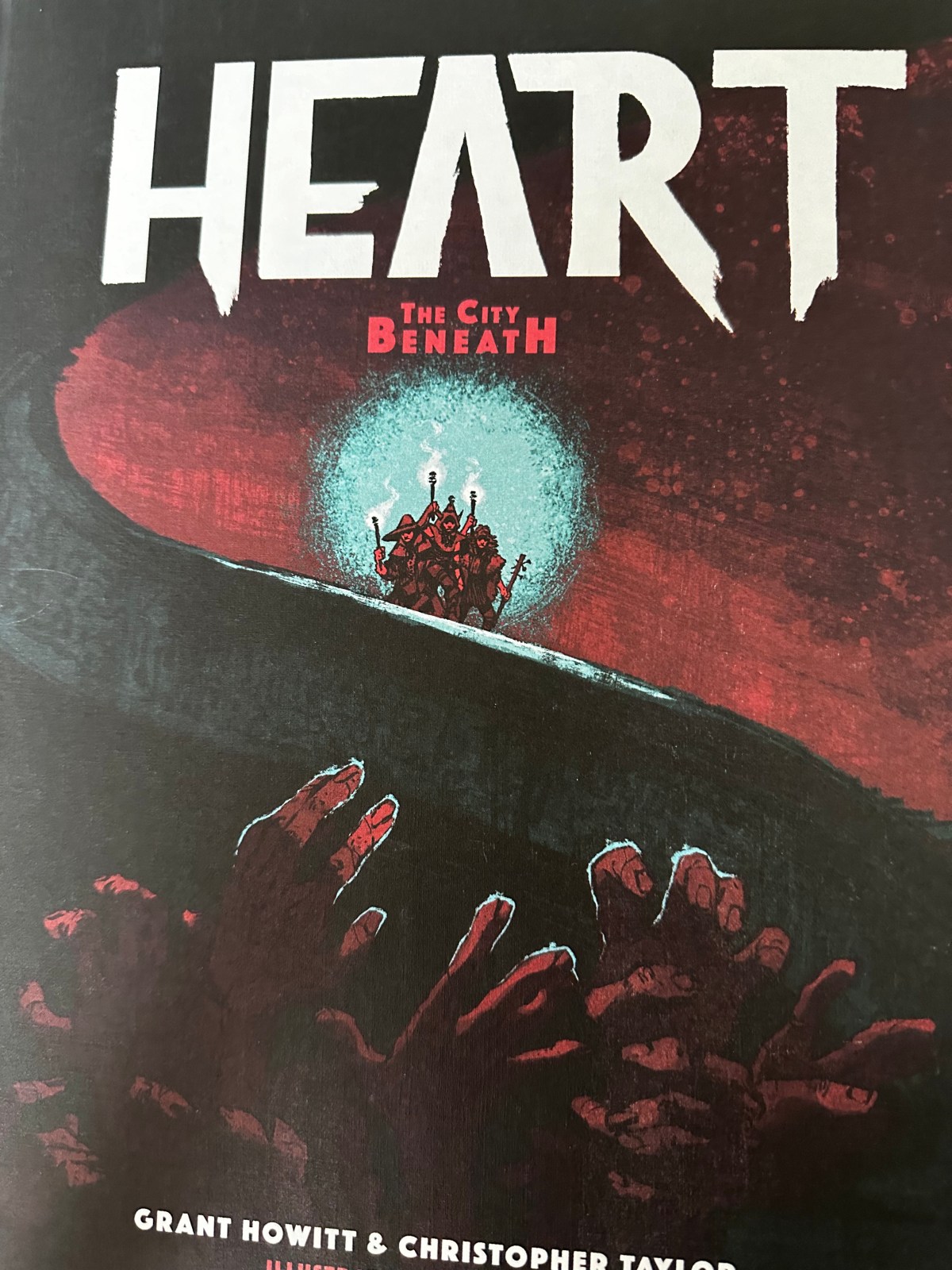
It always comes back to Heart these days it seems. Well, that’s because it has these great little systems built into it. The granddaddy of these systems is the Character Callings. You have a handful of them. Not too many to choose from: Adventure, Forced, Heartsong, Enlightenment and Penitent. They speak for themselves really, except maybe for Heartsong, which is the weird one that wants your weird character to follow the weird as deep as it will go into the weird subterranean other-world until you find some insight into the weirdness that’ll probably kill you or transform you beyond all recognition.

Essentially these are all the motivations your character might need in Heart. Their descriptions spell out the kind of thing in keeping with the theme of the Calling, that might have led you to delve into the red, wet Heaven. It also gives you a fun ability to reward you for choosing it, a few questions to answer to help you flesh out your character and focus you on the type of adventure/enlightenment/penitence etc you are espousing, and most usefully, both for the player and the GM, an absolute raft-load of beats, narrative or mechanical milestones you want your character to hit as your delves go on. The beat system is so useful for building a session and a story at the table together. It is particularly fun when one PC’s beat synergises with another PC’s completely separate beat or when the object of the beat comes up organically in play, without the GM being aware that it’s happening. It is motivation given mechanical and narrative form and I love it.

Seriously, go check out Heart if you haven’t already. It’s a good game. And it’s fun and gross.

That’s me for now. My motivation to write has ebbed and waned. It’s you time now. How do you like to motivate your players and characters?

Endings

It’s hard to say goodbye

It’s so exciting to start something new. There’s the anticipation for what’s to come, the tingling nervousness that transforms to delight in the beginning, the wonder at sights never before seen and actions never before taken. Beginnings are full of possibility and the feeling of freedom.

The end of something, though, can be just as exciting, but in a different way. Do you ever rush to the end of a novel when you’re about three quarters of the way through, eager to find out what happens? Maybe you’ve waited on tenterhooks for the final film in a long running series to be released, because you have spent so long with those characters and know their stories so well and you want the best ending possible for them.

That’s a lot to live up to, that pressure. And I think, in an RPG context, everyone at the table feels it to one extent or another. At least in the situation when you know the end of the game is coming. TPKs notwithstanding, achieving a narratively satisfying ending to a game, particularly a campaign that you have potentially been playing together for months or years, is hard. Of course it is. There is a pressure to tie up all those loose threads, make sure that big bad is confronted, achieve emotional closure for your characters and their arcs, maybe even leave a space for a sequel.

Not only that, but the real struggle is making it all the way to the end of a campaign! Sometimes your friends move away or have kids or there’s a global pandemic or whatever. Stuff happens. Understandable stuff, but stuff nonetheless. The thing is, of course, that just means the endings you do get are that much more precious.

How to part on good terms

One-shots

You’re there for a good time, not a long time. But that presents its own challenges to fitting in a great ending. If you have a suitably magnificent finale planned, how do you make sure you get your PCs to it in time?

Time

My answer here is easy; take a reading every thirty minutes or so to see if they are cracking through the adventure rightly or if they haven’t made it out of the frikking tavern yet. If they need it, push them along, end that scene and do a hard cut to the next one, bring in a major NPC from another scene to move things along. And if all else fails? Cheat! One-shots benefit from a breakneck pace in my opinion, and no-one will blame you if you bend a few rules to keep the action moving along. They probably won’t even realise.

Possibilities

Another good idea for a one-shot is to come up with a few possible big endings. This is obvious, of course, but it helps to think about where you might want the PCs to end up and if you have a couple of big set-pieces to choose from, that really helps with engineering the big ending.

Epilogues (1)

And if all else fails and you run out of time while they are nowhere near a satisfactory endpoint, epilogues can be a fun way to go. Just get each player to narrate the life of their character five minutes after the last scene of play, or five weeks or five years! Just as long as the events of the game have a major effect on their epilogues.

Campaigns

It’s really hard to give any advice on this. Let’s be honest, every campaign is going to be so different, even if they are published campaigns played by thousands of groups, no two of those ends will end up being the same. But, we’re here to discuss it so let’s do it.

Arcs

Character arcs are important in campaigns, long and short. Players want to see growth in their characters and not just the kind where they level up. They want to find the thing they had been searching for and figuring out that what they really found was the friends they made along the way. Sometimes they want to gain power and prestige and property to make them feel successful. Other characters change drastically due to the events of the campaign and come out quite different to the farm girl they were at the start. My advice on these is to make sure they are wrapped up in advance of the big finale if you are planning something like that. Give each character their moment in the spotlight in the sessions leading up to the end so they know they are all just as important in the building of the story together and that everyone can see them in all their glory/misery. Players remember that kind of thing forever. Its good to involve character stories in the finale too, if you can, but if you leave their big moment to then, they will rarely get the time to revel in it too much. I could be wrong about this but such has been my approach in recent times and it has tended to work out fairly well.

Threads

Loose threads can be left loose, in my opinion. There is an impulse in some games to ensure that the players get to experience everything. But, by the very nature of RPGs, it’s simply not always possible.

So, the party ran into an itinerant wizard in the third session. She asked them to explore her phantasm-infested old tower and return with certain writings that might have relevance to the overall campaign plot. But they never had time to do it or they got sidetracked. That’s just an answer they are never going to get! At least not in game. The GM could always explain where that was going after the end of the game I guess.

Of course, for narratively integral beats, I endeavour to bring them all home at the end. If they lost track of a vampire servant of the Big Bad that they were hunting through the Deep Dark Forest, bring him back in the last fight as backup for the big bad, maybe. If one of the PCs’ parents went missing earlier and they didn’t find them, have them in the cultist temple as a sacrifice to the evil demon they are summoning in the final scene. Complicate the scene! Make it so they have to rescue them!

Fights

As for the final battle, if you are even running the kind of game where you would have such a thing, elaborate set pieces, evocative or emotionally resonant locations and big fucking monsters usually do the trick. I would say, though, difficulty-wise, more enemies is usually harder than bigger enemies. One or two big monsters with lots of hit points and abilities will go down much quicker than one big guy and ten small guys. I guess I am mainly talking about D&D finale battles and other set pieces here. This is because action economy is king in D&D. So this piece of advice should be taken with advisement.

One thing that I always try to encourage is for the players to talk and cry out and banter during these bigger fights. Makes the whole thing way more exciting and personal and funny.

Epilogues (2)

I think epilogues for the PCs really work well at the end of a long campaign as well. For these ones, I generally want to know what the characters are doing a year or two down the line. How have their day-to-day lives been affected by the events of the campaign? Where are they? Who are they with?
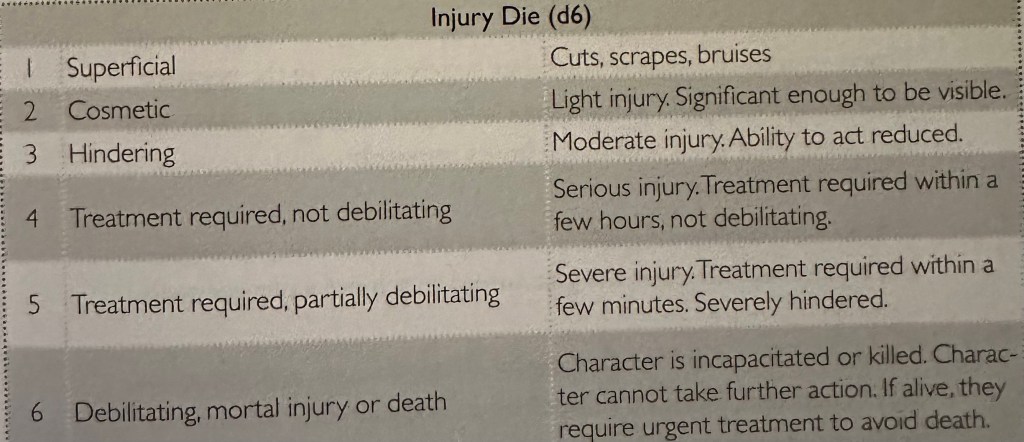
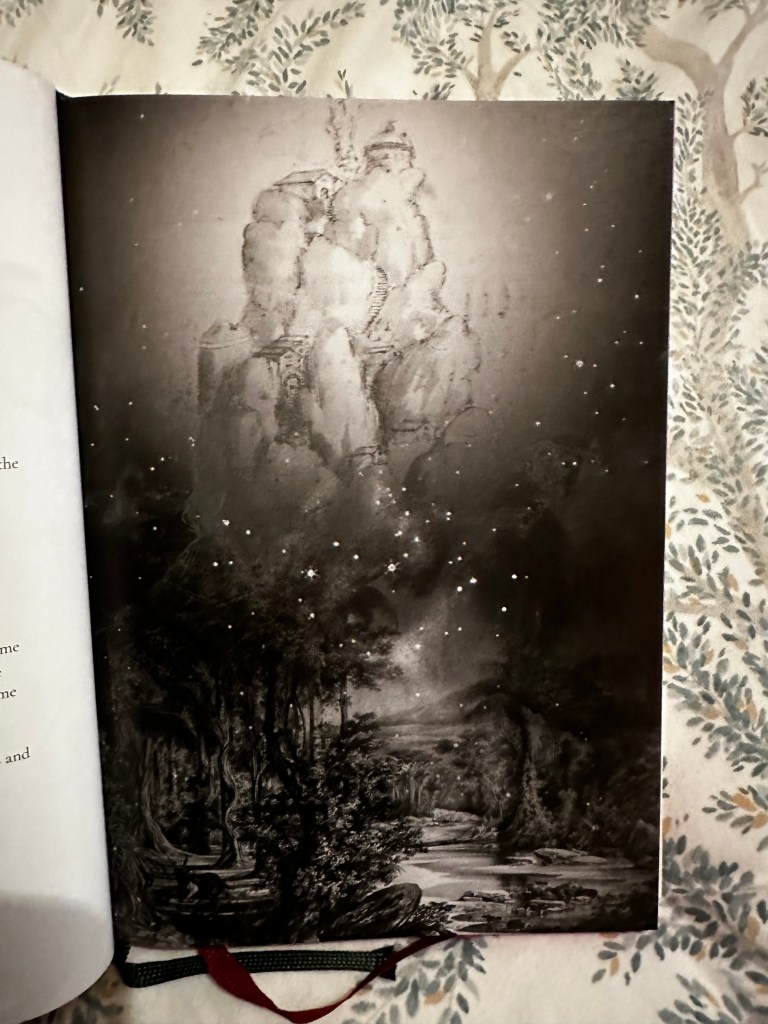
End games

At the end of the Blades in the Dark campaign I played in recently, our GM ran us through a different game to give us a chance to ask some questions of our characters to see how things ended up for them. The World Ending Game is by Everest Pipkin. It is a cinematic game that imagines the last scene or episode of a movie or TV show. It frames a bunch of different types of ending scenes called things like “the Confession,” “the Reveal,” “the Revision,” “Tableaux.” It was a fun and alternative way to treat the ending of a game that felt really personal to players and characters both and I would encourage others to use it to wrap things up for their own games.

Conclusion

I still find endings hard but I like them more and more. I have become much fonder of shorter more contained games of specific numbers of sessions. So it is a little easier to plan for. Also, sometimes, a character’s end is the best part, just look at Heart and its Zenith abilities, they will end the character, but they will also achieve the seemingly impossible. I love this idea for a couple of reasons, it brings the character and probably the campaign to a hard stop in the most amazing fashion and it is player driven. They have gotten themselves to the point where they want to use that ability, it is their choice to use it and it makes for the best ending for their character from their point of view.

How do you like to end dear readers? Do you like to go out in a blaze of glory or do you prefer to sail off into the West and remain Galadriel?

Beginnings

Where shall we start?

This is always the first question I ask myself when starting a new game. It doesn’t really matter if it’s a one-shot, a short series of sessions or an open-ended campaign; the beginning sets the tone for the whole thing. If you start your PCs off trapped in a haunted house with no prospect of escape and a murderous ghost hunting them, you have made a pretty firm statement about the kind of game you are all there to play (or your players will see it that way at least.) Equally, if you start with a scene from each character’s home life, interacting with their family members and discussing their everyday problems, you are establishing a sense that this is the type of game where that kind of thing will happen again (or you should be.)

You can use the start of your game to establish a theme too. Maybe its a horror game involving frog mutants who want to feed your players souls to their unholy tadpoles, you could start in their camp at night, describing a croaking, ribbiting chorus that grows in intensity and volume through the night, ensuring that none of the party get any rest. Embed in the cacophony the true name of a PC and you have the potential for fear and suspicion if not outright horror.

Control

Three sessions in, there’s one PC who has decided to attempt a bloodless coup on the streets of the town at the centre of your adventure, another who has set their heart on wooing one of your NPCs of lesser importance and a third who just wants to sit in the tavern and spread rumours about the sheriff being a cannibal. It can feel like you are out of the picture sometimes (and that’s not necessarily a bad thing, dear reader. The best sessions happen at the whims of the players.) At the start, though, you, as the GM, have control. It relates a little bit to the world building work you’ve been doing, or not doing. After all, you made up the place they start in, or at least, you read about it in a published sourcebook or module and interpreted it as you saw fit. You know the places involved, you know the relevant NPCs, you know the setup, even if you have no preconceived notions about how it’s all going to go down in the sessions to come. With that knowledge, you start with an advantage, for the time being, at least. Before long, you have to hand things over to your clever and inventive players and they’ll have burnt down half the Silver Quarter while introducing the roller skate to Spire.

But, more important than your behind the scenes knowledge, is the situation they start in. I’ve mentioned in medias res beginnings in the past. Frame the scene they find themselves in and make it tense or truly fantastical or horrific or action-packed or just evocative. Start in the middle! It is the one opportunity you have to do this. You set it all up and see how they react to it.

In the Death in Space one-shot I ran a few months ago, I started them off being ejected from cryo-sleep as they approached the main adventure location, a mysterious space-station. They each got to have a moment to describe their characters and I explained they were seeing the debris field surrounding the remains of a planet that was destroyed in the recently ended wars and that they had to guide the ship through it! But then I used a series of flash-back scenes to explain what they were even doing there. I don’t think that’s even the first time I have used the in-medias-res/flashback combo to get into the action as quickly as possible while also providing some much-needed context. It worked pretty well as I recall…

It’s a fun way to get them all rolling dice quickly and failing quickly too, which is usually pretty important in a one-shot horror game.

Intros

Tales from the Loop wants you to put the kids, the players’ characters, at the fore from the get-go. And deservedly so. These kids are created to have people who are important to them, problems that consume them in their regular lives, drives that motivate them and things they’re proud of. They’re rich and three dimensional characters before they ever get to the table. So, the game insists that you start a mystery (what TftL calls adventures) with a scene belonging to each and every kid in their home life or at school, with NPCs that are important to them, family, friends, mentors, that sort of thing. This is where the players get really invested in their characters. They have genuine and heartfelt interactions with the people of significance to them and they begin, immediately, to find their voice and their personality. It’s probably the best thing about a game that has a lot of good things going for it.

I stole the technique for the second campaign I ran in my Scatterhome world. It took place on the northern island of Erlendheim. The PCs all knew each other at the start since they began at 8th level and, in the fiction, had an adventuring party for many years, long ago. The adventuring life long behind them, I asked them to describe their mundane lives as a farmer, an advisor to the Jarl, a guard sergeant and a village priest and made sure to include people and places that were important to them. I focused on who and what they loved because I knew I was about to fuck with all that.
I had learned a lesson, you see, dear reader. Oh yes. For those of you keeping studious notes, you will recall I described the start to the first campaign in Scatterhome, when I drowned the island nation and erstwhile homeland of the PCs, Galliver, off-screen, before the start of the game. They didn’t care about it, and I can’t blame them. I had never given them a reason to.
In Erlendheim, they were more focused on saving the druid’s kids, ensuring the safety of their families and homes, protecting their futures.
Tug on those heart-strings, GMs.

Scenic

There is a subtle art to the transition from the start of an adventure to the meat of it. Or there is if you don’t subscribe to the philosophy that adventures should happen in scenes.

Usually, the end of a scene is obvious in a movie or tv show. It normally shifts perspective or location or time. So, if you want to do something similar in a game, someone needs to just say it’s over and move to a new scene. Sometimes that’s the palyer who wanted the scene but usually its the GM. I would rarely have done something so bold as to declare the end of a scene in a game of D&D as a more trad DM but it’s so freeing to do it! Just like you framed that first scene at the beginning of your game, you soon realise that you can frame and end any scene at any time (within reason.)

Looking back at the Tales from the Loop example from earlier, I noted that each kid gets a scene about their home life. Together with the player, you describe the kind of scene it is going to be, improvise it and end it when it feels right. When you move on to the investigation part, you can cut to a scene with all the kids in it, where they are staking out the suspicious machine that appeared in the nearby field overnight to see who is responsible for it and end that scene when they have gotten everything from it they can. Easy.

Using scene structure is even built into some games. Spire and Heart use scenes, situations and sessions like other games use rounds, days and long-rests. They are left deliberately vague but some powers and abilities work only within the current scene or situation. I have embraced the vagueness and it didn’t even take any adjustment. It was instinctive.

In the next post I am going to write a bit about endings, which, in my experience, are so much more difficult.

How do you like to start your games, dear reader? Let me know in the comments.