I’m still feeling unwell, dear reader. It’s a feeling that returns me, quite unwanted, to the bad old years of the pandemic. So, I would rather think and write about something more recent and more delightful. Even if my current malady will not allow me to produce anything terribly beautiful or very long, I can rely on my players to help me out.
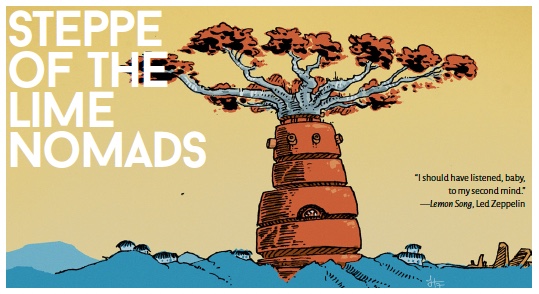
In our most recent session of Ultraviolet Grasslands, our caravan, Isosceles Inc., made it as far as their first proper destination, the Steppe of the Lime Nomads. I knew they were going to reach this place a week in advance so I had time to prepare for it. But what I ended up focusing my preparations on was not that destination but a couple of discoveries that they had rolled for the previous session. I had only the vaguest idea of what they might encounter at the watering hole I assigned as the current gathering place of the Lime Nomads. I knew they would have somewhere to trade, some way to perform market research and that was about it. The descriptions, I left to the three players, using a method called “paint the scene.”
Now anyone who has ever listened to a Jason Cordova podcast or read one of his games, knows this term. It’s a method he developed for use as a GM but is something he has since incorporated beautifully into several games. Go check out the current run of the Between on the Ain’t Slayed Nobody podcast for some truly wonderful examples of it.
Paint the scene serves several purposes at the table. The most important of these are allowing the GM to share the load of world building and description with the rest of the table and, related to that, allowing the other players into the fun and responsibility of bringing the world to life. Why should the GM have all the fun/work?
It’s a simple technique. You ask the players something about a person place or thing that helps bring them to life. It is important to craft the questions you ask to reinforce the theme you are trying to bring to the fore, though. It’s not enough to simply ask them, “what do you see in the village square?” Rather you should ask, “what about the village square shows us that this place was recently abandoned?”
Here are a few of the answers I got from my paint the scene questions when the caravan approached the great camp of the Lime Nomads last weekend:
What about this place shows us that the nomads return here year after year? This one was answered by Stebra, the Lime Nomad character. She was able to tell us a lot about her people and homeland: A river flows down from the mountains at this time of year, though it is often dried up – the nomads settle at the river for a while. They construct their temporary accommodations on stilts for safety. They transport these buildings around with them by folding them up into flatpack. There are larger towers that they use as shelter and to gather around. these towers are relics of ancient times and they stand tall, much higher than anything else in the region. The nomads migrate east to west take advantage of seasonal grazing and foraging. They use water wheels for power and they fish for particular little river fish while they can, cooking them on a spit. A seasonal speciality.
What evidence of the the misty time known by the Saffron City Opiate Priests as the Best Forgotten Ages can be seen in this land? Imssi, the tactician and puppet actor answered this one: Out of the ground the only occasional rock formations in this otherwise grassy plain, are the tips of fingers and toes of colossal statues or calcified giants. In the oasis, when the waters are low and the day is clear, you can see the great nose poking up from the azure depths.
How do you know the nomads welcome traders here? Phaedred Ping-noun, our Acolyte of the Business answered this one, as seemed appropriate: Such a gathering of the Lime Nomads is a moment for traders from all over to get in there and sell. There is a marketplace that is bustling and busy. There are lots of colourful wagons and colourful people gathered. Travellers, not just from the Lime Nomads clans, but from all over the Ultraviolet Grasslands have come to attend the markets.
Conclusion
I am trying to make more liberal use of the technique at the table these days. I find it really gets everyone more involved and engaged in the world. They feel an ownership of their little parts of it and I feel a deep gratitude for them adding the sort of little details and flair that I would never have thought of. If you haven’t given it a go, dear reader, I encourage you to!
Check out this blog post from 2018 on the Gauntlet for an explanation of the techniques from the man himself.
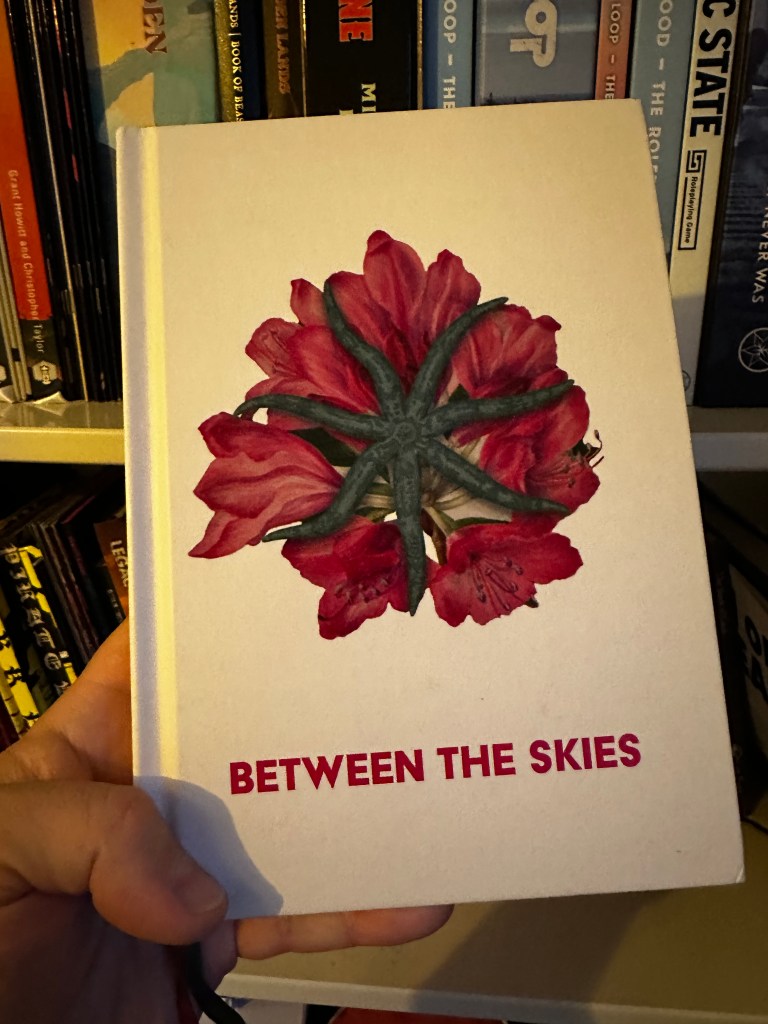
At the end of the last post I wrote about my current Ultraviolet Grasslands campaign, I noted that the caravaners were on the cusp of an encounter with some Armadilloids. The section of the book describing the Steppe of the Lime Nomads has a list of random encounters just like all the other sections do. And, just like the other ones, the detail you get about an encounter is minimal, to say the very least. You might get a level for the creatures or NPCs encountered, and maybe a word or two of description. This leaves quite a lot in the hands of the GM and, potentially, the other players at the table. Perhaps the characteristics of the encountered entity would emerge organically in play. Maybe the GM will have prepared specifics for each potential encounter, with regards to physical descriptions, motivations, weaknesses and strengths for instance. In the case of this encounter. I knew I did not want it to be an automatically violent one. I wanted the Armadilloids to be sentient but different enough as to be inscrutable. I could probably have just written a description, but I have Between the Skies, so why should I?
I took to the Entities chapter of the book and started rolling. I started with a roll on the Size, substance and form table. I rolled a 7 for size. That gave me Very large (giant-size.) I liked this. It immediately brought to mind the Armadillo super villain first encountered way back in Marvel Secret Wars II some time in the 80s. So I had a picture in my mind.
Next, I rolled a 6 on the Substance table, meaning they were Animal. That corresponded with my general idea so far, which was cool. On the Form table, I got a 13 on the d66 roll. That made them Bipedal (which is a word, that, when you say it out loud, sounds weird, we discovered.) It was still matching the picture I had in my head at this stage, except for the fact that these bipeds also had wings. For my purposes I thought it best that they be stubby vestigial wings. It’s the Grasslands, it’s not safe to fly there.
This next bit was so good. On the Weaknesses and Needs tables, I started to see the situation emerge. I rolled a 34 on the Weakness table, which meant they were Confined. Now in the previous session the players had rolled on the encounter tables in UVG and we had established already that there were ten or so of them and they were merely silhouettes on the horizon. They could see the Armadilloids so they were not obscured by any sort of physical trap. But a pretty cool phenomenon in UVG is “stuck-force.” These are invisible barriers and shapes and containers of nothing but force. They litter mainly the skies of the UVG, left over from a time long gone, when fantascience and magic dominated and their practitioners left these eternal artefacts dotted all over, making flying an incredibly dangerous prospect (as I hinted at above.) So, I came up with the situation where the Armadilloids had been trapped in a sphere of this stuck-force and had been unable to free themselves. The next table was Needs. I rolled a 62 on that, which gave me Directions. But I didn’t like this one so I opted for 26 instead, Escape. Perfect.
Next was Characteristics and details. These tables round out the looks and important idiosynchacies of these creatures. First I rolled a 21 on the Notable characteristics table. You know those big ol’ Armadilloids are rolling around like Sonic (I know Sonic is a hedgehog, ok? Just roll with it.) On the detail table, I got a 34, Tatooed. Adding a little more to this, we see that they are tattooed all over with the pictographic stories of their lives. I love this detail.
Next come a pair of Behaviour tables. I rolled on the Social behaviour table, which indicates their numbers, even though I already knew how many there were from our roll on the UVG tables. Why? Well, it also suggests the type of groups they habitually congregate in: Couple, Family, Herd, etc. I rolled a 6 and got Pack. This fit perfectly as well. I actually skipped the behaviour and current demeanour tables because I already had a good idea that they would be eager to be freed, some of them going stir crazy, rolling around inside the sphere, some simply sitting in the grass, and one of them standing with his hands raised against the stuck-force sphere trying to will his way out.
This next one was fun: Attacks! I rolled a 6 on the Mechanism of attack table, making it a Blast. The Attack keyword I rolled up was 33, Draining. So, from these words, I decided they would have a Charisma Draining Psychic Blast power. It never came up in play, thankfully. Why? Because the PCs figured out how to free them and then were invited back to their mushroom growing burros where they were rewarded with three sacks of Regular Mushrooms.
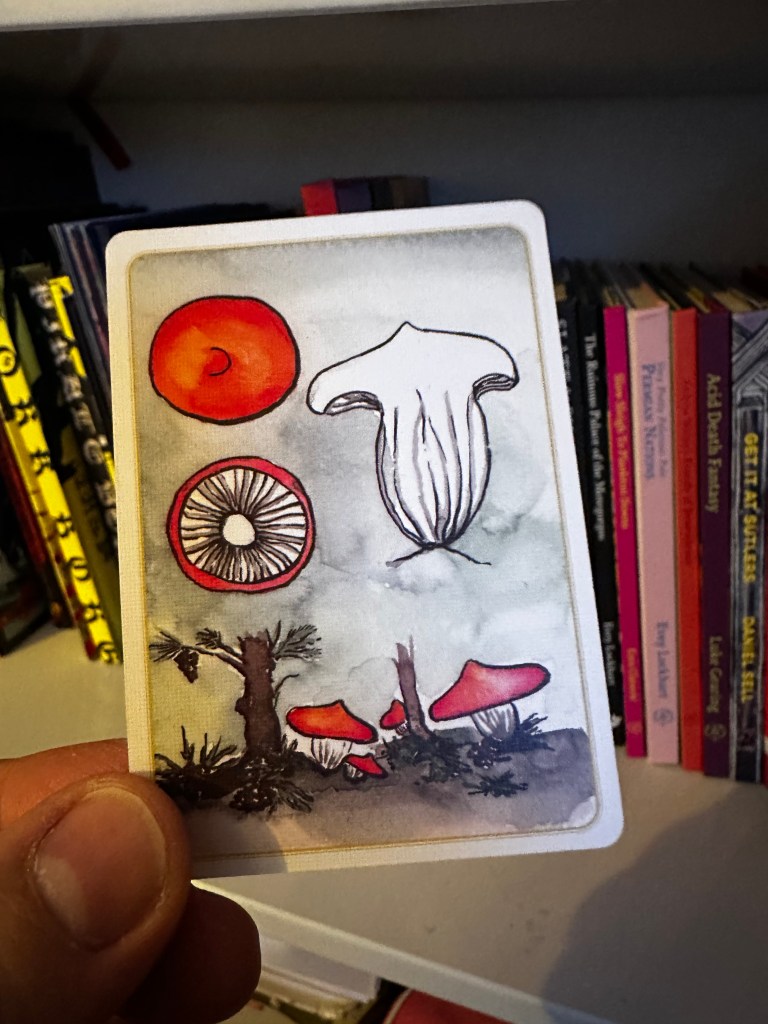
They also spent the night there around the Armadilloids fire, despite the fact the big orange guys could only speak in some brand of “meep meep” language. They all consumed copious amounts of magic mushrooms and got high as fuck using the wonderful tables in the appendix of Fungi of the Far Realms.
Since I rarely get much time to prep sessions these days, this method was really valuable. It allowed me to do what I needed to do on the train on the way to work, using the pdf of Between the Skies, an online dice roller and the word processor on my phone. I have been using Between the Skies for some other games too in the last few months, most notably our Spelljammer campaign. It has made for enormously memorable and unique encounters in that case. I can’t recommend it highly enough. Go get it on itchio or on Exalted Funeral!
Final Plug: Shadows Return
I backed a project from Ian Hickey of Gravity Realms last year, The Price of Apocrypha. It was a really successful Kickstarter, especially for a small, indie, Irish creator, and it was fulfilled and delivered incredibly promptly.
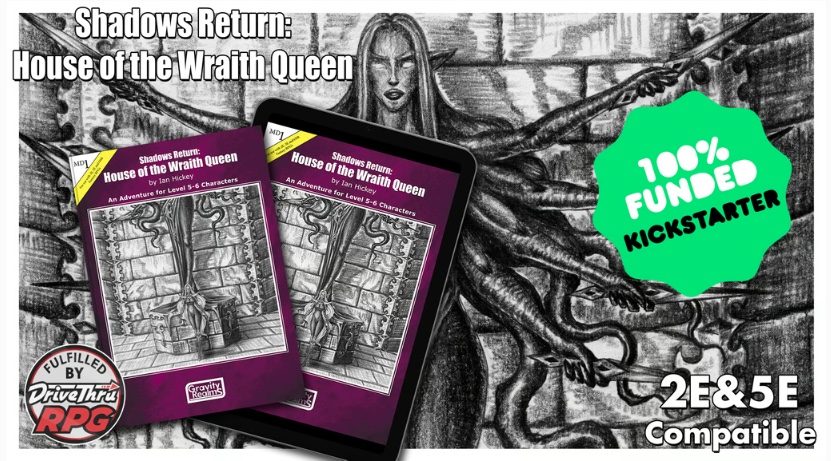
Well, Ian has another great project in the works on Kickstarter right now, Shadows Return: House of the Wraith Queen. Its a mega dungeon style adventure for use with Ad&D 2nd Edition, D&D 5E and OSR games. It’s fully funded but there are only a couple of days left of the campaign and you could still help it reach some stretch goals! Go back it!
As a final note, I have recommended a lot of books and products recently and I like to think I always do here on the dice pool dot com. I do this purely because I believe in the books, the products, the creators, not for monetary or other rewards!
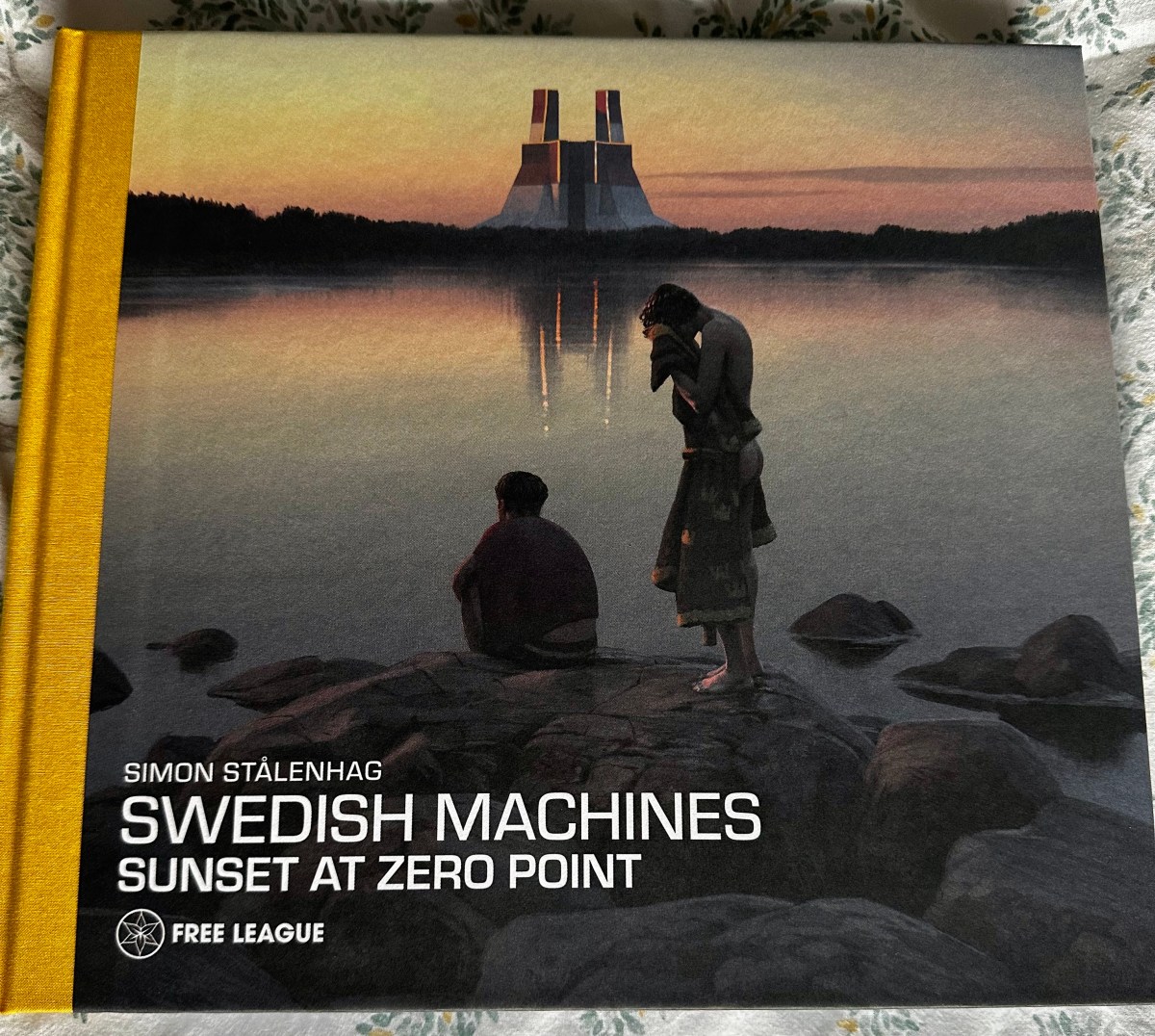
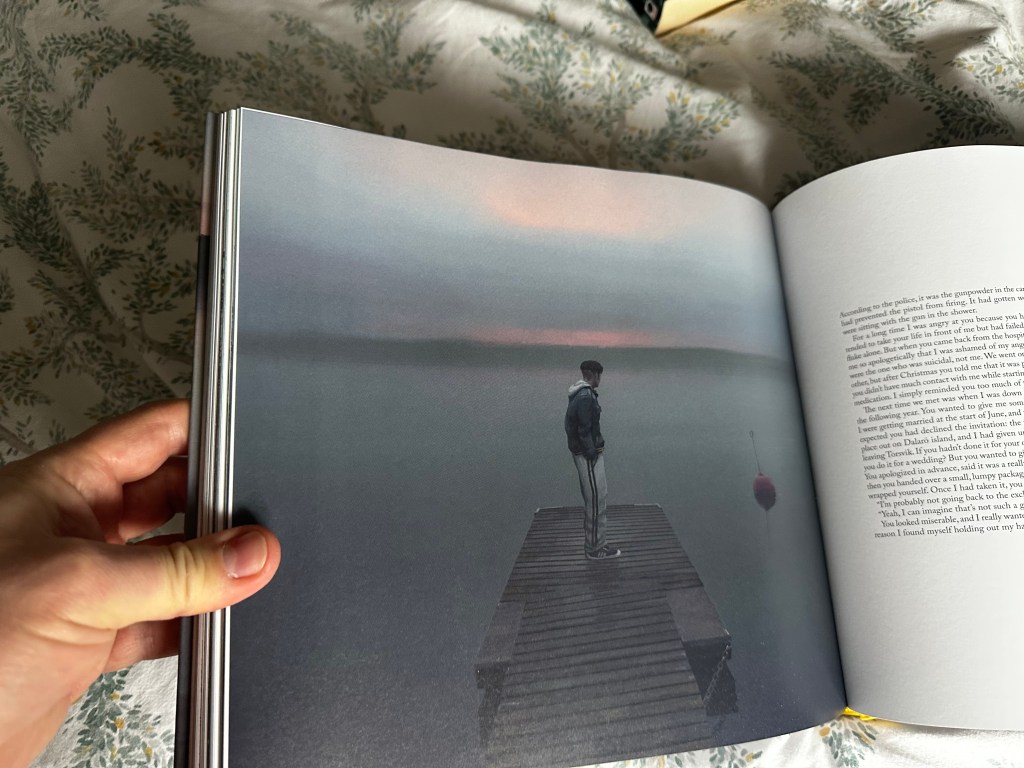
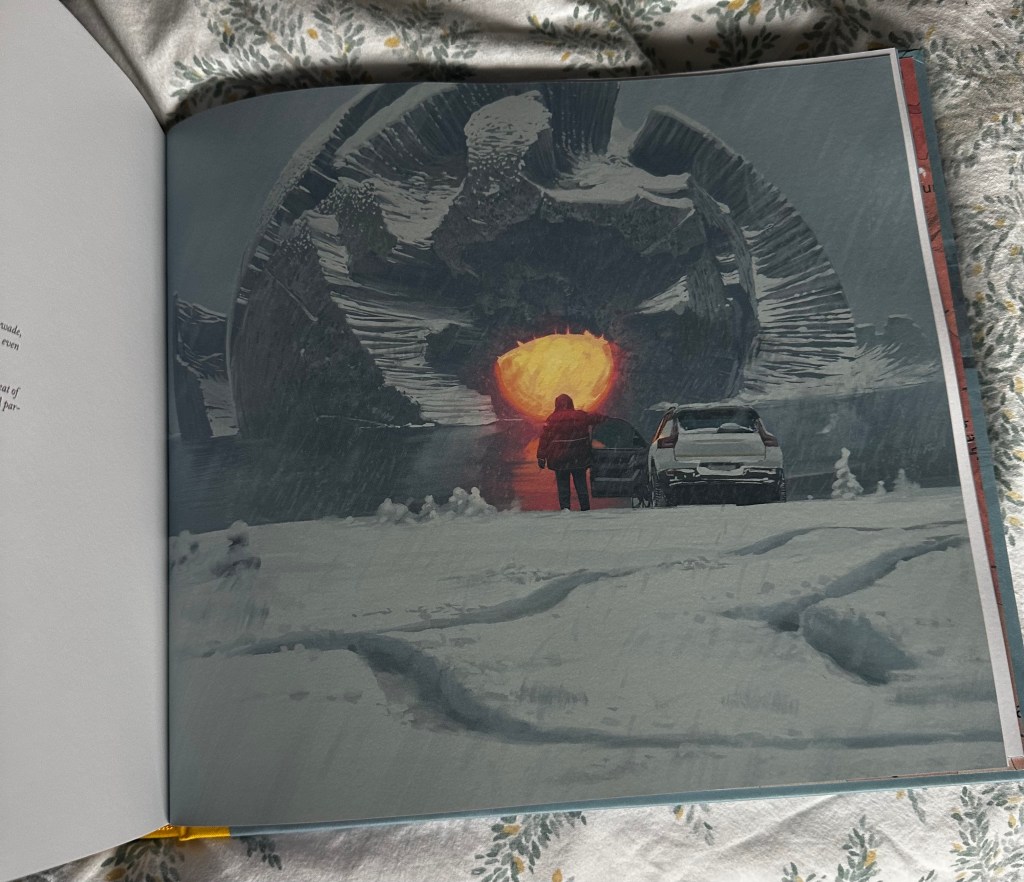
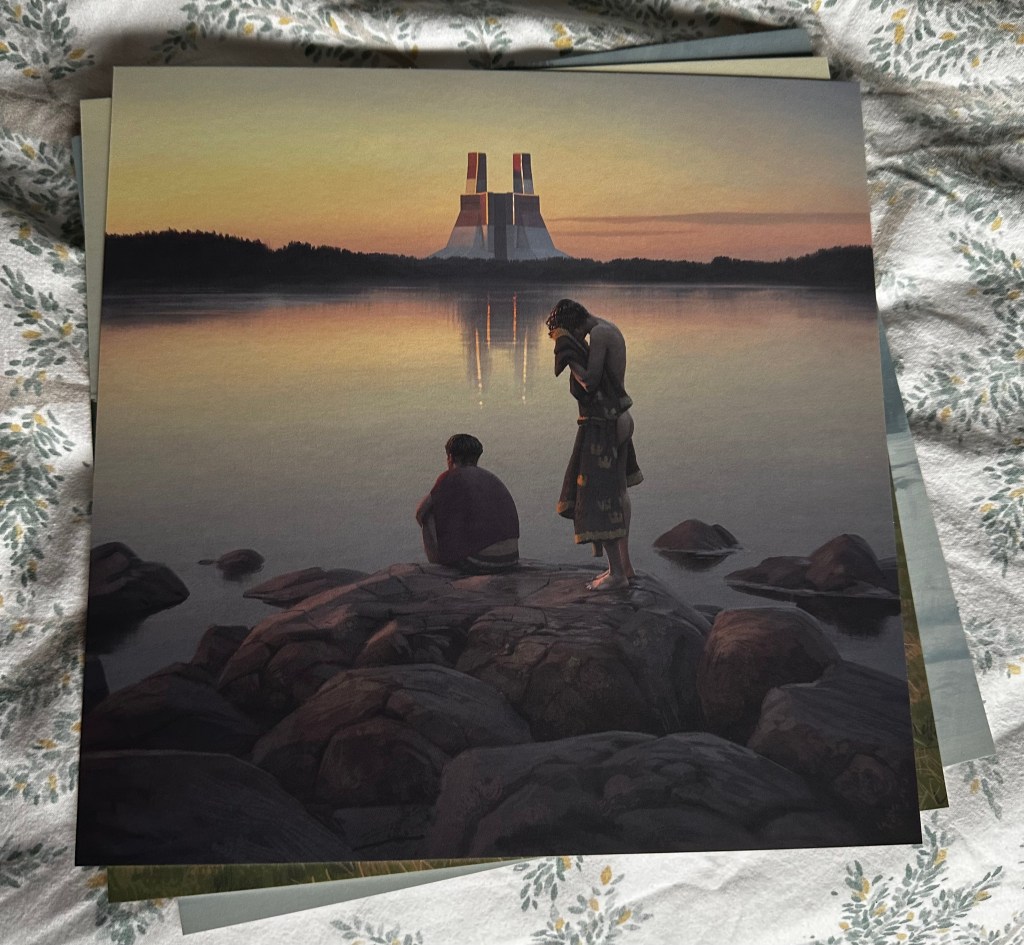
I came home from work on Friday to discover a wonderful surprise in my porch. I wrote about the Kickstarter campaign for Swedish Machines, Simon Stålenhag’s new art book way back in September of last year and ‘lo it has arrived! This was particularly pleasant because I didn’t realise they were shipping already (I have backed a lot of projects and, honestly, I can’t keep up with the updates for all of them, dear reader.) Just feast your hungry little eyeballs on this:
Digital Surprise(s)!
Fifth Season RPG
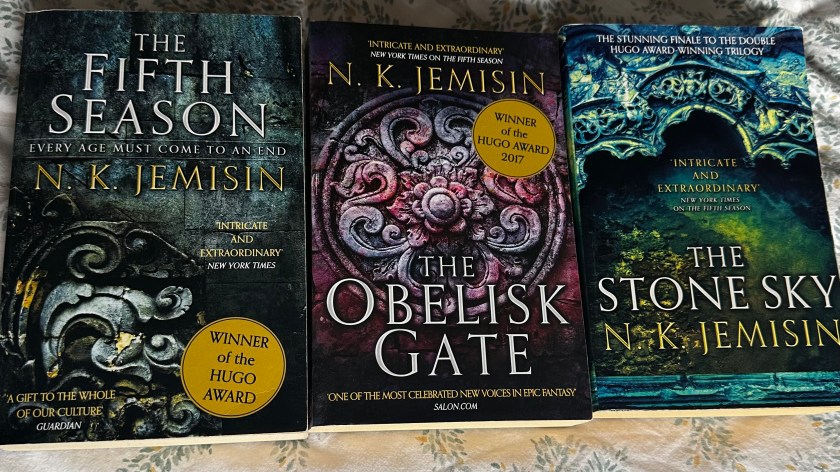
Another major surprise came yesterday when I checked my inbox and found a link to the PDF Preview of the Fifth Season Roleplaying Game. This one has been in development by Green Ronin for more than two years and has been hit with delay after delay so to finally have a version of it stored away in my overstuffed RPG documents folder was a pleasure unlooked for. It was literally the first project I ever backed on Backerkit so I forgot it was there entirely.
As many of you will be aware, I have an ongoing Dragon Age RPG campaign going right now (we recently picked up again for Act II of the campaign, using a published adventure, which will get a post of its own when we are done.) The Fifth Season RPG uses essentially the same rules engine, Green Ronin’s own AGE (Adventure Game Engine) system originally developed for their generic Fantasy AGE game.
The game is, of course, based on the incredibly successful series of novels by modern master of the SFF craft, NK Jemisin. The Broken Earth trilogy tells the story of a dark fantasy world where a feared and reviled underclass of people with the power to manipulate the earth itself are employed/enslaved in the interests of everyone else. The earth itself, on the continent known as the Stillness, is a constant danger to its populace and the orogenes use their powers to calm it and make it safe. But every so often, the earth rebels so strongly against its inhabitants that it becomes uncontrollable, unleashing terrifying earthquakes, erupting volcanoes and tsunamis of dreadful power, seemingly in an effort to end all life. This is known as a Season, the Fifth Season of the title. The story follows the trials of a small number of these orogenes and the people closest to them as they attempt to survive a Season and discover some hidden truths of this harsh world.
The books have won a lot of awards and deservedly so. They are some of my favourite SFF books of the last ten years. If you haven’t read, them, dear reader, do yourself a favour. You can easily find them in your local secondhand bookshop these days but the audio-books are also a pleasure to listen to.
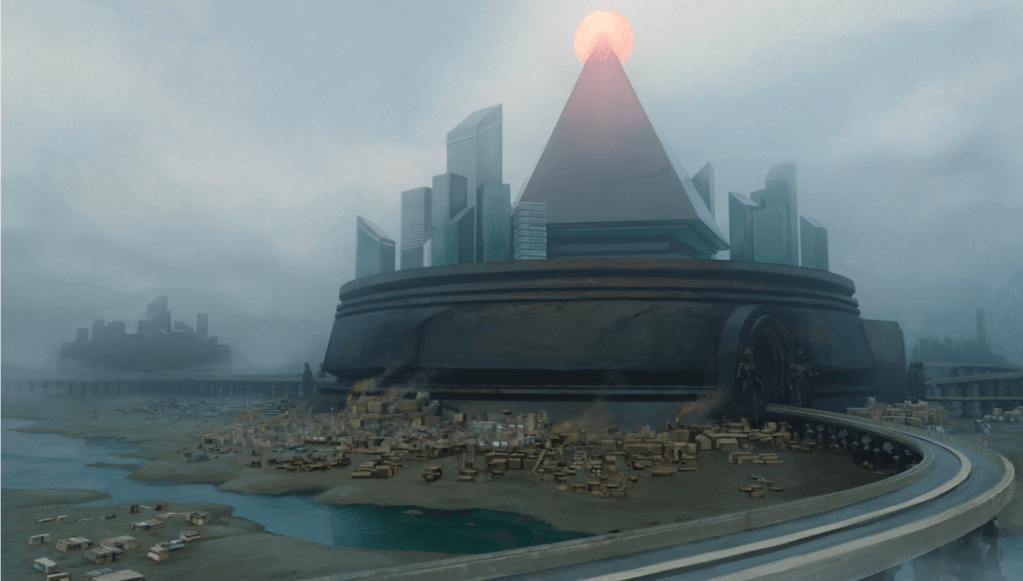
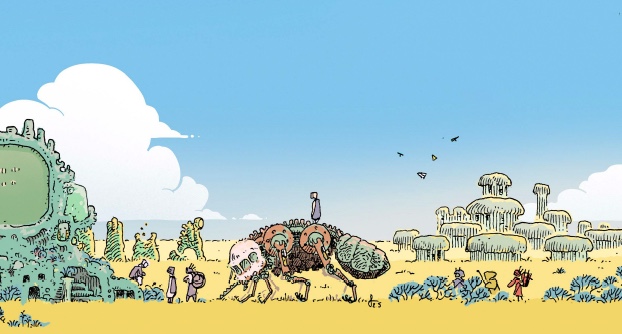
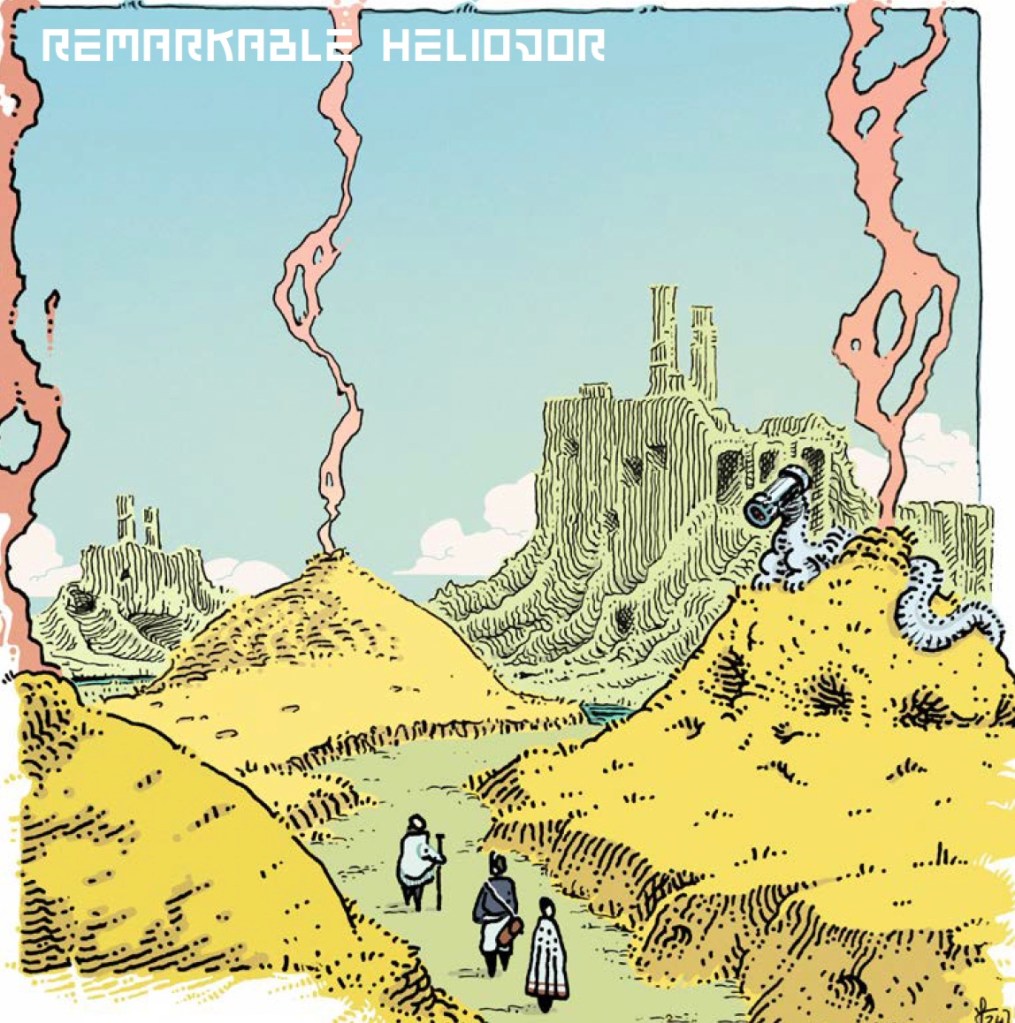
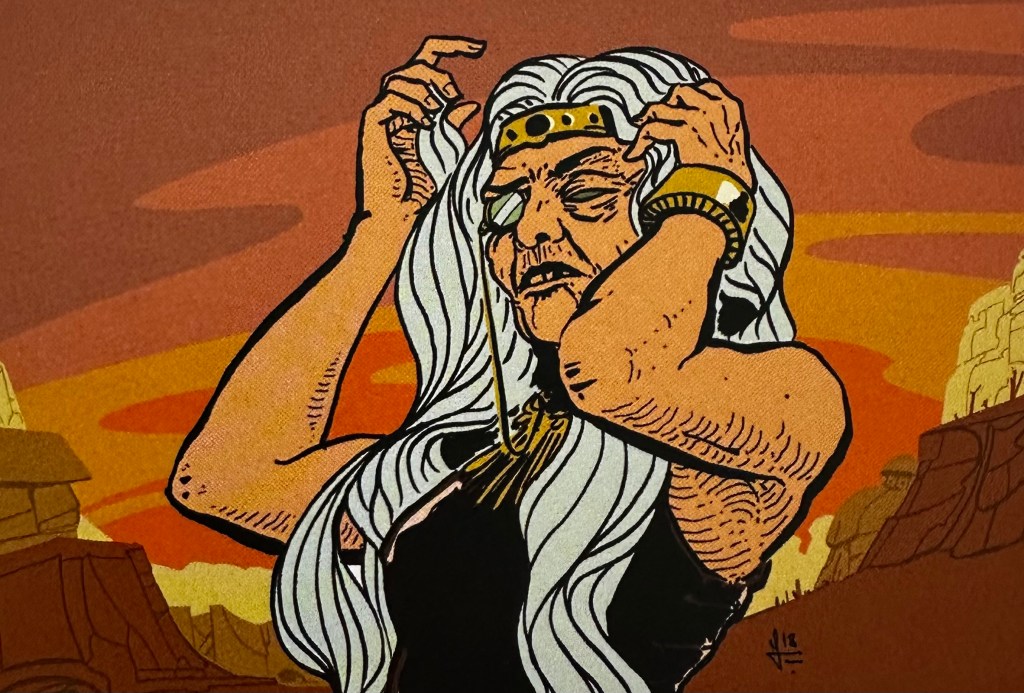
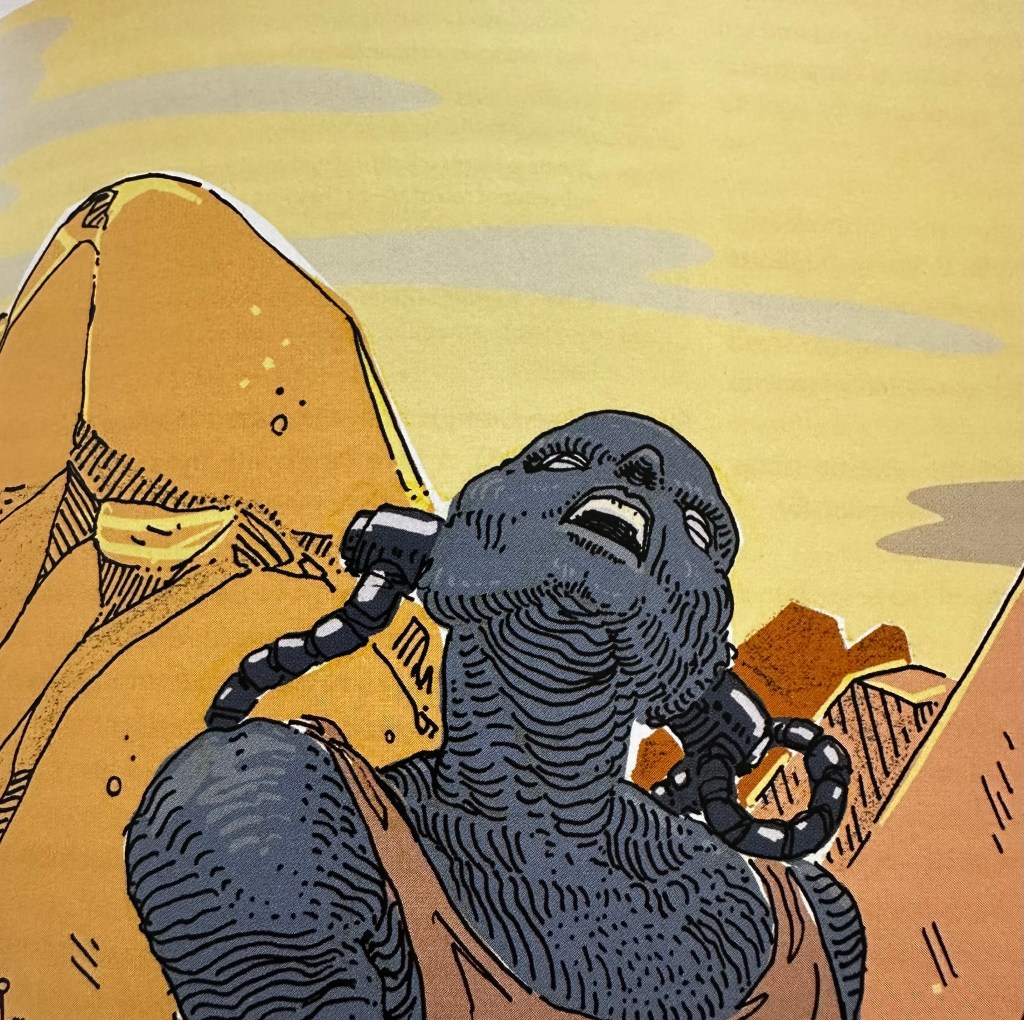
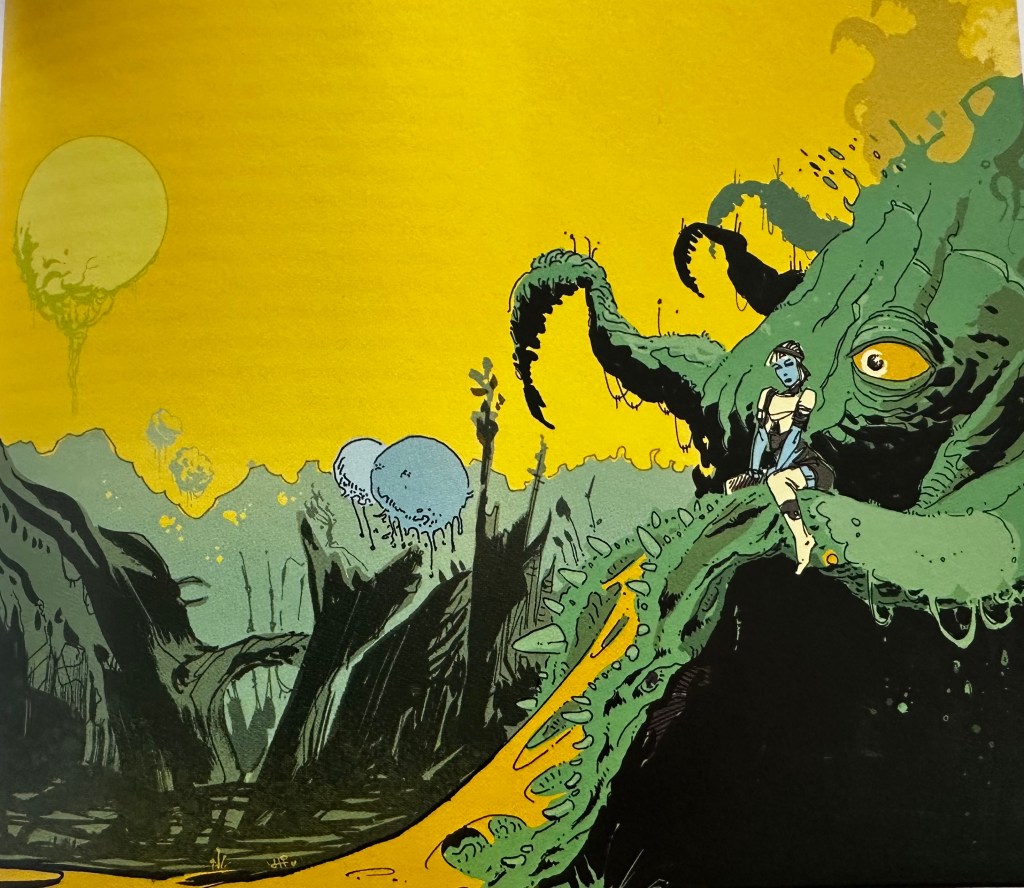
Anyway, when the RPG was announced I didn’t hesitate to back it. But, despite Green Ronin’s long experience of producing licensed games like Dragon Age, and the Expanse (I have also backed the new version of this game, The Transport Union Edition, which I’m eagerly awaiting) this one seems to have suffered a few setbacks and delays. They have tried their best to alleviate the issues by keeping in touch with the backers and offering a 10% discount on their webstore, and I think a lot of the problems were out of their hands, to be fair, so I am giving them the benefit of the doubt. Also, I’m loving what I have seen of the preview PDF so far. The artwork is gorgeous and it makes liberal use of the source material. As its a preview, I won’t share much, but here are a few shots of the illustrations:
The Vastlands Guidebook and Our Golden Age
I’ve been writing a lot about Ultraviolet Grasslands recently. We’ve just completed the third session of our campaign and we’re all loving it so far. Rarely have I run a game that has so sparked the imaginations of the players, both at the table and in between sessions. My wife, who plays forager-surgeon and Lime Nomad, Stebra Osta, explained to me today so much about the character’s people, how their nomadic encampments are set up, the importance of water in their culture, their dress and food, the way they braid their llamas’ hair… The breadth of the unknown in UVG is truly its greatest strength. Its staunchly anti-canon stance has given the players explicit permission to make the world the way they want it to be. So, do we really need more source-books for it? If they are written the way UVG was written? Absolutely. I mean, the random spark tables, the loosely described peoples, the maps with gaps, the mysterious origins of everything: they all come together to make a wonderful frame for you to fill up with your fellow players. I have no reason to believe Mr Rejec wouldn’t produce more work with the same structure and content. Well, this week, I am getting to see the beta of one of the two books in this crowd-funder and a whole section of the other.
The Vastlands Guidebook is the full set of Synthetic Dream Machine rules to play a campaign of UVG. It is very similar to the UVG Player Guide Book that I mentioned in my UVG Character Creation post but with far more detail and some very tasty art. It has full character creation rules, including a whole bunch of new Paths, eg. Barbarian, Purplelander, Tourist and Skeleton. There are mechanics for everything you could want to do in your game. It’s got powers, random NPC creation tables, corruptions, more vehicles and mounts etc. etc. I’m already thinking of ways I can get some of this new stuff to our table.
Our Golden Age is a setting book for the Circle Sea area of the Vastlands, the part of the world your average caravan in UVG is leaving behind at the start of their adventure. Luka Rejec released a teaser for the Yellow Land section of the book and it looks just as sumptuous and bonkers as you would expect from the creator of the Ultraviolet Grasslands. After a brief overview of the geography, climate, government, economy etc. you get some very fun tables. Events tables, travel tables, very unusual merchant tables, fashion tables. Then we have some interesting factions with eminently usable NPC members, a page about the Géants, enormous and unstoppable biomechanical soil farmers left over from another era, and into a section about the cities and places of interest in the region. These include Safranj, the Saffron City, with its key control of the drug/spice, saffron and vibrant opera scene. The Refining Plain: “Autorefineries of livingstone linked by arteries of basalt and tentacles of shipmetal, sinews of standardstone and great mushroom vent-mounds stud the plain below the voidtouching mountain Vulkana.”
The Yellow Land very much gives me Nausicäa vibes. It has an environmental disaster theme and even has Orms (like the Ohmu in Miyazaki’s masterpiece) dangerous animals that tear up the land.
A warning for the unwary traveler:
The Automatic Tourist Entity (A.T.E.) has compiled a list of must-see places in the Yellow Land for centuries. Recently, many warn it keeps suggesting destinations with a terrifying preponderance of surprisingly cannibalistic local practices.
I cannot wait to see the finished product and get it in my grubby little mitts.
I mentioned recently that I had been reading Luka Rejec’s Ultraviolet Grasslands. I had, in fact, just been reading it for fun, but, about 50 pages in, I decided the best use for all its tables was in some sort of role-playing game. So, I got my trusty team together and started a campaign. We’ve had a session 0 and two sessions of play so far. It’s still early days. The caravan has not even managed to complete a full week of travel yet but we’re all enjoying the psychedelic vibes and the raw potential of the game and the setting.
I also wrote up character creation and caravan creation posts, which were not directly related to the campaign but were useful to me in getting to grips with some of the rules and the setting.
This post is about one element of the game that gets only a cursory mention in the book, and how I approached its use. That’s Caravan Quests.
Needy Naturalists
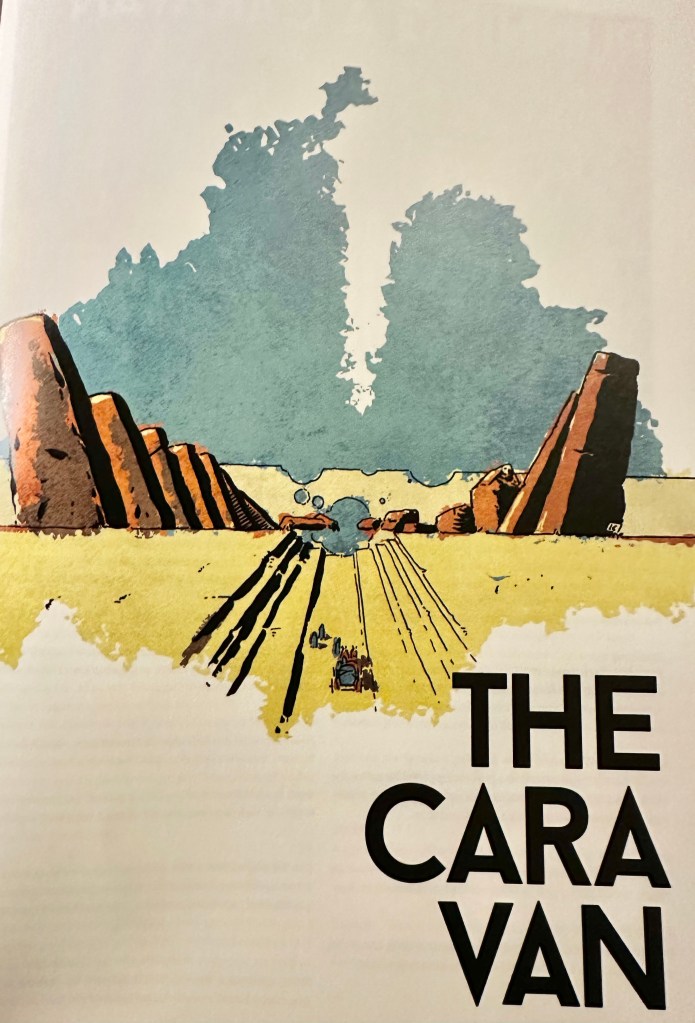
It might be a little ungenerous to suggest that the Caravan Quests section gets any less treatment than it deserved in the core UVG 2E book. It has a full page to itself, including illustration. Ten quests grace the page, everything from “Big Game Hunting” to “Ascending into the Sky Like the Shamans of Old.” And there are some great ideas there to spark events in your campaign. Since UVG is very much a play-to-find-out sort of game, very few things are explicitly labelled as quests. The encounter tables and the randomly discovered locations generally contain all the inspiration or trouble or opportunity the players or referee need to fill a session without picking up tasks from question-mark bedecked NPCs.
But I liked the idea of using one of them to further spur the PCs to do stuff on the road that wasn’t just trading and foraging. The one I settled on was 3. Glorious Naturalists. So, before their caravan ever set off, I had them encounter a band of scientists in L’ultim Gastrognôme, one of the most exclusive eateries in the Violet City. These scientists had been hanging around in the city for a while, looking for a group just like the PCs. They had been assigned a task by their Decapolitan university to discover a bunch of new plants, animals and minerals. They had a decent budget but, as academics, had little taste for roughing it in the trackless steppes and Vome-ridden wilderness of the Ultraviolet Grasslands. So obviously, our caravaners, Imssi, Stebra and Phaedred were the ideal choice to get out there and collect evidence of some undiscovered species! This coincided nicely with the drive of one PC. Stebra Osta, a forager and surgeon, is on the hunt for a special vegetable or fungus with incredible curative properties. She’s sure it’s out in the Grasslands somewhere so she wanted to take the scientists’ job as the perfect one to fund her own search. It also added quite a bit to their funds.
Were there more interesting or weirder quests in the list? Absolutely. Would it have been fun for them to have to 8. Witness the End of Time? Well, of course. But then, I wouldn’t have had such a good excuse to crack open a new prized possession.
Fungi of the Far Realms
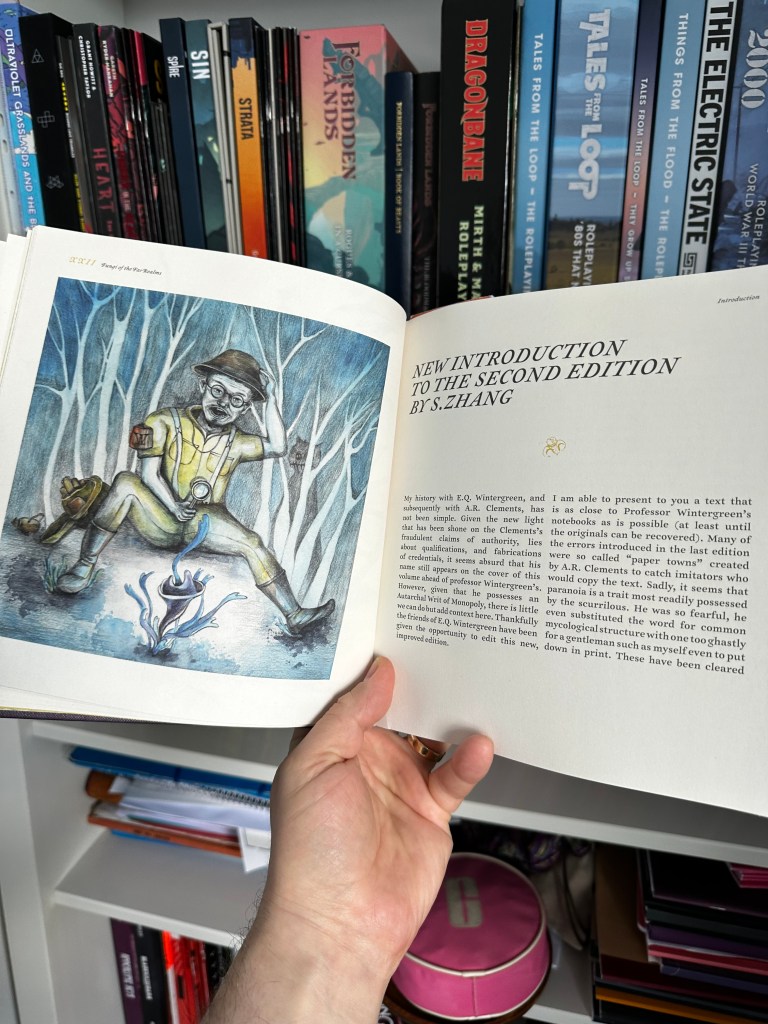
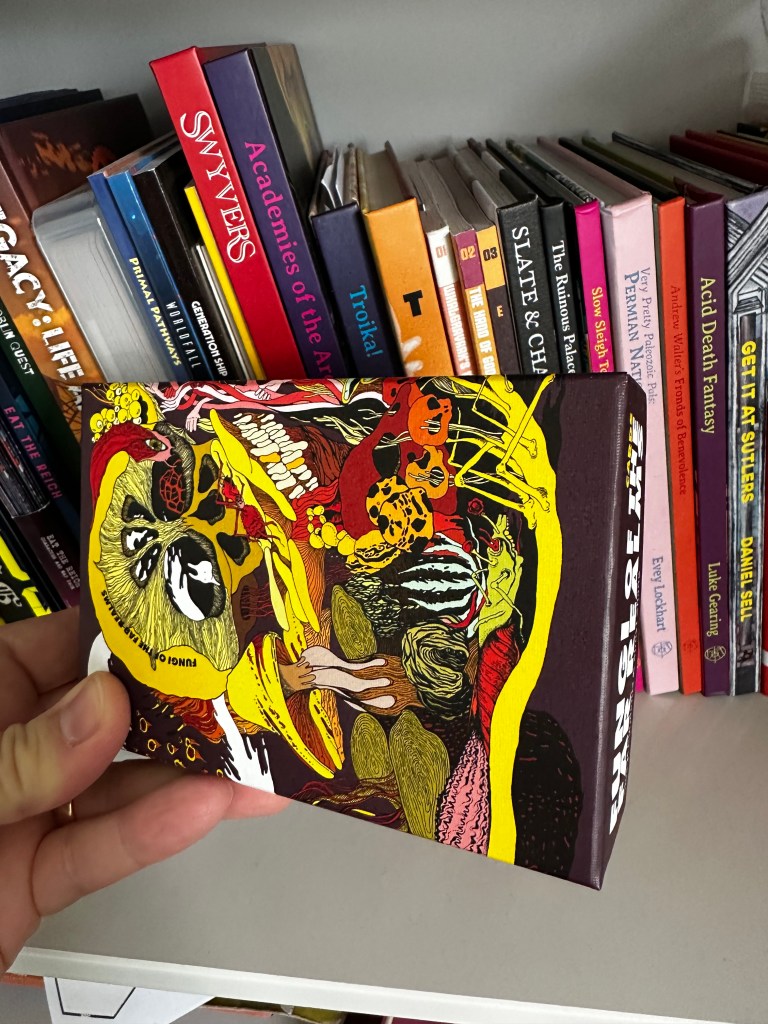
Just look at this book… Go on. Look at it. These illustrations by Shuyi Zhang are just breath-taking. The concepts of some of these funguses, written by Alex R Clements, are fun and bonkers. I remember thinking to myself, how am I ever going to use this in a game? before backing it. Idiotic question. I backed it because it is a work of art, not for its usefulness. But, I guess a thing can be both useful and beautiful.
The Caravan Quest in UVG never mentioned anything about fungi. I added that myself, just so I could get Fungi of the Far Realms and its attendant cards out at the table and have my players oooh and aaah at it. I was able to hand them their very first fungus card last weekend. They discovered a ka-zombie beneath The Last Chair Salon. It was feeding Crystal Puffballs to an imprisoned, limbless Vome-Mother. The Vome-Mother was hooked up by rubber tubing to a Fermentation Golem which turned her milk(?) into Yellow Beer, which the Salon’s unscrupulous proprietor was selling to her customers. Once they had dealt with that whole situation they discovered a nearby lush garden of tulip-like flowers, which was also dotted with dozens of the puffball fungi. I was able to hand over the relevant card to Stebra the Forager and let her know that a sack of these was worth quite bit to the right customer. What a wonderful alternative to the usual type of treasure!
There are a few valid ways to use this book at the table in many different games. I utilised the wonderful fold-out map that I received as a crowd-funding reward. I knew the type of environment I wanted the PCs to find the fungus in, so I used the grid system pictured above to locate a similar habitat. Unfortunately, there does not seem to be an index of fungus per grid-square but each entry in the book highlights the areas of the map that you might find them in. You could also just make a d666 roll and see which entry turns up for you! That’s fun, even if it doesn’t match your needs. The appendices also have tables for afflictions like hallucinogenic effects and fungal infections. If you don’t feel like freaking the PCs out or make them sick, every entry has practical world-building notes like flavour/mouthfeel and aroma. I loved these details in our recent session because it allowed the PCs to know that they had been consuming the fermented Vome-mother milk flavoured with the Crystal Puffball (Flavour/mouthfeel: rotten apples, Aroma: fresh rain.)
And there is another fungus-related adventure afoot already! Stebra, ever on the lookout for foraging opportunities, heard a rumour from a fellow Lime Nomad, that the Great Armadilloids of the Steppes were cultivating mushrooms. Then, as their caravan pushed on across those self-same Steppes they rolled a random encounter. Guess who? That’s right! Armadilloids!
Characters created! Caravan stocked! My players are ready to head off from the outlying barrio of the Violet City into the trackless expanse of the Ultraviolet Grasslands. Honestly, between characters and caravan, our session went over time quite significantly. I did not expect to get any actual travelling done during the session, having gone through the character creation process myself already and having listened to the first couple of sessions of this Open Hearth Actual Play refereed by Marc Majcer. It took them the full three hours or so of the first session to do the same. In fact, they were still settling caravan details for the first part of the second session too.
I actually do regret not creating my own caravan before we had session 0 too. I think it would have helped the process go smoother. But not to worry! It went well enough and, indeed, the players enjoyed both processes. They particularly liked the sheer off-the-wall nature of everything about their characters, the anti-canon nature of the game and the setting and the randomness of almost every step. As for the caravan creation section, specifically; I have noted in a post from last year that I like to give the PCs a home that I can fuck with and I have done it repeatedly in various campaigns. But, in previous games, the creation of that home was never as involved or player -focused as it was in UVG. They immediately got into it. They understood the importance of the caravan, the supplies, the capacity of the vehicles, the types of animals they chose and the cost of everything of course. It took very little urging from me for them to get attached. They now have three carts and 9 mounts, all of which have names, some of which have favourite plushies and foods, a few hired cart drivers, also named and probably with tragic backstories. They have made it exceedingly easy for me to manipulate their little emotions when I fuck with the caravan almost immediately.
My approach
Anyway, today, I’m going to take a slightly different approach to caravan creation than they did. They opted for the “first caravan” package that is presented in the UVG core book. This is honestly a great option that does a lot of the work for you. It takes several key decisions out of the players’ hands and does all the cash calculations for them. Each of them took this package and added a few more animals. That’s how they ended up with so many carts and such a menagerie of pony-analogues.
I’m going to start from scratch, deciding on the method of transportation, the types of animals or animal alternatives, the trade goods and travelling gear. The caravan is going to be run by the character I created a few days ago, my D.W.A.R.F. Tumult Fisher Wizard, Del ‘Machinist. But I’m adding a couple more characters to their company of traders so that I’ve got more money to play around with. The caravan rules state that each character begins with a €1000 loan from a financier (with 100% annual interest!) so, I thought it would be more fun to start with €3000 than just the €1000 that Del would have had access to on their own. I’m not creating these characters in their entirety, I’m just going to roll on the background, strange item, motivation, path and name tables for them.
Hero Number 2: Oï Yu, the Timelost undercover Rainbow Inquisitor. He’s taken the Traveler path. He’s tracking a missing ledger. Oï Yu has brought with him his special carmine cactus that secretes drops of blood.
Hero Number 3: Maria bra Salsur, the bluelander pueblo heretic rancher. She has taken the path of the Fighter. She is following visions of glory and rebirth into the grasslands. She brings with her a self-playing zither with seventy tunes.
My caravan
Financier
You have to start somewhere. When you are trying to kickstart your dream of outfitting and running your very own grasslands-going caravan like Del and their friends are doing, you have to start with money.
Outfitting a caravan is expensive. The PCs should start with a loan of €1,000 per character. The financier is dubious and there’s 100% annual interest, but it beats scrabbling for pennies.
I’m going to go with the book’s advice here and get a loan of €1000 for each hero, so that makes €3000. That will, of course lead to a final debt of €6000, a nice round number, I think you’ll agree. Also, it’s future-Del’s problem, right?
The first step is to decide a few things about our financier. There are a couple of handy d20 tables in the back of the book for this very purpose:
Who are they? – Cat witch faction leader
What do they want? – Acquire forbidden magic
Their Organisation – Cat-first society
Their opponents – Savage capitalist scions
Weaknesses and oddities – appears only as a hologram
But Who’s really behind the patron?
Who’s coughing up? – Under-funded second-tier military complex
How do they hope to benefit? – Practical evidence to justify continued funding
What extra help can they send along? – Annoying but capable administrator
The beginning part of the Caravan section of the book goes into a lot of detail on trade goods, trade routes, the measurement of time, consumption of supplies etc. I’m going to maybe come back to some of this stuff later. For now, I’m going to establish the constituent parts of my caravan.
Vehicles and animals
Bearing in mind that I’ve only got six grand to play with, options are limited here. But this is what I would like to go with. We can’t really afford anything actually mechanical or biomechanical (which I would like as I feel like that would be Del’s jam,) despite their being some beautifully weird and desirable options such as the Road Yacht, the Porcelain Walker, the Autogolem and the Meat Crawler (yes, meat crawler.) But I can’t afford any of those! Instead, for vehicles, I’m going to go with a pair of Solid Coaches. They can each carry 12 sacks, with is pretty good, and they are less likely to suffer catastrophic damage on the road as they are level 7.
As an aside, most things are measured in sacks when it comes to hauling things across country. A sack is the basic unit for trade goods. A sack is equal to 10 stones. A stone is equal to 10 soaps. A sack is also about the same amount of space that a human takes up. Usefully, a sack of supplies is also just enough to keep one human fed, watered and otherwise relatively comfortable on the road for a week.
A week, as it happens, is the basic unit of travel in UVG. Journeys from one destination on the Grand Long Map of the Ultraviolet Grasslands to the next are said to take one week or two or more. This is adjusted for things like the relative speed of your vehicles, the types of misfortune you meet along the way, and whether or not you need to stop to forage when you inevitably run out of supplies half way to your destination.
Solid Coach x2 – €600 each – €1200 total bringing my cash down to 1800.
Each of these coaches needs a couple of draft animals to pull it. So, I guess we’ll need to roll on a table to determine exactly the type of pony-analogues we’ll be purchasing.
I rolled a 5 on this d6 table. It’s Goatelopes… I think we can all imagine what those look like, graceful antelope legs with a shaggy furred body, the ability to eat almost anything and the terrifying devils’ eyes of a billy-goat. Del is not going to fall into he trap of naming these poor beasts but the Timelost Oï Yu can’t resist. We have
Hopper whose favourite fruit is mango
Famante who has the genetic heirloom of utter baldness – requires liberal lashings of sunscreen.
Fiodor who has a wise move. He always lets you know when rain is coming by stopping and refusing to move until you cover his head.
Korven has a cute trick. She can stand on just her forelegs as though she’s doing a handstand.
Anyway, each draft animal costs €70, so that’s another €280. Down to €1520 now.
More humans
Next, we need to consider who will drive these coaches while the PCs galavant about pretending to know anything about running a caravan. As I am on a budget, I am going to hire a couple of people for this, or, as they are described on the Vehicles & Mounts table, Human, Common-ass. It is Wirth noting that the table also provides options for simply buying slaves but does take pains to point out that this sort of thing would be perfect for evil caravans and that they might be resentful, which its probably putting it mildly.
Human, common-ass x2 – €7 per week. I’ll reserve two weeks wages for them so that’ll take me down to €1492
Del, not wanting to get attached would not wish to name these lads either, but, being humans, they come furnished with their own names:
Torron Valpin is a Redlander
Ulfis i’Bosc is from the Greenlands
Supplies and other stuff
Right, now, let’s consider the supplies we need to keep us alive out there without having to stop all the time to hunt and forage. You need a sack of supplies per person per week. So, including our drivers, Torron and Ulfis, that makes five people. So that’s five sacks of supplies per week. Let’s make sure we are covered for a little while and get two weeks worth of supplies.
5×2 = 10. Each sack of supplies costs €10, so that makes €100 on supplies. This brings me down to €1392. It also brings the total number of sacks we have to 18.
How did I come to this number you might ask, dear reader?
5 humans +
the 3 useful kitbags that the heroes come with (each one takes up a sack of space) +
10 supplies
So, this leaves only 6 sacks of space for trade goods! Except it doesn’t. I’m going to refer back to the standard first caravan package and pick up a “bog-standard Pro-Hiker (TM) kit” for each hero as well. This will include a bunch of generally useful traveling gear like tents, sunscreen, schnapps and wine skins and a hat. Each pack of gear takes up one sack of space and costs €50. Most importantly, though, I get to roll on the hat table for each hero.
This hat-table-excuse brings the cash reserves down to €1370 and available sack space down to just 3!
More capacity, please!
Well, that seems like a shame to me. We could afford a few more mounts for the PCs to ride alongside the coaches and free up, not just the space the PCs take up, but also the space their kit occupies, since riding animals can bear 2 sacks. That opens up another 6 sacks on the coaches, meaning we can transport 6 more sacks of trade goods. Of course these mounts do cost €70 each too:
3 riding mounts – €70 x 3 = €210. This takes my total cash down to €1160
Oï Yu’s mount – Blinki the pony (dances with Oï Yu when the zither is played)
Maria bra Salsur’s mount – Pander the llama (a rare pedigree whose hair is soft as merino wool)
Del ‘Machinist’s mount – unnamed donkey (favourite fruit is dragon fruit)
But leaves enough space to transport 9 sacks of trade goods.
Trade goods
I rolled on the table on the first caravan package and got
“Vampire Wines,” which is just blood, right? I mean, right? (Actually wrong. The Trade Goods table says they are just made from grapes that are grown in soil rich in the flesh of creation)
These cost €100 each so that’s another €900 down, leaving us with €260
I’ll spend €68 to get bows and spears for each of the heroes and another €30 to get nomad robes for them. That brings my cash down to €162. I think it’s probably wise to keep that for the journey. Never know when you’re going to need to stop for burgers and milkshakes on the Steppes of the Lime Nomads.
Legalities and marketing
This caravan is established as a company in a legal sense and so it will need a logo/symbol, a name and a company motto.
The symbol is a stylised coach based on the first two owned by the company, speeding across the grasslands in silhouette
The name of the company is Ultraviolet Lopers
Their motto is “From the Circle to the Sea”
Conclusion
In conclusion, I think I may have enjoyed making this caravan that is probably going nowhere, at least as much as my players enjoyed making their actual caravan that they’ll be bravely shepherding into the Ultraviolet Grasslands in a week or two. There are so many great options to choose from or to roll up randomly. There’s usually a laugh to be had during the process and you get to name mounts and humans and stuff. Honestly, great craic; would do again.
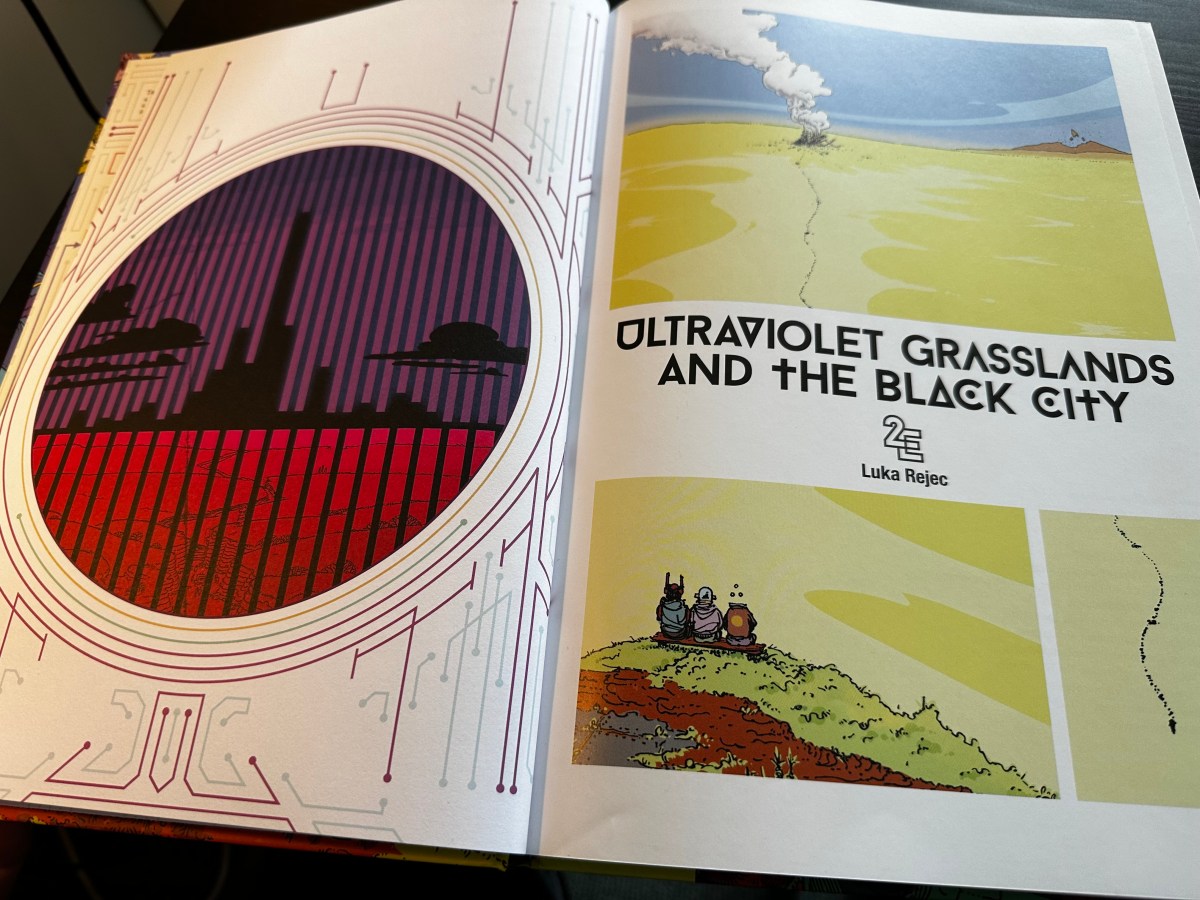
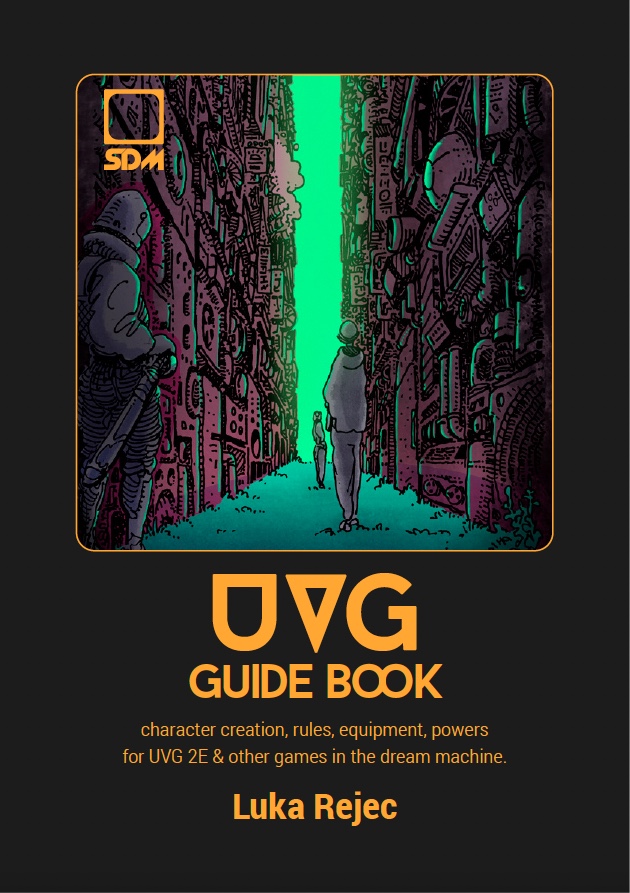
I have been reading Luka Rejec’s polychromatic point crawl, Ultraviolet Grasslands and the Black City 2E for a while now. It’s a remarkably attractive and inspirational piece of work. Luka is responsible for the artwork, writing and design. He really brought his vision to life in this book and he has continued to support it for the last six or seven years since the first edition came out. Most recently, in the form of a massive crowd funder for no fewer than two books to expand the world, Our Golden Age and the Vastlands Guidebook, which I wrote about last year, here. But, there have also been a number of other supplements in the meantime. I picked up a bunch of them on a recent Bundle of Holding deal. The files included the invaluable UVG Guidebook. This details the Synthetic Dream Machine rules devised by Luka. Most useful for my purposes here, is the guide to character creation for UVG 2E. So, I’m going to use it to create my own character, and my own caravan too!
Here’s a little bit about the setting, taken from the UVG Guidebook:
The UVG is a point-crawl setting inspired by psychedelic heavy metal, the Dying Earth genre, and Oregon Trail games. It is a world colored by new wave science fiction and inspired by artists from Moebius to Miyazaki.
The characters, referred to as “heroes,” begin, generally, in the Violet City. This place is ruled by Cat Lords with little human hands and big human servants/pets. It is also the last outpost of human dominion on the shores of the Circle Sea. Beyond the city, to the East, stretch the irradiated, largely uninhabited, weird, vome-infested Ultraviolet Grasslands. The PCs are headed out there, probably at the head of their own caravan, hopefully with some goods to trade at the next stop, which might be the Porcelain Citadel or the Last Serai or some other magical-sounding destination along the Low Road and the High, which, if you follow it long enough, will take you all the way to the eternal sunset and the Black City.
New Campaign, New Character Creation Post
This is all in preparation for starting a new campaign of UVG on Sunday. It’ll be a small caravan of just three PCs and it’ll be a tight, friendly group, but I always find the experience of creating a character myself helps me to guide them through the process so, here we go!
My Hero
So, in the finest tradition of, well, my other character creation posts, I’m going to roll this one up as randomly as possible. Anticipating my requirements in this respect, Mr Rejec has helpfully furnished me with many a table in this book. So, without further ado:
Ability Scores – SEACAT
That stands for Strength, Endurance, Agility, Charisma, Aura and Thought. I have a few options for this process but I am going to take the most random, the d100 roll.
Strength – I rolled an 18 on the d100. This translates to an entirely unremarkable 0. I guess I should be grateful there are no negative attributes in this system
Endurance – 96! This translates to an excellent and amazing 4!
Agility – 62. This gives me a talented 2
Charisma – interestingly, this is not like D&D Charisma, more like the Ancient Greek meaning, which encompasses fortune. Anyway, I rolled a 49, giving my character a promising 1 in this ability
Aura – This can help your character “to use powers beyond mortal ken longer than usual.” I got a 19, giving my second 0.
Thought – “the mental dynamic ability. It captures how a character absorbs, processes, and manipulates information.” I rolled a 47. This makes my score another 1.
So, at this point my ability scores are:
Strength – 0
Endurance – 4
Agility – 2
Charisma – 1
Aura – 0
Thought – 1
Background Trait
I like the method of determining your capacity for learning traits. You get an inventory for this, just like for physical objects. You can’t overload your trait inventory without suffering from encumbrance, anymore than you can physically carry too much without the same issue arising. I get 7 + Thought inventory slots for traits. So that’s 8 slots then. It won’t come into it at this stage, of course. As a level 1 character, my hero will only have three traits.
A starting trait gives you a +3 bonus to actions that can utilise it. Although you can upgrade it from Skilled, which is the starting point for all traits, to Expert, which provides a +6 and Master, which bumps you up to a +9.
Now to the fun part. Rolling a d50 to determine my Background. (So, in the UVG Guidebook, this table is actually a d40 one. But there is another version of it in the core UVG 2E book, so I’m using that for this bit, as well as to answer the following two questions below.) For this unusual die roll, I’m going to roll another d100 and divide by 2.
I rolled a 65, so half that and round down, I get a 32:
“Tumult Fisher Wizard” (?) This acts as my first trait and, I guess determines my Path (see below)
Why are they on the Road?
What is my Tumult Fishing WIzard’s motivation for heading off into the dangers of the Ultraviolet Grasslands? Well, the same table is going to tell me that. I rolled a 29, making it 14 this time:
“Pursued by Loving Enemies.” This sparks a lot of potential background stories for my wizard.
What Do They Bear?
You always start off with one strange item. It might be valuable or it might be important or it might be sentimental. I guess we’ll find out. I rolled a 6, so that’s 3 on the table:
“Green brick with the light and warmth of a candle.” Some sort of Oldtech item maybe?
Path Trait
So, in the UVG Guidebook, you do things a bit differently than you do if you’re just using the core book to make your character. If you use the Guidebook you will be led, carefully and systematically through the process, starting with ability scores, moving onto background traits and then to path traits. In these rules, your characters path can one of three broad categories, Wizard, Traveller and Fighter. They are not classes; they’re only used to determine one of your starting traits. After that, you are free to choose traits from any path you like as you level up.
The whole character creation section of the core book is quite compact, and, in fact, the entirety of the rules are squeezed onto a single page. The core book is, first and foremost, a setting book. It can easily be adapted for use with almost any OSR or D20 system and, indeed, with just a little work, could work very well with a PBTA or other ruleset too. So, I think the decision to pare down the rules, particularly for character creation, makes sense, especially when the Synthetic Dream Machine rules were already available in other publications.
Anyway, what I’m getting at here is that the core book does not refer to Paths at all. Instead, it seems to fold them into many of the backgrounds on its d50 “Who is this Hero?” table. A good example is my “Tumult Fisher Wizard” result from the d50 table earlier. It includes something that could be a background trait, i.e. Tumult Fisher as well as one of the paths, wizard.
So, by default, my first Path trait will be from the Wizard path list in the UVG Guidebook. There is a list of six options so I’ll roll a d6 for it.
That’s a 3. “Exuberant. Each of your life points is worth double when paying for powers.” It’s worth noting at this point, that Life is analogous to hit points and you spend Life to cast spells, so this is quite handy.
Generate a Third Trait
So, you then get to choose one more trait. There is a random trait table. Depending on the result of the roll, you could get another background trait, a wizard trait, a traveller trait or a fighter trait. So, here we go, it’s 5! Which means a Traveller Path trait. Another d6 roll on that table, and that’s a 6!
“Swift, Spend one life or one hero die to get one more action this round.” That is an amazing trait for any hero!
Equip your Character
Similar to trait inventory slots, I get 7 + Strength inventory slots for items. With my 0 strength, that’s going to make it a 7…
You start at level one having two items and some cash (denoted with a €, pronounced cash, not euro.) One of your two items is a kit useful to one of your background traits. In this case, I guess it might contain fishing rod, net, lures, wizarding items, that sort of thing. But, as the guidebook states, “You don’t need to choose in advance exactly what is in your character’s kit — the items are in a quantum superposition until you define them as you play.” This should include a civilian weapon that deals no more than 1d6 damage.
The other thing you get is the Strange item I rolled up earlier, “Green brick with the light and warmth of a candle.”
I also automatically start off with €100 in cash. This sounds like a lot but a week of carousing will cost the average character 1d6 x €100!
It’s also worth mentioning Burdens at this stage. It is possible to take items or traits as burdens rather than have them in your regular inventory, perhaps because those inventories or full or for some other narrative reason. Each Burden you carry (you can have up to 20) gives you a -1 to all checks though.
Last Few Attributes
Level: 1 Life: 8 (all level 1 characters start with 8 Life.) Hero Dice: 1d6 (these come and go quite often in play. You can use them to adjust a die roll or recover Life. You also get one per session and every couple of hours of play!) Save: 13 (all level 1 characters get a Save of 13. You have to roll over your Save score in dire situations. You can add an ability bonus from Endurance or Aura to help you out. Interestingly, you can’t use Agility to save. Instead, it is considered an action roll.) Melee Attack: d20 + ability (strength) + skill (if applicable.) I’ve got a 0 here. Ranged Attack: d20 + ability (agility) + skill (if applicable.) My agility gives me a +2 to ranged attacks Oldtech Attack: d20 + ability (thought) + skill (if applicable.) My Thought score gives me a +1 for Oldtech attacks Fantascience Attack: d20 + ability (charisma) + skill (if applicable.) Another +1 here. Damage: I imagine my fishing wizard has a little fishing knife. That’s 1d4 damage. Defense: Here’s the formula, 7 + ability (agility) + bonus (if skill applies) + armour. No armour yet, so it’s going to be a 9 for now.
Name Your Character
The Guidebook has a table of names. The table lists them under particular cultures of the Vastlands, so, in all likelihood, the name you choose will also decide the culture you’re from. It’s a 12 point list so I’m going to roll a d12 on it. That’s a 10.
D.W.A.R.F. Names: There are 8 listed. Let’s roll a d8. That’s a 2 – Del ‘Machinist. Very practical, I’m sure. Lets also give them the pronouns they/them. Here’s the Dwarf glossary entry from the UVG 2E core book:
Dwarf: Backronym from ‘De Werker Aristocratiscee Revolutie Fraternitie,’ Dwarfs are a distinct culture-class of selectively biomanced people. They have effectively fought the traditional aristoi of the Red and Orange lands to a standstill and now form a major industrialist society of the Rainbowlands. A famously bureaucratic and collectivist faction, they are the only one staunchly opposing the bureaucratic and individualist Emerald City Cogflower Corporation (actually a coin church).
Looks like my fisher wizard is a communist. Love it.
Conclusion
So, that’s my D.W.A.R.F. Tumult Fisher Wizard, Del ‘Machinist. They have great endurance and very average strength. Despite having rather low Aura, they have a wizard trait which allows them to double the effectiveness of the Life points they spend on their spells and another trait from the Traveller path that allows them to spend a Hero die or Life point to get a second action in a round. And he comes with a green brick that has the light and heat of a candle. I have a pretty good idea of them in my head.
I will say that, if I were to do it all over again, I would have just stuck to the UVG Guidebook to shepherd me through the character creation process. Switching to the UVG core book for that one table roll complicated things unnecessarily. My advice would be to do the same, if you are determined to use the Synthetic Dream Machine rules for your game of UVG. Otherwise, use a different system and utilise the tables in the core book for flavour.
I think the next post will be Caravan creation so tune back in then, dear reader!
I have been reading Ultraviolet Grasslands recently (expect a post or three about this once I get done reading it.) I have been enjoying its format a lot. It tends to go into the big-ticket locations in the setting in some detail, maps, random encounters and occurrences, places of importance, how to get to and from the location. It’s usually built with enough randomness that your “Last Serai,” for instance, will be very different to the next party’s.
But there are a few locales described towards the end of each of these sections that branch out from the one central location, providing you with adventure spots in the surrounding area. Descriptions of these in UVG really depend on the type of area they are in. If it’s a heavily populated spot, you are likely to get a bunch of NPCs for the players to deal with, but in more remote places, it will probably mention more environmental hazards, enemies and traps. Importantly, it never goes into much detail on anything. The details, as with everything in the book, are left up to those gathered around the table. You just get a mention of a particular type of creature (and maybe a level and tag in parentheses beside it,) a monetary value for the treasure or resources you might find there, or a distance (in number of days’ travel) from the main location.
These really reminded me of something: Heart Landmarks. Not necessarily because of the format of the descriptions or the writing style or anything like that. It was mainly just due to the looseness of it. Heart Landmarks also provide you with a few sparks to light your imagination. They might tell you the type of haunts you have there and vaguely hint at a couple of NPCs, but it’s up to you to bring them to life at the table. I am aware this is not that unusual in modern RPGs but I have been reading and playing a lot of trad games recently, so the similarity really struck me here, in comparison.
Anyway, it got me thinking about something I started quite a while ago, before I even started my first Heart campaign. I have a file on my computer just called Heart Landmark Ideas. It had one entry in it, and even that was incomplete. So I thought I would make this a little series of blog posts.
DIY Heart Landmarks
What is a Landmark? In Heart, the City Beneath, the characters are delvers, idiotic adventurers who are compelled for one reason or another, to plunge into the red, wet heaven that is the Heart, the esoteric core of all weirdness. Nothing remains concrete or stationary in this underground “city” for very long, but, as long as a place has a sufficient number of sentients there to believe in it, to desire its safety, that will anchor it. These become Landmarks. Some of them are havens where delvers can rest and recuperate, some are terrifyingly dangerous lairs of nightmares and dark magic.
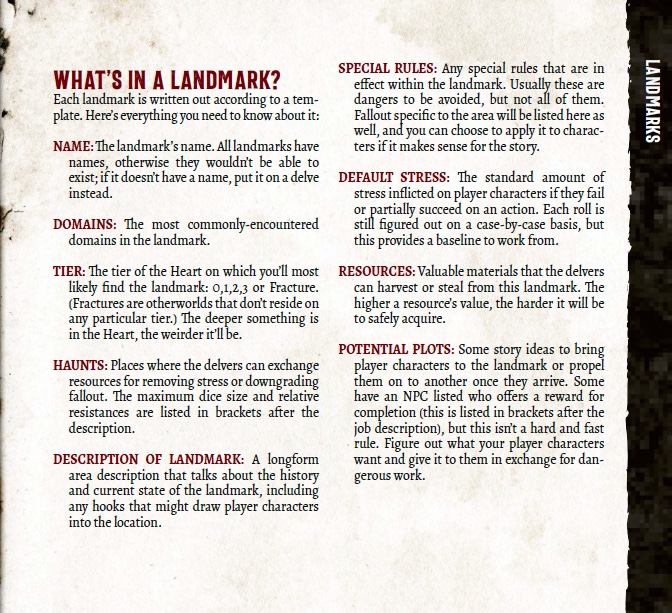
What does the Heart book tell us about making our own landmarks? Make sure your landmark includes one or more of the following:
SANCTUARY: Haunts are places within a landmark where PCs can relive themselves of stress or fallout and can often involve a major NPC to interact with.
MATERIALS: Resources can be procured here.
ADVANCEMENT: Not every chapter beat is achievable on a delve. Sometimes, landmarks are the perfect places to hit your beats.
EMPLOYMENT: NPCs, mysteries, required items etc. You get the idea.
DANGER: Not every landmark is restful and commercial. Sometimes you need to endure them to achieve your goals…
WONDER: Reveal something of the Heart of just dazzle the players with your imagination!
Other than that, the format of each Landmark entry is pretty much set:
NAME: ‘Nuff said
DOMAINS: These are broad areas of interest or influence: Cursed, Desolate, Haven, Occult, Religion, Technology, Warren, Wild
TIER: The Heart is split into tiers designated 0,1,2,3 and Fracture. 3 is much stranger than 0. Fracture is a movable feast of rumness.
HAUNTS: Places to rest and heal or people who will facilitate that. What kind of stress/fallout can be cured? Also, this should include the max dice size of healing.
DESCRIPTION OF LANDMARK: Part history, part current state of affairs. Maybe some hooks to bring the PCs there.
SPECIAL RULES: This could involve particular dangers or custom-fallouts.
DEFAULT STRESS: What is the normal amount of stress to inflict for action failures? Indicated by a die size.
RESOURCES: What type and die size of resources are available here.
The Blistered Basilica, a polyp on the inside of the blister. The devoted gather inside to worship (d8 Echo)
Rose’s, a restaurant with a good reputation and a worryingly good chowder (d8 Blood)
The Blister Pack, a general market that specialises in building and delving equipment (d6 Supplies)
Description: An enormous, fleshy blister on the inside of an enormous, fleshy chamber. Blister is pierced near the base by a hole that allows delvers to enter. From this hole there is a ramshackle wooden ramp that leads to a series of old platforms requiring constant repair. It has some residents, known as platformers, who are more or less permanent and mostly have no sense of smell.
At the base of the blister is a fetid lake of stinking pus. A whole ecosystem of pus creatures live in the lake. They generally leave the platformers alone.
The platformers worship the blister as though it were a god and as long as they do, they say the denizens of the pus will leave them be. But outsiders and heretics should not stay long, they say.
Special Rules: If you spend a bit of time in the Blistered Basilica in order to remove Echo fallout, make an Endure/Religion check. Consequences of failure as below: Fallout: Pus Magnet (Minor Mind) You have come to understand the Platformers’ devotion to the Blister and you feel a kinship with the pus-beings. They are there for your protection and you are there for theirs. You feel an urge to descend to the lake, befriend one of them and take them with you on your travels (Ongoing.)
Getting too close to the pus lake will require an Endure/Haven or Religion check. On failure/mixed result: Fallout: Blistering Barnacles (Major Blood) You’ve been infected by the pus. You are covered in hard, black blisters which hurt and stink. They make all social checks one difficulty rating higher (Standard becomes Risky, Risky becomes Dangerous etc.) (Ongoing.)
Resources:
Gathering Blister pus (d4 Religion) can be dangerous. See Special Rules.
Potential Plots:
Deacon Delicia of the Blistered Basilica has startling news for any PCs that visit. The Blister has revealed an existential danger to her. A stalactite-like calcium deposit has formed above Blister and a group of heretical pus-haters are preparing to climb up there and knock the spiky peril from its perch. This would spell the end for Blister, the Pus Lake and the Platformers. She is offering the church’s most prized possession as a reward to anyone who can stop the heretics. It is a wooden spike known only as the Splinter (Kill d8 Piercing, Debilitating)
Some friends bought me Troika as a birthday present several years ago. It took me a long time to get around to reading it and even longer to get around to playing it. Honestly, this was nothing but a scheduling problem. I was intrigued and delighted by it from the start. The absurdity of the character backgrounds, the looseness of the setting, the unhinged art style, even the strangeness of the initiative rules; it just tickled me the same way a Monty Python sketch does. In the intervening time I have been building a decent little collection of Troika books. The Melsonian Arts Council summer sale really helped with that. I have a number of PDFs that I picked up in various bundles over the years too. But I really love the quality of the physical books. They’re mostly hardback, they have beautiful art that is about as far as you can get from the polished style you get in 5e books, for instance, and they are not too pricey, normally. I recently picked up Whalgravaak’s Warehouse in physical form and, even though it isn’t hardback, the quality of the printing, the texture of the paper and the form factor are all so pleasing that I couldn’t fault it (except for the double-page spread maps that are much easier to see and use in the PDF version. Lucky I have both I suppose…)
Get it at Sutlers: A Troika Adventure Generator is the third project from the Melsonian Arts Council I have backed this year. The first two were Swyvers and Fungi of the Far Realms. Neither of these are Troika related. In fact, Swyvers is its own brand new game that I will get into in another post, while Fungi is system-agnostic. Anyway, I was excited to see a Troika product come out on Backerkit and very happy to back it. It seemed like I was not alone either; it funded in about twenty minutes!
The blurb they added to the Backerkit page for this one says a lot in a short sentence:
An enormous retail adventure generator for inclusion in sandbox campaigns within the city of Troika. Get a job! Meet the locals! Don’t die!
So, you’re going to play characters who work retail? Doesn’t sound fantastical or exciting. If you have ever worked retail, though, you’ll know there is a certain draw to the idea of being a shop assistant with access to lethal spells and weaponry.
Also, here’s the other thing: I know from experience that Troika scenarios can make the most mundane of situations into an adventure. I won’t give anything away but “The Blancmange and Thistle” from the Troika core book is an excellent example of that.
I’m also really intrigued by the description of this book. They call it an “adventure generator.” I’m expecting to see a boat-load of tables for the most ridiculous things. I’m hoping that it will allow you to create and run a Troika adventure sans-prep, on the fly. I would love that. Part of the description on the Backerkit page has this to say:
The book starts with a structured adventure to get the party hired and serving their first day at work, and then it opens up into hundreds (!) of random encounters and micro adventures
So I’m rather hopeful. Can’t wait to get my mitts on this one.
SYMATYOV
Have you ever played one of those solo journaling RPGs? They are somewhat de reguer, don’t you know. It seems like every other ad I get on Instagram is for another solo journalling RPG. I never really imagined that this type of game might be so popular. After all, for many people, the singular attraction of RPGs is the social aspect, getting around a table (or at least a Zoom window) with your mates or even some strangers to act out situations that would, frankly, be absurdly dangerous or embarrassing in real life together. And for those moments when you want to immerse yourself in a different world all on your own, there are computer games. So, it was a long time before I tried one out. I believe the first one I played was actually The Treacherous Realm by friend of the blog, Isaac Wilcox. It uses the Wretched & Alone system to create an immersive and fascinating journey where you are being hunted through some labyrinthine fae realm. You will probably die but it will be fun getting to that point!
That opened the doors for me and so I tried out Thousand Year Old Vampire, by Tim Hutchings, which I had picked up in a Bundle of Holding and forgot about. I believe this caused a bit of a stir when it first came out. It was a hit amongst people who, otherwise, might not have played this sort of solo game and, I believe, was the game that opened the floodgates for all of those that have proliferated in the years since. That was only just in 2020 so, we’re not really talking that long. But man, have they proliferated.
Now, here’s the thing: Thousand Year Old Vampire is designed for essentially infinite re-playablity but I have only played it a couple of times. Once again, scheduling. It does take a while to play, although, I suppose you could set aside 15 minutes a day or something. I was left with a few main impressions:
the prompts you use to build your game and your vampire’s story are perfectly written to provide just enough detail to set your imagination aflame but not enough to seem as though it is rail-roading you in a particular direction
the mechanic where your vampire is forced to rid themself of memories due to their unwieldy long life is clever and leads to some fascinating outcomes
it’s a really great tool to get you writing if you are in a slump
I learned a lot about the Kingdom of Breifne that once existed where Counties Leitrim and Cavan in Ireland now lie along with some of their neighbouring counties. I did a lot of research about the area and the era and that was fun in and of itself
the design of the book is gorgeous and evocative. Go and check it out.
So You Met a Thousand Year Old Vampire is the sequel I don’t think anyone expected. But it certainly got plenty of attention. It’s at about five times its original goal at this point on Backerkit, so even if you don’t back it, it’s probably going to happen anyway. If you do want to get in on the ground floor, though, as they say, go back it anyway. Buy Tim Hutchings another fountain pen or cravat.
Here is an extract from the Backerkit page:
Congratulations, you’ve made a friend! A mysterious friend with a complicated past. That friend is a vampire and might be a thousand years old, but you probably don’t know that yet.
Interestingly, although the character you play in this game seems to be a pretty regular person, it seems as though a lot of the play will revolve around the creation of your vampire companion. Not so surprising, I suppose. If I had a vampire friend, they would probably be the most interesting thing about me too. So, I’ll be intrigued to see how this works and how it differs from its predecessor.
OGA
Ultra-Violet Grasslands is an absolute beaut of a book. It got two editions and it is full of incredible artwork and fantastical ideas all brought to you from the mind and pen of Luka Rejec. It’s also filled with tables and tables and tables that allow you to build a game at the table, as it were, using intriguing, fun and challenging results:
Encounters on the Steppe of the Line Nomads”
Vornish Birds (L0, stalking) with glass recording eyes and metal innards, otherwise indistinguishable from the regular kind. Mind-burned megapede (L8 , alien) shaking the ground on its odd journey, corundum encrustations glittering on its massive segmented neural nodes
And there is so much more in it. I just picked those entries out at random. They’re just so unctuous!
Our Golden Age (OGA) : An Ultraviolet Grasslands RPG []equel is big. And the first book was already pretty big. This time they decided to bring us two books for good measure. Here’s what they have to say about it on the Backerkit page:
Experience fantascience roleplaying at the end of time. Escape the end of history. The eternal civilization is perfect. So say the gods, the machines. Will you defy the endless circle of awakening and forgetting? Can you kick a hole through the sky?
I don’t really know what a “[]equel” is but it’s ok. Just take my money! They have already taken a lot of people’s money. As it stands they have raised $489,412 on Backerkit out of a $50,000 goal.
Anyone else backing these products? Are you maybe excited about any others right now?
































 The Dice Pool