So Rewarding

Surprise!

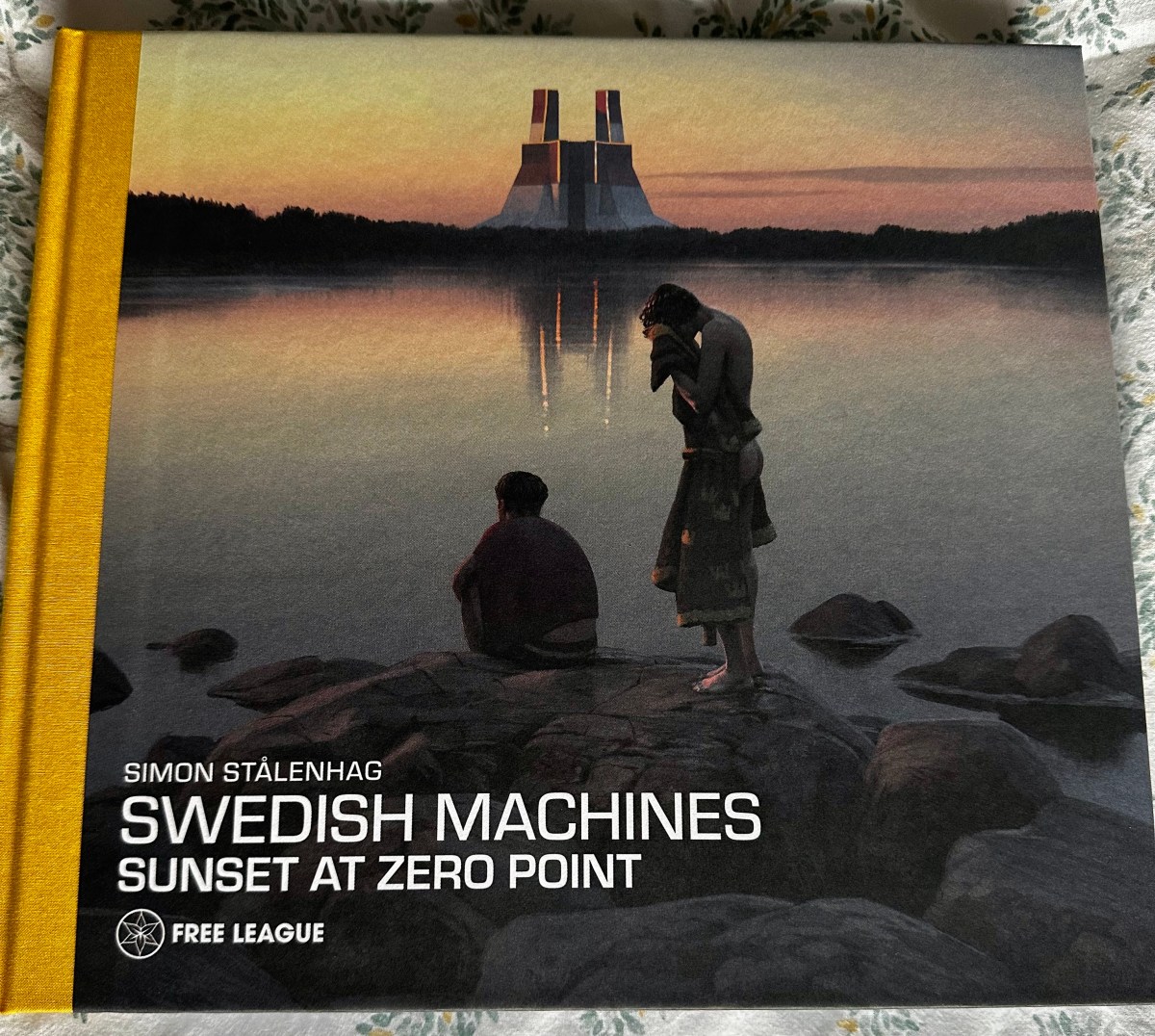
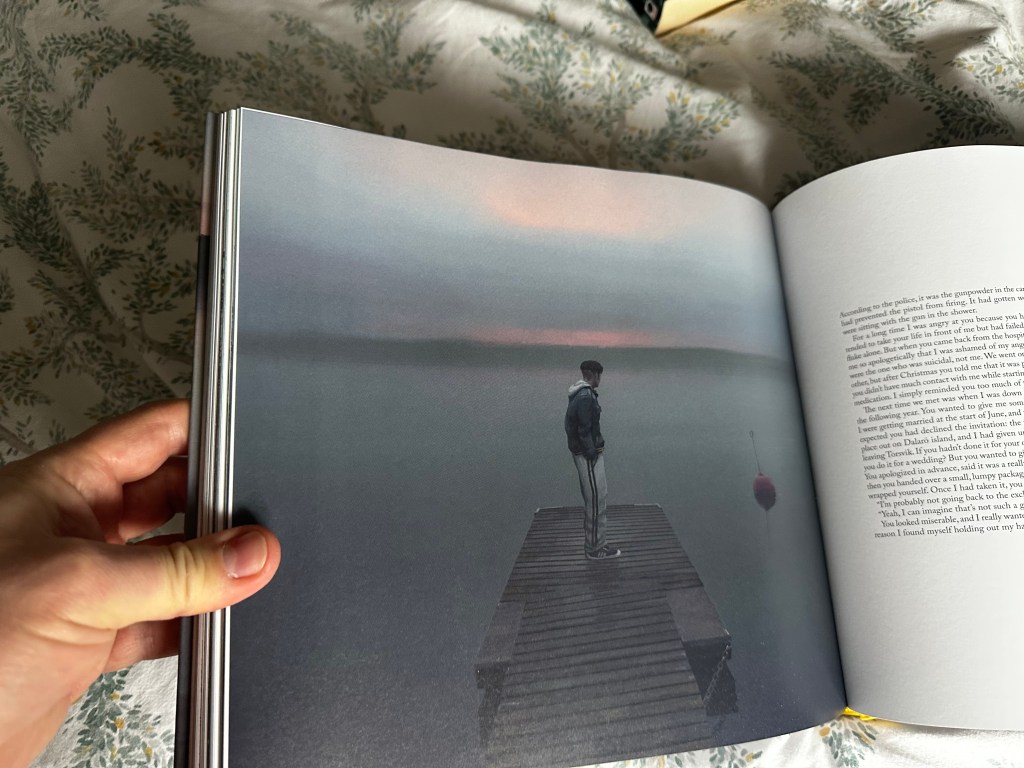
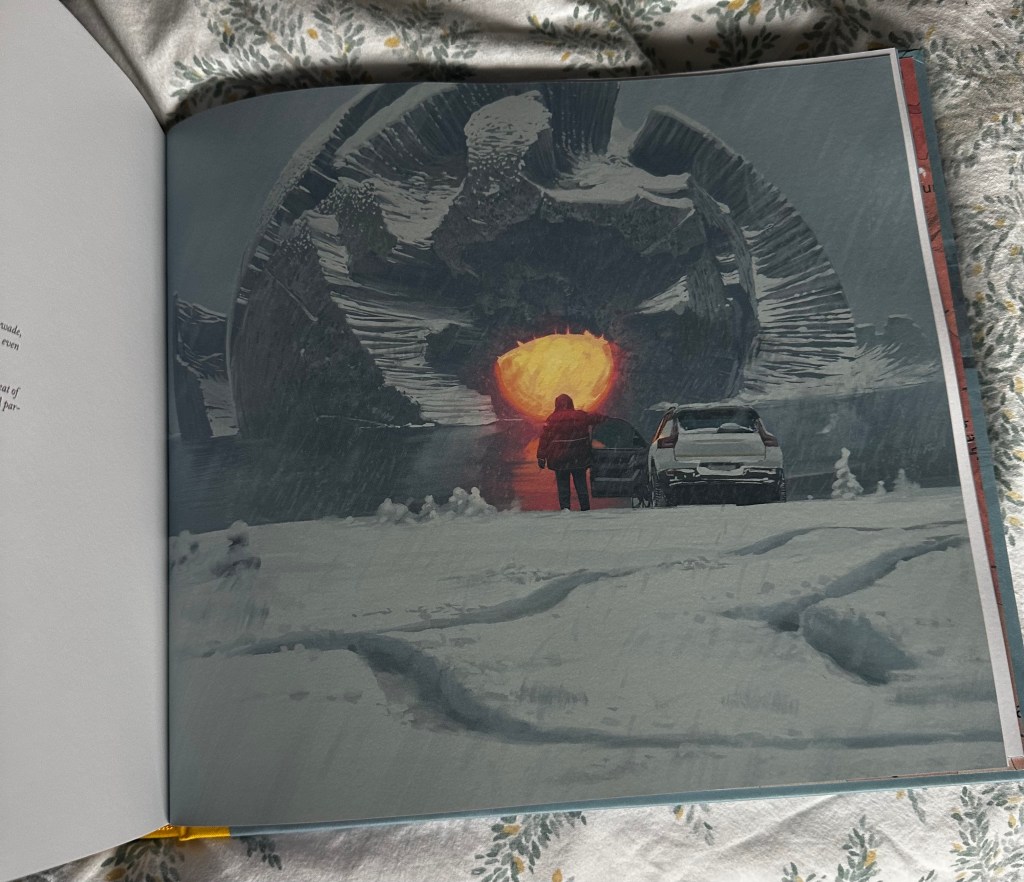
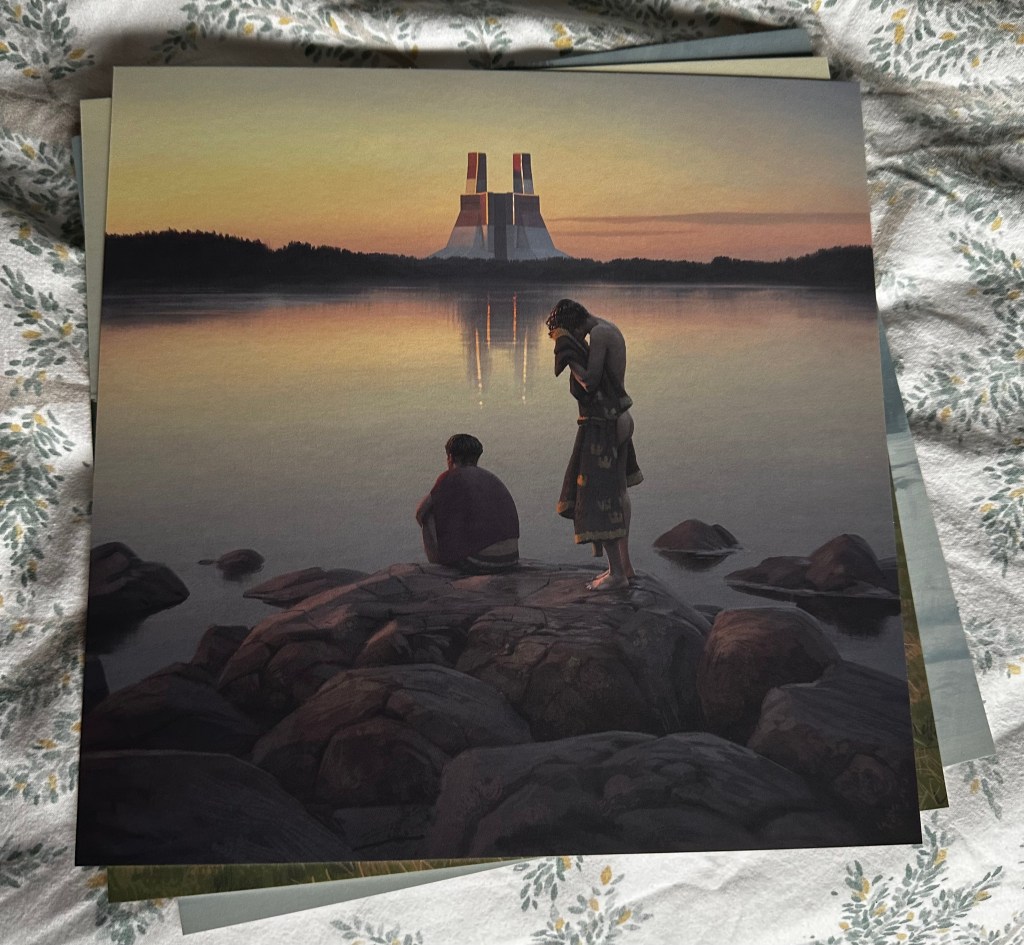
I came home from work on Friday to discover a wonderful surprise in my porch. I wrote about the Kickstarter campaign for Swedish Machines, Simon Stålenhag’s new art book way back in September of last year and ‘lo it has arrived! This was particularly pleasant because I didn’t realise they were shipping already (I have backed a lot of projects and, honestly, I can’t keep up with the updates for all of them, dear reader.)
Just feast your hungry little eyeballs on this:

Digital Surprise(s)!

Fifth Season RPG

Another major surprise came yesterday when I checked my inbox and found a link to the PDF Preview of the Fifth Season Roleplaying Game. This one has been in development by Green Ronin for more than two years and has been hit with delay after delay so to finally have a version of it stored away in my overstuffed RPG documents folder was a pleasure unlooked for. It was literally the first project I ever backed on Backerkit so I forgot it was there entirely.

As many of you will be aware, I have an ongoing Dragon Age RPG campaign going right now (we recently picked up again for Act II of the campaign, using a published adventure, which will get a post of its own when we are done.) The Fifth Season RPG uses essentially the same rules engine, Green Ronin’s own AGE (Adventure Game Engine) system originally developed for their generic Fantasy AGE game.

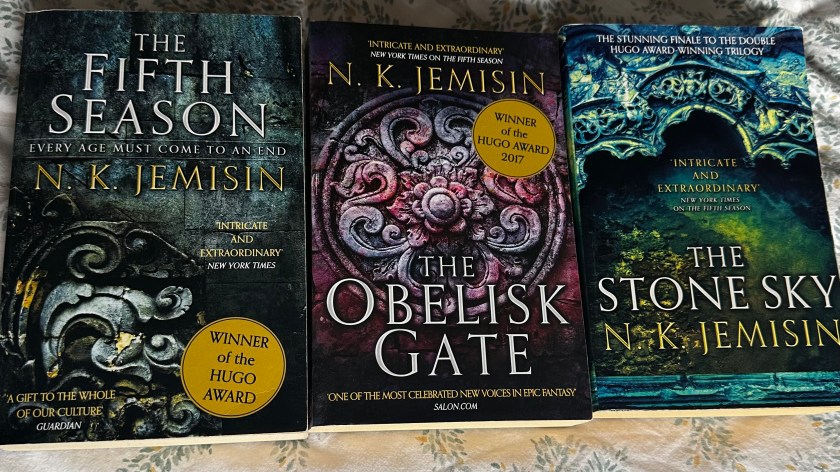
The game is, of course, based on the incredibly successful series of novels by modern master of the SFF craft, NK Jemisin. The Broken Earth trilogy tells the story of a dark fantasy world where a feared and reviled underclass of people with the power to manipulate the earth itself are employed/enslaved in the interests of everyone else. The earth itself, on the continent known as the Stillness, is a constant danger to its populace and the orogenes use their powers to calm it and make it safe. But every so often, the earth rebels so strongly against its inhabitants that it becomes uncontrollable, unleashing terrifying earthquakes, erupting volcanoes and tsunamis of dreadful power, seemingly in an effort to end all life. This is known as a Season, the Fifth Season of the title. The story follows the trials of a small number of these orogenes and the people closest to them as they attempt to survive a Season and discover some hidden truths of this harsh world.

The books have won a lot of awards and deservedly so. They are some of my favourite SFF books of the last ten years. If you haven’t read, them, dear reader, do yourself a favour. You can easily find them in your local secondhand bookshop these days but the audio-books are also a pleasure to listen to.

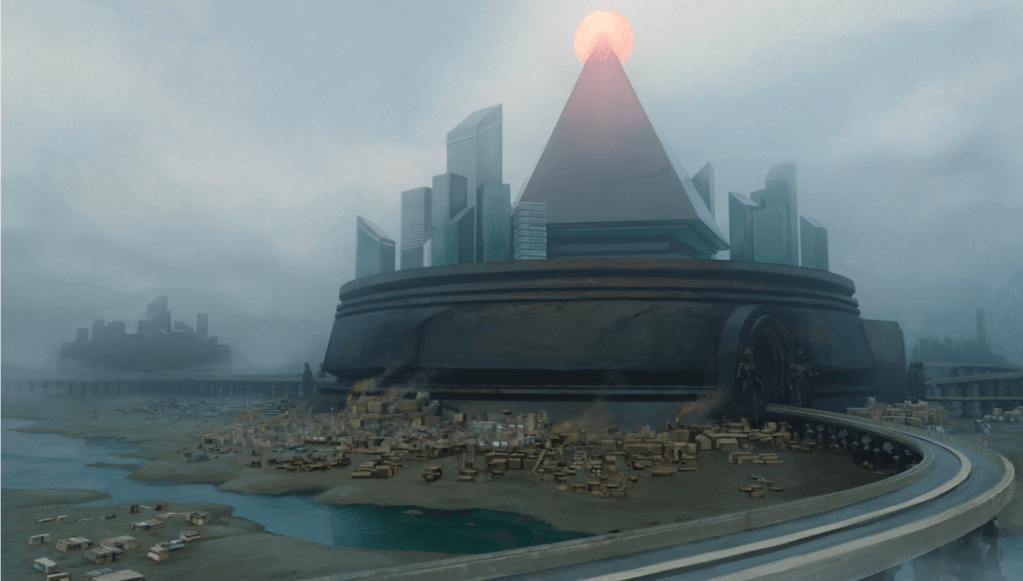
Anyway, when the RPG was announced I didn’t hesitate to back it. But, despite Green Ronin’s long experience of producing licensed games like Dragon Age, and the Expanse (I have also backed the new version of this game, The Transport Union Edition, which I’m eagerly awaiting) this one seems to have suffered a few setbacks and delays. They have tried their best to alleviate the issues by keeping in touch with the backers and offering a 10% discount on their webstore, and I think a lot of the problems were out of their hands, to be fair, so I am giving them the benefit of the doubt. Also, I’m loving what I have seen of the preview PDF so far. The artwork is gorgeous and it makes liberal use of the source material. As its a preview, I won’t share much, but here are a few shots of the illustrations:

The Vastlands Guidebook and Our Golden Age

I’ve been writing a lot about Ultraviolet Grasslands recently. We’ve just completed the third session of our campaign and we’re all loving it so far. Rarely have I run a game that has so sparked the imaginations of the players, both at the table and in between sessions. My wife, who plays forager-surgeon and Lime Nomad, Stebra Osta, explained to me today so much about the character’s people, how their nomadic encampments are set up, the importance of water in their culture, their dress and food, the way they braid their llamas’ hair… The breadth of the unknown in UVG is truly its greatest strength. Its staunchly anti-canon stance has given the players explicit permission to make the world the way they want it to be. So, do we really need more source-books for it? If they are written the way UVG was written? Absolutely. I mean, the random spark tables, the loosely described peoples, the maps with gaps, the mysterious origins of everything: they all come together to make a wonderful frame for you to fill up with your fellow players. I have no reason to believe Mr Rejec wouldn’t produce more work with the same structure and content. Well, this week, I am getting to see the beta of one of the two books in this crowd-funder and a whole section of the other.

The Vastlands Guidebook is the full set of Synthetic Dream Machine rules to play a campaign of UVG. It is very similar to the UVG Player Guide Book that I mentioned in my UVG Character Creation post but with far more detail and some very tasty art. It has full character creation rules, including a whole bunch of new Paths, eg. Barbarian, Purplelander, Tourist and Skeleton. There are mechanics for everything you could want to do in your game. It’s got powers, random NPC creation tables, corruptions, more vehicles and mounts etc. etc. I’m already thinking of ways I can get some of this new stuff to our table.

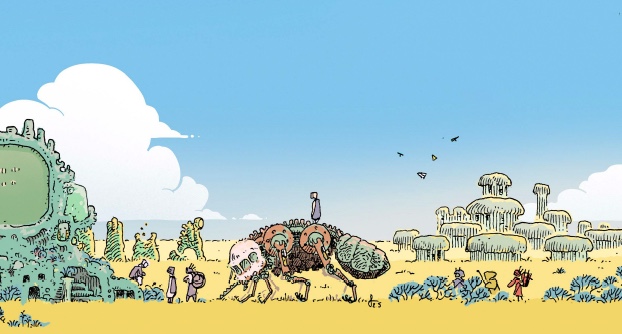
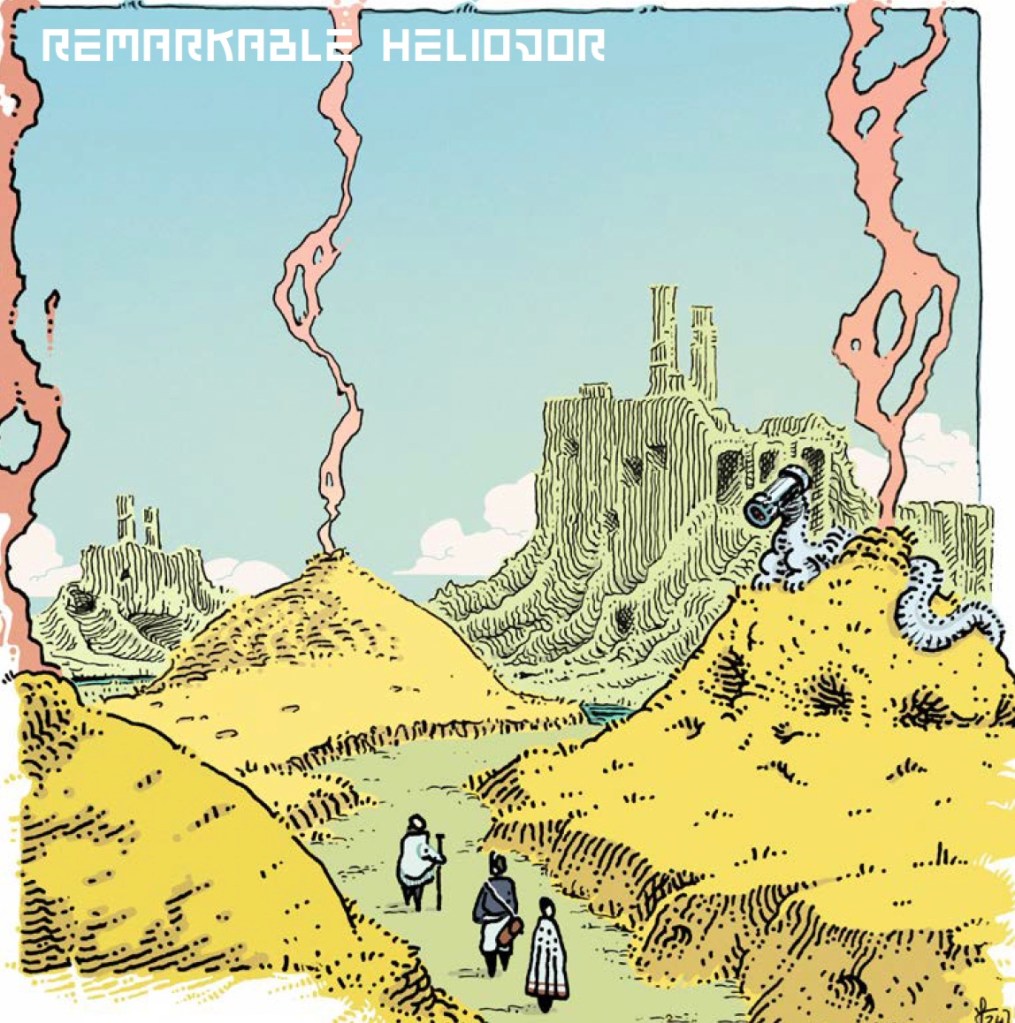
Our Golden Age is a setting book for the Circle Sea area of the Vastlands, the part of the world your average caravan in UVG is leaving behind at the start of their adventure. Luka Rejec released a teaser for the Yellow Land section of the book and it looks just as sumptuous and bonkers as you would expect from the creator of the Ultraviolet Grasslands. After a brief overview of the geography, climate, government, economy etc. you get some very fun tables. Events tables, travel tables, very unusual merchant tables, fashion tables. Then we have some interesting factions with eminently usable NPC members, a page about the Géants, enormous and unstoppable biomechanical soil farmers left over from another era, and into a section about the cities and places of interest in the region. These include Safranj, the Saffron City, with its key control of the drug/spice, saffron and vibrant opera scene. The Refining Plain: “Autorefineries of livingstone linked by arteries of basalt and tentacles of shipmetal, sinews of standardstone and great mushroom vent-mounds stud the plain below the voidtouching mountain Vulkana.”

The Yellow Land very much gives me Nausicäa vibes. It has an environmental disaster theme and even has Orms (like the Ohmu in Miyazaki’s masterpiece) dangerous animals that tear up the land.

A warning for the unwary traveler:

The Automatic Tourist Entity (A.T.E.) has compiled a list of must-see places in the Yellow Land for centuries. Recently, many warn it keeps suggesting destinations with a terrifying preponderance of surprisingly cannibalistic local practices.

I cannot wait to see the finished product and get it in my grubby little mitts.

The Theatre of Trophy Gold

Getting my flash in

Orlen, dusty, wide-brimmed chapeau drowning her alarming eyes in shadow, holds aloft her trophy, beaming. The bag of coin, pleasingly hefty, dangling from her dextrous digits. “‘Aah ‘baht ‘at ‘en?” Her companions, ensorcelled by something above her sturdy, sinister shoulder, point. A hiss, as a punctured bladder, sounds in her ear. Speculative, her left hand shoots up, ready to throttle the looming serpent. It narrowly misses losing its ring finger as a dagger, recently released by Rasei, skewers the snake to the formerly coin-concealing statue. Orlen chances a glance. The cold blood dribbles down the stone man’s shoulder, over the sickle he holds dramatically crossing his sword over his chest. Nima cries, “More snakes!” Time to go. The treasure hunters scarper down the path of the sickle, ignoring the sword’s point and the keep slouching beyond it on the horizon, hoping for Hester’s Mill.

A dramatic retelling of the opening scene of our recent game of Trophy Gold, run by friend of the blog, Isaac. To those who were there, apologies. I’m sure I got a few details wrong, either deliberately or by mistake. Drama seems appropriate for this fascinating game, defined as it is, within Sets.

Trophy

So, as you probably know, dear reader, if you have been with me for a while, here on the dice pool dot com, I am a more-or-less avid listener of the Fear of a Black Dragon podcast from the Gauntlet. I wrote a post on my appreciation for it and the Indie RPG Podcast last Summer. Our path to playing this incursion (as Trophy scenarios are called) leads very much from that. Jason Cordova, one of the podcast’s capable hosts, rarely ventures into the OSR’s hex-defined landscapes. Rather, you can generally find him in the narrative woods and trails of story-based games. On the podcast, he often discusses his experiences in running OSR (or just old tbh) modules in other systems. Back in the olden days of Fear of a Black Dragon, this generally meant either the incredibly rules-lite World of Dungeons or Dungeon World My last post on this blog was about the feelings Dungeon World made me feel. Go and have a look!) These both have PBTA DNA. Their mechanics lend themselves more to the application of imagined narrative than cut-and-dried, D&D-esque, result-binary systems. And this is really only because of the inclusion of a third option, a mixed success, or success at a cost. Since the implied consequence cannot be defined outside the context of the situation, it is usually left up to those at the table to invent it (although Dungeon World generally provides far more pre-written options than does the baldly efficient text of World of Dungeons.) And look, if you’re a PBTA maven, my deepest apologies for what is, no doubt, a faintly condescending and largely inaccurate paring down of a game system that is probably the most influential in the indie game space of the last decade and a half. But if you were raised on a distilled diet of Borgs in your old schools, you’re welcome.

I have gotten off track. The point I was trying to get to was that, a few years ago, Jason switched to running pretty much every module in Trophy Dark or Trophy Gold instead. Mostly Trophy Gold, in fact. Obviously, this got me very interested in the game. The idea of running D&D style modules in a more narrative style highlights a whole new facet of the hobby that I always thought would be very fun to explore. And, after reading a bit about the game and learning of its mechanical descent from Blades in the Dark I wanted to try it even more. It just turns out that, much like Tom (with Dungeon World,) before him, Isaac got there before me. I’m not complaining. I love being a player in these games.

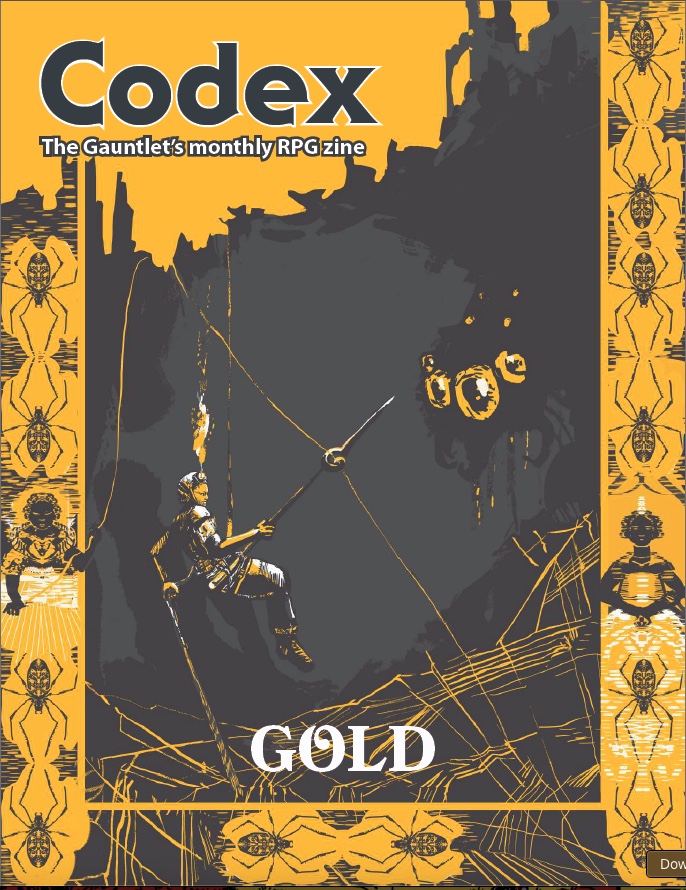
So, to put it briefly, both Trophy games were written by Jesse Ross and published by Gauntlet Publishing. Elements of the rules have been adapted from Blades in the Dark by John Harper, who is also responsible for World of Dungeons and other elements were cribbed from Graham Walmsley’s seminal Cthulhu Dark. They are games about treasure hunters going out into the dark forest to find gold and bring it home so they can continue to survive in a hostile world. In Trophy Dark, your vile little adventurer is a goner; you’re not making it past the end of the session. Sorry. That’s the point of Trophy Dark. But in Trophy Gold you make a treasure hunter who might live to the end of the incursion if you’re lucky. They might even weasel their way through to another one. Speaking of which, I wrote a blog post about making a Trophy Gold character last summer. You may find it illuminating if you’re interested. Do bear in mind, though, the game I used in that post is not quite the same as the one presented in the book published in 2022. I used the game from the Codex Gold magazine, which you can pick up for a steal over on Drivethru. I don’t think there are any really drastic rule changes but we noticed some discrepancies in a few of the tables.

A gold and black illustration of an adventurer being lowered on a rope into a dark cave where a giant spider awaits. the cover is framed by stylised black spiders on a gold background. The words, Codex, The Gauntlet's monthly RPG zine appear in the top left of the cover.
The cover of Codex Gold from Gauntlet Publishing

Hester’s Mill

So, what’s all this about Sets? You didn’t think I remembered mentioning that earlier, did you, dear reader? Well, Incursions are formatted in a very particular way. Trophy Gold helpfully breaks it up and introduces the format like this:

  • Theme – much like any dramatic work that might be presented on the stage, a Trophy Gold incursion should be built around a theme, even if you are adapting it from another type of module. I would call the broad theme of Hester’s Mill to be “Harvest”
  • Sets – these are particular locations in which the treasure hunters will be presented with clear goals. I find it fascinating that the rules tell the GM to make the goal explicit to the players. I’m not giving away too much by telling you that the goal in the opening Set I wrote up in the intro is to find the way to Hester’s Mill. You complete the Set by achieving this goal and this is eminently important to the cycle of play. You may not wish to complete the goal of every Set. It might not be clever or necessary for you. Your character’s overall goal is to earn enough Gold to relieve them of their Burden, both of which are abstract scores on the character sheet. In other words, you know from the start how much you need to take home so you don’t die on the streets or get consumed by the evils of the world. I don’t think anyone would blame you for trying to convince the party to get the heck out of there once you had managed to collect enough money. But, just because you got your Benjamins, doesn’t mean everyone else did. This can lead to inter-personal conflict, unsurprisingly. But it might also lead to moments of support and kindness in these Sets. Drama, gettit? And guess what you call the things you find within the Sets… Yep, Props. It’s obvious, really. So the statue of the man with the sickle and sword in the intro? Yep, that’s a Prop. You also have Treasure and Traps as defined elements within Sets
  • Flowchart – What the holy business-process, Batman? Yep, it makes so much sense, when you think about it. When you are trying to play something like an OSR module, you might have a map which visually represents the location but that does not necessarily represent the decisions, actions and repercussions that might lead the PCs from one Set to the next. In many ways, the Flowchart is the more useful of the two. I’d like to give it a go in any game where I’m running a particular scenario, honestly. Not very theatrical though, disappointingly
  • Monsters – these are specifically mentioned because the section I am referring to in the Trophy Gold rules from Codex Gold is there to explain how you might convert an OSR module to be played using Trophy Gold instead. So, Jesse Ross has helpfully provided a lot of advice on converting Monsters, a staple of the genre, to be used in that system. One of the most fascinating aspects of the game is that the monsters do not come pre-named. That is left up to the party. This can be either cool AF or disastrous. The monsters we encountered in Hester’s Mill so far have been both bonkers and horrifying. And if it had been left up to me, they would have been called something stupid
  • Magic – Similar to Monsters, this includes advice on conversion. But, I will say that there is a very useful table of already converted D&D style spells presented in the rules for you to use.

Anyway, it should be clear that the Set is the main denomination of organisational structure within an Incursion. So far, I think we have interacted with three or four Sets in Hester’s Mill and achieved the Goal in two or three of them. You can use another highly abstracted currency, the Hunt Token, to complete a Set without having to actually face its dangers. You can receive (and also lose) these tokens on a Hunt Roll, one of the three types of rolls in the game. If you spend three Hunt Tokens like that, you simply draw the curtain across the stage and open again on the next Set and get to work on the new goal.

In general, rolls, of which you have Hunt, Combat and Risk, are made using a dice pool mechanic much like that used in Blades in the Dark. The D6 is the only die you need but you will need them in Dark and Light varieties. You will always roll a Dark Die in Combat and you can roll one to give you a better chance of success on a Risk Roll if you’re willing to risk mind or body… More drama.

The Combat Roll is particularly fascinating because it doesn’t work like a regular success/failure roll at all. Instead, you describe how your character exposes themselves to harm in the battle and then roll your Light Die. That number is your Weak Point. You then roll a Dark Die for each of the treasure hunters in the fight. Ostensibly, you’re rolling against the Endurance of the Monster, but, if any of them roll your Weak Point, that increases your Ruin, which is like a harm track. One you hit 6 Ruin, you are Lost… So dramaaaatic, right?

Add to this the Devil’s Bargain, nicked from Blades in the Dark and you have a recipe for some real dark character moments in Trophy games. You crowdsource the possible options for both Devil’s Bargains and unfortunate consequences of failed rolls from everyone around the table and this makes for some extremely fucked up inevitabilities on a lot of rolls.

In conclusion

We have yet to finish Hester’s Mill. I know we have at least one more Set to get to. I’m really looking forward to going back to it. We’ll be dealing with the aftermath of something pretty messed up and, hopefully, finding some more goodies. I have to say, the Incursion has been very pleasing in introducing us to a lot of lore and cool fantasy history while also giving us the opportunity to get into fights and burn down shrines so far. With any luck, there’ll be more of that as we wrap it up next time.

How about you, dear reader? Have you played Trophy Gold? Or Hester’s Mill? What did you think?

Flash Fiction Challenge Week 3: All that Glitters

A little horror

I don’t think it’s particularly worthy of a trigger warning, to be honest, but, just in case, this week’s flash features insects, skeletons and flesh eating, not necessarily in that order. Also, it’s got a foolish academic. It’s a wee bit Indiana Jones, a dash of Pirate Borg and a smidgen Cthulhu.

This here flash fiction challenge is to write a 500 word piece, including the five random verbs and five random nouns that I generate each week. Here are the words that I randomly generated last week:

Nouns

expenditure
entertain
tablet
morsel
leader

Verbs

announce
stand
reverse
sue
decline

All that Glitters

by Ronan McNamee

A weevil squirmed fervently behind his right eye. He entertained the idea of a blink. Couldn’t justify the expenditure of such effort. Instead, his eye flicked to the tablet, nuzzling his thigh. Its script illumined impossibly in his guttering torchlight, shifting and slithering like his eye’s new neighbour.

“Stand aside, ignoramuses! Do you suppose I endured my long sojourn just for some roustabout to bear premier witness to the treasures and magics of these fabled burial chambers?!” With ears they comprehended nothing. The Professor’s wild curtain-parting gesture however, banished the obscuring cloud of labourers to reveal a twilit window into antiquity. Almost. Their leader, stout and mono-manual, remained. She pointed with her hook. “Gold, first,” the demand landed at his feet with her spittle.

Inside, he felt his decline. He could see it on the outside. The insects dwarfed the average weevil, or even cockroach. They peeled off morsels of flesh, in strips. His singular orb witnessed it, the other dribbled into his beard. He heard himself draw a ragged breath. This could never be reversed. The tablet…

“My lady, you’ll be remunerated upon the fulfilment of my expedition.” Even standing a full head taller than her, she surveyed him as a disobedient hound. “Pay now, Professor. (such insolence!) Not coming back.” She gestured at the stylised, be-vined, skull guarding the cavern entrance, flanked by glittering, gluttonous beetles. She hooked around at her people, eyeing each one. She announced a single word in her own language. Three syllables rippled out through the contingent, in a shivering susurrus. The mob nodded as one. The Professor quavered a moment, then scoffed and pushed past.

So glad, he was, that he felt nothing more. No pain, at least. Something wriggled fitfully in his brainpan. That tickled? A last gob of meat, dislodged by his dinner-guests, plopped from his tibia to the tablet. A sickly, emerald glow pulsed from the artefact. He felt ready to stand again. He rose with a clamorous clacking, new power making up for the loss of muscles and sinews. He turned towards the broken, sun-bright steps. Outside, they awaited his return. Bloated, distended, still starving, his companions flew up into the last tangerine light of the day. It glinted off their golden shells. “You wanted gold,” he chattered.

The Professor ignored the mindless caterwauling above. She bawled at his back as he descended, “You owe us! Professor!” He rolled his eyes in his sockets. And grinned. The chamber was disappointingly low but the contents! A vast figure crawled skeletally across the far wall in bas relief, a hand raised before a plague of golden insects, suing for peace perhaps? A rugged altar, stained in centuries of sacrifice held a tablet. It shone with a wan inner light. Untouched, as it was, by the ubiquitous dust, he read the first word, startled. It was the word the hook-hand had used… He heard the creatures flitter out of the walls as he collapsed, tablet beside him. The Professor whimpered.

Next week’s words

Next week’s nouns

crusade
cluster
drawer
railcar
turkey

Next week’s verbs

permit
stop
spring
control
fuck

Honestly didn’t know that the random word generator was capable of expletives but… let’s go, RWG!

Flash Fiction: Kitsune

Japanese inspiration

I lived in Japan for a few years. I actually studied Japanese language, history and culture in university as well. I got into it through my love of manga and anime when I was young. A recurring motif in several of these stories and in Japanese mythology in general is that of the fox spirit, the trickster god who worked their magic on foolish humans for whatever unknowable reasons, or just for laughs. This story was a take on that. It is not particularly unusual to have this sort of story translated to the modern day. In fact, you can still visit shrines to Inari, the fox spirit in Japan today. But I liked the idea of pairing the fox spirit with the common phenomenon of dodgy looking recruiters in shopping districts of Japanese cities, looking for girls. This story is the result. I hope you enjoy it, dear reader.

Kitsune

by Ronan McNamee

The Galleria: home to predator and prey alike, wimp and bully, shyster and mark, the girls and the recruiters.
Over the Sega-Zone-din the boy in the suit called, “Oi, O-nee-san, are you alright?” He had dyed hair, tanned skin, a kind face. Michiko Minami had been stood up by her friends; not for the first time. She shook her head, long black hair curtaining her face.

“Call me Jun. I’ll be your knight in shining armour today.”
She smiled.

Later, they sat near Inari Shrine and she told him her dreams; her ambition to write songs and sing them. Someone clapped twice in the shrine. Michiko glanced. No-one was there but the two fox guardians. Everything paused. Michiko bowed towards the shrine.

“Can I hear you sing?” he asked. She suggested a local karaoke box. He clapped once and led her by the hand.
He bought her a couple of chuhai to loosen up the vocal cords. She was too young but she didn’t want to upset him.
“You’re very beautiful Michiko. You know that, right?” She reddened, turned away, but performed the next song with vigour.

“You could make more money than you’ll ever need, you’re so beautiful, Mit-chan. I could help you!” This time Michiko shuddered, closed her eyes, felt a squirming in her belly, a tingling sensation.
She opened her eyes to see Jun: a rat in a suit.
“Your eyes! What ar-?”
“They see you now.”

She ran outside to the alleyway in the back. The sensation enveloped her. She twitched and shifted; her breath caught and her muscles spasmed. Her mind and spirit rushed. She transformed.

Michiko sniffed the wind and, catching Jun’s scent, darted up onto a recycling bin; further up: top of a vending machine, corrugated roof. Behind an unlit snack-bar sign she hid.
He rounded the corner after her, scanned the alleyway.
She swished her fiery tail and blinked her golden eyes. An image of Michiko the girl appeared near the other end of the alleyway; uniform slightly bluer, hair a little longer than true: what she wanted him to see.

“Oi! Mit-chan!” Jun shouted, shoving shades onto his head. Michiko the girl turned, winked at him, then danced into the night. He broke into a run, passed right below her snack bar sign, calling her a “dumb kid.”
On four slender, white-socked legs she sped after him, all diamond grin, magnificent tail and golden eyes. Odd, watching herself lead him on. She made sure the image remained tantalisingly out of his reach all the way back to the shrine. It was… easy.

The fox guardian statues turned, eyes glowing, as Jun passed between them. He followed her heedlessly through the darkened doorway. With satisfaction, Michiko watched a golden luminescence begin emanating from the building. The kami kept its promise and she delivered what it wanted. She swished her tail and sauntered off into the night humming a tune that had only just occurred to her.

Games I Got to Play This Year Part 2

Wrap-up

It’s an end of year wrap-up. Everyone’s doing one. Check out the last post for the campaigns I have been playing in the last few months. This one’s for the one-shots.

One-shots

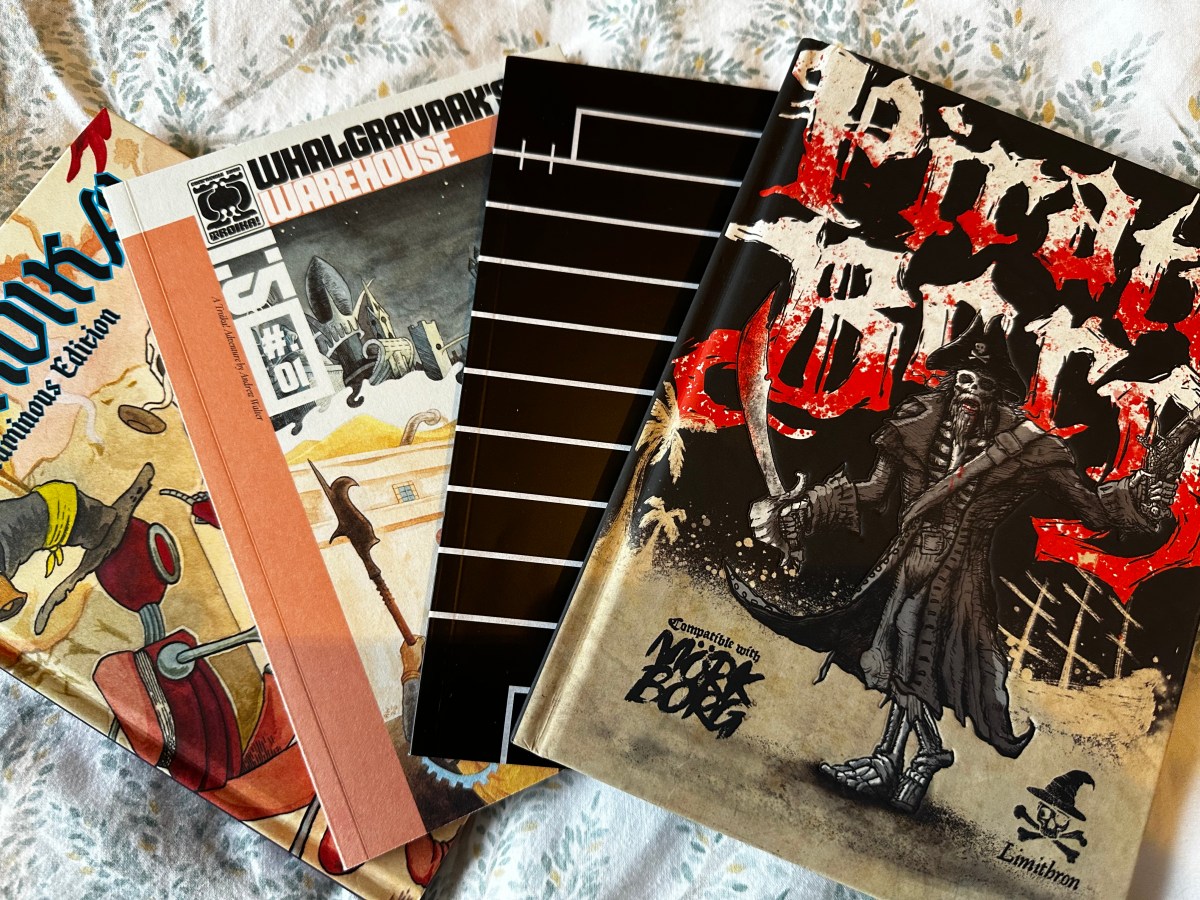
  1. Pirate Borg – the link above will take you to my post mortem on this one shot. It was a great time, in all honesty. My first foray into running any kind of Borg, and I was pleasantly surprised by how easy and instinctive every part of it was, even the ship-combat, which was new to everyone at the table. If you are interested in pirates, light cosmic horror, or just gnarly old school gaming in an alternate history version of our own 18th century, you’ll enjoy Pirate Borg in all likelihood. By the way, I also did a character creation post on this one.
  2. Troika! – Whalgravaak’s Warehouse – Ok, look, full disclosure, this is supposed to be a list of one-shots but this is technically more like a really spread out short campaign where we get together to play a one-shot of the same game every once in a while when we can all afford the time. Know what I mean? Anyway, in the first one-shot of these two consecutive one-shots, the PCs found two different ways into this warehouse, abandoned by its wizardly owner centuries previous. After crawling this “dungeon” for a bit, they made friends with a thin mutant, and their monkeys got to play with the worm-headed hounds that lived in a nest in the warehouse somewhere. They made short work of the Cacogen they’d been sent to murder and we wrapped up the session. In the second one-shot in this series of one-shots, three of the band decided to continue to explore, making more friends, this time with a large cadre of mercenaries who had been sent to deal with some cultists. They then set fire to some rope, captured some minuscule soldiers in gremlin-jars and climbed a mountain of onions. This is the kind of nonsense the PCs get up to in games of Troika to be honest. This is standard. If this sounds too gonzo or weird, you are in the wrong place. The Eternal City of Troika is not for you. You should probably try somewhere more normal. From my point of view, and, I think, that of the players, if you lean into the bonkers aspects of the setting and you are willing to go along with the more outré elements of the system (the random initiative mechanic stands out) you will probably have a very good time with this game. It’s great for one shots. Or two shots if that’s your thing. Might turn into three shots, actually.
  3. Honey Heist – this was another one of Isaac’s games. He ran it on a night when another game fell through. It was very last minute but we were still able to get a crew together. Jude, Tom and I rolled up some friggin’ bears with criminal backgrounds and went to do a heist at the biggest honey convention in the UK, in the NEC in Birmingham. We tried to do a TED talk, we disguised ourselves as massive bees and we crashed a van. You know, typical bear stuff. Another absolute belter of a one-shot, this one. It’s the definitive one-page RPG by Grant Howitt of Spire and Heart fame. Isaac and Tom had picked up the printed form of a bunch of these one-pagers at UKGE and Isaac had been looking for the opportunity to run one of them. This game was obviously made to create wild swings as you use either you Bear or Criminal stat and try to avoid going too far on the bear side or too far on the criminal side. This forces you to take risks and do stupid things to drive the heist forward or, more likely, sideways. Tom did a brilliant write-up of the session on their blog here.
  4. B.D.S.M. Below Dwelling Sewer Mutants – Yet another game run by Isaac at short notice. It is a mutie-eat-mutie game by Neonrot and you can get it here. The premise is pretty straight-forward. You are a mutant. You are probably unpleasant in some way. At the start, you have a mutation that may or may not be useful in certain situations. You can progress and grow by eating other mutants to gain new mutations along the way. If you like that idea, you’re in for a treat. I think it is probably a game that works best in one-shot play. We had fun with it and I think most tables will.
  5. Cthulhu Dark – Roadhouse Feast – I went into quite a lot of detail on this one in the post I linked above so I won’t go through it all again. Suffice it to say, I really enjoyed running the Cthulhu Dark game for the first time. The scenario itself was great but, to me, it is the simplicity and the ingenuity of the system that really shone. If you are into cosmic horror games and you haven’t tried Cthulhu Dark, you should give it a chance.
  6. Liminal_ – I promised a report on how this one-shot went some time ago and here it is. We had four players (known as the Disoriented) for this one-shot plus me as the the Architect. As I thought we would, rather than have the players play themselves in this Liminal Back-Room nightmare, I had them use the character generation tables in Death Match Island. This worked really well to come up with some distinctive, memorable characters quickly and with no fuss. They started off all in the same public building. Since one of them was a district attorney, we agreed it should be a court house. One of the others was there as a witness in a case and the other two were, in an unlikely turn of events, cousins who had been called for jury duty on the same jury. That is pretty much by-the-by, although it did come up in conversation later. Thy all stepped into a room together and found themselves in a building of nightmares. Now, you have to roll up the rooms as they open the doors. There are a couple of d100 tables in the book that are crammed with inventive and horrific room descriptions. The first door they opened led into some sort of creepy, dank cave system; the next into a mouldering bowling alley that was was canted at a 45 degree angle; the next opened onto the abandoned bridge of a ship, rocking in a dreadful storm and with a trail of blood leading off through one of the other doors. I made a mistake at the very start, where I allowed the players to open a couple of doors and then decide which one they would go through. The rules state that, if you open a door, you have to go through it. This felt a little restrictive to me, in a role-playing game, but we proceeded in this way and the players were good sports about it. As we progressed, rolling on the Room and Entity tables, it felt as though, at times, they really wanted to see what the hell was going to come next. Isaac said afterwards, that it felt a lot less subtle than he had thought it would and I have to agree with that. When you think of liminal space horror, it often is just empty corridors and abandoned hotels and the like. Sometimes a strange entity might make an appearance, but it’s the spaces themselves that are supposed to be innately creepy. Some of these rooms we rolled up on the tables felt that way, like the corridor with missing persons posters of the PCs on the walls but a lot of them were straight-up horror like the one with nurse-entity (I think?) chopping a guy up on a slab (it was ok, he was into it!) Also, I think this is something I would be careful with: when you roll a random entity, they sometimes don’t seem to fit, thematically, with the room that you just rolled up. I think it is ok to re-roll if that happens. I didn’t do that and once or twice, felt like they collided awkwardly. Now, these are nitpicks, really. In general, we had a good time with this, the players loved playing their pretty normal characters in these horrific scenarios, just running blindly from threat to dreadful threat. We used both the regular room table and the guest room table (the entries here were written by some industry luminaries like Johan Nohr and Tim Hutchings.) One of the best things about that experience for me was that I was just as surprised, horrified and disgusted as the players were! One of the challenges then, of course, was that it was my job to quickly read, interpret and present the room to the players without taking too long, stumbling over the words, reading them too much or generally fucking up. Unfortunately, we didn’t quite make it to the end of their mad dash through the back-rooms. The PCs still have a few squares of fatigue to be filled in. Hopefully we’ll be able to pick that up and finish it off someday.
  7. Mothership – Moonbase Blues I wish this wasn’t in the one-shot pile but heigh-ho. Sometimes your GM moves away and leaves your characters stuck on a moonbase that is probably trying to kill them. I mean, there was someone or something there trying to kill us. I was under no illusions that we were likely to all die out there, I just wanted to know how. Anyway, the one session we had of this game was great. Full props to Joel, our GM, for putting so much time and effort into he prep for it. He had a series of recordings that he played for us at key moments, he had handouts and provided us with cheat-sheets. It was a great experience. Also, I loved playing my character that I created in the post I linked above, Victoria Ibanez, the Corps’ finest. I’d love to get to play her again. Mothership is a great system with compelling mechanics and one of the best character creation experiences out there. If you need any more convincing, you should go and check out Quinns’ review of it.
Conclusion

So, that’s it. Those are all the one-shots that I got to play in the last few months. I didn’t get to play many of the games I wanted to, but I sure did have fun not playing them. Next year, I am continuing the theme of not playing the games I listed in that post by starting the year off with a one-shot of After the Mind, the World Again, a Disco Elysium-inspired, GMful mystery game and, Dragon Age, which, I have at least discussed at length on this very blog here and here. Honestly, I think it was useful to set out goals for the games I wanted to play. I may not have gotten to play any of them if I hadn’t done that. So I will continue to write about things I want to experience on the blog and see what happens.

I will be posting more intermittently as we come into the holiday period now. I will be travelling to visit friends and family a lot and won’t always have the chance to post as regularly as I would like. So, in case this is the last post before the end of the year, I wish you the very happiest Winter Solstice/Hogswatch/Western New Year.

BTW

Here are links for where to buy each of these games:
Pirate Borg
Troika!
Honey Heist
BDSM
Cthulhu Dark
Liminal_
Mothership

My First Dungeon

Actual Plays

My experience with actual plays comes from an unexpected angle. D&D is for Nerds by the Australian Sanspants Radio network was the first one I listened to. I had heard tell of Critical Role but, even then, it intimidated me with its sheer length and the fact that it was in a visual medium. Listening to podcasts while out walking or commuting is one thing, sitting down to watch a four-hour episode is something entirely different. Although, during lockdown and the long period where I was working from home and didn’t go out much I did start to get into Dimension 20 on Dropout.tv. Honestly, it was the clips on Tik Tok that got me started on that. I’m glad I did get a Dropout subscription, in fact; it’s still the best value streaming service I’ve got. Anyway, The D&D is for Nerds nerds put together something much more manageable in length, that I could listen to on my pod-catcher of choice. It helped that it was funny and that I quickly developed an appreciation of the characters and the world that they inhabited. I don’t listen to these so much anymore. In fact, I don’t listen to a lot of actual play podcasts these days. I am far more likely to stick on a show about TTRPGs instead. I have introduced two of my favourites in the past, in a blog post. But here’s another, Talk of the Table is a production of Many Sided Media, who also produce Bitcherton.

Talk of the Table is presented by Brian Flaherty and Elliot Davis. These guys are RPG professionals and creators in their own right (Elliot Davis has a game on backerkit right now! Go check out, The Time We Have) but they use this platform, normally, to interview other creatives in the industry, whether they are game makers, artists, actual play performers or something else related to the hobby. Some of those I have enjoyed recently were episodes where they interviewed, Mörk Borg design genius, Johan Nohr, TTRPG video essayist and creator, Aaron Voigt, and Blades in the Dark forger, John Harper. Flaherty and Davis have a pleasant, approachable style and a genuine and excited interest in the works of their guests. It makes for a great “podcast hug,” as Blindboy Boatclub would put it.

My First Dungeon: The Wildsea

The Cover of the Wildsea Corebook by Felix Isaac

Anyway, listening to this show made me aware that they had an actual play podcast called My First Dungeon on their network. So, I thought to myself, I could listen to these guys playing RPGs, probably. It turned out they had a few seasons available when I went looking. These include seasons of DIE (which I will definitely be going back to listen to,) Orbital Blues, the sad space cowboy game, and Paint the Town Red, their most recent offering. But the one that caught my eye was their relatively recent season of the Wildsea.

If you have been around for a while on the blog, you might remember that the Wildsea was one of the games I was hoping to play before the end of this year. This vain hope has been utterly dashed at this stage of the year, but I am still interested in running it at some point. I have been reading through the book, on and off for a few months. What I have discovered while doing this is that it’s got a lot to it! There are so many different parts that go up to make each character, and each one of these parts brings with it a whole plethora of aspects and there’s a lot of new terminology to learn and the world is so wild and different… So, it has felt daunting to even know where to start with it.

Now, there’s one thing I think a good actual play can do, and that is teach the game. If they do it well, they can even tell a compelling story at the same time. Or maybe the compelling story is what helps you to learn. I feel like Dimension 20 had that effect on me when it came to learning to play 5E better. I knew it pretty well before I started watching those shows but by the time I had consumed like two or three seasons, I had a much more intimate knowledge of minutiae like spells and abilities that I did not previously feel I needed to have a keen grasp of as the DM. So, I went into My First Dungeon thinking I might, at the very least, get that experience from it. And you know what? I did.

From Session Zero of the Wildsea campaign, I was taking the elements I had only read about, the things that had seemed quite abstract, and I was applying them to the frame of the characters and the basics of the world.

From Session One, I already felt like I had a pretty good grasp on the way the mechanics worked. Tracks, aspects, dice pools, advantages, cut, twist: I understood them at a more than intellectual level.

And here’s the other thing about this series that grabbed me from the get-go, I liked these characters! I was invested in their rolls and the ways in which they used their aspects to express themselves and to succeed. I appreciated the players’ willingness to play to their characters’ weaknesses as well as their strengths, and the way they used the mechanics to bring about their failure when they thought that was narratively appropriate or necessary.

Finally, I think that each of the players in this actual play brought this game to life together. All of them put a lot of effort into building not only their characters, but also the shared world, through dialogue and backstory and by narrating the outcomes of their actions or negotiating with the other players for the best Twists. They do all this while maintaining a seemingly instinctive focus on the overall themes of the game, past lives, secrets of the lost world and secrets of the characters themselves, resurfacing.

I’m sure editing and production have a lot to do with this, too. If every table had an editor we could make it feel like our narrative beats and adherence to theme were foremost in our minds at all times. But seriously, I have to give a lot of credit to producer, Shenuque Tissera and Brian Flaherty who did the editing and sound design, while also being one of the players! There’s additional music and SFX courtesy of Artlist.io too. The voice effects and leitmotifs for the various characters are incredible and really work to spotlight individuals when that’s needed. Interestingly, this is a core part of gameplay in the Wildsea that has gone unmentioned on the show, as far as I remember, at least. Focus, “a sort of narrative spotlight,” according to the book, is a basic element of the Wild Words Engine and it is there to make players remember to pass the torch on to other players. I am sure the main reason it’s not mentioned is that these pros don’t need the reminder and that the sound design, editing and production are to such a high standard that it renders the concept unnecessary. Speaking of sound, there is also a musical surprise in every episode that I won’t spoil…

Here’s the full cast:

Firefly (GM): Elliot Davis

Brian Flaherty

Abby Hepworth

Noordin Ali Kadir

Kendrick Smith

J Strautman

Go check them out!

The Heart of the Matter

Not entirely seat of your pants

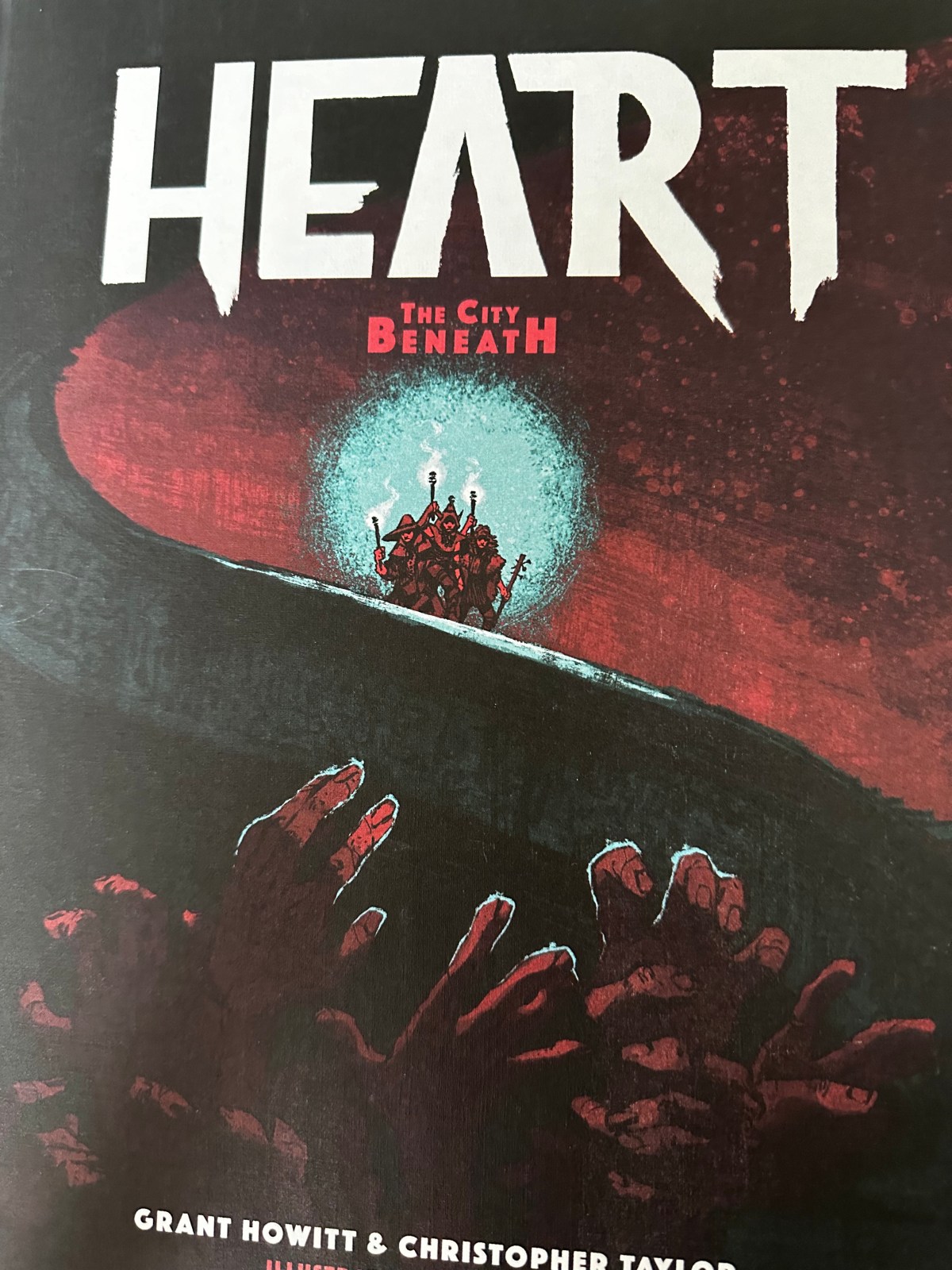
A portion of the inside cover of my copy of Heart: The City Beneath from Rowan Rook and Decard. Illustrations by Felix Miall

The philosophy for some Heart GMs seems to be, don’t you dare plan your Heart campaign or sessions. Like, just sit down with your players, make some weirdos to do some delves and then decide on a starting place. That might be in media res, as the PCs meet one another while hopelessly lost in Labyrinth or it might be at home in their shabby-chic apartment in Derelictus. From there you might just ask them what they want to do next and, when they tell you, just try to keep up with them! This is a valid way to play the game, I think, as long as you have either an exhaustive knowledge of the landmarks, adversaries, plot hooks and people of the Heart, or an effective and suitably weird set of random tables. If you approach it from this direction, the players are going to have the most input but the GM is going to have to improv a lot and do a great deal of work on the fly. It also presupposes a certain degree of setting knowledge on the players’ part, I think. This can be stressful and a lot to expect of everyone but I am pretty sure this is the preferred method of a lot of Heart GMs.

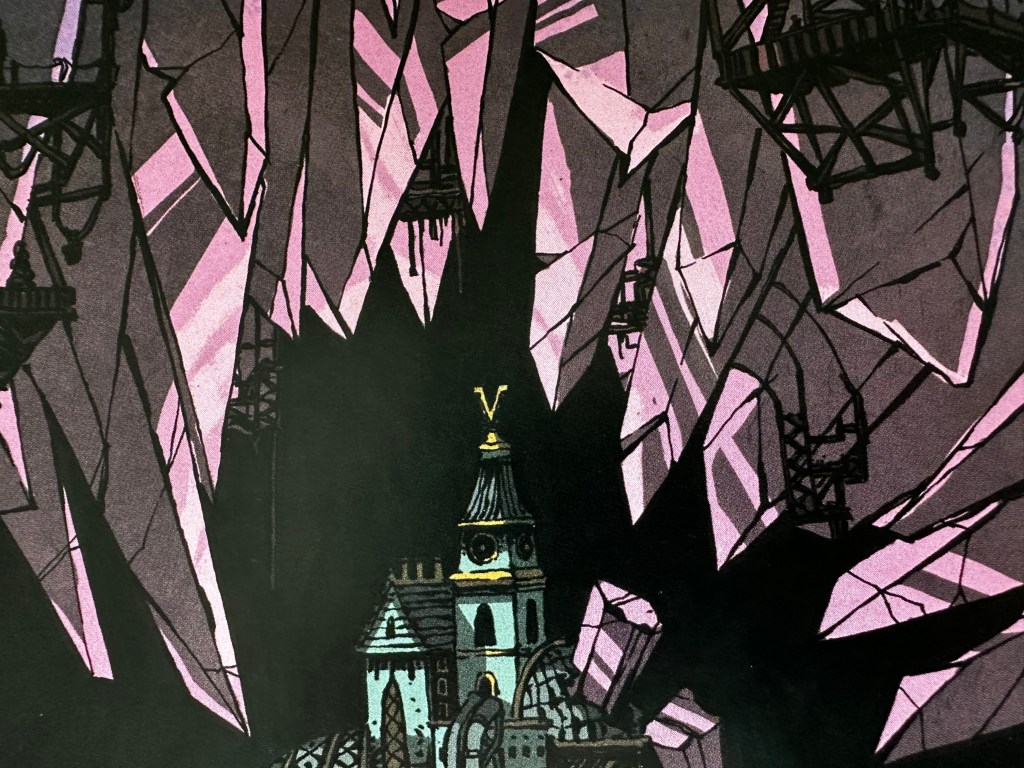
A portion of an illustration of Derelictus, the City Between by Felix Miall. Heart: The City Beneath, page 136.

Another option, of course, is to plan everything, start, middle and end. This is totally do-able. The book provides plenty of fodder to feed your hungry campaign. It describes dozens of landmarks and provides you with lots of plot hooks to get the PCs interested in pursuing the thing you want them to. So you can have them all meet in a Derelictus tavern where they overhear something about a plot by some Gryndel to pursue a valuable quarry into the Heart, plan the first delve to take them after the Gryndels only to find the quarry in Grip Station, near death but with a dire warning for the whole city that an army of Angels rises from below and a request for the delvers to spread the news to the Temple of the Moon Beneath, plan out the next delve to there, etc. etc. This sounds very much like a traditional adventure module for the likes of D&D. And that is all well and good. It allows a very strict control on the part of the GM and makes for a plot the PCs can uncover. But it will certainly lead to some railroading and could well make for potential dissatisfaction for the players and the PCs as they feel they have taken a back seat to the narrative planned out so perfectly by the GM. This method will ignore the great strength of Heart, it’s freeform potential, the loose structure inherent in the Beats system and the story being told by the delvers’ choices and their rolls and the Fallout that comes out of them.

A portion of an illustration of delvers planning a delve by Felix Miall. From Heart: The City Beneath, page 103.

So, how about somewhere in between? It seems sensible to meet in the middle. You make your weirdos, then you all discuss what sort of game you would like for them, GM and players together. Or you could take those two steps the other way around. Either way, you have an idea of the sort of story you all want to tell together and you all take responsibility for making that happen. This is with the understanding that what you think you want at the start might very well change after one or two or five sessions. That’s when you realise that, while you thought you wanted to help out that Haven you came across at the end of your first delve, it turned out what you actually wanted all along was to physically explode in such a way as to take out as much of the surrounding entities as possible so you could all travel to the afterlife together, an offering to your Goddess. And in pursuit of these elastic goals, the GM comes up with a loose web of places, people and objects that the PCs might have a chance to interact with. The GM will probably do this, at most, in between each session, with several ideas of where the story might go in the two or three sessions afterwards, but with no expectations.

A portion of an illustration by Felix Miall, of Grip Station, a Tier 1 Landmark. From Heart: The City Beneath, page 138.

Here’s what Messrs Howitt and Taylor have to say about it under the section entitled, “Stop Planning” on page 109 of the Heart core book:

Flexibility and adaptiveness are the keys to success. When you prepare, think in terms of characters, broad concepts, motivations, snatches of ideas that you want to play with. The world doesn’t exist until you speak about it at the table. Sure, you might have thought about it – you might even have written it down in a notebook – but until the players interact with it, it’s in total flux. The players just turn up every week and make it up as they go along. Why can’t you?

The quantum campaign made up of Shrödinger’s delves. And this about sums up the type and degree of prep I have been doing before each Heart session more recently. It’s more fun for me to do it this way too. I get to be surprised by what the players do and I get to discover the Heart along with them a lot of the time.

From Haven to Terminus

Yeah, that’s the name of our Heart campaign. It’s coming to an end this week. I guess the name gives away quite a lot of my thinking behind it. I was finding it hard to let go of the traditional module style of prep at the start. Yep, I decided to make a bold statement about, not only where the campaign would start, but also where it would end up. Now, this wasn’t as bad as it sounded. I had a very vague idea of a Campaign Frame for the game, that’s all. I used one of the plot hooks described in the Derelictus section of the Heart core book. Verrex, a retro-technologist with his tumble-down workshop situated on one of the platforms of Haven Station wanted the delvers to track down his robotic double, V01. The construct had expressed an interest in visiting all the Vermissian stations in the City Beneath, so he suggested the PCs use that as a guide to finding him. That was it. Everything in between was entirely up in the air, but it gave them a loose path and a potential final goal.

A portion of the illustration of a Gnoll Incursion Team by Felix Miall. From Heart: The City Beneath, page 188.

That was, of course, until I decided to employ the adventure presented in the Heart Quickstart guide, Drowned. Now, I am not going to spoil any of this adventure here but what I will say is that it lays out a very particular path ahead of the PCs, with the havens they will reach at the end of each of the numbered delves, the NPCs that will push them on from one place to the next and a big old final set piece. Now, since all I had before making this decision was a loose Campaign Frame, a little concreteness was actually welcome. It allowed me to see how to do things like come up with my own delves, use Haven NPCs to best advantage to help drive narrative and try to attach the PCs to someone or something only for them to find a way to betray or deceive them. But, after five or six sessions of following the adventure, I became aware of how the campaign had ended up on rails. I wasn’t providing them with options, I was forcing them down the path laid out by Drowned. I have found it hard to get out of this frame of mind since then, although I have tried to follow the advice from the book that I quoted above.

The delvers just reached Terminus, having taken a near-lethal shortcut through The Source, one of the Eight Heavens. The Junk Mage is banking everything on a meeting with a gnoll in Terminus who can teach them how to use the Nexus Device there to enact their will upon the entire city, The Vermissian Knight has pumped his mystical train armour full of soul power, the better to resurrect the entire inter-dimensional subway network, and the Deadwalker has just had his Zenith wish to combine his essence with that of the Heart itself thwarted by the Vermissian Knight who says he will not stand for his “human servants” abandoning him until his work is done (he’s an aelfir obvs.)

How will it end up? We’ll find out soon. But whatever happens, I am now pretty sure that these amazing players are going to surprise me yet again.

Eyes Open

“You see over yonder, Ollie?” Ollie’s father roughly jabbed him with his bony elbow. the man’s digit described the glowing tree-line at the foot of the hill. “That’s where they are. Should’ve burned it down years ago.”
His dad shook his head. “Never should’ve let them in in the first place!”
“Someone has to act, and it’s going to be us, boy!” Ollie stepped back as his father stepped forward, lighting a torch and holding it aloft in the night air. It illuminated the burning shield tattooed on his neck.
Like moths Ollie’s eyes were drawn to the flame. Its white-hot heart drew a memory on his retinas:

The Folk were caught off-guard by the attack of their allies, the people of the Kingdom. The Folk had cured their poxes and healed their wounds. They had promised they always would in return for peace. But the King’s subjects feared the Folk more than they valued peace. The Folk and their woods burned as the people howled and chopped and marshalled the inferno.

Ollie followed his father a few yards behind out of fear.
“They’re an infection, son! We have to burn them out of our community!”
Ollie stepped in a puddle near the foot of the hill. The water’s dark mirror reflected another memory:

A woman of the Folk, aglow with forest magic, laid hands on the ruined leg of a warrior. A woman of the Kingdom loomed behind her. As the knight’s limb was made whole the woman shoved the healer back into the city’s dirt where they had found her, spat and laughed.

Ollie stumbled in his father’s wake.
“Come along, boy! We took them into our civilisation when they had nowhere else to go. What did we get for our troubles? Knives in the back! Why wouldn’t they want our great Kingdom leading them, protecting them, showing them the right path? Eh?”
Ollie no longer heard. He rose and peered into the clouds above. Their wisps revealed a new memory:

A man of the Folk, all but invisible in black, dropped from ornate rafters onto the King’s throne. He roared in pent-up rage as he sucked the life from the monarch. The man’s body, pustulating and poxy, tumbled to the floor beside the King’s, just as dead.
The Kingdom drowned all the Folks’ children.

Ollie’s father approached the trees.
“The last of them live in this fairy-ring, Ollie. We’ll be heroes when we cure this infection!”
Ollie ran to the first great ash. His eyes peered into the swirl of an ancient knot:

A slender hand reached through a window to enact a terrible trade, one tiny boy of the kingdom for another identical one. The be-glamoured and bundled cuckoo screamed and a man came to attend. He held the child tenderly to his face, right by the flaming buckler emblazoned below his ear.

“No, Dad. We’ll cure you instead.” Ollie began to glow with forest light.

Flash Fiction – Finnabar’s Relative Reconciliation

500 Words

For a while there, I was a part of a small writing group. We used to come up with random prompts or a selection of nouns and verbs and make flash fiction story out of them. They generally had to be 500 words long andinclude those randomly selcted words. It was a fun and interesting challenge and the results were always fascinating because each of us would end up with such different and idiosyncratic pieces. This was good practice for a series of flash fiction contests I entered on the Escape Artists forums. Escape Artists produce such long-running and luminary genre fiction podcasts as Podcastle, Escape Pod and Pseudopod. You should check them out. Anyway, if you were a contest winner, the prize was usually to be published and read on one of the shows. I also just really enjoyed reading all the submissions in the contests and voting on them too. I never did that great in the contests, I think the best I got was a quarter-final place, but taking part taught me a lot. The main lesson was editing. In 500 words, there is nowhere to hide. You have to choose every word deliberately and you must be brutal towards your own work. I also discovered that originality of story and format proved popular among the voters on the forums.

So this work is an attempt at both. But it is also one that I never submitted to a contest. I don’t precisely remember why. But anyway, maybe you will be able to enjoy it here, dear reader.

Finnabar’s Relative Reconciliation: A spell used to bring accord between two riven kin.

Material Components

  1. The two subjects of the spell. They must be present in the same room as the performer of the spell. (Convincing both parties to do this may be the single thorniest aspect of this spell. I suggest deception. If that is not your forte recruit the aid of one more suited to the task. If all else fails, refer to a spell of my own composition, Finnabar’s Enchanting Eyebrows, also published in this compendium. I used this method to draw my siblings together against their wills. I reiterate that it should be used only as a last resort.)
  2. Three hairs, two feet long, plucked from the human heads of three were-creatures, a fox representing deception and adaptability, a rat to represent betrayal and creativity and a wolf as a symbol of both fear and path-finding. Please note that these must be given with consent. You will find a sample consent form overleaf. It is wise to expect to pay a price for these components. I was not so wise and now dread the inevitable waxing of the moon.
  3. An article of significance to the family as a focus. The painting of a respected ancestor, a piece of jewellery belonging to a beloved relation or an ancient heirloom. Personally, I chose a bust of our esteemed father. A poor choice. I was previously unaware of one sibling’s true feelings regarding our patriarch so it served to disrupt the spell rather than focus it.

Performance

  1. The first step of the performance rests in the hands of the subjects, rather than the performer. They begin by standing eighteen inches apart and greeting each other. Their resistance to this may be strong. In my case it was strong enough to break the suggestion caused by my eyebrows when the greetings were uttered. Once that had occurred, however, they both remained close enough that I was able to proceed with the next step.
  2. Tie the fox hair around the wrists of one subject and the rat hair around the wrists of the other. Join the two together with the wolf hair. I had great difficulty in completing this step while both siblings stood over me, shoving fingers in my face and yelling. I was forced to use another spell, Finnabar’s Restrictive Rope, from my first grimoire.
  3. Finally, perform a simple Shanahan’s shuffle and produce an eldritch flame from the focus object to engulf the binding hairs. There will be peace between your subjects. In my case, I assume the use of the wrong focus caused a rift between my siblings and I, for should they not have appreciated my help?

NB – I cannot over-emphasise that you should heed the warnings I have peppered in the text of this spell. If you do not, the consequences can be monstrous. Also, if a fellow mage wishes to practice the performance of the spell a couple of times while assisting me, please contact me with urgency.

The Apprentice, Chapter 16 and Epilogue

The end

I’m under no illusions about what this story is. It was my very first attempt at writing anything log form. The quality of the writing (or lack thereof,) the self-indulgence and the repetition of tropes and cliches are all too clear to me. In fact, it’s been so long since I wrote this (more than 12 or 13 years, I think) that it no longer feels like I was the one who wrote it. This makes it easier for me to be critical of it, but it also allows me to see the parts that shine. The plot and the character of Maryk still work for me, and there are elements of the world I built here that I used in later writings too.

I decided to share the story here as something of an exercise, but also as a form of motivation. I would like to be a better writer, and I think, laying this book out here for the world to see (or whatever tiny proportion of the world visit my humble blog at any rate) has forced me to look at my writing from a very different perspective. And I can see the flaws and the areas for improvement. And, hopefully, that will push me to write more and to write better.

Anyway, dear reader, I hope you enjoy this finalé to the Apprentice. Let me know what you thought of the story in the comments if you like.

Chapter 16: Dead is Dead

Delegation of duties for the dead was surprisingly easy. I had already discovered in my work with the ancient dead that talents and predispositions still existed within their decaying bodies. Therefore, some were excellent farmers, some builders of notable skill and others natural warriors. In the case of the skeletons I had to just figure out which were which by assigning them the tasks and ascertaining whether they did them well or poorly. In the case of the recent dead of Pitch Springs they were readily categorised for me. The graveyard was already split into guilds’ sections so all the masons were buried together, all the smiths were in one section, all the cooks in another. Of course, a corpse’s previous profession was not the only consideration. Stage of decomposition as well as completeness or otherwise of body were also important. I separated them as best I could, sending a hundred or more farmer’s corpses into the countryside to begin working on the land, a trio of dead smiths into town to begin working at the forge, a score of shambling masons to begin construction of a much needed wall for the town, two dozen ex-quarrymen to the quarry to begin extracting stone for the wall, a baker’s dozen of deceased coachmen to liberate some of the town’s carts and start transporting the stone from the quarry. There were a few other small groups and individuals: I put Grey Greta back to work but not before I’d had her picked of all her flesh (a rotting, stinky washerwoman would never do.) Ditto the three cooks I found and sent to start cooking up a feast in the Town Square. A single sculptor’s corpse I put to work sculpting a statue of my father in the middle of Saint Frackas’ Square. My father’s empty corpse did end up at my side after all, grasping his bastard sword in two hands and standing to attention as much as one can when one’s head is lolling over one’s right shoulder like the knot on a tied up sack.

Duties assigned, I returned to my fortress to make plans for the next stage of my plan. I walked with my last skeleton guard and my father flanking me all the way back. By the time I reached my home the sun had come up and I could see many of my new servants out in the fields, hard at work. I knew there would be a backlash against them but I decided I would not allow it. Hurrying back to the fortress I gathered the remaining ancient skeletons and ordered them to wound anyone who tried to interfere with the work of the newer dead and then I sent them out to guard the workers wherever they were. This left the fortress all but undefended. I was not worried about an attack from town. There was a force of peace-keepers, certainly, but they were not particularly well regarded. The constabulary of Pitch Springs was never trained to a very high standard and were generally considered to be layabouts. I could not imagine them planning and executing a siege or infiltration, in fact, I doubt they could imagine it themselves. They had seemed to work effectively enough during the incident when I returned the mayor to town, to be fair to them, but even then it was my father who had landed the fatal blow. The only man I might have feared now stood at my side. I felt perfectly safe ensconced, once more, in my study.

I watched the happenings in the town and the surrounding country by the use of several Farsee mirrors all hung side by side on the wall of my study. There was unrest. The Pitch Springers mostly stayed indoors and avoided the few of the dead that I had sent to work there. I wondered if any of them would partake of the feast being prepared in the centre of town. When I saw a pair of constables attack the cooks I was appalled. Couldn’t they see that all they were trying to do was prepare a meal? Why would you assault cooks, whether living or dead? The skeleton guard made short work of the constables, though it was, perhaps, a little too efficient, removing a whole hand from one and shattering the kneecap of the other. On the Markinson’s farm, Old Father Markinson launched a single-handed assault on the rotting corpse of his former neighbour, Farmer Yantzi which had been cleaning his farmyard while the dogs cowered under the chicken coop. An attempted defense by the skeleton guard went awry and it ended up with a shattered skull at the end of the spade in Markinson’s hands. it crumbled into bones and dust and then the head came off Farmer Yantzi’s corpse too. I watched as the old man burned the body and the head. A number of other such incidents ended up with the dismemberment, decapitation or cremation of the dead servants I had sent out to help. The skeletons that were left after my father’s ambush were not warriors and it showed.

Most folk on the farms simply left the dead servants to it, however, and I began to hope that they were coming around to my way of thinking. Then I noticed that they were not just leaving the dead to their work, they were leaving the farms to the dead. A congregation had begun in the Temple of Mictus where it had all started. All the people of the town had gathered there and as the farmers arrived in Pitch Springs they made straight for it too. Undoubtedly, they were plotting against me. They thought me some sort of villain and they did not see the truth behind my actions. With them all gathered in one place, I was tempted to launch an assault of my own. After all, it seemed the only people I could trust and rely on were the dead ones. I looked at my father’s corpse standing nearby and wondered what the man would have done in my position. I laughed then, “You would never have been in this situation, would you?” Wholesale slaughter, though? No. There was no situation in which he would have condoned it. None. I would have to achieve my goals the hard way, as if any of this had been easy.

Before proceeding, however, I had to find out what they were doing in the temple. I could not penetrate its walls, however. I imagined it was the power of Mictus which kept me out. I consulted the Book of Royal Magic to find out what alternatives to Farsee were available to me. Every few moments, I looked up at the mirrors to see if anything had changed. It took about an hour, but eventually, there was movement. Six constables emerged from the temple’s front doors and saddled up the horses that they had left outside before riding off towards the bridge out of town. A pair of burly townsmen, bearing torches despite the bright daylight pulled the doors shut again after they had gone. Undoubtedly, the constables were coming to me. Maybe they had a plan to infiltrate the fortress and kill me. They would find that exceedingly difficult. I considered calling in some of the remaining ancient dead but quickly decided against it and sent the corpse of my father out to defend the gate and the walls. I was sure he would be more than capable, and so it proved. In fact, if the attack I was expecting had come from where I expected it to, I would be safe and well today.

I returned to my search for the spell I needed, secure in the knowledge that I was well defended. Some time later I heard the clatter of hooves on the paving stones of the little road up to the fortress gates and I knew the constables had arrived. Out of my window I could see nothing but the corpse of Korl Scharpetzi atop the battlements, looking down at his enemy as they shouted vowels at him from below.

Turning my back on the window, I returned to the book and the mirrors. “I have often wished, Maryk, that this was not you,” said a very familiar voice. I raised my hands and turned, “Master Gedholdt!” He was slowly walking towards me now, skinny as ever but much greyer than I remembered him and had he always had that limp? I do not think I had spared this man more than a passing thought since I ran away, taking his most prized possession with me. I certainly never expected him to turn up here, with an expression of sadness and determination on his face. “It is you, though, Maryk. What happened that transformed you into this?” He gestured to me and then the surrounding study and, by implication, the fortress. “I met someone and she opened my eyes to my responsibilities. Someone of my great abilities has an obligation to help others. That is all I have been trying to do: to improve my people’s lives.” Looking down at his boots he shook his head, “Improve your people’s lives by raising their dearly departed relatives to build armies of the dead?! You’re talking madness. You learned nothing when you were apprenticed to me! I taught you to use magic sparingly and for the best of reasons.” He was angry now, he felt betrayed. “Master I-” “Don’t call me that! I was never your master. I was just your mark, wasn’t I? You drew me in until you saw the opportunity to take what you wanted and go. You’re a trickster, a thief and a murderer.” He shouted the last word and threw out his hands in a magical movement. A wall hit me, I felt my nose burst and my chest crack and my legs lift off the floor; another wall hit me from behind, this time the real, solid wall of the study. I knocked the back of my head off it and my vision took a break again. Falling to the floor, I hurt all over but particularly in my chest where I was quite certain one of my lungs had deflated. I sucked breaths in at a rapid pace without much success in obtaining air from them. I looked up at my attacker. Never had I seen the man look like this, he looked dangerous. I inhaled deeply, once and shouted as best as my one remaining lung would allow, “Poppa!”

My father’s corpse would be coming but it would take time. How was I going to survive this? I had to think quickly and act quickly. The fastest spell I could remember was the first one I had ever performed, the first one that Master Gedholdt had taught me to perform. I said the word quietly and made the movements painfully. A sphere of light encapsulated the head of my old master, causing him to stumble back and fall over an ornate cherry-wood chair. I made for the door while he was blinded. I heard him roar the words of a cancellation spell as he struggled back to his feet behind me. I hobbled down the corridor and then down the stairs to my father and his protection. Where was he anyway? It should not have taken him so long to respond to the summons. I had expected to meet him on the stair but he was not there, nor was he in the entrance hall of the keep. Master Gedholdt had regained his feet and his vision, at least partially. I heard him cry out as he came to the stairs and fall down several of them before catching the bannister and regaining his balance. “Maryk! Maryk, this is pointless. You cannot escape this fate. You are accursed. This is the final fulfilment of those curses. Stop running and accept it.” I ran on. “Maryk! You don’t understand! I’m not alone here!” What did he mean by that? The constables posed no danger, that was for sure. Who else, then? Who-

I exited the great main doors of the keep and looked into the courtyard. The third of my masters stood there before the gates on the opposite side: the Fae-Mother. She stood at her full height, the hair on her head fluttering around the brickwork on the underside of the gate’s arch. A glow of dark, living green emanated from her uncovered face and hands, but her eyes, looking through me as usual were black holes in the glow and seemed to belong to the shadows behind her. My father’s headless body lay on the flagstones before her, broken and twisted bastard sword beneath it. I sobbed, it felt more like losing a father this time for some reason. Also, her presence filled me with an unconquerable fear. I fell to my knees at the top of the steps. Gedholdt stumbled awkwardly out the main door behind me. “I tried to warn you Maryk. I did not come here on my own,” he said as he came to stand beside me, “She sought me out.”
“I will speak for myself, Gedholdt.” The sound of her voice made all the stones which constituted my fortress vibrate at an incredible frequency, it made my eyes feel like they were being crushed. Even Gedholdt was having difficulty staying upright under the assault of the ancient Fae’s words. “You mentioned Gedholdt to me, do you remember?” I nodded. Pain in my chest and nose made it impossible to speak. “I knew he would understand what you were doing much better than I. I realised and released your potential and perhaps even pushed you in the direction you eventually took. I watched you and listened to your voices, inner and outer, for a time before you met me. I knew you already then, much better than you did yourself, and I saw a waste of a mind and a life. You humans and your butterfly lives, you must live them fully every second to make them worth while. The Fae can sit and contemplate or sleep for hundreds of years if we like but you…your people are different. I saw what you could become with the right desires in place and a sense of responsibility. I gave you those things when I touched you. When you started to raise the dead, your logic, I thought, was faultless. It was the perfect solution for all your people. When I saw the reaction of the townspeople to your creations, I was surprised. Why? Why could they not accept the servants you sent them? I had no inkling. That is why I sought out your Master Gedholdt. He explained it to me.” The Fae-Mother nodded to Gedholdt who started down the steps even as I cowered there at the top of them. “Folk should stay dead. Human folk that is,” he bowed to the Fae-Mother who tipped her head at him demurely. “We cannot come back whole from the other side. We cannot stop the progress of time on our bodies. No-one wants to see their dead wife or child or grandfather walking about town, faces rotting, stinking to high heaven. Dead is dead, Maryk. It is an unwritten rule and you broke it. But it’s even worse than that. So much worse.” Gedholdt had taken up a position at the right hand of the Fae-Mother and looked up the two feet to her eyes.
“Your servants. Their souls yet inhabit their bodies. Or rather, they were pulled back from the Aether to fill the empty spaces in their rotting corpses by your spell. This spell of yours required the revived bodies to have a force within them. But, cleverly, you changed the spell too, did you not? You altered it so that they would have to obey you or someone like you. So, even though these souls occupied their old bodies they could do nothing to control them.” She stopped talking, mercifully and looked down at the body of my father, sprawled on the ground before her.

I reeled and and covered my eyes as I lay on my back trying to breathe, trying to talk, trying to refute this, trying not to imagine the existence suffered by a mind trapped in a body it could not control. “No,” was all I could manage. “On the contrary. Where do you think the energy came from to do what you did? You? You are more foolish than I realised or I would not have given you my gift. Progress is all I ever strove for, as you know, for my people and yours. It is too late for my people now. Yet I thought you could do what I could not. But I cannot condone this. You have corrupted the very notion of progress by trying to achieve it in this way.” I heard her coming closer, both of them approaching.

“I didn’t know,” I wheezed.
“Ignorance is no excuse.” She was heartless. “The souls you stole to power the corpses which were at the very heart of your plans did not know what you had in store for them and yet you trapped them and used their energy without their consent.” The Fae-Mother stood over me now, her power rolling off her in terrible waves. I uncovered my eyes and looked up at her and Gedholdt beside her.

“There is only one punishment fit for the crime you have committed, Maryk,” Gedholdt’s voice cracked as he knelt by my shoulder, “ I think you know what it is.” A tear in his eye made my breathing catch. He turned away then and the Fae-Mother reached down to touch me again with her glowing fingertip, as she had done that day in my little cabin in Creakwood. That day she gave my life purpose, this day, she took it away.

Epilogue

So I died. I died and yet my life went on. Life, perhaps is not the correct word for this state. I exist as a presence inside my own rotting corpse. I can see after a fashion through the eyes of this body, well, eye, there is only the one left. If it were not for that, I think this existence might just be bearable.
The Fae-Mother briefly became my mistress again, well the mistress of my animated corpse. On the first day of my death, after she killed me on the steps of my fortress, she ordered me into my study. My body climbed the stairs back to the room where I had spent so much of my time doing such wondrous work and discovering such amazing things in my studies. I felt like a passenger on a carriage-ride on the way there. When I got there the Fae-Mother ordered my body to stop in front of one of the larger mirrors I used to use to Farsee. I stood there and then she left and Gedholdt went with her. I have not seen them or anyone else for a very long time.

I often used to wonder how long it had been since they left me there alone. I drove myself to distraction trying to keep track of the passing of the days. My mind went away for a while and when you are just mind, that is a serious thing. When finally I came back I knew not how long it had been so I gave up measuring days and weeks and months and years. I measured the passage of time, instead, by the rotting of limbs, the nibbling of rats, the decomposition of the body I was trapped in. There is no escaping it. But to try, I started to entertain myself with stories.

As I explained, my favourite one is the tale of the Man who Killed Sheep with a Stare and I told myself that one often, embellishing the tale in a variety of ways, adding more excitement or a new twist now and again. I had taken, more recently, to reciting to myself the tale of my own life. Once again I often changed it to please myself but it always began the same way. Perhaps I’ll start it again now and this time maybe I’ll let Cobbles live.

I don’t remember it, of course, but I killed my mother as a newborn. I did not learn this from my father. I was not aware of it at all until my sister told me. She has never forgiven me for it.