Making Room for Roleplaying

Pay off

Twelve days into 2025 and I find two of my Gaming Resolutions are already paying off. Numbers 1 and 2 on my list went like this:

  1. Make those stars sparkle and make those wishes come true: I was first exposed to Stars and Wishes this year when I took part in my first Open Hearth games. For the uninitiated, at the end of a session, a GM might ask their players for their Stars, i.e. stand out moments, moves, characters, players etc. and Wishes, in other words, what they would like to have seen happen in the session, what they wanted more of or less of or what they would like to see in future sessions. For a GM, this is an incredibly useful tool. It allows you to see what your players like and what they dislike. But, I find, too often, I don’t always re-integrate the stuff that came up in players’ Stars and Wishes. And I know, for certain, that when I do manage to apply what I learned from feedback, it has made my games better. So, how am I going to do this? I have an idea, that I literally just came up with, to create a spreadsheet to record each player’s Stars and each player’s Wishes from every session of every game. I’ll add in some columns to record potential ways to add more of the good stuff and ways to fix the problems that were revealed. Another column will summarise players’ reactions to the solutions. If it needs more tweaking, another column will detail that. I think this could be an invaluable tool to improve my games and will be there as a record so I don’t forget.
  2. Brighter stars, wiser wishes: Sticking with the Stars and Wishes theme, I’d like to get more useful feedback from it. One of Tables and Tales’ fantastic founding members, Shannen, used a few methods to get more valuable feedback from her players in a game earlier this year. She requested feedback through DMs on our Discord. Why? Well, most people are pretty nice, actually. They tend to not want to offend anyone or say something in front of a group that might embarrass somebody. So, if you take the process away from the table, they might be more likely to tell you what they really think in private. We were just discussing this last night and, along with that, we all agreed that Stars and Wishes in the Discord chat for the game is way more valuable than having people just tell you them at the end of a session, when players are often pushed for time, or before they have had a chance to think about it and provide something really useful. So, my second resolution is to get written and private Stars and Wishes from now on.

Well, we had our fortnightly D&D game on Thursday night for the first time since our December break and everyone had great stars and wishes. They shared them on Zoom with everyone (it’s an online game.) But later some of them also shared theirs in our Discord chat as well. Tommy brought up a couple of really important points. One related to one of their favourite experiences of Wildspace in the game recently and how they would like to see more of that. This is the sort of thing that is easily actionable for me. With solid examples of the type of play people want to see more of, I can work to emulate that in the future. That was the easy one, and I am most grateful for it. More difficult might be their other wish: how do you get more meaningly relationships between PCs, as a GM?

Hands off

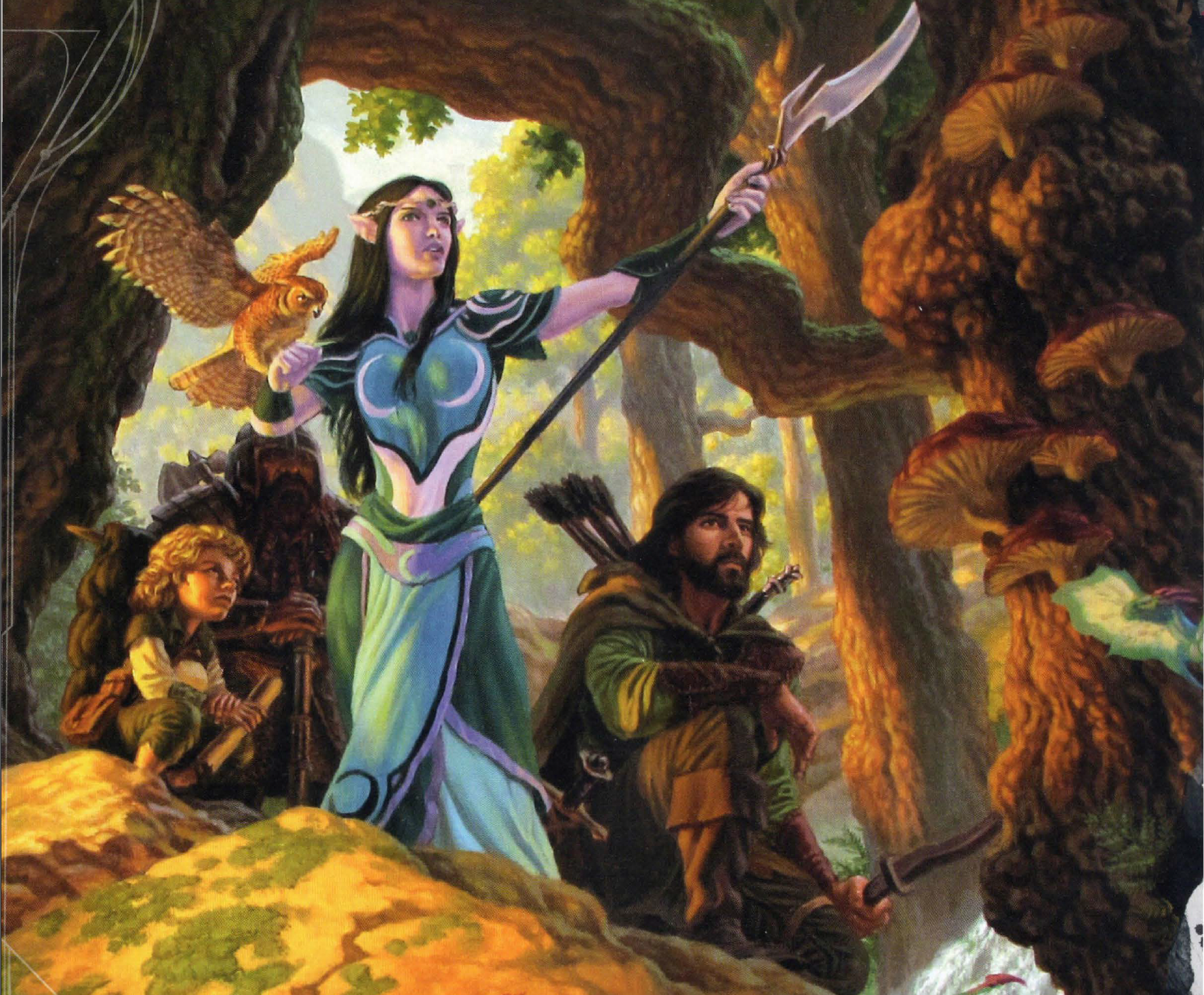
A halfling rogue, a femme elf druid and a masc human ranger in a forest presented at a slightly dutch angle.
An illustration of three adventurers from the D&D 5E 2014 Dungeon Master’s Guide. They’re probably just about to have a long talk about their feelings. Little Bombo, there, is sick of Lilithidella’s owl always trying to fly off with him as a snack and Roger has been pissing off Lilithidella ’cause he keeps using all her shampoo.

Just butt out? Right? I could just stay out of it. I don’t need to always be sticking my oar in, do I? I think that’s fair. GMs have a lot of jobs to do already, so if the PCs start getting into a conversation that might very well help to build or break their relationship, the GM should just take their big nose and get it out of those PCs’ business. But, of course, listen, eavesdrop and take note. You never know what you might be able to use later.

Sounds simple, right? But to be able to do this, it means leaving room for it to happen. Even if you don’t necessarily encourage this sort of relationship-building exercise, you still need to make time where it could potentially happen. This is one of those unintended consequences of having a game based on a ship. You have built-in downtime while they travel. In fact, the first time they set off on their squid ship, I asked them if they wanted to take some time to get to know one another. Now, this was a band of adventurers who had been thrown together by the vagaries of chance and the unseen hand of powerful NPCs. None of them knew each other at all mere hours before lift off. And some of them had dark secrets. So, the suggestion was met with muted trivialities and outright lies, largely.

Instead, they got to know each other through their actions and words during their adventures, often in the most hilarious ways! Personal relationships were formed between certain of them in a pretty natural way. But there is a clear desire to make similar connections between other PCs. So, I am wondering how to leave space for that. There is an extended wild-space journey coming up, starting in the next session. This might be the best opportunity I have had to hand them that chance. My current plan is to simply ask how they are spending their time aboard ship during the voyage and hope they grab the reins themselves.

Hands on

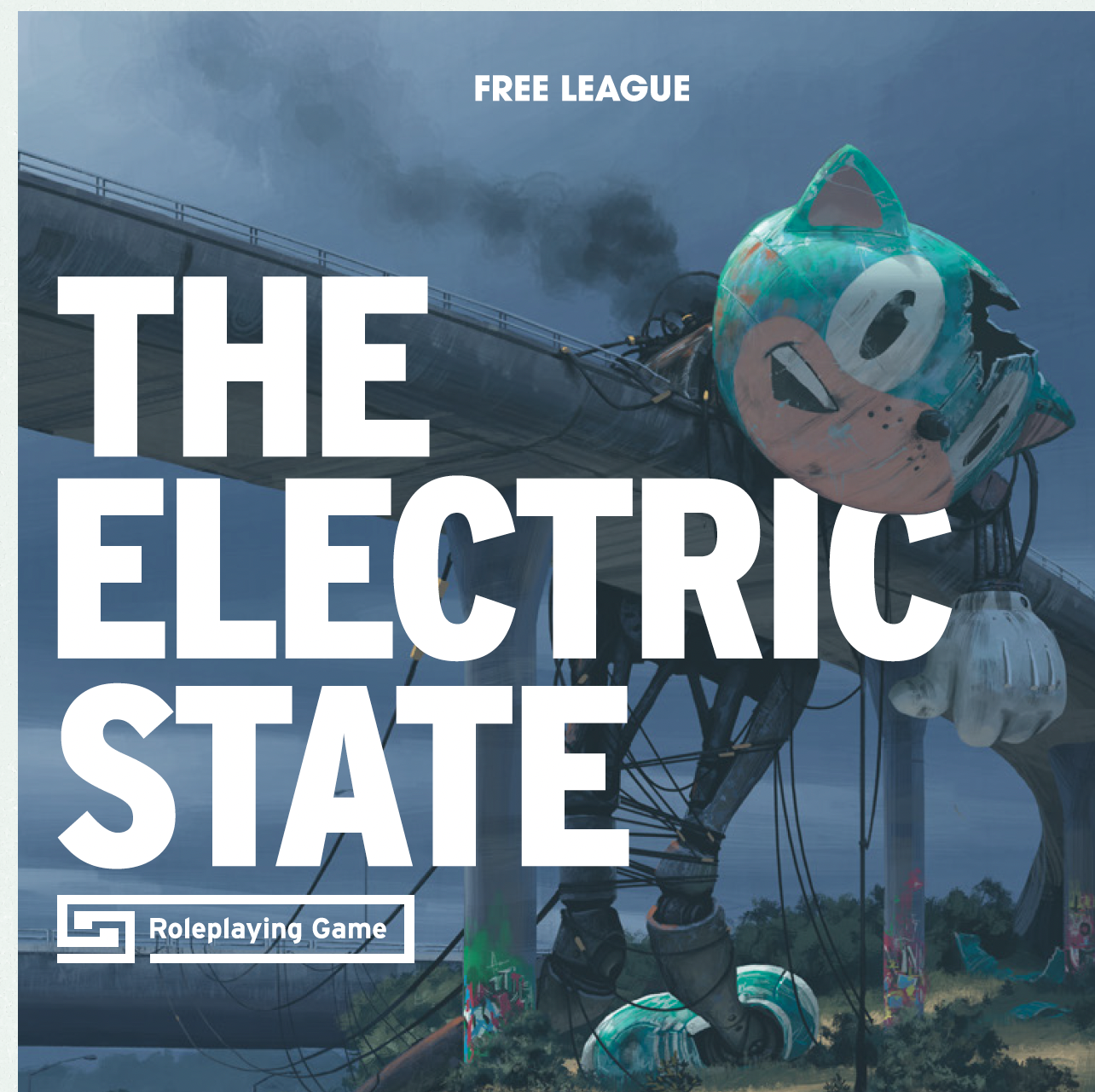
Large white block letters spell out the name of the book, THE ELECTRIC STATE. They are overlaid on top of an illustration of a huge cartoon-cat-headed robotic drone, damaged and smoking hanging over an overpass beneath a slate grey sky.
a portion of the front cover of the Electric State RPG from Free League. The massive cartoon-cat-headed drone is so pooped after dealing with all the Tension in his party that he decided to take a break by hanging over this here overpass. Illustration by Simon Stålenhag.

But I can’t help thinking about the mechanic in a game I recently read, The Electric State. The Electric State is a road-trip game, so it has the journeying aspect in common with our little jaunt across fantasy space, if not much else. I think the designers looked at this genre and wondered how to bring recurring NPCs into it. I might be totally off the mark with this supposition but there is something about an adversarial or beloved NPC that comes up repeatedly in a campaign that players just love and the “on the move” nature of a road-trip game means that you might have to really shoe-horn in those characters to an extent that might feel very un-natural. So, instead of relying on your NPCs to cause stress and interpersonal drama, the game makes it so that the PCs have to be creating the Tension themselves. Tension is the name of the mechanic and it is required to allow your PCs to recover lost Hope (one of an Electric State character’s two tracks, along with Health that measures how they’re getting on.) Your PC has a Tension rating with each other PC, and vice versa. These ratings are likely to be unbalanced, i.e. Viv might have Tension 0 with Juan, but Juan has Tension 2 with Viv. This extract is from the core Electric State book:

To each of the other Travelers, you have a Tension score ranging from 0 to 2.
0 No tension, no question marks or unspoken thoughts or feelings.
1 Suppressed or contained irritation, love, interest, or other feelings and thoughts.
2 Uncontained strong emotions, such as rage, love, or even fear.

When you lose Hope points through play and you want them back, you have to contrive a scene with another PC with whom you have Tension. This might be an argument or a heart-to-heart talk or an emotional breakdown, but whatever form it takes, you both reduce Tension with the other PC by 1 point (if possible) and you regain a point of lost Hope. Of course, this means that, if your character does not have any Tension with any other PC, they have no way of regaining Hope points. So it is in your best interest to ensure you have some interpersonal drama at all times.

Dave Thaumavore, in his review of the Electric State, tended to think that this Hope-Tension feedback loop did little more than encourage manufactured drama between PCs. Of course, that’s the idea. The game is made to do that. It is certainly no coincidence that the mechanics work that way. But I can see his point. Will it feel too contrived? Will it be a pain for players to try and come up with new ways that one of the other characters has pissed off their own character all the time? Not sure. Haven’t played the game yet, but I’d willing to bet it would get bothersome if the campaign went on too long. Now, I will say that the Electric State is designed for short campaign play, so maybe it would be fine.

My question now is, if I wanted to try and tack on yet another non-D&D sub-system to this game, how would I do it with something like Tension? I could just take the Tension mechanic wholesale and give everyone a Tension score with everyone else. And then ask them to work out there shit in their downtime hours, so building more interesting and deeper relationships. But what motivation could I give them to do this? There ain’t no Hope points in D&D. But, maybe if two PCs deliberately get together to have a scene in which they reduced their tension, they could each take a boon, like a point of inspiration or temporary hit points or some other special effect only available to them when they work together next time.

Maybe the real question is, should I adopt this sort of mechanic just to encourage intra-party roleplaying? Or should I just keep out of the way?

Any thoughts or suggestions will be greatly received, dear reader!

The Bloggies 2024

The Dicepool

At the start, 87 posts ago, all the way back in July of this year, I wrote this:

I think I’ll write how I feel about some of the things I consume as a way to digest them (not the food and drink, I’ll do that in the traditional way.) But, mostly, I’ll be writing about my main creative outlet, playing, running and making things for tabletop role playing games. Let’s not be coy about this; the internet is not lacking for nerds going on about their games, or someone else’s games or games they watched other people play or games they hate or games they actually quite like, surprisingly enough. So, even knowing this, why would I have the gall to add to it? Good question, good question indeed. Maybe I will figure that out as I do it. The adventure is the journey and all that.

And, that’s pretty much what I’ve been doing. I am still doing it. I have learned a lot by doing it. This blog has genuinely been an enjoyable and useful outlet for me. It has allowed me to work through some game-related ideas that might otherwise have floated freely around my brain, temptingly close but always oh-so frustratingly out of reach. It has also given me the opportunity to express my feelings on more personal matters. Mainly, though, it has provided me the chance to write regularly about one of my favourite subjects, RPGs.

I have made a few changes over the last six months. I went from posting daily to every two days to every three days and then to twice a week. I feel like I have found the ideal schedule now and hope to continue with it. Thedicepool.com joined the woodpanelled.org web ring. I hope to see Woodpanelled grow even more in the new year. I started posting some of my own fiction pieces as well as the RPG-related posts. I’m hoping this will encourage me to write some new fiction soon! Finally, I have been sharing my posts more on social media, both Instagram and Bluesky. where I have made some connections with other people in the TTRPG sphere. I have had some great feedback from some of these interactions and that has encouraged me to put the blog out there a bit more.

The Bloggies Awards and a request

So here we are, it’s the end of the year and a good time to consider some of the things we liked from 2024. In this incredibly niche corner of the internet I find myself tucked away in, there is a way to show your appreciation for those things you liked, or that you found useful or inspirational or that just tickled your fancy. You can nominate a blogpost for the Bloggies Awards, which originated in 2022 on the Prismatic Wasteland blog.

The 2023 winner was Sacha (or sachagoat.) He won for the first part of an excellent series of posts about Re-inventing the Wilderness. You can check it out here along with an introduction to the Bloggies themselves. Basically, people nominate their favourite TTRPG blogposts within four categories:

  1. Theory – I don’t really get into this area too much on the blog, although I may in time
  2. Gameable – I also don’t have a lot of this sort of thing here. I have considered sharing some of my home-brew stuff, but I would need to do some more work on most of it first
  3. Advice – I have a fair few posts of this kind. I’m thinking of those on world-building, beginnings, endings, combining systems and mechanics, session prep, building community, etc.
  4. Review – I would hesitate to call myself a proper reviewer of RPGs but there are several posts that fit into this category. I am thinking particularly of the posts on Liminal_, Cthulhu Dark, and the series on Between the Skies and Dragon Age. But a lot of my other posts dealing with games I have played would probably fit into this category too.

Sacha has introduced a couple of new categories for this year too:

  1. Debut Series – This is me! Despite having 87 posts under my belt, this is still my debut year.
  2. Blog Series – I have several of these, including my series of character creation posts, the Between the Skies and Dragon Age series as well as those on combining D&D and Blades in the Dark mechanics

I won’t go into any more detail here. Sacha explains it all on his blog. Suffice it to say, if there are any of my posts from the past six months that have resonated with you I would appreciate a nomination. You can use this Google form to do it before December 31st. It only takes a couple of minutes and is pretty straight-forward.

Thanks

I appreciate all your support during the last six months, dear reader. At the start, I pretended like I would do this whether or not anyone read it, but the fact is, I do take great encouragement and motivation from the fact that others have read and gotten something from this blog. I would like to extend my gratitude to all of you who have taken a few minutes out of your day to read even a few of my words since July.

Happy holidays!

Games I Got to Play This Year Part 1

A game at the table is worth two on the shelf

So, in the last post we discovered that I had played only three of the ten games I had wanted to in the last five months of the year. But, as everyone knows, it’s not about the number of games you play, it’s about the quality of them and the fun you have while playing (even if the fun is terror or sorrow.)

In this post, I’m going to get into the games I actually took part in in the last few months instead (apart from those I wrote about in the last post.) There were actually quite a few, mainly one-shots and mainly GMed by Isaac of Lost Path Publishing. By the by, Isaac is blogging again on his own site, linked above. Go and read the words he writes.

Ongoing Campaigns

  1. D&D 5E – Spelljammer. I’ve written quite a bit about this campaign. I like to mess around with the rules and try new things to keep it fresh. Here’s a post about hexcrawling the Rock of Bral. Here’s one about using an engagement roll type mechanic to improve the dungeon experience. We have recently finished a major campaign arc and it looks like the crew is about ready to take off into Wildspace again. They’ve had an extended shore leave on the Rock. After a short hiatus through the holiday season, the next session we play will be number 30 and they have been on the Rock since session number 11…that was over a year ago in real time. One of my players recently dropped the timely hint that they did not want to end up stuck on the Rock of Bral for the rest of the campaign and that prompted me to get them spelljamming again. Listen to your players, GMs!
  2. D&D 5E – An Unexpected Wedding Invitation – Finished. My first foray into D&D as a player in many years was a murder mystery set at a wedding populated with beautiful and complicated NPCs. We had some issues with the use of 5E as a system for this one but we had a ball role-playing our characters. The link above will take you to my post-mortem of the game.
  3. Heart: The City Beneath – Home game, GM. Finished. Man, I miss this game already. The PCs all activated their Zenith Abilities in the last session and it was a thing of beauty. After 12 sessions of delving, the android they were searching for turned up in Terminus, and they discovered that he was a sort of proxy for the Heart. He was trying to make their Heart’s desire come true. But he was bound to do the same for another denizen of the City Beneath, The Drowned Queen, whom our heroes had trapped in the Grey in session 8. The Android freed her and released her into Terminus, which she quickly began to drown in salt water. The PCs realised she could drown, not only this one Landmark but both the City Beneath and the City Above as well, linked as it was to every line in the Vermissian network. And so the delvers combined their newly acquired Zenith abilities to defeat her, imprison her and ensure themselves a place in heaven afterwards. So satisfying.
  4. Black Sword Hack – Three of Blades. This is one of Isaac’s games. It is another long running campaign. I went into some detail about it in the post I linked above. Recently, it has been hard to find time to get together for more sessions of this. Can’t wait to get back into it. In the last few months, our group has discovered that if we recover three legendary weapons from the most unlikely of places (one of them is on the friggin’ moon, but that’s OK, because we nicked a spaceship/big sphere off a bunch of cultists a while ago) we can use them to defeat the Queen of the Dead. As players, however, we have realised that, if we want to advance, we have to complete more “stories,” or adventures, so pursuing these weapons has taken a back seat recently. Instead we had a moral crisis about killing a big ol’ wyvern, we dithered over how to rescue a town of people from the mercenaries we were, ostensibly, working for and we argued over how to deal with a native woman who was summoning harpies to murder the invaders who had killed her lover (apologies to Isaac if I am misremebering that one.) Isaac says we’re the ones inventing the ethical conundrums when all he does is lay out the situations, but I’m pretty sure he plans them that way.
  5. Blade Runner – Electric Dreams – Finished. The link will take you to the first post I wrote about this short campaign. I was enjoying it immensely at that time. Once we got to the end, I feel like it really shone, though. That last session had a proper climax. Both of the players found the ending satisfying and sort of unexpected and I found it fascinating to see how they dealt with everything the case file threw at them. It’s hard to go into specifics without spoilers here, so I won’t. Suffice it to say, the investigation took some twists in the best way. I wrote a bit more in this post, where I compared the experience of playing this game with the Unexpected Wedding Invitation. TLDR, I think Free League have done a great job creating an investigative game that is a lot more that just a cop simulator and that works significantly better than the 5E system for this sort of thing.

New Campaigns

  1. The One Ring – The Star of the Mist. I wrote briefly about this one in the post I linked above. It’s a shame that we have not played much more of it since that first session. Basically, unless it is not entirely clear from the long list of games in this post, we have been busy in Tables and Tales! Sometimes it is hard to schedule sessions around all the other sessions. Anyway, session 2 brought us very, very close to a TPK. We learned a few things about this game. Thing the first: it’s not like D&D 5E, your characters are tough, but they are not super heroes. Thing the second: some times you should run away when you keep getting knocked prone and you can’t seem to hit anything and you are surrounded by marsh zombies. Thing the third: use your head. We beat the zombies with brains instead of axes in the end, partly because Isaac, who also runs this game, was very generous to us. I think the next session, we’ll be a lot more circumspect about approaching encounters and I can’t wait to see how we get on.
  2. Mörk Borg – The Great Borgin’ Campaign. Isaac sure is running a lot of campaigns, isn’t he? The ones I have listed on this page aren’t even all of them, just the ones I’m in. This has been great fun. We have a regular every-second Wednesday game of Mörk Borg going now. It is a sort of a drop-in, drop-out game but the playership has actually remained fairly consistent. My character is a Sacrilegious Songbird, a class from the Heretic sourcebook. Coincidentally, that’s also where our first adventure was from. Merkari the Magnificent and his weird companions managed to survive Graven-Tosk, the sprawling graveyard setting of “Graves Left Wanting.” I loved this module. It was dark and filthy and involved some brilliantly shitty situations. I mean, we started the game by waking up in a charnel pit. Anyway, once we got out of there, we moved on and played through “Death Ziggurat.” This was a (mostly) hex-crawl that I found equal parts foul and hilarious. This was partly due to Isaac’s amazing character work and partly due to the non-stop comedy from the other players at the table who included friend of the blog and local Media Goblin, Tom, in one of their most brilliant roles yet. The wildly unhinged scatological, pyromaniac shit from Shannen and Jude has been an absolute delight too.

And I haven’t even gotten to the many one-shots I was part of in the last five months. If you have been hanging around the dice pool for a while, you have probably read about some of them, at least. But they deserve a proper review in this series as we approach the end of the year so tune in to the next post, dear reader.

Woodpaneled

Vintage RPG

Do you listen to the Vintage RPG podcast, dear reader? Do you follow VintageRPG on Instagram? If you are reading this blog, the chances are good that you do both of those things. But, in case you have somehow never come across it, the podcast is presented by Stu Horvath and John “Hambone” McGuire. On it the lads chat about lots of RPG related subjects. As the name implies, they do talk about older games, like Fighting Fantasy and Beyond the Supernatural, which, as a gamer of a certain vintage, I very much appreciate. But many of the most interesting episodes involve newer games like Swyvers. They often have fascinating interviews with game makers. Their conversation with Swyvers creators, Luke Gearing and David Hoskins, convinced me to back the project and I’m so glad I did!

And on Instagram, Stu posts at least five days a week with details of old modules, game systems, books, accessories etc. It’s the exact kind of nostalgia I can enjoy. I am of the general opinion that most types of nostalgia are just gateway drugs to the sort of opinions that lead many people to vote for tangerine demagogues. But, Stu is under no illusions. He takes a critical look at each of the products he features and calls it out when they are problematic, poor quality or just nasty.

The point is, Vintage RPG is a wonderful source for news on the RPG scene, historical gaming facts and deep delves and has acted as an outlet for game creators and enthusiasts to push themselves, their work and their passions.

Webring

So anyway, on their recent show, ostensibly about Eat the Reich, Stu and Hambone introduced their listeners to the Woodpaneled webring. For those of you who haven’t heard of this phenomenon, this is how Wikipedia defines a webring:

A webring (or web ring) is a collection of websites linked together in a circular structure, and usually organized around a specific theme, often educational or social

Woodpaneled

The Woodpaneled Webring was founded by Stu to help those participating in it to have an internet experience that is not entirely governed by the algorithms of social media companies or the advertisement driven peccadilloes of search engines. He put the call out on the show for artists, writers and designers with websites related in some way to a broad theme. Most of the sites that are part of the ring now are to do with RPGs or at least RPG-adjacent but some are more broadly about culture and art. Here is a link to the a short piece Stu wrote to explain why he started this thing. He explains it far better than I could, especially as I am pretty sure I have a very different relationship with wood panelling than he does!

Now, I don’t have much of a presence on social media. I have an Instagram account that I am fairly active on and I just started a Bluesky account @thedicepool.bsky.social which I have yet to even post on. I gave up on Facebook many years ago for the same reasons that I view nostalgia with suspicion, and I abandoned Twitter when the fash started to take over. Basically, the idea of a smaller, slower, less shouty and more contemplative internet appealed greatly to me. I thought this sounded like a perfect home for The Dice Pool, to be honest. So I contacted Stu to ask him about joining and he was so enthusiastic and sound about it! And so helpful. I am not terribly experienced when it comes to the technical side of running this website so I needed his assistance to jury-rig a solution to allow me to embed the Woodpaneled widget that you can see at the top of my main page (I am working on getting that to appear on every page. Like I said, I’m more of a tortoise than a hare when it comes to the backend stuff, but I’ll get there in the end.)

So, dear reader, I want to encourage you to go hit those “Next” and “Previous” buttons on the widget and have a dive into other sites on the webring. There are some fascinating and creative people involved!

Ravenloft

Something’s gotta give

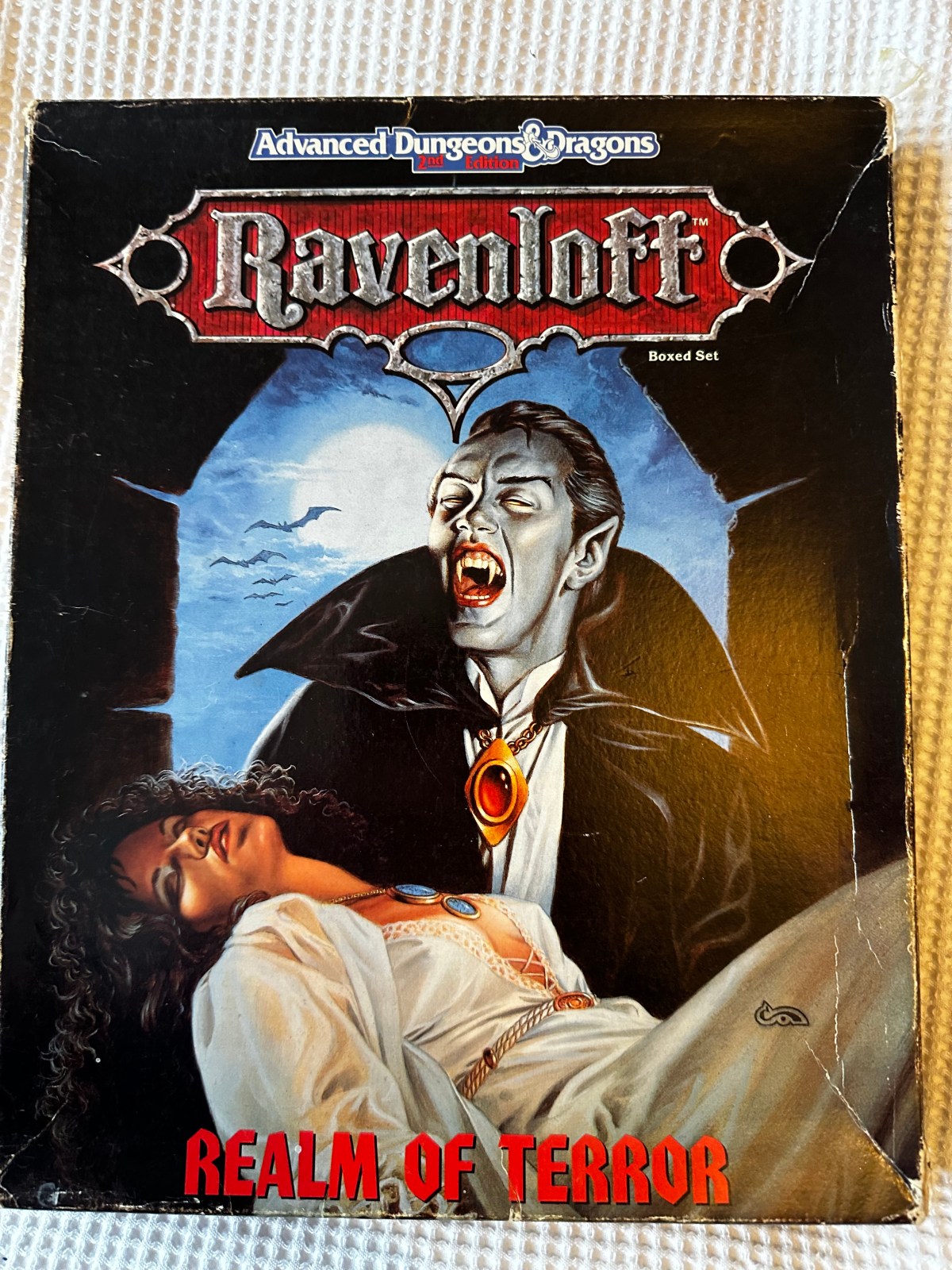
I thought I would play Ravenloft around Halloween this year. My friend returned all my Ravenloft books and boxed sets to me back in the spring after about 25 years, and since then I have been thinking it would be cool to run something in the Domain of Dread as a Halloween one-shot. But, in the meantime, I have played a lot of different games, mostly one-shots, mostly a lot easier to play in that format than any version of D&D. So I did consider starting a campaign or a multi-session adventure, but, to be honest, I didn’t have it in me to do all the reading and conversion that was necessary. I may be playing more RPGs than I ever have before in my life but that has an unlooked for side-effect: I have less time to prepare for games! This is a dilemma that has been exacerbated by my blog schedule and I have been thinking that I might have to make a change there too. I am switching to posting once every three days for the foreseeable future.

The Demiplane of Dread

So, I am not talking about the original Ravenloft adventure from AD&D 1st Edition or the Curse of Strahd released for 5E, but the setting released by TSR for AD&D 2nd Edition in 1990. It is by Bruce Nesmith and Andria Hayday. I think I have mentioned in another post that my friends and I played most of our AD&D in the Dark Sun setting but I would imagine Ravenloft comes a close second. I just loved having them create regular old characters in my home-brewed standard fantasy world and then dumping them, unceremoniously and with no warning through the mists into the forests of Barovia or the mountains of Forlorn and hitting them with monsters that drained levels and abilities and where there was no escape from he darkness and the terror. Although, I confess, the games were probably not very terrifying. I did my best, but I have always found horror a difficult genre to emulate around the table, especially with a system like D&D. The authors did their best to assist the Ravenloft DM with sections in the main book about the “Techniques of Terror,” where they discuss “Assaults on the Mind,” “Assaults on the Body,” “A Villain in Control,” and that sort of thing. But, the fact was, we were a gang of teenaged boys who mostly just wanted to hit things until they died so those were usually the kinds of adventures we got.

Looking at it from a more mature standpoint now, I would love to try to run it with a real sense of gothic horror. I think I am better equipped now to attempt it. Although I still think it would be a challenge and I might refrain from running it in a D&D-like system. Why? Well, the products for Ravenloft, while not all gold, are still some of the highest quality items I think TSR produced. Just look at all these handouts! Each one of them has something useful on the back of a beautifully illustrated card.

5E products are usually produced to a high standard, but they don’t have the variety and versatility that the 2nd Edition boxed sets did. They also don’t have the quality or usefulness of content. These boxes and sourcebooks are stuffed with useable materials; details on lands, villains, monsters, new spells, effects, encounter tables, maps, maps, maps. 5E setting guides of late, excepting maybe Planescape are very short on this sort of detail.

Adventures in Ravenloft

I usually wrote my own adventures back in the day. Or at least I would pick and choose liberally from the pre-written modules and combine them with my own scribblings to make them fit into an overarching campaign. Or that’s what I told myself I was doing. I have a funny feeling that, mostly, I was just trying o murder the PCs. This is another aspect of my style that has, thankfully, changed, since the good old days.

I do have a few Ravenloft adventures that might be fun to convert or even to just run in the original 2nd Edition ruleset.

Feast of Goblyns is a very flexible module that is designed to be run for characters of levels 4 to 7. It is presented in a format that allows many different paths to be taken through it, with the PCs potentially ignoring some major and minor plots depending on how they decide to play it. This one was designed to be the adventure that draws PCs into the Demiplane, which is always fun. I think I remember playing parts of this module but my memory is not good enough to recall which parts. At 96 pages, though, it would require a bit of commitment to play through the whole thing.

From the Shadows is written for rather high level characters, levels 9 to 12. It is based around the plots of Azalin the lich, lord of the domain of Darkon and his eternal conflict with Strahd Von Zarovich, famed ruler of Barovia and OG Ravenloft BBEG. A great deal of it takes place in Castle Avernus, the lich’s home, and that is pretty cool. I definitely played this but I don’t think the characters survived the whole way through.

Finally, I have the Book of Crypts, which is similar to the Book of Lairs but has 8 full adventures in it! This seems the most suitable for a shorter game or campaign and I might just take a look at running something from here before the spooky season is fully through.

Dear reader, have you ever played this version of Ravenloft? Do you yearn for the mists? Or would you rather play a game actually made for horror?

Hex-jammer

Messin’ with 5E

I’m sure those of you who have been around for a while are aware of how much I enjoy mucking around with my D&D campaign. It is a Spelljammer campaign of the 5E variety and it has been running for quite some time. About 25 sessions, I think. That makes it one of the longest running campaigns I have ever had. That’s probably what makes me want to keep messing with it. A while ago, I introduced the very FitD idea of Engagement rolls before big jobs/dungeons and that has worked pretty well. I also brought in the adversity token, which have come in handy for our heroes in a few clutch moments, let me tell you!

1E Throwback

This post is not so much introducing yet another rules hack or even anything home-brew. It’s more about utilising a style of play that went out of fashion in D&D a long time ago. Hexcrawling! A couple of the oldest D&D publications I own are from AD&D 1st Edition. One of those is UK5 Eye of the Serpent, written by Graeme Morris and released in 1984. This was designed for one DM and one PC! Specifically, it was made to be the first adventure for a druid, ranger or monk character. This is besides the point. I just thought it was unusual. Also, it reminds me of a Troika! adventure I just read, The Hand of God, mainly because it starts much the same way, with the characters being abducted by a powerful winged creature and dumped in their nest at the top of something very, very high up.

Anyway, the point is the hex map of the outdoor region, Hardway Mountain (the name of which, I think we can all agree, is a little on the nose.) Now, the use of this map was incredibly restricted in the text. If your PC was playing a druid, not only did they have to have a prescribed set of three NPCs with them, they should also be forced to take a particular selection of the marked “routings.” These would be distinct from the routings a ranger or monk character would be forced down. You can see this laid out in the unfeasibly complicated two-page spread below.

Now, I think this is really interesting in comparison to what you might deem a hexcrawl style game today. I think most OSR games that use a hex map are thinking along the lines of open-world or sandbox play where you go to a certain hex on the map to explore, with the understanding that the whole thing will be open to your PCs. There might be geographical or other obstacles they have to overcome but that’s up to them, they can either try them out or forget about them.

When it comes to encounters, places of interest, etc. a lot of the time these will be generated randomly and the GM is discovering along with the players in many cases. Even if the GM is the one who came up with the encounter table they’re rolling on, they are not to know what the roll will turn up in the moment or what the PCs will do with them! I realise I am probably teaching my grandmother to suck eggs here, but I want to point out that, although the hexcrawl is a pretty old school style, it wasn’t always necessarily as free a style as it is generally taken to be today.

One last thing. That Eye of the Serpent module has some fantastic art by Tim Sell. Just check these out.

Hexing the Rock

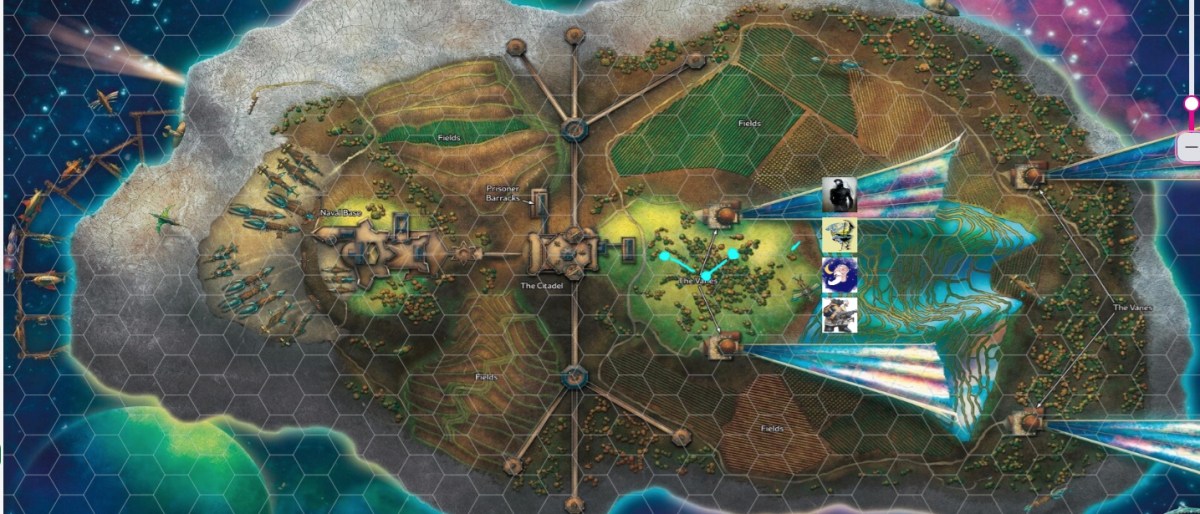
The Spelljammer campaign may have gotten a bit bogged down on the Rock of Bral. Why? Is it because it is the only location described at all in the Spelljammer 5E set? Maybe. Is it because all the plot threads of the campaign led there? Partly. Is it because it takes a life age of the earth to get through a round of 5E combat? That’s a distinct possibility. Anyway, the crew have spent a lot of time exploring, murdering, stealing, negotiating, shopping, drinking and dating on the topside of the Rock already. But one of them has had a literal ooze-heart pulling them to the underside since they got there and they finally made it down. Now, to get them there, I invented a little something I like to call the Shaft of Bral. Stop sniggering! It is a shaft of pure void half a mile wide through which you can reach not just the top and under sides of the Rock but everything in between too. So they took a little row-boat called a spell-rudder down to the bottom and now they are crawling through the hexes underneath. I threw a few random encounters at them on the way down as well. I invented a few encounters for the Shaft of Bral and put them in a d6 table. I got the players to roll for those and they had fun getting hit by another spell-rudder in a hit-and-run and avoiding the sickly air of a boat full of corpses on their way down.

So far, using the encounter table in Boo’s Astral Menagerie (the Spelljammer Monster Manual,) I have been unimpressed. The first time I used it they got an encounter with a ship of aggressive Vampirates. Then there was a fight that lasted three full sessions. It wasn’t all bad, it just derailed things in a less than ideal way. So, I thought I would just make my own encounter tables from now on.

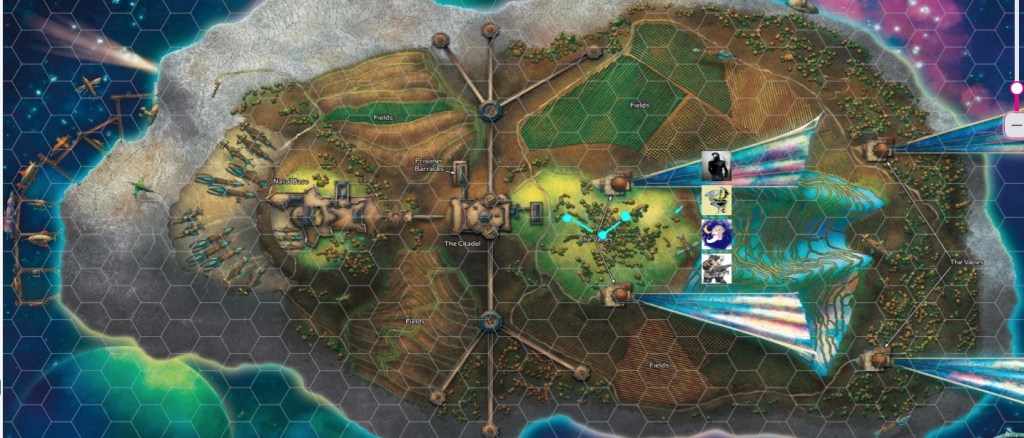
Once they were finally on the Underside of the Rock, I had to think about how I was going to handle it. It is a very large area, made up largely of farmland and forest and they were there to find one wee gnome. I could have just given them directions, but I wanted it to feel like they were exploring and finding their own way, so I took the map of the Underside of Bral and popped it into Roll 20. We are playing this game online so this worked out well. Then I set the map layer to have a hex grid, instead of the standard square one. Now, as they travel, each time they pass from one hex to another, we roll for an encounter. Some of these encounters are designed to beneficial, some are quite the opposite and others are what they make of them. They have been using their own skills, abilities and traits to push on towards their goals while getting the impression of uncovering things about this place as they move through it. I’m not sure how the creators of this version of the Rock imagined people using this map. Maybe this is exactly what they thought we would do! But, I doubt it. It doesn’t feel as though any thought went into that, in fact. As it is with so many recent D&D 5E products, you are given the bare minimum and expected to figure the rest out for yourself. Even a little advice to go along with the map would have been useful. I mean, even Eye of the Serpent did that in 1984.

Anyway, the last session we had was one of these hex crawl sessions and I can’t remember a funnier time. Genuinely laughed the whole way through. Now, I am incredibly loathe to take any credit for that. It was entirely the hilarious antics of the fantastic players I am blessed with. A couple of highlights:

  • Our Giff Charisma-Fighter/Paladin climbing a tree to hide from a patrol with his trousers ‘round his ankles because he thought his hairy grey arse-cheeks would help disguise him as a bunch of coconuts (didn’t work, it was an oak tree.)
  • Encountering a bunch of Hadozee who were on the run from the nearby prison but didn’t know how to escape the Underside. The party told them all about the secret hatch in that stump over there which led to the Shaft of Bral. What’s that? Do we have a boat there? Yep! On, ok, bye then! Good luck in the shaft!
  • Herbert Gũsfacher, ornithologist, the latest identity adopted by the party’s resident illusionist, Balthazar.
  • Gary, Son of Gary. Oh, are you based in the Garrison, Mr Gary-son? No, the Citadel, actually.

Anyway, these random encounters did help along the good times and, I hope, gave the players a sense of active exploration. They haven’t found what they were looking for yet (it’s Eccta, the plasmoid Mum) So I can’t go into any detail about what is in store but I will be using a lot more of my own home made hexcrawls and random encounter tables, that’s for sure.

Feeling Fulfilled

Surprise!

There is a special sort of feeling when one of the things you were backing turns up at your door. Like, you might have been keeping track of it and the creator has maybe been telling you, if you’re lucky, where they are in the fulfilment process but when the physical object is in your hands? It’s like someone sent you a present. It’s like opening up a gift from a stranger. It makes you feel something for that person, gratitude, wonder, amazement. You know what I’m talking about.

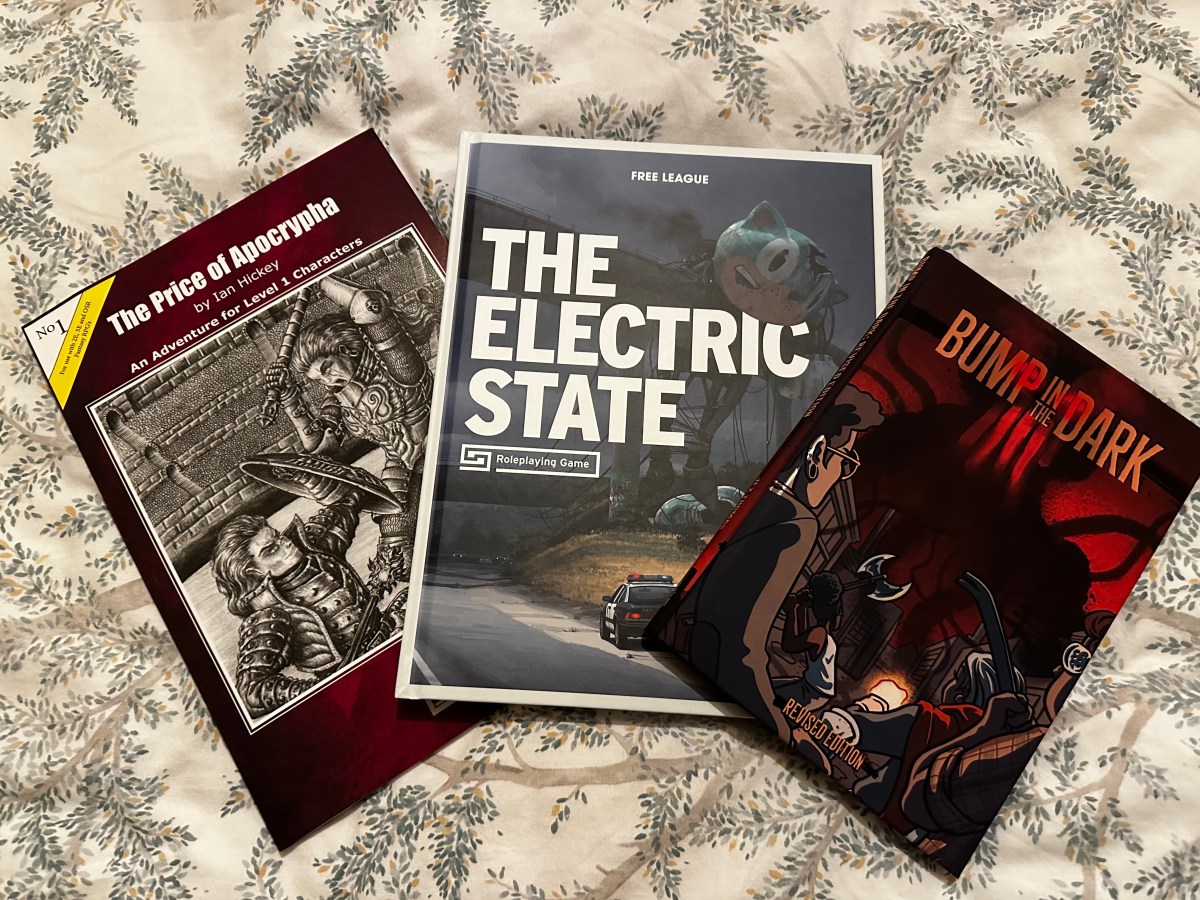
Anyway, I got some stuff that I backed! Just look at the photo up at the top there! Go on!

The Electric State

I backed this one in December last year because I love Simon Stålenhag’s artwork and imagination, as you will know if you have been around the blog for a while. The Electric State is the latest in a line of RPGs from Free League that explore the world that never was. It started off in the eighties with Tales from the Loop, where you play kids scoobying about the wilds of suburban Sweden (or Nevada,) getting into trouble and investigating the weird shit that local scientists had unleashed on the world. Things from the Flood took us into the nineties that never were. You played teenagers in that, in a world much less full of wonder and much more full of uncertainty and dread. The Electric State takes us into the late nineties in the state of Pacifica where the countryside is riddled with he remains of busted battle-bots and everyone’s addicted to some sort of cyber-helmet device. It’s a road-movie game! I have not yet played either Things from the Flood or Electric State (I mean it just arrived on Monday) but I can’t wait to. I loved the slightly eerie vibes of Tales from the Loop seen through the eyes of kids who had literal plot armour. I am looking forward to experiencing something similar through the eyes of older, more jaded or just more experienced characters. I am sure the horrific elements of Stålenhag’s work are likely to come though much more starkly. I’ll let you know how I get on with it, dear reader!

Here are a few photos from the core book and of the extras that came with it, including some very tasty custom dice.

Oh, I also got the artbook with this Kickstater. It’s not new, it came out in 2017, but just look at it!

The Price of Apocrypha

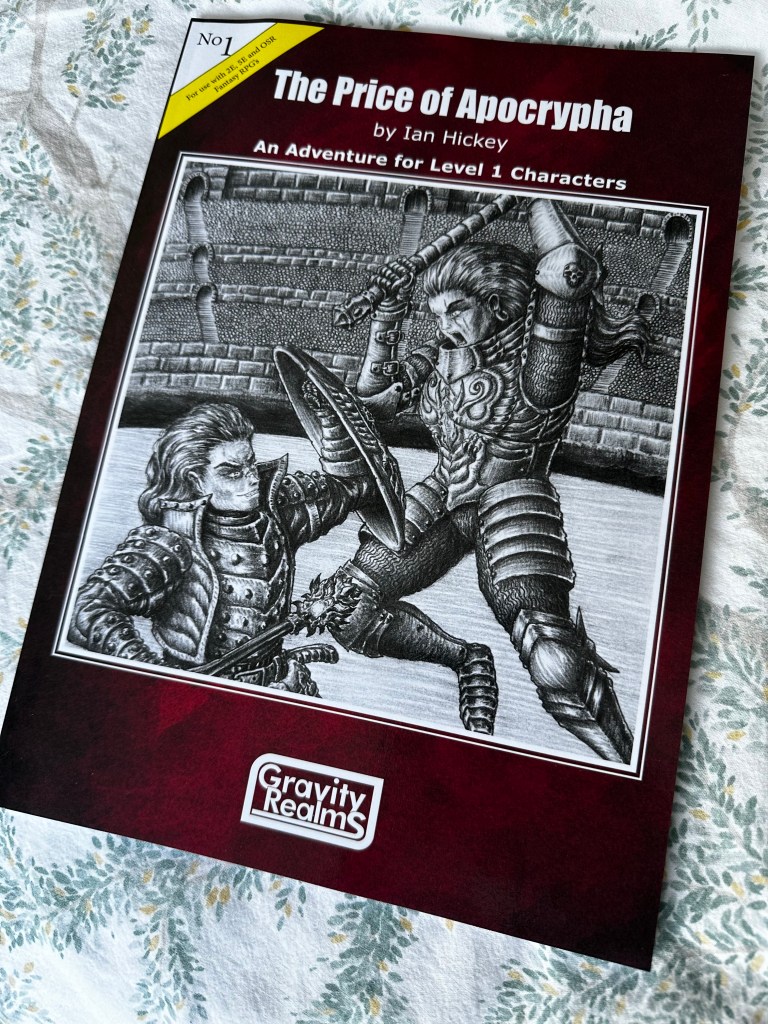
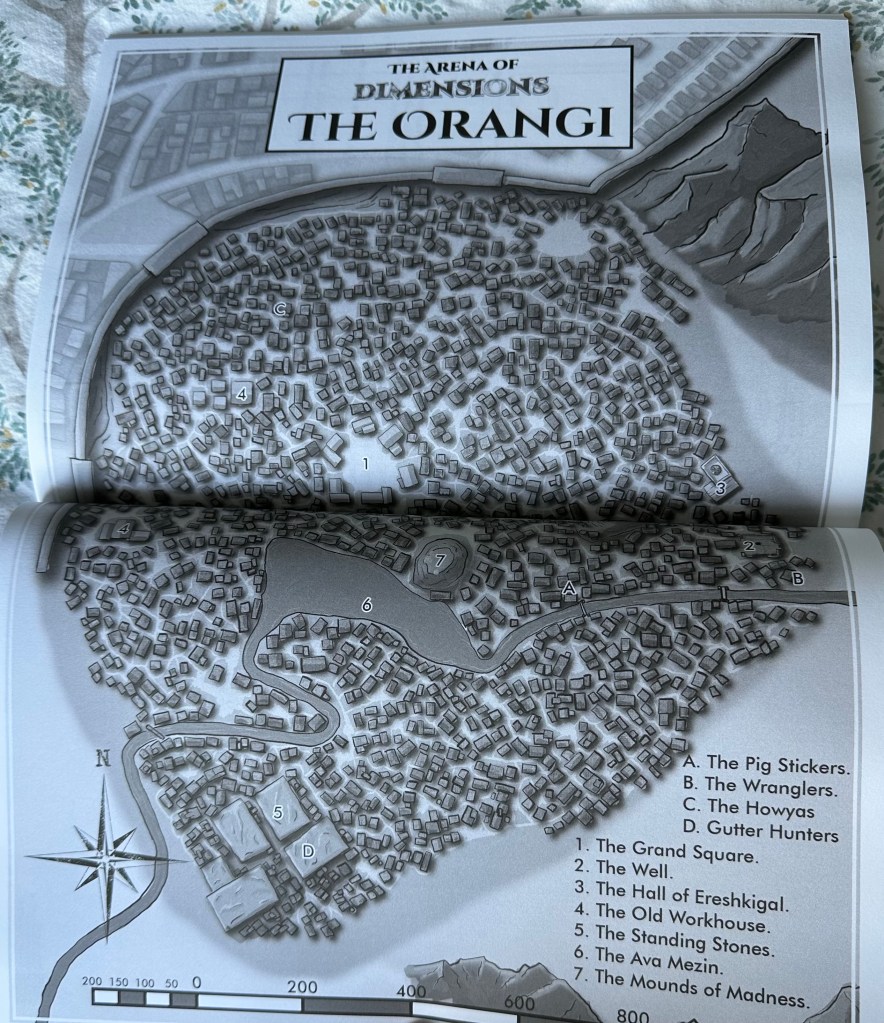
@drunkndungeons is an instagram mutual with a D&D podcast, which, I confess, I have not yet listened to. Anyway, up until relatively recently, I thought they were just into posting things about 1st and 2nd edition Ad&D on their account but then they revealed that they had a kickstarter on the way back in August. August! Let that sink in. They kickstarted a D&D/OSR adventure module in August and I now hold it in my little paws (OK, fine, I don’t. I’m typing right now. But, if I stopped and reached over to my right, I could just pick it up, you pedants!) Quite the turn around. By the start of September the Kickstarter campaign was done and I ordered up my copy from Drivethru RPG POD service, which was cheap and efficient and looks great, honestly. I have had no time to read this one yet but it I’m looking forward to digging in. I love the look of the map and the monsters and the general idea of an interplanar arena of some kind. Gravity Realms produce it and you can get it here.

Bump in the Dark Revised Edition

Bump in the Dark is another game set in the 90s. It has spooky Scooby vibes again as well. But in this case, you are more Buffy and the gang than the Famous Five. One of the touchstones Jex Thomas, the author, lists in the book is Buffy the Vampire Slayer, in fact. I don’t know a huge amount about it, to be honest. I backed it on something of a whim. I know that you play hunters in it who are sworn to protect the people of Iron Country from the monsters and the beasties out in the darkness, along with your team of found family and friends. It’s based on a Forged in the Dark Ruleset but rather than the heists of Blades in the Dark, you go on Hunts. And this Backerkit pledge level came with a bunch of hunts in the form of little leaflets! I didn’t know what the heck they were when they arrived in a little white envelope that had a fluorescent sticker on it saying “Do Not Bend.” Even after I opened them up it still took me a while to figure out they were Bump Hunts. But just look at them! Aren’t they cool? I think I would like to try one for the season that we’re in, you know? Anyway, go and get it here!

That’s all I have for you for today, dear reader, just showing off my goodies. See you again soon!

Case Closed

The suspects

I finished up two investigative scenarios in the last week or so. The experiences could not have been more different. I was the GM for one and a player in the other. They were in very different genres and systems too. I am going to have a go at dissecting them and trying to compare them, nonetheless.

D&D 5E – An Unexpected Wedding Invitation

I wrote a little about this short campaign here. At the time I wrote that, I didn’t even know it was a murder mystery, to be honest. It is a published, third-party 5E scenario so I could have looked it up, but I avoided reading anything about it online. Our wonderful DM was also the consummate host and was always wonderfully welcoming. She was a great DM too. We met in person over the space of eight sessions, more-or-less every two weeks. Our DM, who has run this scenario more than once previously, informed us afterwards that we took far longer to get through the scenario than other groups. Personally, I think that’s probably because of a couple of very important factors. Firstly, we had a fairly large group, five players and the DM. But, I think the second factor is what really pushed it so far beyond the normal length for the scenario. We were all chewing the scenery at every available opportunity. This group of players does not shy away from the first person, expansive, full-chested role-playing and it honestly does my withered heart good to see it every time we get together. We all had reasons for going ham as well. There was the promise of romance and, failing that, friendship. The possibility for court intrigue and drama was there as well. But, certain sections of the table were there to get their kisses in (in the infamous words of Lou Wilson.) The mystery was almost secondary to those folks.

As for the mystery itself; I won’t go into details. No spoilers except to say that there is a murder and we were not aware of that aspect going in. I don’t know if the DM advice is to keep that from the players until it happens but that was the case for us. Anyway, that was quite exciting actually. To discover there was an actual crime to figure out gave us all a shot in the arm! Up until then we had been essentially casing the wedding for curses and harassing the guests with weird, cryptic questions about the nature of one family’s bad luck. So, when we had a specific thing to investigate, it filled us with the sort of motivation that, I feel, the scenario failed to provide up to that point.

As for the investigation itself, it’s all about the NPCs in this adventure. That seems appropriate for a mystery game and this particular scenario was replete with well drawn NPCs who had distinct personalities, motivations, idiosyncrasies and voices (provided quite expertly by our DM.) You have the bride and groom, of course but you also have a cast of characters drawn mainly from the families on both sides. There are several set-piece scenes that are designed to allow the PCs to get to know the cast and our DM graciously provided us with portraits for all the main NPCs, hanging them on her DM screen. This was very helpful as there were a lot of them and without that constant visual aid, it would have been much harder to keep track. Our interactions with the NPCs seemed to give us positive or negative standing with them, leading to later conversations being more or less difficult for us.

The setting was integral, of course. An opulent country manse belonging to one of the families involved, surrounded by a generous estate on which they enjoyed hunting and picnicking. The adventure provided a couple of maps; more for reference than anything else as there was not a fight to be had at this affair.

As I said, I am not going into spoilers here about the murder, the suspects or the ending but there are a few things I can say. It seems as though the adventure comes with several prepared possible endings. The actions of the players, their standing with the major NPCs and their final pronouncement of who they figure did the murder all seemed to have an effect on that. This served to give it a slightly video-gamey feel, which was neither good nor bad but certainly leant a lot to the idea that everything was laid out in the adventure quite prescriptively.

Speaking of which, the actions of the PCs throughout felt a little restricted. This was purely a result of playing D&D 5E characters in a genre they were never meant to exist in. Few of our powers or abilities were of much use in this milieu and that felt a little frustrating at times.

Equally, there were several timed events that could not be prevented or changed in any real way by the PCs. Once again, this had the effect of making us feel more like spectators than active participants.

Questioning the NPCs, the most important part of the scenario, by far, and the only one where you could make inroads in your romantic or duelling ambitions, was difficult to say the least. Pretty much all of them could have done it, to be honest. That, by itself, is ok, but failing certain rolls here and there made the process feel fruitless at times. Without some mechanic to allow you to fail forward, it was always going to feel like this.

In the end, we failed to catch the killer. We fingered the wrong guy for the crime. This was due, in large part, to us interacting less with the killer than we might have, failing s couple of clutch rolls in interacting with them and the fact that we were left with too many potential culprits at the end that we couldn’t whittle down further with the evidence we had. Our failure was revealed to us in a sort of cut-scene right at the end. After all the effort we had put in, this felt like losing even though we had all enjoyed playing together around the table. The overall consensus from the players was that 5E was not the system for this scenario. It is not built for this sort of investigation and it led to an unsatisfying feeling from the result of the game even if we had a good time playing together, as we always do.

Blade Runner, Electric Dreams

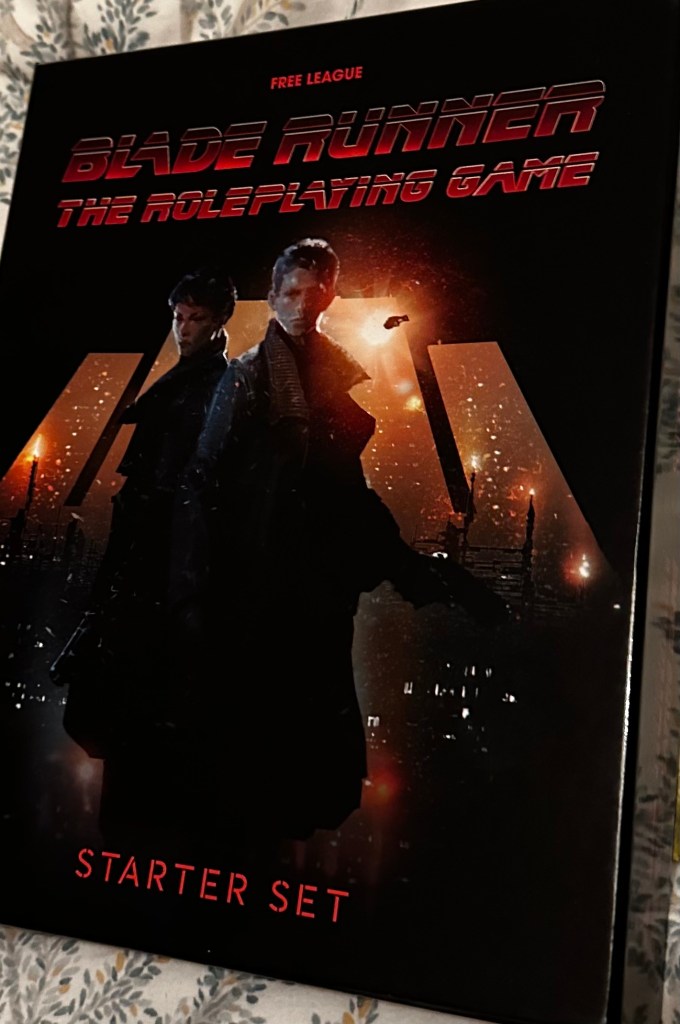
Two blade runners posing like neon noir heroes in front of a stylised Wallace Corp ziggurat beneath the title of the Blade Runner Role Playing Game.
A photo of the front of my copy of the Blade Runner Start Set box.

I wrote a little about this game here while we were still playing it. At the time of writing that, we were only two sessions in and I was greatly looking forward to the next one. There were two players, playing Detective Novak and Fenna. We did this online, using Zoom and Roll20. It took five sessions of two and a half to three hours each. Having checked out other groups’ experiences with the same case file, I can say that’s about average. I could absolutely see it taking both less or more time since it would be dependent on how quickly the blade runners discover the key clues and how quickly they act.

Electric Dreams is also a pre-written scenario but, I think, importantly, it was produced by Free League as the intro to the Blade Runner RPG. There was never going to be a mismatch of scenario and system like we saw in An Unexpected Wedding Invitation. In fact, it felt as though this scenario was close to perfectly designed to bring players into the world and the system at the same time.

If you are a Blade Runner fan but not familiar with the Year Zero engine or RPGs in general, its got elements from the movies for you to geek out over and allow you to feel part of the megacity of LA by referencing the media you know and love. Meanwhile, it holds your hand through the early interactions with the mechanics, kicking things off with a few basic Observation and Manipulation rolls, teaching you that the more successes you get on your dice rolls, the better the result. As time goes on, the references to the movies remain strong, keeping the whole thing feeling like a natural continuation of or bridge between those stories and establishing a consistent and immersive tone and atmosphere. But you get more and more in-depth interactions with the rules as it introduces you to chase mechanics, combat, use of more complicated investigative techniques and character advancement.

And if you are an old hand at Free League’s signature rules engine, you will be good to go from the start. I was somewhere in between when we started playing. I am a big fan of Blade Runner and I have run Tales from the Loop before so I knew how the system worked well enough. But it was a long time since I had played it and I definitely had to look some rules up in play. This was generally fine, and didn’t take too long. What we also found, was that, once we looked up those rules once, we grokked them and didn’t have to keep referring to the rulebook, which was a refreshing change of pace for a group of players who have mainly only played D&D 5E together before (at least in recent years.)

Now, down to the scenario itself. As with the Wedding mystery, this was largely based around really well drawn NPCs, all of whom were potentially important to the plot. But, from the start, it felt as though the PCs knew who their main suspect was. They were rarely dissuaded from that notion, despite (or perhaps because of) the powers-that-be forcefully reminding them about the way they would like to see the investigation go. Since the characters were playing blade runners, cops in the LAPD, there were a number of NPCs that were there purely to back them up or chivvy them along. You had Coco, the medical examiner (who you also meet in Blade Runner 2049) and Deputy Chief Holden (who got his chest punctured in an interaction with Leon the replicant in Blade Runner) as well as any number of ad-libbed beat cops and the AI LAPD Despatch. The Wallace Corp is represented by one of their replicant executives who was immense fun to play. You also had a few NPCs that were witnesses and were never going to be anything but witnesses. The investigation was not designed to send the detectives off on the wrong path. There was no more than one red herring and that was there more to reinforce a theme than as a real way of derailing things.

What we found was that most of the sessions involved them trying to track the one suspect and discover their motivations and whereabouts. This led them into a web of corporate intrigue and moral dilemmas. That’s what Blade Runner should be about, of course, and Free League nailed that. The PCs were able to use the abilities of their pregenerated characters to do that pretty well. In fact, I would say that they were implausibly successful most of the time. On a couple of occasions they rolled so well that I felt compelled to reward them with information that would not, otherwise, have come up until later in the investigation. Moments like these allowed them to make incredibly effective leaps. What I liked about this scenario is that it allowed for that. There is a timeline of events that will happen at particular points of the investigation, but only if the PCs do nothing to prevent them. So, that doesn’t stop you moving them two steps forward, instead of the usual one. I think it actually encourages that sort of thing, in fact, as the timed events are generally pretty bad for the investigators or the other major characters.

We got an ending that was equal parts satisfying and open-ended, with the PCs making the moral, rather than the legal choice after the corporation took the law into its own hands one too many times. We might return to Novak and Fenna someday, maybe in the next published case file, Fiery Angels. The first one ran so well that I would definitely be confident to play the next one.

Conclusion

It is almost unfair to compare these two games, but it has been impossible for me to do anything else. In blade runner, you had a scenario where any outcome the PCs reached was likely to be satisfying and a system that supported the sort of game you were playing, investigative, character driven and darkly themed. In the other, the scenario felt a little too restrictive and was hampered further by a system that was never designed to support the investigative nature or the regency feel. I had fun with both, but I know where I would turn first if someone asked to play a mystery game.

Motivation part 2

Motivating characters

So, in the last post, I went on at some length about how you might be able to motivate players in your game, focusing mainly on what you do between sessions to get them excited to come back and do it all again. There were also times, I decided, when you shouldn’t overdo it, when you should just let people be.

When you do get them to the table, though, your work ain’t over. Obviously, I’m talking to the GMs out there, but this goes for players too. Because now it’s time to figure out why your character is out there smashing skulls or investigating murders or trying not to be sacrificed by some bloodthirsty, cthonic cult or whatever their weird job is.

Seems like an easy answer, doesn’t it? But it’s not. Your character’s motivation is a strange, ephemeral thing that you need to keep in your mind at almost all times to figure out what they are going to do in any given situation. You can keep your alignment, in my humble opinion. Alignment is such an archaic and ill-defined concept, it barely even begins to answer any of the questions raised by the “character” aspect of the sheet. It can be manipulated to mean almost anything. So it doesn’t really help to direct you when you are trying to decide whether you should back the werewolves or the elves (Dragon Age: Origins fans, yo!)

New characters

Games have all sorts of ways to help you figure out what your character’s motivation is going to be. At the creation stage you are picking things like backgrounds, bonds, ideals and flaws if you’re playing 5e, your drive, problem and pride if you’re playing Tales from the Loop, your Calling if you’re playing Heart. The game is usually trying to help you out. Sometimes it doesn’t have to do any more than describe your race and class, in fact. That’s often enough to set a player’s imagination alight. Before you know it, your dwarven barbarian has figured out that her driving force is a desire to put as much space between herself and the darkspawn riddled Deep Roads (I’ve been replaying Dragon Age: Origins recently, ok?) as she can, and to have fun doing it. Of course this motivation is likely to change many times during play, but if Bianca remembers that she never wants to set foot in the Deep Roads again from that moment on, all of her decisions are likely to be coloured by it, especially when she finally faces her fears and delves back down to Orzammar and the lost Thaigs to help out her party-mates in their quest to track down the origin of the darkspawn outbreak in the Korcari Wilds.

Here’s a question though. How much influence should the GM have on a player-character’s motivation. Well, like most things PC-related, I would say that there is a conversation to be had. This is often something I forget to do with my players at character creation to be honest. Especially in games where motivations are less well defined or less tied to the plot. In fact, I have received feedback in the past that I should be more willing to guide players in their choices of class in case they choose something inappropriate for the campaign, never mind motivations! But basically, what I’m trying to say is that you should always talk about it, especially if a player is interested in talking about it.

I messed this up recently and definitely reduced at least one player’s enjoyment of the first session of a new game as a result. Motivation is important! It colours everything so you should always be available to talk about what a character is doing this stuff for? Why would they want to? It’s not that they player is being awkward or a prima donna or making the game about them, they just want to feel a connection to the game through their character and they need a reason for that. Help them out, eh?

In gameplay

As I mentioned before, character motivations can change during the course of play. In fact, I would go so far as to say that if they don’t the game there is probably not much going on in it. Most sessions it is a good idea to make their most immediate motivation become “I don’t want to die!” At least once.

But this goes for long-term motivations as well. I think it is absolutely possible to retain your character’s initial motivation of “never wanting to go bak to the Deep Roads again,” while subverting that, undermining it, overcoming it. Maybe, once Bianca follows her companions back into the Deep Roads, she realises that, without here, they would have died down there, that actually, her Deep Roads survival skills are valuable and that she should help others by teaching them. I think GMs should be prepared for these shifts but players, equally, should be ready to make changes like this to their characters. Turn it on its head, fail forward if that’s what happens in the game. Push your character to do what is explicitly against their motivations sometimes and see what happens to them and the game as a result. Do the unexpected!

Heart

It always comes back to Heart these days it seems. Well, that’s because it has these great little systems built into it. The granddaddy of these systems is the Character Callings. You have a handful of them. Not too many to choose from: Adventure, Forced, Heartsong, Enlightenment and Penitent. They speak for themselves really, except maybe for Heartsong, which is the weird one that wants your weird character to follow the weird as deep as it will go into the weird subterranean other-world until you find some insight into the weirdness that’ll probably kill you or transform you beyond all recognition.

Essentially these are all the motivations your character might need in Heart. Their descriptions spell out the kind of thing in keeping with the theme of the Calling, that might have led you to delve into the red, wet Heaven. It also gives you a fun ability to reward you for choosing it, a few questions to answer to help you flesh out your character and focus you on the type of adventure/enlightenment/penitence etc you are espousing, and most usefully, both for the player and the GM, an absolute raft-load of beats, narrative or mechanical milestones you want your character to hit as your delves go on. The beat system is so useful for building a session and a story at the table together. It is particularly fun when one PC’s beat synergises with another PC’s completely separate beat or when the object of the beat comes up organically in play, without the GM being aware that it’s happening. It is motivation given mechanical and narrative form and I love it.

Seriously, go check out Heart if you haven’t already. It’s a good game. And it’s fun and gross.

That’s me for now. My motivation to write has ebbed and waned. It’s you time now. How do you like to motivate your players and characters?

Motivation Part 1

Player vs character

Are you always wanting to play an RPG? I’m not. I mean, I like them, I write about them, I talk about them and post about them on social media, but do I always want to play them? No, of course not. Sometimes I’d prefer to be cooking, or walking or reading. Sometimes I’d rather be doing literally anything else.

So, how do we ever end up getting everybody to the table all at the same time? When at least one of the players in your group who isn’t busy or sick or traveling is probably just not feeling it that night? Oof…

And when you do get them all there to your table and you have this great idea for an adventure, a couple of hooks to get the PCs to take interest and some of the smartest, most memorable NPCs they are ever likely to meet in store for them, how do you make sure that they take the bait and go the way you are hoping they will? How do you ensure that the motivations of the PCs align with the goals of the adventure?

OK, so these are two different problems, really. The first suggests that the players may not want to be playing at all, and the second suggests that they want to play, they just can’t see their characters doing what you hoped they would. Still, we are going to discuss both because that is the central conceit of this short series of posts.

Player motivation

Open door

This is so tricky that, I am tempted to say, don’t try to tackle it at all. I mean, if you don’t want to be at a party and someone drags you along to it anyway, there are only two potential outcomes, really. Either you do that thing that your mum always said, i.e. enjoy it once you get there, or you will have a terrible time, confirm your own biases and bring down the average vibe score of the entire occasion just enough that you feel even worse about it and leave early.

An RPG session is not likely to be this drastic. In most cases, if you are not feeling it, you probably just don’t contribute as much as usual. Of course, the other players will notice this and maybe try to draw you into it a bit more or make more allowances for you than you really want. After all, you are probably happy being a bit quieter that day.

This is one of the reasons I appreciate one of the Open Hearth community’s policies. The Open Door policy says that you can drop out at any time from any session without the need to explain or excuse yourself. They only ask that you let the game facilitator know that you won’t be there or, if it’s mid-session, that you won’t be coming back. I think this policy is more to account for unforeseen life shit but it works equally well for those who are just not feeling it that day. And let’s be clear, mental health has to be a priority too. Some of us struggle with mental health issues of all stripes and on days where those issues flare up or are particularly serious, you have to take care of yourself first. I, myself, have struggled more with physical ailments a lot, in the last couple of years post-Covid and I have had to take advantage of the Open Door more than once, and was always grateful when, upon my return, that no-one had any blame to dish out for my not being there or any guilt to trip me with.

I guess, what this comes down to for me is, if you are not feeling it on a particular day, don’t do it! Go do the thing you really want to do instead or just curl up in the foetal position on the couch with a steady stream of rom-coms and popcorn being fed intravenously into you. You don’t need to make any excuses. You don’t even have to provide an explanation. In fact, I don’t think you should. After all, it’s just a game. We should all treat it as such.

Hype

All of that being said, I don’t think it’s impossible to hype people up to play the next session of a game. We do this in lots of ways, don’t we? In our Tables and Tales community we use the discord chat to chat about what happened in the last session, dissect the events, talk shit about the NPCs behind their backs, develop plans and share stupid memes and puns. I love this sort of inter-session banter. It definitely makes me excited to play the next session and, if I’m the GM, it often gives me ideas for stupid bits to introduce into the game itself, just for laughs or tears.

Homework

Our DM in An Unexpected Wedding Invitation 5E game likes to give us homework! She has asked us to do things like:

  • have a conversation with another player, in character, in DMs, that you haven’t had much interaction with yet
  • provide feedback privately to her that you wouldn’t in front of the whole group
  • discuss our theories about what is going on in the plot.

This has made the discord chat really entertaining and makes me want to get back to the table to keep going.

World-building on discord

Another GM, this time from Blades in the Dark, went above and beyond. He would not only write up a summary of the events of each session in an entertaining and enjoyable narrative style, but he would also compose entire articles from the Duskwall Observer, the city’s Newspaper of record, letting us know about the happenings in the rest of the city both in the heights of the ruling classes and the depths of the crime-ridden underworld. On top of all that, he would come up with new rumours after every session so that we had something to work with when planning with our own scores and downtime activities. Truly herculean efforts there, and they certainly made me excited to meet up with the rest of my crew every Friday evening and start inhabiting the, very much living, city that he so adroitly created under our feet.

I’m afraid this is not an area that I excel at as a GM. The most I am likely to do in between sessions is ask if people are free to come on the usual evening or share a social media post that seemed summed up a character or event from the game. There are definitely techniques I can learn from my learned GMs. Maybe I should start handing out homework too!

Tune in to the next post in a couple of days if you’re interested in character motivation within the game.

Meanwhile, is there anything you do to motivate your fellow players in between sessions or even before the first one? Let me know in the comments so I can steal your ideas!