Back to Troika with Tables and Tales

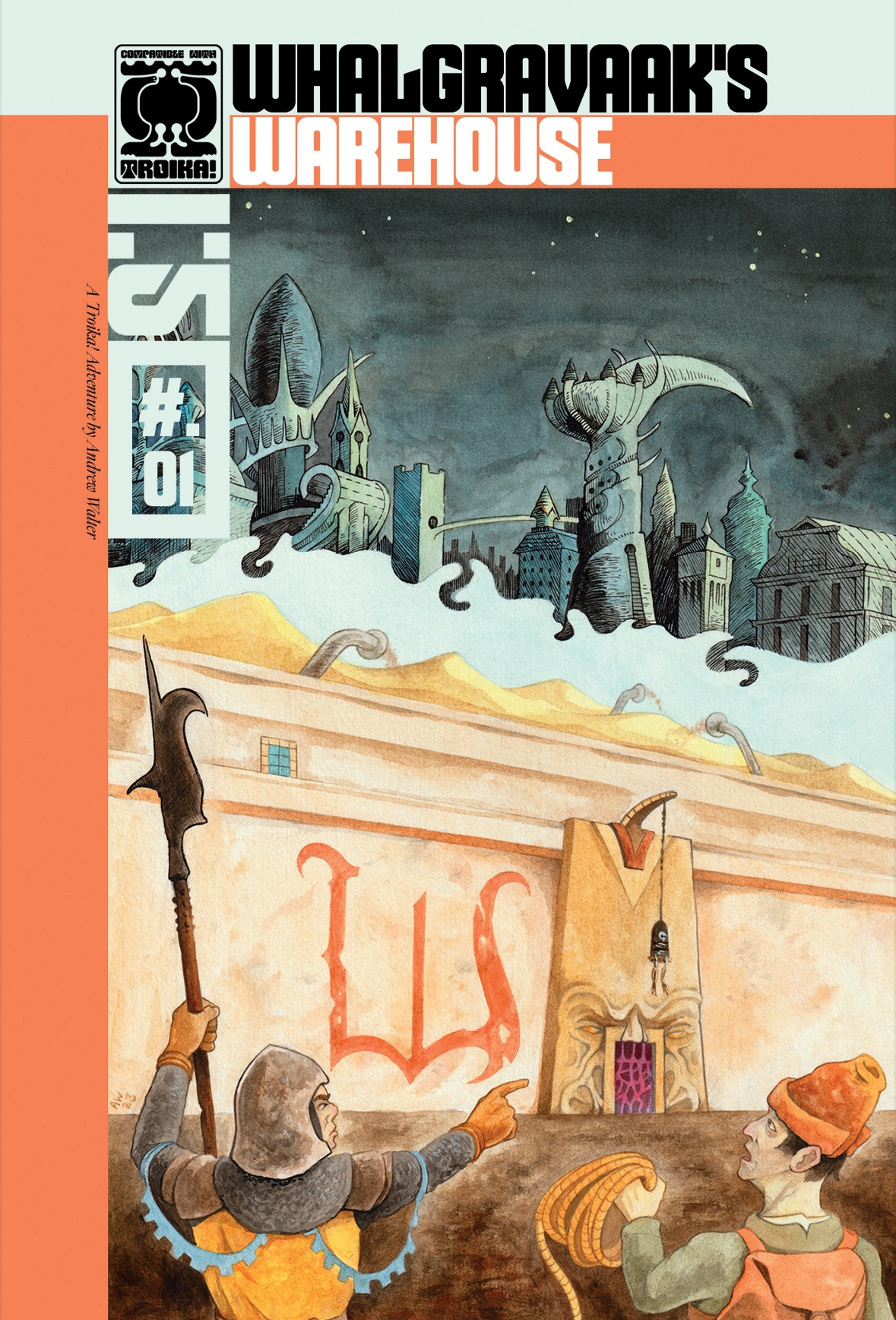
Whalgravaak’s Warehouse

We’re going back to Troika for another one-shot tonight! I’m very excited for a couple of reasons.
The first is that I finished reading through the Whalgravaak’s Warehouse book last night and it seems like a lot of (potentially very lethal) fun. I don’t think it was necessary to read the whole thing before beginning play, actually, but I was enjoying it so I kept going. That can rarely be said of RPG products so that’s a big tick in the plus column already.
How does it play? Only time, and my players, will tell, dear reader. But I will say, I love the setup of it. I think it has done enough, to lay the groundwork for a session full of strange and dangerous settings, fun and dangerous encounters and weird and dangerous NPCs.

They call it a Location-based adventure and, in the intro they admonish the DM to pay attention to
“the classic tenets of danger, resource management, exploration and player agency.”
This says a lot in just a few words I think. But it neglects to mention that it also involves elements of the classic dungeon crawl and a hex crawl in too!

New Tables and Tales members

The second reason for excitement is the introduction of a couple of new members to our little, local RPG community, Tables and Tales. We have been in existence only since February and after a small initial influx, recruitment died down somewhat. Our aim is to be able to have a few different games going on, in person, that interested players can get involved in and to continue to grow in our relatively small local community.
Although our growth has been modest, it has meant a lot to me, personally, to get to play with lots of people I would otherwise never even have games with. As a blow-in to the place I live, it’s also a great way to get to know people with similar interests and meet up face to face.
So, I love when I am able to share a table with some new tablers. Maybe talers is a better moniker? Hmmm. We’ll have to workshop that one.
I met these new recruits at the recent celebrated birthday party of one of our founding members. One was a friend of hers who has never tried TTRPGs before and one was the bar-tender, who just overheard me nerdily chatting about D&D while standing at the bar.

I think that shows that the RPG nerds are everywhere. If you want to find your people, just announce yourself loudly at the bar.

So it’s an exciting evening ahead. I hope I don’t end up frightening off the newbs…

Endings

It’s hard to say goodbye

It’s so exciting to start something new. There’s the anticipation for what’s to come, the tingling nervousness that transforms to delight in the beginning, the wonder at sights never before seen and actions never before taken. Beginnings are full of possibility and the feeling of freedom.

The end of something, though, can be just as exciting, but in a different way. Do you ever rush to the end of a novel when you’re about three quarters of the way through, eager to find out what happens? Maybe you’ve waited on tenterhooks for the final film in a long running series to be released, because you have spent so long with those characters and know their stories so well and you want the best ending possible for them.

That’s a lot to live up to, that pressure. And I think, in an RPG context, everyone at the table feels it to one extent or another. At least in the situation when you know the end of the game is coming. TPKs notwithstanding, achieving a narratively satisfying ending to a game, particularly a campaign that you have potentially been playing together for months or years, is hard. Of course it is. There is a pressure to tie up all those loose threads, make sure that big bad is confronted, achieve emotional closure for your characters and their arcs, maybe even leave a space for a sequel.

Not only that, but the real struggle is making it all the way to the end of a campaign! Sometimes your friends move away or have kids or there’s a global pandemic or whatever. Stuff happens. Understandable stuff, but stuff nonetheless. The thing is, of course, that just means the endings you do get are that much more precious.

How to part on good terms

One-shots

You’re there for a good time, not a long time. But that presents its own challenges to fitting in a great ending. If you have a suitably magnificent finale planned, how do you make sure you get your PCs to it in time?

Time

My answer here is easy; take a reading every thirty minutes or so to see if they are cracking through the adventure rightly or if they haven’t made it out of the frikking tavern yet. If they need it, push them along, end that scene and do a hard cut to the next one, bring in a major NPC from another scene to move things along. And if all else fails? Cheat! One-shots benefit from a breakneck pace in my opinion, and no-one will blame you if you bend a few rules to keep the action moving along. They probably won’t even realise.

Possibilities

Another good idea for a one-shot is to come up with a few possible big endings. This is obvious, of course, but it helps to think about where you might want the PCs to end up and if you have a couple of big set-pieces to choose from, that really helps with engineering the big ending.

Epilogues (1)

And if all else fails and you run out of time while they are nowhere near a satisfactory endpoint, epilogues can be a fun way to go. Just get each player to narrate the life of their character five minutes after the last scene of play, or five weeks or five years! Just as long as the events of the game have a major effect on their epilogues.

Campaigns

It’s really hard to give any advice on this. Let’s be honest, every campaign is going to be so different, even if they are published campaigns played by thousands of groups, no two of those ends will end up being the same. But, we’re here to discuss it so let’s do it.

Arcs

Character arcs are important in campaigns, long and short. Players want to see growth in their characters and not just the kind where they level up. They want to find the thing they had been searching for and figuring out that what they really found was the friends they made along the way. Sometimes they want to gain power and prestige and property to make them feel successful. Other characters change drastically due to the events of the campaign and come out quite different to the farm girl they were at the start. My advice on these is to make sure they are wrapped up in advance of the big finale if you are planning something like that. Give each character their moment in the spotlight in the sessions leading up to the end so they know they are all just as important in the building of the story together and that everyone can see them in all their glory/misery. Players remember that kind of thing forever. Its good to involve character stories in the finale too, if you can, but if you leave their big moment to then, they will rarely get the time to revel in it too much. I could be wrong about this but such has been my approach in recent times and it has tended to work out fairly well.

Threads

Loose threads can be left loose, in my opinion. There is an impulse in some games to ensure that the players get to experience everything. But, by the very nature of RPGs, it’s simply not always possible.

So, the party ran into an itinerant wizard in the third session. She asked them to explore her phantasm-infested old tower and return with certain writings that might have relevance to the overall campaign plot. But they never had time to do it or they got sidetracked. That’s just an answer they are never going to get! At least not in game. The GM could always explain where that was going after the end of the game I guess.

Of course, for narratively integral beats, I endeavour to bring them all home at the end. If they lost track of a vampire servant of the Big Bad that they were hunting through the Deep Dark Forest, bring him back in the last fight as backup for the big bad, maybe. If one of the PCs’ parents went missing earlier and they didn’t find them, have them in the cultist temple as a sacrifice to the evil demon they are summoning in the final scene. Complicate the scene! Make it so they have to rescue them!

Fights

As for the final battle, if you are even running the kind of game where you would have such a thing, elaborate set pieces, evocative or emotionally resonant locations and big fucking monsters usually do the trick. I would say, though, difficulty-wise, more enemies is usually harder than bigger enemies. One or two big monsters with lots of hit points and abilities will go down much quicker than one big guy and ten small guys. I guess I am mainly talking about D&D finale battles and other set pieces here. This is because action economy is king in D&D. So this piece of advice should be taken with advisement.

One thing that I always try to encourage is for the players to talk and cry out and banter during these bigger fights. Makes the whole thing way more exciting and personal and funny.

Epilogues (2)

I think epilogues for the PCs really work well at the end of a long campaign as well. For these ones, I generally want to know what the characters are doing a year or two down the line. How have their day-to-day lives been affected by the events of the campaign? Where are they? Who are they with?

End games

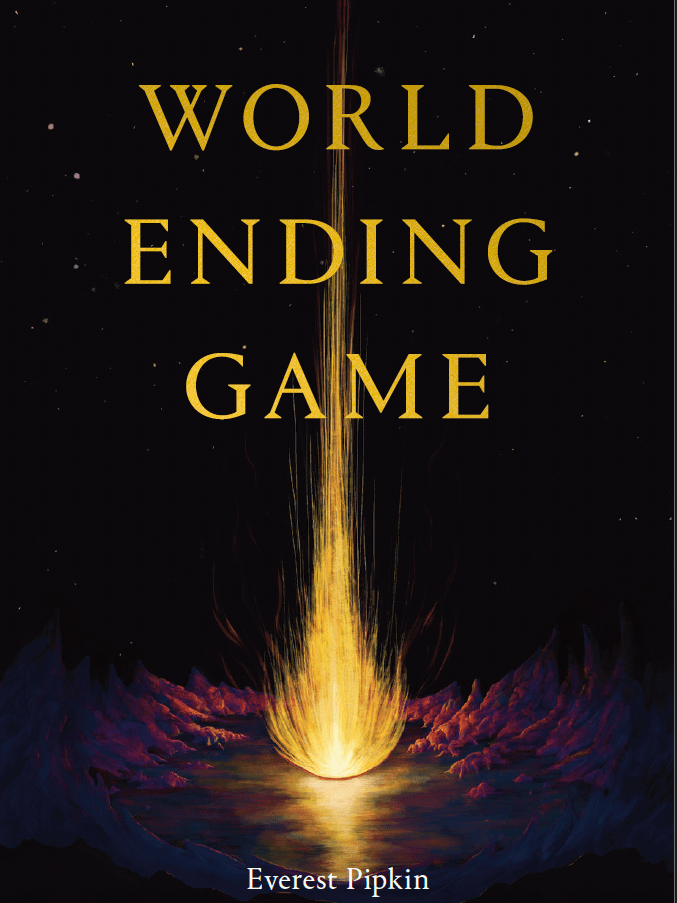
At the end of the Blades in the Dark campaign I played in recently, our GM ran us through a different game to give us a chance to ask some questions of our characters to see how things ended up for them. The World Ending Game is by Everest Pipkin. It is a cinematic game that imagines the last scene or episode of a movie or TV show. It frames a bunch of different types of ending scenes called things like “the Confession,” “the Reveal,” “the Revision,” “Tableaux.” It was a fun and alternative way to treat the ending of a game that felt really personal to players and characters both and I would encourage others to use it to wrap things up for their own games.

Conclusion

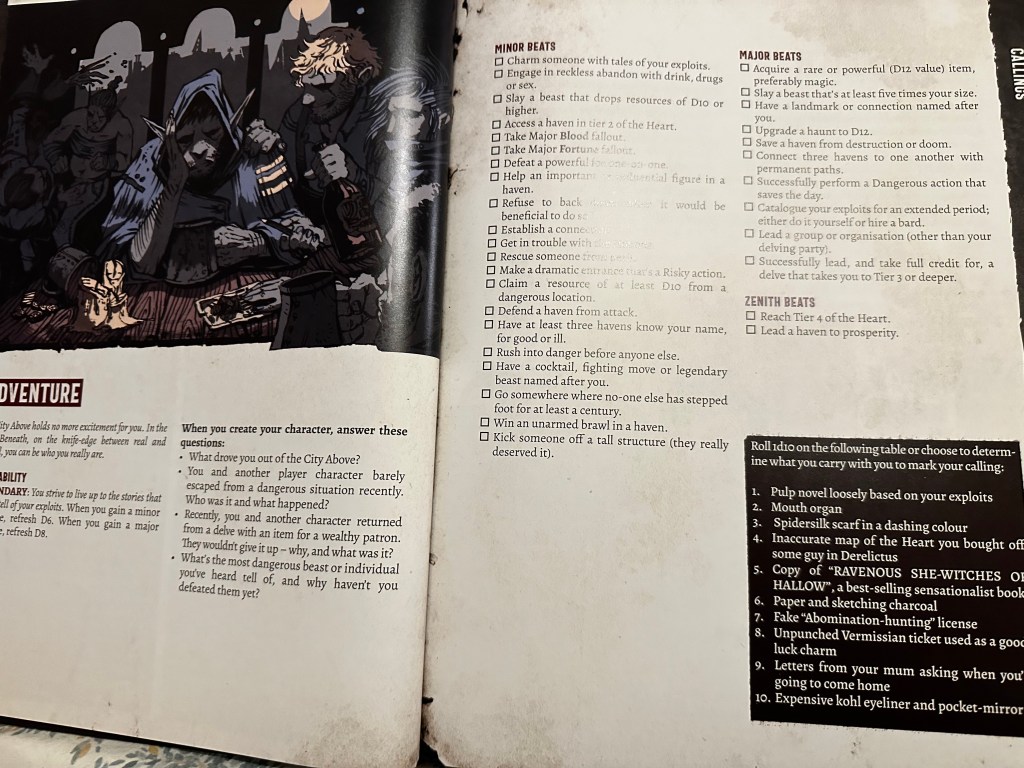
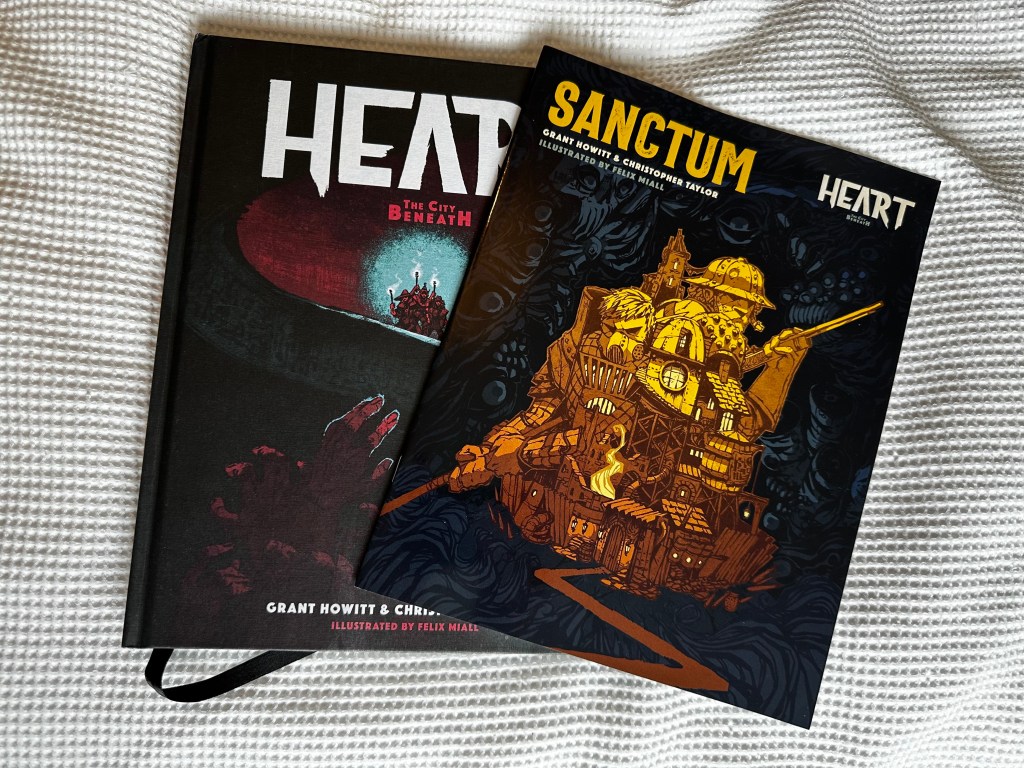
I still find endings hard but I like them more and more. I have become much fonder of shorter more contained games of specific numbers of sessions. So it is a little easier to plan for. Also, sometimes, a character’s end is the best part, just look at Heart and its Zenith abilities, they will end the character, but they will also achieve the seemingly impossible. I love this idea for a couple of reasons, it brings the character and probably the campaign to a hard stop in the most amazing fashion and it is player driven. They have gotten themselves to the point where they want to use that ability, it is their choice to use it and it makes for the best ending for their character from their point of view.

How do you like to end dear readers? Do you like to go out in a blaze of glory or do you prefer to sail off into the West and remain Galadriel?

Beginnings

Where shall we start?

This is always the first question I ask myself when starting a new game. It doesn’t really matter if it’s a one-shot, a short series of sessions or an open-ended campaign; the beginning sets the tone for the whole thing. If you start your PCs off trapped in a haunted house with no prospect of escape and a murderous ghost hunting them, you have made a pretty firm statement about the kind of game you are all there to play (or your players will see it that way at least.) Equally, if you start with a scene from each character’s home life, interacting with their family members and discussing their everyday problems, you are establishing a sense that this is the type of game where that kind of thing will happen again (or you should be.)

You can use the start of your game to establish a theme too. Maybe its a horror game involving frog mutants who want to feed your players souls to their unholy tadpoles, you could start in their camp at night, describing a croaking, ribbiting chorus that grows in intensity and volume through the night, ensuring that none of the party get any rest. Embed in the cacophony the true name of a PC and you have the potential for fear and suspicion if not outright horror.

Control

Three sessions in, there’s one PC who has decided to attempt a bloodless coup on the streets of the town at the centre of your adventure, another who has set their heart on wooing one of your NPCs of lesser importance and a third who just wants to sit in the tavern and spread rumours about the sheriff being a cannibal. It can feel like you are out of the picture sometimes (and that’s not necessarily a bad thing, dear reader. The best sessions happen at the whims of the players.) At the start, though, you, as the GM, have control. It relates a little bit to the world building work you’ve been doing, or not doing. After all, you made up the place they start in, or at least, you read about it in a published sourcebook or module and interpreted it as you saw fit. You know the places involved, you know the relevant NPCs, you know the setup, even if you have no preconceived notions about how it’s all going to go down in the sessions to come. With that knowledge, you start with an advantage, for the time being, at least. Before long, you have to hand things over to your clever and inventive players and they’ll have burnt down half the Silver Quarter while introducing the roller skate to Spire.

But, more important than your behind the scenes knowledge, is the situation they start in. I’ve mentioned in medias res beginnings in the past. Frame the scene they find themselves in and make it tense or truly fantastical or horrific or action-packed or just evocative. Start in the middle! It is the one opportunity you have to do this. You set it all up and see how they react to it.

In the Death in Space one-shot I ran a few months ago, I started them off being ejected from cryo-sleep as they approached the main adventure location, a mysterious space-station. They each got to have a moment to describe their characters and I explained they were seeing the debris field surrounding the remains of a planet that was destroyed in the recently ended wars and that they had to guide the ship through it! But then I used a series of flash-back scenes to explain what they were even doing there. I don’t think that’s even the first time I have used the in-medias-res/flashback combo to get into the action as quickly as possible while also providing some much-needed context. It worked pretty well as I recall…

It’s a fun way to get them all rolling dice quickly and failing quickly too, which is usually pretty important in a one-shot horror game.

Intros

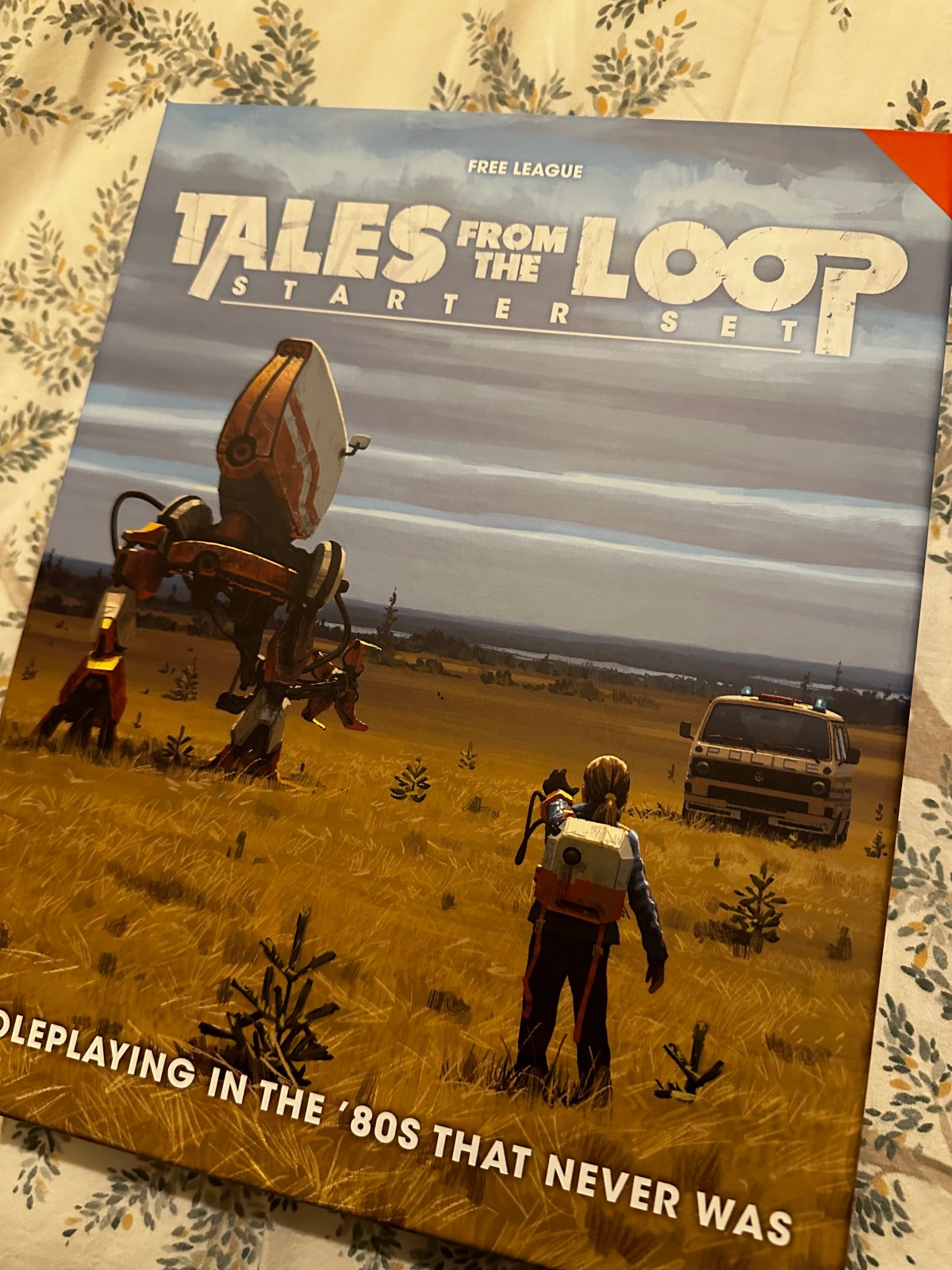
Tales from the Loop wants you to put the kids, the players’ characters, at the fore from the get-go. And deservedly so. These kids are created to have people who are important to them, problems that consume them in their regular lives, drives that motivate them and things they’re proud of. They’re rich and three dimensional characters before they ever get to the table. So, the game insists that you start a mystery (what TftL calls adventures) with a scene belonging to each and every kid in their home life or at school, with NPCs that are important to them, family, friends, mentors, that sort of thing. This is where the players get really invested in their characters. They have genuine and heartfelt interactions with the people of significance to them and they begin, immediately, to find their voice and their personality. It’s probably the best thing about a game that has a lot of good things going for it.

I stole the technique for the second campaign I ran in my Scatterhome world. It took place on the northern island of Erlendheim. The PCs all knew each other at the start since they began at 8th level and, in the fiction, had an adventuring party for many years, long ago. The adventuring life long behind them, I asked them to describe their mundane lives as a farmer, an advisor to the Jarl, a guard sergeant and a village priest and made sure to include people and places that were important to them. I focused on who and what they loved because I knew I was about to fuck with all that.
I had learned a lesson, you see, dear reader. Oh yes. For those of you keeping studious notes, you will recall I described the start to the first campaign in Scatterhome, when I drowned the island nation and erstwhile homeland of the PCs, Galliver, off-screen, before the start of the game. They didn’t care about it, and I can’t blame them. I had never given them a reason to.
In Erlendheim, they were more focused on saving the druid’s kids, ensuring the safety of their families and homes, protecting their futures.
Tug on those heart-strings, GMs.

Scenic

There is a subtle art to the transition from the start of an adventure to the meat of it. Or there is if you don’t subscribe to the philosophy that adventures should happen in scenes.

Usually, the end of a scene is obvious in a movie or tv show. It normally shifts perspective or location or time. So, if you want to do something similar in a game, someone needs to just say it’s over and move to a new scene. Sometimes that’s the palyer who wanted the scene but usually its the GM. I would rarely have done something so bold as to declare the end of a scene in a game of D&D as a more trad DM but it’s so freeing to do it! Just like you framed that first scene at the beginning of your game, you soon realise that you can frame and end any scene at any time (within reason.)

Looking back at the Tales from the Loop example from earlier, I noted that each kid gets a scene about their home life. Together with the player, you describe the kind of scene it is going to be, improvise it and end it when it feels right. When you move on to the investigation part, you can cut to a scene with all the kids in it, where they are staking out the suspicious machine that appeared in the nearby field overnight to see who is responsible for it and end that scene when they have gotten everything from it they can. Easy.

Using scene structure is even built into some games. Spire and Heart use scenes, situations and sessions like other games use rounds, days and long-rests. They are left deliberately vague but some powers and abilities work only within the current scene or situation. I have embraced the vagueness and it didn’t even take any adjustment. It was instinctive.

In the next post I am going to write a bit about endings, which, in my experience, are so much more difficult.

How do you like to start your games, dear reader? Let me know in the comments.

World Building Part 2

A new approach

First of all, I struggle to get out of my old way of building a campaign world and, even a campaign. I recognised in my last post that there are definite draw-backs to it, but still, I find it hard not to do a whole bunch of preparation. I do still think that a certain amount of prep is advisable but I have been actively trying to limit the amount I do. This doesn’t work as well in some games as others. In D&D, if you don’t do a lot of prep, you might be alright but it is a real pain if you don’t have the right stats to hand when your PCs decide they are going to enter the local gladiatorial games or they want to go ankheg hunting. It slows things down a lot and hurts the overall flow of the session. But it does feel like you are pushing the plot and your PCs in a very particular direction when you do it! Is this an inherent issue with D&D? Probably not just D&D if we’re honest.

In other games, I find it can be freeing and fascinating to see how a session goes when you genuinely have no preconceptions about what is going to happen in it.

Heart

In the game of Heart I am currently running, I used a loosely written adventure that came in the Heart Quickstart Rules. We have just come to the culmination of that adventure and suddenly, the PCs are more-or-less free agents! They have done what a few NPCs have asked of them and more. They followed the breadcrumbs and now, now they are ready to take the training wheels off and head into the Heart to pursue their own dreams and nightmares. They have a couple of other leads but I am looking forwards to leaving the progress up to them from now on. I intend to largely take my hands off the wheel and, instead, rely on their own motivations to provide direction, their own relationships with NPCs to perhaps push them one way or another, even their own ideas for how the new and terrifying delves they go on might look and feel. I want to create our Heart together now that the leash is off.

Im-prompt-u

There are lots of tools out there that you can use to bring a world to life together with your players at the table. I mentioned on this blog before that we had a game of The Quiet Year by Avery Adler a while ago. In it, you get together and make a couple of establishing decisions regarding what sort of community you want to build together and what sort of genre or setting it might be in. After that, you proceed through the seasons of a year after the end of some cataclysm and before the coming of some other terror. The players use a regular deck of cards to draw on prompts from the book. Each prompt gives you an occurrence or an important decision that must be made. This way, you all draw a map together and you develop a community that includes important factions, elements of religion and social orders, abundances and scarcities, fears and loves of the populace.

I was surprised when we finished, by what a fleshed out place we had created in concert. It felt like we had the basis of a fascinating setting to start something else in. I could imagine beginning a more traditional RPG there with the same players. These players would all have had a hand in building the place, the world, its people, their relationships. And wouldn’t they be so much more invested in it?

I mentioned last time that I had made a mistake in the very beginning of the Scatterhome campaign because I had tried to play on the PCs’ devotion to their decimated homeland when they had no experience of it. They couldn’t even picture this diverse paradise island that I had in my mind. But if we had used a method like The Quiet Year to make it, we would have had the fun of playing The Quiet Year, for starters, and also, we would have a place they might have mourned as their characters.

Scale

You can go much smaller of course. In the Blades in the Dark campaign I played in recently, our GM had us use a different game called Clean Spirits to build our hideout. At the start we had to make some decisions about what sort of place it was going to be. We decided on a beached canal boat and then we worked through a series of prompts and exercises to create various parts of it. We each got to claim our own section and also collaborated to make it a place that we treasured as players and characters with its own little mushroom farm and the spirit of its former captain trapped in a bottle. Later, when we were attacked in our hideout, this made the stakes seem so much higher!

Of course, you could go even bigger instead of smaller. I know the game, Microscope, is used to create a whole history for a world that is separated into periods and events. I have no experience with it though so I don’t know how well it works.

At the table

The type of world building I like the most is the collaborative kind, I have decided. One of my players in that Scatterhome game, Tom of the Media Goblin’s Hoard blog wrote an incredible history for their character, who was a Dragonborn. Now, I had never given too much thought to the origins or current situation of Dragonborn in the setting but that was ok, because Tom had been considering it deeply. It was all couched in the back-story of their character, but it added a huge amount to the world straight away, including the fact there was an under-class of Dragonborn within the empire who were raised to be weapons at the command of their human masters, how they were raised from eggs to obey and how some escaped and went on the run. How there were bands of pirates that sometimes took on runaways like their character and how they impacted the archipelago. It was great and, although we didn’t get around to using too much of that in the game itself, the knowledge of it made a big difference to how I thought about the empire and the world as a whole.

Later in the same game, we gained some new players who decided to take their PC races from the D&D setting of Theros so we had a new island nation on our hands then, one that looked a lot like Ancient Greece and contained leonines and satyrs. Once again, their choices made that change to the world happen.

Another new character added a whole new vassal kingdom of elves to the Vitrean empire, for whom social hierarchy and feudal concerns were incredibly important. So much so that they caused a rift between his character and his siblings.

Character backstory is world-building when you leave the details of the world vague enough for players to have free rein when coming up with them. It adds to the shared world and gives them a greater feeling of ownership of it.

I personally love it, though, when someone, simply, confidently states the existence of a particular item, a specific shop or an individual NPC right there at the table. That item is going to help them get through that window, that shop sells the exact thing they are looking for or the NPC has the contact details they need. This sort of flavour is invaluable and often becomes far more than flavour. This happened in Spire a lot because you have to ask your players to make rolls to resolve situations but then leave the details up to them. They made up the dugguerrotypist, Reggie, who worked for the local tabloids and he later became an important bond to them. Same with every aspect of their casino, the Manticore, which quickly filled with important NPCs and locations that were largely player-created. It is the best feeling when these instantly generated details come into play right there and then at the table. It’s like magic.

How do you prefer to world-build, dear reader? Do you do all the work beforehand and let the players loose in it at the table? Do you build a world together first and go and play in it after? Do you let it all just happen at the table?

World Building

Scatter!

About 29 posts ago I mentioned the home-brew campaign setting I conjured up for the new D&D 5E campaign I was starting with a new group. It was an archipelago world in the style of Earthsea, except that it also had one large continent. I called it Scatterhome. I got pretty into it at the start. I put in place a number of major powers:

  • The Vitrean Empire, a mostly human empire that worshiped fake gods and controlled most of the continent,
  • Their enemy, the Republic of Galliver, a democratic island nation, diverse in species and religions
  • The Great Aquatic Empire, controlled by the incredibly numerous and ancient aquatic elves
  • Their enemies the disparate Sahuagin kingdoms

I came up with a bunch of other stuff from this base, like the details of the fake religion I mentioned above, some world-specific idiosyncrasies of various D&D races, relevant technologies and magics, ideas for some islands that the PCs might visit. As well as that, I got a couple of maps online to start things off, more as a reference for myself than anything I would provide to the players or their characters.

I started things off with a short adventure for their 1st level characters. The island of Galliver had just been destroyed by an enormous tidal wave and they were some of the few survivors who washed up on the shore of a smaller island. There they encountered some bullywugs, some halflings and some morally questionable situations. They came out of it with a boat and more-or-less total freedom to explore the archipelago.

Now, I had been pretty much expecting this outcome. I wanted them to get some form of transport to get from one island or region to the next. I had wanted an open and expansive campaign that revolved around the players’ choices rather than my own. That was the whole idea of the island-hopping style of world that I went for. It made sense to me that in an archipelago of sufficient size, no-one would know every island, there would be mystery and adventure on every shore and the PCs would be the ones exploring it. Sure, I would have to be the one to come up with the new islands and the adventures on them every time but that seemed like fun to me as well.

The perils of grandiosity

How did this go? Well, there were ups and downs as you might imagine. At the start, I shepherded them to an agglomeration of boats, known as Ex-isle, that floated above the drowned remains of another island decimated by a tsunami. There they solved a murder mystery and then got sent to explore a dungeon in the mountain under the water. This led them to learn some things about what had happened to Galliver, potentially. Basically, I tried to push them to investigate the fate of their “home island.” But I had made a mistake much earlier, before we even started playing. I started them in medias res, which is a trick I like and usually is very effective for getting players into the game quickly. But in this case, I had given them a country of origin that had just been destroyed, and, of course, their characters would have been deeply affected by this, but the players had no reason to care. So, immediately, the in medias res beginning, landing on the beach, bedraggled and traumatised, (supposedly) lost its power.

Later on in the campaign they visited a coastal village, Chast, where they helped a group who believed in the old god of the sea, Kaigun, rather than the approved religion of the empire. They were being persecuted for it and the PCs helped them to establish a little island colony of their own. So, this time, I wanted to really introduce the ideas of the empire and its religion. I revealed that this village was the point of origin for the imperial religion and that there was something very oppressive about it and the populace there. Actually, I was compounding this on the very first adventure where the halflings were also imperial citizens and didn’t take to the strange ways of outsiders.

In other words, I was establishing themes through the setting and the NPCs. This is something I still think is very important to build a cogent and believable world to play in. If you are looking for a factor to hold a campaign together, look at theme, then tone, then filter that stuff down to the setting, the NPCs, factions etc. I think I was relatively successful at this, just not in the way I had intended before ever starting.

Now, one thing was definitely happening as I had intended; I was coming up with these locations as and when they became necessary. But the necessity was almost always entirely manufactured by me. For instance, I drowned Galliver before session 1 ever started, I had them stumble across Ex-isle and sent them through a portal at the bottom of that dungeon I mentioned to the village of Chast where they also rescued the former Chancellor of Galliver. Admittedly, they didn’t have to take that portal and I only made up what was on the other side of it after they had gone through but I chose to send their story in a particular direction. All this despite them not really having shown any real interest in the Galliver storyline at all.

Different direction

Much later, when I began to understand this fact, I had their NPC passengers ask them to take them to the Orc kingdom, Tír na nOrc, another island nation that opposed the empire ferociously. I had a great time designing the map of the island, describing the city, Ráth an Croí, its people, its districts and factions, in detail. I built in a whole mini-campaign into this island that would involve opposing factions where one side had the patronage of devils and the other side were aligned with demons. It did not have much to do with the drowning of Galliver. Instead it was its own thing with more on-land exploration, social and dungeon stuff going on.

I actually enjoyed this a lot but it had really gotten away from the original idea I had had for this setting. That Island of the Week premise was long gone and I had started to look at it as something more epic in scope and much more land based with long running arcs and returning NPCs. I regret this now, actually. I would still like a campaign that feels more like a series of adventures interspersed with character development and, maybe the emergence of an over-arching plot.

In the next post, I want to explore the elements of Scatterhome that I feel worked best and the ways that other games explore the building of worlds.

The Dice Pool At Thirty (Posts)

Daily RPG

Way back in the mists of time, on July 14th 2024 I posted on this blog for the first time. In fact, I hit that “Publish” button three times that first day. Since then, it’s been one a day, like clockwork, whether I wanted to or not.
At the time I was determined to keep up that relentless pace, I guess, forever. I had (and still have) a bottomless pit of blog ideas that I have only scratched the surface of.

NaNoWriMo

But here’s the thing, I have finished NaNoWriMo five times. For those of you who don’t know, that’s the National Novel Writing Month. Despite the name, it’s an international event that takes place in November every year. It involves thousands of loons all over the world committing to penning a 50,000 word novel during the calendar month.

Some succeed, some fail, but it’s the effort that counts. If you only manage to write 1,000 words of a novel, that’s 1,000 more words than you had on October 31st. And it’s not about quality, that’s for sure.

The real appeal of NaNoWriMo is the element of motivation that comes with it. Everybody involved wants you to write. Hit your daily targets and you spend the month feeling good about yourself. You also improve, not just at typing but at writing, plotting, characterisation, pacing, everything. Although sometimes that only happens afterwards when you read what you’ve written!

What I’m getting at here is that, writing a blog post every single day, it started to feel like I was treating this like NaNoWriMo. But I can’t do that anymore! I want to give a little more care and consideration to each and every post. I want to be able to take my time, develop ideas, garner feedback, and level up. I’d like to be able to distill my own feelings about RPGs and my thoughts about this brilliant hobby and write something special, sometimes at least. I’ll probably still spit out the odd list to fill a void every once in a while but I promise to try to make it entertaining, at least!

New schedule

So, what that boils down to is that I need to slow the pace a bit. Right now, what I am thinking about is a post every two or three days. I’ll try both and see which is the most do-able. In the event that neither one is, I’ll probably drop down to weekly. With this schedule I would hope to be able to spend much more time planning, thinking about the topics I want to write about, researching them more thoroughly, writing, re-writing and editing before publishing.

My suspicion is that most of my dear readers do not have the sort of time available to them to be able to read a post every day, anyway. So, with any luck this will become more manageable for all of us.

Let me know what you think in the comments. Do you want more or less of my deranged ramblings?

Character Creation – Advanced Dungeons & Dragons 2nd Edition, Dark Sun, Part 3

Rezina carried over

Here’s what we’ve got so far, mainly from the post two days ago. The only thing I managed to do yesterday, pretty much was spend an inordinate amount of time waffling about all the classes and finally, roll a die to find out which one she was going to be. Turned out, it was Illusionist:

  • Name: Rezina
  • Pronouns: she/her
  • Race: Halfling
  • Class: Illusionist
  • Ability Scores:
    • Strength: 11
    • Dexterity: 18
    • Constitution: 18
    • Intelligence: 17
    • Wisdom: 18
    • Charisma: 9
  • 3ft 3in tall
  • 59lbs in weight
  • 41 years of age

Let’s move this along, shall we?

So, let’s get her sorted, remembering that she starts at 3rd level. I found a form-fillable AD&D 2nd Ed character sheet online so I am going to go down through that, addressing each element I need to consider since neither the PHB nor the Dark Sun Rules Book have anything so prosaic as a step by step guide on character creation.

Preserver or Defiler?

As it turns out, the first thing to decide is not on the character sheet which was meant for a more generic setting.
I like our little Rezina and I don’t think it would be in keeping with the Halfling culture to have her defiling the land with her spells so I am going to make her a Preserver for the purposes of casting spells.

Alignment

I’ve always liked the Chaotic Good alignment and it seems to fit our little Preserver Illusionist, in that she doesn’t ascribe to the rules and laws of the sorcerer-kings and she would rather project benevolence both onto and into the world around her.

Patron/Deity/Religion

Not Applicable in this setting

Place of Origin

A photo of the map of the Tablelands from the AD&D 2nd Edition Dark Sun Boxed Set.

Traditionally, the Halflings of this region of Athas come form the Forest Ridge off to the west of the map, beyond the Ringing Mountains. Now, looking at the description of the Forest Ridge in the Wanderer’s Journal, the setting guide that comes in the Dark Sun boxed set, I can see where I got the idea that Halflings were cannibals. Travellers in the forest need to watch out for being ambushed and caught by Halfling tribes. If presented to their king, he is likely to eat them alive! Anyway, this is where Rezina is from. Why has she made her way to the Tablelands? Perhaps she heard about the reputation of the secret Preserver’s organisation, the Veiled Alliance, and wanted to join.

Saving Throws

A photo of Table 60: Character Saving Throws from the AD&D 2nd Edition Player’s Handbook.

Technically, the next thing on the sheet would be the ability scores but I have covered those completely so I am moving on to Saves.
The Character Saving Throws table is unreasonably hard to find. They have stuck it in the Combat chapter, instead of the Character Creation one. Bonkers. Also, it’s so complicated. Why? Whyyyyy?

Anyway, she is a Wizard of sorts so these are her base Saving Throws at 3rd level:
Paralyzation, Poison or Death Magic: 14
Rod, Staff or Wand: 11
Petrification or Polymorph: 13
Breath Weapon: 15
Spell: 12
But she also gets +1 against rods, staves, wands, spells and poison for every 3 1/2 points of CON… so that’s an extra +5 for Rezina.

Armour Class

No armour allowed for our Illusionist, but, with DEX 18 she gets a -4 modifier, leaving her with a respectable base AC of 6, but a Surprised AC of 10, a Shieldless AC of 6 and Rear AC of 10.

DEX checks, vision checks, hearing checks

There is a section beside AC on this character sheet that includes these three things. I have no memory of these scores or modifiers and I am not sure where to look to find them (the index does nothing.) I will fill in the DEX Checks one with a +2, though as it seems to make sense as a reaction adjustment so save against falling or something similar. Moving on!

Hit Points

I rolled a 4, a 4 and a 3 on my 3d4 since she is 3rd level and added 6, +2 from her Constitution each level, to make 17.

THAC0

To Hit Armour Class 0. The most arcane thing about this complicated process, perhaps? Anyway, all Wizards of 1st to 3rd level have a THAC0 of 20. So, Rezina needs to get a modified attack roll of 20 to hit something with AC 0. Thankfully, this PDF calculates all the rest of the table for you!

Combat Modifiers

Once again, as a type of Wizard, Rezina has a non-proficiency modifier of -5 to an attack roll. That means that using a weapon she is not proficient, she is much less likely to hit.
But she does have a +1 to hit with slings (her one weapon proficiency) and thrown weapons.
She has no damage bonus due to her 11 STR and she has a -4 to AC from her DEX as stated earlier.

Weapon Combat

I mapped out here the details of the sling and her chosen ammo, the sling stone. She gets one attack with it per round, it’s size is small, has a speed of 6 (this has an affect on your initiative score), it has the blunt damage type, she has a +1 to hit with it, it does 1d4 damage and finally it has short/medium/long ranges of 4/8/16. There is so much to note and keep track of here it is honestly bewildering. Glad I didn’t get a class with more than one weapon proficiency, honestly.

Proficiencies

So, these are the non-weapon proficiencies and include languages. My INT 17 gives me 6 slots to play with. On top of my free language, Halfling, I took two more, the common tongue and Gith, the tongue of the desert raiders. I also took some Dark Sun specific ones, Somatic Concealment allows spell-casters to hide the somatic components of their spells. Being an unsanctioned wizard in one of the city-states is a dangerous business you see. Heat protection seems important to survival in this setting. Sign language looked for someone who is potentially part of a secret rebellion. Finally, boring old Reading/writing from the

Equipment

Money is a bit different on Athas compared to other D&D settings. Metal is incredibly rare here so the most common coin is the ceramic piece, which can be further broken Doen into ceramic bits. 1000 ceramic bits = 100 ceramic pieces = 10 silver pieces = 2 electrum pieces = 1 gold piece = 1/5 platinum piece.

A Wizard starts off with 1d4+1 x 30 cp. Of course I rolled a 1 so that’s 60 cp. yes. Not a lot to start with.

According to the Dark Sun Rules Book nonmetal items cost one percent of he price listed in the PHB and all metal items cost the price listed. This puts most metal items out of my price range. But at least a sling is affordable along with a few stones.

But this exchange rate means the price of the sling, 5cp in the PHB, would be 1/2 a ceramic bit so this is kind of a pain. I will round it up to one bit. And get 100 stones for another bit.
Down to 59cp and 8 bits. I’m also going to buy a fire kit for 2 bits, a tun of water for 1 sp (10cp,) a common robe for 1cp, some sandals for 5 bits, a backpack for 2 cp, a small belt pouch for 1cp, 50ft go hempen rope for 1 cp and a week’s worth of dry rations for 10cp. I’ve rounded up or down here or there because the maths was doing my head in. But, basically, I’ve got 34 CP and 1 bit left after that.

Movement

As a Halfling, Rezina is not the fastest thing on two legs. Her movement is 6, this means she can move 60 yards in a single round. In this game, a combat round is approximately one minute long. WTF? I did not remember that. That seems like a huge gulf of time! I think the current rules in 5E have a round at like 6 seconds. So, ten times less. Anyway, her movement rate of 6 means she can also walk 12 miles in a day.

Encumbrance

Just no. Honestly, I couldn’t be bothered with it in 1991 and I can’t be bothered now.

Character Class information

Special Powers/benefits

  • Wizard spells
  • 10% bonus to XP due to INT 17
  • +1 to saves against illusions
  • enemies have -1 to saves against my illusions
  • Extra illusion spell at each level
  • Easier to research new illusion spells (I don’t know how this works exactly)

Special hindrances

  • Harder to research new non-illusion spells
  • Cannot learn spells from the schools of necromancy, invocation/evocation or abjuration

Psionics

A photo of the front cover of the Advanced Dungeons & Dragons 2nd Edition of the Complete Psionics Handbook from TSR.

All characters in Dark Sun have a psionic wild talent, a minor or major power that they get for free! I’m going to roll on the Wild Devotion table in the complete Psionics Handbook to see what I get. I rolled a 100! Unbelievable. What that means is that I get to choose any devotion (minor power) from the table and then roll again on the Wild Science (major power) table. I think I will choose Flesh Armour for my squishy Illusionist from the Wild Devotion table and then I roll a 36 on the Wild Sciences table, which gives me the Death Field psychometabolic power. This power is going to gradually turn Rezina evil. Oops. It costs 40 PSP and, when I sacrifice a certain number of HP, everyone else I the filed loses the same amount if they fail their save v Death. Flesh Armour has a table you have to roll on when you use the power. That determines the level of armour you get from it. It costs 8 PSP.
AS for Psionic Strength Points, Rezina starts with 31 thanks to the table in the Complete Psionics Handbook where it’s based on her Wisdom score and modifiers from CON and INT. This of course means that she will never be able to use Death Field…

Wizard Spells

Finally, onto spells. My Illusionist has three 1st level and two 2nd level spells. And here they are:

  • Colour Spray – Blinds creatures
  • Change Self – self explanatory really
  • Audible Glamer – can make a noise equivalent of that made by 4 men…
  • Blur – gives enemies penalties to hit her
  • Invisibility – makes you invisible, dunnit

Conclusion

When I went into this, I thought I would get through it in a couple of hours. Here I am, three days later, and I finally have a fully formed Dark Sun Halfling Illusionist PC. It is not an easy process. It is very difficult to find all the information you need to make your character. I had to use at least three different books and had to go searching through them to find things like Saving Throw and THAC0 tables that should be easy to find. I ended up with a character I would happily play but was it worth it? Honestly, I’m not sure. It was educational alright. It taught me that it might be not such a great idea to try to start up a new Dark Sun campaign using the old Ad&D rules, for certain.

What do you think of this whole process? Do you enjoy a protracted character creation process? If you were one of my players, would you want to go through all this?

Get in the comments!

Character Creation – Advanced Dungeons & Dragons 2nd Edition, Dark Sun, Part 2

What has come before

Well, yesterday I started by creating a brand new character to be played in Dark Sun, the AD&D 2nd Edition setting. Here’s what we’ve hot so far:

  • Name: Rezina
  • Pronouns: she/her
  • Race: Halfling
  • Ability Scores:
    • Strength: 11
    • Dexterity: 18
    • Constitution: 18
    • Intelligence: 17
    • Wisdom: 18
    • Charisma: 9
  • 3ft 3in tall
  • 59lbs in weight
  • 41 years of age

What have we learned? Race is problem in these older books. The ways they refer to characters as “half-breeds” or inherently unintelligent or bred to be sterile are incredibly distasteful. It is all couched in very racist and unsympathetic language and I am glad that that sort of writing is a thing of the past.
Also, Dark Sun characters come out powerful, with the new way of rolling up your ability scores and some really useful racial traits.

Stay classy

It’s time to look at classes in Dark Sun. There are many changes to the classes compared to the AD&D 2nd Ed Player’s Handbook. There are also a few new ones here. Dark Sun introduced the Defiler, the Gladiator, the Preserver, the Psionicist and the Templar to the game. Technically, Psionics were introduced in the Complete Psionics Handbook, though. I mentioned yesterday that Halflings can choose from the following classes: Cleric, Druid, Fighter, Gladiator, Illusionist, Psionicist, Ranger and Thief. But I will take a look at each of the new ones and the major changes to the existing classes too.

The Dark Sun Rules Book splits the classes into their categories of Warrior, Wizard, Priest and Rogue with Psionicist sort of tacked onto the end.

A photo of the AD&D 2nd Edition Battlesystem Skirmishes Miniatures Rules from TSR.

TSR really wanted you to use their Battle System mass-combat rules with Dark Sun. If I remember correctly, parts of the opening few official adventures contained full-scale battles where it expected you to have armies of miniatures fielded against each other. I don’t remember ever using them, despite having the book. Anyway, as a result of that, one of the main things that Fighters got in Dark Sun was a whole bunch of automatic followers. These people would just flock to you as a successful Fighter as you gained levels. They can also teach weapon proficiencies from 3rd level, operate heavy war machines from 4th level, supervise the construction of defences from 6th level, command large number of troops from 7th level and construct heavy war machines from 9th level. All of these very Battle System related abilities are in addition to the stuff they get in the PHB. Fighters have an ability requirement of 9 STR so Rezina could, technically take this class. Hit Dice: D10.

The Gladiator is a new class. They are the slave warriors of the Sorcerer Kings. The arena is a big part of life in the City States of the Tablelands. It is the main form of entertainment and a system of control for the masses. It’s also big industry as the slave trade is key to the economy of the region. Gladiators get a few nice benefits. They gain proficiency in all weapons and can specialise in multiple weapons too. Not only that, but they are expert in unarmed combat and get to optimise their armour, reducing their AC by 1 for every five levels. From 9th level, Gladiators also gain followers like the Fighter. They have some harsh ability score requirements though, STR 13, DEX 12 and CON 15. The Strength requirement disqualifies Rezina, I’m afraid. Hit Dice: D10.

Rangers are mostly unchanged from how they are described in the PHB. They have to decide on an elemental plane of worship at 8th level and can only cast cleric spells from that sphere and they gain followers of animal and humanoid type from 10th level. Required STR 13 means I can’t choose to be a Ranger. Hit Dice: D10.

Onto the Wizards! Rezina can choose only Illusionist from this list but we’ll have a look at them anyway as they are so important to the overall lore of the world. Wizards work quite differently on Athas. The default magic user is the Defiler. These guys drain the life from the world around them to power their magic and, as a result of their disdain for the environment, they gain levels much faster than their Preserver counterparts. Preservers balance their consumption of magical energy to minimise or chancel the damage they do. Of course, this course makes them level up much slower. Finally, there is the Illusionist, a specialist wizard class who are treated exactly as they are in the PHB except that they have to choose to be either a preserver or defiler. Regular Preservers and Defilers only have an ability score requirement of INT 9, but if you want to be an Illusionist, you also need to have DEX 16. So, this is, in fact, an option for Rezina.

Priests are split into Clerics, Druids and Templars.
The Clerics are worshipers of a particular elemental plane, rather than of a deity or pantheon. Athas does not have its own gods and is considered separated somehow from the influence of the Outer Planes. It is very hard to get to and from Athas, in fact, through planar magic, portals or even spelljamming vessels. So, Clerics, although they may be flavoured differently depending on their backgrounds, gain power from the Inner Planes, the elements, instead. Their weapon restrictions are based on the elemental plane they worship, they can ignore the presence of the element they worship from level 5, they can gate material form their chosen plane at level 7. You need a WIS 9 to be a Cleric so that is an option.

Druids are out for Rezina due to their ability score requirements, WIS 12 and CHA 15. She’s just ain’t got that rizz. Druids have to choose an area known as their Guarded Lands and from 12th level on, they have to spend half their time there. They gain their powers from the spirits there. Usually, their spells are restricted to one or two spheres related to their guarded lands. They can speak with animals and plants as they gain levels, and get a whole bunch of powers from their lands.

Clerics and Druids are really only a thing outside the City States themselves. Inside, the priests who matter are the Templars, the priests of the Sorcerer-kings. They’re not good guys. In fact, a Templar PC has to be either Neutral or Evil. They enforce the edicts and laws of the Sorcerer-kings and are not above a little corruption. They have access to vast libraries that allow them to use spells from all spheres, though they progress slower than Clerics at lower levels. Unlike the other priests, Templars get their spells directly from their Sorcerer-king. They can raise and ally with undead but cannot turn them, they have the power of life and death over slaves (this is a class benefit…) they can legally enter the house of a free man and accuse them of disloyalty from 4th level and pass judgement on them from 7th level. They can start throwing their weight around with nobles from 10th level. They can can requisition soldiers from 3rd level, gain access to all areas of palaces from 5th level and draw on the city treasury for official investigations. From 17th level, they can pardon any condemned person, though, which is nice. Rarely do you see a class in RPGs that is as focused on civic matters and accusing people of shit to get their way. It’s a weird one and I don’t think anyone in my games ever chose to play one. Anyway, Rezina can’t be one because she is a Halfling.

Onto the Rogues.

Bards are out for Rezina as she is a Halfling. But they are pretty cool in Dark Sun. They are renowned, not only as entertainers, but also, assassins, blackmailers and thieves. They have all the benefits of the original Bard from the PHB but they also have a mastery of Poisons. One big difference is that they don’t get access to spells at all.

Thieves work basically the same as they do in the PHB but they also can find a patron from 10th level. These guys can give them jobs or protect them from others. With the only pre-requisite being DEX 9, Rezina could choose this class.

A photo of the front cover of the Advanced Dungeons & Dragons 2nd Edition of the Complete Psionics Handbook from TSR.

Finally, the Psionicist. Every character in Dark Sun rolls on a table to get a Wild Talent, an innate psionic ability that may or may not be particularly useful so the class is open to all races. But Psionicists have a whole raft of abilities that come with the class. Luckily I have a copy the Complete Psionics Handbook (TSR 1991.) Psionics were based on the idea that the powers were split into separate disciplines within which you get major powers called sciences and minor ones called devotions. Your character gets a pool of Psionic Strength Points, based on a relatively complicated equation involving WIS score and CON and INT modifiers. You spend these to use powers. They also learn Defense Modes which are used in psionic battles. They gain followers from 9th level. The ability requirements are CON 11, INT 12 and WIS 15 so Rezina could choose this class.

There are a few other points to consider before making the choice here. Halflings can choose to multiclass and Dark Sun characters start at 3rd level by default. I won’t multiclass, just to keep this a bit simpler.

Another characteristic of Dark Sun is that you are supposed to have a character tree, ie, a selection of 4 characters to choose from in between adventures or so there is backup in case one character dies in this very lethal setting. I won’t be doing this as I have spent so long making just a single character already!

Time to choose

A photo of page 30 of the AD&D 2nd Edition Player’s Handbook. It contains the description of the Wizard class, including Wizard level progression and Spell Progression tables.
A photo of the Illusionist section from the AD&D 2nd Edition Player’s Handbook.

My options are Fighter, Illusionist, Cleric, Thief and Psionicist. Should I roll for it? Yep. On a d5 (thanks again DCC) I rolled a 2. Illusionist!

Illusionists get a +1 on saves vs illusion spells and others get a -1 against their spells. They also get to memorise an extra illusion spell at each level. Researching new illusion spells is easier but conversely, researching the spells of other schools is harder. Of course, it also means that they can’t learn spells from Schools directly opposed by illusion, ie, necromancy, invocation/evocation and abjuration.

Ok, I am going to have to wrap this up here. This character creation process in Ad&d is pretty time intensive, especially when I go through every potential class candidate and critique them I will have to finish this off tomorrow. See you then!

Character Creation – Advanced Dungeons & Dragons 2nd Edition, Dark Sun

Showing some character

So the character creation posts have had some good feedback. People mainly seem to like it when it goes disastrously wrong for some reason. Schadenfreude maybe? Anyway, I thought I would continue the series with another one. This time, I thought I would go back to the game I think of when I think of my teenage years, AD&D 2nd Edition (TSR 1989), and, more specifically, the Dark Sun setting (TSR 1991). I have never been a player in a Dark Sun game, I was always the DM, so this will be interesting. Also, Dark Sun characters need to be pretty hardy to survive the scorching wastes of the magic-blasted world of Athas. So, if I roll bad, you sadists out there should get a kick out of it.

Step 1 – Ability scores

A photo of the “Rolling Ability Scores” section of the AD&D 2nd Edition Dark Sun Rules Book.

We see an immediate departure from AD&D norms with rolling your ability scores in Dark Sun. Because the setting is so brutal, your PCs get higher than average scores to reflect the hardness of life there. So, instead of the usual 3d6 for each score, you roll 4d4+4 for a minimum of 8 (even though the book claims the minimum is 5, which is numerically impossible) and a maximum of 20, unmodified. There are a bunch of optional methods for rolling included in the Dark Sun Rules Book but I am going to stick with the basic one. So, here we go:

  • Strength: 13
  • Dexterity: 16
  • Constitution: 19 (Suck it Canon Fodder)
  • Intelligence: 17
  • Wisdom: 16
  • Charisma: 10 (Oh well, they can’t all be winners)

First thoughts; obviously this method produces some high results. Also, I was very lucky. Also, these rolls mean that this character could choose almost any race or class.
Second thoughts; now that it comes to it, this is one of the reasons my players really liked this setting. They got to create some very powerful characters, even without cheating on their rolls (which was, I must be honest, the norm at the time)!

Step 2 – Player character race

A photo of Table 3: Racial Class and Level Limits from the AD&D 2nd Dark Sun Rules Book.

There are Racial Ability Requirements in this setting as there are in the base game, but some of them are very tough to achieve. The only one I think is ruled out is the Half-giant. If you want to be one of those big lads, you need to have a minimum strength score of 17. So here are the races I get to choose from:

  • Dwarf
  • Elf
  • Half-elf
  • Halfling
  • Human
  • Mul
  • Thri-kreen

Pretty much none of the races in Dark Sun bear any resemblance to the standard D&D ones, with the possible exception of bland old humans. There are also a few new ones here.

Dwarves are all hairless and obsessed with a focus that gives them bonuses to saves and proficiencies when performing them in pursuit of that goal. They can choose to be Clerics, Fighters, Gladiators, Psioicists, Templars or Thieves. Although all of these have level caps below 20 except for Gladiator and Psionicists. Some of them are really low. A Dwarf can only get to level 10 as a Templar for instance! But they can multi-class. They get a +2 to CON, +1 to STR, -1 to DEX and -2 to CHA.

Elves are tall and lanky and weather-worn with an incredible stamina needed for running long distances across the Athasian deserts. They are very insular and tribal. They get bonuses with long swords and longbows made by their own tribes and to surprise rolls in the wilds. They can choose to be any class except Bard or Druid. They get +2 to DEX, +1 To INT, -1 to WIS and -2 to CON.

Half-elves have to deal with terrible intolerance from both elves and humans and have to do without basic connections or friends (this shit is in the text, ugh.) Anyway, it makes them very much self-reliant loners. They get a free Survival proficiency at 3rd level and can make a pet friend at 5th level! All classes are open to them and they get to multi-class if they want. They get a +1 bonus to DEX and a -1 to CON.

Half-giants are a thing in this setting. And, although I can’t choose them, here is a little bit about them. They are up to 12 feet tall and weigh up to 1600 lbs! They have no culture of their own as a very young and dull-witted race. Once again, the text is pretty bad about this kind of thing. It really underlines for me the need for the push-back this sort of thing rightly received in more recent times. Anyway, they getting bonuses to STR and CON and minuses to INT, WIS and CHA. They can only choose from 5 classes.

A photo of the Halflings section of the AD&D 2nd Edition Dark Sun Rules Book including an illustration by Brom depicting two tattooed halflings with long, wild hair emerging from a cave.

Halflings are small humanoids from the jungles at the fringes of civilisation in the Tablelands of Athas. Their culture is concerned mainly with appreciating their local natural world and complex interactions of a social sort between their various villages and clans. They are not really into war and wealth. They get bonuses to use slings and thrown weapons, to surprise opponents and to save against magic and poisons. They get a -2 to STR, -1 to CON, -1 to CHA, +2 to DEX and +2 to WIS. They can choose any class except Bard, Defiler, Preserver and Templar. They can choose to multi-class.
As a side note, I had a memory of Halflings all being cannibals in this setting but it is not mentioned in the character creation section so it might have just come up in certain adventures or something. Not sure.

Humans are much like humans in other settings except they generally have some weird little traits, like mutations. This is a post-apocalyptic setting after all. So players are given latitude to come up with some little physical idiosyncrasy that is purely for flavour. They can choose any class and can be dual-class, but cannot multi-class.

Muls are yet another “half-race.” Its genuinely so distasteful, this whole business. Anyway, here we are, they are half human, half dwarf. They are the product of slave-owners “ordering their births” for gladiatorial or labourers. They are born sterile. FFS. My stomach truly turns at this description of this race. It’s just so cruel. They also “live out their lives in servitude, driven by hatred and spite.” Give them a break! They are tall and well built. They get a +2 to STR and +1 to CON, but a -1 to INT and a -2 to CHA. They can work longer and harder than others as well. They have to choose, at the time of creation if they are considered human or Demi-human. If considered human they can have unlimited advancement in any class and become dual-classed. If the player chooses demi-human, they can, instead become multi-classed and can only choose from Cleric, Druid, Fighter, Gladiator, Psionicist and Thief. This really puts a great big question mark over the entire idea of class restrictions on Demi-human races, if you ask me. This suggests that the reason a demi-human can’t choose any class or get all the way to 20th level in it, is not because of a physiological, racial impediment, it’s only because human society says they can’t… I mean, what?

Finally, Thri-kreen. They’re big mantis guys who have a base AC of 5 but never wear armour. They don’t need to sleep but they can’t use most magical items as they are generally designed for use by human shaped people. Their hunting packs control much of the Tablelands. They have a well-known taste for elves (maybe I was mixing up the Thri-kreen and the Halflings.) They get natural bite and claw attacks and a powerful leap. They get venomous saliva at 5th level as well as a bonus proficiency with the Chatkcha, a thrown weapon. They can also dodge missiles at 7th level. They get a +1 to WIS and +2 to DEX, but -1 to INT and -2 to CHA. They can choose to be Clerics, Druids, Fighters, Gladiators, Psionicists or Rangers and they can multi-class too.

This post is already much longer than I had intended. I started going through the races and couldn’t stop commenting on them. It was like watching a car-crash in slow motion.

Anyway, I think I will have to continue this character creation process in another post tomorrow. But, before I go, I think I will have to complete the choice. Obviously, as always, the race you select will have a direct effect on the choice of class due to the ability score modifiers. But, since we have a tradition of randomness in the character creation posts, I think I will stick with it and roll for it. There are seven races available to me and, luckily, I do have a d7 to hand thanks to DCC. Here goes:

I rolled a 6 on a d7, dear reader, but I just can’t accept it because that would have been a Mul and that makes me too sad. So I re-rolled and got a 4, Halfling!

So, that leaves me with ability scores as follow:

  • Strength: 11
    • Hit probability: Normal, Dmg Adjustment: None, Weight allow.: 40lbs, Max press: 115lbs, Open Doors: 6, Bend Bars/Lift Gates: 2%
  • Dexterity: 18
    • Reaction Adj.: +2, Missile Attack Adj.: +2, Def Adj.: -4
  • Constitution: 18
    • HP Adj.: +2 (+4 for Warriors. This means Fighters, Rangers and Gladiators in Dark Sun), System Shock: 99%, Resurrection Survival: 100%, Poison Save: 0, Regeneration: Nil
  • Intelligence: 17
    • # of Lang: 6, Spell Level: 8th, Chance to learn spell: 75%, Max. # of Spells/Lvl: 14, Spell Immunity: –
  • Wisdom: 18
    • Magical Def Adj.: +4, Bonus Spells: 4th, Chance of Spell Failure: 0%, Spell Immunity: –
  • Charisma: 9
    • Max # of Henchmen: 4, Loyalty Base: 0, Reaction Adj.: 0

The final task for today is to flesh out this Halfling a bit. I am giving her the pronouns she/her and calling her Rezina.

A page from the AD&D 2nd Edition Dark Sun Rules Book showing the Height, Weight, Age and Aging Effects tables for PC races.

She is 3ft 3in tall, 59lbs in weight, and 41 years of age.

Back tomorrow with the choice of class and probably everything else. See you then!

The Black Iron Legacy

The Gutter Prayer

I am in a sci-fi and fantasy book club, surprising absolutely no-one. We take turns picking the book we read. We usually give ourselves a month to read, meeting at the halfway point to discuss how it’s going and then again when we have finished the book. It’s fun, we spend a lot of time delightfully dunking on duds but, thankfully we also have plenty of time for praising the good ones. The Gutter Prayer by Gareth Hanrahan (AKA Gareth Ryder-Hanrahan) is one of those. It is rich and evocative and full of cool and interesting characters that you either hope won’t die or hope will die.

The author has a long and storied history as an incredibly prolific RPG designer. You can check out what he has written here. I personally only just encountered him through the recently crowd-funded Heart sourcebook/scenario, Dagger in the Heart, which he wrote. When I went and looked him up, I was intrigued to see that he was also the author of several novels. Since it was my turn to choose a book for book club, I decided to go for his first, The Gutter Prayer.

He has designed a city that is alive and full of fantasical and very dark elements. Guerdon is based partly on Cork city (Hanrahan’s home town,) Edinburgh and New York and you can feel the influences of all three in the writing. The story revolves around three scoundrels, Carillon, heir to a murdered aristocracy, Rat, a ghoul who is trying to fit in on the surface and Spar, a stone man, inflicted with a terrible disease and the son of a famous thief and revolutionary figure. They are the unlikely trio who find themselves embroiled in intrigue, the battles of saints and the magic of the crawling ones, fighting for the city itself against the most unforeseen of divine threats.

It reminded me so much of China Mieville’s Bas Lag trilogy and his own rich and lived-in city of New Crobuzon. It’s also got a lot of Cthulhu references what with the ghouls and the crawling ones and the menacing ancient gods and all. In our latest book club meeting we also talked about how it felt like a book written by a game designer. It was something about the richness of the locations, the depth of the “NPCs” and the deft construction of the set-pieces. Please go and read it! I can’t wait to start on the next one in the trilogy, The Shadow Saint.

The Book, the game

Also, he made a game based on these books! I mean, of course he did. You can get it for free on his blog:

The Walking Wounded

It’s only 17 pages long and contains both the rules and a one-shot adventure to play. Go check it out!

Are you a Gareth Ryder-Hanrahan fan? If so, have you played any of the games he has written?