I mentioned recently that I had been reading Luka Rejec’s Ultraviolet Grasslands. I had, in fact, just been reading it for fun, but, about 50 pages in, I decided the best use for all its tables was in some sort of role-playing game. So, I got my trusty team together and started a campaign. We’ve had a session 0 and two sessions of play so far. It’s still early days. The caravan has not even managed to complete a full week of travel yet but we’re all enjoying the psychedelic vibes and the raw potential of the game and the setting.
I also wrote up character creation and caravan creation posts, which were not directly related to the campaign but were useful to me in getting to grips with some of the rules and the setting.
This post is about one element of the game that gets only a cursory mention in the book, and how I approached its use. That’s Caravan Quests.
Needy Naturalists
It might be a little ungenerous to suggest that the Caravan Quests section gets any less treatment than it deserved in the core UVG 2E book. It has a full page to itself, including illustration. Ten quests grace the page, everything from “Big Game Hunting” to “Ascending into the Sky Like the Shamans of Old.” And there are some great ideas there to spark events in your campaign. Since UVG is very much a play-to-find-out sort of game, very few things are explicitly labelled as quests. The encounter tables and the randomly discovered locations generally contain all the inspiration or trouble or opportunity the players or referee need to fill a session without picking up tasks from question-mark bedecked NPCs.
But I liked the idea of using one of them to further spur the PCs to do stuff on the road that wasn’t just trading and foraging. The one I settled on was 3. Glorious Naturalists. So, before their caravan ever set off, I had them encounter a band of scientists in L’ultim Gastrognôme, one of the most exclusive eateries in the Violet City. These scientists had been hanging around in the city for a while, looking for a group just like the PCs. They had been assigned a task by their Decapolitan university to discover a bunch of new plants, animals and minerals. They had a decent budget but, as academics, had little taste for roughing it in the trackless steppes and Vome-ridden wilderness of the Ultraviolet Grasslands. So obviously, our caravaners, Imssi, Stebra and Phaedred were the ideal choice to get out there and collect evidence of some undiscovered species! This coincided nicely with the drive of one PC. Stebra Osta, a forager and surgeon, is on the hunt for a special vegetable or fungus with incredible curative properties. She’s sure it’s out in the Grasslands somewhere so she wanted to take the scientists’ job as the perfect one to fund her own search. It also added quite a bit to their funds.
Were there more interesting or weirder quests in the list? Absolutely. Would it have been fun for them to have to 8. Witness the End of Time? Well, of course. But then, I wouldn’t have had such a good excuse to crack open a new prized possession.
Fungi of the Far Realms
Just look at this book… Go on. Look at it. These illustrations by Shuyi Zhang are just breath-taking. The concepts of some of these funguses, written by Alex R Clements, are fun and bonkers. I remember thinking to myself, how am I ever going to use this in a game? before backing it. Idiotic question. I backed it because it is a work of art, not for its usefulness. But, I guess a thing can be both useful and beautiful.
The Caravan Quest in UVG never mentioned anything about fungi. I added that myself, just so I could get Fungi of the Far Realms and its attendant cards out at the table and have my players oooh and aaah at it. I was able to hand them their very first fungus card last weekend. They discovered a ka-zombie beneath The Last Chair Salon. It was feeding Crystal Puffballs to an imprisoned, limbless Vome-Mother. The Vome-Mother was hooked up by rubber tubing to a Fermentation Golem which turned her milk(?) into Yellow Beer, which the Salon’s unscrupulous proprietor was selling to her customers. Once they had dealt with that whole situation they discovered a nearby lush garden of tulip-like flowers, which was also dotted with dozens of the puffball fungi. I was able to hand over the relevant card to Stebra the Forager and let her know that a sack of these was worth quite bit to the right customer. What a wonderful alternative to the usual type of treasure!
There are a few valid ways to use this book at the table in many different games. I utilised the wonderful fold-out map that I received as a crowd-funding reward. I knew the type of environment I wanted the PCs to find the fungus in, so I used the grid system pictured above to locate a similar habitat. Unfortunately, there does not seem to be an index of fungus per grid-square but each entry in the book highlights the areas of the map that you might find them in. You could also just make a d666 roll and see which entry turns up for you! That’s fun, even if it doesn’t match your needs. The appendices also have tables for afflictions like hallucinogenic effects and fungal infections. If you don’t feel like freaking the PCs out or make them sick, every entry has practical world-building notes like flavour/mouthfeel and aroma. I loved these details in our recent session because it allowed the PCs to know that they had been consuming the fermented Vome-mother milk flavoured with the Crystal Puffball (Flavour/mouthfeel: rotten apples, Aroma: fresh rain.)
And there is another fungus-related adventure afoot already! Stebra, ever on the lookout for foraging opportunities, heard a rumour from a fellow Lime Nomad, that the Great Armadilloids of the Steppes were cultivating mushrooms. Then, as their caravan pushed on across those self-same Steppes they rolled a random encounter. Guess who? That’s right! Armadilloids!
If you’re interested, go check out my post previewing this game here.
A Bad Call?
Burke, Carter J “confessed” to Ripley that he had made a bad call in sending them to a colony on the moon, LV-426. But did he mean it? No. He was a scumbag of the highest order. He was just fucking someone else over for a percentage. I sent my players to LV-426 too. I wasn’t looking to fuck them over for a percentage, but, at the very least, I expected most of their characters to get impregnated by facehuggers, ripped to shreds by drones or melted by acid blood. Did any of that happen? Did I make a bad call in choosing the Cinematic Alien RPG scenario, Hope’s Last Day, from the core book, rather than the one from the Starter Set? Well, dear reader, why not come with me on a trip through our one-shot and my thoughts on it, and you’ll find out.
Shake and Bake
These two scenarios couldn’t really be much more different. The one from the Starter Set, Chariot of the Gods, is set on a ship out in space, you know, where no-one can hear you scream? It’s also very much a full scenario with an entire three act structure. They say it would take three sessions to play but I have my doubts about that estimate, having played Hope’s Last Day.
Speaking of which, Hope’s Last Day is a scenario that’s set totally on the moon where Ripley and the Nostromo’s crew found the Alien eggs in the first movie and the setting for the action of the second. This scenario was not even a full Cinematic experience. It is billed as a taster, since it really only encompasses what would be the third act in a normal Cinematic scenario. The book confidently asserts that it could easily be played in under two hours.
Frankly, duration was the deciding factor for me. I only had one night to get through a whole scenario. I don’t have a lot of wiggle-room in my schedule due to the fact that I have at least seven other ongoing games at any given time, so it really had to get wrapped up in one shot. So, I shook it and baked it.
Shaking
Shaking, essentially, meant reading through the scenario a couple of times. It’s very short, so this was not a problem. I also took notes on the various major beats and summarised the contents of the various blocks and rooms into bullet points. Most of the scenario consists of these location descriptions so this was key for me. Also, they are all presented in what I consider to be unwieldy blocks of text in the book, and I prefer referring to bullet points at the table. This work helped me to keep things flowing a little more smoothly on the night. I also screenshot handed the pregenerated characters out to the players I thought they would suit best a couple of days before. This part was fun, and the players were left to wonder how I decided who should play which character. Each character had an agenda that was generally meant to be kept secret from the others. Now these were fun. Stuff like, being willing to sacrifice themselves for the others, wanting to acquire an alien and escape with it or just to keep the company’s actions a secret at all costs. You know, normal stuff. Anyway, I examined these agendas and assigned the characters purely out of a desire to see each player pursue that secret agenda. Other than this fairly sparse preparation, I got a couple of copies of the map of Hadley’s Hope printed and a few character sheets. I familiarised myself with the relevant rules as much as I could and that was it for the shaking.
Baking
At the table, we baked. And, I will say most of the time this one-shot spent in the oven, there were no issues at all. Was I ready to nuke the site from orbit by the end? Not quite, thankfully. I’m mixing my metaphors quite egregiously at this point so I’ll abandon them both and just tell you what happened.
I started exactly as the scenario suggests you start, with the four PCs inside the West airlock of Hadley’s Hope. They had just returned from a day or more outside the settlement and were not aware the Aliens had already decimated the population. I let them investigate a bit, try and get an intercom working, and generally futz around. The scenario calls for an Alien attack whenever the PCs dawdle but I didn’t want to lose anybody so early on. I think this was a mistake on my part. Their first encounter with an Alien occurred a little later after they had made their way to another block of the station and messed around looking at eggs and facehuggers and whatnot. This gave one character the opportunity to collect an egg and another to sacrifice himself to keep the others safe and made them all start running to find the way out. This was more like it. Things really started moving then. The one who sacrificed himself turned out to be an artificial person as Bishop would have us call them. So, the alien just left him, innards outed, on the floor and unable to move, but not dead. Luckily there was an extra pregen for that player to take over so we continued on.
Later they encountered a couple of facehuggers after finding a few weapons. They made short work of them and moved on again. They spent much of the last part of the session effectively split into two parties running from two different drones towards the only way off the planet, a shuttle. And you know what? They all made it! Except the android, who, I can only assume was caught in the conflagration when the nuclear reactor in the processing plant went up as Ripley and the others escaped. Also, they didn’t all make it, because the pilot turned out to be the company plant and she spaced everyone else as soon as they left the atmosphere. I guess that made her the winner?
Game Over, Man
So, what was the verdict? It’s a mixed bag, to be honest.
I think our main complaint was that this was mislabeled as an under-two-hour scenario. I mean, ok, it was our first time playing the Alien RPG so we did have to spend a little extra time referring to the rules and figuring out what all the stats meant, but that does not account for the fact that this thing took us almost four hours. Even then, I had to abandon some integral rules to allow us to make it to the end in that time. I don’t honestly know how anyone gets five people around a table, people who want to role-play, who want to fuck around and find out, people for whom the joy is in the playing, not in the finishing, and have them get through this scenario in anything less than four and a half hours if you stick to all the rules of the game.
As for the rules. The main negative was the initiative system. Alien, like other Free League games, uses an initiative card system. We generally found it a little difficult to keep track of things using this and found it slowed the action down significantly. One of the main issues was that the PCs kept getting into initiative, running away from fights, getting out of initiative, getting caught again and getting into initiative again! So we were shuffling and picking those cards a lot. In fact, as time ran out on our session, I just left the cards to one side and did it narrative style. I got each player in turn to tell me what they were doing and told them how the Aliens or the environment reacted or acted against them. This really sped things up and drew the evening to a very exciting close, in fact. Would I use the initiative system as-is if I played again? I think I would give it a go as long as I had more time to play with but I would be ready to give up on it in a second if it started to get in the way again.
One more issue for me was the system used to figure out how the Aliens attack. Every time it’s their turn, the Game Mother has to roll on a table to determine which of their special attacks they use. This started off as a fun activity, but quickly got frustrating. It felt like each time the Alien had one of the PCs in their grasp, I would roll up an attack that allowed them the chance to escape. Now, if this happens a couple of times, it adds a nice dramatic element to the chase. But this is literally how they all managed to get away in the end. If I had been just choosing the attacks for the Aliens, there would not have been so many occupied seats on the shuttle when it took off. I feel like there is a better way to adjudicate the moves they make. Admittedly, you would not want every attack to be lethal, either, but it felt as though far too many of them were underpowered.
One element that worked well but felt like it was under-utilised or tacked on was the Stunt mechanic. Each skill had a stunt table that told you how you could spend your excess successes (each 6 you get when you roll your dice pool is a success and you gnerally only need one to succeed at your task,) but the players almost exclusively went for one of two options, at least in combat situations: they added extra damage or they pinned the enemy down to prevent them from taking as many actions on their next turn. This was fine but it feels like this needs more work. Perhaps the new edition will deal with this.
You know, there were plenty of mechanics we liked in the game too. The main mechanic in the Alien RPG, the thing you would lean on to sell the system, is Panic. Like other Year Zero Engine games, you roll a dice pool consisting of a number of dice equal to your score in a given skill plus the number of dice equal to your score in the related ability. So, if you have a 1 in Mobility and a 2 in Agility, you roll 3 dice. But, as you play, your character gains Stress for all sorts of awful reasons. For every point of Stress you gain, you get to add another die to every dice pool. This gives you a greater chance of success but also gives you a chance that you’ll have to roll on the Panic Table. This happens if you roll a facehugger (a 1) on the official Alien RPG Stress Dice. There are other ways of panicking. Usually, if one of your companions does something unhinged or crazy or if you see an Alien for the first time. That kind of thing. By the end of the session, everyone had so much Stress that they were rolling obscene numbers of dice and there were Panic rolls happening almost constantly. One Panic roll would often lead to another from someone else because of the result they would get. Also, because, each time you roll on the Panic table, you have to add your Stress Score to the roll and the shit at the bottom of the table is way worse than the shit at the top, the results got very bad as time went on. For example, this is what you get for rolling a 7 gets you:
NERVOUS TWITCH. Your STRESS LEVEL, and the STRESS LEVEL of all friendly PCs in SHORT range of you, increases by one.
This is what you get if you roll a 15+:
CATATONIC. You collapse to the floor and can’t talk or move, staring blankly into oblivion.
This did happen to one character but they were already at the shuttle at that stage and someone was able to drag them inside.
The feedback I got in stars and wishes from the session indicated that the players also loved the agendas they were given with their PCs. This was a worry for me before we started. I mean, not only did they not get to create their own characters, I didn’t even give them the choice of which one to pick. Obviously, this was because I didn’t want to reveal the secret agendas to everyone before play started. And I’m so glad I did it this way! Everyone had pretty much figured out who was the android in under an hour, but no-one, and I mean even me, because I forgot what the pilot’s agenda was, expected to be spaced by one of their own when they were on the verge of escape. Incredible scenes. This element of the game is specific to the short Cinematic Play scenarios. And, indeed, normally, in a full scenario, your PC’s agenda changes as you move through the three acts. I can’t account for how well this works, obviously, but it sounds great.
As for the scenario itself, there is not a lot to it. This is definitely a good thing. If you play it, you’re not going to get to most of the compound. A lot of those areas I summarised into bullet points remained completely unexplored. Once the drones were after them, the PCs soon discovered a sense of urgency and a definite goal, i.e. escaping on the shuttle. There was a bit more to it than that, but not much. Like I said, this was fine, especially as the PCs’ agendas took the place of a set plot most of the time anyway.
It was also cool that the scenario was so closely related to Aliens, the movie. I watched it the night before running the session, and that definitely helped me to picture the place and to describe it at the table. I’d recommend doing that if you do intend to run Hope’s Last Day. I’d also recommend leaving yourself at least four hours to do it justice.
So, was it a bad call? No, but if I went into it again, knowing what I know now, I would have made a few alterations to my expectations.
What about you, dear reader? Have you played this scenario or this RPG? Are you looking forward to the Alien Evolved Edition? Get in the comments?
A few weeks back, I wrote up the fictionalised version of the events that occurred in the first session of Sailors on the Starless Sea, as played by the incredible members of our local in-person RPG community, Tables and Tales. They had just defeated the Beastman menace aboveground and were girding their collective loins to delve below the Keep of Chaos. Here’s part 2. Spoilers ahead if you plan to be a player in this module in the future!
The Starless Sea
In and in the darkness settled about the invaders and their new recruits, the doughtier of the captives they released from their chains in the charnel tower above. From the first landing in the stairwell, they gazed down and some saw the gleam of gold upon the steps below. Guðlaf, ever in pursuit of greater treasures, descended and found only a trio of lonely coins dropped and left where they lay. But, too, he noticed a curiosity in the one wall of the second landing. It appeared to stand…ajar. He and several of the others pushed through the revealed entrance to a chamber bedecked in antique cobwebs and festooned in the emptied carcasses of a treasure horde’s chests. While Marquis and some of the others gathered up what little coin still graced the grey stone floor, Hilda the Herbalist went to inspect the chests. One, she discovered, easily enough, had a hidden compartment in the bottom. Delighted with her discovery, she levered it open. The treasures inside were roundly ignored as a blade swung out, slicing away two of her earthy fingers. She cried out and bandaged the wounds as the others examined the find, tarnished silver jewelery, glittering emeralds of great worth, and a tabard of black, bearing upon it, the sigil of Chaos. As well, a brace of potions, oil of the black lotus according to Hilda. Imbibe it and gain great fortitude for a short time, but suffer for it later if found too weak to bear it.
Across the landing, another contingent of brave souls had found a great rend in the rocky wall. They had entered and found only another door. This one was surrounded in evil-looking runes. None of them could decipher their meaning, but they proceeded to attempt to enter nonetheless. They shoved and heaved and, eventually, shifted the great stone doors on their hinges. As they did, the magical wards fulfilled their fell purpose, exploding in unholy fire. Immediately, Ealdwine Dwerryhouse, the recently recruited Pádraig, elephant-eared Dainn and Ropert the rope maker were roasted like swine on spits, leaving only the girl known as Bear and Darik to enter the frozen tomb of the Chaos Lord Felan. He lay there still after years uncounted, perfectly preserved with his enormous axe and his glittering armour frozen with him in translucent funereal garb, a thick sheet of magical ice. Daric entered and tried his best to break through to retrieve the weapon but to no avail. Fearing for his life in the ice-clad chamber, he retreated.
Re-united on the fateful stair, the survivors gathered their courage and continued down into the darkness. They had come to rescue their neighbours and kinsmen and by the gods, they were going to do it.
Soon they found a new chamber, this one richly decorated in tile mosaics. In the centre a long, deep pool stretched almost to the other end. Almost all of the survivors were gripped by an undeniable drive to gaze into the waters of that pool. They simply found themselves there, as though transported by an invisible hand. And as they looked, the skulls of men and women rose, like glowing, hideous bubbles until they floated there, awaiting their new owners. The villagers took the skulls offered by the pool and were released, then, from their compulsions. Free to examine the rest of the chamber they found several nooks containing the mouldering old robes of some sort of Chaos cultists. Two of their number, Lydia and Roric took the robes and donned them, perhaps to fool some future enemies. Others looked upon the mosaics. They depicted several subjects. The first was a hooded figure standing atop a tall, stone monument, seven tentacles waving from the dark waters of the lake below it. The second showed a pair of armour-clad warriors clutching a single flail and commanding an army of bestial fighters. The third revealed a golden ziggurat atop a small island and a tall figure atop it, in the process of sacrificing a maiden.
Leaving the Dread Hall behind, they went on, down and down a long set of wide stone steps all the way to an incongruous beach of black sand, occupied by a massive menhir and, beyond, in the misty waters of some starless sea, the majestic, draconic prow of a proud longship.
Marquis decided to take the reins, doffing his heavier clothes and items so he could swim out to the ship unburdened. The others tied rope to him and chain to that, to allow him to swim the whole way. The water froze him almost to paralysis, but he persisted, as though crawling through the blackness of the void where the Chaos Gods dwell. Almost had he reached the forbidding hull of the longship when he felt something even frostier than the waters wrap around first one leg then the other. Bubbles escaped his mouth as he was pulled down, down, down into the deep and the dark. Those left on the beach could only notice the rope streaking through their hands at a speed Marquis would be incapable of. They tried to hold on but soon gave up when they saw first Marquis’ left side and then his right, dangling from a pair of gargantuan tentacles, then dropped into the water, never to be seen again.
Determined to find a way to the ship, Peggy, the well-known, one-legged beggar of their village, led the rest across the sands towards the cursed obelisk, and attempted to decipher the meaning of the swirling, mystical carvings that adorned it. Anger, violence and a compulsion to cut out his companions hearts and sacrifice them to a being of pure chaos beneath the still, black waters washed over Peggy, but he pushed away, he resisted and, instead, climbed the narrow stairway that led to the top of the menhir. Already, Lydia, ever faithful and sworn to carry the burdens of others, stood on top, examining the melted remains of a red candle set into a stone bowl that she found there. “No more room up here, cripple. Go back down,” she said, heeding the beggar but little. This was enough to send the traumatised man into a rage. “Do not call me that!” he screamed, lashing out with his crutch and knocking Lydia from the summit of the stone. She fell and hit the sand with a sickening crunch. Peggy looked down from above as the others gathered around their neckbroke companion. He felt no regret, he felt no remorse. Instead, he lit the stump of the crimson candle and watched as the ship approached the shore.
If the others thought of vengeance or justice for the murdered Lydia, perhaps they decided it would be best to address the matter after their fellows were rescued from this hellish sea. They all climbed aboard the boat and it turned to face a golden glow out in the murk of the great cavern. Mu set the pace and the strongest of them took an oar each, rowing for their lives and the lives of their loved ones. On they went until they could easily make out the shape of an imposing golden ziggurat atop an island out there in the waters. It appeared just like in the mosaic. The subject of human sacrifice entered the minds of many of the villagers so they redoubled their pace.
Until the tentacles re-appeared. One wrapped itself quite securely around the stern of the ship and another attached itself with its strong, wine dark suckers to the gunwale, as five more burst from the water ahead, thrashing and threatening.
Guðlaf thought of the censer he carried in his bag, the one from the chapel of chaos in the keep above. Perhaps, if it could be used, the creature would recognise fellow worshippers of the Choas Lords and allow them passage. He retrieved the item, opened it up and remembered… he did not possess the incense. The rope maker, Ropert had it on his person when he was roasted by the flame ward trap in the tomb of the Chaos Lord, Felan. Curse his greed! He called for aid, holding up the useless censer and Hilda noticed. Cleverly, she carried always in her satchel a collection and mixture of herbs and ingredients that might come in useful in many situations. Here she attempted to recollect the smell of the incense Ropert had recovered from the chest in the chapel, and praying to the spirits of her fore-mothers, sprinkled them into the censer. Guðlaf sparked the herbs to flame and swung the censer madly on its chain across the deck of the ship and over the inky waters. The tentacles reacted immediately, retreating into the depths, their owner remembering, perhaps, the ancient compact between it and the Chaos Lords Felan and Molan.
On they rowed until they landed at a narrow strip of beach below the lowest steps of the great golden ziggurat. A hellish orange light burned through the cracks between its huge stone blocks. A ramp, long and straight, led up to the very utmost of the pyramid, flanked by beastmen of all varieties, baying and howling and crowing and hissing as a steady stream of villagers, tied and chained and gagged were forced up to their doom.
Realising their time was now very short, the sailors sent out a sortie to see what they could see, Bear and Lindon Lyndone crept around the outside of the imposing golden edifice and then up they went to spy on the top. Up there they could see several more Beastmen, shoving humans and treasure into a glowing pit, overseen by the effigy of a tall, one-eyed armour clad warrior with a flail. They went back to report what they had discovered and the sailors decided to break into two groups. The first would be led by those with the chaos cultist robes on, taking the others as sacrifices up the ramp, in the hope that they would not be noticed by the Beastmen who were so rampant in their worship. Meanwhile, the other team would creep around the ziggurat once again, in an attempt to make it all the way to the top and stop the sacrifices without angering the entire crowd of Beastmen.
In preparation, Mu and Guðlaf consumed the black lotus oil, danger of death be damned! Danger was all around!
And so they set off. The two in the robes, pushing and prodding their companions ahead to give the impression they were the capturers. All seemed to be going well until, Mu, unable to witness the cruelties being heaped on his people in silence uttered a single “mu,” and raised his head to better perceive the situation and a great, pug-faced beastman, noticing Mu’s human features, barked and yipped and grappled Mu. Then, the battle was truly joined. Around the other side of the ziggurat, Guðlaf, one of the stealthy team, dropped a bag of the coins he had been dutifully collecting through the keep and below it. It clanged and jingled with surprising volume, attracting the attention of a contingent of Beastmen from those lining the ramp. They wasted no time in attacking.
Combat proceeded and for a while, it looked hopeful for the villagers. They felled one unholy chaos creature after another, but when the Beastmen gathered their wits enough to launch a significant counter attack, peasant after peasant began to go down. Several of them were dragged to the top of the ziggurat where the great Beastman shaman was hurrying the end of the ritual to summon the Great Chaos Lord, Molan into the effigy set above all. But there, they managed to escape their fate at the bottom of the molten pit. Instead they attacked the shaman and his acolytes who fought back like animals. Bear, so lucky so far, found herself disembowelled on the end of the shaman’s blade as she bravely went into battle with him.
But the ritual had been completed now, the Chaos Lord inhabited a physical form once more. His skull-like head bore only a single blazing eye, his dark armour glistened in the remaining light now that the magma in the pit had been consumed by the ritual. His flail, glowed with a demonic fire, lashed out at all that approached. He laughed at the attempts to bring him down. But those who still stood, those not occupied by the Beastmen on the ramp, joined forces to do just that. Around him his forces dwindled as the villagers, urged on now that their fellows had been found and saved from sacrifice, brought low the shaman, his bestial acolytes and many of the forces on the pyramid below. Roric charged and was crushed by Molan’s flail, the halfling, Hamfast Harfoot, but recently rescued from the tower of the keep was undone by the skewer-like spear of a beastman, likewise, Lindon Lyndone found himself run through.
The attacks to the great Chaos Lord went on and on, many utilising the glowing skulls they had retrieved from the Dread Hall, which exploded in green fire when they struck. They had demanded to be used, glowing now more fiercely than ever in the presence of the hated Molan. It was one of these, flung by the wily and murderous Peggy that struck the Chaos Lord in the eye, setting his whole head ablaze and finally bringing him low. I cheer of triumph went up from the assembled villagers, both fighters and captives alike, as his body melted leaving only his accoutrements, flail and armour. Peggy wasted no time in lunging for the great flail, but it was a mistake. The hero of the hour found himself burned and destroyed by a magma golem’s fiery pseudopod as it generated from the Chaos Lord’s remains. Vargan, also, greedy to the last was left a burning husk by the golem as he had reached for the armour.
The rest of the villagers gathered some of the fallen coins that littered the top of the ziggurat and then ran for their lives. The cavern was collapsing around them and a great tidal wave rose from the west side of it, threatening to destroy them all in moments. All but Daric reached the ship in time and climbed aboard. He had insisted on remaining to gather even more riches and he was forced at the last moment, as the ship pushed off and the rowers began to row, to leap across the churning black waters of the Starless Sea, into the waiting hands of his comrades, forgiving as they were of his greed and foolishness.
The titanic wave hit them, drowning the evil island and propelled the dragon-prowed longship across to the far side of the sea and down a narrow tunnel and on and out into the waiting river beyond. They had escaped.
Guðlaf lay on the deck in the sunshine, breathing ragged and baleful breaths. He looked into the eyes of Mu, who was sprawled beside him and spoke the words “It is well.” Both had taken the black lotus oil knowing the risks. Mu looked into his companion’s eyes as the light left them. He shed a silent tear for him and looked about at his remaining friends, Dave, Hilda, Daric and Helfgott Hoffman, wondering where they would go from here. They had come through so much death and loss but had achieved the impossible. Surely they could more return to their old dull lives in their village than Guðlaf could return to life of any kind. Perhaps this ship would take them on to more adventure. He managed to express all this in a single elegant syllable as the sun blazed down upon him, “Mu.”
Linear time is a blasted curse! Apparently, these days, you can’t have a full time job, a home life, take part in four to five sessions of RPGs in a week and still manage to update your blog on a Wednesday and a Sunday as well! To hell with it! That’s what I say! I’m doing it anyway! It might be half-arsed and it might not be precisely what I wanted to write about but I’m going have my blog and eat it too!
Going to promote a couple of things I think you should know about, dear reader. These are worthwhile things that you should get in on.
Friends of Melsonia
The Melsonian Arts Council, who are responsible for such TTRPG high-points as Troika! and Swyvers has a subscription service. Now, I will be the first one to hold up my hands and admit that I have been critical of literally everything becoming a subscription. Still, I love being a Friend of Melsonia. I say that in the least cultish way possible, I think?
The goal Daniel Sell and the rest of the Melsonian Arts Council are trying to achieve is to reduce or remove their dependency on crowdfunding efforts for every new project. Crowdfunding takes up a considerable amount of effort that these incredible artists could better spend on their creativity. That’s why I support it.
If you sign up for Friends of Melsonia for £10 a month (other currencies will, I assume, require different amounts, but Melsonia are UK based so I’m going with pounds sterling) they will send you a copy of every book they produce while your subscription is active. If that were all you were getting it would be a saving of a few dozen pounds, but on top of that, you will get exclusive stuff too! Just check out the new cover art on this version of Troika that I received in the first Friends of Melsonia delivery on Monday.
And the latest in their series of Troika location based adventures, the 1:5 Series. Eye of the Aeons has Cyclopes and snails.
AND, as if all that wasn’t enough, I also got this turtle with the power of sword and armour in postcard form.
If you have been here for the last few months, you have probably noticed me mention Cosmic Dark a couple of times. Go check out those other posts for more information on this great game. So far I have only played one session of it, but it was one of the best sessions of the year so far. Also, I have another one coming up tomorrow evening.
Graham Walmsley comes with some impressive bona fides. He is the creator of Cthulhu Dark, which was something of a high water mark in the rules-light indie RPG scene that spawned a bevvy of fun hacks such as Alien Dark, which I was lucky enough to play last year. Graham also wrote Stealing Cthulhu and has contributed to some other well known indie RPGs like Fiasco and The Laundry.
The Kickstarter for Cosmic Dark is live now! It funded in under 3 hours yesterday! There is a special Launch Edition which is only available for the first 48 hours, which means you can still get it at the time I’m publishing this post and, on top of that, there are some fantastic stretch goals being reached right now. This will mean contributions from such RPG luminaries as Alyssa Griffiths, Kieron Gillen, Scott Dorward, Thomas Manuel, Jeeyon Shim and Grant Howitt. So get over there and back that thing! I want all the weird space shit these guys can throw at me.
If you’re anything like me, dear reader you buy a lot of RPG books that you are unlikely to ever pick up and play. Sometimes, that’s the intention or at least, you don’t have a plan to plan to use it, you know? I have some in both categories. Some books I backed in their crowdfunding phases because I want their creators to continue to create cool stuff, even though I know it will be impossible to fit the actual final product into my ongoing campaigns or their new game into my frankly ridiculous gaming schedule. Some I picked up in PDF format through Bundle of Holding or Humble Bundle because the deal was so good I would have been stupid not to buy them. Some I purchased with the knowledge that they might enrich an ongoing campaign but then just never fit in anywhere.
But DCC adventures are in a slightly different category. I have bought a truly obscene number of them, mostly as PDFs. I think this started after listening to a few of the reviews of DCC adventures by Fear of the a Black Dragon. Then I started to collect physical copies. My local independent game shop had copies of their Dying Earth setting box and the Umerica setting book, both of which I purchased. You know, a lot of the time, this was purely due to aesthetics. They are beautiful works of art, frankly. I love their style and their content, even if I hate their layout. But the real reason is because these have always been aspirational adventures for me to play. Genuinely, I feel at this point that, if I could, I would abandon D&D for DCC. Why? The adventures I have read are just effortlessly lacking in D&D’s corporatised humourlessness. They are not written in comedic fashion but in the last two sessions of DCC playing Sailors on the Starless Sea, I have had more genuine laughs and gasps of outrage and tears of sorrow and joy than I have had playing D&D since 2014. And that is not to demean the efforts of many of the wonderful creators of 5E products, it is simply to praise the work of the designers who created a game that I expected to bounce off due to crunchiness but which I, instead, embraced due to its flexibility. The philosophy of the adventure design also has a lot to do with this new attitude. To discuss that, let’s talk specifically about the module I just finished with my players tonight, Sailors on the Starless Sea.
Sailors on the Starless Sea: Endings and Beginnings
The surviving sailors sailed off to parts unknown at the end of our session tonight, each player with one remaining character. This is the ideal ending to a DCC 0 Level Funnel adventure. I am guessing that sometimes players end up with more than one 1st level character to begin their true career as a proper DCC adventurer, but it seems like the best possible outcome if you’re only looking after the one.
It was the getting there that was so much fun though. I wrote recently about character creation in Cosmic Dark being so much fun because the players play it, they role play the most developmentally significant moments of their PC’s lives up to that point in snippets and flashbacks with other players. The DCC funnel is surprisingly like that except its also involves a dungeon crawl, horrific death on a brutal scale and a boat load of shared trauma. Every one of the characters left at the end of the funnel knows precisely what the rest of the survivors are capable of and what they are not capable of. They know some terrible secrets about them and they know that they are keeping some terrible secrets about their own character too.
The survivors were not necessarily the ones you might have predicted at the start as 20 peasants ranged about before the Chaos Keep’s rusted portcullis, but they were the ones Luck favoured in the end. They survived traps, vine horrors, a shit-tonne of beastmen, a cursed well, a fire trap, a Chaos Leviathan, the return of a Chaos Lord to the plane of mortals and a literal tsunami… Someone powerful was smiling on them. And their players knew that by the end, that’s for sure. This made every death so much more terrible and every survival so much more precious. If it hadn’t been for that one critical hit that time, they might not have destroyed the Chaos Lord; if it hadn’t been for that fumble, maybe Gwydion would have made it past the chapel; if it hadn’t been for that successful Luck check, maybe Thomas would have been left with no surviving characters instead of the four he started the session with. There are so many of these death or glory moments woven into the text of this adventure that it is hard to overstate how much every roll and action seems loaded with meaning and significance, especially when the PCs generally have no more than 2 or 3 HP.
It’s easy to say that there were just so many PCs that their existence was cheapened. I even allowed them to restock a few peasants at one point. The adventure allows for this about half way through because they know exactly how lethal it is about to become on the second level of the dungeon. 23 PCs went into the dungeon in total. Six emerged alive, one succumbed to the effects of a potion once they had escaped, a poignant and fitting end point to the whole story. Every one of those deaths had an effect on the player who played the character.
They wondered from the start who might survive. Maybe they would be different. Maybe all their little darlings would make it through. Perhaps only the weakest would be culled. Repeatedly, tonight, the characters that the players expected to survive went down. It was still shocking to them, it was still sad to say goodbye to them, even though time was of the essence. It made for some of the most effective drama I have had the pleasure of being part of at a gaming table in years. And it was a DCC funnel adventure. An adventure designed as a way to whittle down your choices of character to play in a campaign in the most Darwinian fashion.
Harley Stroh wrote a great adventure filled with mystery and danger and conflict and true significance and then they play-tested the shit out of this thing. This is how I know: There was a moment at the very end when the last PC, who had stayed behind to loot some corpses, had to make a Luck check to secure his place on the Dragon Ship to escape the dungeon. This was the second last element of high drama in this game and it was all down to a single roll, DC 17 to leap to safety from the shore to the boat. Thomas thought he’d whiffed it. Thought he rolled a 9. But it was just one of those dice, white text on light background… turned out it was a 19. His character grabbed the gunwale of the longship and Hilda dragged him aboard just time for them to be ejected from the cavern by a tidal wave. The highs and lows! The regret and the relief!
Sailors was genuinely one of the highlights of my recent gaming experiences and the feedback I’ve had from the players so far has also been glowingly positive. If you haven’t played it, dear reader, do yourself a favour, go and find yourself 15 to 20 drunk peasants and get them to invade the ruined keep of the Chaos Lords, you won’t regret it.
Imagine you’re twelve years old and you have an obsession with something. I would imagine this is a relatively trivial task for most of the nerds reading this blog post. Anyway, You have an obsession and you generally want to express your love for your obsessions through the medium of role playing games. Once again, I’m sure you’re all still on board. I had several of these, Lord of the Rings x MERP, check, Star Wars x West End Games Star Wars the RPG, check, Robotech x Palladium’s Robotech RPG, check. You get the idea. But there was one missing. It was an important one. It related to a sci-fi movie series that I was far too young to watch legally (sorry Mum!) It was Alien(s.) The first I even heard about this franchise was from a friend on the playground. He and his brother had managed to stay up way past their bedtime and watch it with the sound turned way down so as not to wake up their parents, on a satellite TV channel (which I did not have.) Anyway, he told me literally the entire plot of Aliens from start to finish during break time one morning, leaving pretty much nothing out. And I knew I had to see it. It was some time later that I managed to get someone to rent me a VHS copy to watch myself. And thus was the obsession kindled. The hardware, the badasses, the gunfire, the nuclear explosion, the Xenomorph itself. It was all perfectly concocted to appeal to the mind of a twelve year old boy. It was frankly cruel to prevent me from seeing it! It wasn’t until quite some time later that I even got to watch Alien. And seeing it, that first John Hurt chestburster scene, the slow whittling of the crew, the hiss and the creep of the monster, the silence and the horror of it. Still gives me goosebumps to watch that film.
By that point, I was well into RPGs, had been playing D&D for a couple of years, had played Gamma World, Twilight 2000, Shadowrun, all the games I mentioned above and more. But there was one missing, an Alien(s) game. Why? Because it did not exist at that point. It was still a couple of years before the Aliens Adventure Game would be published by Leading Edge Games. Even with how badly that game was received, I would have taken it. But it didn’t exist, so I made my own…
I actually remember writing a full rule-book for it. I did some drawings and cut and pasted some movie stills from magazines for the more complicated stuff. I remember being quite proud of my work, which was contained in a three ring binder and held together otherwise by sellotape and glue. I can’t find that binder now. It’s been more than thirty-five years, so I was particularly pleased to be able to discover even a small piece of evidence of this first Alien RPG. I found a hardback science notebook that contained the first (and, I think, only) adventure for my Alien RPG. Here are some pages from it.
Unsurprisingly, it was a sort of dungeon crawl set in a “titanium steel” mine (the irony that I wrote this in a science notebook, of all things, is not lost on me), with a point crawl in a town called Lewisville attached to it. I used a sort of cursed chimera of D&D and Palladium rulesets to run it. As I remember, this worked well for my friends and me. We had played so much of both, they were second nature to us. The PCs were all colonial marines on a bug hunt. It didn’t lean into the themes of the movies or evoke much of an atmosphere BUT, the marines got to shoot a LOT of Xenomorphs. And that, for us, at that age, was all that mattered.
World’s latest Alien RPG
Alien Evolved Edition is Free League’s latest incarnation of their 2019 Alien RPG. It had a really successful kickstarter, which I backed at the last minute. I wasn’t going to. I mean, I still had the first edition on my shelf, it’s only a few years old, and I hadn’t even played it yet. Not only that, they were at pains to point out that this is not a big overhaul of the game, more like some rules-clarification, the addition of solo rules, and a glow-up. But then, they showed me the special edition of the core book… and I caved.
I don’t regret it though. Free League is almost guaranteed to produce a true piece of art every time. And this book has art and design by Johann Nohr of Mörk Borg and Into the Odd fame. I received the Beta versions of the PDFs today and I am not disappointed.
Anyway, I thought it was probably about time I pulled the first edition off my bookcase and dusted it off. I have been reading it for a few days, prompted, I think by the fact that it was Alien Day on April 26th.
Much of this RPG will be very familiar to anyone who has played any of Free League’s Year Zero Engine games over the last few years. When you try to do something, you make a dice pool from your ability score and your skill score with additions from items or circumstances. Alien uses exclusively D6s so all you’re looking for is a single 6 for a success. But there are a couple of differences with Blade Runner and Tales from the Loop, with which I’m more familiar.
Firstly, you also add to your pool, Stress Dice equal to your current Stress score (which you can gain mainly from pushing rolls.) This gives you a better chance at success but also introduces the potential for your character to Panic, if you roll a 1 on one of those dice. This is usually not good for you. The effects can range from a mere tremble in the extremities, to a berserker rage or full catatonia. Sounds fun, right?
Secondly, you get to add stunt effects when you score more than one 6 on your roll. This feels like it was yoinked directly from Green Ronin’s Fantasy AGE game system, which Dragon Age uses. However, it utilises specific stunts for each skill. I imagine this necessitates a lot of book-checking when stunts come up, but its still a nice feature, which I appreciate.
There is another attractive element to the game as well. I like the very clear delineation between Campaign and “Cinematic” play. Campaign play is exactly what it sounds like. You create your character as you would in any other RPG and you and your friends hope they survive through a multi-session story as things probably spiral slowly out of control. The book includes some useful resources for creating planets and start systems, as well as thematic NPCs to help with this style of game. Cinematic play is designed for one-shots, or, at least a short series of sessions. The events of it are probably a little less flexible and fit into an appropriate three-act structure. The PCs are chosen from a few pregenerated characters. And let’s face it, if you’re talking about Cinematic and Alien, you are not expecting them to survive, or, at least, not very many of them.
Alien Day delayed
I was so annoyed that I had missed an opportunity to play an RPG on a non-standard holiday that relates to it, that I felt like I had to play it anyway, in penance. So, I announced a one-shot of the first edition of the Alien RPG today on our Tables and Tales Discord, and I have a couple of sign-ups already. I have a few published Cinematic options and a few days to decide which one to play. I am leaning towards the one from the core book, which relates directly to the events of the movies, as an introduction for the players. But there are also the scenarios in the Starter Set and the Destroyer of Worlds boxed set that could be contenders.
I’ll be back probably next week with a report on how it went! I might just do a round up of that and our Star Wars themed Vaults of Vaarn one-shot from May the fourth. See you then, dear reader.
What is the end goal of a game of weird space horror like Graham Walmsley’s Cosmic Dark? The answer seems obvious, I suppose. If you go to see a horror movie, you want to come out feeling like you got your money’s worth in spilled popcorn, whimpers, screams and nonodontgointhereyouidiots. So you should expect something similar from a game like this, right? Well, yes, of course. In fact, the rather ingenious conceit of a game like this, is that, knowing the style of play you’re looking for, as a player, you can go into it understanding what you can do to help push the themes, the jumps, the horror of it. There’s some strange, violet rock that appears to be moving? The character might be a geologist and know that it’s their job to go examine the rock, but the player knows they’re in a space horror game, which is why they should go and examine it. And this is pretty much how our one-shot of Cosmic Dark went last weekend.
But there’s more, of course, because let’s not forget the ‘Cosmic’ bit, the ‘weird’ bit. Because, although the body horror really hit hard at times, the dreamy (nightmarey maybe,) psychological horror felt all-encompassing. There is a section in the scenario that is aptly called “Dreaming and Waking.” Unpretentiously, it refers to the bizarre dreams the Employees experience during their first night on the assignment. It gave me more or less free rein to describe immersive dreams for the characters that related back to the answers they gave in psych evaluation questions earlier in the game. Of course, this served only to highlight the dreamlike atmosphere of everything on the assignment up to that point, in my opinion. Time was behaving differently, the rocks were undulating and growing, seemingly safe spaces were revealed to be anything but… The players and the characters were on edge, really from the start. And, thanks to the mechanics, they got closer and closer to that edge as the session went on.
Character Creation
We played the first Cosmic Dark Assignment, Extraction. Check out my preview blog post here, where I explain the way the players create their Employees as part of that scenario.
At the table, this went down a treat. Forcing players to choose their Employees’ specialisms only at the point where they are being asked to acknowledge over comms on the shuttle to the Assignment is clever and the players got a kick out of it.
But the real star of the show is the series of flashbacks they go through to get a picture of their characters. The flashback method creates memories, not just characters. The requirement for each PC to identify another as a rival or a figure of admiration or some other influence, and to include them in the flashback scenes, creates a shared history and a character dynamic that you simply can’t conjure from dry discussions over a character sheet. If you have played any PBTA games, dear reader, you might be aware that they usually include a section for bonds with other PCs. You and the other PC have to come up with some reason why you are blood-brothers or why you’re worried about the other’s survival or why you had a vision about them. But you do not act it out. You don’t, at least in my experience, role-play a scene together to elucidate the reason for the bond. That’s exactly what you do in Cosmic Dark. In fact, each player has a scene of their own and may choose any of the other characters to share it with. These scenes are supposed to be short, just a minute or two, but long enough for them to find their characters’ voices, outlooks, relationships. And the Director (GM) provides prompts to kick-start these scenes. The players are given a line of dialogue for one of them to say to begin. I was skeptical about how well this could work at a table of regular players. Up until now, I have only seen it done at a table of professional actors on Ain’t Slayed Nobody. But I needn’t have worried. Every one of my players took that single line of dialogue like the baton it was, and ran with it, inventing hurdles, falling and picking themselves up again. And the table I had? Four players with a wonderful mix of experience levels, some who have played a variety of RPGs for years, one with just a few months of play under their belts with Tables and Tales and even one for whom it was their very first role playing experience!
The aspect of character creation (it’s one of the parts that is ongoing throughout the game from what I understand) that I had a little difficulty in running and incorporating as intended is the psychological assessment. There is a moment, that also occurs in flashback, the night before the Assignment, when they are lying in their sleeping pods on the Extracsa transport vessel, the Exchange, and they are asked questions like “what scares you most about being alone?” Or “what is the most terrifying way to die?” You are supposed to. Push the PCs to answer truthfully, indicating that Extracsa will know if they are lying. This part was ok, actually. I was able to get some revealing and actionable answers from them. It was the re-incorporation of the answers into the later dream sequence that I struggled with. The idea is that you should take note of the PCs’ fears and worries so that you can create a tailored nightmare for them during the Dreaming and Waking section I mentioned above. I think this is something I would get better at in time and with practice. The main issue I had was just referring to my own notes and making sure I got the right nightmare for the right Employees in a way that made it feel like it flowed naturally.
The Assignment itself
I don’t want to go into too much detail here. Honestly, I could not do it justice. Go and listen to the Ain’t Slayed Nobody actual play instead!
But here’s what I will say. I presented an outline of the type of game Cosmic Dark was when I advertised it on our Discord. But I think there was still some misapprehension by the time we started playing. The main feedback I got in this respect was that they expected something more along the lines of physical threats. I believe this is, perhaps, the overriding influence of the Alien franchise. I did refer to Alien in the touchstones I mentioned when announcing the game, so that could explain it. There is nothing like an alien monster in this first Assignment. In fact, as they played through the scenario and uncovered one egregious corporate scheme and strategic lie after another, I think it became obvious that Extracsa are the real baddies here. And, it’s not like there aren’t ways for the Employees to die in the course of the Assignment (we had one death, caused mainly by the Team Leader hitting 6 Changed as he escaped. He flipped the rover he was driving.) And they felt as though they were in danger, clearly. As their Changed scores each hit 4 or 5 (out of 6) they all decided to run away! They witnessed what was in the future for them on this asteroid, a slow and horrific melding with the rock of the place, and they noped out of there before they even reached the finalé! Anyway, if I had any advice for prospective Directors, it would be to make sure you properly set expectations.
How about the scenario itself? So, I only had the text of the Extraction Assignment to work with. Now, this was fine. The rules are contained within it and the character creation occurs during the course of play, as I explained above. However, in the finished book, there will be useful extras to refer to. For instance, if and when an Employee rolls a 5, they are supposed to get a little bonus in the form of records, data from the Extracsa company servers that serve to shine a light on the mystery or, at least, show them how Extracsa is fucking them over. On the roll of a 6, they are supposed to experience an anomaly of some sort. Anomalies are supposed to alert them to the weirdness of the place or the situation or have a direct psychological effect that might prompt a Changed roll. Now, there are a few examples of appropriate records and anomalies in the scenario but the rest will be contained in cheat sheets that will appear in the final Cosmic Dark book. To fill this gap, I listened to the ASN actual play again and made a note of the records and anomalies Graham used in that.
The other thing I picked up in particular from Graham was the style of GMing he does in that AP. He keeps it light and breezy mainly, gently encouraging players to take unnecessary risks, reminding them about the Changed die, reassuring them that that little prick from that piece of weird violet rock is probably nothing to worry about… until the point where he informs them all they need to do to reduce their Changed score is remove that pesky limb… Listen and learn, dear reader! It worked a treat at the table!
As for the rules, I had one regret here. The rules are very light and easy to pick up, but, this opening Assignment is designed to introduce the rules in a specific order to ease the players into them. And it does a great job of that. The Changed die is the first thing that comes up, then investigation rolls and other types of actions. But I forgot to introduce the re-roll mechanic when I should have, thereby allowing the Employees a chance both to do better on certain checks and to increase their Changed score earlier on.
Conclusion
All in all, I highly recommend this game. I want to play more of it. I wanted to play more almost immediately. But I think my experience will be greatly improved by getting my hands on the full book. So, let’s make sure I can, shall we? Go and sign up for an alert on the Cosmic Dark Kickstarter!
I have been a fan of the Ain’t Slayed Nobody podcast for as long as it’s been around. They launched back in 2020, right at the outset of the pandemic, which was a creative miracle in and of itself. The podcast, which started out as a Call of Cthulhu actual play, is the brainchild of Cuppycup. He started out running a few of his friends through a Down Darker Trails campaign. That’s the Old West setting for Call of Cthulhu. Apparently, not only was this the first time he had acted as Keeper, it was his first time playing any RPG! Go and listen to those early episodes now and I think you would be hard pushed to detect that level of inexperience. It was a fun listen too! The production quality has been consistently high from the beginning but the players and the laughs really make it.
Since then, ASN has had a rotating cast of players and characters in a range of short campaigns and one-shots. They have branched out with regards to systems too. They had a classic short run of Blade Runner, where cuppycup ran Electric Dreams, the case file from the Blade Runner Starter Set. Listening to this made me want to run it myself. This one had a great cast too: Ross Bryant, Nic Rosenberg and Danny Scott played the blade runners. Since then, both Ross and Nic have become regulars in the cast. I highly recommend this series, especially if you’re interested in running Blade Runner, the RPG.
A photo of the front of my copy of the Blade Runner Start Set box.
Another regular, Scott Dorward, is a renowned podcaster and game designer in his own right. His long-running show, The Good Friends of Jackson Elias is well worth a listen. When he first ran a game for Ain’t Slayed Nobody, it was his own Cthulhu Dark scenario, Fairyland. This was really the first time I had been exposed to Cthulhu Dark as a system. The impossible lightness of the rules and the effortless creepiness that Scott brought to it drew me in. I eventually did get to run Cthulhu Dark myself last halloween, though it was a different scenario.
Darker Still
Recently, Ain’t Slayed have piqued my interest yet again. This time, it’s with another game from Cthulhu Dark creator, Graham Walmsley, Cosmic Dark. Graham is the Director for this campaign too, in fact.
Cosmic Dark is a game of weird space horror that is Graham’s commentary on the times we live in, according to him. The PCs all work for an interstellar corporation called Extracsa. I feel like the name does a lot of the heavy lifting in conveying the type of company we’re talking about here. Each assignment is completed in an episode or two, which is very satisfying, but the characters do continue through the series, except when things go really wrong for them.
What have I liked about it so far?
The heavily anti-capitalist horror aspect is compelling to me at this point of my life and of human history. The themes and events of the game, despite taking place in some unknown future in space and on alien worlds, feel all too real, far too possible.
I love the character creation method. You don’t start this game by writing up a character sheet, you don’t even come up with a name or occupation like you might in Cthulhu Dark. No, you dive straight in:
This is the Extracsa transport ship. You are descending to the surface of C-151. Medical officer, please acknowledge.
The first scenario asks the Director to read this to the players and then tells them to wait for one of them to respond. That player is then the Medical Officer. This continues until all players have chosen an Employee Specialism. You then continue with a quick overview of the very light rules before delving into a series of flashbacks from the PCs’ childhoods using prompts to sketch the sort of characters that you need for this game. It’s an ingenious method and extremely fun to listen to people improvise on the spot. And it doesn’t stop there. Character creation continues throughout the character’s Extracsa career, usually in the shape of flashbacks to their lives before their current job.
The scenarios themselves are weird and scary and psychologically affecting. They deal with things like the reliablity (or otherwise) of your own memory, machines treating humans like infestations, and, honestly, just good old-fashioned space madness in the best traditions of things like Solaris.
So, I joined Graham’s Patreon. Doing that got me access to the early versions of the rules for the game and the scenarios that have been written so far. I’m hoping to get a group together to play it in a couple of weeks.
Listening to this series gets me excited to play Cosmic Dark. As a lover of weird space fiction, it is exactly up my alley. And it is very different to the other games I am running at that moment, so it will make a nice change.
One last thing, Graham will be launching Cosmic Dark on Kickstarter soon! If you want to support the project you should follow it here!
I recently finished reading through the new campaign book for Heart, the City Beneath. Dagger in the Heart from Rowan Rook and Decard was written by Gareth Ryder-Hanrahan and illustrated by Sar Cousins and came after a very successful crowdfunding effort last year. I backed it because I back everything from RRD but also because I was curious about how they were going to go about constructing a campaign for a game like Heart. In my experience, A campaign for Heart is something best dealt with one session at a time. Looseness and improvisational ability are qualities you will benefit from when GMing this game. The character beats that drive the events and the plot and the characters forward might have one PC searching for someone to kick off a tall building while another might be looking to get into a situation that’ll garner them some major Echo Fallout. So, maintaining any sort of direction can be a challenge. This is one of the game’s great strengths, of course. It makes it feel quite organic at the table and allows your players to feel as though they are the focus of the evolving story.
So, how to you translate that style of play into a coherent campaign? Well, you get Gareth Ryder-Hanrahan to write it for you, obviously. What he has done with Dagger in the Heart is provide the GM with a trio of inspired villains that I can imagine the PCs will love to hate and built the campaign around their plots and goals. In the introduction, he also gives you a guide on how to use these villains, depending on the length of campaign you want to run and some other factors. You don’t need to use them all, and, indeed, you are encouraged not to. Importantly, the campaign will work no matter which ones you use. They mostly act as foils to the PCs plans and actions and you are given suggestions, throughout the book, on how to use them in each area and during each major event. In Dagger in the Heart, the villains have their own beats they’re working towards, which helps in keeping track of what they are doing most of the time.
After the intro, you get seven chapters, each of which focuses on the areas of the Heart (or, indeed, the City Above) that are important at different points in the campaign. A chapter features an overview section which briefly explains what is contained in it and what the PCs are expected to be doing while they interact with the places, people and events contained in it. After that, you have a Staging section, which gives you options on how to get the PCs to move the overall plot forward while they do the usual Heart stuff of delving and hitting their Beats. This might include descriptions of major NPCs or stat blocks for enemies. After this, you get your Landmark and Delve descriptions. There are so many Landmarks in this book. I am pretty sure there are more Landmarks in this than in the Heart core book. But the delvers are not required to visit all of them. Instead there are just a lot of options. Indeed, because of the very loose nature of the campaign, the Landmarks can occur in any order, within any given Tier of the Heart, at least. In fact, they can mostly move quite freely between Tiers as well. So, despite the plot focusing so heavily on the occult and defunct underground train system known as the Vermissian, Dagger in the Heart is anything but Railroady. What it does, is provide you and your players with a plethora of options for how the story of the campaign could play out at your table and, indeed, how it might end, taking into account what your delvers might do.
After reading it, I was energised and inspired. I wanted to get some players around the table and send them back into the Heart as soon as possible. It will have to wait a little while, though, while other games come to an end. In the meantime, I get to read it again and prepare something really special.
Heart GM Screen
I also got the new Heart GM Screen from the Backerkit. It’s exactly what you would expect from RRD. Very high quality and totally over the top. There are no useful tables or common rules on the screen itself. Instead it comes with a booklet that you can rip the particular pages out of or, I suppose, photocopy and attach to the screen as you like. That way you can switch out the items you most need, when you most need them. It’s a nice idea and I think it will be useful.
It might be hard to believe but I have another six, no seven entries in the list of projects I’m backing on Backerkit. Now, absolutely all of these are fully funded, their pledges have been called in and they’ve charged my card. I’m just waiting on their delivery at this stage.
So, let’s get into it:
Caverns of Thracia Legendary Adventure 5E+DCC
The Expanse Roleplaying Game: Transport Union Edition
The Between
Welcome to Night Vale Roleplaying Game
Stay Frosty REMASTERED
321RPG 5th Anniversary Expanded Rule Book + Encyclopedia Monstergoria
Terror from the Underdeep: A Giant Box of 5E Adventure
If you’re interested in seeing what I have currently backed on Kickstarter, click here.
1. Caverns of Thracia Legendary Adventure 5E+DCC
Goodman games produce some of the highest quality books and other products in the TTRPG industry. Anyone who has glanced admiringly at the Doug Kovacs covers of any of their five million adventure modules for Dungeon Crawl Classics will know what I’m talking about. They’re also incredibly interesting artefacts that look like they were first published in the seventies but have a modern OSR sensibility when you get into them usually.
Anyway, last year, I was beginning to build a small collection of DCC books and other paraphernalia when this project was launched on Backerkit. Their timing was impeccable if they were specifically looking for my support. I didn’t hesitate. Since they were bringing out both a DCC and a 5E version of the boxed set, I went with the DCC one.
The Caverns of Thracia is a remake of an original and iconic module by Jennell Jacquays. It was a Greek myth-based scenario and it was published by Judges Guild in 1979. The Goodman Games version promises you a year long campaign from the boxed set, at least. It should take DCC characters from level 1 to level 5 and it contains a whole mega-dungeon along with all the new monsters, magic items, spells etc. that you might expect from something a big as this.
I splashed out on a dice set and a few extra books when it came to my pledge so I am expecting something very special when this arrives at my door in a month or two! You can check out the campaign page here. Also, if you’re interested you can go and pre-order it from a store near you if you look it up online.
2. The Expanse Roleplaying Game: Transport Union Edition
Get ready to decelerate towards the Ring. And maybe charge your rail guns while you’re at it. You never know what Inaros and his Free Navy might have in store for an inners’ freighter on a mission of peace out past the Belt.
I got into the Expanse with the TV show. It was a relatively hard sci-fi look at how our solar system might look in a couple of hundred years but with an alien mystery at its centre. Unfortunately, the TV show got cancelled, so I started reading, nay, devouring the books by James SA Corey. There are 9 Behemoth sized books and they take our heroes, privateers aboard the Independent freighter, Rocinante, across more about forty years and from lowly jobs on a gas hauler to the centre of the greatest events across three wars and dozens of solar systems.
It gets big.
Which is a cool premise for a sci-fi RPG. You know?
Green Ronin produced the Expanse Roleplaying Game a few years ago, but it was brought out before either the TV show or the books were finished so it did not include rules or details to cover some of the most important and universe-defining events, factions and tech that turns up in the latter half of the story. The new version sets the action in the thirty year gap between the sixth book, Babylon’s Ashes and the seventh book, Persepolis Rising. This is a very convenient gap for an RPG writer to place a lot of major events. These will be based around the activities of the newly minted Transport Union, established to take care of trade and exploration across the solar systems recently opened up by the activation of the Ring Gate Network left behind by an enigmatic and lost civilisation.
It uses the same AGE (Adventure Game Engine) as Dragon Age so should be familiar to a lot of gamers already. I can say, it is very easy to learn and pretty intuitive. I’m excited to see how it has been modified for this setting.
They’re also producing both character and ship minis for this campaign! I doubt it is something I would use in this sort of game, but it would still be very nice to have.
I have written a bit about some of my favourite RPG related podcasts and actual plays in the past. But I don’t think I have mentioned Ain’t Slayed Nobody’s current run of the Between on the blog before. I love this show. The players are great, as always, the production values are exceptional, the GM, also the game’s creator, Jason Cordova, couldn’t be better, and the game itself is entertaining and dark and creepy and fun in equal measure. It is one of those shows that I queue up and listen to as soon as it drops.
This game has actually been around for a while too. The Backerkit campaign was to fund the production of a physical version. If I’m honest, it’s not really the type of game I would usually be drawn to. Victoriana, rarified conversations in drawing rooms and illicit trysts in haunted houses are not really my thing. Or at least, I didn’t think they were until I listened to the actual play of paragraph-before-this-one fame. Turns out, I enjoy those things quite a bit. It reminded me, unsurprisingly of The League of Extraordinary Gentlemen by the late, great Kev O’Neill and Alan Moore (not the dreadful movie of the same name.) And I love that comic book.
Not only that, its based on the same ruleset as Brindlewood Bay, also from Jason Cordova and the Gauntlet, which I have discussed to some small extent here. And though I still haven’t had the chance to play it, I would love to. I think it’s one of the greatest innovations in RPG mechanics in the last decade and deserves all the plaudits it gets.
Anyway, the game looks great, the book looks great. You should go and order it when it’s possible to do that. In the meantime, go and check out the campaign page here.
4. Welcome to Night Vale Roleplaying Game
Silence is golden. Words are vibrations. Thoughts are magic. Welcome to Nightvale
The cold open Welcome to Nightvale, episode 8, “The Lights in Radon Canyon” seemed an appropriate way to open this one.
I have been listening to Welcome to Nightvale for almost as long as it’s been around. It hooked me, originally, with its unique blend of weirdness, horror and humour. It kept me coming back as the desert town grew and changed along with its residents, like Cecil Gershwin Palmer, the Voice of Nightvale, John Peters (you know, the farmer?) and the Almighty Glow Cloud. I love the writing so much. The podcast’s co-creators, Jeffrey Craynor and Joseph Fink have been so prolific over these last 13 years, producing the podcast, related books, live shows (one of which I have even been to see. I got to meet Jeffrey Craynor there!) and lots of other Nightvale stuff. So it was about time we got a roleplaying game, right?
The game will use the Essence 20 system, which I am not even a little bit familiar with. It seems to be a system developed by Renegade Game Studios who are publishing this game. But, it looks like you roll a d20 to resolve actions, while adding another die depending on the skill you’re using and the proficiency you have with it. This all seems fine. But it’s not the mechanics that worry me here. Much like the Discworld game that I mentioned in the last post, I am just not sure how the RPG will retain and exemplify some of the core aspects of the podcast, its weird and uncomfortable hilarity, for instance. You do get something called “Weird Points” to effect situations in particular ways, apparently and according to Becca Scott in this How to Play Nightvale video and I’m sure they will have other mechanical and character options to keep it strange. I’m still not fully convinced this will come together in the right way at the table but I am obviously willing to get it and find out later.
If you’re interested in picking this one up, I believe there is a link to pre-order on their campaign page.
5. Stay Frosty REMASTERED
Look, I’ll be honest, I didn’t know much about this game before backing it. I have heard Tom McGrenery on the Fear of a Black Dragon podcast mention that he used a previous version for several of the modules that they reviewed on there. It’s a pared down, old school ruleset for running Aliens style sci-fi games and Tom has used it in some unlikely but interesting scenarios. That, along with the fact that it was launched by the Melsonian Arts Council was enough to get me to back it. This is another company I would always back. Well, except that I won’t need to anymore now that I have become one of their subscribers. They recently launched this initiative, which means you pay them £10 a month and you get everything they publish along with special editions with limited covers and that sort of thing. This might mean they never have to run another crowd-funding campaign again!
This is a small snippet of the blurb from the Stay Frosty Backerkit page:
The system is perfect for point-crawls and dungeon-crawls where clearing rooms, blasting bugs, descending into hell, flying through space, and defeating hordes of monsters is on the table. Supports campaign length play and one-shot horror-tinged bug hunts.
You can find the original by Casey Garske here on DrivethruRPG for a steal. And you can find the campaign page for the new version, also by Casey Garske, here. If you become a Friend of Melsonia, it is one of the books you will receive from them this year, also.
6. 321RPG 5th Anniversary Expanded Rule Book + Encyclopedia Monstergoria
Yet another one I am not terribly familiar with, 321RPG is something I backed on something of a whim to support John “Hambone” Maguire, of the Vintage RPG Podcast and his creative efforts.
This is the yet another one that’s not brand new. In this case, it’s an expanded edition, rather than a 2E or physical print edition. This is in celebration of the fifth anniversary of its original publication. The original game was designed to be flexible. They wanted it to be of use to any table in any genre and any play style, which are all incredibly difficult and lofty goals. Here’s what the campaign page says about the new version:
This expanded rule book is the culmination of four years of growth, a lifetime of gaming, and the incredible enthusiasm of our players. If there’s one rule for DMing that always holds true, it’s that you can never anticipate what the players will do. And that’s precisely what makes it all so exciting.
It’s also going to come with four new adventures, and an “Encyclopedia Monstergoria.”
7. Terror from the Underdeep: A Giant Box of 5E Adventure
I think I fell for the marketing with this one. I am not really one for backing purely 5E based projects. If I had my druthers, I would probably move away from 5E altogether and maybe, someday, I will. But today is not that day.
I basically backed this Goodman Games project because it looked really really nice. Also, it’s massive in scale with more than 450 pages of content, new monsters, spells, magic items, fold-out maps and really exceptional artwork.
The version I decided to go for also comes with a bunch of DCC modules converted to 5E as well.
Here’s what the main adventure campaign for PCs of levels 8 to 16, is about, according to the Backerkit page:
The giant clans have allied – and no one knows why. Hill, stone, frost, fire, cloud and storm giants now work together to collect electrum. Their tracks lead to an abandoned city of the UnderDeep. In these lightless caverns, sinister cultists give the giants’ offerings to a misshapen kraken lord. Can your adventurers uncover the secrets behind this wicked alliance before it’s too late?
Having covered each of the projects I am currently backing, I have come to the conclusion that I back too many things. There are, undoubtedly, a couple of these that I could have done without. I mean, I’m quite sure I will never even get to play most of them. But, as the old saying goes, playing games and collecting games are two different hobbies.
What are you backing right now, dear reader? Do we have any of these in common? Which ones are you most excited about? Get in the comments!


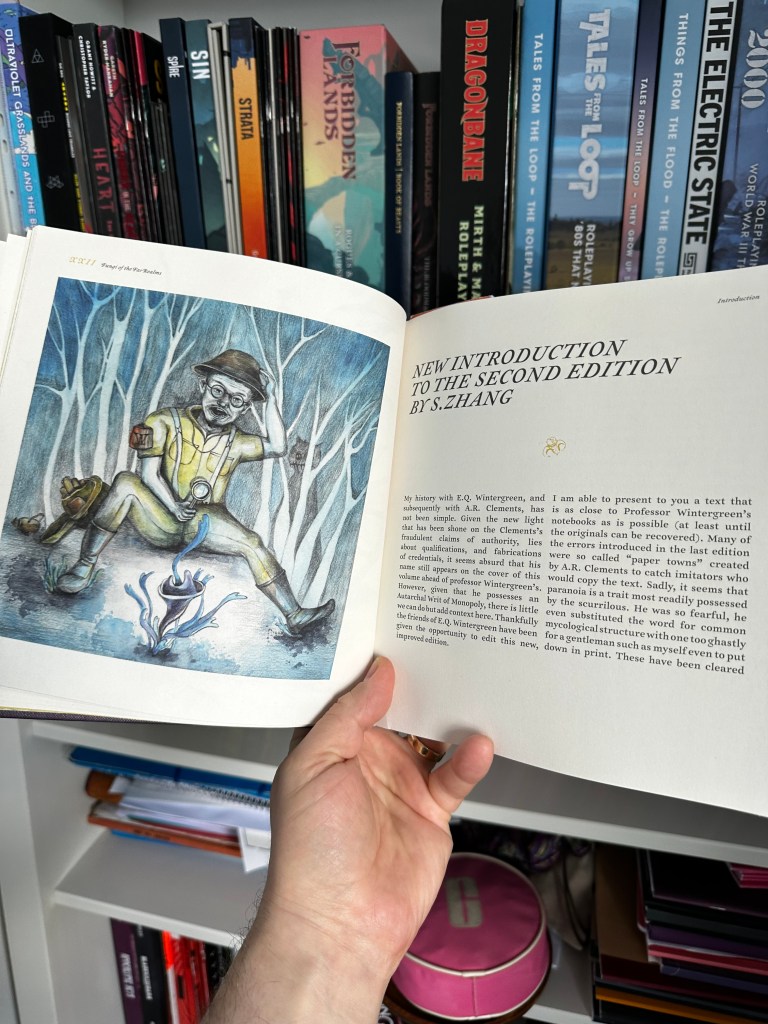


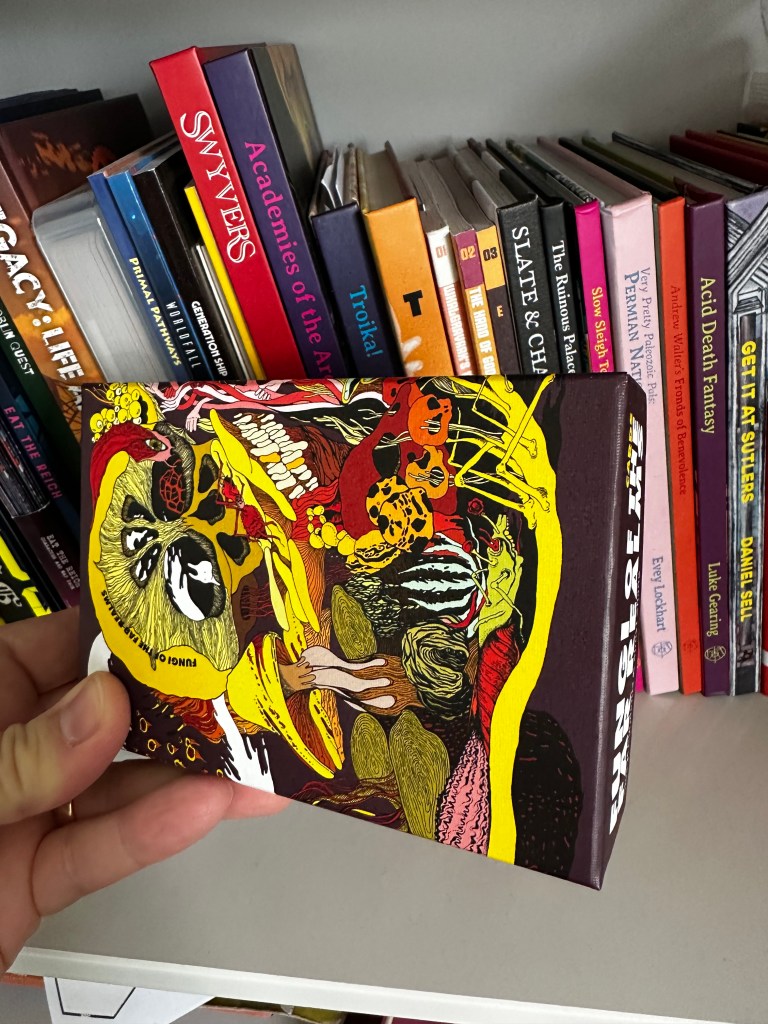


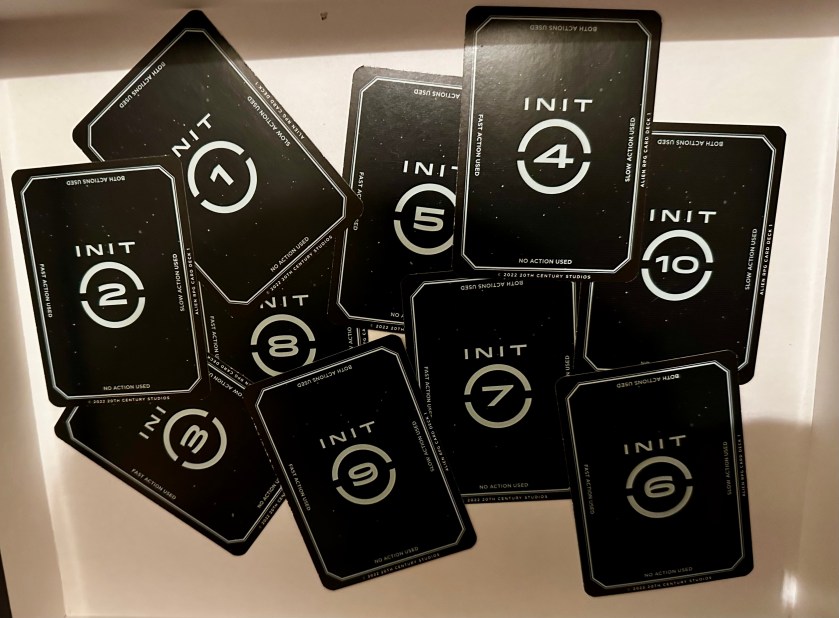


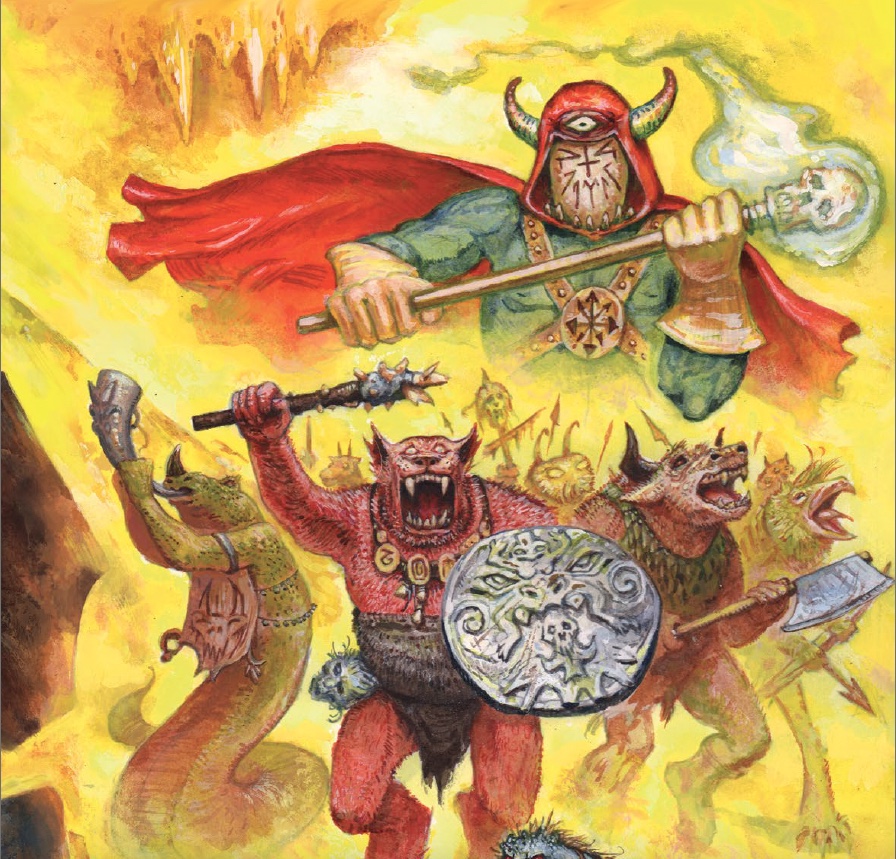
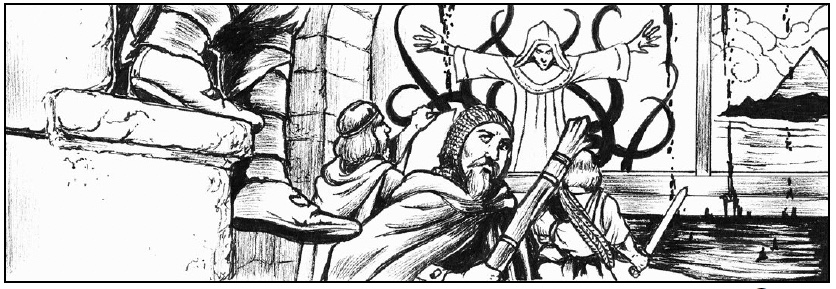
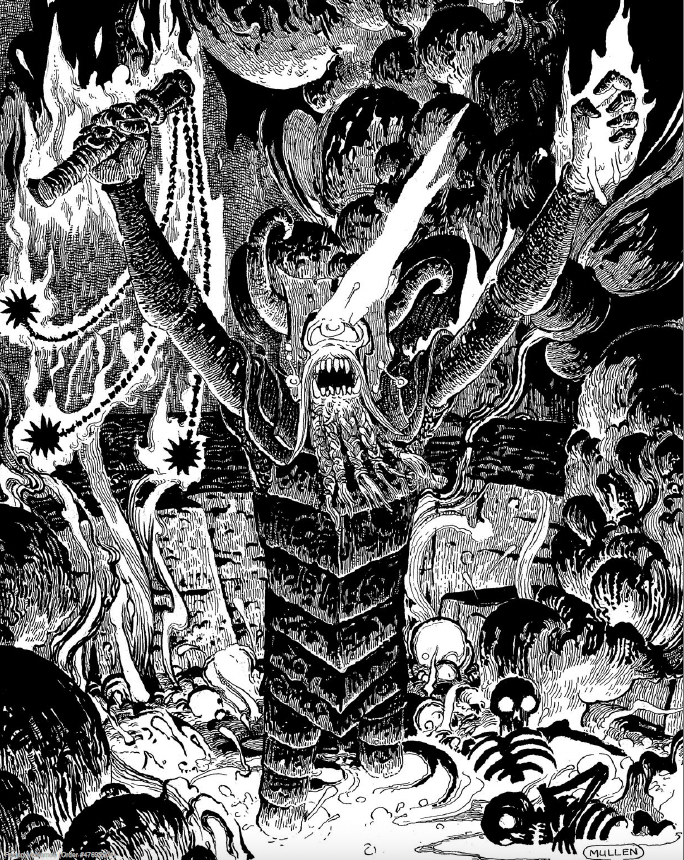


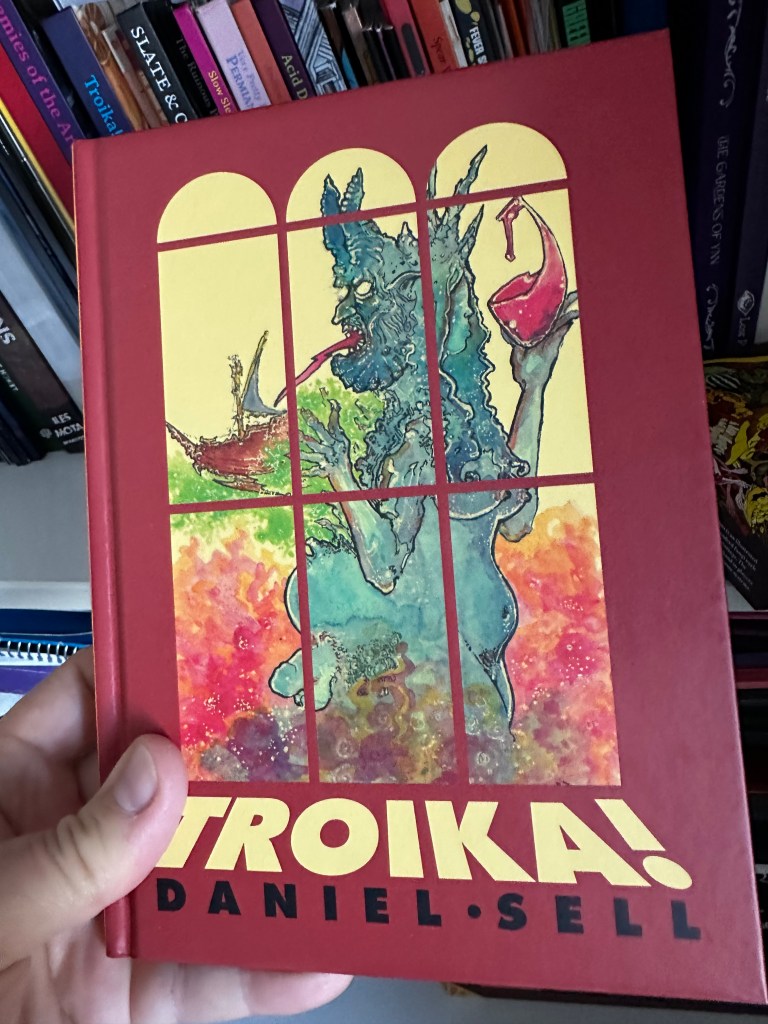


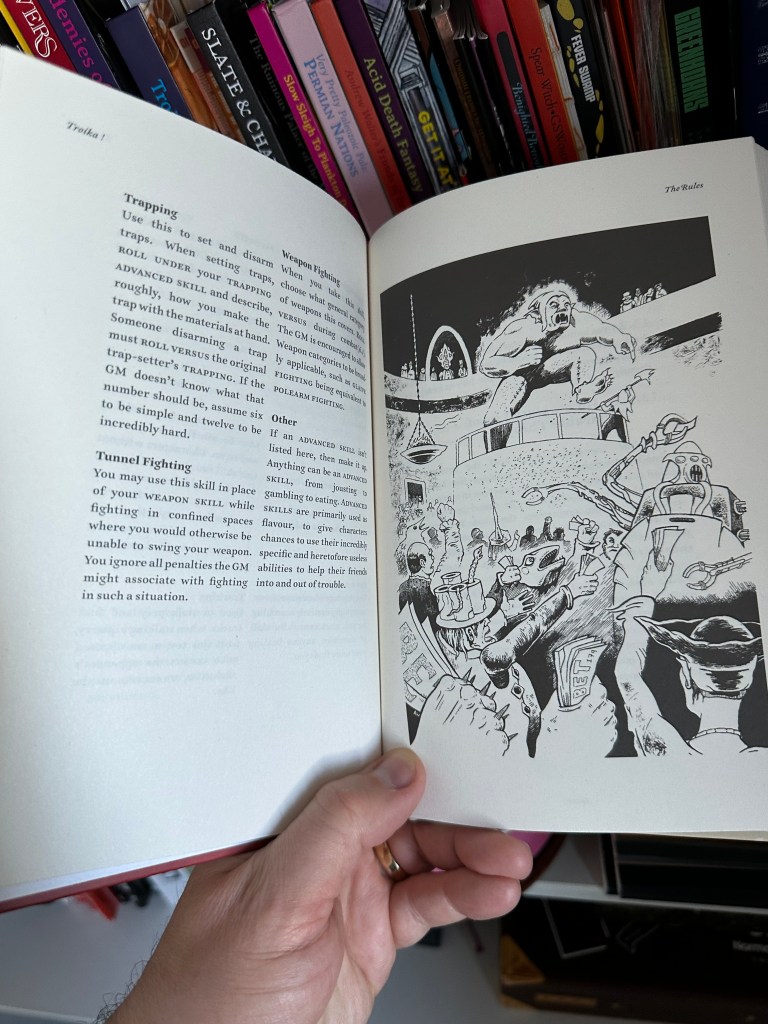
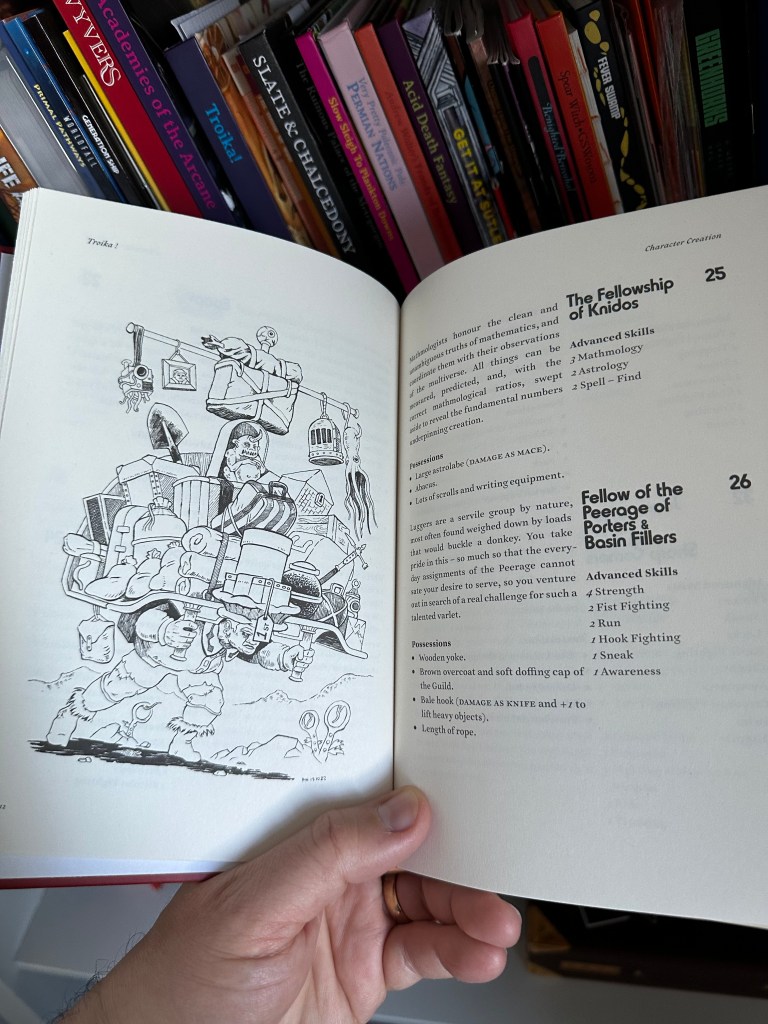
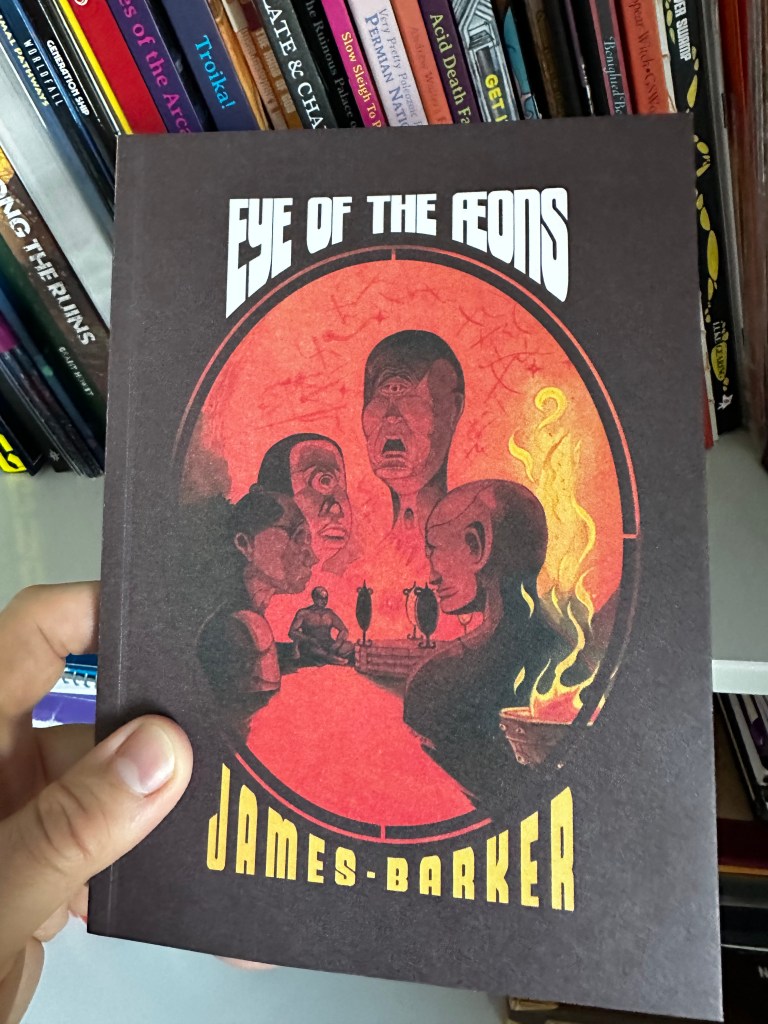


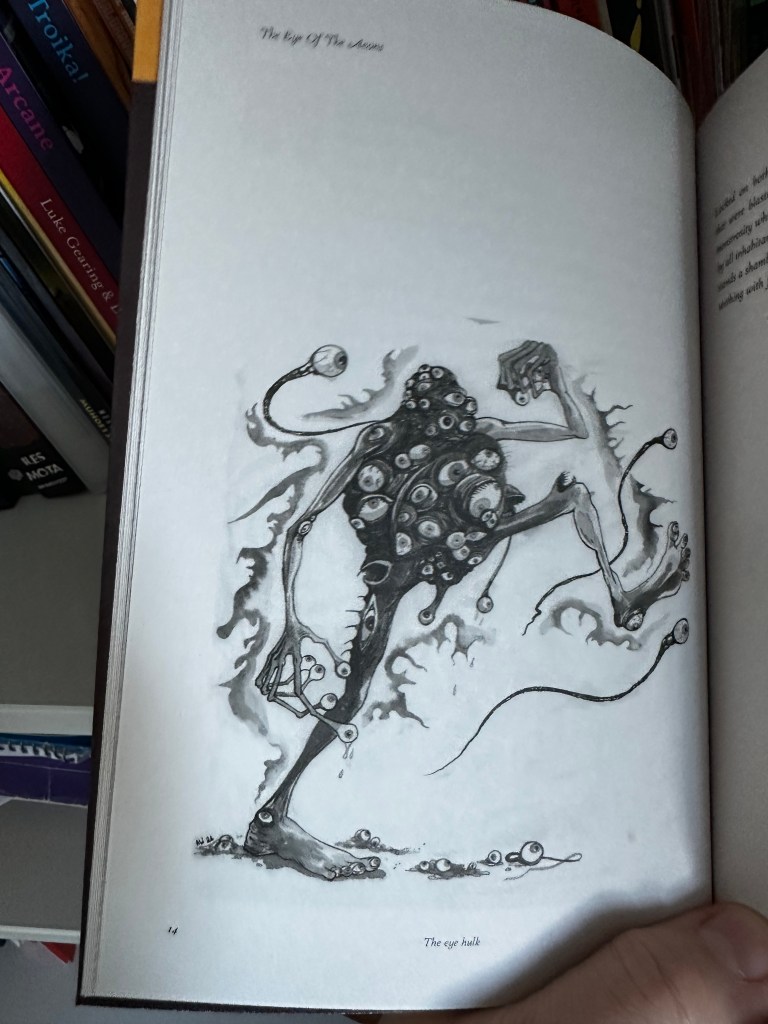

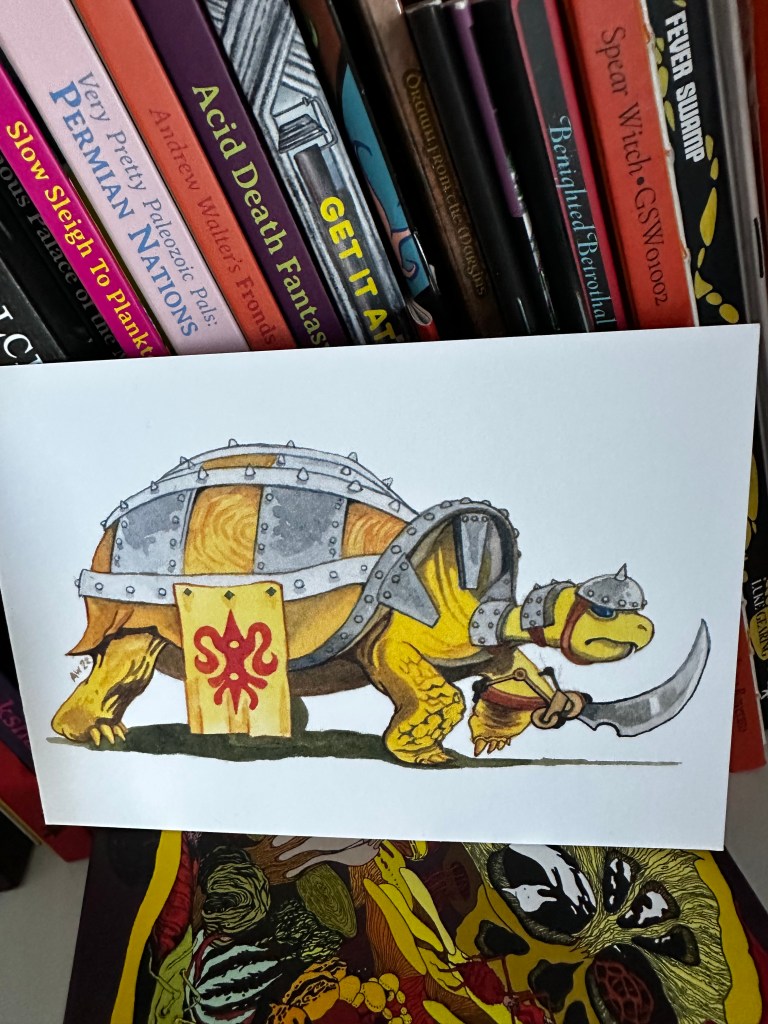


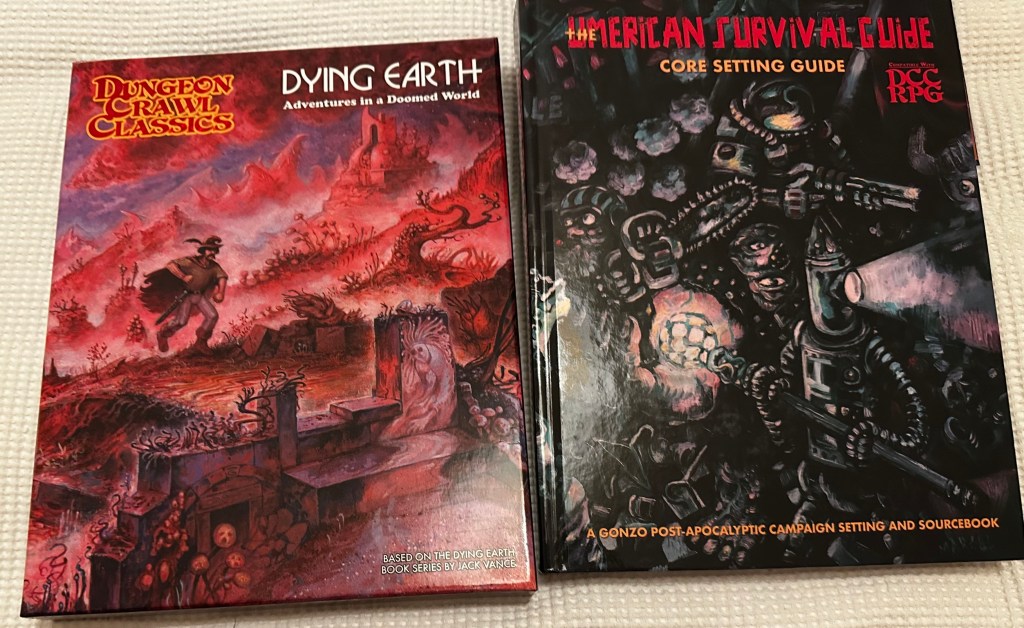
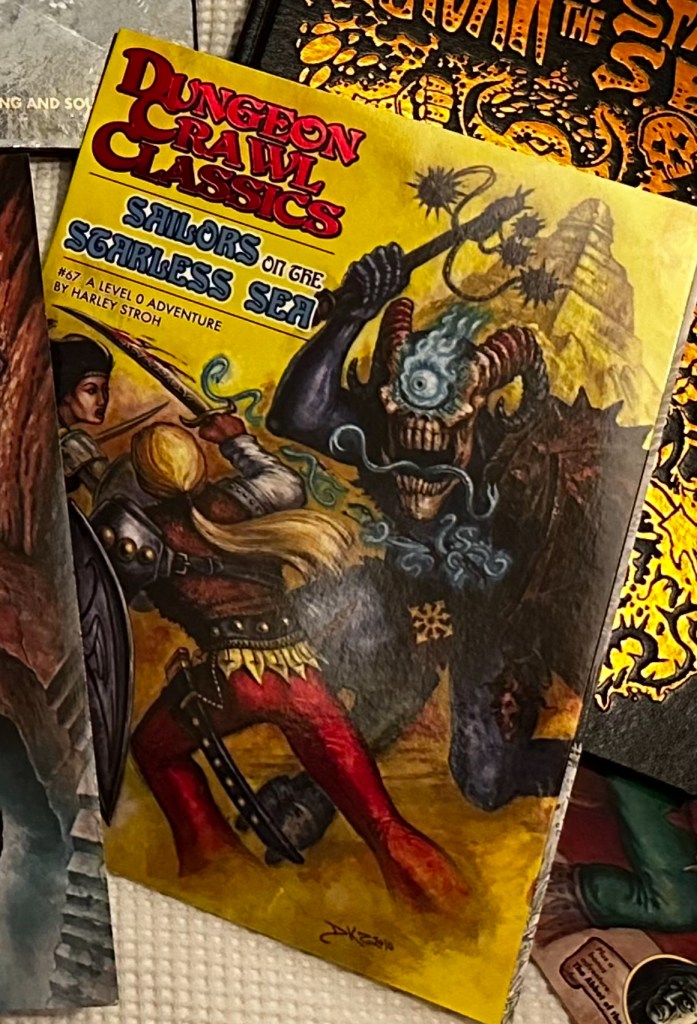

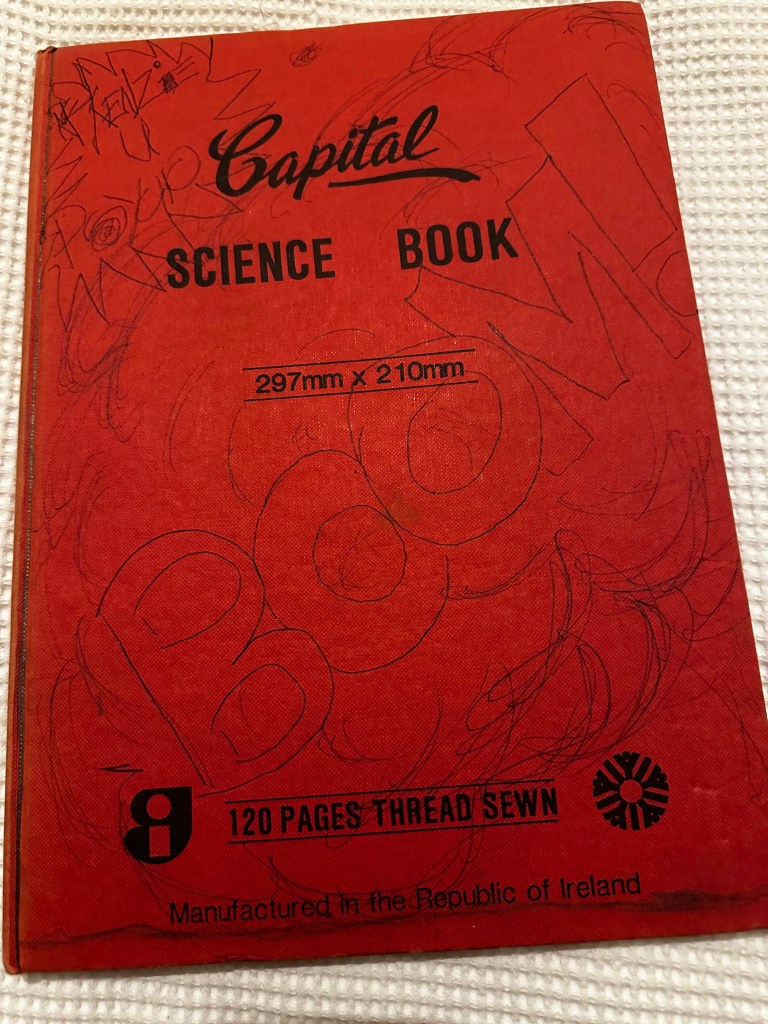

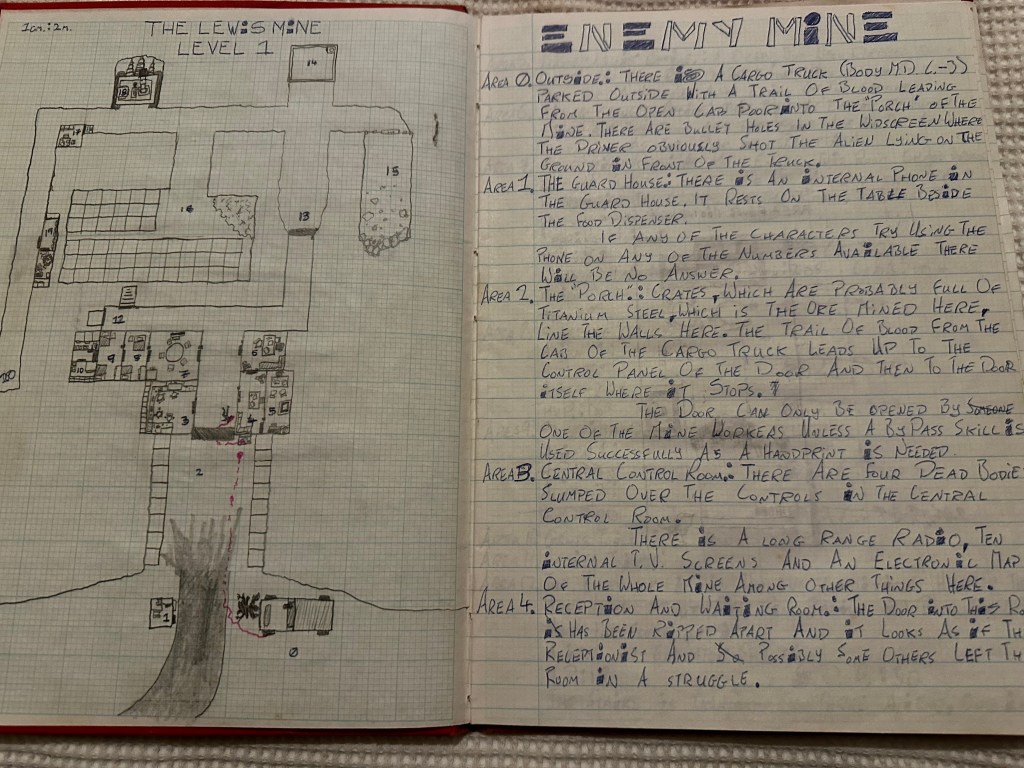
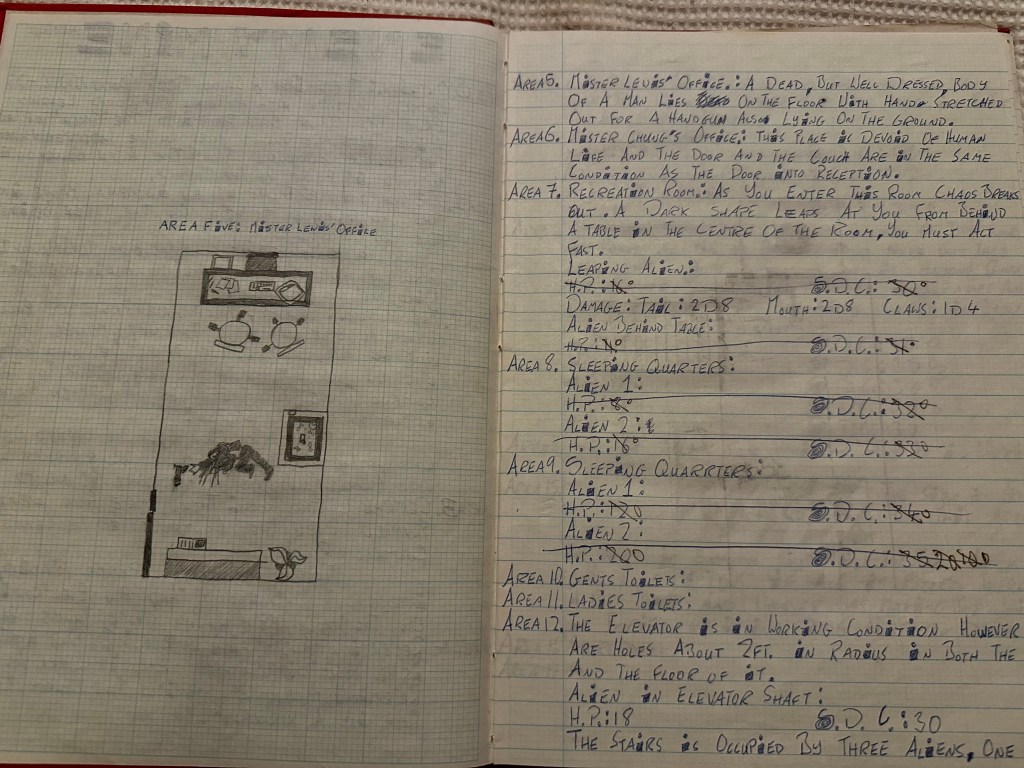
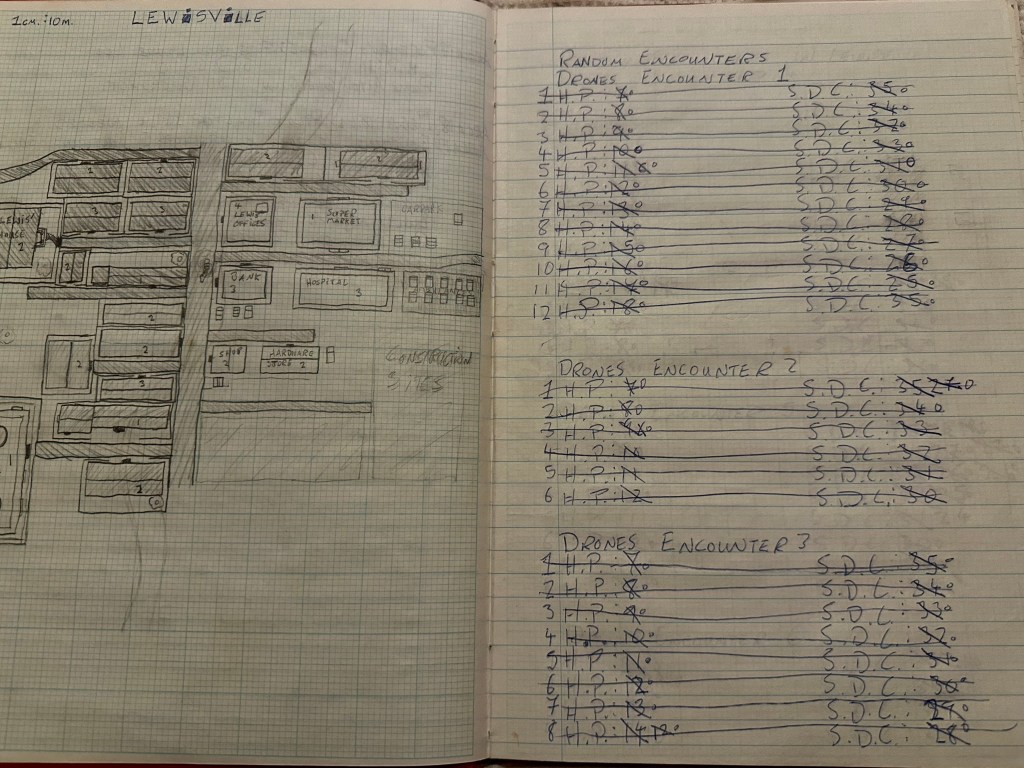

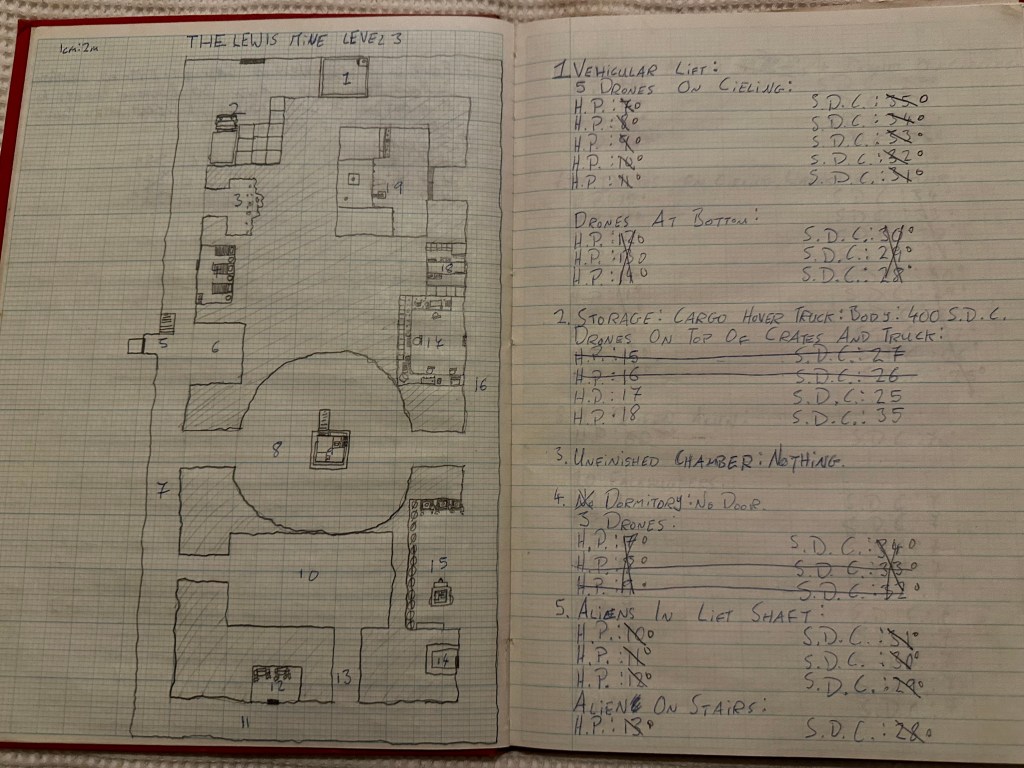
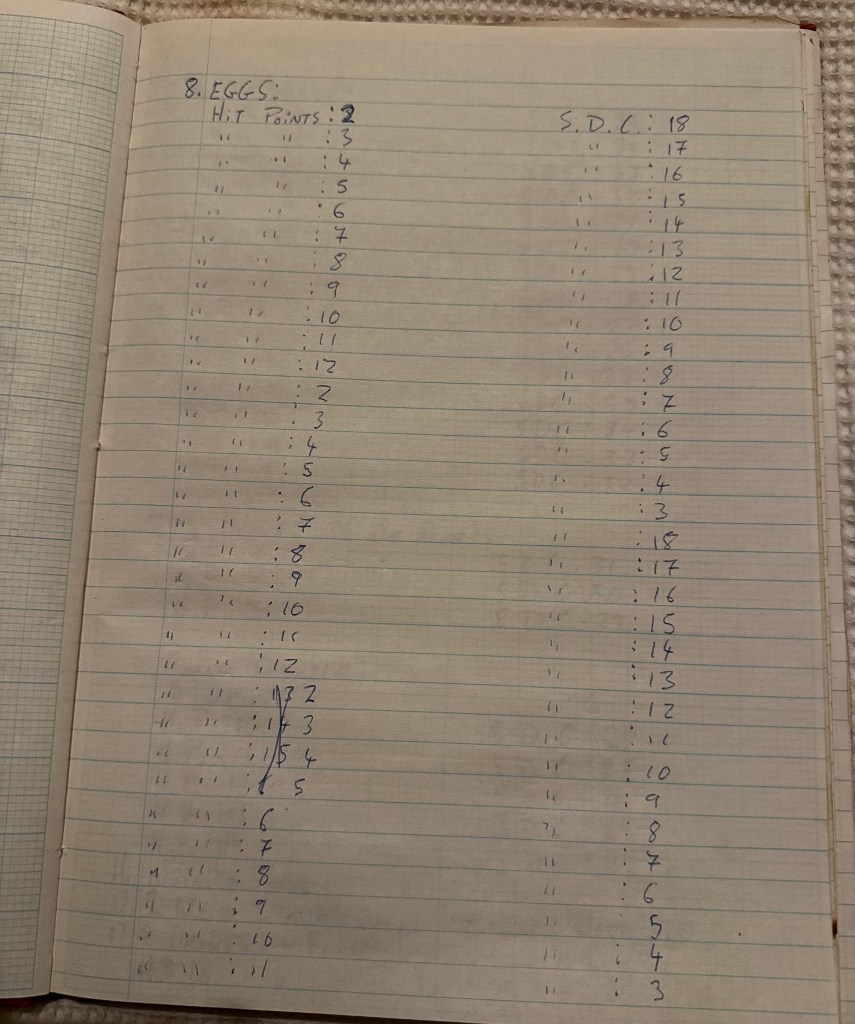


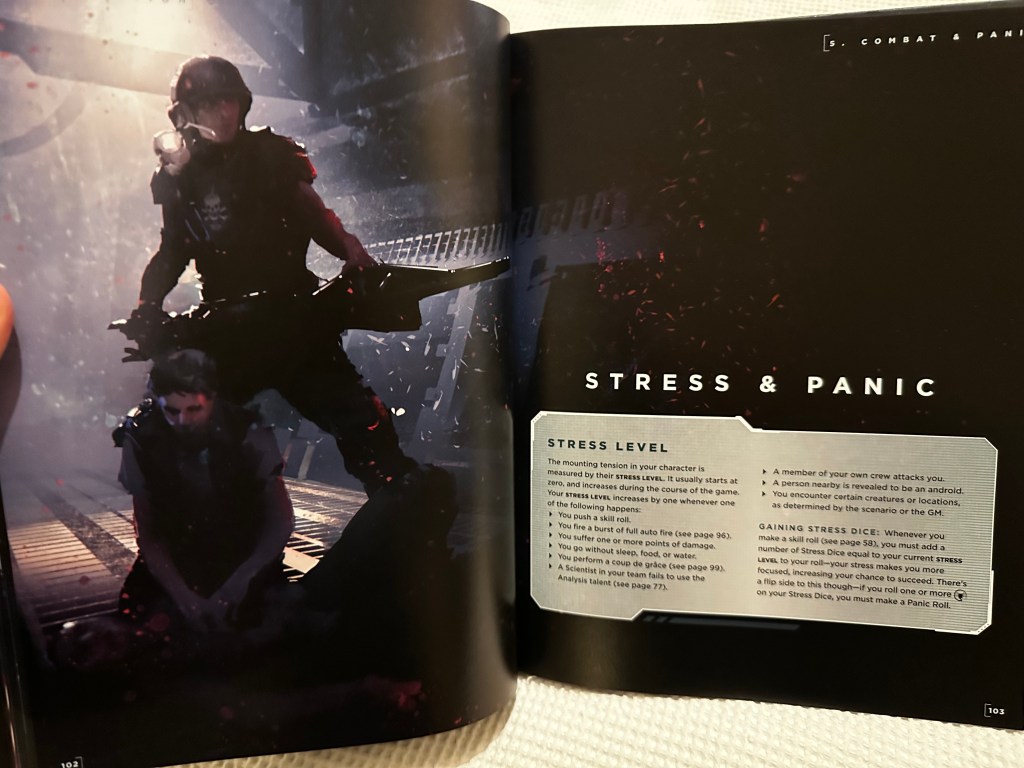
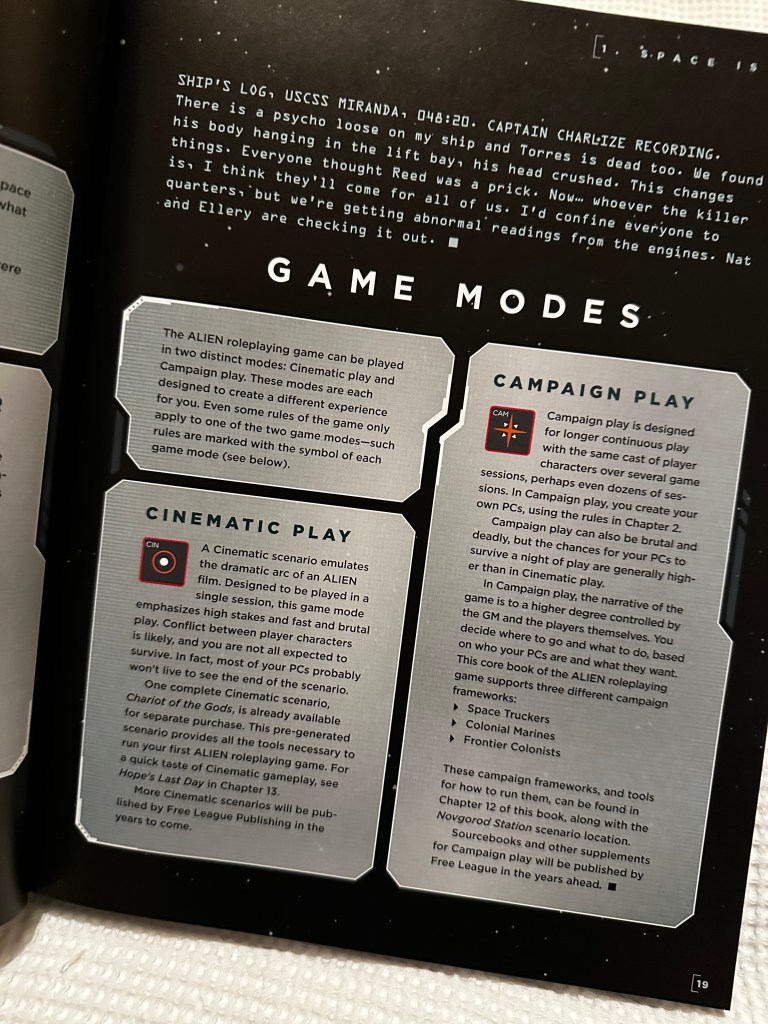



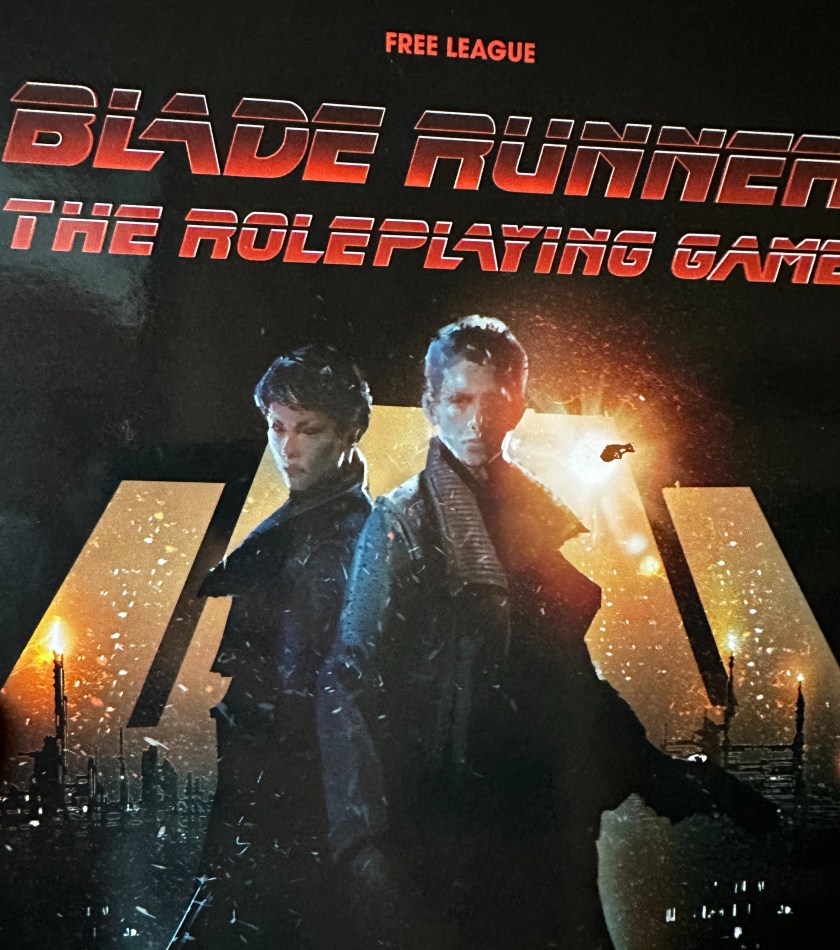
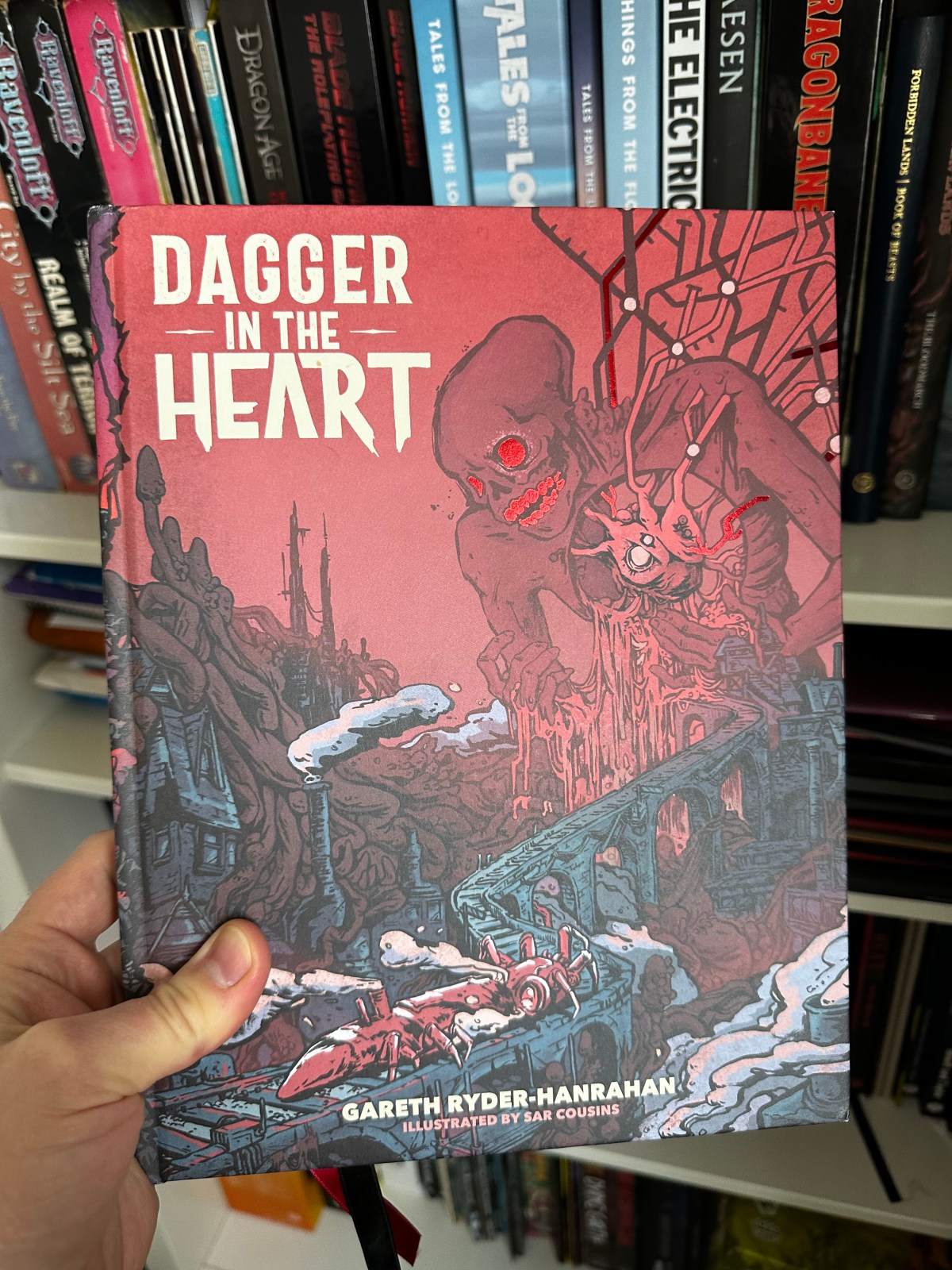

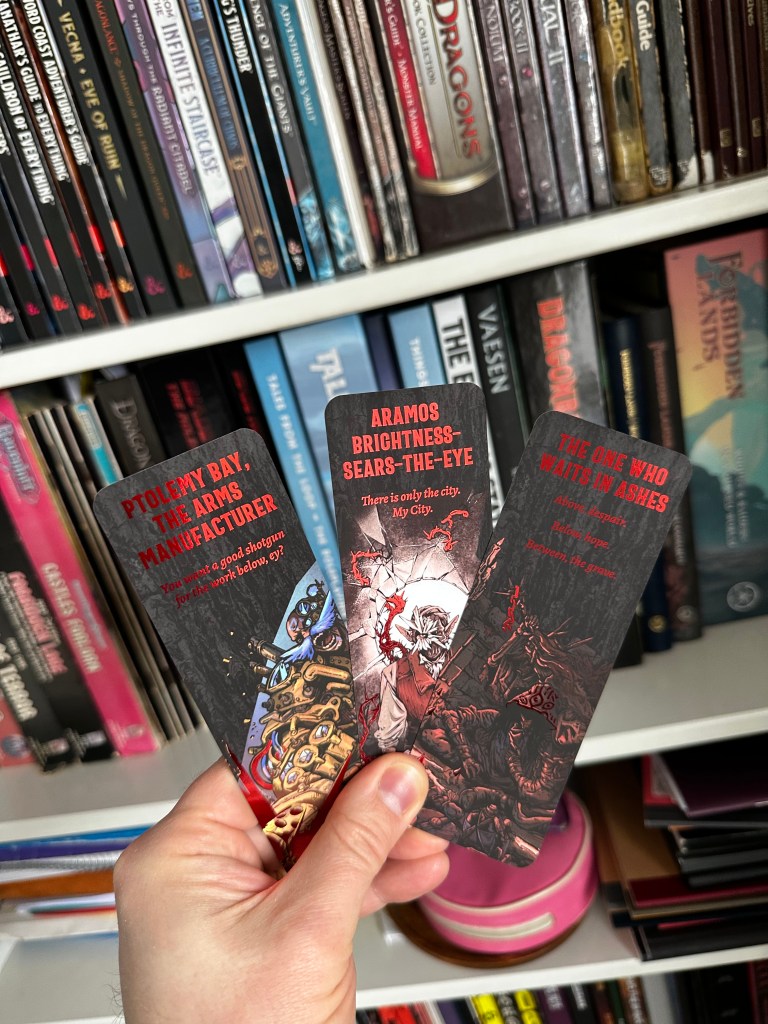


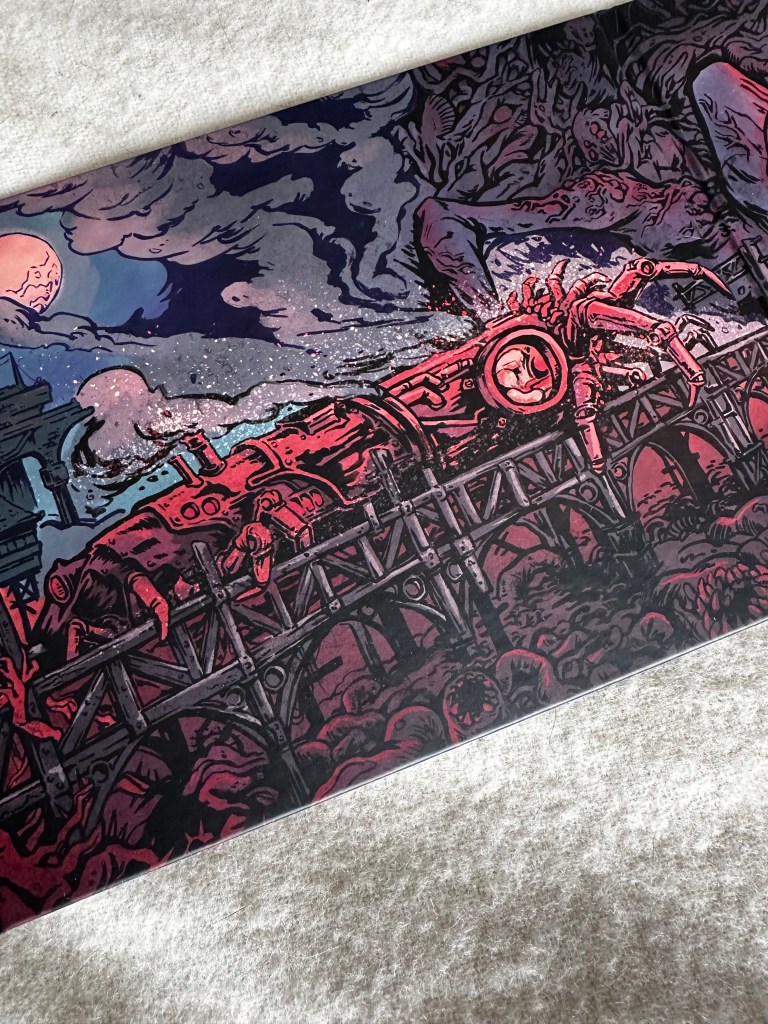


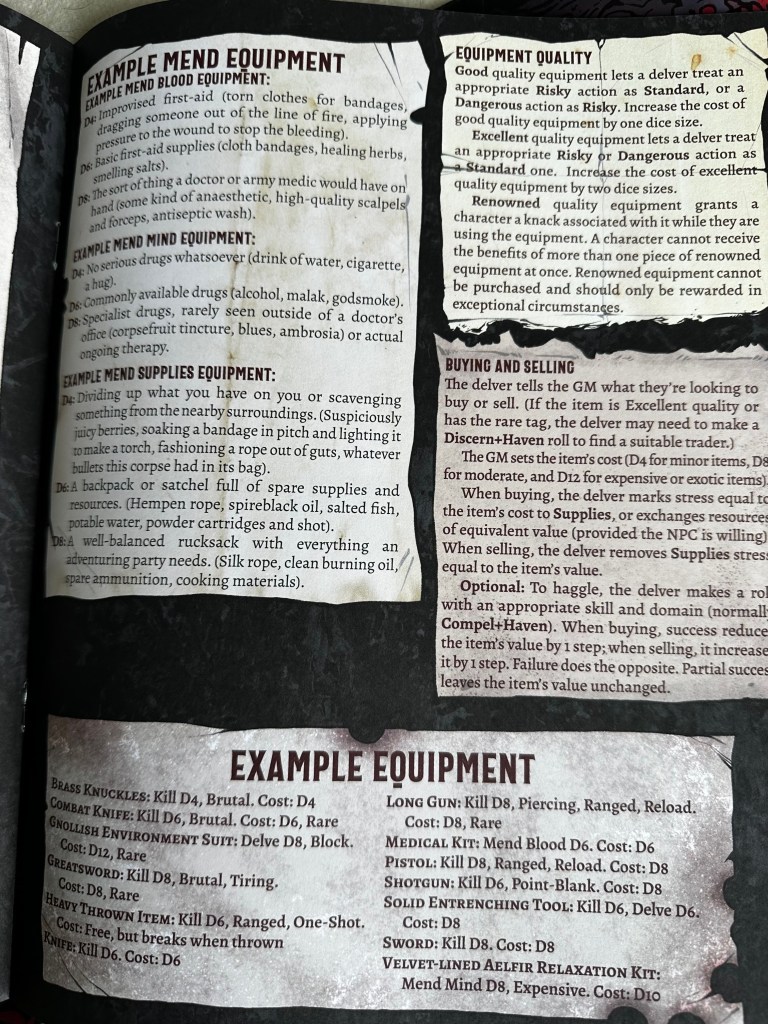
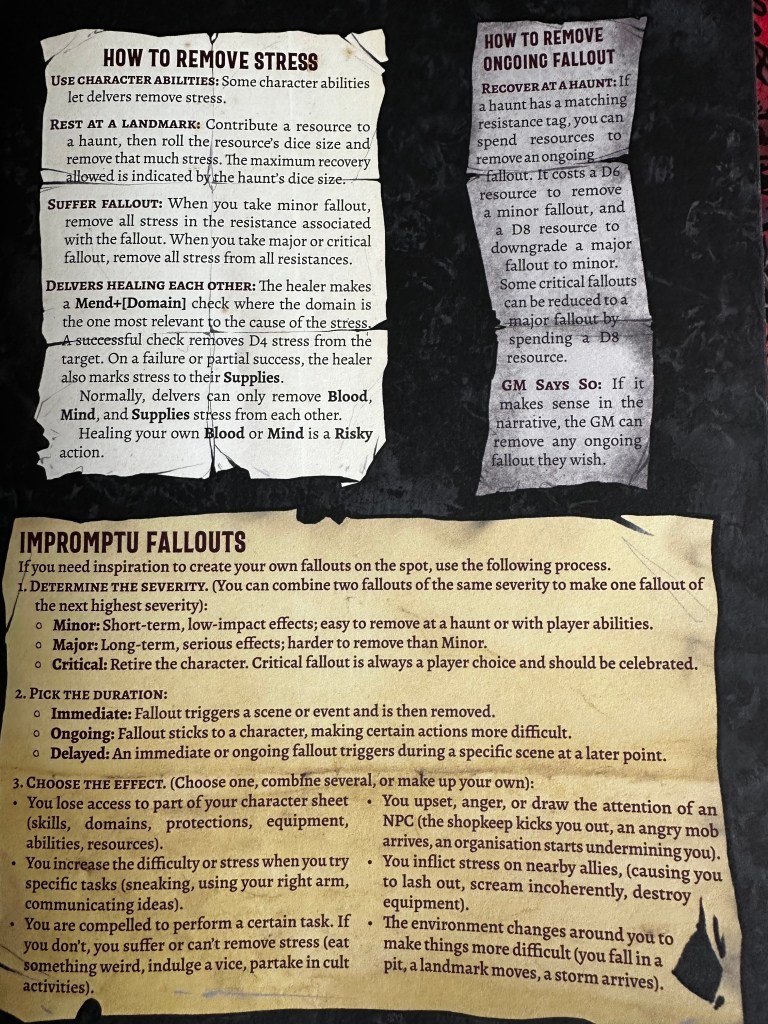

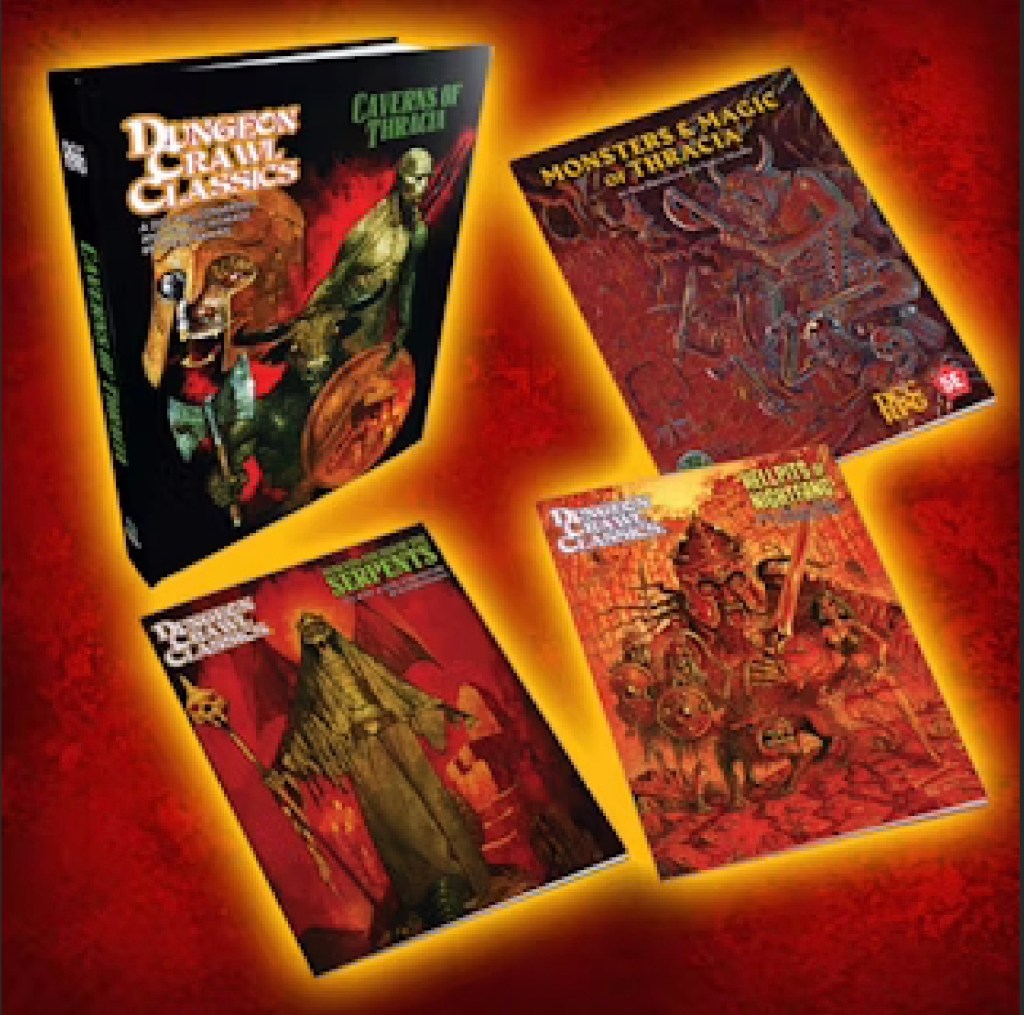

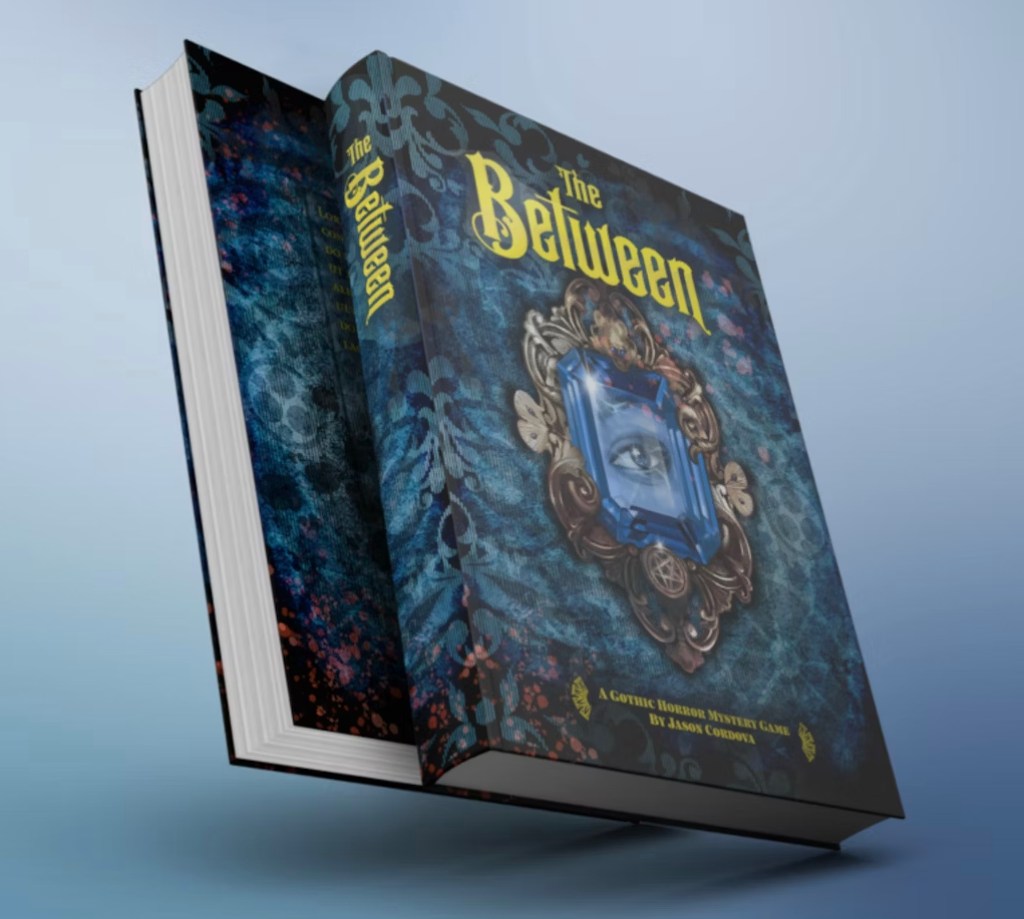

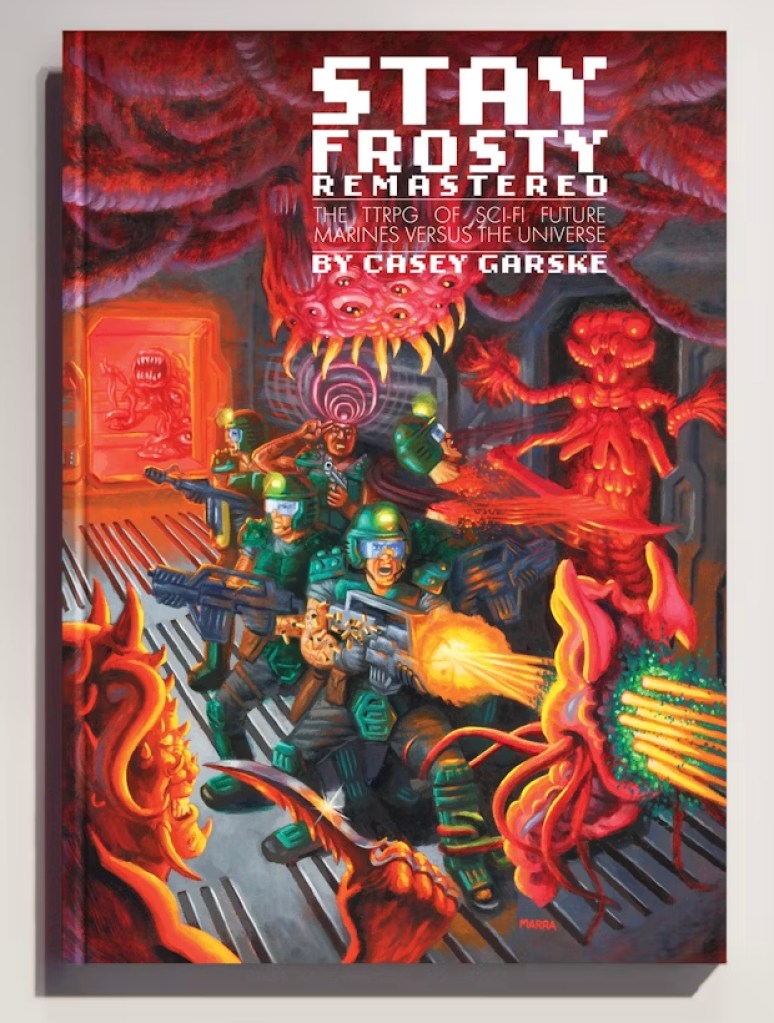


 The Dice Pool