From each genre, I’ll take a look at the games, their appeal, and, of course, their character creation posts to eliminate some. Hopefully, once I’ve done that, I’ll be able to come to a well-informed decision.
Decisions, Decisions
So, the characters have been created, the conclusions have been drawn, I am as familiar with the 7 games on offer as I’m going to get before actually playing them—its time to make a decision.
Before getting to that, though, I think it’s worth pointing out that this is, far and away, the most effort I’ve ever put into a decision of what game to play next. Since starting to write this blog I’ve spent a lot of time and not a little cash on new games. I’ve never had so many to choose from before. And I’m not even including the ones I’ve only got in PDF form. Long ago, as a teenager, I actually did run a variety of games; AD&D, of course, but also Gamma World, TMNT and Other Strangeness, Beyond the Supernatural, Robotech, Shadowrun. Back then, I just wanted to run the newest thing, the shiniest game, whatever had the bulk of my attention. But, I didn’t have so many to choose from, of course. There was no such thing as buying a game and never running it! I didn’t have that sort of money! These days, we are living in a golden age of tabletop games. There are so many RPGs of so many genres, utilising such an array of play styles and rulesets that it can be bewildering, overwhelming and paralysing. So, as I sail out of my majority-D&D era, navigate my way through the OSR and explore the unknown waters of the story-game, I have found this process incredibly helpful, if time-consuming. It has also been educational, interesting and fun. But there’s another aspect to this too: whatever game I choose, it’s one that my players and I will be with for weeks, hours of play and hours in between sessions thinking about. I want that to be good, or, hopefully, great!
The Competition
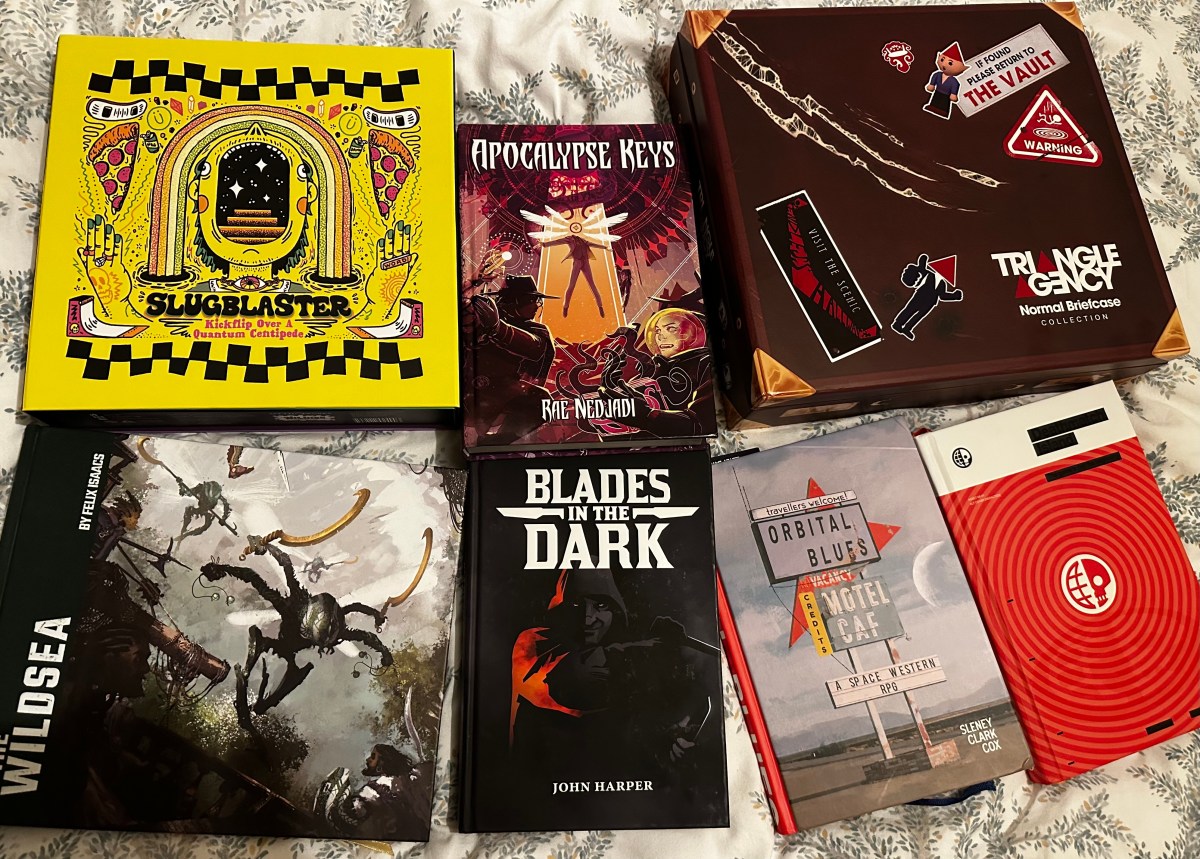
There are seven games to choose from, as laid out back in the original post. I could just take them one by one, as I did when writing their character creation posts, but, instead, I will separate them into genre groups. From each genre, I’ll take a look at the games, their appeal, and, of course, their character creation posts to eliminate some. Hopefully, once I’ve done that, I’ll be able to come to a well-informed decision.
Supernatural Investigations
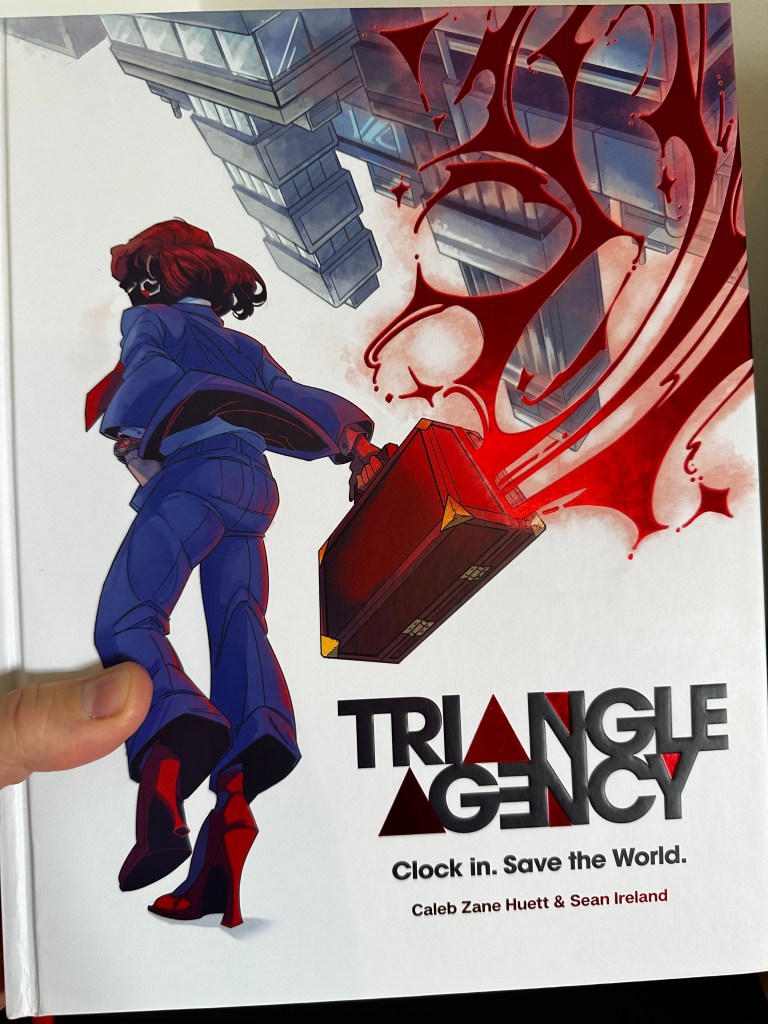
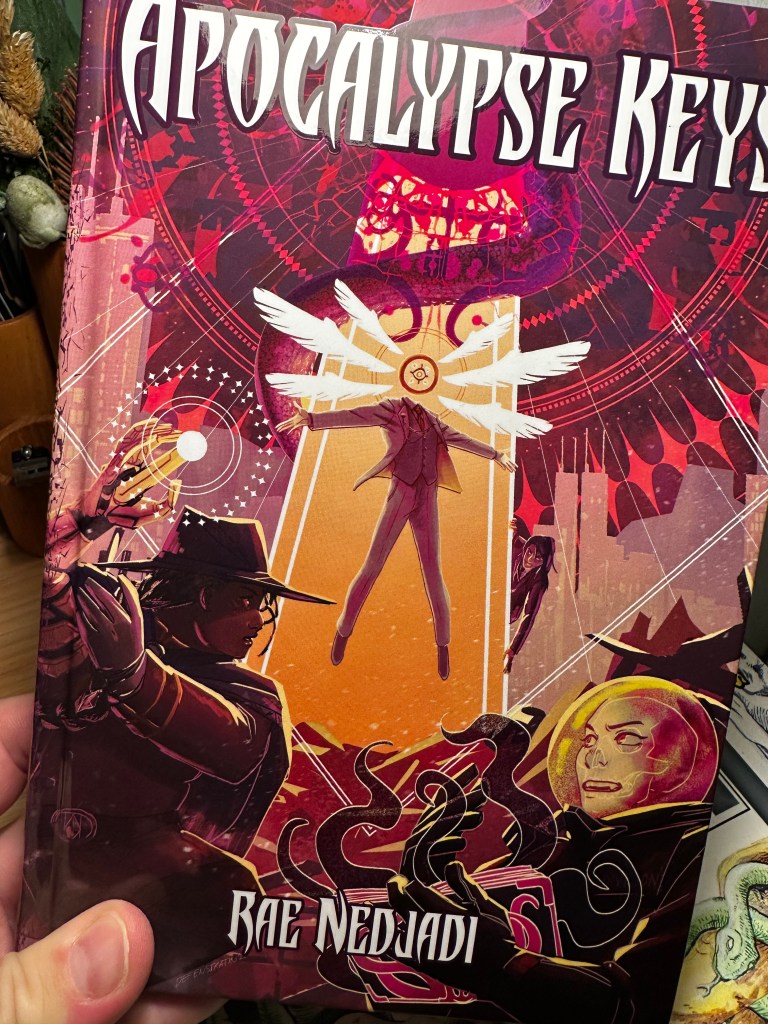
The cover of Triangle AgencyThe cover of Apocalypse Keys
We’ve got two games in this genre (I suppose this is more a of a sub-genre, but heigh-ho, it’s my blog-post.)
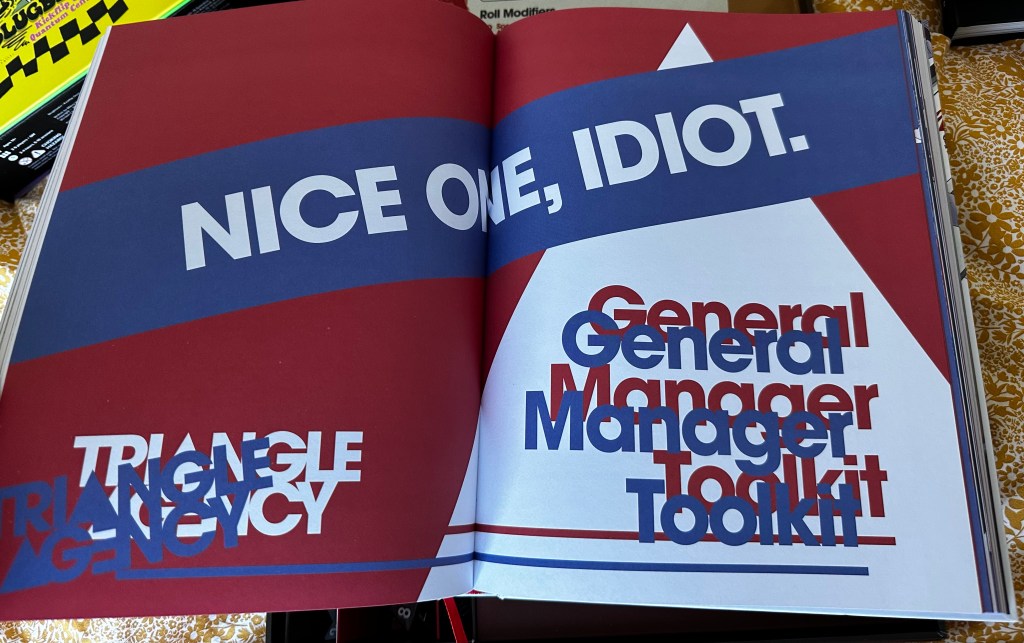
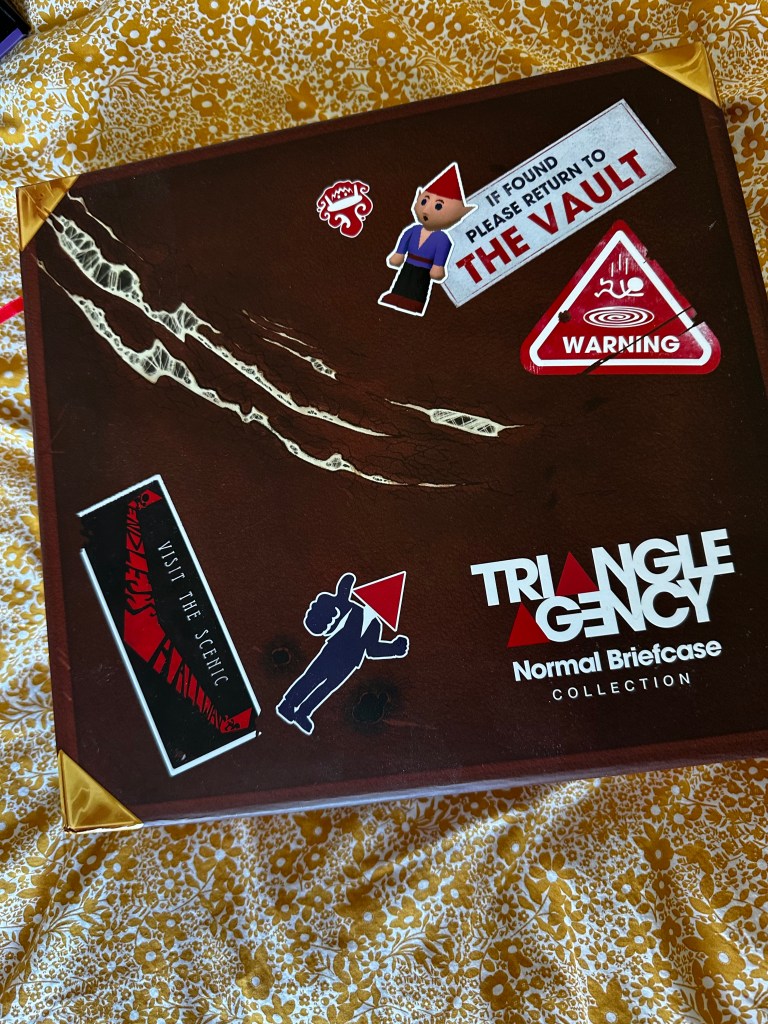
Triangle Agency – this was the first character creation post I made as part of this series. I think, at the time, that was because it was the game I was most interested in. It didn’t hurt that it came in a very impressive box. The presentation is altogether impeccable. This applies also to the text itself, which styles itself as the manual to a game to be played by actual agents of the Triangle Agency. The character creation process taught me a lot about how the game would be played and was particularly successful at making, not just a character, but a personality, history and motivation.
Apocalypse Keys – this, was the last of the character creation posts I did. I’m going to cut to the chase with Apocalypse Keys; I don’t think it’s for me. It might suit some of my players, but not others. I would rather the Triangle Agency’s tongue-in-cheek take on the genre than the melodrama inherent in Apocalypse Keys.
Triangle Agency wins!
Fantastic Voyages
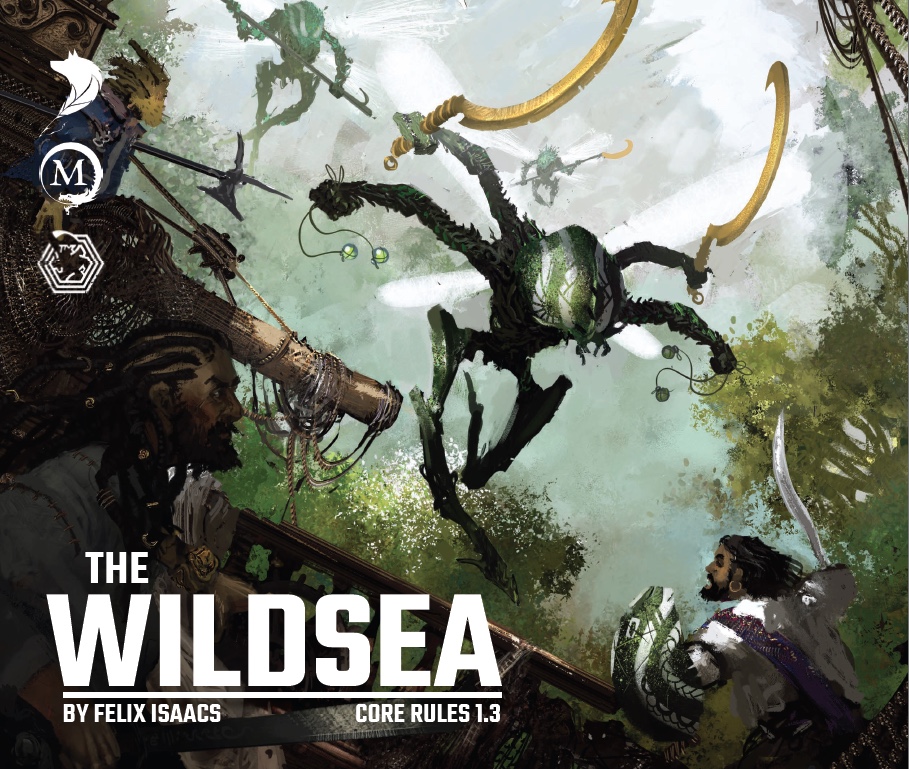
The cover of the WildseaThe cover of Orbital Blues
I’m stretching the term ‘genre’ here once again. But I’m adding two games to this one anyway. Both of these involve ship creation as part of the character creation process, and a crew of misfits to go with it.
The Wildsea – Its got a fascinating setting, a rich and engrossing vibe and a beautiful presentation. This is very much a fantasy game that’s determined to get you into trouble out on the emerald waves of the Wildsea. You will spend a long time making your character, as evidenced by the length of my character creation post. There are many, many choices to be made at every step and that doesn’t even take into account the ship creation process. For the campaign I’m imagining, a maximum of about ten sessions, I feel like this is too much. I’d rather spend the time playing than making Wildsailors. But, its definitely one that I might return to someday.
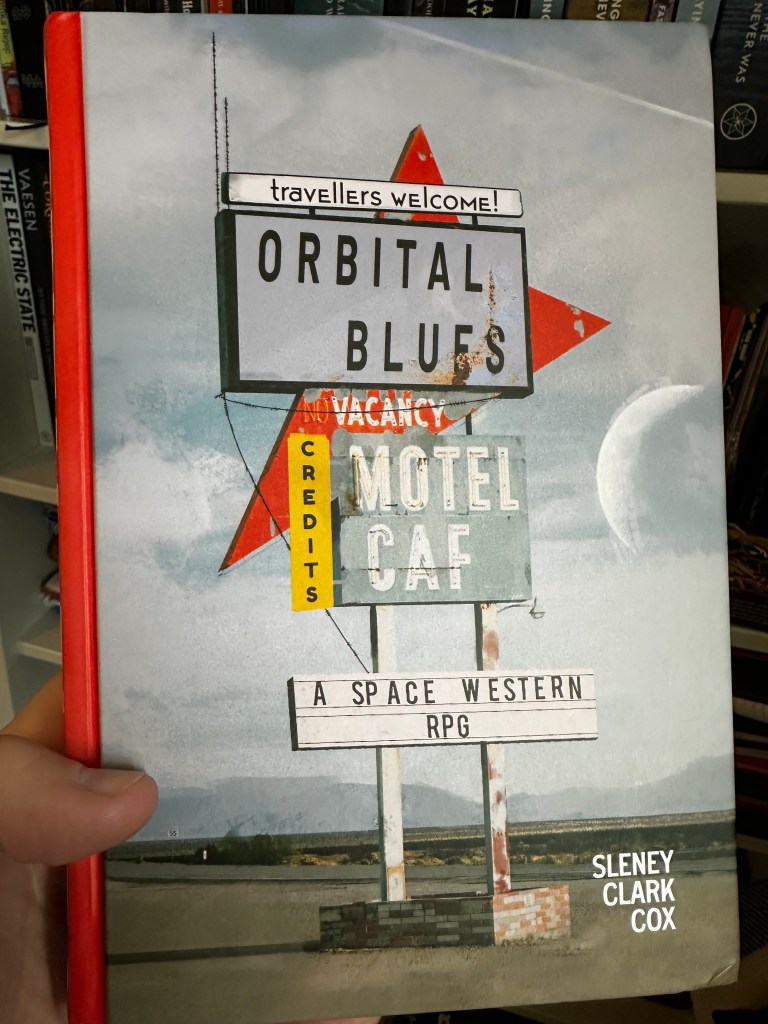
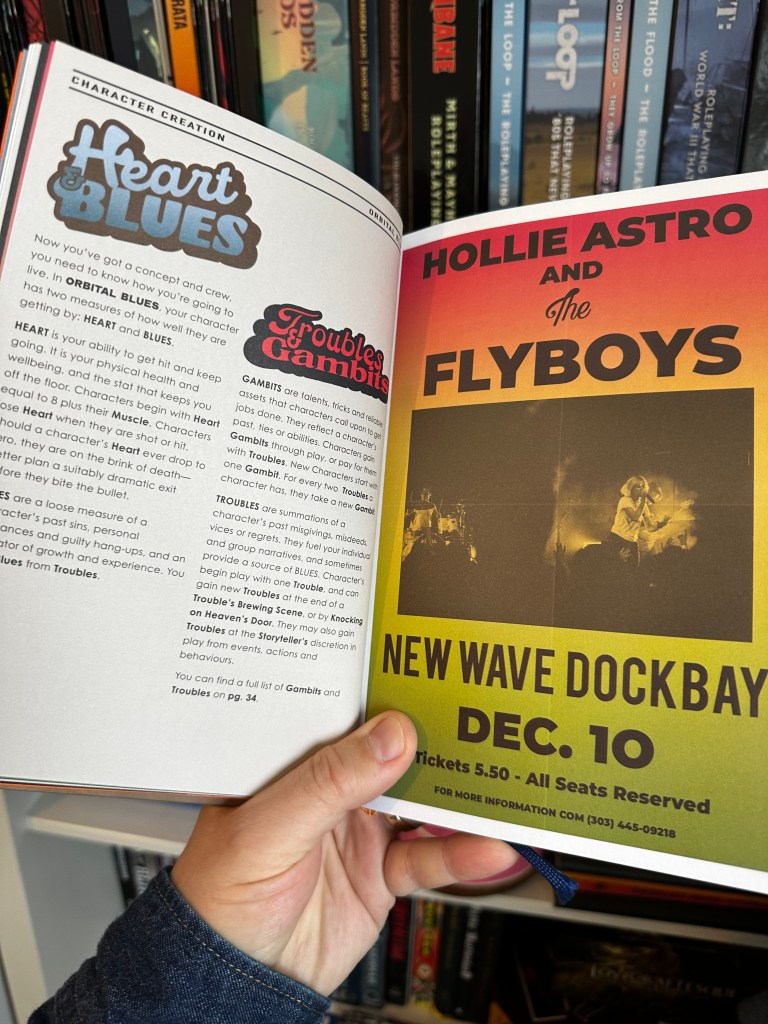
Orbital Blues – This is a game set in a far flung future where everyone has spaceships but its grimy, debt-ridden and kind of sad. Its a game that’s underpinned by themes that we can easily all understand, the hell of living in a late-stage capitalist economy, the mental health toll taken by the struggle to just survive from day-to-day in the gig economy etc. The character creation really stoked my imagination and conjured images of my sad space cowboy. And it was the exact opposite of the Wildsea in that it was just so quick and easy.
Orbital Blues wins!
The Others!
Blades in the Dark Front CoverDeath Match Island Front CoverSlugblaster GOTY boxed set cover
I gave up trying to come up with a way to link these final three games. Slugblaster and Blades in the Dark share a system, sort of, and Deathmatch Island is based on a system that was originally created by the author of Blades in the Dark, but that’s pretty tenuous. They all do have an important similarity in the way they are played in distinct phases, though.
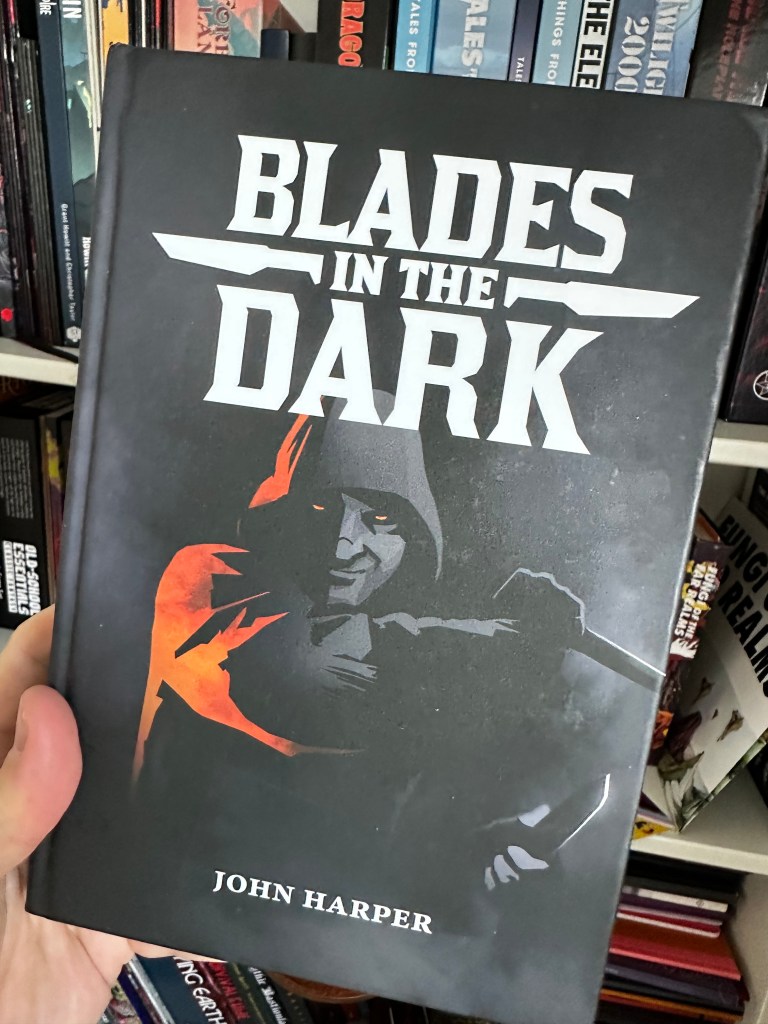
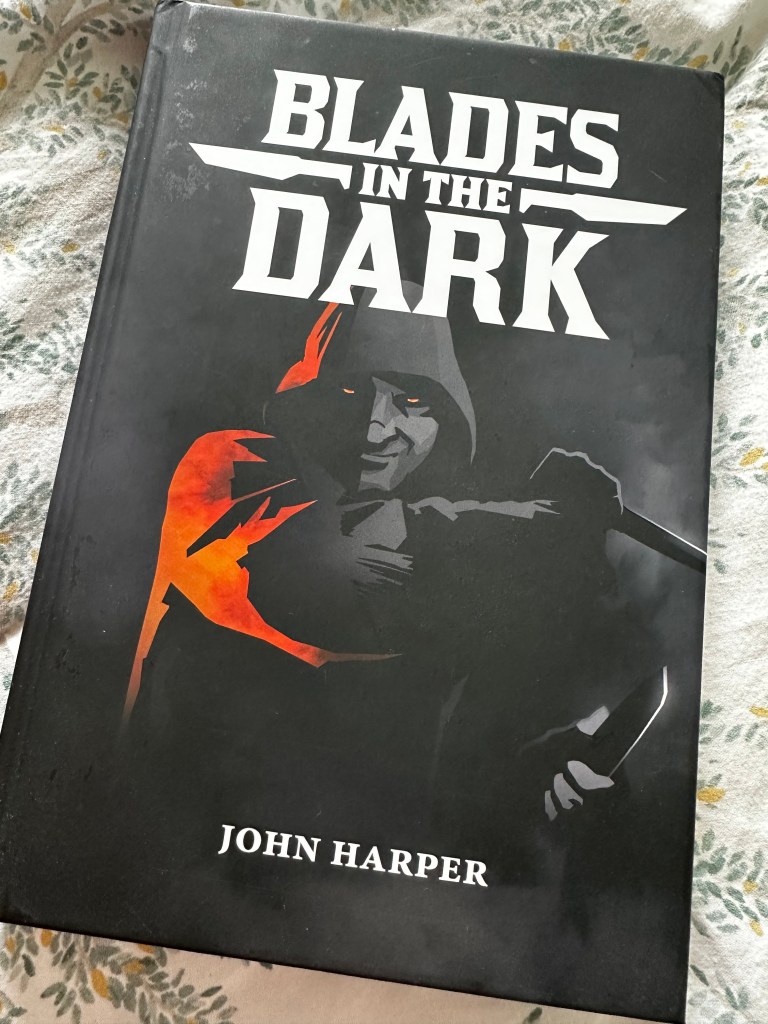
Blades in the Dark – This is such an iconic game and its the favourite of many an RPG enthusiast whose opinions I respect. The vibes of Blades are also perfect. Dark city, supernatural threats and heists. I think my players would love that shit. Also, the character creation is comparatively straight-forward and gives you a good idea of your character before you even start playing. This is the only game on the list that I have actually played before and, I’m not going to lie, it has an advantage because of that.
Deathmatch Island – This game is on the list because I finished a rewatch of Lost this year and because I backed it and got a lot of really cool materials for it. But it has so much more to recommend it. The premise is great, the fundamental decisions your characters have to make about the nature of their realities are compelling and the rules are simple enough to require very little time to master. However, its strength in this respect is also a weakness. I think I could easily get a small group together at short notice to play this game as a one-shot or very short campaign and I might consider it for that. But I’m not sure I want to run it for longer. Which is pretty much the conclusion I came to the first time I looked at it on this blog.
Slugblaster – Another gorgeously presented book. It has world-building oozing from every paragraph, illustration and fictional ad. The subject matter is not quite my bag though. I have no idea about skater culture. Although I am inspired by many of the touchstones Mikey Hamm names for Slugblaster, it doesn’t seem quite enough for me, I’m afraid. I also had some issues with the character creation process which I went into in that post. Maybe I’ll come back to this one someday. But, for now, it’s a no from me.
Blades in the Dark wins!
The Semis
Nice One IdiotThe Lurk playbook in Blades in the DarkHeart and Blues, Gambits and Troubles
I’m glad to be dealing with a semifinal now after Ireland went out of the Women’s Rugby World Cup in devastating fashion at the quarter final stage earlier today. We’ll see a semifinal one day!
Anyway, we have three games left:
Triangle Agency – A unique take on the genre of supernatural investigation with an original ruleset and a lightly comedic vibe
Orbital Blues – A space cowboy sci-fi game of disillusionment with the universe and characters who grow through expressions of depression as they journey through the stars
Blades in the Dark – a classic supernatural, victorian heist game that has launched a thousand other games.
I have to eliminate Orbital Blues here. This is a bit disappointing, to be honest, but I have a good reason. I’m already running a Spelljammer game at the moment, as well as Ultraviolet Grasslands. That’s a lot of journeying from one place to another in a ship/caravan. I don’t want to start a new game with a similar format. Maybe if and when either of those two games comes to a conclusion, I’ll come back to Orbital Blues. But for now, it’s got to go, I’m afraid.
The Final
The Triangle Agency Normal Briefcase EditionThe cover of Blades in the Dark
So we have two games to choose from in the end, as it should be.
Triangle Agency
Blades in the Dark
I can’t choose between them. I’d be very excited to run either one. If I could find the time, I would run both. If I could find the time, I’d run every game on this list! But as they say in Highlander, there can be only one. Fittingly, It’s going to come down to a dice roll. 1d6. 1 to 3, its Triangle Agency, 4 to 6, Blades in the Dark.
Here we go!
Its a 4!
It’s time to sharpen your blades and take that Devil’s Bargain with the rest of the crew. We’re off to Doskvol…
The book presents many, many options in each step, and that’s even using the Quickstart kits. Without the Quickstart rules, you can really choose any options from any bloodlines, origins and posts, to truly customise your character as you like.
This is the fifth in a series of character creation posts I’m using to figure out which game I want to schedule for our next campaign. You can find the Triangle Agency one here. And you can find the Slugblaster one here. You can find the Blades in the Dark one here. And most relevant to today’s post, here’s the Wildsea Ship Creation post.
A Character to Fit the Beacon
In my last post, I created a ship for my Wildsea character to pilot across the Thrash. The ship, it turned out, is a research vessel, fast and dangerous, but not very manoeuvrable or stealthy. It’s got a beehive for an engine and an acid-cannon for protection. It also has a colony of glow bugs that follow the crew around illuminating their surroundings for them. I named the ship the Beacon.
So, what kind of wildsailor am I going to come up with to match the vibes of the Beacon? Let’s find out, dear reader!
Character Creation Steps
Character Creation chapter illustration
There are three important choices to be made in this process:
Your Bloodline
Your Origin
Your Post
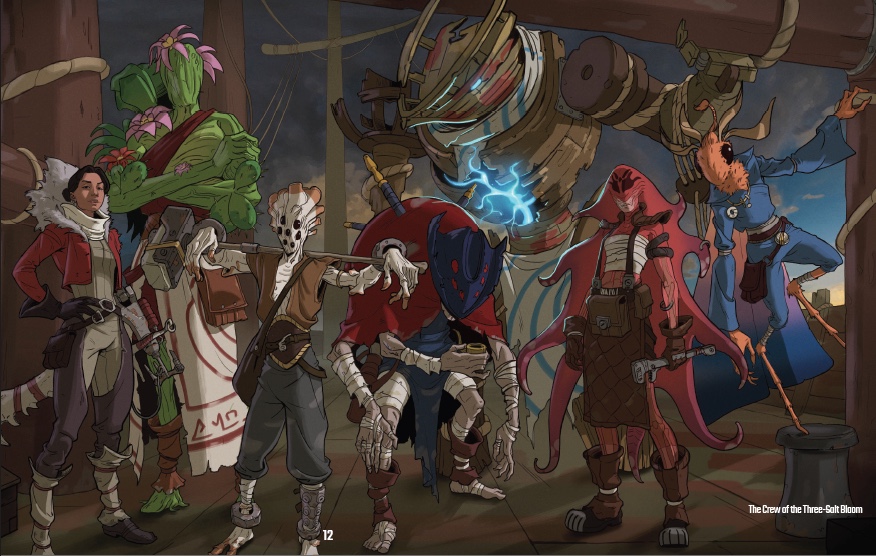
Now, while these choices are minimally restrictive, the beginning of the Character Elements chapter encourages you to build a narrative background around the framework of the mechanical choices. In fact, throughout character creation, you are encouraged to be creative and to make unique wildsailors that no-one else has ever made before.
Also, there are many other elements to a Wildsea character, it’s just that most of them hang off these three choices. All of these are explained in the Character Elements chapter.
At this point, I think it’s important to point out that the Character Elements chapter is there only to explain those elements, not to help you create your actual character. That’s all in the following chapter. One thing I have found with the Wildsea is that it devotes a lot of space to explaining everything. Occasionally, I find that this is at the expense of functionality. The book goes to some lengths to inform you what the Cook skill allows you to do, when, in a storytelling game, this could usefully just be left up to the players around the table. It’s also because so many of the terms used in play are quite unique, Twist, Edges, Whispers, Cut etc. Although most of these bear some resemblance to elements of other games, the resistance to using those better known terms means they require more explanation. I found this also in Slugblaster, an ostensibly Forged in the Dark game that uses a lot of setting/genre-specific terminology for concepts that are more functionally named in Blades in the Dark.
Anyway, I’m going to move on from the Character Elements chapter immediately. If I need to explain anything, I’ll do it as I build the character.
Young Guns or Old Dogs
This is a welcome choice to start with. It reflects the type of game you’re preparing for. If you go for a Young Gun, you start with fewer skills, aspects and resources, leaving the character more room to grow. The Old Dog has more going for them, but is meant for one-shots or short campaigns. For my purposes, I’m going to create an Old Dog, to show off more of the character elements in this blog post. So, an Old Dog starts with the following:
1 Bloodline, 1 Origin, and 1 Post
3 edges
15 skill / language ranks (maximum starting rank 3)
6 aspects taken from any bloodlines, origins, or posts
6 resources
3 drives and 3 mires
Ardent Quickstart Kit
For ease of one-shot character creation, there is a Quickstart Kit presented in the section for each bloodline, origin and post. These break it down to a selection of easy choices.
In the interests of keeping this post below 2000 words, I’m going to use the Quickstart kits as and when I feel its appropriate.
Bloodline
Here are the options for Bloodline:
Ardent – human
Ektus – cactus-folk
Gau- fungus-folk
Ironbound – ship-ghosts with bodies of salvage
Ketra – gelatinous humanoids
Mothryn – moth people
Tzelicrae – hive-mind spider colonies in a human skin
A Ketra with a chart
Remember this is a Researcher we’re making here, so I think it would be useful for them to be good with technology. The Ketra are described in the book as “tech-savvy.” So, I think that’s what I will go for.
The ketra are the descendants of those fragments of ancient humanity trapped in tunnels and sturdy temple complexes, mineshafts, and mountain-seams. Like the ardent, they have adapted to face the post-Verdant world, but with a far more dramatic biological change – tentacular mantles, translucent fl esh, and swirling, ever-moving inkblot patternings are common. Many ketra reinforce their malleable forms with selfmade skeletons of salvaged driftwood or repurposed scrap-metal.
Questions
The first thing to do with your new ketra is answer the following questions:
Q: Have you spent any time in the ‘ancestral’ ketra places and, if so, how did you find their dark, crampled confines? A: Yes, my character spent the early part of their life below the waves. Only as a young adult did they venture above the Thrash where they were discovered by the original owner of the Beacon, an Ardent named Benida Hoffspring
Q: How original is your skeleton, and if you’ve replaced parts of it yourself, what new materials do you rely on for support? A: Many parts of their skeleton have been replaced, most notably, the lower jaw is shaped by a perfectly formed piece of Ironwood. It juts out more than it should. Other bones have been replaced with sturdy pieces of salvaged metal and ceramic.
Q: Were you passed down any stories of your family’s old human days, or is your preverdant lineage lost to history? A: There was an old album of photos, preserved in plastic. It revealed a world long gone, of Ardent cities and water-going ships. Their ancestors were sailors…
Bloodline Aspects
Aspects differentiate your character from another one with the same bloodline, origin or post. They make them unique. They can take the form of a physical trait, a companion, or a piece of gear. So, with the Old Gun type of character, you can choose 6 Aspects from bloodline, origin or post. As a Quickstart character, I’ll choose two from each step. If I list off every Aspect from every step, this post will be another giant. Instead, I am going to list only those that catch my eye for the character. Here are the bloodline aspects I want to choose from:
Scrapper Enzymes 3-Track Trait You can use salvage as a component when concocting a potion or chemical mixture, no matter its form.
Scrap-Metal Skeleton 3-Track Gear The internal structures you’ve collected can store biovoltaic energy. Use a task to create a resource, Scrap-Bone Battery.
Drone Attendant 3-Track Companion A simple punchcard-driven repair construct. Increase impact when repairing or tinkering with other machines.
From these three, I love the idea of this character brewing up potions and stuff on the fly so I am going choose Scrapper Enzymes for that. I also have simply got to choose a companion when available and narratively fitting, so Drone Attendant is coming too.
Bloodline Edges
Edges are areas of talent. They literally give your character an edge in certain situations, meaning you get an extra 1d6 in your dice pool if appropriate. They are rather poetically named, but mostly speak for themselves nonetheless. Here are the edges presented in the Ketra Quickstart kit:
Iron – “An edge of force, determination, & willpower”
Sharps – “An edge of logic, wit, & planning”
Veils – “An edge of shadows, ciphers, & secrecy”
For this ketra researcher who crawled out of the depths on their own, I’m going to choose Iron and Sharps.
Bloodline Skills and Languages
These get ranks. You start at rank one and go up to rank three. You get an extra d6 in your dice pool for each rank in the skill you are using when appropriate. I have to choose five of these. Here are the available skills in the Quickstart Kit:
I’m going to take Concoct, for sure, to go with the Scrapper Enzymes Aspect. I’m also going to take Delve, as someone show used to live in the ruins beneath the wildsea. And for my final Skill, I will take Scavenge, an important one for a scientific researcher/person who replaces their bones with random stuff.
And here are the available languages (you get a certain amount of lore with these too):
Chthonic – old human
Raka Spit – “The rapid patter of hunting-families and leviathaneers”
Signalling – inter-ship communication
Got to take Chthonic, probably their native tongue. Also, I just love the name of the language, Raka Spit, so I’ve got to take that too. Everyone gets a rank three skill in the trade-tongue, Low Sour, also.
Bloodline Resources
Resources can be used to get advantage on an action roll. They come in four different types as you can see below. I have to choose two of these to start with:
Salvage: Ceremonial Dynamite, Old Driftwood Specimens: Luminescent Bone, Curled Centipede Whispers: The Comforting Dark, All Tunnels End Charts: A Faded Schematic
As a researcher, I think I have to take at least one specimen and the “Luminescent Bone” is the most thematic for this character. Perhaps it’s one of their own old bones?
I love the concept of Whispers in this game. They are like memes that can be passed on, inherited or sold, but once they are used, they are gone forever. I’ll take “the Comforting Dark.”
Bloodline Drives and Mires
Before making this decision, we need to understand the concept of Milestones in this game. They come in minor and major flavours and you write them for yourself. They work a bit like Beats in Heart. Achieving a major milestone allows you to improve your character more than a minor one.
So Drives, then, are the goals your character works towards to gain milestones. You can also gain a Whisper, or clear a mark of Mire when you move towards your drive goals. It’s important to note that they can change over time too, particularly if and when you achieve one of them.
Mires, then, are the negative psychological and physical effects of long-term exposure to the Wildsea. They will cut one or two dice from your rolls whenever you act against the effect of the mire.
Here are my options: Drives
“Raise a pre-verdant structure” – this makes the most sense to me as a curious scientist
“Hoard treasures of the wider waves”Mires
“Sparks and jolts course through your extremities” – got metal bones, will take this one
“Your inkblot patterns whirl dizzyingly”
Origin
What were you before you were a wild sailor? The options:
Amberclad – like Captain America but in amber
Anchored – ghosts of the Wildsea returned to life
Ridgeback – mountain folk
Rootless – born on the waves
Shankling – raised in the tallest trees
Spit-Born – brought up in the safety of an island or ruin
For this scientifically minded wild sailor, with the sort of backstory I have already incorporated, I think it would be very fun if they were an Anchored!
An Ardent Anchored
the anchored, a tangible, physical presence on the waves despite being, by almost all definitions, very much dead. These souls are given substance by their anchor, a single physical object that was left at the surface when their body fell. It might be a memento, a favoured weapon, a chart pointing the way home – whatever it is, it was enough of a tether to keep them from passing over, and to confer a level of impressive material control.
Normally, this would mean they came from above and their body was lost below, but for this ketra, I think it would be the opposite. When their original body died, just as they first emerged from above the surface, they reformed around a tether, something they brought with them from home. That was when they were brought aboard the Beacon for the first time. Their Anchor was the only thing left of them when they died, that wooden jaw.
Anchored Questions
Q: Do you remember your death? If so, what caused it? A: No. The exact circumstances are hazy and plot-relevant Q: To what extent do you feel connected to the world around you, now that you don’t follow quite the same rules of physicality as most? A: They constantly strive to understand the world around them, scientifically, intellectually, and emotionally Q: Have you ever come close to losing your anchor? If so, what happened? A: No, as an integral part of the body, it has never been removed.
Anchored Aspects
Spectral Variance 3-Track Trait Mark to become insubstantial for a short time, allowing you to float and pass through solid objects.
Geist Hand 3-Track Trait You can manipulate nearby objects without touching them, though the heavier they are, the harder it is.
Tempered Anchor 5-Track Gear Your anchor to the world is reinforced against damage and tampering, a wise move for a fleeting ghost.
I’m going to go for Geist Hand as suitably spooky and Tempered Anchor for purely practical purposes.
Anchored Edges
Here are the options: Iron – already took this one Tides – “An edge of exploration, learning, & lore” Veils – “An edge of shadows, ciphers, & secrecy”
I guess it has to be Tides and Veils. Tides is particularly fitting for the researcher, I think.
Going to take lots of skills this time. Brace is a defensive skill that will be generally useful. Outwit is a good one for a ghost, Sense seems equally appropriate for the Anchored. Also Wavewalk, normally meaning the ability to navigate the wildsea without a ship, could mean gliding along it spectrally. Also going to take Old hand (sign language) as a language.
Anchored Resources
Salvage: Old Memento, Broken Locket Specimens: Glowing Plasm, Spectral Flower Whispers: Back from Beyond, Drowned and Not Charts: A Sketch of Shadowed Paths
Absolutely must take Back from Beyond as one of these. Also, a Broken Locket from Benida Hoffspring.
Anchored Drives and Mires
Drives
“Send other spirits to a peaceful rest”
“Reconnect with your friends and family” – This could be a fun adventure beneath the waves. I’ll take it!
Mires
“Your material control wavers erratically” – classic ghost-trope. Thanks.
“Visions of your past death are difficult to banish”
Post
Your Post is essentially your job on the ship. There are a lot of options here: Alchemist – speaks for itself Char – cook (sorta) Corsair – swashbuckler Crash – demolitions expert Dredger – scavenger Hacker – hacking through the wildsea Horizoneer – adventurer Hunter – ‘nuff said Mesmer – mind-controllers Navigator – yep Rattlehand – engineer Screw – Magnetos Slinger – ranged attackers Steep – tea-brewers Surgeon – you know what this is Tempest – Electro Wordbearer – postman
There are several that are very tempting, like the Tempest, the Mesmer and the Char, but I think there is only one logical answer here, Alchemist. Right?
Alchemist
Alchemists are masters of concoction and reaction, able to combine chemicals and arconautic knowledge with unexpected (and occasionally unstable) results. Some alchemists focus on the healing arts, some on transformation and understanding, and others on more… explosive pursuits.
Alchemist Questions
Q: Do you specialise in certain ingredients, or take whatever you find and do your best? A: They are curious about everything. Experimentation is key Q: What was the worst unexpected side-effect you (or an unfortunate crewmember) ever experienced from one of your alchemical creations? A: For a brief time, a crew mate died and became spectral like them, but just for a few minutes Q: What draws you to such a specialised field of study? The lure of knowledge and understanding, or the power to change the world to your own design? A: They are obsessed with the building of knowledge to understand this world and what they are doing in it still.
Alchemist Aspects
I will choose two from the following three:
Ulcerous Alembic 3-Track Trait You can swallow two alchemical components, keeping them safely in your stomach. You can concoct them internally when you choose, benefitting immediately from the results or spitting the resulting solution out.
Baseline 3-Track Trait Mark to briefly ignore any positive or negative effects stemming from a temporary benefit or injury. You are always immune to the negative effects of crezzerin.
Explosive Vials 3-Track Gear Not an endless supply, but potent and disorienting. Mark to deal LR Blast, Salt, Acid, or Toxin damage to multiple nearby foes.
I’m going to take Baseline, since it makes sense due to my bloodline and origins. I’m also going to take Explosive Vials for fun.
Alchemist Edges
These are the options:
Grace – “An edge of elegance, precision, & agility”
Sharps – got it
Tides – and this
So I will take Grace, but I will need to choose another that isn’t listed. There are only two more that I don’t already have. I will go with: Instinct – “An edge of sense, intuition, & reaction.” Which just feels right.
No doubt I’m taking Break, Harvest and Study as skills. And with my last two skill ranks, I am going to upgrade Concoct and Study to Rank 2.
Alchemist Resources
Salvage: Pouch of Vials, Rust Extract Specimens: Dried Locusts, Draketongue Root, Beast Blood, Poison Glands Whispers: A Tale of Choking Mists Charts: A Stained Snapograph
I will take one Salvage this time, Pouch of Vials, and also another Specimen, Poison Glands.
Alchemist Drives and Mires
Drives
“Discover a previously unknown alchemical effect”
“Gather bile from an ancient leviathan” – maybe on the way down to visit their family?
Mires
“You’re the perfect test subject for your own work”
“Explosives are unstable around you” – this is too funny to pass up.
Final Touches
Name: Dhalsim Goodbottle Pronouns: They/Them
Lets put it all together
Background
Bloodline: Ketra Origin: Anchored Post: Alchemist
Edges
Grace
Iron
Instinct
Sharps
Tides
Veils
Skills
Brace 1
Break 1
Concoct 2
Delve 1
Harvest 1
Outwit 1
Sense 1
Study 2
Wavewalk 1
Languages
Low Sour 3
Chthonic 1
Raka Spit 1
Old Hand 1
Resources
Salvage: A Broken Locket, a Pouch of Vials
Specimens: Luminescent Bone, Poison Glands
Whispers: The Comforting Dark, Back from Beyond
Aspects
Scrapper Enzymes 3-Track Trait You can use salvage as a component when concocting a potion or chemical mixture, no matter its form.
Drone Attendant 3-Track Companion A simple punchcard-driven repair construct. Increase impact when repairing or tinkering with other machines.
Geist Hand 3-Track Trait You can manipulate nearby objects without touching them, though the heavier they are, the harder it is.
Tempered Anchor 5-Track Gear Your anchor to the world is reinforced against damage and tampering, a wise move for a fleeting ghost.
Baseline 3-Track Trait Mark to briefly ignore any positive or negative effects stemming from a temporary benefit or injury. You are always immune to the negative effects of crezzerin.
Explosive Vials 3-Track Gear Not an endless supply, but potent and disorienting. Mark to deal LR Blast, Salt, Acid, or Toxin damage to multiple nearby foes.
Drives
“Raise a pre-verdant structure” “Reconnect with your friends and family” “Gather bile from an ancient leviathan”
Mires
“Sparks and jolts course through your extremities” “Your material control wavers erratically” “Explosives are unstable around you”
Conclusion
Well, that was pretty epic, wasn’t it, dear reader? Excepting only the Dark Sun character creation post, that was the longest one I’ve ever done. There are a lot of choices to be made in this process. The book presents many, many options in each step, and that’s even using the Quickstart kits. Without the Quickstart rules, you can really choose any options from any bloodlines, origins and posts, to truly customise your character as you like. I imagine that would be nigh on impossible to do without an encyclopaedic knowledge of the options presented in about 60 pages. I would not even attempt to do it without having made a Quickstart character or two first. On the plus side, it was quite fun. The options presented are incredibly evocative and helped me envision my character aboard the Beacon. The drives and mires, in particular gave me a peek into the heart of Dhalsim Goodbottle. The other options gave me an exceptionally good look into the world of this game.
Dear reader, have you had any experience with the Wildsea? Have you sailed its verdant waves? Have you plumbed its leafy depths?
Felix Isaacs has suggested that you start by creating your ship and only then move on to the creation of the characters who will crew it. And who am I to argue with Mr Isaacs?
This is the fourth in a series of character creation posts I’m using to figure out which game I want to schedule for our next campaign. You can find the Triangle Agency one here. And you can find the Slugblaster one here. You can find the Blades in the Dark one here.
Shipbuilding
I recently reposted a piece I wrote last year about the Wildsea and how it exemplifies the tradition of giving your PCs something to care about and then fucking with it. Please check it out for the basics of the game, the setting, and the ruleset. In that post, I pointed out that, creator of the Wildsea, Felix Isaacs, has suggested that you start by creating your ship and only then move on to the creation of the characters who will crew it. And who am I to argue with Mr Isaacs?
Stakes
How much do you have to spend on your new ship? Well, the buying process is abstracted out to a number of stakes. You don’t need to worry about defining the exact amount of currency required to outfit a new boat, you just split it up like a pie. Each crew starts with 6 stakes to spend on ship creation, with an additional 3 per PC who will be crewing it. Most options will cost a single stake but some more powerful ones will cost two or three. Since I don’t have a real party, I’m going to pretend I have a full compliment of three, leaving me with a total of 15 stakes.
You can’t get any more Stakes to improve your ship during play, but it is possible to trade cargo for the same upgrades later.
Next, in the Ships & Shipbuilding chapter, it has a short section on “Personal Touches.” I think these are important to making a ship feel like your own, but I think I’ll keep them to the end of the process.
Creating Your Ship
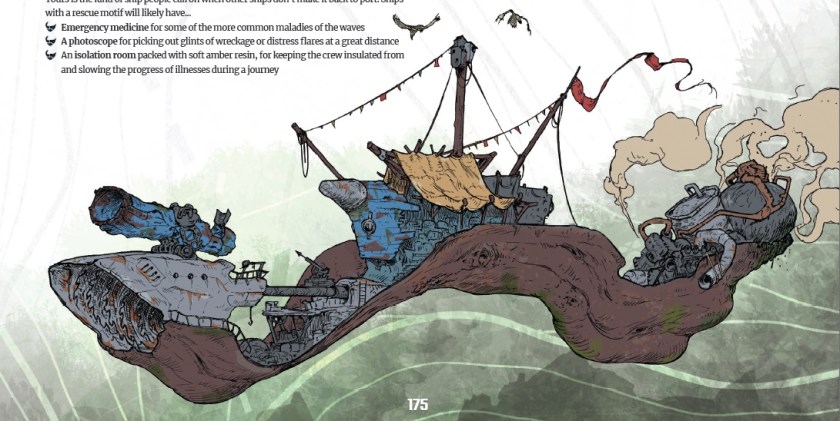
A Wildsea ship
The next page tells us about the steps to make your ship. There are three overall stages:
Design – you have to choose an option for each of the following:
Size
Frame
Hull
Bite
Engine
Fittings – these are all optional but they come in the following categories:
Motifs
Additions
Rooms
Armaments
Outriders
Undercrew – optional choices that come in the following types:
Officers
Gangs
Packs
On the same page, there is a helpful example ship statted out for us. It is essentially just a list of chosen options beneath each of the three stages. Beside each option is the cost in Stakes and the benefit it provides for the ship if appropriate.
It also lists the Ratings for the ship.
Ratings
These are tracks (tracks are like clocks in Blades in the Dark, in some instances and like health bars in others) that are used to record the current status of various aspects of the ship. Every ship will have all six of these:
Armour – speaks for itself
Seals – How well your ship keeps out the nastiness from the Wildsea
Speed – ‘nuff said
Saws – most ships use giant chainsaws or something similar to power their way through the waves of leaves and branches.
Stealth – how well can your ship pass undetected?
Tilt – this is your ship’s manoeuvrability
Each one of these Ratings starts as a 1-track but we’ll be adding to that as we progress. Keep these Ratings in mind as we go through the process!
Step One – Design
Normally, this would be done by committee. Every player should be involved in the decisions on which the foundations of the ship are built. But, obviously, in my case, that’s not possible. Anyway, here we go!
Size
There are four sizes available and they each cost 1 Stake:
Nano – big enough for one person and maybe a passenger. +1 Stealth
Small – can easily accommodate between two and four sailors. A good starter ship. +1 Speed
Standard – perfect for five to ten people. +1 Armour
Large – ideal for ten to twenty people. +1 Armour and -1 Stealth
I have a limited number of Stakes so I feel like a Small ship is the way to go. Also, it’s for a crew of up to four, so it’s just right.
Frame
The Frame, the book tells us, betrays a certain attitude that you want your ship to give off to other wild sailors. Your choice will also give Rating modifiers like Size does. Here are the six available Frames:
Sturdy – meant to weather storms and bombardments both. +1 Armour
Moulded – somehow constructed from a single piece of some material. +1 Seals
Light – lightweight and dainty. +1 Speed
Scything – all about cutting through the treetops as well as they can. +1 Saws
Sleek – Keeps you “low to the waves,” and as quiet as possible. +1 Stealth
Flexible – bend before breaking. +1 Tilt
I personally think that one of the coolest aspects of these wildsea vessels is the fact that they use enormous chainsaws to cut through the canopy. So, I’m going to lean into that and choose the Scything Frame, giving +1 Saws and costing 1 Stake.
Hull
Interestingly, you can have more than one of these, if you like, but you must have at least one, for obvious reasons. There are twelve Common Hulls and three more Unique ones listed here. The cost ranges from free to 3 Stakes. Here are the Common ones:
Reef-Iron – 1 Stake, +1 Armour
Leviathan Bone – 1 Stake, +1 Seals
Broadwood – 1 Stake, +1 Tilt
Rough Bark – 1 Stake, +1 Stealth
Chitinous – 1 Stake, +1 Speed
Razorscale – 1 Stake, +1 Saws
Beastback – 2 Stakes, +1 Seals, +1 Tilt, “A half-living hull of flesh and bone, flexible and unsettlingly warm.”
Ceramic – 2 Stakes, +1 Armour, +1 Seals
Chrysalid – 2 Stakes, +1 Seals, +1 Stealth, “A hull adapted from the cast-off chrysalis of a massive insect, excellent protection against the sea’s incursion.”
Ghost-Oak – 2 Stakes, +1 Armour, +1 Stealth
Arachnesque – 2 Stakes, +1 Tilt, +1 Stealth, “Less of a hull and more of a giant insect grown to fit the specifications of your frame, usually something spider-like.
Exile’s Copper – 2 Stakes, +1 Armour, +1 Speed
Here are the three Unique Hulls:
Junk-Strung – Free, +1 Armour, -1 Seals, can salvage parts from it
Monument – 3 Stakes, +2 Armour, +2 Seals, made from mountain stone so can’t “Forge-ahead during a journey”
I like the idea of adding a little Armour Rating at this stage but also building on the Speed I improved before so I am going to go with Exile’s Copper for the Hull giving me a +1 Armour and +1 Speed. It will cost 2 Stakes but I think its worth it.
Bite
This determines the way your ship is propelled. It will also have an effect on your ramming damage and the ease by which others might track you. There are twelve Common Bites listed, as well as several different types of sails and a trio of Unique Bites as well. Here are the Common ones:
Sawprow – 1 Stake, +1 Saws, big chainsaws! Close Quarters (CQ) Serrated damage
I am not going to go into all the Sail and Unique options here because there are too many already, to be honest, and I know I don’t want any of them. I need to stick to my guns, or my chainsaws in this instance. As I am worried about the number of Stakes I have left to spend, I won’t go for the Longjaw. Instead I’ll go for option number one, Sawprow, for 1 Stake, giving me +1 Saws.
Engine
This is the last bit in the Design stage. A few things to note about the ship’s Engine:
It can be used for more than just propulsion
It will require a specific type of fuel
In most instances, don’t worry about tracking the fuel
There are eleven Common Engines and four more Unique ones. Here are the Common ones:
Chemical Compressor – 1 Stake, +1 Speed. Fuel – crushed fruit and insect husks
Springwork – 1 Stake, +1 Saws. Fuel – manual labour
The Unique Engines are fun too. One of them is this:
Tamed Hive – 2 Stakes, +1 Speed, +1 Seals. It’s a massive hive and can produce honey. Fuel – flowers and pollen
I love the whimsy of the Tamed Hive so much that I must have it! That’s 2 Stakes but it adds +1 Speed and +1 Seals
There won’t be any more changes to the Ratings from the remaining steps so our final Ratings are:
Armour – 2
Seals – 2
Speed – 4
Saws – 3
Stealth – 1
Tilt – 1
A weird looking wildsea ship
Step Two – Fittings
Pretty much every part of this is optional, which is just as well because I only have eight Stakes left…
Motif
So this is the general theme and purpose of the ship. Choosing one can help the whole crew get a clear vision of the vessel and will also influence how others see you and it. They provide specific things like emergency medicine, gaudy appearance or a reinforced engine room. They do not provide mechanical effects but they may play a part narratively.
Here are the available Motifs. They each cost two Stakes:
Transport
Hauling
Hunting
Salvaging
Pathfinding
Raiding
Rescue
Research
Entertainment
You don’t have to choose a Motif for your ship but I am enamoured by the idea of a Research vessel out there on the wild waves. Perhaps the unconventional engine was something we discovered during a past expedition and we figured out how to make our ship go with it through the power of research!
A Research vessel:
has better tech on show than most ships
contains a research library
houses a snapograph arrangement. Its a sort of big camera
Additions
There are so many of these, most of them costing a single Stake. We’ve got Firefly Lanterns, a Cargo Crane, a Steam Whistle and lots more. But, as I am getting worried about how much I’ve spent already, I am only going to pick up:
Anchor System – Its Free!
Tethered Kitesail – 1 Stake – its a glider that is hooked to the deck. Lets us go up and get a bird’s eye view when the wind’s up
Rooms
On a Small Size vessel it’s not a great idea to split your already limited space up any further. You already have the following rooms on your ship:
A Pilot’s Cabin
A Main Deck
Crew Quarters
An Engine Room
A Cargo Bay
You can add a lot of different types of rooms like a Galley, a Navigational Suite, a Tap-Room or a Brig and they are all optional.
But this is a Research vessel now and I feel like we need a good way to observe stuff. We have the glider to allow us to watch from above. I would like to add a Cupola to the hull, near the rear of the ship, giving a great view of the Underthrash. That costs one Stake. I am down to just four Stakes left.
Armaments
Weapons are next on the Fittings list. These, too, are optional. In this case, they are either placed on deck or fixed to the Hull. I’m not crazy about the idea of armaments for a Research vessel, however, since our Stealth sucks, I think it’s prudent.
We have a lot of choices, from Trebuchet to Storm-Rail to Broadside Cannons and a Bladed Prow. But I’m going to pick up something suitably sciencey:
Viper’s Tooth – 2 Stakes, sprays an acid of some sort dealing Long Range Acid Damage.
Outriders
This is another option for defence. Honestly, with a Small ship, I don’t have the space for this and I also don’t have the Stakes to spend on it. You have to build an Outrider much like a ship, although it only has two components. You will also then need to add a way to store and deploy it from your actual ship. It seems like a fun extra but I can’t afford it.
Step Three – Undercrew
Octopus crew
These come in three varieties: Officers, Gangs and Packs. I’m not going to go into detail on each variety as this post is already way too long. Suffice it to say, the officers are Skilled, Experienced or Well-Travelled, the Gangs are not necessarily what you might think of when you think of Gangs (some of them are Tinkers, some are Spear-Fishers, but some are actual Marauders) and the Packs are animals…
You can have Spring-Foxes which leap along beside your ship to warn of danger, Rig-Ferrets who can do knots, Squirrel Flingers who will fight to defend your vessel. But what I want is one of the Insect Packs:
Glowbug Parade – 2 Stakes, they follow the crew members around and illuminate their surroundings for them!
Personal Touches
And so, with all Stakes spent, we come back to the start and our little idiosyncrasies. The book suggests describing the following, so I will:
Colour and Style – I think it was once a scientific grey and white, all straight lines but now it is a dark shade of honey as the insects crawled all over it. It’s all smeared and waxy. The crew have left it that way as they think it protects from parasites
Shape and Construction – I think this ship is quite blocky, almost as though it was constructed from prefab elements. But, once again, the engine bees have shored up all the joints and seams with wax and honey, making it look far more organic
Quarters Decoration – I don’t have my character created yet so I am going to revisit this when I have made them. I expect that all the crew sleep in a single chamber, though. They might each have a personalised corner
Quirk – Sometimes the bees go to sleep at night and we can’t get the engine to start
History – This has always been our ship. It has been on a mission of discovery and research for several years now. We were originally led by an old eccentric who built it and funded it. Now she’s gone, we carry on in her place
Research Motif (2 Stakes) Anchor System Addition (Free) Tethered Kitesail Addition (1 Stake) Cupola Room (1 Stake) Viper’s Tooth Armament (2 Stakes, Massive LR Acid Damage) No Outriders
Undercrew
No Officers No Gangs Glowing Parade Insect Pack (2 Stakes)
Conclusion
I’ll keep this short as that was very long. You should set aside a session just for this process, dear reader. There are a lot of choices and I can only imagine how much longer it would take with four or five people trying to come to agreement on it! However, it has given me a very clear idea of the Ship I just created and a few ideas for the type of character who might crew it.
Even the concept of the post-apocalypse that is so impossibly verdant that sentient life has had to scrabble for a foothold amongst all the greenery is unique and bold.
Traveling
Dear reader, I’m off on my travels again. This time, I’m in the east of England where the weather is beautiful and the swimming pool is indoors. Anyway, I’m using this razor-thin rationalisation to excuse reposting this post from about this time last year. It’s about giving PCs something they care about that you can fuck with, and Wildsea, which is one of the games I’m considering running in the near future. It’s also a game very much about journeying so it seemed appropriate.
It’s pretty difficult to give your journeying adventurers a particular place they need to look after. They are always schlepping off to the next dungeon or haunted house or wizard’s tower or whatever. There are ways around this. In one D&D campaign that we finished last year, the PC’s hometown was plonked right on top of a sort of nexus of worlds, an ancient tower, buried beneath a hill, containing dozens of portals to many different planes and other prime material locations. So, even when they popped off to Sigil or Mechanus or the Astral Plane or wherever, they were always going home eventually. Indeed, the focus of that campaign was to save their little island.
But I often find it gratifying to make the home they care about quite mobile. In the first of several interconnected campaigns, the PCs stole and adopted their own “turtling” vessel (like a whaling vessel but for giant turtles. You get the idea.) as the setting was a vast archipelago they needed the transport. Of course they took it and made it their home. Not much of their adventures revolved around that boat but I liked the idea that they had somewhere to return to, no matter where their travels took them.
A-thing-to-fuck-with
It was also a-thing-to-fuck-with. I never got the chance to seriously fuck with that boat since the campaign has been on a semi-permanent hiatus for a few years, but more recently, I got an opportunity to hassle their casino. I mean, this was a different set of characters but some of the same players and it was in Spire, not D&D. The Ministry of Our Hidden Mistress bequeathed to our “heroes” the poisoned chalice of a casino called the Manticore in the Silver Quarter. They put a lot of effort into it, hired entertainment and a succession of unlucky security guards. It did not end well for the Manticore or the staff. Threats to it made for real motivation and the fact that it was a public place meant their enemies could just walk in. That was a dream. Great stuff. But it veers wide of the mobile home to care about topic.
The most recent version of the mobile home in one of my campaigns is the Cadabra, a mirror-hulled squid ship in our Spelljammer game. It’s got a ready-made crew of spirits and a checkered past itself. They have had this ship since session 3 and they are now at the point where they are repairing it and upgrading it and even adding more boats! They’re going to have a frikkin’ armada! This is great because boats are a money-pit. They answer the question, “what are my characters going to do with all that gold?” As well as the “how shall I fuck with them?” question.
And I know the feeling of home-ownership within a game. In the Black Sword Hack game I’m in, we have a flying boat, called a slater. We are unreasonably paranoid about this thing getting stolen or burnt or otherwise becoming unusable by our characters. We park it miles from the locations we are trying to get to so no-one sees it. We always leave NPCs to guard it. It is our home and it’s where we store all our opium and it’s our greatest asset. I’ll be damned if any asshole wizard is going to take it from us!
A home in the canopy
So Wildsea is a good fit for me and my group. In it, the players make characters who crew a ship that plies the canopy of a world-blanketing forest under the power of chainsaws! Below the leafy waves, the poisonous substance, crezzerin makes descending into it just as dangerous as diving into watery sea. The characters are made up of a wild variety of bloodlines like the beings made up of a colony of spiders, cactus folk, spirits inhabiting the ruins of ship-parts and regular old humans. It is possible to start a campaign of Wildsea where the PCs do not have a ship, but I don’t think I would. In fact, the designer of the game, Felix Isaacs, recently suggested that the best way to start is by making your ship first, before your characters even! That way, the thinking goes, you can imagine them in place , posing upon the prow or hanging from the gunwale or climbing the mast. Also, the classes in this game equate to posts on a ship so it makes even more sense when you take that into account. I really like this idea and will probably ask my players to take this approach in session 0.
There is no doubt that this is a weird setting. In some ways, it should act like any other setting where you get around on a vehicle of some sort across a trackless expanse. There are plenty of sci-fi games where you have a spaceship to build and look after. Death in Space is like that. Then, of course, I have given a few examples in D&D above already. But this is pretty alien. Even the concept of the post-apocalypse that is so impossibly verdant that sentient life has had to scrabble for a foothold amongst all the greenery is unique and bold. Add to that the oddness of the playable bloodlines and the really setting-specific hazards and you would be hard-pressed to compare Wildsea usefully to any other single game on the market.
On top of that, the mechanics are really interesting. It is known as the Wild Words Engine
From Wildsea, Chapter 2, Mechanics: “It’s low on crunch, focusing instead on letting narrative, character and setting develop during play.”
Isaacs has said that, despite the similarity to certain other game systems, he came up with a lot of the rules independently or was influenced more by video games than other RPGs. The basic dice-rolling mechanic is very Blades in the Dark and he has, to be fair, indicated that he got it from that game. So, you build a dice pool to roll and take the highest roll (or two rolls in the case of a Twist). But there are elements such as the Twist, which happens when you roll doubles and adds a special little something to the effects of the roll, that feel new and fun.
Finally, it feels like the GM (or Firefly) and the players get to create the world together as they play, making a place with little magic or lots of it, with high technology levels or very low, with strictly faith based societies or entirely atheist ones. This is very appealing to me.
How about you? Have you had a chance to play Wildsea? If so, what were your favourite aspects of it?
Having managed to get through so many games in the first 7 months of the year, you know what? I reckon, if I really make an effort, I think I can fit in up to ten more different games before New Year’s Day. I’m particularly looking forward to a few more one-shots. For those of you who’ve been keeping an eye on this space over the last couple of weeks, you’ll know I have a soft spot for them.
Lists 4
Here we go. Like previous lists, I’m just going to split them between those I want to run and those I want to play in.
To be honest, a bunch of these games are ones I already have in the schedule. I’m hoping to get Tales from the Loop started in a few weeks and I have Death Match Island in the calendar for next Friday. Even the ones I want to play in include a couple that are almost good to go.








 The Dice Pool