Heart: The City Beneath

Spire

Ok, look, you do not need to have played Spire: The City Must Fall, before delving into Heart: The City Beneath, but it sure doesn’t hurt.
As it happens we finished a year long campaign of Spire earlier this year. We had a great time with it. It was a refreshing change of pace for us. As a group we had played a lot of D&D, a couple of Free League games and a bunch of Call of Cthulhu so this was quite a departure. The ruleset of the Resistance system was something we had to get to grips with throughout the course of that campaign but, once we embraced it, the speed, flexibility and the power of the fallout system, in particular, began to really work for us. Fallout is the consequences you have to endure when things go wrong. Like Powered by the Apocalypse and Forged in the Dark games, it works with a dice pool system, but in this case you roll a number of d10s dependant on your skills and domains in a given situation. The top roll is the only one that matters and it can give you a complete failure, a mixed result (a success with consequences) or a total success. There were a couple of niggling issues that we had with the system, mainly involving how you determined if you took fallout or just stress. These generally revolved around the stress/resistance protection mechanic.

I will not lie to you, dear reader, I was worried going into it. Spire does not encourage the GM to prepare much. I used a published campaign frame, so that helped, but much of the plot is supposed to be generated by the PCs. This was tough for the players too, at least for a while. The campaign frame and I put a stew of NPCs, locations and events in their bowls in the first session, asked them to separate out the individual elements and come up with a recipe for their own, different dish, using the same ingredients. It took a while and a lot of discussion to determine their preferred approach and that changed multiple times. But by the end of the campaign we all felt much more comfortable with this style of play and that stood to us going into Heart, which uses broadly the same system.

Still, I don’t know if we would have decided on a Heart campaign as the very next thing to replace Spire if it had not been for the setting. Rowan, Rook and Decard’s Grant Howitt and Chris Taylor brought to life a beautiful and terrible city-state in Spire. The high-elves, or Aelfir, came to the mile high city of Spire two centuries ago and took it from the dark elves, or Drow. The PCs in Spire are members of the Ministry of Our Hidden Mistress, the outlawed para-military wing of an outlawed Drow religion. They fight a losing battle to regain control of the city for the Drow while dealing with cannibal cults, dangerous human retro-technologists, demonologists and, of course, the Aelfir themselves and their loyal Drow.

The setting and the classes of this game are what drew us all back to the same world.

The Heart knows what you want

And Heart, as implied by the title, is in the same world. It is the fucked up and enigmatic city beneath Spire. The Heart itself, (the true Heart, the one at the centre of the City Beneath, the thing that imbues it with bizarre intelligence and a wish to fulfil the desires of those brave mortals who dare to tread it’s veins and arteries) much like Spire, could be whatever you and your table decide it is. Maybe it’s an alien intelligence stranded below Spire, maybe it’s a portal to an other dimensional world, maybe it’s the echo of a technological marvel from the future. In practice, I feel like answering that question is a trap you should avoid, even if it is the goal of the PCs.

The most important thing about the Heart as a setting is that it is, in some way, sentient, aware, alive. As well as that, as alluded to above, it would grant the desires of other sentients. It is clear, though, that the Heart has a different idea about what you want than you do. It will take your desires far too literally or take them too far or misunderstand them to comic/tragic effect. So what the PCs want overall and from session to session is especially important to the game and how it turns out.

Delvers

As for the PCs, unsurprisingly, they play characters with classes that are matched only by the Spire ones for sheer inventiveness and bonkersness. Unlike Spire, they are not rebels, they are not fighting the aelfir for control of the Heart, they are adventurers, or Delvers. They are drawn or forced to explore the Heart for their own reasons.

The Players get to choose a few important elements for their characters before they start, their Ancestry (human, drow, aelfir and gnoll,) their Calling and their Class.

Ancestry and Class are fairly self explanatory but Callings will be unfamiliar to most. A PC’s Calling is their motivation and their route to advancement and eventual death. You might have been Forced to travel the Heart by a master you dare not refuse. Or maybe you are a Penitent who feels the need to make amends by finding those in need in the City Beneath and aiding them. Perhaps you are simply in search of adventure or enlightenment or the echo of the Heartsong itself. Each of these Callings bestows on the PC a core ability but more importantly, it provides a long list of beats. A beat might be something you want your character to achieve or something they need to endure or have inflicted on them. They come in minor, major and zenith flavours. A PC has two active beats at any given time and together, the GM and the player are trying to make at least one of those happen every session. When you hit a beat, you get an ability of the corresponding type, minor, major and zenith. When you hit your zenith beat, you get your final ability, and when you use that ability, it’s curtains for that character.

In our game we have three PCs:

  • A human Junk Mage with the Adventure calling – There is an element of junk to the junk mage, they can fix stuff with magic, but there is also an element of the junkie to the Junk Mage, so magic is their fix. Get it? They are on a mission to reach greater and greater heights of magic in the Heart and it draws them into some interesting situations.
  • A human Deadwalker with the Heartsong calling – The Deadwalker has his Death, an aspect of a loved one, (?) which follows him around and, which only he can see. He can fold himself into another dimension called the Grey. This has led to some very entertaining moments and solutions. The Heart knows him and wants something for him. But what?
  • An aelfir Vermissian Knight with the Enlightenment calling – The knight has a suit of armour that he personally constructed out of trains. He is obsessed with resurrecting the long defunct Vermissian subway network to serve The City Above. This is mainly because he is partly responsible for the disaster that rendered it, not only useless, but actively dangerous.

From Haven to Terminus

I started the party off in the City Between, Derelictus, making liberal use of the Heart sourcebook, Burned and Broken, for descriptions and ways to use this, lowest of Spire’s districts as a delve. From there they were sent into the Heart to retrieve a robot duplicate of a guy based in Haven Station. They have to check all the Vermissian stations on the way down to find him. So I called the campaign, “From Haven to Terminus.”
We soon moved into the events of the beginners’ scenario, Drowned, which is featured in the Heart Quickstart. We’ve been delving for six sessions and expect three or four more.

Mechanically, Heart has improved on some of the rules that Spire introduced. The stress/resistance protection mechanic has been simplified and is much easier to understand and apply now. Determining whether or not your character takes fallout is more straight-forward. Healing is a lot easier and more accessible in general and even combat feels like it flows a bit better.

In play it feels like a procedurally generated mega-dungeon with pockets of hardy civilisation, or havens, eking out a living until the pathways and caverns of the Heart warp and change enough to wipe it out again. The PCs go on delves for one reason or another but a common side-effect of delves is that they establish connections between havens, making it much easier for the PCs and others to travel between them in the future. This is a cool way to have them make a significant impact on the world and, dare I say, have them feel some sense of responsibility for it.

My overall impression so far is that I love this game. I love the weirdness of it and the horror of it, I love the dungeon delve theme that does not require a new monster or puzzle in every numbered room, I love how it has made us think on our feet and tell a story that we could not have foreseen at the start of each session. I love the beats that give me and the players something to aim for every time we play and I love the looming rewards/threats that are the zenith beats and abilities. And I do almost no prep at all. I might write a couple of notes of the kinds of things they might encounter on a delve but the rest is improv. The me that was shaking in my boots about running my first Spire session would not recognise the me that is improvising entire dungeons on the fly in Heart.

Dungeons and Dragons 5E, Spelljammer

This campaign is called Scatterjammer. When I started playing RPGs regularly again about eight years ago, I started up a 4th edition D&D game, since it was the most recent edition that I actually owned. When that campaign fizzled out, I switched to 5th edition and have been playing one campaign after another since then. I invented a homebrew world that I called Scatterhome. There are a few things about this place that I really liked and I will probably write a post all about it another time. For now, it’s enough to state that Scatterhome became the home base for the PCs in the Spelljammer campaign I had been planning for quite a long time before the Spelljammer 5E set came out a couple of years ago. That set was missing a lot. A characteristic of a lot of the 5E setting content, I’ve noticed, is that, unless it’s Forgotten Realms, they’re really only meant for a single campaign that probably came with the setting. That is certainly the case with Spelljammer. Boo’s Astral Menagerie is a solid enough Monster Manual supplement but the Astral Adventurer’s guide is too light on detail for my purposes.

The premise of Spelljammer is just fun and silly and I have tried to keep the vibe fun and silly too. I have five players and, due to geographical peculiarities, we play online using Zoom and Roll20. We have a session once every two weeks on Wednesday nights and we’ve been going for over a year now. I always enjoy playing this game with the people I play with. My wonderful and dependable wife has been in every D&D game I have run since 2016 so she’s player one, the rest are a mix of newer and older friends. We have such a laugh with this game that we brush off the cons of running online.

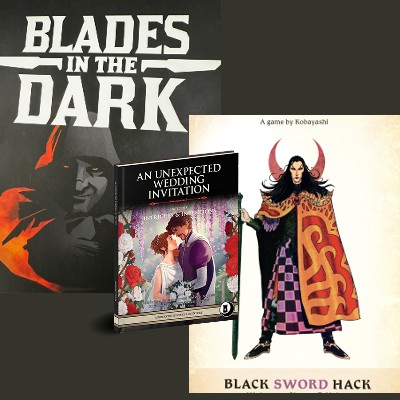
But I have to be honest, the D&D system really slows things down. In one instance we spent three entire sessions on a ship to ship battle. Elements of that battle were immense fun and some of the players’ moves will live in infamy but, for a random wildspace encounter… I just think a different system could have handled it in a less time-consuming manner. Now, I am sure that, had I approached it differently, I could have sped it up as well, but only if I didn’t use the rules of D&D. It is actually something I’m considering for the bigger set pieces in the future. Black Sword Hack has an impressive system for dealing with NPCs fighting NPCs, allowing single die rolls to determine the outcome of their battles each round. It has a tendency to be a bit more deadly, perhaps, but it moves things along more swiftly. Even 4th Edition D&D handled this sort of thing better. You could have waves of enemies in a fight. The sheer number of them would scare the living shit out of the PCs but the majority of them would be Minions. They could still do damage but they only had one hit point apiece, so the party could mow them down with spells and the like.

If I want to actually reach the meat of the story we are trying to tell and that my players have told me they want in their stars and wishes, I am going to have to do something to allow large scale battles to resolve themselves much more quickly, that’s for sure. It’s either that or eliminate ship to ship combat entirely, and that seems like a shame in game where adventuring in wildspace is the whole point!

The party consists of

  • A Gnome Battle-smith Artificer who abandoned a promising career in the navy for the faintest chance of adventure! Likes spiders. What happened to her uncle?
  • A Gnome Illusionist Wizard who has a peculiar plethora of puzzling personalities and disguises to choose from. The main spelljammer. What happened to his brother?
  • A Changeling Mastermind Rogue/Bard with a dark past and a mysterious identity (that’s a bit of a theme.) What happened to his dad?
  • A Plasmoid Open Hand Monk following her ooze-heart to who-know’s-where? Has an Auto-gnome sister. What happened to her mum?
  • A Giff Fighter/Oath of Vengeance Paladin who is the sole survivor from his family’s spelljamming vessel. Total Casanova. What happened to his dad?

I’m sure I’ll write a lot more about this campaign in the future. The players have come up with some fascinating and hilarious characters, who all have just enough back-story to allow me to get creative with how I weave it into the events of the game. Some of them are very keen on pursuing their personal story threads while others are more focused on the narrative I put in place at the start. DMing challenges and opportunities abound!

What I’m playing, July 2024

Lists

The internet loves a list. A top ten, preferably. I don’t have a top ten today. Sorry to disappoint you, dear reader.
Instead, here I have gathered an unranked list of the six RPGs I am currently involved in. I’m running half of these and I’m a player in the other half, so it’s organised that way only.

This list does not represent the full catalogue of games I have been involved with so far this year. That will come in a separate post or series of posts in the near future. I guess this might seem like a lot of ongoing games to some. On the other hand, I’m quite sure it doesn’t seem like all that many to others. I usually fit in the odd one-shot into the schedule too, but other than that, this works well for me, especially as they are all fortnightly, pretty much.

I play two of these games in my house with my wife and friends, I play one with some members of our fledgling local RPG community, Tables and Tales. We play that in another friend’s house. Two more are online with friends and the last is played online with members of the international RPG community, The Open Hearth.

There’s no doubt that the ability to play online has opened a world of possibilities that, up until the start of the pandemic, I had not really even considered. It’s not the same as meeting around a table with snacks and drinks and banter. You can’t have cross-talk on Zoom. The chaos that is allowed to reign over the table in home games at times is to be treasured, in my opinion, and you really can’t recreate that on a video call. But when your mate you want to play with lives hundreds of miles away or when the only people you can get to play the little-known, esoteric story game you want to experience are located all across the world it’s definitely a boon.

Anyway, for now, I’m going to write a post on each of the games I’m running since I have more to write about each of those. I’ll do a single post for the games in which I am a player.

The Dice Pool

Taking the initiative

Do you consume a lot? I feel like I do. Food, beverages, books, videos, films, music, podcasts, games, opinions, facts, feelings, content, content, content. I get a little bloated, to be honest, physically and mentally.

So this is one outlet for my mental bloat. I think I’ll write how I feel about some of the things I consume as a way to digest them (not the food and drink, I’ll do that in the traditional way.) But, mostly, I’ll be writing about my main creative outlet, playing, running and making things for tabletop role playing games. Let’s not be coy about this; the internet is not lacking for nerds going on about their games, or someone else’s games or games they watched other people play or games they hate or games they actually quite like, surprisingly enough. So, even knowing this, why would I have the gall to add to it? Good question, good question indeed. Maybe I will figure that out as I do it. The adventure is the journey and all that.

History check

So, I started playing RPGs back in the eighties, when I was a kid. What an amazing outlet for my imagination and a way to share it with my friends. I remember the feeling of playing games like AD&D, Twilight 2000, MERP, every single Palladium game. What feelings? Well, there’s a fair bit of dissatisfacion, frustration, and boredom if I’m honest. But, crucially, all of that is tempered by moments of sheer elation, joy, sorrow and anger. I don’t remember that much about the games themselves now, other than that there were a lot of numbers and arguments about numbers.

A few years ago I started to get back into RPGs (I know TTRPG is the more standard term these days but it is rather unwieldy and I can promise you that there will be few occasions for confusion on this blog) again, partly because my wife was curious about trying it out and partly for the sake of nostalgia. Anyway, as I got back into the hobby and started playing with adults, I discovered a whole new world of games the likes of which the tween me could never have conceived.

Treasure

RPGs have changed since I was a kid, and I don’t mean the edition numbers, or the abandonment of THAC0. I’m not sure when or how it occurred, but at some point, someone very clever and observant realised that you don’t HAVE to wade through a morass of stats and modifiers and encumbrance and spell descriptions to get to the real meat of the story you and your friends want to tell. You can if you want, that’s its own sort of fun, but if your aim is to just have a laugh, or to tell a particular story or to make your players cry, there are games and systems out there to allow you to do that. You don’t want to solve problems with violence? Cool, try out Wanderhome. You want to solve problems with ultra-violence? Give Eat the Reich a go. You want to investigate mysteries with a creepy-weird feel, pick up Public Access. You just want to tell an emergent story with your friends, you have so many options, give Blades in the Dark a try, or Heart, or Wildsea, or Mountainhome. Look, this is still relatively new to me. I’m still trying to figure out what’s OSR and what’s just trad. I am still mostly mystified by GMless games and a little intimidated by story games.

I’m learning a lot all the time so, this is where I’ll be writing about that. Other stuff too, no doubt, but mostly the games I play and the stuff I learn from them.