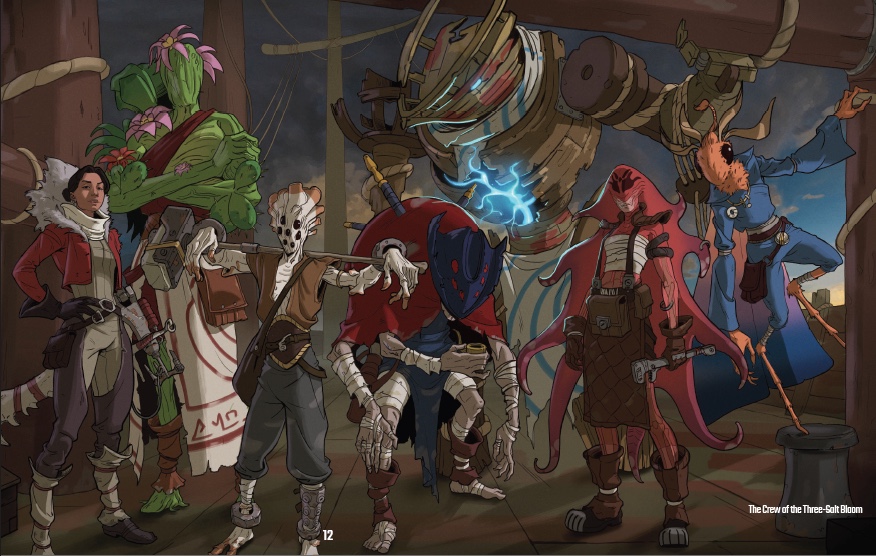
The Wildsea Character Creation

The book presents many, many options in each step, and that’s even using the Quickstart kits. Without the Quickstart rules, you can really choose any options from any bloodlines, origins and posts, to truly customise your character as you like.

This is the fifth in a series of character creation posts I’m using to figure out which game I want to schedule for our next campaign. You can find the Triangle Agency one here. And you can find the Slugblaster one here. You can find the Blades in the Dark one here. And most relevant to today’s post, here’s the Wildsea Ship Creation post.

A Character to Fit the Beacon

In my last post, I created a ship for my Wildsea character to pilot across the Thrash. The ship, it turned out, is a research vessel, fast and dangerous, but not very manoeuvrable or stealthy. It’s got a beehive for an engine and an acid-cannon for protection. It also has a colony of glow bugs that follow the crew around illuminating their surroundings for them. I named the ship the Beacon.

So, what kind of wildsailor am I going to come up with to match the vibes of the Beacon? Let’s find out, dear reader!

Character Creation Steps
Character Creation chapter illustration

There are three important choices to be made in this process:

  • Your Bloodline
  • Your Origin
  • Your Post

Now, while these choices are minimally restrictive, the beginning of the Character Elements chapter encourages you to build a narrative background around the framework of the mechanical choices. In fact, throughout character creation, you are encouraged to be creative and to make unique wildsailors that no-one else has ever made before.

Also, there are many other elements to a Wildsea character, it’s just that most of them hang off these three choices. All of these are explained in the Character Elements chapter.

At this point, I think it’s important to point out that the Character Elements chapter is there only to explain those elements, not to help you create your actual character. That’s all in the following chapter. One thing I have found with the Wildsea is that it devotes a lot of space to explaining everything. Occasionally, I find that this is at the expense of functionality. The book goes to some lengths to inform you what the Cook skill allows you to do, when, in a storytelling game, this could usefully just be left up to the players around the table. It’s also because so many of the terms used in play are quite unique, Twist, Edges, Whispers, Cut etc. Although most of these bear some resemblance to elements of other games, the resistance to using those better known terms means they require more explanation. I found this also in Slugblaster, an ostensibly Forged in the Dark game that uses a lot of setting/genre-specific terminology for concepts that are more functionally named in Blades in the Dark.

Anyway, I’m going to move on from the Character Elements chapter immediately. If I need to explain anything, I’ll do it as I build the character.

Young Guns or Old Dogs

This is a welcome choice to start with. It reflects the type of game you’re preparing for. If you go for a Young Gun, you start with fewer skills, aspects and resources, leaving the character more room to grow. The Old Dog has more going for them, but is meant for one-shots or short campaigns. For my purposes, I’m going to create an Old Dog, to show off more of the character elements in this blog post.
So, an Old Dog starts with the following:

  • 1 Bloodline, 1 Origin, and 1 Post
  • 3 edges
  • 15 skill / language ranks (maximum starting rank 3)
  • 6 aspects taken from any bloodlines, origins, or posts
  • 6 resources
  • 3 drives and 3 mires
Ardent Quickstart Kit

For ease of one-shot character creation, there is a Quickstart Kit presented in the section for each bloodline, origin and post. These break it down to a selection of easy choices.

In the interests of keeping this post below 2000 words, I’m going to use the Quickstart kits as and when I feel its appropriate.

Bloodline

Here are the options for Bloodline:

  • Ardent – human
  • Ektus – cactus-folk
  • Gau- fungus-folk
  • Ironbound – ship-ghosts with bodies of salvage
  • Ketra – gelatinous humanoids
  • Mothryn – moth people
  • Tzelicrae – hive-mind spider colonies in a human skin
A Ketra with a chart

Remember this is a Researcher we’re making here, so I think it would be useful for them to be good with technology. The Ketra are described in the book as “tech-savvy.” So, I think that’s what I will go for.

The ketra are the descendants of those fragments of ancient humanity trapped in tunnels and sturdy temple complexes, mineshafts, and mountain-seams. Like the ardent, they have adapted to face the post-Verdant world, but with a far more dramatic biological change – tentacular mantles, translucent fl esh, and swirling, ever-moving inkblot patternings are common. Many ketra reinforce their malleable forms with selfmade skeletons of salvaged driftwood or repurposed scrap-metal.

Questions

The first thing to do with your new ketra is answer the following questions:

Q: Have you spent any time in the ‘ancestral’ ketra places and, if so, how did you find their dark, crampled confines?
A: Yes, my character spent the early part of their life below the waves. Only as a young adult did they venture above the Thrash where they were discovered by the original owner of the Beacon, an Ardent named Benida Hoffspring

Q: How original is your skeleton, and if you’ve replaced parts of it yourself, what new materials do you rely on for support?
A: Many parts of their skeleton have been replaced, most notably, the lower jaw is shaped by a perfectly formed piece of Ironwood. It juts out more than it should. Other bones have been replaced with sturdy pieces of salvaged metal and ceramic.

Q: Were you passed down any stories of your family’s old human days, or is your preverdant lineage lost to history?
A: There was an old album of photos, preserved in plastic. It revealed a world long gone, of Ardent cities and water-going ships. Their ancestors were sailors…

Bloodline Aspects

Aspects differentiate your character from another one with the same bloodline, origin or post. They make them unique. They can take the form of a physical trait, a companion, or a piece of gear. So, with the Old Gun type of character, you can choose 6 Aspects from bloodline, origin or post. As a Quickstart character, I’ll choose two from each step.
If I list off every Aspect from every step, this post will be another giant. Instead, I am going to list only those that catch my eye for the character. Here are the bloodline aspects I want to choose from:

Scrapper Enzymes 3-Track Trait
You can use salvage as a component when concocting a potion or chemical mixture, no matter its form.

Scrap-Metal Skeleton 3-Track Gear
The internal structures you’ve collected can store biovoltaic energy. Use a task to create a resource, Scrap-Bone Battery.

Drone Attendant 3-Track Companion
A simple punchcard-driven repair construct. Increase impact when repairing or tinkering with other machines.

From these three, I love the idea of this character brewing up potions and stuff on the fly so I am going choose Scrapper Enzymes for that. I also have simply got to choose a companion when available and narratively fitting, so Drone Attendant is coming too.

Bloodline Edges

Edges are areas of talent. They literally give your character an edge in certain situations, meaning you get an extra 1d6 in your dice pool if appropriate. They are rather poetically named, but mostly speak for themselves nonetheless. Here are the edges presented in the Ketra Quickstart kit:

  • Iron – “An edge of force, determination, & willpower”
  • Sharps – “An edge of logic, wit, & planning”
  • Veils – “An edge of shadows, ciphers, & secrecy”

For this ketra researcher who crawled out of the depths on their own, I’m going to choose Iron and Sharps.

Bloodline Skills and Languages

These get ranks. You start at rank one and go up to rank three. You get an extra d6 in your dice pool for each rank in the skill you are using when appropriate. I have to choose five of these.
Here are the available skills in the Quickstart Kit:

Concoct, Delve, Outwit, Scavenge, Sense, Sway, Vault

I’m going to take Concoct, for sure, to go with the Scrapper Enzymes Aspect. I’m also going to take Delve, as someone show used to live in the ruins beneath the wildsea. And for my final Skill, I will take Scavenge, an important one for a scientific researcher/person who replaces their bones with random stuff.

And here are the available languages (you get a certain amount of lore with these too):

  • Chthonic – old human
  • Raka Spit – “The rapid patter of hunting-families and leviathaneers”
  • Signalling – inter-ship communication

Got to take Chthonic, probably their native tongue. Also, I just love the name of the language, Raka Spit, so I’ve got to take that too. Everyone gets a rank three skill in the trade-tongue, Low Sour, also.

Bloodline Resources

Resources can be used to get advantage on an action roll. They come in four different types as you can see below. I have to choose two of these to start with:

Salvage: Ceremonial Dynamite, Old Driftwood
Specimens: Luminescent Bone, Curled Centipede
Whispers: The Comforting Dark, All Tunnels End
Charts: A Faded Schematic

As a researcher, I think I have to take at least one specimen and the “Luminescent Bone” is the most thematic for this character. Perhaps it’s one of their own old bones?

I love the concept of Whispers in this game. They are like memes that can be passed on, inherited or sold, but once they are used, they are gone forever. I’ll take “the Comforting Dark.”

Bloodline Drives and Mires

Before making this decision, we need to understand the concept of Milestones in this game. They come in minor and major flavours and you write them for yourself. They work a bit like Beats in Heart. Achieving a major milestone allows you to improve your character more than a minor one.

So Drives, then, are the goals your character works towards to gain milestones. You can also gain a Whisper, or clear a mark of Mire when you move towards your drive goals. It’s important to note that they can change over time too, particularly if and when you achieve one of them.

Mires, then, are the negative psychological and physical effects of long-term exposure to the Wildsea. They will cut one or two dice from your rolls whenever you act against the effect of the mire.

Here are my options:
Drives

  • “Raise a pre-verdant structure” – this makes the most sense to me as a curious scientist
  • “Hoard treasures of the wider waves”Mires
  • “Sparks and jolts course through your extremities” – got metal bones, will take this one
  • “Your inkblot patterns whirl dizzyingly”

Origin

What were you before you were a wild sailor?
The options:

  • Amberclad – like Captain America but in amber
  • Anchored – ghosts of the Wildsea returned to life
  • Ridgeback – mountain folk
  • Rootless – born on the waves
  • Shankling – raised in the tallest trees
  • Spit-Born – brought up in the safety of an island or ruin

For this scientifically minded wild sailor, with the sort of backstory I have already incorporated, I think it would be very fun if they were an Anchored!

An Ardent Anchored
An Ardent Anchored

the anchored, a tangible, physical presence on the waves despite being, by almost all definitions, very much dead. These souls are given substance by their anchor, a single physical object that was left at the surface when their body fell. It might be a memento, a favoured weapon, a chart pointing the way home – whatever it is, it was enough of a tether to keep them from passing over, and to confer a level of impressive material control.

Normally, this would mean they came from above and their body was lost below, but for this ketra, I think it would be the opposite. When their original body died, just as they first emerged from above the surface, they reformed around a tether, something they brought with them from home. That was when they were brought aboard the Beacon for the first time. Their Anchor was the only thing left of them when they died, that wooden jaw.

Anchored Questions

Q: Do you remember your death? If so, what caused it?
A: No. The exact circumstances are hazy and plot-relevant
Q: To what extent do you feel connected to the world around you, now that you don’t follow quite the same rules of physicality as most?
A: They constantly strive to understand the world around them, scientifically, intellectually, and emotionally
Q: Have you ever come close to losing your anchor? If so, what happened?
A: No, as an integral part of the body, it has never been removed.

Anchored Aspects

Spectral Variance 3-Track Trait
Mark to become insubstantial for a short time, allowing you to float and pass through solid objects.

Geist Hand 3-Track Trait
You can manipulate nearby objects without touching them, though the heavier they are, the harder it is.

Tempered Anchor 5-Track Gear
Your anchor to the world is reinforced against damage and tampering, a wise move for a fleeting ghost.

I’m going to go for Geist Hand as suitably spooky and Tempered Anchor for purely practical purposes.

Anchored Edges

Here are the options:
Iron – already took this one
Tides – “An edge of exploration, learning, & lore”
Veils – “An edge of shadows, ciphers, & secrecy”

I guess it has to be Tides and Veils. Tides is particularly fitting for the researcher, I think.

Anchored Skills and Languages

Skills: Brace, Delve, Hack, Hunt, Outwit,
Sense, Wavewalk
Languages: Old Hand, Signalling

Going to take lots of skills this time. Brace is a defensive skill that will be generally useful. Outwit is a good one for a ghost, Sense seems equally appropriate for the Anchored. Also Wavewalk, normally meaning the ability to navigate the wildsea without a ship, could mean gliding along it spectrally. Also going to take Old hand (sign language) as a language.

Anchored Resources

Salvage: Old Memento, Broken Locket
Specimens: Glowing Plasm, Spectral Flower
Whispers: Back from Beyond, Drowned and Not
Charts: A Sketch of Shadowed Paths

Absolutely must take Back from Beyond as one of these. Also, a Broken Locket from Benida Hoffspring.

Anchored Drives and Mires

Drives

  • “Send other spirits to a peaceful rest”
  • “Reconnect with your friends and family” – This could be a fun adventure beneath the waves. I’ll take it!

Mires

  • “Your material control wavers erratically” – classic ghost-trope. Thanks.
  • “Visions of your past death are difficult to banish”

Post

Your Post is essentially your job on the ship. There are a lot of options here:
Alchemist – speaks for itself
Char – cook (sorta)
Corsair – swashbuckler
Crash – demolitions expert
Dredger – scavenger
Hacker – hacking through the wildsea
Horizoneer – adventurer
Hunter – ‘nuff said
Mesmer – mind-controllers
Navigator – yep
Rattlehand – engineer
Screw – Magnetos
Slinger – ranged attackers
Steep – tea-brewers
Surgeon – you know what this is
Tempest – Electro
Wordbearer – postman

There are several that are very tempting, like the Tempest, the Mesmer and the Char, but I think there is only one logical answer here, Alchemist. Right?

Alchemist
Alchemist

Alchemists are masters of concoction and reaction, able to combine chemicals and arconautic knowledge with unexpected (and occasionally unstable) results. Some alchemists focus on the healing arts, some on transformation and understanding, and others on more… explosive pursuits.

Alchemist Questions

Q: Do you specialise in certain ingredients, or take whatever you find and do your best?
A: They are curious about everything. Experimentation is key
Q: What was the worst unexpected side-effect you (or an unfortunate crewmember) ever experienced from one of your alchemical creations?
A: For a brief time, a crew mate died and became spectral like them, but just for a few minutes
Q: What draws you to such a specialised field of study? The lure of knowledge and understanding, or the power to change the world to your own design?
A: They are obsessed with the building of knowledge to understand this world and what they are doing in it still.

Alchemist Aspects

I will choose two from the following three:

Ulcerous Alembic 3-Track Trait
You can swallow two alchemical components, keeping them safely in your stomach. You can concoct them internally when you choose, benefitting immediately from the results or spitting the resulting solution out.

Baseline 3-Track Trait
Mark to briefly ignore any positive or negative effects stemming from a temporary benefit or injury. You are always immune to the negative effects of crezzerin.

Explosive Vials 3-Track Gear
Not an endless supply, but potent and disorienting. Mark to deal LR Blast, Salt, Acid, or Toxin damage to multiple nearby foes.

I’m going to take Baseline, since it makes sense due to my bloodline and origins. I’m also going to take Explosive Vials for fun.

Alchemist Edges

These are the options:

  • Grace – “An edge of elegance, precision, & agility”
  • Sharps – got it
  • Tides – and this

So I will take Grace, but I will need to choose another that isn’t listed. There are only two more that I don’t already have. I will go with:
Instinct – “An edge of sense, intuition, & reaction.” Which just feels right.

Alchemist Skills and Languages

Skills: Brace, Break, Concoct, Harvest, Scavenge, Study, Tend
Languages: Highvin, Brasstongue

No doubt I’m taking Break, Harvest and Study as skills. And with my last two skill ranks, I am going to upgrade Concoct and Study to Rank 2.

Alchemist Resources

Salvage: Pouch of Vials, Rust Extract
Specimens: Dried Locusts, Draketongue Root, Beast
Blood, Poison Glands
Whispers: A Tale of Choking Mists
Charts: A Stained Snapograph

I will take one Salvage this time, Pouch of Vials, and also another Specimen, Poison Glands.

Alchemist Drives and Mires

Drives

  • “Discover a previously unknown alchemical effect”
  • “Gather bile from an ancient leviathan” – maybe on the way down to visit their family?

Mires

  • “You’re the perfect test subject for your own work”
  • “Explosives are unstable around you” – this is too funny to pass up.

Final Touches

Name: Dhalsim Goodbottle
Pronouns: They/Them

Lets put it all together

Background

Bloodline: Ketra
Origin: Anchored
Post: Alchemist

Edges

  • Grace
  • Iron
  • Instinct
  • Sharps
  • Tides
  • Veils

Skills

  • Brace 1
  • Break 1
  • Concoct 2
  • Delve 1
  • Harvest 1
  • Outwit 1
  • Sense 1
  • Study 2
  • Wavewalk 1

Languages

  • Low Sour 3
  • Chthonic 1
  • Raka Spit 1
  • Old Hand 1

Resources

  • Salvage: A Broken Locket, a Pouch of Vials
  • Specimens: Luminescent Bone, Poison Glands
  • Whispers: The Comforting Dark, Back from Beyond

Aspects

Scrapper Enzymes 3-Track Trait
You can use salvage as a component when concocting a potion or chemical mixture, no matter its form.

Drone Attendant 3-Track Companion
A simple punchcard-driven repair construct. Increase impact when repairing or tinkering with other machines.

Geist Hand 3-Track Trait
You can manipulate nearby objects without touching them, though the heavier they are, the harder it is.

Tempered Anchor 5-Track Gear
Your anchor to the world is reinforced against damage and tampering, a wise move for a fleeting ghost.

Baseline 3-Track Trait
Mark to briefly ignore any positive or negative effects stemming from a temporary benefit or injury. You are always immune to the negative effects of crezzerin.

Explosive Vials 3-Track Gear
Not an endless supply, but potent and disorienting. Mark to deal LR Blast, Salt, Acid, or Toxin damage to multiple nearby foes.

Drives

“Raise a pre-verdant structure”
“Reconnect with your friends and family”
“Gather bile from an ancient leviathan”

Mires

“Sparks and jolts course through your extremities”
“Your material control wavers erratically”
“Explosives are unstable around you”

Conclusion

Well, that was pretty epic, wasn’t it, dear reader? Excepting only the Dark Sun character creation post, that was the longest one I’ve ever done. There are a lot of choices to be made in this process. The book presents many, many options in each step, and that’s even using the Quickstart kits. Without the Quickstart rules, you can really choose any options from any bloodlines, origins and posts, to truly customise your character as you like. I imagine that would be nigh on impossible to do without an encyclopaedic knowledge of the options presented in about 60 pages. I would not even attempt to do it without having made a Quickstart character or two first.
On the plus side, it was quite fun. The options presented are incredibly evocative and helped me envision my character aboard the Beacon. The drives and mires, in particular gave me a peek into the heart of Dhalsim Goodbottle. The other options gave me an exceptionally good look into the world of this game.

Dear reader, have you had any experience with the Wildsea? Have you sailed its verdant waves? Have you plumbed its leafy depths?

The Wildsea Ship Creation

Felix Isaacs has suggested that you start by creating your ship and only then move on to the creation of the characters who will crew it. And who am I to argue with Mr Isaacs?

This is the fourth in a series of character creation posts I’m using to figure out which game I want to schedule for our next campaign. You can find the Triangle Agency one here. And you can find the Slugblaster one here. You can find the Blades in the Dark one here.

Shipbuilding

I recently reposted a piece I wrote last year about the Wildsea and how it exemplifies the tradition of giving your PCs something to care about and then fucking with it. Please check it out for the basics of the game, the setting, and the ruleset. In that post, I pointed out that, creator of the Wildsea, Felix Isaacs, has suggested that you start by creating your ship and only then move on to the creation of the characters who will crew it. And who am I to argue with Mr Isaacs?

Stakes

How much do you have to spend on your new ship? Well, the buying process is abstracted out to a number of stakes. You don’t need to worry about defining the exact amount of currency required to outfit a new boat, you just split it up like a pie. Each crew starts with 6 stakes to spend on ship creation, with an additional 3 per PC who will be crewing it. Most options will cost a single stake but some more powerful ones will cost two or three. Since I don’t have a real party, I’m going to pretend I have a full compliment of three, leaving me with a total of 15 stakes.

You can’t get any more Stakes to improve your ship during play, but it is possible to trade cargo for the same upgrades later.

Next, in the Ships & Shipbuilding chapter, it has a short section on “Personal Touches.” I think these are important to making a ship feel like your own, but I think I’ll keep them to the end of the process.

Creating Your Ship

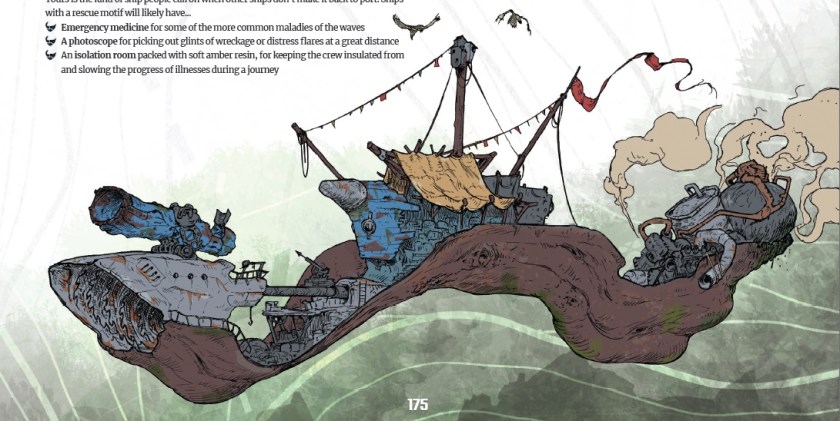
A Wildsea ship
A Wildsea ship

The next page tells us about the steps to make your ship. There are three overall stages:

  • Design – you have to choose an option for each of the following:
    • Size
    • Frame
    • Hull
    • Bite
    • Engine
  • Fittings – these are all optional but they come in the following categories:
    • Motifs
    • Additions
    • Rooms
    • Armaments
    • Outriders
  • Undercrew – optional choices that come in the following types:
    • Officers
    • Gangs
    • Packs

On the same page, there is a helpful example ship statted out for us. It is essentially just a list of chosen options beneath each of the three stages. Beside each option is the cost in Stakes and the benefit it provides for the ship if appropriate.

It also lists the Ratings for the ship.

Ratings

These are tracks (tracks are like clocks in Blades in the Dark, in some instances and like health bars in others) that are used to record the current status of various aspects of the ship. Every ship will have all six of these:

  • Armour – speaks for itself
  • Seals – How well your ship keeps out the nastiness from the Wildsea
  • Speed – ‘nuff said
  • Saws – most ships use giant chainsaws or something similar to power their way through the waves of leaves and branches.
  • Stealth – how well can your ship pass undetected?
  • Tilt – this is your ship’s manoeuvrability

Each one of these Ratings starts as a 1-track but we’ll be adding to that as we progress.
Keep these Ratings in mind as we go through the process!

Step One – Design

Normally, this would be done by committee. Every player should be involved in the decisions on which the foundations of the ship are built. But, obviously, in my case, that’s not possible. Anyway, here we go!

Size

There are four sizes available and they each cost 1 Stake:

  • Nano – big enough for one person and maybe a passenger. +1 Stealth
  • Small – can easily accommodate between two and four sailors. A good starter ship. +1 Speed
  • Standard – perfect for five to ten people. +1 Armour
  • Large – ideal for ten to twenty people. +1 Armour and -1 Stealth

I have a limited number of Stakes so I feel like a Small ship is the way to go. Also, it’s for a crew of up to four, so it’s just right.

Frame

The Frame, the book tells us, betrays a certain attitude that you want your ship to give off to other wild sailors. Your choice will also give Rating modifiers like Size does. Here are the six available Frames:

  • Sturdy – meant to weather storms and bombardments both. +1 Armour
  • Moulded – somehow constructed from a single piece of some material. +1 Seals
  • Light – lightweight and dainty. +1 Speed
  • Scything – all about cutting through the treetops as well as they can. +1 Saws
  • Sleek – Keeps you “low to the waves,” and as quiet as possible. +1 Stealth
  • Flexible – bend before breaking. +1 Tilt

I personally think that one of the coolest aspects of these wildsea vessels is the fact that they use enormous chainsaws to cut through the canopy. So, I’m going to lean into that and choose the Scything Frame, giving +1 Saws and costing 1 Stake.

Hull

Interestingly, you can have more than one of these, if you like, but you must have at least one, for obvious reasons. There are twelve Common Hulls and three more Unique ones listed here. The cost ranges from free to 3 Stakes. Here are the Common ones:

  • Reef-Iron – 1 Stake, +1 Armour
  • Leviathan Bone – 1 Stake, +1 Seals
  • Broadwood – 1 Stake, +1 Tilt
  • Rough Bark – 1 Stake, +1 Stealth
  • Chitinous – 1 Stake, +1 Speed
  • Razorscale – 1 Stake, +1 Saws
  • Beastback – 2 Stakes, +1 Seals, +1 Tilt, “A half-living hull of flesh and bone, flexible and unsettlingly warm.”
  • Ceramic – 2 Stakes, +1 Armour, +1 Seals
  • Chrysalid – 2 Stakes, +1 Seals, +1 Stealth, “A hull adapted from the cast-off chrysalis of a massive insect, excellent protection against the sea’s incursion.”
  • Ghost-Oak – 2 Stakes, +1 Armour, +1 Stealth
  • Arachnesque – 2 Stakes, +1 Tilt, +1 Stealth, “Less of a hull and more of a giant insect grown to fit the specifications of your frame, usually something spider-like.
  • Exile’s Copper – 2 Stakes, +1 Armour, +1 Speed

Here are the three Unique Hulls:

  • Junk-Strung – Free, +1 Armour, -1 Seals, can salvage parts from it
  • Floraflage – 2 Stakes, +2 Stealth, -1 Armour, undetectable while stopped
  • Monument – 3 Stakes, +2 Armour, +2 Seals, made from mountain stone so can’t “Forge-ahead during a journey”

I like the idea of adding a little Armour Rating at this stage but also building on the Speed I improved before so I am going to go with Exile’s Copper for the Hull giving me a +1 Armour and +1 Speed. It will cost 2 Stakes but I think its worth it.

Bite

This determines the way your ship is propelled. It will also have an effect on your ramming damage and the ease by which others might track you. There are twelve Common Bites listed, as well as several different types of sails and a trio of Unique Bites as well. Here are the Common ones:

  • Sawprow – 1 Stake, +1 Saws, big chainsaws! Close Quarters (CQ) Serrated damage
  • Impellers – 1 Stake, +1 Speed, outboard engines. CQ Blast damage
  • Crawler – 1 Stake, +1 Tilt, kinda like crab legs? CQ Blunt damage
  • Underscales – 1 Stake, +1 Stealth, snakey. CQ Keen damage
  • Jag-Tracks – 1 Stake, +1 Armour, “Motorised grapple tracks.” CQ Hewing damage
  • Sluicejets – 1 Stake, +1 Seals, chemicals that push you along. CQ Acid damage
  • Longjaw – 2 Stakes, +1 Saws, +1 Speed, “An underslung chainsaw arrangement.” CQ Serrated damage
  • Propeller-Cage – 2 Stakes, +1 Speed, +1 Armour. CQ Blunt damage
  • Navapede Limbs – 2 Stakes, +1 Tilt, +1 Stealth. Like a centipede. CQ Spike damage
  • Voltaic Runners – 2 Stakes, +2 Seals, like the electric ships in the Matrix, I imagine? CQ Volt damage
  • Mulcher – 2 Stakes, +2 Saws, +1 Armour, -1 Stealth, “grinding teeth in a lamprey-style mouth.” CQ Serrated damage
  • Tentaculari – 2 Stakes, +2 Tilt, it’s tentacles. CQ Salt(!) damage

I am not going to go into all the Sail and Unique options here because there are too many already, to be honest, and I know I don’t want any of them. I need to stick to my guns, or my chainsaws in this instance. As I am worried about the number of Stakes I have left to spend, I won’t go for the Longjaw. Instead I’ll go for option number one, Sawprow, for 1 Stake, giving me +1 Saws.

Engine

This is the last bit in the Design stage. A few things to note about the ship’s Engine:

  • It can be used for more than just propulsion
  • It will require a specific type of fuel
  • In most instances, don’t worry about tracking the fuel

There are eleven Common Engines and four more Unique ones. Here are the Common ones:

  • Chemical Compressor – 1 Stake, +1 Speed. Fuel – crushed fruit and insect husks
  • Springwork – 1 Stake, +1 Saws. Fuel – manual labour
  • Parasite Pitcher (Plant) – 1 Stake, +1 Stealth. Fuel – living matter
  • Steam Piping – 1 Stake, +1 Seals. Fuel – water
  • Ratwheel Exchange – 1 Stake, +1 Tilt. Fuel – feed the rats
  • Pulsing Cocoon – 1 Stake, +1 Armour. Fuel – dreams
  • Jawbox – 1 Stake, +1 Saws, +1 Speed, -1 Stealth. Fuel – wood
  • Solar Compressor – 2 Stakes, +1 Speed, +1 Stealth. Fuel – sunlight
  • Magnetic Coils – 2 Stakes, +1 Tilt, +1 Stealth. Fuel – magnetic scrap
  • Ceramic Batteries – 2 Stakes, +1 Saws, +1 Seals. Fuel – lightning strikes
  • Acid Maw – 2 Stakes, +2 Saws. Fuel – salvage and scrap

The Unique Engines are fun too. One of them is this:

  • Tamed Hive – 2 Stakes, +1 Speed, +1 Seals. It’s a massive hive and can produce honey. Fuel – flowers and pollen

I love the whimsy of the Tamed Hive so much that I must have it! That’s 2 Stakes but it adds +1 Speed and +1 Seals

There won’t be any more changes to the Ratings from the remaining steps so our final Ratings are:

  • Armour – 2
  • Seals – 2
  • Speed – 4
  • Saws – 3
  • Stealth – 1
  • Tilt – 1
A weird looking wildsea ship

Step Two – Fittings

Pretty much every part of this is optional, which is just as well because I only have eight Stakes left…

Motif

So this is the general theme and purpose of the ship. Choosing one can help the whole crew get a clear vision of the vessel and will also influence how others see you and it. They provide specific things like emergency medicine, gaudy appearance or a reinforced engine room. They do not provide mechanical effects but they may play a part narratively.

Here are the available Motifs. They each cost two Stakes:

  • Transport
  • Hauling
  • Hunting
  • Salvaging
  • Pathfinding
  • Raiding
  • Rescue
  • Research
  • Entertainment

You don’t have to choose a Motif for your ship but I am enamoured by the idea of a Research vessel out there on the wild waves. Perhaps the unconventional engine was something we discovered during a past expedition and we figured out how to make our ship go with it through the power of research!

A Research vessel:

  • has better tech on show than most ships
  • contains a research library
  • houses a snapograph arrangement. Its a sort of big camera

Additions

There are so many of these, most of them costing a single Stake. We’ve got Firefly Lanterns, a Cargo Crane, a Steam Whistle and lots more. But, as I am getting worried about how much I’ve spent already, I am only going to pick up:

  • Anchor System – Its Free!
  • Tethered Kitesail – 1 Stake – its a glider that is hooked to the deck. Lets us go up and get a bird’s eye view when the wind’s up

Rooms

On a Small Size vessel it’s not a great idea to split your already limited space up any further. You already have the following rooms on your ship:

  • A Pilot’s Cabin
  • A Main Deck
  • Crew Quarters
  • An Engine Room
  • A Cargo Bay

You can add a lot of different types of rooms like a Galley, a Navigational Suite, a Tap-Room or a Brig and they are all optional.

But this is a Research vessel now and I feel like we need a good way to observe stuff. We have the glider to allow us to watch from above. I would like to add a Cupola to the hull, near the rear of the ship, giving a great view of the Underthrash. That costs one Stake. I am down to just four Stakes left.

Armaments

Weapons are next on the Fittings list. These, too, are optional. In this case, they are either placed on deck or fixed to the Hull. I’m not crazy about the idea of armaments for a Research vessel, however, since our Stealth sucks, I think it’s prudent.

We have a lot of choices, from Trebuchet to Storm-Rail to Broadside Cannons and a Bladed Prow. But I’m going to pick up something suitably sciencey:

  • Viper’s Tooth – 2 Stakes, sprays an acid of some sort dealing Long Range Acid Damage.

Outriders

This is another option for defence. Honestly, with a Small ship, I don’t have the space for this and I also don’t have the Stakes to spend on it. You have to build an Outrider much like a ship, although it only has two components. You will also then need to add a way to store and deploy it from your actual ship. It seems like a fun extra but I can’t afford it.

Step Three – Undercrew

Octopus crew
Octopus crew

These come in three varieties: Officers, Gangs and Packs. I’m not going to go into detail on each variety as this post is already way too long. Suffice it to say, the officers are Skilled, Experienced or Well-Travelled, the Gangs are not necessarily what you might think of when you think of Gangs (some of them are Tinkers, some are Spear-Fishers, but some are actual Marauders) and the Packs are animals…

You can have Spring-Foxes which leap along beside your ship to warn of danger, Rig-Ferrets who can do knots, Squirrel Flingers who will fight to defend your vessel. But what I want is one of the Insect Packs:

  • Glowbug Parade – 2 Stakes, they follow the crew members around and illuminate their surroundings for them!

Personal Touches

And so, with all Stakes spent, we come back to the start and our little idiosyncrasies. The book suggests describing the following, so I will:

  • Colour and Style – I think it was once a scientific grey and white, all straight lines but now it is a dark shade of honey as the insects crawled all over it. It’s all smeared and waxy. The crew have left it that way as they think it protects from parasites
  • Shape and Construction – I think this ship is quite blocky, almost as though it was constructed from prefab elements. But, once again, the engine bees have shored up all the joints and seams with wax and honey, making it look far more organic
  • Quarters Decoration – I don’t have my character created yet so I am going to revisit this when I have made them. I expect that all the crew sleep in a single chamber, though. They might each have a personalised corner
  • Quirk – Sometimes the bees go to sleep at night and we can’t get the engine to start
  • History – This has always been our ship. It has been on a mission of discovery and research for several years now. We were originally led by an old eccentric who built it and funded it. Now she’s gone, we carry on in her place

The final step? A name of course!

I name this good ship, The Beacon…

And here is a list of the options I have taken:

The Beacon

Design

Small Size (1 Stake, +1 Speed)
Scything Frame (1 Stake, +1 Saws)
Exile’s Copper Hull (2 Stakes, +1 Armour, +1 Speed)
Sawprow Bite (1 Stake, +1 Saws, Massive CQ Serrated Damage)
Tamed Hive Engine (2 Stakes, +1 Speed, +1 Seals, honey)

Fittings

Research Motif (2 Stakes)
Anchor System Addition (Free)
Tethered Kitesail Addition (1 Stake)
Cupola Room (1 Stake)
Viper’s Tooth Armament (2 Stakes, Massive LR Acid Damage)
No Outriders

Undercrew

No Officers
No Gangs
Glowing Parade Insect Pack (2 Stakes)

Conclusion

I’ll keep this short as that was very long. You should set aside a session just for this process, dear reader. There are a lot of choices and I can only imagine how much longer it would take with four or five people trying to come to agreement on it! However, it has given me a very clear idea of the Ship I just created and a few ideas for the type of character who might crew it.

On to character creation!

Time for a Change

If you had to choose one, dear reader, which one would it be? If you are one of my potential players, which one would you like to play?

Anniversary Posts

More anniversary guest posts coming soon. In the meantime, have some musings.

Old School Rut?

I’m not sure how it happened but, recently, all I have been playing is OSR, trad and adjacent games. With the exception of Dungeon World, which is about as close to D&D as you can get while also flying the PBTA banner, its been wall-to-wall, dragon games, Borgs and Troikas. And this week? It’s Dragon Age, DCC and maybe some Black Sword Hack or UVG (which is pretty trad in its ruleset to be quite honest.) Am I in a rut or have I just naturally gravitated towards these games? Maybe I have found my niche and I’m occupying it. I don’t think that’s it. I think it has more to do with the ease with which I can roll out one of these games, if I’m the GM, at least. It’s also pretty easy to fall into one of them as a player when you’re familiar with the overall concepts, rulesets and themes. And, don’t get me wrong, it’s not that I’m not enjoying them. But it is time for a change, I think.

Options

So, I have a few options of non-OSR, non-D&D, non-trad games to try out in the near future. My current game of Troika! will be coming to an end next week and Dragon Age probably only has a couple of sessions left in it, for a while. So, some calendar spots are opening up! I’d like to fill them with something completely different.

Triangle Agency – I’m reading this at the moment. I have to say, so far, I’m loving the way the game is presented, the really original ideas, the surprisingly bare-bones ruleset and the way it treats the GM (General Manager) as as much of a player as the Agents. It has gotten me excited to play it and I am trying to get potential players excited about it too. The downside is that I feel like I still have a lot to read before I can think about getting it to the table.

    Slugblaster – I got this great boxed set for Christmas and have yet to crack the spine of the rulebook in anger. But I have been listening to the excellent My First Dungeon actual play of the game over the last several weeks. It has made me want to try it out despite having little to no understanding of skate culture. I know at least one player who would be very interested in playing so I’m sure I could get a few more. Once again, the difficulty is that I have not even skimmed the rules yet. This is somewhat ameliorated by the fact that I’ve been learning how to play while listening to the podcast.

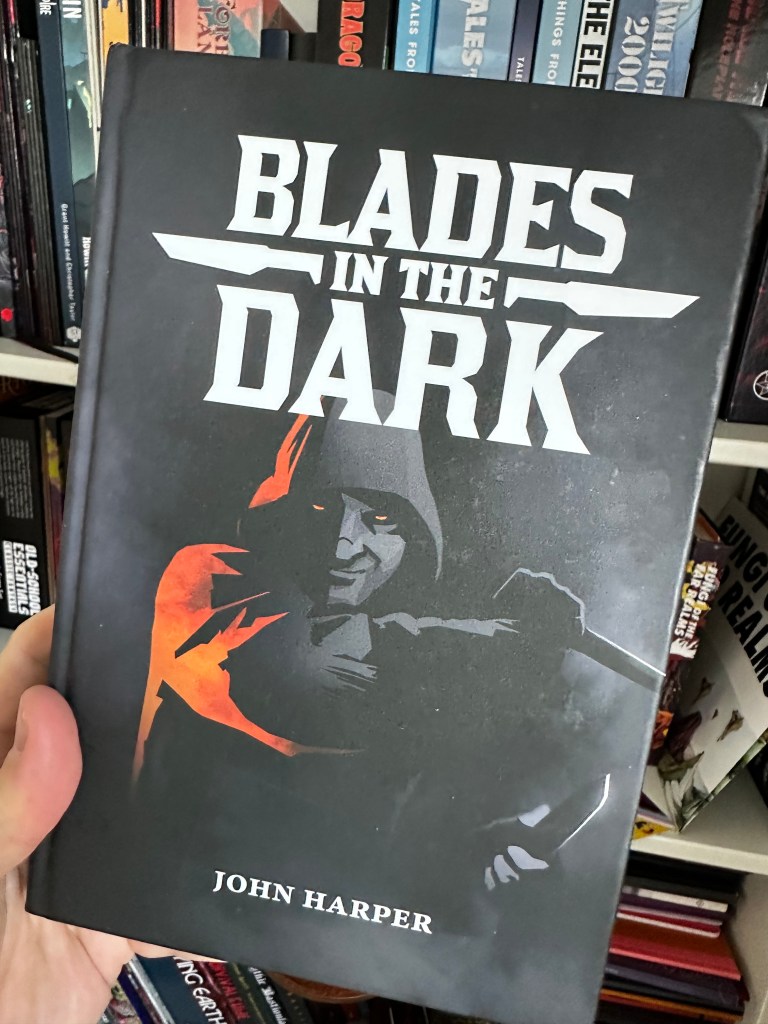
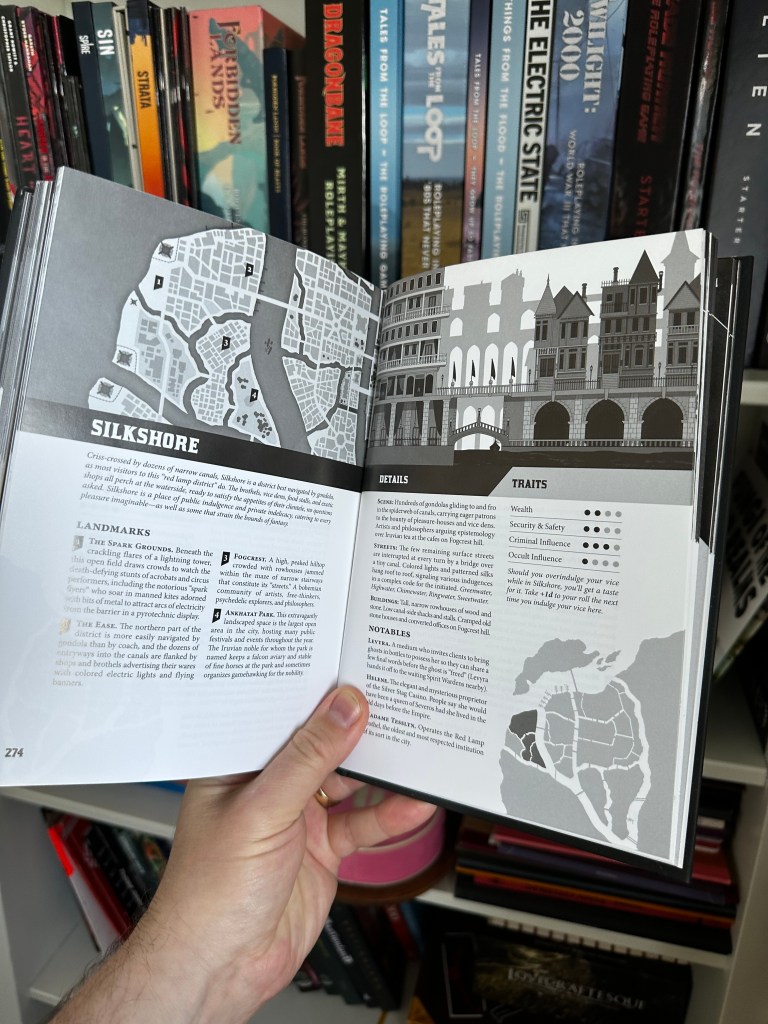
      Blades in the Dark – Although I was a player in a campaign of Blades last year, I still haven’t run it as the GM. I think I would enjoy doing it and it is such a classic, it would be a shame not to put a game of it together. And it is the basis for games like Slugblaster and The Wildsea, which also feature on this list. I have been nicking enough rules from it for my D&D game, also, that I feel confident I would mesh quite well with the ruleset. At least I have read this one cover to cover and played it before, so that’s a big tick in the “pro” column for Blades.

      The Wildsea – I wrote about this already last year and still haven’t managed to run it! Essentially, this game imagines a world where the entire surface has been covered in a vast forest and your players are sailors across the canopy, using boats with giant chainsaws attached to sail. Take a look at the last post about it if you want more info. I have rad a lot of this and could probably run it ok, but I am afraid of doing another game where my players are sailors as I am already doing that with Spelljammer and kind of, with UVG.

      Deathmatch Island – I also wrote about wanting to play this around this time last year. I having been feeling the urge to scratch the Lost, Severance type itch over the last few months. I watched both of those shows in the last half a year and they have stuck with me a lot. I think Deathmatch Island would be perfect for that. Also, I have read it completely and would be very excited to try out its mechanics. Here’s my post about it from last year.

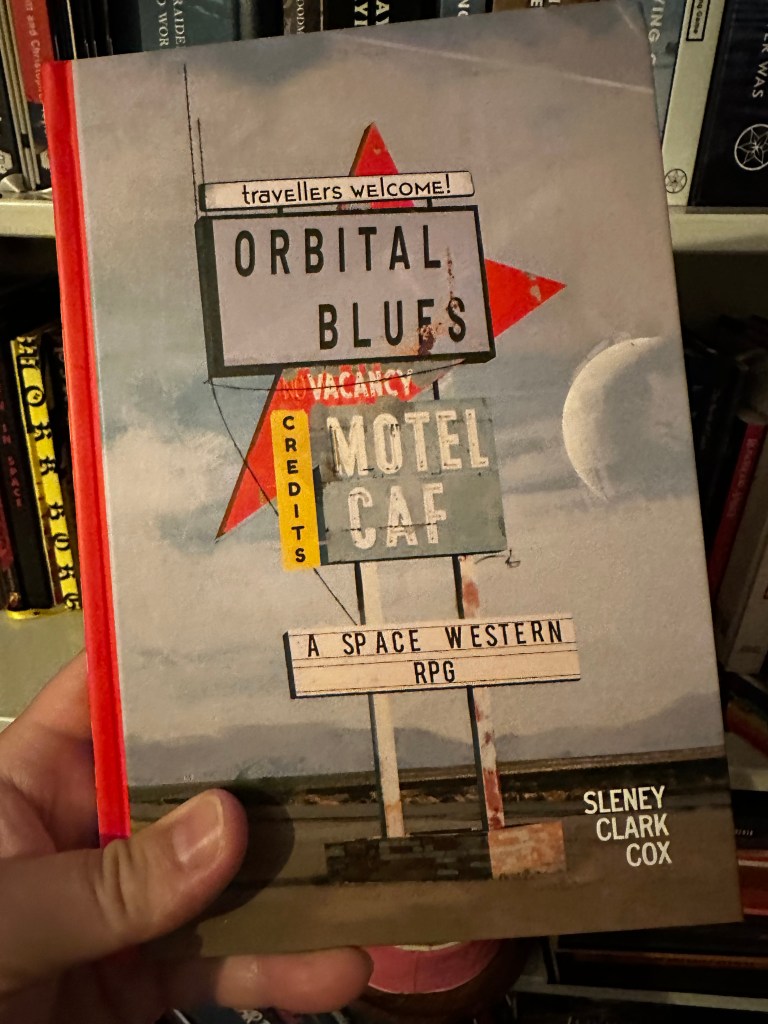
        There are a couple of outsiders as well, Orbital Blues and Apocalypse Keys, both of which I purchased on something of a whim (and a sale.) I’m curious about them but have barely opened either. I know Apocalypse Keys is a PBTA game and that it is beautifully illustrated, but that’s about it. And I know Orbital Blues is a game of sad space cowboys ála Cowboy Bebop and Firefly so that is a big tick in its favour as far as I am concerned.

        If you had to choose one, dear reader, which one would it be? If you are one of my potential players, which one would you like to play?

        Games I Wanted to Play this Year

        Review

        So, how have I done with that list from earlier in the year? At the time I wrote that, on the 28th July, I thought, Time-shmime! Who needs it?! Not me, that’s who. I’ll breeze through this entire list of ten frikkin’ games. But, of course, that was assuming a lot.

        Assumptions

        The first assumption that was happily crushed was that we had a smaller number of GMs willing to run sessions in our little community, Tables and Tales. Up until then, only three of us had run anything so I assumed that would continue. When a fourth and even fifth GM raised their hands to take the helm, I was delighted. That’s what I had always wanted in our space. From what I can see, if GMs were water, most RPG communities would be dying of thirst. Even in the much larger Open Hearth community, you tend to see the same dozen or so members announcing new games all the time, despite there being a membership in the hundreds. Given the size of Tables and Tales, five active GMs represents a pretty large percentage of our total player-base. On top of that we have had a couple of board game nights too. The long awaited and pretty fun Darkest Dungeon board game is, honestly, very close to the video game (actually, I’m told by friend of the blog, Media Goblin it’s closer to Darkest Dungeon 2 in rules) but also pretty close to an RPG so we gave it a go.

        Assumption number 2: I have a pretty stable schedule, which meant that I could run games almost every night of the week if I had the wherewithal. And there were weeks there when I was playing, either as GM or player, in four or five sessions. Turns out that was not sustainable. For one thing, obviously, I started writing this blog, dear reader. Now, don’t get me wrong, I love doing this and it’s not like it takes that long, but if I want to blog, I need to do it in the evening (even though I am typing this on the train to work right now because its a busy week for me and my evenings are taken up with pre-Christmas socialising.) Between that and various other work and family commitments that came up, it was simply impossible to maintain that sort of schedule.

        Reality

        Even taking these points into account, I managed to play a lot of games in the last few months, just mostly not the ones I expected to. So, let’s have another look at that list:

        GM

        • Tales from the Loop – Mascots and Murder – Short Campaign – Nope, didn’t happen. This one is still simmering away on that back-burner, ready for promotion to the front of the stove-top any time now. It had to be shelved to make way for other games and other GMs. Like I said earlier, I was perfectly happy to do it.
        • Dungeon Crawl Classics – individual modules – Haven’t managed to get any of these to the table yet, I’m afraid. But, I have a plan for this one. I have had to re-arrange my schedule a bit to allow it. Our local game shop, Replay, has been undergoing a big refurbishment in the last few months. Once it’s done, they will expand their number of gaming tables a lot and I am hoping to get in there on a Wednesday night to run some DCC Level 0 funnels. My preference would be to get some newbies to sign up for these sessions and hopefully gain some new members for Tables and Tales in the process. The new year will be the perfect time for this, I think.
        • More Troika! – one-shots – Achievement unlocked! Although, technically, it was more like two sessions of the same game, rather than multiple one-shots. I did a blogpost on it! We went to Whalgravaak’s Warehouse, one of the Location based adventures made for Troika. So far it has been very fun. It’s a dungeon crawl, there’s no doubt about that, but it’s a warehouse. And the rooms and creatures and general vibe are beautifully weird in the way only Troika can do it. So far, the PCs, a Monkey Monger, a Wizard Hunter and a Gremlin Catcher (there was also a Landsknecht who has since moved to Spain) have murdered the Cacogen they were sent there to murder, made friends with a thin mutant, captured entire detachments of microscopic soldiers in gremlin catching jars, discovered a desert other-world on top of the warehouse and, um, set fire to a load of old rope. Brilliant craic altogether.
        • Death Match Island – one-shot – You know what, I just completed a rewatch (maybe not “rewatch” since I never watched the entire thing in the first place) of Lost, the whole thing. All six seasons. All 5000 episodes. I think I was in mourning for the lost Death Match Island one-shot that should have been. This one was a scheduling issue. Those of you out there who play RPGs (and if you don’t and you’re here, welcome! You must be confused…) will be aware of the difficulties one often encounters in getting four or five adults together in the same room at the same time. Honestly, I am surprised this problem doesn’t come up more often in Tables and Tales. Anyway, having just finished that Lost marathon, I am 1000% ready to play this game. It’s not quite the same and it would definitely not run for 678 sessions like Lost would if it were an RPG but it has the same heart and the same mystery box feel to it. And I want that. That’s what I want.
        • The Wildsea – campaign – Just go read my blogpost on My First Dungeon’s campaign of the Wildsea. I desperately want to play this game. Honestly, whether I got to be a player or a Firefly, I would be excited. But, really? I’m not sure when I was going to fit this one in this year. Another campaign? Dunno what I was thinking.
        • DIE RPG – one-shot – I finished listening to the My First Dungeon Wildsea campaign and just started listening to the DIE one. They have a great episode that is mainly Kieron Gillon being effusive for an hour about his, admittedly very cool, game and I enjoyed it. But then I got into the Session Zero episode and I immediately wanted to play it. I want to run this for my friends and have them play real-world people with real-world problems working it all out it in a fucked-up fantasy world of their own creation as characters of their own creation. I really want it. Maybe next year.

        Player

        • Old School Essentials – campaign I think – So this one has not happened yet. I think it is, at least partly, due to the fact that Isaac, of Lost Path Publishing has been running other shit like crazy in the last few months instead. I hope it wasn’t my OSE character creation post that put him off running the game (I’m pretty sure it wasn’t. I’d really be flattering myself to imagine I had that much influence on anyone.)
        • Heart: The City Beneath – Open Hearth campaign – Our GM, Mike, brought a whole bunch of us together (There were six PCs at the start) to hopefully save the landmark known as Nowhere from being consumed by the Heart. This was a real learning experience for me as it was only my second time as a player in the Resistance System (see the section on Magus, Pike and Drum below for my first experience.) I discovered that, if left to our own devices, players (for “players” read “Ronan” but not just “Ronan”) are apt to take the hand when there is no form of initiative to govern the order or frequency of actions in combat. It was a lesson learned early in the campaign due to one player’s proper and timely use of Stars and Wishes after the very first session. Saying that, I had a brilliant time playing my Incarnadine, Priest of the God of Debt, alongside a Heretic, a Cleaver, a Deep Apiarist, a Vermissian Knight and a Deadwalker. We often had opposing desires and drives, which made the role-play fun, and the GM came up with lots of weird and interesting situations, NPCs, enemies and locations for us. Forgotten-Frost-Remembered, my Aelfir Incarnadine, got to reach Tier 4 of the Heart and retire(!) at least in his head.
        • Call of CthulhuMasks of Nyarlathotep – campaign – Not really sure if this was anything other than wishful thinking when I wrote this, to be honest. This post explains that it was always going to be a long shot to get this campaign started again. But someday, I would love to get Grant Mitchell back on the trail of the mystery in this thoroughly classic campaign.
        • Magus, Pike and Drum – Playtest – This is Isaac again. He has a great basis for a Resistance System game set in the English Civil War that never was, and this is it. There were four of us gathered around the table for this playtest at the end of the summer. I genuinely had so much fun with it. Gráinne was my character. She was an Irish noble and she had some very fun abilities (some of them were a bit too fun with a few too restrictions, it was decided, as a result of this playtest.) What was important in the game is that we solved the mystery in very short order, after scaring the shit out of the mayor and not blowing up the town. But what’s really important is that we provided Isaac a lot of valuable feedback to feed back into his new game. Can’t wait to play this one again, hopefully in the near future. I hope to write a lot more about this game as it develops.

        Conclusions

        So there you go. Three out of ten. Not great. But! I experienced so many other games instead of the ones I didn’t get to in that post! And I got something out of all of them. I’ll tell you about them in the next post (or the one after if I don’t have time to write the rest of the week and just post some more old fiction on Sunday instead.)

        My First Dungeon

        Actual Plays

        My experience with actual plays comes from an unexpected angle. D&D is for Nerds by the Australian Sanspants Radio network was the first one I listened to. I had heard tell of Critical Role but, even then, it intimidated me with its sheer length and the fact that it was in a visual medium. Listening to podcasts while out walking or commuting is one thing, sitting down to watch a four-hour episode is something entirely different. Although, during lockdown and the long period where I was working from home and didn’t go out much I did start to get into Dimension 20 on Dropout.tv. Honestly, it was the clips on Tik Tok that got me started on that. I’m glad I did get a Dropout subscription, in fact; it’s still the best value streaming service I’ve got. Anyway, The D&D is for Nerds nerds put together something much more manageable in length, that I could listen to on my pod-catcher of choice. It helped that it was funny and that I quickly developed an appreciation of the characters and the world that they inhabited. I don’t listen to these so much anymore. In fact, I don’t listen to a lot of actual play podcasts these days. I am far more likely to stick on a show about TTRPGs instead. I have introduced two of my favourites in the past, in a blog post. But here’s another, Talk of the Table is a production of Many Sided Media, who also produce Bitcherton.

        Talk of the Table is presented by Brian Flaherty and Elliot Davis. These guys are RPG professionals and creators in their own right (Elliot Davis has a game on backerkit right now! Go check out, The Time We Have) but they use this platform, normally, to interview other creatives in the industry, whether they are game makers, artists, actual play performers or something else related to the hobby. Some of those I have enjoyed recently were episodes where they interviewed, Mörk Borg design genius, Johan Nohr, TTRPG video essayist and creator, Aaron Voigt, and Blades in the Dark forger, John Harper. Flaherty and Davis have a pleasant, approachable style and a genuine and excited interest in the works of their guests. It makes for a great “podcast hug,” as Blindboy Boatclub would put it.

        My First Dungeon: The Wildsea

        The Cover of the Wildsea Corebook by Felix Isaac

        Anyway, listening to this show made me aware that they had an actual play podcast called My First Dungeon on their network. So, I thought to myself, I could listen to these guys playing RPGs, probably. It turned out they had a few seasons available when I went looking. These include seasons of DIE (which I will definitely be going back to listen to,) Orbital Blues, the sad space cowboy game, and Paint the Town Red, their most recent offering. But the one that caught my eye was their relatively recent season of the Wildsea.

        If you have been around for a while on the blog, you might remember that the Wildsea was one of the games I was hoping to play before the end of this year. This vain hope has been utterly dashed at this stage of the year, but I am still interested in running it at some point. I have been reading through the book, on and off for a few months. What I have discovered while doing this is that it’s got a lot to it! There are so many different parts that go up to make each character, and each one of these parts brings with it a whole plethora of aspects and there’s a lot of new terminology to learn and the world is so wild and different… So, it has felt daunting to even know where to start with it.

        Now, there’s one thing I think a good actual play can do, and that is teach the game. If they do it well, they can even tell a compelling story at the same time. Or maybe the compelling story is what helps you to learn. I feel like Dimension 20 had that effect on me when it came to learning to play 5E better. I knew it pretty well before I started watching those shows but by the time I had consumed like two or three seasons, I had a much more intimate knowledge of minutiae like spells and abilities that I did not previously feel I needed to have a keen grasp of as the DM. So, I went into My First Dungeon thinking I might, at the very least, get that experience from it. And you know what? I did.

        From Session Zero of the Wildsea campaign, I was taking the elements I had only read about, the things that had seemed quite abstract, and I was applying them to the frame of the characters and the basics of the world.

        From Session One, I already felt like I had a pretty good grasp on the way the mechanics worked. Tracks, aspects, dice pools, advantages, cut, twist: I understood them at a more than intellectual level.

        And here’s the other thing about this series that grabbed me from the get-go, I liked these characters! I was invested in their rolls and the ways in which they used their aspects to express themselves and to succeed. I appreciated the players’ willingness to play to their characters’ weaknesses as well as their strengths, and the way they used the mechanics to bring about their failure when they thought that was narratively appropriate or necessary.

        Finally, I think that each of the players in this actual play brought this game to life together. All of them put a lot of effort into building not only their characters, but also the shared world, through dialogue and backstory and by narrating the outcomes of their actions or negotiating with the other players for the best Twists. They do all this while maintaining a seemingly instinctive focus on the overall themes of the game, past lives, secrets of the lost world and secrets of the characters themselves, resurfacing.

        I’m sure editing and production have a lot to do with this, too. If every table had an editor we could make it feel like our narrative beats and adherence to theme were foremost in our minds at all times. But seriously, I have to give a lot of credit to producer, Shenuque Tissera and Brian Flaherty who did the editing and sound design, while also being one of the players! There’s additional music and SFX courtesy of Artlist.io too. The voice effects and leitmotifs for the various characters are incredible and really work to spotlight individuals when that’s needed. Interestingly, this is a core part of gameplay in the Wildsea that has gone unmentioned on the show, as far as I remember, at least. Focus, “a sort of narrative spotlight,” according to the book, is a basic element of the Wild Words Engine and it is there to make players remember to pass the torch on to other players. I am sure the main reason it’s not mentioned is that these pros don’t need the reminder and that the sound design, editing and production are to such a high standard that it renders the concept unnecessary. Speaking of sound, there is also a musical surprise in every episode that I won’t spoil…

        Here’s the full cast:

        Firefly (GM): Elliot Davis

        Brian Flaherty

        Abby Hepworth

        Noordin Ali Kadir

        Kendrick Smith

        J Strautman

        Go check them out!