The Quantum NPC

This works even better through the medium of TTRPGs than TV to be honest, because your imagination simply works around them, never focusing on their details.

Star Trek

I’ve been watching a lot of Star Trek the Next Generation lately. I hadn’t seen it in many years, although I watched the whole thing as it came out in the eighties and nineties. I have obviously been watching it with different eyes this time around. I have noticed things in it that I don’t think I could have seen before. I wonder, for instance, about Mr Data. Would he have been such a sympathetic character today, as an AI in humanoid form? I think about how many of the episodes had no action, how many were just talking heads and techno-babble and whether Sci-fi TV shows today could get away with that. I ponder the special effects and make-up and marvel at how well they stand up 35 years later. But I have also been looking at these episodes with TTRPGs in mind. Now, of course, Star Trek has been made into a number of role playing games. I have never played any of them and this post isn’t about them. This post is about the crew of the Enterprise. Not Picard and Riker and Troi and Worf, but the ones who you see occasionally pass the bridge crew on one of the ship’s many lushly carpeted corridors, the ones having their own conversations in the background in Ten Forward, even the ones who so consistently took the con after Wesley Crusher left. They would get names sometimes and every so often, they’d even get lines! There are a couple of those that are recurring characters, such as Ensign McKnight and Robin Lefler. The most iconic of these, Chief O’Brien, went on to enjoy a major role in two Star Trek shows. But when he first appeared on the Enterprise, he was an unnamed bridge officer. Total NPC. He only became someone when the show creators decided he had to be someone.

The Quantum NPC

So this is what I have started doing for crews in my Spelljammer campaign. I think it would work in any game where you have a lot of NPCs that hang around in close proximity to the PCs all the time. So it works particularly well for ship crews.
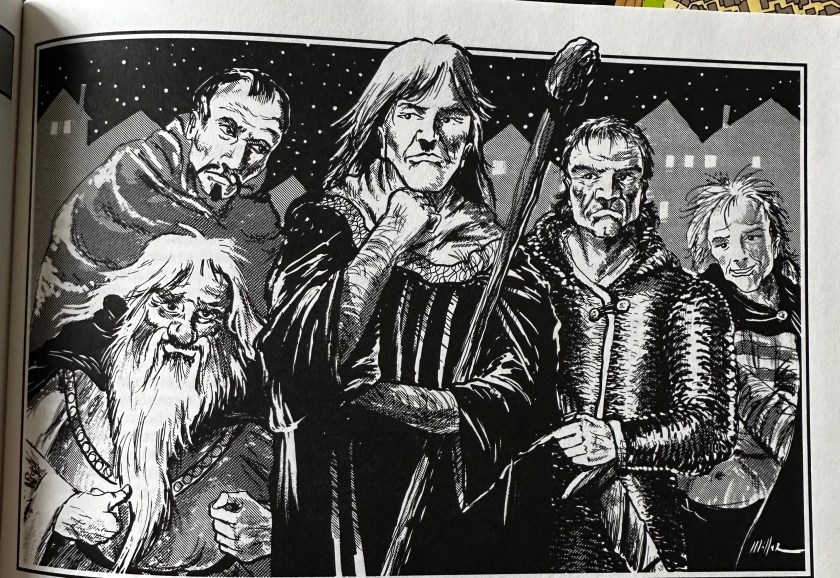
In the main campaign, the party lost their original crew in the best possible circumstances. The crew, a bunch of spirits who had lost their memories and were not initially aware they were dead at all, finally fulfilled their goals and were able to shuffle off to whichever outer plane would have them. So, the PCs were forced to hire a whole new crew to take care of rigging and swabbing and whatnot. Now, I did not want to spend an entire session where they press-ganged or interviewed eight or nine NPCs that I would then have to name, outline and give voices to. That kind of thing can be fun but I don’t want to spend two full hours at it. Instead I told them that they picked up eight new competent crew members and that we would come up with their characters as and when they were needed.

So this is how that works, you imagine the scene where the PCs are on deck, in the foreground talking about something like how to defeat the weird root creatures that have invaded the ship from some eldritch, otherworldly space. In the background, just like in Star Trek, you have a few crewmembers, maybe they are even in uniform, but they are ill-defined and unremarkable. This works even better through the medium of TTRPGs than TV to be honest, because your imagination simply works around them, never focusing on their details. But then! They need one of the NPCs to be good at something, a specialist, an expert. Or maybe they just need a buddy, someone to talk to, or someone to listen. That’s when the players get to stretch those imagination muscles!

Pulling the NPC Out of Their Quantum State

The NPC existed in theory but not in practice. They were always there as a number, but not as a person, not as a character. Until the players make them up. The GM asks a player who this NPC is, what their name is, their ancestry, their job, what their personality is like. The players generally end up working together to do this but I usually start by asking the player who decided they wanted one of the quantum NPCs to become real for some reason. I ask that particular player the type of character they want in this situation with the understanding that, once they have been defined, they will forever be part of the crew, taking up one of those eight spots. It’s just like Blades in the Dark items. You know how many slots you have to fill when your PC is out on a Score but you don’t define the items until you need them in the narrative. Once you have said you have “A Blade or Two,” though, those blades are filling one of those slots. Same-same but different.
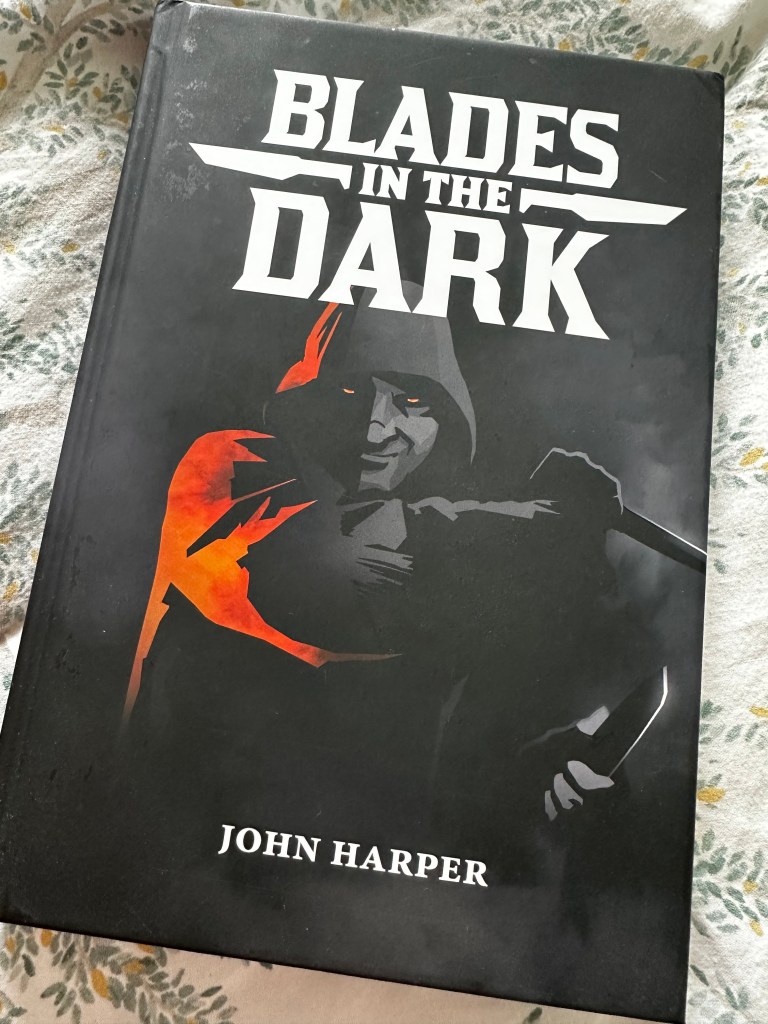
In this manner we got these three NPCs:

Deckhand Dewey – kobold, he/him, spry and wiry and can fit in little places.

Cook – Barry Keoghan (this is the consequence of allowing the players to name NPCs) – orc, he/him, big guy with big arms, beer belly, loves food and loves cooking. His chef hat does not fit very well. Apron always slightly dirty. Has a space rat companion.

Mr Cannon – Halfling he/him – weapon-master.

As you can see some of them got more detailed description than others. Barry Keoghan was described thoroughly partly because of who I asked to describe him and partly because of the moment I asked for his description, i.e. a quiet moment aboard ship where they had some time to talk about provisions and joke about silly Disney movie references. Meanwhile, Mr Cannon was created in the literal heat of battle. But that was ok, because the idea was always to flesh these NPCs out as time went on. We did, for instance, in subsequent sessions, discover that Mr Cannon had a wife waiting for him at home and that Barry Keoghan had some sort of tragic love-affair in his past.
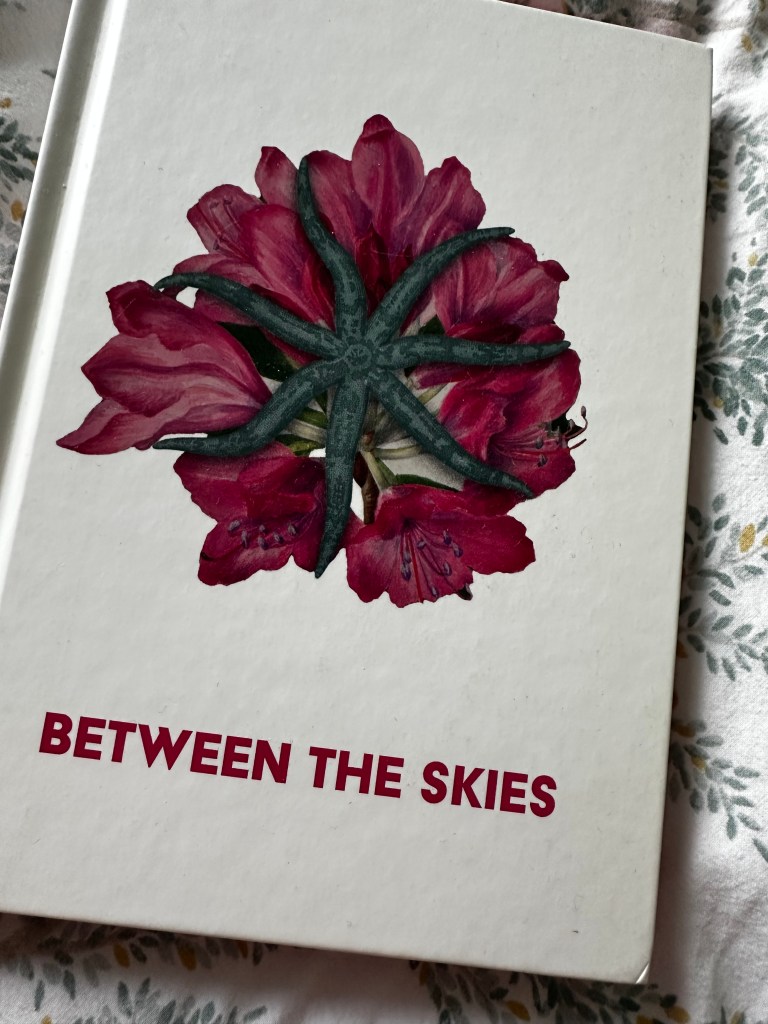
I think, in future I will bring Between the Skies to bear on the Quantum NPCs as they are being birthed by the players, giving them desires, bonuses, hindrances, quirks and all the rest. Time allowing, of course.

The Quantum NPC method has the added advantage of endearing the newly created NPCs to the players from the off. They are, after all, fully their own creations. From the players’ point of view, I believe it was also quite devastating when both Mr Cannon and Deckhand Dewey got breath weaponed into oblivion by a lunar dragon along with the rest of the NPC crew (apart for Barry Keoghan who was in the galley at the time of the attack.) Unforgettable.

Dad-quest

Dad-quest is getting under way tomorrow night. Our resident Giff Fighter-Paladin, Azimuth is rounding up a crew of misfits (the other players with their new characters that I discussed here) and a few more Quantum NPCs and spelljamming out to the Amos Expanse to find his Dad. Can’t wait to see what new crew-members the players come up with this time!

Corkers

I’m off to Cork for the weekend so I won’t have time to come up with anything new today. Instead I thought I would share a couple of posts from last year. I wrote these at a time when I was first experimenting with some homespun rules and borrowed mechanics for our D&D 5E campaign.

This first post is preparatory to introducing a Blades in the Dark style engagement roll to our Spelljammer game.

And this one is an update about how it went!

I’ll be back next week with some new posts. In the meantime, I hope you enjoy these re-posts!

Revenge of the Giff

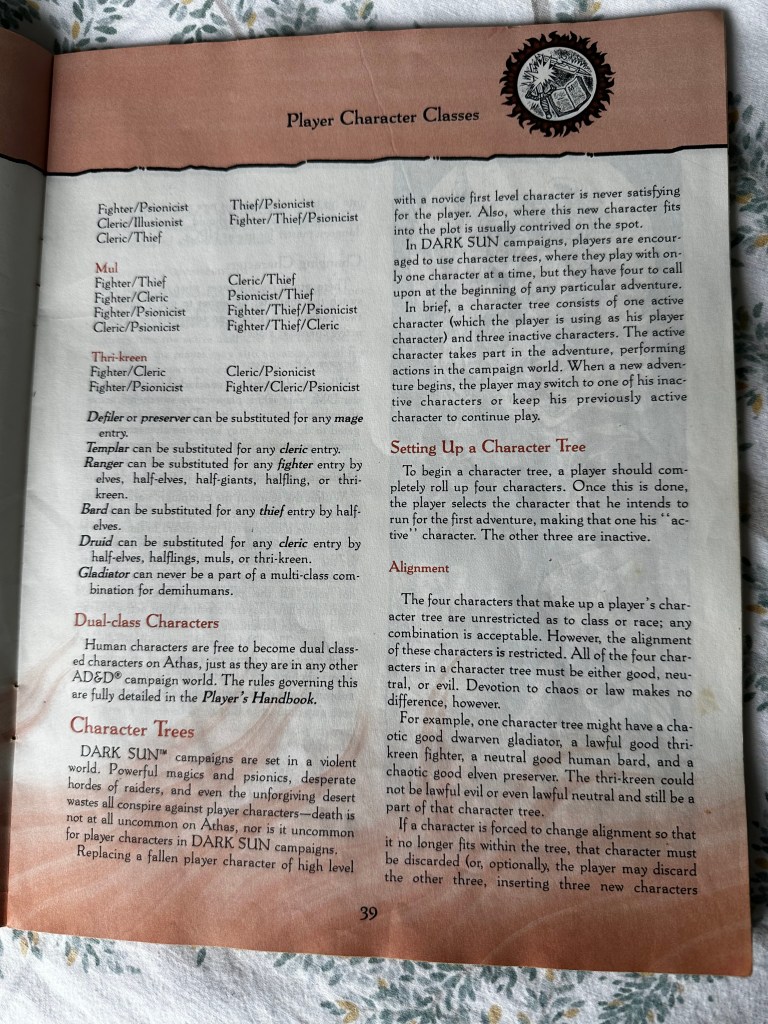
I’m considering an option that harks back to Dark Sun. In 2nd Edition Dark Sun, a player started, not with just one PC, but a whole stable of them, called a character tree.

Mid-season finale

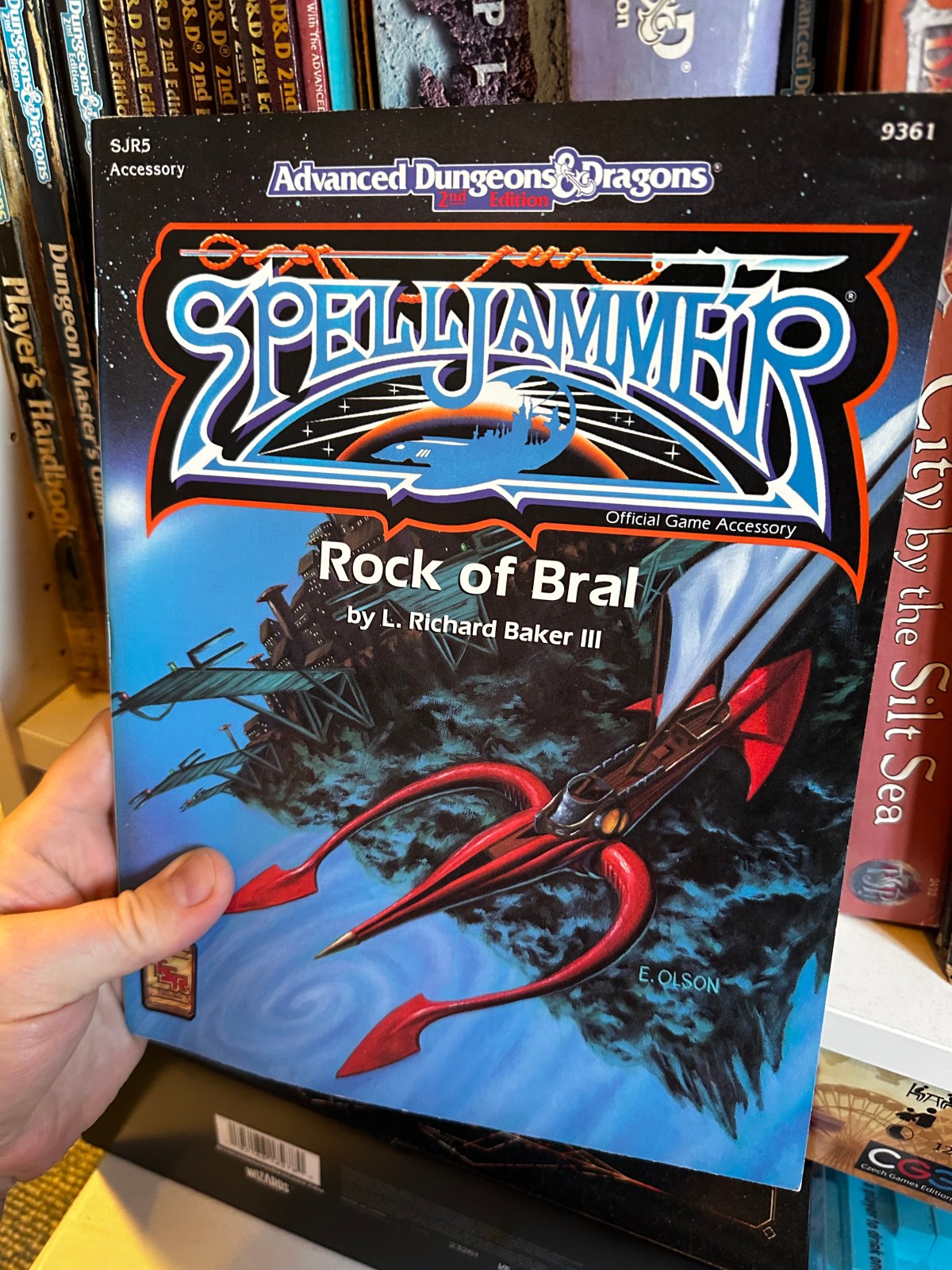
The crew of the Cadabra were going home. After weeks of adventure across Scatterspace and all over the Rock of Bral, they have arrived back at First Home, the asteroid/inn/shipyard that was their first stop after leaving their world behind in the first place. They could justifiably expect a warm welcome since they freed the shipyard from a Neogi infestation last time. But they weren’t expecting to be confronted with a crew of kobolds from their home island to be there. Kobolds who probably thought the PCs had murdered their queen. They also weren’t expecting to find Becky Fullpockets’ personal spelljamming vessel there. They had been struggling against the machinations of the technomagical billionaire ever since they fled their planet. It looked like they were stuck between a rock and a hard place, with no escape!

No better place to end part of a season than on a cliffhanger. And that’s what we did right there. We have been on a break from our Spelljammer campaign for a couple of months now. It’s given me a break from 5E and allowed us to play some other great games in the meantime. But now, it’s time to come back, sort of.

Spin Off

A few months (IRL months, that is) before the crew of the Cadabra reached First Home for the second time, they said goodbye to one of their number. Giff Fighter-Paladin, Azimuth, who had to be rescued from two ship-wrecks in quick succession might have been labelled a Jonah by many crews, but the Cadabra was different. They welcomed him on board with open arms and he adventured with them for a while. But, eventually, he was always going to go back to look for the father who went missing from the first of those two ship-wrecks. Now, while his erstwhile comrades are heading back to their homeworld, Azimuth is armed with a little knowledge about the stretch of Wildspace Papa might be found in and a ship stolen from Becky Fullpockets. He’s preparing an expedition of his own to go find his real dad… Not that gnome who pretended to be his dad during that short period where he’d lost his memory (long story, dear reader.)

The rest of the players are coming back too, but they’ll be playing new characters for this spin-off. Azimuth needs a crew for his ship, after all. We are getting together tomorrow night for a session-0 type thing. I think everyone is looking forward to trying some different classes/backgrounds/species compared to the ones they have been playing for over two years in the main campaign. Although, Azimuth’s player, David, doesn’t get a new character, he does get to pursue his PC’s main drive and its a great welcome back to the group for him.

As for me; I’m looking forward to yet another shake-up in this game. I’m planning to use the progress-based travel rules that I mentioned in my Prep Part 2 post last week. And, as well as that, I have something very special up my sleeve for the meat of the adventure, which I can’t reveal here and now (my players read this blog sometimes.) I’m definitely going to write about it after the fact, though.

Change of Cast?

The introduction of new PCs into the campaign, even though its a spin-off, raises the question of what happens once Azimuth joins back up with the main crew again. I’m considering an option that harks back to Dark Sun. In 2nd Edition Dark Sun, a player started, not with just one PC, but a whole stable of them, called a character tree. I believe you were supposed to begin with four characters. This was to help counter the lethality of the setting, giving a player back-ups in the inevitable event of a PC death. This made a lot of sense, especially considering the amount of time it took to create characters. Go check out my Dark Sun character Creation series to witness exactly how long that took.

So, my thinking is that, once this spin-off is done, if they want, the players will be able to swap PCs in or out as they like. This should have the double benefit of providing the players with a bit of variety and allowing them to almost fully crew their ship with their own characters, rather than just NPCs. I’m currently thinking through how I’ll handle character advancement if I do allow this. In Dark Sun, if I remember correctly, the PC only gained experience when they were actually played. No vicarious levelling. I think this makes a lot of sense, but it might be more difficult to adjudicate with milestone levelling.

What do you think of these ideas, dear reader? Have you ever run a spin-off campaign like this? Would you be happy for your players to switch between active PCs like I’ve described?

Prep Part 2

I am an unapologetic shill for Huffa’s Between the Skies. It’s one of my most used and most valuable RPG books. I use it constantly in lots of contexts. But I love using it to prepare for sessions.

Still Prepping

This post is part of a blog bandwagon started on the Roll to Doubt blog.

Click on the link above to take in the blogpost that’s piloting this bandwagon. Wagon-jumpers abound. You can find a very nice read on the same topic and a handy list of related blogposts on the Among Cats and Books blog.

And here’s a link to the first post on this topic on the dice pool dot com.

Between the Sessions

I am an unapologetic shill for Huffa’s Between the Skies. It’s one of my most used and most valuable RPG books. I use it constantly in lots of contexts. But I love using it to prepare for sessions. Its approach to random encounters in particular is one I highly recommend. The encounters are built, not just to make your session interesting, but to introduce potential allies and enemies, recurring characters, locations, objects. In short, they help you to truly build your campaign without relying on GM-written plots that the players may or may not want to interact with.

The methods and tables introduced in the book make for interesting, impactful characters and occurrences. And they have depth, too, enough to hook your players and keep them hooked. You know that old story that your players would die for the unnamed goblin you just made up on the spot but won’t give a shit about the NPC you spent two weeks crafting an elaborate back story for? I feel like the techniques in Between the Skies are almost designed to prevent that. Why? Well, firstly because, if used as your main way to drive the game forward, you are not going to be spending so long lovingly hand-crafting those NPCs, you are just going to roll them up on the tables provided and not worry about whether or not the PCs run into them, because whatever they run into will be interesting and fun enough to capture their imaginations. So, all the NPCs are more like the loveable nameless goblin and you don’t feel the need to make sure the PCs interact with any of them in particular. This has the effect of allowing the players to dictate the direction of the game to a large extent. This is a good thing!

Let’s Interact with the Mechanics

So, Huffa’s advice when it comes to travel is that, unless it is going to be interesting or important, skip it. I can get behind this approach. Recently, I have tended towards the idea of the journey being the game, but sometimes, when you know the next scene you need to play is across the city and its a relatively safe place, just skip to it, or montage it if there is something interesting to see along the way or if its a good opportunity for conversation between characters.

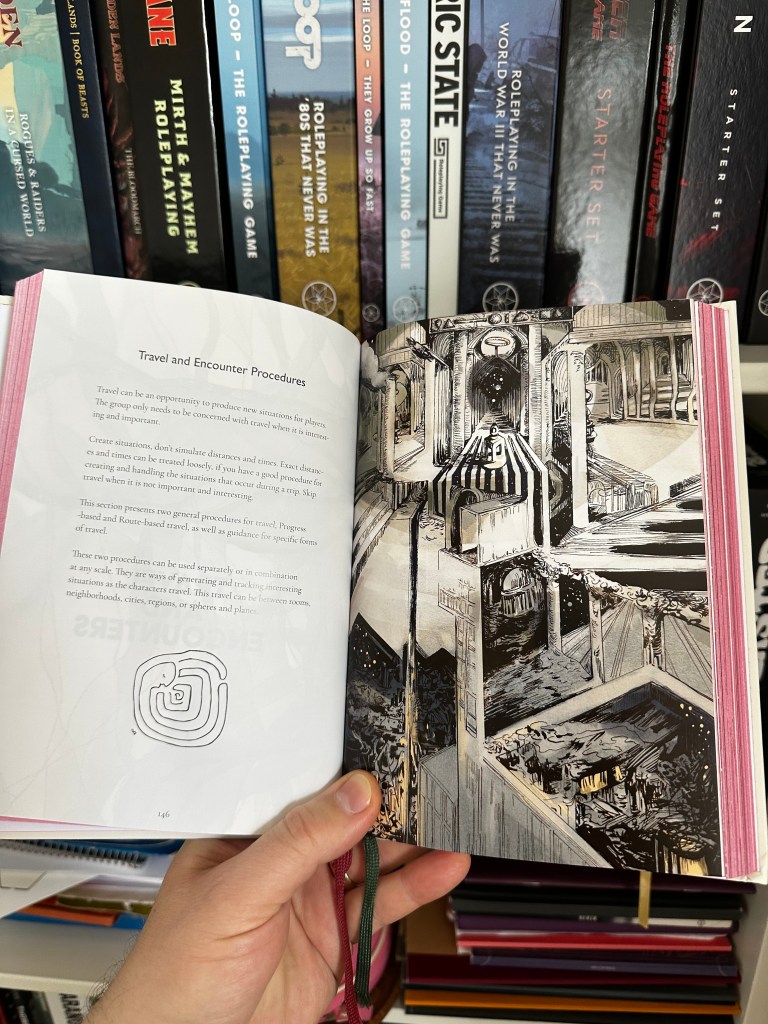
If and when you want to play the travel, though, Between the Skies presents you with two options, progress-based travel and route-based travel.

Route-based travel

Using this method, you use a map, just a basic one that includes routes and locations along them. You roll once on the Encounter die between locations and resolve that before arriving at the next place. Simple. The book includes several ways to generate route maps and destinations but I won’t concern myself with that here.

Your route map should have options, different ways of getting from A to B with more locations in between your starting point and the final destination depending on how long you want the journey to last.

This has the feeling of the caravan travel methods used in Ultraviolet Grasslands.

Progress-based travel

This gives me the impression of beating the resistance of a delve in Heart. Before the journey starts, determine the journey length. There is a helpful table that indicates the amount of Progress points required to reach the destination depending on how long the journey is. You record progress through the resolution of Encounter Die rolls.

The Encounter die works as follows:

  1. Encounter
  2. Something Approaches
  3. Environmental hazard
  4. Complication
  5. Hint as to what is nearby
  6. Progress/breakthrough/boon

So you only get progress points on a 6.

What I did

As with everything in Between the Skies, you can take it or leave it. I have used a combination of the two methods, where I decided that a spelljammer ship journey from the Rock of Bral to the First Home asteroid would take three days and I would have them roll on an encounter table once per day. So this is the table I used:

Wildspace encounter table d6

1-2 No encounter
3 Environmental/Ship Hazard
4 Ship Problem
5-6 Encounter

When you only have three days and so, three possible rolls on the table, I felt it was better to increase the chances of actual encounters/problems/hazards occurring. If it was a more exploratory journey, I would use the progress-based method as described in the book.

Now, using the tables in this book, of which there are many, you should be able to create a fascinating encounter on the fly, but, if you can, I think its nice to prepare a few beforehand, at least one of each kind. So let’s do that here.

I thought it would be a good idea to roll up some options on the spark tables in the book and add them to a d4 table for each encounter type (environmental/ship hazard, ship problem and ship travel encounter.)

Environmental/Ship Hazard

We’ll start with the hazards. For each hazard you want to prepare, you roll 1d6 to determine the hazard type and then d66 to generate a hazard keyword on the Environmental Hazards during ship travel table in Between the Skies.

I shared this table in the last post so lets use the results I rolled up on that.

3 Ship Hazards

Roll 1d4

  1. Hazard 1 – Storm, Flood
  2. Hazard 2 – Disorientation, Sphere
  3. Hazard 3 – Obstruction, Cold
  4. Hazard 4 – Trap, Haunting

I then go ahead and prepare a few details of the hazards. Here’s the first one as an example.

Hazard 1

A solar storm rolls in from the direction of the sun.

  • The gusts of solar winds batter the ship
  • The deck is flooded in light and other solar radiation
  • All those on deck risk blindness
  • There is also a chance of taking radiant damage
    • All on deck must make a Dexterity save, DC 15 to avoid blindness
    • If they are afflicted with blindness it lasts 1d4-1 days. If you roll a 1, Roll 2d12-1 for the number of hours it lasts
    • Even if they saved against blindness they must make a Constitution save, DC 15, against radiant damage. If they fail they take 4d6 radiant damage. If they succeed they take none.
    • This goes for the ship too, if the damage roll beats the damage threshold

You can see that I took the hazard type fairly literally but moved it into a wildspace context. A solar storm seemed obvious but also pretty cool. The keyword, “flood,” took me a little while to work out but I thought flooding the deck with light seemed both like a cool, spacey event and something that could present a real problem for the PCs.

Obviously, you can prepare the details for each entry in the table. They don’t have to involve a lot of work but putting a little extra preparation in at this stage can remove the need for it at the table.

Ship Problem

Similar to the hazards, you simply roll up a problem type and a problem keyword on the Ship Problems tables in Between the Skies. I did this four times and created the d4 table below.

4 Ship Problems

Roll 1d4

  1. Problem 1 – Armament, Separation
  2. Problem 2 – Quarters, Shrinkage
  3. Problem 3 – Cargo, Disappearance
  4. Problem 4 – Bridge (spelljammer helm), Error

Here’s the detail on one of these entries:

Problem 2

One of the crew has stowed something large and awkward in the crew quarters. It is limiting the amount of space available to sling hammocks and the rest of the NPC crew is unhappy about it.
This crew member refuses to be parted from their huge steamer chest as it contains something of extreme personal significance.
The PCs will need to resolve the interpersonal issue.

You can see that the details here are left deliberately vague. You Ould ask the players to decide which member of the crew is the problem, what’s in the chest that’s so important and, most importantly, how the resolve the issue.

Encounters

And finally we have encounters.
There are a lot of different encounter tables in the book. You can choose the one that best describes the surroundings of the PCs at the time. There are two space encounter tables, one for known space and one for wildspace. They are d66 tables. Once you have done rolled on them, you can get some more inspiration by rolling on the encounter keyword, detail and related entities tables.
Once you have rolled on the Encounter distance and awareness tables in Between the Skies to determine how far away the encounter is and how much attention they are paying to the PCs you can roll on the d4 table below.

You’ll note that the results on the table below are not all similar. For instance, encounter 2 doesn’t have a related entity. In general, such entities, as generated by the tables in Between the Skies, are sentient NPCs so I didn’t think it necessary for the parasite I rolled up. But mostly each of them includes an encounter keyword, a related entity, and two encounter details.

5-6 Encounters
  1. Isolationists – Confusion, Related Entity – Unknown NPC, Glittering, Prayers
  2. Ship Parasite – Loss, Scales, Experiments
  3. Ruins, Ancient – Mourning, Related Entity – Petty God, Knots, Miscommunications
  4. Stowaway – Battle, Related Entity – Creature, Eggs, Blindspots
Stowaway

Size, substance and form table: Very small biota, piecemeal.
Weakness: True name
Needs: Brains
Characteristics and details: Pacifist, stalks
Behaviour: Social: Family: 5 appearing
Demeanor and current behaviour: Protective, healing
Attacks: Blast – teleporting

For the final example, I’m using the creature generation tables in the Entities chapter of Between the Skies. You can see all the details and keywords that I rolled up above.

Along with the keywords, battle, eggs and blindspots, that came from the original encounter detail rolls, these will make for a fascinating encounter with some sort of very small fungal entity that has escaped a battle to find refuge aboard the PCs’ ship. The mushroom creature has a desperate need for brains to help heal its young but will not take them by force. Perhaps they only consume the brains of dead beings. Perhaps they have a blindspot that means they cannot sense constructs. And maybe, also, they have crawled into the ship’s stores to try to feed on the eggs, mistaking them for heads containing brains. I like the idea of them lashing out with a teleporting blast to deposit attackers some way off the deck of the ship, leaving them to perish in wildspace. If the PCs can figure out the creatures’ true names, they’ll be able to get them off the ship, but how?

Conclusion

I think you can see the fun you can have preparing encounters and encounter tables using Between the Skies. Once again, dear reader, I can only urge you to go and purchase it. It’s so useful and you won’t regret it!

Hex-jammer

Messin’ with 5E

I’m sure those of you who have been around for a while are aware of how much I enjoy mucking around with my D&D campaign. It is a Spelljammer campaign of the 5E variety and it has been running for quite some time. About 25 sessions, I think. That makes it one of the longest running campaigns I have ever had. That’s probably what makes me want to keep messing with it. A while ago, I introduced the very FitD idea of Engagement rolls before big jobs/dungeons and that has worked pretty well. I also brought in the adversity token, which have come in handy for our heroes in a few clutch moments, let me tell you!

1E Throwback

This post is not so much introducing yet another rules hack or even anything home-brew. It’s more about utilising a style of play that went out of fashion in D&D a long time ago. Hexcrawling! A couple of the oldest D&D publications I own are from AD&D 1st Edition. One of those is UK5 Eye of the Serpent, written by Graeme Morris and released in 1984. This was designed for one DM and one PC! Specifically, it was made to be the first adventure for a druid, ranger or monk character. This is besides the point. I just thought it was unusual. Also, it reminds me of a Troika! adventure I just read, The Hand of God, mainly because it starts much the same way, with the characters being abducted by a powerful winged creature and dumped in their nest at the top of something very, very high up.

Anyway, the point is the hex map of the outdoor region, Hardway Mountain (the name of which, I think we can all agree, is a little on the nose.) Now, the use of this map was incredibly restricted in the text. If your PC was playing a druid, not only did they have to have a prescribed set of three NPCs with them, they should also be forced to take a particular selection of the marked “routings.” These would be distinct from the routings a ranger or monk character would be forced down. You can see this laid out in the unfeasibly complicated two-page spread below.

Now, I think this is really interesting in comparison to what you might deem a hexcrawl style game today. I think most OSR games that use a hex map are thinking along the lines of open-world or sandbox play where you go to a certain hex on the map to explore, with the understanding that the whole thing will be open to your PCs. There might be geographical or other obstacles they have to overcome but that’s up to them, they can either try them out or forget about them.

When it comes to encounters, places of interest, etc. a lot of the time these will be generated randomly and the GM is discovering along with the players in many cases. Even if the GM is the one who came up with the encounter table they’re rolling on, they are not to know what the roll will turn up in the moment or what the PCs will do with them! I realise I am probably teaching my grandmother to suck eggs here, but I want to point out that, although the hexcrawl is a pretty old school style, it wasn’t always necessarily as free a style as it is generally taken to be today.

One last thing. That Eye of the Serpent module has some fantastic art by Tim Sell. Just check these out.

Hexing the Rock

The Spelljammer campaign may have gotten a bit bogged down on the Rock of Bral. Why? Is it because it is the only location described at all in the Spelljammer 5E set? Maybe. Is it because all the plot threads of the campaign led there? Partly. Is it because it takes a life age of the earth to get through a round of 5E combat? That’s a distinct possibility. Anyway, the crew have spent a lot of time exploring, murdering, stealing, negotiating, shopping, drinking and dating on the topside of the Rock already. But one of them has had a literal ooze-heart pulling them to the underside since they got there and they finally made it down. Now, to get them there, I invented a little something I like to call the Shaft of Bral. Stop sniggering! It is a shaft of pure void half a mile wide through which you can reach not just the top and under sides of the Rock but everything in between too. So they took a little row-boat called a spell-rudder down to the bottom and now they are crawling through the hexes underneath. I threw a few random encounters at them on the way down as well. I invented a few encounters for the Shaft of Bral and put them in a d6 table. I got the players to roll for those and they had fun getting hit by another spell-rudder in a hit-and-run and avoiding the sickly air of a boat full of corpses on their way down.

So far, using the encounter table in Boo’s Astral Menagerie (the Spelljammer Monster Manual,) I have been unimpressed. The first time I used it they got an encounter with a ship of aggressive Vampirates. Then there was a fight that lasted three full sessions. It wasn’t all bad, it just derailed things in a less than ideal way. So, I thought I would just make my own encounter tables from now on.

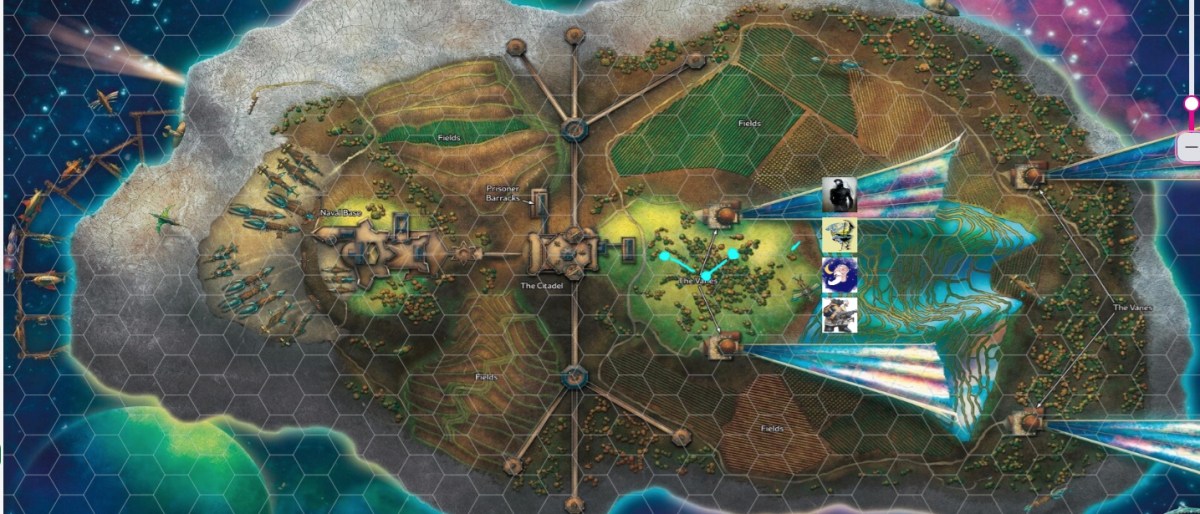
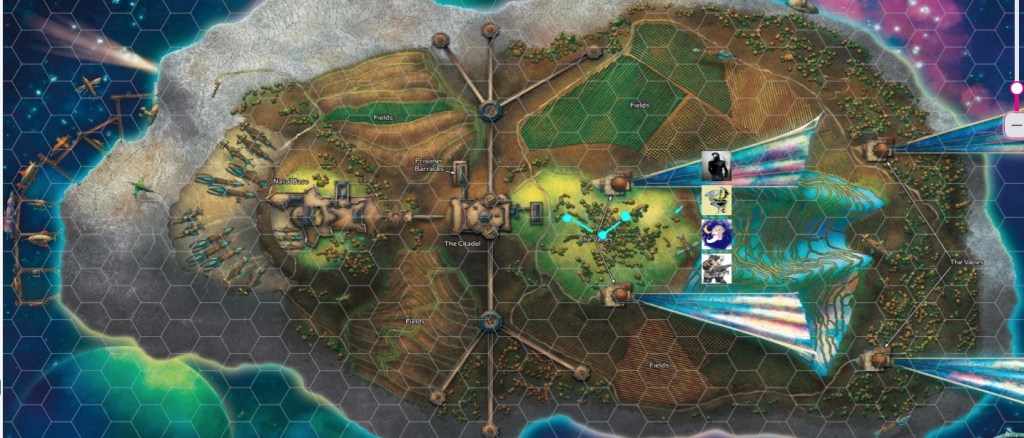
Once they were finally on the Underside of the Rock, I had to think about how I was going to handle it. It is a very large area, made up largely of farmland and forest and they were there to find one wee gnome. I could have just given them directions, but I wanted it to feel like they were exploring and finding their own way, so I took the map of the Underside of Bral and popped it into Roll 20. We are playing this game online so this worked out well. Then I set the map layer to have a hex grid, instead of the standard square one. Now, as they travel, each time they pass from one hex to another, we roll for an encounter. Some of these encounters are designed to beneficial, some are quite the opposite and others are what they make of them. They have been using their own skills, abilities and traits to push on towards their goals while getting the impression of uncovering things about this place as they move through it. I’m not sure how the creators of this version of the Rock imagined people using this map. Maybe this is exactly what they thought we would do! But, I doubt it. It doesn’t feel as though any thought went into that, in fact. As it is with so many recent D&D 5E products, you are given the bare minimum and expected to figure the rest out for yourself. Even a little advice to go along with the map would have been useful. I mean, even Eye of the Serpent did that in 1984.

Anyway, the last session we had was one of these hex crawl sessions and I can’t remember a funnier time. Genuinely laughed the whole way through. Now, I am incredibly loathe to take any credit for that. It was entirely the hilarious antics of the fantastic players I am blessed with. A couple of highlights:

  • Our Giff Charisma-Fighter/Paladin climbing a tree to hide from a patrol with his trousers ‘round his ankles because he thought his hairy grey arse-cheeks would help disguise him as a bunch of coconuts (didn’t work, it was an oak tree.)
  • Encountering a bunch of Hadozee who were on the run from the nearby prison but didn’t know how to escape the Underside. The party told them all about the secret hatch in that stump over there which led to the Shaft of Bral. What’s that? Do we have a boat there? Yep! On, ok, bye then! Good luck in the shaft!
  • Herbert Gũsfacher, ornithologist, the latest identity adopted by the party’s resident illusionist, Balthazar.
  • Gary, Son of Gary. Oh, are you based in the Garrison, Mr Gary-son? No, the Citadel, actually.

Anyway, these random encounters did help along the good times and, I hope, gave the players a sense of active exploration. They haven’t found what they were looking for yet (it’s Eccta, the plasmoid Mum) So I can’t go into any detail about what is in store but I will be using a lot more of my own home made hexcrawls and random encounter tables, that’s for sure.

Turbo Tokens

Failure is failure

Nobody wants to fail, right? We frown on failure. We take it personally, even when it is no fault of our own. It is hard not to feel that way. It might even keep you awake some nights, remembering how you fucked up that one thing and someone blamed you for your failure, even though it was largely a matter of chance. It sucks, but here’s the thing, your brain will never let you forget that one time you messed up. You will almost certainly never make the same mistake again if it’s something you can avoid, right? You will avoid similar situations, you will learn to do the thing properly or you will let someone qualified do it.

But this is not the case in D&D and other similar games. If you roll a 12 and add your +3 bonus and you miss that guy with his 16 AC, that’s it. It’s over. There is nothing you can learn except that you better roll higher next time or hit him with Magic Missile. This feels so much worse than regular failure. This is failure with no upside. There is not even a fun narrative element to it, really, unless you shoehorn one in.

So, how do you fix this? I think the answer is pretty simple actually, and it was brought to my attention by Aabriya Iyengar and Brennan Lee Mulligan.

Adding interest to failure

In the latest season of Dimension 20, Never Stop Blowing Up, the gang are playing people stuck in an 80s action movie. They are not playing D&D this time. Instead they are using a version of the Kids on Bikes system that they have previously hacked for Mentopolis and Misfits and Magic.

I really enjoy the system and it suits the seasons they use it in really well. In particular, the exploding dice element of the mechanics makes a lot of sense for a show called Never Stop Blowing Up and it makes for some brilliant cast reactions when it happens.

But the mechanic I am interested in here is the Turbo Tokens they receive when they fail at an action. In the base game, they are called Adversity Tokens and they represent the lessons learned from failure and contribute to real swings of momentum during high-stress situations.

Kids on dragons

So, I am going to try it out in D&D. Not sure what name I will give the tokens yet. I might just start with Adversity Tokens and see what the players end up calling them. The idea I have is to use them the same way as they do in Kids on Bikes, basically. They will earn one token each time they fail at something, whether it’s an attack roll or a stealth check or an effort to wow the crowd in the inn with their musical genius. That way, failure won’t feel quite so bad and they will be able to spend them later to effect other rolls. I think a +/- 1 modifier for each token spent is appropriate. They will be allowed to spend them to add to or subtract from any roll happening in the situation they are involved in. So they could add a bonus to their own attack roll, help out a fellow PC when the chips are down or subtract from an enemy’s saving throw or attack roll for instance. I foresee some interesting behaviours when it comes to the saving and spending of these. I am thinking I might need to cap the number of tokens a player can have at 10, although I doubt they’ll be able to save up that many of them really.

What do you think, dear reader? Have you ever tried doing something like this in D&D. If so, how did it go?

Wildsea – Campaign

Give your players a home

It’s pretty difficult to give your journeying adventurers a particular place they need to look after. They are always schlepping off to the next dungeon or haunted house or wizard’s tower or whatever. There are ways around this. In one D&D campaign that we finished last year, the PC’s hometown was plonked right on top of a sort of nexus of worlds, an ancient tower, buried beneath a hill, containing dozens of portals to many different planes and other prime material locations. So, even when they popped off to Sigil or Mechanus or the Astral Plane or wherever, they were always going home eventually. Indeed, the focus of that campaign was to save their little island.

But I often find it gratifying to make the home they care about quite mobile. In the first of several interconnected campaigns, the PCs stole and adopted their own “turtling” vessel (like a whaling vessel but for giant turtles. You get the idea.) as the setting was a vast archipelago they needed the transport. Of course they took it and made it their home. Not much of their adventures revolved around that boat but I liked the idea that they had somewhere to return to, no matter where their travels took them.

A-thing-to-fuck-with

It was also a-thing-to-fuck-with. I never got the chance to seriously fuck with that boat since the campaign has been on a semi-permanent hiatus for a few years, but more recently, I got an opportunity to hassle their casino. I mean, this was a different set of characters but some of the same players and it was in Spire, not D&D. The Ministry of Our Hidden Mistress bequeathed to our “heroes” the poisoned chalice of a casino called the Manticore in the Silver Quarter. They put a lot of effort into it, hired entertainment and a succession of unlucky security guards. It did not end well for the Manticore or the staff. Threats to it made for real motivation and the fact that it was a public place meant their enemies could just walk in. That was a dream. Great stuff. But it veers wide of the mobile home to care about topic.

The most recent version of the mobile home in one of my campaigns is the Cadabra, a mirror-hulled squid ship in our Spelljammer game. It’s got a ready-made crew of spirits and a checkered past itself. They have had this ship since session 3 and they are now at the point where they are repairing it and upgrading it and even adding more boats! They’re going to have a frikkin’ armada! This is great because boats are a money-pit. They answer the question, “what are my characters going to do with all that gold?” As well as the “how shall I fuck with them?” question.

And I know the feeling of home-ownership within a game. In the Black Sword Hack game I’m in, we have a flying boat, called a slater. We are unreasonably paranoid about this thing getting stolen or burnt or otherwise becoming unusable by our characters. We park it miles from the locations we are trying to get to so no-one sees it. We always leave NPCs to guard it. It is our home and it’s where we store all our opium and it’s our greatest asset. I’ll be damned if any asshole wizard is going to take it from us!

A home in the canopy

A photo of a page from my copy of The Wildsea by Felix Isaac's. It shows a picture of a ship from the game.

So Wildsea is a good fit for me and my group. In it, the players make characters who crew a ship that plies the canopy of a world-blanketing forest under the power of chainsaws! Below the leafy waves, the poisonous substance, crezzerin makes descending into it just as dangerous as diving into watery sea. The characters are made up of a wild variety of bloodlines like the beings made up of a colony of spiders, cactus folk, spirits inhabiting the ruins of ship-parts and regular old humans. It is possible to start a campaign of Wildsea where the PCs do not have a ship, but I don’t think I would. In fact, the designer of the game, Felix Isaacs, recently suggested that the best way to start is by making your ship first, before your characters even! That way, the thinking goes, you can imagine them in place , posing upon the prow or hanging from the gunwale or climbing the mast. Also, the classes in this game equate to posts on a ship so it makes even more sense when you take that into account. I really like this idea and will probably ask my players to take this approach in session 0.

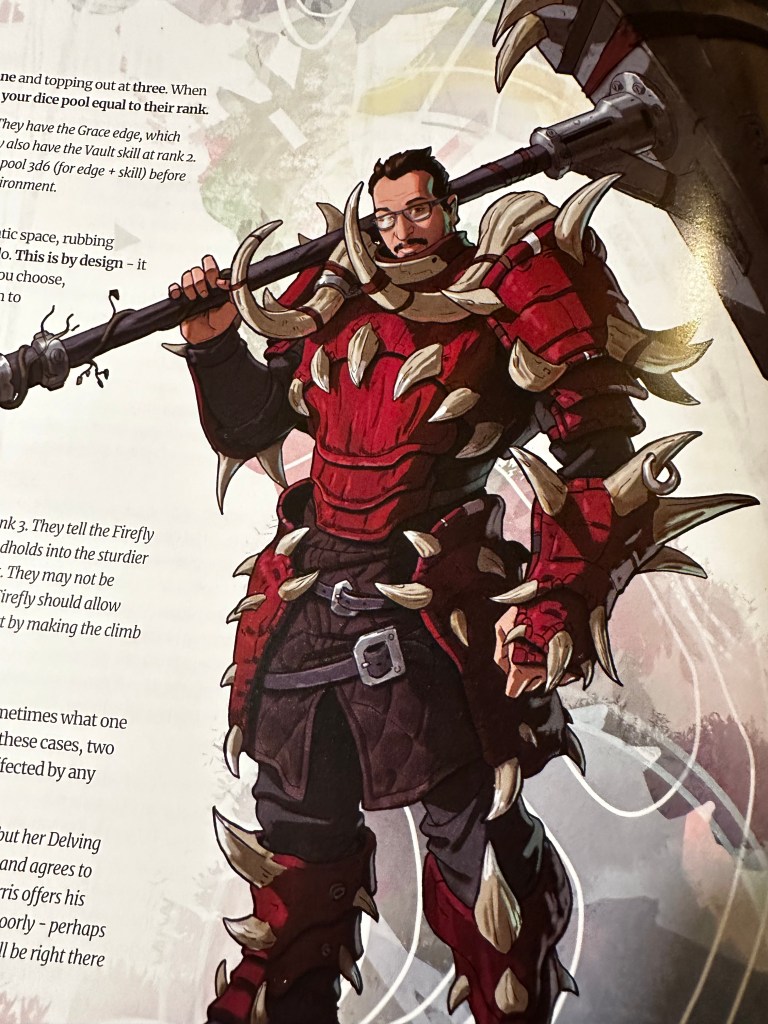
A photo of a picture of a Mesmer, one of the posts from the Wildsea book.

There is no doubt that this is a weird setting. In some ways, it should act like any other setting where you get around on a vehicle of some sort across a trackless expanse. There are plenty of sci-fi games where you have a spaceship to build and look after. Death in Space is like that. Then, of course, I have given a few examples in D&D above already. But this is pretty alien. Even the concept of the post-apocalypse that is so impossibly verdant that sentient life has had to scrabble for a foothold amongst all the greenery is unique and bold. Add to that the oddness of the playable bloodlines and the really setting-specific hazards and you would be hard-pressed to compare Wildsea usefully to any other single game on the market.

A photo of a picture an Ardent character from The Wildsea book.

On top of that, the mechanics are really interesting. It is known as the Wild Words Engine

From Wildsea, Chapter 2, Mechanics:
“It’s low on crunch, focusing instead on letting narrative, character and setting develop during play.”

Isaacs has said that, despite the similarity to certain other game systems, he came up with a lot of the rules independently or was influenced more by video games than other RPGs. The basic dice-rolling mechanic is very Blades in the Dark and he has, to be fair, indicated that he got it from that game. So, you build a dice pool to roll and take the highest roll (or two rolls in the case of a Twist). But there are elements such as the Twist, which happens when you roll doubles and adds a special little something to the effects of the roll, that feel new and fun.

Finally, it feels like the GM (or Firefly) and the players get to create the world together as they play, making a place with little magic or lots of it, with high technology levels or very low, with strictly faith based societies or entirely atheist ones. This is very appealing to me.

How about you? Have you had a chance to play Wildsea? If so, what were your favourite aspects of it?

More Troika! – One-shots

Appendectomy

When was the last time your mind was genuinely blown by an idea, a concept, a creature or a situation presented to you when you played a fantasy role playing game? Because I don’t think D&D is providing opportunities for that sort of thing these days. I don’t necessarily blame the writers of D&D books for that; Wizards of the Coast has painted themselves into a corner that they are very comfortable occupying. In fact, because D&D is responsible for much of the public image of fantasy games for the last half century, they have dragged a lot of the hobby with them. As a result you have endless polished and glittering iterations of elves and dwarves and dragons and wizards with spell levels and clerics with devotion to individual deities and all the same monsters repeated ad nauseam. It is particularly interesting when you look at Appendix N, the appendix to the original D&D, in which Gary Gygaxstated his inspirations for the game. It has a few names you would expect to see: JRR Tolkien, Robert E Howard, Fritz Leiber and Poul Anderson but you also have a few that might make you wonder about the connection to the D&D of today.

HP Lovecraft is well known as the author of The Call of Cthulhu and other cosmic horror stories but his influence on D&D might not be obvious to all. Jack Vance wrote fantasy novels but they were tinged with an element of science fiction and gonzo world building in his Dying Earth books. In fact, many of the authors represented in Appendix N were famous for science fantasy rather than straight fantasy books, just look at Roger Zelazny and Edgar Rice Burroughs. You can still see bits of that influence in Wizards of the Coast’s D&D if you think of Spelljammer and Eberron but they always feel little too clean and sanitised compared to the books those ideas came from.

What I am getting at is that the true spiritual successors to the game developed with Appendix N in mind are part of the OSR. I wrote just yesterday on this very blog about Dungeon Crawl Classics and that very much embraces those influences, but it’s Troika! from the Melsonian Arts Council that truly embodies them for me.

Stretching those imagination muscles

The cover of my copy of Troika! Numinous Edition.

From Acid Death Fantasy by Luke Gearing:
“To the East lies the Plastic Sea, a miraculous main of liquid plastic. Upon contact with living skin it solidifies, covering the coast with Coated Men dueling each other in elegant, fatal contests, having made the choice to die young and glorious, sealed in flexible plastic armour.”

From Fronds of Benevolence by Andrew Walter:
Fletherfalloon is a floating Thinking Engine of a very basic sort, dating from a bygone age. Festooned with rotting ribbons and rusty curlicues, it hovers at varying altitudes burbling and whistling to itself.”

From Slow Sleigh to Plankton Downs by Ezra Claverie:
“Water: three billion years old, frozen by the perpetual
night at the edge of the Galaxy, compressed into glaciers
of midnight blue. Taste the weight of time and solitude,
darkness and purity. With Djajadiningrat.
Hear it crackle in your favorite spirit. The sound of time
calving into an ocean of premium flavor.
Cut by natural-born hand, never by machine, never by clone.
At night’s edge, taste the infinity. Only from Djajadiningrat.
— advertisement in Ice Tomorrow (trade magazine)”

Troika! Is a city at the centre of everything, and around it gathers a host of bizarre and fantastical settings dotted throughout the cosmos. Perhaps you traverse this universe in a space-ship, perhaps it’s a Golden Barge you use. Maybe your character is a Displacement Prosthesist, maybe they are a Hyenaman Scavenger. The possibilities are truly endless and the strangenesses abound.

A page from Acid Death Fantasy by Luke Gearing. It details of the background you can choose to play in that setting, the Hyenaman Scavenger.

We had the chance to play a single one-shot of Troika! A couple of months ago and it did nothing but whet my appetite for more oddness. The adventure we played was a published one, The Blancmange and Thistle, in which the PCs encounter a hotel. Saying any more would involve spoilers but suffice it to say, if you are a fan of the unusual, that hotel is the place to stay.

The inside front cover of my copy of Slow Sleigh to Plankton Downs by Ezra Claverie.

From that, I fed the PCs a hook that should, someday, when I find the time, lead them to the world of Myung’s Mis-step and the whodunnit adventure at the centre of Slow Sleigh to Plankton Downs.

But I have a few others too:

Some lads on a page from Frond of Benevolence by Andrew Walter.
  • Fronds of Benevolence is a short, point-crawl where the PCs journey in search of an item of great importance to their friend/ruler/patron/deity, Duke DeCorticus, which will lead them “to the Rainbow Badlands, across the precipitous face of The Wall and in the very vaults of the hump-backed sky!
  • Acid Death Fantasy is more of a setting book but could equally be used as a point-crawl adventure. It contains elements from Dune, Planet of the Apes, others from dying earth genre books and still others from classic fantasy.
  • Whalgravaak’s Warehouse also by Andrew Walter is an adventure “that centres the play experience on the classic tenets of danger, resource management, exploration and player engagement agency.”

And given the fact that I will probably only get to run these once every few months, these will no doubt last me a while!

Have you had any experience playing Troika!? If you met a Slug Monarch in an awkward situation, would you help them or attack them?

Psycho-analyse Your Players for Fun

Sorry for the monsters

The murder-hobo days are largely done, I think. Although I’m sure there are still plenty of tables out there slaying every poor goblin that crosses their paths, it seems to be a pretty old-fashioned play style, uniquely and deliberately violent, especially when the “monsters” are sentient creatures with cultures and desires and rich inner lives. I didn’t know it when I was a kid but there’s no doubt that the impetus to enter an underground lair and kill every orc you found in there was a product of some highly colonial cultural fallout. Those guys are green so it’s ok to take their treasure and their lives, right? Or, my king/lord/boss/priest told me those guys were evil; better get them before they get us!
You are far more likely to be able to deal with an encounter without violence, and that’s cool.

Harpin’ on

Do my players do this? you ask, reader. Well, yes and no. The Deadwalker from our Heart game made friends with a Heartsblood beast the other night. It was a giant snail with the face of a drow (except for the eye stalks and the rows of sharp little teeth.) his name was Shelby. Of course, they sort of bonded over the killing of a harpy couple. Harpies in Heart are very interesting, by the way. They remind me of the Khepri in China Mieville’s Bas Lag books. The male harpy is just a big bird, about the size of a cat. Now, when he is looking for a mate, he’ll collect up a load of trinkets, bones, body parts, small creatures and occult relics and place them in a circle while, like a minah-bird, he speaks words he has heard others say. These tend to be words they have heard recently from people like the PCs, which is fun. Anyway, this ritual summons his potential mate through a portal from some dreadful, hellish dimension. And she is the terrifying figure of a woman but with talons where feet should be and wings instead of arms and the intestines of some poor bugger dripping, bloody from her beak-like maw. She is very violent and hungry. This encounter was only going to end one way. Luckily, it was the PCs who came out the victors, although it was touch and go. And hey, Seeker made a new friend in the process! Cute little Shelby.

Surprised to see it turn weird

The subtitle there is a reference to a star I got from Isaac in our last D&D session when they discovered the brainless hobgoblin body and the triplets with gossamer threads attaching them to something else in this dungeon they have just entered. They have been encountering a lot of other sailors, mostly humanoids and their servants recently. That’s often the type of game it is because they are dealing with other ships and their crews a lot. They have usually resorted to violence in most instances in this campaign so far. Maybe that’s my doing since the encounters have often started off violent from the monster side. And they did try to befriend that one Neogi sailor who had been left behind by his mates. So they get humanitarian points for that.

So, in this dungeon, I thought I would take the opportunity to make it a bit weirder. After all there should be alien things in a space game. I can’t go into too much detail, but suffice it to state that I am excited to see how the players and their characters react and what they do.

Spiteful owls and slug monarchs

What I find, in general, is that the weirder the monster you introduce, the more likely violence is gonna to be the answer. This is, I think, often a fear response. Or maybe it’s an assumption that, the weirder the monster looks, the less likely it is to be reasoned with. These are often understandable impulses, actually. I mean, there are also the monsters that are totally mundane, like the flock of owls in the Troika! Adventure, The Blancmange and Thistle. They had come in through a window and were harassing a hotel employee. My players did not hesitate to cull those wild birds. To be fair to them though, the text does name them “spiteful owls” and they attacked anyone who entered their stairwell. So maybe they deserved it.

A couple of floors further up in the. Blancmange and Thistle, they encountered a Slug Monarch trapped in the stairs, embarrassed and very much in the way. They used some demonic water to awake a terrible hunger in him and that got him moving. He was a bit more dangerous in this state so they did have to fight him off but then they just escaped up the stairs where he couldn’t follow. It was a relatively non-violent solution to a simple problem involving a rather gonzo monster. But maybe they just treated him better than the average slug because he was a monarch?

Maybe I should stop psycho-analysing my players and their characters.

Anybody else psycho-analyse their players?

Forged in the Dungeon, Part 2

Engage!

This is an update on how my last session of Spelljammer went. More specifically how it went when implementing some mechanics I nicked, unapologetically from Blades in the Dark. If you don’t know what I’m updating you about, oh valued and discerning reader, go take a look at this post right here.

It was touch-and-go last night, to be honest. We only had about 2 hours to play and we were on course for the session to fully be a shopping episode. But, in the last 45 minutes or so, we managed to get into the new technique of using information gathering rolls and an engagement roll before interacting with the dungeon.

I think it worked pretty well, once we got into it. I briefly explained the concept and everyone was on board with it. So we went ahead and they started making up the ways they would use their specialties to help boost their chances with the engagement roll. One character described a trip to the pub to try and identify some locals who might know the way to this secret hideout they were looking for, one followed a potential gang member to the entrance, one questioned some dock workers they were helping out, one went to ask her sister for help and one staked out the most likely spots along the docks. They all used different skills and only one of them failed the information gathering roll. I set the Information gathering DC pretty low for this first time, a mere DC 10. I gave them +2 to the engagement roll for each success so they ended up with a +8 for a total of 18 on the engagement roll.

Now, I had prepared three maps on Roll20 and a bunch of potential encounters, both combat and social, traps and dangerous environments. I did not regret dumping two of those locations in favour of jumping straight to the dungeon entrance. Did the old dump and jump, as it were.

I narrated their discovery of and arrival at the building that hid the staircase to the hideout. I explained how the intelligence they had gotten in their information gathering phase had allowed them to figure out the best time to enter. I described the way they were warned to avoid dangers and possible traps on the stairs and then, satisfyingly, they got to the front door. And that’s where the action started.

Straight Dunjin’

I asked for some feedback on the technique at the end of the session and it was broadly positive. There was a definite consensus that, if we had simply role-played each of the scenes I described above with multiple rolls in each scene for stealth, deception, persuasion, etc, it would have taken hours and they would not have gotten anywhere near the entrance to the dungeon last night.

One player, Thomas, told me today that, because there tends to be a lot of “admin” in this campaign (ship stuff, money stuff, shopping stuff etc.) that it was refreshing to get to the action without a lot of rigmarole. I agreed that it felt good to use the precious time we have together (only 2 hours every fortnight) in as fun a way as possible. Last night, that involved sending them to an underground lair where they discovered a guy with the top of his head sawn off and a bunch of identical hobgoblins with gossamer threads attached to their necks. You know, good old fashioned fun!

We also talked about how they were able to retain a sense of having achieved this “easier” path to the entrance of Ozamata’s hideout. Since we went around the “table” and every character had input to how they wanted to help gather information and got to narrate and role-play within those short scenes, it felt earned more than given.

On the more measured side, I did get some feedback from Trevor that, although it worked well in that particular situation, it might be more difficult to apply in others. I have to agree with that assessment too. It is easy to apply this method when the PCs are aware of the exact job they have to do, when they have time to seek out information about it and to prepare in lots of different ways. It is not going to work so well when an encounter is meant to take them by surprise. Maybe that’s ok though. It’s not Blades in the Dark that we’re playing and it never will be. D&D isn’t supposed to feel like that. But that doesn’t mean that we can’t try to make it feel less like a grind and more narratively satisfying whenever possible.

I’m very well aware that, for most gamers who are used to the story-game play style, all I’m describing is maybe some half-arsed version of their regular RPG experience. Maybe it’s not even that. But I will say that, for me, it is fixing a distinct issue in a campaign that I very much want to continue playing but definitely want to speed up bit. I mean they have been playing the last day and a half on the Rock of Bral since last November… so, I want to move things along without making my players feel like I’m rushing them or demanding they do something they don’t want to. Hopefully, this technique will help to accomplish that.

Has anyone else tried something like this with any degree of success in D&D?