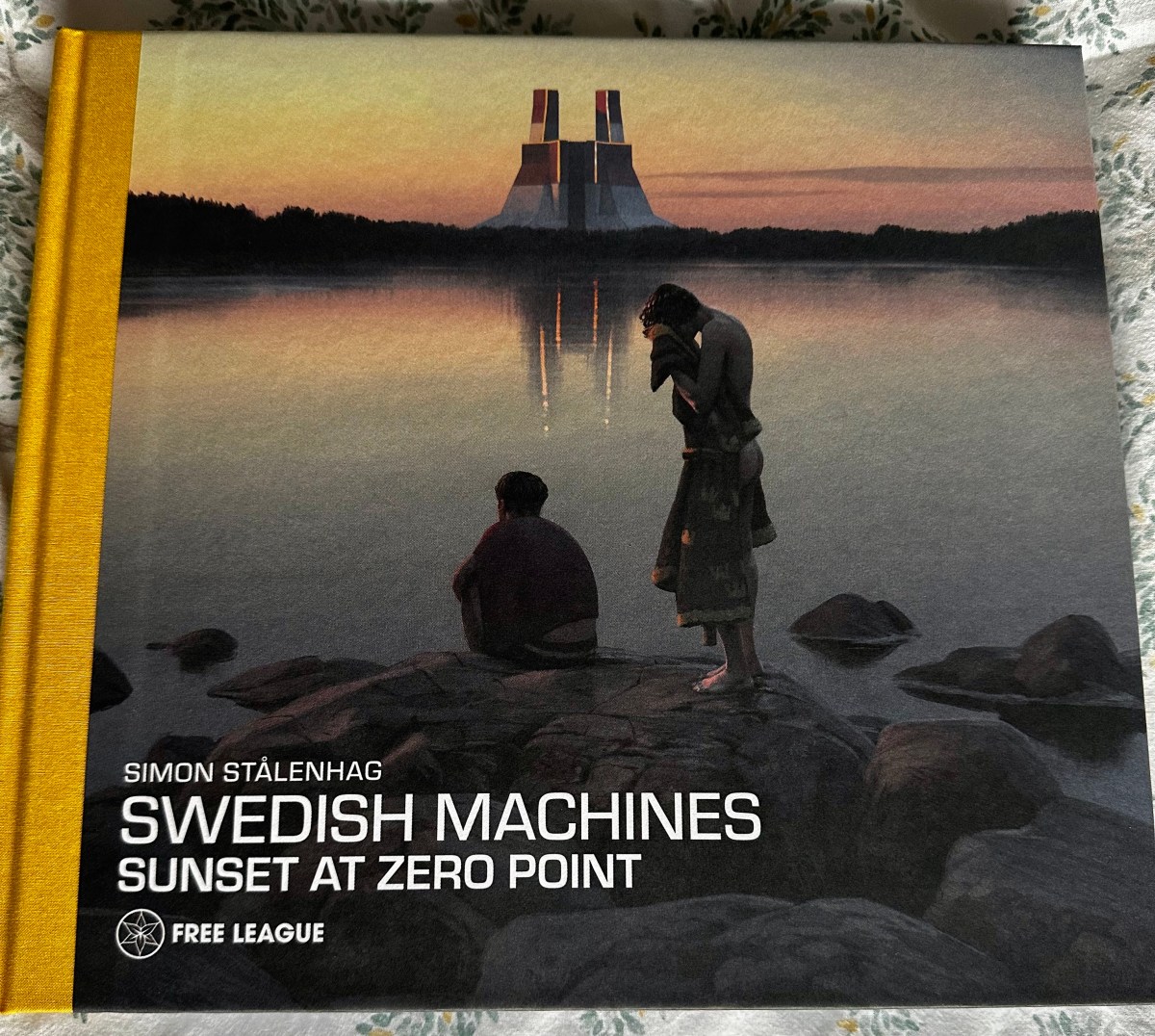
Surprise!
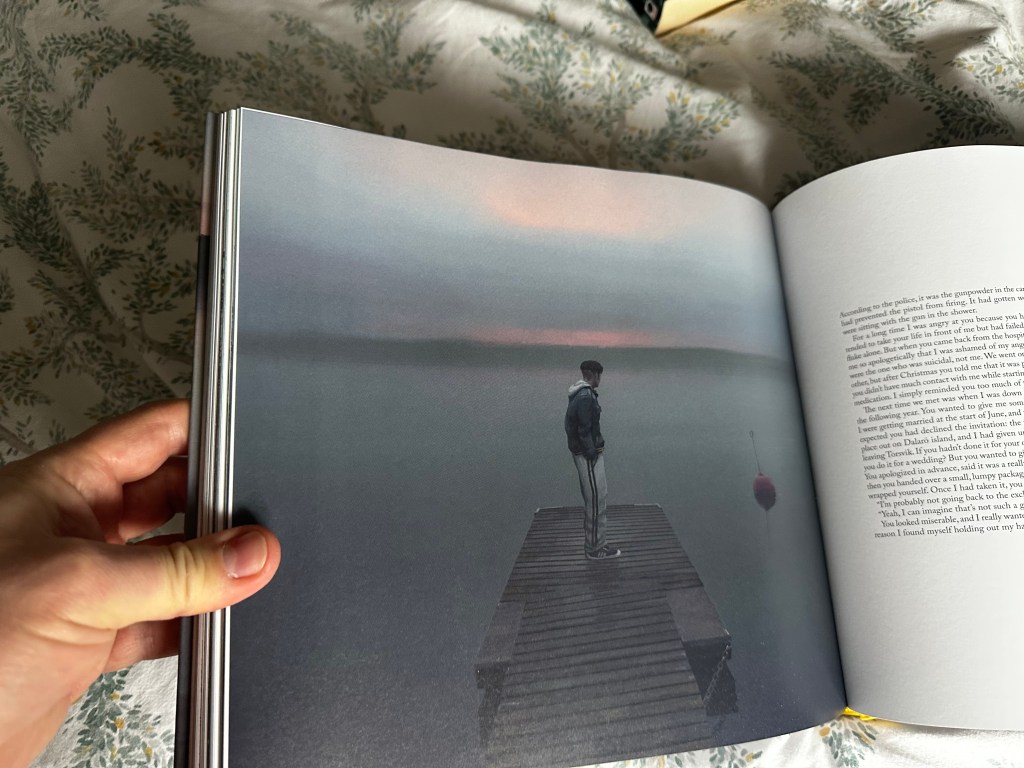
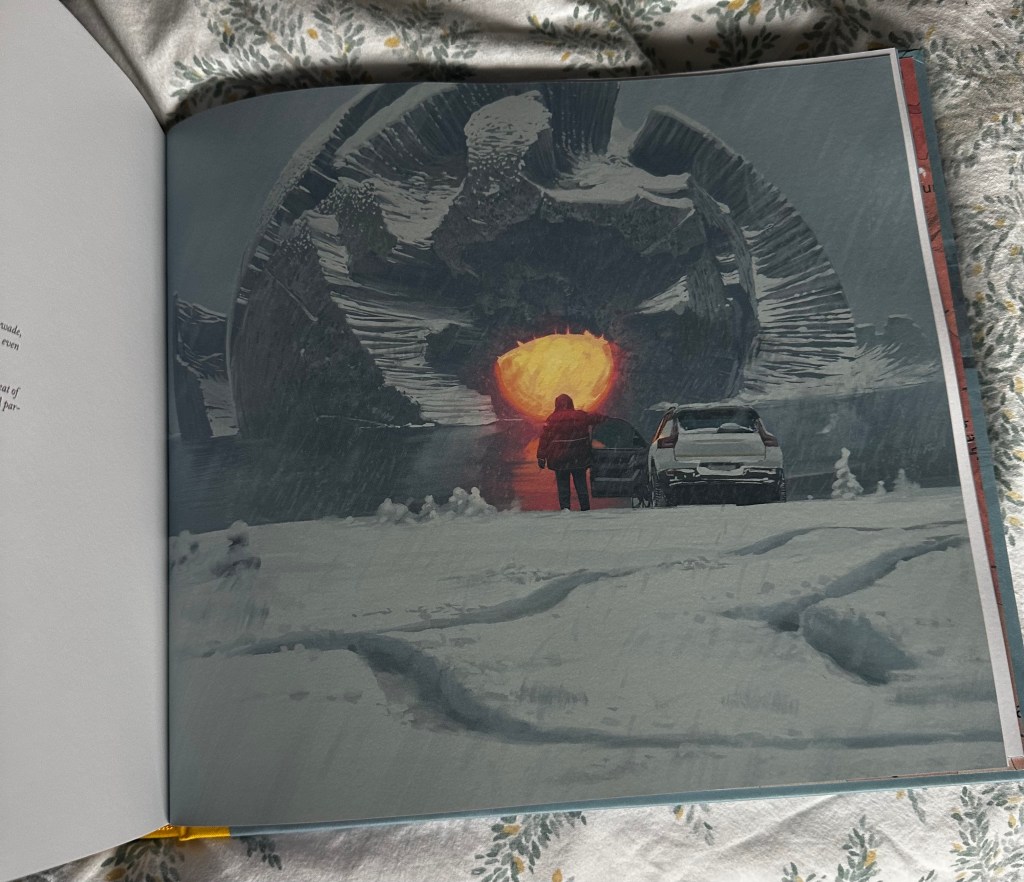
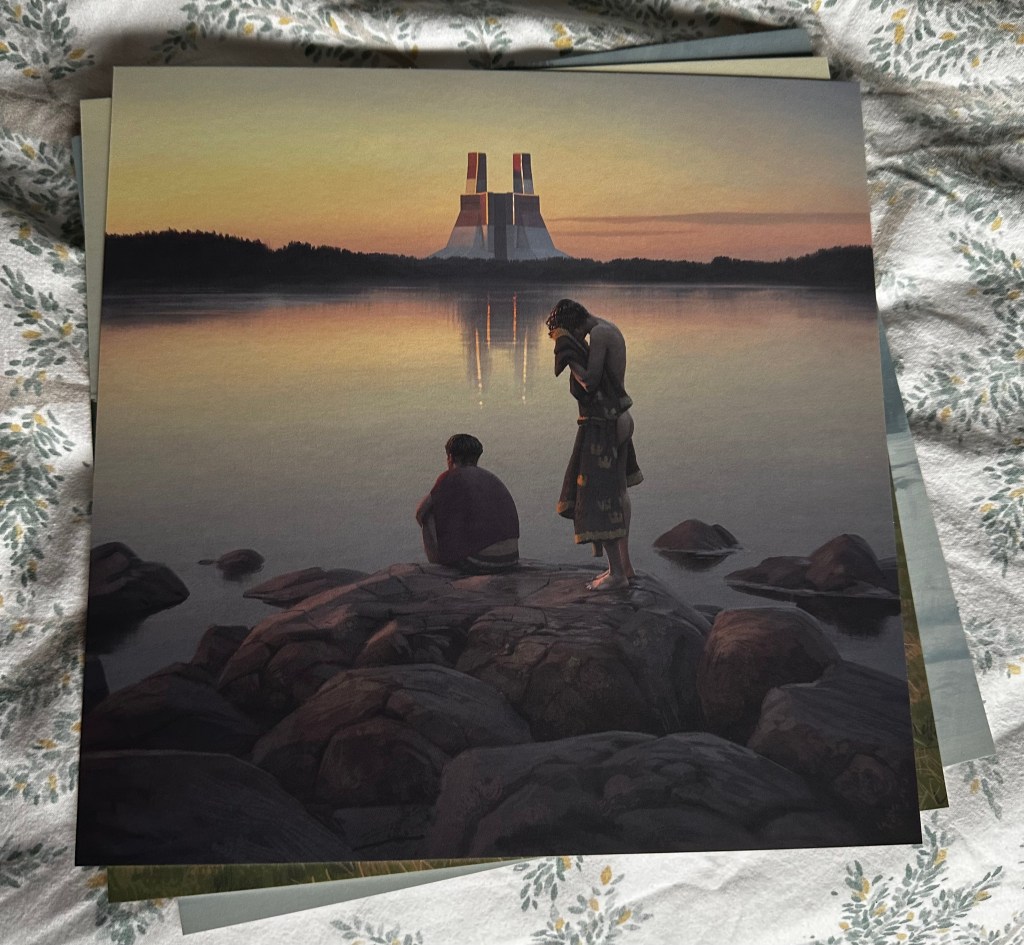
I came home from work on Friday to discover a wonderful surprise in my porch. I wrote about the Kickstarter campaign for Swedish Machines, Simon Stålenhag’s new art book way back in September of last year and ‘lo it has arrived! This was particularly pleasant because I didn’t realise they were shipping already (I have backed a lot of projects and, honestly, I can’t keep up with the updates for all of them, dear reader.)
Just feast your hungry little eyeballs on this:







Digital Surprise(s)!
Fifth Season RPG
Another major surprise came yesterday when I checked my inbox and found a link to the PDF Preview of the Fifth Season Roleplaying Game. This one has been in development by Green Ronin for more than two years and has been hit with delay after delay so to finally have a version of it stored away in my overstuffed RPG documents folder was a pleasure unlooked for. It was literally the first project I ever backed on Backerkit so I forgot it was there entirely.
As many of you will be aware, I have an ongoing Dragon Age RPG campaign going right now (we recently picked up again for Act II of the campaign, using a published adventure, which will get a post of its own when we are done.) The Fifth Season RPG uses essentially the same rules engine, Green Ronin’s own AGE (Adventure Game Engine) system originally developed for their generic Fantasy AGE game.
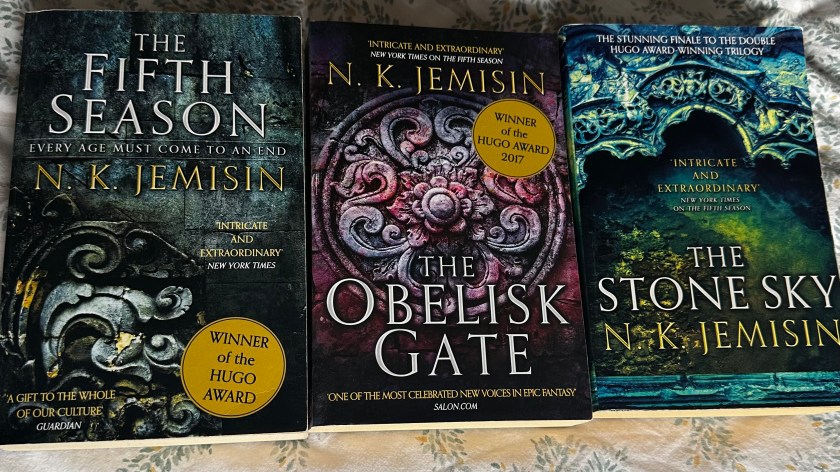
The game is, of course, based on the incredibly successful series of novels by modern master of the SFF craft, NK Jemisin. The Broken Earth trilogy tells the story of a dark fantasy world where a feared and reviled underclass of people with the power to manipulate the earth itself are employed/enslaved in the interests of everyone else. The earth itself, on the continent known as the Stillness, is a constant danger to its populace and the orogenes use their powers to calm it and make it safe. But every so often, the earth rebels so strongly against its inhabitants that it becomes uncontrollable, unleashing terrifying earthquakes, erupting volcanoes and tsunamis of dreadful power, seemingly in an effort to end all life. This is known as a Season, the Fifth Season of the title. The story follows the trials of a small number of these orogenes and the people closest to them as they attempt to survive a Season and discover some hidden truths of this harsh world.
The books have won a lot of awards and deservedly so. They are some of my favourite SFF books of the last ten years. If you haven’t read, them, dear reader, do yourself a favour. You can easily find them in your local secondhand bookshop these days but the audio-books are also a pleasure to listen to.
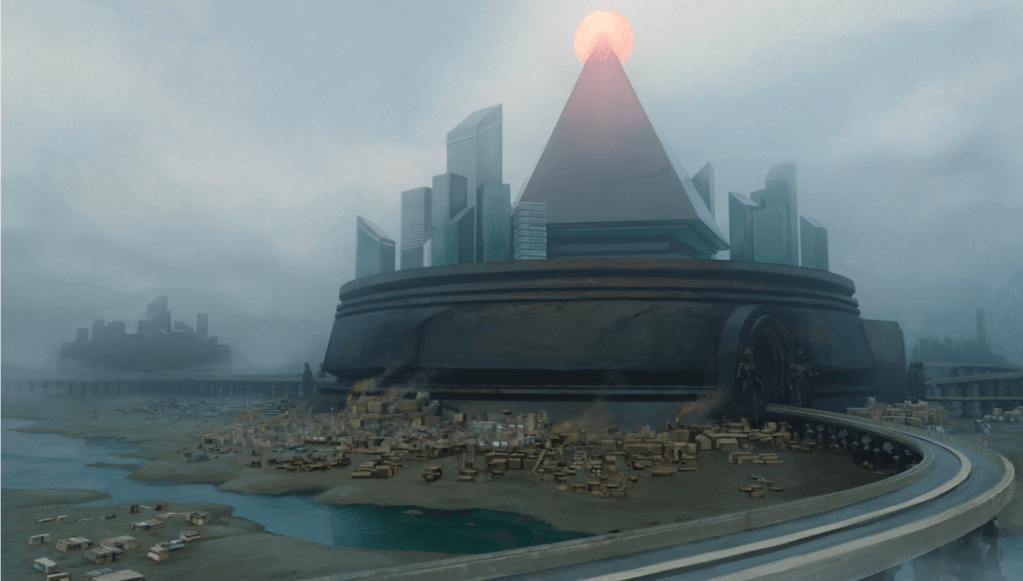
Anyway, when the RPG was announced I didn’t hesitate to back it. But, despite Green Ronin’s long experience of producing licensed games like Dragon Age, and the Expanse (I have also backed the new version of this game, The Transport Union Edition, which I’m eagerly awaiting) this one seems to have suffered a few setbacks and delays. They have tried their best to alleviate the issues by keeping in touch with the backers and offering a 10% discount on their webstore, and I think a lot of the problems were out of their hands, to be fair, so I am giving them the benefit of the doubt. Also, I’m loving what I have seen of the preview PDF so far. The artwork is gorgeous and it makes liberal use of the source material. As its a preview, I won’t share much, but here are a few shots of the illustrations:


The Vastlands Guidebook and Our Golden Age
I’ve been writing a lot about Ultraviolet Grasslands recently. We’ve just completed the third session of our campaign and we’re all loving it so far. Rarely have I run a game that has so sparked the imaginations of the players, both at the table and in between sessions. My wife, who plays forager-surgeon and Lime Nomad, Stebra Osta, explained to me today so much about the character’s people, how their nomadic encampments are set up, the importance of water in their culture, their dress and food, the way they braid their llamas’ hair… The breadth of the unknown in UVG is truly its greatest strength. Its staunchly anti-canon stance has given the players explicit permission to make the world the way they want it to be. So, do we really need more source-books for it? If they are written the way UVG was written? Absolutely. I mean, the random spark tables, the loosely described peoples, the maps with gaps, the mysterious origins of everything: they all come together to make a wonderful frame for you to fill up with your fellow players. I have no reason to believe Mr Rejec wouldn’t produce more work with the same structure and content. Well, this week, I am getting to see the beta of one of the two books in this crowd-funder and a whole section of the other.

The Vastlands Guidebook is the full set of Synthetic Dream Machine rules to play a campaign of UVG. It is very similar to the UVG Player Guide Book that I mentioned in my UVG Character Creation post but with far more detail and some very tasty art. It has full character creation rules, including a whole bunch of new Paths, eg. Barbarian, Purplelander, Tourist and Skeleton. There are mechanics for everything you could want to do in your game. It’s got powers, random NPC creation tables, corruptions, more vehicles and mounts etc. etc. I’m already thinking of ways I can get some of this new stuff to our table.


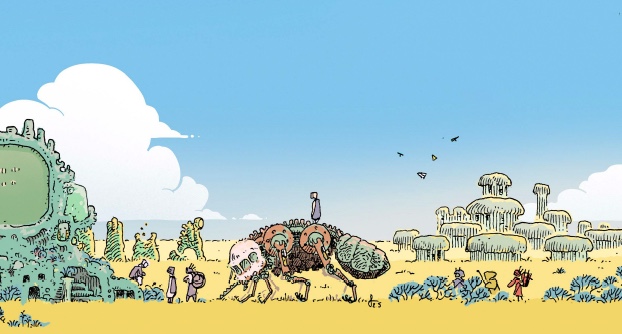

Our Golden Age is a setting book for the Circle Sea area of the Vastlands, the part of the world your average caravan in UVG is leaving behind at the start of their adventure. Luka Rejec released a teaser for the Yellow Land section of the book and it looks just as sumptuous and bonkers as you would expect from the creator of the Ultraviolet Grasslands. After a brief overview of the geography, climate, government, economy etc. you get some very fun tables. Events tables, travel tables, very unusual merchant tables, fashion tables. Then we have some interesting factions with eminently usable NPC members, a page about the Géants, enormous and unstoppable biomechanical soil farmers left over from another era, and into a section about the cities and places of interest in the region. These include Safranj, the Saffron City, with its key control of the drug/spice, saffron and vibrant opera scene. The Refining Plain: “Autorefineries of livingstone linked by arteries of basalt and tentacles of shipmetal, sinews of standardstone and great mushroom vent-mounds stud the plain below the voidtouching mountain Vulkana.”

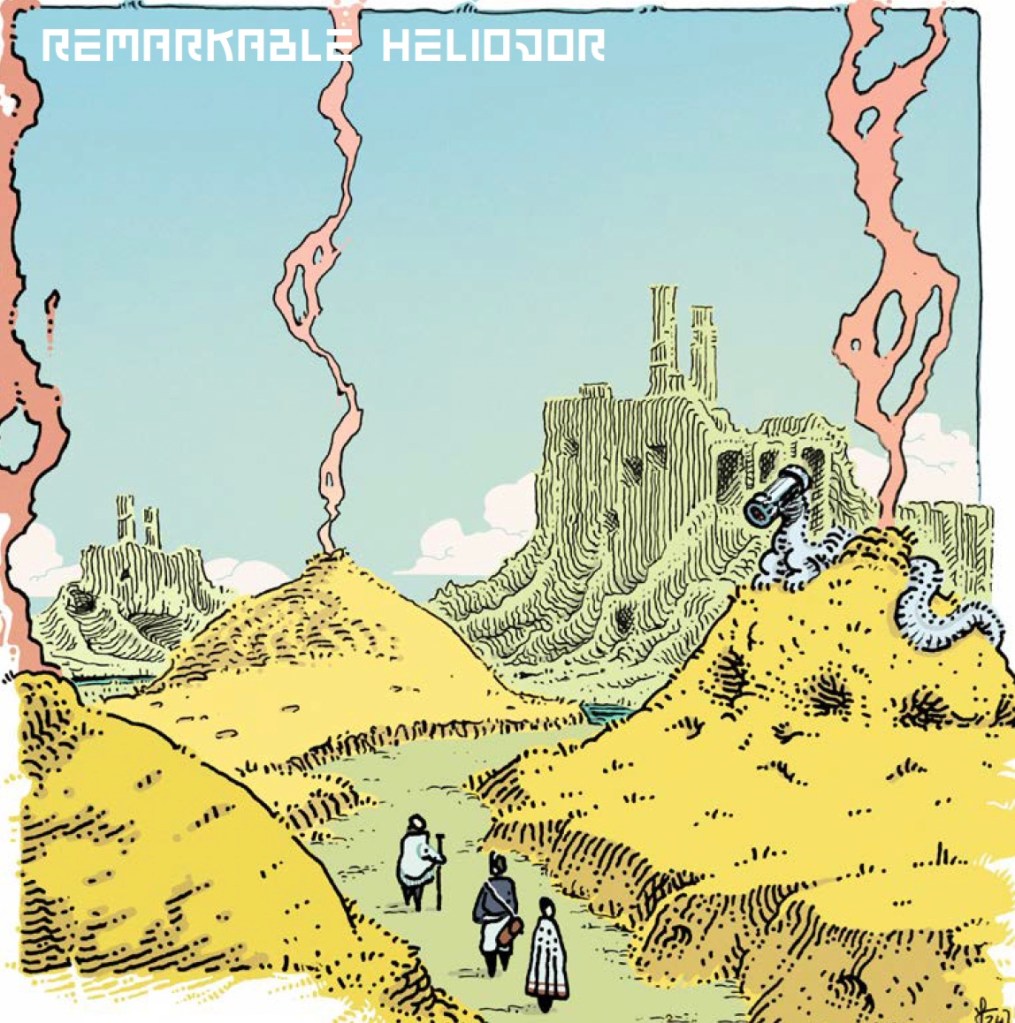


The Yellow Land very much gives me Nausicäa vibes. It has an environmental disaster theme and even has Orms (like the Ohmu in Miyazaki’s masterpiece) dangerous animals that tear up the land.
A warning for the unwary traveler:
The Automatic Tourist Entity (A.T.E.) has compiled a list of must-see places in the Yellow Land for centuries. Recently, many warn it keeps suggesting destinations with a terrifying preponderance of surprisingly cannibalistic local practices.
I cannot wait to see the finished product and get it in my grubby little mitts.

, do yourself a favour and go check them out. When I first encountered his work several years ago, it filed me with wonder. He created such a realistic depiction of a past that was largely recognisable to me from my own childhood, interspersed with or shockingly dominated by futuristic architectures and sci-fi wonders. His work excited my imagination like only RPGs had in the past. So when I discovered that Free League were producing a [Tales From the Loop game](https://freeleaguepublishing.com/games/tales-from-the-loop-rpg/), it didn’t take me long to pick it up. It took a little longer to get it to the table but when I did I discovered that the players loved it.
Tales from the Loop is a game about the 1980s that never was. It posits a world in which some astounding scientific breakthroughs occurred in the ‘50s and ‘60s so that, by the time in which the game is set, they are not considered so strange. You have your robots and your hovercraft and your infinitely renewable energy. But most of that stuff is considered mundane in Stålenhag’s world. Not only that, they exist alongside the ‘80s mainstay technologies like Walkmans, cassette tapes, VCRs and Soda Stream. In Stålenhag’s artwork this created some beautifully uncanny images. Most were set in the region of Sweden known as Mälaröarna, where the Loop project was based. This is where the world’s largest particle accelerator was built. Though it is not necessarily directly responsible for the many strange occurrences in the region, the people who populate such a scientifically rarified place usually are. Scientists and administrators and students flocked to the region and started families there. So many of Stålenhag’s paintings involved kids; a toe-headed child threatening an old Volkswagen van marked “Polis” with a giant robot under his control; a pair of woolly-hatted kids digging in the Swedish snow and gazing back at their homes, dwarfed by the cyclopean, other-worldly cooling towers used to release heat from the core of the Loop itself, the Gravitron; a little kid in cold weather coveralls leading his grandfather through the snow to a mysterious sphere, left abandoned in the countryside, its purpose and provenance forgotten. These were the inspirations for the RPG.
The game came out at the height of the popularity of Stranger Things, which helped it gain a lot of traction I think, and then it even had its own, unfortunately not so popular, spinoff [TV series](https://en.wikipedia.org/wiki/Tales_from_the_Loop), which I, at least, loved.
In the RPG you play kids between 10 and 15 years old. You get to choose a Type from such classics as the Computer Geek, the Hick and the Weirdo. You also have to choose some really fun things like your Iconic Item, your key relationships and your favourite 1980s song.
Once you have your Kid, you and your friends can go out and investigate weird shit on your bikes. Stuff like, where are all the birds gone? What are all the adults doing gathered around that weird machine in the field? What’s that dinosaur looking claw print in the snow? You know, normal kid shit.
## Roll mechanics
Tales from the Loop uses a version of the Year Zero engine, and, in fact, it was the first game I played using that system. It’s really straight-forward and intuitive, easy to learn and resolves situations quickly. “Situations” are generally and collectively referred to in the text as “Trouble” with a capital “T,” appropriately enough. For many, the Trouble you got into and out of when they were kids are some of the most enduring and treasured memories. In the game, you combine your ability dice and your skill dice into one dice pool and roll them all to try and get at least one 6. Since you only use d6s in this game, that’s the highest you can roll. The more 6s you roll the better, generally.
The only issue my players and I had with the rules is the Extended Trouble mechanic. The way this works is that, during the final showdown, encounter or whatever, every kid says what they are going to do and the GM tells them how many successes they will need to succeed fully. Then one player rolls all the dice in one enormous pool. Generally, if they don’t succeed fully but they still have a few successes, they might achieve what they were trying to but one or more kids will earn conditions or even become Broken. But, in play, we found this approach to be unsatisfying. Each player wanted their own cool moment to roll for and the all-or-nothing approach meant that they couldn’t attempt to take any rectifying actions if and when they saw things going wrong. Anyway, suffice it to say, we won’t be using the Extended Trouble rule next time.
## Mascots and Murder
Here are the very basics of the scenario I have planned:
Although the first Loop was in Sweden and much of the book is written as though it is the default setting, they do actually provide a second potential setting in it. That’s Boulder City, Nevada, the “Best city by a dam site,” which is a reference to its proximity to the Hoover Dam. There is another Loop in this region and all of the scenarios presented in the core book can be transposed very easily to the desert, believe it or not. This is where the kids in this scenario will be from. It is summer in Boulder City so it’s going to be so sizzling hot that you can fry an egg on the sidewalk. This will be a nice change as all the other Tales from the Loop games I have played were set in Sweden in autumn and winter.
Some teens have gone missing from Boulder City. Although their parents don’t seem too worried about it, our intrepid Kids are going to solve this mystery as they track down the source of the eerie, carnival-like music out in the Nevada desert and figure out what the connection is.
I have had fun writing this scenario, even though I have gone over it and over it to get it right. So, it’ll be ready to play in a few weeks.
The Tales from the Loop core book has some very useful advice for writing and structuring a scenario for it yourself. As long as you stick to that, you’re unlikely to go wrong. This is not actually the first one I have written myself, using these guidelines and, I can tell you, it works really well.
Have you played Tales from the Loop? What did you think of it? If you had to run a particular game for Indie Mascot Horror vibes, what would it be?](https://thedicepool.com/wp-content/uploads/2024/07/img_3376.jpeg?w=1024)
, do yourself a favour and go check them out. When I first encountered his work several years ago, it filed me with wonder. He created such a realistic depiction of a past that was largely recognisable to me from my own childhood, interspersed with or shockingly dominated by futuristic architectures and sci-fi wonders. His work excited my imagination like only RPGs had in the past. So when I discovered that Free League were producing a [Tales From the Loop game](https://freeleaguepublishing.com/games/tales-from-the-loop-rpg/), it didn’t take me long to pick it up. It took a little longer to get it to the table but when I did I discovered that the players loved it.
Tales from the Loop is a game about the 1980s that never was. It posits a world in which some astounding scientific breakthroughs occurred in the ‘50s and ‘60s so that, by the time in which the game is set, they are not considered so strange. You have your robots and your hovercraft and your infinitely renewable energy. But most of that stuff is considered mundane in Stålenhag’s world. Not only that, they exist alongside the ‘80s mainstay technologies like Walkmans, cassette tapes, VCRs and Soda Stream. In Stålenhag’s artwork this created some beautifully uncanny images. Most were set in the region of Sweden known as Mälaröarna, where the Loop project was based. This is where the world’s largest particle accelerator was built. Though it is not necessarily directly responsible for the many strange occurrences in the region, the people who populate such a scientifically rarified place usually are. Scientists and administrators and students flocked to the region and started families there. So many of Stålenhag’s paintings involved kids; a toe-headed child threatening an old Volkswagen van marked “Polis” with a giant robot under his control; a pair of woolly-hatted kids digging in the Swedish snow and gazing back at their homes, dwarfed by the cyclopean, other-worldly cooling towers used to release heat from the core of the Loop itself, the Gravitron; a little kid in cold weather coveralls leading his grandfather through the snow to a mysterious sphere, left abandoned in the countryside, its purpose and provenance forgotten. These were the inspirations for the RPG.
The game came out at the height of the popularity of Stranger Things, which helped it gain a lot of traction I think, and then it even had its own, unfortunately not so popular, spinoff [TV series](https://en.wikipedia.org/wiki/Tales_from_the_Loop), which I, at least, loved.
In the RPG you play kids between 10 and 15 years old. You get to choose a Type from such classics as the Computer Geek, the Hick and the Weirdo. You also have to choose some really fun things like your Iconic Item, your key relationships and your favourite 1980s song.
Once you have your Kid, you and your friends can go out and investigate weird shit on your bikes. Stuff like, where are all the birds gone? What are all the adults doing gathered around that weird machine in the field? What’s that dinosaur looking claw print in the snow? You know, normal kid shit.
## Roll mechanics
Tales from the Loop uses a version of the Year Zero engine, and, in fact, it was the first game I played using that system. It’s really straight-forward and intuitive, easy to learn and resolves situations quickly. “Situations” are generally and collectively referred to in the text as “Trouble” with a capital “T,” appropriately enough. For many, the Trouble you got into and out of when they were kids are some of the most enduring and treasured memories. In the game, you combine your ability dice and your skill dice into one dice pool and roll them all to try and get at least one 6. Since you only use d6s in this game, that’s the highest you can roll. The more 6s you roll the better, generally.
The only issue my players and I had with the rules is the Extended Trouble mechanic. The way this works is that, during the final showdown, encounter or whatever, every kid says what they are going to do and the GM tells them how many successes they will need to succeed fully. Then one player rolls all the dice in one enormous pool. Generally, if they don’t succeed fully but they still have a few successes, they might achieve what they were trying to but one or more kids will earn conditions or even become Broken. But, in play, we found this approach to be unsatisfying. Each player wanted their own cool moment to roll for and the all-or-nothing approach meant that they couldn’t attempt to take any rectifying actions if and when they saw things going wrong. Anyway, suffice it to say, we won’t be using the Extended Trouble rule next time.
## Mascots and Murder
Here are the very basics of the scenario I have planned:
Although the first Loop was in Sweden and much of the book is written as though it is the default setting, they do actually provide a second potential setting in it. That’s Boulder City, Nevada, the “Best city by a dam site,” which is a reference to its proximity to the Hoover Dam. There is another Loop in this region and all of the scenarios presented in the core book can be transposed very easily to the desert, believe it or not. This is where the kids in this scenario will be from. It is summer in Boulder City so it’s going to be so sizzling hot that you can fry an egg on the sidewalk. This will be a nice change as all the other Tales from the Loop games I have played were set in Sweden in autumn and winter.
Some teens have gone missing from Boulder City. Although their parents don’t seem too worried about it, our intrepid Kids are going to solve this mystery as they track down the source of the eerie, carnival-like music out in the Nevada desert and figure out what the connection is.
I have had fun writing this scenario, even though I have gone over it and over it to get it right. So, it’ll be ready to play in a few weeks.
The Tales from the Loop core book has some very useful advice for writing and structuring a scenario for it yourself. As long as you stick to that, you’re unlikely to go wrong. This is not actually the first one I have written myself, using these guidelines and, I can tell you, it works really well.
Have you played Tales from the Loop? What did you think of it? If you had to run a particular game for Indie Mascot Horror vibes, what would it be?](https://thedicepool.com/wp-content/uploads/2024/07/img_3375.jpeg?w=1024)

 The Dice Pool