At this point, I’ve dealt, at length, with the GM advice, but what about the players? Surely they deserve a little guidance too!
Yep, they have not been forgotten.
Progress Clock
We started our Blades in the Dark campaign last Wednesday with a character creation session. I had hoped that we’d be able to get down to the first score as well, but it was not to be. Honestly, character creation, although pretty straight-forward, was rather time-consuming. When you have three or four people around a table making decisions on their own characters as they try to form a coherent picture of them in their minds, it can take a while. Add on the collaborative decisions required of them for Crew creation, and you can comfortably double the time required.
Anyway, current progress looks like this:
Three of four characters created, an Akorosi Cutter, an Akorosi Hound and a Whisper from the Dagger Isles
Crew created: It was a toss-up between Bravos and Smugglers but, with the general vibe of the crew so far, Bravos won out in the end.
Decided that their main sponsor faction will be the Crows of Crows Foot.
I’ll get a character creation session with our last player in the next week or so and then we’ll be ready to launch into the first score.
Creating Opportunities
That’s what this game is all about, right? Taking chances, building relationships, gathering information, making your own opportunities. Well, that’s what I’m doing today. Instead of the recap of the first score, I’m using this opportunity to discuss the advice levelled at the players in a Blades in the Dark campaign. At this point, I’ve dealt, at length, with the GM advice, but what about the players? Surely they deserve a little guidance too!
Yep, they have not been forgotten.
Starting on page 182 of the Blades in the Dark book, at the end of the How to Play chapter, we have the section entitled…
Player Best Practices
The Lurk, by J Harper
We have a total of eight of these listed here. Not as many as for the GM, but there’s a lot in each one. Here’s what we’ve got:
Embrace the Scoundrel’s Life
Go into Danger, Fall in Love with Trouble
Don’t Be a Weasel
Take Responsibility
Use Your Stress
Don’t Talk Yourself out of Fun
Build Your Character through Play
Act Now, Plan Later
As usual, I’m not going to go into detail on all of these. This time, I’m going to group them.
Embrace the Scoundrel’s Life + Go into Danger, Fall in Love with Trouble + Don’t Talk Yourself out of Fun
These three best practices all relate generally to the same issue. You, as a player of Blades in the Dark, are not there to play it safe. You are not at the table to make optimised choices. Your character lives in a brutally unfair world and they have become adept at surviving it and even profiting from it. Lean into that! Will they have to make difficult choices that might lead them or their crew to harm? Yes! Will they have to take wildly risky actions to achieve their goals or create those opportunities? Yes! Will they have accept the consequences of their actions, which might include conflict with the highest powers int he city, imprisonment and death? Yes! This is the good stuff, in fact, not the downside. These are the parts of the game that keep it moving forward and allow you to craft scenes of kick-ass action, ice-cold espionage and even heart-breaking tragedy. This is why you want to play. If you’re playing to win, instead of to find out what happens, you won’t get the most out of this game.
Don’t Be a Weasel + Use Your Stress + Act Now, Plan Later
You know, there’s a common thread running through all the best practices for players, to be honest. I think it can best be described as “let go.” You have a say in what happens in the story, of course, but you should not be precious about your character. Push them as far and as fast as you can, drive them like that proverbial stolen car. These three practices are about doing that within the rules of the game. You do stuff by rolling with Actions, not skills. It’s important to choose the right action for the job, even if it’s not your best. That’s where stress comes in! One of your companions can spend stress to help your actions succeed with an assist, or you can spend it to push yourself. It’s invaluable for resisting consequences that would be otherwise inevitable. You can even use it to work in a flashback and do a setup action to get you out of a particularly sticky spot. You will build up the stress, of course. You’re going to have to indulge your vices to shed it or you’re going to find yourself traumatised. That’s where these stories end up sometimes. Your PC might build up a weakness or two, they might be brought to the end of their tale through the extremities of stress. But what a tale it will have been!
Take Responsibility + Build Your Character through Play
Blades in the Dark is a story game. You are telling a story at the table with your friends and you want it to be the best it can be. You want it to have ups and downs, ins, outs and what-have-yous. Dark, tragic, thrilling, horrific comedic, action-packed, whatever you want it to be, you can contribute to it. You have the option to add as much or as little as you like. Some players are going to invent new NPCs, locales, factions, street-vendors, family-members, ghosts, you get the idea. This is all good. But a player’s greatest power to contribute to the story is through their own character. The actions they take, the things they say, these things can add as much to a session as the NPCs invented by the GM, probably far more. Maybe you are already delighted with the general atmosphere and vibe the rest of the table is bringing, so you don’t feel like you need to add too much, you still have a responsibility to your own character, to have them grow from their beginnings into fuller, more alive beings. You start with a “sketch” but, through the actions you choose for your PC, how they comport themselves in various situations, the risks they are willing to take, you’ll make an unforgettable character and story.
Conclusion
The Shade, by J Harper
Like I stated above, there is a strong theme across all of these best practices: don’t be boring. In a game like this where the story evolves collaboratively at the table and is not even slightly left up to a published campaign frame or the GM, the choices you make as a player will dictate the sort of experience you have. Be bold, don’t behave.
To be clear, the ship is the whole adventure. You could easily work it into an ongoing campaign, I think. It could be a random encounter or the goal of a mission. But, for me, it worked perfectly as a one-shot. It gives you everything you need in those eleven pages.
Talk Like a Pirate Delay
I was really excited about this year’s Second Annual Tables and Tales Talk Like a Pirate Day Pirate Borg One Shot on September 19th but I was, unfortunately, overcome by some malady that day. We postponed it only to have a massive storm roll in off the Atlantic, forcing us to delay the departure of this vessel yet again. Finally, last Sunday the players’ pirates were ready to board the Repentant come hell or high water…
OK, I say they boarded it but it would be more correct to say they were taken aboard. I started them off in the expanded brig, area 1 on the map of the ship. They awoke, captured, stinking and hurting and minus all their stuff. Nevertheless, with a few improvised weapons they found lying around the cabin and the assistance of a skeleton thrall raised by the skeletal sorcerer, they managed to overpower their demon guard. This was the first of many obstacles to their defeat of the Ashen Priest commanding the ship and taking the Repentant for themselves.
The Scenario
The cover of Cabin Fever
The Repentant is an 11 page one-shot scenario for Pirate Borg by Zac Goins. It is published in the forthcoming sourcebook for that game, Cabin Fever, via KNOWN CONSPIRATORS, Limithron’s subtable for third-party creators. Cabin Fever is a treasure chest of extras for Pirate Borg including new PC classes, GM tools, a Bestiary, no fewer than six adventures as well as solo rules. I am one of the backers of the Kickstarter project so I got access to the PDF through that. I’m hoping to receive the physical rewards for that soon.
This scenario is presented in a typical Borg-ish style, with maps, and illustrations taking the lead in establishing the atmosphere. It’s almost all in grey and black, emphasising the theme of ASH. The layout is also typical with lots of tables, stat-blocks, keyed area descriptions etc being worked into the spaces between and around the artwork. I occasionally had to take a few extra seconds to find what I was looking for due to this but it was never a major disruption. In general it looks great and ewers relatively easy to use.
The Premise
The Repentant is a charnel ship, an unkempt brigantine with tattered sails and a crew of demons and cultists, commanded by a cadre of Ashen Clergy. Their goal is spelled out clearly in the three step plan on the second page. In summary, the plan is to summon demons, form an unholy pact with the Dark One, raid some settlements to take captives, kill ‘em, raise them as undead and then grind them up to make Brimstone ASH. This is a type of cursed and arcane narcotic on which the crew plan to make lots and lots of pieces of eight.
To be clear, the ship is the whole adventure. You could easily work it into an ongoing campaign, I think. It could be a random encounter or the goal of a mission. But, for me, it worked perfectly as a one-shot. It gives you everything you need in those eleven pages.
The Reality
A genuine, fire and brimstone demon
There is a fun variety of enemies for such a short scenario. You have seven different types of possible demon (one for each deadly sin, with commensurate sinful powers,) the emaciated crew, the Ashen Vicars and the Ashen Priest who has a variety of fun powers. And if you deal with all those, there is a hold full of Brimstone Zombies, who have the power to promise your soul to the Dark One with a bite.
Although not every encounter ended in combat, almost all did. It felt inevitable in general. I started the players off where I did, in the brig because of the restrictions of a one-shot session. I wanted them in the thick of it from the start and escape gave them a powerful motivation to attack the terrifying demon, even without real weapons. Also, I figured the brig is area 1 on the map for a reason. The scenario does not explicitly indicate where or how you should start it as a one-shot, but if you take the hint, here, you’re probably not going to go wrong. It definitely got them into the action immediately. Without the timely and repeated use of Devil’s Luck and mystical powers in the first two encounters, at least one of the party would have gone down. The only thing is that it led to two mostly combat encounters in quick succession. Starting with them boarding over the rails or some other way might have engendered a totally different kind of adventure.
The map was fine. I was a little put off that three of the four decks had one side of the map cut off but it was of no practical disadvantage in play.
Tables, tables, tables. The tables are great, from the effects of the Brimstone ASH (different to the regular ASH introduced in Pirate Borg) to the “What did I just step in?” Table which I underused criminally.
My players only used the Brimstone ASH on their enemies, which was a shame. I think it’s because when they rolled on the table for those uses, they got 1s and 2s, which are very very bad. After I told them what else was on the table, they regretted not trying it!
6 The Devil’s inside ye. Immune to fire. All weapons’ dice size increases.
The Finale
The ASH grinder.
I saved the Ashen Priest, the scenario’s main villain, for the end. He might have been found in either the captain’s quarters or the hold, according to the keyed locations, but, honestly, you could locate him anywhere to suit your own game. The PCs had done away with almost everyone else aboard when they descended into the cargo hold found him there, feeding zombies into the ASH Grinder. There were a lot of undead down there with him but the PCs made such short work of him that it hardly mattered. Then they got to take the ship as plunder, not to mention the undead and the grinder so they could enact the plan themselves!
Conclusion
This was one of the most well-crafted one-shot scenarios I’ve run. We played it in about three and a half hours, though, if things had gone badly, it might have been over after less than an hour! I did give them a couple of NPCs for back-up and in case anyone lost their first PC (there were two deaths.) This might have given them a slight advantage, if I’m honest, but everyone had a good time. Looking forward to trying out some more scenarios from Cabin Fever and the rest of the slew of new books from Limithron!
The bad habits that are listed here are fewer in number but oh so much greater in the size and capitalisation of their headings
It Begins!
Our Blades in the Dark campaign starts tonight! I’m excited. I played in a campaign before but this will be my first time GMing one. I’ve been taking a look at the GM advice presented in the book over the last few weeks. This post examines the GM toolkit in the Running the Game chapter, and this one looks at John Harper’s advice for Starting the Game. Right before starting seems like a good time to internalise the Best Practices espoused by the same chapter of Blades in the Dark, and to beware of the Bad Habits!
Best Practices
The spirit of best practices. J Harper
We’ve got a list of fourteen best practices for GMs here. Although I’m sure these were written very much with Blades in mind, most of them feel like the kinds of things a GM is well advised to utilise while running a lot of different RPGs. Just take a look at the list:
Earn the trust of the group
Lead an interesting conversation
Create an atmosphere of inquiry at the table
Help the players use the game system
Don’t block
Keep the meta channel open
Be a curious explorer of the game in play
Advocate for the interests and capabilities of the NPCs
Play Goal-Forward
Cut to the Action
Be aware of potential fiction vs. established fiction
Zoom the action in and out
Bring the elements of the game system to life on screen
Put it on a card
As in the last Blades post, I’m not going to go into each and every point in detail. Some of them are self explanatory. Put it on a card, for instance means exactly what it sounds like: use index cards to record the important things that are invented at the table. Cut to the Action is doing double-duty as both a GM principle and a best practice. You’ll find it listed in the last Blades post too. Keep the meta-channel open means that you, of necessity, have to describe the subtext to the players sometimes, to represent their characters’ full range of senses and intuitions and the like. Help the players with the game system, equally, means it’s your job to interpret their words and plans into a form the mechanics can handle without forcing them to figure it out themselves.
Anyway, you get the idea. I want to take a few that interest me the most and discuss them.
Be a curious explorer of the game in play
Just take a moment to digest that sentence. “A curious explorer.” Isn’t that sumptuous? There aren’t a lot of RPG books out there creating phrases as attractive as that, and I would like us to all appreciate John Harper’s work on it. As pleasing as the phrase is, the sentiment is truly important. Look, you’re the GM; you’d better be paying attention to what the PCs are doing, to what the players are saying at the table, to the NPCs that are being dicked over, or seduced or fucking created during a session, or they’ll come back to bite you in the arse later. But that’s not what this practice means. It just wants you to maintain a degree of curiosity in the events of the game, not because they are important, but because they are fun and interesting. Look up from your notes and index cards every once in a while and breathe it in. Your players and you are building an incredible story together. This is what it’s all about. So, get interested. Ask questions, not because you want to know stuff to prepare for but just because you are curious. Maybe you’ll wonder aloud why a PC is doing something, maybe your curiosity is to do with their choice of decor for the lair, maybe its just because they gave that one NPC a stupid nickname and you don’t know why. Doesn’t matter, just stay interested.
Play Goal-Forward
This is the practical side of the question-coin. It’s nice to think this game is all about the players after the initial stages. The idea is to get them to form their own ambitions for characters and crew, come up with their own scores, fulfilling their own whims and get into and out of their own trouble. But, if my experience as a GM is anything to go by, this can take a little cajoling. So, this practice says, lead that conversation. Get them thinking about their goals, not just in the moment, on the score, during their downtime, whenever, but also, on a long-term, grand scale. Yes, you need to know what their goal is when things begin to turn to shit on a score, they’re up to their ears in ghosts, the Bluecoats want their blood or their lair was just blown up by the Lampblacks. But if you get the players to tell you what they really want to be when they grow up? That’s gold. And make sure you check in to find out if their ambitions have changed from becoming the greatest electroplasm smugglers Duskwall has ever seen to just base survival because every score they have attempted has gone south and enemies are at the gates.
The pursuit of opportunities and positions to enable certain approaches, the acquisition of information and resources, and the nested conflicts that result will drive the action of the game.
This is what you want to get to. If you understand the opportunities they want to pursue, the actions they might take to unlock them, then you can better facilitate them and the effects will help build the game.
Harper repeatedly refers to the game as a cool tv show that you’re invested in. You can be invested in what happens to the characters and the city from the viewpoint of the audience but you are also in the enviable position of being able to help shape the story as a showrunner.
Be aware of potential fiction vs. established fiction
Describe wht you need to, discard the rest. J Harper
You’re not taking the PCs on a tour of every room of your house. The PCs should be more like viewers watching an edited sequence of shots that carry them forward in the action of the game
We’re still talking about the game as a tv show then. Cool. I like it. It’s a little confusing, though, that this practice is about keeping details of the fiction nebulous until they need to be concrete. I suppose a good way to continue the analogy is to say that we begin a scene with a close-up on the darkly wrapped faces of our scoundrels, and, as the players ask questions or the GM makes decisions, the camera pulls away, revealing the canal-side they are standing on, then further out to show the line of moored canal boats. Then we follow the crew across the decks of the gathered boats as they rock and the occupants cry out. As they go, the players might ask if there is any rope on the decks to allow them to climb on to the bridge and you tell them there is. Meanwhile you fill in some more details, the twitching of curtains in the surrounding windows, the scuffling of feet from the nearby alleys and so on. Layers and layers of details. Harper calls this the potential fiction cloud. You pick them out as you build the scene and they gain concreteness, they become the established fiction. But you never need to establish absolutely everything. Instead, you yell “CUT,” and move on to the next scene, starting over again with a new potential fiction cloud.
GM Bad Habits
The demon of bad habits identified you as naughty! J Harper
The bad habits that are listed here are fewer in number but oh so much greater in the size and capitalisation of their headings:
DON’T CALL FOR A SPECIFIC ACTION ROLL
DON’T MAKE THE PCS LOOK INCOMPETENT
DON’T OVERCOMPLICATE THINGS
DON’T LET PLANNING GET OUT OF HAND
DON’T HOLD BACK ON WHAT THEY EARN
DON’T SAY NO
DON’T ROLL TWICE FOR THE SAME THING
DON’T GET CAUGHT UP IN MINUTIA
It is hard to avoid the conclusion that it is more important to ensure you don’t develop these bad habits than it is that you adhere to the best practices above. Let’s look at a few that I think I might be most susceptible to and see if that’s true.
DON’T OVERCOMPLICATE THINGS
It’s a heist. Or maybe an assassination attempt. Possibly a smuggling operation. There should be complexities to it! There should be bribes and double-crosses and traps and security systems and hidden lookouts and maybe a jilted lover or two. Right? Not necessarily. Its fun to introduce new narrative complications and consequences on a 1-3 or a 4/5 roll, of course, but not at the expense of the session’s pacing, or the players’ patience. You can’t be expected to come up with that stuff all the time. There are mechanics in place to help you deal with them quickly and in keeping with the spirit of the game. So this section is telling you to use the tools you have been given. If you can’t think of a new complication, just hit them with harm or tick a clock forward or slap some more HEAT on them. Keep it simple, stupid!
DON’T HOLD BACK ON WHAT THEY EARN
I have the potential to be stingy. After all, there is a lot they can do with Coin in Blades in the Dark. You can use it improve Downtime Projects, to reduce HEAT, to advance Crew Tiers! I could be the kind of GM who wants to limit their progress, to slow the pace. But John Harper says give them the money. He wants us to remember that they should get what they earned. After all, they have it hard enough as it is. And besides, they’re likely to have to spend it before it even has a chance to enrich their pockets.
My main observation here is that, in all likelihood, the GM is the one setting the Coin value of any given score. The PCs, of course, are free to accept or reject opportunities depending on how lucrative they are, and they will have to take the heightened risk associated with bigger paydays, but still, its up to the GM, in many ways to establish how much a given sort of score is worth. If I wanted a low scoring campaign, I could start off with big scores netting no more than 4 Coins and most average ones paying only 1 or 2. Of course the opposite is true too. And I guess Mr Harper wants us to lean that way.
I appreciate more the admonition to treat secrets and information the same way. If the PCs have earned the info, don’t hold back. Only new opportunities and a deeper investment in the world on the part of the players can come from the sharing of secrets. Bring them in on it! They’ll love it.
DON’T GET CAUGHT UP IN MINUTIA
Let’s keep thinking about this in terms of a television show. Sure, there might be some shows where an eye for detail and a quick thumb hovering over the pause button is rewarded, but usually, you can rely on directors/editors to skip from one location and situation to another without the need to dwell on every twist and turn on the way. Get to the good stuff. Speed through the opening credits, jump to the negotiation or the shoot-out or the incursion into the ghost field.
Although it’s not mentioned here, I believe it’s also important to combine this warning with the lesson to be aware of potential vs. established fiction. You want to try and hit that sweet spot where you have given the players enough details of a location, person or scene to allow them to make decisions without getting bogged down in unnecessary levels of photo-realism. Allow the imaginations of the players to fill in the blanks instead.
Conclusion
Look, it’s pretty obvious that if you occasionally forget to be a curious explorer of the game or sometimes stray into the weeds in describing minutiae, you’re not going to break your campaign. But it sure is nice to have these guide-rails to help us make the best damn dark victorian horror heist game we can! Both lists are incredibly useful and I’m sure to be referring back to them every once in a while as the campaign gets under way.
Next time
In my next Blades post I’m going to do a sort of post-mortem of our very first session! Watch this space, dear reader.
There’s a pumpkin-headed but polite creature stalking the prison who will, every once in a while, grab one of the PCs and pop them in his gob
In Summary
There are SPOILERS below! You have been warned.
Sometimes you feel like things aren’t as they should be. It feels like you’re living in the wrong timeline, or like you were born under the wrong stars. That’s the extraordinarily loose hook for Hole in the Sky, the 0-Level Funnel adventure for Dungeon Crawl Classics by Brendan LaSalle. I say it’s a hook, but it’s not as if the large band of peasants you gather for this adventure really get a choice in whether or not to go to the starting location. All of that is taken care of in flashback and by dint of read-aloud text. Which is great. Don’t get me wrong. All the players came to play this scenario so, I think that makes sense.
Here’s the setup, the PCs, peasants, normal Joes, ordinary slobs all, start dreaming that they have had their true place in the universe stolen from them. They should have ben heroes! The dreams coalesce into a drive to dander, cross-country until they reach the edge of a cliff, days and days later, convinced that their destinies will be restored as a result. In this place, they encounter the Lady in Blue (there is more than meets the eye to the Lady but I’m not going to go into that here. It seems to be the kind of thing that might become important in a longer campaign that could feature her as a patron or maybe even an antagonist), a giant of a woman, floating in the air with five heads gripped in her two hands. The heads speak for her. She tells the peasants that, if they would just go and free her ally, imprisoned by her enemies long ago, they will be rewarded with a spin of the Wheel of Destiny. And this would set their destinies to rights.
Actually, after she feeds them a meal, she does give them an out, so what I said above is not entirely true. If any of the PCs wish to abandon the quest at this stage, they can, but they will meet an unfortunate end before too long. Anyway, there is a period of waiting here that is strange to me. The scenario indicates that the PCs could use the time to visit the nearby village of Mherkin to stock up on gear and provisions. This is not even the last period of waiting baked into the scenario. Anyway, after hours of waiting for the right time, the PCs can step gingerly onto the invisible bridge that will take them from the cliff to the Hole in the Sky, the entrance to Lady’s ally’s prison.
For days they walk, sticking together to avoid the edges. The PCs are buffeted and soaked by a terrible storm as they cross the bridge far above the waves of the sea. They will lose some of their number in the storm, no doubt. They will lose even more as they are attacked by Sea Shrikes. Only after three days of traveling will they reach the end of the bridge, worn out, freezing and much reduced. Here is the second period of waiting. They must wait a further two entire days, slowly starving and shivering, until the Hole in the Sky aligns perfectly with the bridge. Why? Good question.
Once it appears, however, they are able to leap through and into the Prison Vale, a strange and unique extra-dimensional pocket universe designed for one purpose and one purpose only, the imprisonment of the Lady’s ally, Drezzta. The place seems to be made for giants, even the blades of grass stand tall as trees. There are a variety of potential random encounters in the Vale, 1 in 6 chance per hour for four hours if they go straight to the prison proper. Some of these look very fun and quite thematic.
Nice they make it to the prison they discover a cyclopean gate and find their way in. Inside they will discover a few things in quick succession:
There’s a massive titan, sleeping on the job, but clearly here as a warden for this prison
There’s a cage hanging from a branch maybe 200 feet up
There’s a pumpkin-headed but polite creature stalking the prison who will, every once in a while, grab one of the PCs and pop them in his gob, where they will slowly burn to death in his jack o’ lantern flames, before gently encouraging the rest of them to leave
Of course, they are not going to leave empty handed. The continue on, finding a way up inside the walls themselves. On the way they encounter lethal traps, dangerous lunatics, mutants and lots of ladders. They will get a little more of the story from some of the other weirdoes who live here and they will probably find a cache of treasure, which includes a magic spear to destroy the sleeping titan.
It should end up with them reaching the top level of the prison, dizzyingly high up. They should risk life and limb to free the poor, emaciated form of Drezzta trapped in the hanging cage. One of them will need to sacrifice either a little blood or a lot more to open the door, but that will lead to her flying free, destroying the pumpkin guy and fleeing as the very dimension crumbles around the escaping PCs.
Those who make it back through the Hole in the Sky find themselves once more on the cliffside. The survivors are each given a chance to spin the wheel. Some may find themselves thrown back into the mundane lives they left, others might find themselves destroyed, killed in favour of one of the poor wretches who died during the course of the adventure. Still others might find themselves utterly changed in almost every conceivable way… Potentially a great reward for a 0-level character who is about to progress to the dizzy heights of Level 1!
Our Experience
Chaos pig burrowing out of the ground with its little claws.
I played this funnel over two sessions of about three hours each. We played online using Roll 20 and Zoom with a group of six players, all members of our ever-expanding RPG community, Tables and Tales. With six players, of course, we had 24 0-level PCs leaping through that hole in the sky! This seemed like it might be too much. I was afraid that each player’s turn might take an age, but, in actuality, the numbers started to get whittled down quite quickly.
Like I stated above, in the half of the adventure that takes place before they enter the Hole in the Sky, there are two pretty lengthy period of waiting baked in, first on the cliffside and again at the end of the bridge. I didn’t give the players the option of visiting the village of Mherkin, despite its funny name, because the last thing I wanted to do was spoil the momentum before it even got started by introducing a shopping scene! Also, the PCs should have what they need, more-or-less, so I didn’t think it was necessary. That second period of waiting, for two entire days before they could enter the Hole is fairly inexplicable though. It exposed the PCs to the freezing temperatures and the possibility of getting sick but it felt a bit like ti took the wind out of our sails just as things were about to really kick off. I think, if I ran it again, I might remove that wait entirely.
As for the invisible bridge, I loved this as a conceit and the players did too, even if it led to a lot of deaths right off the bat. The storm was brutal to one particular player who was reduced to a single PC in one terrible gust. The Sea Shrikes’ attack was less lethal than expected but that was a matter of luck, I think. What we felt, as a group, after playing this part was that the imagery, the situation and the danger of it were all quite palpable, not to mention unique.
Moving on to the Prison dimension itself, with the giant blades of grass and the enormous gate, some of the players mentioned that it made them feel like they were in Honey I Shrunk the Kids. I think that is the vibe the place is going for so that was cool. The random encounters in the wilds of the dimension looked good but we didn’t interact with them. They simply never rolled a 1 on the encounter die. But I particularly enjoyed the Chaos Pig, a burrowing porcine nightmare, and the Woven Women, camouflaged guardian plant creatures.
On to the Prison itself:
a three hundred foot monolith covered in fifty-foot long thorns. It looks not so much constructed as grown, like some kind of massive seed pod.
This is pretty metal and I enjoy the fact that the adventure contains no fewer than two different artists’ depictions of it. Both so different and yet both awesome in their own way.
Prison 1Prison 2
Luckily, there is no waking that titan who has been ensorcelled to want to exist in his dream realm. It would take something fairly cataclysmic to wake him up. And it does, of course, near the end of the adventure. After freeing Drezzta, the surviving peasants hoped into the cage and cut the rope holding it up. It fell on the titan’s head and rolled off him down to the floor where they were able to escape. They managed to kill him before they went though, as there is a magic titan killing spear to be found in the treasure cache, conveniently enough.
Cur Maxima
The pumpkin-headed lunatic is fun. I can’t quite make out the reason why it’s a jack o’ lantern creature, to be honest. It doesn’t seem particularly thematic to me or anything. But he it is a pest. The judge is encouraged to chuck him at the PCs whenever they least expect it to take just one of them and kill them in the most awful way, just put the shits up them. It works. Every time that guy turned up there wrecked groans. It was a guaranteed death every time.
There are abandoned ones who live in the walls. They were former servants of the Lady in Blue who had been sent under the same pretences as out heroes but failed or refused to carry out her orders. They longer they spent there the madder they got and the more mutated. There is one dwarf who the pCs might try to talk to but they are not likely to get much from the others. It’s not a big talking scenario this one. My PCs ended up murdering most of these wretches and burning the living quarters of the abandoned ones, sending the survivors fleeing as a result.
This is the only proper fight in the second half of the adventure and it’s not great. It’s just 12 pretty boring, emaciated enemies against a similar number of peasants. Now, the players made it memorable in several ways, but it does feel like an encounter that could have started off more interesting. At least most hits were an instant kill.
Their final reward, the Wheel of Destiny was a fun addition, although it’s a little redundant if playing as a one-shot. Each survivor gets to make a Luck roll. As soon as I told my table that, they erupted in groans and curses aimed at me. I had been encouraging them to spend their Luck liberally towards the end after all… Anyway, I’d imagine, if you were planning to play the characters in further adventures it would have been more engaging.
Conclusion
Prison mapScenario Map
This is very engaging adventure with a great, bonkers concept. Its executed so well too. The art and maps are fantastic, as an always with DCC products. I am never that crazy about their layout or presentation of information but I’m willing to overlook that given the quality of the experience.
It’s definitely worth trying out if you are looking for a 0-level funnel that has lots of hooks built in for further adventures but it worked very well as a one-shot also.
I’ll be honest, I don’t usually think about the games I run in terms of goals, beyond a vague desire to do my best to GM competently, engage the players and make them entertaining.
Good Advice
So, like I said in my last Blades in the Dark preview post, this book is full of great advice. Today, I’m going to take a closer look at some of the advice for GMs that is not directly related to the first session or two. This is the sort of thing that will help you create the best version of your game at the table every session.
GM Goals
I’ll be honest, I don’t usually think about the games I run in terms of goals, beyond a vague desire to do my best to GM competently, engage the players and make them entertaining. Many of the other games I’ve played don’t deal in these terms at all, but I find I appreciate the project-like manner Blades employs here. It’s good to state your goals before embarking on any sort of initiative, otherwise, how do you know if you manage to achieve them? What do you use to steer your efforts?
Here are the GM Goals as stated in Chapter 7, Running the Game:
“Play to find out what happens.” This is the primary guiding principle. A concept that was introduced by D. Vincent and Maguey Baker in Apocalypse World, “play to find out” is central to Blades in the Dark. The idea here is that you have no set narrative in mind, no list of occurrences that you’re waiting to introduce to outfox or defeat the PCs, no plan at all. Instead, you let the PCs lead the way. Their own plans, desires, vices, mistakes etc. will drive the story forward in a way you could never have imagined beforehand. The GM here is just as “in the dark” as the players are about what’s coming.
“Convey the fictional world honestly.” Honestly, I am struggling with this one. The advice here is to “make the world seem real, not contrived.” Of course, this is a reasonable suggestion, but much more difficult in practice, I imagine. It pre-supposes this “vision of Duskwall in your head.” But, in a game where the GM is largely just reacting to things the players invent or decide, the vision is probably changing constantly. You’re told here, though, “don’t play favourites,” as well, so I begin to see the purpose a little clearer. The idea is that, as GM, you should not be inventing elements of the world that exclusively benefit just your NPCs, or explicitly disadvantage the PCs in ways that seem unfair. I suppose it could also refer to a tendency some GMs might have to treat certain PCs better than others. Resist that urge! Play fair!
“Bring Doskvol to life. Give each location a specific aspect (crowded, cold, wet, dim, etc.). Give each important NPC a name, detail and a preferred method of problem solving (threats, bargaining, violence, charm, etc.). Give each action context—the knife fight is on rickety wooden stairs; the informant huddles among the wreckage of the statue of the Weeping Lady; the Lampblacks’ lair stinks of coal dust.” I wanted to quote this whole paragraph because it is filled with practical, actionable advice that I would struggle to paraphrase. I have to say that this is a reasonable goal for any RPG, not just this one.
GM Actions
Knife-fight City – J Harper
So this is one of the ways in which you, as the GM of Blades in the Dark, can endeavour to achieve your goals. I guess these are the story-game equivalent of an OSR GM’s Random Encounter tables, weather and misfortune tables and hex maps. Essentially, when it’s your turn, you can look at the list of GM actions and choose one to keep things interesting.
Ask questions
Provide opportunities & follow the player’s lead
Cut to the action
Telegraph trouble before it strikes
Follow through
Initiate action with an NPC
Tell them the consequences and ask
Tick a clock
Offer a Devil’s Bargain
Think off-screen
I like that these are presented as moves. These are all the types of things you might do a GM in any game to spice things up, to introduce complications if its all going a little too well, if the game is getting stale. But, in other types of RPGs, they aren’t treated like the action you get to do on your turn, in fact, they are rarely dealt with at all.
Now, I’m not going to deal with each and every action here. Some of them speak for themselves and their purpose is obvious. For instance, “Ask Questions,” is very broad, but I think its fairly clear that it can be used in almost any situation to gather information, provoke actions, or even get the players involved in creating situations and the world. “Cut to the action,” is a great way to take the reins briefly to prevent plan-spiralling or similar. But I do want to look at a couple of these a bit closer:
Provide opportunities, follow their lead
This is how “play to find out” works in practice. You can’t simply allow the players to create their characters, tell them a bit about the city and ask them what they want to do. I mean, you could, but they will proceed to have a million questions. The starting situation is designed in such a way as to provide the opportunities ready-made for them, but from that point on, it’s up to the players to find them. It’s the GM’s job to present them according to how the PCs went about it. So you follow their lead. If they go scouring the underworld for leads, they might hear of a secret cache of electroplasm in a poorly guarded warehouse near the docks, but it might be inferior quality information. Or, they might read about a prestigious visitor from the Iruvian embassy with a price on their head attending the opera form a report in the newspaper. They might take very different approaches to find these opportunities and it’s up to the GM to provide what’s appropriate.
Sometimes, though, the players will come up with an opportunity all of their own. Maybe their efforts were stymied by a rival crew during their last score and they’re looking for revenge. Maybe they want to expand their criminal empire and have an idea for a score against a gang in another district. Same thing, in this case, it just saves you the trouble of inventing the opportunity yourself.
This section also provides practical tips on how the players might handle these things mechanically, what difference the crew’s heat and resources make to this process and even a step by step guide to what constitutes an opportunity.
Think offscreen
This action makes you spin some more plates than you already are as GM, but it is useful to think about. Basically, the idea is to bear in mind what is happening elsewhere that might have consequences for the action of the current scene. Maybe there is a riot happening nearby and it’s getting closer, maybe the Bluecoats are out in force on patrol tonight, maybe there are some errant ghosts in the area that might want to get involved. This is the sort of thing I do tend to forget about when GMing normally. It generally feels too much to introduce another element to an encounter in a lot of games. But in a story game like this, you want complications, and, more importantly, you want to see how the PCs deal with them. In all likelihood, they’ll have to do something that drives the story forward even more!
GM Principles
“I knew him, Horatio” – J Harper
This is the second set of tools for you to use to achieve those GM goals. If you play with these principles in mind at all times, you should get the most out of your experience GMing Blades in the Dark:
Be a fan of the PCs
Let everything flow from the fiction
Paint the world with a haunted brush
Surround them with industrial sprawl
Address the characters
Address the players
Consider the risk
Hold on lightly
“Paint the world with a haunted brush” and “surround them with industrial sprawl” are specific to Blades, in that they are concerned with describing the city and the situation in the appropriate vibe and tone. “Be a fan of the PCs” has become a standard piece of RPG advice but it is important, for sure. I’d like to go into more detail on two of these:
Let everything flow from the fiction
You don’t need to “manage” the game.
It can be hard to let go. Especially when you have been raised on a strict diet of stat blocks, challenge ratings, 6 second rounds and proscribed consequences. But much of the advice in this chapter is encouraging you to do exactly that. Stop planning. Nothing good can come of it. You have to let the story flow naturally from the actions of the players and the reactions of the world. In Blades, after the briefly described starting situation and opening scene, every element of the campaign should cascade down from there.
Hold on Lightly
This is not a “no take backs” kind of game.
When thinking about the PCs approach to a situation, remember that goal of portraying the fictional world honestly. If you do that and are forced to rethink how you described a scene, that’s fine, you can go back and retcon it. Maybe you first introduced them to a room crowded with ghosts, but, on reflection, considering how the players told you they spent time staking out the room as an entrance to a hideout, beforehand, you decide there is just one, lonely spirit, there. Not only that, you should not be afraid to allow the players the same sort of leeway when describing their actions.
Next time
In the next preview post, I want to write about the GM best practices and bad habits as presented by Mr Harper in the book. Till then, dear reader!
I want to start by acknowledging that I think this entire section is fantastic. It’s full of gold. The advice presented here is the kind of thing I would love to see in every game.
My Own Advice
In my post on beginnings I suggested a few things. It’s a good idea to start in media res. Starting in the middle helps to introduce the world to your players and helps them to introduce their characters to the world, assuming you give them enough narrative freedom to do so. I suggested using flashbacks to fill in blanks as necessary. But I also suggested that, for a longer game, you might want to begin with some in-depth scenes of the PCs’ personal lives to give everyone a good idea of what drives them.
So, how does this hold up to the advice provided by John Harper in Blades in the Dark?
Starting the Game
A leaping scoundrel in black and white by J Harper.
That’s the name of the section under the Running the Game chapter in the book. No confusion. I want to start by acknowledging that I think this entire section is fantastic. It’s full of gold. The advice presented here is the kind of thing I would love to see in every game. It was definitely the kind of thing I wanted from Spire before beginning it. I was so anxious about starting that game because I really was flying by the seat of my pants. Why? Well, because I had never played anything like it before. And in Blades in the Dark, Harper is perfectly aware that you’ve probably never played anything like this game before. So he takes your little hand and leads you gently into Duskwall, nodding reassuringly and telling you it’ll be alright.
Preparing for the First Session
A map of the coastal city of Doskvol
Under the sub-heading, Preparing for the First Session, you get the advice to read through the character and crew creation sections again, assuming, I suppose, that you read them already. Here, it’s recognised that the GM is going to be the one leading on this and advising the players on how to create those scoundrels they’ve got in mind. Of course, this is good advice for any GM-led game but it’s good to have it in black and white here. Related to this is the fact that during these processes, the players are going to need answers about certain factions that will be relevant to their characters and the starting state of the city. So, you’re advised to pick a few factions you’re interested in or brush up on the ones mentioned in the starting situation, “War in Crow’s Foot.” To add to this, personally, I think you want to brush up on some of the factions, personalities and organisations that affect the entire city, like the Bluecoats, the Sparkwrights and the Spirit Wardens. You don’t need an exhaustive knowledge, but the basics will be helpful to allow you to answer some world-building questions, even if they’re not directly related to their characters or crew.
Harper states here that you should get through character and crew creation and, at least start the first score in your first session. This sets an expectation and, trusting that he has play-tested this a lot, its one that you have to assume is realistic. I also like the idea of taking these freshly minted scoundrels and throwing them straight into the action. I guess my in media res advice remains solid here.
There’s a short paragraph about what you can do to get yourself in the dark industrial fantasy mood of the game. Watch some Peaky Blinders, play some Dishonoured or read some Fafhrd and the Grey Mouser. I like this idea and it is something I do regularly to get me thinking the right way for an upcoming game with a very specific vibe.
Lastly, print out the character sheets and other reference sheets and get the gang together.
The First Session
Midnight on the Water, J Harper
The next section is entitled, “At the First Session: Setting Expectations.” This is always important. There are some formalised techniques to achieve this, of course. One of these is C.A.T.S. (Concept, Aim, Tone, Subject matter.) You can describe the type of game you’re going to play using CATS and, hopefully, that should help potential players to decide if they want to play it or not. Honestly, by the time you gather at the table, players should already be familiar with this stuff and know what to expect from your game. So this is not really what Harper is trying to achieve here. Instead, he’s trying to get you into, as he calls it, “let’s play mode.” He suggests a “punchy synopsis of the game” like this:
Okay, so you’re all daring scoundrels on the haunted streets of Duskwall, seeking your fortunes in the criminal underworld.
This is something I also love to do when starting a new game. I often take the blurb from the back of a book, or the summary from the first page and read it aloud, or paraphrase it to get the players in the right frame of mind so I would go further and remind them about what sort of dark, broken, victorian world this is, what the stakes are and the types of things they might be called upon to do.
Then continue:
Let’s make some characters and form a crew! Here are the playbooks. They’re the different types of scoundrels you can play. I’ll summarize them and then you can choose…
Harper goes on that the advise you to keep your explanations and rules-talk to a minimum at this stage. Introduce the players to concepts and answer questions but don’t get lost in the darkened alleys of Doskvol just yet. Instead, give a loose outline of the various playbooks and crew types, just enough to pique your players’ interests while they look through the options.
He then suggests saying something more like a sales-pitch at this point. The speech he includes in the book is real hearts-and-minds stuff,
This is a game, but it’s also something else—something really cool and unique. We’re gonna collaboratively create fiction together, by having a conversation about these characters and situations, without anyone having to plan it out or create a plot ahead of time. It’s like our very own TV series that we produce but we also get to watch it as a viewer and be surprised by what happens. You’ll say what your characters care about and what they do, and I’ll say how the world responds and just like that, a story will happen. It’s crazy. And fun.
I like this but I think I’d definitely come up with my own spiel. It’s just not me. I would definitely use this though:
play your character like you’re driving a stolen car.
Creating Characters and Crew
Eldritch light. J Harper
While the players work on their PCs, this section provides a set of questions to ask them. The text here does not suggest you ask all of the questions or that you ask everyone the same questions, or even that they should answer them out loud. Although I think I would try to get answers for at least a few of these to help me in making decisions as the game builds.
Here is a selection:
Why did you become a scoundrel?
The two of you have the same heritage. Do you want to be blood relatives? Do you know each other’s families?
When was the last time you used your blade? Why?
Who do you trust the most on the crew? Who do you trust the least? What’s that about? Or will we find out in play?
Harper points out here that we don’t need or really want to know everything about the characters before starting. A lot of the fun of playing a character is discovering them as you play, of course. The dynamic nature of Blades in the Dark and the degree of influence PCs can have over the world and, more importantly, the story, makes this particularly true of this game, from my experience.
You want the players to want to play their characters and to be excited about it. So Harper asks you to make sure, if anyone is not that enthused or is maybe frustrated by the process or any lack of detail that you spend a little time getting to the bottom of their dissatisfaction, providing more info if they need it, until they’re happy. You can also remind them that, if any of them find, after a few sessions that they wished they’d made a different choice here or there in character creation, then they can make the change, “no big deal.” An enlightened and realistic approach, I think, to what is, after all, just a game.
Once they reach the crew creation stage, they’ll have questions for you about the factions I mentioned earlier.
who gave them their hunting grounds, who helped with their upgrades, and who’s connected to their contact.
So, you’ll be happy at this point that you did that reading earlier. The advice here is, again, to use the factions in the starting situation to save yourself some work and associate the crew with the occurrences. This section ties things up by suggesting you skip crew creation for a one-shot, allowing the crew to develop organically during play instead.
Introduce Characters & Crew
Finally, it comes to the point the players will have been waiting for. They get to show off their cool new guys, their wee scoundrels! You get to use this to ask each player a few more questions to help clarify things or to get them thinking about how their PC might develop in play.
Some good advice here on how they should come up with their crew name. Even though they just put in a lot of work on crew type, upgrades, special abilities etc, the name can be elusive. So Harper suggests they leave that until after their first score at least. A suitable moniker is likely to come out of that.
The Starting Situation
A cityscape type view of Crow’s Foot
I love this bit the most. You could potentially run Blades in the Dark games over and over again for years, one campaign after another, and use this same formula for your starting situation, and it would never get old:
Set two factions directly at odds, with opposing goals. They’re already in conflict when the game begins. Both factions are eager to recruit help, and to hurt anyone who helps their foe.
Set a third faction poised to profit from this conflict or to be ruined by its continuation. This faction is eager to recruit help.
And that’s it. It’s not overly convoluted. Three factions and their goals shouldn’t be too much to burden the players with and there should be plenty of potential in the situation. “Keep it simple at first—things will snowball from here.”
The main thing is to give them something to do right off the bat, rather than asking “more creative work” of them. Once again, I love this. This is the sort of advice I wanted when I first ran Spire. Instead, I think I left my players floundering right at the beginning, without a clear idea of what they should pursue straight away. We ended up really enjoying that campaign but it always involved an awful lot of talking about what they were going to do next, planning that thing and then changing minds and starting over. And I think that’s because it never recovered from that first session, and its lack of direction.
The Opening Scene
Now you get into the nitty-gritty. This is practical advice that I really wanted. What should that first scene look like? What should you give the players here? What kind of thing is being asked of them? What if they don’t want the jobs that are being asked or demanded of them?
The most important lesson I am getting from this section is that the ball is in the PCs’ court. You need to give them a decision to make and they need to make it right now! Whatever happens, they are going into their very first score right away. No hanging about, no ifs, ands or buts. Love it.
Conclusion
The section ends with an example starting situation, “War in Crow’s Foot.” I’m not going to go into it because I might just use it. But I can tell you that its exactly what I’m looking for here. It’s a concrete example of the way the GM gets things started and how you can hand it over to the players. It’s got sample scores from different NPCs and advice on how to play those NPCs too.
Having read this whole section and followed some or all of its advice, you should be more than prepared for the crew’s first big score.
Instead of a new post, please enjoy this one from last August. It deals with beginnings and how to manage them in RPGs. Its got some advice I must take into account as I embark on my recently decided upon campaign of Blades in the Dark.
A Short Rest
Once again, dear reader, I find myself a little under the weather. Maybe I just overindulged at the weekend, maybe I have been working too hard, maybe it’s the current wave of ‘rona. Whatever it is, I feel like I’ve been struck by a nasty disease and I failed my resistance check/saving throw etc. etc. So, I’m taking a break today.
Instead of a new post, please enjoy this one from last August. It deals with beginnings and how to manage them in RPGs. Its got some advice I must take into account as I embark on my recently decided upon campaign of Blades in the Dark.
From each genre, I’ll take a look at the games, their appeal, and, of course, their character creation posts to eliminate some. Hopefully, once I’ve done that, I’ll be able to come to a well-informed decision.
Decisions, Decisions
So, the characters have been created, the conclusions have been drawn, I am as familiar with the 7 games on offer as I’m going to get before actually playing them—its time to make a decision.
Before getting to that, though, I think it’s worth pointing out that this is, far and away, the most effort I’ve ever put into a decision of what game to play next. Since starting to write this blog I’ve spent a lot of time and not a little cash on new games. I’ve never had so many to choose from before. And I’m not even including the ones I’ve only got in PDF form. Long ago, as a teenager, I actually did run a variety of games; AD&D, of course, but also Gamma World, TMNT and Other Strangeness, Beyond the Supernatural, Robotech, Shadowrun. Back then, I just wanted to run the newest thing, the shiniest game, whatever had the bulk of my attention. But, I didn’t have so many to choose from, of course. There was no such thing as buying a game and never running it! I didn’t have that sort of money! These days, we are living in a golden age of tabletop games. There are so many RPGs of so many genres, utilising such an array of play styles and rulesets that it can be bewildering, overwhelming and paralysing. So, as I sail out of my majority-D&D era, navigate my way through the OSR and explore the unknown waters of the story-game, I have found this process incredibly helpful, if time-consuming. It has also been educational, interesting and fun. But there’s another aspect to this too: whatever game I choose, it’s one that my players and I will be with for weeks, hours of play and hours in between sessions thinking about. I want that to be good, or, hopefully, great!
The Competition
There are seven games to choose from, as laid out back in the original post. I could just take them one by one, as I did when writing their character creation posts, but, instead, I will separate them into genre groups. From each genre, I’ll take a look at the games, their appeal, and, of course, their character creation posts to eliminate some. Hopefully, once I’ve done that, I’ll be able to come to a well-informed decision.
Supernatural Investigations
The cover of Triangle AgencyThe cover of Apocalypse Keys
We’ve got two games in this genre (I suppose this is more a of a sub-genre, but heigh-ho, it’s my blog-post.)
Triangle Agency – this was the first character creation post I made as part of this series. I think, at the time, that was because it was the game I was most interested in. It didn’t hurt that it came in a very impressive box. The presentation is altogether impeccable. This applies also to the text itself, which styles itself as the manual to a game to be played by actual agents of the Triangle Agency. The character creation process taught me a lot about how the game would be played and was particularly successful at making, not just a character, but a personality, history and motivation.
Apocalypse Keys – this, was the last of the character creation posts I did. I’m going to cut to the chase with Apocalypse Keys; I don’t think it’s for me. It might suit some of my players, but not others. I would rather the Triangle Agency’s tongue-in-cheek take on the genre than the melodrama inherent in Apocalypse Keys.
Triangle Agency wins!
Fantastic Voyages
The cover of the WildseaThe cover of Orbital Blues
I’m stretching the term ‘genre’ here once again. But I’m adding two games to this one anyway. Both of these involve ship creation as part of the character creation process, and a crew of misfits to go with it.
The Wildsea – Its got a fascinating setting, a rich and engrossing vibe and a beautiful presentation. This is very much a fantasy game that’s determined to get you into trouble out on the emerald waves of the Wildsea. You will spend a long time making your character, as evidenced by the length of my character creation post. There are many, many choices to be made at every step and that doesn’t even take into account the ship creation process. For the campaign I’m imagining, a maximum of about ten sessions, I feel like this is too much. I’d rather spend the time playing than making Wildsailors. But, its definitely one that I might return to someday.
Orbital Blues – This is a game set in a far flung future where everyone has spaceships but its grimy, debt-ridden and kind of sad. Its a game that’s underpinned by themes that we can easily all understand, the hell of living in a late-stage capitalist economy, the mental health toll taken by the struggle to just survive from day-to-day in the gig economy etc. The character creation really stoked my imagination and conjured images of my sad space cowboy. And it was the exact opposite of the Wildsea in that it was just so quick and easy.
Orbital Blues wins!
The Others!
Blades in the Dark Front CoverDeath Match Island Front CoverSlugblaster GOTY boxed set cover
I gave up trying to come up with a way to link these final three games. Slugblaster and Blades in the Dark share a system, sort of, and Deathmatch Island is based on a system that was originally created by the author of Blades in the Dark, but that’s pretty tenuous. They all do have an important similarity in the way they are played in distinct phases, though.
Blades in the Dark – This is such an iconic game and its the favourite of many an RPG enthusiast whose opinions I respect. The vibes of Blades are also perfect. Dark city, supernatural threats and heists. I think my players would love that shit. Also, the character creation is comparatively straight-forward and gives you a good idea of your character before you even start playing. This is the only game on the list that I have actually played before and, I’m not going to lie, it has an advantage because of that.
Deathmatch Island – This game is on the list because I finished a rewatch of Lost this year and because I backed it and got a lot of really cool materials for it. But it has so much more to recommend it. The premise is great, the fundamental decisions your characters have to make about the nature of their realities are compelling and the rules are simple enough to require very little time to master. However, its strength in this respect is also a weakness. I think I could easily get a small group together at short notice to play this game as a one-shot or very short campaign and I might consider it for that. But I’m not sure I want to run it for longer. Which is pretty much the conclusion I came to the first time I looked at it on this blog.
Slugblaster – Another gorgeously presented book. It has world-building oozing from every paragraph, illustration and fictional ad. The subject matter is not quite my bag though. I have no idea about skater culture. Although I am inspired by many of the touchstones Mikey Hamm names for Slugblaster, it doesn’t seem quite enough for me, I’m afraid. I also had some issues with the character creation process which I went into in that post. Maybe I’ll come back to this one someday. But, for now, it’s a no from me.
Blades in the Dark wins!
The Semis
Nice One IdiotThe Lurk playbook in Blades in the DarkHeart and Blues, Gambits and Troubles
I’m glad to be dealing with a semifinal now after Ireland went out of the Women’s Rugby World Cup in devastating fashion at the quarter final stage earlier today. We’ll see a semifinal one day!
Anyway, we have three games left:
Triangle Agency – A unique take on the genre of supernatural investigation with an original ruleset and a lightly comedic vibe
Orbital Blues – A space cowboy sci-fi game of disillusionment with the universe and characters who grow through expressions of depression as they journey through the stars
Blades in the Dark – a classic supernatural, victorian heist game that has launched a thousand other games.
I have to eliminate Orbital Blues here. This is a bit disappointing, to be honest, but I have a good reason. I’m already running a Spelljammer game at the moment, as well as Ultraviolet Grasslands. That’s a lot of journeying from one place to another in a ship/caravan. I don’t want to start a new game with a similar format. Maybe if and when either of those two games comes to a conclusion, I’ll come back to Orbital Blues. But for now, it’s got to go, I’m afraid.
The Final
The Triangle Agency Normal Briefcase EditionThe cover of Blades in the Dark
So we have two games to choose from in the end, as it should be.
Triangle Agency
Blades in the Dark
I can’t choose between them. I’d be very excited to run either one. If I could find the time, I would run both. If I could find the time, I’d run every game on this list! But as they say in Highlander, there can be only one. Fittingly, It’s going to come down to a dice roll. 1d6. 1 to 3, its Triangle Agency, 4 to 6, Blades in the Dark.
Here we go!
Its a 4!
It’s time to sharpen your blades and take that Devil’s Bargain with the rest of the crew. We’re off to Doskvol…
it has a very specific flavour. The PCs are monsters in the vein of Doom Patrol or the X-men. There is a lot of significance to the emotions of the characters and there is a fair bit of angst and drama involved from what I can tell.
This is the eighth in a series of character creation posts I’m using to figure out which game I want to schedule for our next campaign. You can find the Triangle Agency one here. And you can find the Slugblaster one here. You can find the Blades in the Dark one here. We took a slight detour for this one, here’s the Wildsea Ship Creation post. And then got back on track with the Wildsea Character Creation post. This is where you can find the Deathmatch Island one. You will find the Orbital Blues character creation post here. Back in this post I named Apocalypse Keys as an outside contender for the new campaign. This will be the last post in the series so I’ll be forced to make a decision on the next campaign soon.
DIVISION and Conquer
The illustrations of each of the Playbooks all together.
Apocalypse Keys by Rae Nedjadi is a Powered by the Apocalypse game in which you play members of a super-team of sorts. You are wielded like weapons by a shadowy organisation called DIVISION (which is an initialism, kinda like S.H.I.E.L.D.) in an effort to prevent apocalypses. How? Well, you gather Keys, which are essentially clues you will use to find and open Doom’s Door before the bad guy can. The bad guys are known as Harbingers and they are Omens, like you, but more world-endy.
The game is very much PBTA in its design, with a few extras. Although you roll 2d6 for most things, if you roll an 11 or higher, you overshoot, you blow the whole warehouse up instead of just the gates, your powers leave the security guard a blubbering mess instead of just plucking some thoughts from his head, you get the idea.
Also, it has some Carved from Brindlewood flavour to it too. The Keys you gather improve your chances of finding the Doom’s Door you’re looking for. For each one you get, you increase your chance that the theory you have come up with is correct and you know where to find it.
Ruin seems to have been taken from Trophy. Although it’s used a little differently. As you gain it, you get closer to becoming one of those bad guys, the Harbingers. It can also give you special Advances (abilities.)
One last thing: PCs gain Darkness Tokens as they make particular types of narrative choices that align with the emotional themes of the playbook. You spend these tokens to give you modifiers to rolls.
I think it’s important to know these things as we go into character creation for this game. Also, it has a very specific flavour. The PCs are monsters in the vein of Doom Patrol or the X-men. There is a lot of significance to the emotions of the characters and there is a fair bit of angst and drama involved from what I can tell.
Creating Monsters of DIVISION
The book provides us with a step by step guide to character creation which I love to see. It was something I missed from the process in Orbital Blues. Lets take a look:
Step 1: Choose a Playbook
Step 2: Bring Your Character to Life
Step 3: Refine Your Abilities
Step 4: Introduce Your Character to the Other Players
Step 5: Create Your Starting Bonds
As this is purely an exercise the last couple of steps probably won’t happen.
Choose a Playbook
Like other PBTA games, you choose a playbook to get started. Your character might decide to switch playbooks further down the line, depending on the narrative choices that are made at the table but most are likely to select one and stick with it. It’s like a character class in other games.
Here are the available playbooks in Apocalypse Keys:
The Summoned: a being summoned from another place. Violent, aggressive, antagonistic to prophecy, wants love more than anything
The Surge: Massively powerful but not in control. Wants help to contain it. “Explosive, uncontrollable and alienating.” Friendly fire and collateral damage and toxic relationships are the themes
The Found: Psychic amnesiac. They are very odd, but curious and highly emotional. They can have surprisingly intimate knowledge of other peoples’ inner lives and thoughts but do they know what’s best for others?
The Shade: A super intellect who cheated death. Thematically, they are for players who want to forge a difficult relationship with death and struggle with the costs of great knowledge
The Last: The last of their kind from another world. “Their power is reflective, sorrowful and hopeful.” Unsurprisingly the themes here are heavy, loss, tragedy and how these things are inevitable.
The Fallen: Elements of Lucifer, a fallen angel. “Their power is intoxicating, damaged, deceitful.” Thematically, hubris, the two sides of worship and an over-riding want for what was lost.
The Hungry: It is what it says. “Their power is intimate, transformative, and harrowing.” Getting big vampire vibes here. They are looking to feed, get truly close to someone and deal with the idea of body horror, unsurprisingly.
I could roll 1d7 to pick here, but there is one I’m drawn to most. That is the Fallen. They are all pretty goth but it feels gothiest to me.
The Fallen
The Fallen illustration from the book
I am a pale reflection of the glory I once was I embody the hubris and volatility of the Apocalypse My power is faded, cracked, and deceitful My heart yearns to worship and be worshipped
Bring Your Character to Life
I’ll be using a series of prompts provided in the playbook description to do this next part.
Your Name
There are four options here:
A name god gave me with love
a name I earned through fear and terror
a name that can never be said out loud
a name you need to give someone else one day
I choose the third one, because it’s cool, honestly. The name is Duma, after the Angel of Silence. In fact, I think this character will only communicate through signing.
Your Look
There are several options here. I won’t list them all, just the three I’m taking:
a multitude of wings made of light and sound
a cracked halo that bleeds
mismatched clothing hastily thrown together
I love these touches. I imagine the halo just constantly dripping blood onto Duma’s face, forcing him to close his eyes to the horrors of the world. The wings, once flapping silently, feathery and white, now buzz and flicker like an insect’s. The clothing, whatever he could find, an old army surplus jacket, some discarded cream chinos and a pair of scuffed tennis shoes.
Your Origin
I have to choose one of these four options for Duma’s origin:
I was once a mighty god of this Earth but I was killed by my worshipers
I once claimed hell for my own but I was betrayed
I was an angelic creature destroyed by my jealous god
something else that describes how far I have truly fallen and all I have lost
It’s nice to have that last option there for anyone who has their own idea of their character’s origin. For me, though, it has to be the third one. I think Duma was silent before as a way to show his devotion to his god, but is silent now because he has vowed never to speak until he regains the trust of his god or destroys him.
Who are the Gods Who Taunt You?
I only choose one of these:
those who I betrayed seek to destroy me once and for all
ancient gods who have lost their power and ache for what is left of my divinity
twisted gods I corrupted who are now monsters of myth and legend
divine servants who grow in power as I have weakened
something else that feeds my spite and sharpens my hubris
I like the idea of other bully angels coming down to tease Duma while he seethes and silently curses them so I’ll go for the fourth one.
Your Impulse
This is an interesting departure from other PBTA games I’ve played. Usually, you have particular character goals that mostly remain static, and if you manage to achieve them in a session, you gain 1 XP. In Apocalypse Keys, you choose one of the listed Impulses each session and work to explore it. If you do, you can gain 1 XP OR 1 Ruin. I’m not going to list them all, but here are a couple that I like:
Did you bless the weak with the immeasurable glory of your presence?
Did you taunt or seduce those who would seek to destroy you?
I think, as a starting Impulse, I would go with the first of those two, just to start things off as I meant to go on.
Your Powers of Darkness
These are largely thematic flavour for your character to throw on a standard move. They are pretty much open to interpretation every time you use them. I can choose two from the following:
Soul Venom
Fae Glamour – Just so Duma can walk around town.
Fear Manipulation
Weapons of Light and Sound – This seems very angelic.
Many Forms of Mythic Animals
I’ll take Fae Glamour and Weapons of Light and Sound
What Does the Darkness Demand of You?
This is such an important question to the character and for the Keeper to know how to interact with them. There are quite a few, so I’m going to only list the two I am choosing:
To storm heaven
to curse the one I love
Man, that’s melodramatic!
Gaining Darkness Tokens
This is an important part of the process. It will define the way I play the character to a large extent. Duma will get 2-4 Darkness Tokens every time he does any of the following:
Feel others are beneath me
React with spite or arrogance
Ask someone to worship me
Ask someone to betray another
Embody a condition that effects me
Interestingly, the Conditions I might gain as the Fallen are different to those other playbooks might get. Here are mine:
Lustful
Raging
Forlorn
Obsessed
All extremes of emotion. Unsurprising really.
Breaking Point
The Fallen’s Breaking Point page.
This is what happens when you are full up on Conditions. If you mark all four, you hit your Breaking Point. It is unique for each playbook and it serves to illustrate your character at their most emotionally overwhelmed. You just can’t take it anymore. You must have a scene to describe what happens. For your troubles you get to clear your Conditions and get a point of Ruin.
You were once beautiful and loved, perfect and beyond despair. You are gripped with how far you have fallen, how much of your glory was ripped away from you. You are unworthy of love, and your heart screams in anguish Describe how you use what little power you have left to bring you painfully close to your former divinity, and how it twists and consumes everything around you. The Keeper will tell you what horrors you birth and what twisted shadow of a god escapes quietly into the world.
Ooof.
Playbook Moves
Each Playbook gets one move that is only for them. Normally when you advance, you can take moves from other playbooks, but not the signature one. The Fallen gets:
Call Me Master
This is a move designed to snare other beings into worshiping you, or at the very least, doing your bidding. If it goes wrong, it might make an old enemy act against the Fallen or maybe make you display your real being, forcing you to lose a Bond, or, at worst, awaken a sleeping horror.
One More
Other than Call Me Master, I get to choose one more from the playbook description. Here is a list of those I can choose from:
Mother of Monsters – Just imagine what could go wrong…
Fleeting Divinity – Relics with your power contained in them. Use them for modifiers to rolls
Honeyed Tongue and Clouded Minds – Use this to get extras when you Unleash the Dark, such as gaining more knowledge or making lies truth
You Loved Me Once – Make an NPC one of your former worshipers. They might still be, or they might serve your ancient enemies
The Lies that Serve Me – Your mistruths can become real for a time but if you fail… you might lose that part of you that made it.
I love the idea of just declaring a new NPC or faction were once your devotees and seeing what happens. Wow, that could go so wrong in so many interesting ways. But the ways it might go right are equally interesting so I am going for “You Loved Me Once.”
Ruin Moves
I only get to choose one of these. Another option is to choose a DIVISION move instead. And, although that is of interest, I’d rather stick to the stuff that’s specific to the playbook. Also, Ruin is just more interesting to me. Here are the Ruin Moves for the Fallen:
Tremble Before Me – One of the basic moves is Unleash the Dark. It is used when imposing your will on someone. Tremble Before Me allows you to mark a point of Ruin to get a better result when you do that.
My Beloved Nemesis – When you do this, you have two options, mark one Ruin and get to clear your Conditions while explaining how your betrayer is out in the world, or mark two Ruin and have them appear in the scene! You form a Bond with them either way. If you choose the second one you form a Bond with What the Darkness Demands of You.
Desire Dressed as Faith – You can make people want to do something or possess someone. Spend one or two Ruin for varying extremes of desire.
I Will Rise Again – When you work towards regaining your old glory, you make this Move. You get to choose from a long list of steps forward you can take which include doing things like avoiding all notice, imbuing your forces with magic weapons and killing the only one who could stop you. But the Keeper gets to screw you for it.
For me, the one that works most for the playbook and the character is that last one. It feels like the kind of thing the Fallen should be working towards from the start. So I will take I Will Rise Again as Duma’s Ruin Move.
Conclusion
This has turned into another monster post, pun very much intended. So I am going to skip the Bonds for this character, mainly because I don’t have any other PCs to Bond with anyway.
There are things about this game that I find too overwrought, too melodramatic for my tastes. But there are things in the character creation process that I enjoy. The moves are great and so imaginative and evocative of the genres this game is inspired by. But it’s similar enough to Triangle Agency to put them into direct competition with each other. Also, I’d like to actually play Duma, but I don’t know if I want to GM this game…
It’s almost time again for the second annual Tables and Tales Talk Like a Pirate Day Pirate Borg One-Shot or the TTTLPDPBOS as I like to call it.
TTTLPDPBOS
It’s almost time again for the second annual Tables and Tales Talk Like a Pirate Day Pirate Borg One-Shot or the TTTLPDPBOS as I like to call it. Friday September 19th is the big day, of course!
Illustration of a circuler door of gold with a skull in it.
We had a great time last year playing a pared down version of one of the adventures in the Pirate Borg core book. I did a Pirate Borg character creation post beforehand and I gave a run-down of the one-shot in this post later.
New Options
The covers of Cabin Fever, Down Among the Dead, the Pirate Borg Starter Set and the Player’s Guidebook. From the Kickstarter page
Last year all I had was the core Pirate Borg book, which I’d picked up from my friendly local game store, Replay. Since then Limithron had a Kickstarter campaign to launch a starter set, Down Among the Dead, a proper expansion with new player options, monsters and adventures and Cabin Fever, a book of third-party creator classes, options, rules and scenarios, all great new products for their flagship game. They recently released the beta PDFs for these items to the backers and I’m so glad they did because I am going to get so much use out of them for this year’s one-shot. Check out the whole kit and caboodle here. You can still pre-order it if you feel so-inclined. I would encourage you, of course, to go and support these small indie creators trying to produce quality products during an incredibly volatile and unfriendly trading climate. On that Kickstarter page, you can also read a little about the challenges they are facing in production and shipping, if you need any more reason to support them.
Trapped in the Tropics
The cover of trapped in the tropics. undead in a jungle with a smoking volcano in the background
The Starter Set includes a bunch of maps, character creation guides, dice, tokens, reference cards, a Player’s Guidebook, and a starting adventure, Trapped in the Tropics. I really wish I had all of those little physical extras to play with at the table but they are not going to be here in time for the I’ve been looking at the TTTLPDPBOS, so I’ll have to wait. I have been reading through Trapped in the Tropics. It’s designed as a teaching adventure with great tips for both beginner GM and players. It lays out the structure of the adventure in a very easy to understand format, includes notes on tone, style and inspiration and includes advice on how to use it at the table in both multi-session and one-shot forms.
As an adventure, it’s set very much in the OSR mould. It provides potential hooks, interesting locations, important NPCs, encounter tables and enemies, without a strict plot or step by step list of occurrences. I’d love to play it as a longer form game. It looks like the sort of relatively free-form OSR module that players could really sink their teeth into and make their own. However, the one-shot option is not as interesting to me. I like parts of it, but I’m struggling to come up with anything from it that might make for a memorable finale.
Cabin Fever
The cover of Cabin Fever
Then we’ve got Cabin Fever, a standalone book of content from third-party creators that was kickstarted along with the Starter Set. This is a treasure chest of a book, brimming over with little gems like new player classes (e.g. the Angler, the Barnacle, the Sulphur,) a bone construct dice drop boss generator, some truly Forlorn Encounters (e.g. Stowaway Imp, Baroness Malaria, Parasitic Beard,) and most importantly for my purposes, a selection of excellent Pirate Borg adventures. My appetite was whetted as I realised that one of these was specifically designed as a one-shot. It’s largely a location-based, exploration adventure in the mould of Pirate Borg, with a central ship, a large number of undead and a crew full of scum. And, importantly, the adventure includes elements that I feel could make for a really great finale to our TTTLPDPBOS. It’s ideal, really. So, I’ll be breaking out the tiny fake spyglasses, eyepatches, and plastic doubloons to help us get in the spirit for “the Repentant” by Zac Goins on September 19th.
The main illustration for the adventure, “the Repentant.” A skeletal head in a hood with a cricifix around at its throat. All in red, white and black.
What about you, dear reader? How will you be celebrating Talk Like a Pirate Day this year?
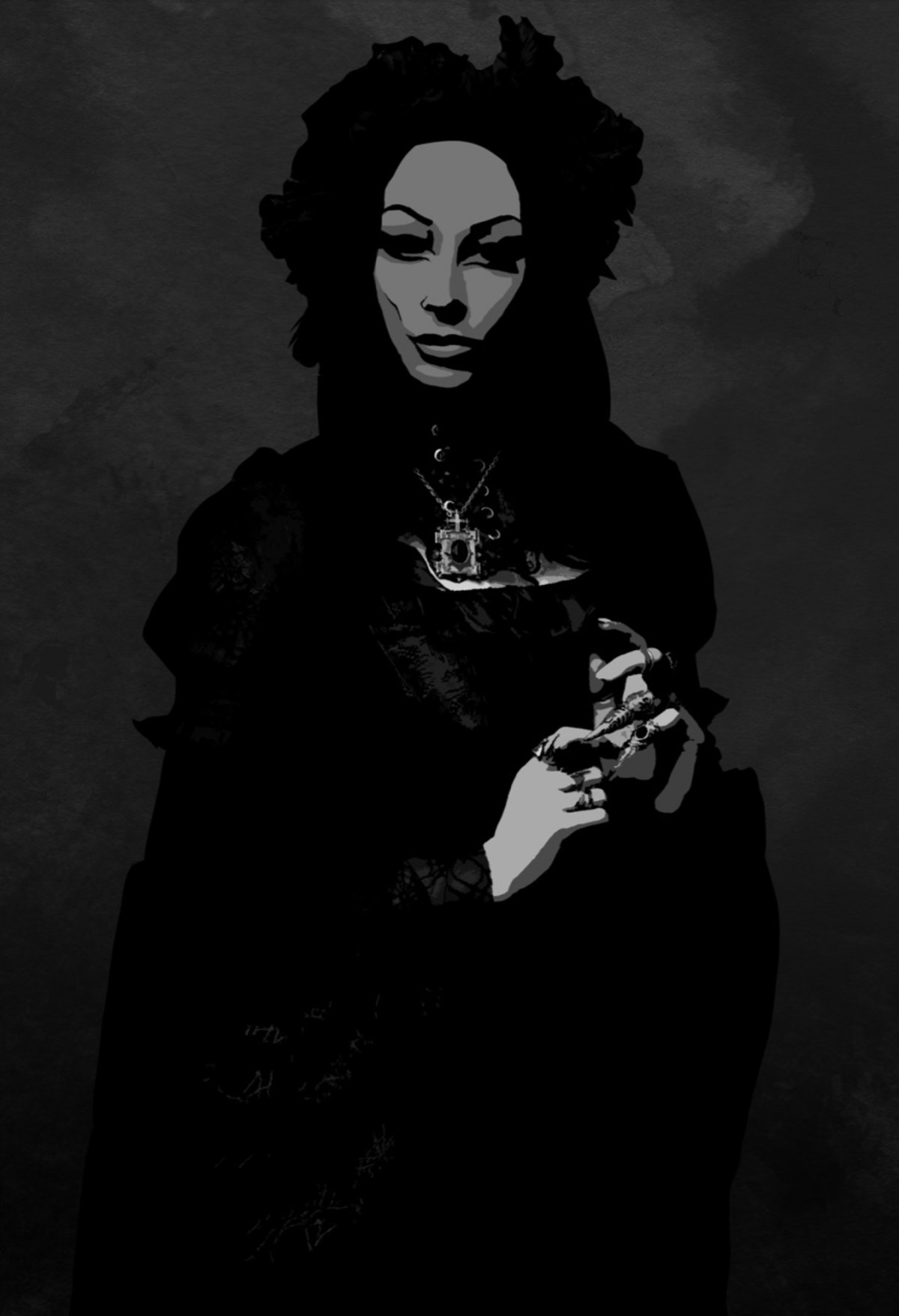
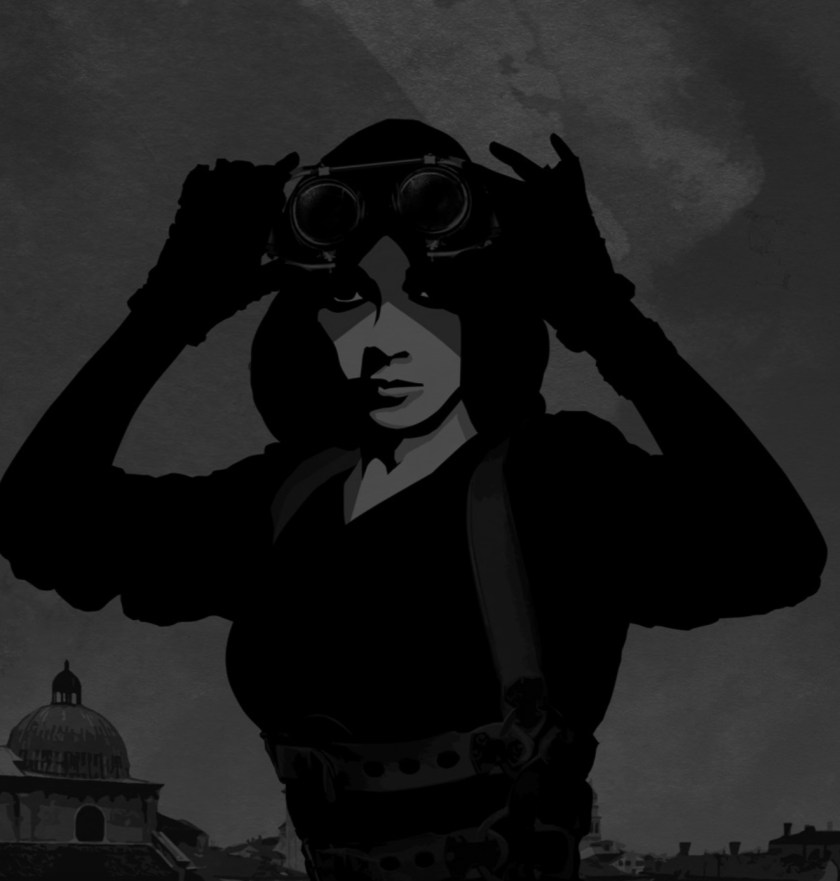


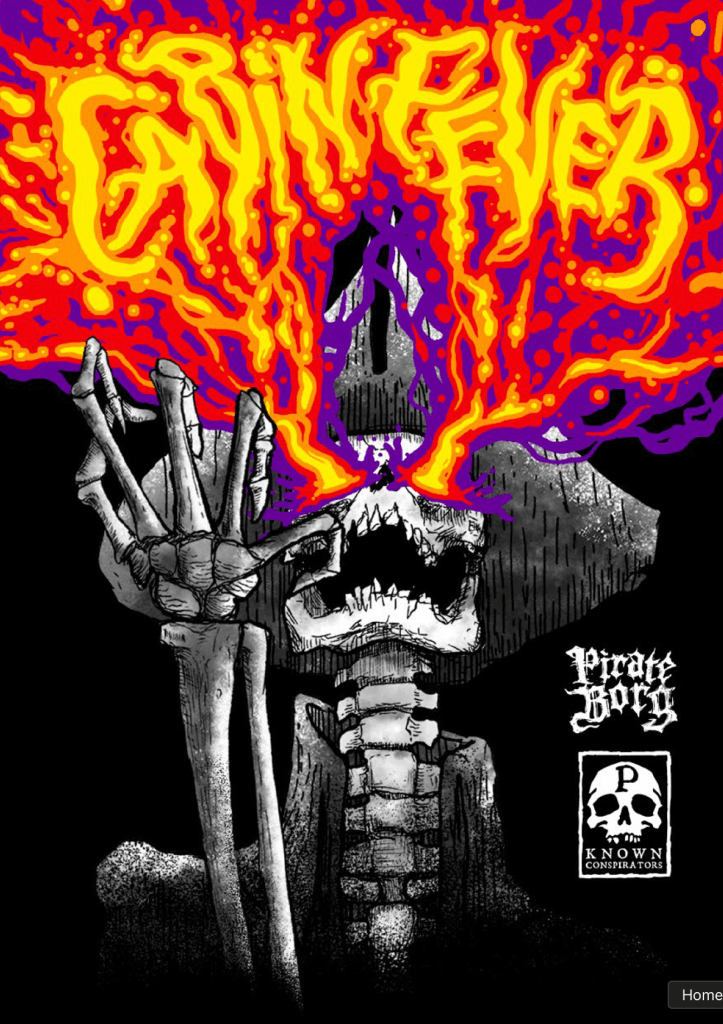
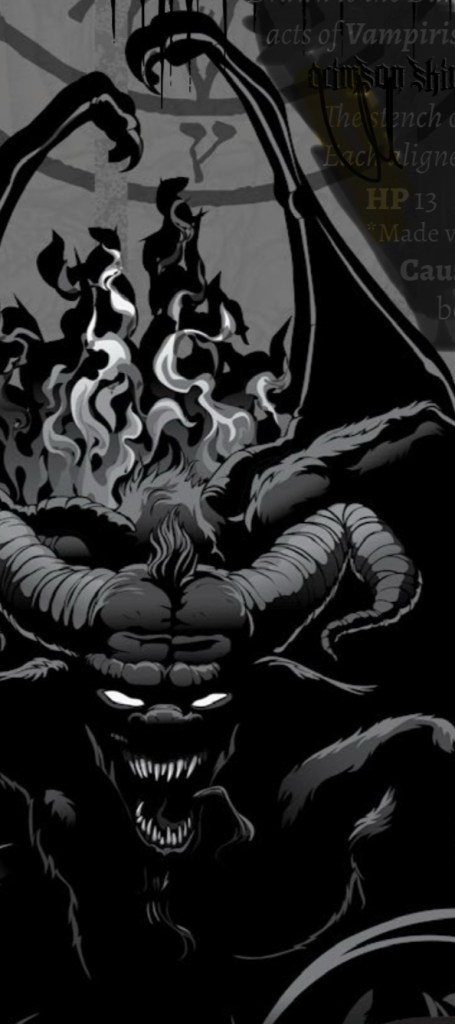
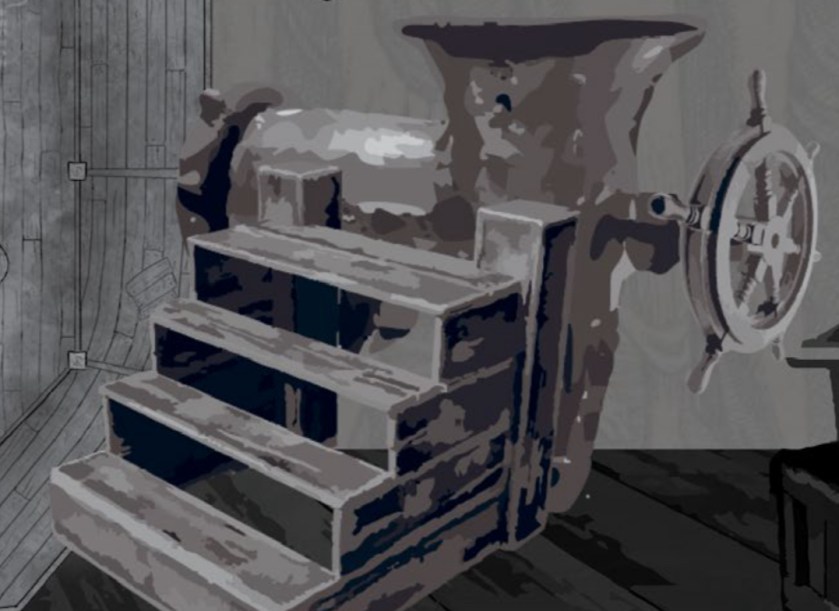
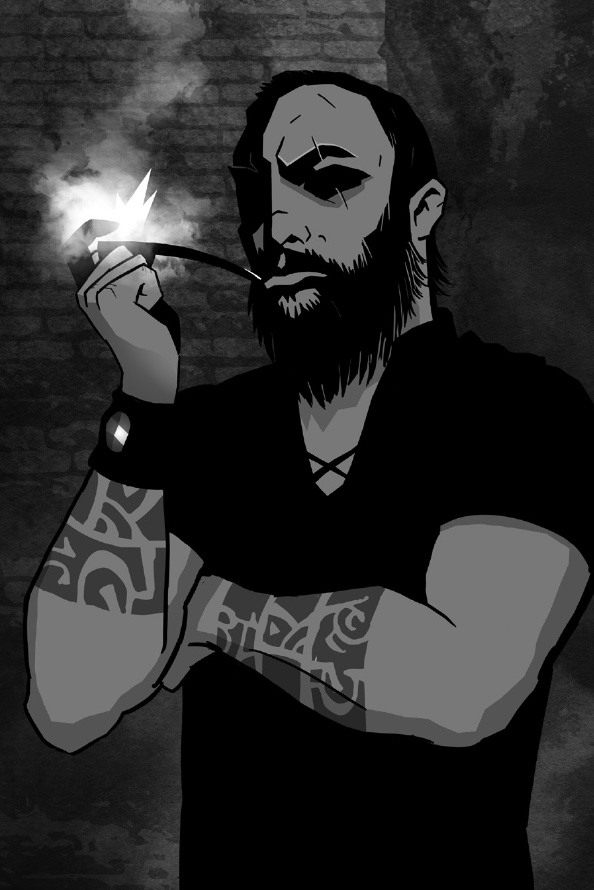


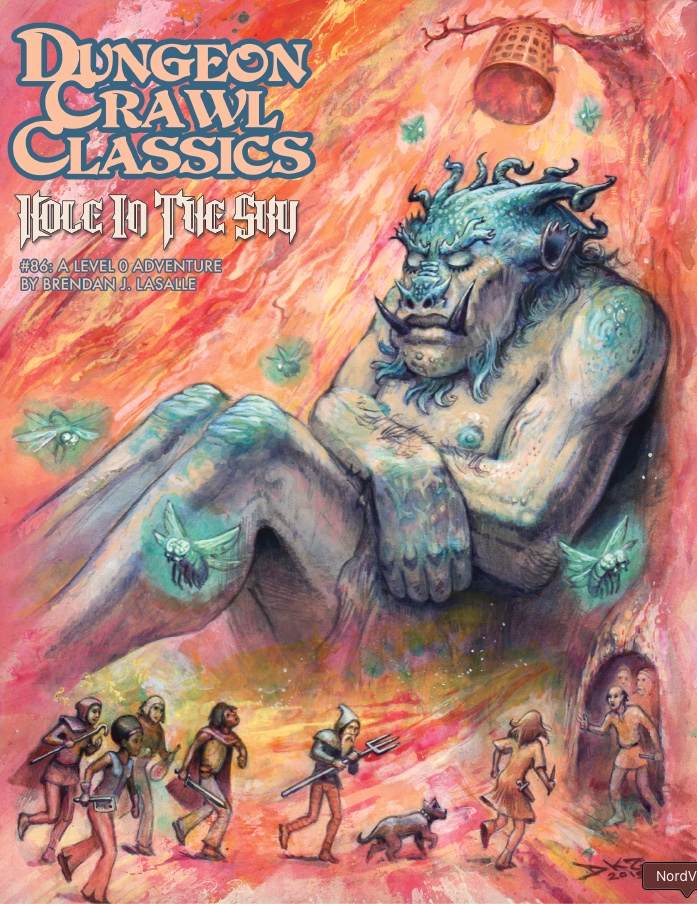

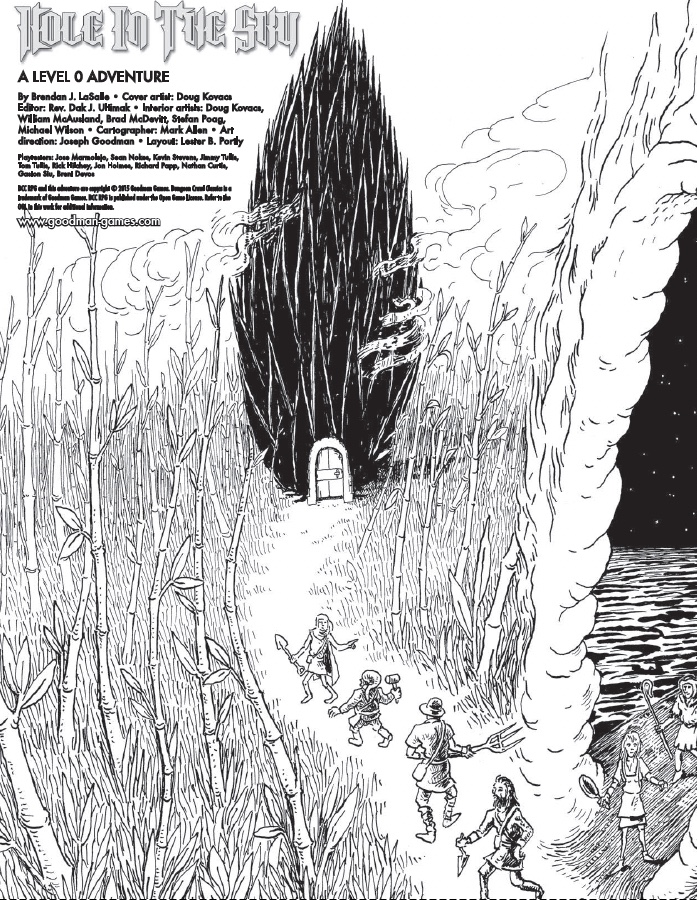
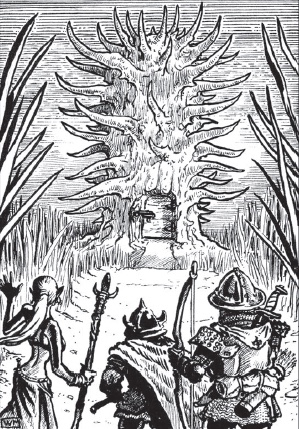

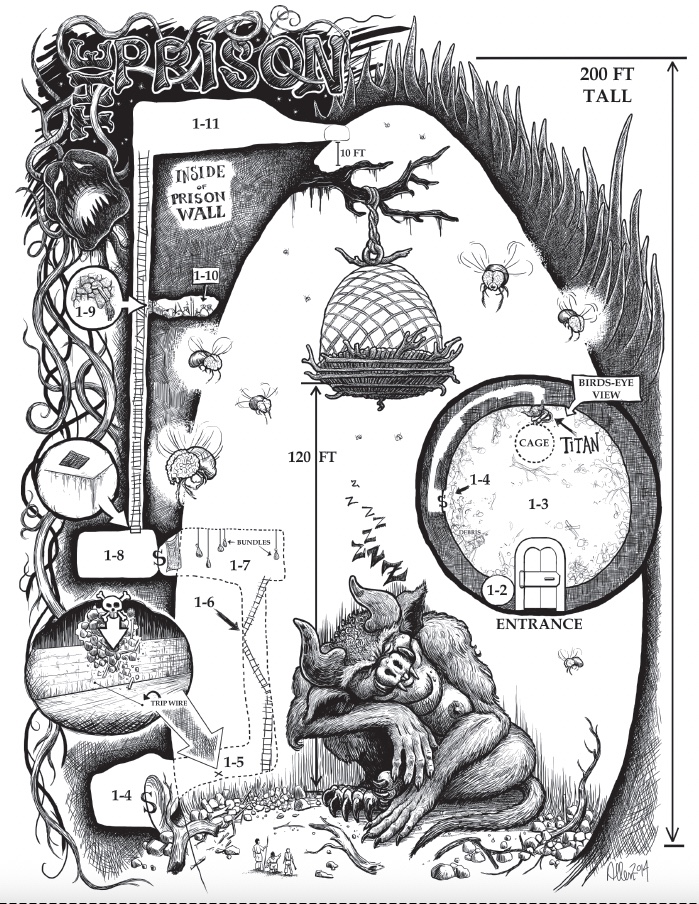
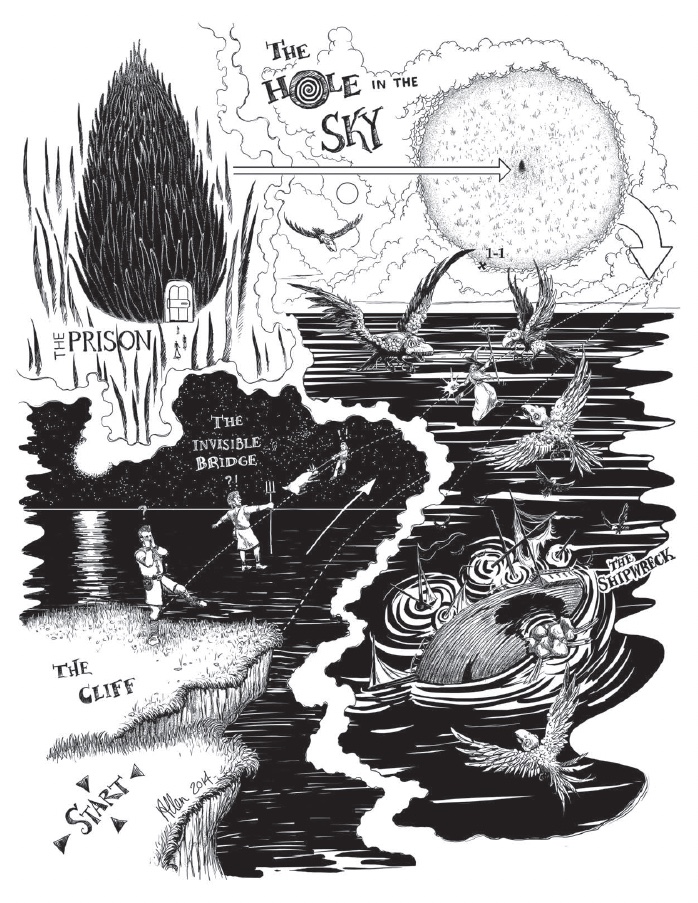




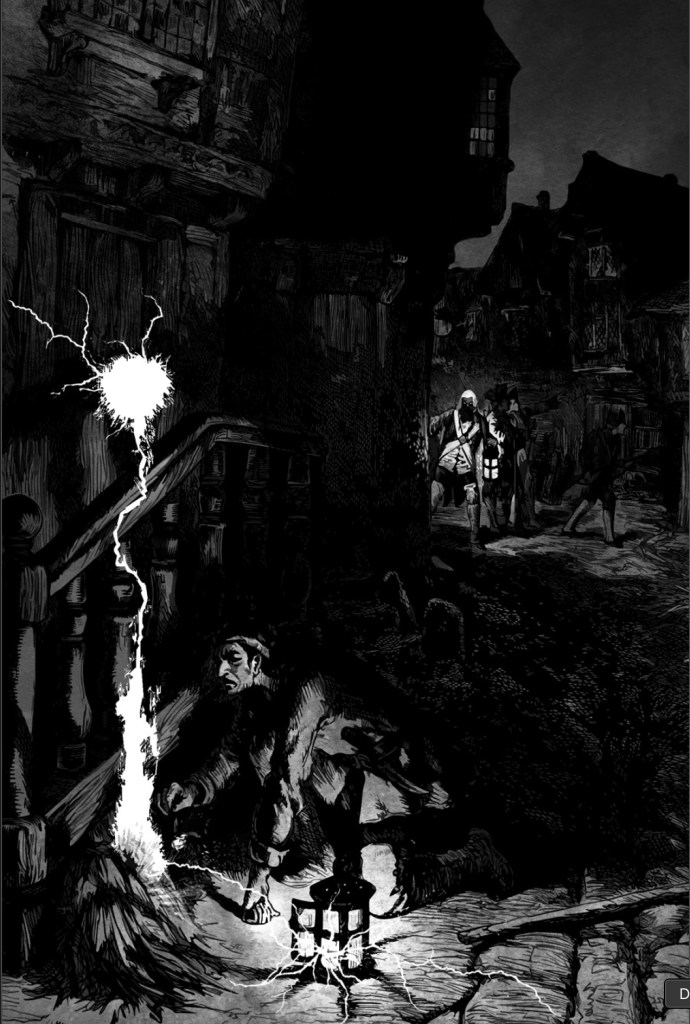


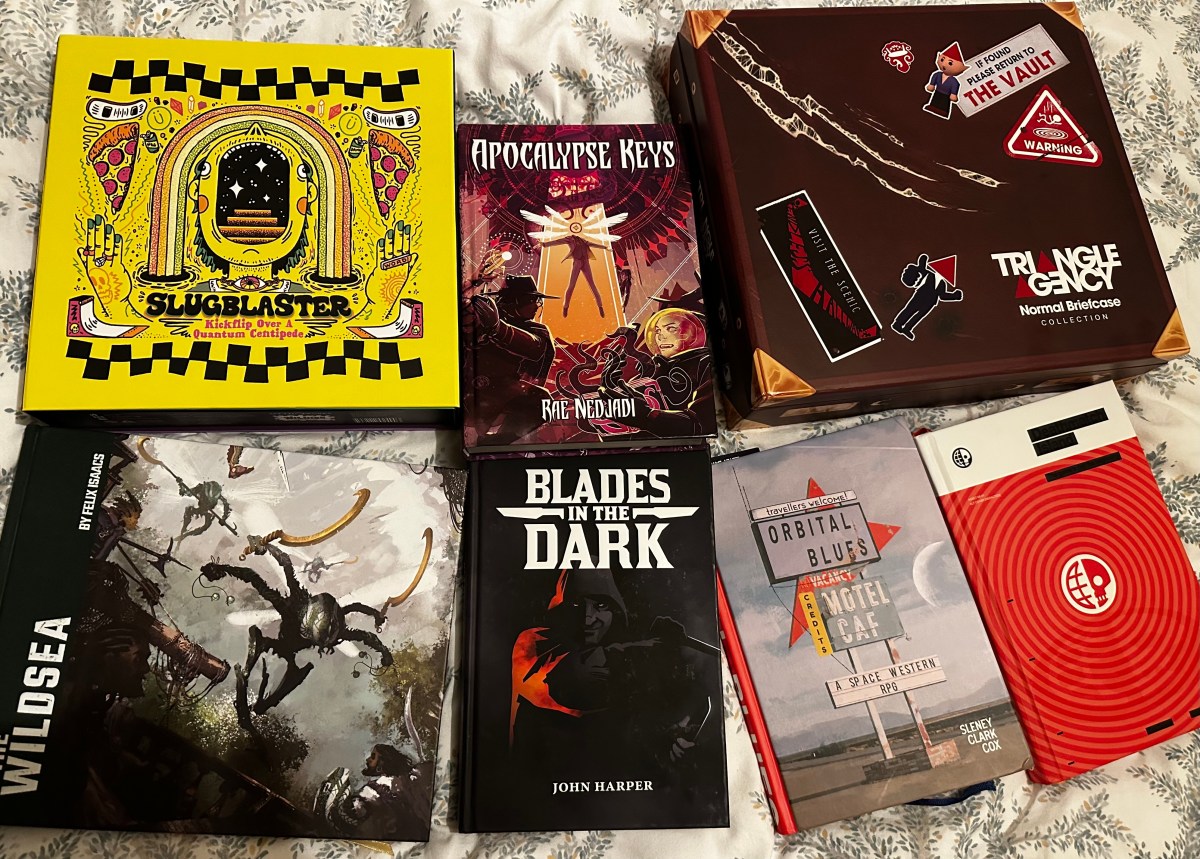
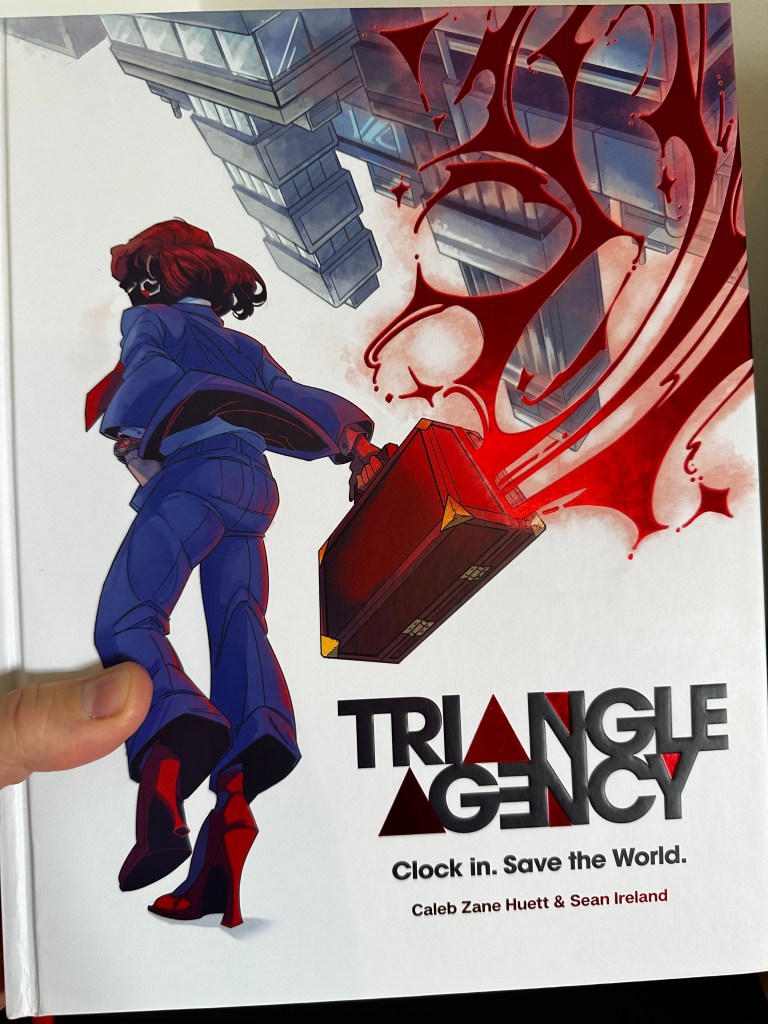
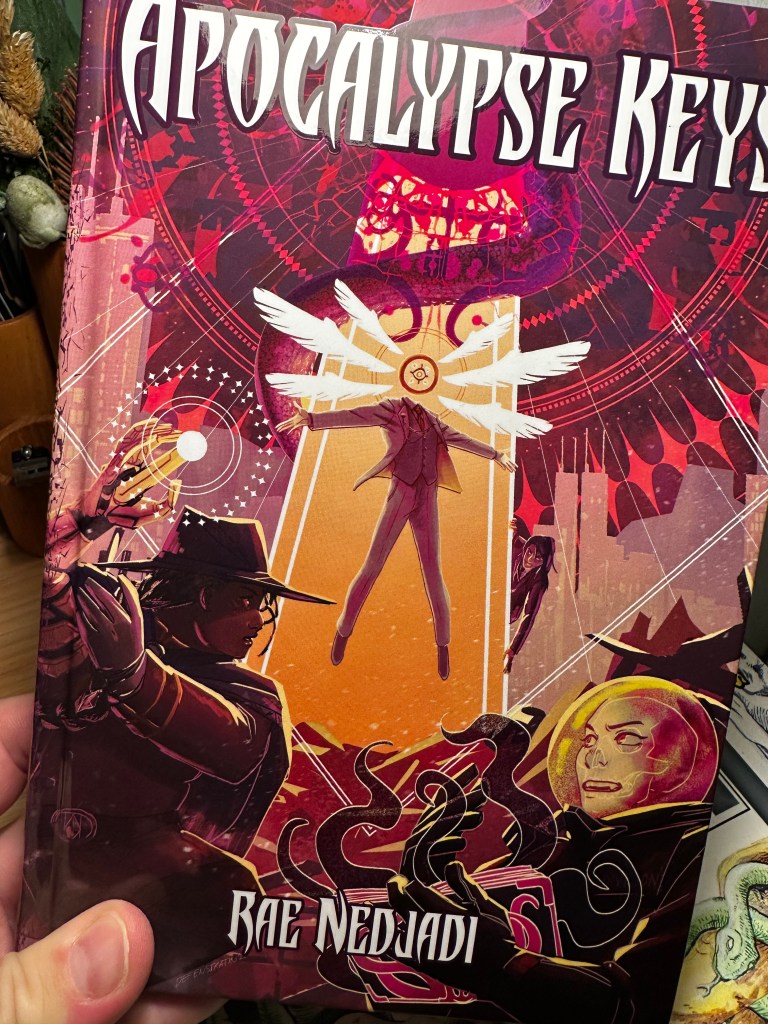
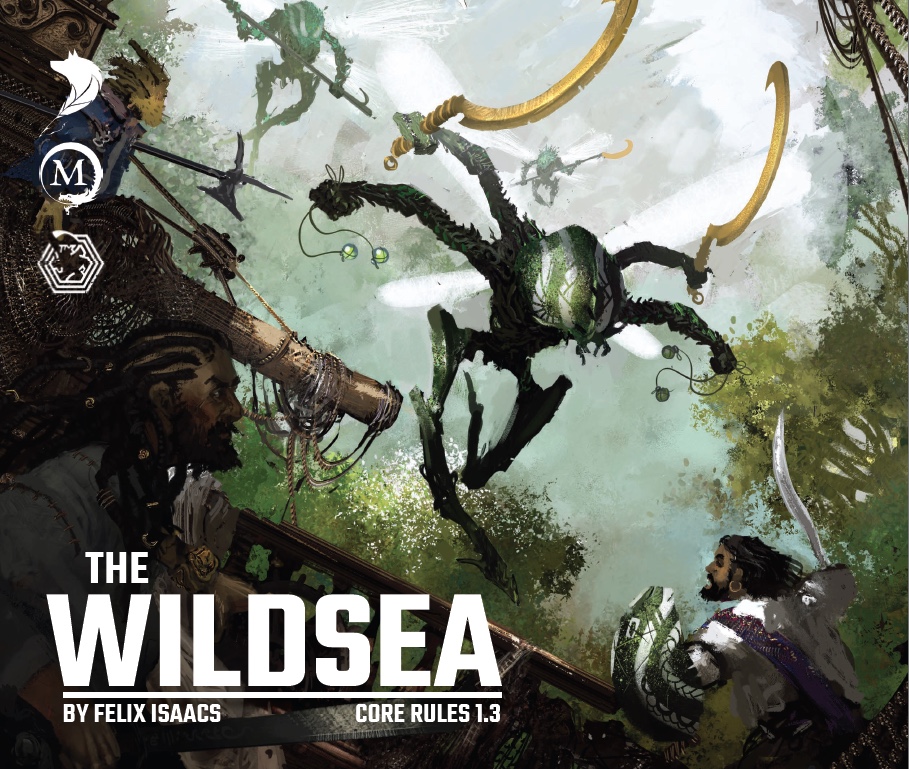
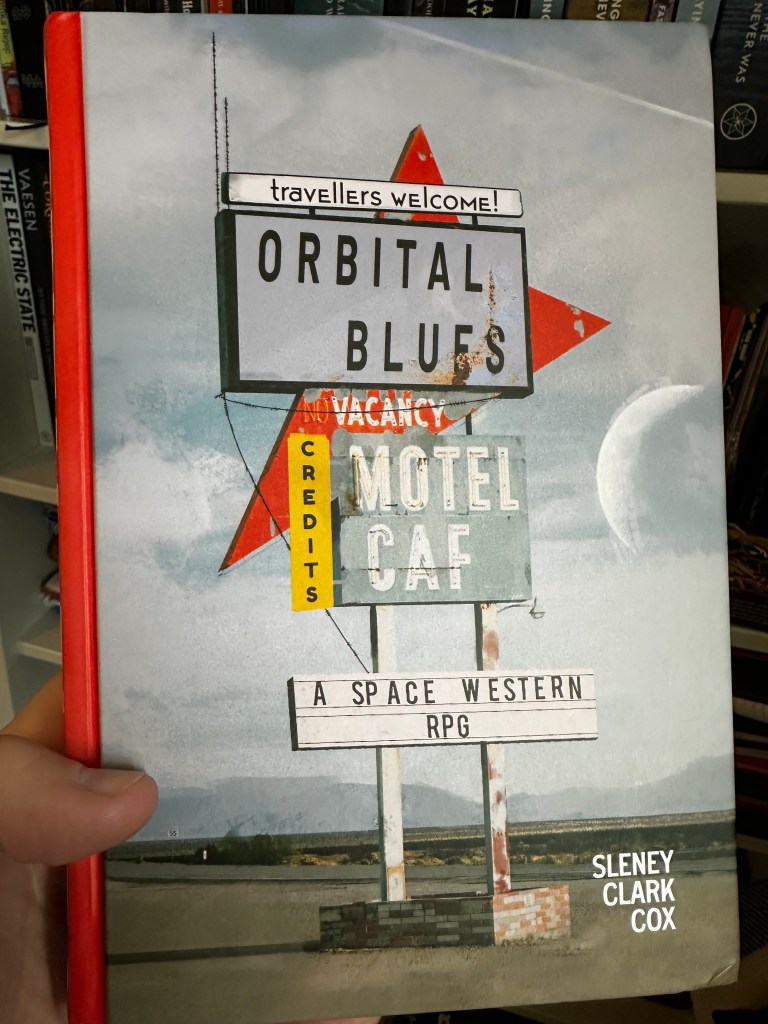
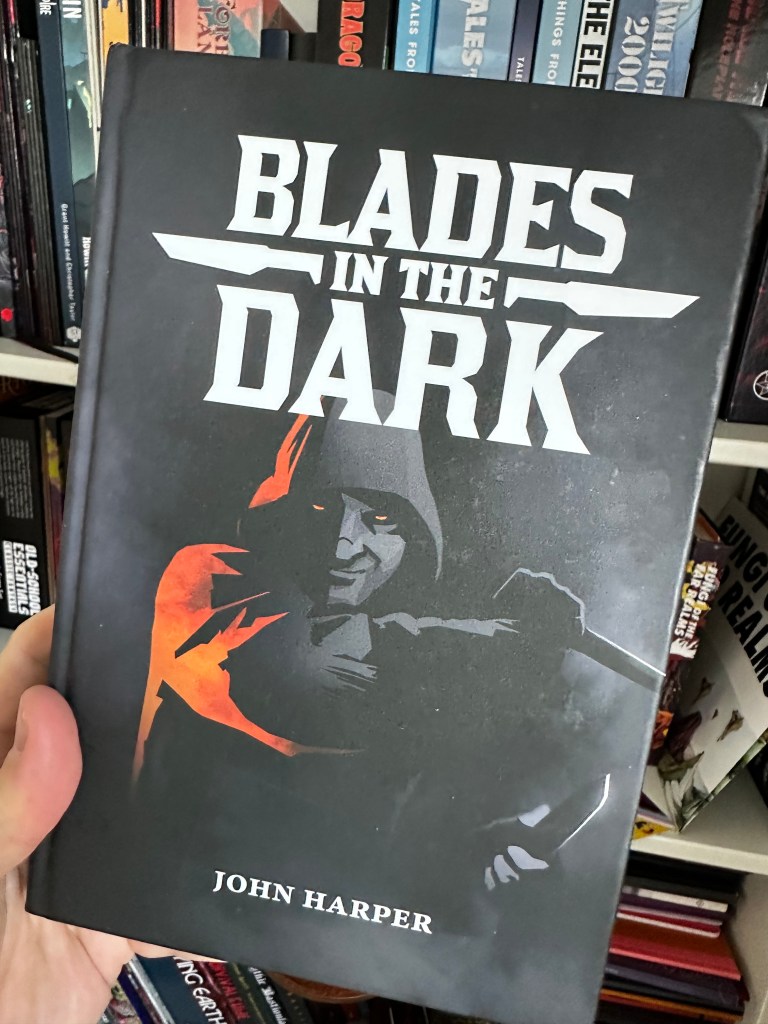


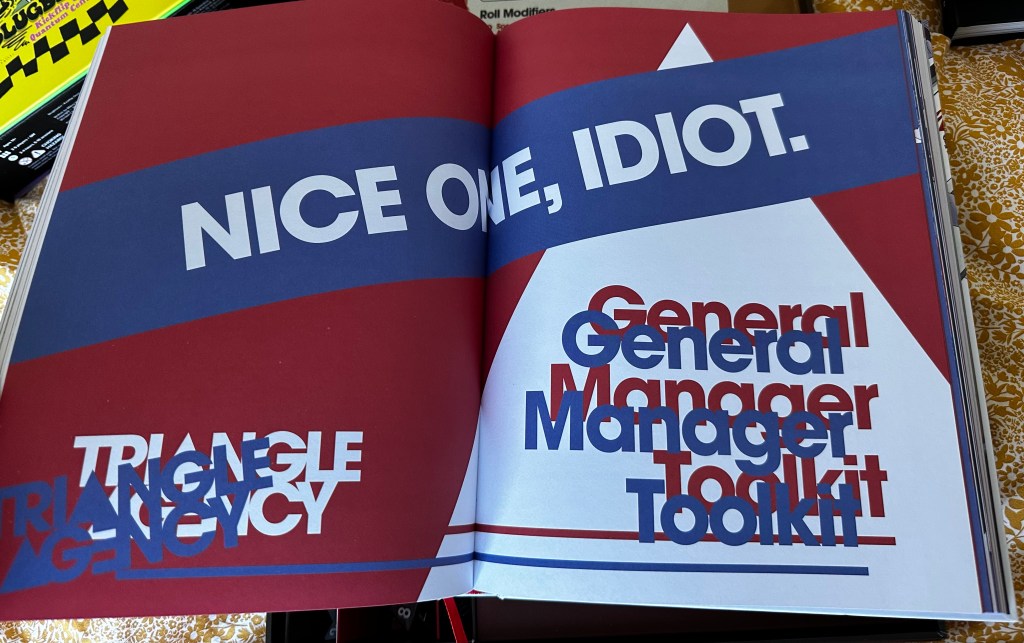

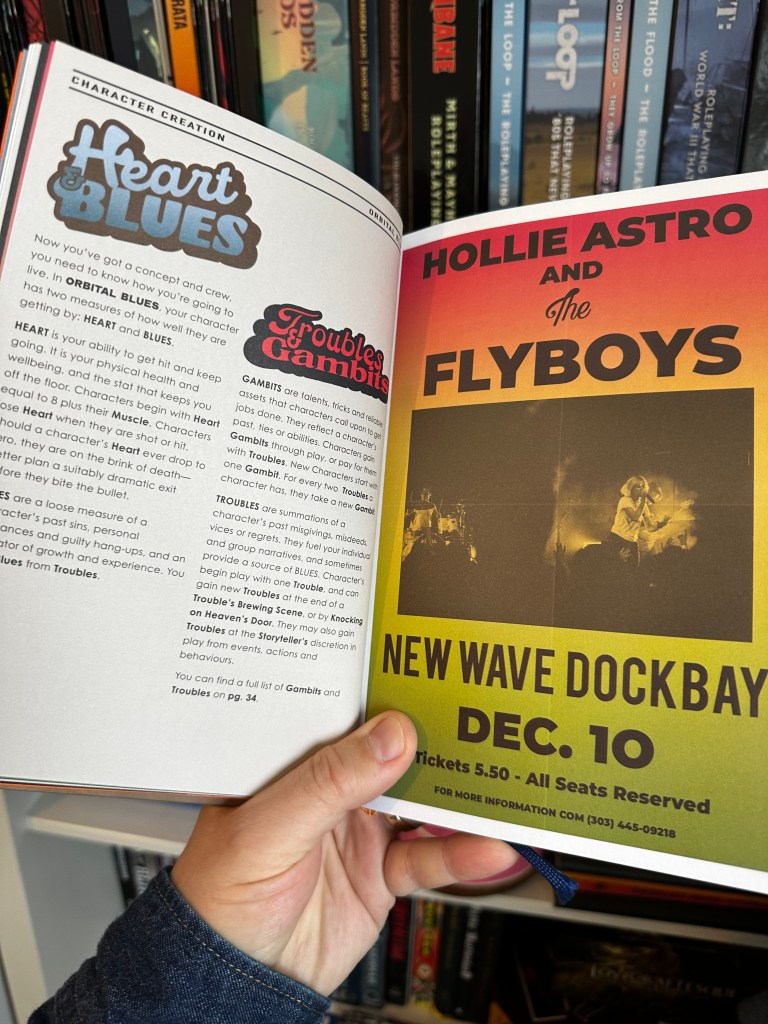
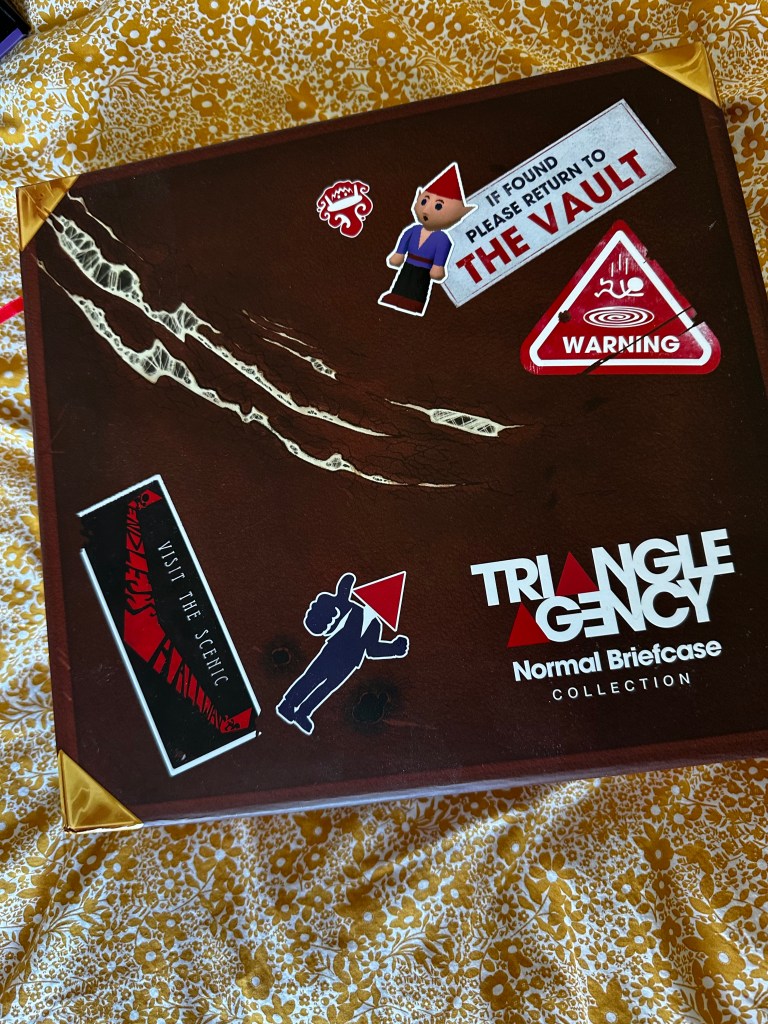
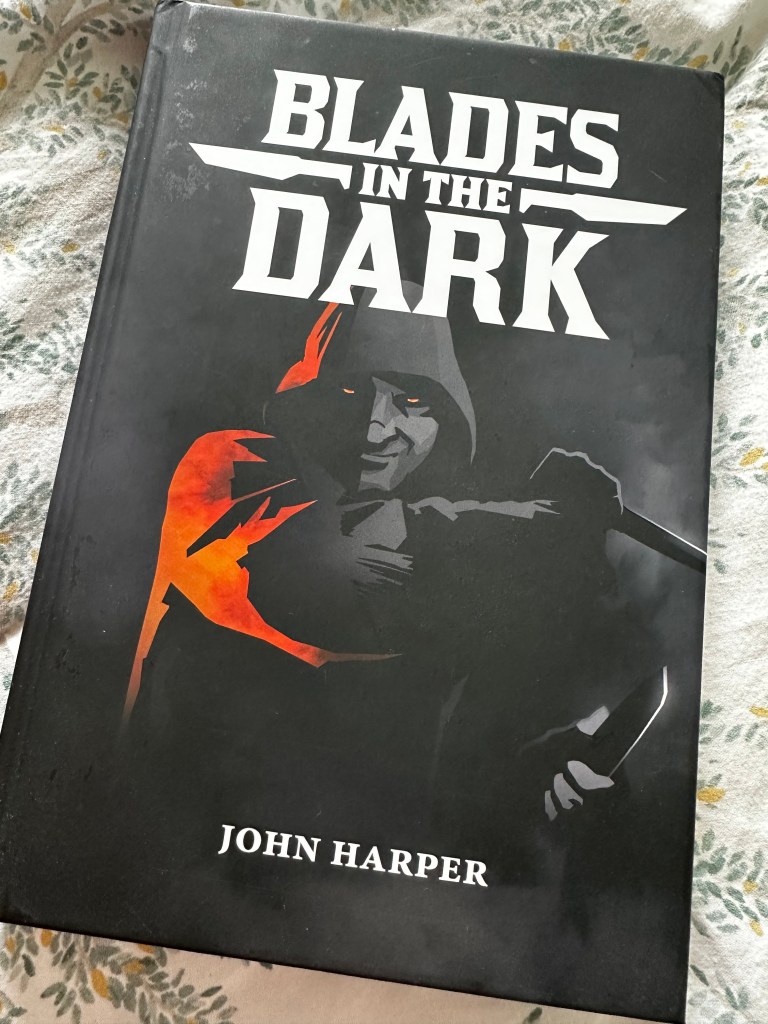
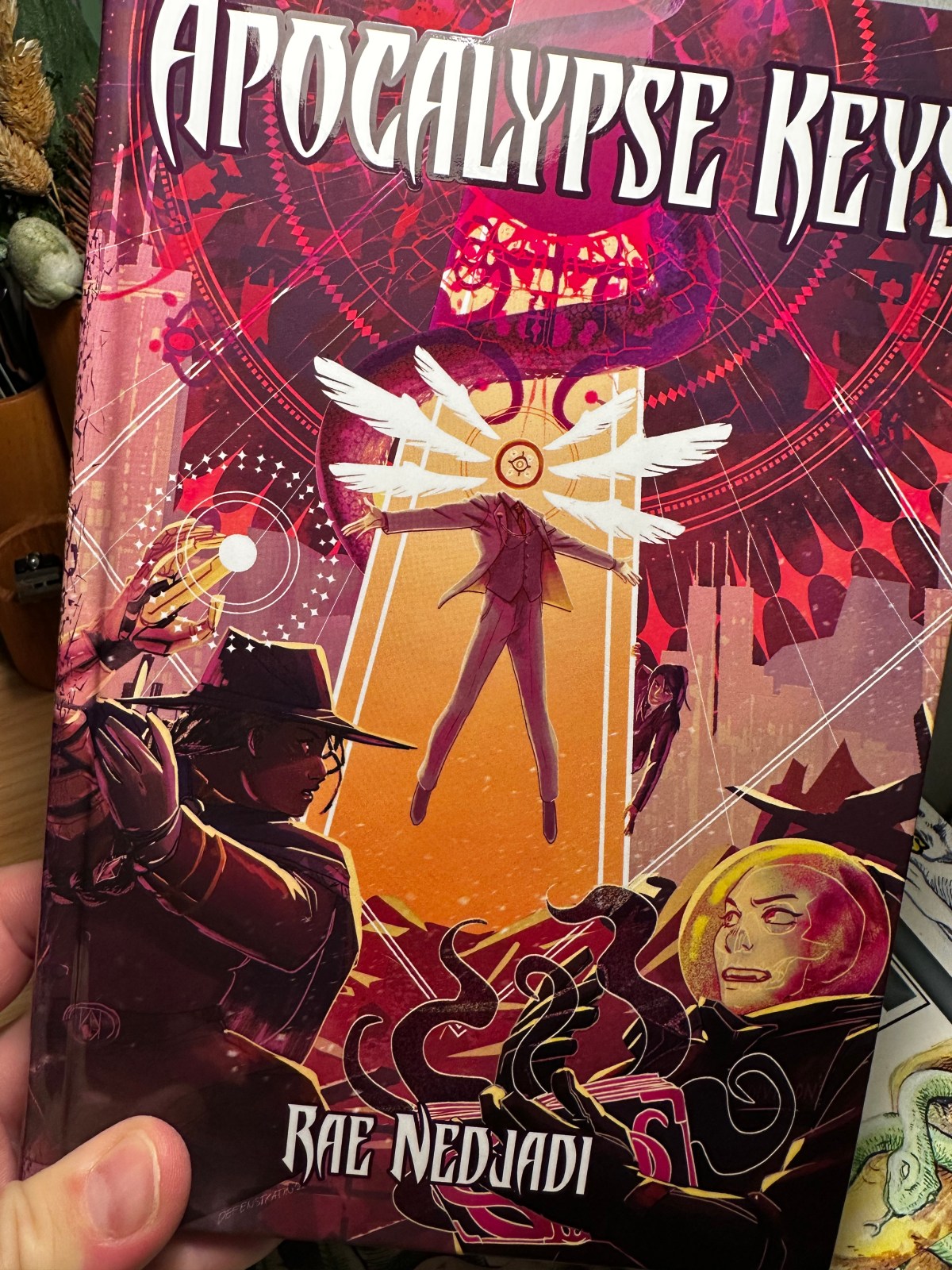
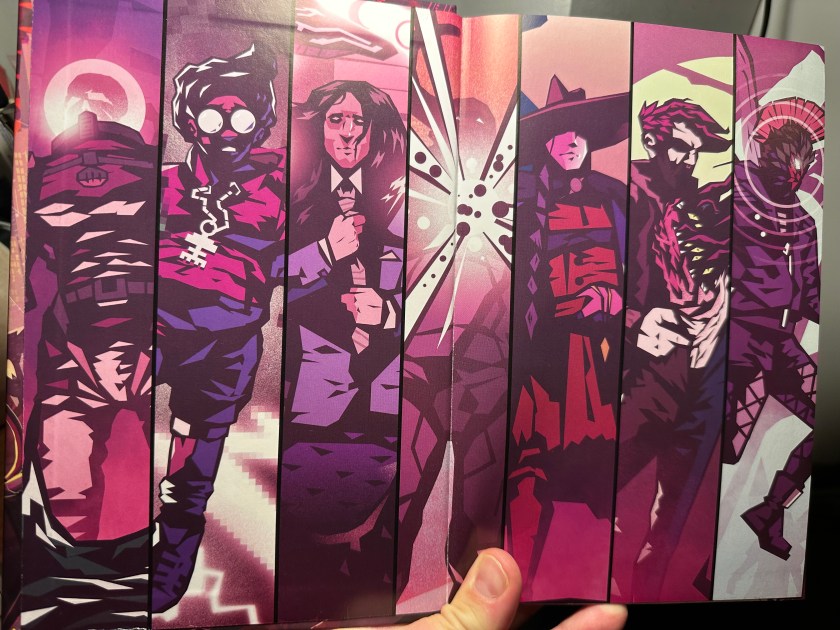


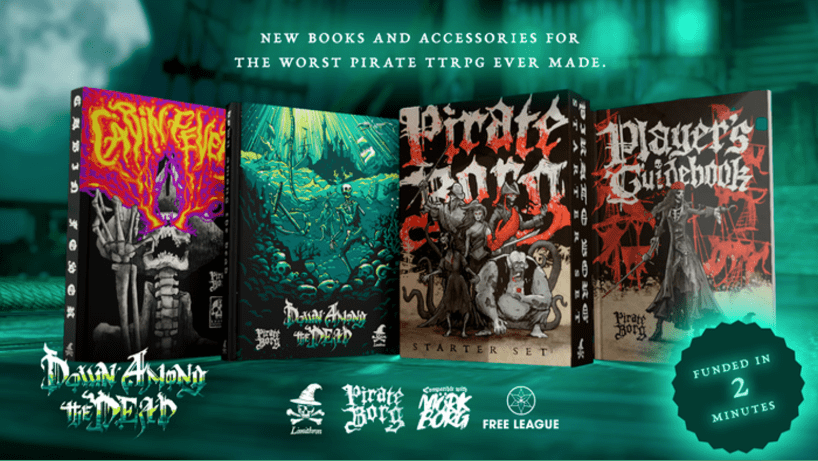
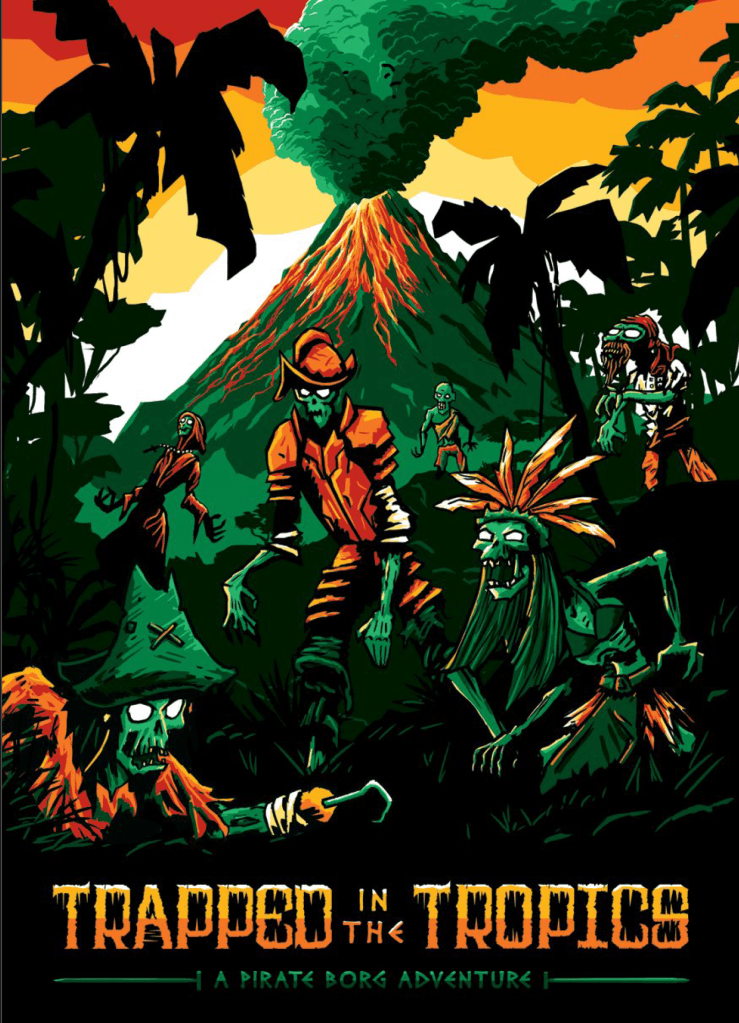
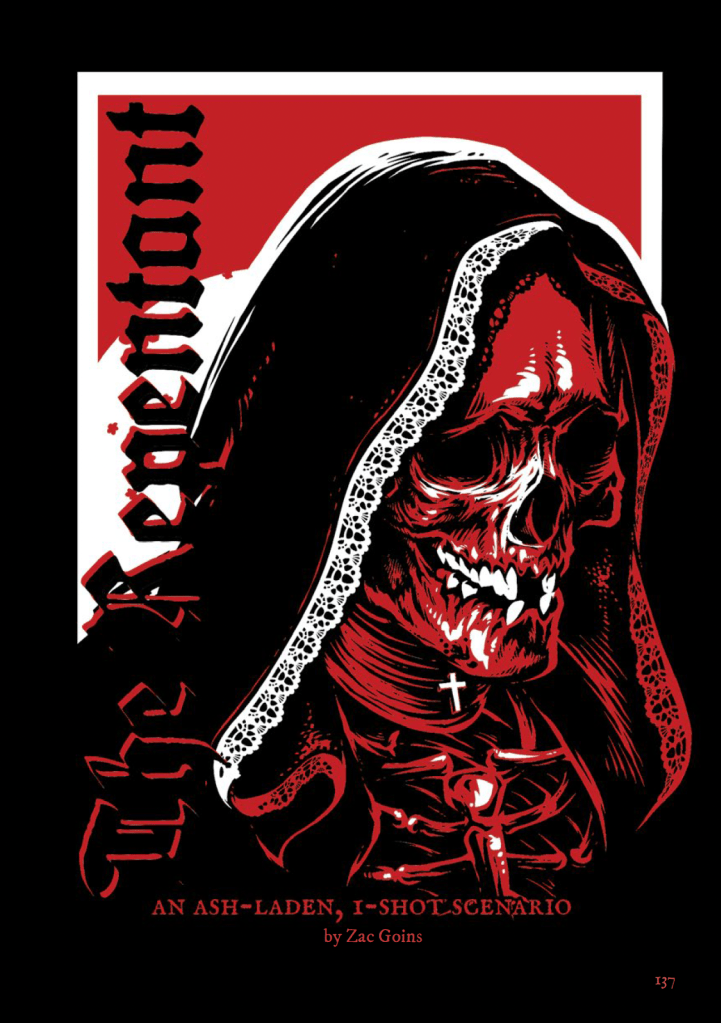
 The Dice Pool