It’s Bloggies time again! This year, I’m not nominated, mainly because I didn’t nominate myself, which is what I did last year. But there are lots of great blog posts involved. I recommend you go and treat yourself to some of them.
This year, it’s being run by Clayton Notestine, last years’ winner over on the Explorer’s Design blog. It’s a lot of work! The honour of winning is tempered by the commitment of time and effort it requires to run it the next year. But he’s doing a brilliant job so far.
Today, I’m going to highlight one of my favourite posts from each category. The categories are:
Advice
Critique
Gameable
Meta
Theory
Debut Blog
Blog Series
For voting purposes, the posts are all paired, so they’ll be pitted against each other in a brutal gladiatorial blog-off. There can be only one!
You can read them all using the links provided on this page. Or you can join me in listening to them via the We Read the Bloggies podcast, to which many members of the TTRPG/blogging community have so generously donated their time.
If you have ever read a TTRPG adventure and screamed at it to provide you with the relevant information on a dungeon room, an NPC or a situation, this one’s for you.
Critique
This review of Mausritter, and, more specifically, the campaign set, The Estate, for that game, is really interesting. Recently, Quinns was on the Dice Exploder podcast talking about his love of the tactile, chit-based inventory system Mausritter uses. But, in this review, although the author, Malmuria, likes the way the system works, they point out that it’s a lot of work just to keep track of all those little pieces.
Gameable
On the d4 Caltrops blog, we have a very short but incredibly useful post on the stocking of wilderness hexes in OSR games. The main resource here is a d66 table which identifies discoveries as:
Landmarks
Lairs
Resources
Special
Hazard
Or some combination of these. Mostly, it provides sparks of inspiration to allow a GM to come up with discoveries that make sense in their campaigns/worlds. Here’s an example:
Hazard/Resource: Consider a Hazard that renders the Resource invaluable or inaccessible in some way.
Doesn’t that get your little GM brain whirring?
Theory
I love this post about Making Hacking an OSR Style Problem from the goblin.zone blog. I don’t play a lot of cyberpunk games or even games set in the modern day so this is not a subject that comes up very often in my gaming life. I am, however, in my day job, responsible for system security and data protection so I particularly clicked with Part 2: Useful Real World Concepts
Meta
I write RPG reviews here on the dice pool dot com. Some are better than others, but I do always try to make them useful to the reader, the potential player/GM or the prospective buyer. I don’t often think about how I go about doing this. But, if I did, it would probably be encapsulated in this post from The Dodecahedron blog. It references another post from one of my go-to reviewers, Idle Cartulary, on the Playful Void blog, which also did a lot to lay out what reviews should do. I appreciate any writing that makes me consider what it is that I’m doing and both of these posts did that.
I am a priestess of Blorb. Just as the map is not the territory, the rules are not the fiction. You do not need a codified movement speed to permit player characters to move.
And there is a satisfying assortment of blog posts so you’re sure to find something to your liking.
Best Blog Series
It’s the Playful Void again. Over the Christmas/New Years period Idle Cartulary reviewed a truly staggering number of games/modules for Critique Navidad. It was one a day for thirty days. I wrote a blog a day during my first month on the dice pool dot com. I can tell you, that’s a lot of work! And I was only prattling away about the shit the occurred to me, not reading, critiquing and writing about the work of others in a thoughtful and fair manner. That’s what this series is. Go check it out.
Dear reader, last week, we took a look at the final part of the Sutra of Pale Leaves campaign. Today, we’re looking at the Fixer, the final scenario in Carcosa Manifest, the second book in the series. Its part of the Sutra of Pale Leaves, but its not necessarily part of a campaign. You could play it as a stand-alone module, but you could also play it as a coda to your SoPL game. It makes as much sense as the very loose way the campaign is presented, if not the way you might actually find yourself playing it.
The Repairer of Reputations
The Fixer is based on the short story by Robert W Chambers, the Repairer of Reputations. I’ve just listened to it on Youtube. It’s a story of insanity, ambition and murder, which is told from the point of view of a man who has come under the influence of the King in Yellow and a deformed, yellow Repairer of Reputations named Mr Wilde. Go listen to it or read it here. It’s not very long and I think it’s worth reading. The story and the scenario share a few major scenes and themes, but the Fixer is resembles the Repairer of Reputations only loosely. For one thing, the original was set in a then future New York City, while the scenario is based in 1990s Tokyo. The main thing, of course, is that it’s an RPG scenario for a number of players, and that necessitates a few things. The PCs need to have something to do, there has to be room for all of them to be the “main character” and it has to have enough meat on its bones to keep them going for a few sessions of play. I think the Fixer is quite successful at doing these things.
Beginnings
There is an interesting conceit here, that the investigators are down on their luck. They are members of Tokyo’s growing homeless community and are lacking money and respect. It’s possible that they are the same investigators that played through the full Sutra of Pale Leaves campaign. In fact it’s suggested that that’s the reason for their current predicament. Perhaps the things they were forced to do to fight the Pale Prince got them arrested or sent to a psych ward. Maybe they became social outcasts due to their talk about mind viruses and Carcosa and faceless people. Whatever the reason, they have ended up on the streets.
But then they’re given an opportunity by Mr Nomura to make some good money and repair their reputations, restoring their lot in life. Nomura is a strange man with terrible disfigurements and an ever-increasing number of cats. He acts as a wakaresaseya, a breaker-upper, if you will. This is a real business in Japan, and it fits in the scenario perfectly. In fact, in the short story, we never discover what it is that Mr Wilde actually does to Repair Reputations and I’m not sure that such a job ever truly existed in history. So, I like this logical adaptation in the scenario. He calls on the PCs to target several “wrong-doers who have made it into his ledgers.” These include a politician, a dirty cop, a buddhist abbott, a yakuza gangster and a fashion CEO. These are known as the Strawmen. He doesn’t want them killed or physically harmed. Rather, he would like the investigators to humiliate and humble them in particular ways.
Episodic
The Fixer Flow Chart
This scenario bucks the trend when it comes to format. Rather than simply following leads from location to location as the other SoPL scenarios, the investigators need to deal with each of the Strawmen one by one. Now, these people are all assholes in one way or another, even the buddhist abbott is a drug-addict who tricked his way into inheriting his title from his father by convincing the old man that his brother was actually the junkie. So, the investigators are unlikely to feel too bad about bringing them down. In fact, each of the strawman sections details the exact kind of shitheel each one is, their background, their weaknesses and where they’re most likely to be found. For instance, the politician can usually be intercepted at the National Diet (Japanese parliament) or on the golf course. Most useful is the “possible approaches” part in each strawman section. Obviously, this is Keeper-facing information, but it can be used to confirm that the investigators are on the right track. Generally, they are going to have to overcome things like getting onto a golf course or into parliament buildings while being homeless person. But once they get there, they get to do fun things like blackmail, or just straight-up releasing blackmail material to destroy them.
I can see each of the strawmen maybe taking a single session, with an episodic, strawman of the week type game. This would be interspersed with the results of the investigators’ efforts. You see, the truth is that targeting these individuals is essential to the completion of a ritual that will succeed in bringing Carcosa into our world. Nomura wants to overwrite Akihabara with the home of the Prince of Pale Leaves. They will start to see changes such as the police station being turned into changed into a castle looming over the town market square of Carcosa, or the National Diet transforming into the Royal Ballroom. As the city changes, so too does Nomura himself. His simple silicone prosthetic fingers become a cybernetic arm, and eventually he wears a porcelain mask and he is completely subsumed in some sort of cloak of scales with odd protuberances. I really like the gradual change in this villain and in the world. The investigators must assume their actions have something to do with these changes. The become more extreme with each strawman they bring low. And yet, the scenario assumes they continue to do what they have been employed to do.
Endings
Nomura, the Fixer
Once Carcosa has been fully unlocked by the actions of the PCs, Nomura will attempt to fulfil their bargain by offering them positions of authority in his new city. The scenario provides us with a number of lore sheets, which the Keeper can give to any investigators that agree to this. These include, the Rightful Crown Prince, the Royal Matchmaker and the Judge of the Star Chamber. These are to be assigned to particular investigators, not randomly. For instance, the Rightful Crown Prince is supposed to be given to a PC with a good reason to despise the politician strawman so that they can rightfully exceed his level of political power. Even if the PCs don’t want to take on these roles in Nomura’s new world, they might anyway, if they enter into a period of underlying insanity, or if their Exposure Points get high enough, which is fun.
As a truly standalone scenario, we are told that the Fixer is not proscriptive on how it might end. It provides a couple of potential climaxes but it could really go any way. It does, however, still have the numbered Endings common to all these scenarios. I don’t know how we square that circle, to be honest. Anyway, here are the Endings:
Party Wipe (Failure)
Carcosa Manifests (Bad Ending)
Reality prevails (Good Ending)
Split Decision (Umwelt Ending)
Conclusion
I like this scenario. It’s weird and contains some potentially amazing scenes and revelations for the players. The NPCs are well drawn and the events are memorable. I think it would be a perfect way to wrap up your time with the Sutra of Pale Leaves and would act as a fun epilogue to the campaign.
All in all, I’m happy I took this deep dive into these books. I haven’t all that much experience running Call of Cthulhu but I think I would run this full campaign because it resonates with me personally. I think the Prince of Pale Leaves is an insidious and threatening unbeatable villain. The setting is one that I think will fascinate many people and the themes revolving around elements of Japanese culture and society work really well. The variety in the scenarios would, I think, keep it compelling and interesting for both Keeper and players. But I don’t think I would take their advice on running the scenarios in any order other than the one they are presented in and I can’t imagine myself playing it more than once, as they suggest is possible in the intro.
Our Blades in the Dark campaign is going well. We’ve only had three sessions but the players are moving the plot forward all on their own and are developing their characters in unusual and gratifying ways. But, for reasons, we’ve had to move our recent sessions to the weekend. So that has left us with a Wednesday gap. I grew bored of wasting my Wednesday evenings on housework, dog-walking and reading so I cooked up a plan to go back to Spire. But, since the change to our Blades schedule is only temporary, I wanted to make this a short one. To be certain we could wrap up our game, I decided to make it a one-shot. A city-break, if you will.
Shadow Operations
Shadow Operations
A few years ago, Rowan Rook and Decard published a book called Shadow Operations. It’s a collection of eleven scenarios meant to be played in a single sitting, and it’s great.
It does a couple of things cleverly and well. The first thing is that it presents a template for a Spire one-shot and then has every scenario in the book stick to it. Not only does this make the reading and digestion of the scenarios easy for the GM, it also provides them with the basis for creating their own one-shots. You can see this Scenario Breakdown in the image below.
Scenario Breakdown
The other thing I really like about this book is the Iconic NPCs it provides. These are a list of statted out archetypes. They have titles such as “the Enforcer,” “the Queen,” and “the Vizier.” Then, throughout the book, each of the major NPCs presented in the scenarios fit into one of these archetypes. You don’t need stats for each NPC that way, you just use those iconic cookie cutters and refer to the handy reference page in the front if you need some stats for them. For a game like Spire, where there really isn’t anything like a bestiary or monster manual, and the enemies are just different types of people, this is a game changer. You can see the Iconic NPC stats in the image below.
Iconic NPCs
Other than these introductory sections, there is a page of advice on Running One-shots in the back. This is pretty bare-bones, to be honest. It does tell you its best to “be up-front with your players.” Which is a great advice. You won’t have time for hidden agendas, secrets and mysteries that require deep investigations to reveal. Just lay it all out for them or you will leave them frustrated and the scenario unfinished. I couldn’t agree with this more. But the main piece of advice is to use index cards to write down the various locations, NPCs, PCs and props on. Once you have done that, you can group them appropriately, kind of like a game of Cluedo (or Clue for my dear readers from across the Pond.) There is nothing wrong with this advice. As much as I could, I went with it, insofar as I could playing on Roll20. But, as it turned out, we never really used my virtual index cards. The players had no real problem remembering where their characters or any other NPCs were at any given time or where any particular location was in relation to any other. So, I can’t help but feel that this advice only scrapes the surface of what the prospective one-shot GM needs to know. So much better is the advice in Heart. In Heart we are told to pay particular attention to pacing, to start fast and keep the pace up as much as possible. A one-shot is a sprint, not a marathon. Provide necessary information in flashback or in summary and get the PCs started right in the middle of the action. Give them an achievable goal. I wrote a whole blogpost on this a while ago. You can check it out here. One thing I’ll say, however, is that much of the need for this advice is obviated by the structure of the scenarios in the book and the directions within each one on how, where and when to start, and what the PCs’ aim is.
Running One-shots – advice page from the back of Shadow Operations
Speaking of the individual scenarios, I found it quite tough to choose the one I wanted to run, especially as I only left myself about three days to decide on it and prepare it.
Here are a few that I considered:
Life and Soul – Go kill Mr Winters, one of Spire’s most prominent gangsters, at his own birthday party
The Last Train – Get aboard the Last Train travelling the Vermissian and steal it or the tech that powers it
These Feral Saints – Find and recruit a newly reincarnated Hallow (drow saint) in Pilgrim’s Walk before some other cult does
But the one I went with was Jailbreak, a mission to infiltrate the Hive, Spire’s most notorious and terrifying prison, and, once there, ensure the aelfir can’t execute their prize prisoner, the Gnoll Warlord, Brakesh Gold-Tongue.
Jailbreak
There will be SPOILERS ahead, so, if you care about that sort of thing, look away now.
If you’re still here, welcome to the Hive. I’m going to discuss, briefly, my experience with Jailbreak as a scenario, playing Spire as a one-shot and whether or not I would recommend it.
I had four players for this one-shot and exactly three hours to complete it in. I like having time-constraints like this in some ways, as it gives me a very clear idea of how long I can spend in the various sections of the session. I was able to wrap it up within the time, although it was tight. We played online for convenience and because there was a gale-force wind and torrential rain that evening. We used Roll20, as I alluded to above. We found the Spire character sheets on that platform to be quite user-friendly and easy to navigate once you got used to them. It helps that Spire is a relatively rules-light game, certainly. There is a button you use to make rolls when necessary, which is handy as it combines your dice pool automatically. However, I will say that in instances where you have to apply a Difficulty to a roll you are forced to roll each d10 individually, because you can only see the highest die roll if you use the button. If an opponent has a Difficulty of 2, it means you have to take away your top two die rolls from the dice pool and go with the third highest. It’s a small thing but it did come a up a couple of times during play.
Suggested Classes
Character Sheet for the pregenerated Bound character, Sansel from the Spire Quickstart Guide.
Another piece of advice that I feel should be central to running a one-shot of Spire, much like my advice for a Heart one-shot, is to make sure you have pregenerated PCs. When time is of the essence, you can’t be spending an hour creating a set of custom characters. One of the most useful parts of the scenario structure provided is the Suggested Classes. For Jailbreak, these were Bound, Carrion Priest, Lajhan, Midwife and Shadow Agent. So I stole and tweaked a number of pregens from other Spire products such as the Quickstart and the campaign frame, Eidolon Sky. The only one I had to create from scratch was the Shadow Agent as I couldn’t find one already made in any of the Spire books I own. The most time-consuming element of this was just copying and pasting a bunch of stuff into the Roll20 character sheets. But there is no doubt about how much time it saved on the night. I could have done a better job with some of the characters to be honest, but when they are only in the spotlight for such a short period of time, a long and complicated backstory can be a hindrance, actually.
Finally we get down to the scenario itself. As I mentioned above, the central goal is to infiltrate the Hive and get Brackesh Gold-Tongue out. But, the Intro actually asks you to start the PCs already inside the prison. You then just ask them how they managed it! I loved this as it got them started right in the action and removed all the time-consuming planning that such an undertaking would usually require. My players went straight in the front door in disguise, in a meat cart or as a sort of chaplain for the drow guards and prisoners.
Intro
The Cover of Sin
You are then asked to describe the Hive. Now, there is minimal description of the prison in the main Spire book. It introduces it as a jail built into the living walls of Spire itself. It has rows of hexagonal cells which can be dropped individually from the wall in the event of an escape attempt. The unfortunate inmate would fall inside their cell all the way through the central abyss of the city, possibly all the way down to the Heart beneath. This is a terrifying prospect but, as I said, the description of the building, its inmates and staff etc, is brief. I was happy I had a copy of Sin. That book contains a much more evocative section on the Hive that was written, as it so happens, by Basheer Ghouse, the author of Jailbreak. It provides juicy tidbits like the way there are lots of walkways spanning the chasm below the prison, but they don’t have any handholds. Gulp. It also provides some great examples of the types of poor mutated experiments of creatures that are resident in the Menagerie. The Menagerie a part of the Hive where the aelfir send their old pets, experiments and art projects when they’re done with them. One of the main NPCs in Jailbreak is Dawn-Upon-Ice, a hobbling former aelfir who now acts as an information broker of sorts and can produce all sorts of nasty poisons in her guts for a price.
NPCs
Speaking of NPCs, Jailbreak has five, which is an easily manageable number. I will say, we didn’t interact with all of them, we skipped Qadiv Love-Fool, a sort of gnoll collaborator, purely due to the fact that the PCs did not pursue the information they gained about him. Brakesh Gold-Tongue, himself and Dew-In-Shattered-Mountains, the aelfir poet-interrogator, were my favourite to play. Neither lasted long against the PCs.
Suggested Scenes
After the NPCs section, there’s the suggested scenes. With the sort of structure you’ve got in these scenarios, this is really useful. Essentially, all you’re given to work with is a starting situation. The PCs are expected to push everything on from there. The suggested scenes allow the GM to pepper their descriptions of the infiltrators’ journey through the prison with interesting moments and opportunities to introduce the major NPCs. Here’s an example of one that I found particularly useful:
Smiling Kas spots the characters as she escorts Dew about the Deep Cells. She asks precisely no questions and accepts any excuse or alibi, no matter how ridiculous. If the characters have not threatened her and seem new to the Hive, she warns them not to stay in the Deep Cells too long.
I made liberal use of these suggested scenes.
Locations and Props
The next section describes the major Locations. I gave each one of these a little box drawn on the map on Roll20, thinking I would move the players’ tokens around from one to the next as their PCs moved. But, in practice, I didn’t really use them at all. Each of the Locations, which included the Menagerie, the Offices, the Guard Quarters, Watch Posts and The Deep Cells contain a brief description of the place, where it is in relation to at least one other place and the sorts of people and props that might be there. They are all short and to the point. Very easy to use on the fly. This section is supported by the prop section, which comes next. Props include unnamed NPCs like patrolling guards and menagerie experiments, by the way.
Twist
Each scenario has a Twist. Jailbreak’s twist is that Brakesh is a real asshole and has been going around the Hive murdering people, guards and prisoners alike. He was betrayed by his own side and left for dead before he was captured because he was kind of a psycho. He won’t leave with the PCs unless they either help him to kill each of the other named NPCs or offer him a shot at Snow-On-Stone, the aelfir commander who captured him. My players only encountered him about ten minutes before the end of the session. This worked out fine because their attempts to convince him to come with them failed so miserably that he attacked them and they were forced to kill him before escaping through an exploded front door to the prison. This worked out fine for them, as it happened. The Ministry wanted things to get messy to gain the attention of the papers and they were happy as long as the aelfir no longer had Brakesh as a source of information and didn’t get the opportunity to execute him publicly.
Conclusion
I love the way Shadow Operations is presented and it has a great variety of one-shot scenarios with an eclectic variety of settings and characters. Each of the scenarios is presented in only four pages, including one full page illustration. They are tight and easy to use because of the format. I do think it could do with some better advice on running a one-shot but, as I said above, if you follow the scenario structure, you’ll be alright.
Jailbreak was fun. It had a great setting. I loved describing a scene where the guards dropped one of the cells out of the wall and the PCs watched it plummet and the moment when they discovered one of Brakesh’s murder victims stuffed under the stairs was good too. But I found we had not enough time for the characters to shine as much as I would like. Maybe this is just one-shots in general, or maybe it’s how I handled it, but I would have liked a bit more room for the PCs’ characters to breathe.
I will definitely be going back to mine that rich seam of Shadow Operations in the future. It was so easy to pick up Jailbreak and run it with minimal prep. I would recommend it!
This has been a banner year for games in our little, local TTRPG community, Tables and Tales. 2025 was our first full year in operation, having started only the previous summer. But, if things continued this way, I’m sure we’d all be very happy indeed.
12 Months
It’s all over except the Stars and Wishes, dear reader, so I thought I’d look back at 2025 for my last post of the year. To help me achieve this, I’m going to utilise the twin wonders, data and spreadsheets. You can read other year end reviews from the RPG blogosphere by checking out the hashtag #Endies2025 on socials.
The Dice Pool
Jan to June 2025 views and visitorsJuly to December 2025
How has the blog gone in 2025? In short, it’s grown, at least in terms of views and visitors. In the first six month of this year, I got a little over 2,300 views. In the last six months, there have been over 5,200, bringing the total to over 7,500. That sort of increase is always nice to see, of course, even if it doesn’t seem huge compared to other sites. What I feel is feeding that growth is largely the sheer number of posts I’ve published. Including this post, I’ve published 96 this year, bringing the total on the site to 184. I get hits on a lot of them quite regularly.
Here are the top ten pages/posts:
Homepage (Latest posts) – 674 – The rest of the numbers below are skewed because of this one. My homepage has that infinite scroll sort of thing going on, so it’s hard to see what visitors to this page are actually stopping to read. Although, I generally assume that it’s the latest post.
Dagger in the Heart – 287 – I’d like to think that all of these views come from people interested in my review of the Heart campaign by Gareth Ryder-Hanrahan, but I suspect a lot of these clicks come from people looking for Daggerheart stuff
After the Mind the World Again – 270 – This is the highest ranked post that was kindly linked by Thomas Manuel of the indie RPG Newsletter. He has driven a lot of traffic my way over the last year so I would like to thank him for that!
Cosmic Dark: Assignment Report – 204 – This post was also linked by the Indie RPG Newsletter, as well as Graham Walsley himself on Bluesky. This is the sort of thing that makes me love the Indie TTRPG space so much!
Alien RPG’s Hope’s Last Day: A Review185 – Yet another post shared by Thomas Manuel. This one has gotten a few hits recently, I think due to the release of the Alien RPG Evolved Edition Starter Set, which has this adventure in the box.
Inspiration – 175 – I re-shared the piece I wrote as a tribute to my brother last year. I think the traffic mainly came from family and friends, many of whom would previously never have known I even had a blog.
Blades in the Dark Best Practices and Bad Habits – 164 – The generous and supportive John Harper himself, re-skeeted this one on Bluesky. Along with several other Blades-related posts. This has contributed to Bluesky becoming my second highest referrer.
Ultraviolet Grasslands Character Creation – 146 – No idea why this one is in the top ten. I suspect its because players are desperate for UVG content and assistance in running it.
Not really sure, to be honest. I can see the line on the graph going up for views and visitors generally. Like I said, that’s nice. And I get a little thrill when someone shares a post, talks about it or recommends it. But I get very few subscribers; only 31 in the last year and a half. I understand that, to be fair. I don’t claim to be a news site. I’m not reporting on the latest releases or current events in the industry most of the time. I’m writing what I want, when I want, and I’m generally happy with that. I also have no frame of reference; I don’t know what sort of numbers other similar sites might expect to get, so all I can do is compare against my own past performance. What all this means for the site is that I’m going to keep going and hoping that you are getting something out of it, dear reader.
Tables and Tales
This has been a banner year for games in our little, local TTRPG community, Tables and Tales. 2025 was our first full year in operation, having started only the previous summer. But, if things continued this way, I’m sure we’d all be very happy indeed.
I put together a spreadsheet to measure the exact number of games and sessions I was involved in over the year. Here’s a link to it, in case you’re interested. Otherwise, here’s a screenshot.
106 sessions!
As you can see I played in or ran a total of 106 sessions of 26 games this year. This is a lot. I don’t have any numbers for previous years, but I would go so far as to say this is far more than I have ever played any previous year of my life. And, not only that, but I’ve played with more different people than ever before, 17, in all! Our community continues to grow slowly but manageably. We’ve even welcomed a couple more members from a little further afield. We now have folks in the Ireland, North and South, Scotland and England! As such, we have begun to run a few more online sessions, though the vast majority are still in person.
If you’re interested in learning more about the games in the spreadsheet, I’ve written about most of them on this very blog! You can use my handy-dandy search bar or the tag cloud in the side bar (you might have to scroll to the bottom of a post to see these things if you’re on mobile.)
I don’t have the full numbers for all of the community’s games, but I can confidently say I have been involved in about 85% of all sessions played this year so you could work it out from that. Is this sustainable for me? Just about! You can see that there were months where I played far fewer sessions than others, August and November stick out there. This was usually due to illness, work, holidays and other scheduling issues. We also mix it up quite a bit, as you can tell. We run lots of one-shots and short campaigns and these serve to keep things interesting. We also tend to take breaks from longer campaigns to try to avoid burnout or boredom. Our October Halloween Event was brilliant for this. Tables and Tales played 5 or 6 games that month that we had little or no previous experience with. These strategies are generally quite successful in achieving those goals.
I would never be able to pick out a favourite from the list but I want to give a particular shout-out to two campaigns. The Mörk Borg campaign, the Great Borgin’ Campaign, as it was named by our GM, Isaac, had the joint highest number of sessions in 2025. Thirteen sessions! It was a stonking good run, which combined Isaac’s own home-brew adventures, dungeons published specifically for use with Mörk Borg, some system-agnostic stuff and even one adventure for Warhammer Fantasy Role Play! Every session was a delight and every PC was a filthy, murderous nutcase in the very best way (another shoutout to Jude, Tom and Shannen, you absolute weirdos.) And almost all of us (RIP Torvul) made it to the very end of the world itself. Or was it just the end of a virtual reality video game that was being enjoyed by potential future characters in Cy-borg, Mörk Borg’s cyber-punk sister? Hopefully!
The joint highest number of sessions was in the fantasic Dungeon World campaign run by Tom! This is fully homebrew, from the world and the species to the dungeons and the NPCs. It has been quite collaborative at the table and it has had an intimate feeling with just three players, me, Jude and Isaac. You can check out the post I wrote on the game earlier this year, here, where I talk about how good and unexpected it was to get such an old school feel from a PBTA game.
HNY
Dear reader, as you can see, I’ve had a good year on the blog and in Tables and Tales. Here’s hoping 2026 will be even better. Happy New Year to you and yours!
You might remember a few weeks ago… I reviewed Slow Sleigh to Plankton Downs. Well, the disclaimer on that review, that I had not played or run it is no longer valid.
Nun too soon for an update
Just a short one this week, dear reader.
You might remember a few weeks ago, for my Halloween post, I reviewed Slow Sleigh to Plankton Downs. Well, the disclaimer on that review, that I had not played or run it is no longer valid. Sister Majid, the Misstep Monastic (a type of nun) and Lee Tuluk, the Scud Miller (meat grinder) formed an unlikely friendship through a misallocated cabin and a game of chance and before you know it they were investigating a murder!
We played one session on Halloween and just finished it up last night. It took about six hours altogether, although there was some time spent on character creation in the first session.
Take a butcher’s at this!
A nun with an ice adze dressed in gold
Here are some things I loved about running this adventure:
The new backgrounds are great. Most of them are really far out there but the two that my players chose were obviously quite mundane. They still had some incredible Advanced Skills that got milked for all they were worth. Somehow, our nun used “Reconcile God’s Glory with the Failings of Mortals” constantly. Meanwhile, the Scud Miller managed to use “Fix Anything, Not Necessarily Well, Even with the Wrong Tools” on everything, including relationships. Use the backgrounds if you’re going to play this.
It’s so easy to prepare and run. The keyed descriptions are short enough to easily use on the fly, the premise of the adventure is straight-forward and there are only a couple of unavoidable events that are not difficult to get to grips with. I read it through once, fully, and then reviewed particular sections such as basics of the adventure and the murders before actually running it. It doesn’t take long to do this; its a svelte little scenario.
I really got into describing the aftermaths of the murders and the effects they had on the crew and other NPCs. As rumours spread I had nuns moving in pods and whispering about terrible occurences while blessing themselves, while the porters and mates dealt with grief at the passing of their colleague. Upon the discovery of the second victim, the security guards were puking in corners and staring blankly at blood-soaked toilet stalls. The creature has a silly name, which my players refused to say right, but the murders are gruesome and horrific. It felt important to play into that.
The map of the Nantucket Sleigh Ride. We used this work of art throughout. It was so useful to help the players orient themselves on the hovercraft and it was a genuine pleasure to refer to it. Its beautiful.
The Weather table. I got the players to roll for weather right before the final encounter and they rolled us up a storm. The ship was forced to drop its robotic anchors and ride it out just after the second murder. They figured out who the murderer was and that they were outside on the Observation Deck. What a setup for the final showdown. It was poetic.
Aftermath
Conclusion
Dear reader, I would highly recommend you take the Nantucket Sleigh Ride on a trip to Plankton Downs. If you have a couple of evenings to spare and a couple of friends who might enjoy a who-nunnit, as it were, you could do a lot worse. It’s not your typical Troika fare but I am beginning to think there may not be such a thing. You will have horror, you will have laughs and you will definitely have fun.
The best part of the whole How to Play section is the list of Best Practices…We have gems like, “Ask questions. Take Notes. Draw diagrams. Write in pen” and “Fight unfairly. Lay ambushes. Hit below the belt. Run away.” And familiar old favourites like “Play to find out what happens, and how it happens” and “Strive for victory, but revel in your defeats.”
Waku Waku
Dear reader, my excitement is threatening to overwhelm me. As some of you may know, I studied Japanese in university and lived and worked in Japan for about three years in total. It’s hard to put into words exactly how I feel knowing that, this weekend (probably yesterday by the time I publish this post), I’ll be going to see the Ireland vs Japan rugby match in Dublin and next weekend I’ll be finally going back to Japan for the first time in eight years! I think the right word is probably わくわく (waku waku, loosely translated as excited.)
Anyway, as a build up to that, I thought I would look at an RPG based on a Japanese historical period.
Kanabo: Fantasy Role-Playing Adventure in Tokugawa-Era Japan
A Kanabo is a Japanese weapon, a long metal club, adorned with spikes or studs. The game, Kanabo by N Masyk, is an RPG published by Monkey’s Paw Games. It comes in the form of three neat booklets, Volume 1, Characters, Volume 2, Chroniclers and Volume 3, Adventure. It was gifted to me by friends and all round good eggs, Tom and Isaac several years ago. I can’t remember which year exactly and I don’t see a publication date on any of the booklets so I am going to guess and say it was sometime between 2020 and 2022.
These booklets truly are only wee. The longest of them is 21 pages of A5. But they pack a lot into each one.
Volume 1, Characters
Magic Man on Magic Boar
This booklet, as is the case for each one, begins with the credits. N Masyk did the words and the layout, “Dead People” did the artwork and the Hexmap uses the Highland Paranormal Society Cartography Kit, by Nate Treme. Finally, consulting was done by James Mendez Hodes. I think you will notice a peculiarly Western bent to the people associated with this project, other than the Dead People who are all Japanese (by the looks of their artistic styles) but remain conspicuously unnamed.
It starts off with an intro section that explains briefly what the game is about and suggests the use of safety tools such as Lines and Veils and the X Card. The “What is this?” section tells us that this is a game set in the Tokugawa period of Japanese history. It informs us that this is the time after the Warring States Period when the country is united but many wandering Travelers are abroad, “seeking fame, fortune, justice, revenge, or simply the freedom to roam.” That’s the PCs! I like this as a time period and setting. The Tokugawa era was long, more than 250 years. It was a time when Japan was cut off from the rest of the world, guarded its coast jealously and avoided the great changes that engulfed the other regions during the same time. The role of the Samurai was slowly being eroded, nobles were forced to pilgrimage from their lands to the capital under their own expense to keep them in line, the Shogun ruled the land and Japanese culture deepened. But I also like that there is a paragraph here on historical accuracy. Masyk takes pains to explain that, despite the potential realities of the place and time, as players of a game, we must strive to be inclusive before being accurate. Japan of this time was a place of terrible inequality, Kanabo at the table does not have to be.
The introduction section is reprinted in Volume 2, Chroniclers and Volume 3, Adventure. I wonder, in a set of booklets of such limited page-count, if this was necessary. Perhaps it was felt that the Characters booklet, meant largely for the players, and the Chroniclers booklet, meant only for the Chronicler had to both have it to refer back to regularly, but I would question that, especially as the Adventure booklet is also meant for the Chronicler exclusively. Maybe its so the kid who finds one of these booklets all on its own, tucked into a box in the dark reaches of a secondhand bookshop thirty years from now, knows what it is they’ve found.
Stats
The Stats section actually introduces the entire character creation process. Stats themselves are only one part of that. You roll 2d10+20 for each stat, for a maximum of 40.
I was expecting this ruleset to be a D&D clone or maybe an Odd-like but I was surprised to discover this is a percentile system. When you want to do something you roll a d100 and hope for a result equal to or under the stat you are rolling on. You will notice that this makes it necessary to roll really rather low to succeed, but there are several ways to gain a +10 to your rolls, such as using the right piece of equipment, possessing just the right skill, spending a filled segment of your Fate Clock or, in battle, gaining Advantage. There are three specific ways to accumulate +10s in a battle. If you want to disengage from combat safely, you can expend all of them and do so.
The Stats themselves are incredibly and deliberately abstract:
Fire: confrontation, aggression, force
Water: tranquility, inquisitiveness, exploration
Earth: stoicism, calculation, discipline
Wind: intuition, reflection, grace
As such, there is a lot of potential leeway in the decision on which stat to roll in any given situation. I like this sort of thing. I imagine Blades in the Dark style negotiations occurring as to how they might work out in play. However, I struggle a little with the whimsicality of the naming convention. It has a sort of mah-jong flavour to it, I’ll admit, which is not, in itself a bad thing. But, if you were to choose particular Chinese characters from the available mah-jong tiles, there are others that really describe human traits that might work better. I am thinking of things like 力, chikara (strength,) 心, kokoro (heart) etc. The use of the four elements makes it feel a little more like Avatar than any of the sword-fighting movies that inspired this game. It is a stylistic choice, though, and I’m sure it would work just fine at the table.
There are other elements to character creation, of course. Some of them remind me, quite delightfully of making a DCC character. Others have an Into the Odd feeling which I enjoy.
You can roll for your Chinese Zodiac sign. Whatever sign you roll, you can take it and apply a +5 to a stat that you think it reflects positively on. It would have been fun to have to apply a -5 to a different stat in this step I think.
When you roll on the Birthplace table, you will get somewhere like “Fishing Village,” “Hill Fort,” or even “Haunted Ruin.” Depending on what you get here, you will start with a different piece of equipment, such as a “fishing rod,” “spear,” or “lucky charm.”
Next up you roll on the Career table, which will give you another piece of equipment. Soldiers start with a matchlock pistol but Farmers only get a straw hat!
Your birthplace and career also allow you to list two things you know about or are skilled in. These can give you +10 to rolls in certain situations.
By rolling on the Curio table you might find yourself starting with a lucky cricket, a mask or maybe some rice balls. Each curio comes with a question that might help to round out your character.
After this you have a bunch of tables that will help you describe your PC. You have Mannerisms, Clothes, Face, Names etc. There should be plenty here to give you a very clear picture of your Traveler.
How to Play
This section lays out the rules quite economically. I’ve given you the basics already and there isn’t too much more to them than that, which is great.
There is a PBTA element to the rolls. You only roll when there is some risk, of course, but if you succeed, you do so without consequence. If you fail, you can still succeed, but with consequences. In combat, this means that you trade harm.
Kanabo Character Sheet
You get a Fate Clock on your character sheet. It has eight segments, which you will be filling and erasing as you gain and spend them. You gain a segment whenever you roll doubles on a d100 roll. I choose to interpret this as 11, 22, 33 etc. You can choose to erase a segment to give yourself +10 to a roll, prevent 1 Harm, recover 1d10 wounds or survive past your 5th wound. It’s a bit like stress in Blades in the Dark, a superpower that these Travelers have that allows them to contend against terrible odds and powerful forces.
Some few paragraphs are devoted to the idea of Travel. Kanabo assumes you will be hex-crawling and lays out the rules for that in relation to time, encounters, foraging, rest & healing etc. This is presented in a way that is player friendly and does not blind anyone with science. I appreciate it.
Character Advancement gets one very short section. Characters can choose one of two options at the end of each session, “increase a stat by 1” or “write down a new skill or piece of knowledge.” It’s neat and lacks frills. No room for confusion at all.
The booklet is rounded off with sections on hiring help, common equipment and refreshments. They are presented in several short and entirely non-exhaustive lists that are merely starting points for the interested player to do some research on what stuff might have been available in Tokugawa-era Japan.
The best part of the whole How to Play section is the list of Best Practices. Many of these will be familiar to the those of you who have been reading my series on Blades in the Dark recently. We have gems like, “Ask questions. Take Notes. Draw diagrams. Write in pen” and “Fight unfairly. Lay ambushes. Hit below the belt. Run away.” And familiar old favourites like “Play to find out what happens, and how it happens” and “Strive for victory, but revel in your defeats.”
Volume 2, Chroniclers
This is a Kirin. Interestingly, the Japanese word for giraffe is also Kirin. It’s also a good beer.
After the repeated intro section we get straight into a section on how to run the game. Let me reproduce here the entirety of that section:
You control the world around the Travelers and the people within in, and the places they have built for themselves. Fill that world with adventure, danger and magic. There are no further words by witch I might describe or prepare you for the journey ahead. The contents of this tome, much like the contents of the Universe, are mostly lies.
I think this is probably one of the most uniquely unhelpful such sections I have ever read. I understand that the author is trying for poetry instead of boring old instruction, but it reads as though they want you to think there is no advice that might help a prospective Chronicler. There is something to be said for the idea that a GM/referee/judge/whatever should trust their instincts, but it is certainly not always true. Also, there is an enormous wealth of real advice out there, both in printed books and for free on the internet. I understand the author had limited room here, so, perhaps they could have directed the newbie GM to the blogosphere, or a particular publication that they thought aligned with their own design ethos.
Anyway, as soon as they have described everything in the “tome” as lies, they go on to provide guidance on how to run the game… and it’s useful! It’s practical and answers the sorts of questions that would definitely come up at the table when playing Kanabo! Things like discussing the possible consequences of rolls before making them, determining the effectiveness of successes etc. So, my main takeaway from all this is don’t believe the bit that tells you its lying to you…
There are a couple of pages here devoted to describing very Japanese-themed encounters, we have Kappa, Oni, Kitsune etc, without ever using those words. I like the pared down descriptions and the minimal stats presented, and I can see the idea of removing the Japanese names so as to allow a Chronicler to set their game of Kanabo in a non-Japanese context. Or maybe it’s done to for localisation purposes. I don’t know really, but, personally, I would prefer to use the Japanese names. It feels wrong to me to do otherwise.
Hexcrawl
I think another very interesting element to this game is that, despite its semi-PBTA roots, you are expected to run it Old School. We have Weather tables, advice on rolling for encounters, an encounter reaction table and a whole bunch of tables to help you build your once-a-session hex map. These are, honestly, great. They are extremely practical and useful with lots of tables of landmarks for a variety of terrain types from Grassland to Hamlet. There are more tables for Factions, Communities, and Adventure Sites that would allow a Chronicler to build an engaging monster-of-the-week-style adventure with little to no prep required.
But, the advice for doing all this is limited within the booklet itself. The third of the the three booklets, however, serves to illustrate how it should work!
Volume 3, Adventure
Magic music
This one if incredibly short, only eight pages, two of which have the intro again. After that, we get a bunch of ten point lists, which come together to create Peach Trees Village. The list of Locals describes each one in a single line, provides a piece of their dialogue and outlines an adventure hook. Here’s the first one:
Asuka. A farmer. So forgetful; “did my apprentice bring the cattle in?” Needs someone to go check. Something’s been at the cattle.
I love this way of presenting information. It’s incredibly efficient and is just enough to spark the imagination. You get something similar from the Shops and the Rumours lists.
Next, we have The Surrounding Wilderness section. This kicks off with a hex rose, already filled in to give the Chronicler an idea of how it’s done. Each of the 19 hexes is described in a similar way to the Locals above. Here’s no. 10:
Frozen wood. Snow-blanketed trees. A dead mile where nothing grows. Strange lights at night. What is causing the lights?
Once again, it’s just enough to spark the imaginations of both Chronicler and Travelers to perhaps pursue the mystery of the lights in the woods, without bogging you down with established fiction.
A “Searching, you find…” D100 table rounds this adventure booklet out.
Conclusion
All in all, I think this little RPG punches above its weight. I question some of the choices made regarding naming conventions, use of space and GM advice but otherwise, I am quietly impressed. I would like to try running it, but it will have to wait till after my own adventure in Japan!
Since I didn’t know for sure that the PCs would back the Lampblacks until the very moment they answered Baz in the opening scene, I couldn’t plan for what might come next.
Housekeeping
Dear reader, another change is afoot. I have been running this blog for about 17 months. In that time I have published 175 posts, including this one. That’s hundreds of thousands of words, some of them good words, some of them not so good, but all of them worthwhile. For the first month, I wrote one post a day! That seems incredible to me, looking back at it now. I soon dropped down to three a week and then to two. Even that has been a struggle lately. Partly that struggle comes from the fact that I’m playing more RPGs than ever, partly it’s the exigencies of life in general. What I’m getting at is that I’m planning to drop down to a single post a week, probably on a Saturday or Sunday. I still love doing this and I appreciate you, dear reader, for popping by to give some purpose to my ramblings, so I’m not going to stop. I’m just going to take it a bit easier on myself. I might revisit this decision in the new year and I reserve the right to post more often if I find a subject I absolutely must blog about. For now though, on to the meat of the post!
A Murder of Crows
We finally had session one of our Blades in the Dark campaign! Last Wednesday, five of us got together for our first score. To make things a little easier on myself as a first-time GM of this game, I decided to use the starting situation presented in the book. Roric, the leader of the premier gang in Crow’s Foot, has been murdered, and rumour has it, Lyssa, his erstwhile second-in-command, did the murdering. This has opened the floodgates to inter-gang rivalries across the district, that had previously been kept in check by Roric.
The Score
Guns and a knife.
The Opening Scene was set in the old coal warehouse belonging to the Lampblacks. Bazso Baz wanted to know where they stood in the burgeoning turf-war between his gang and the Iruvian Sword-masters, the Red Sashes. The crew’s reputation with the Lampblacks started at 2 so it was a no-brainer for them to support Baz’s side in the war, at least for the time-being, until they see an opportunity to exploit and grab power for themselves, perhaps, later on…
This was the point where John Harper started to let go of my hand. The book provides several suggestions for the type of score Baz (or, indeed, Mylera, leader of the Red Sashes) could send the crew on. A couple of them are generic, other options are for particular crew types. I decided on the one expressly for the Bravos crew type.
If you’re Bravos: Maybe Bazso wants you to storm the drug dens of the Red Sashes down by the docks. Run off the clientele, smash up the places, grab any loose coin you find.
I like how the suggestion is kept very vague. The warning to not overcomplicate things comes to mind when I read that. Also the GM Best Practice to “Be aware of potential fiction vs. established fiction.” Since I didn’t know for sure that the PCs would back the Lampblacks until the very moment they answered Baz in the opening scene, I couldn’t plan for what might come next. As such, there was no point in taking any of those presented suggestions and elaborating on them. I had to put a lot of trust in my ability to improvise the score on the fly, with nothing but my own imagination, the vibes of Duskwall I had been soaking in from the book and John Harper’s advice to keep me right. I jumped in feet-first, a little nervous, but more than a little excited. Mr Harper had let go and told me to swim on my own.
I had a vague setting (the Docks,) a goal (destroy the drug dens) and a crew to act as my water wings, at least. I got the players to make an Engagement Roll. The crew’s Whisper decided to go the occult route with this, breaking into a house near the drug-dens and communing there with the spirit of a gangster who was murdered by the Red Sashes. I found it immense fun to play this unhinged, vengeful, but ultimately powerless ghost. With a 6 on the Engagement Roll, he was able to provide them with the numbers of Sashes in the dens, the best approach to attack and the location of the lockboxes full of coin. He also said if the crew really fucked them up, he’d give them some more information he’d learned in the Spirit Realm that might be of interest to them.
Unsurprisingly, they went for an Assault plan type and then chose as the detail to this plan, a point of attack, which was to go for two dens at once before moving on to the third and final one, where they would find the lockbox. This particular aspect of the Score took a little explanation. The six plan types, the vagueness of the plan and the specificity of the detail for that plan was all, not precisely anathema to trad or OSR players, but certainly an example of what sets this sort of story game apart form those kinds of games.
But once we got into it, the players took to Blades in the Dark like well, blades in the dark. I gave them a couple of clocks for each den they were hitting, one for their goal and one for reinforcements to show up for the Sashes. Some of us had games with clocks before. In Isaac’s Black Sword Hack campaign, he used them to great effect during a fantastic siege scene. But, I also used the example of the Resistance of a delve in Heart to explain how they would work, since most of us were also very familiar with that game. In the use of the clocks, I once again embraced the warning not to over-complicate. I wanted to make sure we got through the score in a single session so, rather than introduce new narrative consequences to every failed or partially successful roll, I just ticked a clock almost every time. I also ruled a couple of times that their actions would tick more than once on a clock, despite not getting a critical. This was largely due to the narrative effects of their actions, but also because of my awareness of time constraints. Despite this, I was delighted to introduce a new clock when the Hound shot a guy right in the head. The bells rang out across the district, tolling for the dead. They knew, at that point, it was only a matter of time before the Spirit Wardens showed up to deal with the newly minted ghost. The Hound kept on shooting, nonetheless, the death-knell kept pealing and I kept ticking that clock.
The players had fun with this score. They fell into their characters and their individual strengths very quickly. The Cutter called out the sword master boss and beat him down in the street while the Leech blew up his drug den. The Hound, sharpshooter that she was, started off sniping, but went in blasting. The Whisper, their mage-tank, had gone for a heavy load with a war-hammer and really had fun Wrecking the place. They rolled well and they got out of there with the Coin, leaving behind three former drug dens. Everyone enjoyed the depth of narrative control they felt they had and how the smoothness of the rules added to the story, rather than slowing it down or lumbering it with hit points and movement speeds and whatnot. As they said, every score their little crew had done so far was, “the Big One” but this one really felt like it.
Rules-wise, we found the character sheets incredibly useful. Almost everything a PC might do is described on the sheet. And for most of the other things, they were on cheat sheets which I had printed out for each player. A couple of times I had to look things up. I ran the rules for the Plan Types, the Plan Detail and the Engagement Roll straight out of the book, which was, thankfully pretty easy to do. The main sticking point, for me, was learning how to assign Position and Effect to Action Rolls. It feels like more art than science to me. There are some useful pieces of advice in the book, but it still feels like a process I will simply get used to, like figuring out DCs in D&D type games, or Resistances in Heart. I referred to the two pages below constantly through that first score and I imagine I’ll return to them again and again in coming sessions. Very useful indeed.
Action Rolls and how position is expressed in your roll.Page 24 of Blades in the Dark by Joh Harper. This page deals with Effect as a concept in the Action Roll and how to assess the factors that go into deciding on whether the Effect of an Action is Great, Standard or Limited.
Conclusion
Naming the crew was left until after the first score, as per the advice in the book. It seems the ringing of those spirit bells struck a chord with the players because we had three options in the running:
The Deathbells
The Dead Ringers
The Death-knells
All great names, but it was the Death-knells that won out in the end. It’s a good name and one that is likely to put the fear of death in the other gangs of Crow’s Foot, and maybe the whole city of Doskvol in the weeks to come…
There are two stars of this adventure. The first is the murderous creature itself. It’s unique, insidious and gross in a bonkers sort of way. The second is the artwork, which you can find examples of above.
Horror gaming in Troika!
Troika! Would not be my first call for a game of horror this Halloween, but I think Slow Sleigh to Plankton Downs, the 33 page adventure by Ezra Claverie, illustrated by Dirk Detweiler Leichty could be the thing to change my mind.
Disclaimer
I have not played or run this adventure. I just wanted to review it because A Perfect Wife reminded me a bit of it. Not necessarily in its themes or anything like that, more because of the creature at the heart of it and the murders. Also, the incredible artwork.
There are minimal spoilers ahead but, even so, if you are planning to be a player in it, maybe skip this review. I will say there are some conversations to be had with your table before playing. You should let them know that it is an investigative scenario and you should also discuss the body-horror and brutal murder aspects of it.
The Basics
The PCs are aboard a ship of sorts, a hovercraft called the Nantucket Sleigh Ride, transporting them from Out of Order, the site of the moon, Myung’s Misstep’s space elevator. They are on their way to Plankton Downs, a water-farm town along with a motley assortment of Macramé Owls, Ice Miners and Martian Orthodox Christian nuns among others.
The adventure opens with a short history and geographic treatment for Myung’s Misstep as well as the function of ships like the Nantucket Sleigh Ride. It also lays out the scenarios thoroughly for the GM.
The PCs themselves could be a regular set of Troika! characters (by regular, of course, I mean utterly bonkers.) But I think, if I ran this, I would get them to choose one of the nine new backgrounds presented in the back. You have a wild variety from the aforementioned Ice Miner, whose greatest Advanced Skill is to “Exert Oneself Alone without Hope of Assistance,” to the Astropithecus Truckensis, a Martian cyborg described as “a six-wheeled, motorised Standard Habitat Truck, slightly larger than a wheelchair.”
There is a description of the keyed locations from the, frankly, resplendent, map of the Nantucket Sleigh Ride on the inside front cover, and a section on the general characteristics of it. It’s important to note that most of the vessel is off limits to passengers such as the characters, however, once the murders start, they are likely to find ways to explore.
We also have a bunch of very handy random tables including but not restricted to NPC names (a selection of pretty standard human names from all over the world), NPC Preoccupation (from “Professional Opportunities” to “Impending Masturbation”), NPC Distinctive Feature (Loving “Head Small for Body”)
The PCs are going to be aboard the Nantucket Sleigh Ride for at least 72 hours but that’s likely to be extended through the liberal and recommended use of the weather table in the back (2d6, if you roll a 12, its a Catastrophic Storm and you better pray to whatever deity most aligns with your beliefs that the anchors hold or the ship is truly fucked.) With that in mind, it would be pretty terrible if someone on board were, in fact some sort of vampire disguised as one of the passengers or crew with an irrepressible hunger for a very particular human body part every 36 hours or so, wouldn’t it?
The Murders
This is mostly an investigation scenario. After the first murder causes a stir on the upper decks and the lower, the PCs might very well decide to start asking questions and investigating the scene of the crime. After all, the crew do nothing about it except arm themselves. However, it is not likely that they will discover the identity of the murderer until after the second or maybe even the third one.
The murders are gristly and disgusting in a very particular way. The creature has a method of killing their victim that can only be described as brutal and bizarre. If this were a Call of Cthulhu adventure, witnessing the aftermath would certainly be enough to elicit sanity rolls all around. They are described in relative detail in a matter of three pages. This, along with location and NPC descriptions is all you get to guide you in running this scenario. I do think it’s enough, especially as it feels as though the PCs are not really supposed to discover the truth until after the second murder reveals something important.
Conclusion
This short and sweet adventure is a definite departure for Troika! lovers. You may not get the chance to do the strange combat hijinks you’d be used to in most of the other adventures presented for the world’s other favourite RPG but it will present a set of very particular challenges. Several of the PC backgrounds have Advanced Skills that, while not exactly “investigation,” as such, will still be very useful in specific situations that you could imagine coming up. But there is no getting away from the fact that this system is not designed for investigation and I can imagine the GM having to make a lot of rulings while playing this.
There are two stars of this adventure. The first is the murderous creature itself. It’s unique, insidious and gross in a bonkers sort of way. The second is the artwork, which you can find examples of above.
If you’re interested, dear reader, you can go and pick the adventure up from Melsonia.com here. And maybe consider it for your Halloween game this year!
The writing is subtle and considered and evocative, the layout is spare but adds so much to the adventure as a thing to read and there is beautiful, idiosyncratic artwork throughout.
Weird Hope Engines
Earlier this year, in Nottingham, England, David Blandy, Rebecca Edwards and Jamie Sutcliffe brought together a selection of RPG creatives and artists to make an exhibition.
Weird Hope Engines embraces the culture of tabletop roleplaying games (TTRPGs) to explore play as a site of projection, simulation, communal myth-making, distorted temporality, and alternate possibility.
Zedeck Siew, Amanda Lee Franck and Scrapworld were all major contributors to the exhibition but they lived far, far away from Nottingham. The trip would be costly. So, being TTRPG creators, they launched a project in the hopes that it would fund well enough to pay their way. It worked, and A Perfect Wife is the result.
Disclaimers
Dear reader, I have not run or played in this adventure. I received it recently in the post and I wanted to write about it. This is a review but only from a read-through.
There will be some spoilers so if you think you might want to be a player in this adventure, turn back now! Or don’t, I’m not the boss of you.
The Product
City Streets and Scary Beasts
A Perfect Wife is a 43 page OSR-style adventure from Copy/paste Co-op. I backed the Kickstarter for it and received a physical copy, along with a printed map of the adventure location and some art prints.
Speaking of art, that’s what this is. The writing is subtle and considered and evocative, the layout is spare but adds so much to the adventure as a thing to read and there is beautiful, idiosyncratic artwork throughout. All three creators contributed illustrations and all three styles are distinct but never clashing.
The Adventure
Bay Owl
We start with an explanation of the recent disappearances in this inner-city Malaysian (actually I don’t think its explicitly spelled out anywhere in the body of the adventure that its set in Malaysia but its heavily implied) neighbourhood. What it boils down to is the following three points, what the locals have learned:
Head indoors if dogs are whining Walk on by if your name is called Do not search for the baby crying
It’s pretty clear that something unusual is happening in the area. Already the mood, the setting, the premise are very different to any other OSR adventure I’ve ever read.
We move on to character creation next. The PC outlines are based on how they know Sara, the woman they’re meeting in front of the Desa Damai Wet Market. They know they are meeting her before they even know who they’re playing.
They get six choices. There’s a journalist (interesting skill: speed-reading), a social worker (eavesdropping), a private investigator (knife use), a security consultant (joking), a faith healer (bargaining) and a barrister (drinking.) Each has a few skills, and maybe a weapon or a useful contact, not to mention a wonderful line-drawn portrait.
So, the players choose their PCs and the opening scene moves on…
Basic rules are included on page 9. These are almost identical to Into the Odd. In the front of the adventure there is a “Mechanically Inspired by” section that lists Into the Odd but also includes Liminal Horror and the Lost Bay. I don’t know those games and I am not sure how they inspired the mechanics but there is no doubt that, essentially, rolling works the same as in Chris McDowell’s game.
The next scene introduces two major NPCs at the Peaceful Heart Community Centre. It is not spelled out, but assumed that Sara led the PCs there to meet Yinyin. Then we learn what the PCs are being recruited for. Sara wants them to find out what happened to Tet, a refugee and father to young Yinyin. Sara and Yinyin are described in their own NPC section, but the mysteries only deepen…
This adventure deals with some themes of supernatural horror, class inequality, the plight of refugees, violence against women and children, pregnancy and miscarriage. You get the first hints of these, let’s be honest, pretty heavy subjects here. A GM and their players will have to have a frank discussion about this before starting to play A Perfect Wife. Beautiful keyed map and encounter tables (day and night) for Desa Damai. Point crawl location.
The daytime encounters are a delight. I’ve been to Malaysia only once and that was on holiday on Lankawi Island. I can only imagine how different an inner city neighbourhood of a metropolis like Kuala Lumpur is to that so I don’t have any real frame of reference for this, but the occurrences in this table have feel genuine. I can picture the old man feeding the stray dogs from styrofoam containers on the side of a crowded, narrow street with no footpaths and not enough shade. I can feel the tension created by gang kids surrounding you and shaking you down for whatever cash you’ve got on you, while you sweat and make excuses. These encounters also serve to also introduce factions and NPCs of note although they are described in greater detail later.
The nighttime encounters are far more threatening and sad. Even the direction on how to use the table seems designed to put you on edge. In the daytime, you roll whenever you walk down a new street. But at night…
Whenever you turn a corner, roll
Just reading them makes me uncomfortable. Machete wielding, motorbike riding gang members are so much worse than the kids from earlier in the day. And what is a baby doing crying behind that pile of rubbish in the middle of the night?
Straight fter a short description of the two main gangs, the combat rules crop up… just in time. The gangs are described beautifully and succinctly. The combat rules are brief and equally Odd-like. They include more than one admonition regarding the dangers of violence, especially gun-violence, which is likely to draw the attention of the authorities.
The next ten pages are devoted to introducing us to the people and locations of Desa Damai. We get a gorgeously illustrated selection of refugees, police, witnesses, thieves and one particularly supernatural and disturbing infant. These represent the people you might run into on the encounter table as well as those your PCs might want to talk to in relation to their investigation. Each of them can help or hinder in some way and they all have their own motivations.
Sara’s baby, illustrated on page 23 with thick, black, childlike lines over a wash of dirty scarlet, is a true horror, the kind of creature that could only have sprung from the collective trauma of folk beset by the tragedies and indignities experienced by generations of women and children. It is both heartbreakingly sad and terrifyingly obscene at once. It only serves to illustrate, yet again, the importance of discussing tone and content as a group before setting out on this adventure. Be warned.
Pages 30 to 33 describe the Pontianak, the nightmare creature at the heart of the adventure as well as the initial encounter with her. Where the baby is a tragic and sadly pathetic entity, the Pontianak herself is actively menacing, dangerous and hidden in plain sight. She also has a tragic origin of course, and that’s central to the adventure, but there is no doubt this is an enemy to fear too. There’s more creepy and horrific illustrations here, one depicting the creature in her human guise and one showing her monstrous form. Again, the art in this module is doing a lot of the heavy lifting. Its remarkable.
As terrible as the Pontianak is, oh so much worse is the husband, the architect of this situation. Rich, well educated, greedy, I imagine him a delight for a lucky GM to get to role-play.
In the appendix, Siew introduces the non-Malaysian reader to the concept of the Pontianak, the symbology that is inherent in the creature, how she has been portrayed in media, the way she is perceived in Malaysia and the role of the weird and supernatural in Malaysian life. This is all fascinating stuff and feels incredibly useful in allowing the GM especially to do justice to playing the NPCs in this adventure. It is of the utmost importance to understand that locals would not be rolling sanity checks when encountering ghosts.
Here, ghost stories do not function as supernatural or speculative fiction. Ghost stories are realist. They do not belong to the Weird; they are not designed to arouse a sense of the uncanny or numinous.
I feel like I can sympathise with this point of view to an extent. Growing up in Ireland, no matter how atheist you are or scientific you claim your brain to be, deep down, you would still instinctively avoid a Fairy Fort and take tales of banshee wails predicting deaths at face value.
Tucked away at the back are the optional gods. I guess I can see why they are optional; they introduce a level of spiritual and religious superstition that some tables might prefer to avoid. But, in my opinion these gods and offerings are all gold, some of the best stuff in the adventure. It has the potential to heighten the PCs’ dedication to the plot and may even provide ways for them to boost a flagging investigation.
Conclusion
A Bay Owl Again
I really want to run this now that I’ve read it fully. It’s different enough from the normal sorts of scenarios I would play that it has greatly piqued my interest. The NPCs, the creature and the situation are compelling and fascinating. Also, the real-world setting is incredibly evocative and, though presented and described sparsely by these artists, I feel like it still shines.
My players and I definitely enjoy a set of pre-generated characters that are tailor-made for the game we’re going to play. You get that in this, but you also get the pleasure of rolling up elements of them and defining important personal characteristics yourself.
I’m a fan of the incredibly rules-lite mechanics at use in A Perfect Wife, and, although I think they can be used to conduct an investigation like this, I’m not certain that a system designed for investigators wouldn’t have been better. A lot of the work is left up to the GM to ensure the leads keep coming as many of the connections between NPCs, locations and events are implied rather than fully spelled out, but I would like to think that also allows for a great deal of leeway to be given and for flexibility when necessary.
Finally, I’ll reiterate the need to discuss safety tools and tone and content before starting. I know several players, me included, who have been personally affected by themes in this adventure. Some will be happy to play anyway, some won’t, but we’ll have to talk it out first.
Obviously, a game like this is going to draw comparisons with the Alien RPG and Mothership given the subject matter but, from even a cursory look, it seems to be approaching the genre from a slightly different direction.
Not Over Yet
I had a great plan for today’s post. It was all coming together perfectly. We were due to finish of the Call of Cthulhu “one-shot,” the Derelict last night, but, due to various unforeseen circumstances, we were forced to postpone. So, the review of the scenario that I had been planning will have to wait too.
Still, I’m not short of subjects to write about.
Stay Frosty Remastered
The cover of Stay Frosty Remasted
I’m going to take this opportunity to take a look at one of the games I received recently as a Kickstarter fulfilment. Stay Frosty Remastered from the Melsonian Arts Council and written by Casey Garske is an old school RPG of sci-fi marines in situations of extreme tension where they face monsters, demons and aliens with nothing but a shotgun and a bad attitude. Think Doom crossed with Aliens. Obviously, a game like this is going to draw comparisons with the Alien RPG and Mothership given the subject matter but, from even a cursory look, it seems to be approaching the genre from a slightly different direction.
It’s worth noting that “Remastered” in the title. Casey Garske first released Stay Frosty back in 2017 so it’s been around longer than either of the two games I mentioned above. I first learned about the original before I ever backed the remaster. Co-host of the Fear of a Black Dragon podcast, Tom McGrenery used it several times as the ruleset in which he ran some rather unlikely scenarios. I never read the original, though it is still possible to get it here.
Basics
Roll a d20 greater than or equal to your attribute for a success. Otherwise fail. Sometimes you get another die for advantage or disadvantage. That’s it.
Obviously, this implies that, even though you roll your attributes up the same way as you do in D&D, lower numbers are better!
Badassery
Scorpion fight
You get to play some of the galaxy’s badest asses in Stay Frosty. Character creation seems very straight forward. You get some attributes (Brains, Brawn, Dexterity and Willpower,) and MOS (military Operations Specialty,) hit points, rank and some equipment. Then it’s “Oorah” and into the bug’s nest to rend some carapace. Character creation starts on page 5 and just about stretches to page 8. All the better to roll up a new badass when the first one bites it.
Gear
I like that the rules around gear are abstracted so far as to make theatre of the mind nice and easy. Ranges, as they apply to combat and weapons are expressed by bands:
Hand-to-hand -> Close -> Short -> Medium -> Long -> Extreme
Your weapon’s description indicates its max range of course.
Another touch I appreciate is the use of supply dice for ammo that you use in a combat situation. If you used it, roll the ammo die for it at the end of the fight, If you roll a 1 or a 2, it reduces the die size until it’s gone. There is a similar rule for other gear that can be depleted.
Combat
Riiiiip
I described the essentials of it in the Basics section above. But there are a few idiosyncracies that I enjoy:
One of the actions you can take in a round is called Battle of Wills. If you succeed on a Willpower roll against a chosen target, they will get disadvantage on their next attack. You just scare them into fucking up because of your badassness.
If you get a critical or a fumble, you roll on the appropriate FUBAR table. Either “Fuck Yes, Natural 20” or “Oh Fuck, Natural 1.”
Brain Bleed
There are Psi-powers. These are restricted to PCs with the Psi-ops MOS. There aren’t too many powers in the book but here’s a selection:
Brain Bleed (although the book seems to be missing the actual Effect of this one)
Interface – lets you take control of machines
Mind Stab – mind stab
There’s a little more to the system than just these points, but not much.
Mostly these other rules are introduced in the chapter,
Other Crap Every Game Has
Which has the sub-sub-title,
Jesus Christ, I guess we have to spell everything out.
Danger, Frostiness and Tension
These are the mechanics that make the game what it is. You will see some similarities to the Stress and Panic mechanics in both Mothership and the Alien RPG.
Firstly, the Danger die is rolled whenever the PCs move from one area to another, whenever they are in really dodgy locations or just whenever they’re dawdling. It’s a good way to ramp up the Tension. It works much like an encounter die in other games so can lead to location-appropriate baddies turning up, environmental challenges and loss of resources, but it can also add Tension or cause it to be released explosively!
Which brings us neatly on to the Tension mechanics. So, the PCs gain Tension through the Danger die rolls I described above.
Tension can be good for you. Forget simply staying frosty, Tension will actually build your frostiness level. It starts at “Warm” when your Tension is at a 1 and goes all the way up thru “Chill” (gives the agile tag to ranged attacks) and “Frozen” (Advantage on saves) to “Ice-Cold” (extra attack) when you reach 6 Tension points. There is a danger of course, when your that tense. When the Danger die comes up 6, “Tension Explodes!” And every PC has to make a Willpower save. If they succeed, they can reduce their Tension by one but if they fail, they take their Tension score x their level in damage. If this reduces them to 0 or lower HP, they roll on the Going Apeshit table. If you get a 1 on this table you’re on Overkill, advantage on damage rolls but having to roll your ammo die every round instead of after the combat. If you roll a 6, though, you’re on Last Stand, abandoning weapons and armour to face the enemy mano-a-mano.
This is pretty close to the stress mechanics in Alien, which is also all governed by tables. I’d be incredibly surprised if it wasn’t inspired by this game.
The Rest
If it Bleeds…
Most of the rest of the book consists of a couple of missions to send your frosty fighters on. But there are also a couple of pages of random tables to allow you to easily and quickly construct your own missions and a few basic stat blocks for bad guys like Amoeboids, Demons and Robotic Assassins.
Conclusion
Isaac ran myself and Tom through a dungeon in the Black Hack the other night. None of us had ever played it before and even Isaac had barely looked at the rules. It was so easy, though, that we had characters created, hirelings hired and a dungeon explored before you could say the unlikely word, “Prolch” (my slow-witted fighter’s unfortunate name.) Stay Frosty gives me a very similar vibe. I only just opened it for the first time to write this post and I feel like I could run it now. Maybe I will! Unsurprisingly, the Black Hack is listed in Stay Frosty’s Appendix A: Influences. Garske tells us here that his game was originally a Black Hack hack but he ended up totally rewriting it. You can still see the Black bones of it though.

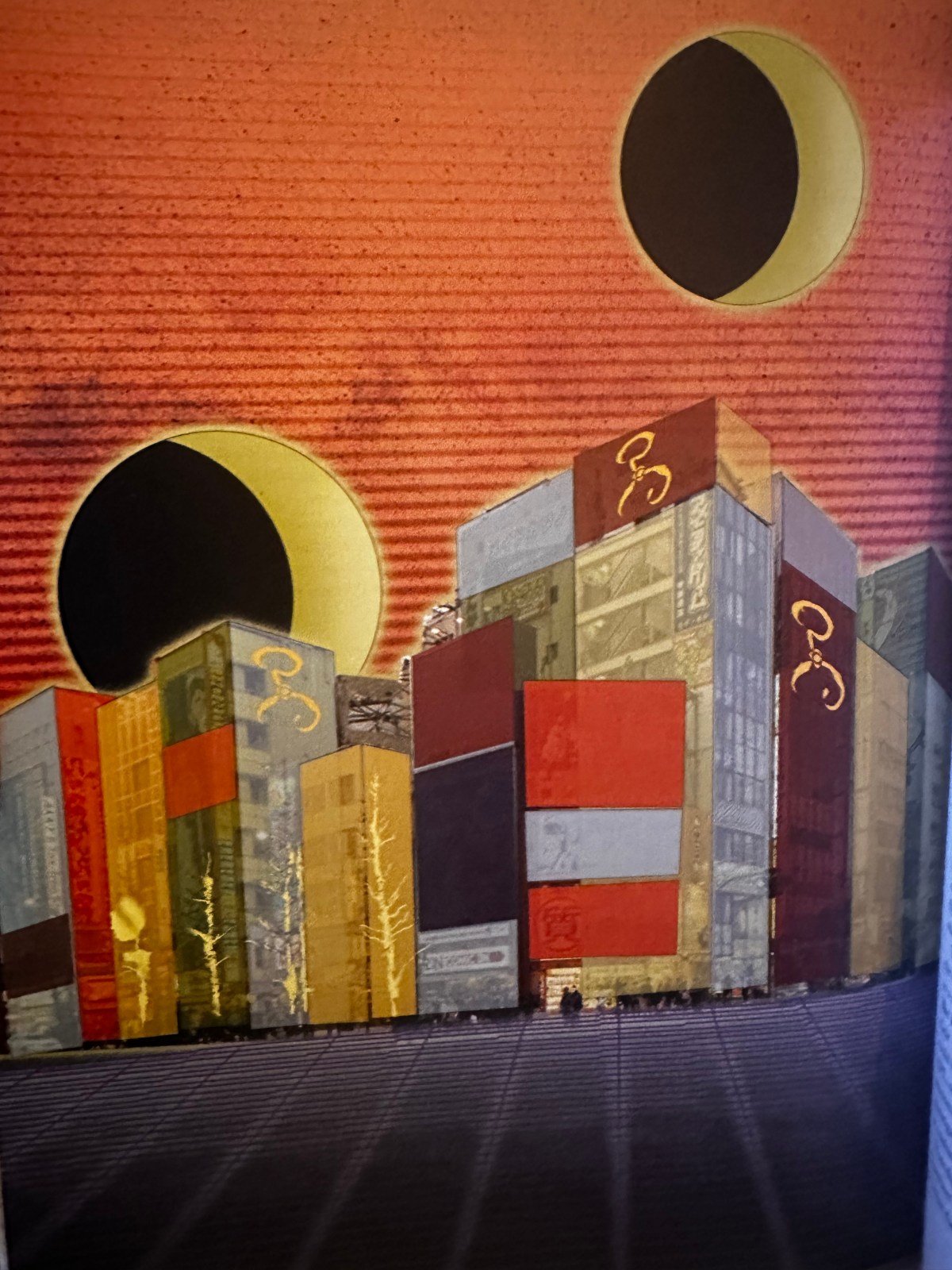
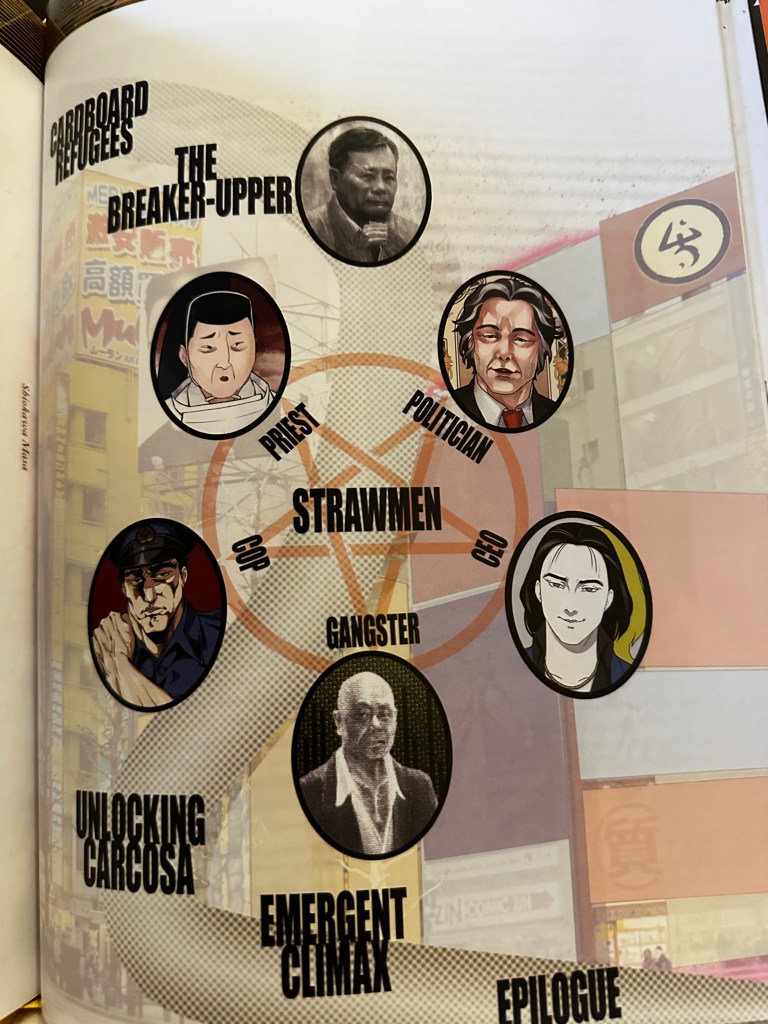
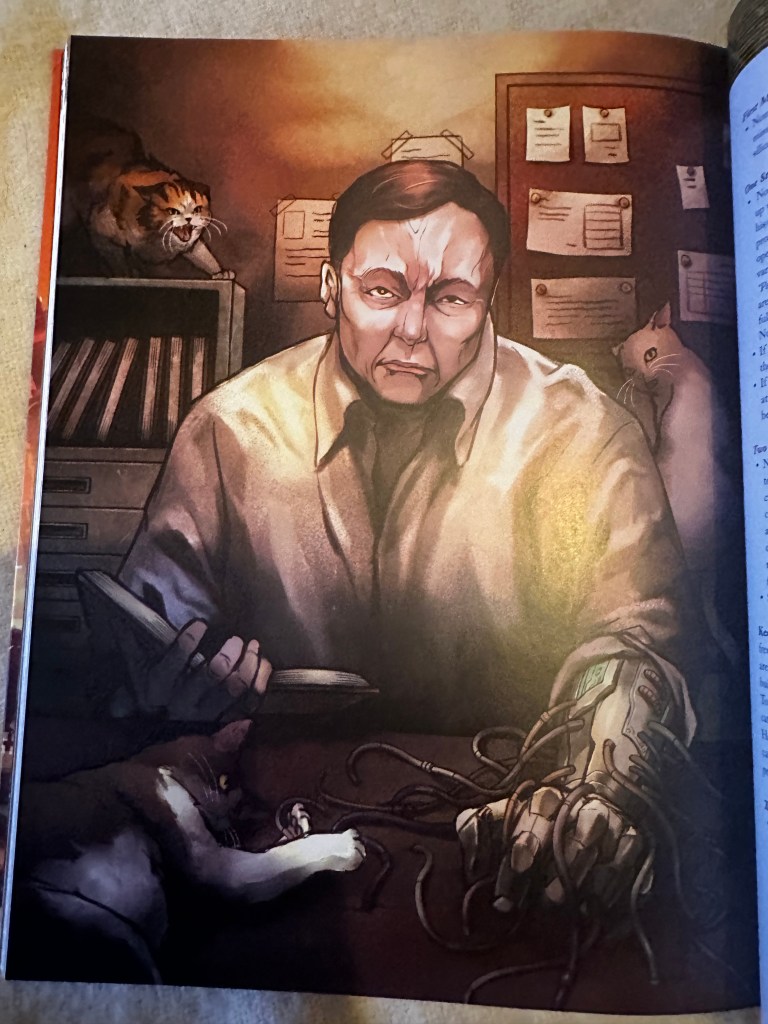
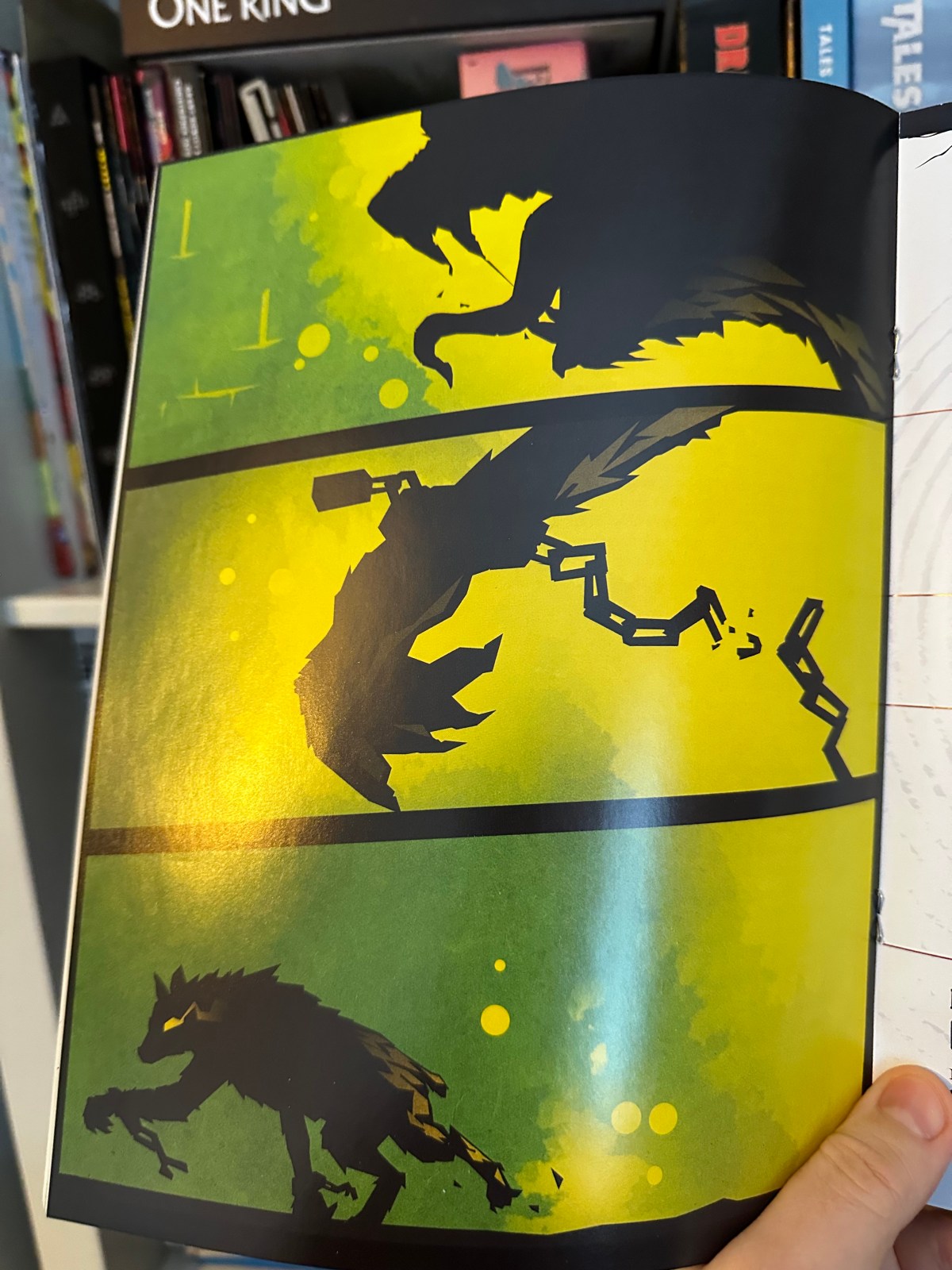
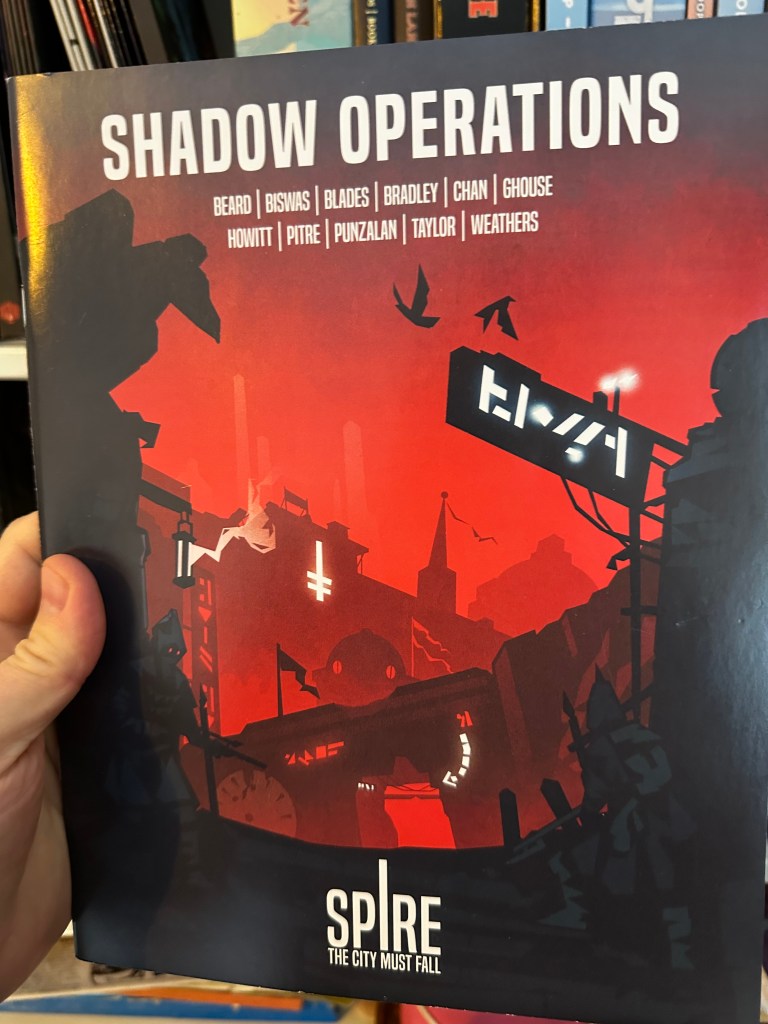
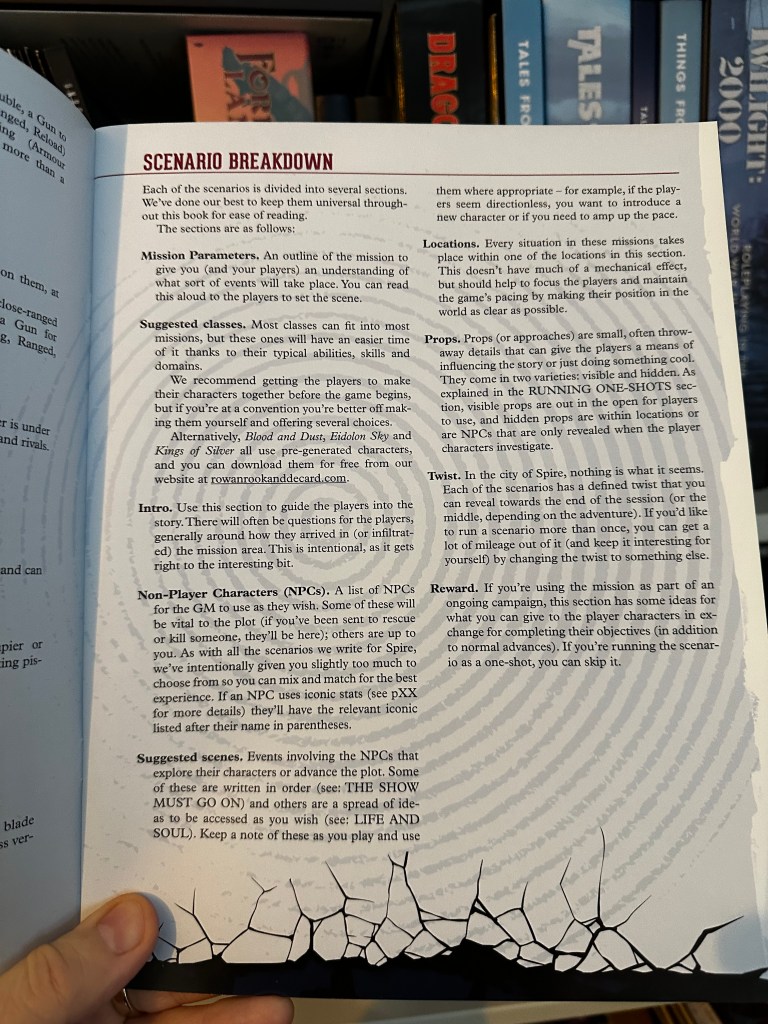
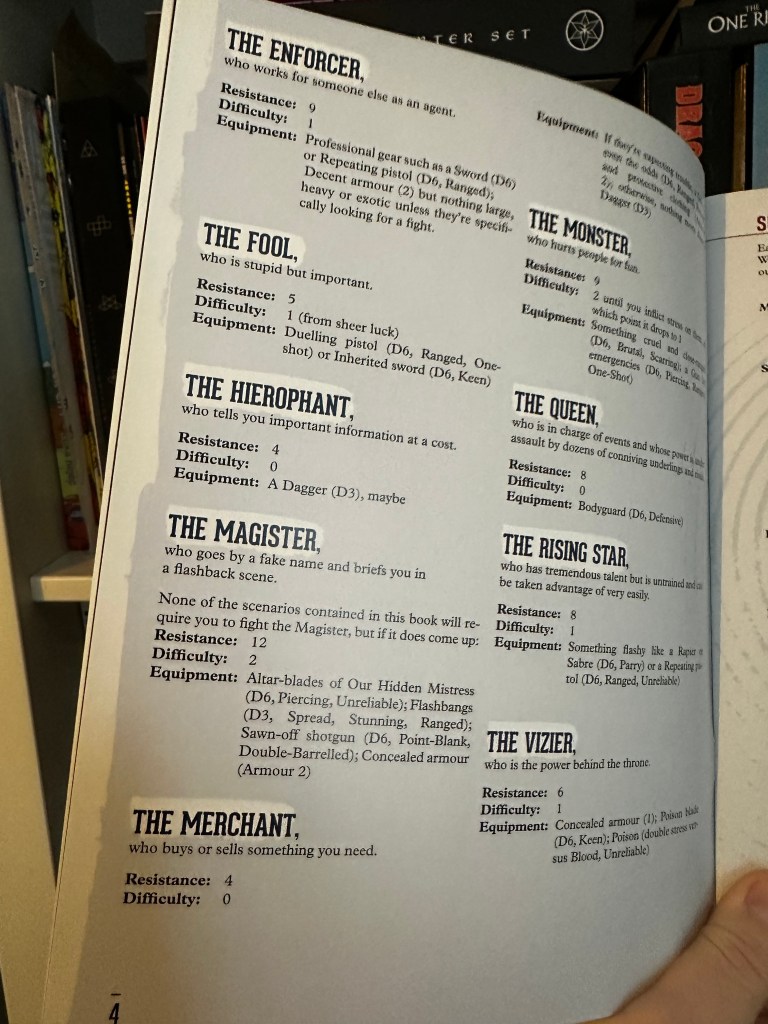
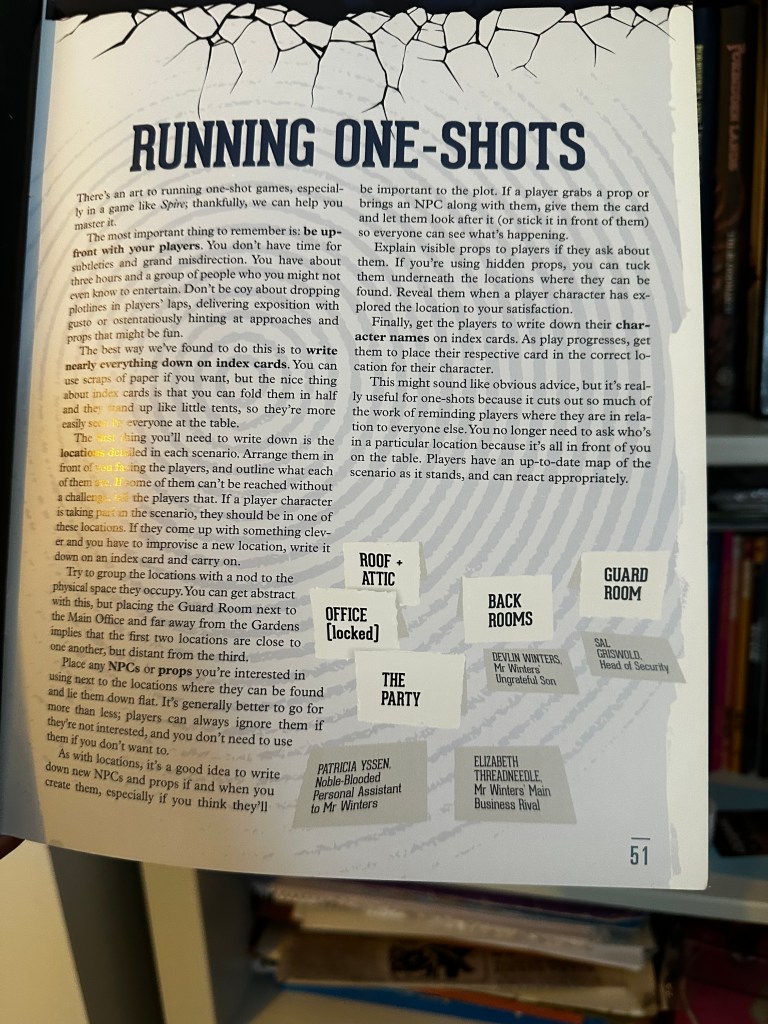
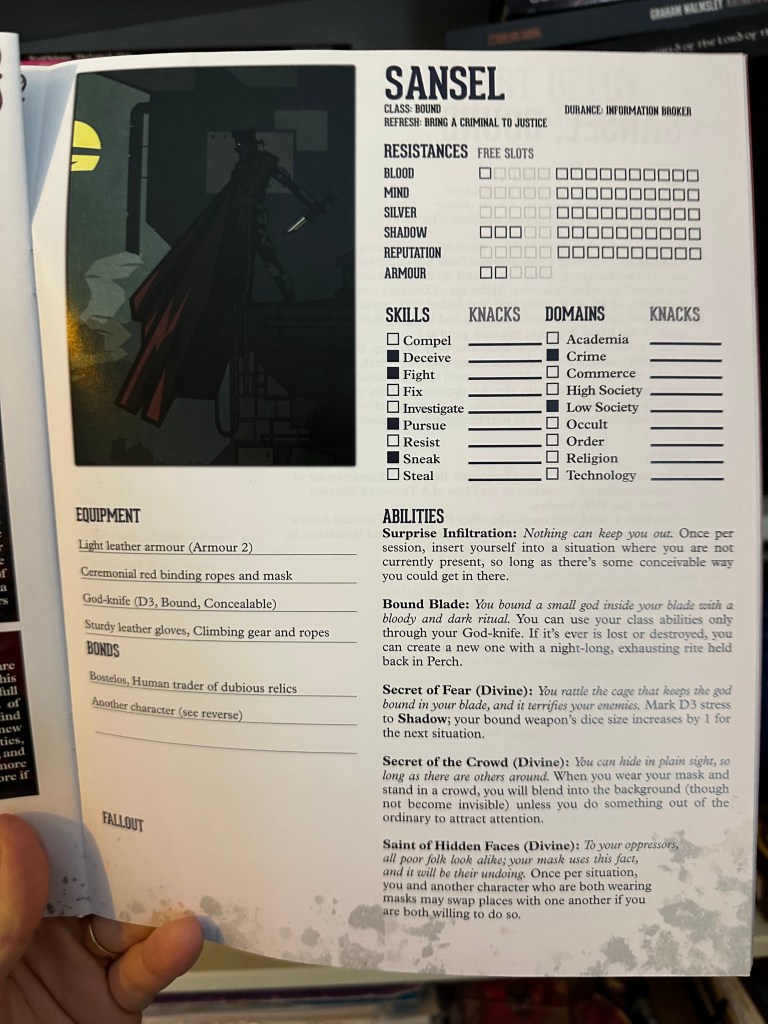
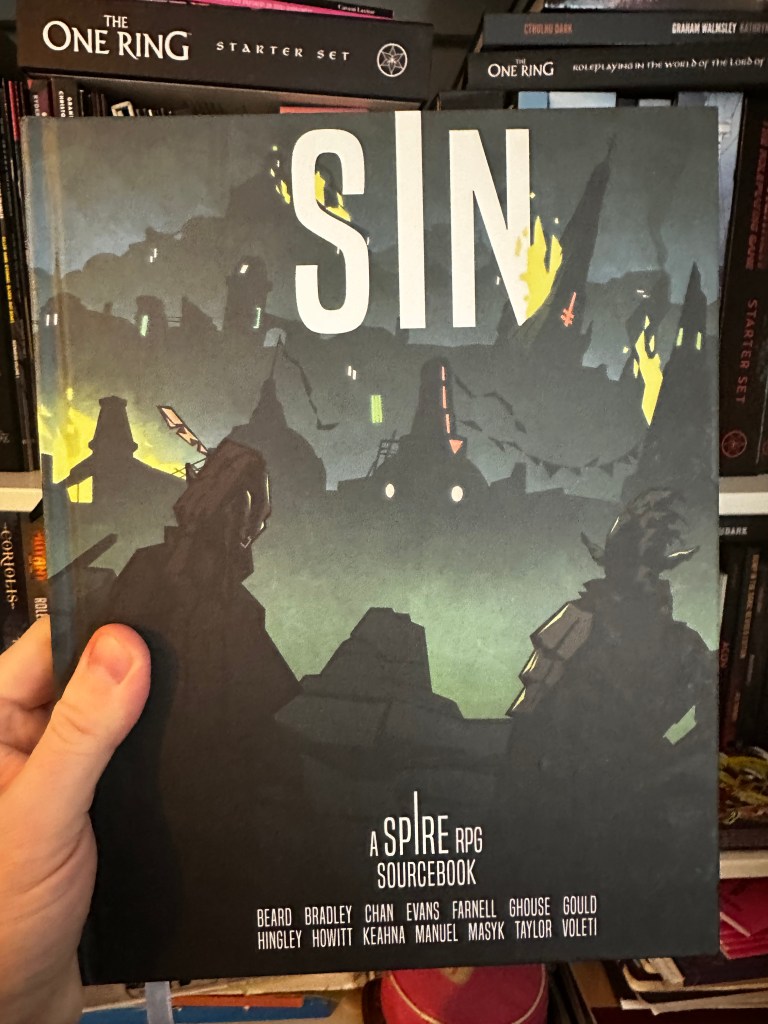
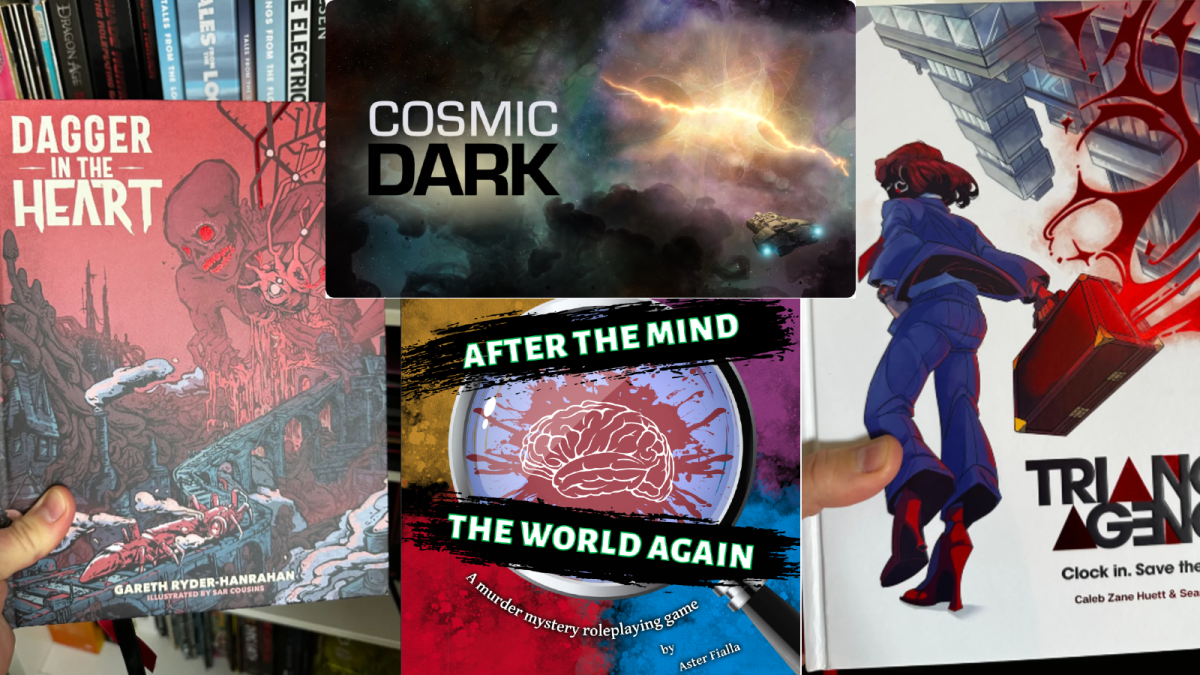


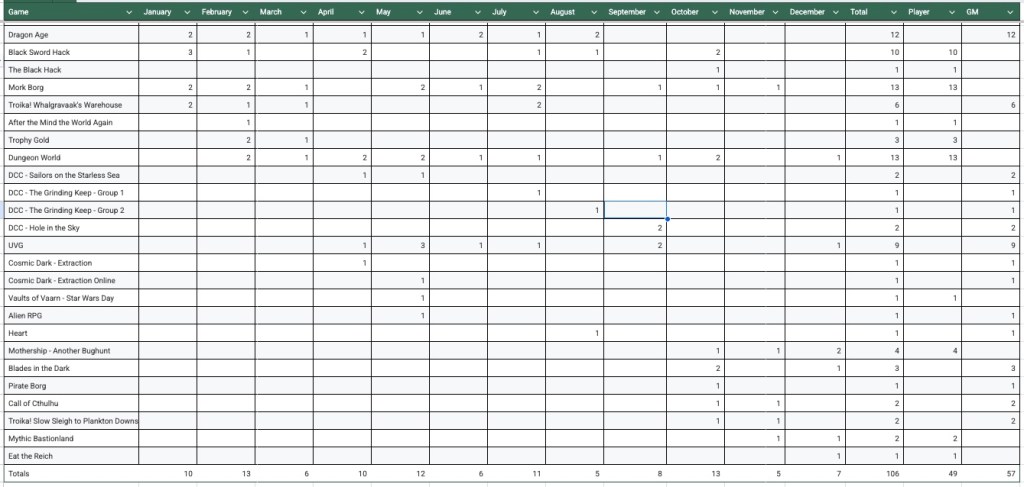


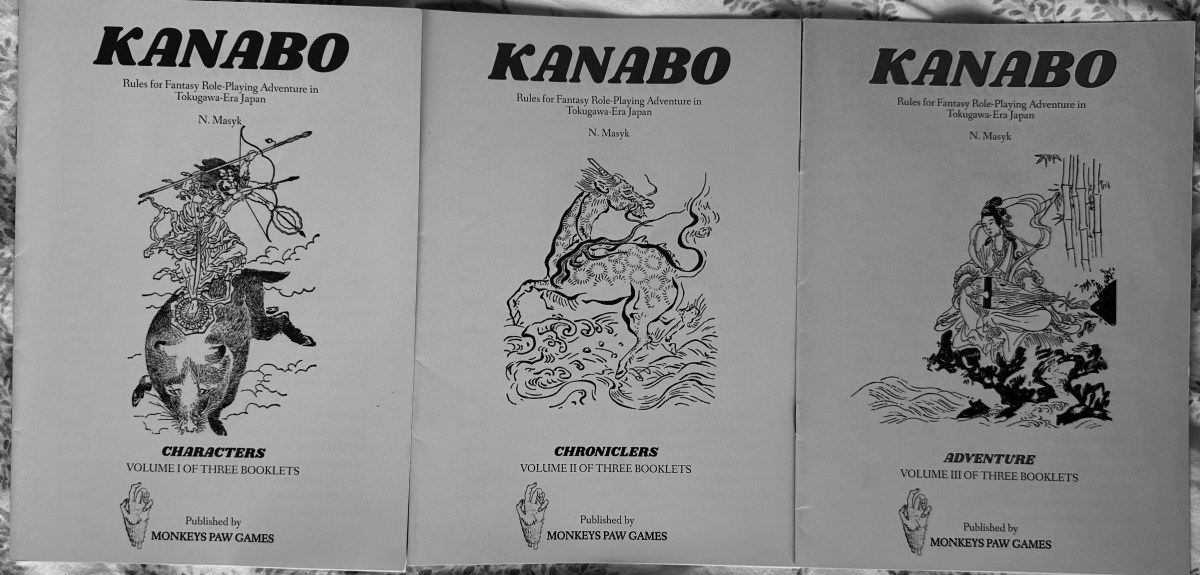


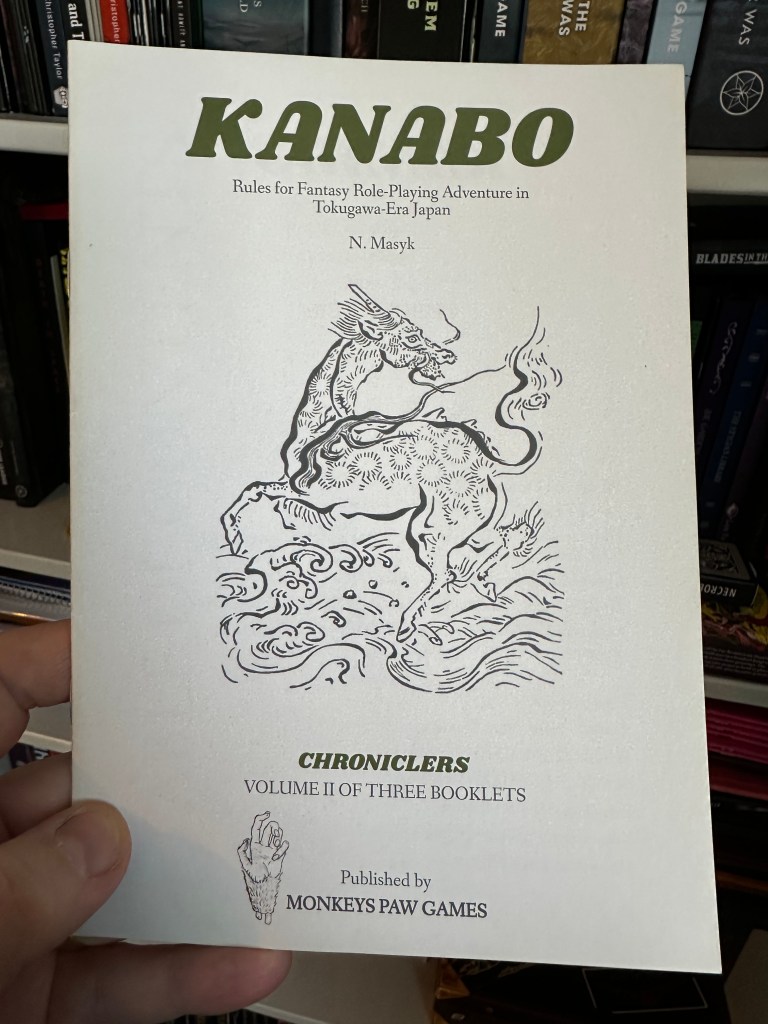
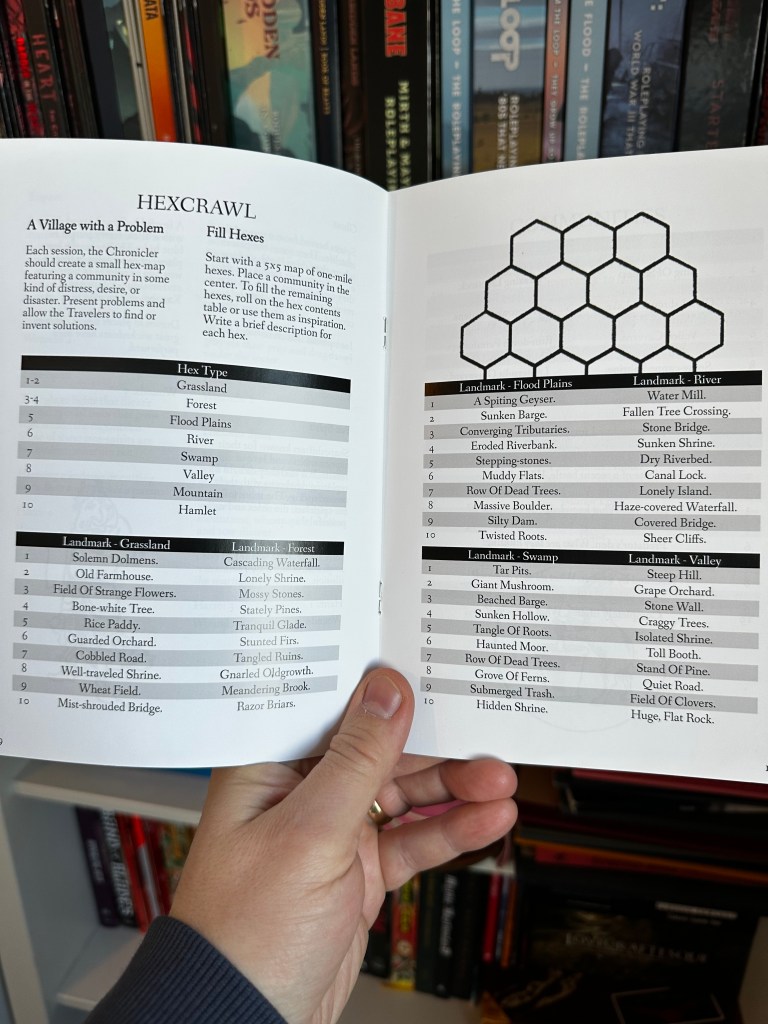
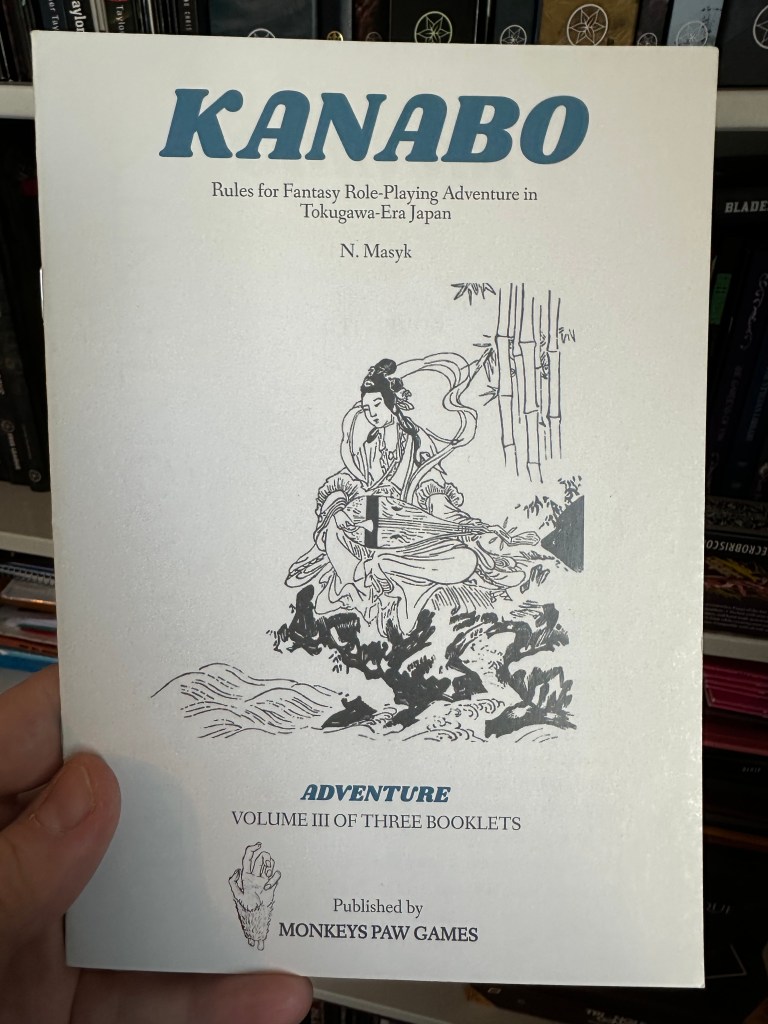

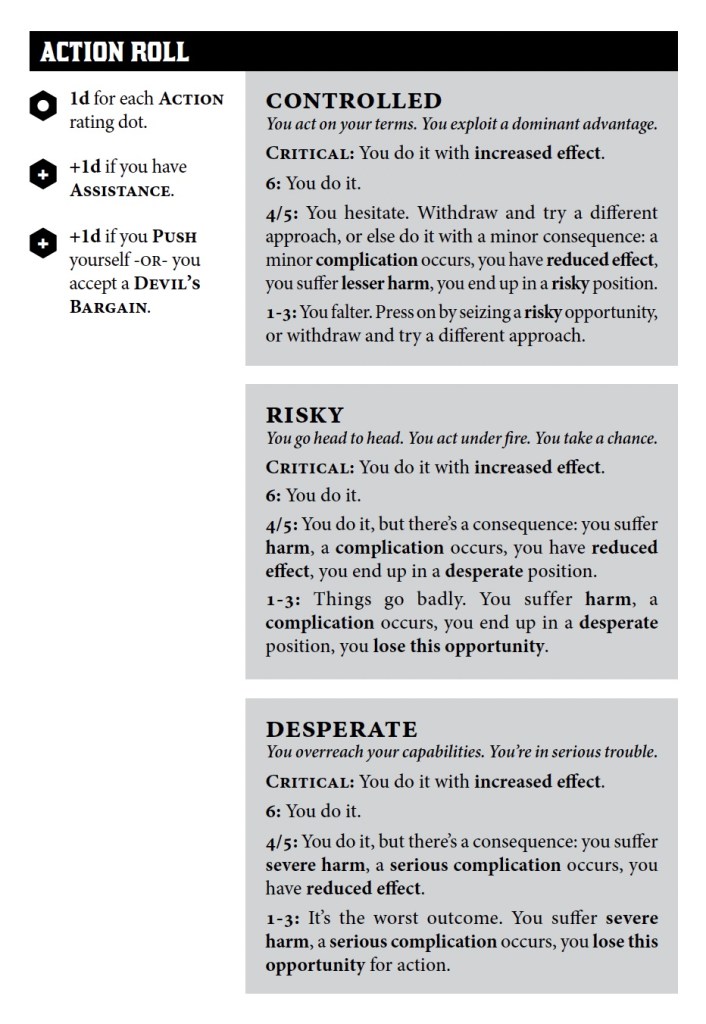


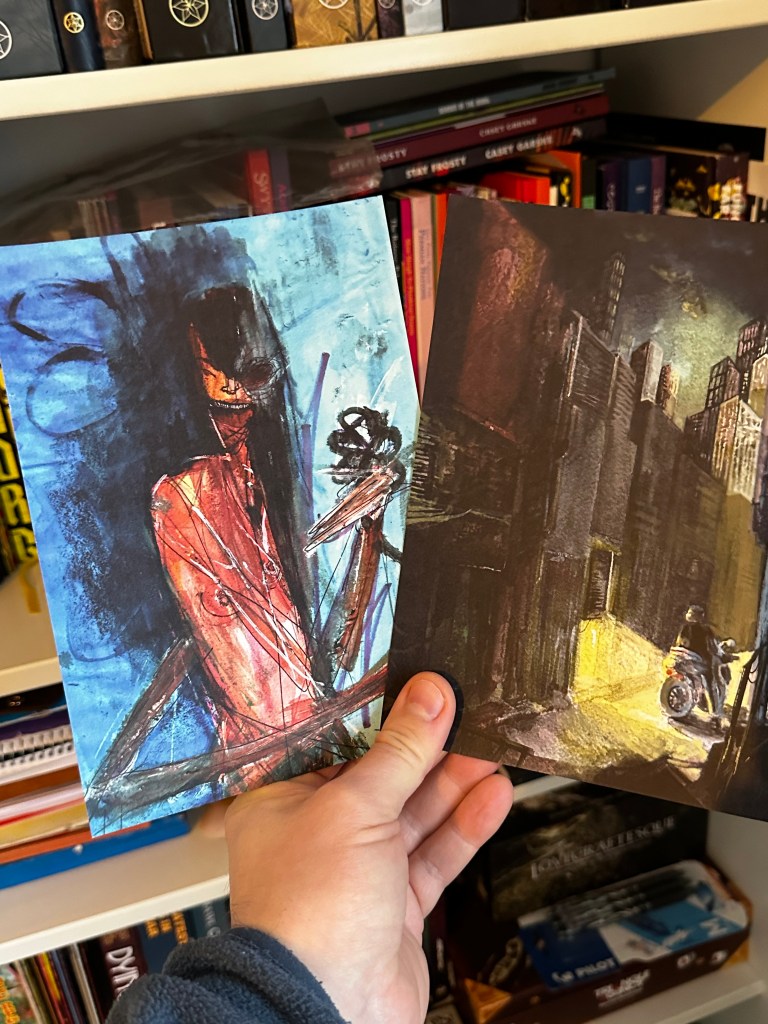


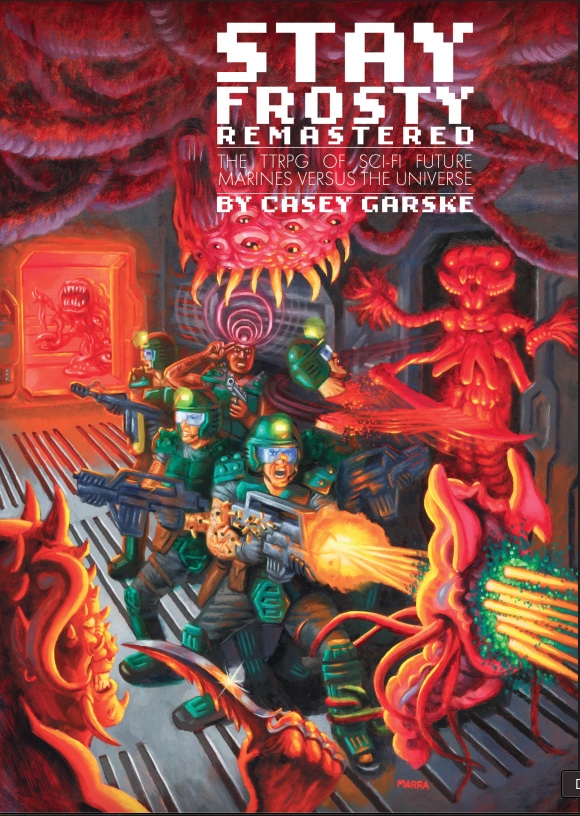


 The Dice Pool