Games I Wanted to Play this Year

Review

So, how have I done with that list from earlier in the year? At the time I wrote that, on the 28th July, I thought, Time-shmime! Who needs it?! Not me, that’s who. I’ll breeze through this entire list of ten frikkin’ games. But, of course, that was assuming a lot.

Assumptions

The first assumption that was happily crushed was that we had a smaller number of GMs willing to run sessions in our little community, Tables and Tales. Up until then, only three of us had run anything so I assumed that would continue. When a fourth and even fifth GM raised their hands to take the helm, I was delighted. That’s what I had always wanted in our space. From what I can see, if GMs were water, most RPG communities would be dying of thirst. Even in the much larger Open Hearth community, you tend to see the same dozen or so members announcing new games all the time, despite there being a membership in the hundreds. Given the size of Tables and Tales, five active GMs represents a pretty large percentage of our total player-base. On top of that we have had a couple of board game nights too. The long awaited and pretty fun Darkest Dungeon board game is, honestly, very close to the video game (actually, I’m told by friend of the blog, Media Goblin it’s closer to Darkest Dungeon 2 in rules) but also pretty close to an RPG so we gave it a go.

Assumption number 2: I have a pretty stable schedule, which meant that I could run games almost every night of the week if I had the wherewithal. And there were weeks there when I was playing, either as GM or player, in four or five sessions. Turns out that was not sustainable. For one thing, obviously, I started writing this blog, dear reader. Now, don’t get me wrong, I love doing this and it’s not like it takes that long, but if I want to blog, I need to do it in the evening (even though I am typing this on the train to work right now because its a busy week for me and my evenings are taken up with pre-Christmas socialising.) Between that and various other work and family commitments that came up, it was simply impossible to maintain that sort of schedule.

Reality

Even taking these points into account, I managed to play a lot of games in the last few months, just mostly not the ones I expected to. So, let’s have another look at that list:

GM

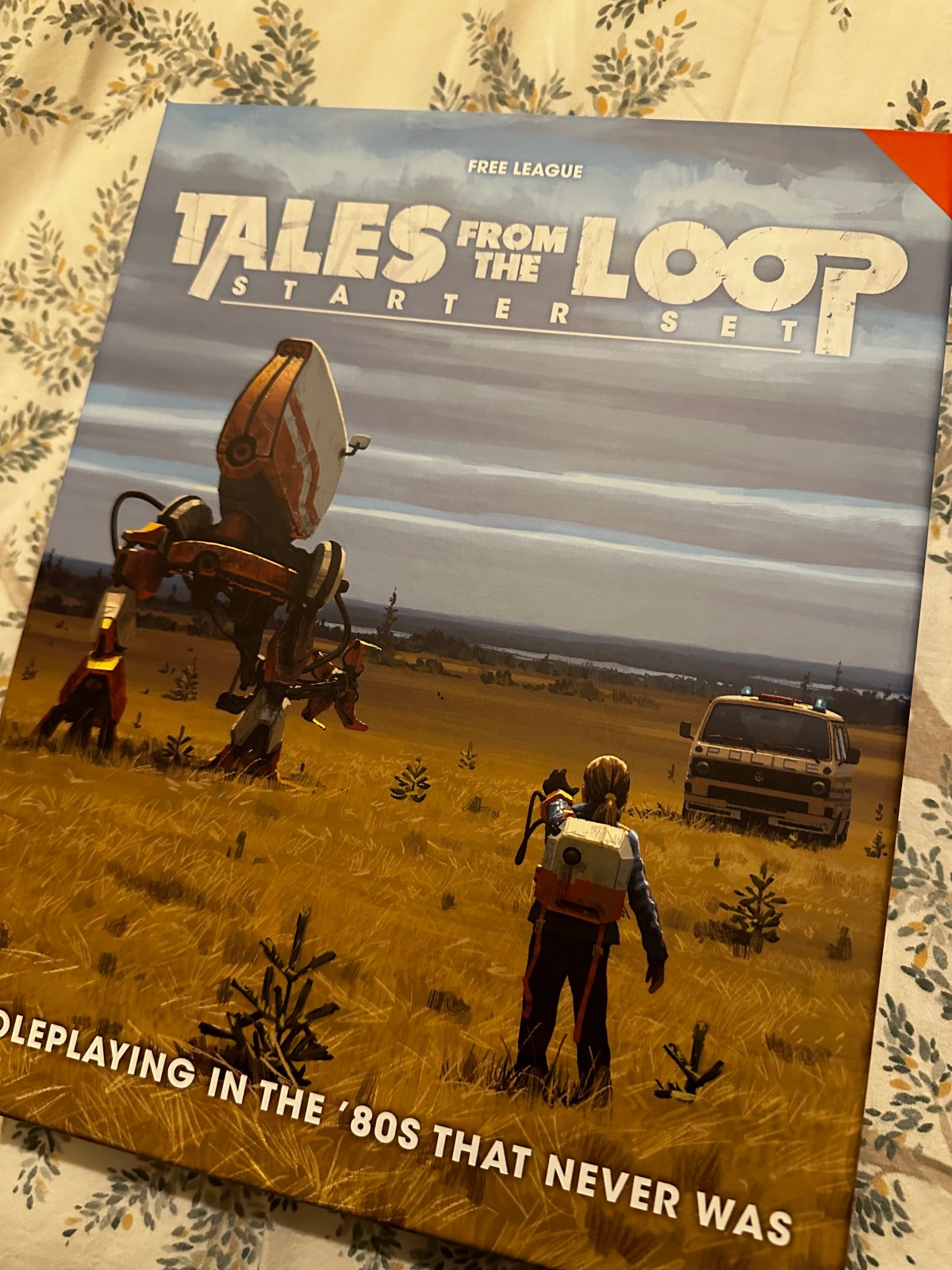
  • Tales from the Loop – Mascots and Murder – Short Campaign – Nope, didn’t happen. This one is still simmering away on that back-burner, ready for promotion to the front of the stove-top any time now. It had to be shelved to make way for other games and other GMs. Like I said earlier, I was perfectly happy to do it.
  • Dungeon Crawl Classics – individual modules – Haven’t managed to get any of these to the table yet, I’m afraid. But, I have a plan for this one. I have had to re-arrange my schedule a bit to allow it. Our local game shop, Replay, has been undergoing a big refurbishment in the last few months. Once it’s done, they will expand their number of gaming tables a lot and I am hoping to get in there on a Wednesday night to run some DCC Level 0 funnels. My preference would be to get some newbies to sign up for these sessions and hopefully gain some new members for Tables and Tales in the process. The new year will be the perfect time for this, I think.
  • More Troika! – one-shots – Achievement unlocked! Although, technically, it was more like two sessions of the same game, rather than multiple one-shots. I did a blogpost on it! We went to Whalgravaak’s Warehouse, one of the Location based adventures made for Troika. So far it has been very fun. It’s a dungeon crawl, there’s no doubt about that, but it’s a warehouse. And the rooms and creatures and general vibe are beautifully weird in the way only Troika can do it. So far, the PCs, a Monkey Monger, a Wizard Hunter and a Gremlin Catcher (there was also a Landsknecht who has since moved to Spain) have murdered the Cacogen they were sent there to murder, made friends with a thin mutant, captured entire detachments of microscopic soldiers in gremlin catching jars, discovered a desert other-world on top of the warehouse and, um, set fire to a load of old rope. Brilliant craic altogether.
  • Death Match Island – one-shot – You know what, I just completed a rewatch (maybe not “rewatch” since I never watched the entire thing in the first place) of Lost, the whole thing. All six seasons. All 5000 episodes. I think I was in mourning for the lost Death Match Island one-shot that should have been. This one was a scheduling issue. Those of you out there who play RPGs (and if you don’t and you’re here, welcome! You must be confused…) will be aware of the difficulties one often encounters in getting four or five adults together in the same room at the same time. Honestly, I am surprised this problem doesn’t come up more often in Tables and Tales. Anyway, having just finished that Lost marathon, I am 1000% ready to play this game. It’s not quite the same and it would definitely not run for 678 sessions like Lost would if it were an RPG but it has the same heart and the same mystery box feel to it. And I want that. That’s what I want.
  • The Wildsea – campaign – Just go read my blogpost on My First Dungeon’s campaign of the Wildsea. I desperately want to play this game. Honestly, whether I got to be a player or a Firefly, I would be excited. But, really? I’m not sure when I was going to fit this one in this year. Another campaign? Dunno what I was thinking.
  • DIE RPG – one-shot – I finished listening to the My First Dungeon Wildsea campaign and just started listening to the DIE one. They have a great episode that is mainly Kieron Gillon being effusive for an hour about his, admittedly very cool, game and I enjoyed it. But then I got into the Session Zero episode and I immediately wanted to play it. I want to run this for my friends and have them play real-world people with real-world problems working it all out it in a fucked-up fantasy world of their own creation as characters of their own creation. I really want it. Maybe next year.

Player

  • Old School Essentials – campaign I think – So this one has not happened yet. I think it is, at least partly, due to the fact that Isaac, of Lost Path Publishing has been running other shit like crazy in the last few months instead. I hope it wasn’t my OSE character creation post that put him off running the game (I’m pretty sure it wasn’t. I’d really be flattering myself to imagine I had that much influence on anyone.)
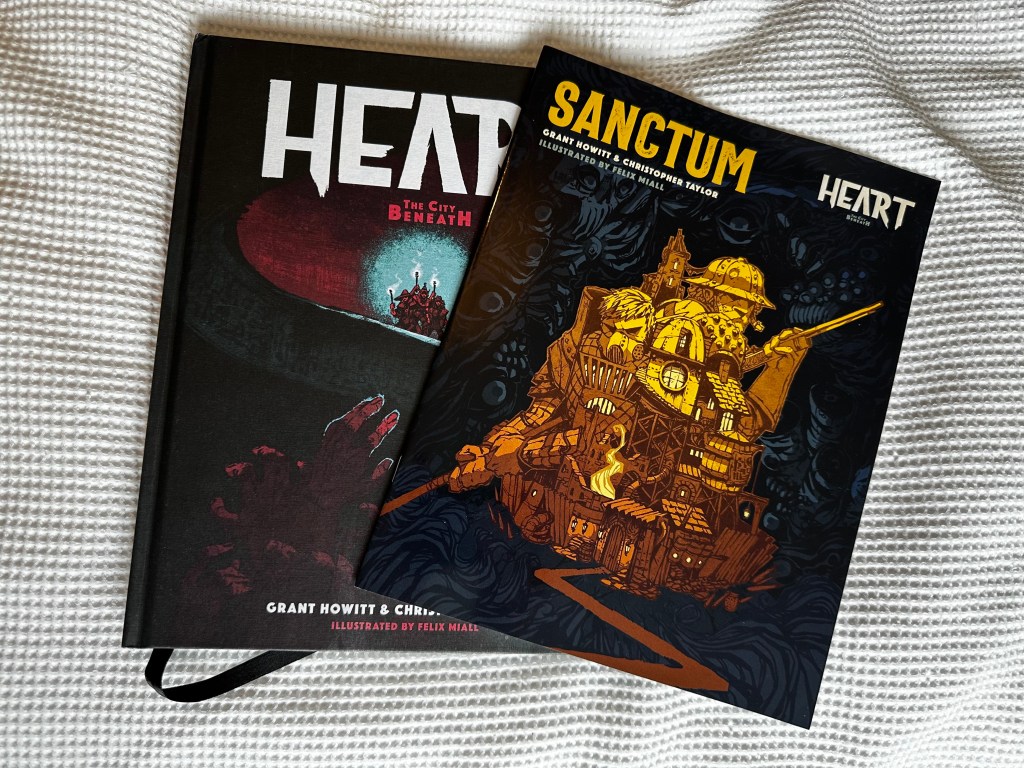
  • Heart: The City Beneath – Open Hearth campaign – Our GM, Mike, brought a whole bunch of us together (There were six PCs at the start) to hopefully save the landmark known as Nowhere from being consumed by the Heart. This was a real learning experience for me as it was only my second time as a player in the Resistance System (see the section on Magus, Pike and Drum below for my first experience.) I discovered that, if left to our own devices, players (for “players” read “Ronan” but not just “Ronan”) are apt to take the hand when there is no form of initiative to govern the order or frequency of actions in combat. It was a lesson learned early in the campaign due to one player’s proper and timely use of Stars and Wishes after the very first session. Saying that, I had a brilliant time playing my Incarnadine, Priest of the God of Debt, alongside a Heretic, a Cleaver, a Deep Apiarist, a Vermissian Knight and a Deadwalker. We often had opposing desires and drives, which made the role-play fun, and the GM came up with lots of weird and interesting situations, NPCs, enemies and locations for us. Forgotten-Frost-Remembered, my Aelfir Incarnadine, got to reach Tier 4 of the Heart and retire(!) at least in his head.
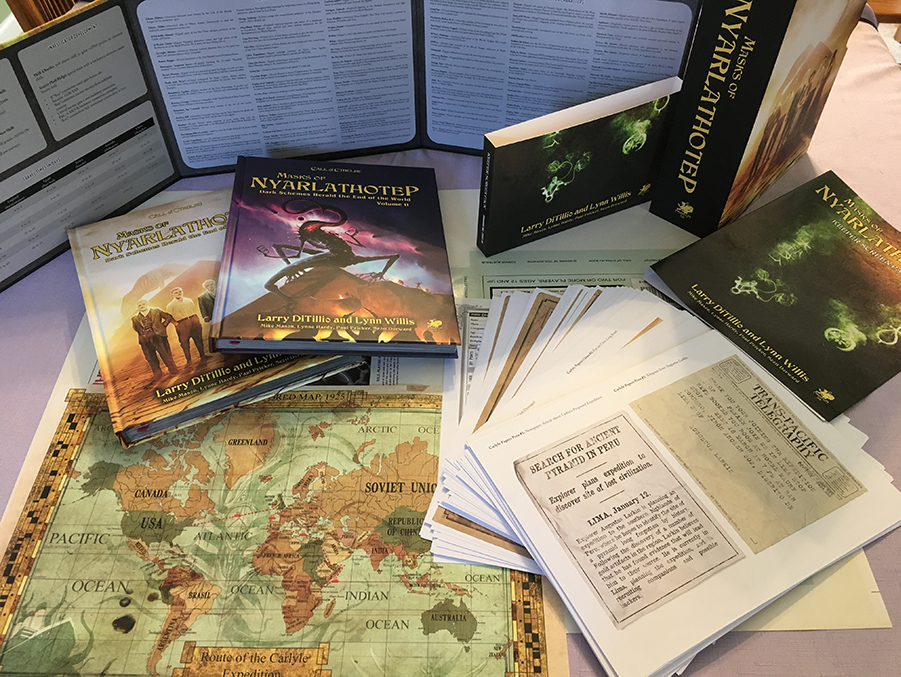
  • Call of CthulhuMasks of Nyarlathotep – campaign – Not really sure if this was anything other than wishful thinking when I wrote this, to be honest. This post explains that it was always going to be a long shot to get this campaign started again. But someday, I would love to get Grant Mitchell back on the trail of the mystery in this thoroughly classic campaign.
  • Magus, Pike and Drum – Playtest – This is Isaac again. He has a great basis for a Resistance System game set in the English Civil War that never was, and this is it. There were four of us gathered around the table for this playtest at the end of the summer. I genuinely had so much fun with it. Gráinne was my character. She was an Irish noble and she had some very fun abilities (some of them were a bit too fun with a few too restrictions, it was decided, as a result of this playtest.) What was important in the game is that we solved the mystery in very short order, after scaring the shit out of the mayor and not blowing up the town. But what’s really important is that we provided Isaac a lot of valuable feedback to feed back into his new game. Can’t wait to play this one again, hopefully in the near future. I hope to write a lot more about this game as it develops.

Conclusions

So there you go. Three out of ten. Not great. But! I experienced so many other games instead of the ones I didn’t get to in that post! And I got something out of all of them. I’ll tell you about them in the next post (or the one after if I don’t have time to write the rest of the week and just post some more old fiction on Sunday instead.)
The Heart of the Matter

Not entirely seat of your pants

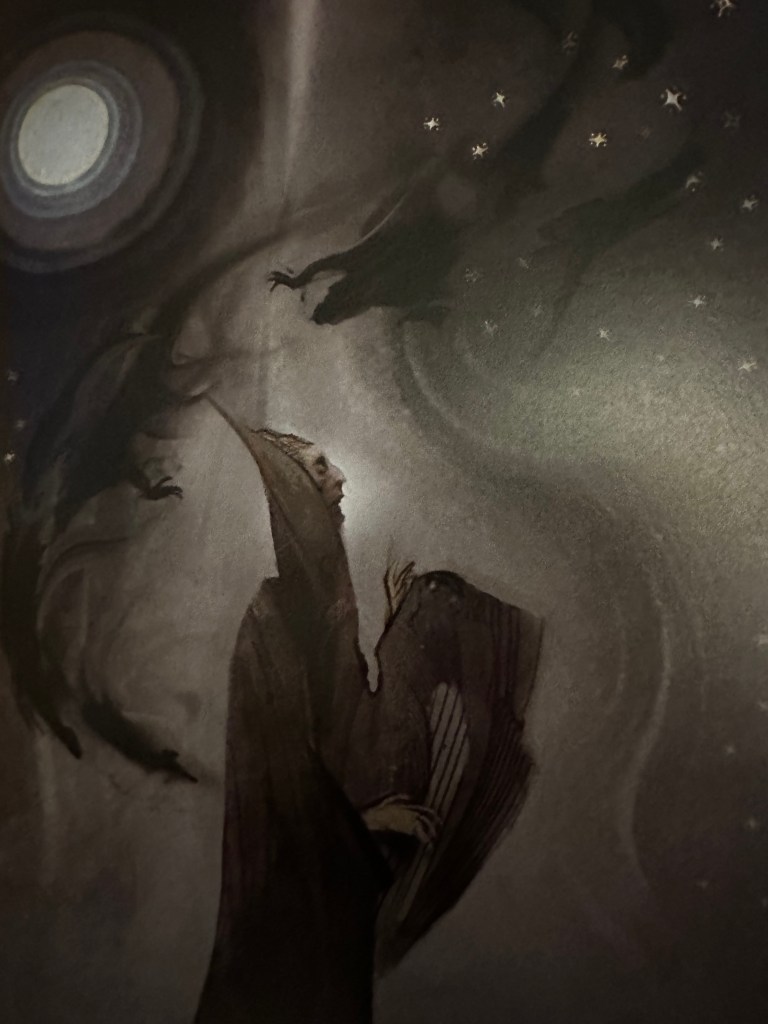
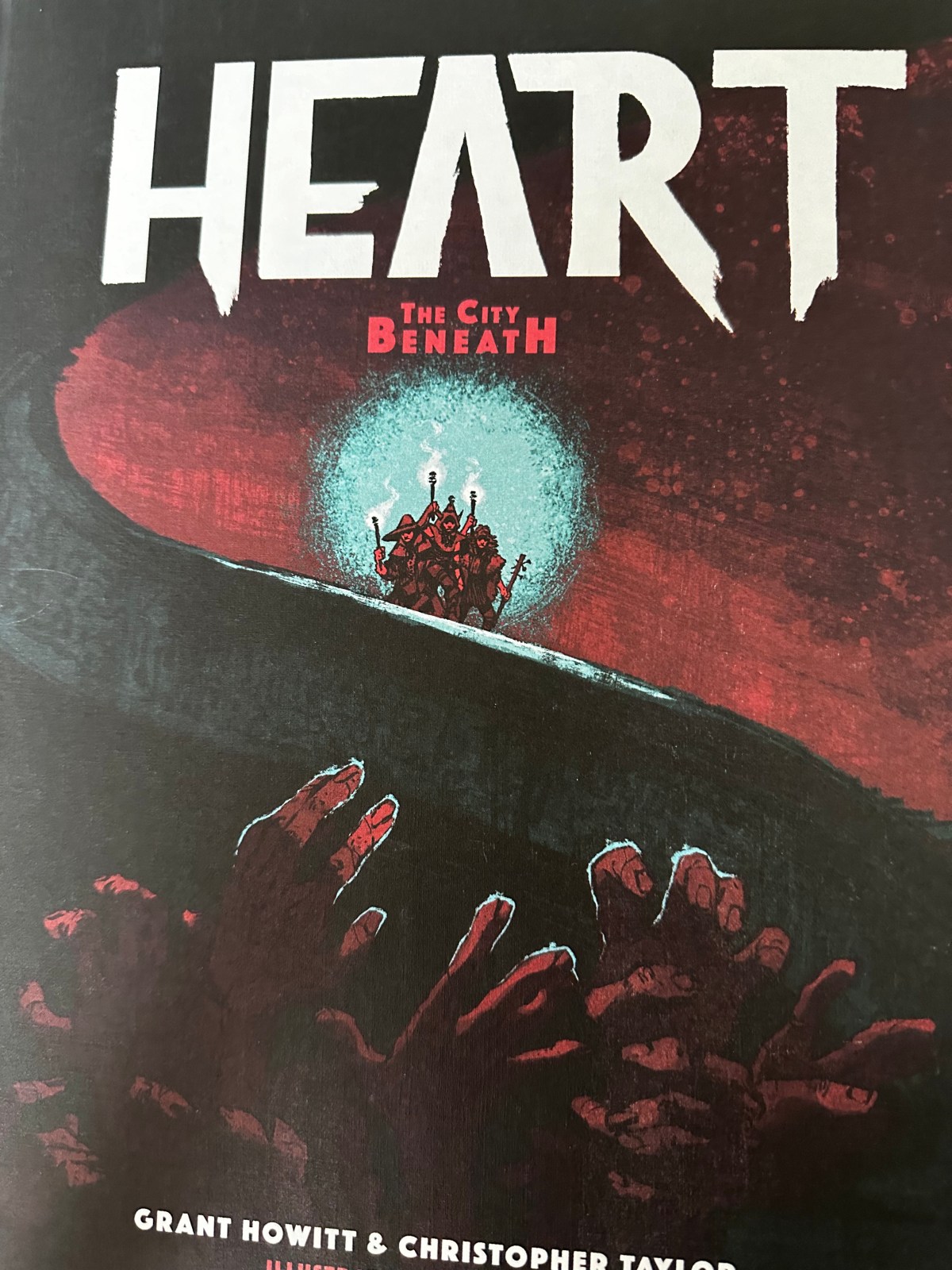
A portion of the inside cover of my copy of Heart: The City Beneath from Rowan Rook and Decard. Illustrations by Felix Miall

The philosophy for some Heart GMs seems to be, don’t you dare plan your Heart campaign or sessions. Like, just sit down with your players, make some weirdos to do some delves and then decide on a starting place. That might be in media res, as the PCs meet one another while hopelessly lost in Labyrinth or it might be at home in their shabby-chic apartment in Derelictus. From there you might just ask them what they want to do next and, when they tell you, just try to keep up with them! This is a valid way to play the game, I think, as long as you have either an exhaustive knowledge of the landmarks, adversaries, plot hooks and people of the Heart, or an effective and suitably weird set of random tables. If you approach it from this direction, the players are going to have the most input but the GM is going to have to improv a lot and do a great deal of work on the fly. It also presupposes a certain degree of setting knowledge on the players’ part, I think. This can be stressful and a lot to expect of everyone but I am pretty sure this is the preferred method of a lot of Heart GMs.

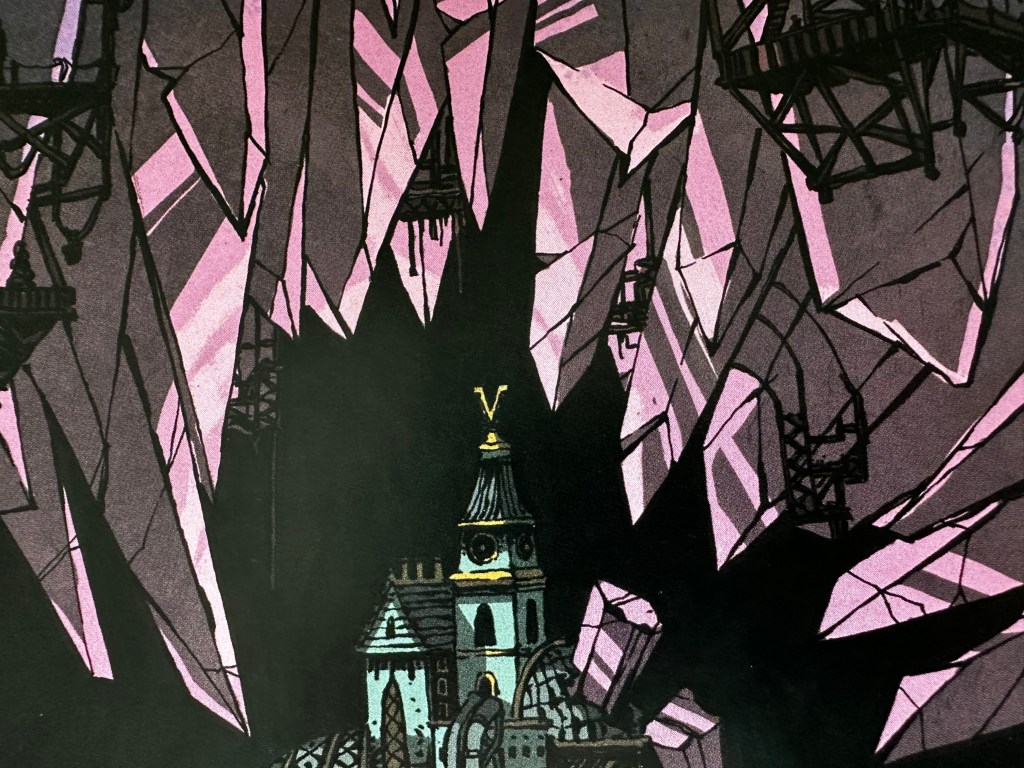
A portion of an illustration of Derelictus, the City Between by Felix Miall. Heart: The City Beneath, page 136.

Another option, of course, is to plan everything, start, middle and end. This is totally do-able. The book provides plenty of fodder to feed your hungry campaign. It describes dozens of landmarks and provides you with lots of plot hooks to get the PCs interested in pursuing the thing you want them to. So you can have them all meet in a Derelictus tavern where they overhear something about a plot by some Gryndel to pursue a valuable quarry into the Heart, plan the first delve to take them after the Gryndels only to find the quarry in Grip Station, near death but with a dire warning for the whole city that an army of Angels rises from below and a request for the delvers to spread the news to the Temple of the Moon Beneath, plan out the next delve to there, etc. etc. This sounds very much like a traditional adventure module for the likes of D&D. And that is all well and good. It allows a very strict control on the part of the GM and makes for a plot the PCs can uncover. But it will certainly lead to some railroading and could well make for potential dissatisfaction for the players and the PCs as they feel they have taken a back seat to the narrative planned out so perfectly by the GM. This method will ignore the great strength of Heart, it’s freeform potential, the loose structure inherent in the Beats system and the story being told by the delvers’ choices and their rolls and the Fallout that comes out of them.

A portion of an illustration of delvers planning a delve by Felix Miall. From Heart: The City Beneath, page 103.

So, how about somewhere in between? It seems sensible to meet in the middle. You make your weirdos, then you all discuss what sort of game you would like for them, GM and players together. Or you could take those two steps the other way around. Either way, you have an idea of the sort of story you all want to tell together and you all take responsibility for making that happen. This is with the understanding that what you think you want at the start might very well change after one or two or five sessions. That’s when you realise that, while you thought you wanted to help out that Haven you came across at the end of your first delve, it turned out what you actually wanted all along was to physically explode in such a way as to take out as much of the surrounding entities as possible so you could all travel to the afterlife together, an offering to your Goddess. And in pursuit of these elastic goals, the GM comes up with a loose web of places, people and objects that the PCs might have a chance to interact with. The GM will probably do this, at most, in between each session, with several ideas of where the story might go in the two or three sessions afterwards, but with no expectations.

A portion of an illustration by Felix Miall, of Grip Station, a Tier 1 Landmark. From Heart: The City Beneath, page 138.

Here’s what Messrs Howitt and Taylor have to say about it under the section entitled, “Stop Planning” on page 109 of the Heart core book:

Flexibility and adaptiveness are the keys to success. When you prepare, think in terms of characters, broad concepts, motivations, snatches of ideas that you want to play with. The world doesn’t exist until you speak about it at the table. Sure, you might have thought about it – you might even have written it down in a notebook – but until the players interact with it, it’s in total flux. The players just turn up every week and make it up as they go along. Why can’t you?

The quantum campaign made up of Shrödinger’s delves. And this about sums up the type and degree of prep I have been doing before each Heart session more recently. It’s more fun for me to do it this way too. I get to be surprised by what the players do and I get to discover the Heart along with them a lot of the time.

From Haven to Terminus

Yeah, that’s the name of our Heart campaign. It’s coming to an end this week. I guess the name gives away quite a lot of my thinking behind it. I was finding it hard to let go of the traditional module style of prep at the start. Yep, I decided to make a bold statement about, not only where the campaign would start, but also where it would end up. Now, this wasn’t as bad as it sounded. I had a very vague idea of a Campaign Frame for the game, that’s all. I used one of the plot hooks described in the Derelictus section of the Heart core book. Verrex, a retro-technologist with his tumble-down workshop situated on one of the platforms of Haven Station wanted the delvers to track down his robotic double, V01. The construct had expressed an interest in visiting all the Vermissian stations in the City Beneath, so he suggested the PCs use that as a guide to finding him. That was it. Everything in between was entirely up in the air, but it gave them a loose path and a potential final goal.

A portion of the illustration of a Gnoll Incursion Team by Felix Miall. From Heart: The City Beneath, page 188.

That was, of course, until I decided to employ the adventure presented in the Heart Quickstart guide, Drowned. Now, I am not going to spoil any of this adventure here but what I will say is that it lays out a very particular path ahead of the PCs, with the havens they will reach at the end of each of the numbered delves, the NPCs that will push them on from one place to the next and a big old final set piece. Now, since all I had before making this decision was a loose Campaign Frame, a little concreteness was actually welcome. It allowed me to see how to do things like come up with my own delves, use Haven NPCs to best advantage to help drive narrative and try to attach the PCs to someone or something only for them to find a way to betray or deceive them. But, after five or six sessions of following the adventure, I became aware of how the campaign had ended up on rails. I wasn’t providing them with options, I was forcing them down the path laid out by Drowned. I have found it hard to get out of this frame of mind since then, although I have tried to follow the advice from the book that I quoted above.

The delvers just reached Terminus, having taken a near-lethal shortcut through The Source, one of the Eight Heavens. The Junk Mage is banking everything on a meeting with a gnoll in Terminus who can teach them how to use the Nexus Device there to enact their will upon the entire city, The Vermissian Knight has pumped his mystical train armour full of soul power, the better to resurrect the entire inter-dimensional subway network, and the Deadwalker has just had his Zenith wish to combine his essence with that of the Heart itself thwarted by the Vermissian Knight who says he will not stand for his “human servants” abandoning him until his work is done (he’s an aelfir obvs.)

How will it end up? We’ll find out soon. But whatever happens, I am now pretty sure that these amazing players are going to surprise me yet again.

Motivation part 2

Motivating characters

So, in the last post, I went on at some length about how you might be able to motivate players in your game, focusing mainly on what you do between sessions to get them excited to come back and do it all again. There were also times, I decided, when you shouldn’t overdo it, when you should just let people be.

When you do get them to the table, though, your work ain’t over. Obviously, I’m talking to the GMs out there, but this goes for players too. Because now it’s time to figure out why your character is out there smashing skulls or investigating murders or trying not to be sacrificed by some bloodthirsty, cthonic cult or whatever their weird job is.

Seems like an easy answer, doesn’t it? But it’s not. Your character’s motivation is a strange, ephemeral thing that you need to keep in your mind at almost all times to figure out what they are going to do in any given situation. You can keep your alignment, in my humble opinion. Alignment is such an archaic and ill-defined concept, it barely even begins to answer any of the questions raised by the “character” aspect of the sheet. It can be manipulated to mean almost anything. So it doesn’t really help to direct you when you are trying to decide whether you should back the werewolves or the elves (Dragon Age: Origins fans, yo!)

New characters

Games have all sorts of ways to help you figure out what your character’s motivation is going to be. At the creation stage you are picking things like backgrounds, bonds, ideals and flaws if you’re playing 5e, your drive, problem and pride if you’re playing Tales from the Loop, your Calling if you’re playing Heart. The game is usually trying to help you out. Sometimes it doesn’t have to do any more than describe your race and class, in fact. That’s often enough to set a player’s imagination alight. Before you know it, your dwarven barbarian has figured out that her driving force is a desire to put as much space between herself and the darkspawn riddled Deep Roads (I’ve been replaying Dragon Age: Origins recently, ok?) as she can, and to have fun doing it. Of course this motivation is likely to change many times during play, but if Bianca remembers that she never wants to set foot in the Deep Roads again from that moment on, all of her decisions are likely to be coloured by it, especially when she finally faces her fears and delves back down to Orzammar and the lost Thaigs to help out her party-mates in their quest to track down the origin of the darkspawn outbreak in the Korcari Wilds.

Here’s a question though. How much influence should the GM have on a player-character’s motivation. Well, like most things PC-related, I would say that there is a conversation to be had. This is often something I forget to do with my players at character creation to be honest. Especially in games where motivations are less well defined or less tied to the plot. In fact, I have received feedback in the past that I should be more willing to guide players in their choices of class in case they choose something inappropriate for the campaign, never mind motivations! But basically, what I’m trying to say is that you should always talk about it, especially if a player is interested in talking about it.

I messed this up recently and definitely reduced at least one player’s enjoyment of the first session of a new game as a result. Motivation is important! It colours everything so you should always be available to talk about what a character is doing this stuff for? Why would they want to? It’s not that they player is being awkward or a prima donna or making the game about them, they just want to feel a connection to the game through their character and they need a reason for that. Help them out, eh?

In gameplay

As I mentioned before, character motivations can change during the course of play. In fact, I would go so far as to say that if they don’t the game there is probably not much going on in it. Most sessions it is a good idea to make their most immediate motivation become “I don’t want to die!” At least once.

But this goes for long-term motivations as well. I think it is absolutely possible to retain your character’s initial motivation of “never wanting to go bak to the Deep Roads again,” while subverting that, undermining it, overcoming it. Maybe, once Bianca follows her companions back into the Deep Roads, she realises that, without here, they would have died down there, that actually, her Deep Roads survival skills are valuable and that she should help others by teaching them. I think GMs should be prepared for these shifts but players, equally, should be ready to make changes like this to their characters. Turn it on its head, fail forward if that’s what happens in the game. Push your character to do what is explicitly against their motivations sometimes and see what happens to them and the game as a result. Do the unexpected!

Heart

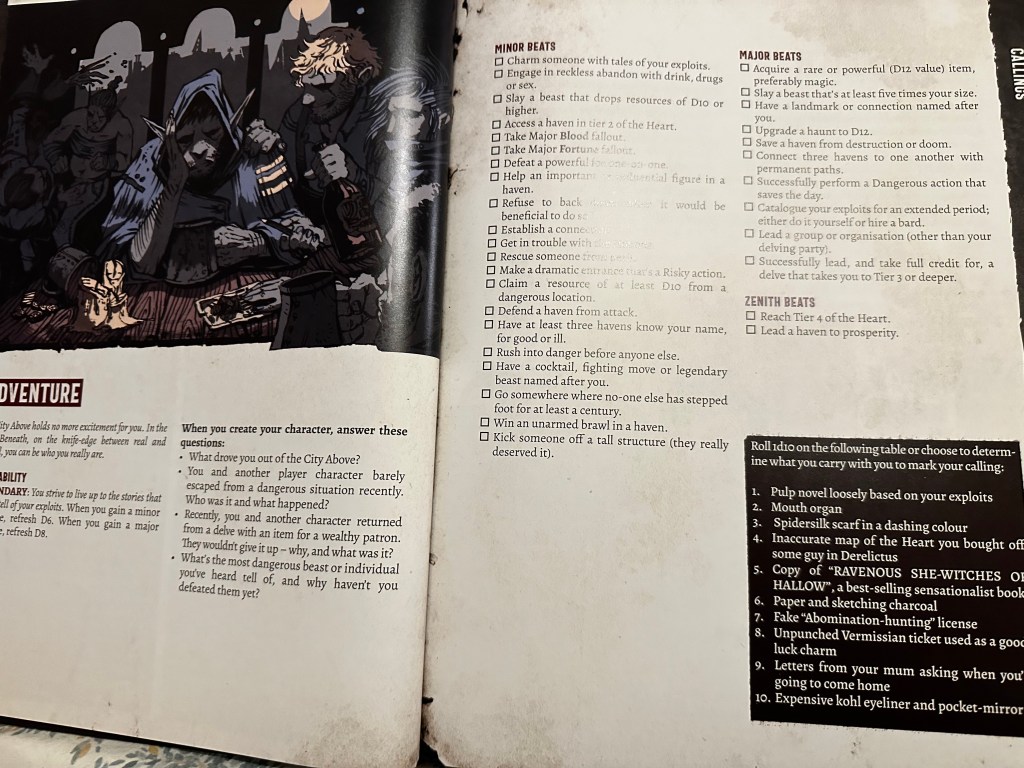
It always comes back to Heart these days it seems. Well, that’s because it has these great little systems built into it. The granddaddy of these systems is the Character Callings. You have a handful of them. Not too many to choose from: Adventure, Forced, Heartsong, Enlightenment and Penitent. They speak for themselves really, except maybe for Heartsong, which is the weird one that wants your weird character to follow the weird as deep as it will go into the weird subterranean other-world until you find some insight into the weirdness that’ll probably kill you or transform you beyond all recognition.

Essentially these are all the motivations your character might need in Heart. Their descriptions spell out the kind of thing in keeping with the theme of the Calling, that might have led you to delve into the red, wet Heaven. It also gives you a fun ability to reward you for choosing it, a few questions to answer to help you flesh out your character and focus you on the type of adventure/enlightenment/penitence etc you are espousing, and most usefully, both for the player and the GM, an absolute raft-load of beats, narrative or mechanical milestones you want your character to hit as your delves go on. The beat system is so useful for building a session and a story at the table together. It is particularly fun when one PC’s beat synergises with another PC’s completely separate beat or when the object of the beat comes up organically in play, without the GM being aware that it’s happening. It is motivation given mechanical and narrative form and I love it.

Seriously, go check out Heart if you haven’t already. It’s a good game. And it’s fun and gross.

That’s me for now. My motivation to write has ebbed and waned. It’s you time now. How do you like to motivate your players and characters?

Endings

It’s hard to say goodbye

It’s so exciting to start something new. There’s the anticipation for what’s to come, the tingling nervousness that transforms to delight in the beginning, the wonder at sights never before seen and actions never before taken. Beginnings are full of possibility and the feeling of freedom.

The end of something, though, can be just as exciting, but in a different way. Do you ever rush to the end of a novel when you’re about three quarters of the way through, eager to find out what happens? Maybe you’ve waited on tenterhooks for the final film in a long running series to be released, because you have spent so long with those characters and know their stories so well and you want the best ending possible for them.

That’s a lot to live up to, that pressure. And I think, in an RPG context, everyone at the table feels it to one extent or another. At least in the situation when you know the end of the game is coming. TPKs notwithstanding, achieving a narratively satisfying ending to a game, particularly a campaign that you have potentially been playing together for months or years, is hard. Of course it is. There is a pressure to tie up all those loose threads, make sure that big bad is confronted, achieve emotional closure for your characters and their arcs, maybe even leave a space for a sequel.

Not only that, but the real struggle is making it all the way to the end of a campaign! Sometimes your friends move away or have kids or there’s a global pandemic or whatever. Stuff happens. Understandable stuff, but stuff nonetheless. The thing is, of course, that just means the endings you do get are that much more precious.

How to part on good terms

One-shots

You’re there for a good time, not a long time. But that presents its own challenges to fitting in a great ending. If you have a suitably magnificent finale planned, how do you make sure you get your PCs to it in time?

Time

My answer here is easy; take a reading every thirty minutes or so to see if they are cracking through the adventure rightly or if they haven’t made it out of the frikking tavern yet. If they need it, push them along, end that scene and do a hard cut to the next one, bring in a major NPC from another scene to move things along. And if all else fails? Cheat! One-shots benefit from a breakneck pace in my opinion, and no-one will blame you if you bend a few rules to keep the action moving along. They probably won’t even realise.

Possibilities

Another good idea for a one-shot is to come up with a few possible big endings. This is obvious, of course, but it helps to think about where you might want the PCs to end up and if you have a couple of big set-pieces to choose from, that really helps with engineering the big ending.

Epilogues (1)

And if all else fails and you run out of time while they are nowhere near a satisfactory endpoint, epilogues can be a fun way to go. Just get each player to narrate the life of their character five minutes after the last scene of play, or five weeks or five years! Just as long as the events of the game have a major effect on their epilogues.

Campaigns

It’s really hard to give any advice on this. Let’s be honest, every campaign is going to be so different, even if they are published campaigns played by thousands of groups, no two of those ends will end up being the same. But, we’re here to discuss it so let’s do it.

Arcs

Character arcs are important in campaigns, long and short. Players want to see growth in their characters and not just the kind where they level up. They want to find the thing they had been searching for and figuring out that what they really found was the friends they made along the way. Sometimes they want to gain power and prestige and property to make them feel successful. Other characters change drastically due to the events of the campaign and come out quite different to the farm girl they were at the start. My advice on these is to make sure they are wrapped up in advance of the big finale if you are planning something like that. Give each character their moment in the spotlight in the sessions leading up to the end so they know they are all just as important in the building of the story together and that everyone can see them in all their glory/misery. Players remember that kind of thing forever. Its good to involve character stories in the finale too, if you can, but if you leave their big moment to then, they will rarely get the time to revel in it too much. I could be wrong about this but such has been my approach in recent times and it has tended to work out fairly well.

Threads

Loose threads can be left loose, in my opinion. There is an impulse in some games to ensure that the players get to experience everything. But, by the very nature of RPGs, it’s simply not always possible.

So, the party ran into an itinerant wizard in the third session. She asked them to explore her phantasm-infested old tower and return with certain writings that might have relevance to the overall campaign plot. But they never had time to do it or they got sidetracked. That’s just an answer they are never going to get! At least not in game. The GM could always explain where that was going after the end of the game I guess.

Of course, for narratively integral beats, I endeavour to bring them all home at the end. If they lost track of a vampire servant of the Big Bad that they were hunting through the Deep Dark Forest, bring him back in the last fight as backup for the big bad, maybe. If one of the PCs’ parents went missing earlier and they didn’t find them, have them in the cultist temple as a sacrifice to the evil demon they are summoning in the final scene. Complicate the scene! Make it so they have to rescue them!

Fights

As for the final battle, if you are even running the kind of game where you would have such a thing, elaborate set pieces, evocative or emotionally resonant locations and big fucking monsters usually do the trick. I would say, though, difficulty-wise, more enemies is usually harder than bigger enemies. One or two big monsters with lots of hit points and abilities will go down much quicker than one big guy and ten small guys. I guess I am mainly talking about D&D finale battles and other set pieces here. This is because action economy is king in D&D. So this piece of advice should be taken with advisement.

One thing that I always try to encourage is for the players to talk and cry out and banter during these bigger fights. Makes the whole thing way more exciting and personal and funny.

Epilogues (2)

I think epilogues for the PCs really work well at the end of a long campaign as well. For these ones, I generally want to know what the characters are doing a year or two down the line. How have their day-to-day lives been affected by the events of the campaign? Where are they? Who are they with?

End games

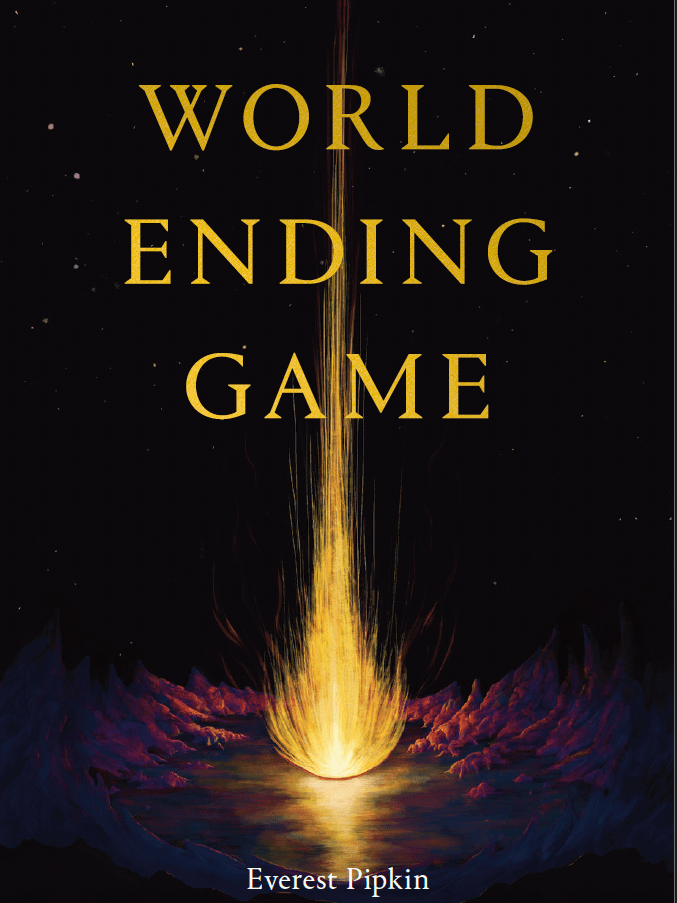
At the end of the Blades in the Dark campaign I played in recently, our GM ran us through a different game to give us a chance to ask some questions of our characters to see how things ended up for them. The World Ending Game is by Everest Pipkin. It is a cinematic game that imagines the last scene or episode of a movie or TV show. It frames a bunch of different types of ending scenes called things like “the Confession,” “the Reveal,” “the Revision,” “Tableaux.” It was a fun and alternative way to treat the ending of a game that felt really personal to players and characters both and I would encourage others to use it to wrap things up for their own games.

Conclusion

I still find endings hard but I like them more and more. I have become much fonder of shorter more contained games of specific numbers of sessions. So it is a little easier to plan for. Also, sometimes, a character’s end is the best part, just look at Heart and its Zenith abilities, they will end the character, but they will also achieve the seemingly impossible. I love this idea for a couple of reasons, it brings the character and probably the campaign to a hard stop in the most amazing fashion and it is player driven. They have gotten themselves to the point where they want to use that ability, it is their choice to use it and it makes for the best ending for their character from their point of view.

How do you like to end dear readers? Do you like to go out in a blaze of glory or do you prefer to sail off into the West and remain Galadriel?

Beginnings

Where shall we start?

This is always the first question I ask myself when starting a new game. It doesn’t really matter if it’s a one-shot, a short series of sessions or an open-ended campaign; the beginning sets the tone for the whole thing. If you start your PCs off trapped in a haunted house with no prospect of escape and a murderous ghost hunting them, you have made a pretty firm statement about the kind of game you are all there to play (or your players will see it that way at least.) Equally, if you start with a scene from each character’s home life, interacting with their family members and discussing their everyday problems, you are establishing a sense that this is the type of game where that kind of thing will happen again (or you should be.)

You can use the start of your game to establish a theme too. Maybe its a horror game involving frog mutants who want to feed your players souls to their unholy tadpoles, you could start in their camp at night, describing a croaking, ribbiting chorus that grows in intensity and volume through the night, ensuring that none of the party get any rest. Embed in the cacophony the true name of a PC and you have the potential for fear and suspicion if not outright horror.

Control

Three sessions in, there’s one PC who has decided to attempt a bloodless coup on the streets of the town at the centre of your adventure, another who has set their heart on wooing one of your NPCs of lesser importance and a third who just wants to sit in the tavern and spread rumours about the sheriff being a cannibal. It can feel like you are out of the picture sometimes (and that’s not necessarily a bad thing, dear reader. The best sessions happen at the whims of the players.) At the start, though, you, as the GM, have control. It relates a little bit to the world building work you’ve been doing, or not doing. After all, you made up the place they start in, or at least, you read about it in a published sourcebook or module and interpreted it as you saw fit. You know the places involved, you know the relevant NPCs, you know the setup, even if you have no preconceived notions about how it’s all going to go down in the sessions to come. With that knowledge, you start with an advantage, for the time being, at least. Before long, you have to hand things over to your clever and inventive players and they’ll have burnt down half the Silver Quarter while introducing the roller skate to Spire.

But, more important than your behind the scenes knowledge, is the situation they start in. I’ve mentioned in medias res beginnings in the past. Frame the scene they find themselves in and make it tense or truly fantastical or horrific or action-packed or just evocative. Start in the middle! It is the one opportunity you have to do this. You set it all up and see how they react to it.

In the Death in Space one-shot I ran a few months ago, I started them off being ejected from cryo-sleep as they approached the main adventure location, a mysterious space-station. They each got to have a moment to describe their characters and I explained they were seeing the debris field surrounding the remains of a planet that was destroyed in the recently ended wars and that they had to guide the ship through it! But then I used a series of flash-back scenes to explain what they were even doing there. I don’t think that’s even the first time I have used the in-medias-res/flashback combo to get into the action as quickly as possible while also providing some much-needed context. It worked pretty well as I recall…

It’s a fun way to get them all rolling dice quickly and failing quickly too, which is usually pretty important in a one-shot horror game.

Intros

Tales from the Loop wants you to put the kids, the players’ characters, at the fore from the get-go. And deservedly so. These kids are created to have people who are important to them, problems that consume them in their regular lives, drives that motivate them and things they’re proud of. They’re rich and three dimensional characters before they ever get to the table. So, the game insists that you start a mystery (what TftL calls adventures) with a scene belonging to each and every kid in their home life or at school, with NPCs that are important to them, family, friends, mentors, that sort of thing. This is where the players get really invested in their characters. They have genuine and heartfelt interactions with the people of significance to them and they begin, immediately, to find their voice and their personality. It’s probably the best thing about a game that has a lot of good things going for it.

I stole the technique for the second campaign I ran in my Scatterhome world. It took place on the northern island of Erlendheim. The PCs all knew each other at the start since they began at 8th level and, in the fiction, had an adventuring party for many years, long ago. The adventuring life long behind them, I asked them to describe their mundane lives as a farmer, an advisor to the Jarl, a guard sergeant and a village priest and made sure to include people and places that were important to them. I focused on who and what they loved because I knew I was about to fuck with all that.
I had learned a lesson, you see, dear reader. Oh yes. For those of you keeping studious notes, you will recall I described the start to the first campaign in Scatterhome, when I drowned the island nation and erstwhile homeland of the PCs, Galliver, off-screen, before the start of the game. They didn’t care about it, and I can’t blame them. I had never given them a reason to.
In Erlendheim, they were more focused on saving the druid’s kids, ensuring the safety of their families and homes, protecting their futures.
Tug on those heart-strings, GMs.

Scenic

There is a subtle art to the transition from the start of an adventure to the meat of it. Or there is if you don’t subscribe to the philosophy that adventures should happen in scenes.

Usually, the end of a scene is obvious in a movie or tv show. It normally shifts perspective or location or time. So, if you want to do something similar in a game, someone needs to just say it’s over and move to a new scene. Sometimes that’s the palyer who wanted the scene but usually its the GM. I would rarely have done something so bold as to declare the end of a scene in a game of D&D as a more trad DM but it’s so freeing to do it! Just like you framed that first scene at the beginning of your game, you soon realise that you can frame and end any scene at any time (within reason.)

Looking back at the Tales from the Loop example from earlier, I noted that each kid gets a scene about their home life. Together with the player, you describe the kind of scene it is going to be, improvise it and end it when it feels right. When you move on to the investigation part, you can cut to a scene with all the kids in it, where they are staking out the suspicious machine that appeared in the nearby field overnight to see who is responsible for it and end that scene when they have gotten everything from it they can. Easy.

Using scene structure is even built into some games. Spire and Heart use scenes, situations and sessions like other games use rounds, days and long-rests. They are left deliberately vague but some powers and abilities work only within the current scene or situation. I have embraced the vagueness and it didn’t even take any adjustment. It was instinctive.

In the next post I am going to write a bit about endings, which, in my experience, are so much more difficult.

How do you like to start your games, dear reader? Let me know in the comments.

World Building Part 2

A new approach

First of all, I struggle to get out of my old way of building a campaign world and, even a campaign. I recognised in my last post that there are definite draw-backs to it, but still, I find it hard not to do a whole bunch of preparation. I do still think that a certain amount of prep is advisable but I have been actively trying to limit the amount I do. This doesn’t work as well in some games as others. In D&D, if you don’t do a lot of prep, you might be alright but it is a real pain if you don’t have the right stats to hand when your PCs decide they are going to enter the local gladiatorial games or they want to go ankheg hunting. It slows things down a lot and hurts the overall flow of the session. But it does feel like you are pushing the plot and your PCs in a very particular direction when you do it! Is this an inherent issue with D&D? Probably not just D&D if we’re honest.

In other games, I find it can be freeing and fascinating to see how a session goes when you genuinely have no preconceptions about what is going to happen in it.

Heart

In the game of Heart I am currently running, I used a loosely written adventure that came in the Heart Quickstart Rules. We have just come to the culmination of that adventure and suddenly, the PCs are more-or-less free agents! They have done what a few NPCs have asked of them and more. They followed the breadcrumbs and now, now they are ready to take the training wheels off and head into the Heart to pursue their own dreams and nightmares. They have a couple of other leads but I am looking forwards to leaving the progress up to them from now on. I intend to largely take my hands off the wheel and, instead, rely on their own motivations to provide direction, their own relationships with NPCs to perhaps push them one way or another, even their own ideas for how the new and terrifying delves they go on might look and feel. I want to create our Heart together now that the leash is off.

Im-prompt-u

There are lots of tools out there that you can use to bring a world to life together with your players at the table. I mentioned on this blog before that we had a game of The Quiet Year by Avery Adler a while ago. In it, you get together and make a couple of establishing decisions regarding what sort of community you want to build together and what sort of genre or setting it might be in. After that, you proceed through the seasons of a year after the end of some cataclysm and before the coming of some other terror. The players use a regular deck of cards to draw on prompts from the book. Each prompt gives you an occurrence or an important decision that must be made. This way, you all draw a map together and you develop a community that includes important factions, elements of religion and social orders, abundances and scarcities, fears and loves of the populace.

I was surprised when we finished, by what a fleshed out place we had created in concert. It felt like we had the basis of a fascinating setting to start something else in. I could imagine beginning a more traditional RPG there with the same players. These players would all have had a hand in building the place, the world, its people, their relationships. And wouldn’t they be so much more invested in it?

I mentioned last time that I had made a mistake in the very beginning of the Scatterhome campaign because I had tried to play on the PCs’ devotion to their decimated homeland when they had no experience of it. They couldn’t even picture this diverse paradise island that I had in my mind. But if we had used a method like The Quiet Year to make it, we would have had the fun of playing The Quiet Year, for starters, and also, we would have a place they might have mourned as their characters.

Scale

You can go much smaller of course. In the Blades in the Dark campaign I played in recently, our GM had us use a different game called Clean Spirits to build our hideout. At the start we had to make some decisions about what sort of place it was going to be. We decided on a beached canal boat and then we worked through a series of prompts and exercises to create various parts of it. We each got to claim our own section and also collaborated to make it a place that we treasured as players and characters with its own little mushroom farm and the spirit of its former captain trapped in a bottle. Later, when we were attacked in our hideout, this made the stakes seem so much higher!

Of course, you could go even bigger instead of smaller. I know the game, Microscope, is used to create a whole history for a world that is separated into periods and events. I have no experience with it though so I don’t know how well it works.

At the table

The type of world building I like the most is the collaborative kind, I have decided. One of my players in that Scatterhome game, Tom of the Media Goblin’s Hoard blog wrote an incredible history for their character, who was a Dragonborn. Now, I had never given too much thought to the origins or current situation of Dragonborn in the setting but that was ok, because Tom had been considering it deeply. It was all couched in the back-story of their character, but it added a huge amount to the world straight away, including the fact there was an under-class of Dragonborn within the empire who were raised to be weapons at the command of their human masters, how they were raised from eggs to obey and how some escaped and went on the run. How there were bands of pirates that sometimes took on runaways like their character and how they impacted the archipelago. It was great and, although we didn’t get around to using too much of that in the game itself, the knowledge of it made a big difference to how I thought about the empire and the world as a whole.

Later in the same game, we gained some new players who decided to take their PC races from the D&D setting of Theros so we had a new island nation on our hands then, one that looked a lot like Ancient Greece and contained leonines and satyrs. Once again, their choices made that change to the world happen.

Another new character added a whole new vassal kingdom of elves to the Vitrean empire, for whom social hierarchy and feudal concerns were incredibly important. So much so that they caused a rift between his character and his siblings.

Character backstory is world-building when you leave the details of the world vague enough for players to have free rein when coming up with them. It adds to the shared world and gives them a greater feeling of ownership of it.

I personally love it, though, when someone, simply, confidently states the existence of a particular item, a specific shop or an individual NPC right there at the table. That item is going to help them get through that window, that shop sells the exact thing they are looking for or the NPC has the contact details they need. This sort of flavour is invaluable and often becomes far more than flavour. This happened in Spire a lot because you have to ask your players to make rolls to resolve situations but then leave the details up to them. They made up the dugguerrotypist, Reggie, who worked for the local tabloids and he later became an important bond to them. Same with every aspect of their casino, the Manticore, which quickly filled with important NPCs and locations that were largely player-created. It is the best feeling when these instantly generated details come into play right there and then at the table. It’s like magic.

How do you prefer to world-build, dear reader? Do you do all the work beforehand and let the players loose in it at the table? Do you build a world together first and go and play in it after? Do you let it all just happen at the table?

The Black Iron Legacy

The Gutter Prayer

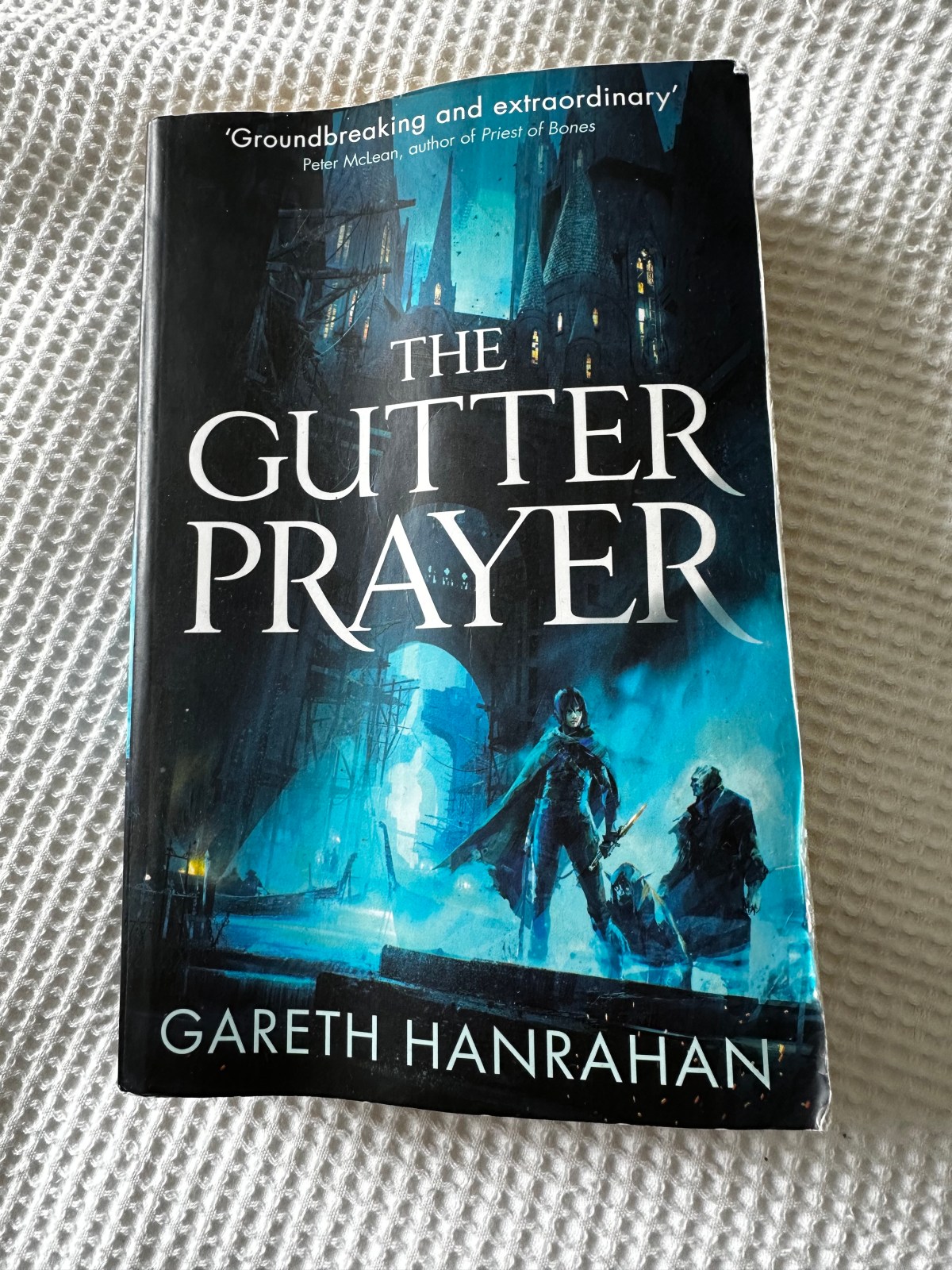
I am in a sci-fi and fantasy book club, surprising absolutely no-one. We take turns picking the book we read. We usually give ourselves a month to read, meeting at the halfway point to discuss how it’s going and then again when we have finished the book. It’s fun, we spend a lot of time delightfully dunking on duds but, thankfully we also have plenty of time for praising the good ones. The Gutter Prayer by Gareth Hanrahan (AKA Gareth Ryder-Hanrahan) is one of those. It is rich and evocative and full of cool and interesting characters that you either hope won’t die or hope will die.

The author has a long and storied history as an incredibly prolific RPG designer. You can check out what he has written here. I personally only just encountered him through the recently crowd-funded Heart sourcebook/scenario, Dagger in the Heart, which he wrote. When I went and looked him up, I was intrigued to see that he was also the author of several novels. Since it was my turn to choose a book for book club, I decided to go for his first, The Gutter Prayer.

He has designed a city that is alive and full of fantasical and very dark elements. Guerdon is based partly on Cork city (Hanrahan’s home town,) Edinburgh and New York and you can feel the influences of all three in the writing. The story revolves around three scoundrels, Carillon, heir to a murdered aristocracy, Rat, a ghoul who is trying to fit in on the surface and Spar, a stone man, inflicted with a terrible disease and the son of a famous thief and revolutionary figure. They are the unlikely trio who find themselves embroiled in intrigue, the battles of saints and the magic of the crawling ones, fighting for the city itself against the most unforeseen of divine threats.

It reminded me so much of China Mieville’s Bas Lag trilogy and his own rich and lived-in city of New Crobuzon. It’s also got a lot of Cthulhu references what with the ghouls and the crawling ones and the menacing ancient gods and all. In our latest book club meeting we also talked about how it felt like a book written by a game designer. It was something about the richness of the locations, the depth of the “NPCs” and the deft construction of the set-pieces. Please go and read it! I can’t wait to start on the next one in the trilogy, The Shadow Saint.

The Book, the game

Also, he made a game based on these books! I mean, of course he did. You can get it for free on his blog:

The Walking Wounded

It’s only 17 pages long and contains both the rules and a one-shot adventure to play. Go check it out!

Are you a Gareth Ryder-Hanrahan fan? If so, have you played any of the games he has written?

Player vs GM

Not what you think

I have an easier time writing about the games I am GMing or the ones I am going to GM in the future, compared to those I play in. I think the reasons for this are pretty obvious, right? I have an a behind-the-scenes view of the games I GM, I have read widely on the games, maybe I have home-brewed the world, I probably have a better handle on the rules than most others at the table. As well as that, I set up the game, I send out the invites, I normally host the game, so, it makes sense.

As for the ones I play in, I am still invested in them, or at least in my character, I have usually made some effort with a backstory and personality and I want them to experience cool stuff in the game world with a bunch of other weirdos. There are probably a couple of my characters that I could spend an entire post discussing (and probably will, now that I think about it) but not before they are even made.

Anyway, that’s why I am taking the last few games from my Games I want to Play this Year list and pop them all into this one post.

Old School Essentials – campaign I think

My friend, Isaac of Black Sword Hack fame has been working his way steadily through all the OSE books he could get his hands on. He’s almost ready to kick off that campaign! Very exciting! It will be my fist time playing this system and having been a part of Isaac’s Black Sword Hack game for the last couple of years, I know how he likes to construct a grubby, fun, weird campaign world for us to muck around in.

I am not all that familiar with the ruleset of OSE, but from what I understand, it took the rules from Basic D&D and some of those from AD&D and took out all the stuff that people tended to ignore. I know it does have a race-as-class idea that is similar to the way DCC does it but, overall, it gives me much more old school D&D vibes than DCC does.

I might just go and roll up a few little guys using the OSE rules to get an idea of how it works and get in the mood for it.

Heart: The City Beneath – Open Hearth campaign

This game technically already started; I am achieving my goals, dear reader! We have only had a session 0 in which I created my aelfir Incarnadine, Forgotten-Frost-Remembered. He is called to the Heart in search of adventure (also he had to flee the City Above due to his crass and embarrassing obsession with money, not to mention his astronomical levels of debt.) He and his fellow delvers are on a mission to help a haven that we created together using the rules from Sanctum, a sourcebook for Heart that is meant for this very purpose. The haven has no name as it was deleted by a Deadwalker some time earlier. The aim is to build it up while pursuing more selfish goals before we all blow up in a conclusion of zenith ability fuelled glory.

All credit to our GM, Mike, for having the presence of mind and session 0 nous to figure out our group’s haven-based goal and get us to create it together in under an hour.

Can’t wait to start getting weird in the Heart.

Call of Cthulhu – Masks of Nyarlathotep – campaign

This one is probably a long-shot. This is actually an ongoing campaign but has been on semi-permanent hiatus since, I want to say 2022? Not sure. Anyway, this is another of Isaac’s campaigns. It was one of those things, playing with adults can mean that sometimes, real life stuff takes precedence and there’s not much you can do about it. Since then we got into other games and other campaigns and Masks has been on the back burner for a long time. Every time we get to chatting about Call of Cthulhu, we end up saying we would love to get this classic campaign started up again.

Last we left our intrepid investigators (I was playing a gangland boss from London named Grant Mitchell) they had faced down other worldly terrors in the basement of an occult shop and proved the innocence of a man falsely accused of murder. They also uncovered some evidence and information that drew them to various other places around the world in their pursuit of answers to the question of who was responsible for the murder of their good friend, Jackson Elias. Anyway, they had concluded their snooping in New York and were on a slow boat to London. It has been a very slow boat at this stage…

Magus, Pike and Drum – Playtest

It’s Isaac again! This time with an early playtest for a game that he is very much still developing. I don’t want to go into any detail here but I think I can say at least that it is a semi-historical setting and it will be using the Resistance system, created for Spire. Can’t wait to try it out. What I have read of the character classes and abilities so far makes it sound very fun and interesting to play.

OK, that about wraps it up for today. See you tomorrow with more from the Dice Pool.

Games I Want to Play This Year

Five months to go

Having managed to get through so many games in the first 7 months of the year, you know what? I reckon, if I really make an effort, I think I can fit in up to ten more different games before New Year’s Day. I’m particularly looking forward to a few more one-shots. For those of you who’ve been keeping an eye on this space over the last couple of weeks, you’ll know I have a soft spot for them.

Lists 4

Here we go. Like previous lists, I’m just going to split them between those I want to run and those I want to play in.

To be honest, a bunch of these games are ones I already have in the schedule. I’m hoping to get Tales from the Loop started in a few weeks and I have Death Match Island in the calendar for next Friday. Even the ones I want to play in include a couple that are almost good to go.

GM

Player

I’m going to spend the next couple of days going through each of these games to explain why I’m so excited about playing them.

Stay tuned!

Also, what are you looking forward to play this year? Let me know in the comments!

Psycho-analyse Your Players for Fun

Sorry for the monsters

The murder-hobo days are largely done, I think. Although I’m sure there are still plenty of tables out there slaying every poor goblin that crosses their paths, it seems to be a pretty old-fashioned play style, uniquely and deliberately violent, especially when the “monsters” are sentient creatures with cultures and desires and rich inner lives. I didn’t know it when I was a kid but there’s no doubt that the impetus to enter an underground lair and kill every orc you found in there was a product of some highly colonial cultural fallout. Those guys are green so it’s ok to take their treasure and their lives, right? Or, my king/lord/boss/priest told me those guys were evil; better get them before they get us!
You are far more likely to be able to deal with an encounter without violence, and that’s cool.

Harpin’ on

Do my players do this? you ask, reader. Well, yes and no. The Deadwalker from our Heart game made friends with a Heartsblood beast the other night. It was a giant snail with the face of a drow (except for the eye stalks and the rows of sharp little teeth.) his name was Shelby. Of course, they sort of bonded over the killing of a harpy couple. Harpies in Heart are very interesting, by the way. They remind me of the Khepri in China Mieville’s Bas Lag books. The male harpy is just a big bird, about the size of a cat. Now, when he is looking for a mate, he’ll collect up a load of trinkets, bones, body parts, small creatures and occult relics and place them in a circle while, like a minah-bird, he speaks words he has heard others say. These tend to be words they have heard recently from people like the PCs, which is fun. Anyway, this ritual summons his potential mate through a portal from some dreadful, hellish dimension. And she is the terrifying figure of a woman but with talons where feet should be and wings instead of arms and the intestines of some poor bugger dripping, bloody from her beak-like maw. She is very violent and hungry. This encounter was only going to end one way. Luckily, it was the PCs who came out the victors, although it was touch and go. And hey, Seeker made a new friend in the process! Cute little Shelby.

Surprised to see it turn weird

The subtitle there is a reference to a star I got from Isaac in our last D&D session when they discovered the brainless hobgoblin body and the triplets with gossamer threads attaching them to something else in this dungeon they have just entered. They have been encountering a lot of other sailors, mostly humanoids and their servants recently. That’s often the type of game it is because they are dealing with other ships and their crews a lot. They have usually resorted to violence in most instances in this campaign so far. Maybe that’s my doing since the encounters have often started off violent from the monster side. And they did try to befriend that one Neogi sailor who had been left behind by his mates. So they get humanitarian points for that.

So, in this dungeon, I thought I would take the opportunity to make it a bit weirder. After all there should be alien things in a space game. I can’t go into too much detail, but suffice it to state that I am excited to see how the players and their characters react and what they do.

Spiteful owls and slug monarchs

What I find, in general, is that the weirder the monster you introduce, the more likely violence is gonna to be the answer. This is, I think, often a fear response. Or maybe it’s an assumption that, the weirder the monster looks, the less likely it is to be reasoned with. These are often understandable impulses, actually. I mean, there are also the monsters that are totally mundane, like the flock of owls in the Troika! Adventure, The Blancmange and Thistle. They had come in through a window and were harassing a hotel employee. My players did not hesitate to cull those wild birds. To be fair to them though, the text does name them “spiteful owls” and they attacked anyone who entered their stairwell. So maybe they deserved it.

A couple of floors further up in the. Blancmange and Thistle, they encountered a Slug Monarch trapped in the stairs, embarrassed and very much in the way. They used some demonic water to awake a terrible hunger in him and that got him moving. He was a bit more dangerous in this state so they did have to fight him off but then they just escaped up the stairs where he couldn’t follow. It was a relatively non-violent solution to a simple problem involving a rather gonzo monster. But maybe they just treated him better than the average slug because he was a monarch?

Maybe I should stop psycho-analysing my players and their characters.

Anybody else psycho-analyse their players?