One Shot to the Heart

Fallout is one of the most fun things about Heart. Players are sick little freaks who love getting lumbered with terrible burdens. Give them what they want, I say!

A Challenge

I have generally looked at Heart, The City Beneath as a campaign-play game. It’s made for it. It has a structure to the gameplay that rewards multi-session arcs. Your character’s beats beg you to spend time to seek out the opportunities to achieve them. And that Zenith ability; everyone perversely desires that big finale, their moment in the spotlight for one last time, that explosion of ‘themness’ right at the end so they can say they really went out in style.

So, when you are asked to run a Heart one-shot, what do you do? How can you replicate the uniquely satisfying journey that belongs to the delvers in a campaign, in just one session? The short answer, of course, is, you can’t. But, can you create a satisfactory one-shot with a slightly different feel? Yes, of course you can.

You will not be too surprised, dear reader, at this point, to discover that that was the exact situation I found myself in last week. I had a special request come from one of our founding Tables and Tales members to run a Heart one-shot, so I had to give it a go.

Heart Exam
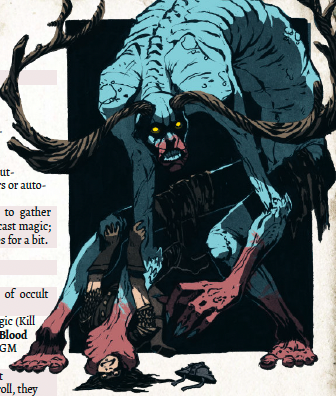
The Butcher, replete with antlers, haunted expression and meal

Grant Howitt and Chris Taylor know what they’re talking about when it comes to designing and running games, particularly their own games, I figured, so I started with them. Heart has a lot of useful tips for GMs in it. There’s advice for the novice and the veteran alike on how to run RPGs/story games/Heart. They also include separate sections for campaigns and one-shots. It’s worth noting that much of the general advice for running Heart is just as important in a one-shot context as in a campaign. The one-shot bit itself is minimal but useful.

Running Heart as a one-shot is straightforward enough. The only changes you’ll have to make are around pacing and how you inflict stress and fallout.

Pace-maker

The Heartsong Calling sitting on the edge of the bed wondering where that music is coming from.

The advice around pacing is as true for a Heart one-shot as it is for any game, you have to start fast and keep it moving. No long-winded expositions, no character-development heart-to-hearts that take thirty minutes, no hanging about. Start in media res or as close to it as possible. Provide the necessary information in summary or in flashback and get to the action. Also, you have to give them something they can do in one session, a goal, a destination, a creature to kill or a thing to retrieve. All this sounds easy enough, but it can be tricky. It has taken me quite a while to develop my one-shot technique to a point where I feel like I am almost guaranteed to get it done in one shot. You start to figure out where you need to kill your darlings to make up the time. Working that sort of thing out on the fly is a skill I have made gratuitous use of recently.

In this one-shot, I had the PCs escaping Redcap Grove as a sort of mini-delve on the way to the entrance of the actual delve which would take them to Hang Station. They had a simple job to deliver some psychoactive fungus to a Vermissian Sage in the station. But, woah, were they rolling badly… and also being little nut-jobs. The Cleaver, predictably, decided to hunt the Druids who were hunting them and it turned into a stress and fallout ridden combat. This was fun, and horrific and hilarious. Almost everyone in the combat hulked out at some point, the Witch into her True Form, the Deep Apiarist into her Awarm Form, the Cleaver into his Chimeric Form and the one remaining Druid into their Cave-dweller Form. The players understood the one-shot assignment and did not hold back. There’s no point in saving your cool power till the end… it’s all end. Anyway, because this took a little longer than expected, I ended up combining this mini-delve with the longer inter-landmark delve that I had prepared between Redcap and Hang. I essentially just combined the remaining resistance of the mini-delve and the delve-proper on the fly. This worked well, even though it meant I had to cut out an encounter with the Butcher…

Stress and Fallout

The Penitent Calling on their knees, praying for forgiveness

Mssrs Howitt and Taylor also mention stress and fallout in the extract above. You can’t be afraid to hit them hard. Fallout is one of the most fun things about Heart. Players are sick little freaks who love getting lumbered with terrible burdens. Give them what they want, I say! Fallout is one of the key ways to push PCs to act in certain ways and that pushes the game forward so it’s win-win, innit?

I took this quite literally. I made sure that the busted old crate they were transporting their dodgy mushrooms in was leaking the kind of spores that some sado-masochist might pay a large amount of coin for. Every time they rolled against the resistance of the delve or when they made any dangerous movements or just when nothing else was going on, I got them to roll Endure+Wild to resist the effects of the fungus. If they failed, they got Mind stress and if they got Fallout from that, they got one of the following:

FALLOUT: Traitor Brain, MINOR Mind – You relive a moment of regret ad nauseum. Always at the worst possible time. All actions increase in Difficulty by one step (ongoing.)

FALLOUT: What Did You Do? MAJOR Mind – You witness the effects of your worst mistake on those it affected. It is a gut-punch to the mind. When you mark Mind stress, roll two dice and take the highest (ongoing.)

This had exactly the effect I wanted. And if you engineer it right, you can use this sort of technique to bring about some really cool moments.

Pregens

Speaking of engineering things… making pregenerated characters for this game was the best decision I made. I had to combine it with a few tweaks to the rules, but, if I were to recommend doing one thing for your Heart one-shot, it would have to be creating and assigning pregens yourself as the GM.

I created three pregenerated characters, one Gnoll Cleaver with the Heartsong Calling, one Aelfir Deep Apiarist with the Enlightenment Calling and a Human Witch with the Penitent Calling. I gave them their starting abilities, picked their equipment, I even picked their names and answered some of the questions presented in the Calling and Ancestry sections that rounded them out as characters. I even chose their names and starting beats! I left a couple of answers up to the players, namely the ones to the questions about how their characters were associated with one another. Having them answer those gave them a sense of belonging and of fellowship with their adjacent weirdos.

Anyway, the character creation took the bulk of my prep-time, easily, but it was very much worth it. Here’s my thinking: I wanted to make sure we did this thing in one session so didn’t want anyone dithering over the details, and I didn’t want to have to explain all about every aspect of a Heart character before we even got started playing. I wanted to be able to have an inkling of the beats they would reach for to make it easier on myself to improvise them in the moment during play, I wanted to be able to plant connections to the PCs lives here and their and I wanted to be able to use the Heart itself, to make it feel like the Heart was reaching into their souls and coming out with their greatest desires. The Fallout that I wrote above? I wrote that with the idea in mind that the Penitent Witch might need that to confront her greatest regret, why? So I could introduce the last ace up a Heart GM’s sleeve, the Zenith Beats and Abilities.

The Zenith

They had been hitting both minor and major beats throughout the session and taking new abilities as appropriate. I allowed them to hit as many as they wanted. I had given them four each in their pregen character sheets. But that wasn’t enough for me.

Just as they were exiting the delve and entering Hang Station with their psychedelic cargo, I asked the players to refer to the book and take a look at their Zenith Beats and Abilities. I only pulled this out near the end so they wouldn’t know it was coming. Luckily each Calling only has two Zenith Beats available and each Class only has two or three abilities. So it wasn’t too much to look up in the moment, and, as soon as I told them this, I knew I had them (or two thirds of them anyway.)

I made it clear that I would be lenient in judging whether or not they met the conditions of the Beats because I know how good it is when a Heart PC hits their Zenith. So we made it happen. By the end of the session, each of them had brought about their own personal apocalypse and it was a thing of red, wet beauty. The Cleaver destroyed and replaced the Beast in the bottom of Hang Station, transforming the landmark into a swampy forest in the process, the Deep Apiarist summoned the Heart itself into the space just long enough to squash her into a red, wet stain and the Witch brought the Deep Apiarist back from the dead, sort of, as a clone made from the Heart itself, a clone that will always return no matter how many times it dies…

We wrapped the whole thing up neatly in about three hours. If I hadn’t cut the Butcher encounter and combined those two delves early on, it might have gone another half hour. Either way, a nice, diminutive package, I think you’ll agree.

Homebrew Heart Landmarks 5

It was the kind of party that took its toll on a number of different organs, the brain being not the least of them.

Two-day Wedding

Dear reader, I returned yesterday from a trip to Cork where I attended the wedding of a dear friend of mine. It involved a great deal of time spent with very old friends in the most convivial of circumstances, accompanied often by a pint of Murphy’s and a lot of reminiscing. I’m still recovering. It was the kind of party that took its toll on a number of different organs, the brain being not the least of them.

But, you know, inspiration is a fickle mistress.

Pub Crawler

Name: Pub Crawler
Domains: Wild, Haven
Tier: 3
Default Stress: d6
Haunts: The Pub Crawler (d12 Mind)

Description:
Vansant Depwy, former Knight of the Lower Docks and Minister of Our Hidden Mistress fled the City Above many years before. Burned by the Ministry and broken by his former companions in the knighthood, he found himself wandering the arteries of the Heart, lamenting his lost companionship and honestly, just gagging for a pint. As always, the Heart provided.

The millipede of enormous proportions that is Pub Crawler came to Vansant when he was most desperate and dribbled ever so delicately into his open mouth as he lay directly in its path. It roused him immediately. The finest ice wines of the High Elves the flowing ichor seemed to him. The next moment a fine brandy from the Home Nations. He could not get enough, despite the dubious origins of the divine liquid. His head swam and he rejoiced. Immediately he hopped aboard the cyclopean insect and continued to ride it forevermore. Along the way he collected what salvage he could to hook the creatures glands up to rubber pipes to facilitate easier imbibing. He built a small structure and started filling casks while welcoming visitors to his little ramshackle hostelry. As time went on, he and the beast attracted the attention of more less-than-discerning travellers desperate for a decent drink so deep as they were in the Heart. Some of the visitors became residents and then publicans in their own right. The pubs stretch now from the great insectile head to its earwiggy tail. Vansant’s, of course, has pride of place between the two many-faceted, ale-gold eyes. Its name is synonymous with the creature itself these days, the Pub Crawler.

Special Rules
They say it’s a mile from one end of the Pub Crawler to the other. A visitor who wants to partake of the healing effects of the Haunt must work their way up from the tail, taking a drink in every pub on the way. In other words, it’s a pub crawl. The booze is not particularly strong at the tail end as the further they get from the mouth, the more they are forced to water it down. So each visitor is forced to make and Endure/Wild roll or take a d6 Mind stress as they begin to commune directly with the Pub Crawler itself. The first roll is Normal difficulty, the second at Risky and the third at Dangerous.

Fallout Tipsy (Minor, Mind) One more? One more. Doing anything but getting another drink is now Risky.

Fallout Well on it (Major, Mind) There is a constant clicking and clacking in your mind. You must now either try to kill the source of it (the Pub Crawler) or try to understand it.

Fallout Pallatic (Critical, Mind) You understand the Pub Crawler and its reason for being. You know why it secretes such delicious and delirious juices. And now that you know, you have no choice but to stay and set up shop yourself. Spread the booze and spread the word.

If you do manage to make it all the way to the magelight illuminated superpub known as the Pub Crawler, Vansant himself will come and serve you the most potent brew of all, purging you of all Mind stress and Fallout and bestowing on the lucky patron an honorary knighthood.

Homebrew Heart Landmarks 3

May the fourth

The shows mostly deserve to be dropped into the Sarlacc’s maw, the fandom is more toxic than the bite of an Ewok (you just know those little guys are spreading rabies,) and the heyday of Star Wars was a Long Time Ago in a Galaxy Far, Far Away. But I do love a non-standard holiday as an excuse to play an RPG. Today, abiding by the Tables and Tales May the Fourth rule, Isaac is going to run us through a Star Wars themed adventure using Vaults of Vaarn (the rule is that we have to have a Star Wars themed game but we can’t use any official Star Wars games to do it.)

But not before I come up with a Star Wars themed Heart Landmark! You lucky readers!

Oddya’s Bog

Name: Oddya’s Bog
Domains: Religion, Cursed
Tier: 1
Default Stress: d4
Haunts: The Proving Cave (Echo/Mind d6)

Description:
All the inhabitants of Oddya’s Bog are one with it. Most of them have become one with it over the course of years and decades, adding their own energy to that of all living things in this place. I mean, they add their flesh too, but you can’t make an omelette etc. The Bog needs the bodies and life-force of the people and other animals who find themselves drawn here.

The bog, a treeless, stinking expanse of fetid, untrustworthy marshland, writhes and undulates, as some such places do due to the waters concealed beneath the turf surface. Oddya’s Bog moves in this way because it is made mostly of people and animals, living beings that are absorbed bodily by the landscape to add their essences to the entity known as the Compulsion. They live still, in a terrible mockery of life, slowly learning what it means to be both one and many under the sway of the Compulsion.

Master Oddya is the Compulsion’s greatest champion that has not been fully absorbed. He has existed in the forgotten bog for longer than he can remember. It is possible that he is nothing more than a creation of the Compulsion’s microscopic constituent parts, the chlorimediants. Either way, he is a sour old prune that many have mistaken for a Gutterkin. Perhaps he was once a drow; he shares their pallor and long ears; but he can reach no more than knee-height to most elves and he walks the discomforting bog, unclothed and usually sucking on a recently plucked eyeball or knucklebone.

Many come to the Bog in search of Oddya, believing him to be some sort of wiseman or priest of a forgotten god. The downtrodden and addled residents of the lower levels of Spire have a great need for a saint or a leader to believe in. Rumours have been circulated by a certain, rather smelly sect of blank-eyed, robed and hooded drow on the streets of Pilgrim’s Walk. They have been telling tales, in the voice of the earth itself, of a prophet and holy man named Oddya who holds the secret to oneness. They appear every few years before inevitably disintegrating into the bog-stuff that they are and slowly making their way through the waters back to Oddya’s Bog, where he will re-constitute them and send them back to the City Above again the recruit once more. The pilgrims who come are brought under the sway of the Compulsion as Oddya speaks his strange backwards sermons to them, urging them to surrender to the Compulsion, to trust it and to use it. Most are captured and merge with the bog. Some escape but Bog Folk will follow them to prevent them from spreading the truth of the Bog beyond its borders.

Only one cave at the edge of the Bog is free of the Compulsion, the Proving Cave. If you enter it, you will be forced to contend with the thing you are most desirous of. If you manage to resist it, you will be healed by the cave at the price of a D6 Resource. If you do not, you will gain the Fallout, Unproven. See the Special Rules section.
Special Rules:
Master Oddya – If he is allowed to speak his strange mystic mumbo-jumbo, he may ensnare the listener and bring them under the influence of the Compulsion. Endure/Religion or Cursed roll to resist or suffer d4 Echo Stress. If a PC suffers fallout from this, use the following:
Fallout There is No Try (Minor Echo.) Next time you might need to roll to do anything in Oddya’s Bog, you succeed automatically, but you lose a part of yourself to the Bog and the Complusion. All actions not directly in the service of the Compulsion are Risky.

Fallout I Have a Bad Feeling About This (Major Echo.) You are becoming one with the Bog and the Compulsion. All actions not taken directly in the service of the Compulsion are Dangerous.

Fallout Become Greater than You Can Possibly Imagine (Critical Echo.) Your body has become one with Oddya’s Bog and your essence serves only the Compulsion.

The Proving Cave – Ask the player what their character most desires if you need to. This thing will appear in the Cave as though it were the Heart itself. But it is fleeting and dangerous. If they attempt to take the thing or make it there own in any way, they will gain d6 Echo stress. If they get fallout from this, use the following:
Fallout Unproven (Minor, Echo) If they see the object of their desires again, they will be compelled to pursue it. If they resist, any other actions will be Risky. (Ongoing)

Resources:
Everything here is tainted but Oddya’s Bog Turf is a d4 Cursed Resource.

Homebrew Heart Landmarks

UVG Locations

I have been reading Ultraviolet Grasslands recently (expect a post or three about this once I get done reading it.) I have been enjoying its format a lot. It tends to go into the big-ticket locations in the setting in some detail, maps, random encounters and occurrences, places of importance, how to get to and from the location. It’s usually built with enough randomness that your “Last Serai,” for instance, will be very different to the next party’s.

But there are a few locales described towards the end of each of these sections that branch out from the one central location, providing you with adventure spots in the surrounding area. Descriptions of these in UVG really depend on the type of area they are in. If it’s a heavily populated spot, you are likely to get a bunch of NPCs for the players to deal with, but in more remote places, it will probably mention more environmental hazards, enemies and traps. Importantly, it never goes into much detail on anything. The details, as with everything in the book, are left up to those gathered around the table. You just get a mention of a particular type of creature (and maybe a level and tag in parentheses beside it,) a monetary value for the treasure or resources you might find there, or a distance (in number of days’ travel) from the main location.

These really reminded me of something: Heart Landmarks. Not necessarily because of the format of the descriptions or the writing style or anything like that. It was mainly just due to the looseness of it. Heart Landmarks also provide you with a few sparks to light your imagination. They might tell you the type of haunts you have there and vaguely hint at a couple of NPCs, but it’s up to you to bring them to life at the table. I am aware this is not that unusual in modern RPGs but I have been reading and playing a lot of trad games recently, so the similarity really struck me here, in comparison.

Anyway, it got me thinking about something I started quite a while ago, before I even started my first Heart campaign. I have a file on my computer just called Heart Landmark Ideas. It had one entry in it, and even that was incomplete. So I thought I would make this a little series of blog posts.

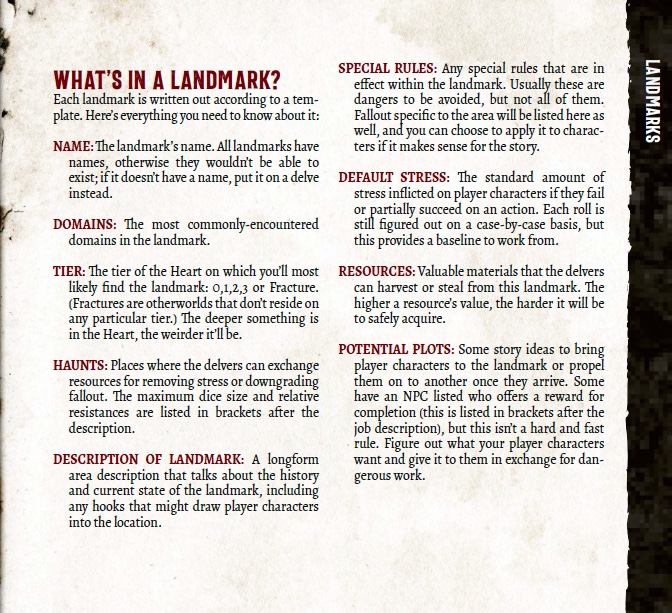
DIY Heart Landmarks

What is a Landmark? In Heart, the City Beneath, the characters are delvers, idiotic adventurers who are compelled for one reason or another, to plunge into the red, wet heaven that is the Heart, the esoteric core of all weirdness. Nothing remains concrete or stationary in this underground “city” for very long, but, as long as a place has a sufficient number of sentients there to believe in it, to desire its safety, that will anchor it. These become Landmarks. Some of them are havens where delvers can rest and recuperate, some are terrifyingly dangerous lairs of nightmares and dark magic.

What does the Heart book tell us about making our own landmarks? Make sure your landmark includes one or more of the following:

  • SANCTUARY: Haunts are places within a landmark where PCs can relive themselves of stress or fallout and can often involve a major NPC to interact with.
  • MATERIALS: Resources can be procured here.
  • ADVANCEMENT: Not every chapter beat is achievable on a delve. Sometimes, landmarks are the perfect places to hit your beats.
  • EMPLOYMENT: NPCs, mysteries, required items etc. You get the idea.
  • DANGER: Not every landmark is restful and commercial. Sometimes you need to endure them to achieve your goals…
  • WONDER: Reveal something of the Heart of just dazzle the players with your imagination!

Other than that, the format of each Landmark entry is pretty much set:

  • NAME: ‘Nuff said
  • DOMAINS: These are broad areas of interest or influence: Cursed, Desolate, Haven, Occult, Religion, Technology, Warren, Wild
  • TIER: The Heart is split into tiers designated 0,1,2,3 and Fracture. 3 is much stranger than 0. Fracture is a movable feast of rumness.
  • HAUNTS: Places to rest and heal or people who will facilitate that. What kind of stress/fallout can be cured? Also, this should include the max dice size of healing.
  • DESCRIPTION OF LANDMARK: Part history, part current state of affairs. Maybe some hooks to bring the PCs there.
  • SPECIAL RULES: This could involve particular dangers or custom-fallouts.
  • DEFAULT STRESS: What is the normal amount of stress to inflict for action failures? Indicated by a die size.
  • RESOURCES: What type and die size of resources are available here.
  • POTENTIAL PLOTS: Fuel for your PCs’ adventures.

Landmark Number 1 – Blister

Name: Blister
Domains: Haven, Religion
Tier: 1
Default Stress: d4
Haunts:

  • The Blistered Basilica, a polyp on the inside of the blister. The devoted gather inside to worship (d8 Echo)
  • Rose’s, a restaurant with a good reputation and a worryingly good chowder (d8 Blood)
  • The Blister Pack, a general market that specialises in building and delving equipment (d6 Supplies)

Description: An enormous, fleshy blister on the inside of an enormous, fleshy chamber. Blister is pierced near the base by a hole that allows delvers to enter. From this hole there is a ramshackle wooden ramp that leads to a series of old platforms requiring constant repair. It has some residents, known as platformers, who are more or less permanent and mostly have no sense of smell.

At the base of the blister is a fetid lake of stinking pus. A whole ecosystem of pus creatures live in the lake. They generally leave the platformers alone.

The platformers worship the blister as though it were a god and as long as they do, they say the denizens of the pus will leave them be. But outsiders and heretics should not stay long, they say.

Special Rules: If you spend a bit of time in the Blistered Basilica in order to remove Echo fallout, make an Endure/Religion check. Consequences of failure as below:
Fallout: Pus Magnet (Minor Mind) You have come to understand the Platformers’ devotion to the Blister and you feel a kinship with the pus-beings. They are there for your protection and you are there for theirs. You feel an urge to descend to the lake, befriend one of them and take them with you on your travels (Ongoing.)

Getting too close to the pus lake will require an Endure/Haven or Religion check. On failure/mixed result:
Fallout: Blistering Barnacles (Major Blood) You’ve been infected by the pus. You are covered in hard, black blisters which hurt and stink. They make all social checks one difficulty rating higher (Standard becomes Risky, Risky becomes Dangerous etc.) (Ongoing.)

Resources:

  • Gathering Blister pus (d4 Religion) can be dangerous. See Special Rules.

Potential Plots:

  • Deacon Delicia of the Blistered Basilica has startling news for any PCs that visit. The Blister has revealed an existential danger to her. A stalactite-like calcium deposit has formed above Blister and a group of heretical pus-haters are preparing to climb up there and knock the spiky peril from its perch. This would spell the end for Blister, the Pus Lake and the Platformers. She is offering the church’s most prized possession as a reward to anyone who can stop the heretics. It is a wooden spike known only as the Splinter (Kill d8 Piercing, Debilitating)

Games I Want to Play This Year

Five months to go

Having managed to get through so many games in the first 7 months of the year, you know what? I reckon, if I really make an effort, I think I can fit in up to ten more different games before New Year’s Day. I’m particularly looking forward to a few more one-shots. For those of you who’ve been keeping an eye on this space over the last couple of weeks, you’ll know I have a soft spot for them.

Lists 4

Here we go. Like previous lists, I’m just going to split them between those I want to run and those I want to play in.

To be honest, a bunch of these games are ones I already have in the schedule. I’m hoping to get Tales from the Loop started in a few weeks and I have Death Match Island in the calendar for next Friday. Even the ones I want to play in include a couple that are almost good to go.

GM

Player

I’m going to spend the next couple of days going through each of these games to explain why I’m so excited about playing them.

Stay tuned!

Also, what are you looking forward to play this year? Let me know in the comments!

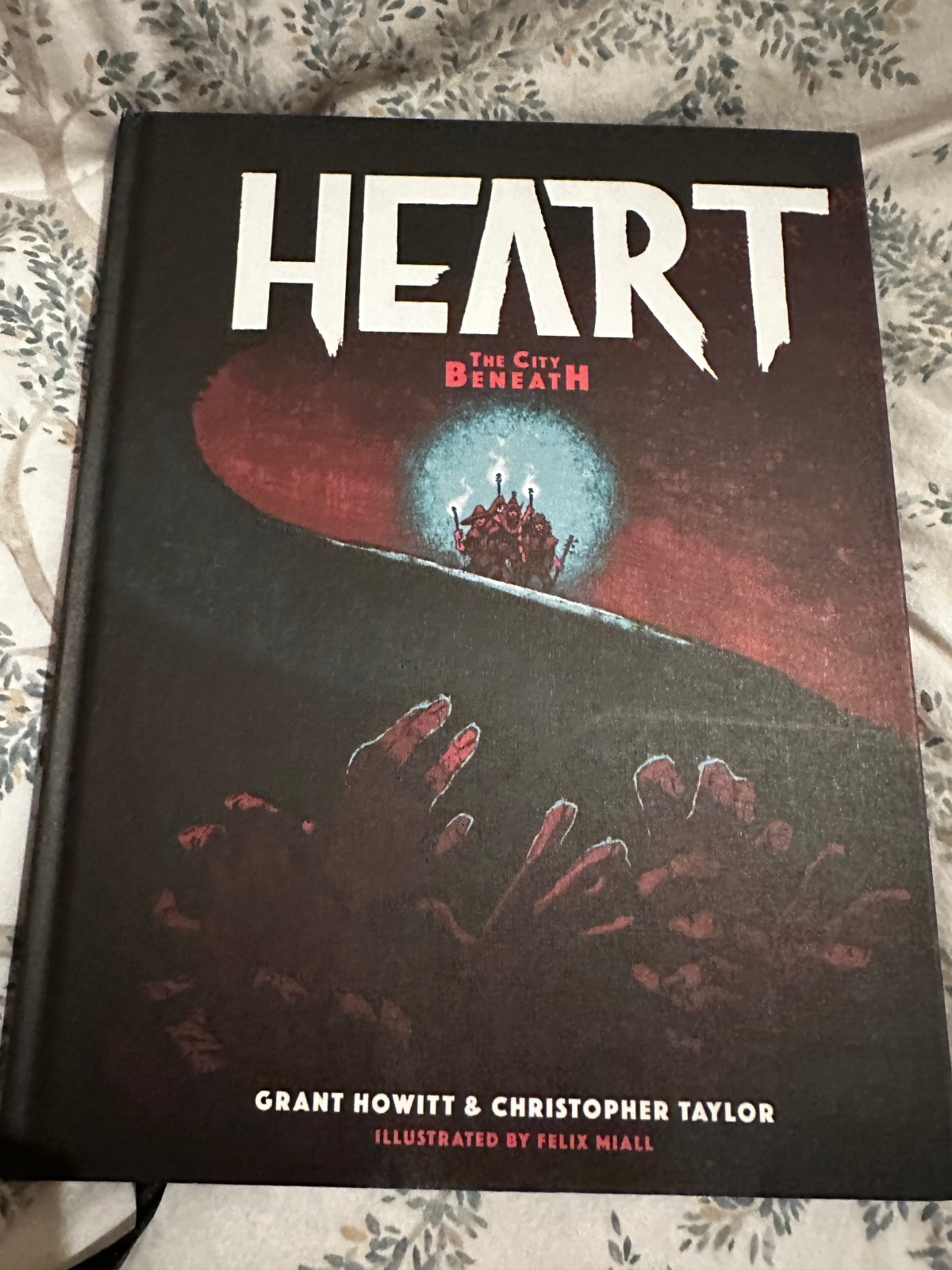
Heart: The City Beneath

Spire

Ok, look, you do not need to have played Spire: The City Must Fall, before delving into Heart: The City Beneath, but it sure doesn’t hurt.
As it happens we finished a year long campaign of Spire earlier this year. We had a great time with it. It was a refreshing change of pace for us. As a group we had played a lot of D&D, a couple of Free League games and a bunch of Call of Cthulhu so this was quite a departure. The ruleset of the Resistance system was something we had to get to grips with throughout the course of that campaign but, once we embraced it, the speed, flexibility and the power of the fallout system, in particular, began to really work for us. Fallout is the consequences you have to endure when things go wrong. Like Powered by the Apocalypse and Forged in the Dark games, it works with a dice pool system, but in this case you roll a number of d10s dependant on your skills and domains in a given situation. The top roll is the only one that matters and it can give you a complete failure, a mixed result (a success with consequences) or a total success. There were a couple of niggling issues that we had with the system, mainly involving how you determined if you took fallout or just stress. These generally revolved around the stress/resistance protection mechanic.

I will not lie to you, dear reader, I was worried going into it. Spire does not encourage the GM to prepare much. I used a published campaign frame, so that helped, but much of the plot is supposed to be generated by the PCs. This was tough for the players too, at least for a while. The campaign frame and I put a stew of NPCs, locations and events in their bowls in the first session, asked them to separate out the individual elements and come up with a recipe for their own, different dish, using the same ingredients. It took a while and a lot of discussion to determine their preferred approach and that changed multiple times. But by the end of the campaign we all felt much more comfortable with this style of play and that stood to us going into Heart, which uses broadly the same system.

Still, I don’t know if we would have decided on a Heart campaign as the very next thing to replace Spire if it had not been for the setting. Rowan, Rook and Decard’s Grant Howitt and Chris Taylor brought to life a beautiful and terrible city-state in Spire. The high-elves, or Aelfir, came to the mile high city of Spire two centuries ago and took it from the dark elves, or Drow. The PCs in Spire are members of the Ministry of Our Hidden Mistress, the outlawed para-military wing of an outlawed Drow religion. They fight a losing battle to regain control of the city for the Drow while dealing with cannibal cults, dangerous human retro-technologists, demonologists and, of course, the Aelfir themselves and their loyal Drow.

The setting and the classes of this game are what drew us all back to the same world.

The Heart knows what you want

And Heart, as implied by the title, is in the same world. It is the fucked up and enigmatic city beneath Spire. The Heart itself, (the true Heart, the one at the centre of the City Beneath, the thing that imbues it with bizarre intelligence and a wish to fulfil the desires of those brave mortals who dare to tread it’s veins and arteries) much like Spire, could be whatever you and your table decide it is. Maybe it’s an alien intelligence stranded below Spire, maybe it’s a portal to an other dimensional world, maybe it’s the echo of a technological marvel from the future. In practice, I feel like answering that question is a trap you should avoid, even if it is the goal of the PCs.

The most important thing about the Heart as a setting is that it is, in some way, sentient, aware, alive. As well as that, as alluded to above, it would grant the desires of other sentients. It is clear, though, that the Heart has a different idea about what you want than you do. It will take your desires far too literally or take them too far or misunderstand them to comic/tragic effect. So what the PCs want overall and from session to session is especially important to the game and how it turns out.

Delvers

As for the PCs, unsurprisingly, they play characters with classes that are matched only by the Spire ones for sheer inventiveness and bonkersness. Unlike Spire, they are not rebels, they are not fighting the aelfir for control of the Heart, they are adventurers, or Delvers. They are drawn or forced to explore the Heart for their own reasons.

The Players get to choose a few important elements for their characters before they start, their Ancestry (human, drow, aelfir and gnoll,) their Calling and their Class.

Ancestry and Class are fairly self explanatory but Callings will be unfamiliar to most. A PC’s Calling is their motivation and their route to advancement and eventual death. You might have been Forced to travel the Heart by a master you dare not refuse. Or maybe you are a Penitent who feels the need to make amends by finding those in need in the City Beneath and aiding them. Perhaps you are simply in search of adventure or enlightenment or the echo of the Heartsong itself. Each of these Callings bestows on the PC a core ability but more importantly, it provides a long list of beats. A beat might be something you want your character to achieve or something they need to endure or have inflicted on them. They come in minor, major and zenith flavours. A PC has two active beats at any given time and together, the GM and the player are trying to make at least one of those happen every session. When you hit a beat, you get an ability of the corresponding type, minor, major and zenith. When you hit your zenith beat, you get your final ability, and when you use that ability, it’s curtains for that character.

In our game we have three PCs:

  • A human Junk Mage with the Adventure calling – There is an element of junk to the junk mage, they can fix stuff with magic, but there is also an element of the junkie to the Junk Mage, so magic is their fix. Get it? They are on a mission to reach greater and greater heights of magic in the Heart and it draws them into some interesting situations.
  • A human Deadwalker with the Heartsong calling – The Deadwalker has his Death, an aspect of a loved one, (?) which follows him around and, which only he can see. He can fold himself into another dimension called the Grey. This has led to some very entertaining moments and solutions. The Heart knows him and wants something for him. But what?
  • An aelfir Vermissian Knight with the Enlightenment calling – The knight has a suit of armour that he personally constructed out of trains. He is obsessed with resurrecting the long defunct Vermissian subway network to serve The City Above. This is mainly because he is partly responsible for the disaster that rendered it, not only useless, but actively dangerous.

From Haven to Terminus

I started the party off in the City Between, Derelictus, making liberal use of the Heart sourcebook, Burned and Broken, for descriptions and ways to use this, lowest of Spire’s districts as a delve. From there they were sent into the Heart to retrieve a robot duplicate of a guy based in Haven Station. They have to check all the Vermissian stations on the way down to find him. So I called the campaign, “From Haven to Terminus.”
We soon moved into the events of the beginners’ scenario, Drowned, which is featured in the Heart Quickstart. We’ve been delving for six sessions and expect three or four more.

Mechanically, Heart has improved on some of the rules that Spire introduced. The stress/resistance protection mechanic has been simplified and is much easier to understand and apply now. Determining whether or not your character takes fallout is more straight-forward. Healing is a lot easier and more accessible in general and even combat feels like it flows a bit better.

In play it feels like a procedurally generated mega-dungeon with pockets of hardy civilisation, or havens, eking out a living until the pathways and caverns of the Heart warp and change enough to wipe it out again. The PCs go on delves for one reason or another but a common side-effect of delves is that they establish connections between havens, making it much easier for the PCs and others to travel between them in the future. This is a cool way to have them make a significant impact on the world and, dare I say, have them feel some sense of responsibility for it.

My overall impression so far is that I love this game. I love the weirdness of it and the horror of it, I love the dungeon delve theme that does not require a new monster or puzzle in every numbered room, I love how it has made us think on our feet and tell a story that we could not have foreseen at the start of each session. I love the beats that give me and the players something to aim for every time we play and I love the looming rewards/threats that are the zenith beats and abilities. And I do almost no prep at all. I might write a couple of notes of the kinds of things they might encounter on a delve but the rest is improv. The me that was shaking in my boots about running my first Spire session would not recognise the me that is improvising entire dungeons on the fly in Heart.