
Motivating characters
So, in the last post, I went on at some length about how you might be able to motivate players in your game, focusing mainly on what you do between sessions to get them excited to come back and do it all again. There were also times, I decided, when you shouldn’t overdo it, when you should just let people be.
When you do get them to the table, though, your work ain’t over. Obviously, I’m talking to the GMs out there, but this goes for players too. Because now it’s time to figure out why your character is out there smashing skulls or investigating murders or trying not to be sacrificed by some bloodthirsty, cthonic cult or whatever their weird job is.
Seems like an easy answer, doesn’t it? But it’s not. Your character’s motivation is a strange, ephemeral thing that you need to keep in your mind at almost all times to figure out what they are going to do in any given situation. You can keep your alignment, in my humble opinion. Alignment is such an archaic and ill-defined concept, it barely even begins to answer any of the questions raised by the “character” aspect of the sheet. It can be manipulated to mean almost anything. So it doesn’t really help to direct you when you are trying to decide whether you should back the werewolves or the elves (Dragon Age: Origins fans, yo!)
New characters
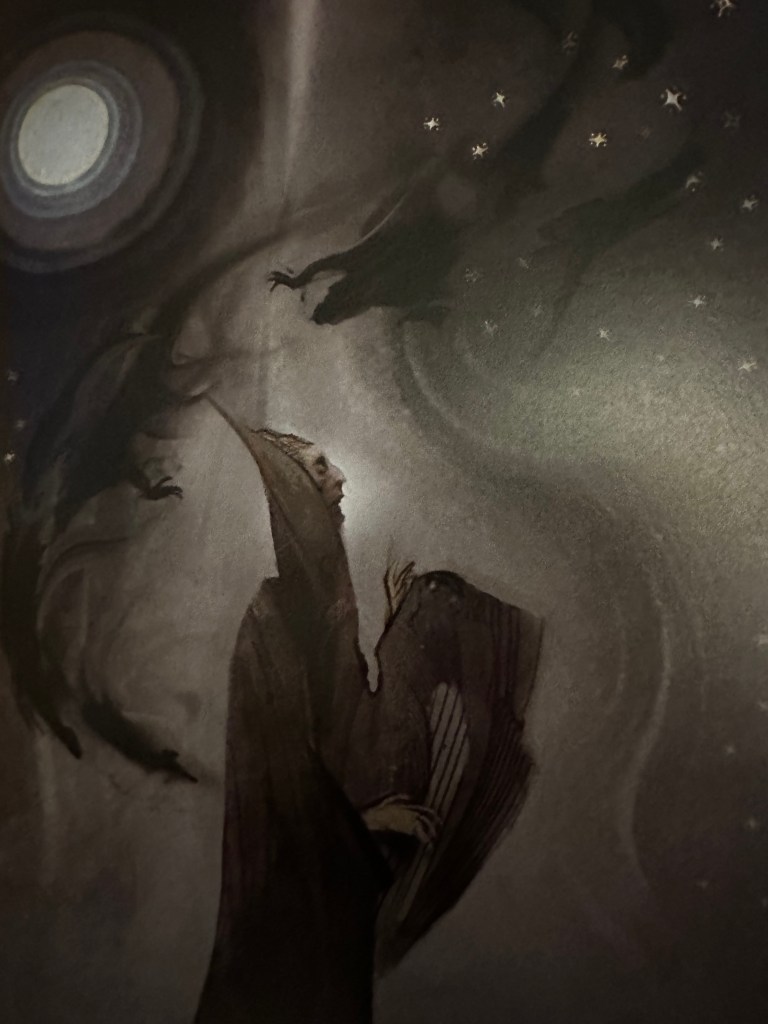
Games have all sorts of ways to help you figure out what your character’s motivation is going to be. At the creation stage you are picking things like backgrounds, bonds, ideals and flaws if you’re playing 5e, your drive, problem and pride if you’re playing Tales from the Loop, your Calling if you’re playing Heart. The game is usually trying to help you out. Sometimes it doesn’t have to do any more than describe your race and class, in fact. That’s often enough to set a player’s imagination alight. Before you know it, your dwarven barbarian has figured out that her driving force is a desire to put as much space between herself and the darkspawn riddled Deep Roads (I’ve been replaying Dragon Age: Origins recently, ok?) as she can, and to have fun doing it. Of course this motivation is likely to change many times during play, but if Bianca remembers that she never wants to set foot in the Deep Roads again from that moment on, all of her decisions are likely to be coloured by it, especially when she finally faces her fears and delves back down to Orzammar and the lost Thaigs to help out her party-mates in their quest to track down the origin of the darkspawn outbreak in the Korcari Wilds.
Here’s a question though. How much influence should the GM have on a player-character’s motivation. Well, like most things PC-related, I would say that there is a conversation to be had. This is often something I forget to do with my players at character creation to be honest. Especially in games where motivations are less well defined or less tied to the plot. In fact, I have received feedback in the past that I should be more willing to guide players in their choices of class in case they choose something inappropriate for the campaign, never mind motivations! But basically, what I’m trying to say is that you should always talk about it, especially if a player is interested in talking about it.
I messed this up recently and definitely reduced at least one player’s enjoyment of the first session of a new game as a result. Motivation is important! It colours everything so you should always be available to talk about what a character is doing this stuff for? Why would they want to? It’s not that they player is being awkward or a prima donna or making the game about them, they just want to feel a connection to the game through their character and they need a reason for that. Help them out, eh?
In gameplay
As I mentioned before, character motivations can change during the course of play. In fact, I would go so far as to say that if they don’t the game there is probably not much going on in it. Most sessions it is a good idea to make their most immediate motivation become “I don’t want to die!” At least once.
But this goes for long-term motivations as well. I think it is absolutely possible to retain your character’s initial motivation of “never wanting to go bak to the Deep Roads again,” while subverting that, undermining it, overcoming it. Maybe, once Bianca follows her companions back into the Deep Roads, she realises that, without here, they would have died down there, that actually, her Deep Roads survival skills are valuable and that she should help others by teaching them. I think GMs should be prepared for these shifts but players, equally, should be ready to make changes like this to their characters. Turn it on its head, fail forward if that’s what happens in the game. Push your character to do what is explicitly against their motivations sometimes and see what happens to them and the game as a result. Do the unexpected!
Heart
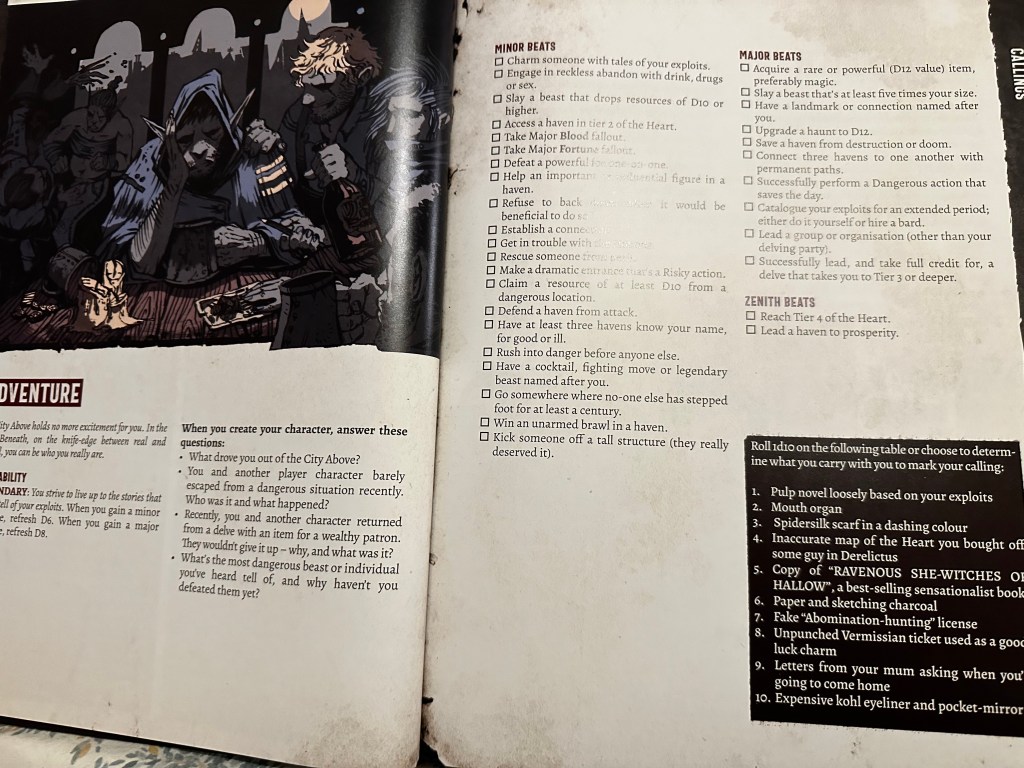
It always comes back to Heart these days it seems. Well, that’s because it has these great little systems built into it. The granddaddy of these systems is the Character Callings. You have a handful of them. Not too many to choose from: Adventure, Forced, Heartsong, Enlightenment and Penitent. They speak for themselves really, except maybe for Heartsong, which is the weird one that wants your weird character to follow the weird as deep as it will go into the weird subterranean other-world until you find some insight into the weirdness that’ll probably kill you or transform you beyond all recognition.

Essentially these are all the motivations your character might need in Heart. Their descriptions spell out the kind of thing in keeping with the theme of the Calling, that might have led you to delve into the red, wet Heaven. It also gives you a fun ability to reward you for choosing it, a few questions to answer to help you flesh out your character and focus you on the type of adventure/enlightenment/penitence etc you are espousing, and most usefully, both for the player and the GM, an absolute raft-load of beats, narrative or mechanical milestones you want your character to hit as your delves go on. The beat system is so useful for building a session and a story at the table together. It is particularly fun when one PC’s beat synergises with another PC’s completely separate beat or when the object of the beat comes up organically in play, without the GM being aware that it’s happening. It is motivation given mechanical and narrative form and I love it.
Seriously, go check out Heart if you haven’t already. It’s a good game. And it’s fun and gross.
That’s me for now. My motivation to write has ebbed and waned. It’s you time now. How do you like to motivate your players and characters?
 The Dice Pool