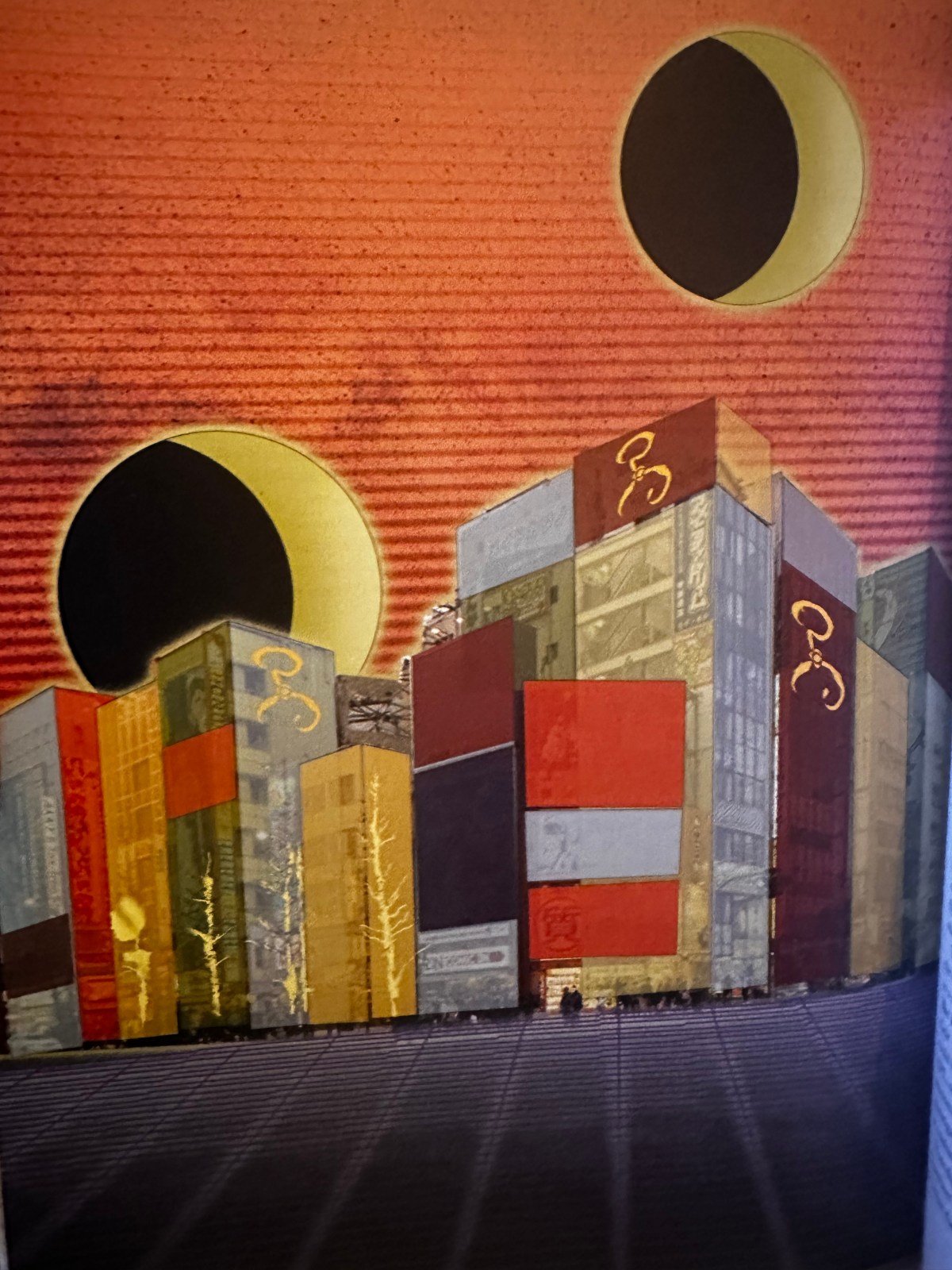
The Sutra of Pale Leaves: Dream Eater

I think it’s interesting that each of the scenarios is styled as being possible to run as a one-shot but I can see Dream Eater’s potential in the context of the greater campaign.

Format of the Sutra

This is the second post in my exploration of the 1980s Japan Call of Cthulhu campaign, the Sutra of Pale Leaves. Go here for the first one, which deals with the overall premise and the Campaign Background chapter from Twin Suns Rising. Although the text suggests that you can play the constituent scenarios in any order, they are presented chronologically and I can’t imagine running them any other way. They are also presented in two different books, of which Twin Suns Rising is obviously the first, with its three scenarios taking place between July 1986 and Spring 1987. I thought I’d be able to write about all the scenarios in this book in a single post, but it turns out, I can’t read that fast. Each scenario is long, between 35 and about 50 pages of dense, small-font-size text. So, instead, I’ll just be examining the first of them today, Dream Eater, written by Damon Lang. Please note that I haven’t played or run this scenario, I have only read it. So, take my conclusions and thoughts on it with that in mind.

WARNING: SPOILERS!

I would find it very difficult to write about Dream Eater without massive spoilers, so I am giving you a warning, right now: if you want to be a player in this scenario or the wider campaign, its probably best to skip this post. Come back later! I’ll probably have something for you then. Or check out my ever-growing back-catalog of posts.

Dream Eater

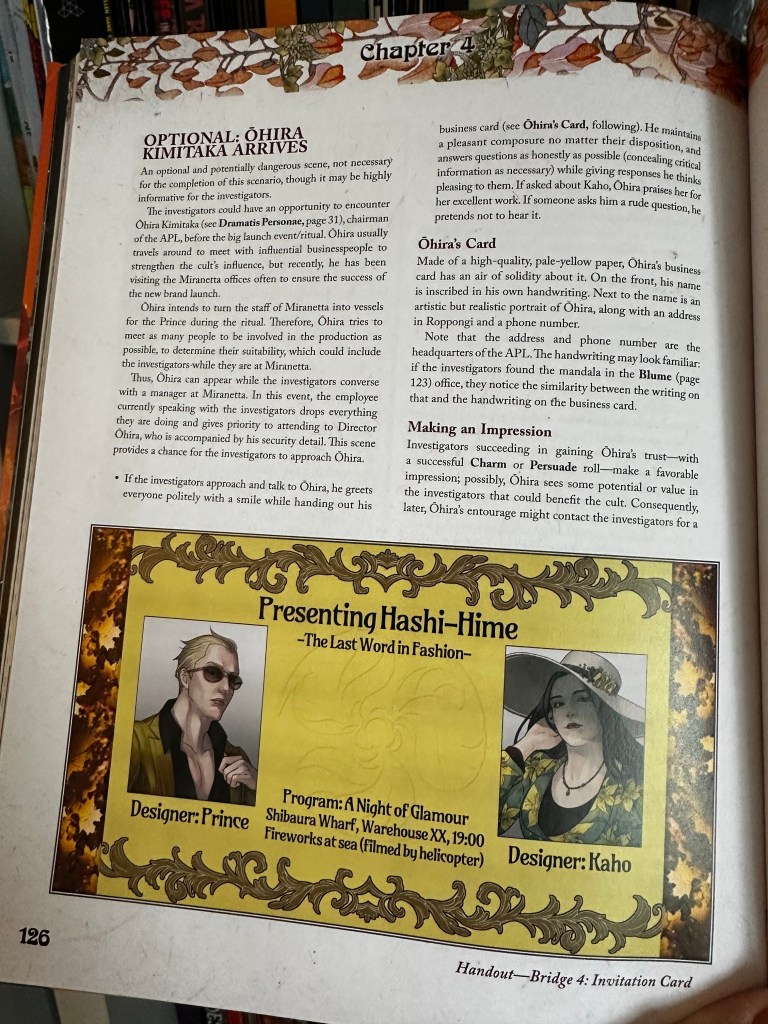
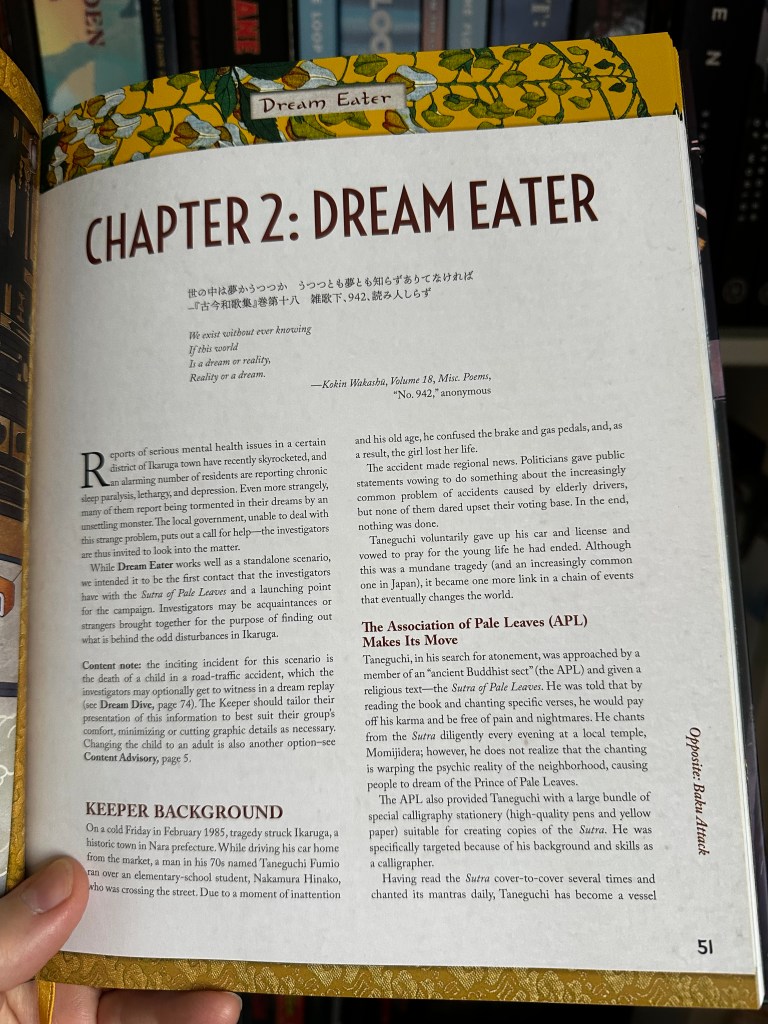
The first page of  Chapter 2: Dream Eater introduces Keeper Background and the Association of Pale Leaves.
We exist without ever knowing
If this world
Is a dream or reality,
Reality or a dream.

I once wrote two novels about the adventures of a twelve year old Japanese boy who moved to Ireland with his family. In them, he discovered that he was able to use his cat as a conduit to enter the dreams of others. This allowed him to reconnect with his friends at home but his consciousness became trapped in the kitten! Various hijinks and drama ensue. Anyway, suffice it to say, I was very quickly on board with the premise of this scenario given teh Japan and dream-related elements of it.

The premise is that a small, rural Japanese town is beset by sleeplessness and terrifying dreams of monsters. The longer it goes on, the more the citizens worry for their safety and sanity. The authorities have offered financial rewards to anyone who can help them solve the problem or take care of the afflicted.

That’s where the Investigators come in. Perhaps they are from this small town of Ikaruga, or maybe they just heard of their troubles and have come from the city to look into them. Either way, their assistance is greatly welcomed.

Indeed, their investigations are likely to take them quite quickly to the door of an old man, Mr Taneguchi, who was responsible for the death of a young girl in a traffic accident recently. From there, they will visit other sites in the town, and other potentially recurring NPCs, and they will learn of the Baku. This Yokai is the eponymous Dream Eater, and the cause, it would seem, of the town’s problems. The Investigators will have to find a way to defeat, satisfy or neutralise this creature if they are to help.

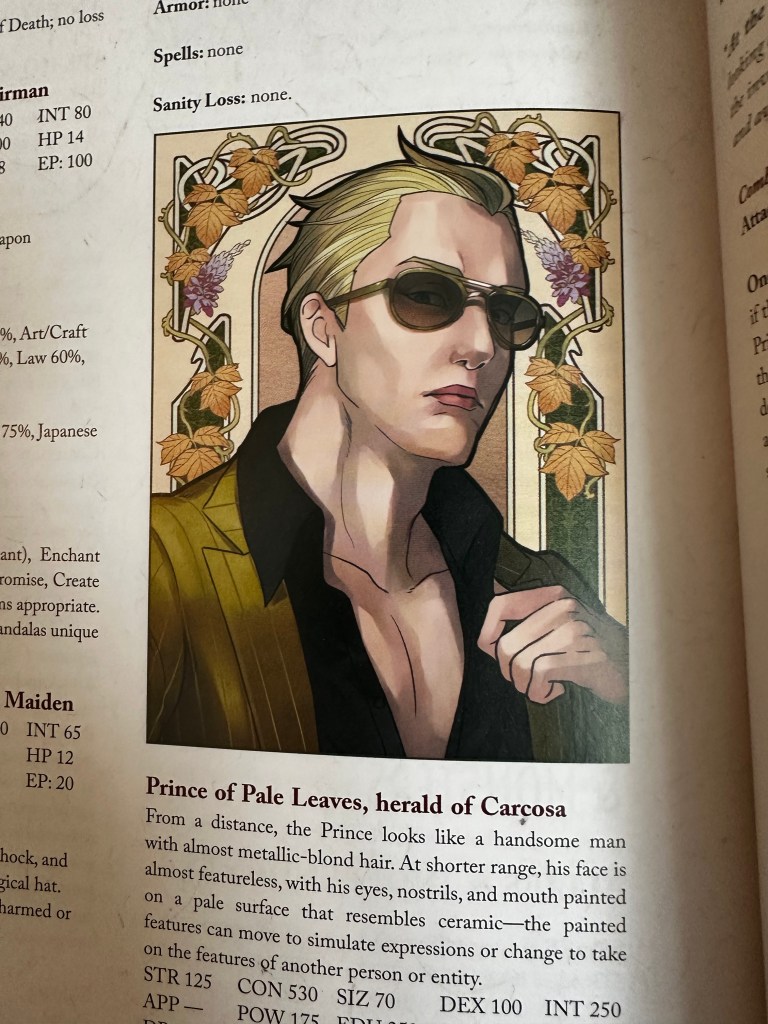
But, of course, there is another layer to this story, just below the almost obvious one. The Prince of Pale Leaves has worked through one of his recruits to use Mr Taneguchi to spread the Sutra of Pale Leaves. The Prince has been invading the dreams of the people of Ikaruga, through the old man’s chanting of its mantras at night. It has been creeping through the town, insidiously and terribly. This is what has drawn the Baku to this place. It finds dreams of the Prince the most delicious. The Baku is known as a benevolent yokai in Japanese legends, one that takes your nightmares away and lets you sleep soundly. And that is what it’s attempting to do. The thing is, as it eats the dreams of the Prince, erasing them from the memories of the dreamers, the only image they are left with is of a scary looking ,purple, tapir monster, the Baku. And so, it becomes the scape-goat. The Prince attempts to use this misunderstanding and the Investigators’ intervention to defeat the Baku, thus allowing his influence to grow all the faster.

The question is, will the investigators figure this out? Will they destroy the Baku? Will they leave this town better or worse than they found it?

The Flow of the Scenario

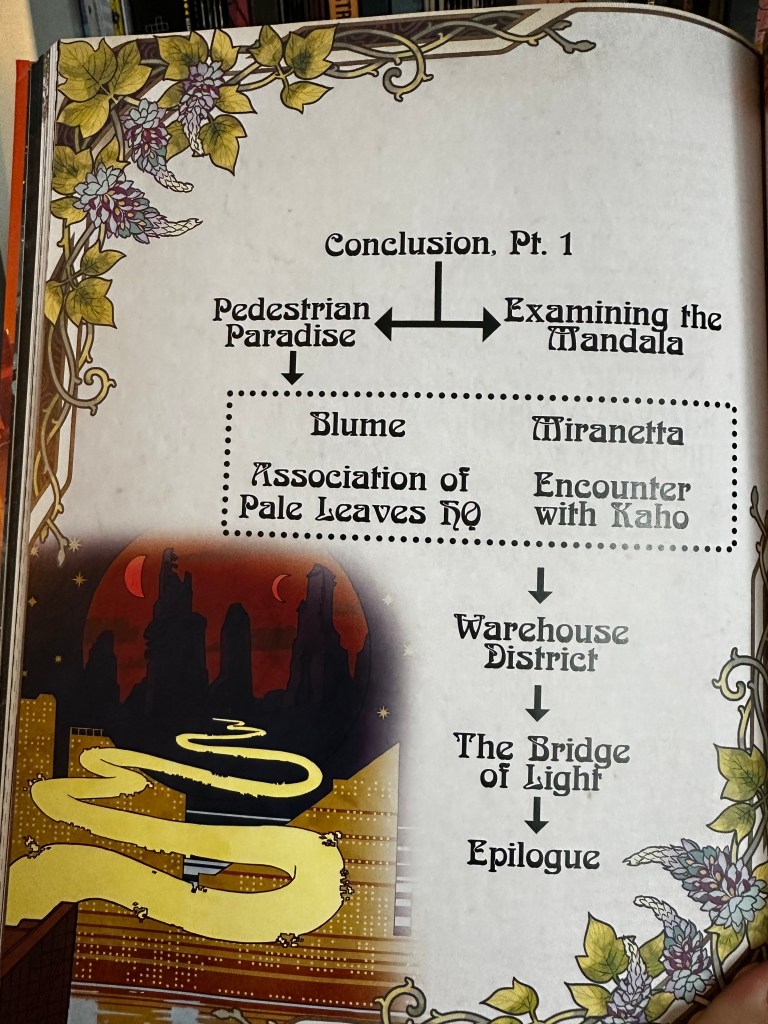
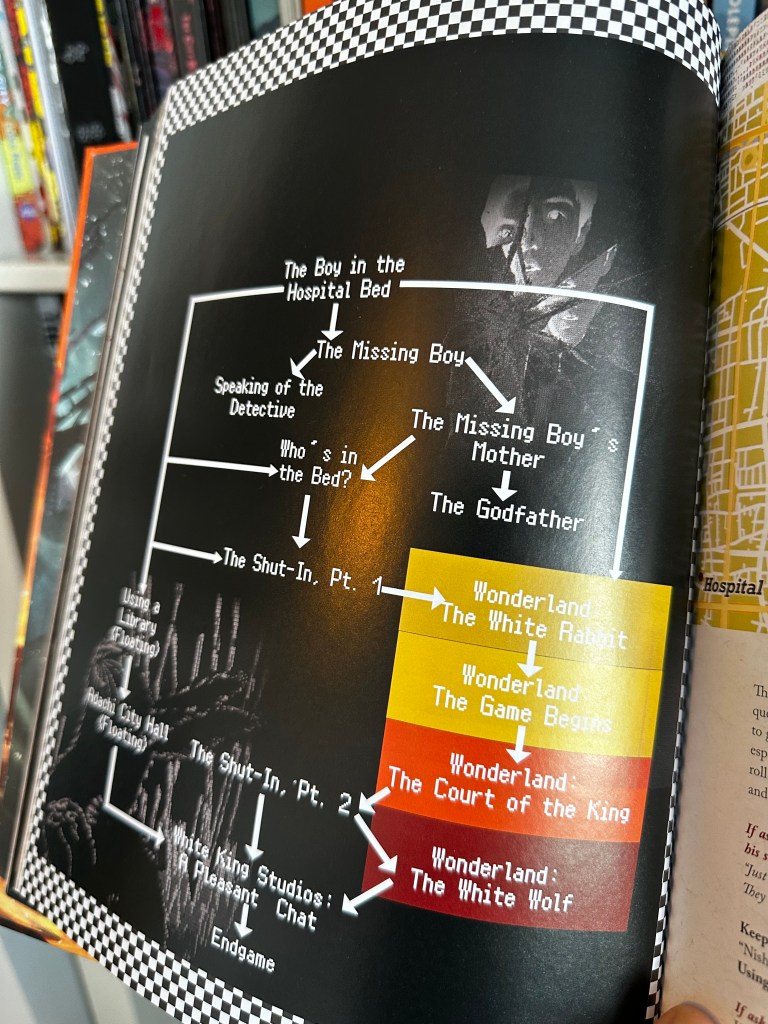
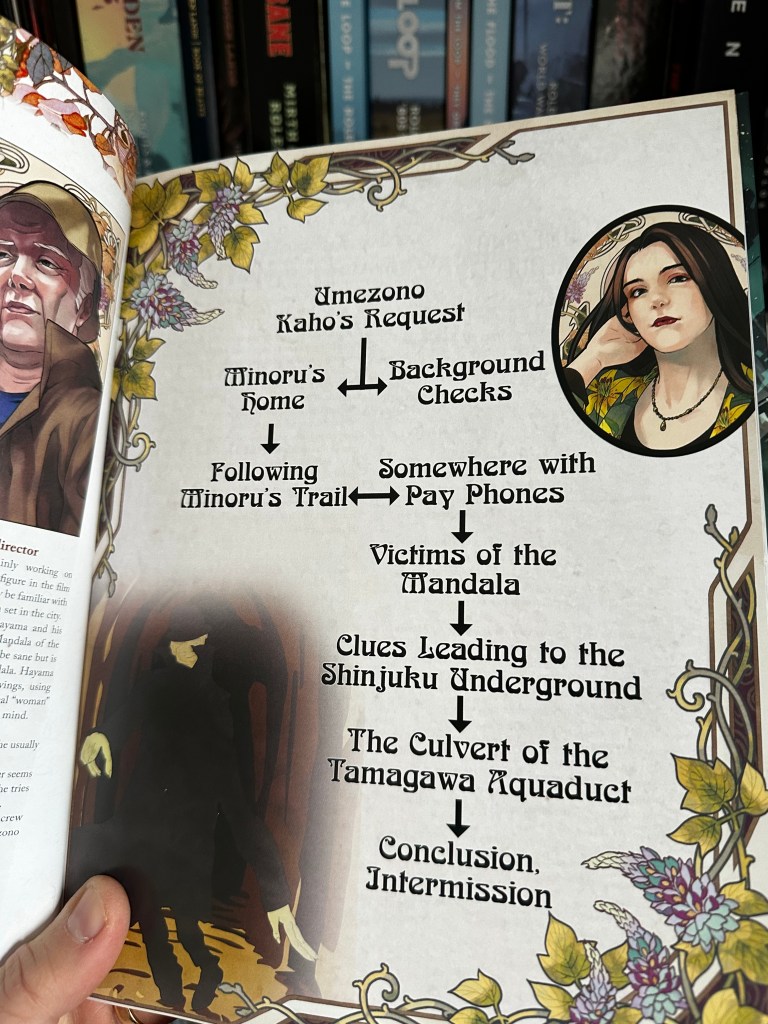
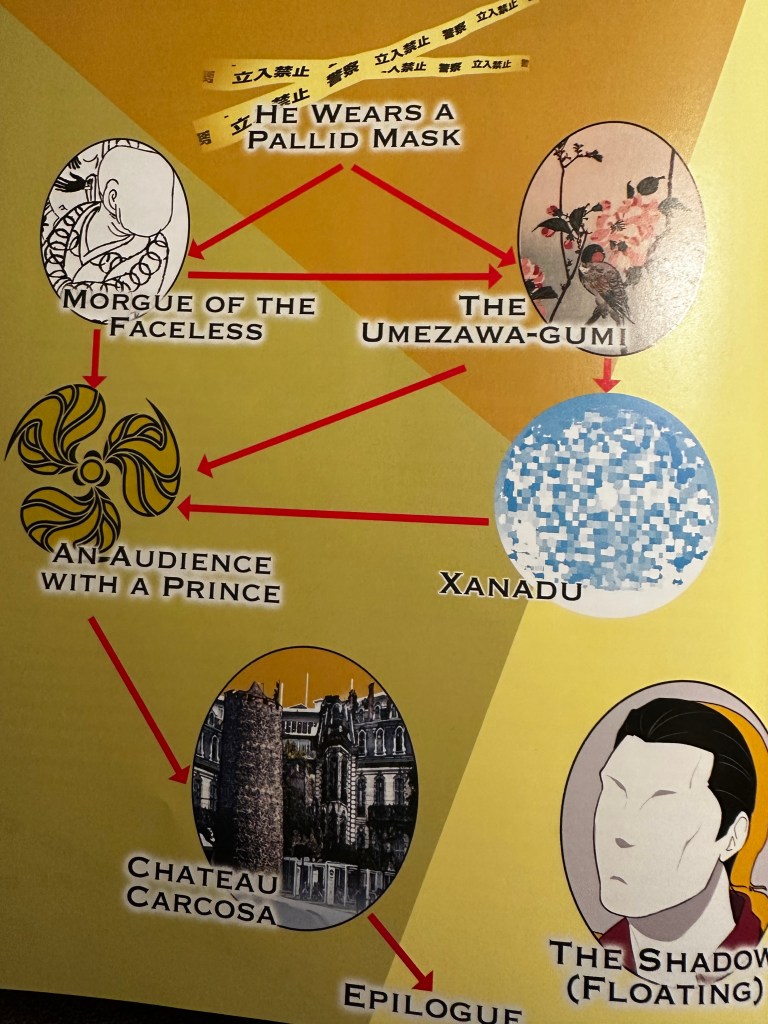
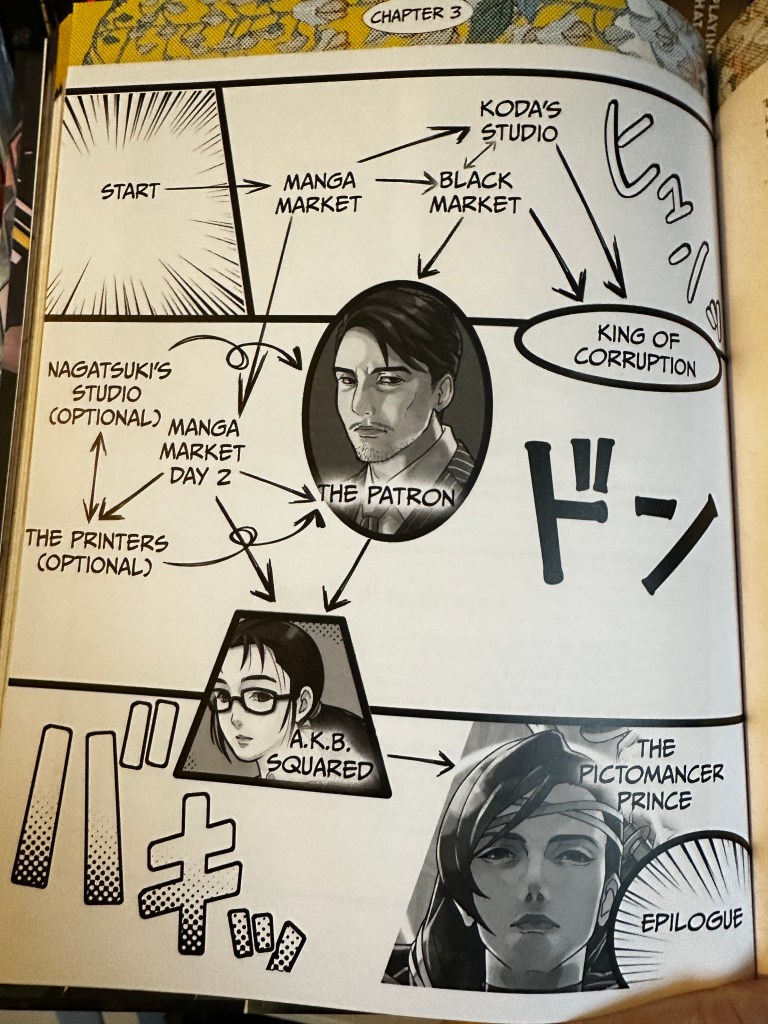
The flow of the Dream Eater scenario in visual form. From Ikaruga Town to Talking with Townspeople to Meeting Taneguchi to Horyuji temple or Nightly Prayers to Unpleasant Dreams to The Fortune Teller to Research in the Sutra to Dream Dive to the Final Encounter and finally to the Epilogue.
Dream Eater Scenario Structure

Take a look at this flowchart. This is useful in a scenario like this for a game like this. Call of Cthulhu is a trad game, and, as such, its scenarios rely on these sorts of stepping stones to get you from hook to ending. So I really appreciate it when you get something like this that cleanly represents that idea visually.

So, after a lengthy preamble giving us Keeper background, an intro to the main NPCs and a few PC hooks, we start with Ikaruga town, a place that’s renowned for its truly ancient buddhist temples, which contain the oldest wooden buildings in the entire world. I like that the section on the town asks the Keeper to get in media res and kick things off with a shared dream sequence. Something weird is happening from the off and it gives PCs who don’t know each other yet a good reason to seek each other out.

You get a basic map of Ikaruga in the style of a roadmap, which is a nice touch. Along with this, we have an “Exploring the Town” section, which spells out stuff like population, transport, amenities and accommodation but the only real subheading to this is the Shepherd Bar: A Foreshadowing, the purpose of which is a little too subtle for my tastes.

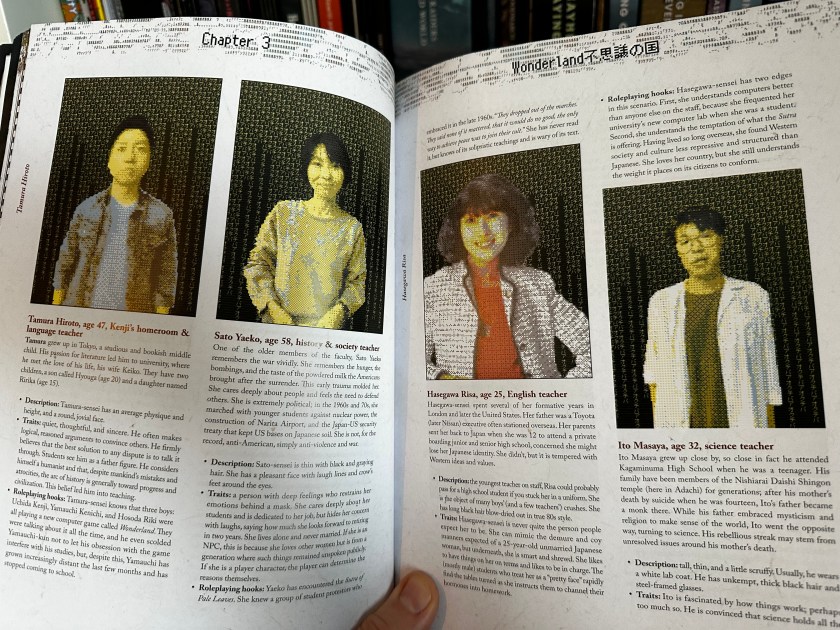
The scenario, and indeed, the campaign is sprinkled with “Lore Sheets,” which detail elements of Japanese cultural, societal or mythical knowledge that the average Investigator might be expected to know without having to make a Know roll for it. The Keeper is supposed to hand them out as and when the subjects come up. In this section, we have one on Hōryūji Temple, for instance. Each of these includes a little snippet of “Personal Background,” which the player given the lore sheet might adopt for they own character. It’s a nice way to weave the PCs in with the place and the lore of the place.

The Investigators are expected to visit the Town Hall to begin their investigations. The Town Hall section, as is the case with each of the major plot points of the scenario, begins with a handy summary that looks like this:

  • Location: Ikaruga town.
  • Leads In: Hooks One, Two, and Four
  • Leads Out: Meeting Taneguchi (page 62); Talking to Townsfolk (page 61).
  • Purpose: investigators learn about the case.

This is another incredibly useful tool to assist the Keeper at the table, allowing them to see, at a glance, if they are at the right section, where they should be looking next and the overall purpose of the scene. This last is important to let you figure out where a scene should end, which is not always obvious.

As we get into this section, we notice that precise and exacting answers are provided to every relevant question the PCs might ask Mr Maeda, the Vice-Chairman of the Public Welfare Committee. This is common to most of the NPC interactions in the scenario, which will keep you, as the Keeper, on track with regards to what each of them knows. Once again, it’s a trad scenario. Rather than summarising the things they know and letting you play them as you see fit, things are a little more proscribed here. Of course, if you want to run these interactions differently, you can. It will just mean you spending more time prepping.

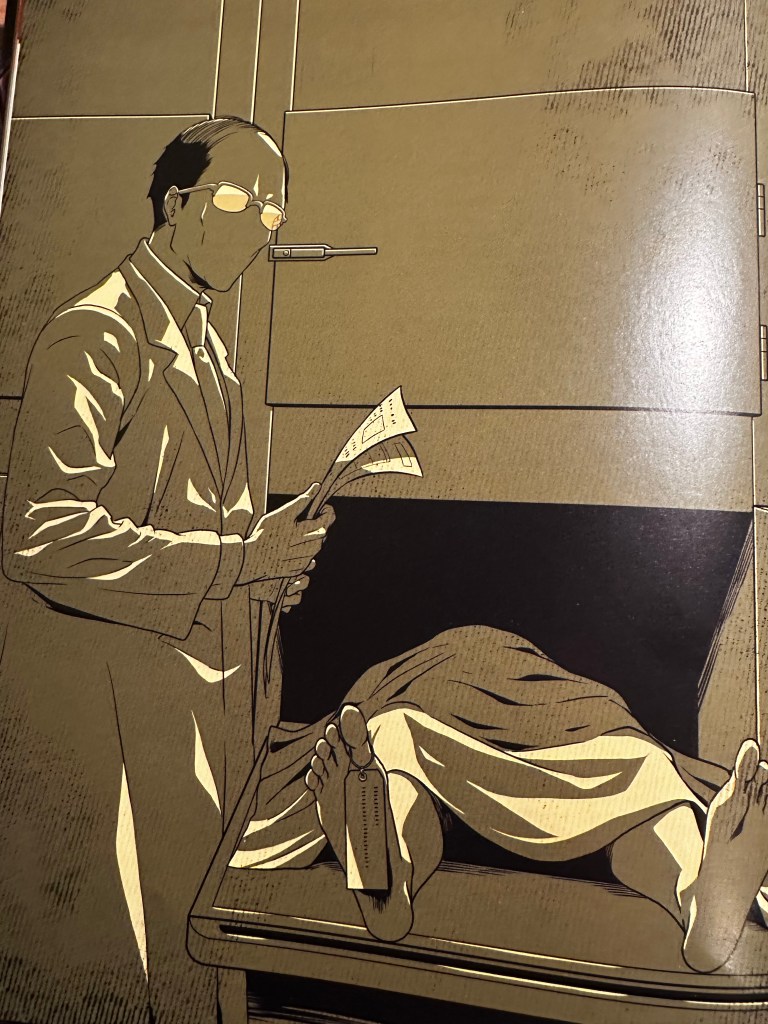
We get some general knowledge and descriptions of half-remembered dreams from talking to the townsfolk, but we really get into it when the Investigators go to meet Taneguchi, the old man who is secretly harbouring the Prince of Pale Leaves in his mind. He was approached by a representative of the Association of Pale Leaves and told that, by chanting from he Sutra of Pale Leaves nightly, he would pay off his karmic debt from running over the little girl on the road. Unbeknownst even to himself, he has been making beautiful and elaborate copies of the Sutra at night, when the Prince takes over his body. The APL is planning to use these to spread the Prince’s influence even further across Japan. It is in this section where the Investigators are likely to gain their first exposure to the Sutra, thus beginning their journey towards recruitment by the Prince, themselves.

From here, the investigations might lead to Hōryūji Temple, where they might encounter another recruit, Ukami, a former monk, who is also a martial arts master. Or they might go to the Momijidera Temple, where Taneguchi recites his prayers each night, But eventually, we come to one of the more interesting parts of this scenario, Unpleasant Dreams, where the Keeper can tailor nightmares to individual investigators’ personalities, backgrounds and memories. This is the first time they will encounter the Baku. There will be different outcomes depending on the levels of exposure they have had to the Sutra so far. It could lead to significant Sanity loss, but, on the bright side, it could also lead to Exposure Point (the points which track how exposed you are to the Sutra and how much influence the Prince has over you) reduction.

Lore Sheet 3: Fortune-Telling in Japan and the Fortune-Teller, Madam Inaba.
Lore sheet

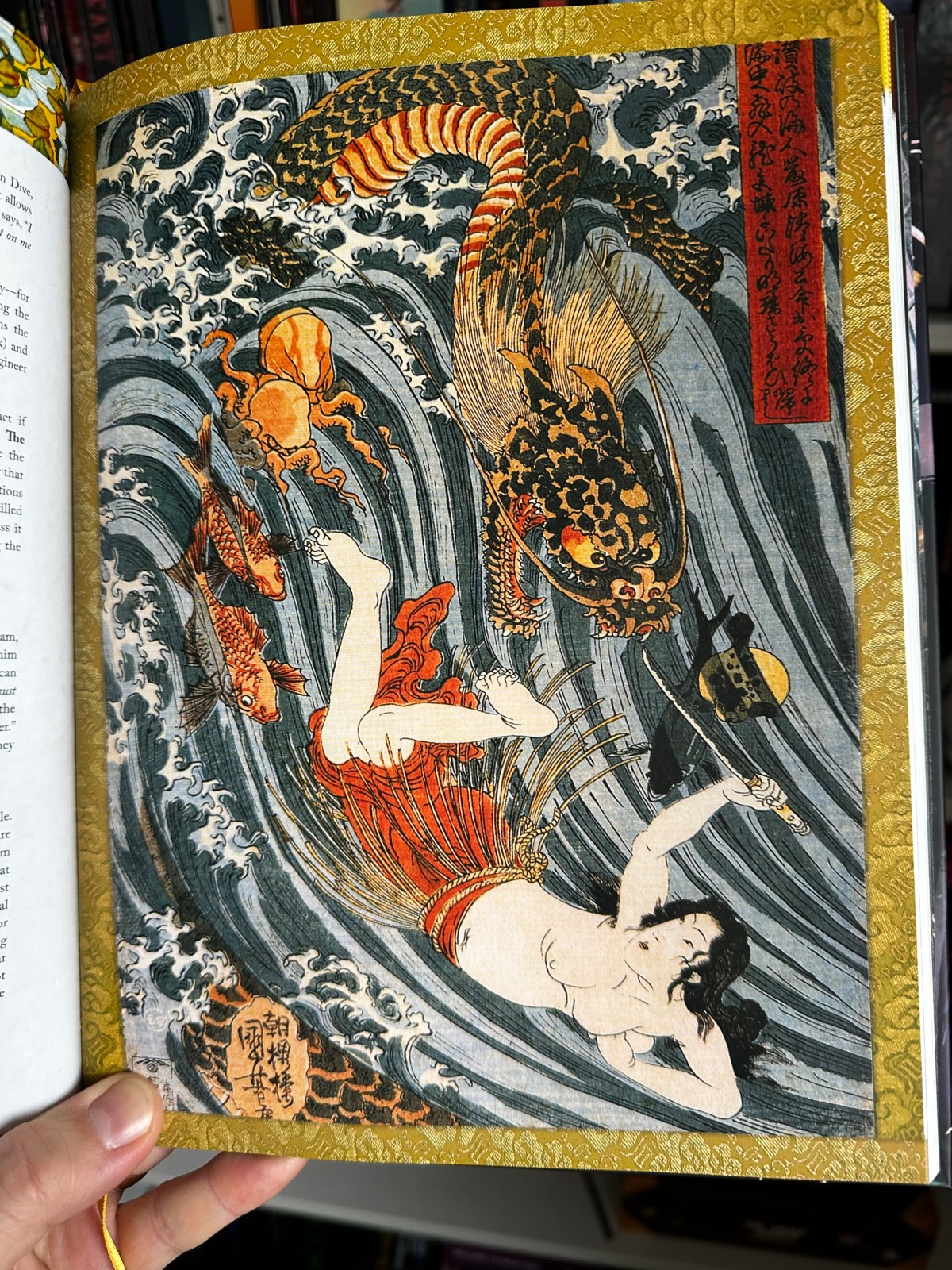
After this, they are likely to visit Madam Inaba, the Fortune Teller or go to the aforementioned Hōryūji Temple to find out more about the Baku and how to defeat it. Importantly, they should then go and do some research in the Sutra itself, exposing them once agian to the Princes influence. This will lead them inevitably to the Dream Dive section. The scenario takes us back into dreams here, this time, a shared, lucid dream, which they will have learned how to perform from their research in the Sutra, of course. Rather than have the Keeper craft the dreamscapes they encounter this time, they are put through a “Gauntlet of Nightmares.” I like the nightmares that have been described in this section, they are Japanese-flavoured (I have definitely had nightmares about the mukade myself) and they’re scary, but they seem a little random. They’re not as thematically coherent as other parts of this scenario. At least, until you get to Taneguchi’s Dream: The Accident. In this one, you relive, along with Mr Taneguchi, the night he killed Nakamura Hinako on the road. The scenario presents several ways the Investigators might deal with the situation, from doing nothing to showing some humanity to the dying girl, to rewriting history!

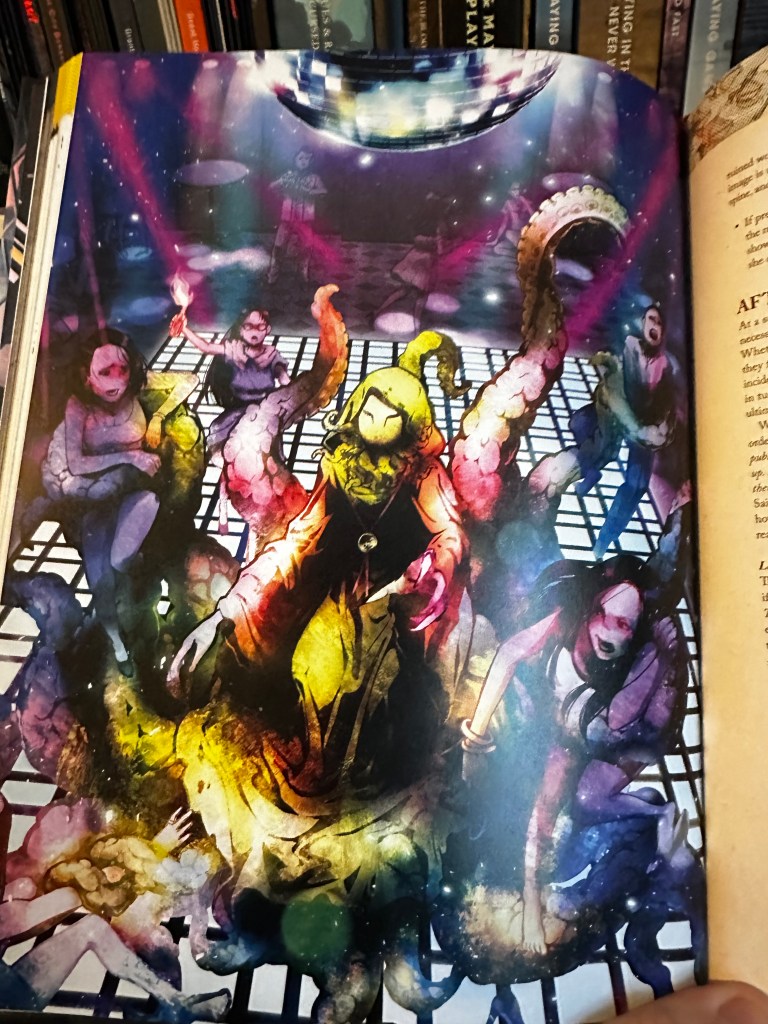
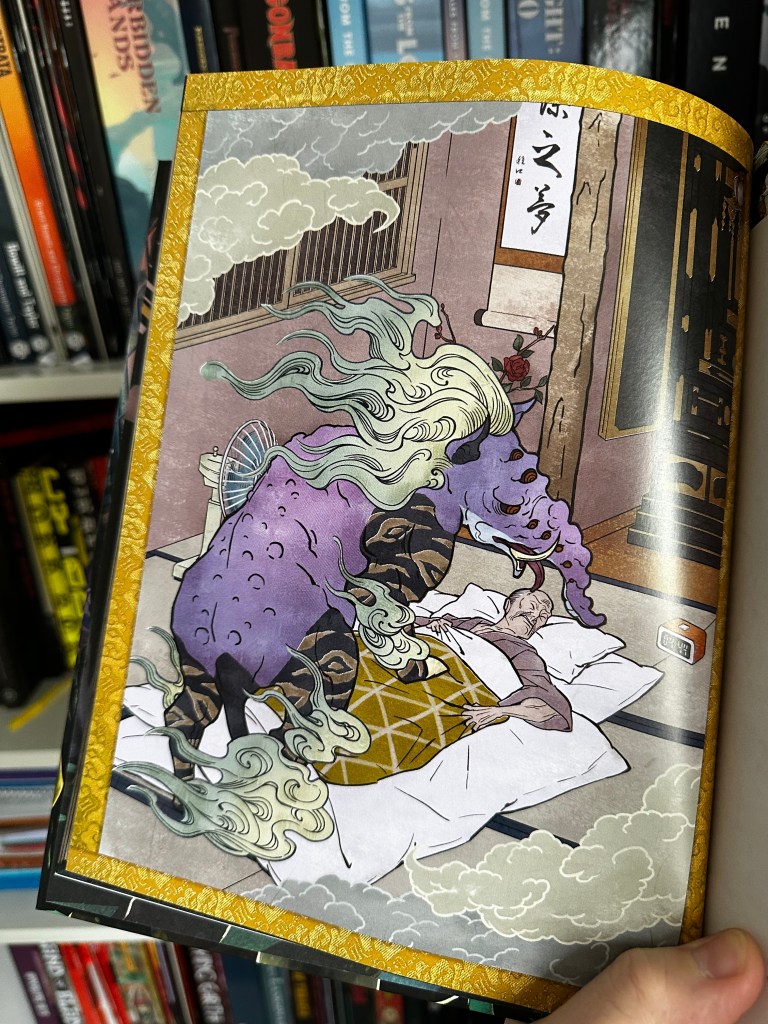
The baku, a big, purple, tapir-like creature, feeding on a n old man who is sleeping on a futon in a tatami room.
Yum Yum

The only thing left to do is to face the Baku itself. By now, the PCs might have learned enough to know that the Baku is not the real threat here. Rather, it comes from the Pale Monk haunting the dreams of Taneguchi, the representation of the Pale Prince. Or they might play right into the Prince’s hands and attempt to defeat the creature, clearing a path for the Sutra to capture more recruits. Whatever they decide, there is a good chance they will have to use signs and magics learned from the Sutra itself to do battle in the Final Encounter. The scenario introduces mechanics by which they can spend Magic Points to summon useful items or weapons to help them, but their opponents can do the same or worse. The Baku can fully transform the dreamscape allowing it easier access to Taneguchi, which is all it wants. It wants to gorge itself on the old man’s Sutra-ridden mind. If the Investigators allow that to happen, it is one of the best endings you can achieve, leaving Taneguchi in a state of extreme dementia, but freeing the town of the Prince’s influence.

Endings

The first page of Endings, includes 0. party Wipe (Failure), 1. We Do Nothing (Taoist Ending), and Yokai Busters (Bad Ending.)
Endings

Note that the endings presented here and in later scenarios are labeled and numbered, as is common for indie scenarios in Japan. This enables players to tell others how their game went on social media while avoiding spoilers for everyone else.

I understand this concept and the reason for it. But I don’t particularly enjoy the implication that you can’t have your game end any other way than one of the six potential endings provided here. I am not going to judge it without playing it out, but I will say they are described in terms of one ending being a “failure” and others being “Bad Ending,” “Good Ending,” and “Best Ending.” Of course, these are value judgements. Just because you TPK, doesn’t necessarily mean it was a bad ending for your party, and, to be fair, the text does describe this one as “something of an achievement.”

The inclusion of “Optional Post-credit Scenes” is interesting too. These each present a little vignette of how the Investigators might have changed reality during their adventure through dreams. It explains that they work better if the scenario was run as a one-shot but that they might just serve to show the sheer power of the Sutra over reality.

Conclusion

This feels like a great scenario to start off this campaign dealing with the Prince of Pale Leaves as the antagonist. It immediately introduces the players to the idea that this is a being that exists in the mind of others and is spread through the dissemination of the Sutra, or it should. I can’t say for sure if it does it effectively without playing it. Overall, I like the structure, which is designed to keep the Keeper on track, no matter which way the players decide to go from one scene to the next. I do find the extreme levels of detail in the NPC encounters a little unnecessary. I still think it’s possible to summarise a character’s personality and the things they know in a much shorter manner, that would work just as well, if not better.

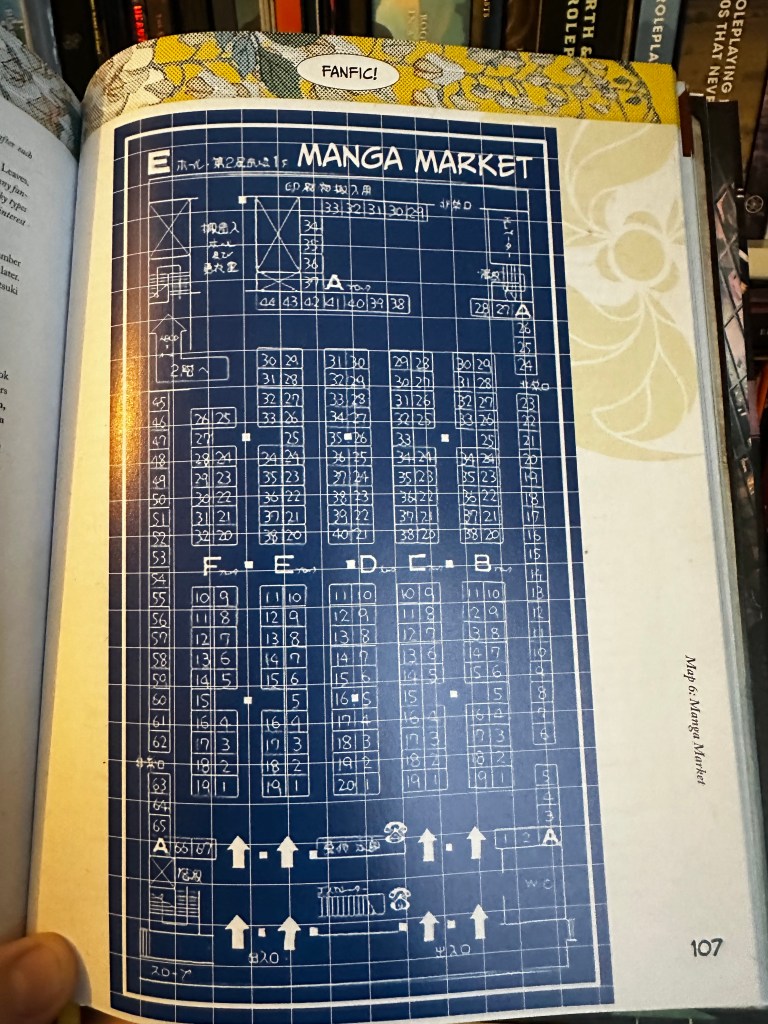
I think it’s interesting that each of the scenarios is styled as being possible to run as a one-shot but I can see Dream Eater’s potential in the context of the greater campaign. I’m looking forward to reading the next one, Fanfic, where the APL hatches a plan to recreate the Sutra as an action manga.

The Sutra of Pale Leaves: Cthulhu in Japan

Japanese Series

It looks like I have stumbled into a Japan-related games series, what with my recent posts about Kanabo and my visit to a Japanese Friendly Local Game Store in Fukuoka during my recent holiday. Combine it with a couple of posts on Call of Cthulhu in the last couple of months and this one fits right in.

The Sutra of Pale Leaves

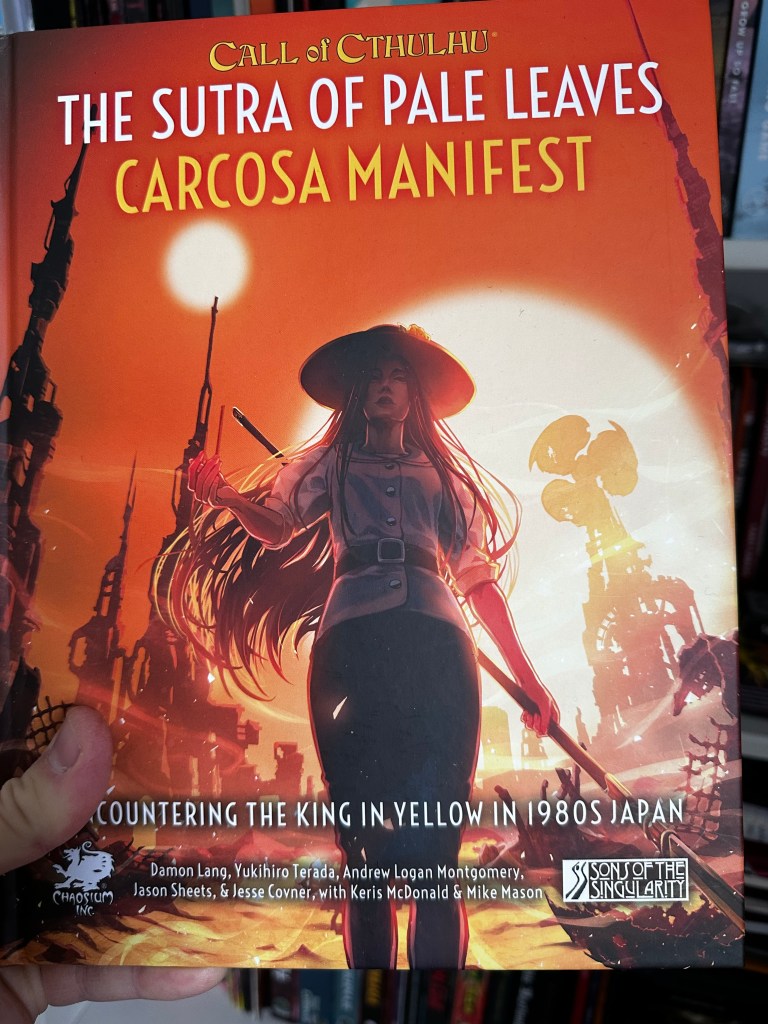
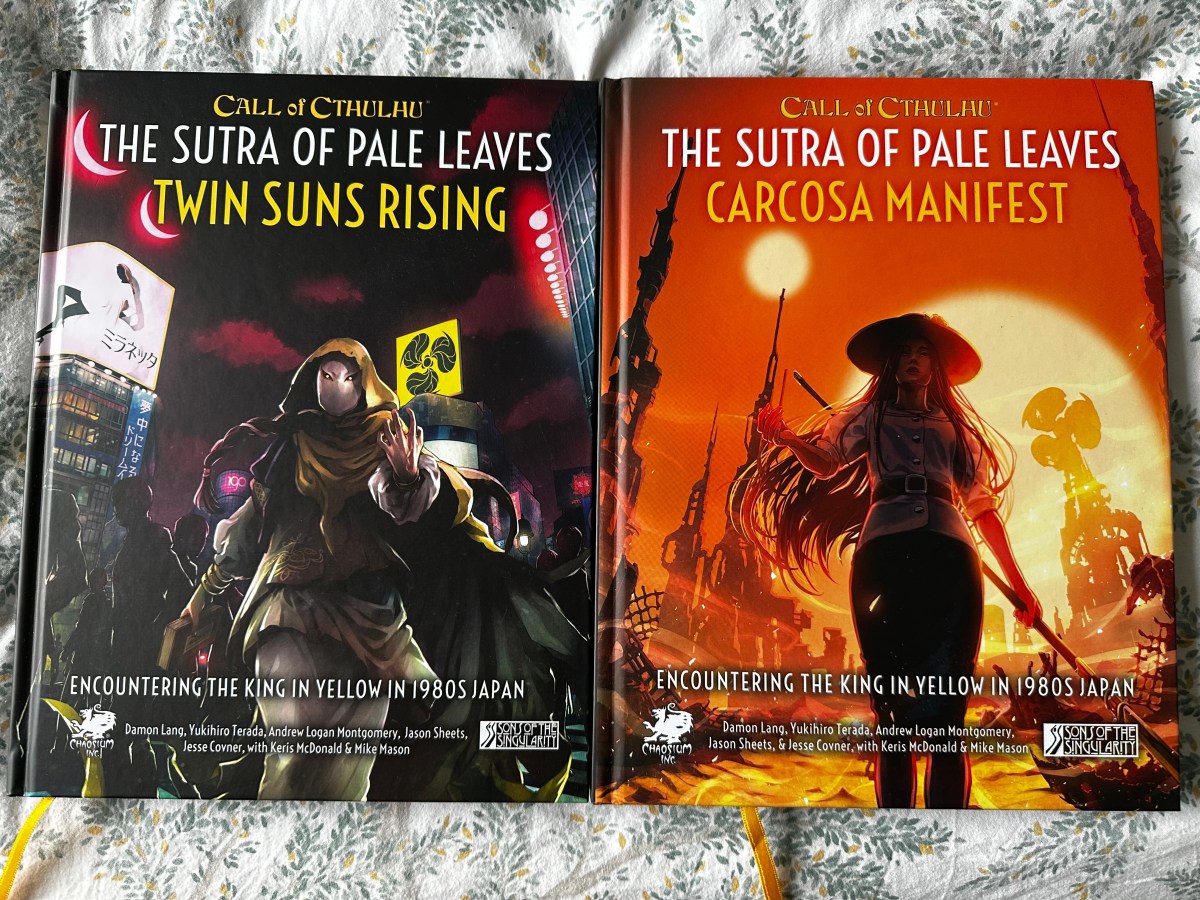
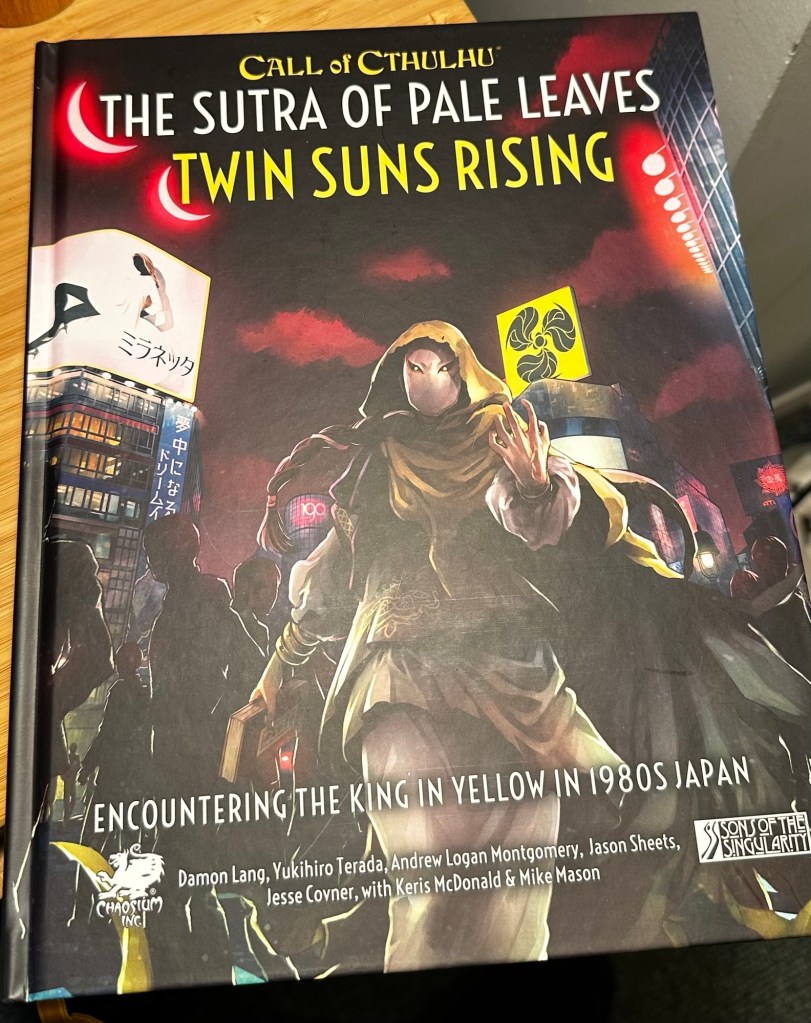
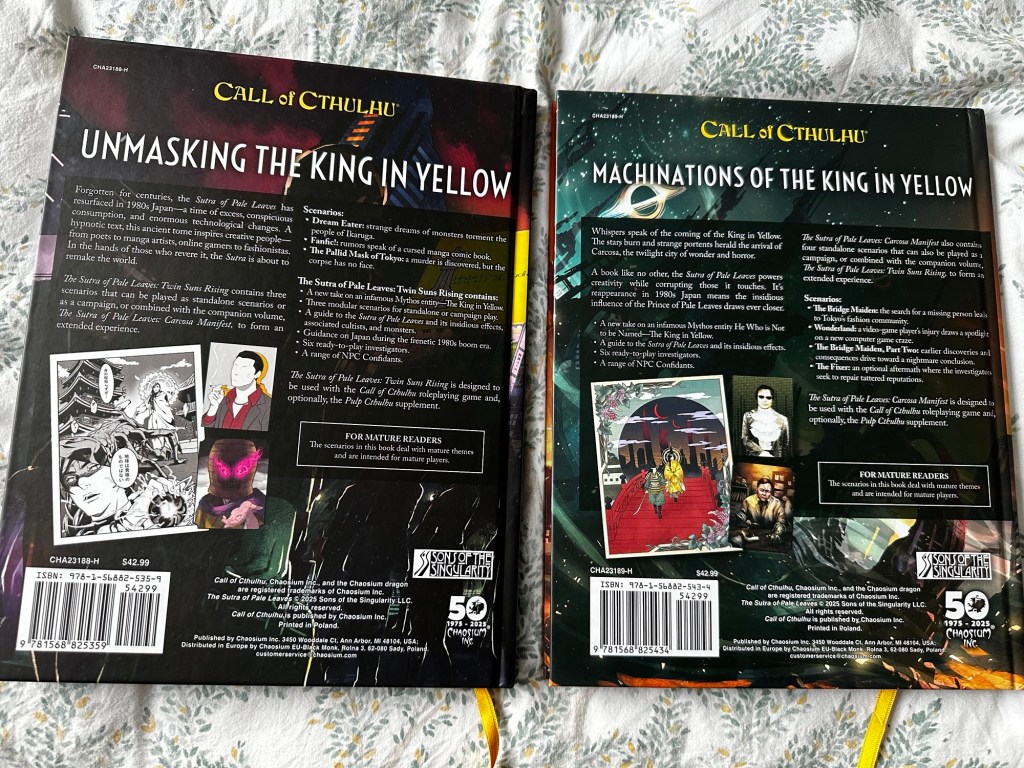
The Sutra of Pale Leaves is a 1980’s campaign for Call of Cthulhu set in Japan, which is presented in the two books, Twin Suns Rising and Carcosa Manifest. Both were published by Chaosium in 2025. They have a number of main authors, Damon Lang, Yukihiro Terada, Andrew Logan Montgomery, Jason Sheets, and Jesse Covner for Sons of the Singularity LLC. Its good to see at least one Japanese name in there. The fact is, although there is just the one Japanese person credited in the main credits, there are other Japanese contributors in many other aspects of the production of this campaign, from artists to cultural consultants. A particualarly stand-out section of the credits is in the playtesters, where most of them are Japanese. I don’t think this project could even have the potential to reach any level of authenticity in the setting without all of that input from native Japanese.

What I’d like to do with this, and coming posts is take a look at the two books and see what they offer in terms of a campaign, how it might scratch an itch to play in a Japanese setting and how it might be used at the table. Needless to say, I have not run this or any part of it yet, though I fully intend to, once I find a bit of time. Still, I will be delving occasionally into SPOILER territory so, if you want to be a player in the Sutra of Pale Leaves, maybe give the next couple of posts a miss.

The Premise

The investigators are residents of Japan in the economic bubble-period of the 1980s. They are not necessarily Japanese, but, at least, have a passable fluency in the language. Through the events of the scenarios in the two books, they will uncover the some truths about, and perhaps even work to counter the goals of the Prince of Pale Leaves. Who, you ask, dear reader, is the Prince of Pale Leaves? Well, perhaps you know him by his more Western appellation, the King in Yellow? The Prince is the re-imagining of the being known as Hastur in Robert W Chambers’ King in Yellow stories, in a Japanese context. Although I have long been aware of those stories, I have only become more familiar with them through the work of Harlan Guthrie on the Malevolent podcast. If you’re unfamiliar, you could do worse than checking that out. It is a pretty different take on the King in Yellow, itself, but it’s a really entertaining one. If you fancy, you can get the book for free from Project Gutenberg, here. Otherwise, here’s a link to the Wikipedia entry. Essentially, the title refers to a play, which links the first four stories in the collection. The reading and performance of this play leads to it spreading like some sort of memetic virus. In the campaign, the eponymous Sutra of Pale Leaves plays the same role as that play.

There are a couple of interesting points made in the introduction section of the books.

First, they describe it as a modular campaign, meaning you can run each of the scenarios as presented, chronologically from July 1986 to November 1990 across both books. Or, you can run them in any order. There is not even a need to run all of them if you don’t want to and it is not a requirement to retain the same investigators through the scenarios, if you don’t want. Not having read all the scenarios yet, I can’t really say how will this would work, or how it would work at all. That’ll be one of the things I assess as I got through them.

Second, the nature of the Prince of Pale Leaves as an “ever-evolving antagonist” that exists outside reality as we know it gives him “the ability to metagame.“ What does this mean? Well, within the fiction, it means that he can take part in and observe the events of infinite branching timelines and use this ability to respond to events with preternatural knowledge, as though he knows what’s about to happen. In game terms, it means that if you replay the Sutra of Pale Leaves with the same players, or maybe just some of the same players, you can play him as if he knows what happened in the last playthrough… Which is wild. For the Keeper to use this ability might seem incredibly unfair to the players, who might accuse them of cheating. In that instance, the Keeper is encouraged to “show them this page of the book, and then laugh maniacally (!)” I love this but, as someone who has a chronic problem of trying to fit in too many new games into his schedule, the idea of replaying one feels almost ridiculous. So, I can’t imagine taking advantage of this particular little trick.

Japan

Both books begin with a bit of an intro to the place a time. Japan in the 1980s was a very special place. The country was rich and society was transformed by the money flowing into and around its cities and towns. It was the culmination of the post-war rebuilding of a country that had been utterly decimated. The Campaign Background chapter goes into just enough detail on everything from pager and phones to organised crime. It gives you a glimpse into the everyday life of working people and students, enumerates some of the most popular pop culture of the period and even gives a short introduction to the pronunciation of Japanese words. Interestingly, it goes to some lengths to explain how this is a non-violent society where guns are nigh-on impossible to get your hands on, swords and other such weapons are just as prohibited and ninjas are just not a thing. This all serves to reinforce the idea that PCs are, perhaps, better off pursuing solutions that don’t involve direct conflict throughout.

The Sutra and the Prince

Since ancient times, there have been a cultural belief in Japan called kotodama (言霊, literallythe “spirit of words”), a belief that mystical power dwells in words and names, and expressing them can influence the environment, body, mind, and soul.

And that’s the essence of the Sutra of Pale Leaves. The Campaign Background chapter continues with a description of what, exactly, it is, though. It also tells us how it works and the effects it has on people. Suffice it to say here that it is a text that has been around for centuries in many forms and which has travelled from beginnings in ancient India, only to be largely purged in Japan in the 12th century before re-emerging during the events of this campaign. It has the ability to quite literally imprint the personality of the Prince of Pale Leaves onto those who read it. In a mechanical sense, this is achieved through the accumulation of EP, Exposure Points. The Keeper is encouraged to keep the exact nature of EP from the players, perhaps referring to them as “Ethereal Power” or “Energy Points” instead. The default situation, however, has the Keeper tracking the EP for each investigator themselves, at least until it becomes obvious what effects they are having.

Of course, the more your Investigator reads, the more EP they gain and the more EP they gain, the more influence the Prince has over them. They might be subject, at the lowest levels of exposure, to convincing hallucinations brought on by their nascent Pale Personality. At the very highest level, 100, they are fully consumed by the Prince. “Game. Over.”

This is an extra, and fairly central mechanic to this campaign that seems like it could really add a lot in play. As one highly exposed character begins to betray signs of full domination by their hitch-hiker personality, others with less exposure, who are just beginning to see and hear things that aren’t there, might begin to fear for their own selves. There’s potential drama alright.

This section takes some time to usefully describe how each of the effects might manifest in characters and how these should be role-played (essentially meaning how should the Prince be role-played.) It also explains that there are some benefits to the exposed PC, such as “unexplained luck” and a “sanity safeguard.” With any luck, when the Keeper starts handing out freebies like these to exposed investigators, it should put the players on their guard, perhaps even making them paranoid about the motive behind such unexpected generosity.

The Prince of Pale Leaves himself gets a long section all to himself, as is appropriate given his central role in the campaign.

The Prince manifests as a viral artificial intelligence implanted in the minds of humans by full exposure to the effects of the Sutra of Pale Leaves. After exposure to the majority of the Sutra of Pale Leaves or its various adaptations, a portion of the victim’s brain is forcibly partitioned and systematically reprogrammed. From three individual hosts a network is born, and each one acts as a node for the singular mind that is the Prince.

Throughout this chapter the Sutra is referred to in terms of a computer programme of virus, the results of which are the over-writing of human minds with the software that is the Prince. I can see how this is a useful analogy but it seems like an odd one for this time. In a campaign set in the modern day, such comparisons might make more sense, but in terms of the 1980s, there was little or no general knowledge among the public of computer viruses or even networks. Still, it works to impart the concepts of both Sutra and Prince to a modern reader, and I suppose that is what’s most important.

The Cult and the Confidants

There is a very useful section on Roleplaying as the Prince, which gives some great tips on how to present him to various types of characters. He will deal with religious people by appealing to their faith while using reason and logic to appeal to skeptics, for instance. He is described as a “complex antagonist” and that certainly seems to be the case. Roleplaying NPCs like this is always a real challenge for GMs, since the Prince is a cosmic being with vast knowledge across multiple realities and timelines, but I, to put it bluntly, am just a pleb. So, any and all assistance is gratefully accepted.

In this section, we also have his powers, abilities and weaknesses enumerated. Finally, there is “the unspeakable truth” behind this being, where he “is,” what his physical existence looks like and what might be the answer to how he became this way. Importantly, it is revealed here that “patient zero” is sealed along with the rest of the population beneath Lake Hali in Carcosa, a world separate from our own, but one which is surprisingly close…

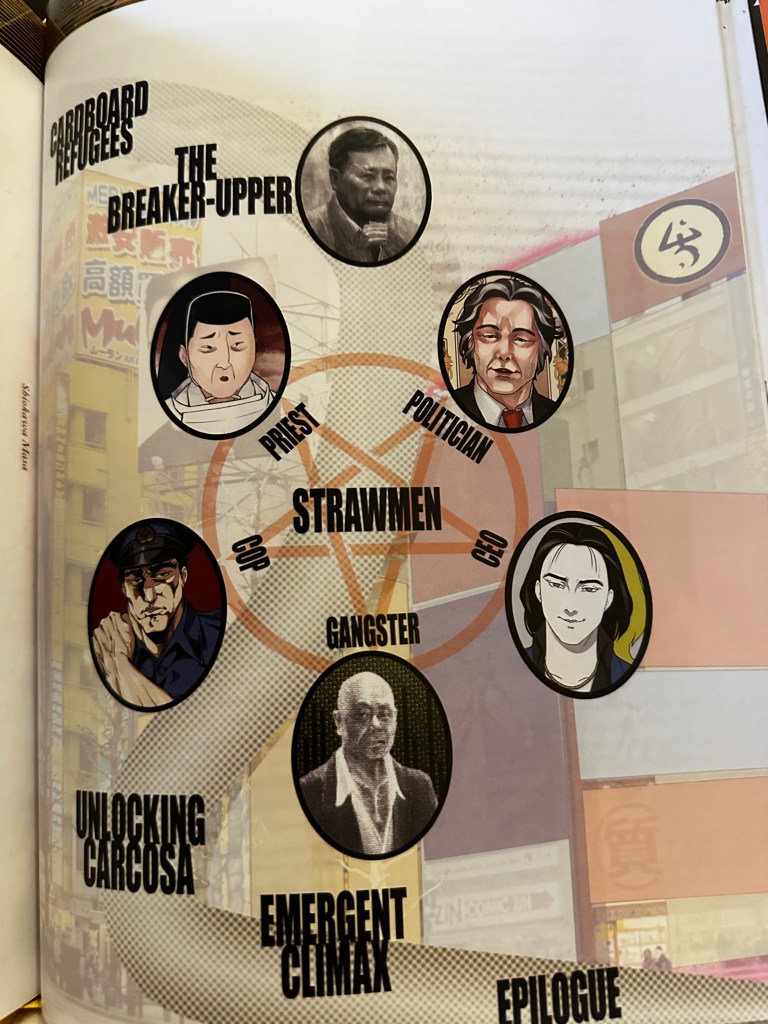
The rest of the Campaign Background chapter is used to introduce us to the obligatory cult, the Association of Pale Leaves and the most influential NPCs of the campaign. The Association is presented quite comprehensively with sections relating to their goals and doctrine, structure, and inner circle. There is also a very handy Cult Worksheet on one page for the times when you need a quick reference.

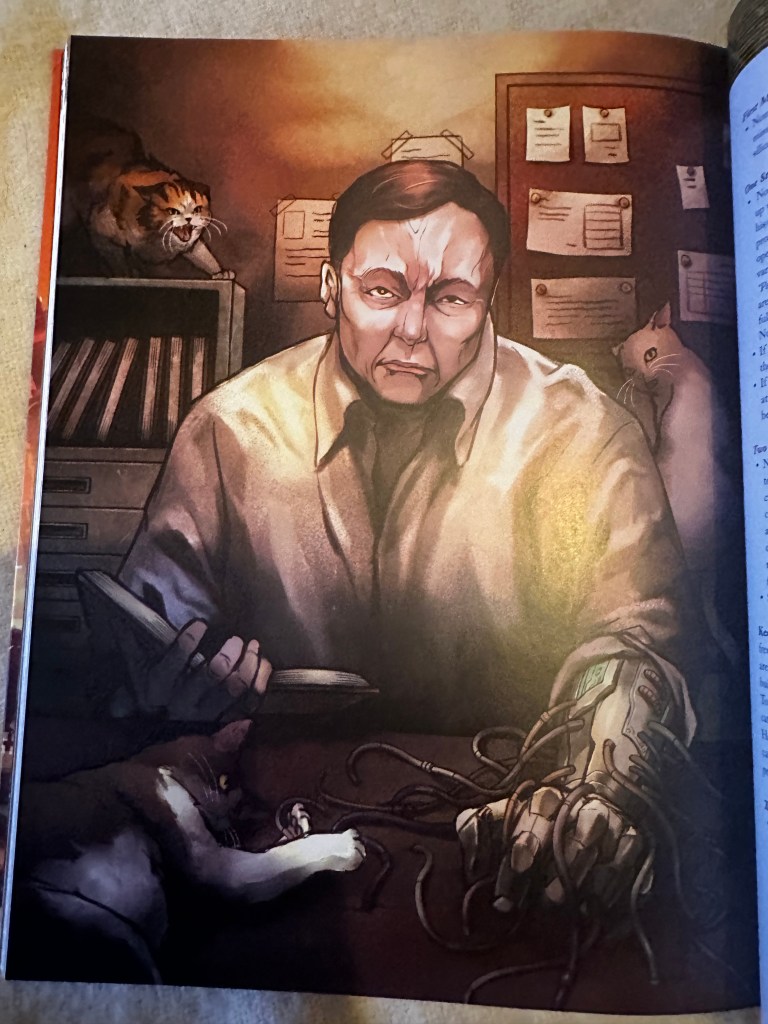
Confidants - "The Fed" Mizutani Shogo - portrait and statblock
Confidants – “The Fed” Mizutani Shogo – portrait and statblock

As for other NPCs, several are described under the section, Confidants: Plot Hook Facilitators. These NPCs, such as Mizutani Shogo, and intelligence agent, and Murakami Tsubasa, the abbot of the Kuroishi-ji temple, can be used to link one scenario to the next, to provide information to investigators to help them connect the dots and to assist them in regaining sanity between scenarios. The description of each gives you a few lines on the flavour of campaign they might add to, the sorts of connections they might have with investigators, where you might encounter them and the best scenarios they might act as confidants for.

Conclusion

It feels too soon for a conclusion, to be honest. I expect there to be at least two more posts about these campaign books. In the next post, I’ll be looking at the three scenarios in Twin Suns Rising. I’m really looking forward to sinking my teeth into them. Metaphorically, of course.

Call of Cthulhu: The Derelict Review

[My players] didn’t find the book of norse legends, the handwritten notes that presented possible ways to defeat the Sciapod, the silver items that would allow people to actually see the creature, etc, etc.

Two-part One-shot

SPOLIERS BELOW, ME HEARTIES! Turn back now if you want to be a player in the Derelict!

You know how it is, dear reader, when you board your luxury yacht and expect to make excellent time crossing the North Atlantic? And then you start to run into complications? Almost everyone gets drunk, you come across a seemingly abandoned reefer ship washed up on an iceberg, you decide to explore the possibility of rescuing anyone from it or maybe even salvaging it for vast profits, you board it and find its covered in blood and the controls have been deliberately sabotaged, you’re hunted by a towering monstrosity with a crystalline bow and only one weird leg, which is visible only to about half of your number, your own yacht’s controls are smashed to bits and the captain is eviscerated and several of your number begin to lose their grip on sanity?

Of course you do! Anyway, when I write it out like that, quite a lot did happen in the first session of the Derelict. It took so long, in fact, that we had to stretch it to two. We played it out in about five hours in total, I’d say, but there was plenty left undone as far as this scenario goes. You could easily stretch it out to three sessions of three hours each, I’d say.

The Scenario

A busted up dining room on the Groenland Tropisch.
What a mess!

In this post from about a month ago I introduced the premise of the Call of Cthulhu scenario I ran as part of our Tables & Tales October Event, during which we ran a bunch of horror/spooky/halloween themed games especially for our newbies. Today, I’m going to look at how it went and how I think it could have gone better.

The Derelict is a 28 page adventure for Call of Cthulhu. It appears in Petersen’s Abominations, published in 2015 by Chaosium. It was written by Sandy Petersen with Mike Mason.

It seems Petersen got the idea for this adventure while reading about Viking explorers and this particular encounter that was described quite matter-of-factly as a Sciapod, a one-legged creature with a crystal bow. The conceit is that such creatures were not necessarily taken as supernatural by people of by-gone ages so the encounter was recorded as a relatively mundane occurrence. I like that this theme jibes with Zedeck Siew’s observations about the attitude many Malaysians would have to signs of the Pontianak in his scenario, A Perfect Wife, as well as my own personal experience of growing up in Ireland. Of course, when the Investigators encounter the Sciapod in the Derelict, they are not likely to react the same way at all.

The portrait of Siren/Lori Washington, a femme presenting person with long dark hair and a bright dangling earring in one ear.
Siren/Lori Washinton

The Derelict was clearly designed as a one-shot or very short campaign. It would be hard to work it into an ongoing campaign, I think, given the rarefied circumstances and setting, so if you want to run it, I would suggest taking it at face value and go for something short and self-contained. I would also recommend using the pre-generated characters. They are all rich/famous arseholes of one stripe or another. You know, the type of people you would expect to have on a luxury yacht. But they also have their own motives, some are having money troubles, some are looking for sponsors, some are party animals, that sort of thing. They are relatively well painted and designed to be easy to pick up and play. There is a second option presented in the scenario: the PCs could be members of a rescue team sent to investigate the Derelict, but this option lacks the horror movie energy you get from the rich yachters, in my opinion.

The formatting is useable and fairly presentable. It starts with the intro and a brief description of our cast of characters before a short section on Starting the Scenario, under which we also get a useful Sequence of Events. I say “useful,” but my players exited the sequence pretty quickly and I was forced to improvise liberally from that point on.

The bulk of the scenario is taken up with descriptions of the main areas of the Derelict ship and the iceberg it’s stuck on. It does go into a fair amount of detail even about the areas that are of little or no interest. It will tell you where to find the clues and items of interest within these descriptions. This is the greatest weakness of the adventure, to be honest. My players spent almost no time exploring the ship. They were incredibly goal oriented, going to Engineering to find things to help them fix their own boat and to the radio room for a way to contact someone. So, they didn’t find the book of norse legends, the handwritten notes that presented possible ways to defeat the Sciapod, the silver items that would allow people to actually see the creature, etc, etc. I wish I had started just transplanting some of the more important clues and things to the rooms they did explore earlier. In the end, I did do that but we had played the bulk of the game by then.

It has some great maps and illustrations throughout. The maps of both boats were particularly useful. We were playing on Roll20. So I used the maps a lot. In the first session I used fog of war on the map of the Derelict, but I found this led to too much player confusion about the location of everything and too much time spent by me on descriptions. It was supposed to be a one-shot! So, in the second session I turned off fog of war under the pretence that they found a full map in Engineering. That made things a lot easier. The players were able to see where they might want to explore and they started to do that.

One of the strengths of this scenario is that, even though it provides you with a sequence of events, it encourages you to play it quite free-form. Simply allow the PCs to look around, discovering clues as to what happened here and maybe how to defeat the monster, and then start picking off characters with the Sciapod as they go, NPCs first. They’ll start getting injured and insane and the scenario should blossom from that. In many ways, this is what led to our game going quickly off the rails. The sequence of events expects the players to start trying to find ways to kill or drive off the Sciapod but that’s not what happened at all. As I started to kill them off and ship away at their sanity, they began to look only for alternative ways of escape. But, of course, along the way they saw some some pretty disturbing things and one of them lost the plot completely, going full axe-murderer before eventually getting it together while they all bundled into the last remaining lifeboat. Except for looking for firearms on board, they never considered finding a way to kill it. And, of course, this was great! I loved it and the players had fun. But I will admit to, at times, trying to get them to take the route that was expected of them. I think I would have had more fun if I had lust loosened my grip on the reins a bit more.

Still, if your players do get so far as to start coming up with ways to beat the bad guy, there is a useful section at the end of the scenario devoted to potential plans that they might come up with, using lots of things my player never even discovered. They could use the CO2 stores, the bulldozer or forklift that was in the hold, etc.

The Appendix

The Sciapod. A bluish tinged, armoured humanoid with only one thick leg, which ends in a wide, umbrella-like foot with claws all around the outside of it. it holds a crystaline bow and has a single green glowing eye.
Hawkeye? You’ve changed.

In the Appendix, you get stats for the two NPCs and the Sciapod itself.

The NPC stats could be particularly useful if a player loses their PC early and they need a replacement. This did happen in my game but only after both NPCs were already dead so it didn’t help.

When it comes to stats for the Sciapod, I don’t think it should matter really. It is designed to be undefeatable by normal means. The PCs are supposed to have to come up with some big, brash, loud plan to kill it, after all. But there are elements to the creature that are of real interest. For instance, it is visible only to those who have silver touching skin for some reason. This proved to be a weird and scary element of the PCs encounters with the monster. It directly led to the death of one of them but it is a strange addition to the abilities of what is already an odd adversary. It is utterly silent too, and it wields this weird crystalline bow with enormous glass like arrows. This last bit feels very un-Cthulhu to me. It adds more of a D&D flavour to this monster but it did allow it to attack from a distance, which I made use of. This led to two memorable moments of gameplay, in fact. First, our pop-star character, Siren stood on the deck and had a showdown with the Sciapod, she with her little .22 pistol and it with its giant glass bow. Second, the creature launched one of its enormous arrows into the hull of the lifeboat they were escaping on right at the end, ushering in their deaths and the end of the game.

Conclusion

This was a fun one-shot/two-shot. It had great pre-generated characters and a fascinating premise and setting. (Although I have to stop running one-shots on boats. Apparently its become a trend…) But I question whether the monster that’s central to it is really Cthulhu-mythosy enough. It’s strange but not necessarily horrific in and of itself. Also, the adventure involved a lot of prep for something that could be designed to be run with little or no preparation. But you have to read the descriptions to familiarise yourself with the setting, the clues, the origin stories, hidden history etc, etc. and that all takes time.

Games I Wanted to Play this Year

Review

So, how have I done with that list from earlier in the year? At the time I wrote that, on the 28th July, I thought, Time-shmime! Who needs it?! Not me, that’s who. I’ll breeze through this entire list of ten frikkin’ games. But, of course, that was assuming a lot.

Assumptions

The first assumption that was happily crushed was that we had a smaller number of GMs willing to run sessions in our little community, Tables and Tales. Up until then, only three of us had run anything so I assumed that would continue. When a fourth and even fifth GM raised their hands to take the helm, I was delighted. That’s what I had always wanted in our space. From what I can see, if GMs were water, most RPG communities would be dying of thirst. Even in the much larger Open Hearth community, you tend to see the same dozen or so members announcing new games all the time, despite there being a membership in the hundreds. Given the size of Tables and Tales, five active GMs represents a pretty large percentage of our total player-base. On top of that we have had a couple of board game nights too. The long awaited and pretty fun Darkest Dungeon board game is, honestly, very close to the video game (actually, I’m told by friend of the blog, Media Goblin it’s closer to Darkest Dungeon 2 in rules) but also pretty close to an RPG so we gave it a go.

Assumption number 2: I have a pretty stable schedule, which meant that I could run games almost every night of the week if I had the wherewithal. And there were weeks there when I was playing, either as GM or player, in four or five sessions. Turns out that was not sustainable. For one thing, obviously, I started writing this blog, dear reader. Now, don’t get me wrong, I love doing this and it’s not like it takes that long, but if I want to blog, I need to do it in the evening (even though I am typing this on the train to work right now because its a busy week for me and my evenings are taken up with pre-Christmas socialising.) Between that and various other work and family commitments that came up, it was simply impossible to maintain that sort of schedule.

Reality

Even taking these points into account, I managed to play a lot of games in the last few months, just mostly not the ones I expected to. So, let’s have another look at that list:

GM

  • Tales from the Loop – Mascots and Murder – Short Campaign – Nope, didn’t happen. This one is still simmering away on that back-burner, ready for promotion to the front of the stove-top any time now. It had to be shelved to make way for other games and other GMs. Like I said earlier, I was perfectly happy to do it.
  • Dungeon Crawl Classics – individual modules – Haven’t managed to get any of these to the table yet, I’m afraid. But, I have a plan for this one. I have had to re-arrange my schedule a bit to allow it. Our local game shop, Replay, has been undergoing a big refurbishment in the last few months. Once it’s done, they will expand their number of gaming tables a lot and I am hoping to get in there on a Wednesday night to run some DCC Level 0 funnels. My preference would be to get some newbies to sign up for these sessions and hopefully gain some new members for Tables and Tales in the process. The new year will be the perfect time for this, I think.
  • More Troika! – one-shots – Achievement unlocked! Although, technically, it was more like two sessions of the same game, rather than multiple one-shots. I did a blogpost on it! We went to Whalgravaak’s Warehouse, one of the Location based adventures made for Troika. So far it has been very fun. It’s a dungeon crawl, there’s no doubt about that, but it’s a warehouse. And the rooms and creatures and general vibe are beautifully weird in the way only Troika can do it. So far, the PCs, a Monkey Monger, a Wizard Hunter and a Gremlin Catcher (there was also a Landsknecht who has since moved to Spain) have murdered the Cacogen they were sent there to murder, made friends with a thin mutant, captured entire detachments of microscopic soldiers in gremlin catching jars, discovered a desert other-world on top of the warehouse and, um, set fire to a load of old rope. Brilliant craic altogether.
  • Death Match Island – one-shot – You know what, I just completed a rewatch (maybe not “rewatch” since I never watched the entire thing in the first place) of Lost, the whole thing. All six seasons. All 5000 episodes. I think I was in mourning for the lost Death Match Island one-shot that should have been. This one was a scheduling issue. Those of you out there who play RPGs (and if you don’t and you’re here, welcome! You must be confused…) will be aware of the difficulties one often encounters in getting four or five adults together in the same room at the same time. Honestly, I am surprised this problem doesn’t come up more often in Tables and Tales. Anyway, having just finished that Lost marathon, I am 1000% ready to play this game. It’s not quite the same and it would definitely not run for 678 sessions like Lost would if it were an RPG but it has the same heart and the same mystery box feel to it. And I want that. That’s what I want.
  • The Wildsea – campaign – Just go read my blogpost on My First Dungeon’s campaign of the Wildsea. I desperately want to play this game. Honestly, whether I got to be a player or a Firefly, I would be excited. But, really? I’m not sure when I was going to fit this one in this year. Another campaign? Dunno what I was thinking.
  • DIE RPG – one-shot – I finished listening to the My First Dungeon Wildsea campaign and just started listening to the DIE one. They have a great episode that is mainly Kieron Gillon being effusive for an hour about his, admittedly very cool, game and I enjoyed it. But then I got into the Session Zero episode and I immediately wanted to play it. I want to run this for my friends and have them play real-world people with real-world problems working it all out it in a fucked-up fantasy world of their own creation as characters of their own creation. I really want it. Maybe next year.

Player

  • Old School Essentials – campaign I think – So this one has not happened yet. I think it is, at least partly, due to the fact that Isaac, of Lost Path Publishing has been running other shit like crazy in the last few months instead. I hope it wasn’t my OSE character creation post that put him off running the game (I’m pretty sure it wasn’t. I’d really be flattering myself to imagine I had that much influence on anyone.)
  • Heart: The City Beneath – Open Hearth campaign – Our GM, Mike, brought a whole bunch of us together (There were six PCs at the start) to hopefully save the landmark known as Nowhere from being consumed by the Heart. This was a real learning experience for me as it was only my second time as a player in the Resistance System (see the section on Magus, Pike and Drum below for my first experience.) I discovered that, if left to our own devices, players (for “players” read “Ronan” but not just “Ronan”) are apt to take the hand when there is no form of initiative to govern the order or frequency of actions in combat. It was a lesson learned early in the campaign due to one player’s proper and timely use of Stars and Wishes after the very first session. Saying that, I had a brilliant time playing my Incarnadine, Priest of the God of Debt, alongside a Heretic, a Cleaver, a Deep Apiarist, a Vermissian Knight and a Deadwalker. We often had opposing desires and drives, which made the role-play fun, and the GM came up with lots of weird and interesting situations, NPCs, enemies and locations for us. Forgotten-Frost-Remembered, my Aelfir Incarnadine, got to reach Tier 4 of the Heart and retire(!) at least in his head.
  • Call of CthulhuMasks of Nyarlathotep – campaign – Not really sure if this was anything other than wishful thinking when I wrote this, to be honest. This post explains that it was always going to be a long shot to get this campaign started again. But someday, I would love to get Grant Mitchell back on the trail of the mystery in this thoroughly classic campaign.
  • Magus, Pike and Drum – Playtest – This is Isaac again. He has a great basis for a Resistance System game set in the English Civil War that never was, and this is it. There were four of us gathered around the table for this playtest at the end of the summer. I genuinely had so much fun with it. Gráinne was my character. She was an Irish noble and she had some very fun abilities (some of them were a bit too fun with a few too restrictions, it was decided, as a result of this playtest.) What was important in the game is that we solved the mystery in very short order, after scaring the shit out of the mayor and not blowing up the town. But what’s really important is that we provided Isaac a lot of valuable feedback to feed back into his new game. Can’t wait to play this one again, hopefully in the near future. I hope to write a lot more about this game as it develops.

Conclusions

So there you go. Three out of ten. Not great. But! I experienced so many other games instead of the ones I didn’t get to in that post! And I got something out of all of them. I’ll tell you about them in the next post (or the one after if I don’t have time to write the rest of the week and just post some more old fiction on Sunday instead.)

Player vs GM

Not what you think

I have an easier time writing about the games I am GMing or the ones I am going to GM in the future, compared to those I play in. I think the reasons for this are pretty obvious, right? I have an a behind-the-scenes view of the games I GM, I have read widely on the games, maybe I have home-brewed the world, I probably have a better handle on the rules than most others at the table. As well as that, I set up the game, I send out the invites, I normally host the game, so, it makes sense.

As for the ones I play in, I am still invested in them, or at least in my character, I have usually made some effort with a backstory and personality and I want them to experience cool stuff in the game world with a bunch of other weirdos. There are probably a couple of my characters that I could spend an entire post discussing (and probably will, now that I think about it) but not before they are even made.

Anyway, that’s why I am taking the last few games from my Games I want to Play this Year list and pop them all into this one post.

Old School Essentials – campaign I think

My friend, Isaac of Black Sword Hack fame has been working his way steadily through all the OSE books he could get his hands on. He’s almost ready to kick off that campaign! Very exciting! It will be my fist time playing this system and having been a part of Isaac’s Black Sword Hack game for the last couple of years, I know how he likes to construct a grubby, fun, weird campaign world for us to muck around in.

I am not all that familiar with the ruleset of OSE, but from what I understand, it took the rules from Basic D&D and some of those from AD&D and took out all the stuff that people tended to ignore. I know it does have a race-as-class idea that is similar to the way DCC does it but, overall, it gives me much more old school D&D vibes than DCC does.

I might just go and roll up a few little guys using the OSE rules to get an idea of how it works and get in the mood for it.

Heart: The City Beneath – Open Hearth campaign

This game technically already started; I am achieving my goals, dear reader! We have only had a session 0 in which I created my aelfir Incarnadine, Forgotten-Frost-Remembered. He is called to the Heart in search of adventure (also he had to flee the City Above due to his crass and embarrassing obsession with money, not to mention his astronomical levels of debt.) He and his fellow delvers are on a mission to help a haven that we created together using the rules from Sanctum, a sourcebook for Heart that is meant for this very purpose. The haven has no name as it was deleted by a Deadwalker some time earlier. The aim is to build it up while pursuing more selfish goals before we all blow up in a conclusion of zenith ability fuelled glory.

All credit to our GM, Mike, for having the presence of mind and session 0 nous to figure out our group’s haven-based goal and get us to create it together in under an hour.

Can’t wait to start getting weird in the Heart.

Call of Cthulhu – Masks of Nyarlathotep – campaign

This one is probably a long-shot. This is actually an ongoing campaign but has been on semi-permanent hiatus since, I want to say 2022? Not sure. Anyway, this is another of Isaac’s campaigns. It was one of those things, playing with adults can mean that sometimes, real life stuff takes precedence and there’s not much you can do about it. Since then we got into other games and other campaigns and Masks has been on the back burner for a long time. Every time we get to chatting about Call of Cthulhu, we end up saying we would love to get this classic campaign started up again.

Last we left our intrepid investigators (I was playing a gangland boss from London named Grant Mitchell) they had faced down other worldly terrors in the basement of an occult shop and proved the innocence of a man falsely accused of murder. They also uncovered some evidence and information that drew them to various other places around the world in their pursuit of answers to the question of who was responsible for the murder of their good friend, Jackson Elias. Anyway, they had concluded their snooping in New York and were on a slow boat to London. It has been a very slow boat at this stage…

Magus, Pike and Drum – Playtest

It’s Isaac again! This time with an early playtest for a game that he is very much still developing. I don’t want to go into any detail here but I think I can say at least that it is a semi-historical setting and it will be using the Resistance system, created for Spire. Can’t wait to try it out. What I have read of the character classes and abilities so far makes it sound very fun and interesting to play.

OK, that about wraps it up for today. See you tomorrow with more from the Dice Pool.

Games I Want to Play This Year

Five months to go

Having managed to get through so many games in the first 7 months of the year, you know what? I reckon, if I really make an effort, I think I can fit in up to ten more different games before New Year’s Day. I’m particularly looking forward to a few more one-shots. For those of you who’ve been keeping an eye on this space over the last couple of weeks, you’ll know I have a soft spot for them.

Lists 4

Here we go. Like previous lists, I’m just going to split them between those I want to run and those I want to play in.

To be honest, a bunch of these games are ones I already have in the schedule. I’m hoping to get Tales from the Loop started in a few weeks and I have Death Match Island in the calendar for next Friday. Even the ones I want to play in include a couple that are almost good to go.

GM

Player

I’m going to spend the next couple of days going through each of these games to explain why I’m so excited about playing them.

Stay tuned!

Also, what are you looking forward to play this year? Let me know in the comments!