Beginnings

Where shall we start?

This is always the first question I ask myself when starting a new game. It doesn’t really matter if it’s a one-shot, a short series of sessions or an open-ended campaign; the beginning sets the tone for the whole thing. If you start your PCs off trapped in a haunted house with no prospect of escape and a murderous ghost hunting them, you have made a pretty firm statement about the kind of game you are all there to play (or your players will see it that way at least.) Equally, if you start with a scene from each character’s home life, interacting with their family members and discussing their everyday problems, you are establishing a sense that this is the type of game where that kind of thing will happen again (or you should be.)

You can use the start of your game to establish a theme too. Maybe its a horror game involving frog mutants who want to feed your players souls to their unholy tadpoles, you could start in their camp at night, describing a croaking, ribbiting chorus that grows in intensity and volume through the night, ensuring that none of the party get any rest. Embed in the cacophony the true name of a PC and you have the potential for fear and suspicion if not outright horror.

Control

Three sessions in, there’s one PC who has decided to attempt a bloodless coup on the streets of the town at the centre of your adventure, another who has set their heart on wooing one of your NPCs of lesser importance and a third who just wants to sit in the tavern and spread rumours about the sheriff being a cannibal. It can feel like you are out of the picture sometimes (and that’s not necessarily a bad thing, dear reader. The best sessions happen at the whims of the players.) At the start, though, you, as the GM, have control. It relates a little bit to the world building work you’ve been doing, or not doing. After all, you made up the place they start in, or at least, you read about it in a published sourcebook or module and interpreted it as you saw fit. You know the places involved, you know the relevant NPCs, you know the setup, even if you have no preconceived notions about how it’s all going to go down in the sessions to come. With that knowledge, you start with an advantage, for the time being, at least. Before long, you have to hand things over to your clever and inventive players and they’ll have burnt down half the Silver Quarter while introducing the roller skate to Spire.

But, more important than your behind the scenes knowledge, is the situation they start in. I’ve mentioned in medias res beginnings in the past. Frame the scene they find themselves in and make it tense or truly fantastical or horrific or action-packed or just evocative. Start in the middle! It is the one opportunity you have to do this. You set it all up and see how they react to it.

In the Death in Space one-shot I ran a few months ago, I started them off being ejected from cryo-sleep as they approached the main adventure location, a mysterious space-station. They each got to have a moment to describe their characters and I explained they were seeing the debris field surrounding the remains of a planet that was destroyed in the recently ended wars and that they had to guide the ship through it! But then I used a series of flash-back scenes to explain what they were even doing there. I don’t think that’s even the first time I have used the in-medias-res/flashback combo to get into the action as quickly as possible while also providing some much-needed context. It worked pretty well as I recall…

It’s a fun way to get them all rolling dice quickly and failing quickly too, which is usually pretty important in a one-shot horror game.

Intros

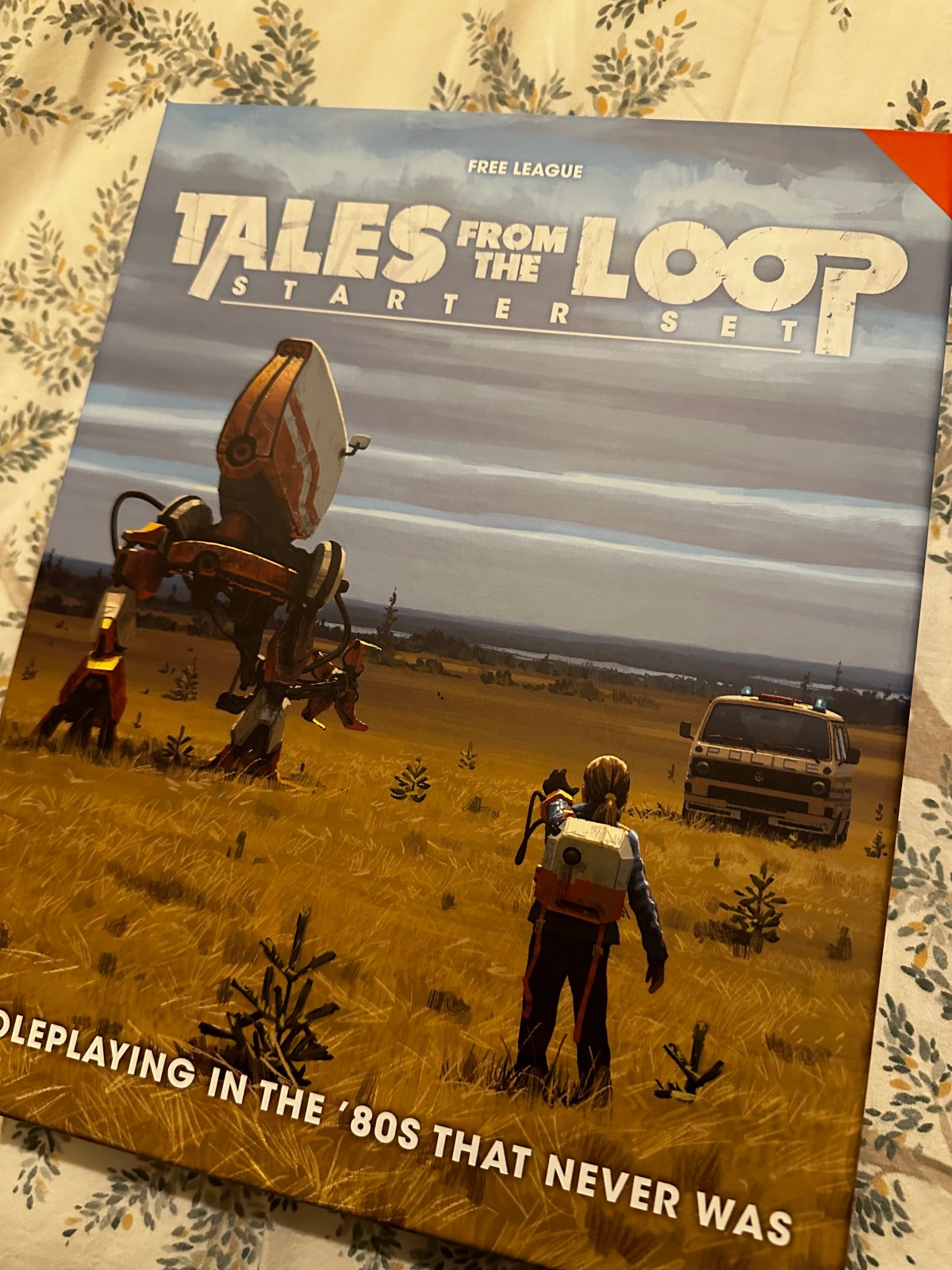
Tales from the Loop wants you to put the kids, the players’ characters, at the fore from the get-go. And deservedly so. These kids are created to have people who are important to them, problems that consume them in their regular lives, drives that motivate them and things they’re proud of. They’re rich and three dimensional characters before they ever get to the table. So, the game insists that you start a mystery (what TftL calls adventures) with a scene belonging to each and every kid in their home life or at school, with NPCs that are important to them, family, friends, mentors, that sort of thing. This is where the players get really invested in their characters. They have genuine and heartfelt interactions with the people of significance to them and they begin, immediately, to find their voice and their personality. It’s probably the best thing about a game that has a lot of good things going for it.

I stole the technique for the second campaign I ran in my Scatterhome world. It took place on the northern island of Erlendheim. The PCs all knew each other at the start since they began at 8th level and, in the fiction, had an adventuring party for many years, long ago. The adventuring life long behind them, I asked them to describe their mundane lives as a farmer, an advisor to the Jarl, a guard sergeant and a village priest and made sure to include people and places that were important to them. I focused on who and what they loved because I knew I was about to fuck with all that.
I had learned a lesson, you see, dear reader. Oh yes. For those of you keeping studious notes, you will recall I described the start to the first campaign in Scatterhome, when I drowned the island nation and erstwhile homeland of the PCs, Galliver, off-screen, before the start of the game. They didn’t care about it, and I can’t blame them. I had never given them a reason to.
In Erlendheim, they were more focused on saving the druid’s kids, ensuring the safety of their families and homes, protecting their futures.
Tug on those heart-strings, GMs.

Scenic

There is a subtle art to the transition from the start of an adventure to the meat of it. Or there is if you don’t subscribe to the philosophy that adventures should happen in scenes.

Usually, the end of a scene is obvious in a movie or tv show. It normally shifts perspective or location or time. So, if you want to do something similar in a game, someone needs to just say it’s over and move to a new scene. Sometimes that’s the palyer who wanted the scene but usually its the GM. I would rarely have done something so bold as to declare the end of a scene in a game of D&D as a more trad DM but it’s so freeing to do it! Just like you framed that first scene at the beginning of your game, you soon realise that you can frame and end any scene at any time (within reason.)

Looking back at the Tales from the Loop example from earlier, I noted that each kid gets a scene about their home life. Together with the player, you describe the kind of scene it is going to be, improvise it and end it when it feels right. When you move on to the investigation part, you can cut to a scene with all the kids in it, where they are staking out the suspicious machine that appeared in the nearby field overnight to see who is responsible for it and end that scene when they have gotten everything from it they can. Easy.

Using scene structure is even built into some games. Spire and Heart use scenes, situations and sessions like other games use rounds, days and long-rests. They are left deliberately vague but some powers and abilities work only within the current scene or situation. I have embraced the vagueness and it didn’t even take any adjustment. It was instinctive.

In the next post I am going to write a bit about endings, which, in my experience, are so much more difficult.

How do you like to start your games, dear reader? Let me know in the comments.

World Building Part 2

A new approach

First of all, I struggle to get out of my old way of building a campaign world and, even a campaign. I recognised in my last post that there are definite draw-backs to it, but still, I find it hard not to do a whole bunch of preparation. I do still think that a certain amount of prep is advisable but I have been actively trying to limit the amount I do. This doesn’t work as well in some games as others. In D&D, if you don’t do a lot of prep, you might be alright but it is a real pain if you don’t have the right stats to hand when your PCs decide they are going to enter the local gladiatorial games or they want to go ankheg hunting. It slows things down a lot and hurts the overall flow of the session. But it does feel like you are pushing the plot and your PCs in a very particular direction when you do it! Is this an inherent issue with D&D? Probably not just D&D if we’re honest.

In other games, I find it can be freeing and fascinating to see how a session goes when you genuinely have no preconceptions about what is going to happen in it.

Heart

In the game of Heart I am currently running, I used a loosely written adventure that came in the Heart Quickstart Rules. We have just come to the culmination of that adventure and suddenly, the PCs are more-or-less free agents! They have done what a few NPCs have asked of them and more. They followed the breadcrumbs and now, now they are ready to take the training wheels off and head into the Heart to pursue their own dreams and nightmares. They have a couple of other leads but I am looking forwards to leaving the progress up to them from now on. I intend to largely take my hands off the wheel and, instead, rely on their own motivations to provide direction, their own relationships with NPCs to perhaps push them one way or another, even their own ideas for how the new and terrifying delves they go on might look and feel. I want to create our Heart together now that the leash is off.

Im-prompt-u

There are lots of tools out there that you can use to bring a world to life together with your players at the table. I mentioned on this blog before that we had a game of The Quiet Year by Avery Adler a while ago. In it, you get together and make a couple of establishing decisions regarding what sort of community you want to build together and what sort of genre or setting it might be in. After that, you proceed through the seasons of a year after the end of some cataclysm and before the coming of some other terror. The players use a regular deck of cards to draw on prompts from the book. Each prompt gives you an occurrence or an important decision that must be made. This way, you all draw a map together and you develop a community that includes important factions, elements of religion and social orders, abundances and scarcities, fears and loves of the populace.

I was surprised when we finished, by what a fleshed out place we had created in concert. It felt like we had the basis of a fascinating setting to start something else in. I could imagine beginning a more traditional RPG there with the same players. These players would all have had a hand in building the place, the world, its people, their relationships. And wouldn’t they be so much more invested in it?

I mentioned last time that I had made a mistake in the very beginning of the Scatterhome campaign because I had tried to play on the PCs’ devotion to their decimated homeland when they had no experience of it. They couldn’t even picture this diverse paradise island that I had in my mind. But if we had used a method like The Quiet Year to make it, we would have had the fun of playing The Quiet Year, for starters, and also, we would have a place they might have mourned as their characters.

Scale

You can go much smaller of course. In the Blades in the Dark campaign I played in recently, our GM had us use a different game called Clean Spirits to build our hideout. At the start we had to make some decisions about what sort of place it was going to be. We decided on a beached canal boat and then we worked through a series of prompts and exercises to create various parts of it. We each got to claim our own section and also collaborated to make it a place that we treasured as players and characters with its own little mushroom farm and the spirit of its former captain trapped in a bottle. Later, when we were attacked in our hideout, this made the stakes seem so much higher!

Of course, you could go even bigger instead of smaller. I know the game, Microscope, is used to create a whole history for a world that is separated into periods and events. I have no experience with it though so I don’t know how well it works.

At the table

The type of world building I like the most is the collaborative kind, I have decided. One of my players in that Scatterhome game, Tom of the Media Goblin’s Hoard blog wrote an incredible history for their character, who was a Dragonborn. Now, I had never given too much thought to the origins or current situation of Dragonborn in the setting but that was ok, because Tom had been considering it deeply. It was all couched in the back-story of their character, but it added a huge amount to the world straight away, including the fact there was an under-class of Dragonborn within the empire who were raised to be weapons at the command of their human masters, how they were raised from eggs to obey and how some escaped and went on the run. How there were bands of pirates that sometimes took on runaways like their character and how they impacted the archipelago. It was great and, although we didn’t get around to using too much of that in the game itself, the knowledge of it made a big difference to how I thought about the empire and the world as a whole.

Later in the same game, we gained some new players who decided to take their PC races from the D&D setting of Theros so we had a new island nation on our hands then, one that looked a lot like Ancient Greece and contained leonines and satyrs. Once again, their choices made that change to the world happen.

Another new character added a whole new vassal kingdom of elves to the Vitrean empire, for whom social hierarchy and feudal concerns were incredibly important. So much so that they caused a rift between his character and his siblings.

Character backstory is world-building when you leave the details of the world vague enough for players to have free rein when coming up with them. It adds to the shared world and gives them a greater feeling of ownership of it.

I personally love it, though, when someone, simply, confidently states the existence of a particular item, a specific shop or an individual NPC right there at the table. That item is going to help them get through that window, that shop sells the exact thing they are looking for or the NPC has the contact details they need. This sort of flavour is invaluable and often becomes far more than flavour. This happened in Spire a lot because you have to ask your players to make rolls to resolve situations but then leave the details up to them. They made up the dugguerrotypist, Reggie, who worked for the local tabloids and he later became an important bond to them. Same with every aspect of their casino, the Manticore, which quickly filled with important NPCs and locations that were largely player-created. It is the best feeling when these instantly generated details come into play right there and then at the table. It’s like magic.

How do you prefer to world-build, dear reader? Do you do all the work beforehand and let the players loose in it at the table? Do you build a world together first and go and play in it after? Do you let it all just happen at the table?

World Building

Scatter!

About 29 posts ago I mentioned the home-brew campaign setting I conjured up for the new D&D 5E campaign I was starting with a new group. It was an archipelago world in the style of Earthsea, except that it also had one large continent. I called it Scatterhome. I got pretty into it at the start. I put in place a number of major powers:

  • The Vitrean Empire, a mostly human empire that worshiped fake gods and controlled most of the continent,
  • Their enemy, the Republic of Galliver, a democratic island nation, diverse in species and religions
  • The Great Aquatic Empire, controlled by the incredibly numerous and ancient aquatic elves
  • Their enemies the disparate Sahuagin kingdoms

I came up with a bunch of other stuff from this base, like the details of the fake religion I mentioned above, some world-specific idiosyncrasies of various D&D races, relevant technologies and magics, ideas for some islands that the PCs might visit. As well as that, I got a couple of maps online to start things off, more as a reference for myself than anything I would provide to the players or their characters.

I started things off with a short adventure for their 1st level characters. The island of Galliver had just been destroyed by an enormous tidal wave and they were some of the few survivors who washed up on the shore of a smaller island. There they encountered some bullywugs, some halflings and some morally questionable situations. They came out of it with a boat and more-or-less total freedom to explore the archipelago.

Now, I had been pretty much expecting this outcome. I wanted them to get some form of transport to get from one island or region to the next. I had wanted an open and expansive campaign that revolved around the players’ choices rather than my own. That was the whole idea of the island-hopping style of world that I went for. It made sense to me that in an archipelago of sufficient size, no-one would know every island, there would be mystery and adventure on every shore and the PCs would be the ones exploring it. Sure, I would have to be the one to come up with the new islands and the adventures on them every time but that seemed like fun to me as well.

The perils of grandiosity

How did this go? Well, there were ups and downs as you might imagine. At the start, I shepherded them to an agglomeration of boats, known as Ex-isle, that floated above the drowned remains of another island decimated by a tsunami. There they solved a murder mystery and then got sent to explore a dungeon in the mountain under the water. This led them to learn some things about what had happened to Galliver, potentially. Basically, I tried to push them to investigate the fate of their “home island.” But I had made a mistake much earlier, before we even started playing. I started them in medias res, which is a trick I like and usually is very effective for getting players into the game quickly. But in this case, I had given them a country of origin that had just been destroyed, and, of course, their characters would have been deeply affected by this, but the players had no reason to care. So, immediately, the in medias res beginning, landing on the beach, bedraggled and traumatised, (supposedly) lost its power.

Later on in the campaign they visited a coastal village, Chast, where they helped a group who believed in the old god of the sea, Kaigun, rather than the approved religion of the empire. They were being persecuted for it and the PCs helped them to establish a little island colony of their own. So, this time, I wanted to really introduce the ideas of the empire and its religion. I revealed that this village was the point of origin for the imperial religion and that there was something very oppressive about it and the populace there. Actually, I was compounding this on the very first adventure where the halflings were also imperial citizens and didn’t take to the strange ways of outsiders.

In other words, I was establishing themes through the setting and the NPCs. This is something I still think is very important to build a cogent and believable world to play in. If you are looking for a factor to hold a campaign together, look at theme, then tone, then filter that stuff down to the setting, the NPCs, factions etc. I think I was relatively successful at this, just not in the way I had intended before ever starting.

Now, one thing was definitely happening as I had intended; I was coming up with these locations as and when they became necessary. But the necessity was almost always entirely manufactured by me. For instance, I drowned Galliver before session 1 ever started, I had them stumble across Ex-isle and sent them through a portal at the bottom of that dungeon I mentioned to the village of Chast where they also rescued the former Chancellor of Galliver. Admittedly, they didn’t have to take that portal and I only made up what was on the other side of it after they had gone through but I chose to send their story in a particular direction. All this despite them not really having shown any real interest in the Galliver storyline at all.

Different direction

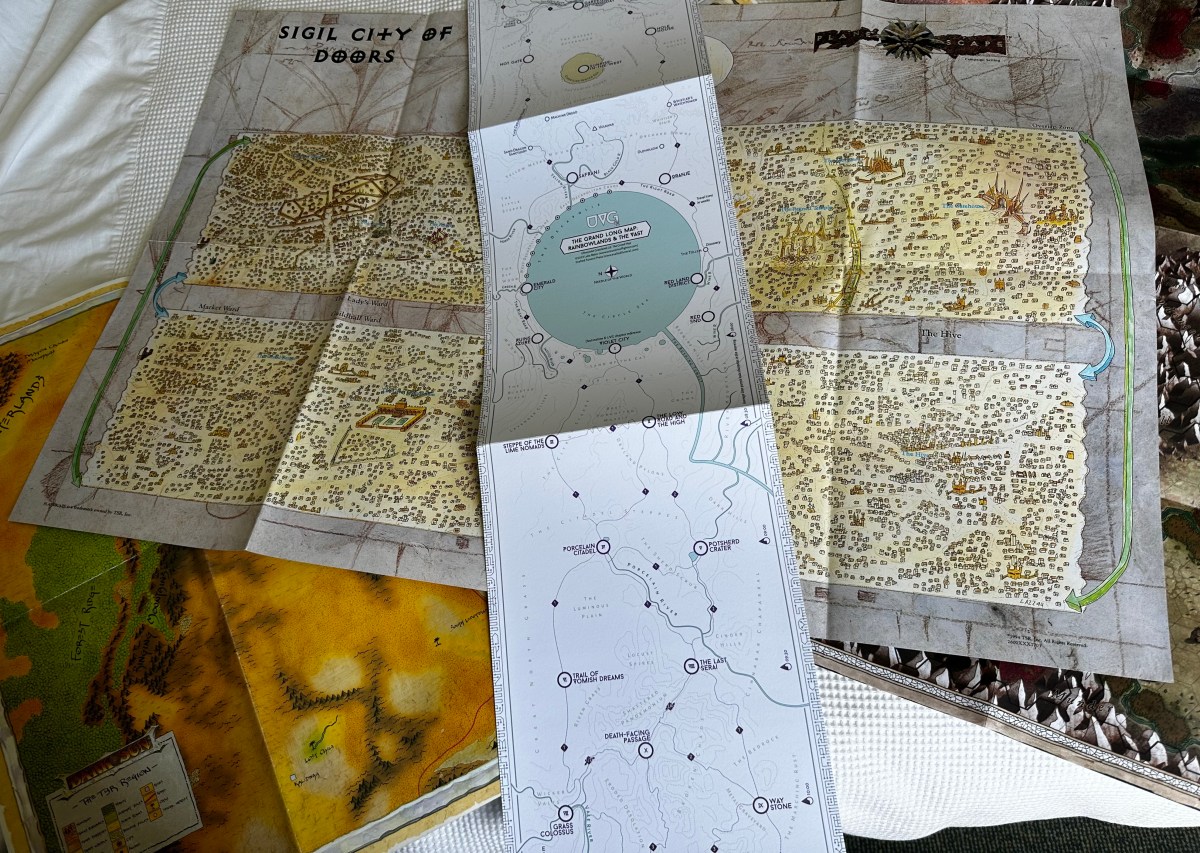
Much later, when I began to understand this fact, I had their NPC passengers ask them to take them to the Orc kingdom, Tír na nOrc, another island nation that opposed the empire ferociously. I had a great time designing the map of the island, describing the city, Ráth an Croí, its people, its districts and factions, in detail. I built in a whole mini-campaign into this island that would involve opposing factions where one side had the patronage of devils and the other side were aligned with demons. It did not have much to do with the drowning of Galliver. Instead it was its own thing with more on-land exploration, social and dungeon stuff going on.

I actually enjoyed this a lot but it had really gotten away from the original idea I had had for this setting. That Island of the Week premise was long gone and I had started to look at it as something more epic in scope and much more land based with long running arcs and returning NPCs. I regret this now, actually. I would still like a campaign that feels more like a series of adventures interspersed with character development and, maybe the emergence of an over-arching plot.

In the next post, I want to explore the elements of Scatterhome that I feel worked best and the ways that other games explore the building of worlds.