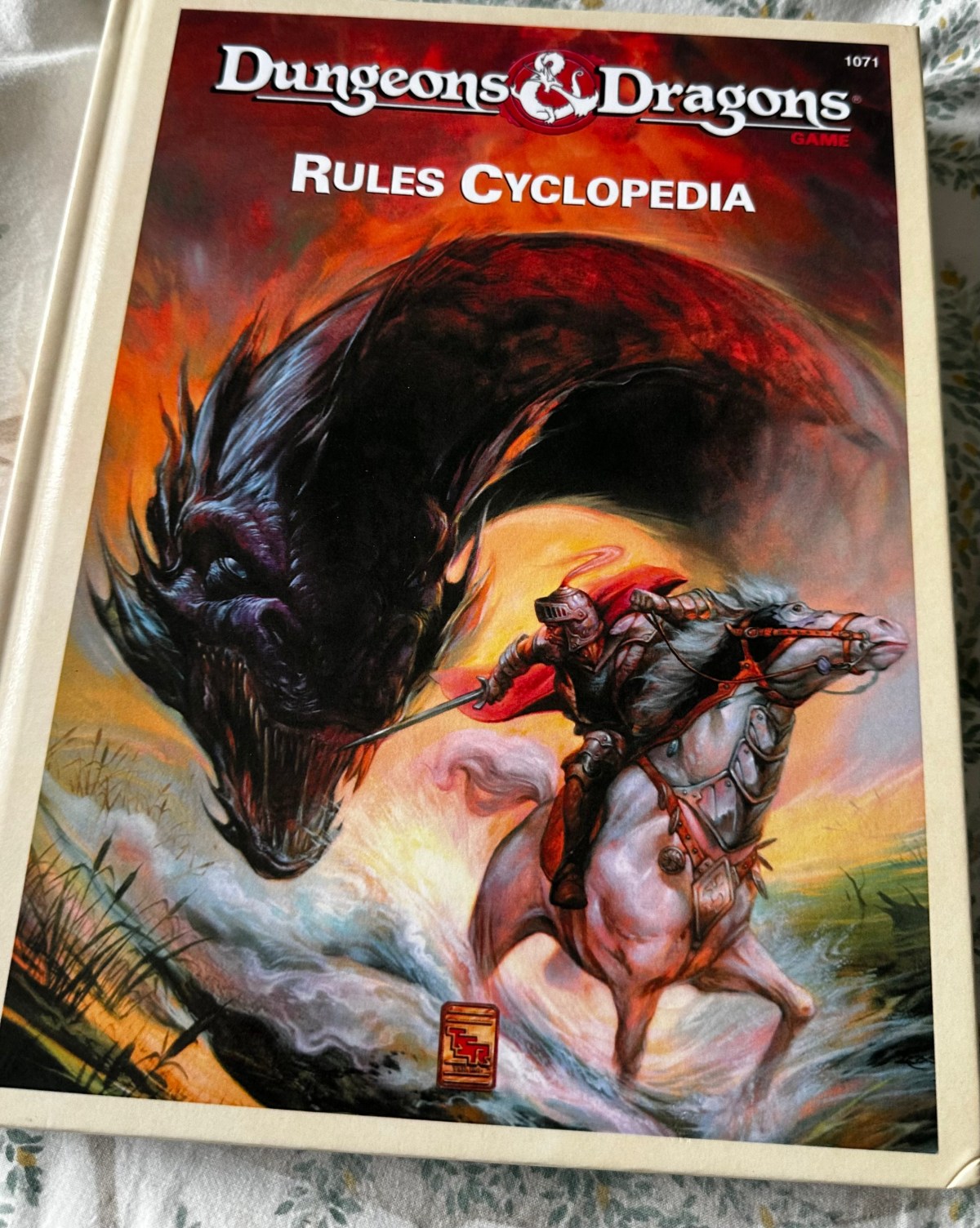
The Keep on the Borderlands
Friend of the blog, Isaac has generously offered his time and effort to take on the Editioning with me. He’s DMing Basic D&D for us right now. He decided on the Keep on the Borderlands as the adventure for this edition, and I couldn’t be happier. It’s the iconic first scenario for many, many adventurers in the 80s. I actually think I might have played at least part of it as a novice, although I have no real memory of it.
For those who don’t know it, here’s the set up. The PCs arrive at the Keep on the Borderlands, a remote and embattled outpost, that has been recently assaulted by a group of creatures that have come from the nearby Caves of Chaos. They use the keep as a base of operations to set out and explore the caves and other locations in the area.
It’s got a few interesting NPCs with their own specific motivations and desires and a couple of different factions to keep things interesting, including the Ospreys, a rebellious bandit clan, the current ruler in the keep, the Castellan, and the Thyrenian Guild.
A lot of these older modules are designed for unusually large numbers of PCs. I think this one is designed for 6 to 9 players. As we started off with just two players (now expanded to three) it was essential to hire a whole bunch of hirelings. We started off with four but quickly decided we should max out that number and hired three more. By the time we set out to the Caves of Chaos, in our third session, we had a small army, including a slightly suspicious priest by the name of Jabeck and his acolytes. This should make combat interesting.
How its going
I say we set out for the caves in session 3, but actually, that was just our most recent and successful foray. Here’s the story of the first one.
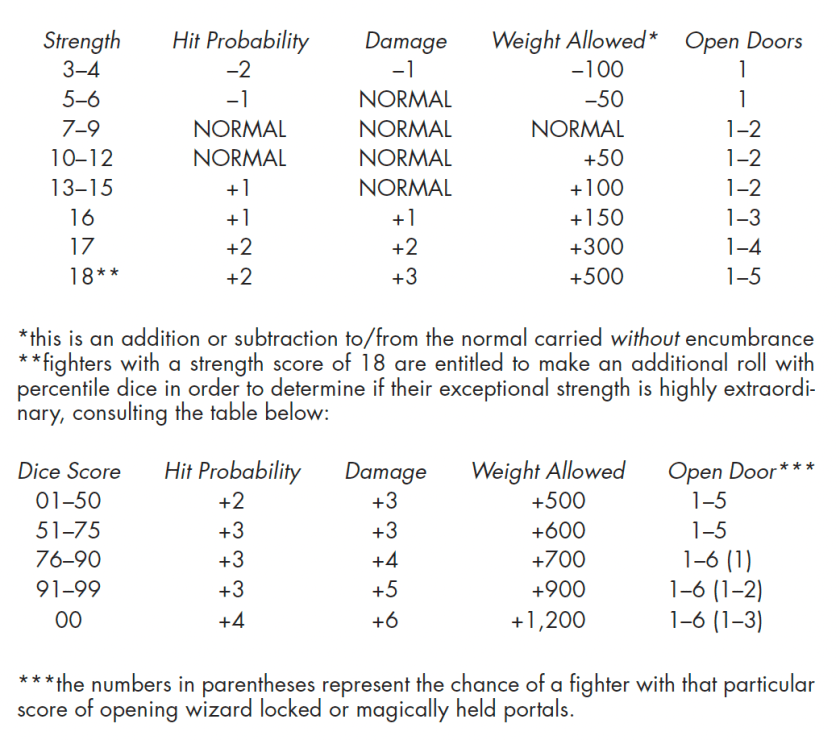
So, in the first session, Tom and I made characters. As per the rules, we rolled up our ability scores first and determined the character class best suited to those scores afterwards. Tom rolled pretty well and decided on an Elf character, Eandril Summerstream, which made a lot of sense as elves had the benefit of spells and proficiency with melee and ranged weapons too. Given our smaller party size, that flexibility could be useful. I rolled execrably:
Str: 6
Int: 6
Wis: 12
Dex: 5
Con: 9
Cha: 10
There was only one option with those scores, so I created Edmund of the Sun, a Cleric of the Sun. He’s a lovely fellow, but thick as pig shit. I played into the idea that he was barely literate and couldn’t remember an NPC name if his life depended on it. I outfitted him in plate armour because his dexterity was so bad and he only had 2 hit points. Between the two of us, we represented the only two survivors of our mercenary band called the Company of the Summer Sun (a clever play on the names of the two characters) who arrived at the keep with the hope of rebuilding.
I genuinely had a great time roleplaying Edmund in the keep and getting pissed in the tavern with the party’s new hirelings. We awoke in the street the next day, suffering from alcohol poisoning and set off with Jabeck and his mates to explore the Caves of Chaos. Now, we had been warned about Jabeck by the keep’s chaplain, Father Burgoyne, who asked us to watch him and find out what we could about him. He suspected that he was a spy for the Great Serpent Cult, which operated out of the caves. But Father Burgoyne was incredibly racist against elves and Jabeck seemed reasonable when we went to talk to him. He also plied us with ale, which endeared him to us. So, I guess we took his side. That’s how he ended up accompanying us to the caves. I really hope he doesn’t betray us…
Anyway, on the way, Isaac had us roll for a random encounter, which resulted in an ambush by the aforementioned Ospreys. Now, we had been given a token by one of the guards in the keep to take to the Ospreys to maybe do some work for them. However, there was also a bounty on them, which was worth 10GP per right ear returned to the keep. Being rather lawful types, we decided to go anti-Osprey in our outlook. Edmund tried to throw them off by deliberately mistaking the voice of the unseen Osprey in the roadside bushes for a lad he knew in seminary. He trusted in his armour to protect him from any potential attacks. Turned out this was a mistake. They got tired of Edmund’s sass and rolled initiative. We lost, they won, one of them fired an arrow. It lodged in Edmund’s eye-socket, killing him immediately and outright, with 2 points of damage. The first combat roll of the game killed my boy. It was a bit of a shock, even though I had predicted Edmund’s early and brutal demise from the outset, given his atrocious stats.
From there, Eandril led the charge and killed the three bandits. I picked up one of the hirelings to control for that battle but wanted to make my own character again. So as the rest of the party turned around and returned to the keep to regroup, I started rolling. Oddly, by the time Eandril and the hirelings got back from chasing down the Ospreys, to the road where Edmund’s corpse lay, it was gone, taken, they assumed, by Jabeck to dispose of as per the rites of their shared religion.
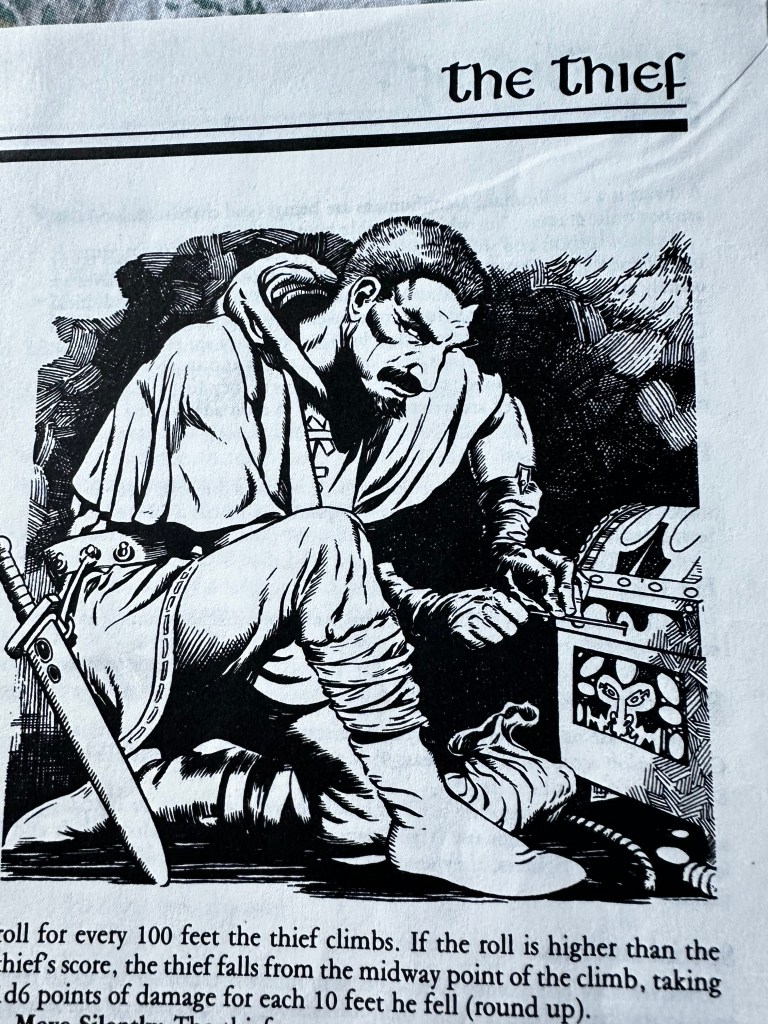
Despite the loss of Edmund, the encounter proved quite profitable, between the 30gp for the Osprey ears and the horses they left behind, Eandril did well. By the time they returned to Father Burgoyne to tell of Edmund’s demise, I had my next PC ready. Thaddeus Nightbane is a thief, obviously. I rolled significantly better for this character so hopefully he will last a little longer. This would be unlike every family member, friend and acquaintance he had ever had, however, as they have all perished tragically somewhere in his backstory. Despite this slight worry, Eandril decided to take him on as a full party member.
To the Caves
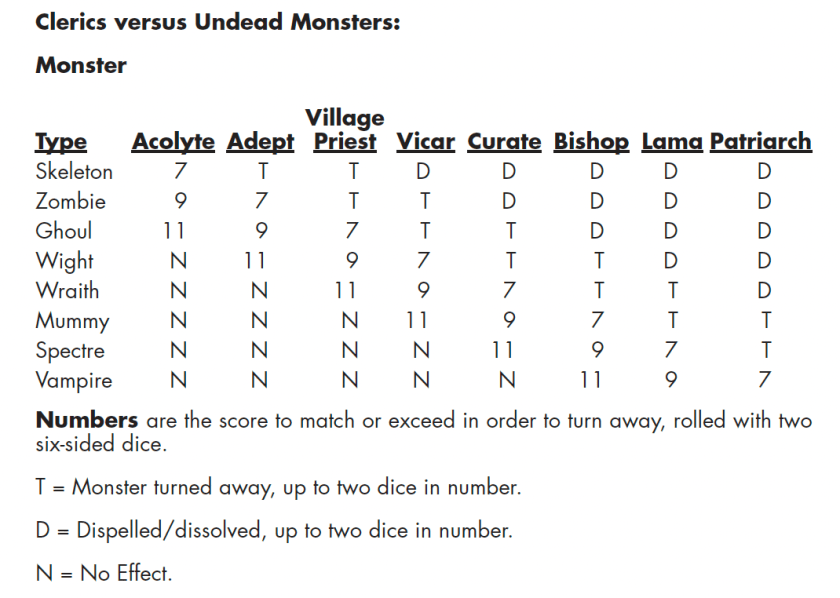
Finally, with session 3 on Wednesday, we actually made it to the Caves of Chaos. We were joined by another player, who rolled up a Halfling. We also created some backup characters for everyone, given the obvious lethality of the system and the adventure. There is no doubt that the lack of hit points, the lack of healing, or spells of any kind for the cleric, the swinginess of the combat and the potential for unbalanced encounters is pretty rough on these little adventurers, so its best to go in prepared. Unfortunately, my backup character is just as bad as Edmund, and is, possibly, one of his peers, as I had to go Cleric again. With all this character creation, we didn’t get too much time to play. But we did make it down the road without a random encounter this time.
When we got to the caves we discovered a group of goblins moving something around down there in sacks (the sneakier PCs went in to hide in shadows and spy on the inhabitants.) Our plan is to draw them out of the caves as much as possible and ambush them in a pincer. We have executed the first part, gaining their attention with some elven lullabies, so out of place in the darkened caverns. And last we left off, we were getting ready to roll initiative! Exciting! Hopefully Thaddeus lasts a little longer than Edmund.
The Basics
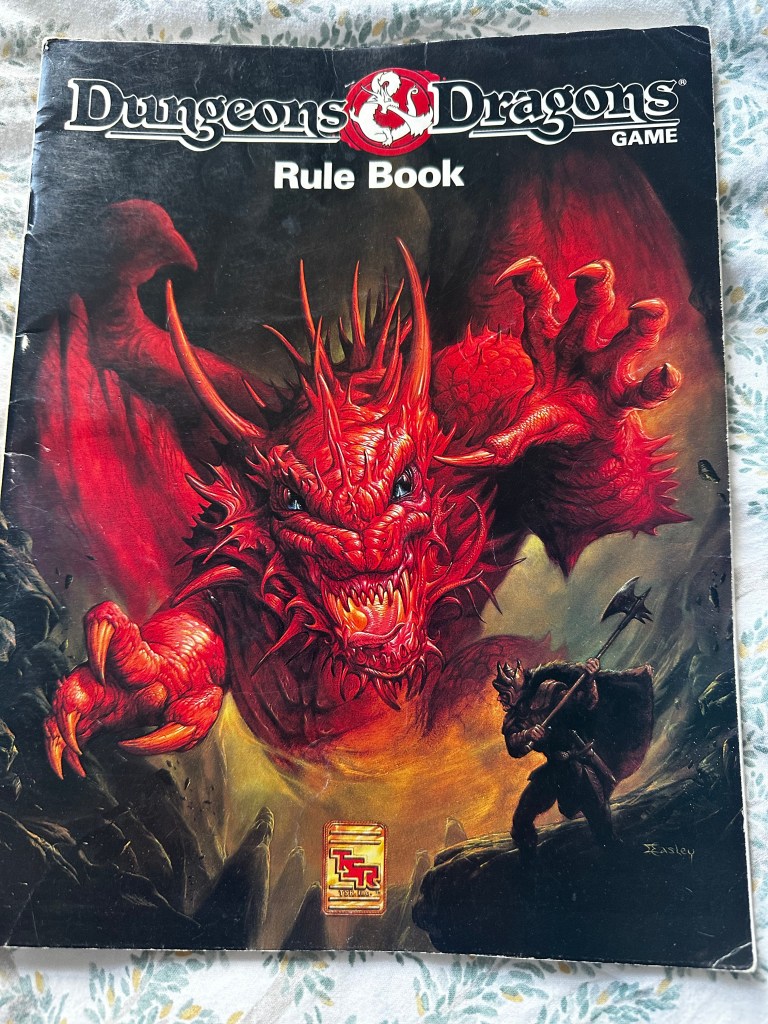
There are too many possible versions of Basic D&D to definitively say that we’re playing the version. I mean, we’re not even really using one version at the table. We have the Rules Cyclopedia, which contains all the rules from the entire BECMI line, the Dungeons and Dragons Rule Book also printed in 1991, which only contains he Basic rules for levels 1 to 3. Isaac also has been referring to the Moldvay rules, a kind of 2nd edition of the Basic set, and we have even been using resources and specific rules from OSE, which is essentially the same ruleset.
In general, this hasn’t been an issue. We have come across some conflicting rules. Encumbrance was the first one. Isaac simply made a ruling to go with the encumbrance from OSE rather than the Cyclopedia. We have discovered a could have differences in spell descriptions, but they were functionally unimportant so we could safely ignore them or Isaac would make a ruling as to which version to use.
I have to say, stuff like the class sheets from OSE, printed out and handed to the players, have actually been very useful and don’t have any deleterious impact on the “playing Basic D&D experience.”
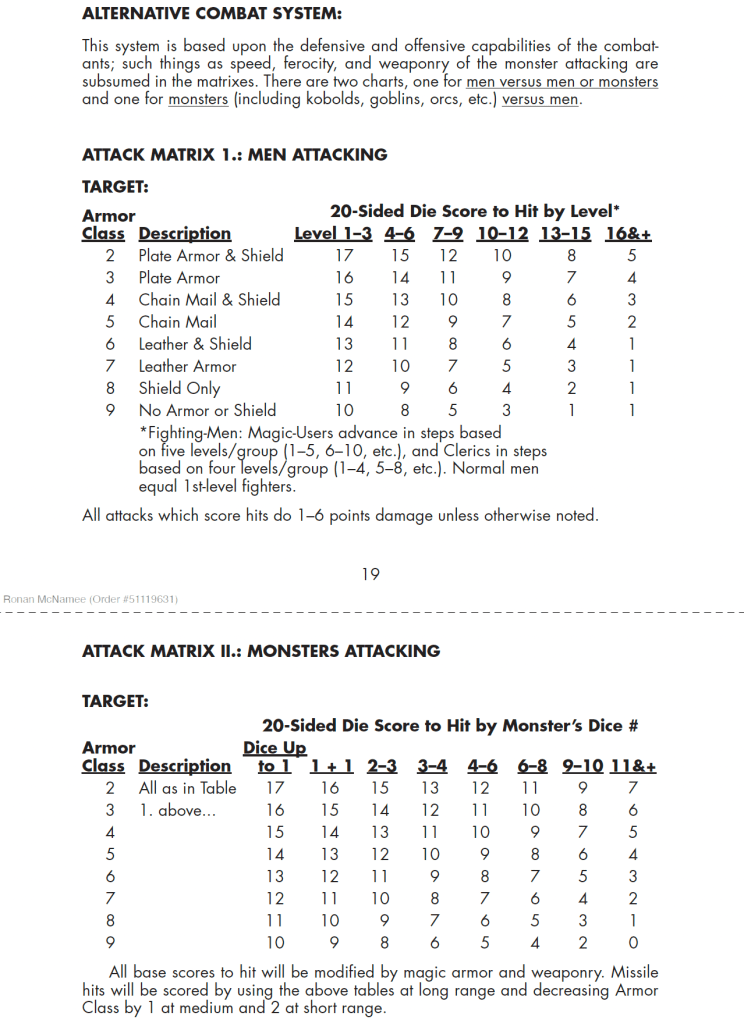
As for interaction with the rules, Some have found THAC0 and descending AC to be a bit of a leap to understand, but, luckily, the character sheets Isaac has selected have the full range of “to hit” numbers laid out so all we have to do is roll the dice and refer to the table.
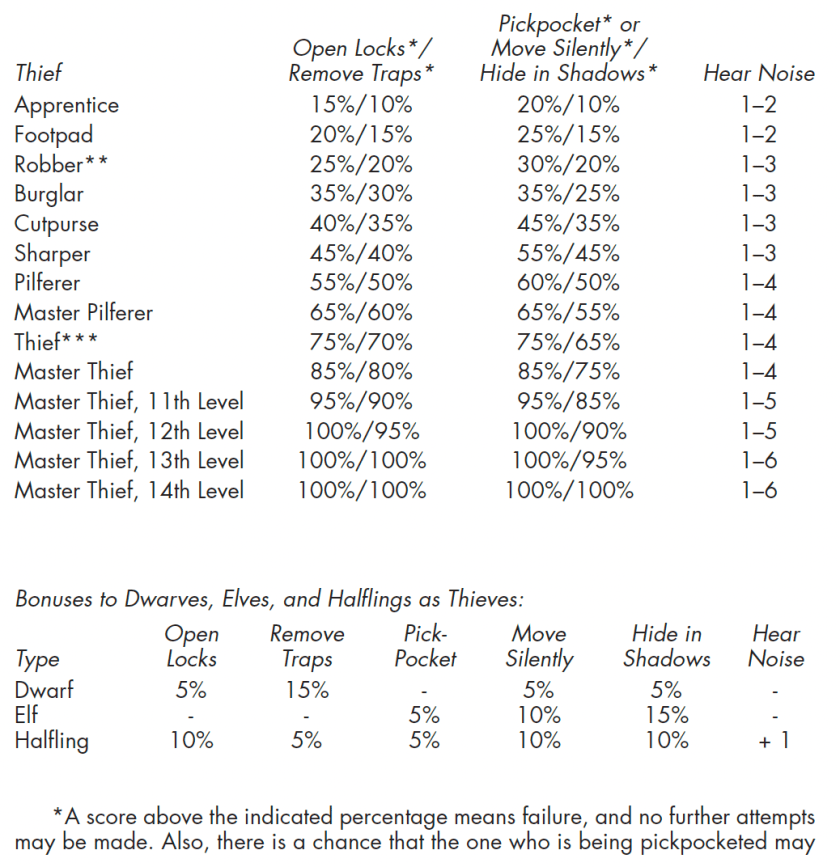
Things like the rolls for thief skills are weird and anomalous but not difficult to understand. Once again, as long as you have them laid out for you, its easy to know what you’re rolling and what you need to get below to succeed, whether its on a D6 or a d100.
Conclusion
It’s too early for a conclusion, but, despite the death of my first PC on the first combat roll of the game, I am enjoying the game and the adventure. The old school style has been particularly refreshing. It’s interesting that we need to rely on a cadre of mercenaries to even attempt the adventure and I like the randomness that’s inherent in it.
I’ll be back with more reports once we have a couple more sessions, dear reader, so stick around!




























 The Dice Pool