Endings

It’s hard to say goodbye

It’s so exciting to start something new. There’s the anticipation for what’s to come, the tingling nervousness that transforms to delight in the beginning, the wonder at sights never before seen and actions never before taken. Beginnings are full of possibility and the feeling of freedom.

The end of something, though, can be just as exciting, but in a different way. Do you ever rush to the end of a novel when you’re about three quarters of the way through, eager to find out what happens? Maybe you’ve waited on tenterhooks for the final film in a long running series to be released, because you have spent so long with those characters and know their stories so well and you want the best ending possible for them.

That’s a lot to live up to, that pressure. And I think, in an RPG context, everyone at the table feels it to one extent or another. At least in the situation when you know the end of the game is coming. TPKs notwithstanding, achieving a narratively satisfying ending to a game, particularly a campaign that you have potentially been playing together for months or years, is hard. Of course it is. There is a pressure to tie up all those loose threads, make sure that big bad is confronted, achieve emotional closure for your characters and their arcs, maybe even leave a space for a sequel.

Not only that, but the real struggle is making it all the way to the end of a campaign! Sometimes your friends move away or have kids or there’s a global pandemic or whatever. Stuff happens. Understandable stuff, but stuff nonetheless. The thing is, of course, that just means the endings you do get are that much more precious.

How to part on good terms

One-shots

You’re there for a good time, not a long time. But that presents its own challenges to fitting in a great ending. If you have a suitably magnificent finale planned, how do you make sure you get your PCs to it in time?

Time

My answer here is easy; take a reading every thirty minutes or so to see if they are cracking through the adventure rightly or if they haven’t made it out of the frikking tavern yet. If they need it, push them along, end that scene and do a hard cut to the next one, bring in a major NPC from another scene to move things along. And if all else fails? Cheat! One-shots benefit from a breakneck pace in my opinion, and no-one will blame you if you bend a few rules to keep the action moving along. They probably won’t even realise.

Possibilities

Another good idea for a one-shot is to come up with a few possible big endings. This is obvious, of course, but it helps to think about where you might want the PCs to end up and if you have a couple of big set-pieces to choose from, that really helps with engineering the big ending.

Epilogues (1)

And if all else fails and you run out of time while they are nowhere near a satisfactory endpoint, epilogues can be a fun way to go. Just get each player to narrate the life of their character five minutes after the last scene of play, or five weeks or five years! Just as long as the events of the game have a major effect on their epilogues.

Campaigns

It’s really hard to give any advice on this. Let’s be honest, every campaign is going to be so different, even if they are published campaigns played by thousands of groups, no two of those ends will end up being the same. But, we’re here to discuss it so let’s do it.

Arcs

Character arcs are important in campaigns, long and short. Players want to see growth in their characters and not just the kind where they level up. They want to find the thing they had been searching for and figuring out that what they really found was the friends they made along the way. Sometimes they want to gain power and prestige and property to make them feel successful. Other characters change drastically due to the events of the campaign and come out quite different to the farm girl they were at the start. My advice on these is to make sure they are wrapped up in advance of the big finale if you are planning something like that. Give each character their moment in the spotlight in the sessions leading up to the end so they know they are all just as important in the building of the story together and that everyone can see them in all their glory/misery. Players remember that kind of thing forever. Its good to involve character stories in the finale too, if you can, but if you leave their big moment to then, they will rarely get the time to revel in it too much. I could be wrong about this but such has been my approach in recent times and it has tended to work out fairly well.

Threads

Loose threads can be left loose, in my opinion. There is an impulse in some games to ensure that the players get to experience everything. But, by the very nature of RPGs, it’s simply not always possible.

So, the party ran into an itinerant wizard in the third session. She asked them to explore her phantasm-infested old tower and return with certain writings that might have relevance to the overall campaign plot. But they never had time to do it or they got sidetracked. That’s just an answer they are never going to get! At least not in game. The GM could always explain where that was going after the end of the game I guess.

Of course, for narratively integral beats, I endeavour to bring them all home at the end. If they lost track of a vampire servant of the Big Bad that they were hunting through the Deep Dark Forest, bring him back in the last fight as backup for the big bad, maybe. If one of the PCs’ parents went missing earlier and they didn’t find them, have them in the cultist temple as a sacrifice to the evil demon they are summoning in the final scene. Complicate the scene! Make it so they have to rescue them!

Fights

As for the final battle, if you are even running the kind of game where you would have such a thing, elaborate set pieces, evocative or emotionally resonant locations and big fucking monsters usually do the trick. I would say, though, difficulty-wise, more enemies is usually harder than bigger enemies. One or two big monsters with lots of hit points and abilities will go down much quicker than one big guy and ten small guys. I guess I am mainly talking about D&D finale battles and other set pieces here. This is because action economy is king in D&D. So this piece of advice should be taken with advisement.

One thing that I always try to encourage is for the players to talk and cry out and banter during these bigger fights. Makes the whole thing way more exciting and personal and funny.

Epilogues (2)

I think epilogues for the PCs really work well at the end of a long campaign as well. For these ones, I generally want to know what the characters are doing a year or two down the line. How have their day-to-day lives been affected by the events of the campaign? Where are they? Who are they with?

End games
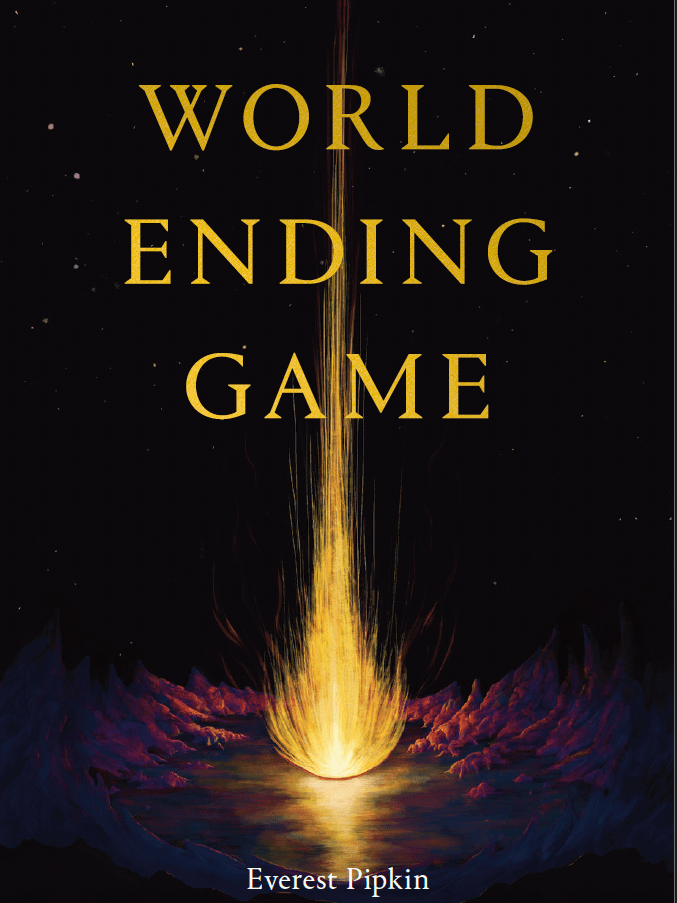
At the end of the Blades in the Dark campaign I played in recently, our GM ran us through a different game to give us a chance to ask some questions of our characters to see how things ended up for them. The World Ending Game is by Everest Pipkin. It is a cinematic game that imagines the last scene or episode of a movie or TV show. It frames a bunch of different types of ending scenes called things like “the Confession,” “the Reveal,” “the Revision,” “Tableaux.” It was a fun and alternative way to treat the ending of a game that felt really personal to players and characters both and I would encourage others to use it to wrap things up for their own games.

Conclusion
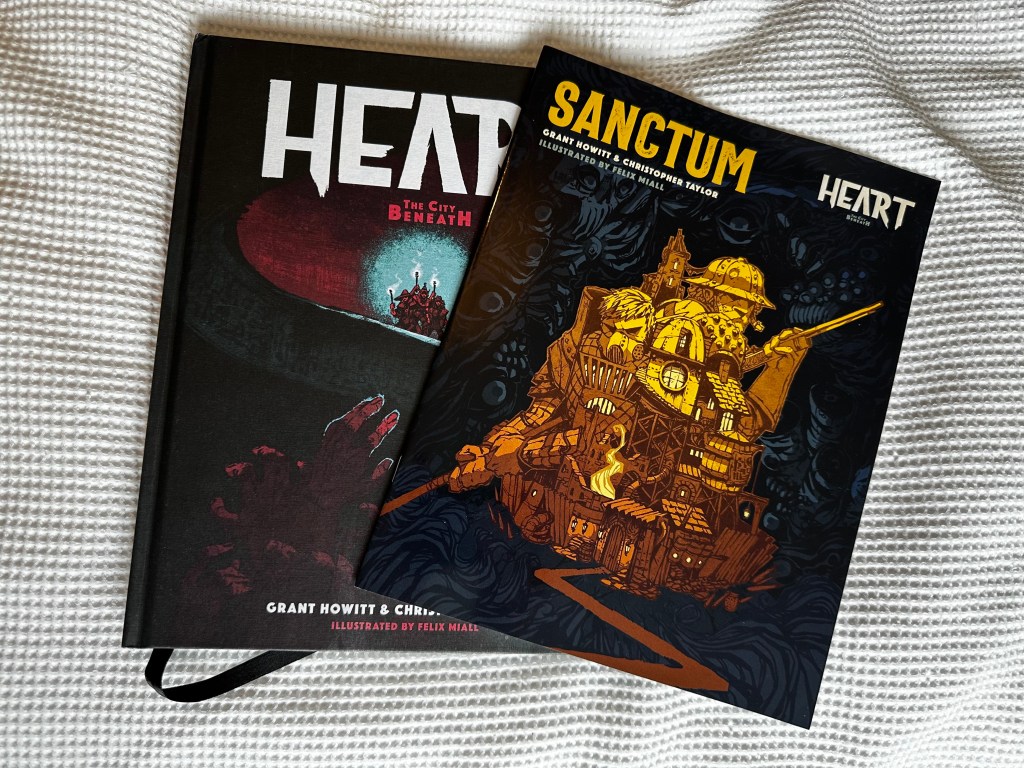
I still find endings hard but I like them more and more. I have become much fonder of shorter more contained games of specific numbers of sessions. So it is a little easier to plan for. Also, sometimes, a character’s end is the best part, just look at Heart and its Zenith abilities, they will end the character, but they will also achieve the seemingly impossible. I love this idea for a couple of reasons, it brings the character and probably the campaign to a hard stop in the most amazing fashion and it is player driven. They have gotten themselves to the point where they want to use that ability, it is their choice to use it and it makes for the best ending for their character from their point of view.

How do you like to end dear readers? Do you like to go out in a blaze of glory or do you prefer to sail off into the West and remain Galadriel?

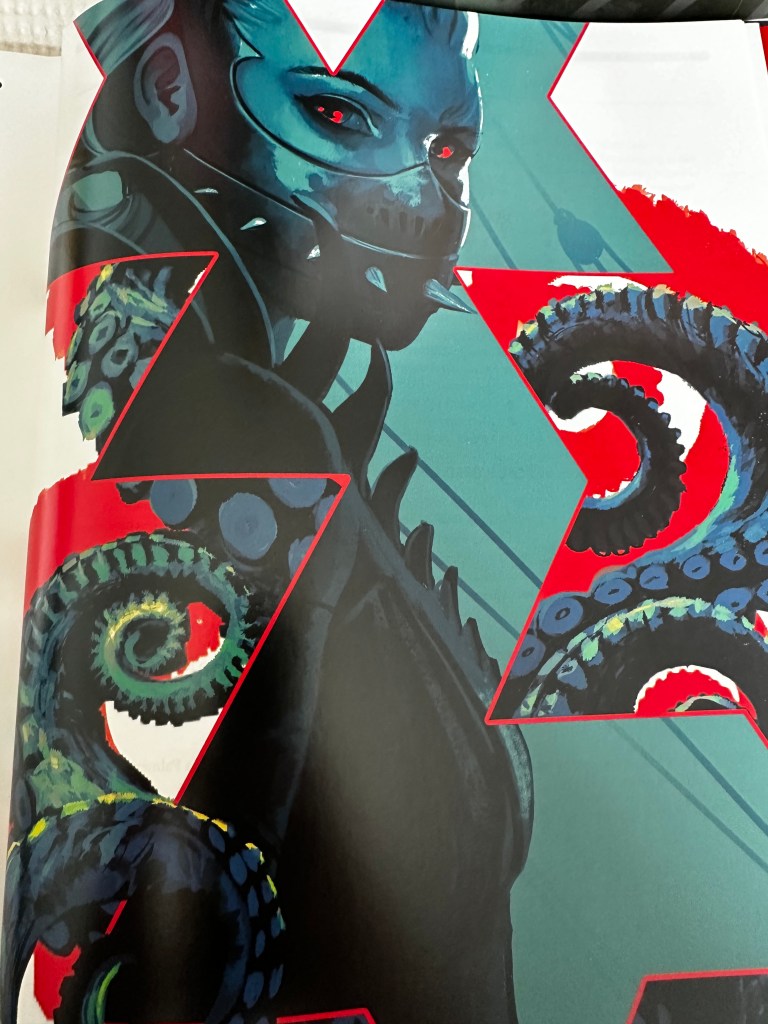
DIE RPG – One-shot

Comic, not comical

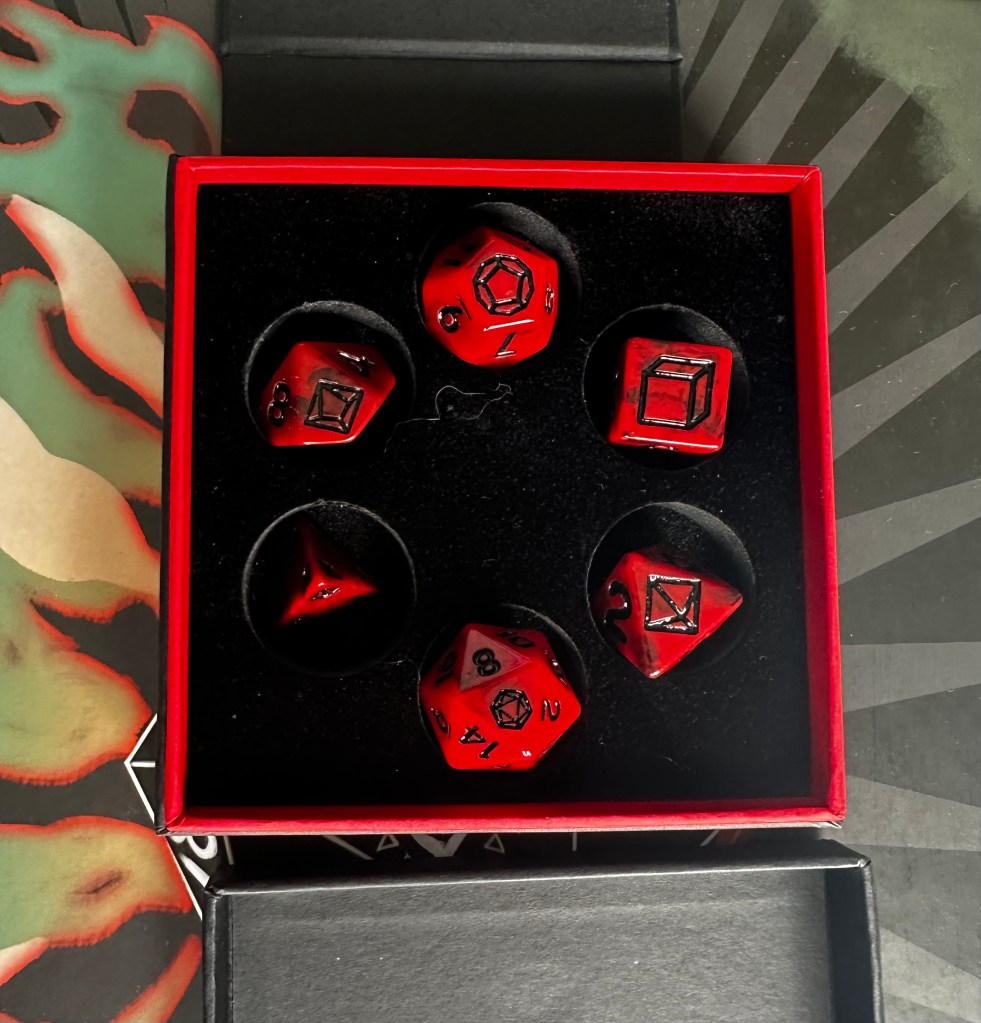
The DIE RPG was developed by Kieron Gillen, writer of the comic of the same name. I really loved the comic book, mainly because the premise spoke to me personally. The premise of the comic is that a bunch of young friends were brought together by the one guy who wants to GM a new game for them. He presents each of them with a special die, one d4, one d6, one d8, one d10, one d12 and one d20 for himself. In the course of play they find them selves transported to the game world. They are trapped there for months and come back changed, having left their GM friend behind.
Cut to decades later, they are all grown, with families and traumas and problems. They are all drawn back into the world of DIE for various reasons and the comic basically goes from there, following their adventures to the metatextual unreality of this fantasy realm trying to find their friend and a way home again, or not. Meanwhile, they all deal with a melange of emotional issues that lead to some very high drama and high-stakes decisions.
It is pretty fraught most of the time, very relatable to many, and despite my sub-heading it is funny sometimes.

DIE RPG

So Kieron Gillen got together with one of my favourite game publishers, Rowan Rook and Decard, to make the DIE RPG. I followed the process and remember checking out some of the early beta material. As a game, it is working to do what the comic did but at the table with your friends. You have to create a character, who is the player of the game, as well as the character they play, so there is a sort of Inceptionesque quality to it, which is dreamy and cool. Now, your player has to come loaded with various real-world problems and worries for you to work through in the game within the game as well.

I have not read much of the fully finished game, although it has spent a fair bit of time on my shelf. I recently discovered, while reading the Burn After Running blog, that it is ideal for one-shots so that’s why I really want to try to bring it to the table soon. I want to unearth some traumas for my player’s players and express them through my player’s player’s characters.

Also, please take a moment to appreciate the beauty of the products. Yum.

More Troika! – One-shots

Appendectomy

When was the last time your mind was genuinely blown by an idea, a concept, a creature or a situation presented to you when you played a fantasy role playing game? Because I don’t think D&D is providing opportunities for that sort of thing these days. I don’t necessarily blame the writers of D&D books for that; Wizards of the Coast has painted themselves into a corner that they are very comfortable occupying. In fact, because D&D is responsible for much of the public image of fantasy games for the last half century, they have dragged a lot of the hobby with them. As a result you have endless polished and glittering iterations of elves and dwarves and dragons and wizards with spell levels and clerics with devotion to individual deities and all the same monsters repeated ad nauseam. It is particularly interesting when you look at Appendix N, the appendix to the original D&D, in which Gary Gygaxstated his inspirations for the game. It has a few names you would expect to see: JRR Tolkien, Robert E Howard, Fritz Leiber and Poul Anderson but you also have a few that might make you wonder about the connection to the D&D of today.

HP Lovecraft is well known as the author of The Call of Cthulhu and other cosmic horror stories but his influence on D&D might not be obvious to all. Jack Vance wrote fantasy novels but they were tinged with an element of science fiction and gonzo world building in his Dying Earth books. In fact, many of the authors represented in Appendix N were famous for science fantasy rather than straight fantasy books, just look at Roger Zelazny and Edgar Rice Burroughs. You can still see bits of that influence in Wizards of the Coast’s D&D if you think of Spelljammer and Eberron but they always feel little too clean and sanitised compared to the books those ideas came from.

What I am getting at is that the true spiritual successors to the game developed with Appendix N in mind are part of the OSR. I wrote just yesterday on this very blog about Dungeon Crawl Classics and that very much embraces those influences, but it’s Troika! from the Melsonian Arts Council that truly embodies them for me.

Stretching those imagination muscles

The cover of my copy of Troika! Numinous Edition.

From Acid Death Fantasy by Luke Gearing:
“To the East lies the Plastic Sea, a miraculous main of liquid plastic. Upon contact with living skin it solidifies, covering the coast with Coated Men dueling each other in elegant, fatal contests, having made the choice to die young and glorious, sealed in flexible plastic armour.”

From Fronds of Benevolence by Andrew Walter:
Fletherfalloon is a floating Thinking Engine of a very basic sort, dating from a bygone age. Festooned with rotting ribbons and rusty curlicues, it hovers at varying altitudes burbling and whistling to itself.”

From Slow Sleigh to Plankton Downs by Ezra Claverie:
“Water: three billion years old, frozen by the perpetual
night at the edge of the Galaxy, compressed into glaciers
of midnight blue. Taste the weight of time and solitude,
darkness and purity. With Djajadiningrat.
Hear it crackle in your favorite spirit. The sound of time
calving into an ocean of premium flavor.
Cut by natural-born hand, never by machine, never by clone.
At night’s edge, taste the infinity. Only from Djajadiningrat.
— advertisement in Ice Tomorrow (trade magazine)”

Troika! Is a city at the centre of everything, and around it gathers a host of bizarre and fantastical settings dotted throughout the cosmos. Perhaps you traverse this universe in a space-ship, perhaps it’s a Golden Barge you use. Maybe your character is a Displacement Prosthesist, maybe they are a Hyenaman Scavenger. The possibilities are truly endless and the strangenesses abound.

A page from Acid Death Fantasy by Luke Gearing. It details of the background you can choose to play in that setting, the Hyenaman Scavenger.

We had the chance to play a single one-shot of Troika! A couple of months ago and it did nothing but whet my appetite for more oddness. The adventure we played was a published one, The Blancmange and Thistle, in which the PCs encounter a hotel. Saying any more would involve spoilers but suffice it to say, if you are a fan of the unusual, that hotel is the place to stay.

The inside front cover of my copy of Slow Sleigh to Plankton Downs by Ezra Claverie.

From that, I fed the PCs a hook that should, someday, when I find the time, lead them to the world of Myung’s Mis-step and the whodunnit adventure at the centre of Slow Sleigh to Plankton Downs.

But I have a few others too:

Some lads on a page from Frond of Benevolence by Andrew Walter.
  • Fronds of Benevolence is a short, point-crawl where the PCs journey in search of an item of great importance to their friend/ruler/patron/deity, Duke DeCorticus, which will lead them “to the Rainbow Badlands, across the precipitous face of The Wall and in the very vaults of the hump-backed sky!
  • Acid Death Fantasy is more of a setting book but could equally be used as a point-crawl adventure. It contains elements from Dune, Planet of the Apes, others from dying earth genre books and still others from classic fantasy.
  • Whalgravaak’s Warehouse also by Andrew Walter is an adventure “that centres the play experience on the classic tenets of danger, resource management, exploration and player engagement agency.”

And given the fact that I will probably only get to run these once every few months, these will no doubt last me a while!

Have you had any experience playing Troika!? If you met a Slug Monarch in an awkward situation, would you help them or attack them?

Psycho-analyse Your Players for Fun

Sorry for the monsters

The murder-hobo days are largely done, I think. Although I’m sure there are still plenty of tables out there slaying every poor goblin that crosses their paths, it seems to be a pretty old-fashioned play style, uniquely and deliberately violent, especially when the “monsters” are sentient creatures with cultures and desires and rich inner lives. I didn’t know it when I was a kid but there’s no doubt that the impetus to enter an underground lair and kill every orc you found in there was a product of some highly colonial cultural fallout. Those guys are green so it’s ok to take their treasure and their lives, right? Or, my king/lord/boss/priest told me those guys were evil; better get them before they get us!
You are far more likely to be able to deal with an encounter without violence, and that’s cool.

Harpin’ on

Do my players do this? you ask, reader. Well, yes and no. The Deadwalker from our Heart game made friends with a Heartsblood beast the other night. It was a giant snail with the face of a drow (except for the eye stalks and the rows of sharp little teeth.) his name was Shelby. Of course, they sort of bonded over the killing of a harpy couple. Harpies in Heart are very interesting, by the way. They remind me of the Khepri in China Mieville’s Bas Lag books. The male harpy is just a big bird, about the size of a cat. Now, when he is looking for a mate, he’ll collect up a load of trinkets, bones, body parts, small creatures and occult relics and place them in a circle while, like a minah-bird, he speaks words he has heard others say. These tend to be words they have heard recently from people like the PCs, which is fun. Anyway, this ritual summons his potential mate through a portal from some dreadful, hellish dimension. And she is the terrifying figure of a woman but with talons where feet should be and wings instead of arms and the intestines of some poor bugger dripping, bloody from her beak-like maw. She is very violent and hungry. This encounter was only going to end one way. Luckily, it was the PCs who came out the victors, although it was touch and go. And hey, Seeker made a new friend in the process! Cute little Shelby.

Surprised to see it turn weird

The subtitle there is a reference to a star I got from Isaac in our last D&D session when they discovered the brainless hobgoblin body and the triplets with gossamer threads attaching them to something else in this dungeon they have just entered. They have been encountering a lot of other sailors, mostly humanoids and their servants recently. That’s often the type of game it is because they are dealing with other ships and their crews a lot. They have usually resorted to violence in most instances in this campaign so far. Maybe that’s my doing since the encounters have often started off violent from the monster side. And they did try to befriend that one Neogi sailor who had been left behind by his mates. So they get humanitarian points for that.

So, in this dungeon, I thought I would take the opportunity to make it a bit weirder. After all there should be alien things in a space game. I can’t go into too much detail, but suffice it to state that I am excited to see how the players and their characters react and what they do.

Spiteful owls and slug monarchs

What I find, in general, is that the weirder the monster you introduce, the more likely violence is gonna to be the answer. This is, I think, often a fear response. Or maybe it’s an assumption that, the weirder the monster looks, the less likely it is to be reasoned with. These are often understandable impulses, actually. I mean, there are also the monsters that are totally mundane, like the flock of owls in the Troika! Adventure, The Blancmange and Thistle. They had come in through a window and were harassing a hotel employee. My players did not hesitate to cull those wild birds. To be fair to them though, the text does name them “spiteful owls” and they attacked anyone who entered their stairwell. So maybe they deserved it.

A couple of floors further up in the. Blancmange and Thistle, they encountered a Slug Monarch trapped in the stairs, embarrassed and very much in the way. They used some demonic water to awake a terrible hunger in him and that got him moving. He was a bit more dangerous in this state so they did have to fight him off but then they just escaped up the stairs where he couldn’t follow. It was a relatively non-violent solution to a simple problem involving a rather gonzo monster. But maybe they just treated him better than the average slug because he was a monarch?

Maybe I should stop psycho-analysing my players and their characters.

Anybody else psycho-analyse their players?

Games I Have Played So Far this Year, Part 2

Lists part 2.2

You will notice a trend in this list. More than half of them are Open Hearth one-shot games. I just joined the community in January of this year and I thought the best way to ease my way into it would be to sign up for a short game or two. So I started with Alien Dark. Not long after that another member in a similar timezone started posting one-shots of a bunch of games I wanted to try out, and that accounts for almost all the other Open Hearth one-shots listed below. I wasn’t new to Mörk Borg, admittedly, but it is usually a gritty good time and it was at a time that suited me so I joined up. Honestly, sometimes, that’s all the impetus you need.

Games I have played in so far this year

  • Root – The Nightmare Before Winterfest – Concluded Campaign. Root is the PBTA RPG of the board game where you play anthropomorphic denizens of the forest, traveling from Clearing to Clearing getting into trouble, making friends and enemies of various factions and having prolonged Christmas episodes. Good friend and esteemed character-actor, Thomas GMed this “festive” campaign for our little Tables and Tales gaming crew. The quotes are only partially ironic. It did start around Christmas but then it kept going right through Easter and out the other side! Don’t get me wrong, I’m not complaining. This campaign was a laugh. I got to play a German badger named Beagan, known to one and all in the Clearing of Lindor. Beagan and his companions busted open the people-in-the-chocolate mystery, demolished the local police station, repelled the siege of Lindor’s famous Winterfest market from the branches of its festive tree and unmasked Ebenmeowser Scrooge as the ultimate villain of the piece. Good times.

  • Remembrance – Open Hearth one-shot. Remembrance is a GMless story game designed by a fellow Open Hearth member and this was a play-test of it. All the characters start off as members of the Irish Republican Army during the Irish War of Independence, brothers in arms and valued friends too. But, as those who know about Irish history of the early twentieth century will be able to tell you, the War of Independence was followed quickly by the Irish Civil War. This was fought between those forces who wanted to accept independence for all but the six counties in the North of Ireland and those who would only accept freedom for all thirty-two counties. The three act structure of this one-shot was split between the time of fraternity in the first act, the tragic split into two opposing camps in the second act and a sort of epilogue, or maybe denouement in the third. The story we constructed over the space of three hours is something I won’t soon forget and an experience that stuck with me as an Irish person and someone who lives in those six counties.

  • Mörk Borg – Rot Black Sludge – Open Hearth one-shot. Open Hearth community member, Dom ran this one. This was actually the second time I had played through this scenario. The second time went significantly better than the first, partly because of the very limited time-slot we had to play it in, I think. Rather than stupidly investigating every bloody thing that was definitely a trap of some kind, we pressed on looking for the ultimate goal, finding some kid or something. My character was Joachim the Devoted, a Dead God’s Prophet, who, paradoxically, was a nihilist who insisted on telling everyone he was a nihilist. He survived this scenario despite being largely useless!

  • Mothership – Sandalphon and the Sleeping Angels – Open Hearth one-shot. The second one-shot I was a part of that was run by Dom. This was my first taste of Mothership. In this scenario, you dock with an asteroid/space station and try to discover what is going on there. Spoiler: it gets fucked up and scary pretty fast. The Mothership system is mostly based on d100 rolls and, if you are familiar with Call of Cthulhu at all, you will know that that means you fail, a lot. This leads to horror in a good way of course, setting up scenes of panic and fear as you face the increasingly unsettling and gross realities of the setting. Somehow, my character Burt Connery, ever-suffering Teamster from New York City survived this one too!

  • Cohors Cthulhu – Rude Awakening – Open Hearth one-shot. The third and final one-shot that Dom ran in the list. Cohors Cthulhu is a game that imagines Cthulhu type mysteries and scenarios set in the Roman Empire. Out of all of the one-shots we played this year, I found that this one possibly suited the format the least. It is definitely interesting as a game and a setting but is more designed for campaign play I think. Each character was pre-generated but a little too complex to really get to grips with over the course of a single three hour session. That being said, I enjoyed the speed run we did of this scenario where my character, Herodion the Schemer narrowly avoided being ritually sacrificed to an old god and had fun with the other players. I’d be interested to try the game in a longer form.

  • The Quiet Year – one-shot. This is an unusual game to put on this list really. It is not an RPG to be honest but it is RPG-adjacent. It is a map-making game that uses cards and lists of prompts to allow a group of players to design a settlement that is recovering from some sort of apocalypse or disaster. You have one year to do it and the game is split into four periods represented by the seasons represented by the suits in a pack of regular old playing cards. It was so interesting that each of the players around our table started to embody certain sections of the fledgeling community that had often conflicting priorities and ideas about how to build it. I enjoyed this as an exercise in understanding the difficulties in being one part of a community that is, ostensibly, working towards common goals where other factions have very different plans to you. It has conflict built in to it due to requirements for always having some level of scarcity of necessary resources and this can lead to some, surprisingly fraught interactions above the table. I have heard of a lot of people using this game to create the starting state of a setting for a new RPG and I love that idea.

So, that’s it for my list of games played so far this year. I am looking forward to adding a few more to this list in the coming months. I’ll probably do a post about that in fact. How about you? What games have you played/enjoyed this year?

Games I Have Played So Far this Year, Part 1

Lists part 2.1

Also not a top ten, not by any means, but I do think this one is useful for me, especially. Even this time last year I could not has envisioned a seven month period where I got to experience so many different games with so many different people. Looking back on it, I don’t think there has ever been a period in my life where I have been involved in so many RPGs.

This got me thinking so I went to dig up some of my old prep books from the 90s (a few notebooks, filled largely with encounter stats.) In these ancient tomes I found prep notes and full scenarios that I wrote for no fewer than three AD&D campaigns (Dark Sun, Ravenloft and Planescape,) a Gamma World campaign, a Beyond the Supernatural campaign, a Robotech campaign, and a home-brewed Aliens game that I think I based largely on the Palladium ruleset. I know I ran a couple of other things too but not much more. I have run more different games in the last 7 months than I did throughout my teenage years! It is a golden age for me and I am loving it!

Anyway, on to the list. In this post I am only doing the games I have GMed/run/refereed. I will do the ones I played in in the next post:

Games I have run this year so far

  • Spire – Kings of Silver – Concluded Campaign. Far more epic in scope than it ever had any right to be. This was largely due to my choice at the start to make use of an optional rule that made the PCs much less likely to accrue fallout. At the time I did not realise exactly how crucial fallout is to pushing he campaign forward. I wouldn’t do that again. This campaign really got me into the products of Rowan Rook and Decard. You will find another couple of games on this list that they made too, in fact. It was a great experience and I know I’ll be going back to Spire sometime soon. I am also definitely going to do a more in-depth look at this one in a post all its own sometime soon.

  • Eat the Reich – short campaign. We started playing this shortly after I received my physical copy from the Kickstarter campaign, just because our regular game night fell through. And what a happy accident! If you too hate nazis and love making up inventive and ultra-violent ways to kill them with vampires, this is the game for you. Also, it is Ennie nominated right now, go vote for it! It is one of the most eye-catching RPG books I own, which is saying quite a lot. It is worth picking it up for that alone.

  • Never Tell Me The Odds – Rebel Scum – one-shot. I planned this one for Star Wars Day this year and really enjoyed it. We actually watched Star Wars: A New Hope before we played it too. This really helped because the premise of the whole one-shot was that the PCs were a rival band of rebels who were actually sent to the Death Star to rescue Leia at the same time as Luke and his pals were blundering about, getting captured and accidentally doing good. Great fun, would recommend this game for one-shots too. It’s all about the stakes and how you play them.

  • Troika! – The Blancmange and Thistle – one-shot. Possibly the most fun I have had in a one-shot all year. Everyone rolled on the random table in this OSR game and played what they got, a Rhino-Man, a Questing Knight and a Befouler of Ponds. Then we played the starter adventure from the Troika! Numinous Edition core book, where they went to their room in a hotel and attended a party. Fucking hilarious at almost every turn. 10/10 would play again, and I definitely will.

Check back for part 2 where I get into the ones I’ve been a player in so far this year.

One-shots

The campaign for one-shots

I mentioned in my last post that there is nothing I enjoy more than the development and advancement of a character. In D&D terms, I’m talking about levelling up, of course, but most games have some mechanic that allows characters to improve in a tangible way. You might get to pick a new advance, or a new ability or you might just get a few percentage points added to a skill. Normally, taken on their own, these are incremental and not earth-shaking in their effect on the character or the game. But when taken as a whole from the point of a character’s creation to the end of their adventures, they are often massive. More-so in some games than others, but always very noticeable (unless you’re playing something really lethal like a DCC funnel.) I do like to see my characters improve like this but in recent months I have been struck by how advancement is not necessarily the object of the exercise for me, it’s actually just change. You might need a longer campaign to give characters an opportunity to level up, but you don’t necessarily need one to change them. A one-shot can do that quite admirably, thank you!

If you remove the necessity for advancement and replace it with the necessity for change in PCs you can make it far more immediate. Horror games make great one-shots for this reason. So many of them involve some sort of sanity mechanic, meaning you have to change the way you play your character or else the character’s interaction with the world and the fiction is altered when they start to lose their grip. Other games introduce physical mutations from exposure to powerful forces. Still others have temporary effects that afflict or bless characters from the use of their own abilities. What I have discovered over the last while is that a successful one-shot will often involve leaning into one or all of these options, or other types of changes that I haven’t listed above.

Is this why players sign up for a one-shot game? Maybe not. Probably not, in fact. For me? I usually sign up to try out a game I have never played before, or a scenario I have never played before. Honestly, I rarely know enough about a game before I go into it to know whether or not it will involve any real character change in such a short format. But those that do it? Those ones live long in the memory.

Alien Dark

I’m immediately cheating by referencing a two-shot, but let’s not split hairs, eh?

Alien Dark was the first game I ever took part in as a member of the Open Hearth gaming community. Alun, the writer of this nasty and wonderful little game was our GM. Now, there’s a mechanic in this game that allows the GM to accrue Danger. They can then use that to just completely fuck your character over with Aliens, both physically and psychologically. This is something that has a tendency to leave you in Bill Paxton levels of panic real fast. And if you’re panicking, just imagine how your poor character feels.

Well, actually, there’s no need to tax your imagination, dear reader, I can tell you. You see, my character, Benny Doyle, a ne’er-do-well with a substance abuse problem, was really piling on the stress points. Within the fiction of the game, you are required to write a short line describing the effect of the increasing mental distress on your character. Benny got nuts. He went from meek and afraid and hiding behind the other PCs to roaring about needing GUNS and going, quite literally, toe-to-toe with an Alien. Man that was fun. Like, I just enjoyed this poor lad’s descent into drug-fuelled madness so much. And it didn’t happen all at once either, I got to draw it out, as Alun ramped up the tension and the Danger, over the course of one and a half sessions or so.

This is the sort of change I’m talking about.

Death in Space

Here’s another example, which, in the moment of typing this, oh, gentle blog-goggler, I just realised was also a two shot in the end. It had been designed as a one shot but sometimes, just sometimes, your players have too much fun creating their damn characters and your one shot divides, much like an amoeba, into two separate but equally awesome wholes.
Death in Space is a game by the Stockholm Kartel. It’s an OSR game of space horror, which, even at the best of times, I would imagine has a pretty high mortality rate. As a disclaimer, I have only ever run this game this one time so I can’t confirm that.

Anyway, I wrote this short scenario with inspiration from a couple of locations and NPCs from the core book. The idea was that the PCs visited this space station which orbited the ruins of a destroyed planet. They explore the claustrophobic, jungle like environment on this station and interact with the denizens, a void cult led by a grotesquely mutated woman.

Then I get them to roll some checks. With every roll they fail on the station they build up void points, which they can spend to do cool stuff. But when they do that, they open themselves up to the possibility of void corruptions. The Death in Space core book has a Void Corruption table. Here are some samples of the shit my players’ characters were inflicted with:

“Another you starts growing on you. The twin clone is fully grown and detaches after 1d20 days. It has its own will and purpose, decided by the referee.”

“A part of your body becomes shrouded in a cloud of darkness.”

“Flies and other insects crawl out of your body when you sleep. A small cloud of them surrounds you. Their buzzing is a constant static.” (Actually, since this was a one-shot, I made it so the flies just popped out all the time. Much more effective.)

I adjusted the rules slightly to make corruption more likely and, you know what? My players loved being corrupted! Their characters were going through intense and horrific changes while also learning more about themselves as they were tested psychologically.

Now, go play a one shot and corrupt some PCs!

Also, go and buy Alien Dark on itch.io; it’s PWYW! And Death in Space from here. It costs a specific amount of money but it’s a good game and a gorgeous product.