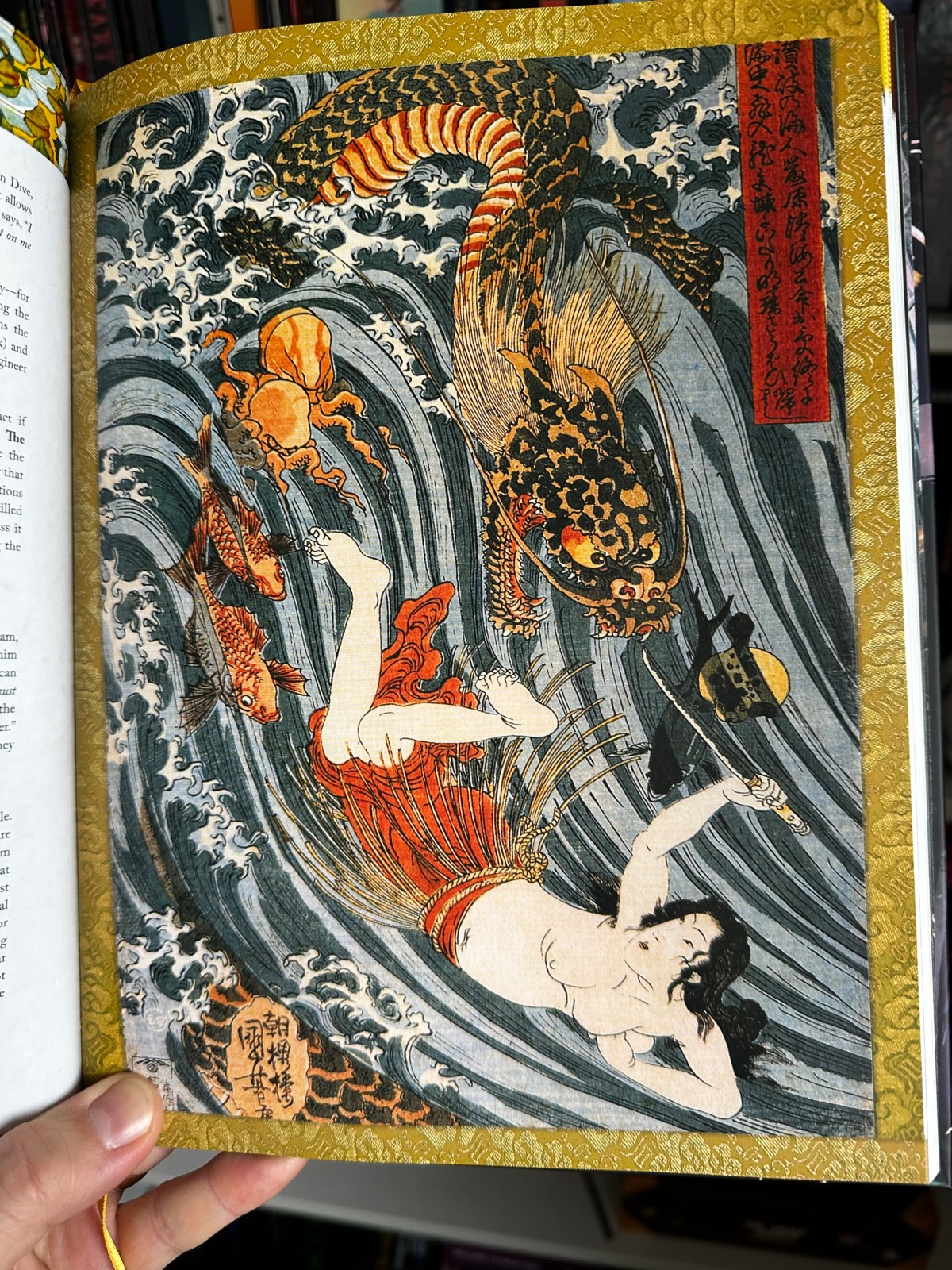
Format of the Sutra
This is the second post in my exploration of the 1980s Japan Call of Cthulhu campaign, the Sutra of Pale Leaves. Go here for the first one, which deals with the overall premise and the Campaign Background chapter from Twin Suns Rising. Although the text suggests that you can play the constituent scenarios in any order, they are presented chronologically and I can’t imagine running them any other way. They are also presented in two different books, of which Twin Suns Rising is obviously the first, with its three scenarios taking place between July 1986 and Spring 1987. I thought I’d be able to write about all the scenarios in this book in a single post, but it turns out, I can’t read that fast. Each scenario is long, between 35 and about 50 pages of dense, small-font-size text. So, instead, I’ll just be examining the first of them today, Dream Eater, written by Damon Lang. Please note that I haven’t played or run this scenario, I have only read it. So, take my conclusions and thoughts on it with that in mind.
WARNING: SPOILERS!
I would find it very difficult to write about Dream Eater without massive spoilers, so I am giving you a warning, right now: if you want to be a player in this scenario or the wider campaign, its probably best to skip this post. Come back later! I’ll probably have something for you then. Or check out my ever-growing back-catalog of posts.
Dream Eater
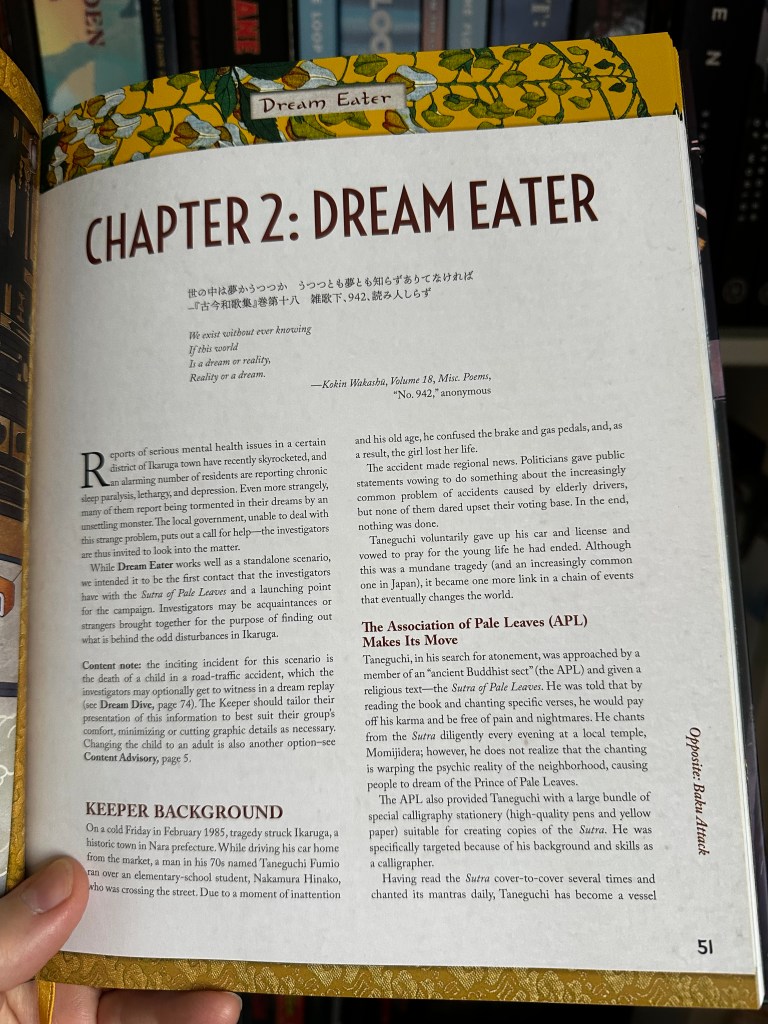
If this world
Is a dream or reality,
Reality or a dream.
I once wrote two novels about the adventures of a twelve year old Japanese boy who moved to Ireland with his family. In them, he discovered that he was able to use his cat as a conduit to enter the dreams of others. This allowed him to reconnect with his friends at home but his consciousness became trapped in the kitten! Various hijinks and drama ensue. Anyway, suffice it to say, I was very quickly on board with the premise of this scenario given teh Japan and dream-related elements of it.
The premise is that a small, rural Japanese town is beset by sleeplessness and terrifying dreams of monsters. The longer it goes on, the more the citizens worry for their safety and sanity. The authorities have offered financial rewards to anyone who can help them solve the problem or take care of the afflicted.
That’s where the Investigators come in. Perhaps they are from this small town of Ikaruga, or maybe they just heard of their troubles and have come from the city to look into them. Either way, their assistance is greatly welcomed.
Indeed, their investigations are likely to take them quite quickly to the door of an old man, Mr Taneguchi, who was responsible for the death of a young girl in a traffic accident recently. From there, they will visit other sites in the town, and other potentially recurring NPCs, and they will learn of the Baku. This Yokai is the eponymous Dream Eater, and the cause, it would seem, of the town’s problems. The Investigators will have to find a way to defeat, satisfy or neutralise this creature if they are to help.
But, of course, there is another layer to this story, just below the almost obvious one. The Prince of Pale Leaves has worked through one of his recruits to use Mr Taneguchi to spread the Sutra of Pale Leaves. The Prince has been invading the dreams of the people of Ikaruga, through the old man’s chanting of its mantras at night. It has been creeping through the town, insidiously and terribly. This is what has drawn the Baku to this place. It finds dreams of the Prince the most delicious. The Baku is known as a benevolent yokai in Japanese legends, one that takes your nightmares away and lets you sleep soundly. And that is what it’s attempting to do. The thing is, as it eats the dreams of the Prince, erasing them from the memories of the dreamers, the only image they are left with is of a scary looking ,purple, tapir monster, the Baku. And so, it becomes the scape-goat. The Prince attempts to use this misunderstanding and the Investigators’ intervention to defeat the Baku, thus allowing his influence to grow all the faster.
The question is, will the investigators figure this out? Will they destroy the Baku? Will they leave this town better or worse than they found it?
The Flow of the Scenario

Take a look at this flowchart. This is useful in a scenario like this for a game like this. Call of Cthulhu is a trad game, and, as such, its scenarios rely on these sorts of stepping stones to get you from hook to ending. So I really appreciate it when you get something like this that cleanly represents that idea visually.
So, after a lengthy preamble giving us Keeper background, an intro to the main NPCs and a few PC hooks, we start with Ikaruga town, a place that’s renowned for its truly ancient buddhist temples, which contain the oldest wooden buildings in the entire world. I like that the section on the town asks the Keeper to get in media res and kick things off with a shared dream sequence. Something weird is happening from the off and it gives PCs who don’t know each other yet a good reason to seek each other out.
You get a basic map of Ikaruga in the style of a roadmap, which is a nice touch. Along with this, we have an “Exploring the Town” section, which spells out stuff like population, transport, amenities and accommodation but the only real subheading to this is the Shepherd Bar: A Foreshadowing, the purpose of which is a little too subtle for my tastes.
The scenario, and indeed, the campaign is sprinkled with “Lore Sheets,” which detail elements of Japanese cultural, societal or mythical knowledge that the average Investigator might be expected to know without having to make a Know roll for it. The Keeper is supposed to hand them out as and when the subjects come up. In this section, we have one on Hōryūji Temple, for instance. Each of these includes a little snippet of “Personal Background,” which the player given the lore sheet might adopt for they own character. It’s a nice way to weave the PCs in with the place and the lore of the place.
The Investigators are expected to visit the Town Hall to begin their investigations. The Town Hall section, as is the case with each of the major plot points of the scenario, begins with a handy summary that looks like this:
- Location: Ikaruga town.
- Leads In: Hooks One, Two, and Four
- Leads Out: Meeting Taneguchi (page 62); Talking to Townsfolk (page 61).
- Purpose: investigators learn about the case.
This is another incredibly useful tool to assist the Keeper at the table, allowing them to see, at a glance, if they are at the right section, where they should be looking next and the overall purpose of the scene. This last is important to let you figure out where a scene should end, which is not always obvious.
As we get into this section, we notice that precise and exacting answers are provided to every relevant question the PCs might ask Mr Maeda, the Vice-Chairman of the Public Welfare Committee. This is common to most of the NPC interactions in the scenario, which will keep you, as the Keeper, on track with regards to what each of them knows. Once again, it’s a trad scenario. Rather than summarising the things they know and letting you play them as you see fit, things are a little more proscribed here. Of course, if you want to run these interactions differently, you can. It will just mean you spending more time prepping.
We get some general knowledge and descriptions of half-remembered dreams from talking to the townsfolk, but we really get into it when the Investigators go to meet Taneguchi, the old man who is secretly harbouring the Prince of Pale Leaves in his mind. He was approached by a representative of the Association of Pale Leaves and told that, by chanting from he Sutra of Pale Leaves nightly, he would pay off his karmic debt from running over the little girl on the road. Unbeknownst even to himself, he has been making beautiful and elaborate copies of the Sutra at night, when the Prince takes over his body. The APL is planning to use these to spread the Prince’s influence even further across Japan. It is in this section where the Investigators are likely to gain their first exposure to the Sutra, thus beginning their journey towards recruitment by the Prince, themselves.
From here, the investigations might lead to Hōryūji Temple, where they might encounter another recruit, Ukami, a former monk, who is also a martial arts master. Or they might go to the Momijidera Temple, where Taneguchi recites his prayers each night, But eventually, we come to one of the more interesting parts of this scenario, Unpleasant Dreams, where the Keeper can tailor nightmares to individual investigators’ personalities, backgrounds and memories. This is the first time they will encounter the Baku. There will be different outcomes depending on the levels of exposure they have had to the Sutra so far. It could lead to significant Sanity loss, but, on the bright side, it could also lead to Exposure Point (the points which track how exposed you are to the Sutra and how much influence the Prince has over you) reduction.

After this, they are likely to visit Madam Inaba, the Fortune Teller or go to the aforementioned Hōryūji Temple to find out more about the Baku and how to defeat it. Importantly, they should then go and do some research in the Sutra itself, exposing them once agian to the Princes influence. This will lead them inevitably to the Dream Dive section. The scenario takes us back into dreams here, this time, a shared, lucid dream, which they will have learned how to perform from their research in the Sutra, of course. Rather than have the Keeper craft the dreamscapes they encounter this time, they are put through a “Gauntlet of Nightmares.” I like the nightmares that have been described in this section, they are Japanese-flavoured (I have definitely had nightmares about the mukade myself) and they’re scary, but they seem a little random. They’re not as thematically coherent as other parts of this scenario. At least, until you get to Taneguchi’s Dream: The Accident. In this one, you relive, along with Mr Taneguchi, the night he killed Nakamura Hinako on the road. The scenario presents several ways the Investigators might deal with the situation, from doing nothing to showing some humanity to the dying girl, to rewriting history!
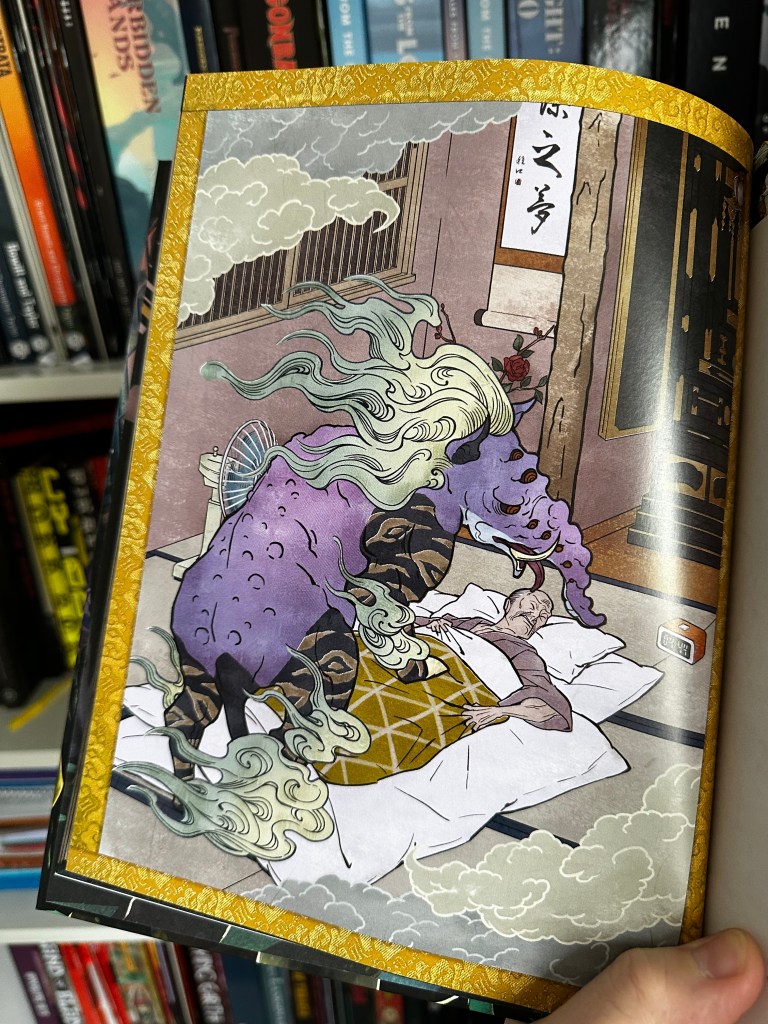
The only thing left to do is to face the Baku itself. By now, the PCs might have learned enough to know that the Baku is not the real threat here. Rather, it comes from the Pale Monk haunting the dreams of Taneguchi, the representation of the Pale Prince. Or they might play right into the Prince’s hands and attempt to defeat the creature, clearing a path for the Sutra to capture more recruits. Whatever they decide, there is a good chance they will have to use signs and magics learned from the Sutra itself to do battle in the Final Encounter. The scenario introduces mechanics by which they can spend Magic Points to summon useful items or weapons to help them, but their opponents can do the same or worse. The Baku can fully transform the dreamscape allowing it easier access to Taneguchi, which is all it wants. It wants to gorge itself on the old man’s Sutra-ridden mind. If the Investigators allow that to happen, it is one of the best endings you can achieve, leaving Taneguchi in a state of extreme dementia, but freeing the town of the Prince’s influence.
Endings

Note that the endings presented here and in later scenarios are labeled and numbered, as is common for indie scenarios in Japan. This enables players to tell others how their game went on social media while avoiding spoilers for everyone else.
I understand this concept and the reason for it. But I don’t particularly enjoy the implication that you can’t have your game end any other way than one of the six potential endings provided here. I am not going to judge it without playing it out, but I will say they are described in terms of one ending being a “failure” and others being “Bad Ending,” “Good Ending,” and “Best Ending.” Of course, these are value judgements. Just because you TPK, doesn’t necessarily mean it was a bad ending for your party, and, to be fair, the text does describe this one as “something of an achievement.”
The inclusion of “Optional Post-credit Scenes” is interesting too. These each present a little vignette of how the Investigators might have changed reality during their adventure through dreams. It explains that they work better if the scenario was run as a one-shot but that they might just serve to show the sheer power of the Sutra over reality.
Conclusion
This feels like a great scenario to start off this campaign dealing with the Prince of Pale Leaves as the antagonist. It immediately introduces the players to the idea that this is a being that exists in the mind of others and is spread through the dissemination of the Sutra, or it should. I can’t say for sure if it does it effectively without playing it. Overall, I like the structure, which is designed to keep the Keeper on track, no matter which way the players decide to go from one scene to the next. I do find the extreme levels of detail in the NPC encounters a little unnecessary. I still think it’s possible to summarise a character’s personality and the things they know in a much shorter manner, that would work just as well, if not better.
I think it’s interesting that each of the scenarios is styled as being possible to run as a one-shot but I can see Dream Eater’s potential in the context of the greater campaign. I’m looking forward to reading the next one, Fanfic, where the APL hatches a plan to recreate the Sutra as an action manga.
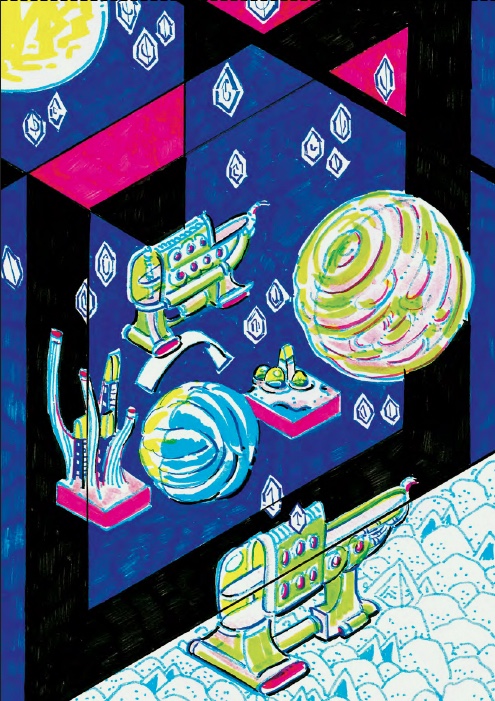




, do yourself a favour and go check them out. When I first encountered his work several years ago, it filed me with wonder. He created such a realistic depiction of a past that was largely recognisable to me from my own childhood, interspersed with or shockingly dominated by futuristic architectures and sci-fi wonders. His work excited my imagination like only RPGs had in the past. So when I discovered that Free League were producing a [Tales From the Loop game](https://freeleaguepublishing.com/games/tales-from-the-loop-rpg/), it didn’t take me long to pick it up. It took a little longer to get it to the table but when I did I discovered that the players loved it.
Tales from the Loop is a game about the 1980s that never was. It posits a world in which some astounding scientific breakthroughs occurred in the ‘50s and ‘60s so that, by the time in which the game is set, they are not considered so strange. You have your robots and your hovercraft and your infinitely renewable energy. But most of that stuff is considered mundane in Stålenhag’s world. Not only that, they exist alongside the ‘80s mainstay technologies like Walkmans, cassette tapes, VCRs and Soda Stream. In Stålenhag’s artwork this created some beautifully uncanny images. Most were set in the region of Sweden known as Mälaröarna, where the Loop project was based. This is where the world’s largest particle accelerator was built. Though it is not necessarily directly responsible for the many strange occurrences in the region, the people who populate such a scientifically rarified place usually are. Scientists and administrators and students flocked to the region and started families there. So many of Stålenhag’s paintings involved kids; a toe-headed child threatening an old Volkswagen van marked “Polis” with a giant robot under his control; a pair of woolly-hatted kids digging in the Swedish snow and gazing back at their homes, dwarfed by the cyclopean, other-worldly cooling towers used to release heat from the core of the Loop itself, the Gravitron; a little kid in cold weather coveralls leading his grandfather through the snow to a mysterious sphere, left abandoned in the countryside, its purpose and provenance forgotten. These were the inspirations for the RPG.
The game came out at the height of the popularity of Stranger Things, which helped it gain a lot of traction I think, and then it even had its own, unfortunately not so popular, spinoff [TV series](https://en.wikipedia.org/wiki/Tales_from_the_Loop), which I, at least, loved.
In the RPG you play kids between 10 and 15 years old. You get to choose a Type from such classics as the Computer Geek, the Hick and the Weirdo. You also have to choose some really fun things like your Iconic Item, your key relationships and your favourite 1980s song.
Once you have your Kid, you and your friends can go out and investigate weird shit on your bikes. Stuff like, where are all the birds gone? What are all the adults doing gathered around that weird machine in the field? What’s that dinosaur looking claw print in the snow? You know, normal kid shit.
## Roll mechanics
Tales from the Loop uses a version of the Year Zero engine, and, in fact, it was the first game I played using that system. It’s really straight-forward and intuitive, easy to learn and resolves situations quickly. “Situations” are generally and collectively referred to in the text as “Trouble” with a capital “T,” appropriately enough. For many, the Trouble you got into and out of when they were kids are some of the most enduring and treasured memories. In the game, you combine your ability dice and your skill dice into one dice pool and roll them all to try and get at least one 6. Since you only use d6s in this game, that’s the highest you can roll. The more 6s you roll the better, generally.
The only issue my players and I had with the rules is the Extended Trouble mechanic. The way this works is that, during the final showdown, encounter or whatever, every kid says what they are going to do and the GM tells them how many successes they will need to succeed fully. Then one player rolls all the dice in one enormous pool. Generally, if they don’t succeed fully but they still have a few successes, they might achieve what they were trying to but one or more kids will earn conditions or even become Broken. But, in play, we found this approach to be unsatisfying. Each player wanted their own cool moment to roll for and the all-or-nothing approach meant that they couldn’t attempt to take any rectifying actions if and when they saw things going wrong. Anyway, suffice it to say, we won’t be using the Extended Trouble rule next time.
## Mascots and Murder
Here are the very basics of the scenario I have planned:
Although the first Loop was in Sweden and much of the book is written as though it is the default setting, they do actually provide a second potential setting in it. That’s Boulder City, Nevada, the “Best city by a dam site,” which is a reference to its proximity to the Hoover Dam. There is another Loop in this region and all of the scenarios presented in the core book can be transposed very easily to the desert, believe it or not. This is where the kids in this scenario will be from. It is summer in Boulder City so it’s going to be so sizzling hot that you can fry an egg on the sidewalk. This will be a nice change as all the other Tales from the Loop games I have played were set in Sweden in autumn and winter.
Some teens have gone missing from Boulder City. Although their parents don’t seem too worried about it, our intrepid Kids are going to solve this mystery as they track down the source of the eerie, carnival-like music out in the Nevada desert and figure out what the connection is.
I have had fun writing this scenario, even though I have gone over it and over it to get it right. So, it’ll be ready to play in a few weeks.
The Tales from the Loop core book has some very useful advice for writing and structuring a scenario for it yourself. As long as you stick to that, you’re unlikely to go wrong. This is not actually the first one I have written myself, using these guidelines and, I can tell you, it works really well.
Have you played Tales from the Loop? What did you think of it? If you had to run a particular game for Indie Mascot Horror vibes, what would it be?](https://thedicepool.com/wp-content/uploads/2024/07/img_3376.jpeg?w=1024)
, do yourself a favour and go check them out. When I first encountered his work several years ago, it filed me with wonder. He created such a realistic depiction of a past that was largely recognisable to me from my own childhood, interspersed with or shockingly dominated by futuristic architectures and sci-fi wonders. His work excited my imagination like only RPGs had in the past. So when I discovered that Free League were producing a [Tales From the Loop game](https://freeleaguepublishing.com/games/tales-from-the-loop-rpg/), it didn’t take me long to pick it up. It took a little longer to get it to the table but when I did I discovered that the players loved it.
Tales from the Loop is a game about the 1980s that never was. It posits a world in which some astounding scientific breakthroughs occurred in the ‘50s and ‘60s so that, by the time in which the game is set, they are not considered so strange. You have your robots and your hovercraft and your infinitely renewable energy. But most of that stuff is considered mundane in Stålenhag’s world. Not only that, they exist alongside the ‘80s mainstay technologies like Walkmans, cassette tapes, VCRs and Soda Stream. In Stålenhag’s artwork this created some beautifully uncanny images. Most were set in the region of Sweden known as Mälaröarna, where the Loop project was based. This is where the world’s largest particle accelerator was built. Though it is not necessarily directly responsible for the many strange occurrences in the region, the people who populate such a scientifically rarified place usually are. Scientists and administrators and students flocked to the region and started families there. So many of Stålenhag’s paintings involved kids; a toe-headed child threatening an old Volkswagen van marked “Polis” with a giant robot under his control; a pair of woolly-hatted kids digging in the Swedish snow and gazing back at their homes, dwarfed by the cyclopean, other-worldly cooling towers used to release heat from the core of the Loop itself, the Gravitron; a little kid in cold weather coveralls leading his grandfather through the snow to a mysterious sphere, left abandoned in the countryside, its purpose and provenance forgotten. These were the inspirations for the RPG.
The game came out at the height of the popularity of Stranger Things, which helped it gain a lot of traction I think, and then it even had its own, unfortunately not so popular, spinoff [TV series](https://en.wikipedia.org/wiki/Tales_from_the_Loop), which I, at least, loved.
In the RPG you play kids between 10 and 15 years old. You get to choose a Type from such classics as the Computer Geek, the Hick and the Weirdo. You also have to choose some really fun things like your Iconic Item, your key relationships and your favourite 1980s song.
Once you have your Kid, you and your friends can go out and investigate weird shit on your bikes. Stuff like, where are all the birds gone? What are all the adults doing gathered around that weird machine in the field? What’s that dinosaur looking claw print in the snow? You know, normal kid shit.
## Roll mechanics
Tales from the Loop uses a version of the Year Zero engine, and, in fact, it was the first game I played using that system. It’s really straight-forward and intuitive, easy to learn and resolves situations quickly. “Situations” are generally and collectively referred to in the text as “Trouble” with a capital “T,” appropriately enough. For many, the Trouble you got into and out of when they were kids are some of the most enduring and treasured memories. In the game, you combine your ability dice and your skill dice into one dice pool and roll them all to try and get at least one 6. Since you only use d6s in this game, that’s the highest you can roll. The more 6s you roll the better, generally.
The only issue my players and I had with the rules is the Extended Trouble mechanic. The way this works is that, during the final showdown, encounter or whatever, every kid says what they are going to do and the GM tells them how many successes they will need to succeed fully. Then one player rolls all the dice in one enormous pool. Generally, if they don’t succeed fully but they still have a few successes, they might achieve what they were trying to but one or more kids will earn conditions or even become Broken. But, in play, we found this approach to be unsatisfying. Each player wanted their own cool moment to roll for and the all-or-nothing approach meant that they couldn’t attempt to take any rectifying actions if and when they saw things going wrong. Anyway, suffice it to say, we won’t be using the Extended Trouble rule next time.
## Mascots and Murder
Here are the very basics of the scenario I have planned:
Although the first Loop was in Sweden and much of the book is written as though it is the default setting, they do actually provide a second potential setting in it. That’s Boulder City, Nevada, the “Best city by a dam site,” which is a reference to its proximity to the Hoover Dam. There is another Loop in this region and all of the scenarios presented in the core book can be transposed very easily to the desert, believe it or not. This is where the kids in this scenario will be from. It is summer in Boulder City so it’s going to be so sizzling hot that you can fry an egg on the sidewalk. This will be a nice change as all the other Tales from the Loop games I have played were set in Sweden in autumn and winter.
Some teens have gone missing from Boulder City. Although their parents don’t seem too worried about it, our intrepid Kids are going to solve this mystery as they track down the source of the eerie, carnival-like music out in the Nevada desert and figure out what the connection is.
I have had fun writing this scenario, even though I have gone over it and over it to get it right. So, it’ll be ready to play in a few weeks.
The Tales from the Loop core book has some very useful advice for writing and structuring a scenario for it yourself. As long as you stick to that, you’re unlikely to go wrong. This is not actually the first one I have written myself, using these guidelines and, I can tell you, it works really well.
Have you played Tales from the Loop? What did you think of it? If you had to run a particular game for Indie Mascot Horror vibes, what would it be?](https://thedicepool.com/wp-content/uploads/2024/07/img_3375.jpeg?w=1024)


 The Dice Pool