Character Creation – Advanced Dungeons & Dragons 2nd Edition, Dark Sun, Part 2

What has come before

Well, yesterday I started by creating a brand new character to be played in Dark Sun, the AD&D 2nd Edition setting. Here’s what we’ve hot so far:

  • Name: Rezina
  • Pronouns: she/her
  • Race: Halfling
  • Ability Scores:
    • Strength: 11
    • Dexterity: 18
    • Constitution: 18
    • Intelligence: 17
    • Wisdom: 18
    • Charisma: 9
  • 3ft 3in tall
  • 59lbs in weight
  • 41 years of age

What have we learned? Race is problem in these older books. The ways they refer to characters as “half-breeds” or inherently unintelligent or bred to be sterile are incredibly distasteful. It is all couched in very racist and unsympathetic language and I am glad that that sort of writing is a thing of the past.
Also, Dark Sun characters come out powerful, with the new way of rolling up your ability scores and some really useful racial traits.

Stay classy

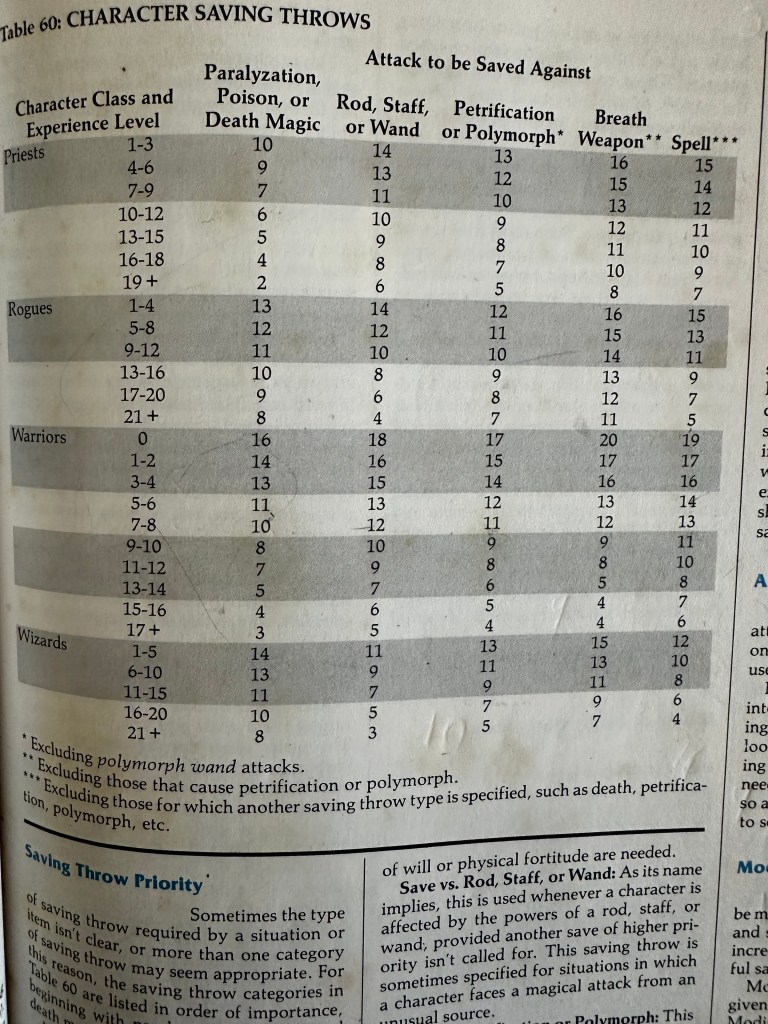
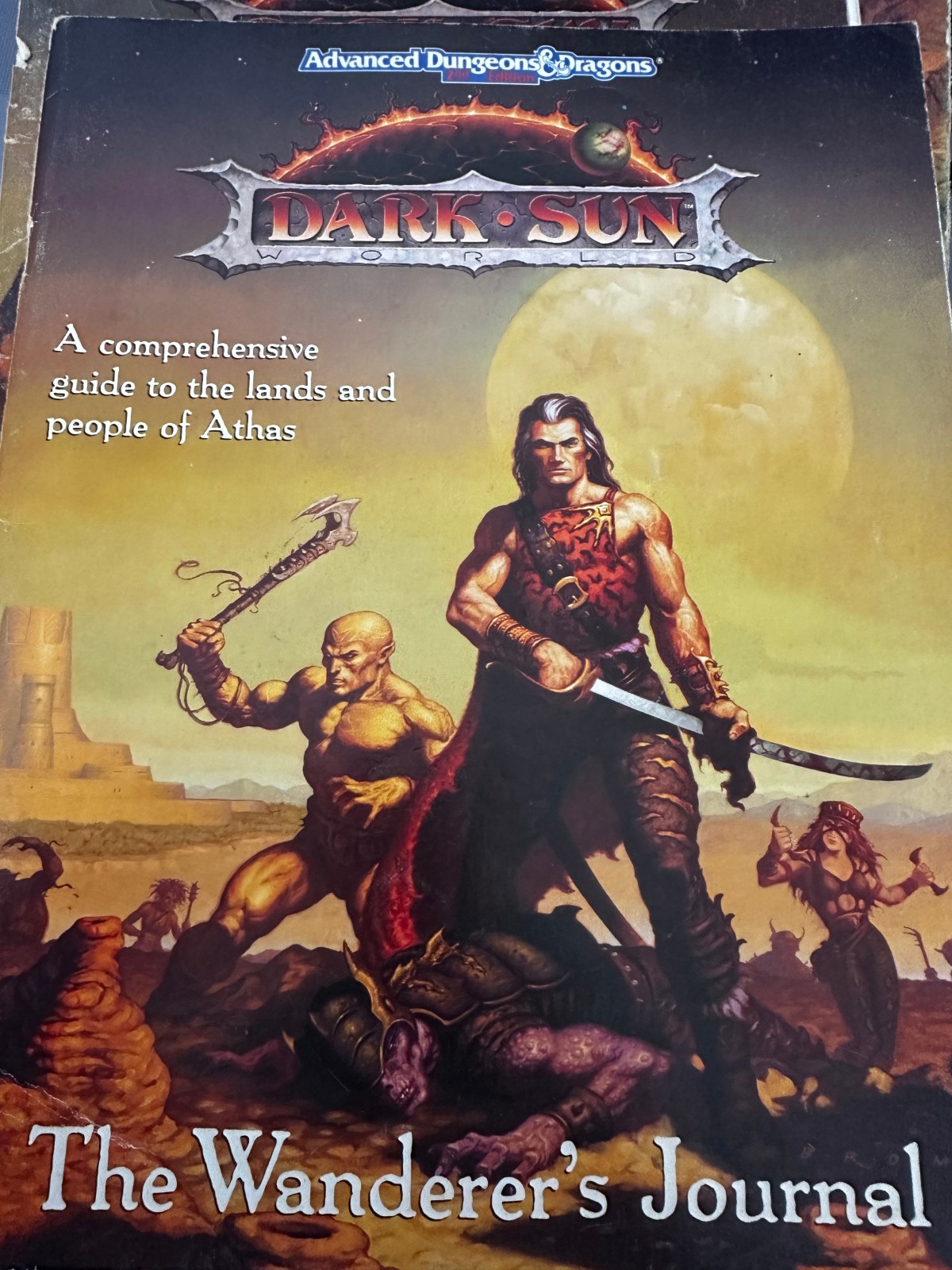
It’s time to look at classes in Dark Sun. There are many changes to the classes compared to the AD&D 2nd Ed Player’s Handbook. There are also a few new ones here. Dark Sun introduced the Defiler, the Gladiator, the Preserver, the Psionicist and the Templar to the game. Technically, Psionics were introduced in the Complete Psionics Handbook, though. I mentioned yesterday that Halflings can choose from the following classes: Cleric, Druid, Fighter, Gladiator, Illusionist, Psionicist, Ranger and Thief. But I will take a look at each of the new ones and the major changes to the existing classes too.

The Dark Sun Rules Book splits the classes into their categories of Warrior, Wizard, Priest and Rogue with Psionicist sort of tacked onto the end.

A photo of the AD&D 2nd Edition Battlesystem Skirmishes Miniatures Rules from TSR.

TSR really wanted you to use their Battle System mass-combat rules with Dark Sun. If I remember correctly, parts of the opening few official adventures contained full-scale battles where it expected you to have armies of miniatures fielded against each other. I don’t remember ever using them, despite having the book. Anyway, as a result of that, one of the main things that Fighters got in Dark Sun was a whole bunch of automatic followers. These people would just flock to you as a successful Fighter as you gained levels. They can also teach weapon proficiencies from 3rd level, operate heavy war machines from 4th level, supervise the construction of defences from 6th level, command large number of troops from 7th level and construct heavy war machines from 9th level. All of these very Battle System related abilities are in addition to the stuff they get in the PHB. Fighters have an ability requirement of 9 STR so Rezina could, technically take this class. Hit Dice: D10.

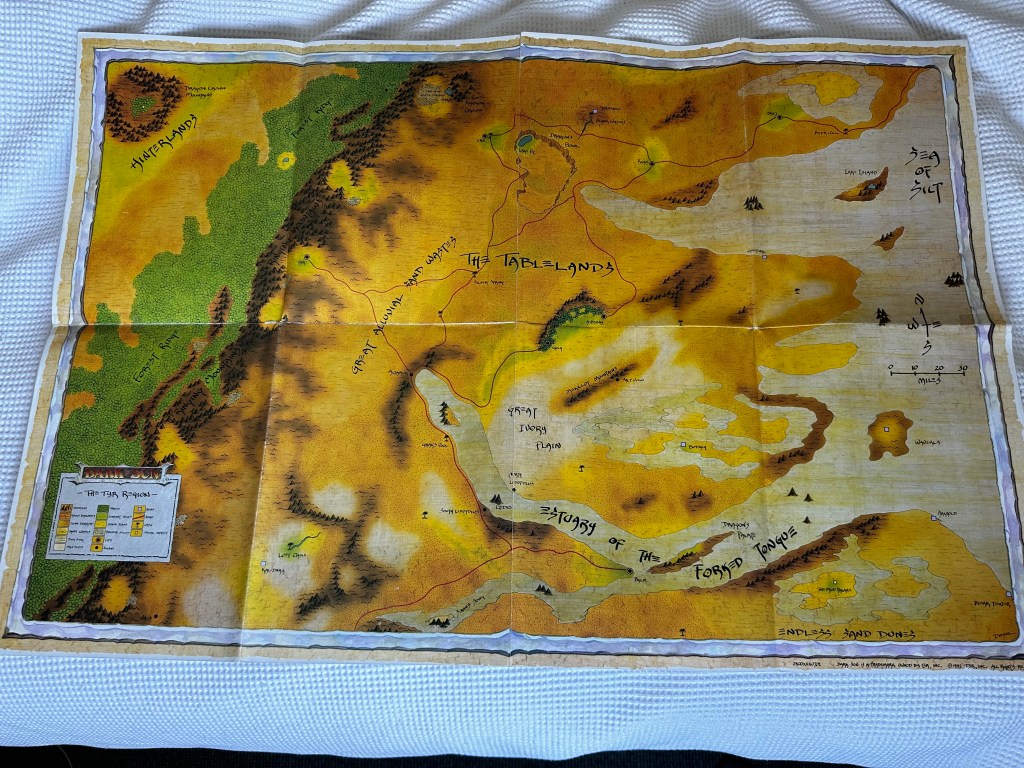
The Gladiator is a new class. They are the slave warriors of the Sorcerer Kings. The arena is a big part of life in the City States of the Tablelands. It is the main form of entertainment and a system of control for the masses. It’s also big industry as the slave trade is key to the economy of the region. Gladiators get a few nice benefits. They gain proficiency in all weapons and can specialise in multiple weapons too. Not only that, but they are expert in unarmed combat and get to optimise their armour, reducing their AC by 1 for every five levels. From 9th level, Gladiators also gain followers like the Fighter. They have some harsh ability score requirements though, STR 13, DEX 12 and CON 15. The Strength requirement disqualifies Rezina, I’m afraid. Hit Dice: D10.

Rangers are mostly unchanged from how they are described in the PHB. They have to decide on an elemental plane of worship at 8th level and can only cast cleric spells from that sphere and they gain followers of animal and humanoid type from 10th level. Required STR 13 means I can’t choose to be a Ranger. Hit Dice: D10.

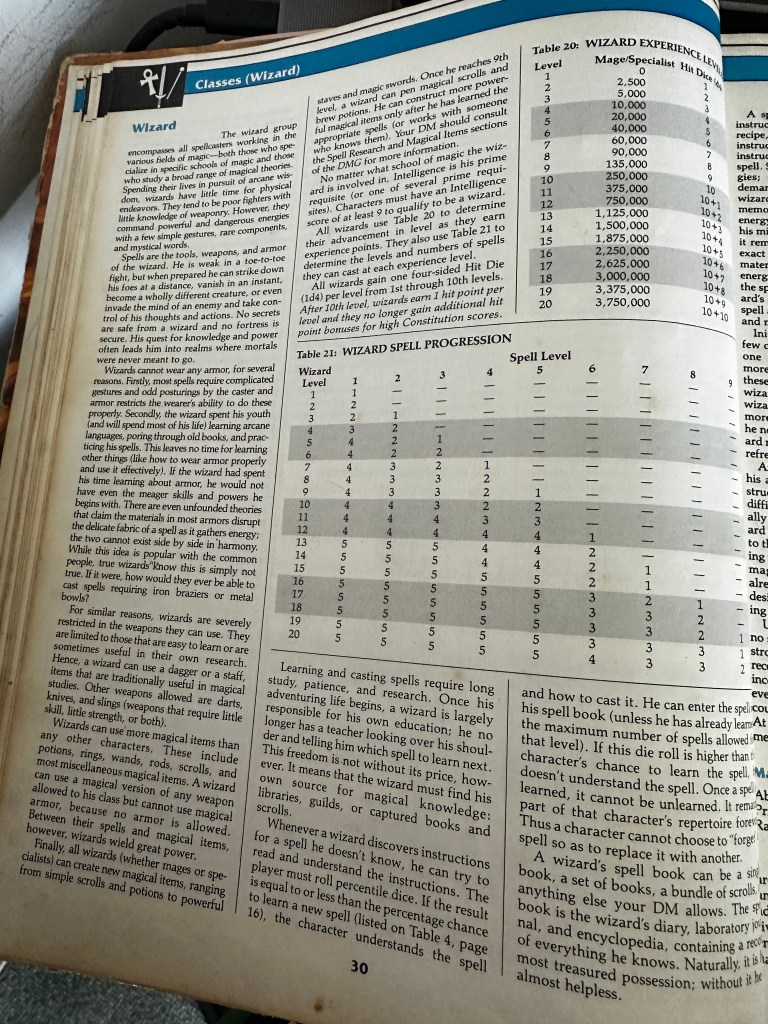
Onto the Wizards! Rezina can choose only Illusionist from this list but we’ll have a look at them anyway as they are so important to the overall lore of the world. Wizards work quite differently on Athas. The default magic user is the Defiler. These guys drain the life from the world around them to power their magic and, as a result of their disdain for the environment, they gain levels much faster than their Preserver counterparts. Preservers balance their consumption of magical energy to minimise or chancel the damage they do. Of course, this course makes them level up much slower. Finally, there is the Illusionist, a specialist wizard class who are treated exactly as they are in the PHB except that they have to choose to be either a preserver or defiler. Regular Preservers and Defilers only have an ability score requirement of INT 9, but if you want to be an Illusionist, you also need to have DEX 16. So, this is, in fact, an option for Rezina.

Priests are split into Clerics, Druids and Templars.
The Clerics are worshipers of a particular elemental plane, rather than of a deity or pantheon. Athas does not have its own gods and is considered separated somehow from the influence of the Outer Planes. It is very hard to get to and from Athas, in fact, through planar magic, portals or even spelljamming vessels. So, Clerics, although they may be flavoured differently depending on their backgrounds, gain power from the Inner Planes, the elements, instead. Their weapon restrictions are based on the elemental plane they worship, they can ignore the presence of the element they worship from level 5, they can gate material form their chosen plane at level 7. You need a WIS 9 to be a Cleric so that is an option.

Druids are out for Rezina due to their ability score requirements, WIS 12 and CHA 15. She’s just ain’t got that rizz. Druids have to choose an area known as their Guarded Lands and from 12th level on, they have to spend half their time there. They gain their powers from the spirits there. Usually, their spells are restricted to one or two spheres related to their guarded lands. They can speak with animals and plants as they gain levels, and get a whole bunch of powers from their lands.

Clerics and Druids are really only a thing outside the City States themselves. Inside, the priests who matter are the Templars, the priests of the Sorcerer-kings. They’re not good guys. In fact, a Templar PC has to be either Neutral or Evil. They enforce the edicts and laws of the Sorcerer-kings and are not above a little corruption. They have access to vast libraries that allow them to use spells from all spheres, though they progress slower than Clerics at lower levels. Unlike the other priests, Templars get their spells directly from their Sorcerer-king. They can raise and ally with undead but cannot turn them, they have the power of life and death over slaves (this is a class benefit…) they can legally enter the house of a free man and accuse them of disloyalty from 4th level and pass judgement on them from 7th level. They can start throwing their weight around with nobles from 10th level. They can can requisition soldiers from 3rd level, gain access to all areas of palaces from 5th level and draw on the city treasury for official investigations. From 17th level, they can pardon any condemned person, though, which is nice. Rarely do you see a class in RPGs that is as focused on civic matters and accusing people of shit to get their way. It’s a weird one and I don’t think anyone in my games ever chose to play one. Anyway, Rezina can’t be one because she is a Halfling.

Onto the Rogues.

Bards are out for Rezina as she is a Halfling. But they are pretty cool in Dark Sun. They are renowned, not only as entertainers, but also, assassins, blackmailers and thieves. They have all the benefits of the original Bard from the PHB but they also have a mastery of Poisons. One big difference is that they don’t get access to spells at all.

Thieves work basically the same as they do in the PHB but they also can find a patron from 10th level. These guys can give them jobs or protect them from others. With the only pre-requisite being DEX 9, Rezina could choose this class.

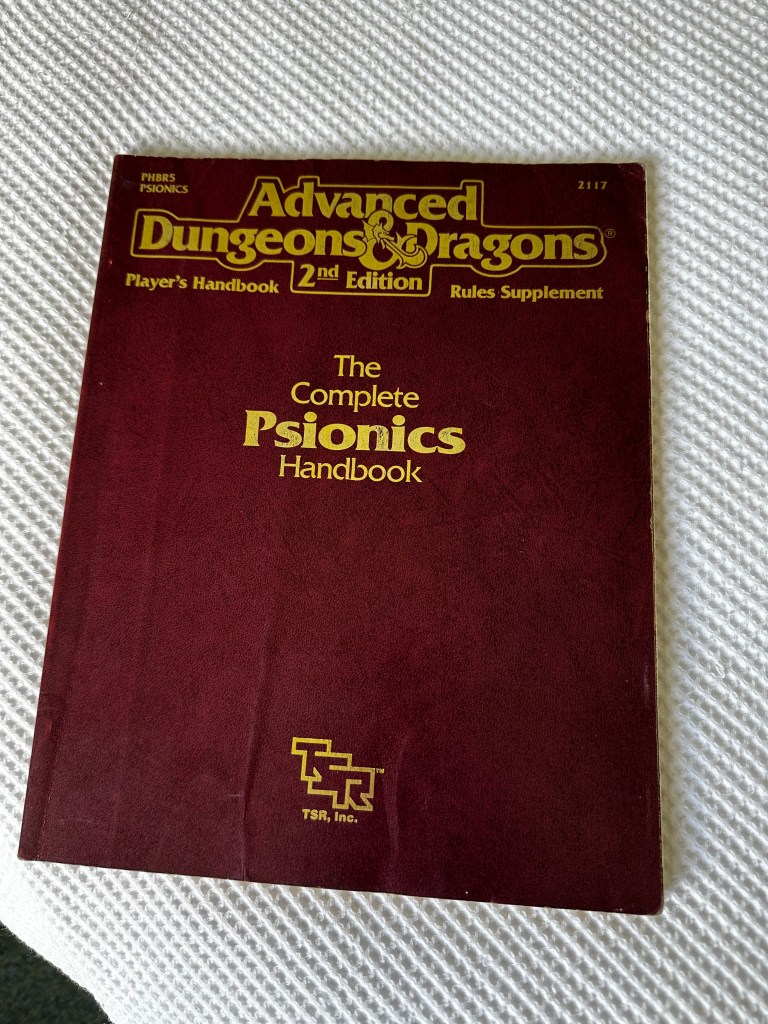
A photo of the front cover of the Advanced Dungeons & Dragons 2nd Edition of the Complete Psionics Handbook from TSR.

Finally, the Psionicist. Every character in Dark Sun rolls on a table to get a Wild Talent, an innate psionic ability that may or may not be particularly useful so the class is open to all races. But Psionicists have a whole raft of abilities that come with the class. Luckily I have a copy the Complete Psionics Handbook (TSR 1991.) Psionics were based on the idea that the powers were split into separate disciplines within which you get major powers called sciences and minor ones called devotions. Your character gets a pool of Psionic Strength Points, based on a relatively complicated equation involving WIS score and CON and INT modifiers. You spend these to use powers. They also learn Defense Modes which are used in psionic battles. They gain followers from 9th level. The ability requirements are CON 11, INT 12 and WIS 15 so Rezina could choose this class.

There are a few other points to consider before making the choice here. Halflings can choose to multiclass and Dark Sun characters start at 3rd level by default. I won’t multiclass, just to keep this a bit simpler.

Another characteristic of Dark Sun is that you are supposed to have a character tree, ie, a selection of 4 characters to choose from in between adventures or so there is backup in case one character dies in this very lethal setting. I won’t be doing this as I have spent so long making just a single character already!

Time to choose

A photo of page 30 of the AD&D 2nd Edition Player’s Handbook. It contains the description of the Wizard class, including Wizard level progression and Spell Progression tables.
A photo of the Illusionist section from the AD&D 2nd Edition Player’s Handbook.

My options are Fighter, Illusionist, Cleric, Thief and Psionicist. Should I roll for it? Yep. On a d5 (thanks again DCC) I rolled a 2. Illusionist!

Illusionists get a +1 on saves vs illusion spells and others get a -1 against their spells. They also get to memorise an extra illusion spell at each level. Researching new illusion spells is easier but conversely, researching the spells of other schools is harder. Of course, it also means that they can’t learn spells from Schools directly opposed by illusion, ie, necromancy, invocation/evocation and abjuration.

Ok, I am going to have to wrap this up here. This character creation process in Ad&d is pretty time intensive, especially when I go through every potential class candidate and critique them I will have to finish this off tomorrow. See you then!

The Black Iron Legacy

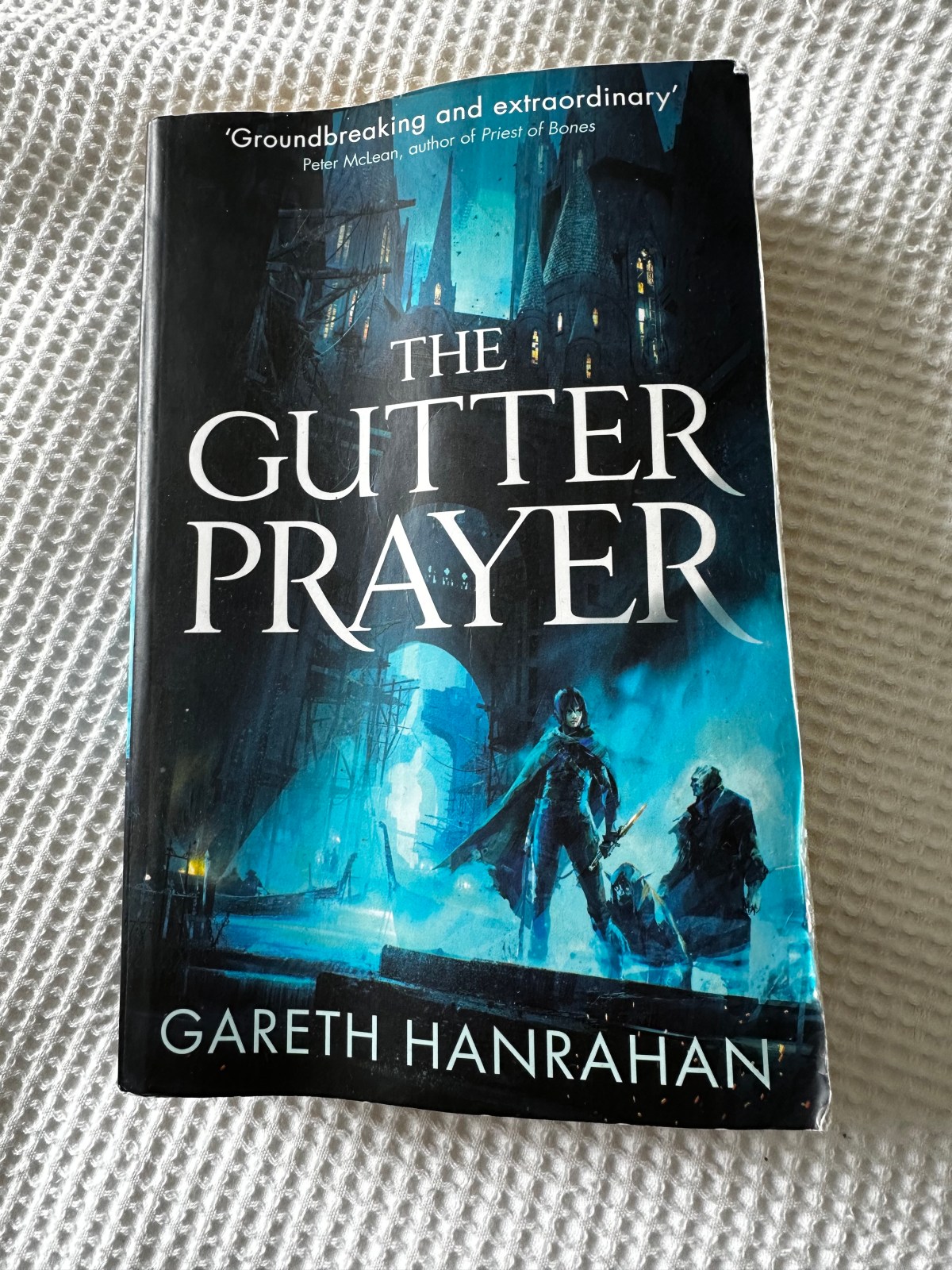
The Gutter Prayer

I am in a sci-fi and fantasy book club, surprising absolutely no-one. We take turns picking the book we read. We usually give ourselves a month to read, meeting at the halfway point to discuss how it’s going and then again when we have finished the book. It’s fun, we spend a lot of time delightfully dunking on duds but, thankfully we also have plenty of time for praising the good ones. The Gutter Prayer by Gareth Hanrahan (AKA Gareth Ryder-Hanrahan) is one of those. It is rich and evocative and full of cool and interesting characters that you either hope won’t die or hope will die.

The author has a long and storied history as an incredibly prolific RPG designer. You can check out what he has written here. I personally only just encountered him through the recently crowd-funded Heart sourcebook/scenario, Dagger in the Heart, which he wrote. When I went and looked him up, I was intrigued to see that he was also the author of several novels. Since it was my turn to choose a book for book club, I decided to go for his first, The Gutter Prayer.

He has designed a city that is alive and full of fantasical and very dark elements. Guerdon is based partly on Cork city (Hanrahan’s home town,) Edinburgh and New York and you can feel the influences of all three in the writing. The story revolves around three scoundrels, Carillon, heir to a murdered aristocracy, Rat, a ghoul who is trying to fit in on the surface and Spar, a stone man, inflicted with a terrible disease and the son of a famous thief and revolutionary figure. They are the unlikely trio who find themselves embroiled in intrigue, the battles of saints and the magic of the crawling ones, fighting for the city itself against the most unforeseen of divine threats.

It reminded me so much of China Mieville’s Bas Lag trilogy and his own rich and lived-in city of New Crobuzon. It’s also got a lot of Cthulhu references what with the ghouls and the crawling ones and the menacing ancient gods and all. In our latest book club meeting we also talked about how it felt like a book written by a game designer. It was something about the richness of the locations, the depth of the “NPCs” and the deft construction of the set-pieces. Please go and read it! I can’t wait to start on the next one in the trilogy, The Shadow Saint.

The Book, the game

Also, he made a game based on these books! I mean, of course he did. You can get it for free on his blog:

The Walking Wounded

It’s only 17 pages long and contains both the rules and a one-shot adventure to play. Go check it out!

Are you a Gareth Ryder-Hanrahan fan? If so, have you played any of the games he has written?

Trophy Gold – Character Creation

Old school play, new school rules

I have a post in which I write a little about a couple of the podcasts that most inspire me to play and write about RPGs. One of them is Fear of a Black Dragon from the Gauntlet. In it, Tom and Jason review a different OSR module each episode (more-or-less.) What I discovered early on, while listening to it was that they often did not use OSR rulesets to play the modules. Instead, they usually used Dungeon World, World of Dungeons or Trophy Gold. These are much more modern RPGs and, I think, they tend to use Powered by the Apocalypse and Forged in the Dark style rules. I have only just picked up Trophy Gold in the Codex-Gold magazine published by the Gauntlet back in 2019. So, I thought I would have a go at creating a character in this much more rules-lite game (compared to OSE anyway. To see how character creation went in that, go take a look at yesterday’s post.)

About the game

Essentially, Trophy Gold is doing the same stuff as Old School Essentials or D&D for that matter. It allows you to play an adventurer or treasure seeker who is drawn to dangerous, forbidden or haunted locales. The locales will push back. Unlike its predecessors, Trophy and Trophy Dark, which were made to play one-shots and tended towards the horror genre, Gold is more geared towards campaign play. It just doesn’t worry so much about your encumbrance or confuse you with bonuses that are actually negatives. It uses elements of Forged in the Dark games in its ruleset. It is described thus in the opening paragraph:
“Trophy Gold is a collaborative storytelling game about a group of treasure-hunters on an expedition to a haunted environment that doesn’t want them there.”

Character creation

So your character is called a Treasure Hunter in this game. This is because treasure is the aim of it. Your character is there to emerge from the dungeon or forest or ruins with heaps of Gold. But is it worth it? Will they even survive it?

A blank Trophy Gold character sheet from Codex Gold magazine, 2019, The Gauntlet.

Step 1 – Choose your Name, Occupation and Background

So, in direct opposition to OSE, we are starting with our name. I like this since, we all get named long before we know anything about ourselves, don’t we? The rules include tables for names, occupations (what you do in the party) and backgrounds (what you did before your treasure hunting days) So I am going to use them.

  • Name: Valen
  • Occupation: Smuggler. Skilled in dexterity, spontaneity, stealth
  • Background: Retired Soldier. Skilled in tactics.

The rules encourage you to think about your background profession, why you left it and why you can’t go back. As a retired soldier, I think Valen has tired of killing at the behest of others. He left to put his skills to work for his own enrichment instead. He could never go back to taking orders now that he has tasted independence.

Step 2 – Choose your Drive

This aspect has an element of Blades in the Dark peeking through. Each character will have their own motivation for treasure seeking and I am going to roll on a table for it. But first it explains that you can stash the gold you earn from it in your Hoard. Once you get to 100GP, you can retire your treasure hunter. Blades in the Dark has a similar conceit where you get to hide away your coin in a stash until you have enough to comfortably get out of the game for good.
So, here’s my roll:

  • Drive: Free the serfs of Bandung Prefecture

So, I don’t know where Bandung Prefecture is but it has fired my imagination. Perhaps my ex-soldier, while on a recent excursion to Bandung, discovered a village where the people were down-trodden and despairing due to the conditions caused by their lord’s treatment of them. There Valen met a man, a former soldier, who reminded him of himself to such an extent that he felt as though saving him and bringing down the cruel and selfish lord was essential. He just needs some funds to raise a rebellion.

Step 3 – Backpack Equipment and, if desired, Combat Equipment

There is an interesting approach to equipment here. You have three different categories, Backpack, Combat and Found equipment. You can roll on a table to see what your backpack starts with or you can choose from the table if you want stuff that suits your character. Importantly, your backpack starts with three items and three free slots. If and when you need something in a given situation, you check the table of Additional Backpack Equipment presented in the rules, and, if what you need is there, simply say it is occupying one of these slots. Then you write it down and mark off another slot. This reminds me of the loadout rules in blades in the Dark. These state that, when you are going on a score, you decide if you take a light, medium or heavy loadout. This determines how many items you can carry and also how much you stand out. But, importantly, you don’t have to say exactly what your items are until you need them in the fiction.

Anyway, I’m going to roll on the table for my

  • Backpack Equipment: Fishing net woven of silver (!), Bottles, lead (6), Magnet

When it comes to choosing Combat Equipment, there is another rule that comes into play. That is Burdens. You start the game with a Burdens score of 1. That’s the amount of Gold you need to keep yourself on a day-to-day basis in between incursions (that’s what Trophy calls adventures.) However, it increases for every piece of Combat Equipment you choose. It will go up further as you are playing too. What an interesting mechanic this is! Yes, your armour will hale to keep you alive on an incursion but you have to spend money to repair and maintain it. Can you afford that? I like it. But after yesterday’s debate, I am definitely getting Valen some nicer stuff.

  • Combat Equipment:
    • Armour – Breastplate, Helmet
    • Weapons – Crossbow, Dagger

So, I guess that increases my Burdens score to 5.

Step 4 – Choose your Rituals, if any

You don’t have to be a wizard or anything to perform these, all treasure hunters can learn and use rituals, dangerous magic that can perform “miraculous feats.” Now, I can have as many as three Rituals to start, but, it says here that, for each one I know, I must increase my starting Ruin by 1. Let’s see what that means, exactly.
Cryptically, the rules describe Ruin as:
“…how much the world has dug its claws into you, including the physical and mental harm you’ve suffered.”
Similar to Burdens, it starts at 1 but, as stated above, it increases commensurate with the number of Rituals known.

I have no experience playing this game so I don’t know the true consequences of choosing to increase my Ruin like this, but for fun, I’m going to take three random Rituals:

  • Beacon – nearby invisible beings or hidden objects shine with a fiery glow
  • Enliven – give flesh and breath to a human effigy (!)
  • Germinate – compel plants to furious growth

This, I suppose, increases my Ruin score to 4.

Finally, set your Ruin, Burdens and Hoard

Easy.

  • Ruin: 4
  • Burdens: 5
  • Hoard: 0 (this number is always 0 at the start.)

Comparison

It’s possibly unfair to compare this experience with that of making the OSE character yesterday since they are based on two such mechanically different games. But that’s what I am going to do.

Over all, I found that the character I created in the Trophy Gold system was never going to be compared negatively, or indeed, positively, to other characters in the same system. And that is purely because it does not rely on numbers so much. You will have noticed that Valen does not have attribute scores or hit points, for instance. Despite this, the Trophy Gold character is just as unique as the OSE character. It’s just that the differences between my ex-soldier/smuggler are more descriptive than numerical.

You will also have noticed that the character creation process encouraged me to think about the character’s background while making my treasure hunter. I don’t remember this ever coming up in the OSE process.

I did a lot of rolling on tables for this process, which I didn’t foresee when I went into it. In fact, I ended up with altogether more on the character sheet than I expected from such a rules-lite system. But I enjoyed the process and found the details provided by the tables fun and interesting.

One aspect that I liked, though, was that I had to choose the Combat Equipment and Rituals. These directly affected my Burdens and Ruin scores. These are the scores that will have the most impact on the way you play the character. I read on a bit and discovered that, if Valen does not come back from his incursion with Gold equal in value to his Burdens score, he’s done… He is left in penury or sent to the workhouse. As good as dead. Not only that, but, if his Ruin ever reaches 6, he is lost to the darkness, transforming into a monstrosity himself, or he is simply dead. Makes my decision to take three Rituals look a bit foolhardy now, eh?

Conclusion

Anyway, as I said, it is not really fair to compare the two systems. One is deliberate in its devotion to the OSR and its historical roots. It made a character that probably won’t last too long but mainly due to luck. The other is more interested in the story the players tell and the narrative beats produced by the characters created. My treasure hunter also probably won’t last long, but this time it is due to my choices.

Dear reader, do you have any experience playing Trophy Gold? How did you like it?

Player vs GM

Not what you think

I have an easier time writing about the games I am GMing or the ones I am going to GM in the future, compared to those I play in. I think the reasons for this are pretty obvious, right? I have an a behind-the-scenes view of the games I GM, I have read widely on the games, maybe I have home-brewed the world, I probably have a better handle on the rules than most others at the table. As well as that, I set up the game, I send out the invites, I normally host the game, so, it makes sense.

As for the ones I play in, I am still invested in them, or at least in my character, I have usually made some effort with a backstory and personality and I want them to experience cool stuff in the game world with a bunch of other weirdos. There are probably a couple of my characters that I could spend an entire post discussing (and probably will, now that I think about it) but not before they are even made.

Anyway, that’s why I am taking the last few games from my Games I want to Play this Year list and pop them all into this one post.

Old School Essentials – campaign I think

My friend, Isaac of Black Sword Hack fame has been working his way steadily through all the OSE books he could get his hands on. He’s almost ready to kick off that campaign! Very exciting! It will be my fist time playing this system and having been a part of Isaac’s Black Sword Hack game for the last couple of years, I know how he likes to construct a grubby, fun, weird campaign world for us to muck around in.

I am not all that familiar with the ruleset of OSE, but from what I understand, it took the rules from Basic D&D and some of those from AD&D and took out all the stuff that people tended to ignore. I know it does have a race-as-class idea that is similar to the way DCC does it but, overall, it gives me much more old school D&D vibes than DCC does.

I might just go and roll up a few little guys using the OSE rules to get an idea of how it works and get in the mood for it.

Heart: The City Beneath – Open Hearth campaign

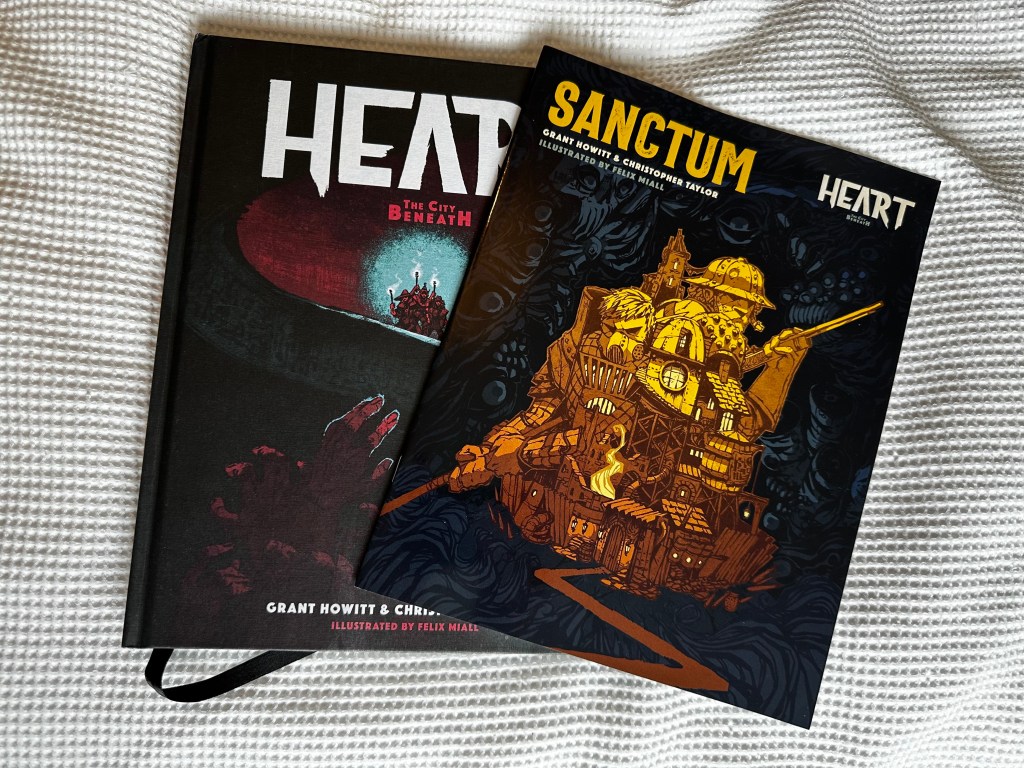
This game technically already started; I am achieving my goals, dear reader! We have only had a session 0 in which I created my aelfir Incarnadine, Forgotten-Frost-Remembered. He is called to the Heart in search of adventure (also he had to flee the City Above due to his crass and embarrassing obsession with money, not to mention his astronomical levels of debt.) He and his fellow delvers are on a mission to help a haven that we created together using the rules from Sanctum, a sourcebook for Heart that is meant for this very purpose. The haven has no name as it was deleted by a Deadwalker some time earlier. The aim is to build it up while pursuing more selfish goals before we all blow up in a conclusion of zenith ability fuelled glory.

All credit to our GM, Mike, for having the presence of mind and session 0 nous to figure out our group’s haven-based goal and get us to create it together in under an hour.

Can’t wait to start getting weird in the Heart.

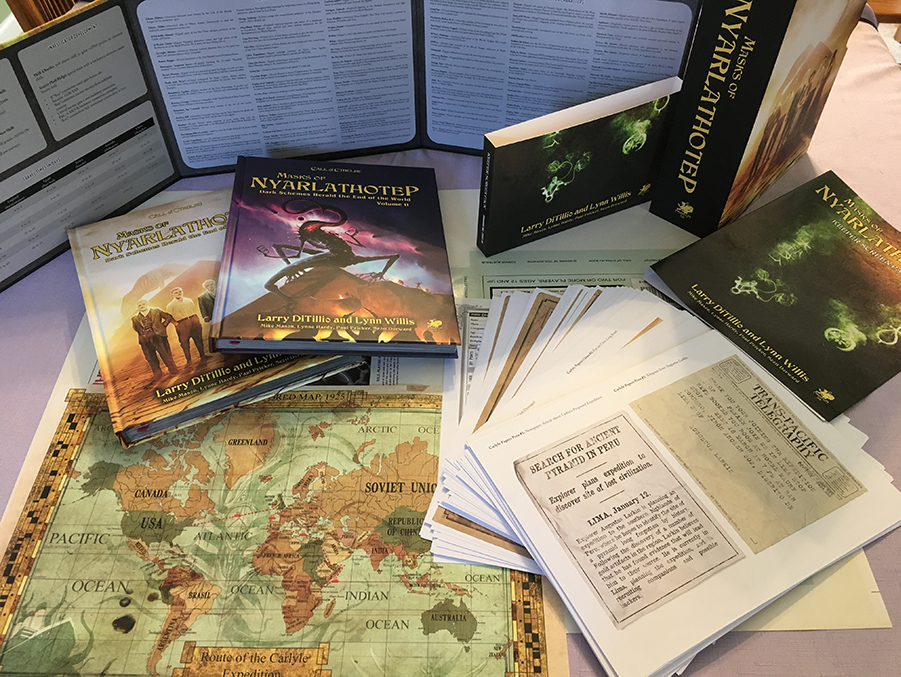
Call of Cthulhu – Masks of Nyarlathotep – campaign

This one is probably a long-shot. This is actually an ongoing campaign but has been on semi-permanent hiatus since, I want to say 2022? Not sure. Anyway, this is another of Isaac’s campaigns. It was one of those things, playing with adults can mean that sometimes, real life stuff takes precedence and there’s not much you can do about it. Since then we got into other games and other campaigns and Masks has been on the back burner for a long time. Every time we get to chatting about Call of Cthulhu, we end up saying we would love to get this classic campaign started up again.

Last we left our intrepid investigators (I was playing a gangland boss from London named Grant Mitchell) they had faced down other worldly terrors in the basement of an occult shop and proved the innocence of a man falsely accused of murder. They also uncovered some evidence and information that drew them to various other places around the world in their pursuit of answers to the question of who was responsible for the murder of their good friend, Jackson Elias. Anyway, they had concluded their snooping in New York and were on a slow boat to London. It has been a very slow boat at this stage…

Magus, Pike and Drum – Playtest

It’s Isaac again! This time with an early playtest for a game that he is very much still developing. I don’t want to go into any detail here but I think I can say at least that it is a semi-historical setting and it will be using the Resistance system, created for Spire. Can’t wait to try it out. What I have read of the character classes and abilities so far makes it sound very fun and interesting to play.

OK, that about wraps it up for today. See you tomorrow with more from the Dice Pool.

Turbo Tokens

Failure is failure

Nobody wants to fail, right? We frown on failure. We take it personally, even when it is no fault of our own. It is hard not to feel that way. It might even keep you awake some nights, remembering how you fucked up that one thing and someone blamed you for your failure, even though it was largely a matter of chance. It sucks, but here’s the thing, your brain will never let you forget that one time you messed up. You will almost certainly never make the same mistake again if it’s something you can avoid, right? You will avoid similar situations, you will learn to do the thing properly or you will let someone qualified do it.

But this is not the case in D&D and other similar games. If you roll a 12 and add your +3 bonus and you miss that guy with his 16 AC, that’s it. It’s over. There is nothing you can learn except that you better roll higher next time or hit him with Magic Missile. This feels so much worse than regular failure. This is failure with no upside. There is not even a fun narrative element to it, really, unless you shoehorn one in.

So, how do you fix this? I think the answer is pretty simple actually, and it was brought to my attention by Aabriya Iyengar and Brennan Lee Mulligan.

Adding interest to failure

In the latest season of Dimension 20, Never Stop Blowing Up, the gang are playing people stuck in an 80s action movie. They are not playing D&D this time. Instead they are using a version of the Kids on Bikes system that they have previously hacked for Mentopolis and Misfits and Magic.

I really enjoy the system and it suits the seasons they use it in really well. In particular, the exploding dice element of the mechanics makes a lot of sense for a show called Never Stop Blowing Up and it makes for some brilliant cast reactions when it happens.

But the mechanic I am interested in here is the Turbo Tokens they receive when they fail at an action. In the base game, they are called Adversity Tokens and they represent the lessons learned from failure and contribute to real swings of momentum during high-stress situations.

Kids on dragons

So, I am going to try it out in D&D. Not sure what name I will give the tokens yet. I might just start with Adversity Tokens and see what the players end up calling them. The idea I have is to use them the same way as they do in Kids on Bikes, basically. They will earn one token each time they fail at something, whether it’s an attack roll or a stealth check or an effort to wow the crowd in the inn with their musical genius. That way, failure won’t feel quite so bad and they will be able to spend them later to effect other rolls. I think a +/- 1 modifier for each token spent is appropriate. They will be allowed to spend them to add to or subtract from any roll happening in the situation they are involved in. So they could add a bonus to their own attack roll, help out a fellow PC when the chips are down or subtract from an enemy’s saving throw or attack roll for instance. I foresee some interesting behaviours when it comes to the saving and spending of these. I am thinking I might need to cap the number of tokens a player can have at 10, although I doubt they’ll be able to save up that many of them really.

What do you think, dear reader? Have you ever tried doing something like this in D&D. If so, how did it go?

DIE RPG – One-shot

Comic, not comical

The DIE RPG was developed by Kieron Gillen, writer of the comic of the same name. I really loved the comic book, mainly because the premise spoke to me personally. The premise of the comic is that a bunch of young friends were brought together by the one guy who wants to GM a new game for them. He presents each of them with a special die, one d4, one d6, one d8, one d10, one d12 and one d20 for himself. In the course of play they find them selves transported to the game world. They are trapped there for months and come back changed, having left their GM friend behind.
Cut to decades later, they are all grown, with families and traumas and problems. They are all drawn back into the world of DIE for various reasons and the comic basically goes from there, following their adventures to the metatextual unreality of this fantasy realm trying to find their friend and a way home again, or not. Meanwhile, they all deal with a melange of emotional issues that lead to some very high drama and high-stakes decisions.
It is pretty fraught most of the time, very relatable to many, and despite my sub-heading it is funny sometimes.

DIE RPG

So Kieron Gillen got together with one of my favourite game publishers, Rowan Rook and Decard, to make the DIE RPG. I followed the process and remember checking out some of the early beta material. As a game, it is working to do what the comic did but at the table with your friends. You have to create a character, who is the player of the game, as well as the character they play, so there is a sort of Inceptionesque quality to it, which is dreamy and cool. Now, your player has to come loaded with various real-world problems and worries for you to work through in the game within the game as well.

I have not read much of the fully finished game, although it has spent a fair bit of time on my shelf. I recently discovered, while reading the Burn After Running blog, that it is ideal for one-shots so that’s why I really want to try to bring it to the table soon. I want to unearth some traumas for my player’s players and express them through my player’s player’s characters.

Also, please take a moment to appreciate the beauty of the products. Yum.

Death Match Island – Short Campaign

Postponed

So, when I wrote the post listing the games I wanted to play during the remainder of this year, I had Deathmatch Island pencilled in for this Friday. I only had one session in my calendar so I thought, “oh! It must have been a one-shot that I had planned.” But no, reader, no.

First of all, I have had to put this one on the back burner for now. I only had three players for it and one is unable to attend so I decided it’s best to leave it to a more convenient time for everybody. These are the iniquities of arranging to play RPGs with adults. Thus has it ever been. I am determined to get to it at some point soon but it’s not happening this weekend, that’s for sure.

Second of all, Looking back at the original invitation I sent out to players within our little, local RPG community, Tables & Tales, I realised I had advertised it as a three session game with the possibility of stretching to six more sessions if the players were into it. Now this makes perfect sense. The core book suggests that you can complete a satisfying arc in three sessions but, if you wanted to make it to the end of the Death Match, as it were, you would probably need nine in total, if not more. It does provide guidance for making one-shots using the system and the structure of the game but I think it would be far less meaningful to do so.

Inspirations

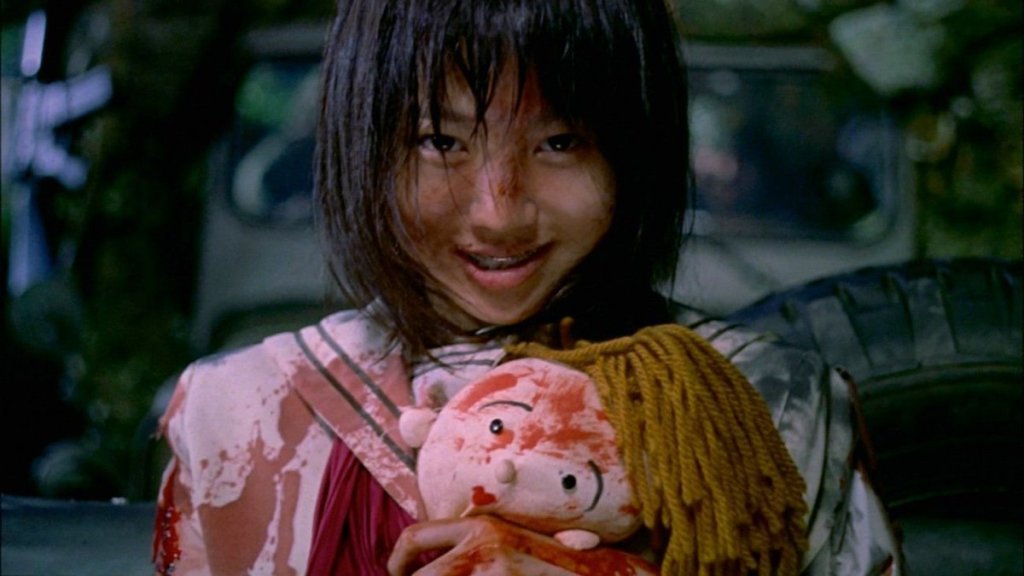
A still from the movie Battle Royale

No-one, I think, is going to be terribly surprised by the inspirations behind Deathmatch Island. You’ve got Battle Royale, The Hunger Games, Squid Game, even Survivor of course, but, slightly less predictably, Tim Denee, the designer, also references Severance and The White Lotus, two of my very favourite TV shows from the last few years. A couple of touchstones that are, surprisingly, absent from the list are the video games, Portal and Portal 2. Many of the design choices and even the arguably, most important, decision the player characters need to make align with the choices your character makes in those games, “play to win,” or “break the game.” Of course, in all of these pieces of media, this is the central and most important choice.

The game, not the-game-within-the-game

What I am trying to say is that I was always going to back a game like this when it popped up on Backerkit. I am a fan of all of those properties to one extent or another. And, to me, the themes are never going to get old. And, although I haven’t had a chance to actually play it yet, I think that, if you feel the same about any of the media I listed above, you could do a lot worse than picking up this game.

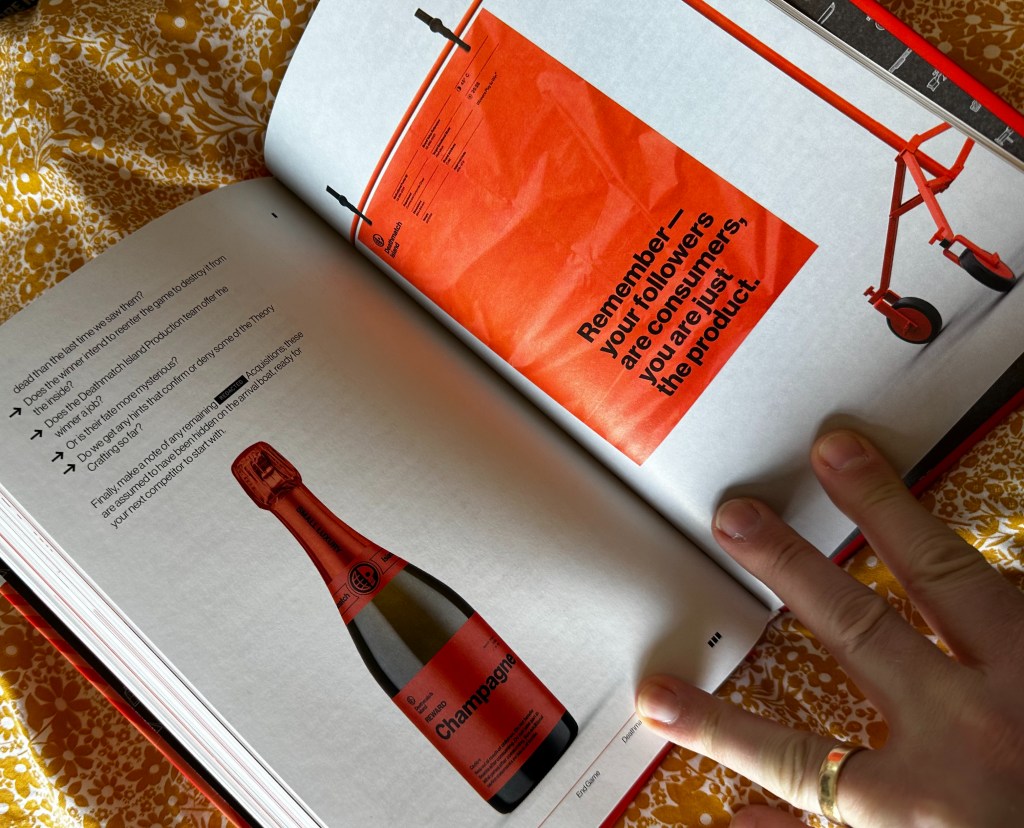
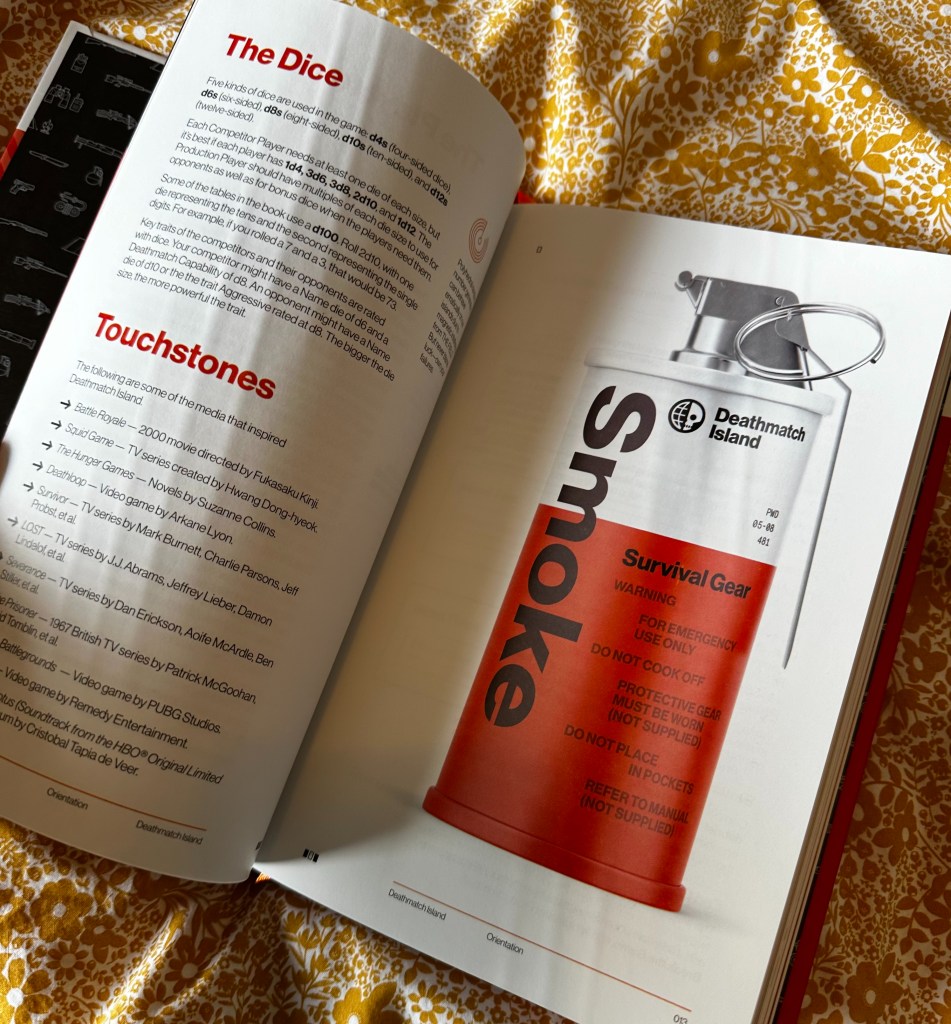
A photo of a two page spread from my copy of the Deathmatch Island core book.
Remember – your followers are consumers, you are just the product.

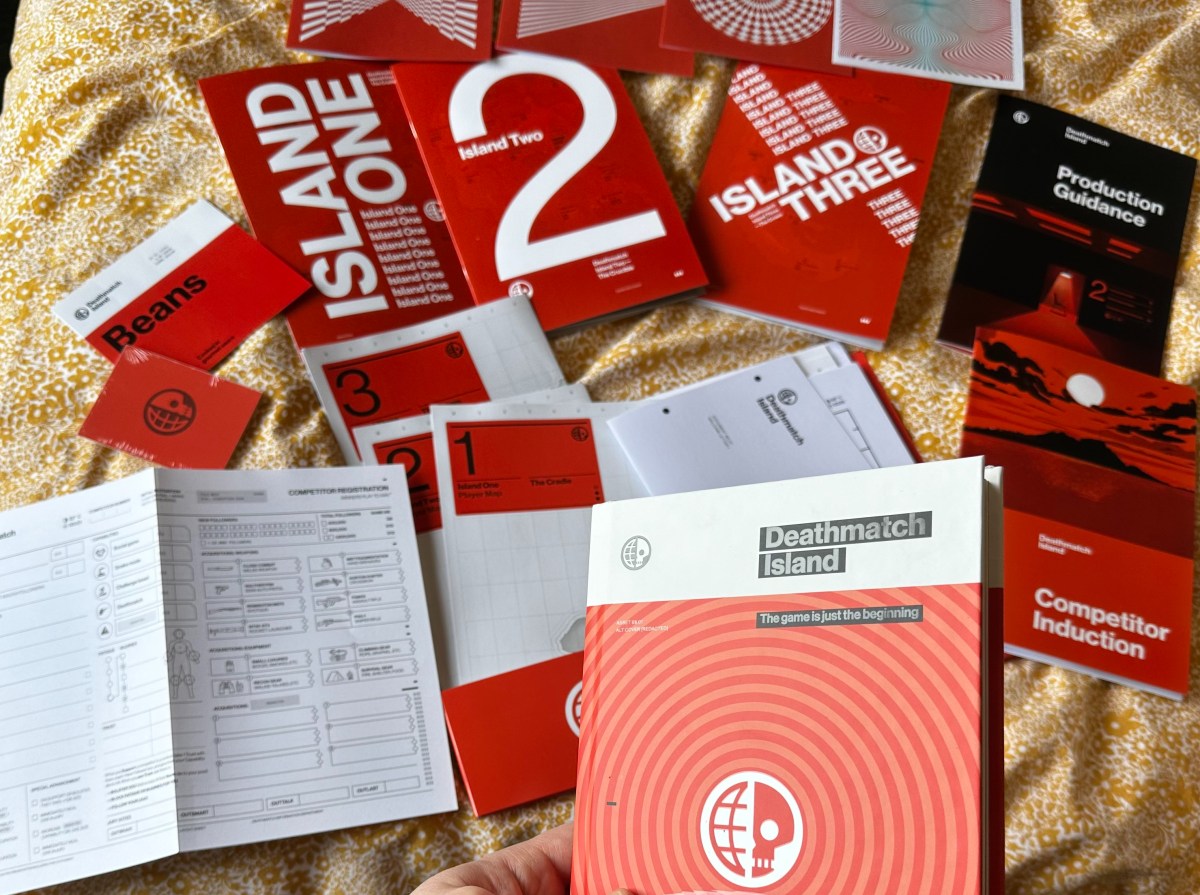
Apart from anything else, it is slick. The production quality is high, as you would expect from Evil Hat Productions, and all of the extras I got from my pledge tier are great. They include booklets describing each of the Islands and each of the Casts (which, to a large extent determine the type of scenario you’ll be playing,) official-looking Competitor Registration forms that act as character sheets, player maps of each of the islands as well as rules glossaries for both Competitors (players) and Production (GM.)

Mechanically, Deathmatch Island is based on the Paragon system developed by John Harper of Blades in the Dark fame and Sean Nittner. I knew nothing about this system before I read the Deathmatch Island book, except that it originated with another game called AGON.

It is highly structured, with play occurring in clearly defined phases. It starts with Competitor Registration, in which the players create their characters, largely through rolling on a series of tables. Then you proceed to the first island.
Each island is split into Phase One, where the Competitors explore, interact and collect resources and Phase Two which is the climax, in which the Battle Royale itself occurs. Even within each phase, there are only a few set actions that can be taken. There is a fair amount of leeway regarding how you achieve the actions within the narrative, but it essentially comes down to opposed rolls from the teams as they stand on the island. Although, the rolls themselves are of utmost importance to the outcome, the players get to do a Confessional after the rolls are all done, giving them each narrative control, as if describing their actions to a camera on a reality TV show. It’s a fun conceit and one I’d like to see in action.

A photo of a two page spread from my copy of the Deathmatch Island core book.
Survival Gear

You play up to three islands. There is a phase of play between each island. This works a bit like downtime in Blades in the Dark and gives the PCs a chance to improve their characters, debrief, and come up with some theories about what the hell is going on. And then there is the End Game. I’m not going to go into that here.

From reading the book, the system feels sufficiently different from anything I have played before to have me really interested to find out how it plays at the table. One of the most fascinating parts is that I feel like you could replay this game on the same islands, with the same players, but choose different casts and have a very different experience each time.

I hope I get to try it out soon!
Have any of my readers played Deathmatch Island? If so, what did you think?

More Troika! – One-shots

Appendectomy

When was the last time your mind was genuinely blown by an idea, a concept, a creature or a situation presented to you when you played a fantasy role playing game? Because I don’t think D&D is providing opportunities for that sort of thing these days. I don’t necessarily blame the writers of D&D books for that; Wizards of the Coast has painted themselves into a corner that they are very comfortable occupying. In fact, because D&D is responsible for much of the public image of fantasy games for the last half century, they have dragged a lot of the hobby with them. As a result you have endless polished and glittering iterations of elves and dwarves and dragons and wizards with spell levels and clerics with devotion to individual deities and all the same monsters repeated ad nauseam. It is particularly interesting when you look at Appendix N, the appendix to the original D&D, in which Gary Gygaxstated his inspirations for the game. It has a few names you would expect to see: JRR Tolkien, Robert E Howard, Fritz Leiber and Poul Anderson but you also have a few that might make you wonder about the connection to the D&D of today.

HP Lovecraft is well known as the author of The Call of Cthulhu and other cosmic horror stories but his influence on D&D might not be obvious to all. Jack Vance wrote fantasy novels but they were tinged with an element of science fiction and gonzo world building in his Dying Earth books. In fact, many of the authors represented in Appendix N were famous for science fantasy rather than straight fantasy books, just look at Roger Zelazny and Edgar Rice Burroughs. You can still see bits of that influence in Wizards of the Coast’s D&D if you think of Spelljammer and Eberron but they always feel little too clean and sanitised compared to the books those ideas came from.

What I am getting at is that the true spiritual successors to the game developed with Appendix N in mind are part of the OSR. I wrote just yesterday on this very blog about Dungeon Crawl Classics and that very much embraces those influences, but it’s Troika! from the Melsonian Arts Council that truly embodies them for me.

Stretching those imagination muscles

The cover of my copy of Troika! Numinous Edition.

From Acid Death Fantasy by Luke Gearing:
“To the East lies the Plastic Sea, a miraculous main of liquid plastic. Upon contact with living skin it solidifies, covering the coast with Coated Men dueling each other in elegant, fatal contests, having made the choice to die young and glorious, sealed in flexible plastic armour.”

From Fronds of Benevolence by Andrew Walter:
Fletherfalloon is a floating Thinking Engine of a very basic sort, dating from a bygone age. Festooned with rotting ribbons and rusty curlicues, it hovers at varying altitudes burbling and whistling to itself.”

From Slow Sleigh to Plankton Downs by Ezra Claverie:
“Water: three billion years old, frozen by the perpetual
night at the edge of the Galaxy, compressed into glaciers
of midnight blue. Taste the weight of time and solitude,
darkness and purity. With Djajadiningrat.
Hear it crackle in your favorite spirit. The sound of time
calving into an ocean of premium flavor.
Cut by natural-born hand, never by machine, never by clone.
At night’s edge, taste the infinity. Only from Djajadiningrat.
— advertisement in Ice Tomorrow (trade magazine)”

Troika! Is a city at the centre of everything, and around it gathers a host of bizarre and fantastical settings dotted throughout the cosmos. Perhaps you traverse this universe in a space-ship, perhaps it’s a Golden Barge you use. Maybe your character is a Displacement Prosthesist, maybe they are a Hyenaman Scavenger. The possibilities are truly endless and the strangenesses abound.

A page from Acid Death Fantasy by Luke Gearing. It details of the background you can choose to play in that setting, the Hyenaman Scavenger.

We had the chance to play a single one-shot of Troika! A couple of months ago and it did nothing but whet my appetite for more oddness. The adventure we played was a published one, The Blancmange and Thistle, in which the PCs encounter a hotel. Saying any more would involve spoilers but suffice it to say, if you are a fan of the unusual, that hotel is the place to stay.

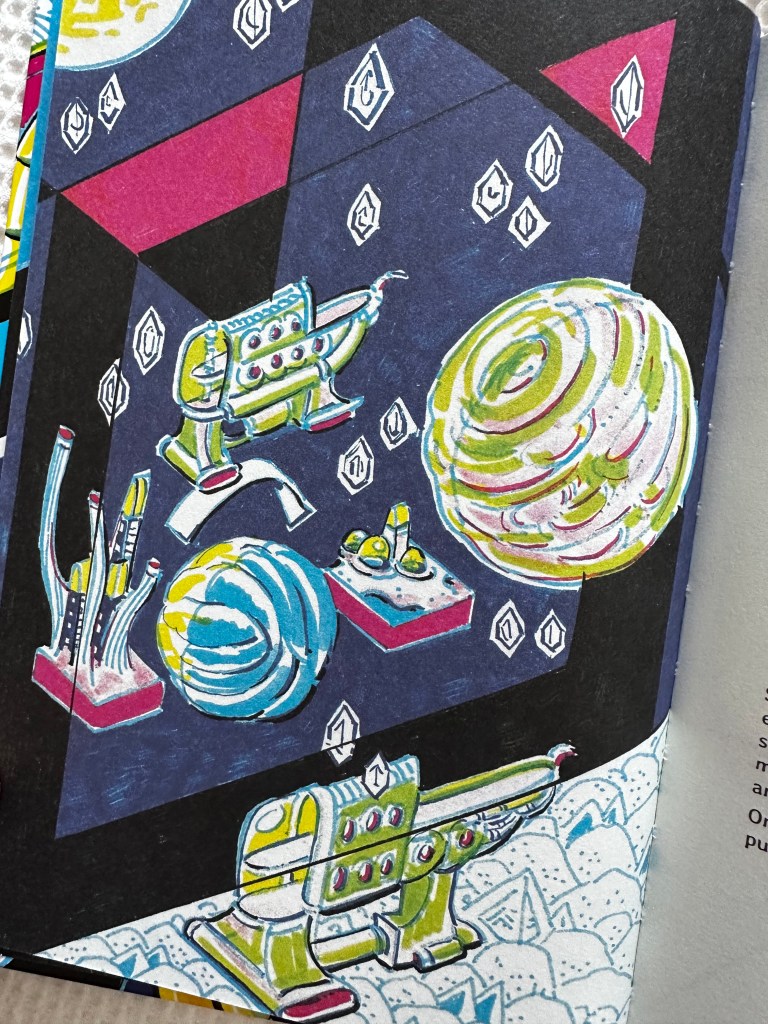
The inside front cover of my copy of Slow Sleigh to Plankton Downs by Ezra Claverie.

From that, I fed the PCs a hook that should, someday, when I find the time, lead them to the world of Myung’s Mis-step and the whodunnit adventure at the centre of Slow Sleigh to Plankton Downs.

But I have a few others too:

Some lads on a page from Frond of Benevolence by Andrew Walter.
  • Fronds of Benevolence is a short, point-crawl where the PCs journey in search of an item of great importance to their friend/ruler/patron/deity, Duke DeCorticus, which will lead them “to the Rainbow Badlands, across the precipitous face of The Wall and in the very vaults of the hump-backed sky!
  • Acid Death Fantasy is more of a setting book but could equally be used as a point-crawl adventure. It contains elements from Dune, Planet of the Apes, others from dying earth genre books and still others from classic fantasy.
  • Whalgravaak’s Warehouse also by Andrew Walter is an adventure “that centres the play experience on the classic tenets of danger, resource management, exploration and player engagement agency.”

And given the fact that I will probably only get to run these once every few months, these will no doubt last me a while!

Have you had any experience playing Troika!? If you met a Slug Monarch in an awkward situation, would you help them or attack them?

Dungeon Crawl Classics – Individual Modules

Dropped modules

I have a few adventure modules from the early days of my D&D career. A couple that hark back all the way to AD&D first edition and several more for specific settings like Dark Sun, Ravenloft and Planescape. I have a few for D&D 5E as well. But the thing is, I have never been that enamoured of them. Almost from the start I found it too restrictive to run a pre-written adventure. I had the feeling that I had to get everything right, according to the text and that, if I put a foot wrong, I would mess up the whole experience for the players. To be fair, that was absolutely the case in some instances.

Instead, after I had read a few published modules and run some of them, I was able to see how it was done. So, I wrote my own adventures. Usually these were pretty loose things with nothing but a beginning, a main villain and some encounters filling the middle but only a vague idea of where it was going. Honestly, my method has not changed all that much in the intervening years. Anyway, this approach allowed me to improvise much more freely and I think my players generally felt they could do as they wished, within the constraints of the setting, rather than the strictures of a preset narrative.

I still don’t run published D&D scenarios or campaigns much, even if I do occasionally buy them. I ran Storm King’s Thunder a few years ago and was equal parts appalled and underwhelmed by it. It’s a full campaign that took us the guts of two years to finish. During that time much of our play-time was spent farting around the Sword Coast, trying to remember what the PCs’ motivation was while having more-or-less random encounters and a few pre-written, essential ones. It was meant to be a sandbox but the area felt too vast and the individual locations too ill-explained to be easily useable without a huge amount of work by the DM. And so little of it felt important to the overall plot! On the other hand, when it gave me the chance to be creative, and come up with content that was entirely my own, I loved it. And, generally, those were the most memorable moments from that campaign, even if I do say so myself.

Modular construction

A photo of the front cover of my copy of the Dungeon Crawl Classics RPG.

So why do I want to run individual modules for the Dungeon Crawl Classics RPG from Goodman Games? More masochism? Could be, oh reader mine, could be. It might actually be a mistake. I probably won’t know until I try it out.

But here’s the thing, the modules I am thinking of have been written some time in the last ten years for the most part. They are modern, with modern themes and sensibilities in mind. They are structured for a modern RPG player and they are, generally, nice and short.

So, they are modern, meaning they have plenty of opportunities for the PCs to make important and potentially game-changing choices and very few instances of railroading. Also, they assume that the players, at least, have all agreed to be there to play the game and so they are not written with the utmost consideration given to how to get the PCs to do what the adventure wants them to do.

Themes and sensibilities are important. A lot of the older adventures make colonialism look good and normalise a sort of fantasy racism that is simply unacceptable. It wasn’t acceptable then and it isn’t now. But now, at least, the consumer won’t put up with it.

Structure and length kind of work hand-in-hand. A lot of these have a fairly loose structure where many events can occur at any time within the beginning middle and end portions of the modules. And they are short enough to play in an evening or two for the most part. Here are the page lengths for a sampling of the DCC adventures I own:

The Sorcerer’s Tower of Sanguine Slant – 25 pages
The Laughing Idol of Lar-Shan – 17 pages
Blades Against Death – a massive 32 pages
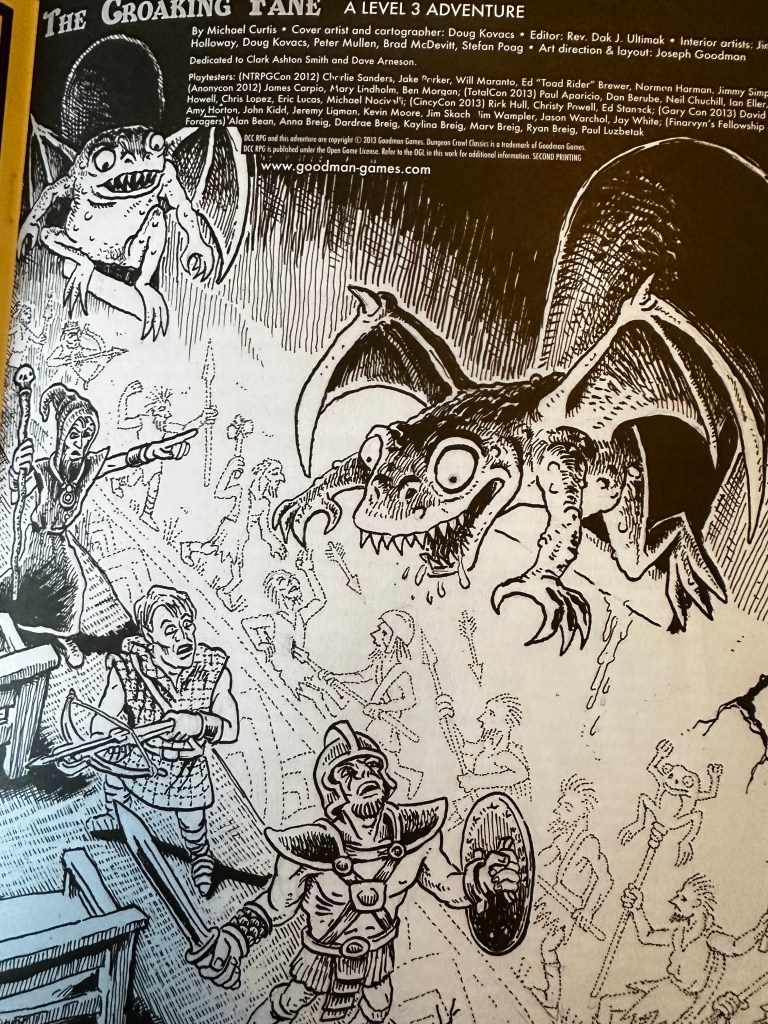
The Croaking Fane – 16 pages

Easy to read and easy to prepare with great maps and fun artwork too.

Also, these things are metal AF.
Here are a few extracts:

From DCC # 77 The Croaking Fane

A page from the DCC adventure module, The Croaking Fane.

“The transept ends in a small altar, atop which sits an idol depicting a grotesque frog with razor-sharp teeth and talons. Its mouth is full of the mangled bodies of sentient races – humans, elves, dwarves, orcs, and even ogres hang askew in it maw; limbs dangling between the giant’s teeth.”

From DCC # 74 Blades Against Death

A page from the DCC adventure module, Blades Against Death.

“You draw aside the clacking curtain to reveal an emaciated crone, her white eyes staring into nothingness. A third eye is tattooed on her forehead and seems to blink when she wrinkles her face.

From DCC # 77.5 The Tower Out of Time

“A grotesque wonder occupies this bright chamber. Three fleshy slabs stand at acute angles around a monstrous, bulbous mass that resembles an exotic jungle flower. Each slab bears a small, hairy anthropoid creature. Numerous crimson tubes extend from the horrible flower, greedily siphoning the life blood from these creatures.”

Finally, DCC has this rather unique phenomenon called Level 0 Funnels. I am mildly obsessed with them and am itching to get one to the table. You play one of these adventures in lieu of traditional character creation. Your players each roll up 4 or 5 0 level characters, essentially peasants with no special abilities or magic or anything (they might have a pitchfork or a pig) and you send them all into a dungeon. Any that survive the experience get promoted to first level. And some of these modules are pitting 0 level characters against the sort of things the average D&D party might think about facing at like, 10th level.

I haven’t even gotten into the rules of DCC really. Suffice it to say that they are close enough to D&D that most players will not have a hard time learning them. I’ll probably do a deeper dive on the rules another time.

So, have you played DCC? If you did, did you play any of the published modules for it? What did you think?

Games I Want to Play This Year

Five months to go

Having managed to get through so many games in the first 7 months of the year, you know what? I reckon, if I really make an effort, I think I can fit in up to ten more different games before New Year’s Day. I’m particularly looking forward to a few more one-shots. For those of you who’ve been keeping an eye on this space over the last couple of weeks, you’ll know I have a soft spot for them.

Lists 4

Here we go. Like previous lists, I’m just going to split them between those I want to run and those I want to play in.

To be honest, a bunch of these games are ones I already have in the schedule. I’m hoping to get Tales from the Loop started in a few weeks and I have Death Match Island in the calendar for next Friday. Even the ones I want to play in include a couple that are almost good to go.

GM

Player

I’m going to spend the next couple of days going through each of these games to explain why I’m so excited about playing them.

Stay tuned!

Also, what are you looking forward to play this year? Let me know in the comments!