Hex-jammer

Messin’ with 5E

I’m sure those of you who have been around for a while are aware of how much I enjoy mucking around with my D&D campaign. It is a Spelljammer campaign of the 5E variety and it has been running for quite some time. About 25 sessions, I think. That makes it one of the longest running campaigns I have ever had. That’s probably what makes me want to keep messing with it. A while ago, I introduced the very FitD idea of Engagement rolls before big jobs/dungeons and that has worked pretty well. I also brought in the adversity token, which have come in handy for our heroes in a few clutch moments, let me tell you!

1E Throwback

This post is not so much introducing yet another rules hack or even anything home-brew. It’s more about utilising a style of play that went out of fashion in D&D a long time ago. Hexcrawling! A couple of the oldest D&D publications I own are from AD&D 1st Edition. One of those is UK5 Eye of the Serpent, written by Graeme Morris and released in 1984. This was designed for one DM and one PC! Specifically, it was made to be the first adventure for a druid, ranger or monk character. This is besides the point. I just thought it was unusual. Also, it reminds me of a Troika! adventure I just read, The Hand of God, mainly because it starts much the same way, with the characters being abducted by a powerful winged creature and dumped in their nest at the top of something very, very high up.

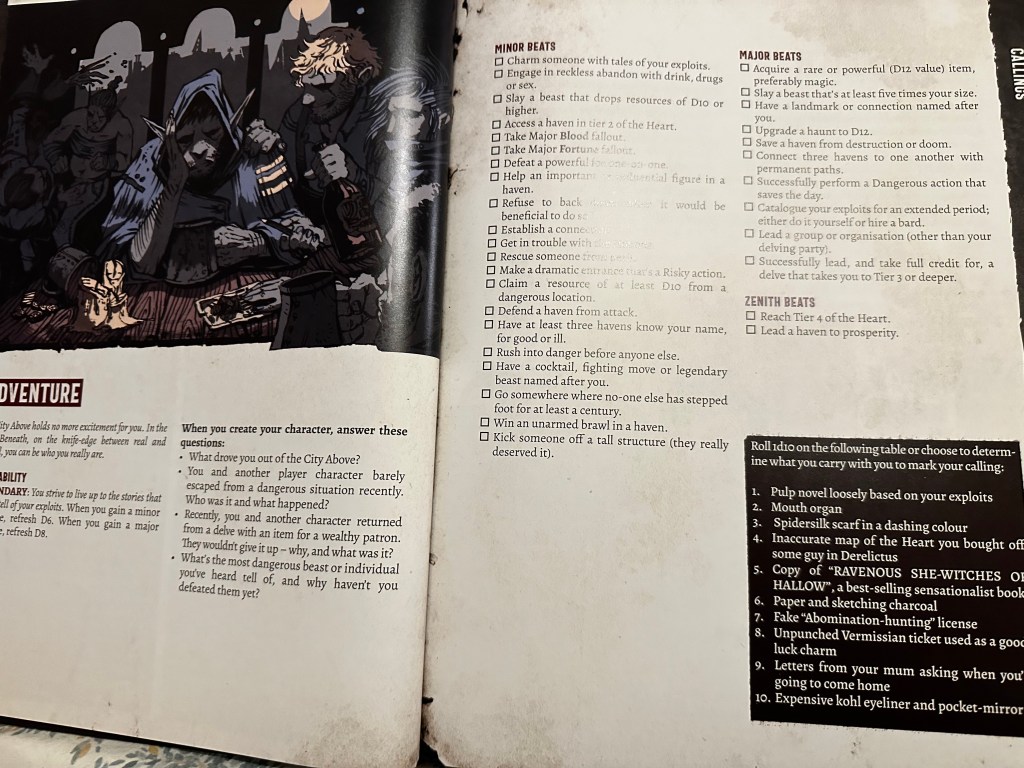
Anyway, the point is the hex map of the outdoor region, Hardway Mountain (the name of which, I think we can all agree, is a little on the nose.) Now, the use of this map was incredibly restricted in the text. If your PC was playing a druid, not only did they have to have a prescribed set of three NPCs with them, they should also be forced to take a particular selection of the marked “routings.” These would be distinct from the routings a ranger or monk character would be forced down. You can see this laid out in the unfeasibly complicated two-page spread below.

Now, I think this is really interesting in comparison to what you might deem a hexcrawl style game today. I think most OSR games that use a hex map are thinking along the lines of open-world or sandbox play where you go to a certain hex on the map to explore, with the understanding that the whole thing will be open to your PCs. There might be geographical or other obstacles they have to overcome but that’s up to them, they can either try them out or forget about them.

When it comes to encounters, places of interest, etc. a lot of the time these will be generated randomly and the GM is discovering along with the players in many cases. Even if the GM is the one who came up with the encounter table they’re rolling on, they are not to know what the roll will turn up in the moment or what the PCs will do with them! I realise I am probably teaching my grandmother to suck eggs here, but I want to point out that, although the hexcrawl is a pretty old school style, it wasn’t always necessarily as free a style as it is generally taken to be today.

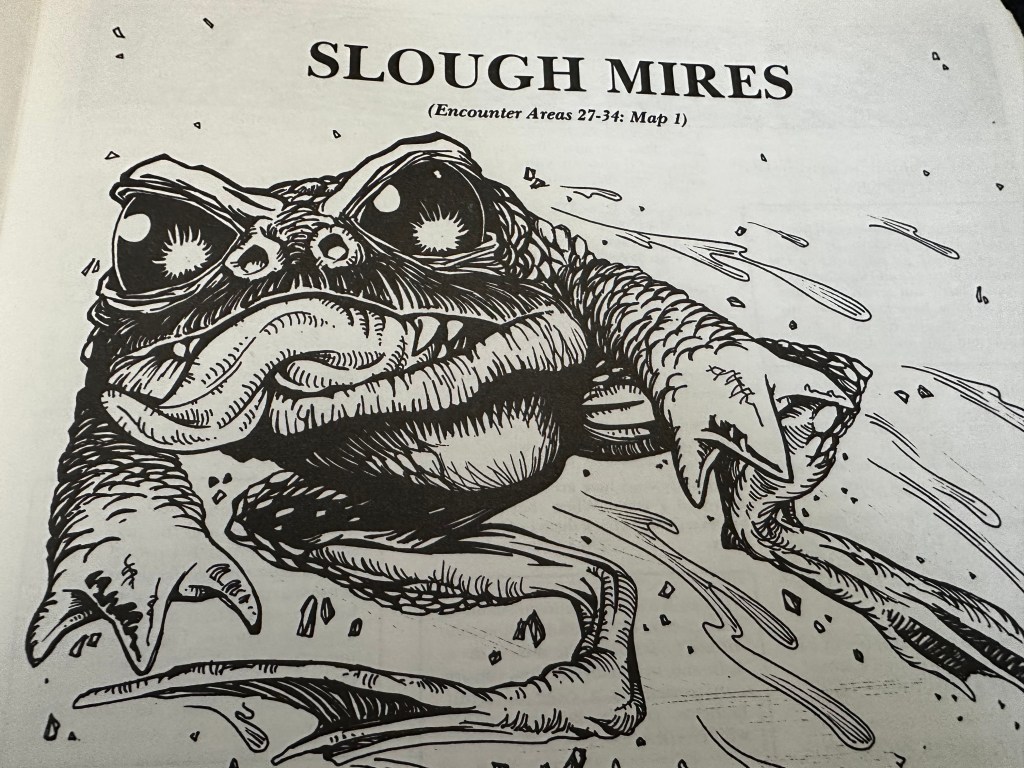
One last thing. That Eye of the Serpent module has some fantastic art by Tim Sell. Just check these out.

Hexing the Rock

The Spelljammer campaign may have gotten a bit bogged down on the Rock of Bral. Why? Is it because it is the only location described at all in the Spelljammer 5E set? Maybe. Is it because all the plot threads of the campaign led there? Partly. Is it because it takes a life age of the earth to get through a round of 5E combat? That’s a distinct possibility. Anyway, the crew have spent a lot of time exploring, murdering, stealing, negotiating, shopping, drinking and dating on the topside of the Rock already. But one of them has had a literal ooze-heart pulling them to the underside since they got there and they finally made it down. Now, to get them there, I invented a little something I like to call the Shaft of Bral. Stop sniggering! It is a shaft of pure void half a mile wide through which you can reach not just the top and under sides of the Rock but everything in between too. So they took a little row-boat called a spell-rudder down to the bottom and now they are crawling through the hexes underneath. I threw a few random encounters at them on the way down as well. I invented a few encounters for the Shaft of Bral and put them in a d6 table. I got the players to roll for those and they had fun getting hit by another spell-rudder in a hit-and-run and avoiding the sickly air of a boat full of corpses on their way down.

So far, using the encounter table in Boo’s Astral Menagerie (the Spelljammer Monster Manual,) I have been unimpressed. The first time I used it they got an encounter with a ship of aggressive Vampirates. Then there was a fight that lasted three full sessions. It wasn’t all bad, it just derailed things in a less than ideal way. So, I thought I would just make my own encounter tables from now on.
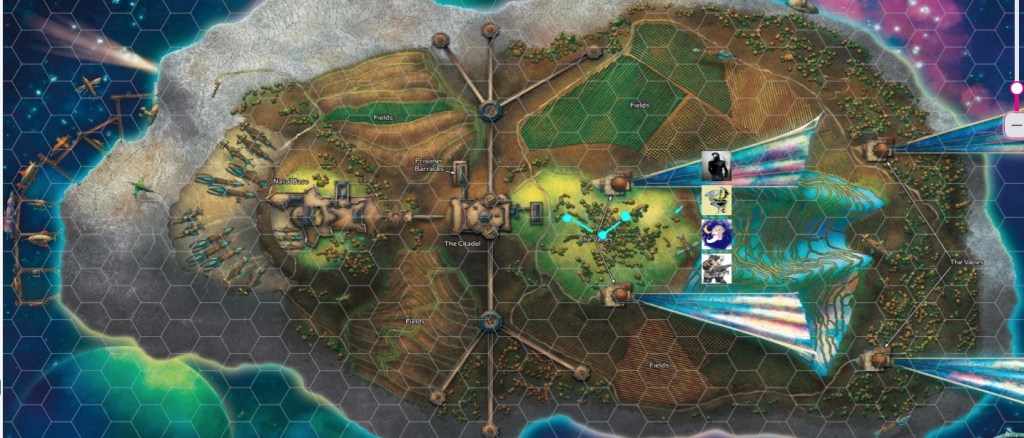
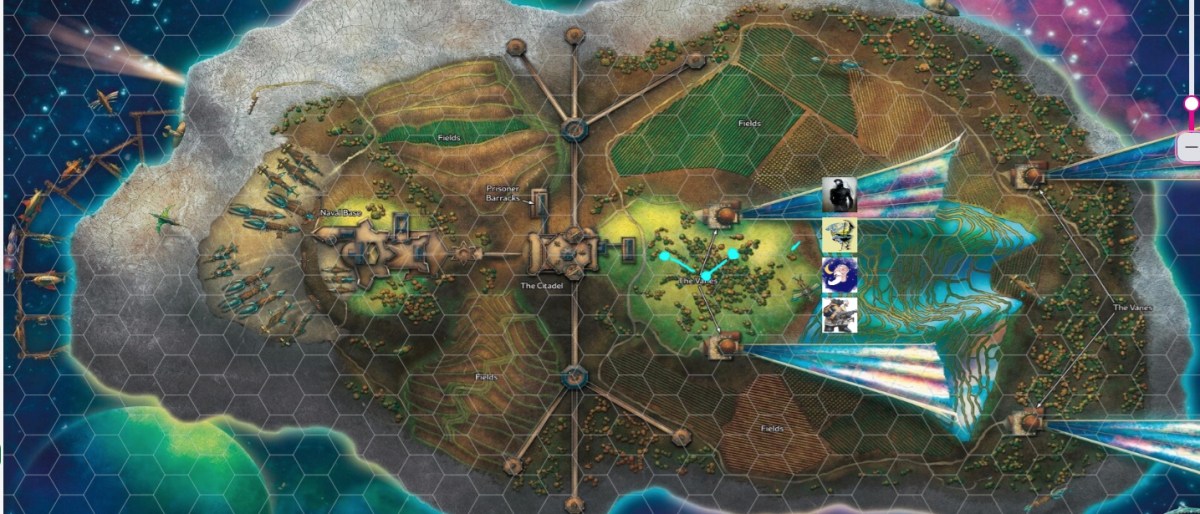
Once they were finally on the Underside of the Rock, I had to think about how I was going to handle it. It is a very large area, made up largely of farmland and forest and they were there to find one wee gnome. I could have just given them directions, but I wanted it to feel like they were exploring and finding their own way, so I took the map of the Underside of Bral and popped it into Roll 20. We are playing this game online so this worked out well. Then I set the map layer to have a hex grid, instead of the standard square one. Now, as they travel, each time they pass from one hex to another, we roll for an encounter. Some of these encounters are designed to beneficial, some are quite the opposite and others are what they make of them. They have been using their own skills, abilities and traits to push on towards their goals while getting the impression of uncovering things about this place as they move through it. I’m not sure how the creators of this version of the Rock imagined people using this map. Maybe this is exactly what they thought we would do! But, I doubt it. It doesn’t feel as though any thought went into that, in fact. As it is with so many recent D&D 5E products, you are given the bare minimum and expected to figure the rest out for yourself. Even a little advice to go along with the map would have been useful. I mean, even Eye of the Serpent did that in 1984.

Anyway, the last session we had was one of these hex crawl sessions and I can’t remember a funnier time. Genuinely laughed the whole way through. Now, I am incredibly loathe to take any credit for that. It was entirely the hilarious antics of the fantastic players I am blessed with. A couple of highlights:

  • Our Giff Charisma-Fighter/Paladin climbing a tree to hide from a patrol with his trousers ‘round his ankles because he thought his hairy grey arse-cheeks would help disguise him as a bunch of coconuts (didn’t work, it was an oak tree.)
  • Encountering a bunch of Hadozee who were on the run from the nearby prison but didn’t know how to escape the Underside. The party told them all about the secret hatch in that stump over there which led to the Shaft of Bral. What’s that? Do we have a boat there? Yep! On, ok, bye then! Good luck in the shaft!
  • Herbert Gũsfacher, ornithologist, the latest identity adopted by the party’s resident illusionist, Balthazar.
  • Gary, Son of Gary. Oh, are you based in the Garrison, Mr Gary-son? No, the Citadel, actually.

Anyway, these random encounters did help along the good times and, I hope, gave the players a sense of active exploration. They haven’t found what they were looking for yet (it’s Eccta, the plasmoid Mum) So I can’t go into any detail about what is in store but I will be using a lot more of my own home made hexcrawls and random encounter tables, that’s for sure.
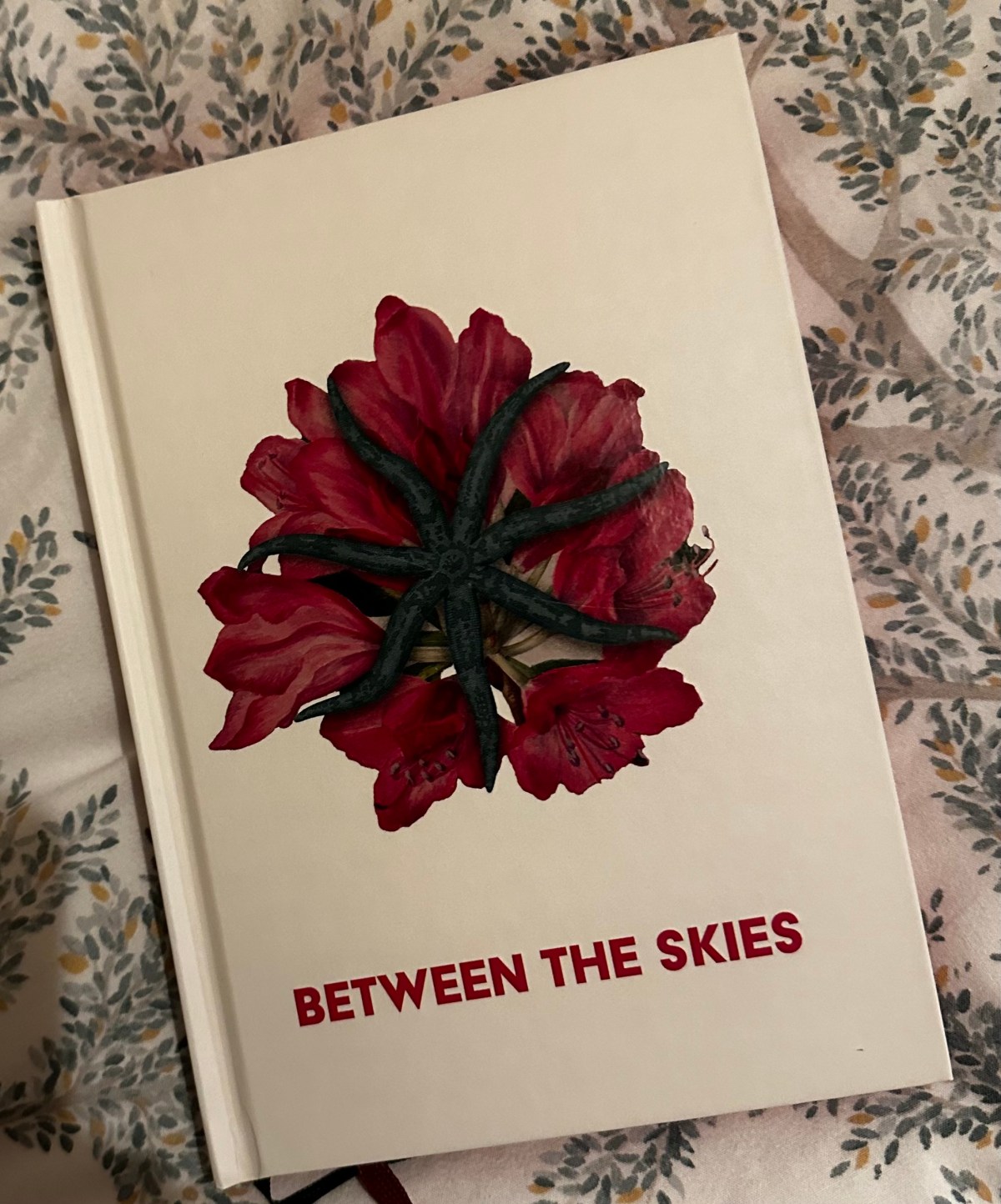
Between the Skies Part 1

Formalising the informal

We introduce informal rules on the fly in our games all the time. You need to figure out if someone can find a newspaper stand around here somewhere? Sure: odds, you find one, evens, you’re out of luck. Oh, you rolled a nat 20 on your investigation check? Well, that means you also get advantage on your next Thieves’ Tools check. You know what I’m saying. It’s not unusual. So, is it unusual to formalise this informality? Maybe, I suppose. But that is exactly what Huffa has done in her new book, Between the Skies.

I heard about this game from the Yes Indie’d podcast from Thomas Manuel. On the episode I linked above, you can hear him interviewing the writer and creator of Between the Skies, Huffa. You can get most of the background of the game from the podcast, if you’re interested, but if you need a TLDR, it started off as a digital release and then a series of zines you could get on itch.io until Exalted Funeral got involved and made it into a book. You can still get those there in free PDF format, by the way.

A couple of things struck me while listening to Huffa talk about her work. First was the subject matter of the game, which seemed rather Planescapey to me, the nineties one. Maybe cross that with some AD&D Spelljammer, a wee sprinkling of Troika! and just a little bit of Black Sword Hack. Strangeness in the spheres and across the planes of existence is the overall theme. It sounded both very old school and incredibly fresh at the same time. Where does the freshness come from, I hear you cry, dear reader! Well, that would be from the other thing that struck me about the interview; the ideas Huffa espouses when it comes to rules.

Why restrict yourself to one ruleset when there are so many out there to choose from?

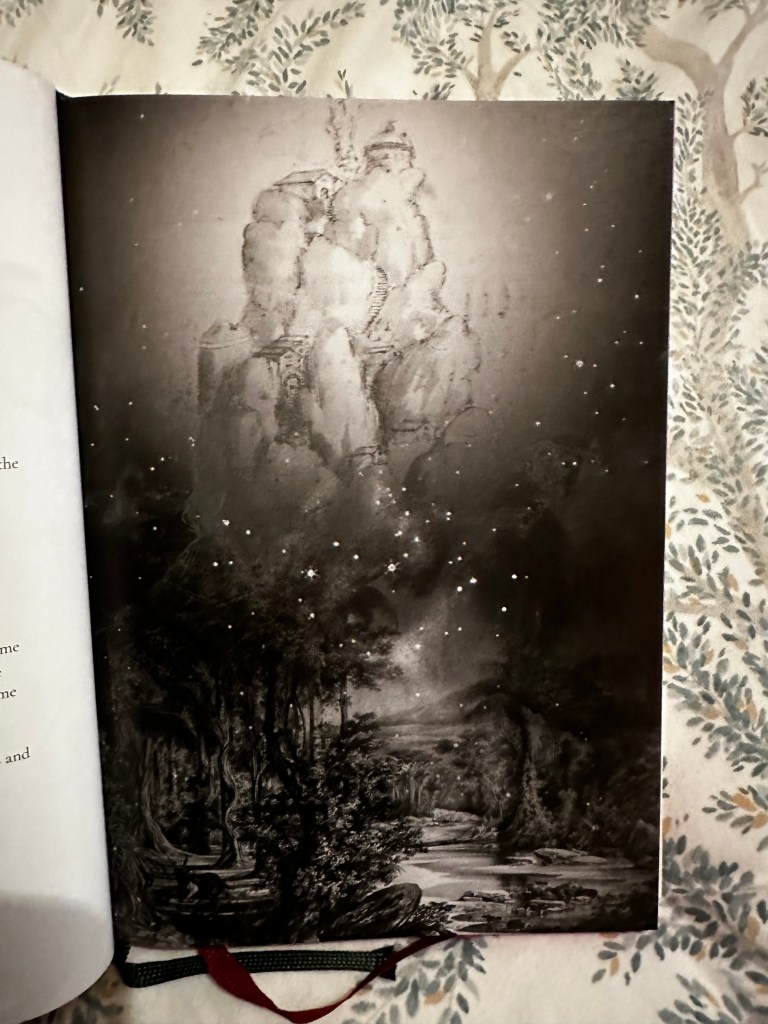
A badly taken photo of the double-page spread before the At Play Between the Skies chapter of Between the Skies. There is an abstract monochrome picture in it.

So, like my very wordy sub-heading says, why go full Forged in the Dark all the time when certain situations might call for a Resistance System style roll with pre-established fallouts to hit them with? Why limit your game to using only Powered by the Apocalypse rules when you might also want to use adversity tokens sometimes? The point is, you should be able to play almost any game you want, using almost any rules that suit, not just the game but any given situation within a game. Is this dangerously anarchist? Maybe, but it also sounds like excellent fun. If you have been around here for a few months you’ll know that I like a good ludicrous mash-up. See my various attempts to introduce new and exciting elements to my D&D 5E game here and here. You might also remember me going on and on about how cool it was to use other games to establish the world and the city in a Blades in the Dark campaign I recently took part in.

If you’re interested in games and the rules of games and how they interact with the players, the setting, the events, this is an approach I think you might be able to appreciate.

Now, I will say that Huffa is not necessarily suggesting that you should abandon a single ruleset play style, but that you should open your mind to the idea of using the ruleset that most appeals to you when you pick up Between the Skies to play it.

Playtime is the name Huffa uses for the set of procedures presented in the book to allow for the style of play it espouses. It’s all about the “shared understanding of a fictional world.” And really, however you achieve that is the way to do it, with the understanding that this might look different for literally every table. Here are a couple of relevant quotes from the introduction:
“Judgement based on shared common sense is the fundamental ‘rule.’”
“All rules, methods and procedures can be used or ignored.”
This type of play is related to the FKR or Free Kriegspiel Revolution. This is a movement that rejects the cumbersome mechanics prevalent in so many games, particularly from the war-game or “Kriegspiel” side of the hobby. In FKR, the game is very much a conversation, where a player may suggest a way of overcoming an obstacle and the referee or someone in a similar role will make a judgement, based very much on the table’s shared understanding of the world they are creating together, as to whether or not it would work. Dice rolls may occur but they will be minimal.

And yet, Huffa has provided here, in the At Play Between the Skies chapter, a plethora of potential rules. Here’s a brief collection of some of the suggestions.

All time is tracked by Turns but the time scale of the Turn is dependent on the situation, longer for travel and exploration, shorter for investigation and shorter still for combat.

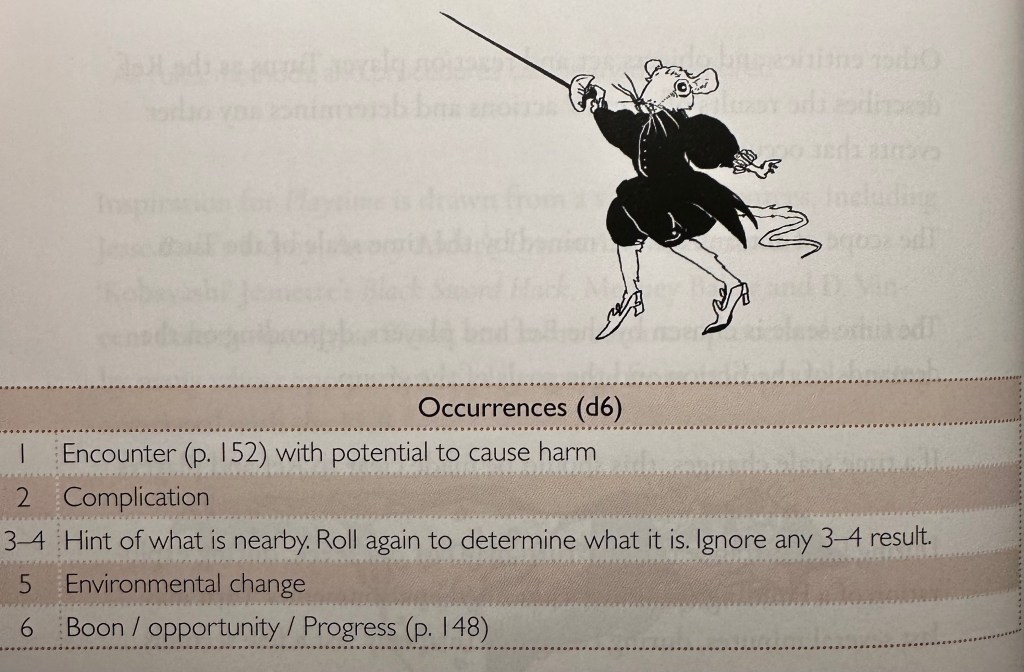
The Occurrences table on page 46 feels like the most basic denomination of the tables in this book. It is incredibly general but its presence and usage suggests at the way the whole game is to be played.

The Occurences table from Between the Skies. It is a d6 table. The possibilities are "Encounter," "Complication," "Hint of what is nearby," "Environmental Change" and "Boon/opportunity/Progress." There is also a small illustration of a well dressed mouse with a rapier above the table.
The Occurences table from Between the Skies. It is a d6 table. The possibilities are “Encounter,” “Complication,” “Hint of what is nearby,” “Environmental Change” and “Boon/opportunity/Progress.” There is also a small illustration of a well dressed mouse with a rapier above the table.

Use tokens to succeed at risky actions or extraordinary actions. Or! Choose a dice rolling mechanic from any of the bunch described in the book (coming from games like Blades in the Dark, Apocalypse World, Traveller, Electric Bastionland etc.) and see if you succeed, or if you succeed with consequences or if you just fail.

Or you can just play without dice!

Give your characters Conditions when they should get them. Let these conditions affect the riskiness of actions.

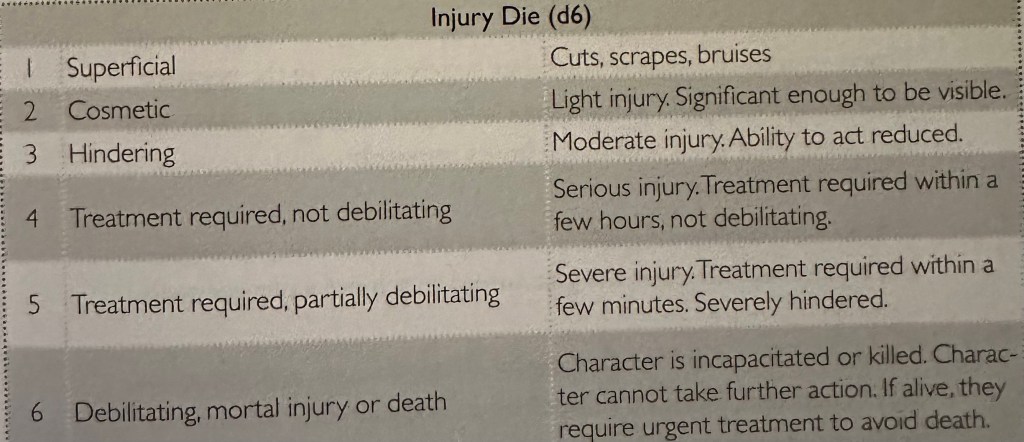
Injuries! Roll on the Injury table to really fuck them up. It’s a 1d6 table and the 6 is death or fatal wounds… So use this sparingly, I guess!

The Injury Die table from Between the Skies. it is a d6 table. the potential injuries are: "Superficial, "Cosmetic," "Hindering," "Treatment required, not debilitating," "Treament required, partially debilitating," "Debilitating, mortal injury or death."
The Injury Die table from Between the Skies. it is a d6 table. the potential injuries are: “Superficial, “Cosmetic,” “Hindering,” “Treatment required, not debilitating,” “Treament required, partially debilitating,” “Debilitating, mortal injury or death.”

You can, as Huffa suggests, use all of these rules or none of them or you can add any other systems or subsystems you can think of where appropriate.

Approaches to Weirdness

In the Setting Up Your Worlds Chapter it is time to decide how strange you want this game to be.

“Between the Skies is filled with weirdness. Its tables, and its author, revel in the strange.”

Huffa provides some options here, broad categories of weirdness that will help to define exactly how weird things are likely to get. Of course, this might change during the course of play, depending on how you and your players get into it.

Go “All the Weird” for a setting and game where the characters are probably at home in a very strange and out-there place. The sky is not even the limit here.

With the “Venturing Out into the Weird” approach you play humans with a limited but very much real knowledge of other planes and spheres but who have never left their homes before. Everything will be new to them but high levels of weird are ok.

If you want to be the weird in everyone else’s world, take up the “Playing he Monsters” approach. Your characters will be the only magical, non-human, truly strange things in an otherwise normal world. You will probably be feared and hated.

In a “Through the Looking Glass” style game your characters will start the game having found themselves in a strange and magical new realm. But they themselves are relatively mundane and must figure things out as they go along.

The approach you decide on will also have an influence on the character creation method you use. So it is of primary importance to the type of game you are looking to play.

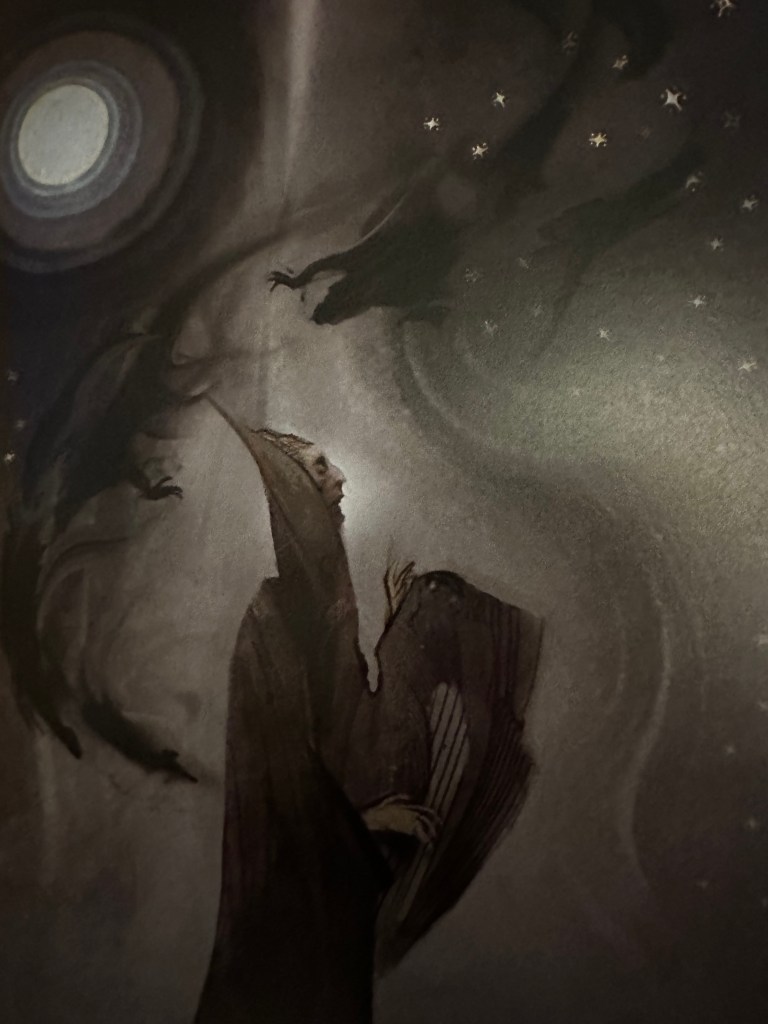
A photo of one of the black and white illustrations from Between the Skies. it depicts a forested land and a starry sky overwhelmed by a nebula of some sort.

This section of the book asks a lot of questions about how the planes and space work in the universe of your game. There are familiar touchstones here with Planescape and Spelljammer being the obvious ones. But it tries to get you to really think about important things like how PCs might travel through this weird space, how gravity works and the real difference between worlds, space and the planes, if any.

Next time, I am going to get into the Between the Skies approach to character generation, which is exactly as lassaiz faire as you might have come to expect by now.

Dragon Age Rules

Basics

So, it looks pretty straightforward as a system, if I am honest. The basics, at least. I do believe that, from what I have read in the past, there is one major innovation in the AGE system and I will get to that later. For now, let’s just get a grip of the basis of the whole thing, ability tests.

Ability tests

You need to roll an ability test to do any sort of action in the game. In general, you can try to do anything, even if you don’t have the appropriate ability focus, which is kind of like a skill or proficiency in D&D and similar games. Sometimes, the fiction of the game or the situation might require you to have a particular ability focus to even attempt a roll, but this seems to be the exception and not the rule.

Anyway, the way it works out is you roll 3d6 when you want to try to do something. One of these dice needs to be identified as the Dragon Die, more on that later. Then you add the ability you are rolling and another 2 if you have the right focus.

3d6 + Ability + 2 for Focus

Obviously, the intention is to roll high. The GM sets a Target Number depending on difficulty and circumstances. The higher that number is, the harder the action is. If you roll the Target Number or higher, you succeed. Simple enough.

They identify the Opposed Test as a separate type in the rules but essentially they work the same way, except, instead of having a Target Number, both characters roll their opposing ability tests to see who rolls higher. Also, if your scores are tied, you use the number on the Dragon Die to decide who wins.

It also makes it clear that you will need to use tests, in some situations, as if they are saving throws. So, you would make a Dexterity test to avoid falling off an unexpected cliff. That sort of thing.

There is a short section here on degrees of success. But, honestly, it doesn’t make an awful lot of sense and I would be loath to include it. Essentially, it seems to be a narrative tool, only. It allows you to show off how well you succeeded in a test, or how you only just scraped by. You do this by referring to the result on the Dragon Die. The higher the Dragon Die roll, the more spectacular the action. But, from my point of view, it’s still a success and, if you want to see how well a character did in their success, can’t you just look at the number you beat the Target Number by? (Since I wrote this, I was chatting with a mutual on Instagram, @otherstuffrpg about this very subject. They were a big fan of this mechanic! They felt it was a unique aspect of the rules that added a lot to the game. It might be one of those things that comes alive in play.)

Time and Actions

So, time is explicitly divided into Narrative Time and Action Time. It’s pretty much always Narrative Time until the Action starts, is more or less how they put it in the book. There’s not a lot to explore regarding Narrative Time, to be honest.

Action Time happens when you get into any scene that requires the rolling of initiative. Once that happens you are dealing with rounds. Each round is 15 seconds. Within a round you can take one Major Action and one Minor Action or two minor actions. There is a list of major and minor actions that are possible within a round. Major ones include stuff like All-out Attack, Heal, Melee Attack and Ranged Attack. Meanwhile, Minor Action examples are Aim, Guard Up, Ready and Press the Attack. I’m not going to get into the description of each and every action. Suffice it to say there is quite a lot of detail here. I imagine a cheat-sheet would be all but essential at the table to help players remember what they can do in a round and how each action works.

Initiative is sorted by everyone making a Dexterity (Initiative) roll. Ties are broken by the result on the Dragon Die and only PCs and major NPCs get their own individual initiative rolls. Minor NPCs act together in a group. You only roll initiative at the top of an encounter, not every turn.

Combat

I realise I already started the combat stuff above but that is the way it’s presented in the book. Also, it does suggest that the initiative and Action Time rules can be used in any situation that could be an action scene in a movie. You could lump chases, hunts, and other similar activities in there too.

Anyway, here’s how you do violence in Dragon Age:

  • Make and attack roll. That’s a test using the ability associated with your weapon type, Strength or Dexterity.
  • Add any bonuses from focuses, magic etc
  • Compare the result to your enemy’s Defense rating
  • If your roll is equal to or higher than that Defense rating, you hit! Well done!
  • Then you inflict damage. Everyone’s favourite part
  • You roll the damage dice of your weapon and add the relevant ability to it. This is usually Strength, but, interestingly, you add your Perception score to a ranged attack roll, rather than your Dexterity.
  • If your attack is Penetrating skip this step, otherwise, subtract your opponents armour rating from the damage roll
  • The result is the damage you do to the enemy’s Health

@Otherstuffrpg suggested an interesting house rule for damage, which I thought was a pretty fun way to speed up combat a little and beef up the Dragon Die. Instead of rolling damage for every hit, you take the result of the Dragon die and add a +4 for each damage die your weapon normally has. So, if you roll a 3 on your Dragon Die on your attack roll and you are using a longsword, which normally does 2d6 damage, you get 11 damage, 3 + 4 + 4 (plus whatever other miscellaneous bonuses you might have.) Sounds good, right?

There are a bunch of other rules around how you deal with dying characters, pulling killing plows and coups-de-grace but I am not going to get into them here. Most of them are the sorts of things you are more likely to tackle using your own judgement at as a GM anyway.

Stunts

This is the part I was most interested in getting to. It is also the mechanic that I feel provides the most uniqueness to the system, was I hinted at earlier.

Here, I am only referring to Combat Stunts but the game has Exploration, Roleplaying and Magic Stunts too, which is interesting.

Essentially, in combat, if you roll doubles on any of your dice in your attack roll, you get Stunt Points. You get a number of Stunt Points equal to the number on your Dragon Die, so, you want to roll high on that too. If you want to do a stunt, you have to use those points immediately or they disappear. Now, different stunts cost different numbers of points. There is a table of stunts and their SP costs.

You can see from the table that it includes some pretty cool little tricks and actions. I particularly like the Set Up one, that allows you to help another PC on the battlefield and Seize the Initiative, which means you literally move to the top of the initiative table.

But, when I first heard about stunts I was imagining something a lot more freeform. I guess, even when restricted to the items on this table, you are relatively free to describe how you achieve the results. I think I would almost certainly play stunts much looser at the table, allowing players to come up with their own stunts on the fly and assigning the required stunt points to what they are trying to do.

Healing

You can recover a few Health points by taking a Breather, like a five minute break, you can recover more by sleeping for a solid 6 hours or you can gain some back instantly by using the Heal action or the wizard spell of the same name.

Magic

I am skipping the chapters on focuses, talents, specialisations and equipment, mainly because I touched on them in the character creation post, but also because I just want to get to the section on Magic.

Magic in Dragon Age the video games, while not necessarily very different o to other games in how it is presented on screen, is such an interesting and integral part of the lore and story of the setting. With most mages being controlled by the Chantry, or church, due to their volatility and the potential for them to become possessed by demons and turned into violent abominations, you have a fascinating dynamic in place already. If you then throw in the apostate mages on the run for the chantry and their enforcers, the Templars, the existence of the Magocracy in the Tevinter Imperium and the fully enslaved and tightly controlled magic users of the Qunari, things get pretty explosive. It is always at the centre of the stories in Dragon Age games and I am hoping they have retained a lot of that flavour here.

The chapter on Magic does take quite a few pages to cement your understanding of the subject in the setting, which is good, although, once again, potentially a bit too much for the beginner.

It then gets into the rules, starting by suggesting several basic mage builds that equate largely to those from the video games, Creation Mage, Entropy Mage, Spirit Mage etc. These are essentially just the selection of three spells that you should start off with if you have a preference for the type of magic you would like your mage to cast.

Mana

We then get into Mana Points. Once again, I got into this a little during character creation. A mage gets a 10 + Magic + 1d6 MP to start. You have to spend MP to cast spells. Each spell has a set cost but this cost can be increased if you are wearing armour, the heavier the armour, the higher the cost. Once you run out of MP, you are done casting spells until you recover some. Resting/meditation or sleeping will regain you some or all of your MP. Pretty straightforward there.

Casting Spells

You have to make a Magic ability test to cast any spell. Every spell will have a Target Number in the spell block and you have to hit that number or the spell fizzles, taking your mana with it. This seems pretty rough. You only have so many MP and even if your spell fails you lose them. This smacks of the spell casting rules in Dungeon Crawl Classics. There are even a number of tables in here describing specific Spell Stunts and Magical Mishaps that might happen depending on the results of your rolls. Magical Mishaps happen on a failed casting roll where the Dragon Die shows a 1. Here’s the table:

You can see there, that the mage risks becoming an abomination on a roll of 6!

Spellpower

This is another one of those rules that makes me wonder why they have bothered with it. Some spells will require a character to make a test against your Spellpower. Now your Spellpower is calculated like this:

10 + Magic + Focus (if applicable)

So, it is not a constant, like a D&D magic user’s Spell Save DC. What I don’t understand is, why not just use the roll you made to cast the spell and make your opponent roll against that? This whole Spellpower business seems like an unnecessary mechanic.

Spell Stunts

These work just like Combat Stunts. If you roll doubles on your spell casting test, you get the number of spell stunt points that shows on the Dragon Die. You have to use them straight away and you do so by spending them according to the cost of the spell stunt. See the table below:

I really like Fast Casting and Imposing Casting. No surprise really since they are the most powerful.

There are also Spell Stunt tables for each type of magic, like Creation, Primal, Spirit etc. And, if you want, you can include the optional Advanced Spell Stunts but only at higher levels.

I like the stunts a lot. It feels like something really special that I could imagine players hoping and praying for sometimes. I can imagine the burst of excitement at the table whenever doubles are rolled!

Spells

The spells themselves, I am not going to get into. I think it’s enough to state that the spells accurately reflect those presented in the video games. As a piece of flavour and lore, I really appreciate that. Spells like, Death Magic, Crushing Prison, Frost Weapons and others are very evocative of the Dragon Age games for me so I am glad they have chosen to stick so closely to them.

Also, the most iconic of the magic specialisations in Dragon Age, Blood Magic, is very much an option here, but to emphasise its otherness, the Blood Magic spells have all been listed separately. They’re pretty horrific, most of them, too.

Although there is no level requirement for the spells, as such, many of them have another spell as a requirement. I like this as it will force mage players to take a certain path through the spell lists if they want powerful, top tier ones. Just like in the video games, once again.

Conclusion

So, thems the rules for Dragon Age, pretty much. They are not as crunchy as I was expecting given the size of the tome but there are definitely a few mechanics that I would probably just not use. I would also definitely consider @Otherstuffrpg’s home-brew damage rules.
I am a fan of the stunt mechanic overall, but I would probably be quite happy to allow a lot of improvisation of stunts at the table too.

I didn’t expect this, but getting to grips with the rules has made me excited to play it!

How about you, dear reader, have you ever played this game? Would you be interested to give it a try now that you know a bit more about the rules?

Non-standard Holidays

Celebrations

I’ve begun to realise recently that I would much prefer to celebrate a fictional or “made-up” holiday than a real one. At least a real western one. I have had to interrogate the reasons for that, of course. But, let me tell you, dear reader, it did not take me very long to hit upon the answers.

Religion is, naturally, the top reason. It’s been a long time since the church and I parted ways. We had a fundamental philosophical conflict that was irreconcilable. Anyway, as a result, I don’t feel I’m a part of the religious side of any of our really major holidays. Christmas and Easter are the ones I am thinking of but in Ireland, at least, there are plenty of other saints’ names attached to days throughout the year. Of course, I know that these holidays, and even some of the saints have been recycled from pagan ones by the church. Same with a lot of the traditions. I’m sure dominant religions have been doing that throughout history as a clever way to stamp their authority on a people or place. You can see it happening in real time to our big holidays too, of course, as they are co-opted by consumerism. The original meanings have become mixed up and diluted and lost. What even is the meaning of Christmas? (there’s a saccharine Christmas movie in there somewhere.)

The second reason is related to the first in that rampant consumerism is the focus of these big holidays that we tend to celebrate in the West. So, as diluted as the pagan purposes of the holidays have become, even the Christian meanings of more recent centuries have been co-opted by Black-Fridayism. These times, when families and communities come together, are often the most stressful and worrisome occasions for those struggling financially in the first place. It just doesn’t feel worth it…

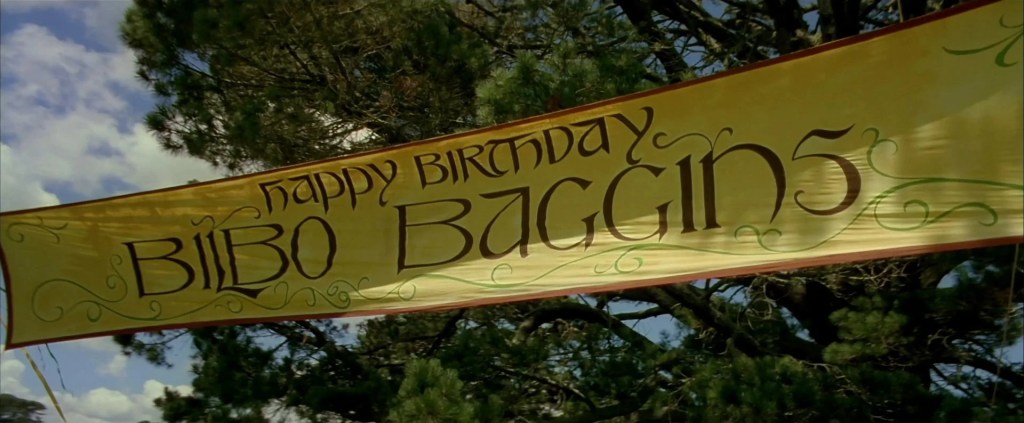
So why not celebrate occasions where the meaning is as clear and sparkling as Caribbean waters, and as fun and uncomplicated as a Hobbit’s birthday party? And let’s not forget, themes worthy of really kick-ass RPGs.

Talk Like a Pirate Day

Those of you have been around a couple of weeks might remember that I made a character using Pirate Borg a while back. That was by way of familiarising myself with the game, the setting, the character classes and the general rules. And all of that was in the service of a Talk Like a Pirate Day one-shot on September 19th.

I was the GM for this game so I never ended up using Isabella “Butcher” Fernando, the buccaneer I created for that other post. However, we did have another buccaneer in the party, recently returned from hell, where the devil didn’t want her, was Eliza “Bad Omen” Rackham. She made an incredible entrance (her player was unavoidably detained so she appeared about an hour and a half into the action.) As though rising from Davy Jones’ Locker, she emerged from he water by the other characters’ little row-boat and hoisted herself into it by grabbing their oars, shocking her companions who all knew she was dead. Eliza was, surprisingly enough, the most normal member of this cursed crew. As well as “Bad Omen,” we had a couple of skeletons, one a swashbuckler and one a zealot, a vampiric rapscallion and, a mutant great old one from another reality who also happened to be a sorcerer with a taste for human flesh. So, I decided to skip any town-based interactions with NPCs and start them off in medias res, facing down a British naval vessel who wanted to kill or capture at least three members of the small crew. Raymond, our vampire took the role of captain, despite being disadvantaged by the glaring Caribbean sunlight, while Jolly Roger, the Great Old One Mutant and our skeletons, All Bones McKeown and Hector blasted off broadsides.

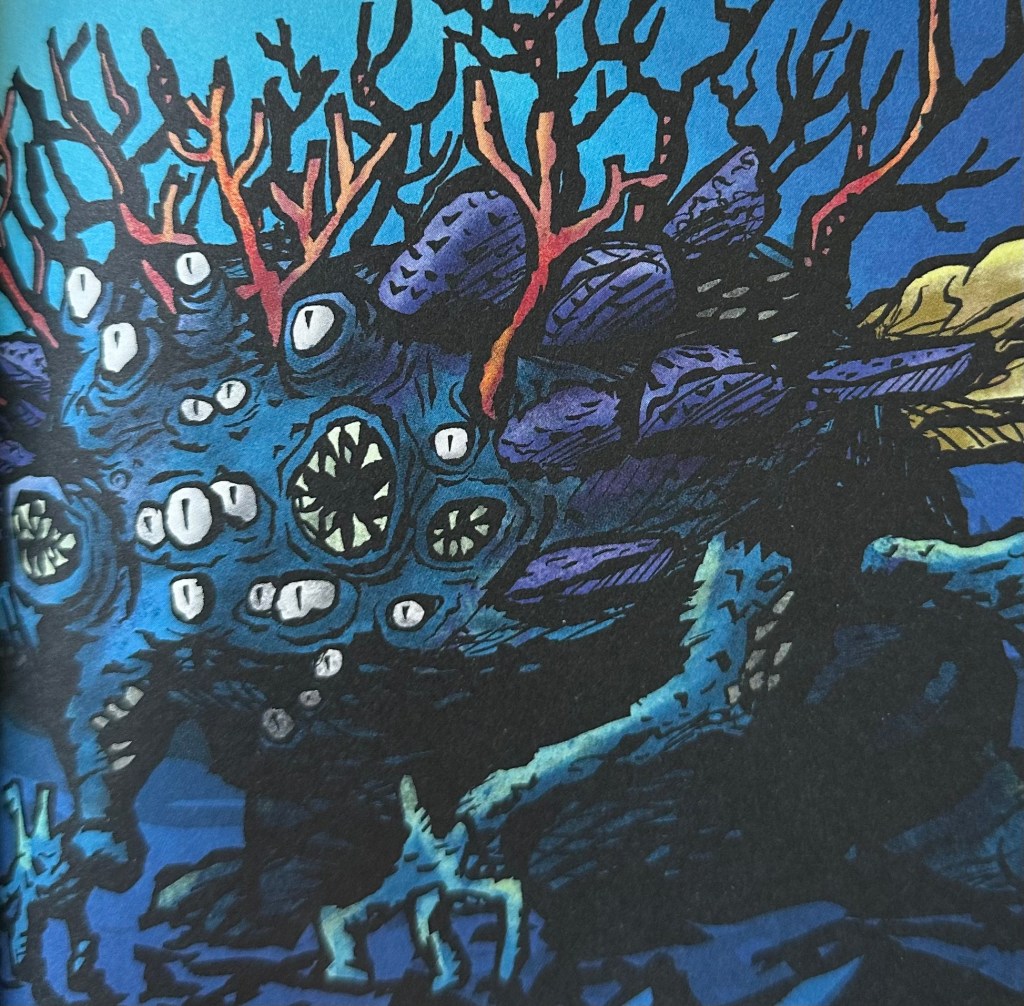
After they escaped that fight, we did a smash cut to them rowing ashore, greeting the resurrected Eliza and then to the carved door of a lost temple in the jungles of Black Coral Bay. That’s the island presented in the core Pirate Borg book as a place to start your adventures. I took three of the dungeons (Shrine of the Nameless Skull, Sanctum of Nameless Blood and the Lake of the Nameless One, which are all a part of the larger Temple of the Nameless One but are distinct nonetheless) described in the book and used those for the one-shot. It might seem counterintuitive to use three dungeons where one would have been more than enough for a one-shot, but, for the Pirates of the Caribbean type theme and for the satisfaction it would bring, I thought it was important. So, I did the first dungeon entirely in montage, finally describing how the PCs figured out the way through the temple door and let play begin there. For, the second dungeon I took out all but two main rooms, putting several major items and encounters into those rooms instead. The third dungeon, I left in its entirety and I’m glad I did because it had so many cool moments. These were topped off with a bunch of curses handed out by an ancient golden idol in the hold of a sunken Spanish galleon in an underground lake, the skeletons regaining their flesh, and All Bones McKeown being eaten by the giant Cthulhoid monster from the home-dimension of Jolly Roger. The survivors escaped through a maze of flooded underground tunnels and emerged into the creepy and atmospheric Black Coral Reef.

I loved it. It was a very good time and I think the players liked it too. One of them announced that they would happily play a full campaign of Pirate Borg, in fact. Their roleplaying was fantastic, because, as game designer and mutual on Instagram, sean_f_smith recently commented on one of my posts “everyone knows how to play a pirate.” I was worried about the strangeness of the PCs at the start, but the madcap elements introduced by their weirdo characters only heightened the atmosphere. Add in some pirate tunes and a few glasses of grog and we had a whale of a time. 10/10, might just go back to it before next Talk Like a Pirate Day.

Bilbo and Frodo’s Birthday

Did you know that it was Bilbo and Frodo’s birthday on September 22nd? The Bagginses of Bag End? Well, I didn’t. Not until the day before at least (although, I’m sure a younger me would have known it.) Anyway, I got in the Discord for Tables and Tales, our local TTRPG community and requested a Lord of the Rings flavoured game. It was incredibly short notice but our resident Tolkienite, Isaac of Lost Path Publishing did not shirk. He suggested a one-shot of a scenario that came in the core rules of The One Ring 2E from Free League. In no time at all we had swords, bows and axes being proferred in the comments and a full fellowship was formed.

In fact, we had five players and Isaac in total so it was a very fun table. We started off, on the night, with a spot of light character creation. Now, you need a bit of time for this in The One Ring. It’s not as time-consuming as D&D 5E character creation but it’s somewhat more involved, than say, Pirate Borg. Even then, with Pirate Borg, we had plenty of prep time and we had all met for a session 0 online a few days before so everyone had their characters ready to go. Since I had given Isaac only a single night to pull this together, (sorry Isaac) we had to include it in the session. By this point, we already knew this was going to take longer than one night to get through but we were all alright with that.

Actually, by the time we all had out characters ready we still had plenty of time to get into “the Star of the Mist.” The scenario began with our Player Heroes meeting Gandalf in the Prancing Pony! How my nerdy heart swooned! Isaac, producing an Oscar worthy performance as Ian McKellen as the old wizard, sent us off on a quest into southern Eriador where some folk had been going missing.

Our party consisted of two Dwarves of the Lonely Mountain, one of which was played by me. I said I was going to go full Nesbitt (as in Jimmy who played Bofur in the Hobbit movies) But I think I was more Belfast than that in the end. My guy is Frár, the Champion. The other dwarf is Berfa, a Treasure Hunter. We have a second Treasure Hunter, Porro, one of our two Hobbits. The second Hobbit is, Rollo, a Messenger and finally, our Barding, Dagstan, is a Warden. We set off into the wilds to find the source of the trouble and we managed to get a fair way into the scenario despite our time constraints. I don’t want to give anything away but it has Dwarves ruins, monsters in the water and a mysterious “she” who has so far remained unnamed. That’s a trio of Tolkien ticks right there.

As I said to the rest of the players, this session was special to me. It felt like the realisation of the dream of Tables and Tales; the ability to get a game together at a day’s notice for people to enjoy and to celebrate an important occasion, Bilbo’s onehundredandeleventh birthday!

I’m so looking forward to continuing this adventure. It had been a long time since any of us had played the system so there was a fair amount of scrabbling through the book for rules by all concerned. I feel like next time, we’ll know what we’re doing a lot better and, from recent experience, I find Free League games to pretty intuitive once you grasp the basics.

Other festivities

These are just the latest games played with a particular non-standard festival in mind. On May the Fourth, we played a Never Tell Me the Odds one-shot set during the events of Star Wars Episode Four, A New Hope. The PCs had to infiltrate the Death Star to rescue a certain Princess before the storm troopers got them, or indeed, before anyone else could rescue her!

Obviously, we are coming into the season for horror and spooky games as Halloween approaches. This is one holiday I can get behind. There are so many games that could suit this season that I am excited to start coming up with a few ideas.

How about you, dear reader, are there any occasions, events or holidays that you like to mark with a festive game? Let me know in the comments!

Case Closed

The suspects

I finished up two investigative scenarios in the last week or so. The experiences could not have been more different. I was the GM for one and a player in the other. They were in very different genres and systems too. I am going to have a go at dissecting them and trying to compare them, nonetheless.

D&D 5E – An Unexpected Wedding Invitation

I wrote a little about this short campaign here. At the time I wrote that, I didn’t even know it was a murder mystery, to be honest. It is a published, third-party 5E scenario so I could have looked it up, but I avoided reading anything about it online. Our wonderful DM was also the consummate host and was always wonderfully welcoming. She was a great DM too. We met in person over the space of eight sessions, more-or-less every two weeks. Our DM, who has run this scenario more than once previously, informed us afterwards that we took far longer to get through the scenario than other groups. Personally, I think that’s probably because of a couple of very important factors. Firstly, we had a fairly large group, five players and the DM. But, I think the second factor is what really pushed it so far beyond the normal length for the scenario. We were all chewing the scenery at every available opportunity. This group of players does not shy away from the first person, expansive, full-chested role-playing and it honestly does my withered heart good to see it every time we get together. We all had reasons for going ham as well. There was the promise of romance and, failing that, friendship. The possibility for court intrigue and drama was there as well. But, certain sections of the table were there to get their kisses in (in the infamous words of Lou Wilson.) The mystery was almost secondary to those folks.

As for the mystery itself; I won’t go into details. No spoilers except to say that there is a murder and we were not aware of that aspect going in. I don’t know if the DM advice is to keep that from the players until it happens but that was the case for us. Anyway, that was quite exciting actually. To discover there was an actual crime to figure out gave us all a shot in the arm! Up until then we had been essentially casing the wedding for curses and harassing the guests with weird, cryptic questions about the nature of one family’s bad luck. So, when we had a specific thing to investigate, it filled us with the sort of motivation that, I feel, the scenario failed to provide up to that point.

As for the investigation itself, it’s all about the NPCs in this adventure. That seems appropriate for a mystery game and this particular scenario was replete with well drawn NPCs who had distinct personalities, motivations, idiosyncrasies and voices (provided quite expertly by our DM.) You have the bride and groom, of course but you also have a cast of characters drawn mainly from the families on both sides. There are several set-piece scenes that are designed to allow the PCs to get to know the cast and our DM graciously provided us with portraits for all the main NPCs, hanging them on her DM screen. This was very helpful as there were a lot of them and without that constant visual aid, it would have been much harder to keep track. Our interactions with the NPCs seemed to give us positive or negative standing with them, leading to later conversations being more or less difficult for us.

The setting was integral, of course. An opulent country manse belonging to one of the families involved, surrounded by a generous estate on which they enjoyed hunting and picnicking. The adventure provided a couple of maps; more for reference than anything else as there was not a fight to be had at this affair.

As I said, I am not going into spoilers here about the murder, the suspects or the ending but there are a few things I can say. It seems as though the adventure comes with several prepared possible endings. The actions of the players, their standing with the major NPCs and their final pronouncement of who they figure did the murder all seemed to have an effect on that. This served to give it a slightly video-gamey feel, which was neither good nor bad but certainly leant a lot to the idea that everything was laid out in the adventure quite prescriptively.

Speaking of which, the actions of the PCs throughout felt a little restricted. This was purely a result of playing D&D 5E characters in a genre they were never meant to exist in. Few of our powers or abilities were of much use in this milieu and that felt a little frustrating at times.

Equally, there were several timed events that could not be prevented or changed in any real way by the PCs. Once again, this had the effect of making us feel more like spectators than active participants.

Questioning the NPCs, the most important part of the scenario, by far, and the only one where you could make inroads in your romantic or duelling ambitions, was difficult to say the least. Pretty much all of them could have done it, to be honest. That, by itself, is ok, but failing certain rolls here and there made the process feel fruitless at times. Without some mechanic to allow you to fail forward, it was always going to feel like this.

In the end, we failed to catch the killer. We fingered the wrong guy for the crime. This was due, in large part, to us interacting less with the killer than we might have, failing s couple of clutch rolls in interacting with them and the fact that we were left with too many potential culprits at the end that we couldn’t whittle down further with the evidence we had. Our failure was revealed to us in a sort of cut-scene right at the end. After all the effort we had put in, this felt like losing even though we had all enjoyed playing together around the table. The overall consensus from the players was that 5E was not the system for this scenario. It is not built for this sort of investigation and it led to an unsatisfying feeling from the result of the game even if we had a good time playing together, as we always do.

Blade Runner, Electric Dreams

Two blade runners posing like neon noir heroes in front of a stylised Wallace Corp ziggurat beneath the title of the Blade Runner Role Playing Game.
A photo of the front of my copy of the Blade Runner Start Set box.

I wrote a little about this game here while we were still playing it. At the time of writing that, we were only two sessions in and I was greatly looking forward to the next one. There were two players, playing Detective Novak and Fenna. We did this online, using Zoom and Roll20. It took five sessions of two and a half to three hours each. Having checked out other groups’ experiences with the same case file, I can say that’s about average. I could absolutely see it taking both less or more time since it would be dependent on how quickly the blade runners discover the key clues and how quickly they act.

Electric Dreams is also a pre-written scenario but, I think, importantly, it was produced by Free League as the intro to the Blade Runner RPG. There was never going to be a mismatch of scenario and system like we saw in An Unexpected Wedding Invitation. In fact, it felt as though this scenario was close to perfectly designed to bring players into the world and the system at the same time.

If you are a Blade Runner fan but not familiar with the Year Zero engine or RPGs in general, its got elements from the movies for you to geek out over and allow you to feel part of the megacity of LA by referencing the media you know and love. Meanwhile, it holds your hand through the early interactions with the mechanics, kicking things off with a few basic Observation and Manipulation rolls, teaching you that the more successes you get on your dice rolls, the better the result. As time goes on, the references to the movies remain strong, keeping the whole thing feeling like a natural continuation of or bridge between those stories and establishing a consistent and immersive tone and atmosphere. But you get more and more in-depth interactions with the rules as it introduces you to chase mechanics, combat, use of more complicated investigative techniques and character advancement.

And if you are an old hand at Free League’s signature rules engine, you will be good to go from the start. I was somewhere in between when we started playing. I am a big fan of Blade Runner and I have run Tales from the Loop before so I knew how the system worked well enough. But it was a long time since I had played it and I definitely had to look some rules up in play. This was generally fine, and didn’t take too long. What we also found, was that, once we looked up those rules once, we grokked them and didn’t have to keep referring to the rulebook, which was a refreshing change of pace for a group of players who have mainly only played D&D 5E together before (at least in recent years.)

Now, down to the scenario itself. As with the Wedding mystery, this was largely based around really well drawn NPCs, all of whom were potentially important to the plot. But, from the start, it felt as though the PCs knew who their main suspect was. They were rarely dissuaded from that notion, despite (or perhaps because of) the powers-that-be forcefully reminding them about the way they would like to see the investigation go. Since the characters were playing blade runners, cops in the LAPD, there were a number of NPCs that were there purely to back them up or chivvy them along. You had Coco, the medical examiner (who you also meet in Blade Runner 2049) and Deputy Chief Holden (who got his chest punctured in an interaction with Leon the replicant in Blade Runner) as well as any number of ad-libbed beat cops and the AI LAPD Despatch. The Wallace Corp is represented by one of their replicant executives who was immense fun to play. You also had a few NPCs that were witnesses and were never going to be anything but witnesses. The investigation was not designed to send the detectives off on the wrong path. There was no more than one red herring and that was there more to reinforce a theme than as a real way of derailing things.

What we found was that most of the sessions involved them trying to track the one suspect and discover their motivations and whereabouts. This led them into a web of corporate intrigue and moral dilemmas. That’s what Blade Runner should be about, of course, and Free League nailed that. The PCs were able to use the abilities of their pregenerated characters to do that pretty well. In fact, I would say that they were implausibly successful most of the time. On a couple of occasions they rolled so well that I felt compelled to reward them with information that would not, otherwise, have come up until later in the investigation. Moments like these allowed them to make incredibly effective leaps. What I liked about this scenario is that it allowed for that. There is a timeline of events that will happen at particular points of the investigation, but only if the PCs do nothing to prevent them. So, that doesn’t stop you moving them two steps forward, instead of the usual one. I think it actually encourages that sort of thing, in fact, as the timed events are generally pretty bad for the investigators or the other major characters.

We got an ending that was equal parts satisfying and open-ended, with the PCs making the moral, rather than the legal choice after the corporation took the law into its own hands one too many times. We might return to Novak and Fenna someday, maybe in the next published case file, Fiery Angels. The first one ran so well that I would definitely be confident to play the next one.

Conclusion

It is almost unfair to compare these two games, but it has been impossible for me to do anything else. In blade runner, you had a scenario where any outcome the PCs reached was likely to be satisfying and a system that supported the sort of game you were playing, investigative, character driven and darkly themed. In the other, the scenario felt a little too restrictive and was hampered further by a system that was never designed to support the investigative nature or the regency feel. I had fun with both, but I know where I would turn first if someone asked to play a mystery game.

Motivation part 2

Motivating characters

So, in the last post, I went on at some length about how you might be able to motivate players in your game, focusing mainly on what you do between sessions to get them excited to come back and do it all again. There were also times, I decided, when you shouldn’t overdo it, when you should just let people be.

When you do get them to the table, though, your work ain’t over. Obviously, I’m talking to the GMs out there, but this goes for players too. Because now it’s time to figure out why your character is out there smashing skulls or investigating murders or trying not to be sacrificed by some bloodthirsty, cthonic cult or whatever their weird job is.

Seems like an easy answer, doesn’t it? But it’s not. Your character’s motivation is a strange, ephemeral thing that you need to keep in your mind at almost all times to figure out what they are going to do in any given situation. You can keep your alignment, in my humble opinion. Alignment is such an archaic and ill-defined concept, it barely even begins to answer any of the questions raised by the “character” aspect of the sheet. It can be manipulated to mean almost anything. So it doesn’t really help to direct you when you are trying to decide whether you should back the werewolves or the elves (Dragon Age: Origins fans, yo!)

New characters

Games have all sorts of ways to help you figure out what your character’s motivation is going to be. At the creation stage you are picking things like backgrounds, bonds, ideals and flaws if you’re playing 5e, your drive, problem and pride if you’re playing Tales from the Loop, your Calling if you’re playing Heart. The game is usually trying to help you out. Sometimes it doesn’t have to do any more than describe your race and class, in fact. That’s often enough to set a player’s imagination alight. Before you know it, your dwarven barbarian has figured out that her driving force is a desire to put as much space between herself and the darkspawn riddled Deep Roads (I’ve been replaying Dragon Age: Origins recently, ok?) as she can, and to have fun doing it. Of course this motivation is likely to change many times during play, but if Bianca remembers that she never wants to set foot in the Deep Roads again from that moment on, all of her decisions are likely to be coloured by it, especially when she finally faces her fears and delves back down to Orzammar and the lost Thaigs to help out her party-mates in their quest to track down the origin of the darkspawn outbreak in the Korcari Wilds.

Here’s a question though. How much influence should the GM have on a player-character’s motivation. Well, like most things PC-related, I would say that there is a conversation to be had. This is often something I forget to do with my players at character creation to be honest. Especially in games where motivations are less well defined or less tied to the plot. In fact, I have received feedback in the past that I should be more willing to guide players in their choices of class in case they choose something inappropriate for the campaign, never mind motivations! But basically, what I’m trying to say is that you should always talk about it, especially if a player is interested in talking about it.

I messed this up recently and definitely reduced at least one player’s enjoyment of the first session of a new game as a result. Motivation is important! It colours everything so you should always be available to talk about what a character is doing this stuff for? Why would they want to? It’s not that they player is being awkward or a prima donna or making the game about them, they just want to feel a connection to the game through their character and they need a reason for that. Help them out, eh?

In gameplay

As I mentioned before, character motivations can change during the course of play. In fact, I would go so far as to say that if they don’t the game there is probably not much going on in it. Most sessions it is a good idea to make their most immediate motivation become “I don’t want to die!” At least once.

But this goes for long-term motivations as well. I think it is absolutely possible to retain your character’s initial motivation of “never wanting to go bak to the Deep Roads again,” while subverting that, undermining it, overcoming it. Maybe, once Bianca follows her companions back into the Deep Roads, she realises that, without here, they would have died down there, that actually, her Deep Roads survival skills are valuable and that she should help others by teaching them. I think GMs should be prepared for these shifts but players, equally, should be ready to make changes like this to their characters. Turn it on its head, fail forward if that’s what happens in the game. Push your character to do what is explicitly against their motivations sometimes and see what happens to them and the game as a result. Do the unexpected!

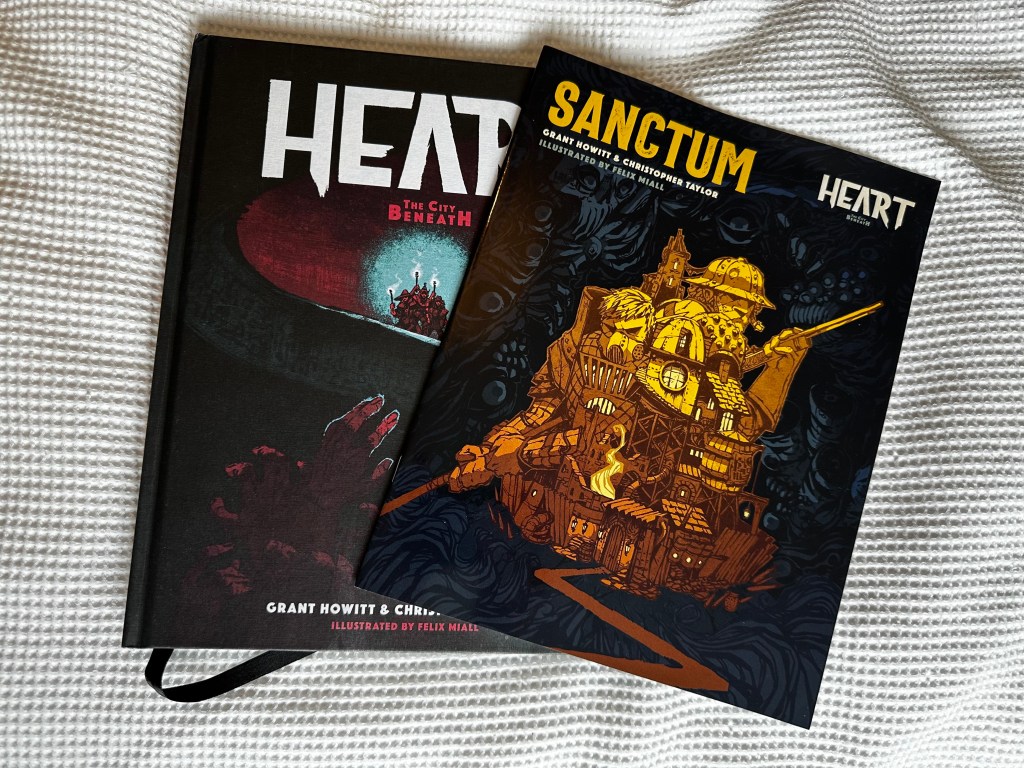
Heart

It always comes back to Heart these days it seems. Well, that’s because it has these great little systems built into it. The granddaddy of these systems is the Character Callings. You have a handful of them. Not too many to choose from: Adventure, Forced, Heartsong, Enlightenment and Penitent. They speak for themselves really, except maybe for Heartsong, which is the weird one that wants your weird character to follow the weird as deep as it will go into the weird subterranean other-world until you find some insight into the weirdness that’ll probably kill you or transform you beyond all recognition.

Essentially these are all the motivations your character might need in Heart. Their descriptions spell out the kind of thing in keeping with the theme of the Calling, that might have led you to delve into the red, wet Heaven. It also gives you a fun ability to reward you for choosing it, a few questions to answer to help you flesh out your character and focus you on the type of adventure/enlightenment/penitence etc you are espousing, and most usefully, both for the player and the GM, an absolute raft-load of beats, narrative or mechanical milestones you want your character to hit as your delves go on. The beat system is so useful for building a session and a story at the table together. It is particularly fun when one PC’s beat synergises with another PC’s completely separate beat or when the object of the beat comes up organically in play, without the GM being aware that it’s happening. It is motivation given mechanical and narrative form and I love it.

Seriously, go check out Heart if you haven’t already. It’s a good game. And it’s fun and gross.

That’s me for now. My motivation to write has ebbed and waned. It’s you time now. How do you like to motivate your players and characters?

Endings

It’s hard to say goodbye

It’s so exciting to start something new. There’s the anticipation for what’s to come, the tingling nervousness that transforms to delight in the beginning, the wonder at sights never before seen and actions never before taken. Beginnings are full of possibility and the feeling of freedom.

The end of something, though, can be just as exciting, but in a different way. Do you ever rush to the end of a novel when you’re about three quarters of the way through, eager to find out what happens? Maybe you’ve waited on tenterhooks for the final film in a long running series to be released, because you have spent so long with those characters and know their stories so well and you want the best ending possible for them.

That’s a lot to live up to, that pressure. And I think, in an RPG context, everyone at the table feels it to one extent or another. At least in the situation when you know the end of the game is coming. TPKs notwithstanding, achieving a narratively satisfying ending to a game, particularly a campaign that you have potentially been playing together for months or years, is hard. Of course it is. There is a pressure to tie up all those loose threads, make sure that big bad is confronted, achieve emotional closure for your characters and their arcs, maybe even leave a space for a sequel.

Not only that, but the real struggle is making it all the way to the end of a campaign! Sometimes your friends move away or have kids or there’s a global pandemic or whatever. Stuff happens. Understandable stuff, but stuff nonetheless. The thing is, of course, that just means the endings you do get are that much more precious.

How to part on good terms

One-shots

You’re there for a good time, not a long time. But that presents its own challenges to fitting in a great ending. If you have a suitably magnificent finale planned, how do you make sure you get your PCs to it in time?

Time

My answer here is easy; take a reading every thirty minutes or so to see if they are cracking through the adventure rightly or if they haven’t made it out of the frikking tavern yet. If they need it, push them along, end that scene and do a hard cut to the next one, bring in a major NPC from another scene to move things along. And if all else fails? Cheat! One-shots benefit from a breakneck pace in my opinion, and no-one will blame you if you bend a few rules to keep the action moving along. They probably won’t even realise.

Possibilities

Another good idea for a one-shot is to come up with a few possible big endings. This is obvious, of course, but it helps to think about where you might want the PCs to end up and if you have a couple of big set-pieces to choose from, that really helps with engineering the big ending.

Epilogues (1)

And if all else fails and you run out of time while they are nowhere near a satisfactory endpoint, epilogues can be a fun way to go. Just get each player to narrate the life of their character five minutes after the last scene of play, or five weeks or five years! Just as long as the events of the game have a major effect on their epilogues.

Campaigns

It’s really hard to give any advice on this. Let’s be honest, every campaign is going to be so different, even if they are published campaigns played by thousands of groups, no two of those ends will end up being the same. But, we’re here to discuss it so let’s do it.

Arcs

Character arcs are important in campaigns, long and short. Players want to see growth in their characters and not just the kind where they level up. They want to find the thing they had been searching for and figuring out that what they really found was the friends they made along the way. Sometimes they want to gain power and prestige and property to make them feel successful. Other characters change drastically due to the events of the campaign and come out quite different to the farm girl they were at the start. My advice on these is to make sure they are wrapped up in advance of the big finale if you are planning something like that. Give each character their moment in the spotlight in the sessions leading up to the end so they know they are all just as important in the building of the story together and that everyone can see them in all their glory/misery. Players remember that kind of thing forever. Its good to involve character stories in the finale too, if you can, but if you leave their big moment to then, they will rarely get the time to revel in it too much. I could be wrong about this but such has been my approach in recent times and it has tended to work out fairly well.

Threads

Loose threads can be left loose, in my opinion. There is an impulse in some games to ensure that the players get to experience everything. But, by the very nature of RPGs, it’s simply not always possible.

So, the party ran into an itinerant wizard in the third session. She asked them to explore her phantasm-infested old tower and return with certain writings that might have relevance to the overall campaign plot. But they never had time to do it or they got sidetracked. That’s just an answer they are never going to get! At least not in game. The GM could always explain where that was going after the end of the game I guess.

Of course, for narratively integral beats, I endeavour to bring them all home at the end. If they lost track of a vampire servant of the Big Bad that they were hunting through the Deep Dark Forest, bring him back in the last fight as backup for the big bad, maybe. If one of the PCs’ parents went missing earlier and they didn’t find them, have them in the cultist temple as a sacrifice to the evil demon they are summoning in the final scene. Complicate the scene! Make it so they have to rescue them!

Fights

As for the final battle, if you are even running the kind of game where you would have such a thing, elaborate set pieces, evocative or emotionally resonant locations and big fucking monsters usually do the trick. I would say, though, difficulty-wise, more enemies is usually harder than bigger enemies. One or two big monsters with lots of hit points and abilities will go down much quicker than one big guy and ten small guys. I guess I am mainly talking about D&D finale battles and other set pieces here. This is because action economy is king in D&D. So this piece of advice should be taken with advisement.

One thing that I always try to encourage is for the players to talk and cry out and banter during these bigger fights. Makes the whole thing way more exciting and personal and funny.

Epilogues (2)

I think epilogues for the PCs really work well at the end of a long campaign as well. For these ones, I generally want to know what the characters are doing a year or two down the line. How have their day-to-day lives been affected by the events of the campaign? Where are they? Who are they with?

End games

At the end of the Blades in the Dark campaign I played in recently, our GM ran us through a different game to give us a chance to ask some questions of our characters to see how things ended up for them. The World Ending Game is by Everest Pipkin. It is a cinematic game that imagines the last scene or episode of a movie or TV show. It frames a bunch of different types of ending scenes called things like “the Confession,” “the Reveal,” “the Revision,” “Tableaux.” It was a fun and alternative way to treat the ending of a game that felt really personal to players and characters both and I would encourage others to use it to wrap things up for their own games.

Conclusion

I still find endings hard but I like them more and more. I have become much fonder of shorter more contained games of specific numbers of sessions. So it is a little easier to plan for. Also, sometimes, a character’s end is the best part, just look at Heart and its Zenith abilities, they will end the character, but they will also achieve the seemingly impossible. I love this idea for a couple of reasons, it brings the character and probably the campaign to a hard stop in the most amazing fashion and it is player driven. They have gotten themselves to the point where they want to use that ability, it is their choice to use it and it makes for the best ending for their character from their point of view.

How do you like to end dear readers? Do you like to go out in a blaze of glory or do you prefer to sail off into the West and remain Galadriel?

Beginnings

Where shall we start?

This is always the first question I ask myself when starting a new game. It doesn’t really matter if it’s a one-shot, a short series of sessions or an open-ended campaign; the beginning sets the tone for the whole thing. If you start your PCs off trapped in a haunted house with no prospect of escape and a murderous ghost hunting them, you have made a pretty firm statement about the kind of game you are all there to play (or your players will see it that way at least.) Equally, if you start with a scene from each character’s home life, interacting with their family members and discussing their everyday problems, you are establishing a sense that this is the type of game where that kind of thing will happen again (or you should be.)

You can use the start of your game to establish a theme too. Maybe its a horror game involving frog mutants who want to feed your players souls to their unholy tadpoles, you could start in their camp at night, describing a croaking, ribbiting chorus that grows in intensity and volume through the night, ensuring that none of the party get any rest. Embed in the cacophony the true name of a PC and you have the potential for fear and suspicion if not outright horror.

Control

Three sessions in, there’s one PC who has decided to attempt a bloodless coup on the streets of the town at the centre of your adventure, another who has set their heart on wooing one of your NPCs of lesser importance and a third who just wants to sit in the tavern and spread rumours about the sheriff being a cannibal. It can feel like you are out of the picture sometimes (and that’s not necessarily a bad thing, dear reader. The best sessions happen at the whims of the players.) At the start, though, you, as the GM, have control. It relates a little bit to the world building work you’ve been doing, or not doing. After all, you made up the place they start in, or at least, you read about it in a published sourcebook or module and interpreted it as you saw fit. You know the places involved, you know the relevant NPCs, you know the setup, even if you have no preconceived notions about how it’s all going to go down in the sessions to come. With that knowledge, you start with an advantage, for the time being, at least. Before long, you have to hand things over to your clever and inventive players and they’ll have burnt down half the Silver Quarter while introducing the roller skate to Spire.

But, more important than your behind the scenes knowledge, is the situation they start in. I’ve mentioned in medias res beginnings in the past. Frame the scene they find themselves in and make it tense or truly fantastical or horrific or action-packed or just evocative. Start in the middle! It is the one opportunity you have to do this. You set it all up and see how they react to it.

In the Death in Space one-shot I ran a few months ago, I started them off being ejected from cryo-sleep as they approached the main adventure location, a mysterious space-station. They each got to have a moment to describe their characters and I explained they were seeing the debris field surrounding the remains of a planet that was destroyed in the recently ended wars and that they had to guide the ship through it! But then I used a series of flash-back scenes to explain what they were even doing there. I don’t think that’s even the first time I have used the in-medias-res/flashback combo to get into the action as quickly as possible while also providing some much-needed context. It worked pretty well as I recall…

It’s a fun way to get them all rolling dice quickly and failing quickly too, which is usually pretty important in a one-shot horror game.

Intros

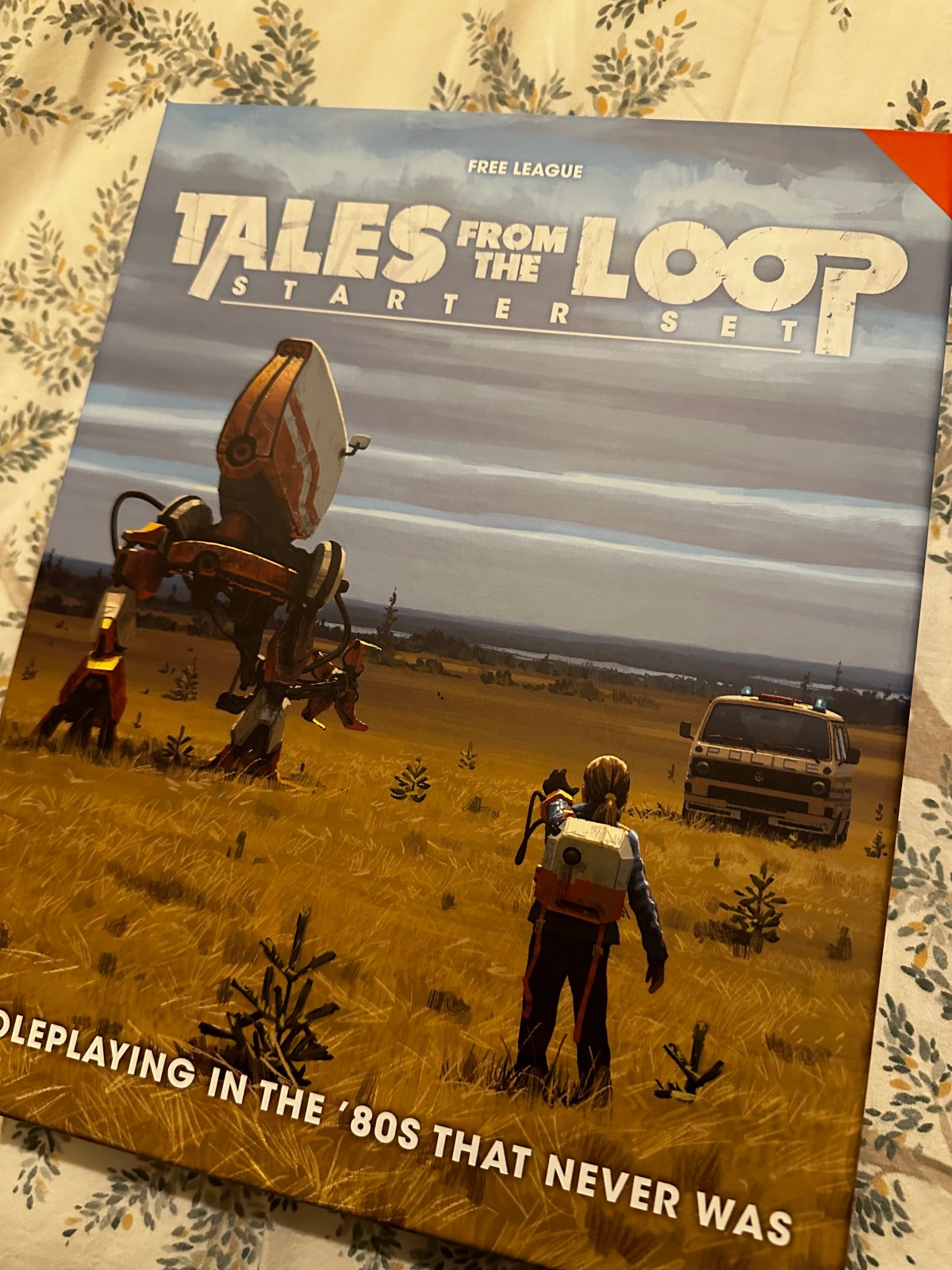
Tales from the Loop wants you to put the kids, the players’ characters, at the fore from the get-go. And deservedly so. These kids are created to have people who are important to them, problems that consume them in their regular lives, drives that motivate them and things they’re proud of. They’re rich and three dimensional characters before they ever get to the table. So, the game insists that you start a mystery (what TftL calls adventures) with a scene belonging to each and every kid in their home life or at school, with NPCs that are important to them, family, friends, mentors, that sort of thing. This is where the players get really invested in their characters. They have genuine and heartfelt interactions with the people of significance to them and they begin, immediately, to find their voice and their personality. It’s probably the best thing about a game that has a lot of good things going for it.

I stole the technique for the second campaign I ran in my Scatterhome world. It took place on the northern island of Erlendheim. The PCs all knew each other at the start since they began at 8th level and, in the fiction, had an adventuring party for many years, long ago. The adventuring life long behind them, I asked them to describe their mundane lives as a farmer, an advisor to the Jarl, a guard sergeant and a village priest and made sure to include people and places that were important to them. I focused on who and what they loved because I knew I was about to fuck with all that.
I had learned a lesson, you see, dear reader. Oh yes. For those of you keeping studious notes, you will recall I described the start to the first campaign in Scatterhome, when I drowned the island nation and erstwhile homeland of the PCs, Galliver, off-screen, before the start of the game. They didn’t care about it, and I can’t blame them. I had never given them a reason to.
In Erlendheim, they were more focused on saving the druid’s kids, ensuring the safety of their families and homes, protecting their futures.
Tug on those heart-strings, GMs.

Scenic

There is a subtle art to the transition from the start of an adventure to the meat of it. Or there is if you don’t subscribe to the philosophy that adventures should happen in scenes.

Usually, the end of a scene is obvious in a movie or tv show. It normally shifts perspective or location or time. So, if you want to do something similar in a game, someone needs to just say it’s over and move to a new scene. Sometimes that’s the palyer who wanted the scene but usually its the GM. I would rarely have done something so bold as to declare the end of a scene in a game of D&D as a more trad DM but it’s so freeing to do it! Just like you framed that first scene at the beginning of your game, you soon realise that you can frame and end any scene at any time (within reason.)

Looking back at the Tales from the Loop example from earlier, I noted that each kid gets a scene about their home life. Together with the player, you describe the kind of scene it is going to be, improvise it and end it when it feels right. When you move on to the investigation part, you can cut to a scene with all the kids in it, where they are staking out the suspicious machine that appeared in the nearby field overnight to see who is responsible for it and end that scene when they have gotten everything from it they can. Easy.

Using scene structure is even built into some games. Spire and Heart use scenes, situations and sessions like other games use rounds, days and long-rests. They are left deliberately vague but some powers and abilities work only within the current scene or situation. I have embraced the vagueness and it didn’t even take any adjustment. It was instinctive.

In the next post I am going to write a bit about endings, which, in my experience, are so much more difficult.

How do you like to start your games, dear reader? Let me know in the comments.