A Perfect Wife

The writing is subtle and considered and evocative, the layout is spare but adds so much to the adventure as a thing to read and there is beautiful, idiosyncratic artwork throughout.

Weird Hope Engines

Earlier this year, in Nottingham, England, David Blandy, Rebecca Edwards and Jamie Sutcliffe brought together a selection of RPG creatives and artists to make an exhibition.

From the Bonington Gallery website:

Weird Hope Engines embraces the culture of tabletop roleplaying games (TTRPGs) to explore play as a site of projection, simulation, communal myth-making, distorted temporality, and alternate possibility.

Zedeck Siew, Amanda Lee Franck and Scrapworld were all major contributors to the exhibition but they lived far, far away from Nottingham. The trip would be costly. So, being TTRPG creators, they launched a project in the hopes that it would fund well enough to pay their way. It worked, and A Perfect Wife is the result.

Disclaimers

Dear reader, I have not run or played in this adventure. I received it recently in the post and I wanted to write about it. This is a review but only from a read-through.

There will be some spoilers so if you think you might want to be a player in this adventure, turn back now! Or don’t, I’m not the boss of you.

The Product
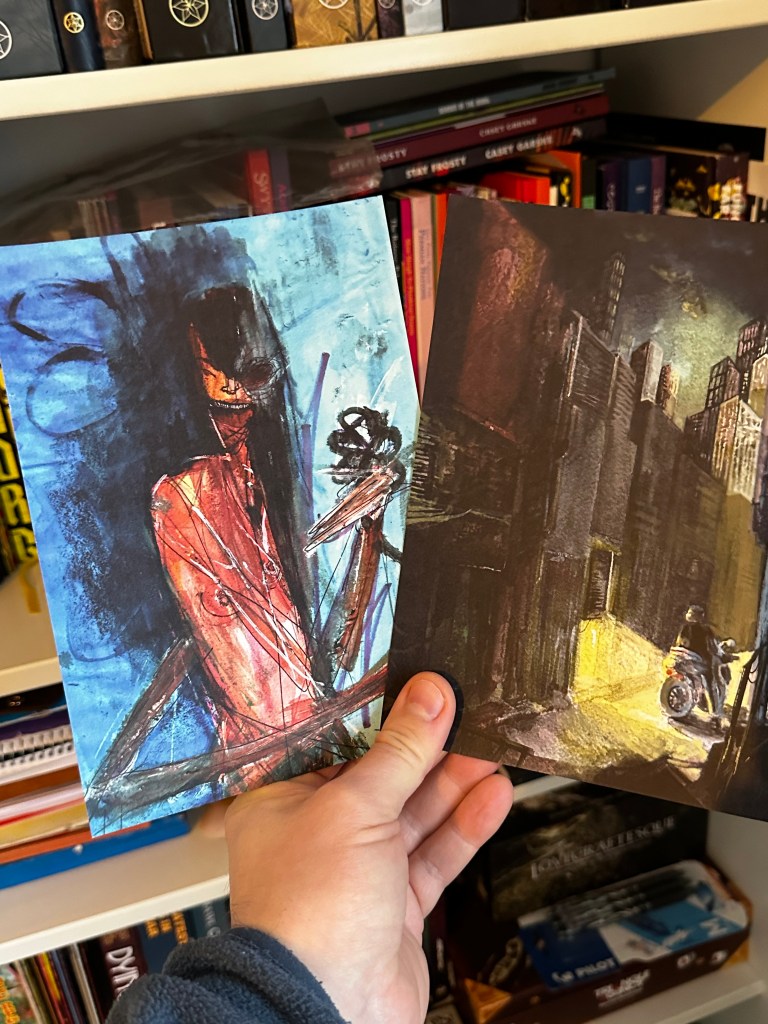
Two art prints: On the left, a spiky, crimson femme creature with wide open mouth, long black hair against a blue background. On the right, a person on a motorbike stopped in a pool of yellow light from a doorway in the backstreet of a city. The cityscape rises above and behind.
City Streets and Scary Beasts

A Perfect Wife is a 43 page OSR-style adventure from Copy/paste Co-op. I backed the Kickstarter for it and received a physical copy, along with a printed map of the adventure location and some art prints.

Speaking of art, that’s what this is. The writing is subtle and considered and evocative, the layout is spare but adds so much to the adventure as a thing to read and there is beautiful, idiosyncratic artwork throughout. All three creators contributed illustrations and all three styles are distinct but never clashing.

The Adventure

Inside cover of A Perfect Wife by Zedeck Siew, Amanda Lee Franck and Scrap World. Illustration shows an owl-like bird in white against a dark background.
Bay Owl

We start with an explanation of the recent disappearances in this inner-city Malaysian (actually I don’t think its explicitly spelled out anywhere in the body of the adventure that its set in Malaysia but its heavily implied) neighbourhood. What it boils down to is the following three points, what the locals have learned:

Head indoors if dogs are whining
Walk on by if your name is called
Do not search for the baby crying

It’s pretty clear that something unusual is happening in the area. Already the mood, the setting, the premise are very different to any other OSR adventure I’ve ever read.

We move on to character creation next. The PC outlines are based on how they know Sara, the woman they’re meeting in front of the Desa Damai Wet Market. They know they are meeting her before they even know who they’re playing.

They get six choices. There’s a journalist (interesting skill: speed-reading), a social worker (eavesdropping), a private investigator (knife use), a security consultant (joking), a faith healer (bargaining) and a barrister (drinking.) Each has a few skills, and maybe a weapon or a useful contact, not to mention a wonderful line-drawn portrait.

So, the players choose their PCs and the opening scene moves on…

Basic rules are included on page 9. These are almost identical to Into the Odd. In the front of the adventure there is a “Mechanically Inspired by” section that lists Into the Odd but also includes Liminal Horror and the Lost Bay. I don’t know those games and I am not sure how they inspired the mechanics but there is no doubt that, essentially, rolling works the same as in Chris McDowell’s game.

The next scene introduces two major NPCs at the Peaceful Heart Community Centre. It is not spelled out, but assumed that Sara led the PCs there to meet Yinyin. Then we learn what the PCs are being recruited for. Sara wants them to find out what happened to Tet, a refugee and father to young Yinyin. Sara and Yinyin are described in their own NPC section, but the mysteries only deepen…

This adventure deals with some themes of supernatural horror, class inequality, the plight of refugees, violence against women and children, pregnancy and miscarriage. You get the first hints of these, let’s be honest, pretty heavy subjects here. A GM and their players will have to have a frank discussion about this before starting to play A Perfect Wife.
Beautiful keyed map and encounter tables (day and night) for Desa Damai. Point crawl location.

The daytime encounters are a delight. I’ve been to Malaysia only once and that was on holiday on Lankawi Island. I can only imagine how different an inner city neighbourhood of a metropolis like Kuala Lumpur is to that so I don’t have any real frame of reference for this, but the occurrences in this table have feel genuine. I can picture the old man feeding the stray dogs from styrofoam containers on the side of a crowded, narrow street with no footpaths and not enough shade. I can feel the tension created by gang kids surrounding you and shaking you down for whatever cash you’ve got on you, while you sweat and make excuses.
These encounters also serve to also introduce factions and NPCs of note although they are described in greater detail later.

The nighttime encounters are far more threatening and sad. Even the direction on how to use the table seems designed to put you on edge. In the daytime, you roll whenever you walk down a new street. But at night…

Whenever you turn a corner, roll

Just reading them makes me uncomfortable. Machete wielding, motorbike riding gang members are so much worse than the kids from earlier in the day. And what is a baby doing crying behind that pile of rubbish in the middle of the night?

Straight fter a short description of the two main gangs, the combat rules crop up… just in time. The gangs are described beautifully and succinctly. The combat rules are brief and equally Odd-like. They include more than one admonition regarding the dangers of violence, especially gun-violence, which is likely to draw the attention of the authorities.

The next ten pages are devoted to introducing us to the people and locations of Desa Damai. We get a gorgeously illustrated selection of refugees, police, witnesses, thieves and one particularly supernatural and disturbing infant. These represent the people you might run into on the encounter table as well as those your PCs might want to talk to in relation to their investigation. Each of them can help or hinder in some way and they all have their own motivations.

Sara’s baby, illustrated on page 23 with thick, black, childlike lines over a wash of dirty scarlet, is a true horror, the kind of creature that could only have sprung from the collective trauma of folk beset by the tragedies and indignities experienced by generations of women and children. It is both heartbreakingly sad and terrifyingly obscene at once. It only serves to illustrate, yet again, the importance of discussing tone and content as a group before setting out on this adventure. Be warned.

Pages 30 to 33 describe the Pontianak, the nightmare creature at the heart of the adventure as well as the initial encounter with her. Where the baby is a tragic and sadly pathetic entity, the Pontianak herself is actively menacing, dangerous and hidden in plain sight. She also has a tragic origin of course, and that’s central to the adventure, but there is no doubt this is an enemy to fear too. There’s more creepy and horrific illustrations here, one depicting the creature in her human guise and one showing her monstrous form. Again, the art in this module is doing a lot of the heavy lifting. Its remarkable.

As terrible as the Pontianak is, oh so much worse is the husband, the architect of this situation. Rich, well educated, greedy, I imagine him a delight for a lucky GM to get to role-play.

In the appendix, Siew introduces the non-Malaysian reader to the concept of the Pontianak, the symbology that is inherent in the creature, how she has been portrayed in media, the way she is perceived in Malaysia and the role of the weird and supernatural in Malaysian life. This is all fascinating stuff and feels incredibly useful in allowing the GM especially to do justice to playing the NPCs in this adventure. It is of the utmost importance to understand that locals would not be rolling sanity checks when encountering ghosts.

Here, ghost stories do not function as supernatural or speculative fiction. Ghost stories are realist. They do not belong to the Weird; they are not designed to arouse a sense of the uncanny or numinous.

I feel like I can sympathise with this point of view to an extent. Growing up in Ireland, no matter how atheist you are or scientific you claim your brain to be, deep down, you would still instinctively avoid a Fairy Fort and take tales of banshee wails predicting deaths at face value.

Tucked away at the back are the optional gods. I guess I can see why they are optional; they introduce a level of spiritual and religious superstition that some tables might prefer to avoid. But, in my opinion these gods and offerings are all gold, some of the best stuff in the adventure. It has the potential to heighten the PCs’ dedication to the plot and may even provide ways for them to boost a flagging investigation.

Conclusion

The back cover of A Perfect Wife. It reads, “Welcome to Desa Damai. The first disappearance was over a year ago. Now it happens with vicious regularity—every fortnight. The neighbourhood is tense. Most agree the following precautions work: 
- Head indoors if dogs are whining. 
- walk on by if your name is called. 
- Do not search for the baby crying. 
Illustration of an owl like bird in white against a dark forest.
A Bay Owl Again

I really want to run this now that I’ve read it fully. It’s different enough from the normal sorts of scenarios I would play that it has greatly piqued my interest. The NPCs, the creature and the situation are compelling and fascinating. Also, the real-world setting is incredibly evocative and, though presented and described sparsely by these artists, I feel like it still shines.

My players and I definitely enjoy a set of pre-generated characters that are tailor-made for the game we’re going to play. You get that in this, but you also get the pleasure of rolling up elements of them and defining important personal characteristics yourself.

I’m a fan of the incredibly rules-lite mechanics at use in A Perfect Wife, and, although I think they can be used to conduct an investigation like this, I’m not certain that a system designed for investigators wouldn’t have been better. A lot of the work is left up to the GM to ensure the leads keep coming as many of the connections between NPCs, locations and events are implied rather than fully spelled out, but I would like to think that also allows for a great deal of leeway to be given and for flexibility when necessary.

Finally, I’ll reiterate the need to discuss safety tools and tone and content before starting. I know several players, me included, who have been personally affected by themes in this adventure. Some will be happy to play anyway, some won’t, but we’ll have to talk it out first.

Talk Like a Pirate

It’s almost time again for the second annual Tables and Tales Talk Like a Pirate Day Pirate Borg One-Shot or the TTTLPDPBOS as I like to call it.

TTTLPDPBOS

It’s almost time again for the second annual Tables and Tales Talk Like a Pirate Day Pirate Borg One-Shot or the TTTLPDPBOS as I like to call it. Friday September 19th is the big day, of course!

Illustration of a circuler door of gold with a skull in it. Also has the name of the adventure "the Nameless Temple."
Illustration of a circuler door of gold with a skull in it.

We had a great time last year playing a pared down version of one of the adventures in the Pirate Borg core book. I did a Pirate Borg character creation post beforehand and I gave a run-down of the one-shot in this post later.

New Options

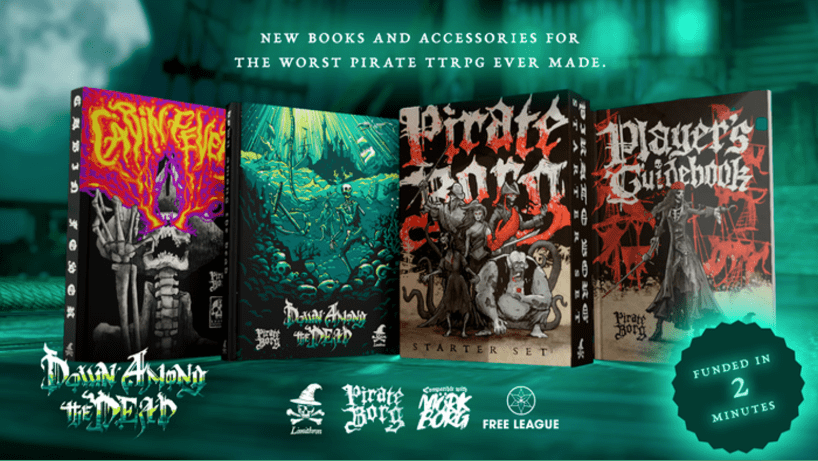
The covers of Cabin Fever, Down Among the Dead, the Pirate Borg Starter Set and the Player’s Guidebook. From the Kickstarter page

Last year all I had was the core Pirate Borg book, which I’d picked up from my friendly local game store, Replay. Since then Limithron had a Kickstarter campaign to launch a starter set, Down Among the Dead, a proper expansion with new player options, monsters and adventures and Cabin Fever, a book of third-party creator classes, options, rules and scenarios, all great new products for their flagship game. They recently released the beta PDFs for these items to the backers and I’m so glad they did because I am going to get so much use out of them for this year’s one-shot. Check out the whole kit and caboodle here. You can still pre-order it if you feel so-inclined. I would encourage you, of course, to go and support these small indie creators trying to produce quality products during an incredibly volatile and unfriendly trading climate. On that Kickstarter page, you can also read a little about the challenges they are facing in production and shipping, if you need any more reason to support them.

Trapped in the Tropics

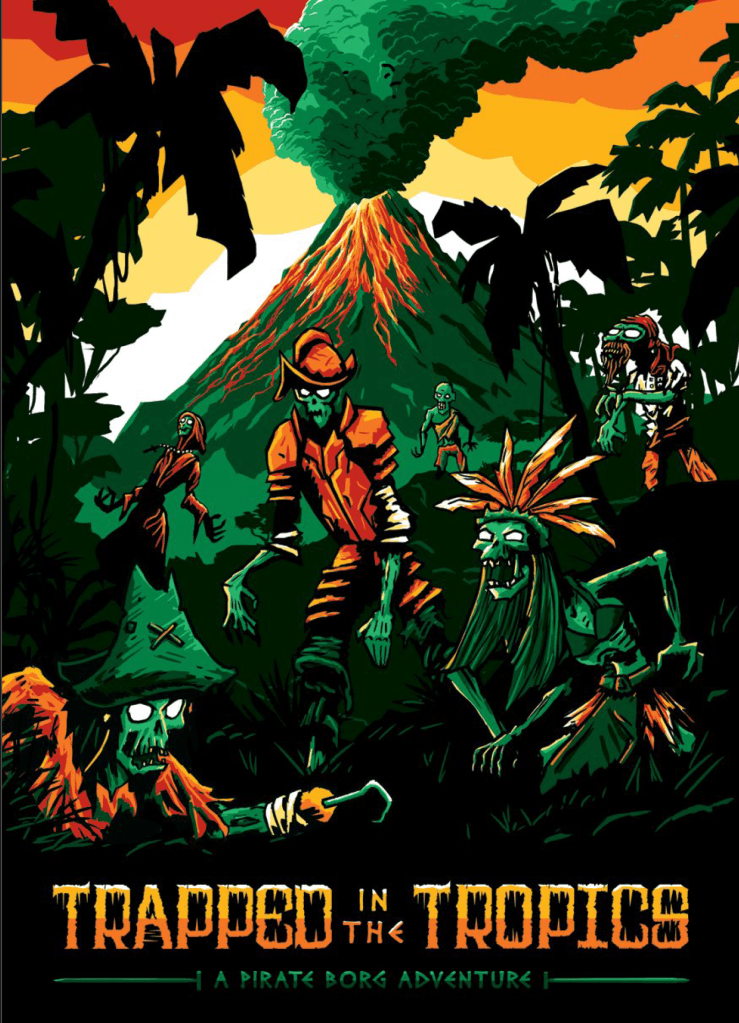
The cover of trapped in the tropics. undead in a jungle with a smoking volcano in the background

The Starter Set includes a bunch of maps, character creation guides, dice, tokens, reference cards, a Player’s Guidebook, and a starting adventure, Trapped in the Tropics. I really wish I had all of those little physical extras to play with at the table but they are not going to be here in time for the I’ve been looking at the TTTLPDPBOS, so I’ll have to wait. I have been reading through Trapped in the Tropics. It’s designed as a teaching adventure with great tips for both beginner GM and players. It lays out the structure of the adventure in a very easy to understand format, includes notes on tone, style and inspiration and includes advice on how to use it at the table in both multi-session and one-shot forms.

As an adventure, it’s set very much in the OSR mould. It provides potential hooks, interesting locations, important NPCs, encounter tables and enemies, without a strict plot or step by step list of occurrences. I’d love to play it as a longer form game. It looks like the sort of relatively free-form OSR module that players could really sink their teeth into and make their own. However, the one-shot option is not as interesting to me. I like parts of it, but I’m struggling to come up with anything from it that might make for a memorable finale.

Cabin Fever

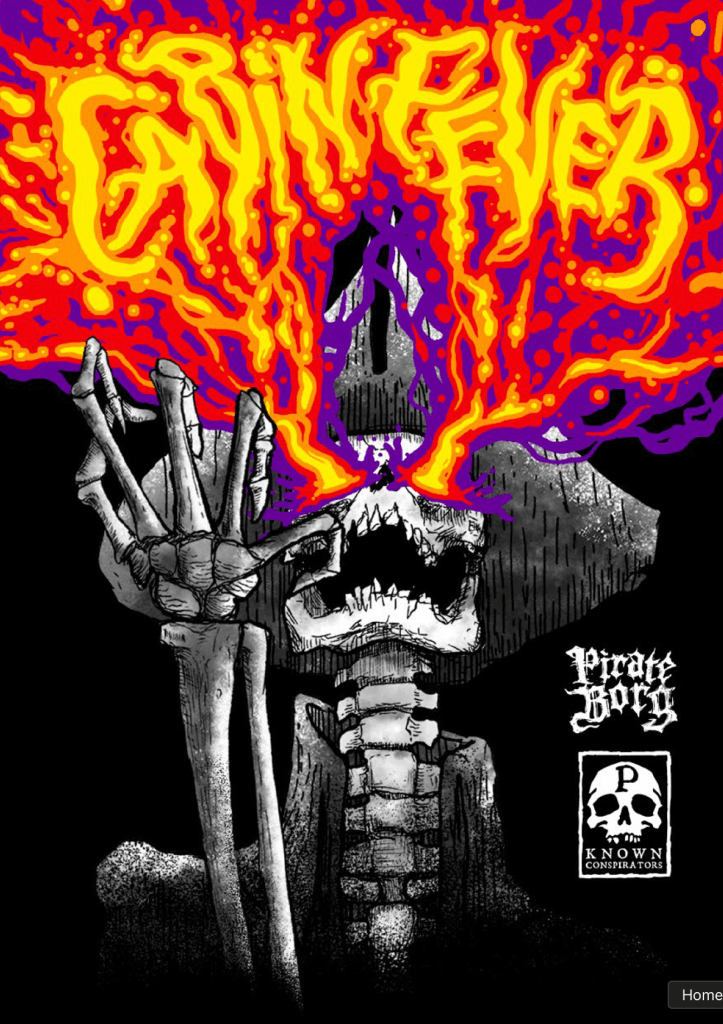
The cover of Cabin Fever, a skeletal pirate with a tricorn hat and the words "Cabin Fever" erupting in fire from his eyesockets
The cover of Cabin Fever

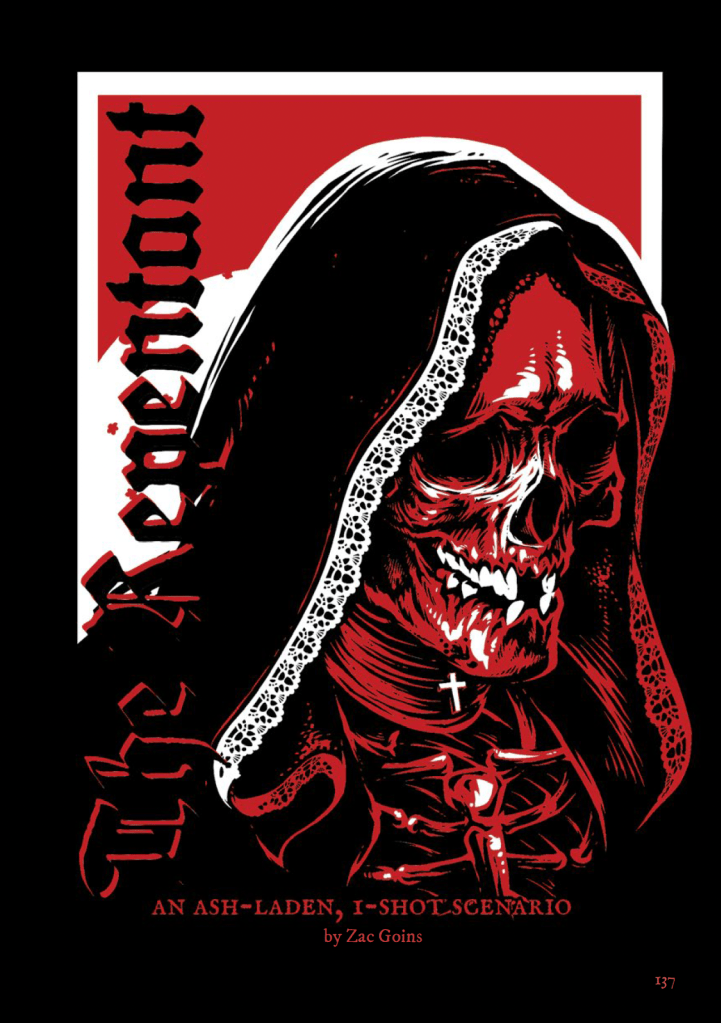
Then we’ve got Cabin Fever, a standalone book of content from third-party creators that was kickstarted along with the Starter Set. This is a treasure chest of a book, brimming over with little gems like new player classes (e.g. the Angler, the Barnacle, the Sulphur,) a bone construct dice drop boss generator, some truly Forlorn Encounters (e.g. Stowaway Imp, Baroness Malaria, Parasitic Beard,) and most importantly for my purposes, a selection of excellent Pirate Borg adventures. My appetite was whetted as I realised that one of these was specifically designed as a one-shot. It’s largely a location-based, exploration adventure in the mould of Pirate Borg, with a central ship, a large number of undead and a crew full of scum. And, importantly, the adventure includes elements that I feel could make for a really great finale to our TTTLPDPBOS. It’s ideal, really. So, I’ll be breaking out the tiny fake spyglasses, eyepatches, and plastic doubloons to help us get in the spirit for “the Repentant” by Zac Goins on September 19th.

The main illustration for the adventure, "the Repentant." A skeletal head in a hood with a cricifix around at its throat. All in red, white and black.
The main illustration for the adventure, “the Repentant.” A skeletal head in a hood with a cricifix around at its throat. All in red, white and black.

What about you, dear reader? How will you be celebrating Talk Like a Pirate Day this year?

Death Match Island: Postponed Again?

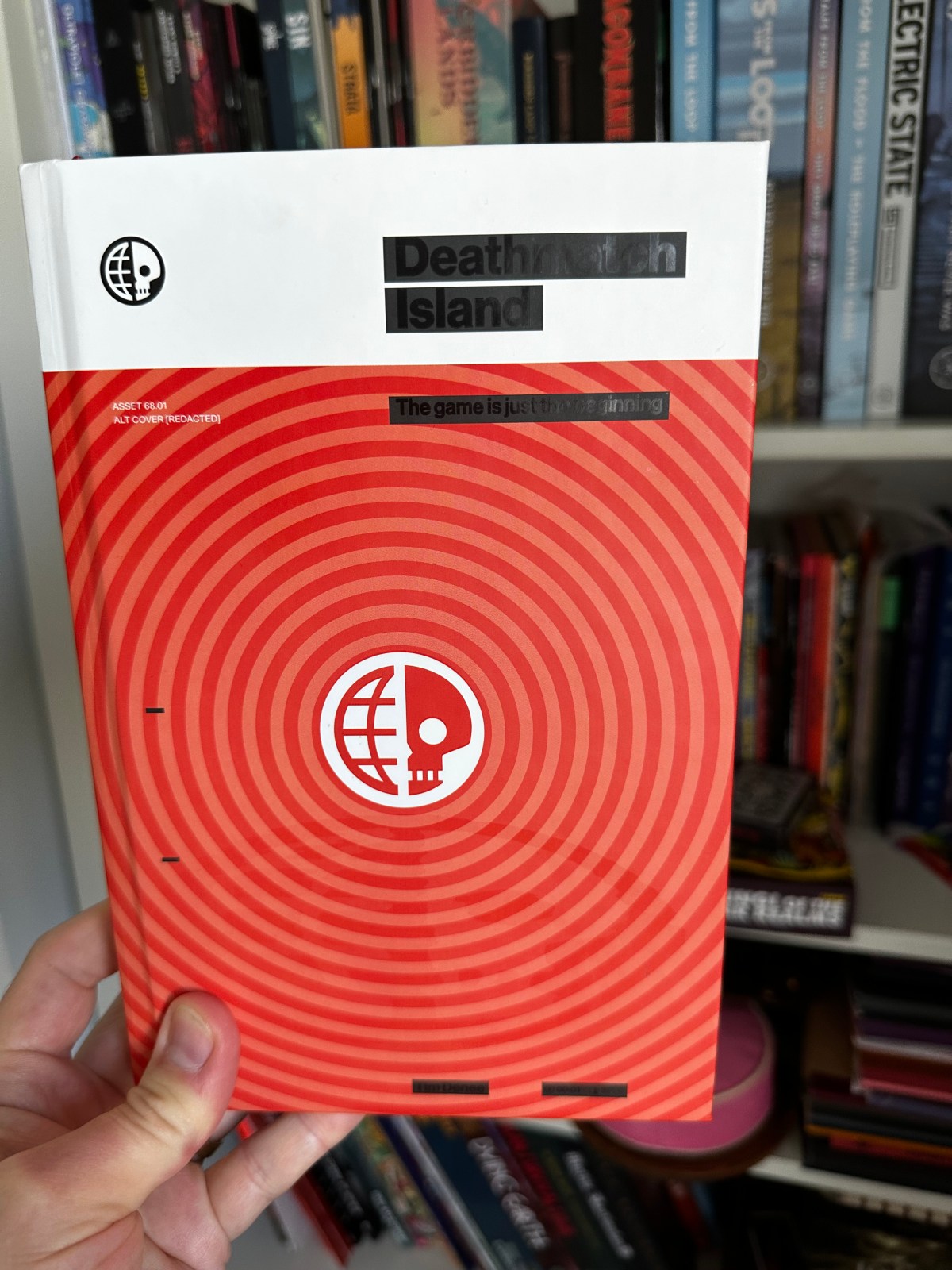
I’m not traveling this time, dear reader, but I have a pretty busy week on my hands. Tonight, I have a Heart one-shot, specially requested by fellow Tables and Tales GM, Shannen. I have been beavering away at the preparations for that the last couple of days. This weekend, my nieces are visiting and I’m planning another one-shot for them, too. Also, honestly, after the last mammoth character creation post for the Wildsea, I was simply not able to dive right into another one straight away, anyway. So, I took a break, and decided to focus on the important things in life, finding ever more inventive ways of allowing the PCs in this Heart one-shot to bring poetic ends to themselves.

Death Match Throwback

The next character creation post on the agenda is for Death Match Island. So, as a consolation, please take a look at this post from last year where I go into the rewards from the Death Match Island crowdfunder and also the rules and stuff:

Between the Ultraviolet Skies

Armadilloid Encounter

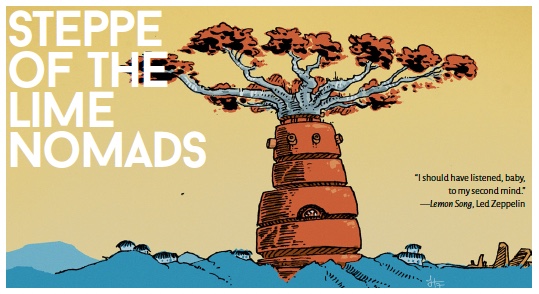
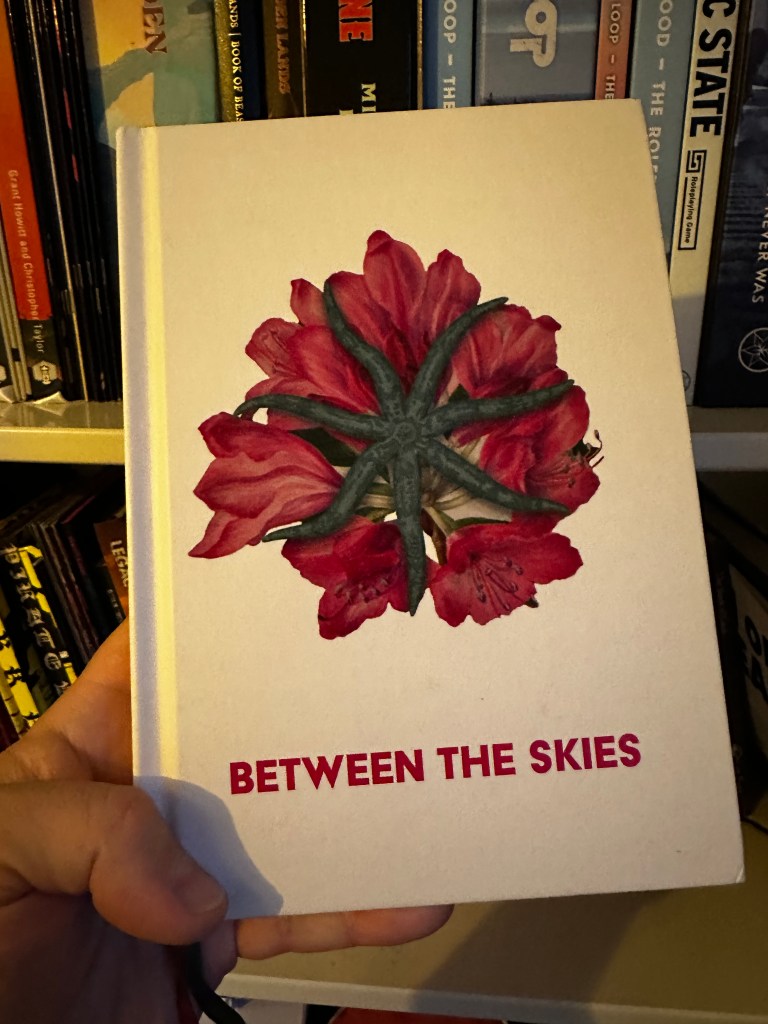
At the end of the last post I wrote about my current Ultraviolet Grasslands campaign, I noted that the caravaners were on the cusp of an encounter with some Armadilloids. The section of the book describing the Steppe of the Lime Nomads has a list of random encounters just like all the other sections do. And, just like the other ones, the detail you get about an encounter is minimal, to say the very least. You might get a level for the creatures or NPCs encountered, and maybe a word or two of description. This leaves quite a lot in the hands of the GM and, potentially, the other players at the table. Perhaps the characteristics of the encountered entity would emerge organically in play. Maybe the GM will have prepared specifics for each potential encounter, with regards to physical descriptions, motivations, weaknesses and strengths for instance. In the case of this encounter. I knew I did not want it to be an automatically violent one. I wanted the Armadilloids to be sentient but different enough as to be inscrutable. I could probably have just written a description, but I have Between the Skies, so why should I?

I took to the Entities chapter of the book and started rolling. I started with a roll on the Size, substance and form table. I rolled a 7 for size. That gave me Very large (giant-size.) I liked this. It immediately brought to mind the Armadillo super villain first encountered way back in Marvel Secret Wars II some time in the 80s. So I had a picture in my mind.

Next, I rolled a 6 on the Substance table, meaning they were Animal. That corresponded with my general idea so far, which was cool. On the Form table, I got a 13 on the d66 roll. That made them Bipedal (which is a word, that, when you say it out loud, sounds weird, we discovered.) It was still matching the picture I had in my head at this stage, except for the fact that these bipeds also had wings. For my purposes I thought it best that they be stubby vestigial wings. It’s the Grasslands, it’s not safe to fly there.

This next bit was so good. On the Weaknesses and Needs tables, I started to see the situation emerge. I rolled a 34 on the Weakness table, which meant they were Confined. Now in the previous session the players had rolled on the encounter tables in UVG and we had established already that there were ten or so of them and they were merely silhouettes on the horizon. They could see the Armadilloids so they were not obscured by any sort of physical trap. But a pretty cool phenomenon in UVG is “stuck-force.” These are invisible barriers and shapes and containers of nothing but force. They litter mainly the skies of the UVG, left over from a time long gone, when fantascience and magic dominated and their practitioners left these eternal artefacts dotted all over, making flying an incredibly dangerous prospect (as I hinted at above.) So, I came up with the situation where the Armadilloids had been trapped in a sphere of this stuck-force and had been unable to free themselves. The next table was Needs. I rolled a 62 on that, which gave me Directions. But I didn’t like this one so I opted for 26 instead, Escape. Perfect.
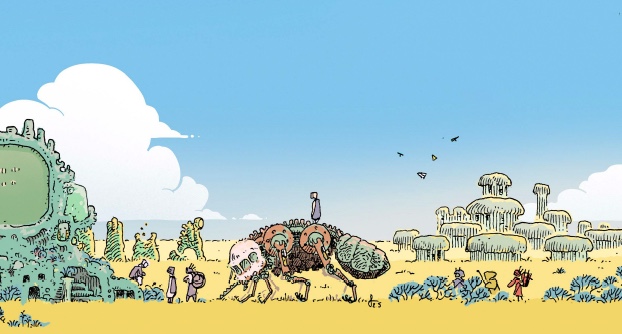
Next was Characteristics and details. These tables round out the looks and important idiosynchacies of these creatures. First I rolled a 21 on the Notable characteristics table. You know those big ol’ Armadilloids are rolling around like Sonic (I know Sonic is a hedgehog, ok? Just roll with it.) On the detail table, I got a 34, Tatooed. Adding a little more to this, we see that they are tattooed all over with the pictographic stories of their lives. I love this detail.

Next come a pair of Behaviour tables. I rolled on the Social behaviour table, which indicates their numbers, even though I already knew how many there were from our roll on the UVG tables. Why? Well, it also suggests the type of groups they habitually congregate in: Couple, Family, Herd, etc. I rolled a 6 and got Pack. This fit perfectly as well. I actually skipped the behaviour and current demeanour tables because I already had a good idea that they would be eager to be freed, some of them going stir crazy, rolling around inside the sphere, some simply sitting in the grass, and one of them standing with his hands raised against the stuck-force sphere trying to will his way out.

This next one was fun: Attacks! I rolled a 6 on the Mechanism of attack table, making it a Blast. The Attack keyword I rolled up was 33, Draining. So, from these words, I decided they would have a Charisma Draining Psychic Blast power. It never came up in play, thankfully. Why? Because the PCs figured out how to free them and then were invited back to their mushroom growing burros where they were rewarded with three sacks of Regular Mushrooms.

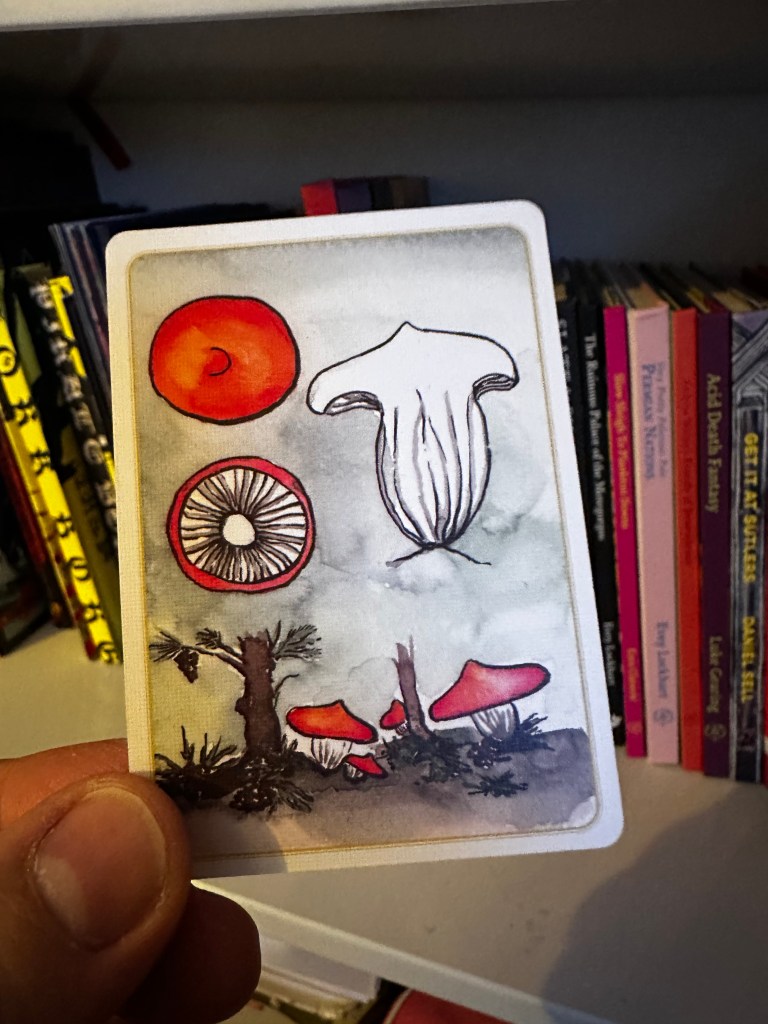
They also spent the night there around the Armadilloids fire, despite the fact the big orange guys could only speak in some brand of “meep meep” language. They all consumed copious amounts of magic mushrooms and got high as fuck using the wonderful tables in the appendix of Fungi of the Far Realms.

Since I rarely get much time to prep sessions these days, this method was really valuable. It allowed me to do what I needed to do on the train on the way to work, using the pdf of Between the Skies, an online dice roller and the word processor on my phone. I have been using Between the Skies for some other games too in the last few months, most notably our Spelljammer campaign. It has made for enormously memorable and unique encounters in that case. I can’t recommend it highly enough. Go get it on itchio or on Exalted Funeral!

Final Plug: Shadows Return

I backed a project from Ian Hickey of Gravity Realms last year, The Price of Apocrypha. It was a really successful Kickstarter, especially for a small, indie, Irish creator, and it was fulfilled and delivered incredibly promptly.

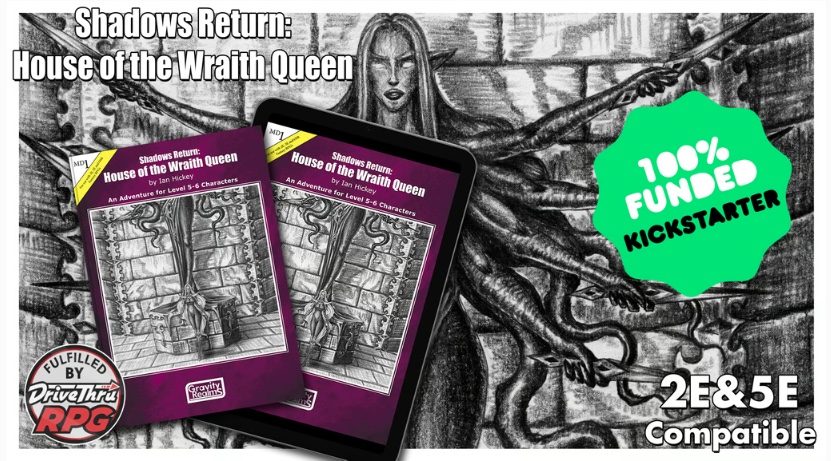
Well, Ian has another great project in the works on Kickstarter right now, Shadows Return: House of the Wraith Queen. Its a mega dungeon style adventure for use with Ad&D 2nd Edition, D&D 5E and OSR games. It’s fully funded but there are only a couple of days left of the campaign and you could still help it reach some stretch goals! Go back it!

As a final note, I have recommended a lot of books and products recently and I like to think I always do here on the dice pool dot com. I do this purely because I believe in the books, the products, the creators, not for monetary or other rewards!

So Rewarding

Surprise!

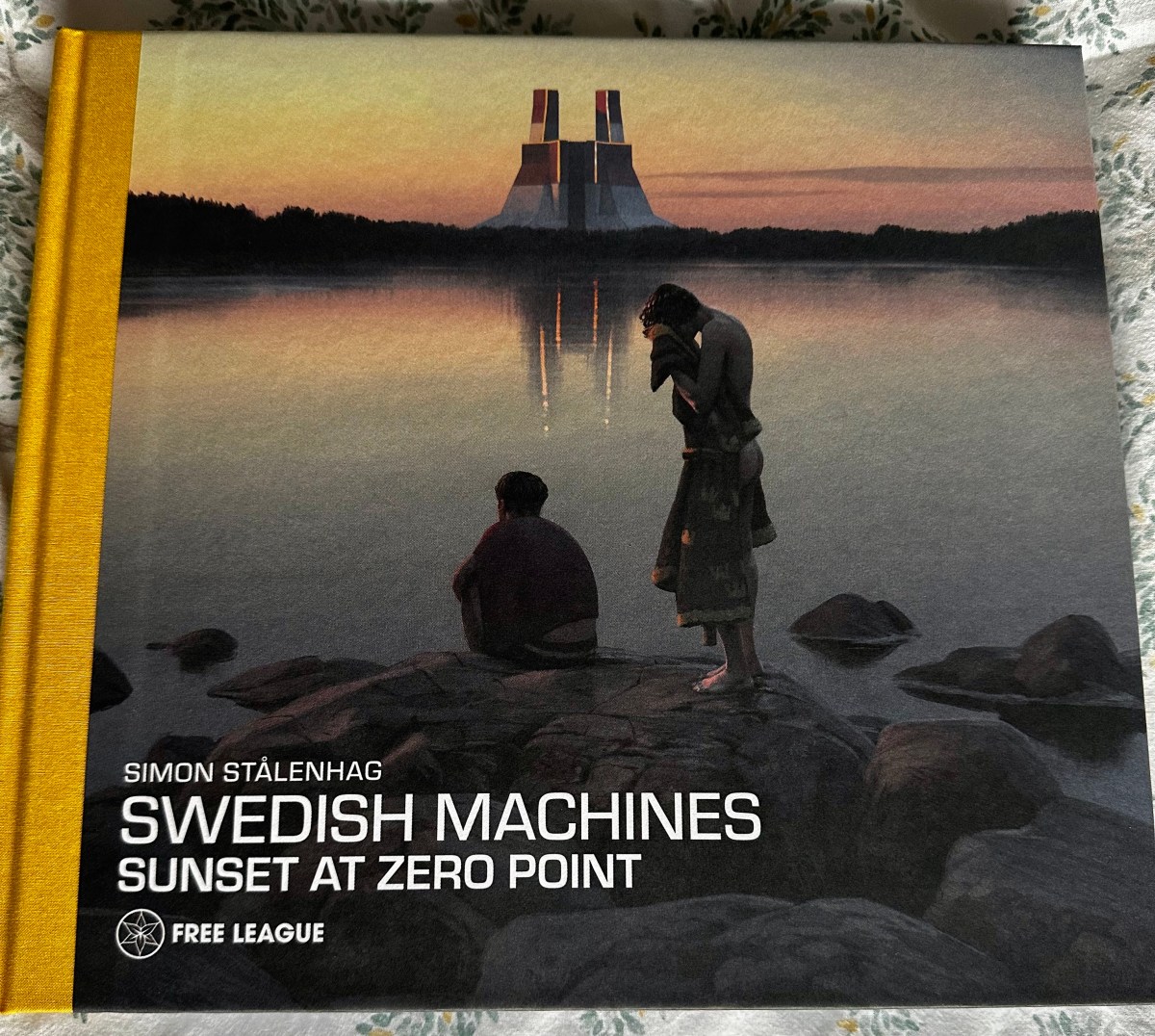
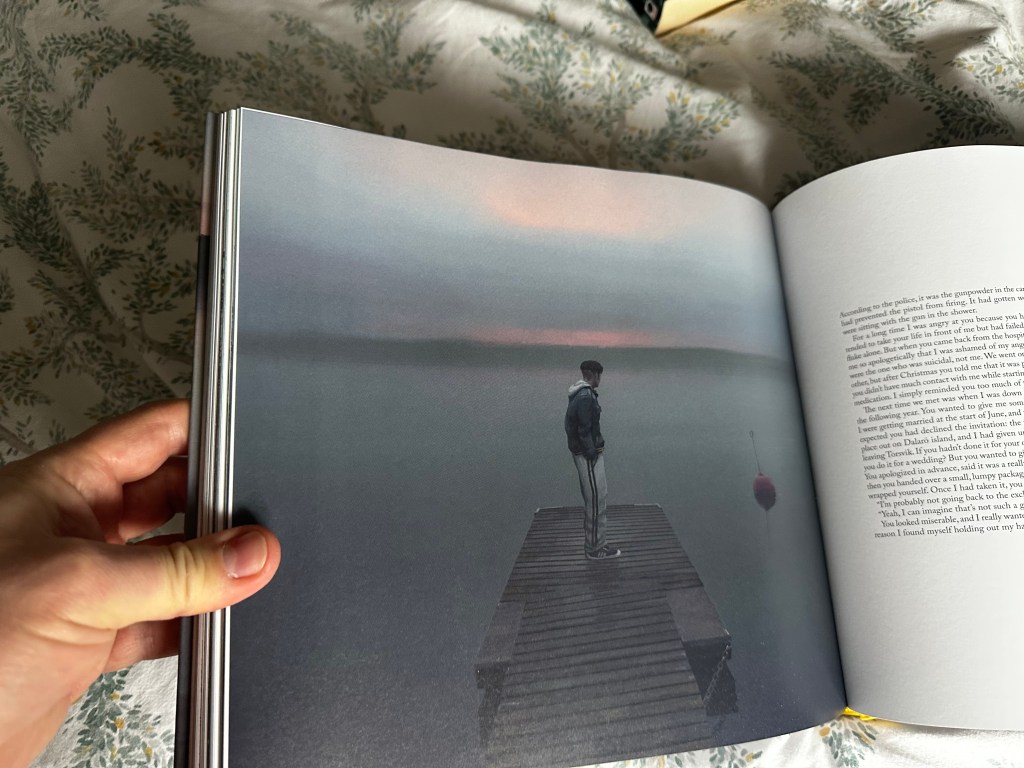
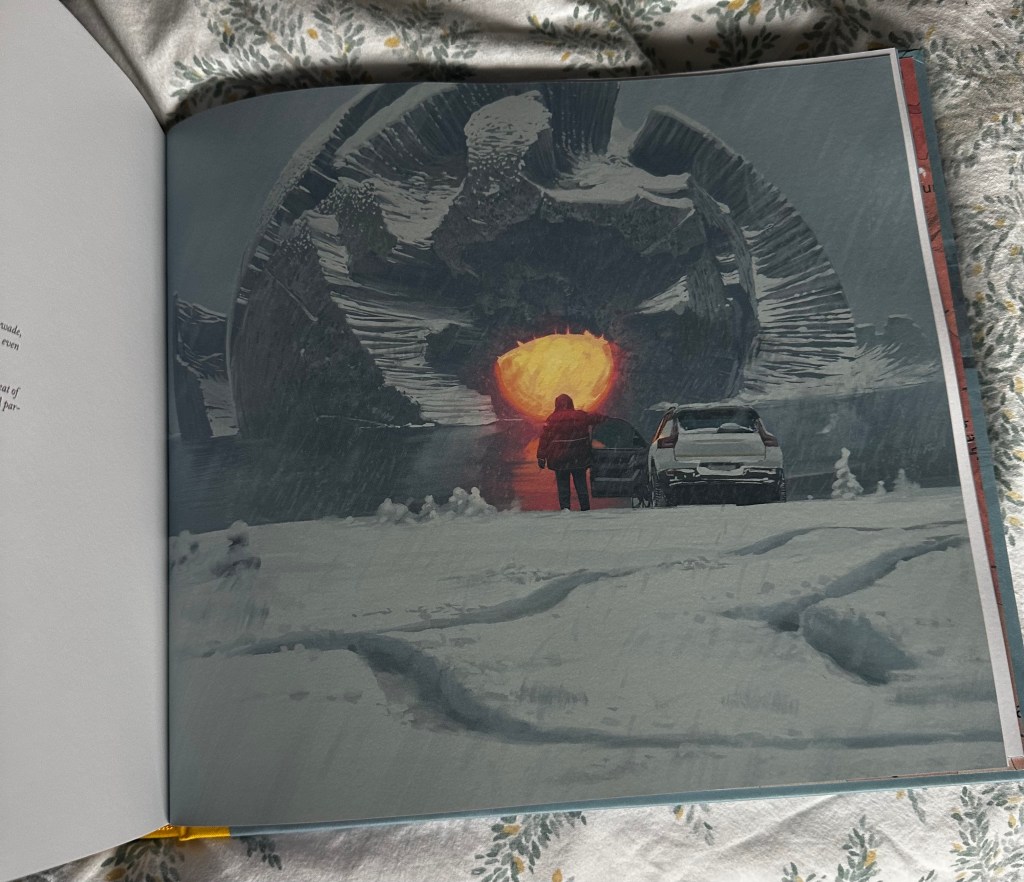
I came home from work on Friday to discover a wonderful surprise in my porch. I wrote about the Kickstarter campaign for Swedish Machines, Simon Stålenhag’s new art book way back in September of last year and ‘lo it has arrived! This was particularly pleasant because I didn’t realise they were shipping already (I have backed a lot of projects and, honestly, I can’t keep up with the updates for all of them, dear reader.)
Just feast your hungry little eyeballs on this:

Digital Surprise(s)!

Fifth Season RPG

Another major surprise came yesterday when I checked my inbox and found a link to the PDF Preview of the Fifth Season Roleplaying Game. This one has been in development by Green Ronin for more than two years and has been hit with delay after delay so to finally have a version of it stored away in my overstuffed RPG documents folder was a pleasure unlooked for. It was literally the first project I ever backed on Backerkit so I forgot it was there entirely.

As many of you will be aware, I have an ongoing Dragon Age RPG campaign going right now (we recently picked up again for Act II of the campaign, using a published adventure, which will get a post of its own when we are done.) The Fifth Season RPG uses essentially the same rules engine, Green Ronin’s own AGE (Adventure Game Engine) system originally developed for their generic Fantasy AGE game.

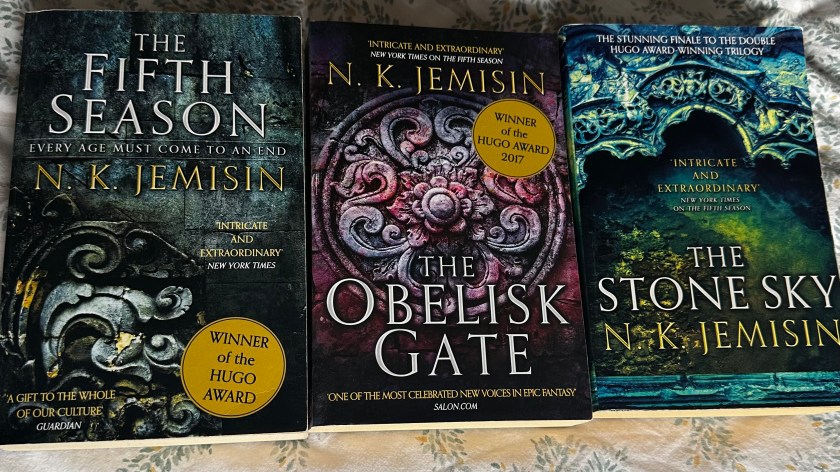
The game is, of course, based on the incredibly successful series of novels by modern master of the SFF craft, NK Jemisin. The Broken Earth trilogy tells the story of a dark fantasy world where a feared and reviled underclass of people with the power to manipulate the earth itself are employed/enslaved in the interests of everyone else. The earth itself, on the continent known as the Stillness, is a constant danger to its populace and the orogenes use their powers to calm it and make it safe. But every so often, the earth rebels so strongly against its inhabitants that it becomes uncontrollable, unleashing terrifying earthquakes, erupting volcanoes and tsunamis of dreadful power, seemingly in an effort to end all life. This is known as a Season, the Fifth Season of the title. The story follows the trials of a small number of these orogenes and the people closest to them as they attempt to survive a Season and discover some hidden truths of this harsh world.

The books have won a lot of awards and deservedly so. They are some of my favourite SFF books of the last ten years. If you haven’t read, them, dear reader, do yourself a favour. You can easily find them in your local secondhand bookshop these days but the audio-books are also a pleasure to listen to.

Anyway, when the RPG was announced I didn’t hesitate to back it. But, despite Green Ronin’s long experience of producing licensed games like Dragon Age, and the Expanse (I have also backed the new version of this game, The Transport Union Edition, which I’m eagerly awaiting) this one seems to have suffered a few setbacks and delays. They have tried their best to alleviate the issues by keeping in touch with the backers and offering a 10% discount on their webstore, and I think a lot of the problems were out of their hands, to be fair, so I am giving them the benefit of the doubt. Also, I’m loving what I have seen of the preview PDF so far. The artwork is gorgeous and it makes liberal use of the source material. As its a preview, I won’t share much, but here are a few shots of the illustrations:

The Vastlands Guidebook and Our Golden Age

I’ve been writing a lot about Ultraviolet Grasslands recently. We’ve just completed the third session of our campaign and we’re all loving it so far. Rarely have I run a game that has so sparked the imaginations of the players, both at the table and in between sessions. My wife, who plays forager-surgeon and Lime Nomad, Stebra Osta, explained to me today so much about the character’s people, how their nomadic encampments are set up, the importance of water in their culture, their dress and food, the way they braid their llamas’ hair… The breadth of the unknown in UVG is truly its greatest strength. Its staunchly anti-canon stance has given the players explicit permission to make the world the way they want it to be. So, do we really need more source-books for it? If they are written the way UVG was written? Absolutely. I mean, the random spark tables, the loosely described peoples, the maps with gaps, the mysterious origins of everything: they all come together to make a wonderful frame for you to fill up with your fellow players. I have no reason to believe Mr Rejec wouldn’t produce more work with the same structure and content. Well, this week, I am getting to see the beta of one of the two books in this crowd-funder and a whole section of the other.

The Vastlands Guidebook is the full set of Synthetic Dream Machine rules to play a campaign of UVG. It is very similar to the UVG Player Guide Book that I mentioned in my UVG Character Creation post but with far more detail and some very tasty art. It has full character creation rules, including a whole bunch of new Paths, eg. Barbarian, Purplelander, Tourist and Skeleton. There are mechanics for everything you could want to do in your game. It’s got powers, random NPC creation tables, corruptions, more vehicles and mounts etc. etc. I’m already thinking of ways I can get some of this new stuff to our table.

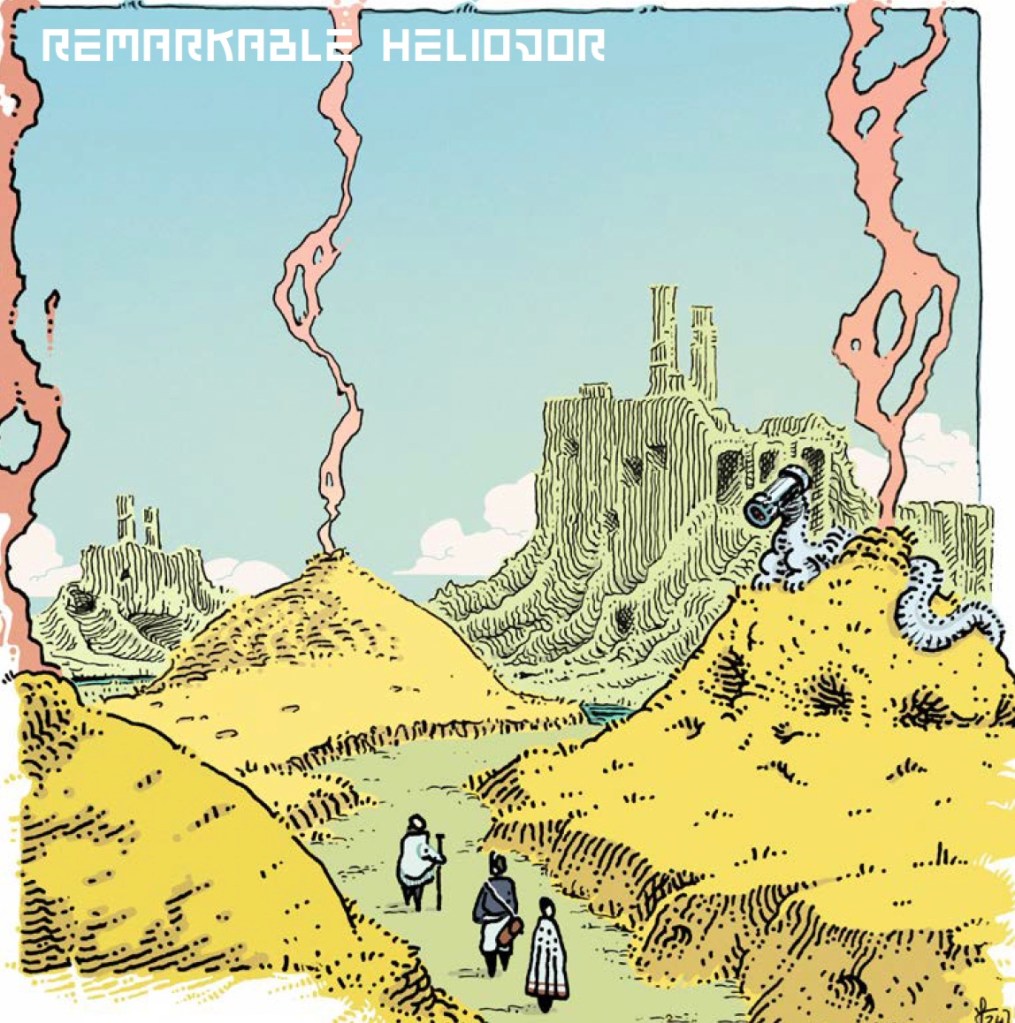
Our Golden Age is a setting book for the Circle Sea area of the Vastlands, the part of the world your average caravan in UVG is leaving behind at the start of their adventure. Luka Rejec released a teaser for the Yellow Land section of the book and it looks just as sumptuous and bonkers as you would expect from the creator of the Ultraviolet Grasslands. After a brief overview of the geography, climate, government, economy etc. you get some very fun tables. Events tables, travel tables, very unusual merchant tables, fashion tables. Then we have some interesting factions with eminently usable NPC members, a page about the Géants, enormous and unstoppable biomechanical soil farmers left over from another era, and into a section about the cities and places of interest in the region. These include Safranj, the Saffron City, with its key control of the drug/spice, saffron and vibrant opera scene. The Refining Plain: “Autorefineries of livingstone linked by arteries of basalt and tentacles of shipmetal, sinews of standardstone and great mushroom vent-mounds stud the plain below the voidtouching mountain Vulkana.”

The Yellow Land very much gives me Nausicäa vibes. It has an environmental disaster theme and even has Orms (like the Ohmu in Miyazaki’s masterpiece) dangerous animals that tear up the land.

A warning for the unwary traveler:

The Automatic Tourist Entity (A.T.E.) has compiled a list of must-see places in the Yellow Land for centuries. Recently, many warn it keeps suggesting destinations with a terrifying preponderance of surprisingly cannibalistic local practices.

I cannot wait to see the finished product and get it in my grubby little mitts.

Homebrew Heart Landmarks 4

Railsea

China Miéville. Go read some of his books. Go on. I’ll wait. Need more? OK. I recommend the full Bas Lag trilogy. In my opinion each book in the series is better than the one before. Anyway, those should only take a month or two to get through. Once you’re done with those, immediately pick up “The City and the City.” Just trust me. You won’t regret it. Once you have finished getting your brain-digits around that, please relax your cerebellum and get ready for “Embassytown.” Read all of them. Please.

I still have a few of his books to catch up on. I’m a little late to the party. I picked up “Perdido Street Station” in a second hand book shop about 15 years ago and couldn’t quite get past the idea of a woman with a beetle for a head (not a beetle-head, that’s different. Her head is a beetle.) I gave it another go a few years ago and was immediately hooked. The so-very-alive city of New Crobuzon, its fascinating and beautifully realised inhabitants, the wonderful meshing of the steam-punk, the fantastical and the horrific all worked together to make me simply want more and more. Luckily, “Perdido Street Station” is about 1000 pages long and has two sequels so they kept me going for a while.

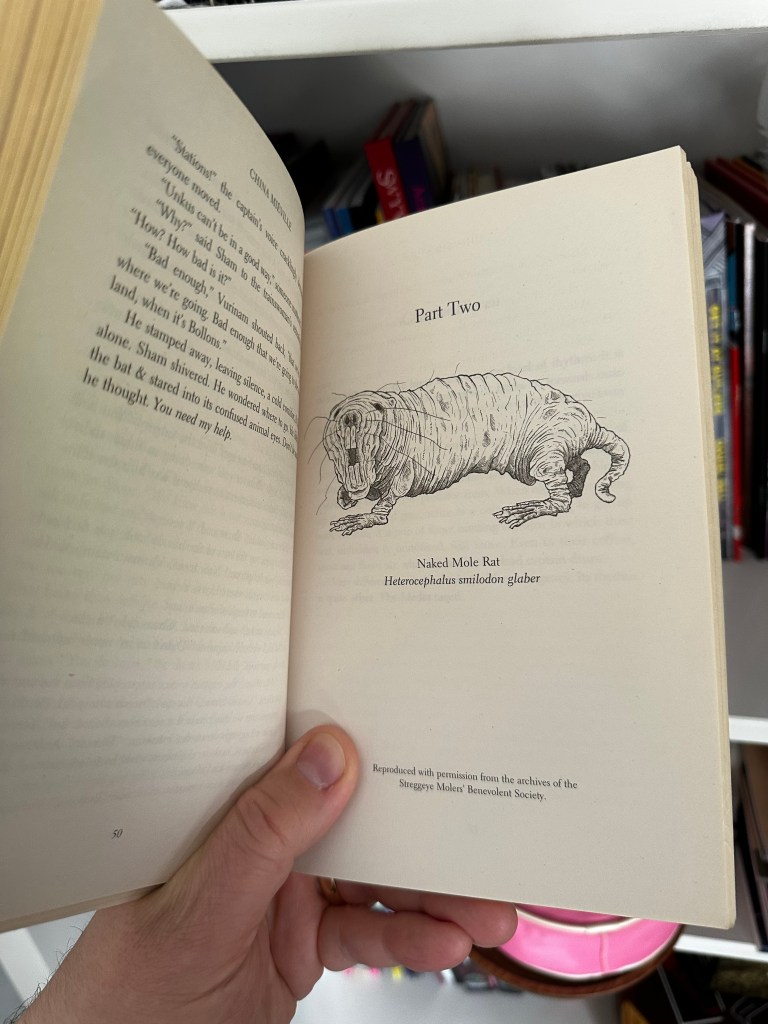
I’m currently reading “Railsea.” This is not a Bas Lag book, but it evokes a lot of the same feelings in me as his earlier work. It is set in another world, one where there is a literal sea of rails between the continents and islands, where trains are captained by Ahab-like characters who pursue Moldywarpes (giant moles) like sea-captains pursued whales in centuries past. The ground between the tangle of rails is not literal poison, oh no. Our main character, Sham, tells us that. But if you touch it, you’re courting death, or dancing with danger at least. The subterranean lifeforms, bugs, giant mammals, that sort of thing, they’ll come and drag you down or tear a leg off if you’re not careful.

I haven’t gotten very far into the book yet, but I am savouring it. I’m exclusively reading it on my train ride to and from work so it’s hard to get up a good head of steam as it were.

Anyway, it felt rather “Hearty” to me. You know, what I mean, reader? Got the old Heart Landmark juices flowing a bit. There’s so much about magical, inter-dimensional underground railways in Heart: the City Beneath. It felt appropriate to come up with a Heart Landmark inspired specifically by “Railsea.”

The Vermissian Graveyard

Name: The Vermissian Graveyard
Domains: Technology, Cursed
Tier: 3
Default Stress: d8
Haunts: The Engine (d8 Echo)

Description:
Beneath a roiling crimson sky of steam clouds, a vast and silent plain of dry red earth, dotted here and there with scrubby trees and hardy grasses, whorled and tangled by an impossible rat’s nest of railway lines. At their final rest atop these lines, trains. So many rusting, curving, snake-like carriages and engines. Freight cars, passenger cars, entertainment and dining cars, all lifeless, dark, slowly falling to pieces.
Maybe this is where the trains of your Vermissian went. It could be. Perhaps some of these vehicles once were meant for that cursed underground, but most are from some other Vermissian, some Vermissian that never had an “Incident.” Perhaps they came through Fractures, perhaps the Terminus directs all old hulks of rail-stock from across all realities to this place, this final resting place. Or maybe it’s the afterlife for these faithful old servants.

It’s certainly haunted enough to be a graveyard. Ghostly passengers walk the aisles of the cars seeking their seats, spectral engineers stand about in cabs, smoking cigarettes, conductors from beyond examine tickets to nowhere, on trains that will never move again.

The ghosts can’t do much to a living soul except maybe freak them out a bit. But don’t touch the ground. Do not touch that brick-red earth beneath the rails. Step down and you’ll understand why this place is devoid of all life. The slightest vibration will attract the stranded dead, grasping undead things, trapped here with their last trains, jealous of the life and wealth of the living, lying in wait below the earth. All they want is to strip you of your wealth. So, if your greatest wealth is your memories, they’ll take those, thank you very much. If your wealth lies, rather, in Queens and Stens from the City Above, they’ll leave you a pauper. If your most prized possession is your body or the blood in your veins, they’ll take that too. No matter what they take, they’ll try to take all of it, leaving nothing but a ghost behind, stuck on a train that’s never going to move again.

In what might be the centre of this mess of rolling stock, a single orange fire burns, fitfully and brightly, belching out spire-black smoke from the chimney of a single, shiny black engine. An old steam engine, kept polished to an unlikely shine houses the Engineer. They are a skeletal figure equipped with a spire-black shovel a set of neatly pressed denim overalls and a tall blue peaked cap. Fires burn in their eyes, emitting sparks occasionally, mirroring the hotly glowing fuel they keep the engine topped up with. When a stranger comes to the Engine, the Engineer hands them the shovel and gestures to the bunker full of spire-black and then to the fire. If they shovel a few loads, the Engineer will bow and point the way to the exit of the graveyard. They will leave feeling tired but fulfilled, as though having done a good days work. If they shovel in a suitable resource, the Engine will belch and shake and will bathe the worker in orange light, removing d8 Echo Stress from them as well. If they do not shovel, the Engineer will shrug, light a cigarette, and go back to shovelling himself.

Special Rules:
Without the help of the Engineer, this Landmark becomes a delve with Resistance 12. Potential encounters with Signal-box Cultists (see the Heart core book page 196) abound on this delve. Other possible events include falling through the floor of a rusted wreck, having to avoid toxic freight and slipping off the rails onto the ground where the Stranded Dead await.

The Stranded Dead inflict d8 stress to whatever resistance is most important to the PC. This could be defined by the PC themselves or you could choose the one they have the most Protection in.
Fallout Slight Delay (Minor, Any) You touched the ground in the Vermissian Graveyard and drew the attention of the Stranded Dead. They took something from you. Now you’re just ever so slightly translucent and the ghosts on the trains are asking you to sit next to them. All actions taken to escape the Graveyard are Risky.
Fallout Major Disruption (Major, Any) You touched the ground in the Vermissian Graveyard and the Stranded Dead took so much from you. You’re hardly there anymore. You can understand the vapour talk of the ghosts on the trains. All actions taken to escape the Graveyard are Dangerous.
Fallout Ghost of the Graveyard (Major, Any) You touched the ground in the Vermissian Graveyard and the Stranded Dead took everything from you. You join the other ghosts and take your seat on the dead train.
Resources:
Train parts, d8 Technology
Train Ghost ectoplasm, d8 Cursed

Ways and Means: A Heart Sourcebook

To wrap things up, I thought I would let you know, dear reader, about the new Backerkit crowdfunding effort coming our way soon from the good people at Rowan Rook and Decard. It’s called Ways and Means and it looks like it’s going to be a great sourcebook for both players and GMs of Heart. It’s going to have new Classes and Callings as well as new Domains of the Heart and events to fill them with. You can sign up to support it here.

Fungi of the Grasslands

UVG, Yeah You Know Me

I mentioned recently that I had been reading Luka Rejec’s Ultraviolet Grasslands. I had, in fact, just been reading it for fun, but, about 50 pages in, I decided the best use for all its tables was in some sort of role-playing game. So, I got my trusty team together and started a campaign. We’ve had a session 0 and two sessions of play so far. It’s still early days. The caravan has not even managed to complete a full week of travel yet but we’re all enjoying the psychedelic vibes and the raw potential of the game and the setting.

I also wrote up character creation and caravan creation posts, which were not directly related to the campaign but were useful to me in getting to grips with some of the rules and the setting.

This post is about one element of the game that gets only a cursory mention in the book, and how I approached its use. That’s Caravan Quests.

Needy Naturalists

It might be a little ungenerous to suggest that the Caravan Quests section gets any less treatment than it deserved in the core UVG 2E book. It has a full page to itself, including illustration. Ten quests grace the page, everything from “Big Game Hunting” to “Ascending into the Sky Like the Shamans of Old.” And there are some great ideas there to spark events in your campaign. Since UVG is very much a play-to-find-out sort of game, very few things are explicitly labelled as quests. The encounter tables and the randomly discovered locations generally contain all the inspiration or trouble or opportunity the players or referee need to fill a session without picking up tasks from question-mark bedecked NPCs.

But I liked the idea of using one of them to further spur the PCs to do stuff on the road that wasn’t just trading and foraging. The one I settled on was 3. Glorious Naturalists. So, before their caravan ever set off, I had them encounter a band of scientists in L’ultim Gastrognôme, one of the most exclusive eateries in the Violet City. These scientists had been hanging around in the city for a while, looking for a group just like the PCs. They had been assigned a task by their Decapolitan university to discover a bunch of new plants, animals and minerals. They had a decent budget but, as academics, had little taste for roughing it in the trackless steppes and Vome-ridden wilderness of the Ultraviolet Grasslands. So obviously, our caravaners, Imssi, Stebra and Phaedred were the ideal choice to get out there and collect evidence of some undiscovered species! This coincided nicely with the drive of one PC. Stebra Osta, a forager and surgeon, is on the hunt for a special vegetable or fungus with incredible curative properties. She’s sure it’s out in the Grasslands somewhere so she wanted to take the scientists’ job as the perfect one to fund her own search. It also added quite a bit to their funds.

Were there more interesting or weirder quests in the list? Absolutely. Would it have been fun for them to have to 8. Witness the End of Time? Well, of course. But then, I wouldn’t have had such a good excuse to crack open a new prized possession.

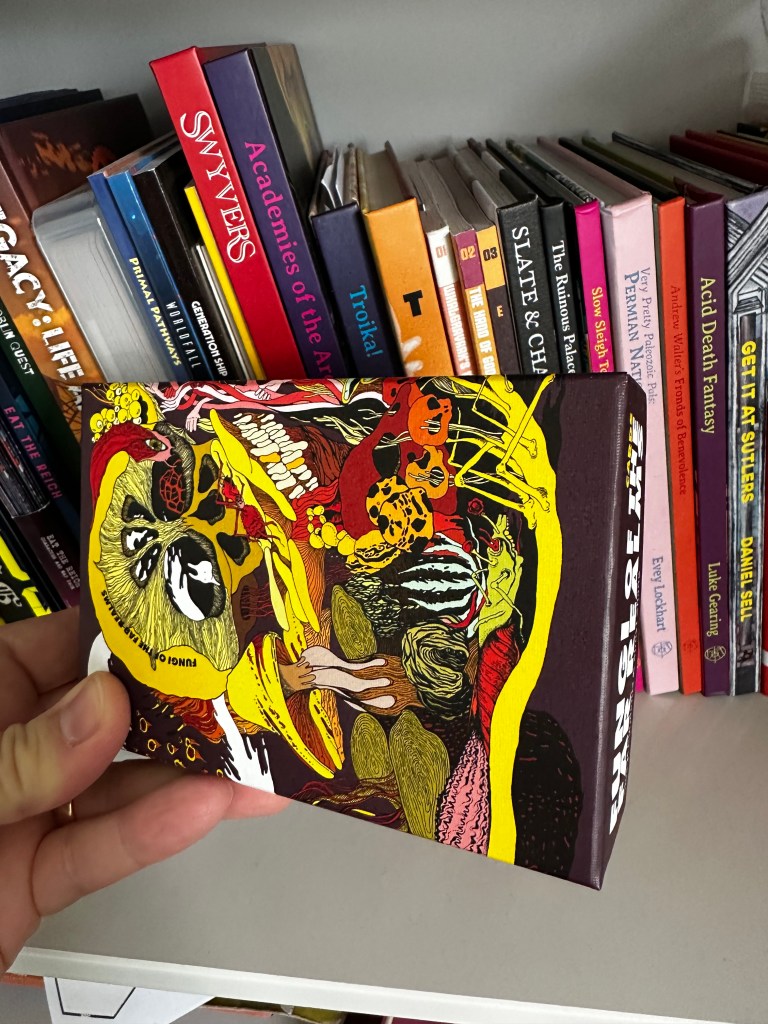
Fungi of the Far Realms

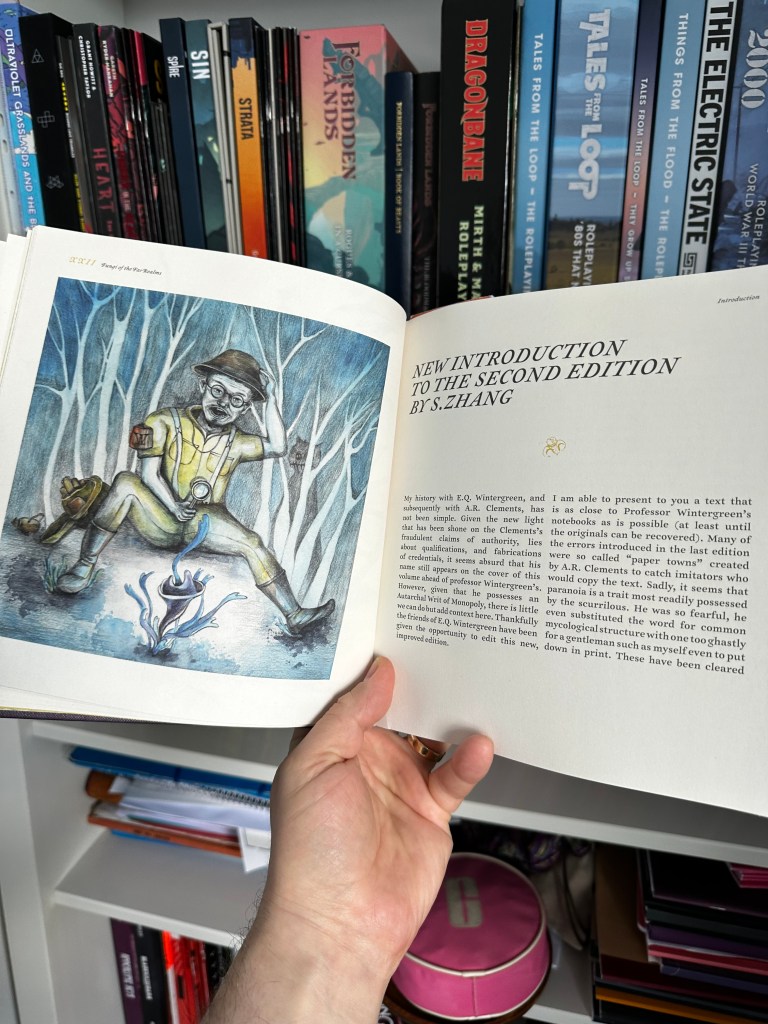
Just look at this book… Go on. Look at it. These illustrations by Shuyi Zhang are just breath-taking. The concepts of some of these funguses, written by Alex R Clements, are fun and bonkers. I remember thinking to myself, how am I ever going to use this in a game? before backing it. Idiotic question. I backed it because it is a work of art, not for its usefulness. But, I guess a thing can be both useful and beautiful.

The Caravan Quest in UVG never mentioned anything about fungi. I added that myself, just so I could get Fungi of the Far Realms and its attendant cards out at the table and have my players oooh and aaah at it. I was able to hand them their very first fungus card last weekend. They discovered a ka-zombie beneath The Last Chair Salon. It was feeding Crystal Puffballs to an imprisoned, limbless Vome-Mother. The Vome-Mother was hooked up by rubber tubing to a Fermentation Golem which turned her milk(?) into Yellow Beer, which the Salon’s unscrupulous proprietor was selling to her customers. Once they had dealt with that whole situation they discovered a nearby lush garden of tulip-like flowers, which was also dotted with dozens of the puffball fungi. I was able to hand over the relevant card to Stebra the Forager and let her know that a sack of these was worth quite bit to the right customer. What a wonderful alternative to the usual type of treasure!

There are a few valid ways to use this book at the table in many different games. I utilised the wonderful fold-out map that I received as a crowd-funding reward. I knew the type of environment I wanted the PCs to find the fungus in, so I used the grid system pictured above to locate a similar habitat. Unfortunately, there does not seem to be an index of fungus per grid-square but each entry in the book highlights the areas of the map that you might find them in. You could also just make a d666 roll and see which entry turns up for you! That’s fun, even if it doesn’t match your needs. The appendices also have tables for afflictions like hallucinogenic effects and fungal infections. If you don’t feel like freaking the PCs out or make them sick, every entry has practical world-building notes like flavour/mouthfeel and aroma. I loved these details in our recent session because it allowed the PCs to know that they had been consuming the fermented Vome-mother milk flavoured with the Crystal Puffball (Flavour/mouthfeel: rotten apples, Aroma: fresh rain.)

And there is another fungus-related adventure afoot already! Stebra, ever on the lookout for foraging opportunities, heard a rumour from a fellow Lime Nomad, that the Great Armadilloids of the Steppes were cultivating mushrooms. Then, as their caravan pushed on across those self-same Steppes they rolled a random encounter. Guess who? That’s right! Armadilloids!

Plugs

Time War

Linear time is a blasted curse! Apparently, these days, you can’t have a full time job, a home life, take part in four to five sessions of RPGs in a week and still manage to update your blog on a Wednesday and a Sunday as well! To hell with it! That’s what I say! I’m doing it anyway! It might be half-arsed and it might not be precisely what I wanted to write about but I’m going have my blog and eat it too!

Going to promote a couple of things I think you should know about, dear reader. These are worthwhile things that you should get in on.

Friends of Melsonia

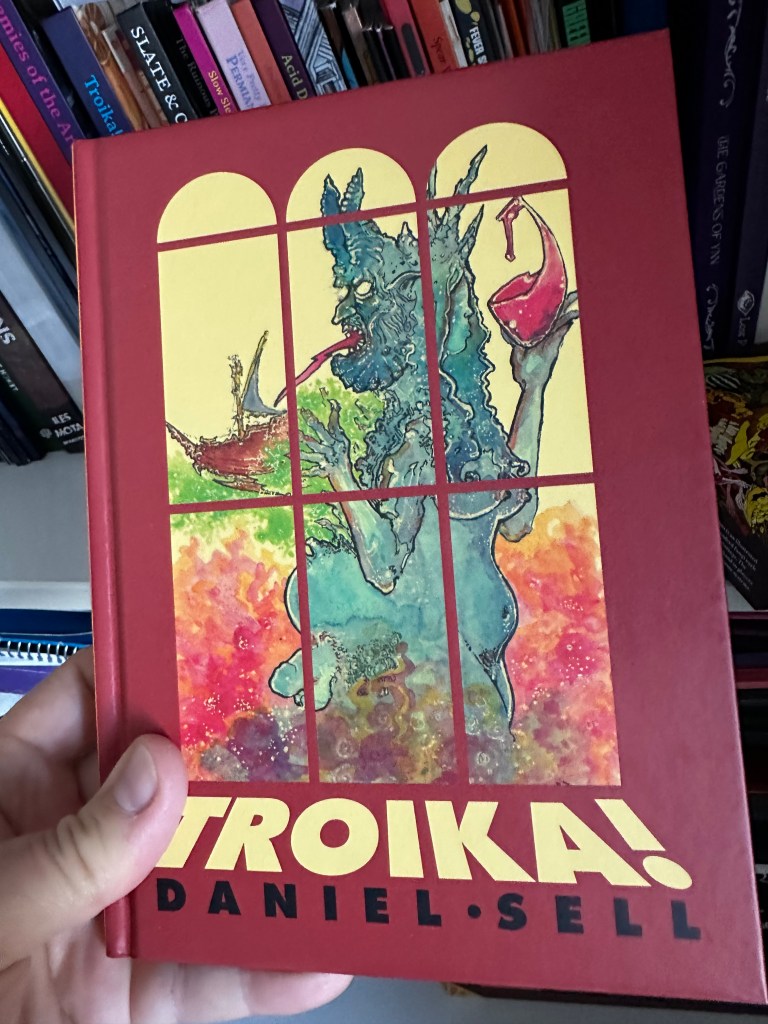
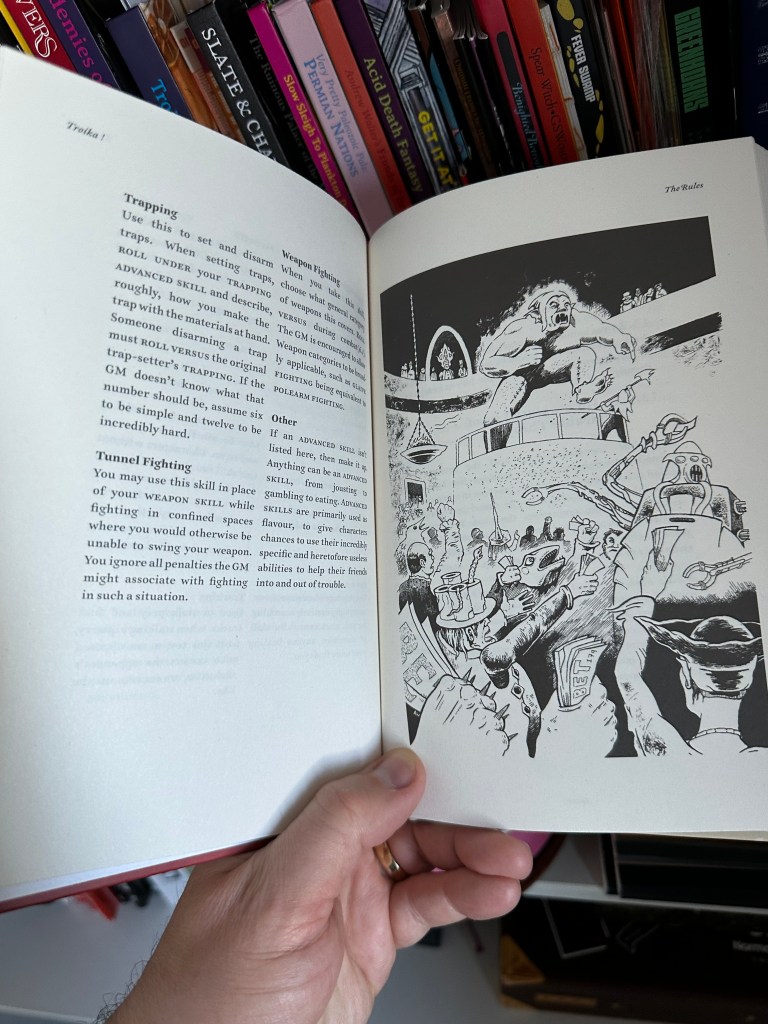
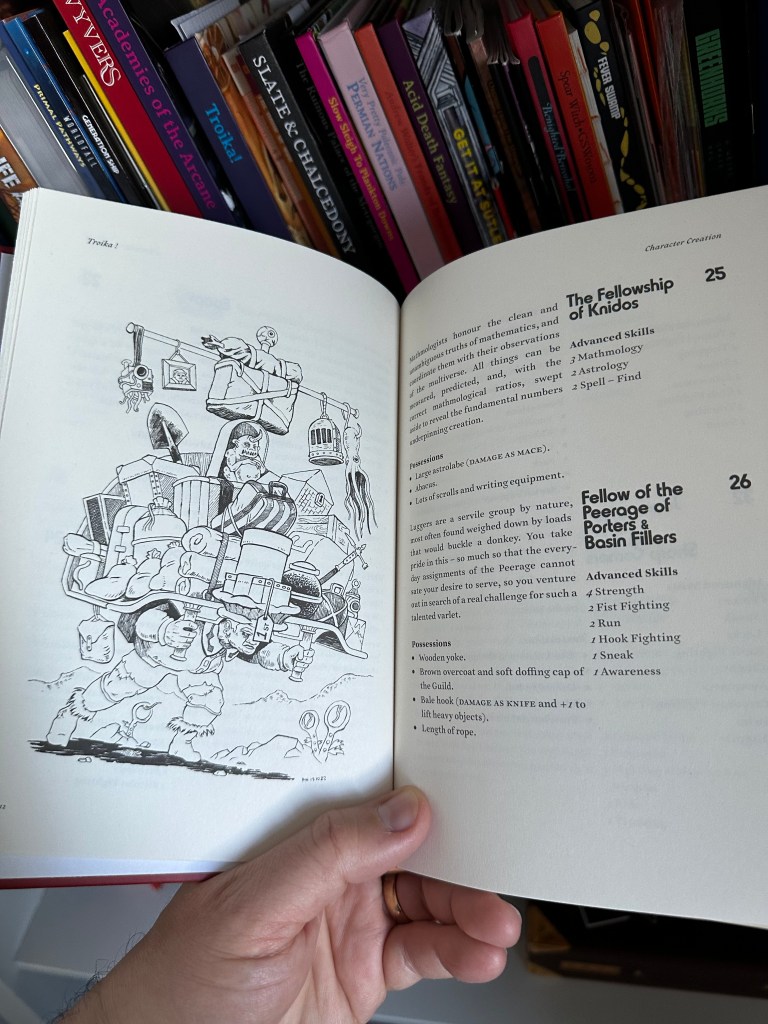
The Melsonian Arts Council, who are responsible for such TTRPG high-points as Troika! and Swyvers has a subscription service. Now, I will be the first one to hold up my hands and admit that I have been critical of literally everything becoming a subscription. Still, I love being a Friend of Melsonia. I say that in the least cultish way possible, I think?

The goal Daniel Sell and the rest of the Melsonian Arts Council are trying to achieve is to reduce or remove their dependency on crowdfunding efforts for every new project. Crowdfunding takes up a considerable amount of effort that these incredible artists could better spend on their creativity. That’s why I support it.

If you sign up for Friends of Melsonia for £10 a month (other currencies will, I assume, require different amounts, but Melsonia are UK based so I’m going with pounds sterling) they will send you a copy of every book they produce while your subscription is active. If that were all you were getting it would be a saving of a few dozen pounds, but on top of that, you will get exclusive stuff too! Just check out the new cover art on this version of Troika that I received in the first Friends of Melsonia delivery on Monday.

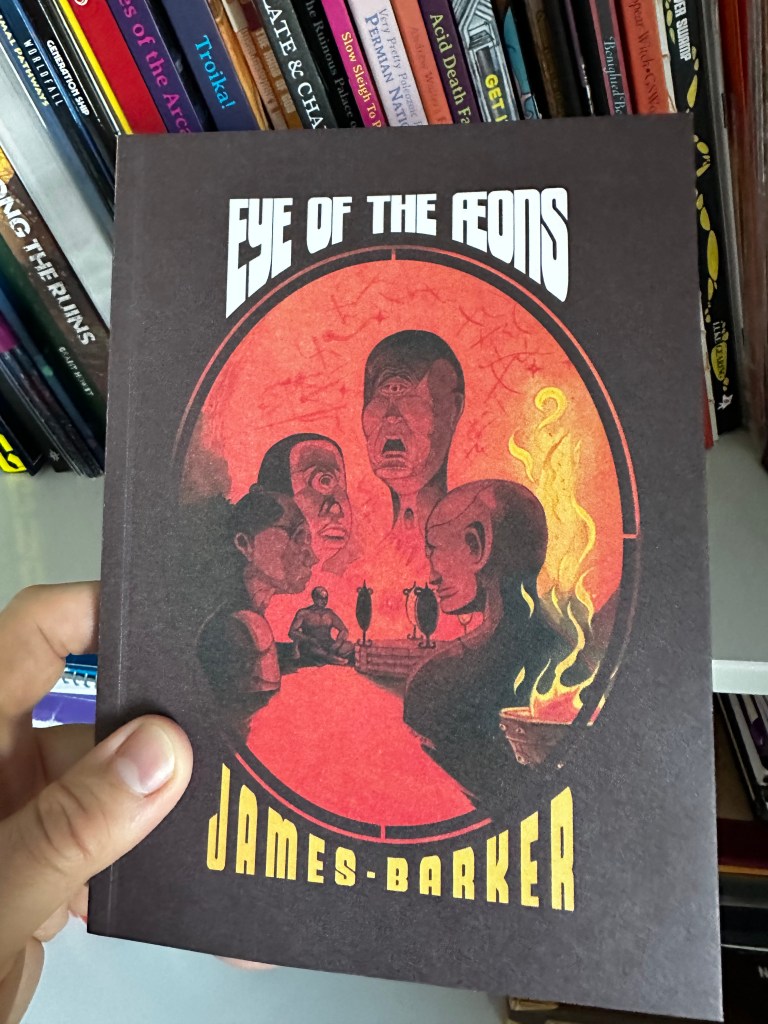
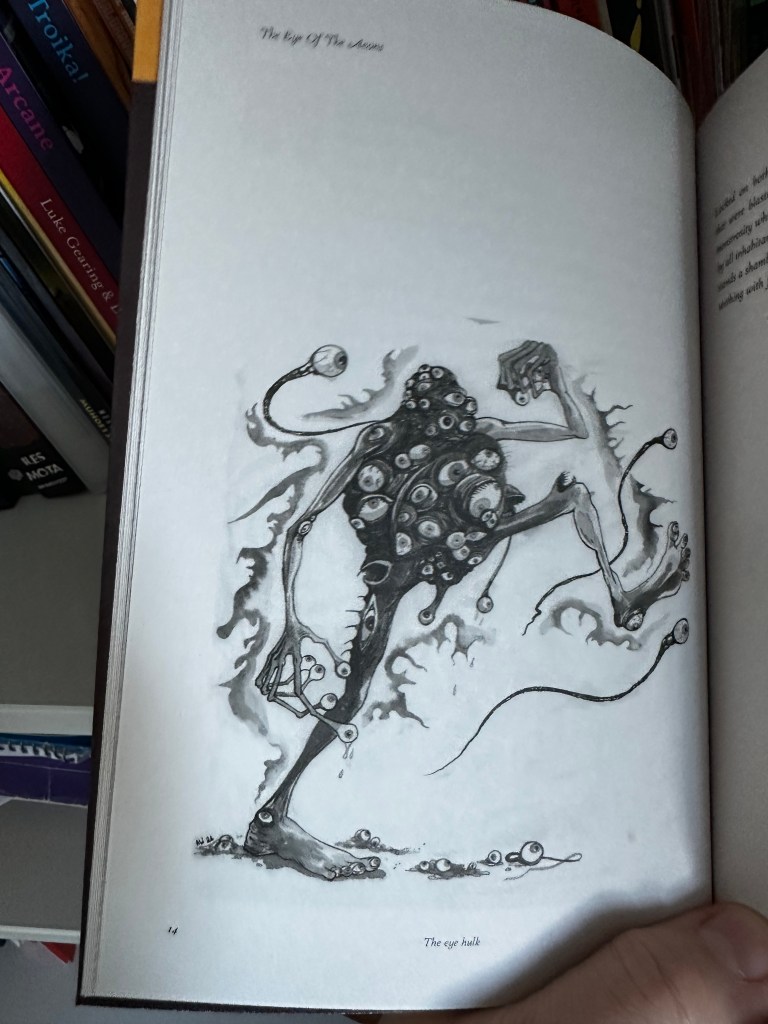
And the latest in their series of Troika location based adventures, the 1:5 Series. Eye of the Aeons has Cyclopes and snails.

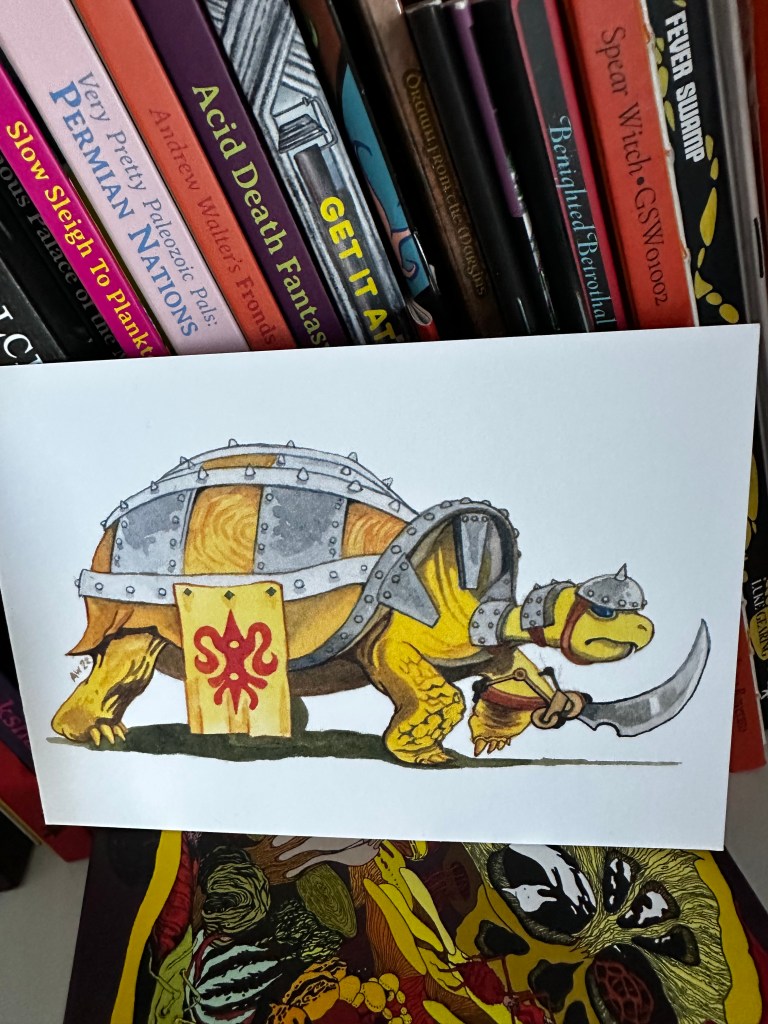
AND, as if all that wasn’t enough, I also got this turtle with the power of sword and armour in postcard form.

Go join up if you can!

Friends of Melsonia

Cosmic Dark Kickstarter

If you have been here for the last few months, you have probably noticed me mention Cosmic Dark a couple of times. Go check out those other posts for more information on this great game. So far I have only played one session of it, but it was one of the best sessions of the year so far. Also, I have another one coming up tomorrow evening.

Graham Walmsley comes with some impressive bona fides. He is the creator of Cthulhu Dark, which was something of a high water mark in the rules-light indie RPG scene that spawned a bevvy of fun hacks such as Alien Dark, which I was lucky enough to play last year. Graham also wrote Stealing Cthulhu and has contributed to some other well known indie RPGs like Fiasco and The Laundry.

The Kickstarter for Cosmic Dark is live now! It funded in under 3 hours yesterday! There is a special Launch Edition which is only available for the first 48 hours, which means you can still get it at the time I’m publishing this post and, on top of that, there are some fantastic stretch goals being reached right now. This will mean contributions from such RPG luminaries as Alyssa Griffiths, Kieron Gillen, Scott Dorward, Thomas Manuel, Jeeyon Shim and Grant Howitt. So get over there and back that thing! I want all the weird space shit these guys can throw at me.

Cosmic Dark Kickstarter

Cosmic Dark: Assignment Report

Understanding the Assignment

What is the end goal of a game of weird space horror like Graham Walmsley’s Cosmic Dark? The answer seems obvious, I suppose. If you go to see a horror movie, you want to come out feeling like you got your money’s worth in spilled popcorn, whimpers, screams and nonodontgointhereyouidiots. So you should expect something similar from a game like this, right? Well, yes, of course. In fact, the rather ingenious conceit of a game like this, is that, knowing the style of play you’re looking for, as a player, you can go into it understanding what you can do to help push the themes, the jumps, the horror of it. There’s some strange, violet rock that appears to be moving? The character might be a geologist and know that it’s their job to go examine the rock, but the player knows they’re in a space horror game, which is why they should go and examine it. And this is pretty much how our one-shot of Cosmic Dark went last weekend.

But there’s more, of course, because let’s not forget the ‘Cosmic’ bit, the ‘weird’ bit. Because, although the body horror really hit hard at times, the dreamy (nightmarey maybe,) psychological horror felt all-encompassing. There is a section in the scenario that is aptly called “Dreaming and Waking.” Unpretentiously, it refers to the bizarre dreams the Employees experience during their first night on the assignment. It gave me more or less free rein to describe immersive dreams for the characters that related back to the answers they gave in psych evaluation questions earlier in the game. Of course, this served only to highlight the dreamlike atmosphere of everything on the assignment up to that point, in my opinion. Time was behaving differently, the rocks were undulating and growing, seemingly safe spaces were revealed to be anything but… The players and the characters were on edge, really from the start. And, thanks to the mechanics, they got closer and closer to that edge as the session went on.

Character Creation

We played the first Cosmic Dark Assignment, Extraction. Check out my preview blog post here, where I explain the way the players create their Employees as part of that scenario.

At the table, this went down a treat. Forcing players to choose their Employees’ specialisms only at the point where they are being asked to acknowledge over comms on the shuttle to the Assignment is clever and the players got a kick out of it.

But the real star of the show is the series of flashbacks they go through to get a picture of their characters. The flashback method creates memories, not just characters. The requirement for each PC to identify another as a rival or a figure of admiration or some other influence, and to include them in the flashback scenes, creates a shared history and a character dynamic that you simply can’t conjure from dry discussions over a character sheet. If you have played any PBTA games, dear reader, you might be aware that they usually include a section for bonds with other PCs. You and the other PC have to come up with some reason why you are blood-brothers or why you’re worried about the other’s survival or why you had a vision about them. But you do not act it out. You don’t, at least in my experience, role-play a scene together to elucidate the reason for the bond. That’s exactly what you do in Cosmic Dark. In fact, each player has a scene of their own and may choose any of the other characters to share it with. These scenes are supposed to be short, just a minute or two, but long enough for them to find their characters’ voices, outlooks, relationships. And the Director (GM) provides prompts to kick-start these scenes. The players are given a line of dialogue for one of them to say to begin. I was skeptical about how well this could work at a table of regular players. Up until now, I have only seen it done at a table of professional actors on Ain’t Slayed Nobody. But I needn’t have worried. Every one of my players took that single line of dialogue like the baton it was, and ran with it, inventing hurdles, falling and picking themselves up again. And the table I had? Four players with a wonderful mix of experience levels, some who have played a variety of RPGs for years, one with just a few months of play under their belts with Tables and Tales and even one for whom it was their very first role playing experience!

The aspect of character creation (it’s one of the parts that is ongoing throughout the game from what I understand) that I had a little difficulty in running and incorporating as intended is the psychological assessment. There is a moment, that also occurs in flashback, the night before the Assignment, when they are lying in their sleeping pods on the Extracsa transport vessel, the Exchange, and they are asked questions like “what scares you most about being alone?” Or “what is the most terrifying way to die?” You are supposed to. Push the PCs to answer truthfully, indicating that Extracsa will know if they are lying. This part was ok, actually. I was able to get some revealing and actionable answers from them. It was the re-incorporation of the answers into the later dream sequence that I struggled with. The idea is that you should take note of the PCs’ fears and worries so that you can create a tailored nightmare for them during the Dreaming and Waking section I mentioned above. I think this is something I would get better at in time and with practice. The main issue I had was just referring to my own notes and making sure I got the right nightmare for the right Employees in a way that made it feel like it flowed naturally.

The Assignment itself

I don’t want to go into too much detail here. Honestly, I could not do it justice. Go and listen to the Ain’t Slayed Nobody actual play instead!

But here’s what I will say. I presented an outline of the type of game Cosmic Dark was when I advertised it on our Discord. But I think there was still some misapprehension by the time we started playing. The main feedback I got in this respect was that they expected something more along the lines of physical threats. I believe this is, perhaps, the overriding influence of the Alien franchise. I did refer to Alien in the touchstones I mentioned when announcing the game, so that could explain it. There is nothing like an alien monster in this first Assignment. In fact, as they played through the scenario and uncovered one egregious corporate scheme and strategic lie after another, I think it became obvious that Extracsa are the real baddies here. And, it’s not like there aren’t ways for the Employees to die in the course of the Assignment (we had one death, caused mainly by the Team Leader hitting 6 Changed as he escaped. He flipped the rover he was driving.) And they felt as though they were in danger, clearly. As their Changed scores each hit 4 or 5 (out of 6) they all decided to run away! They witnessed what was in the future for them on this asteroid, a slow and horrific melding with the rock of the place, and they noped out of there before they even reached the finalé! Anyway, if I had any advice for prospective Directors, it would be to make sure you properly set expectations.

How about the scenario itself? So, I only had the text of the Extraction Assignment to work with. Now, this was fine. The rules are contained within it and the character creation occurs during the course of play, as I explained above. However, in the finished book, there will be useful extras to refer to. For instance, if and when an Employee rolls a 5, they are supposed to get a little bonus in the form of records, data from the Extracsa company servers that serve to shine a light on the mystery or, at least, show them how Extracsa is fucking them over. On the roll of a 6, they are supposed to experience an anomaly of some sort. Anomalies are supposed to alert them to the weirdness of the place or the situation or have a direct psychological effect that might prompt a Changed roll. Now, there are a few examples of appropriate records and anomalies in the scenario but the rest will be contained in cheat sheets that will appear in the final Cosmic Dark book. To fill this gap, I listened to the ASN actual play again and made a note of the records and anomalies Graham used in that.

The other thing I picked up in particular from Graham was the style of GMing he does in that AP. He keeps it light and breezy mainly, gently encouraging players to take unnecessary risks, reminding them about the Changed die, reassuring them that that little prick from that piece of weird violet rock is probably nothing to worry about… until the point where he informs them all they need to do to reduce their Changed score is remove that pesky limb… Listen and learn, dear reader! It worked a treat at the table!

As for the rules, I had one regret here. The rules are very light and easy to pick up, but, this opening Assignment is designed to introduce the rules in a specific order to ease the players into them. And it does a great job of that. The Changed die is the first thing that comes up, then investigation rolls and other types of actions. But I forgot to introduce the re-roll mechanic when I should have, thereby allowing the Employees a chance both to do better on certain checks and to increase their Changed score earlier on.

Conclusion

All in all, I highly recommend this game. I want to play more of it. I wanted to play more almost immediately. But I think my experience will be greatly improved by getting my hands on the full book. So, let’s make sure I can, shall we? Go and sign up for an alert on the Cosmic Dark Kickstarter!

Cosmic Dark

Ain’t Slayed Nobody

I have been a fan of the Ain’t Slayed Nobody podcast for as long as it’s been around. They launched back in 2020, right at the outset of the pandemic, which was a creative miracle in and of itself. The podcast, which started out as a Call of Cthulhu actual play, is the brainchild of Cuppycup. He started out running a few of his friends through a Down Darker Trails campaign. That’s the Old West setting for Call of Cthulhu. Apparently, not only was this the first time he had acted as Keeper, it was his first time playing any RPG! Go and listen to those early episodes now and I think you would be hard pushed to detect that level of inexperience. It was a fun listen too! The production quality has been consistently high from the beginning but the players and the laughs really make it.

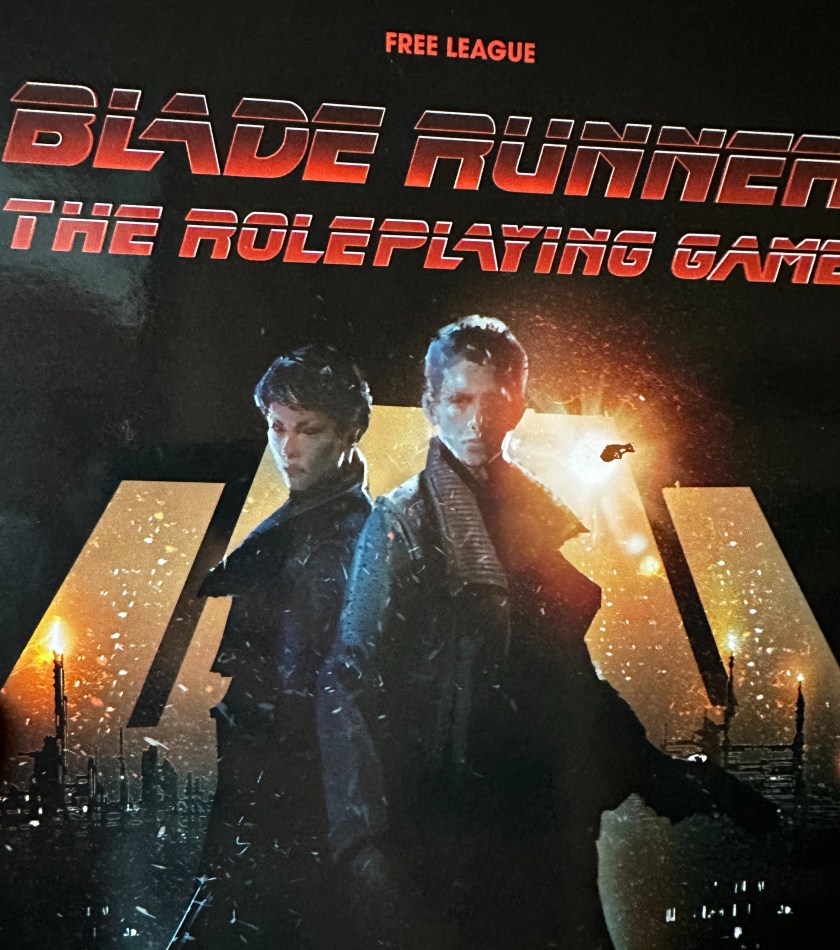
Since then, ASN has had a rotating cast of players and characters in a range of short campaigns and one-shots. They have branched out with regards to systems too. They had a classic short run of Blade Runner, where cuppycup ran Electric Dreams, the case file from the Blade Runner Starter Set. Listening to this made me want to run it myself. This one had a great cast too: Ross Bryant, Nic Rosenberg and Danny Scott played the blade runners. Since then, both Ross and Nic have become regulars in the cast. I highly recommend this series, especially if you’re interested in running Blade Runner, the RPG.

Two blade runners posing like neon noir heroes in front of a stylised Wallace Corp ziggurat beneath the title of the Blade Runner Role Playing Game.
A photo of the front of my copy of the Blade Runner Start Set box.

Another regular, Scott Dorward, is a renowned podcaster and game designer in his own right. His long-running show, The Good Friends of Jackson Elias is well worth a listen. When he first ran a game for Ain’t Slayed Nobody, it was his own Cthulhu Dark scenario, Fairyland. This was really the first time I had been exposed to Cthulhu Dark as a system. The impossible lightness of the rules and the effortless creepiness that Scott brought to it drew me in. I eventually did get to run Cthulhu Dark myself last halloween, though it was a different scenario.

Darker Still

Recently, Ain’t Slayed have piqued my interest yet again. This time, it’s with another game from Cthulhu Dark creator, Graham Walmsley, Cosmic Dark. Graham is the Director for this campaign too, in fact.

Cosmic Dark is a game of weird space horror that is Graham’s commentary on the times we live in, according to him. The PCs all work for an interstellar corporation called Extracsa. I feel like the name does a lot of the heavy lifting in conveying the type of company we’re talking about here. Each assignment is completed in an episode or two, which is very satisfying, but the characters do continue through the series, except when things go really wrong for them.

What have I liked about it so far?

The heavily anti-capitalist horror aspect is compelling to me at this point of my life and of human history. The themes and events of the game, despite taking place in some unknown future in space and on alien worlds, feel all too real, far too possible.

I love the character creation method. You don’t start this game by writing up a character sheet, you don’t even come up with a name or occupation like you might in Cthulhu Dark. No, you dive straight in:

This is the Extracsa transport ship. You are descending to the surface of C-151.
Medical officer, please acknowledge.

The first scenario asks the Director to read this to the players and then tells them to wait for one of them to respond. That player is then the Medical Officer. This continues until all players have chosen an Employee Specialism. You then continue with a quick overview of the very light rules before delving into a series of flashbacks from the PCs’ childhoods using prompts to sketch the sort of characters that you need for this game. It’s an ingenious method and extremely fun to listen to people improvise on the spot. And it doesn’t stop there. Character creation continues throughout the character’s Extracsa career, usually in the shape of flashbacks to their lives before their current job.

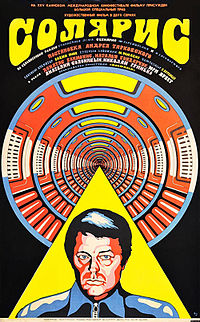
The scenarios themselves are weird and scary and psychologically affecting. They deal with things like the reliablity (or otherwise) of your own memory, machines treating humans like infestations, and, honestly, just good old-fashioned space madness in the best traditions of things like Solaris.

By The cover art can or could be obtained from MoviePosterDB or Goodtimes Enterprises, Fair use, https://en.wikipedia.org/w/index.php?curid=5075880

So, I joined Graham’s Patreon. Doing that got me access to the early versions of the rules for the game and the scenarios that have been written so far. I’m hoping to get a group together to play it in a couple of weeks.

Listening to this series gets me excited to play Cosmic Dark. As a lover of weird space fiction, it is exactly up my alley. And it is very different to the other games I am running at that moment, so it will make a nice change.

One last thing, Graham will be launching Cosmic Dark on Kickstarter soon! If you want to support the project you should follow it here!