Cosmic Dark: Assignment Report

Understanding the Assignment

What is the end goal of a game of weird space horror like Graham Walmsley’s Cosmic Dark? The answer seems obvious, I suppose. If you go to see a horror movie, you want to come out feeling like you got your money’s worth in spilled popcorn, whimpers, screams and nonodontgointhereyouidiots. So you should expect something similar from a game like this, right? Well, yes, of course. In fact, the rather ingenious conceit of a game like this, is that, knowing the style of play you’re looking for, as a player, you can go into it understanding what you can do to help push the themes, the jumps, the horror of it. There’s some strange, violet rock that appears to be moving? The character might be a geologist and know that it’s their job to go examine the rock, but the player knows they’re in a space horror game, which is why they should go and examine it. And this is pretty much how our one-shot of Cosmic Dark went last weekend.

But there’s more, of course, because let’s not forget the ‘Cosmic’ bit, the ‘weird’ bit. Because, although the body horror really hit hard at times, the dreamy (nightmarey maybe,) psychological horror felt all-encompassing. There is a section in the scenario that is aptly called “Dreaming and Waking.” Unpretentiously, it refers to the bizarre dreams the Employees experience during their first night on the assignment. It gave me more or less free rein to describe immersive dreams for the characters that related back to the answers they gave in psych evaluation questions earlier in the game. Of course, this served only to highlight the dreamlike atmosphere of everything on the assignment up to that point, in my opinion. Time was behaving differently, the rocks were undulating and growing, seemingly safe spaces were revealed to be anything but… The players and the characters were on edge, really from the start. And, thanks to the mechanics, they got closer and closer to that edge as the session went on.

Character Creation

We played the first Cosmic Dark Assignment, Extraction. Check out my preview blog post here, where I explain the way the players create their Employees as part of that scenario.

At the table, this went down a treat. Forcing players to choose their Employees’ specialisms only at the point where they are being asked to acknowledge over comms on the shuttle to the Assignment is clever and the players got a kick out of it.

But the real star of the show is the series of flashbacks they go through to get a picture of their characters. The flashback method creates memories, not just characters. The requirement for each PC to identify another as a rival or a figure of admiration or some other influence, and to include them in the flashback scenes, creates a shared history and a character dynamic that you simply can’t conjure from dry discussions over a character sheet. If you have played any PBTA games, dear reader, you might be aware that they usually include a section for bonds with other PCs. You and the other PC have to come up with some reason why you are blood-brothers or why you’re worried about the other’s survival or why you had a vision about them. But you do not act it out. You don’t, at least in my experience, role-play a scene together to elucidate the reason for the bond. That’s exactly what you do in Cosmic Dark. In fact, each player has a scene of their own and may choose any of the other characters to share it with. These scenes are supposed to be short, just a minute or two, but long enough for them to find their characters’ voices, outlooks, relationships. And the Director (GM) provides prompts to kick-start these scenes. The players are given a line of dialogue for one of them to say to begin. I was skeptical about how well this could work at a table of regular players. Up until now, I have only seen it done at a table of professional actors on Ain’t Slayed Nobody. But I needn’t have worried. Every one of my players took that single line of dialogue like the baton it was, and ran with it, inventing hurdles, falling and picking themselves up again. And the table I had? Four players with a wonderful mix of experience levels, some who have played a variety of RPGs for years, one with just a few months of play under their belts with Tables and Tales and even one for whom it was their very first role playing experience!

The aspect of character creation (it’s one of the parts that is ongoing throughout the game from what I understand) that I had a little difficulty in running and incorporating as intended is the psychological assessment. There is a moment, that also occurs in flashback, the night before the Assignment, when they are lying in their sleeping pods on the Extracsa transport vessel, the Exchange, and they are asked questions like “what scares you most about being alone?” Or “what is the most terrifying way to die?” You are supposed to. Push the PCs to answer truthfully, indicating that Extracsa will know if they are lying. This part was ok, actually. I was able to get some revealing and actionable answers from them. It was the re-incorporation of the answers into the later dream sequence that I struggled with. The idea is that you should take note of the PCs’ fears and worries so that you can create a tailored nightmare for them during the Dreaming and Waking section I mentioned above. I think this is something I would get better at in time and with practice. The main issue I had was just referring to my own notes and making sure I got the right nightmare for the right Employees in a way that made it feel like it flowed naturally.

The Assignment itself

I don’t want to go into too much detail here. Honestly, I could not do it justice. Go and listen to the Ain’t Slayed Nobody actual play instead!

But here’s what I will say. I presented an outline of the type of game Cosmic Dark was when I advertised it on our Discord. But I think there was still some misapprehension by the time we started playing. The main feedback I got in this respect was that they expected something more along the lines of physical threats. I believe this is, perhaps, the overriding influence of the Alien franchise. I did refer to Alien in the touchstones I mentioned when announcing the game, so that could explain it. There is nothing like an alien monster in this first Assignment. In fact, as they played through the scenario and uncovered one egregious corporate scheme and strategic lie after another, I think it became obvious that Extracsa are the real baddies here. And, it’s not like there aren’t ways for the Employees to die in the course of the Assignment (we had one death, caused mainly by the Team Leader hitting 6 Changed as he escaped. He flipped the rover he was driving.) And they felt as though they were in danger, clearly. As their Changed scores each hit 4 or 5 (out of 6) they all decided to run away! They witnessed what was in the future for them on this asteroid, a slow and horrific melding with the rock of the place, and they noped out of there before they even reached the finalé! Anyway, if I had any advice for prospective Directors, it would be to make sure you properly set expectations.

How about the scenario itself? So, I only had the text of the Extraction Assignment to work with. Now, this was fine. The rules are contained within it and the character creation occurs during the course of play, as I explained above. However, in the finished book, there will be useful extras to refer to. For instance, if and when an Employee rolls a 5, they are supposed to get a little bonus in the form of records, data from the Extracsa company servers that serve to shine a light on the mystery or, at least, show them how Extracsa is fucking them over. On the roll of a 6, they are supposed to experience an anomaly of some sort. Anomalies are supposed to alert them to the weirdness of the place or the situation or have a direct psychological effect that might prompt a Changed roll. Now, there are a few examples of appropriate records and anomalies in the scenario but the rest will be contained in cheat sheets that will appear in the final Cosmic Dark book. To fill this gap, I listened to the ASN actual play again and made a note of the records and anomalies Graham used in that.

The other thing I picked up in particular from Graham was the style of GMing he does in that AP. He keeps it light and breezy mainly, gently encouraging players to take unnecessary risks, reminding them about the Changed die, reassuring them that that little prick from that piece of weird violet rock is probably nothing to worry about… until the point where he informs them all they need to do to reduce their Changed score is remove that pesky limb… Listen and learn, dear reader! It worked a treat at the table!

As for the rules, I had one regret here. The rules are very light and easy to pick up, but, this opening Assignment is designed to introduce the rules in a specific order to ease the players into them. And it does a great job of that. The Changed die is the first thing that comes up, then investigation rolls and other types of actions. But I forgot to introduce the re-roll mechanic when I should have, thereby allowing the Employees a chance both to do better on certain checks and to increase their Changed score earlier on.

Conclusion

All in all, I highly recommend this game. I want to play more of it. I wanted to play more almost immediately. But I think my experience will be greatly improved by getting my hands on the full book. So, let’s make sure I can, shall we? Go and sign up for an alert on the Cosmic Dark Kickstarter!
Cosmic Dark

Ain’t Slayed Nobody

I have been a fan of the Ain’t Slayed Nobody podcast for as long as it’s been around. They launched back in 2020, right at the outset of the pandemic, which was a creative miracle in and of itself. The podcast, which started out as a Call of Cthulhu actual play, is the brainchild of Cuppycup. He started out running a few of his friends through a Down Darker Trails campaign. That’s the Old West setting for Call of Cthulhu. Apparently, not only was this the first time he had acted as Keeper, it was his first time playing any RPG! Go and listen to those early episodes now and I think you would be hard pushed to detect that level of inexperience. It was a fun listen too! The production quality has been consistently high from the beginning but the players and the laughs really make it.

Since then, ASN has had a rotating cast of players and characters in a range of short campaigns and one-shots. They have branched out with regards to systems too. They had a classic short run of Blade Runner, where cuppycup ran Electric Dreams, the case file from the Blade Runner Starter Set. Listening to this made me want to run it myself. This one had a great cast too: Ross Bryant, Nic Rosenberg and Danny Scott played the blade runners. Since then, both Ross and Nic have become regulars in the cast. I highly recommend this series, especially if you’re interested in running Blade Runner, the RPG.

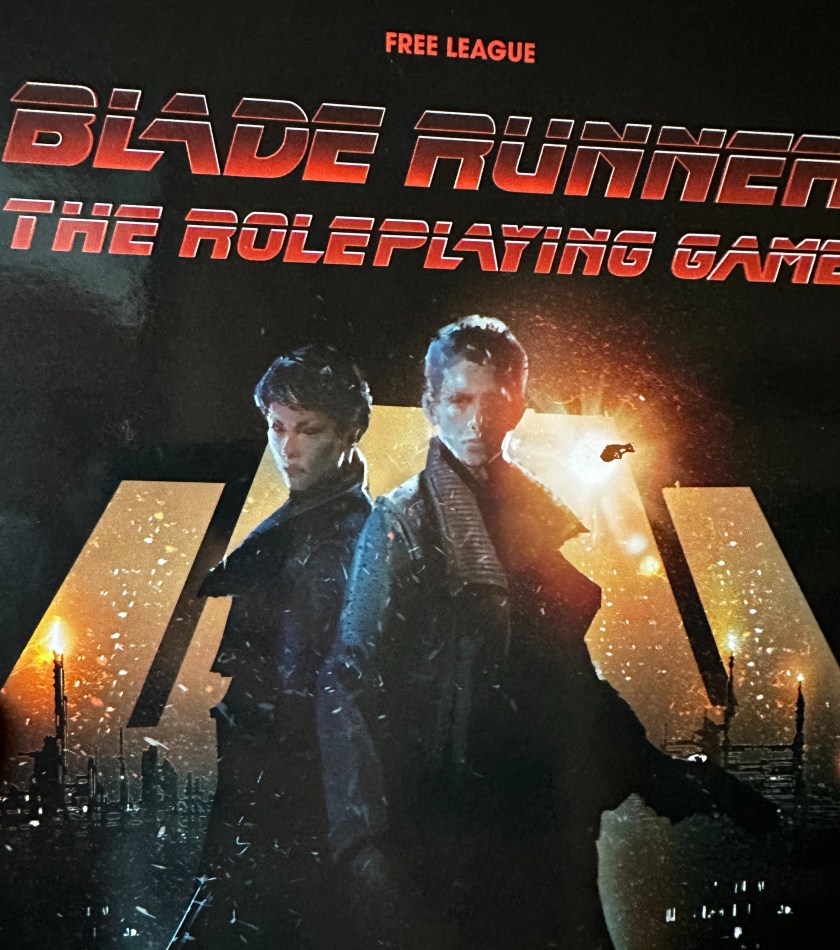
Two blade runners posing like neon noir heroes in front of a stylised Wallace Corp ziggurat beneath the title of the Blade Runner Role Playing Game.
A photo of the front of my copy of the Blade Runner Start Set box.

Another regular, Scott Dorward, is a renowned podcaster and game designer in his own right. His long-running show, The Good Friends of Jackson Elias is well worth a listen. When he first ran a game for Ain’t Slayed Nobody, it was his own Cthulhu Dark scenario, Fairyland. This was really the first time I had been exposed to Cthulhu Dark as a system. The impossible lightness of the rules and the effortless creepiness that Scott brought to it drew me in. I eventually did get to run Cthulhu Dark myself last halloween, though it was a different scenario.

Darker Still

Recently, Ain’t Slayed have piqued my interest yet again. This time, it’s with another game from Cthulhu Dark creator, Graham Walmsley, Cosmic Dark. Graham is the Director for this campaign too, in fact.

Cosmic Dark is a game of weird space horror that is Graham’s commentary on the times we live in, according to him. The PCs all work for an interstellar corporation called Extracsa. I feel like the name does a lot of the heavy lifting in conveying the type of company we’re talking about here. Each assignment is completed in an episode or two, which is very satisfying, but the characters do continue through the series, except when things go really wrong for them.

What have I liked about it so far?

The heavily anti-capitalist horror aspect is compelling to me at this point of my life and of human history. The themes and events of the game, despite taking place in some unknown future in space and on alien worlds, feel all too real, far too possible.

I love the character creation method. You don’t start this game by writing up a character sheet, you don’t even come up with a name or occupation like you might in Cthulhu Dark. No, you dive straight in:

This is the Extracsa transport ship. You are descending to the surface of C-151.
Medical officer, please acknowledge.

The first scenario asks the Director to read this to the players and then tells them to wait for one of them to respond. That player is then the Medical Officer. This continues until all players have chosen an Employee Specialism. You then continue with a quick overview of the very light rules before delving into a series of flashbacks from the PCs’ childhoods using prompts to sketch the sort of characters that you need for this game. It’s an ingenious method and extremely fun to listen to people improvise on the spot. And it doesn’t stop there. Character creation continues throughout the character’s Extracsa career, usually in the shape of flashbacks to their lives before their current job.

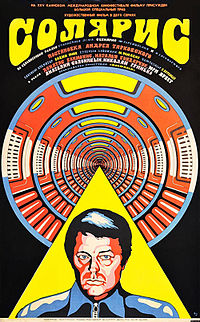
The scenarios themselves are weird and scary and psychologically affecting. They deal with things like the reliablity (or otherwise) of your own memory, machines treating humans like infestations, and, honestly, just good old-fashioned space madness in the best traditions of things like Solaris.

By The cover art can or could be obtained from MoviePosterDB or Goodtimes Enterprises, Fair use, https://en.wikipedia.org/w/index.php?curid=5075880

So, I joined Graham’s Patreon. Doing that got me access to the early versions of the rules for the game and the scenarios that have been written so far. I’m hoping to get a group together to play it in a couple of weeks.

Listening to this series gets me excited to play Cosmic Dark. As a lover of weird space fiction, it is exactly up my alley. And it is very different to the other games I am running at that moment, so it will make a nice change.

One last thing, Graham will be launching Cosmic Dark on Kickstarter soon! If you want to support the project you should follow it here!

Dragon Age: Duty Unto Death

The Basics

You might recall, dear reader, that last year, I threatened to put together a game of the Dragon Age RPG. I even wrote a couple of blog posts about the game which you can find here. Well, I’m back to tell you that I’m not just all talk. Sometimes I really follow through on plans to play games. Myself and four other members of Tables and Tales started playing the short scenario, Duty unto Death for the Dragon Age RPG a couple of weeks ago. We’ve had two sessions so far.

The first was mostly session 0 stuff. Only three of the players were able to make it to that one, but those that did make it all created their own characters. My post on Dragon Age Character Creation stood me in pretty good stead for this. We ended up with an Antivan Wayfarer warrior, a Dalish Elf (which my computer keeps autocorrecting to Danish Elf) rogue and a human Apostate Mage (who is short and hairy enough to pass for a dwarf, thus fooling the silly templars.) Our final player joined us for this week’s session so, in order to allow us to get started as quickly as possible, he selected one of the four pregens that came with the scenario. He chose another warrior, this time a Surface Dwarf who makes a decent tank.

The group has a varied experience of both RPGs and Dragon Age. We have at least one super-fan of the video games. They know the lore inside-out and knew exactly what they wanted to play when they signed up for the game. The others all have some knowledge and several have played Dragon Age Origins recently. As it turns out, the scenario I chose is set right before the events of that game and features at least one major character from it, so that’s worked out really well.

We’re using our newly renovated independent game store, Replay as the venue. I haven’t been back there with a group since about this time last year, but since they have greatly expanded their gaming space recently, and because they are open late on Wednesday nights I wanted to give it a go. As always, the staff were welcoming and the place was great. The renovations are still under way but they have done all they can to accommodate players all the same. I can’t wait to see it when it’s done.

Tabletop

Wil Wheaton's head and shoulders in front of the Tabletop logo on a red brick wall. He is a guy in his thirties with brown, short hair and beard. He is wearing a brown t-shirt with "the Guild" on it. The closed caption on the screen reads: "WIL WHEATON: In 1983, I played my first role playing game and"
A screenshot from the intro to Tabletop with Wil Wheaton.

Does anyone remember the Wil Wheaton Youtube show, Tabletop? It was part of the Geek and Sundry network for quite a while but it looks like the last video is about seven years old now. Anyway, it mainly focused on introducing people to board games but this one time, they got Chris Pramas, the creator of the Dragon Age RPG to write a scenario they could play on the show. So Wheaton wrangled up a bunch of his show-biz pals and they made two half-hour videos of it. This was eleven years ago so it was a pretty early example of an actual play. And it was really good! It taught you the basics of how to play the game and entertained you at the same time. You can find the first episode here, Tabletop: Dragon Age RPG. If you are one of my players and you’re reading this right now, please don’t click on that link!

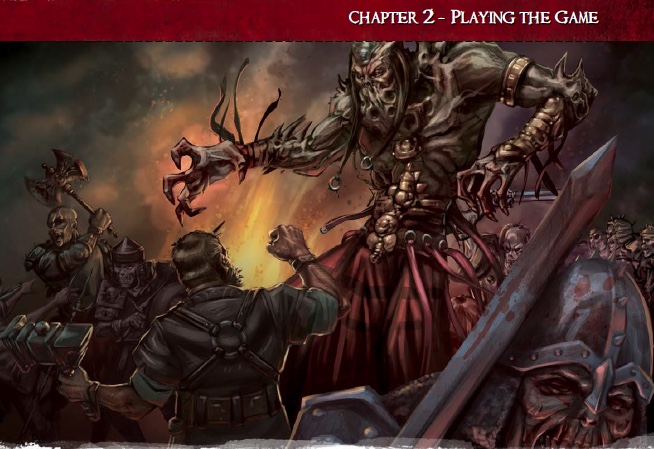
The illustration is of three heroes, an elf with a bow, a dwarf with an axe and a human mage battling a horde of undead. The words Dragon Age are at the top and the title of the scenario, Duty unto Death is at the bottom where it also indicates that it is an adventure for characters of level 2-4.
The cover of the Duty unto Death adventure for the Dragon Age RPG.

So, the scenario he wrote for it was Duty unto Death. They released it sometime after the show went live. He has included in the published version a few notes on how the game went on the Tabletop show, where the players surprised him, how he improvised certain encounters, that sort of thing. They are fun and possibly useful little asides. It’s short, teaches the basics of the game’s rules well and has lots of Dragon Age flavour in it so it was perfect for my purposes. There are quite a few other published adventures for Dragon Age, but most of them were much longer and would have required a lot more prep time on my part, which I don’t have right now. Duty unto Death is about 8 pages long. It’s not especially involved and doesn’t get into some of the tenets of the game. There is not much in the way of exploration or, indeed, social encounters. But, I feel like it’s doing what it sets out to do very well.

So far, our heroes, a group of Grey Warden recruits, traveling in Ferelden, have been left to their own devices by their leader, Duncan. Fans of DAO will know the name. It was fun to drop it in the intro. Anyway, he had introduced them to the duties of the wardens, gave them a few lessons about darkspawn and the blight and that buggered of to the Circle of Magi. He asked the recruits to head to a village to meet another Warden from Orlais. On the way, they got into a fight with a couple of darkspawn, tipping them off to the possibility of a coming Blight.

Cunning stunts

The Combat Stunts table from the Dragon Age RPG. It has 15 entries including "Skirkish - You can move yourself or the target of your attack 2 yards in any direction for each SP you spend," "Defensive Stance - You attack sets you up for defense. You gain a +2 bonus to Defense until the beginning of your next turn," and "lethal bloW: You inflict an extra 2d6 damage on your attack." The table shows the Stunt Point cost of each stunt on the left hand side and has the descriptions on the right.
The Combat Stunts table from the Dragon Age RPG.

That first battle was very instructive. It was the first time any of us had really interacted with the rules so we were all learning a little. After the first round, they had barely scratched these two Shrieks. It felt bad, like the worst sort of D&D, attritional combat, except for the highlight of the mage casting Walking Bomb on one of the bad guys. In the second round, people started rolling doubles and the stunts started coming. Sandor, the Surface Dwarf, added two extra dice to his damage with a Lethal Blow, almost smashing one of the darkspawn, and we were away. The players started to play more tactically, utilising their minor actions to add bonuses to their attacks by aiming, or bonuses to their defence by getting their guard up. They were utilising their class features almost immediately. I was surprised and genuinely impressive to see how instinctively my, admittedly very savvy and clever players, took to the mechanics. The combat ended with that Walking Bomb paying off, the Shriek went boom and took the other one with it, covering the entire party in black gore.

By the time they got to their destination, and found themselves in another fight, this time with some Devouring Corpses making a nuisance of themselves in the inn, it felt like they were old hands. We had to leave it in the middle of that battle since Replay was closing and we all had to go home. All in all, it has left me wanting more! Can’t wait for the next session.

My First Dungeon

Actual Plays

My experience with actual plays comes from an unexpected angle. D&D is for Nerds by the Australian Sanspants Radio network was the first one I listened to. I had heard tell of Critical Role but, even then, it intimidated me with its sheer length and the fact that it was in a visual medium. Listening to podcasts while out walking or commuting is one thing, sitting down to watch a four-hour episode is something entirely different. Although, during lockdown and the long period where I was working from home and didn’t go out much I did start to get into Dimension 20 on Dropout.tv. Honestly, it was the clips on Tik Tok that got me started on that. I’m glad I did get a Dropout subscription, in fact; it’s still the best value streaming service I’ve got. Anyway, The D&D is for Nerds nerds put together something much more manageable in length, that I could listen to on my pod-catcher of choice. It helped that it was funny and that I quickly developed an appreciation of the characters and the world that they inhabited. I don’t listen to these so much anymore. In fact, I don’t listen to a lot of actual play podcasts these days. I am far more likely to stick on a show about TTRPGs instead. I have introduced two of my favourites in the past, in a blog post. But here’s another, Talk of the Table is a production of Many Sided Media, who also produce Bitcherton.

Talk of the Table is presented by Brian Flaherty and Elliot Davis. These guys are RPG professionals and creators in their own right (Elliot Davis has a game on backerkit right now! Go check out, The Time We Have) but they use this platform, normally, to interview other creatives in the industry, whether they are game makers, artists, actual play performers or something else related to the hobby. Some of those I have enjoyed recently were episodes where they interviewed, Mörk Borg design genius, Johan Nohr, TTRPG video essayist and creator, Aaron Voigt, and Blades in the Dark forger, John Harper. Flaherty and Davis have a pleasant, approachable style and a genuine and excited interest in the works of their guests. It makes for a great “podcast hug,” as Blindboy Boatclub would put it.

My First Dungeon: The Wildsea

The Cover of the Wildsea Corebook by Felix Isaac

Anyway, listening to this show made me aware that they had an actual play podcast called My First Dungeon on their network. So, I thought to myself, I could listen to these guys playing RPGs, probably. It turned out they had a few seasons available when I went looking. These include seasons of DIE (which I will definitely be going back to listen to,) Orbital Blues, the sad space cowboy game, and Paint the Town Red, their most recent offering. But the one that caught my eye was their relatively recent season of the Wildsea.

If you have been around for a while on the blog, you might remember that the Wildsea was one of the games I was hoping to play before the end of this year. This vain hope has been utterly dashed at this stage of the year, but I am still interested in running it at some point. I have been reading through the book, on and off for a few months. What I have discovered while doing this is that it’s got a lot to it! There are so many different parts that go up to make each character, and each one of these parts brings with it a whole plethora of aspects and there’s a lot of new terminology to learn and the world is so wild and different… So, it has felt daunting to even know where to start with it.

Now, there’s one thing I think a good actual play can do, and that is teach the game. If they do it well, they can even tell a compelling story at the same time. Or maybe the compelling story is what helps you to learn. I feel like Dimension 20 had that effect on me when it came to learning to play 5E better. I knew it pretty well before I started watching those shows but by the time I had consumed like two or three seasons, I had a much more intimate knowledge of minutiae like spells and abilities that I did not previously feel I needed to have a keen grasp of as the DM. So, I went into My First Dungeon thinking I might, at the very least, get that experience from it. And you know what? I did.

From Session Zero of the Wildsea campaign, I was taking the elements I had only read about, the things that had seemed quite abstract, and I was applying them to the frame of the characters and the basics of the world.

From Session One, I already felt like I had a pretty good grasp on the way the mechanics worked. Tracks, aspects, dice pools, advantages, cut, twist: I understood them at a more than intellectual level.

And here’s the other thing about this series that grabbed me from the get-go, I liked these characters! I was invested in their rolls and the ways in which they used their aspects to express themselves and to succeed. I appreciated the players’ willingness to play to their characters’ weaknesses as well as their strengths, and the way they used the mechanics to bring about their failure when they thought that was narratively appropriate or necessary.

Finally, I think that each of the players in this actual play brought this game to life together. All of them put a lot of effort into building not only their characters, but also the shared world, through dialogue and backstory and by narrating the outcomes of their actions or negotiating with the other players for the best Twists. They do all this while maintaining a seemingly instinctive focus on the overall themes of the game, past lives, secrets of the lost world and secrets of the characters themselves, resurfacing.

I’m sure editing and production have a lot to do with this, too. If every table had an editor we could make it feel like our narrative beats and adherence to theme were foremost in our minds at all times. But seriously, I have to give a lot of credit to producer, Shenuque Tissera and Brian Flaherty who did the editing and sound design, while also being one of the players! There’s additional music and SFX courtesy of Artlist.io too. The voice effects and leitmotifs for the various characters are incredible and really work to spotlight individuals when that’s needed. Interestingly, this is a core part of gameplay in the Wildsea that has gone unmentioned on the show, as far as I remember, at least. Focus, “a sort of narrative spotlight,” according to the book, is a basic element of the Wild Words Engine and it is there to make players remember to pass the torch on to other players. I am sure the main reason it’s not mentioned is that these pros don’t need the reminder and that the sound design, editing and production are to such a high standard that it renders the concept unnecessary. Speaking of sound, there is also a musical surprise in every episode that I won’t spoil…

Here’s the full cast:

Firefly (GM): Elliot Davis

Brian Flaherty

Abby Hepworth

Noordin Ali Kadir

Kendrick Smith

J Strautman

Go check them out!