A Challenge
I have generally looked at Heart, The City Beneath as a campaign-play game. It’s made for it. It has a structure to the gameplay that rewards multi-session arcs. Your character’s beats beg you to spend time to seek out the opportunities to achieve them. And that Zenith ability; everyone perversely desires that big finale, their moment in the spotlight for one last time, that explosion of ‘themness’ right at the end so they can say they really went out in style.
So, when you are asked to run a Heart one-shot, what do you do? How can you replicate the uniquely satisfying journey that belongs to the delvers in a campaign, in just one session? The short answer, of course, is, you can’t. But, can you create a satisfactory one-shot with a slightly different feel? Yes, of course you can.
You will not be too surprised, dear reader, at this point, to discover that that was the exact situation I found myself in last week. I had a special request come from one of our founding Tables and Tales members to run a Heart one-shot, so I had to give it a go.
Heart Exam
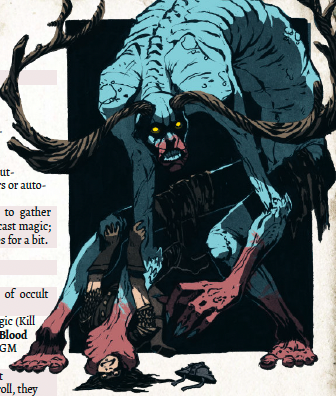
Grant Howitt and Chris Taylor know what they’re talking about when it comes to designing and running games, particularly their own games, I figured, so I started with them. Heart has a lot of useful tips for GMs in it. There’s advice for the novice and the veteran alike on how to run RPGs/story games/Heart. They also include separate sections for campaigns and one-shots. It’s worth noting that much of the general advice for running Heart is just as important in a one-shot context as in a campaign. The one-shot bit itself is minimal but useful.
Running Heart as a one-shot is straightforward enough. The only changes you’ll have to make are around pacing and how you inflict stress and fallout.
Pace-maker

The advice around pacing is as true for a Heart one-shot as it is for any game, you have to start fast and keep it moving. No long-winded expositions, no character-development heart-to-hearts that take thirty minutes, no hanging about. Start in media res or as close to it as possible. Provide the necessary information in summary or in flashback and get to the action. Also, you have to give them something they can do in one session, a goal, a destination, a creature to kill or a thing to retrieve. All this sounds easy enough, but it can be tricky. It has taken me quite a while to develop my one-shot technique to a point where I feel like I am almost guaranteed to get it done in one shot. You start to figure out where you need to kill your darlings to make up the time. Working that sort of thing out on the fly is a skill I have made gratuitous use of recently.
In this one-shot, I had the PCs escaping Redcap Grove as a sort of mini-delve on the way to the entrance of the actual delve which would take them to Hang Station. They had a simple job to deliver some psychoactive fungus to a Vermissian Sage in the station. But, woah, were they rolling badly… and also being little nut-jobs. The Cleaver, predictably, decided to hunt the Druids who were hunting them and it turned into a stress and fallout ridden combat. This was fun, and horrific and hilarious. Almost everyone in the combat hulked out at some point, the Witch into her True Form, the Deep Apiarist into her Awarm Form, the Cleaver into his Chimeric Form and the one remaining Druid into their Cave-dweller Form. The players understood the one-shot assignment and did not hold back. There’s no point in saving your cool power till the end… it’s all end. Anyway, because this took a little longer than expected, I ended up combining this mini-delve with the longer inter-landmark delve that I had prepared between Redcap and Hang. I essentially just combined the remaining resistance of the mini-delve and the delve-proper on the fly. This worked well, even though it meant I had to cut out an encounter with the Butcher…
Stress and Fallout

Mssrs Howitt and Taylor also mention stress and fallout in the extract above. You can’t be afraid to hit them hard. Fallout is one of the most fun things about Heart. Players are sick little freaks who love getting lumbered with terrible burdens. Give them what they want, I say! Fallout is one of the key ways to push PCs to act in certain ways and that pushes the game forward so it’s win-win, innit?
I took this quite literally. I made sure that the busted old crate they were transporting their dodgy mushrooms in was leaking the kind of spores that some sado-masochist might pay a large amount of coin for. Every time they rolled against the resistance of the delve or when they made any dangerous movements or just when nothing else was going on, I got them to roll Endure+Wild to resist the effects of the fungus. If they failed, they got Mind stress and if they got Fallout from that, they got one of the following:
FALLOUT: Traitor Brain, MINOR Mind – You relive a moment of regret ad nauseum. Always at the worst possible time. All actions increase in Difficulty by one step (ongoing.)
FALLOUT: What Did You Do? MAJOR Mind – You witness the effects of your worst mistake on those it affected. It is a gut-punch to the mind. When you mark Mind stress, roll two dice and take the highest (ongoing.)
This had exactly the effect I wanted. And if you engineer it right, you can use this sort of technique to bring about some really cool moments.
Pregens


Speaking of engineering things… making pregenerated characters for this game was the best decision I made. I had to combine it with a few tweaks to the rules, but, if I were to recommend doing one thing for your Heart one-shot, it would have to be creating and assigning pregens yourself as the GM.
I created three pregenerated characters, one Gnoll Cleaver with the Heartsong Calling, one Aelfir Deep Apiarist with the Enlightenment Calling and a Human Witch with the Penitent Calling. I gave them their starting abilities, picked their equipment, I even picked their names and answered some of the questions presented in the Calling and Ancestry sections that rounded them out as characters. I even chose their names and starting beats! I left a couple of answers up to the players, namely the ones to the questions about how their characters were associated with one another. Having them answer those gave them a sense of belonging and of fellowship with their adjacent weirdos.
Anyway, the character creation took the bulk of my prep-time, easily, but it was very much worth it. Here’s my thinking: I wanted to make sure we did this thing in one session so didn’t want anyone dithering over the details, and I didn’t want to have to explain all about every aspect of a Heart character before we even got started playing. I wanted to be able to have an inkling of the beats they would reach for to make it easier on myself to improvise them in the moment during play, I wanted to be able to plant connections to the PCs lives here and their and I wanted to be able to use the Heart itself, to make it feel like the Heart was reaching into their souls and coming out with their greatest desires. The Fallout that I wrote above? I wrote that with the idea in mind that the Penitent Witch might need that to confront her greatest regret, why? So I could introduce the last ace up a Heart GM’s sleeve, the Zenith Beats and Abilities.
The Zenith
They had been hitting both minor and major beats throughout the session and taking new abilities as appropriate. I allowed them to hit as many as they wanted. I had given them four each in their pregen character sheets. But that wasn’t enough for me.
Just as they were exiting the delve and entering Hang Station with their psychedelic cargo, I asked the players to refer to the book and take a look at their Zenith Beats and Abilities. I only pulled this out near the end so they wouldn’t know it was coming. Luckily each Calling only has two Zenith Beats available and each Class only has two or three abilities. So it wasn’t too much to look up in the moment, and, as soon as I told them this, I knew I had them (or two thirds of them anyway.)
I made it clear that I would be lenient in judging whether or not they met the conditions of the Beats because I know how good it is when a Heart PC hits their Zenith. So we made it happen. By the end of the session, each of them had brought about their own personal apocalypse and it was a thing of red, wet beauty. The Cleaver destroyed and replaced the Beast in the bottom of Hang Station, transforming the landmark into a swampy forest in the process, the Deep Apiarist summoned the Heart itself into the space just long enough to squash her into a red, wet stain and the Witch brought the Deep Apiarist back from the dead, sort of, as a clone made from the Heart itself, a clone that will always return no matter how many times it dies…
We wrapped the whole thing up neatly in about three hours. If I hadn’t cut the Butcher encounter and combined those two delves early on, it might have gone another half hour. Either way, a nice, diminutive package, I think you’ll agree.
Discover more from The Dice Pool
Subscribe to get the latest posts sent to your email.

 The Dice Pool
One thought on “One Shot to the Heart”