
Pay off
Twelve days into 2025 and I find two of my Gaming Resolutions are already paying off. Numbers 1 and 2 on my list went like this:
- Make those stars sparkle and make those wishes come true: I was first exposed to Stars and Wishes this year when I took part in my first Open Hearth games. For the uninitiated, at the end of a session, a GM might ask their players for their Stars, i.e. stand out moments, moves, characters, players etc. and Wishes, in other words, what they would like to have seen happen in the session, what they wanted more of or less of or what they would like to see in future sessions. For a GM, this is an incredibly useful tool. It allows you to see what your players like and what they dislike. But, I find, too often, I don’t always re-integrate the stuff that came up in players’ Stars and Wishes. And I know, for certain, that when I do manage to apply what I learned from feedback, it has made my games better. So, how am I going to do this? I have an idea, that I literally just came up with, to create a spreadsheet to record each player’s Stars and each player’s Wishes from every session of every game. I’ll add in some columns to record potential ways to add more of the good stuff and ways to fix the problems that were revealed. Another column will summarise players’ reactions to the solutions. If it needs more tweaking, another column will detail that. I think this could be an invaluable tool to improve my games and will be there as a record so I don’t forget.
- Brighter stars, wiser wishes: Sticking with the Stars and Wishes theme, I’d like to get more useful feedback from it. One of Tables and Tales’ fantastic founding members, Shannen, used a few methods to get more valuable feedback from her players in a game earlier this year. She requested feedback through DMs on our Discord. Why? Well, most people are pretty nice, actually. They tend to not want to offend anyone or say something in front of a group that might embarrass somebody. So, if you take the process away from the table, they might be more likely to tell you what they really think in private. We were just discussing this last night and, along with that, we all agreed that Stars and Wishes in the Discord chat for the game is way more valuable than having people just tell you them at the end of a session, when players are often pushed for time, or before they have had a chance to think about it and provide something really useful. So, my second resolution is to get written and private Stars and Wishes from now on.
Well, we had our fortnightly D&D game on Thursday night for the first time since our December break and everyone had great stars and wishes. They shared them on Zoom with everyone (it’s an online game.) But later some of them also shared theirs in our Discord chat as well. Tommy brought up a couple of really important points. One related to one of their favourite experiences of Wildspace in the game recently and how they would like to see more of that. This is the sort of thing that is easily actionable for me. With solid examples of the type of play people want to see more of, I can work to emulate that in the future. That was the easy one, and I am most grateful for it. More difficult might be their other wish: how do you get more meaningly relationships between PCs, as a GM?
Hands off
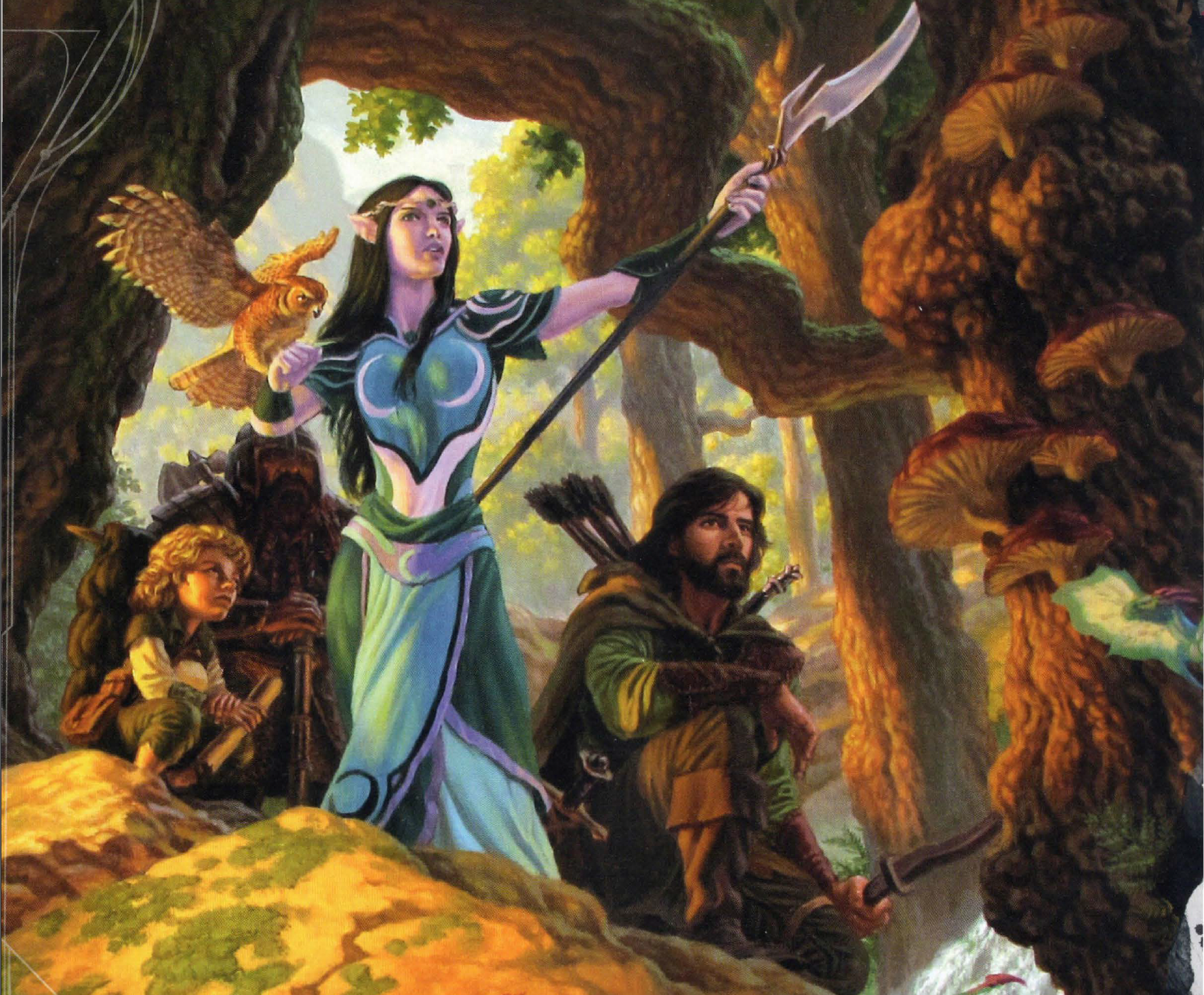
Just butt out? Right? I could just stay out of it. I don’t need to always be sticking my oar in, do I? I think that’s fair. GMs have a lot of jobs to do already, so if the PCs start getting into a conversation that might very well help to build or break their relationship, the GM should just take their big nose and get it out of those PCs’ business. But, of course, listen, eavesdrop and take note. You never know what you might be able to use later.
Sounds simple, right? But to be able to do this, it means leaving room for it to happen. Even if you don’t necessarily encourage this sort of relationship-building exercise, you still need to make time where it could potentially happen. This is one of those unintended consequences of having a game based on a ship. You have built-in downtime while they travel. In fact, the first time they set off on their squid ship, I asked them if they wanted to take some time to get to know one another. Now, this was a band of adventurers who had been thrown together by the vagaries of chance and the unseen hand of powerful NPCs. None of them knew each other at all mere hours before lift off. And some of them had dark secrets. So, the suggestion was met with muted trivialities and outright lies, largely.
Instead, they got to know each other through their actions and words during their adventures, often in the most hilarious ways! Personal relationships were formed between certain of them in a pretty natural way. But there is a clear desire to make similar connections between other PCs. So, I am wondering how to leave space for that. There is an extended wild-space journey coming up, starting in the next session. This might be the best opportunity I have had to hand them that chance. My current plan is to simply ask how they are spending their time aboard ship during the voyage and hope they grab the reins themselves.
Hands on
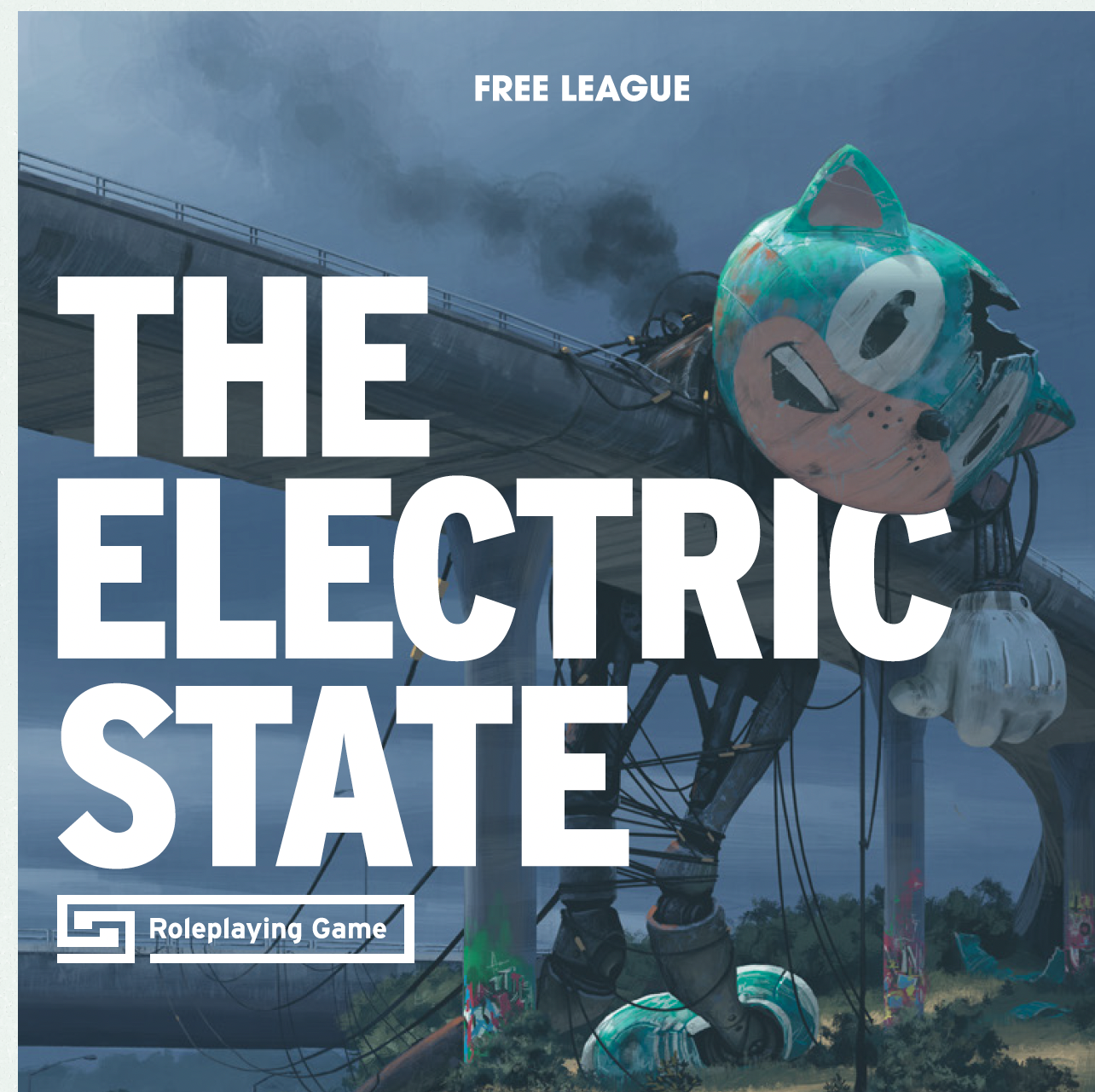
But I can’t help thinking about the mechanic in a game I recently read, The Electric State. The Electric State is a road-trip game, so it has the journeying aspect in common with our little jaunt across fantasy space, if not much else. I think the designers looked at this genre and wondered how to bring recurring NPCs into it. I might be totally off the mark with this supposition but there is something about an adversarial or beloved NPC that comes up repeatedly in a campaign that players just love and the “on the move” nature of a road-trip game means that you might have to really shoe-horn in those characters to an extent that might feel very un-natural. So, instead of relying on your NPCs to cause stress and interpersonal drama, the game makes it so that the PCs have to be creating the Tension themselves. Tension is the name of the mechanic and it is required to allow your PCs to recover lost Hope (one of an Electric State character’s two tracks, along with Health that measures how they’re getting on.) Your PC has a Tension rating with each other PC, and vice versa. These ratings are likely to be unbalanced, i.e. Viv might have Tension 0 with Juan, but Juan has Tension 2 with Viv. This extract is from the core Electric State book:
To each of the other Travelers, you have a Tension score ranging from 0 to 2.
0 No tension, no question marks or unspoken thoughts or feelings.
1 Suppressed or contained irritation, love, interest, or other feelings and thoughts.
2 Uncontained strong emotions, such as rage, love, or even fear.
When you lose Hope points through play and you want them back, you have to contrive a scene with another PC with whom you have Tension. This might be an argument or a heart-to-heart talk or an emotional breakdown, but whatever form it takes, you both reduce Tension with the other PC by 1 point (if possible) and you regain a point of lost Hope. Of course, this means that, if your character does not have any Tension with any other PC, they have no way of regaining Hope points. So it is in your best interest to ensure you have some interpersonal drama at all times.
Dave Thaumavore, in his review of the Electric State, tended to think that this Hope-Tension feedback loop did little more than encourage manufactured drama between PCs. Of course, that’s the idea. The game is made to do that. It is certainly no coincidence that the mechanics work that way. But I can see his point. Will it feel too contrived? Will it be a pain for players to try and come up with new ways that one of the other characters has pissed off their own character all the time? Not sure. Haven’t played the game yet, but I’d willing to bet it would get bothersome if the campaign went on too long. Now, I will say that the Electric State is designed for short campaign play, so maybe it would be fine.
My question now is, if I wanted to try and tack on yet another non-D&D sub-system to this game, how would I do it with something like Tension? I could just take the Tension mechanic wholesale and give everyone a Tension score with everyone else. And then ask them to work out there shit in their downtime hours, so building more interesting and deeper relationships. But what motivation could I give them to do this? There ain’t no Hope points in D&D. But, maybe if two PCs deliberately get together to have a scene in which they reduced their tension, they could each take a boon, like a point of inspiration or temporary hit points or some other special effect only available to them when they work together next time.
Maybe the real question is, should I adopt this sort of mechanic just to encourage intra-party roleplaying? Or should I just keep out of the way?
Any thoughts or suggestions will be greatly received, dear reader!
Discover more from The Dice Pool
Subscribe to get the latest posts sent to your email.

 The Dice Pool