My First Dungeon

Actual Plays

My experience with actual plays comes from an unexpected angle. D&D is for Nerds by the Australian Sanspants Radio network was the first one I listened to. I had heard tell of Critical Role but, even then, it intimidated me with its sheer length and the fact that it was in a visual medium. Listening to podcasts while out walking or commuting is one thing, sitting down to watch a four-hour episode is something entirely different. Although, during lockdown and the long period where I was working from home and didn’t go out much I did start to get into Dimension 20 on Dropout.tv. Honestly, it was the clips on Tik Tok that got me started on that. I’m glad I did get a Dropout subscription, in fact; it’s still the best value streaming service I’ve got. Anyway, The D&D is for Nerds nerds put together something much more manageable in length, that I could listen to on my pod-catcher of choice. It helped that it was funny and that I quickly developed an appreciation of the characters and the world that they inhabited. I don’t listen to these so much anymore. In fact, I don’t listen to a lot of actual play podcasts these days. I am far more likely to stick on a show about TTRPGs instead. I have introduced two of my favourites in the past, in a blog post. But here’s another, Talk of the Table is a production of Many Sided Media, who also produce Bitcherton.

Talk of the Table is presented by Brian Flaherty and Elliot Davis. These guys are RPG professionals and creators in their own right (Elliot Davis has a game on backerkit right now! Go check out, The Time We Have) but they use this platform, normally, to interview other creatives in the industry, whether they are game makers, artists, actual play performers or something else related to the hobby. Some of those I have enjoyed recently were episodes where they interviewed, Mörk Borg design genius, Johan Nohr, TTRPG video essayist and creator, Aaron Voigt, and Blades in the Dark forger, John Harper. Flaherty and Davis have a pleasant, approachable style and a genuine and excited interest in the works of their guests. It makes for a great “podcast hug,” as Blindboy Boatclub would put it.

My First Dungeon: The Wildsea

The Cover of the Wildsea Corebook by Felix Isaac

Anyway, listening to this show made me aware that they had an actual play podcast called My First Dungeon on their network. So, I thought to myself, I could listen to these guys playing RPGs, probably. It turned out they had a few seasons available when I went looking. These include seasons of DIE (which I will definitely be going back to listen to,) Orbital Blues, the sad space cowboy game, and Paint the Town Red, their most recent offering. But the one that caught my eye was their relatively recent season of the Wildsea.

If you have been around for a while on the blog, you might remember that the Wildsea was one of the games I was hoping to play before the end of this year. This vain hope has been utterly dashed at this stage of the year, but I am still interested in running it at some point. I have been reading through the book, on and off for a few months. What I have discovered while doing this is that it’s got a lot to it! There are so many different parts that go up to make each character, and each one of these parts brings with it a whole plethora of aspects and there’s a lot of new terminology to learn and the world is so wild and different… So, it has felt daunting to even know where to start with it.

Now, there’s one thing I think a good actual play can do, and that is teach the game. If they do it well, they can even tell a compelling story at the same time. Or maybe the compelling story is what helps you to learn. I feel like Dimension 20 had that effect on me when it came to learning to play 5E better. I knew it pretty well before I started watching those shows but by the time I had consumed like two or three seasons, I had a much more intimate knowledge of minutiae like spells and abilities that I did not previously feel I needed to have a keen grasp of as the DM. So, I went into My First Dungeon thinking I might, at the very least, get that experience from it. And you know what? I did.

From Session Zero of the Wildsea campaign, I was taking the elements I had only read about, the things that had seemed quite abstract, and I was applying them to the frame of the characters and the basics of the world.

From Session One, I already felt like I had a pretty good grasp on the way the mechanics worked. Tracks, aspects, dice pools, advantages, cut, twist: I understood them at a more than intellectual level.

And here’s the other thing about this series that grabbed me from the get-go, I liked these characters! I was invested in their rolls and the ways in which they used their aspects to express themselves and to succeed. I appreciated the players’ willingness to play to their characters’ weaknesses as well as their strengths, and the way they used the mechanics to bring about their failure when they thought that was narratively appropriate or necessary.

Finally, I think that each of the players in this actual play brought this game to life together. All of them put a lot of effort into building not only their characters, but also the shared world, through dialogue and backstory and by narrating the outcomes of their actions or negotiating with the other players for the best Twists. They do all this while maintaining a seemingly instinctive focus on the overall themes of the game, past lives, secrets of the lost world and secrets of the characters themselves, resurfacing.

I’m sure editing and production have a lot to do with this, too. If every table had an editor we could make it feel like our narrative beats and adherence to theme were foremost in our minds at all times. But seriously, I have to give a lot of credit to producer, Shenuque Tissera and Brian Flaherty who did the editing and sound design, while also being one of the players! There’s additional music and SFX courtesy of Artlist.io too. The voice effects and leitmotifs for the various characters are incredible and really work to spotlight individuals when that’s needed. Interestingly, this is a core part of gameplay in the Wildsea that has gone unmentioned on the show, as far as I remember, at least. Focus, “a sort of narrative spotlight,” according to the book, is a basic element of the Wild Words Engine and it is there to make players remember to pass the torch on to other players. I am sure the main reason it’s not mentioned is that these pros don’t need the reminder and that the sound design, editing and production are to such a high standard that it renders the concept unnecessary. Speaking of sound, there is also a musical surprise in every episode that I won’t spoil…

Here’s the full cast:

Firefly (GM): Elliot Davis

Brian Flaherty

Abby Hepworth

Noordin Ali Kadir

Kendrick Smith

J Strautman

Go check them out!

Short Story: Commute

Submission

This story is one of the few I submitted to a magazine. It didn’t make the cut but I still like it enough to share with you, dear reader. It’s a short story with a pretty clear collection of themes and what always felt to me like a pleasing format. I hope you enjoy it!

Commute

by Ronan McNamee

The train doors beep beep beep behind me. I stand on the slick floor and liberally drip. A clunk and a peep signal the train’s readiness to depart. I sigh.

The carriage is half full of half drowned suits and sodden hairdos. Ill-placed umbrellas release their gathered torrent in streams. It’s safer in a seat so I seek one out. All the usual faces, the grumps and the chatterers, the sleepy-heads and the readers, the men and the women. I’m looking for a woman. I get chatted up enough in work. There’s Sophia, eyes closed, head back against the headrest, lips pursed, breathing regular. That’s what I named her, of course. I’ve never even spoken to her. To me, she is the epitome of ‘Sophia,’ perfectly turned out, black hair, sallow skin, sophisticated. Too sophisticated, in fact, to even be fazed by the goings-on on the train. I’ve never seen her so much as open her eyes, though I’m certain she’s not sleeping. Distant cymbals can be heard from her earphones. In my mind that’s the percussion on a Zucchero song. I sit next to her and sigh another sigh, anxiety creeping up my oesophagus. Every moment is a moment closer to another eight hours in hell.

I wipe the last crumb of sleep from my eye and look around. The seats are all packed with familiar commuters. A holidaying couple corral their luggage in the space in front of the doors at one end of the carriage, a cyclist obliviously pisses off regulars at the other end. Debs is sitting across the aisle from me. Debs plays games all weekend long. It’s her only escape from a life that is otherwise unsatisfactory. She works in a game store where her boss leers at her and the customers joke about whether they would or wouldn’t as though she were a lewd selfie. Not my finest character to date. Swap the game store for a music store, her leering boss for my lecherous one (Greg has been ogling me since the interview) and her gaming for my vinyl collection and Debs is basically me. A little one dimensional, maybe. I notice she’s looking a wee bit uncomfortable with the attentions of the guy across the table from her. She pretends to apply her makeup, glances once anxiously at him over her compact. I watch as her irises widen and her mascara applicator pauses mid-stroke. She’s rocked by a shudder, almost drops the mirror, but her eyes are captured by his.

I take a look at her captor. The man is grey, not of hair, which is more like stringy, dry rice noodles, but of complexion. He seems ancient, mostly dust and brittle bones wrapped imperfectly in paper. His suit is a pigeon-grey that was once a raven-black. A black orb shifts under his bald brow, tracking Debs’ movements. I shiver involuntarily but I can’t keep my gaze from him. He fascinates me. He’s a physical manifestation of “Swordfishtrombones.” The train jolts to a stop. Debs breaks his hold on her. Then, heels and umbrella thrown out behind her, she click-clacks through the train car and out the beeping doors as fast as her bejegginged legs will carry her.

Swordfishtrombones just sits there, eyes in his lap with his gathered hands. The top of his head is blackened and blemished with sores and liver spots beneath his noodle-hair. I look away, out the window past Sophia, and turn up the volume on “Hazards of Love.” He doesn’t even look up when I pass him on my way to alight at Central.

Next morning and I’m taking off my shades to get a better look at my seating options as I step on the 08:09. My sun-dappled mood darkens as I spot all those usual faces. I struggle past Mrs Costello’s enormous handbag, sprawled in the aisle as per usual, Tuesday to Saturday. Mrs Costello I named for Elvis (‘Every Day I Write The Book’ Elvis, not ‘Suspicious Mind’ Elvis.) It’s her thick, black spectacle frames and spiky, black hairdo. She blabs away on her mobile, unaware of the commuter trauma caused by her oversized hand luggage.

My seat is the same as yesterday, right beside Sophia. Debs is missing, though. Odd. She normally applies her make-up somewhere on my carriage between 8:09 and whatever time she gets off, Monday to Friday. Maybe she’s on holiday, maybe she’s sick. Swordfishtombones is absent today too. I name the resulting emotion, “relievappointed.”

I fill my ears with Joanna Newsom. “Caaas-i-o-p-ah,” sings Joanna as I stew yesterday’s memories, mixing Greg’s lewd condescension with a dollop of Fallout-Boy-kid’s breast-obsession and a healthy twist of my own pickled bitterness. By the time I step onto the platform it has been stirred up into what I can only describe as a reddish-brown anxiety bisque. I sigh hard and march off to my doom again.

Black vinyl hair hangs in front of my face. Rain water falls from it in a sheet. I feel like bawling. I’m sick of this fucking train and all these assholes being herded to their shitty jobs in their depressing offices. I’m sick of this fucking country and its roulette-wheel weather not to mention its cheap, plastic umbrellas. I stand, fuming for a minute as I wipe my face and then check out my raccoon bandit mask in my reversed phone camera. Great! Fucking Wednesday! I pull a wipe out of my bag and stomp to the nearest free seat to sort my makeup out. My seat is at the same table that is occupied every week day by Indian Lou Reed (I assume this needs no explanation.) Indian Lou Reed nods at me but does not smile. I glare at him. Indian Lou Reed’s day job is as warehouse manager of a mid-size office-supply company where he attempts to ignore his colleagues’ casual racism all day long. But by night he is front man to tribute band, “The Velvet Underworld,” which cleverly mashes the music of his two favourite bands. It looks like he had a hard night on stage last night but the worst signs of it are hidden by his trademark shades.

Across the aisle… My breath actually catches. Directly across the aisle from me sits Swordfishtrombones. A spider crawls up my spine and another one skitters around my brain. He looks different, not younger exactly but more filled out, a starving man who’s had a good meal. On his head the dried noodles have become more like greasy squid ink pasta, plastered thinly to his worm-grey scalp. In profile I can make out the frayed end of a smile. I am staring now and I have no shame. His one visible eye, a marble shifting around in its pallid socket, draws me in. It reminds me of an old cathode ray tube television that has been switched off, dark and distortingly reflective. I glance away from his eye to see even his suit is a little more raven and a little less pigeon today. This time the object of his attentions is Sophia. Sophia has her eyes open. They are bloodshot and rheumy. This startles me more than Swordfishtrombones’ trip to the mortuary’s make-over artist.
Sophia’s face is almost unrecognisable. Gone is the sophisticated lady. Here sits an alcoholic bereft of hope. I can see a sob struggling to escape her throat as her lip trembles. She’s watching Swordfishtrombones. In fact, she can’t rip her bloody eyes from his. I want to reach out to her, touch her arm and comfort her, tell her he’s just some weirdo, tell her she’s too classy for this sort of behaviour. Instead, I keep my hands folded in my lap and watch their psychic battle over the table. I watch them until my stop is announced. I rise, feeling a hard, little bubble of anxiety squirming up from my belly. I back away down the aisle, all the while watching Sophia’s eyes. The doors beep, I start to turn to leave, Sophia’s eyes flicker my way, irises like bullet holes in her vein-cracked eyes. She fixes me with that gaze, pleading, then terrified, then resigned, then they flick back to Swordfishtrombones and I run. I’m weeping freely by the time I hit the platform.

“Why don’t I just quit,” is the question of the day. It is the question of many days, honestly. “Money,” and “fear,” are the usual answers. I’m on the train again. Preoccupied, I shove my sunglasses up on top of my head and sit opposite Mrs Costello. Auto-pilot. I’m on auto-pilot. That bastard, Greg. That fucking bastard. Did I lead him on? Did he just get the wrong idea? Maybe I said something to make him think I wanted to fuck him in the dirty old fucking shitty storeroom. Fuck that! This is not me! I don’t think this way! I’m beginning to understand why people do think this way, though. My stupid brain repeats this loop or something very similar every few minutes. Finally, my stomach lurches as the train pulls into Central. I close my eyes, clamp my jaw shut and rise.

Friday! I wish the Cure song were true. I’m not in love though, I think I’m in hate. My head pounds and I feel sick. One more day with that bastard. The sky roars as I mind my step through the 8:29’s sliding doors. I turn to watch the first tentative drops. I’m not even seated before a psychotic drummer starts to beat out a cacophony along the roof. My eyes are drawn to the darkening world beyond the window as I take a seat across a table from Mrs Costello. I choose it so he can’t sit opposite me. I can’t deal with any further existential terror this morning. My life is doing a good enough job providing that all on its own. Once I’m sitting, Sophia occurs to me. I was so wrapped up in my own shit yesterday I didn’t even look for her. I grip my armrest and whip my head around, the better to check out the carriage. No Sophia. I turn back knowing he’s there across from me. I keep my eyes closed, as if mid-blink. He comes with the rain. He comes with the misery and the end of the rope. He comes when you need him. I open my eyes.

Today he looks more like a rakish undertaker. His hair is slicked into a cow’s lick across his maggot-coloured forehead, the ghosts of black eyebrows have grown above his eyes, right above his… dark, quarry pool eye…

The Heart of the Matter

Not entirely seat of your pants

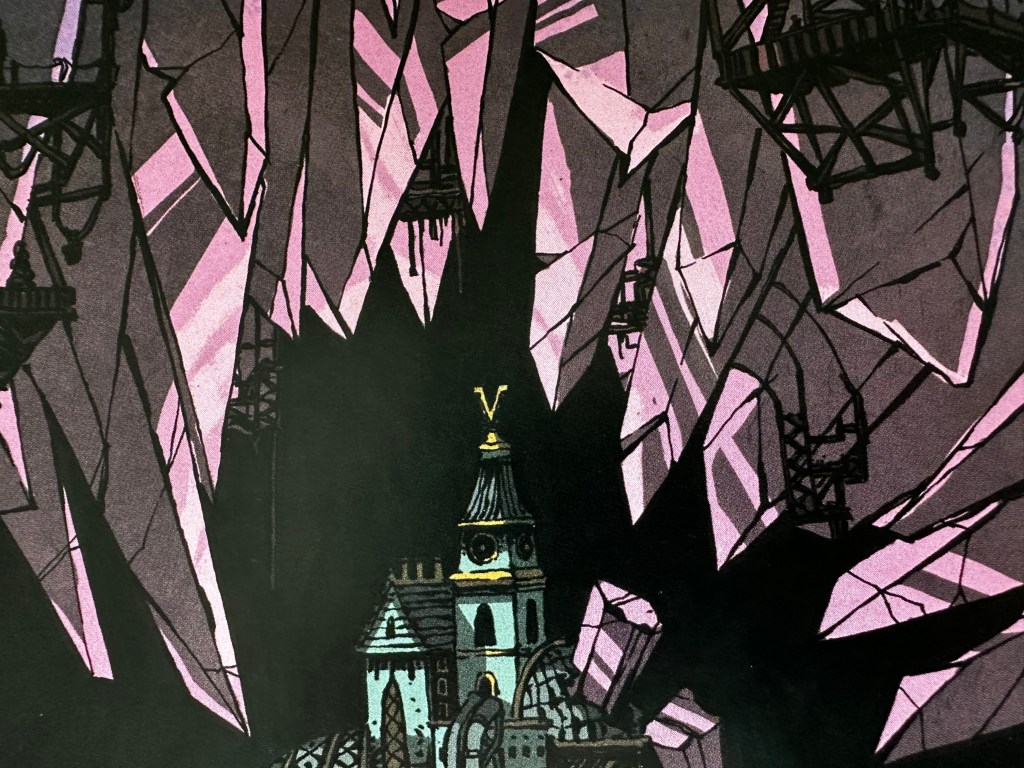
A portion of the inside cover of my copy of Heart: The City Beneath from Rowan Rook and Decard. Illustrations by Felix Miall

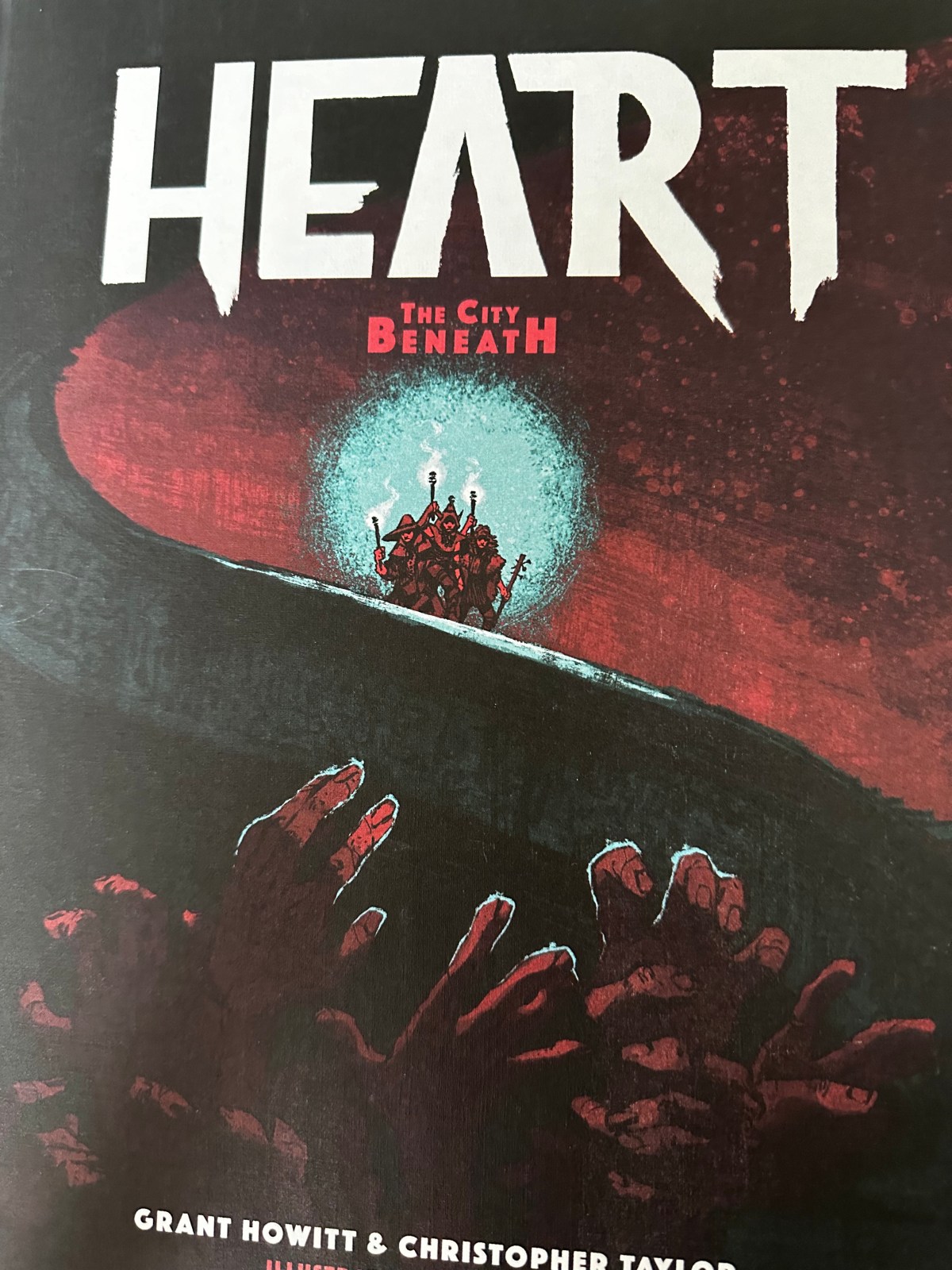
The philosophy for some Heart GMs seems to be, don’t you dare plan your Heart campaign or sessions. Like, just sit down with your players, make some weirdos to do some delves and then decide on a starting place. That might be in media res, as the PCs meet one another while hopelessly lost in Labyrinth or it might be at home in their shabby-chic apartment in Derelictus. From there you might just ask them what they want to do next and, when they tell you, just try to keep up with them! This is a valid way to play the game, I think, as long as you have either an exhaustive knowledge of the landmarks, adversaries, plot hooks and people of the Heart, or an effective and suitably weird set of random tables. If you approach it from this direction, the players are going to have the most input but the GM is going to have to improv a lot and do a great deal of work on the fly. It also presupposes a certain degree of setting knowledge on the players’ part, I think. This can be stressful and a lot to expect of everyone but I am pretty sure this is the preferred method of a lot of Heart GMs.

A portion of an illustration of Derelictus, the City Between by Felix Miall. Heart: The City Beneath, page 136.

Another option, of course, is to plan everything, start, middle and end. This is totally do-able. The book provides plenty of fodder to feed your hungry campaign. It describes dozens of landmarks and provides you with lots of plot hooks to get the PCs interested in pursuing the thing you want them to. So you can have them all meet in a Derelictus tavern where they overhear something about a plot by some Gryndel to pursue a valuable quarry into the Heart, plan the first delve to take them after the Gryndels only to find the quarry in Grip Station, near death but with a dire warning for the whole city that an army of Angels rises from below and a request for the delvers to spread the news to the Temple of the Moon Beneath, plan out the next delve to there, etc. etc. This sounds very much like a traditional adventure module for the likes of D&D. And that is all well and good. It allows a very strict control on the part of the GM and makes for a plot the PCs can uncover. But it will certainly lead to some railroading and could well make for potential dissatisfaction for the players and the PCs as they feel they have taken a back seat to the narrative planned out so perfectly by the GM. This method will ignore the great strength of Heart, it’s freeform potential, the loose structure inherent in the Beats system and the story being told by the delvers’ choices and their rolls and the Fallout that comes out of them.

A portion of an illustration of delvers planning a delve by Felix Miall. From Heart: The City Beneath, page 103.

So, how about somewhere in between? It seems sensible to meet in the middle. You make your weirdos, then you all discuss what sort of game you would like for them, GM and players together. Or you could take those two steps the other way around. Either way, you have an idea of the sort of story you all want to tell together and you all take responsibility for making that happen. This is with the understanding that what you think you want at the start might very well change after one or two or five sessions. That’s when you realise that, while you thought you wanted to help out that Haven you came across at the end of your first delve, it turned out what you actually wanted all along was to physically explode in such a way as to take out as much of the surrounding entities as possible so you could all travel to the afterlife together, an offering to your Goddess. And in pursuit of these elastic goals, the GM comes up with a loose web of places, people and objects that the PCs might have a chance to interact with. The GM will probably do this, at most, in between each session, with several ideas of where the story might go in the two or three sessions afterwards, but with no expectations.

A portion of an illustration by Felix Miall, of Grip Station, a Tier 1 Landmark. From Heart: The City Beneath, page 138.

Here’s what Messrs Howitt and Taylor have to say about it under the section entitled, “Stop Planning” on page 109 of the Heart core book:

Flexibility and adaptiveness are the keys to success. When you prepare, think in terms of characters, broad concepts, motivations, snatches of ideas that you want to play with. The world doesn’t exist until you speak about it at the table. Sure, you might have thought about it – you might even have written it down in a notebook – but until the players interact with it, it’s in total flux. The players just turn up every week and make it up as they go along. Why can’t you?

The quantum campaign made up of Shrödinger’s delves. And this about sums up the type and degree of prep I have been doing before each Heart session more recently. It’s more fun for me to do it this way too. I get to be surprised by what the players do and I get to discover the Heart along with them a lot of the time.

From Haven to Terminus

Yeah, that’s the name of our Heart campaign. It’s coming to an end this week. I guess the name gives away quite a lot of my thinking behind it. I was finding it hard to let go of the traditional module style of prep at the start. Yep, I decided to make a bold statement about, not only where the campaign would start, but also where it would end up. Now, this wasn’t as bad as it sounded. I had a very vague idea of a Campaign Frame for the game, that’s all. I used one of the plot hooks described in the Derelictus section of the Heart core book. Verrex, a retro-technologist with his tumble-down workshop situated on one of the platforms of Haven Station wanted the delvers to track down his robotic double, V01. The construct had expressed an interest in visiting all the Vermissian stations in the City Beneath, so he suggested the PCs use that as a guide to finding him. That was it. Everything in between was entirely up in the air, but it gave them a loose path and a potential final goal.

A portion of the illustration of a Gnoll Incursion Team by Felix Miall. From Heart: The City Beneath, page 188.

That was, of course, until I decided to employ the adventure presented in the Heart Quickstart guide, Drowned. Now, I am not going to spoil any of this adventure here but what I will say is that it lays out a very particular path ahead of the PCs, with the havens they will reach at the end of each of the numbered delves, the NPCs that will push them on from one place to the next and a big old final set piece. Now, since all I had before making this decision was a loose Campaign Frame, a little concreteness was actually welcome. It allowed me to see how to do things like come up with my own delves, use Haven NPCs to best advantage to help drive narrative and try to attach the PCs to someone or something only for them to find a way to betray or deceive them. But, after five or six sessions of following the adventure, I became aware of how the campaign had ended up on rails. I wasn’t providing them with options, I was forcing them down the path laid out by Drowned. I have found it hard to get out of this frame of mind since then, although I have tried to follow the advice from the book that I quoted above.

The delvers just reached Terminus, having taken a near-lethal shortcut through The Source, one of the Eight Heavens. The Junk Mage is banking everything on a meeting with a gnoll in Terminus who can teach them how to use the Nexus Device there to enact their will upon the entire city, The Vermissian Knight has pumped his mystical train armour full of soul power, the better to resurrect the entire inter-dimensional subway network, and the Deadwalker has just had his Zenith wish to combine his essence with that of the Heart itself thwarted by the Vermissian Knight who says he will not stand for his “human servants” abandoning him until his work is done (he’s an aelfir obvs.)

How will it end up? We’ll find out soon. But whatever happens, I am now pretty sure that these amazing players are going to surprise me yet again.

Woodpaneled

Vintage RPG

Do you listen to the Vintage RPG podcast, dear reader? Do you follow VintageRPG on Instagram? If you are reading this blog, the chances are good that you do both of those things. But, in case you have somehow never come across it, the podcast is presented by Stu Horvath and John “Hambone” McGuire. On it the lads chat about lots of RPG related subjects. As the name implies, they do talk about older games, like Fighting Fantasy and Beyond the Supernatural, which, as a gamer of a certain vintage, I very much appreciate. But many of the most interesting episodes involve newer games like Swyvers. They often have fascinating interviews with game makers. Their conversation with Swyvers creators, Luke Gearing and David Hoskins, convinced me to back the project and I’m so glad I did!

And on Instagram, Stu posts at least five days a week with details of old modules, game systems, books, accessories etc. It’s the exact kind of nostalgia I can enjoy. I am of the general opinion that most types of nostalgia are just gateway drugs to the sort of opinions that lead many people to vote for tangerine demagogues. But, Stu is under no illusions. He takes a critical look at each of the products he features and calls it out when they are problematic, poor quality or just nasty.

The point is, Vintage RPG is a wonderful source for news on the RPG scene, historical gaming facts and deep delves and has acted as an outlet for game creators and enthusiasts to push themselves, their work and their passions.

Webring

So anyway, on their recent show, ostensibly about Eat the Reich, Stu and Hambone introduced their listeners to the Woodpaneled webring. For those of you who haven’t heard of this phenomenon, this is how Wikipedia defines a webring:

A webring (or web ring) is a collection of websites linked together in a circular structure, and usually organized around a specific theme, often educational or social

Woodpaneled

The Woodpaneled Webring was founded by Stu to help those participating in it to have an internet experience that is not entirely governed by the algorithms of social media companies or the advertisement driven peccadilloes of search engines. He put the call out on the show for artists, writers and designers with websites related in some way to a broad theme. Most of the sites that are part of the ring now are to do with RPGs or at least RPG-adjacent but some are more broadly about culture and art. Here is a link to the a short piece Stu wrote to explain why he started this thing. He explains it far better than I could, especially as I am pretty sure I have a very different relationship with wood panelling than he does!

Now, I don’t have much of a presence on social media. I have an Instagram account that I am fairly active on and I just started a Bluesky account @thedicepool.bsky.social which I have yet to even post on. I gave up on Facebook many years ago for the same reasons that I view nostalgia with suspicion, and I abandoned Twitter when the fash started to take over. Basically, the idea of a smaller, slower, less shouty and more contemplative internet appealed greatly to me. I thought this sounded like a perfect home for The Dice Pool, to be honest. So I contacted Stu to ask him about joining and he was so enthusiastic and sound about it! And so helpful. I am not terribly experienced when it comes to the technical side of running this website so I needed his assistance to jury-rig a solution to allow me to embed the Woodpaneled widget that you can see at the top of my main page (I am working on getting that to appear on every page. Like I said, I’m more of a tortoise than a hare when it comes to the backend stuff, but I’ll get there in the end.)

So, dear reader, I want to encourage you to go hit those “Next” and “Previous” buttons on the widget and have a dive into other sites on the webring. There are some fascinating and creative people involved!

Liminal_

Survivin’

It is the kind of thing people around here might say when you ask them how they are getting on, “Survivin’.” It is the sort of bleak answer to an innocuous question that is probably played for laughs. At least, if it isn’t, you laugh anyway, because, otherwise, you are likely to get drawn into a conversation.

But you know what it means, even if they are being facetious. They are probably struggling in some way. Maybe they are just tired, maybe they have a hang-over, but maybe, the world has been having its way with them. Perhaps their car broke down and they don’t have the money to get it repaired right now. Maybe they were on the way to the hospital to visit their sick mother when they broke down and they missed the visiting hours. And their phone died before they could call someone to collect them and they had to walk for miles along the hard-shoulder. They caught a terrible cold and now they can’t breathe right and sleeping is impossible and they can’t enjoy anything because merely existing has become uncomfortable. All they’re doing is survivin’.

So wouldn’t it be fun to play a game where that’s the only aim? Surprisingly enough, I think it might.

Of course, survival horror is nothing new. It is a major video game genre. People love Silent Hill! The last game I wrote about on this very blog was a survival horror TTRPG, even though it was wrapped in a cosmic horror disguise. But the game I want to write about today feels a little different. Not totally, you understand. It sticks to the same themes of helplessness, despair and terror in the face of an indifferent or downright hostile environment (part of the reason I wanted to discuss it at this time.) But it has a few indiosyncrasies that help it to stand out.

Liminal_

Pretty sure that’s pronounced “Liminal Space.” The name does make it uniquely difficult to google but that is maybe why the book is called Liminal_Survival Guide. I picked it up from Iglootree here. The creative team is Alexei Vella and Neonrot/Willow Jay. The illustrations are fun/disturbing and are all done with ASCII characters by Alexei Vella.

There are elements of the layout and graphic design (also done by Vella) that remind me of the recently released Death Match Island. The liberal use of redaction with the suggestion that parts of this “survival guide” are from some sort of real world manual, written for the employees of some institution or shadowy company is the main through line.

This survival guide is for the eyes of _ personnel only.

Imagine my surprise when I discovered that Alexei Vella has also contributed to a new island for that game!

Anyway, back to Liminal_. It is a map-making game at its core. You are probably going to be the GM (or Architect) if you own the book. You’ll need at least two other players and a large piece of graph paper. On it, the players (known as the Disoriented in this game) will be drawing rooms as you roll for them. There are lots of rooms to roll from. More than half the book is made up of room prompts!

The basics of the game go like this. The Disoriented start in a square room with a door in each wall. They roll off for initiative and the first one to go decides which door to choose. They can move into it at the cost of Fatigue, their only stat. The first one to enter a room is likely to take more Fatigue than those who follow, but every time anyone takes any kind of action, they are going to incur a Fatigue cost. Once they get 100 Fatigue, they’re screwed, they get Absorbed by these Back Rooms they have found themselves inhabiting.

There are rooms of different shapes and sizes, there are rooms that have items in them. Carrying items adds to Fatigue but they might help the PCs in some way. They might help them get away from Entities that occupy some of the rooms. Like Cthulhu Dark, you can’t fight them, all you can do is run. There is no fighting in this game. The Disoriented make a Fatigue Test to evade them by escaping from the room. They roll a d100 and if they get equal to or higher than their current Fatigue they succeed. If they fail, they take more Fatigue. They might also garner Injuries. Injuries cause a continuous rise in Fatigue and may have other adverse effects.

Sometimes, depending on the room prompt, a room vanishes and you better hope you are not trapped in there when that happens. Other times, you might enter a Dead Room, which is just a room with only one door, i.e. the one you came in. There are, luckily, Rest Rooms to allow the PCs to recover some of their Fatigue. And there are Escape Rooms. If you are lucky enough to keep your Fatigue low enough through your harrowing journey through the Rooms, and you avoid being Absorbed by what must surely be a sentient labyrinth, you might just escape! Seems unlikely…

The entity prompts and room prompts are well-thought out, appropriate and fun in the most despicable way possible. Here are a couple of examples:

Entity prompt: A mass of mulch, organic green material and mosses rapidly grows into a human man, a skeleton briefly visible inside it. The creatures eyes are blood red as it reaches for players, roaring.
Room prompt: Players enter a short, dimly-lit hallway. Yellowing wallpaper covers the walls, and rotting, off-white carpet covers the floor. There are several missing persons posters covering the walls. Some of them bear the faces of the players.

I do not want to give too much away here since I want to play this game and my players read this blog, but, honestly, there are so many good prompts in this book! I imagine a bloody good time rolling up these rooms and horrors.

And, on top of all those, there are even more than a hundred “Guestroom Prompts” written up by such RPG luminaries as Grant Howitt (Spire, Heart etc.), Tim Hutchings (Thousand Year Old Vampire), Tim Denee (Death Match Island) and Chris McDowall (Electric Bastionland, Into the Odd).

One of the more interesting things about the game is the lack of any kind of character creation rules or processes in it. After all, no-one has any particular defining stats. In the Roleplay section, the authors suggest that the players might just play themselves. Now, I have done this before in a Call of Cthulhu game and, while it was an interesting experience, it was, perhaps, just not for me. I immediately considered having my players use the character generation tables in Death Match Island instead. These are specifically designed to come up with contemporary sorts of characters plonked into a desperate, life-or-death situation that they have to escape from. I also considered using at least parts of the methods described in Between the Skies. Finally, maybe the Cthulhu Dark option is the best, just give the poor bastards a name and an occupation and release them into the Liminal_.

Conclusion

This feels like the ideal one-shot to me. It’s rules-lite, with a simple premise and no real character creation to speak of. There is no prep and you only need a few items like graph paper and pencils to play it. Its procedurally generated nature and its absolute mountain of prompts are likely to ensure that you never have the same room twice. My only worry is that it might be a little too one-note, that the singular motivation for the characters to survive might not be enough to keep them interested the whole time. I guess I’ll find out when I get it to the table!

What about you dear reader, do you like the idea of this Back-Roomy, SCP-like game? Have you played it? Let me know in the comments!

Eyes Open

“You see over yonder, Ollie?” Ollie’s father roughly jabbed him with his bony elbow. the man’s digit described the glowing tree-line at the foot of the hill. “That’s where they are. Should’ve burned it down years ago.”
His dad shook his head. “Never should’ve let them in in the first place!”
“Someone has to act, and it’s going to be us, boy!” Ollie stepped back as his father stepped forward, lighting a torch and holding it aloft in the night air. It illuminated the burning shield tattooed on his neck.
Like moths Ollie’s eyes were drawn to the flame. Its white-hot heart drew a memory on his retinas:

The Folk were caught off-guard by the attack of their allies, the people of the Kingdom. The Folk had cured their poxes and healed their wounds. They had promised they always would in return for peace. But the King’s subjects feared the Folk more than they valued peace. The Folk and their woods burned as the people howled and chopped and marshalled the inferno.

Ollie followed his father a few yards behind out of fear.
“They’re an infection, son! We have to burn them out of our community!”
Ollie stepped in a puddle near the foot of the hill. The water’s dark mirror reflected another memory:

A woman of the Folk, aglow with forest magic, laid hands on the ruined leg of a warrior. A woman of the Kingdom loomed behind her. As the knight’s limb was made whole the woman shoved the healer back into the city’s dirt where they had found her, spat and laughed.

Ollie stumbled in his father’s wake.
“Come along, boy! We took them into our civilisation when they had nowhere else to go. What did we get for our troubles? Knives in the back! Why wouldn’t they want our great Kingdom leading them, protecting them, showing them the right path? Eh?”
Ollie no longer heard. He rose and peered into the clouds above. Their wisps revealed a new memory:

A man of the Folk, all but invisible in black, dropped from ornate rafters onto the King’s throne. He roared in pent-up rage as he sucked the life from the monarch. The man’s body, pustulating and poxy, tumbled to the floor beside the King’s, just as dead.
The Kingdom drowned all the Folks’ children.

Ollie’s father approached the trees.
“The last of them live in this fairy-ring, Ollie. We’ll be heroes when we cure this infection!”
Ollie ran to the first great ash. His eyes peered into the swirl of an ancient knot:

A slender hand reached through a window to enact a terrible trade, one tiny boy of the kingdom for another identical one. The be-glamoured and bundled cuckoo screamed and a man came to attend. He held the child tenderly to his face, right by the flaming buckler emblazoned below his ear.

“No, Dad. We’ll cure you instead.” Ollie began to glow with forest light.

Inevitable

Maneater, Arthurian Western Bestial Godsman

This is my new character for the Inevitable game I am starting this evening. I drew him with pencil on paper while one of the other players was creating his very cool Taleweaver character who tells a tale of how Maneater averted a war by channeling his god, the Beast.

Can’t wait to start playing!

Change and the Dark

Another schedule change

They say that procrastination is the thief of time. Nope; its work. Work is stealing my time and there ain’t no time cops coming to recover my purloined hours or to clap Work in cuffs. This is the true crime of late-stage capitalism!

Seriously, though, I have a full time day job that has nothing to do with gaming, writing fun stuff or pretending to be other people. That’s how I can afford this luxury website (ooh la la) and all these RPGs I keep backing. Unfortunately, it does take up the majority of my waking hours. Very recently, I mentioned that I would be posting once every three days from now on. I have found this awkward in a few ways. Firstly, I often get mixed up as to what day I am supposed to be posting on this schedule. Secondly, it has meant a lack of a consistent day of the week that my posts appear. Lastly, it is still a bit of a struggle to keep up with this, I am finding, thanks to work and, you know, actually playing games.

So, instead, I have decided to switch to posting on Wednesdays and Sundays. I love writing this blog and do it mainly for my own satisfaction and I am going to continue to do that, just on a twice-weekly basis. To those of you who are regulars around here, thanks for bearing with my struggle to find the perfect schedule. I think this might be the one!

Anyway, on to the meat of the post. Our Halloween one-shot.

Roadhouse Feast

The trees loom above the rutted country road illuminated only by the staccato shudder of your headlights. This road will be the death of us, you say to your companions in the back seat of your Ford motor car. Just concentrate on getting back to Arkham, you think to yourself, as you trundle past Laura’s Roadhouse. A good, god-fearing woman, Laura. You know the family. You grew up not so far from here. You wonder how they’re doing now.

Crash, badump, badump

You shouldn’t have let your mind wander. You’ve hit something! The automobile! No! The Ford is pitched forward at an unnatural angle. The others have already bailed out. They’ve gone to inspect the carcass left on the road behind. One of them screams.

This is the opening, in my words, of the Cthulhu Dark module, Roadhouse Feast. It was written in 2023 by Linus Weber, with Monster-art by artgeek09 on Fiverr and cover-art by Eneida Nieves on Pexels although, the version I downloaded from itch.io did not have a cover to speak of.

I won’t go into the details of the module, the characters, the plot or the ending. Instead I want to write about our experience with it and general vibes.

The one-shot

There were four of us at the table on Halloween night for this one-shot, including me as Keeper. This was the ideal number, I believe. Numbers for a one-shot are critical to actually getting to the end of it. Any more than four and we would have struggled with that all-important goal. Instead, we played the module from start to finish with a little time over for epilogues. This is what I had been hoping for when I picked this module to run. The author designed it to be run in a single session of two to three hours and that’s exactly what it was. Tick!

The setup is pretty much as I narrated above. The investigators (this is a catch-all term for PCs in Cthulhu Dark. It does not necessarily imply that they are, in fact, in any way, detectives) are driving home to Arkham from a place called Thompson Village, late at night on 31st March 1923. They hit a deer on the road, damaging their car enough that they need to go and get help. This is all classic horror story setup stuff. The 1920s era and forest setting helps by removing the technological advantages of the present day and exuding a creepy, dark, dangerous atmosphere. Tick!

What do you want from a Cthulhu game of any kind? You want your PCs to experience some fucked up shit that has the potential to send them swirling down the plughole of madness at any moment. You want monstrous entities, cultists, forbidden philosophies and the mundane warped and twisted into something otherworldly and inconceivable. Roadhouse Feast has all this in a tidy little package. Tick!

The system

This was our first proper foray into a Cthulhu Dark game. This despite actually owning the book. Since we couldn’t actually find the book in time, I fell back on the original, playtest-style rules that Graham Walmsley published back in 2010 in the form of a 4 page pamphlet. All of the rules fit easily on those 4 pages with room to spare. It is the lightest of systems. I don’t think I have ever played anything lighter. Honey Heist approaches it, but I think Cthulhu Dark wins this contest by virtue of the fact that you only have one stat and no abilities of any kind. The one stat you have is called Insight (although in those original rules that I was using, it was called Insanity.) You can play this game sans character sheet by simply placing a d6 in front of you. It should show the 1 at the start of the game but every time you fail an Insight check, brought on mainly by seeing Mythos shit or using your Insight die to help succeed at actions, you gain a point and flip your die to the appropriate number. If it ever gets to 6, you’re screwed. Your investigator loses their marbles and is removed from the game. We had one investigator hit 6 Insight. She started a forest fire and stood in the road, worshiping the flames. It was a good time.

This mechanic was so good in a one-shot. It works perfectly to keep your investigators worried about what is just around the corner, or about having to use their Insight die to succeed at a check. Of course, the other great strength of the system is that, if they ever face an actual Cthulhu Mythos monster, they’re goners. They will not survive. This gives them the feeling of victims in a horror movie. You cannot fight, you can only run or hide or delay. In this scenario, delaying is a major part of survival and it led to some ingenious moments from the players.

In general, the lightness of the ruleset made for exceptional roleplaying throughout. There were no long breaks to add up dice rolls, no-one ever had to stop to look up rules and there were no character sheets or monster stats to worry about.

All in all, I would recommend the system and the scenario for a horrific one-shot experience, dear reader. Go pick them up if you would like that sort of thing.

Flash Fiction – Finnabar’s Relative Reconciliation

500 Words

For a while there, I was a part of a small writing group. We used to come up with random prompts or a selection of nouns and verbs and make flash fiction story out of them. They generally had to be 500 words long andinclude those randomly selcted words. It was a fun and interesting challenge and the results were always fascinating because each of us would end up with such different and idiosyncratic pieces. This was good practice for a series of flash fiction contests I entered on the Escape Artists forums. Escape Artists produce such long-running and luminary genre fiction podcasts as Podcastle, Escape Pod and Pseudopod. You should check them out. Anyway, if you were a contest winner, the prize was usually to be published and read on one of the shows. I also just really enjoyed reading all the submissions in the contests and voting on them too. I never did that great in the contests, I think the best I got was a quarter-final place, but taking part taught me a lot. The main lesson was editing. In 500 words, there is nowhere to hide. You have to choose every word deliberately and you must be brutal towards your own work. I also discovered that originality of story and format proved popular among the voters on the forums.

So this work is an attempt at both. But it is also one that I never submitted to a contest. I don’t precisely remember why. But anyway, maybe you will be able to enjoy it here, dear reader.

Finnabar’s Relative Reconciliation: A spell used to bring accord between two riven kin.

Material Components

  1. The two subjects of the spell. They must be present in the same room as the performer of the spell. (Convincing both parties to do this may be the single thorniest aspect of this spell. I suggest deception. If that is not your forte recruit the aid of one more suited to the task. If all else fails, refer to a spell of my own composition, Finnabar’s Enchanting Eyebrows, also published in this compendium. I used this method to draw my siblings together against their wills. I reiterate that it should be used only as a last resort.)
  2. Three hairs, two feet long, plucked from the human heads of three were-creatures, a fox representing deception and adaptability, a rat to represent betrayal and creativity and a wolf as a symbol of both fear and path-finding. Please note that these must be given with consent. You will find a sample consent form overleaf. It is wise to expect to pay a price for these components. I was not so wise and now dread the inevitable waxing of the moon.
  3. An article of significance to the family as a focus. The painting of a respected ancestor, a piece of jewellery belonging to a beloved relation or an ancient heirloom. Personally, I chose a bust of our esteemed father. A poor choice. I was previously unaware of one sibling’s true feelings regarding our patriarch so it served to disrupt the spell rather than focus it.

Performance

  1. The first step of the performance rests in the hands of the subjects, rather than the performer. They begin by standing eighteen inches apart and greeting each other. Their resistance to this may be strong. In my case it was strong enough to break the suggestion caused by my eyebrows when the greetings were uttered. Once that had occurred, however, they both remained close enough that I was able to proceed with the next step.
  2. Tie the fox hair around the wrists of one subject and the rat hair around the wrists of the other. Join the two together with the wolf hair. I had great difficulty in completing this step while both siblings stood over me, shoving fingers in my face and yelling. I was forced to use another spell, Finnabar’s Restrictive Rope, from my first grimoire.
  3. Finally, perform a simple Shanahan’s shuffle and produce an eldritch flame from the focus object to engulf the binding hairs. There will be peace between your subjects. In my case, I assume the use of the wrong focus caused a rift between my siblings and I, for should they not have appreciated my help?

NB – I cannot over-emphasise that you should heed the warnings I have peppered in the text of this spell. If you do not, the consequences can be monstrous. Also, if a fellow mage wishes to practice the performance of the spell a couple of times while assisting me, please contact me with urgency.