
It’s hard to say goodbye
It’s so exciting to start something new. There’s the anticipation for what’s to come, the tingling nervousness that transforms to delight in the beginning, the wonder at sights never before seen and actions never before taken. Beginnings are full of possibility and the feeling of freedom.
The end of something, though, can be just as exciting, but in a different way. Do you ever rush to the end of a novel when you’re about three quarters of the way through, eager to find out what happens? Maybe you’ve waited on tenterhooks for the final film in a long running series to be released, because you have spent so long with those characters and know their stories so well and you want the best ending possible for them.
That’s a lot to live up to, that pressure. And I think, in an RPG context, everyone at the table feels it to one extent or another. At least in the situation when you know the end of the game is coming. TPKs notwithstanding, achieving a narratively satisfying ending to a game, particularly a campaign that you have potentially been playing together for months or years, is hard. Of course it is. There is a pressure to tie up all those loose threads, make sure that big bad is confronted, achieve emotional closure for your characters and their arcs, maybe even leave a space for a sequel.
Not only that, but the real struggle is making it all the way to the end of a campaign! Sometimes your friends move away or have kids or there’s a global pandemic or whatever. Stuff happens. Understandable stuff, but stuff nonetheless. The thing is, of course, that just means the endings you do get are that much more precious.
How to part on good terms
One-shots
You’re there for a good time, not a long time. But that presents its own challenges to fitting in a great ending. If you have a suitably magnificent finale planned, how do you make sure you get your PCs to it in time?
Time
My answer here is easy; take a reading every thirty minutes or so to see if they are cracking through the adventure rightly or if they haven’t made it out of the frikking tavern yet. If they need it, push them along, end that scene and do a hard cut to the next one, bring in a major NPC from another scene to move things along. And if all else fails? Cheat! One-shots benefit from a breakneck pace in my opinion, and no-one will blame you if you bend a few rules to keep the action moving along. They probably won’t even realise.
Possibilities
Another good idea for a one-shot is to come up with a few possible big endings. This is obvious, of course, but it helps to think about where you might want the PCs to end up and if you have a couple of big set-pieces to choose from, that really helps with engineering the big ending.
Epilogues (1)
And if all else fails and you run out of time while they are nowhere near a satisfactory endpoint, epilogues can be a fun way to go. Just get each player to narrate the life of their character five minutes after the last scene of play, or five weeks or five years! Just as long as the events of the game have a major effect on their epilogues.
Campaigns
It’s really hard to give any advice on this. Let’s be honest, every campaign is going to be so different, even if they are published campaigns played by thousands of groups, no two of those ends will end up being the same. But, we’re here to discuss it so let’s do it.
Arcs
Character arcs are important in campaigns, long and short. Players want to see growth in their characters and not just the kind where they level up. They want to find the thing they had been searching for and figuring out that what they really found was the friends they made along the way. Sometimes they want to gain power and prestige and property to make them feel successful. Other characters change drastically due to the events of the campaign and come out quite different to the farm girl they were at the start. My advice on these is to make sure they are wrapped up in advance of the big finale if you are planning something like that. Give each character their moment in the spotlight in the sessions leading up to the end so they know they are all just as important in the building of the story together and that everyone can see them in all their glory/misery. Players remember that kind of thing forever. Its good to involve character stories in the finale too, if you can, but if you leave their big moment to then, they will rarely get the time to revel in it too much. I could be wrong about this but such has been my approach in recent times and it has tended to work out fairly well.
Threads
Loose threads can be left loose, in my opinion. There is an impulse in some games to ensure that the players get to experience everything. But, by the very nature of RPGs, it’s simply not always possible.
So, the party ran into an itinerant wizard in the third session. She asked them to explore her phantasm-infested old tower and return with certain writings that might have relevance to the overall campaign plot. But they never had time to do it or they got sidetracked. That’s just an answer they are never going to get! At least not in game. The GM could always explain where that was going after the end of the game I guess.
Of course, for narratively integral beats, I endeavour to bring them all home at the end. If they lost track of a vampire servant of the Big Bad that they were hunting through the Deep Dark Forest, bring him back in the last fight as backup for the big bad, maybe. If one of the PCs’ parents went missing earlier and they didn’t find them, have them in the cultist temple as a sacrifice to the evil demon they are summoning in the final scene. Complicate the scene! Make it so they have to rescue them!
Fights
As for the final battle, if you are even running the kind of game where you would have such a thing, elaborate set pieces, evocative or emotionally resonant locations and big fucking monsters usually do the trick. I would say, though, difficulty-wise, more enemies is usually harder than bigger enemies. One or two big monsters with lots of hit points and abilities will go down much quicker than one big guy and ten small guys. I guess I am mainly talking about D&D finale battles and other set pieces here. This is because action economy is king in D&D. So this piece of advice should be taken with advisement.
One thing that I always try to encourage is for the players to talk and cry out and banter during these bigger fights. Makes the whole thing way more exciting and personal and funny.
Epilogues (2)
I think epilogues for the PCs really work well at the end of a long campaign as well. For these ones, I generally want to know what the characters are doing a year or two down the line. How have their day-to-day lives been affected by the events of the campaign? Where are they? Who are they with?
End games
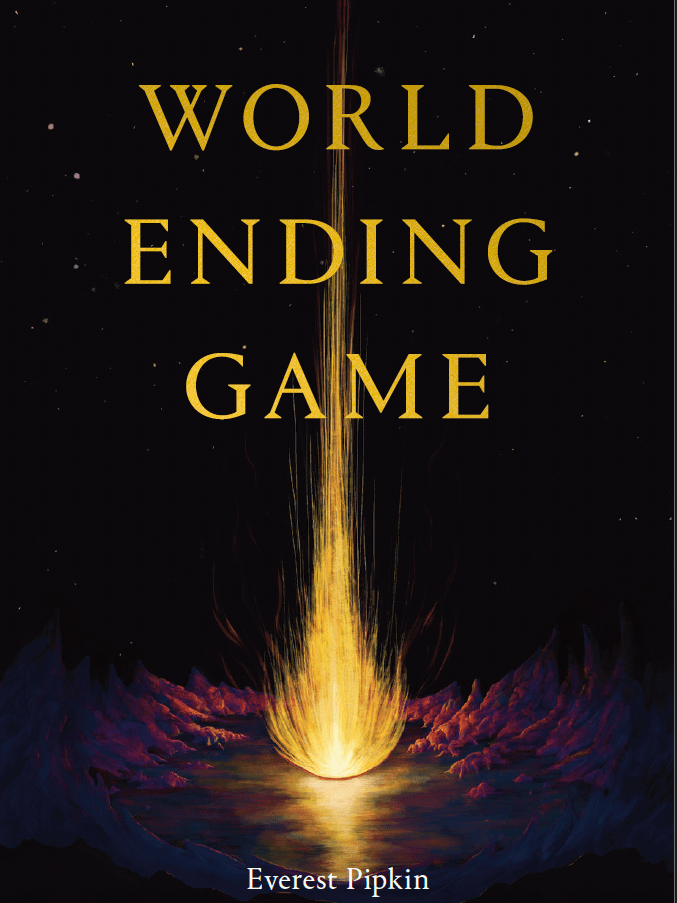
At the end of the Blades in the Dark campaign I played in recently, our GM ran us through a different game to give us a chance to ask some questions of our characters to see how things ended up for them. The World Ending Game is by Everest Pipkin. It is a cinematic game that imagines the last scene or episode of a movie or TV show. It frames a bunch of different types of ending scenes called things like “the Confession,” “the Reveal,” “the Revision,” “Tableaux.” It was a fun and alternative way to treat the ending of a game that felt really personal to players and characters both and I would encourage others to use it to wrap things up for their own games.
Conclusion
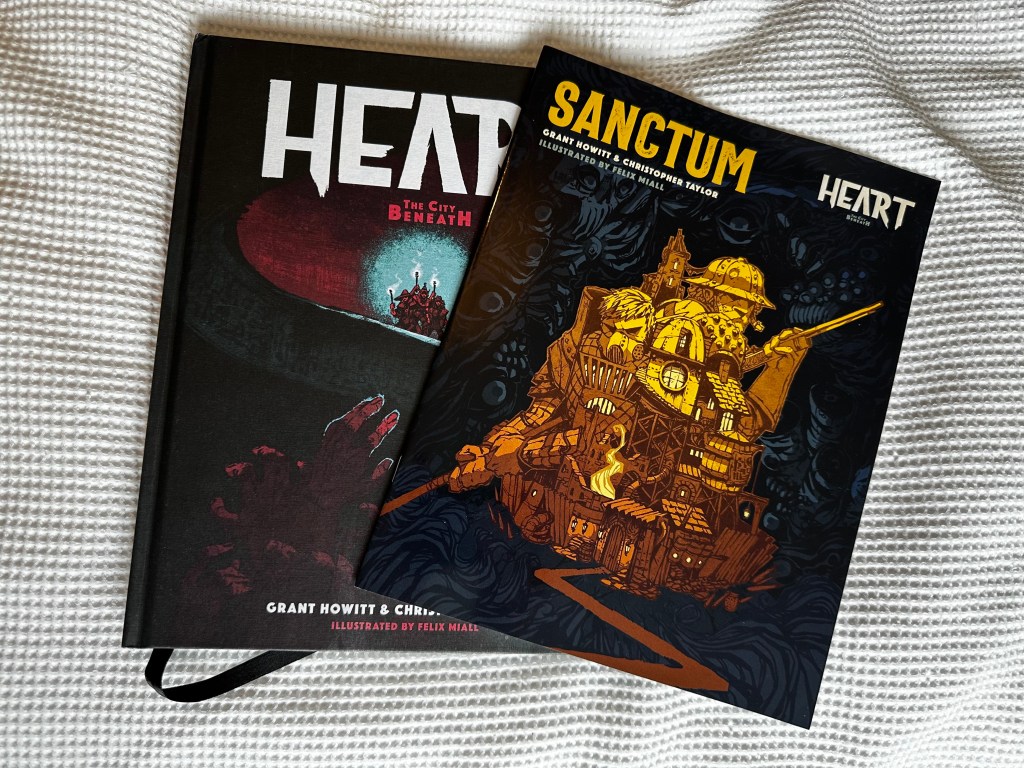
I still find endings hard but I like them more and more. I have become much fonder of shorter more contained games of specific numbers of sessions. So it is a little easier to plan for. Also, sometimes, a character’s end is the best part, just look at Heart and its Zenith abilities, they will end the character, but they will also achieve the seemingly impossible. I love this idea for a couple of reasons, it brings the character and probably the campaign to a hard stop in the most amazing fashion and it is player driven. They have gotten themselves to the point where they want to use that ability, it is their choice to use it and it makes for the best ending for their character from their point of view.
How do you like to end dear readers? Do you like to go out in a blaze of glory or do you prefer to sail off into the West and remain Galadriel?
Discover more from The Dice Pool
Subscribe to get the latest posts sent to your email.

 The Dice Pool
One thought on “Endings”